


 Скачать презентацию Université d Alger 14 Mai 2005 Faculty of
4076fe3462b22191ddf4164b847a0e96.ppt
- Количество слайдов: 38
 Université d’Alger 14 Mai 2005 | Faculty of Economics and Management | Historical overview: The Information Age 3 rd revolution in capitalist production Basis of “globalization” and “post-modern” society Thomas W. O’Donnell The University of Michigan Presented: Université d´Alger Faculty of Graduate Economics 14 Mai 2005 twod@umich. edu http: //www. umich. edu/~twod/courses 1
 Université d’Alger 14 Mai 2005 | Faculty of Economics and Management | Historical overview: i. e. , The Information Age Historical revolution inof Human Economic, 3 Stages capitalist production Basis of “globalization” and “post-modern” society Political and Thomas W. O’Donnell The “Development” Social University of Michigan rd Presented: Université d´Alger Faculty of Graduate Economics 14 Mai 2005 twod@umich. edu http: //www. umich. edu/~twod/courses 2
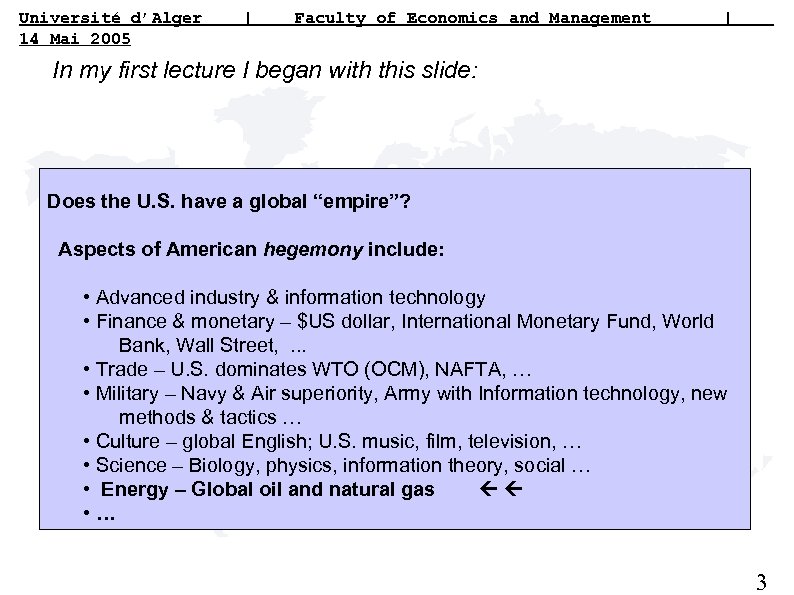 Université d’Alger 14 Mai 2005 | Faculty of Economics and Management | In my first lecture I began with this slide: Does the U. S. have a global “empire”? Aspects of American hegemony include: • Advanced industry & information technology • Finance & monetary – $US dollar, International Monetary Fund, World Bank, Wall Street, . . . • Trade – U. S. dominates WTO (OCM), NAFTA, … • Military – Navy & Air superiority, Army with Information technology, new methods & tactics … • Culture – global English; U. S. music, film, television, … • Science – Biology, physics, information theory, social … • Energy – Global oil and natural gas • … 3
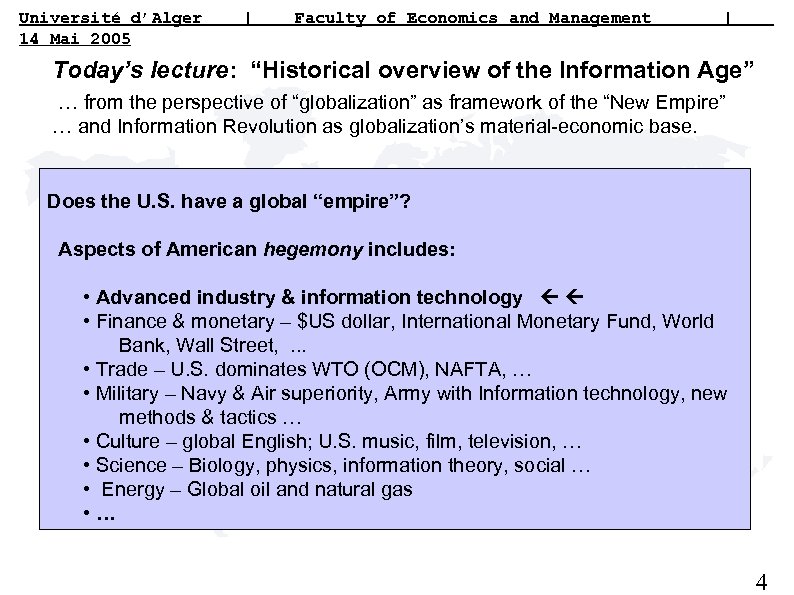 Université d’Alger 14 Mai 2005 | Faculty of Economics and Management | Today’s lecture: “Historical overview of the Information Age” … from the perspective of “globalization” as framework of the “New Empire” … and Information Revolution as globalization’s material-economic base. Does the U. S. have a global “empire”? Aspects of American hegemony includes: • Advanced industry & information technology • Finance & monetary – $US dollar, International Monetary Fund, World Bank, Wall Street, . . . • Trade – U. S. dominates WTO (OCM), NAFTA, … • Military – Navy & Air superiority, Army with Information technology, new methods & tactics … • Culture – global English; U. S. music, film, television, … • Science – Biology, physics, information theory, social … • Energy – Global oil and natural gas • … 4
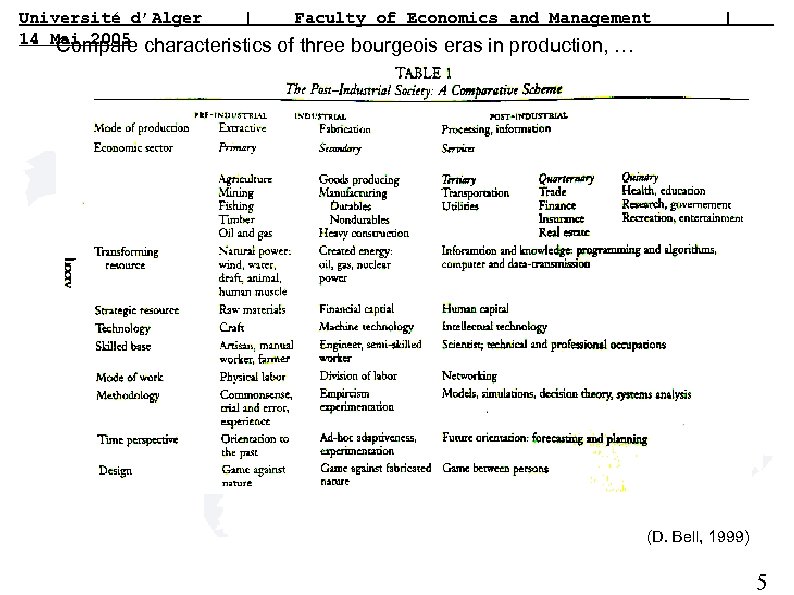 Université d’Alger | Faculty of Economics and Management 14 Mai 2005 characteristics of three bourgeois eras in production, … Compare | (D. Bell, 1999) 5
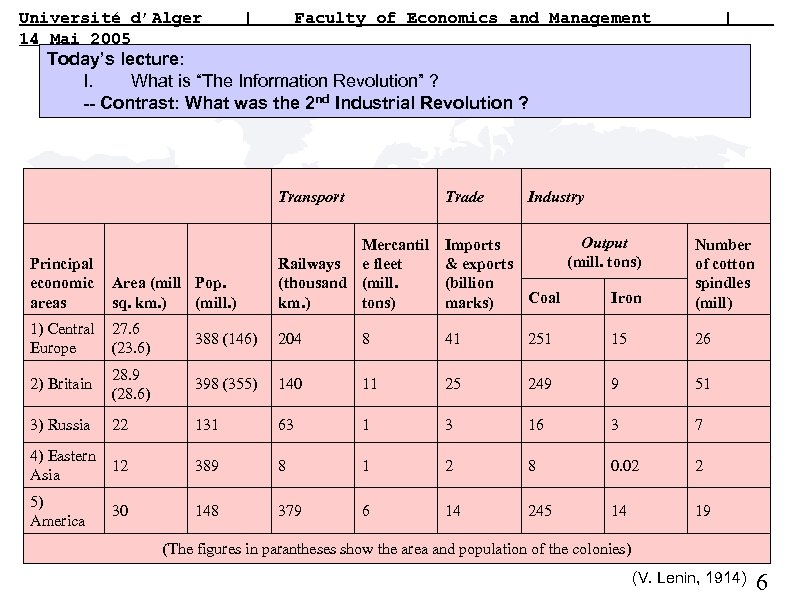 Université d’Alger 14 Mai 2005 | Faculty of Economics and Management | Today’s lecture: I. What is “The Information Revolution” ? -- Contrast: What was the 2 nd Industrial Revolution ? Transport Principal economic Area (mill Pop. areas sq. km. ) (mill. ) Trade Industry Mercantil Railways e fleet (thousand (mill. tons) km. ) Output Imports (mill. tons) & exports (billion Coal Iron marks) Number of cotton spindles (mill) 1) Central 27. 6 Europe (23. 6) 388 (146) 204 8 41 251 15 26 2) Britain 28. 9 (28. 6) 398 (355) 140 11 25 249 9 51 3) Russia 22 131 63 1 3 16 3 7 4) Eastern 12 Asia 389 8 1 2 8 0. 02 2 5) America 148 379 6 14 245 14 19 30 (The figures in parantheses show the area and population of the colonies) (V. Lenin, 1914) 6
 Université d’Alger 14 Mai 2005 | Faculty of Economics and Management | Today’s lecture outline: I. II. What is “The Information Revolution” ? As the material-economic base of “Globalization, ” and “Postmodern Society” III. Competition of U. S. A. vs. developed and developing countries (apropos ‘The New Empire’) 7
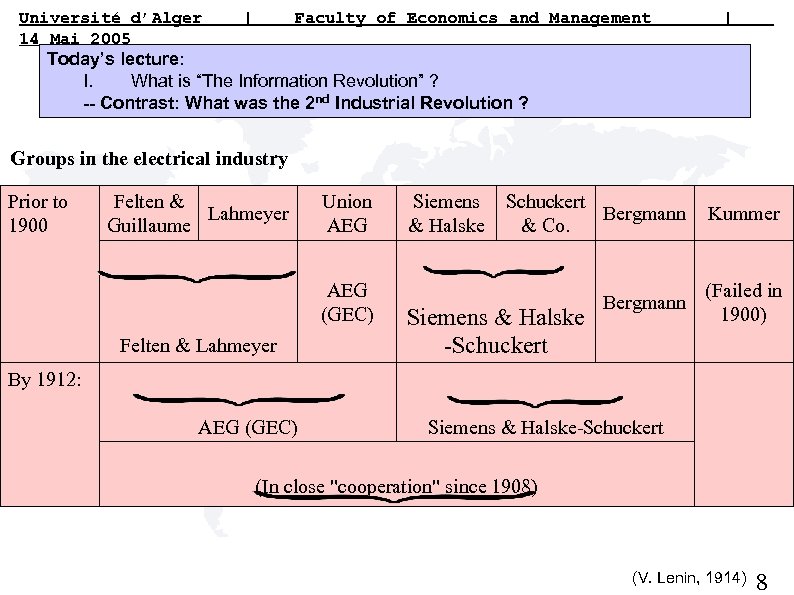 Université d’Alger 14 Mai 2005 | Faculty of Economics and Management | Today’s lecture: I. What is “The Information Revolution” ? -- Contrast: What was the 2 nd Industrial Revolution ? Groups in the electrical industry Prior to 1900 Felten & Lahmeyer Guillaume Felten & Lahmeyer By 1912: Union AEG Siemens & Halske Schuckert Bergmann & Co. AEG (GEC) (Failed in Bergmann 1900) Siemens & Halske -Schuckert AEG (GEC) Siemens & Halske-Schuckert Kummer (In close "cooperation" since 1908) (V. Lenin, 1914) 8
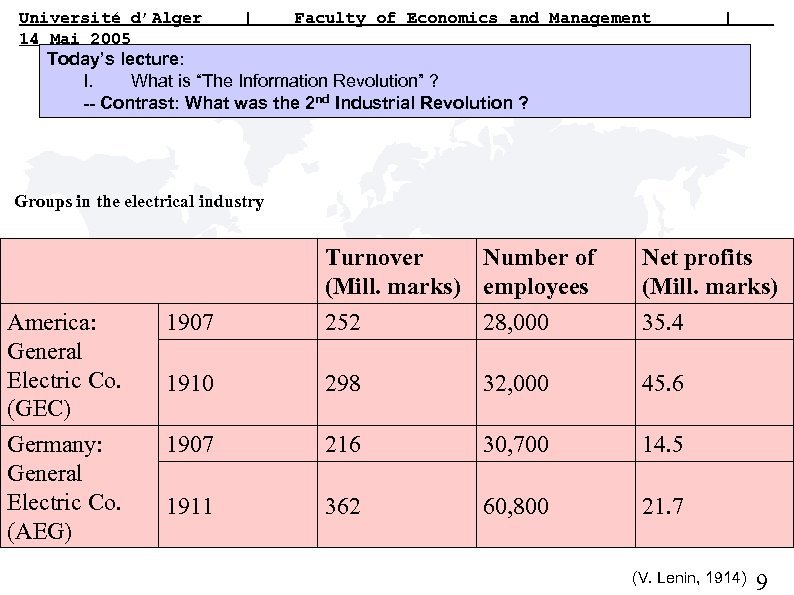 Université d’Alger 14 Mai 2005 | Faculty of Economics and Management | Today’s lecture: I. What is “The Information Revolution” ? -- Contrast: What was the 2 nd Industrial Revolution ? Groups in the electrical industry America: General Electric Co. (GEC) 1907 Turnover Number of (Mill. marks) employees 252 28, 000 1910 298 32, 000 45. 6 Germany: General Electric Co. (AEG) 1907 216 30, 700 14. 5 1911 362 60, 800 21. 7 Net profits (Mill. marks) 35. 4 (V. Lenin, 1914) 9
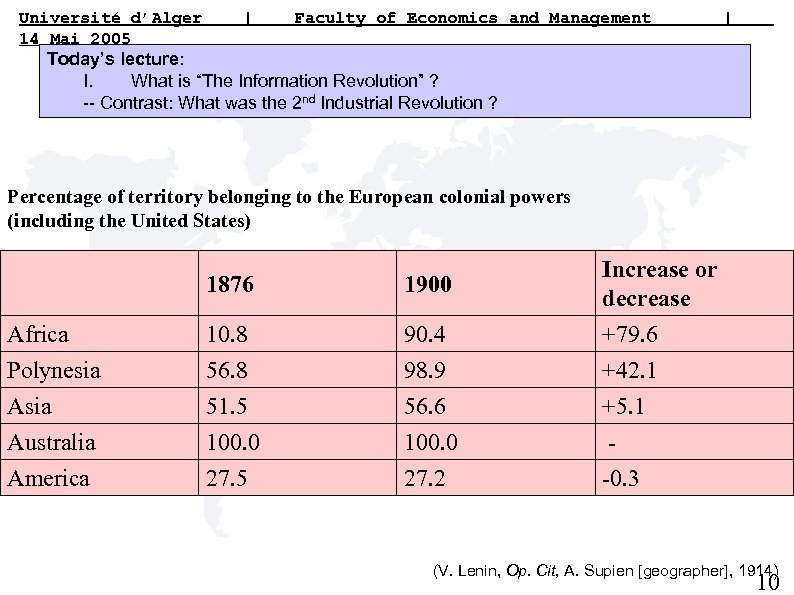 Université d’Alger 14 Mai 2005 | Faculty of Economics and Management | Today’s lecture: I. What is “The Information Revolution” ? -- Contrast: What was the 2 nd Industrial Revolution ? Percentage of territory belonging to the European colonial powers (including the United States) 1876 1900 Increase or decrease Africa Polynesia Australia America 10. 8 56. 8 51. 5 100. 0 27. 5 90. 4 98. 9 56. 6 100. 0 27. 2 +79. 6 +42. 1 +5. 1 - -0. 3 (V. Lenin, Op. Cit, A. Supien [geographer], 1914) 10
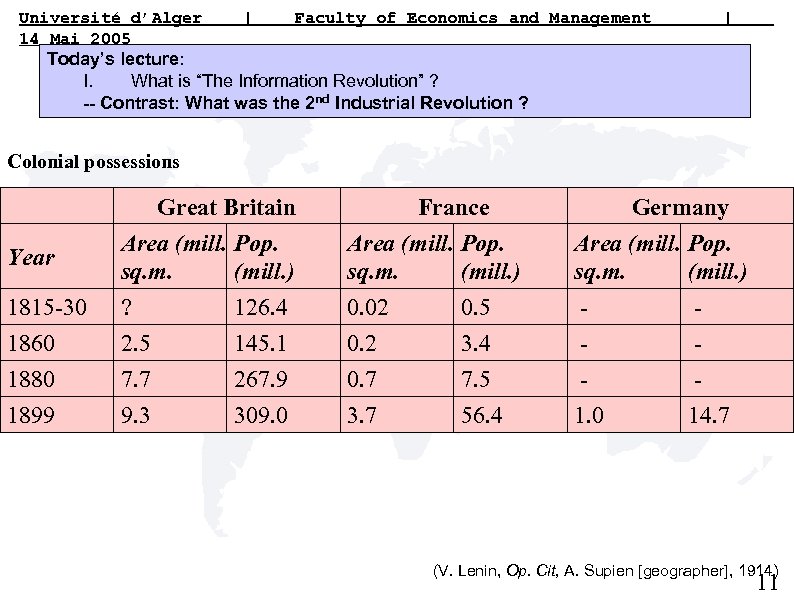 Université d’Alger 14 Mai 2005 | Faculty of Economics and Management | Today’s lecture: I. What is “The Information Revolution” ? -- Contrast: What was the 2 nd Industrial Revolution ? Colonial possessions Percentage of territory belonging to the European colonial powers Great Britain France Germany (including the United States) Area (mill. Pop. Year sq. m. (mill. ) 1815 -30 1860 1880 1899 ? 2. 5 7. 7 9. 3 126. 4 145. 1 267. 9 309. 0 0. 02 0. 7 3. 7 0. 5 3. 4 7. 5 56. 4 - - - 1. 0 - - - 14. 7 (V. Lenin, Op. Cit, A. Supien [geographer], 1914) 11
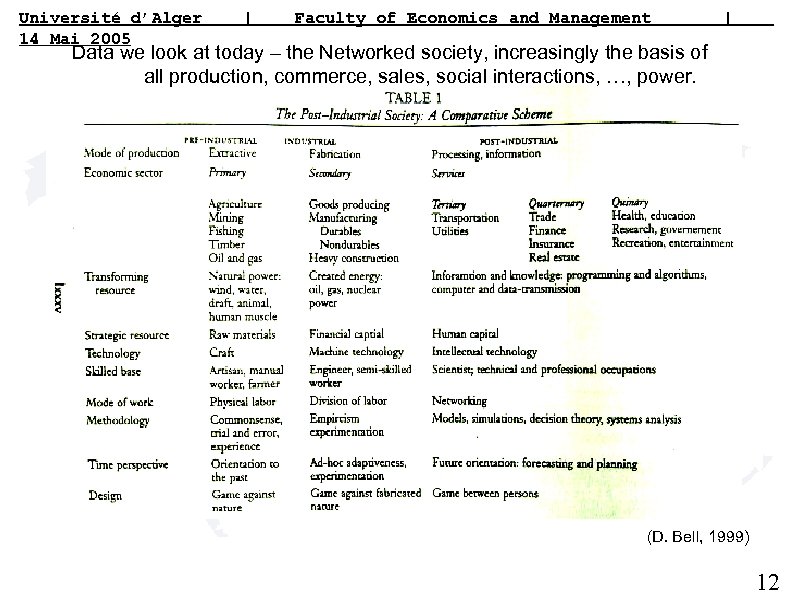 Université d’Alger 14 Mai 2005 | Faculty of Economics and Management | Data we look at today – the Networked society, increasingly the basis of all production, commerce, sales, social interactions, …, power. (D. Bell, 1999) 12
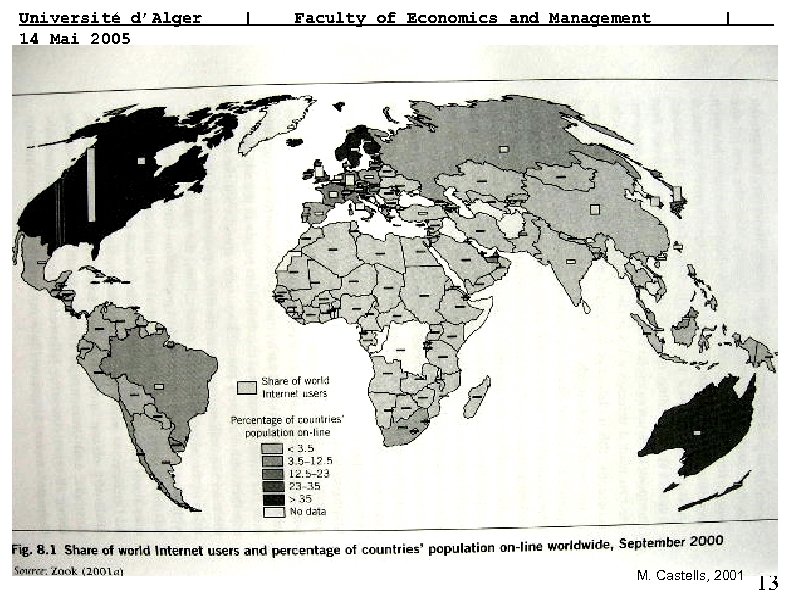 Université d’Alger 14 Mai 2005 | Faculty of Economics and Management | M. Castells, 2001 13
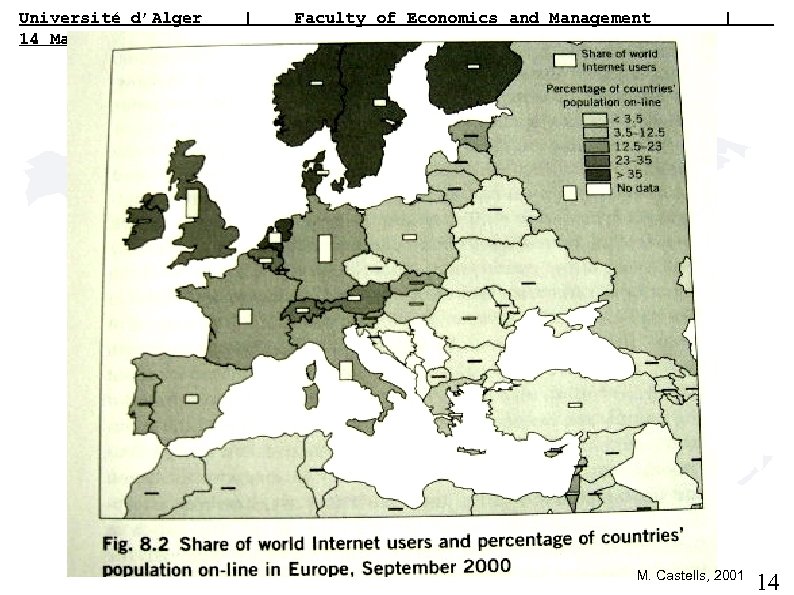 Université d’Alger 14 Mai 2005 | Faculty of Economics and Management | M. Castells, 2001 14
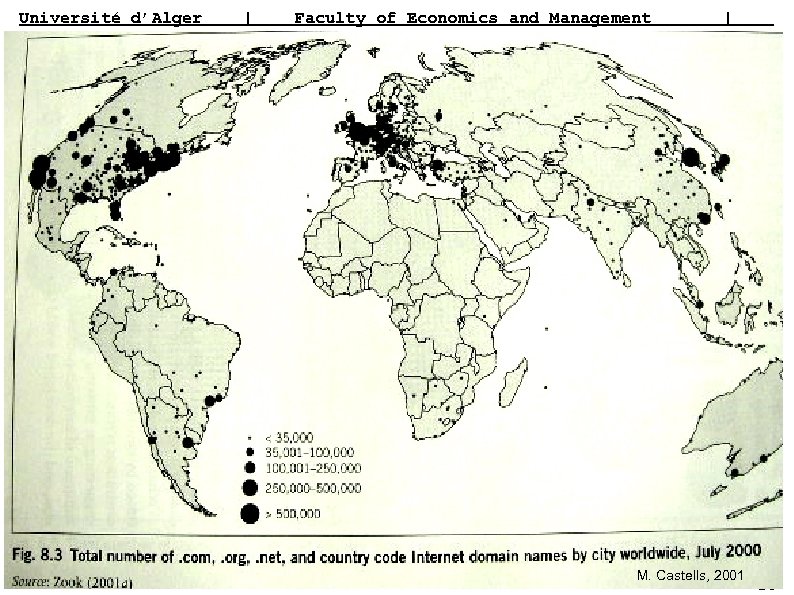 Université d’Alger 14 Mai 2005 | Faculty of Economics and Management | M. Castells, 2001 15
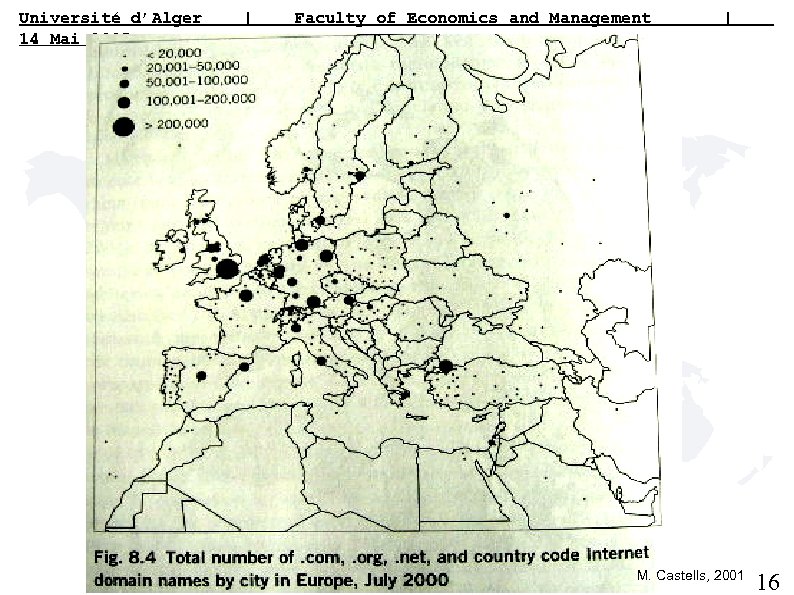 Université d’Alger 14 Mai 2005 | Faculty of Economics and Management | M. Castells, 2001 16
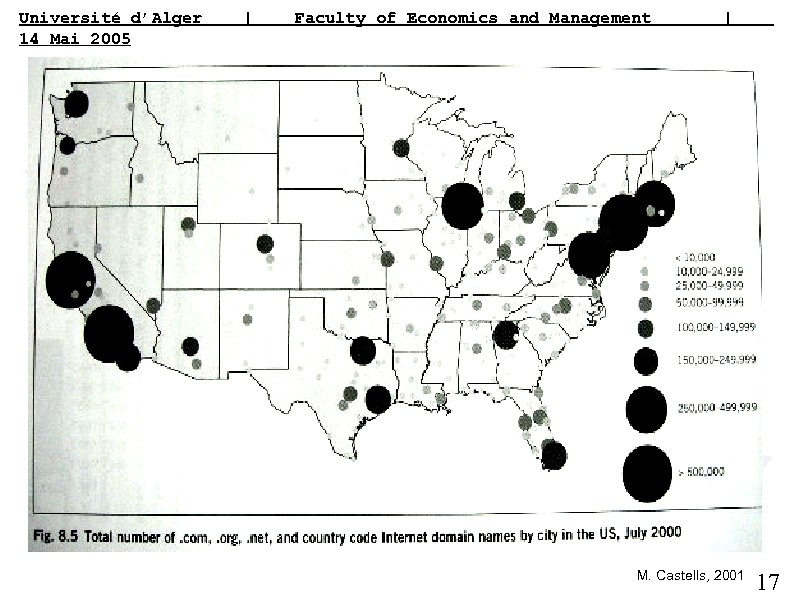 Université d’Alger 14 Mai 2005 | Faculty of Economics and Management | M. Castells, 2001 17
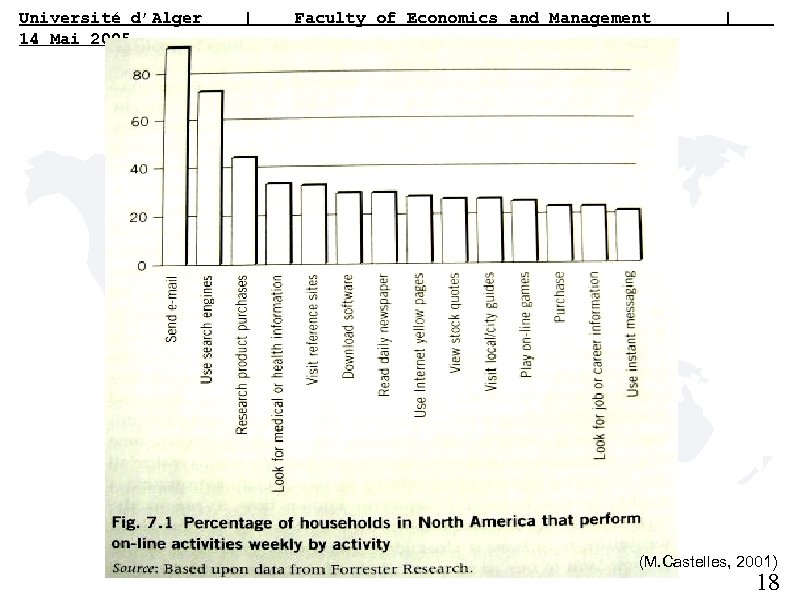 Université d’Alger 14 Mai 2005 | Faculty of Economics and Management | (M. Castelles, 2001) 18
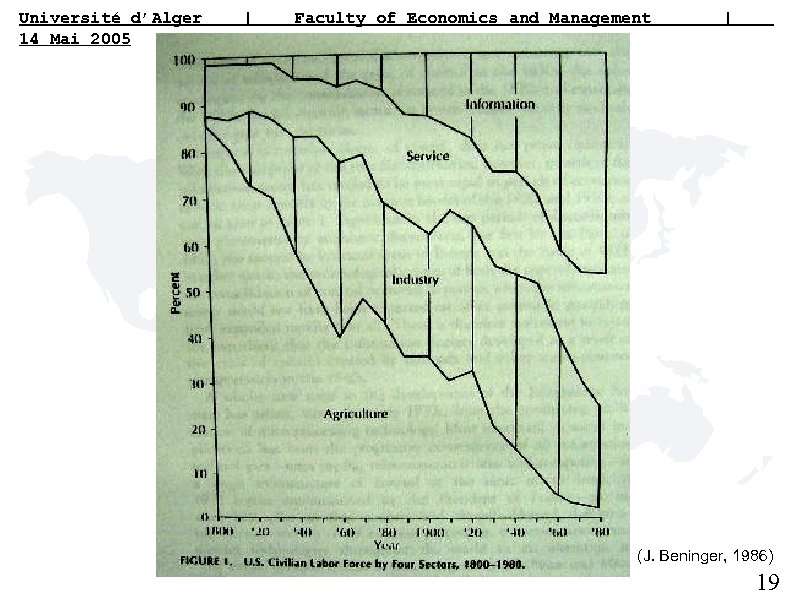 Université d’Alger 14 Mai 2005 | Faculty of Economics and Management | (J. Beninger, 1986) 19
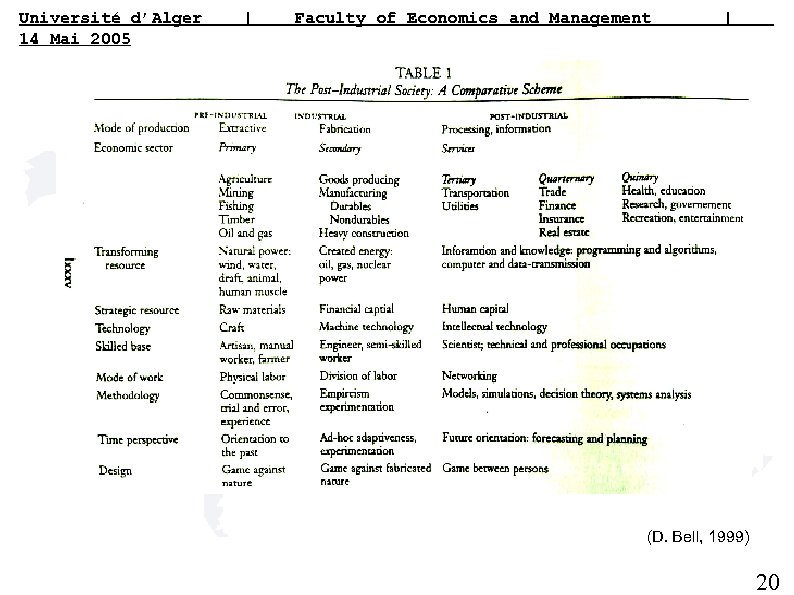 Université d’Alger 14 Mai 2005 | Faculty of Economics and Management | (D. Bell, 1999) 20
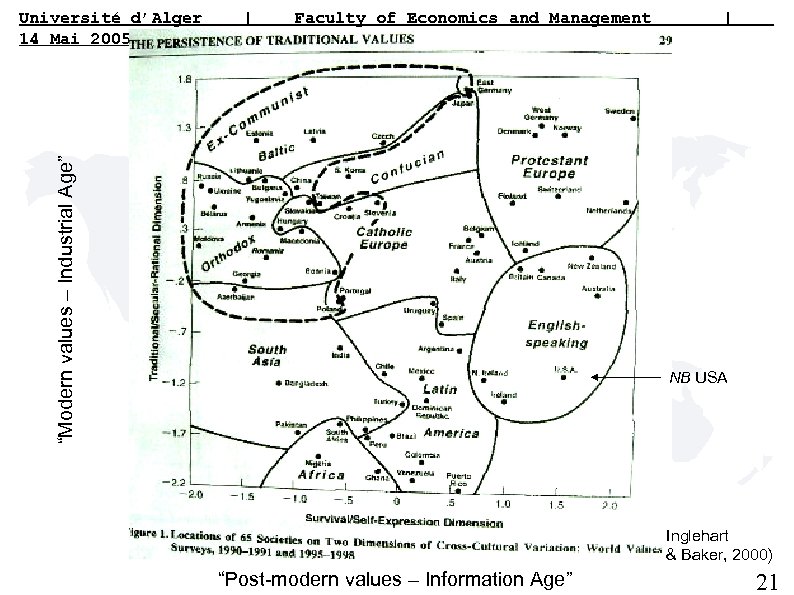 | Faculty of Economics and Management “Modern values – Industrial Age” Université d’Alger 14 Mai 2005 | NB USA Inglehart & Baker, 2000) “Post-modern values – Information Age” 21
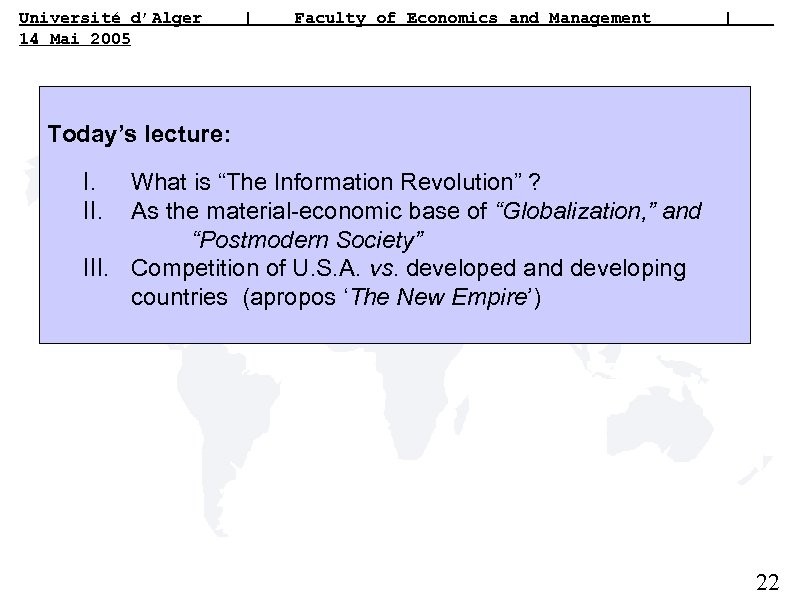 Université d’Alger 14 Mai 2005 | Faculty of Economics and Management | Today’s lecture: I. II. What is “The Information Revolution” ? As the material-economic base of “Globalization, ” and “Postmodern Society” III. Competition of U. S. A. vs. developed and developing countries (apropos ‘The New Empire’) 22
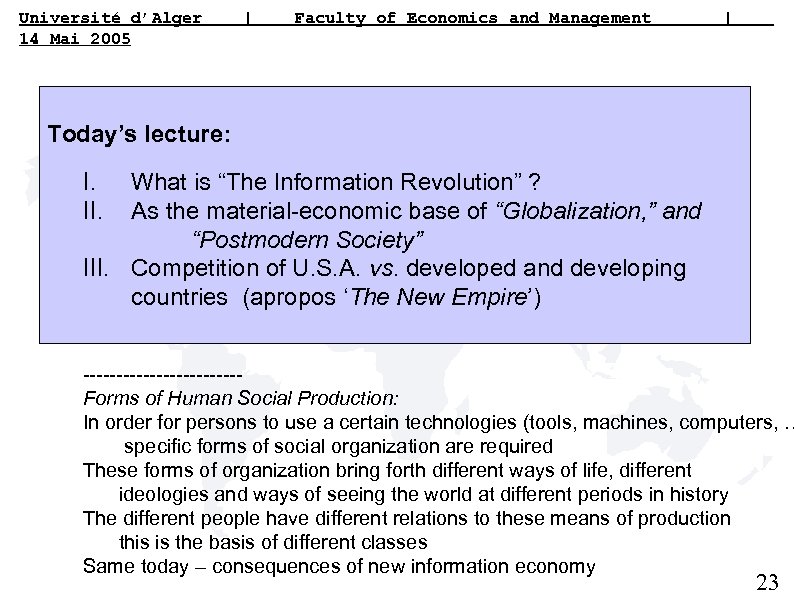 Université d’Alger 14 Mai 2005 | Faculty of Economics and Management | Today’s lecture: I. II. What is “The Information Revolution” ? As the material-economic base of “Globalization, ” and “Postmodern Society” III. Competition of U. S. A. vs. developed and developing countries (apropos ‘The New Empire’) ------------Forms of Human Social Production: In order for persons to use a certain technologies (tools, machines, computers, … specific forms of social organization are required These forms of organization bring forth different ways of life, different ideologies and ways of seeing the world at different periods in history The different people have different relations to these means of production this is the basis of different classes Same today – consequences of new information economy 23
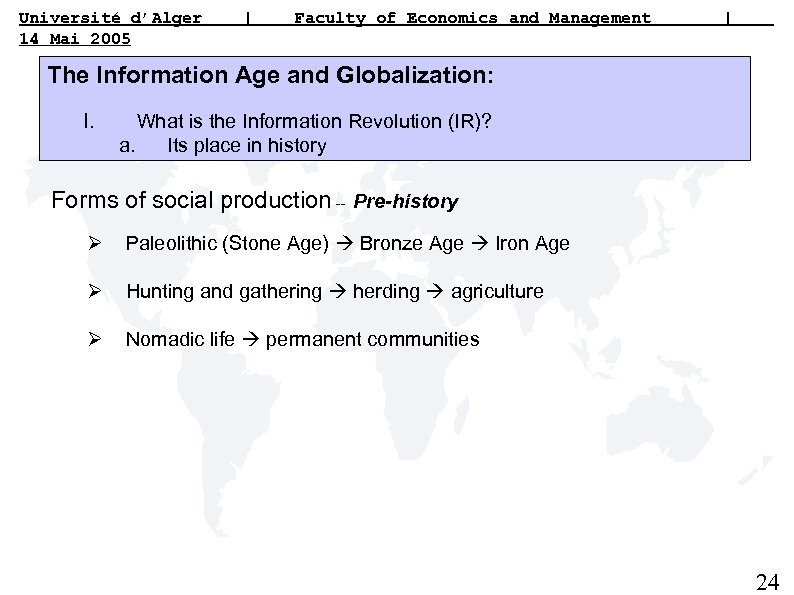 Université d’Alger 14 Mai 2005 | Faculty of Economics and Management | The Information Age and Globalization: I. What is the Information Revolution (IR)? a. Its place in history Forms of social production -- Pre-history Ø Paleolithic (Stone Age) Bronze Age Iron Age Ø Hunting and gathering herding agriculture Ø Nomadic life permanent communities 24
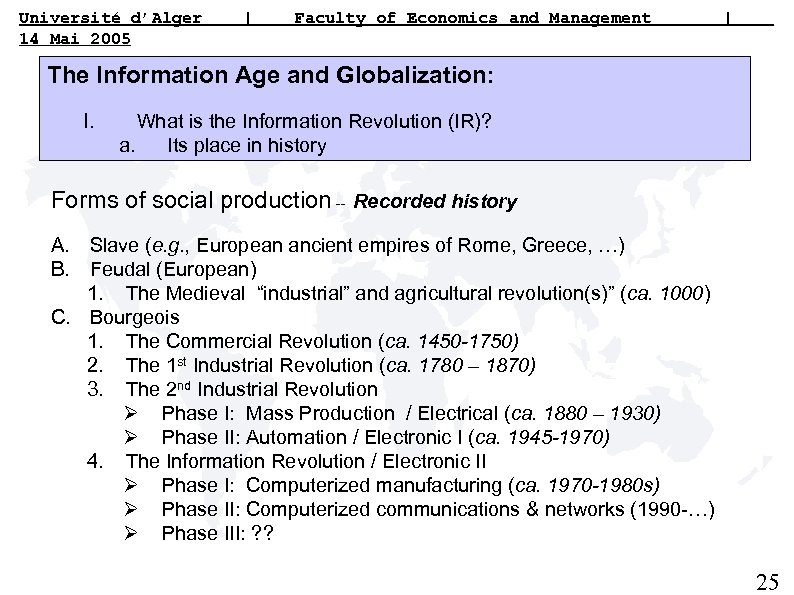 Université d’Alger 14 Mai 2005 | Faculty of Economics and Management | The Information Age and Globalization: I. What is the Information Revolution (IR)? a. Its place in history Forms of social production -- Recorded history A. Slave (e. g. , European ancient empires of Rome, Greece, …) B. Feudal (European) 1. The Medieval “industrial” and agricultural revolution(s)” (ca. 1000) C. Bourgeois 1. The Commercial Revolution (ca. 1450 -1750) 2. The 1 st Industrial Revolution (ca. 1780 – 1870) 3. The 2 nd Industrial Revolution Ø Phase I: Mass Production / Electrical (ca. 1880 – 1930) Ø Phase II: Automation / Electronic I (ca. 1945 -1970) 4. The Information Revolution / Electronic II Ø Phase I: Computerized manufacturing (ca. 1970 -1980 s) Ø Phase II: Computerized communications & networks (1990 -…) Ø Phase III: ? ? 25
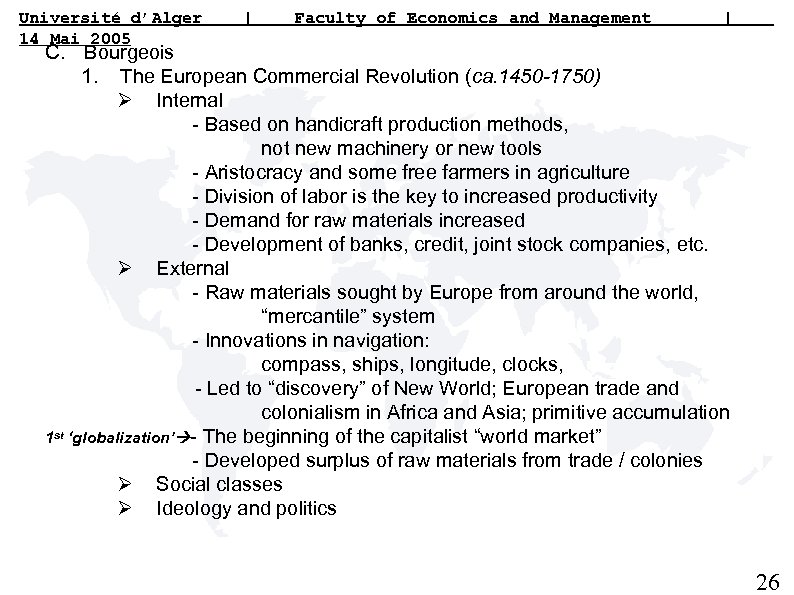 Université d’Alger 14 Mai 2005 | Faculty of Economics and Management | C. Bourgeois 1. The European Commercial Revolution (ca. 1450 -1750) Ø Internal - Based on handicraft production methods, not new machinery or new tools - Aristocracy and some free farmers in agriculture - Division of labor is the key to increased productivity - Demand for raw materials increased - Development of banks, credit, joint stock companies, etc. Ø External - Raw materials sought by Europe from around the world, “mercantile” system - Innovations in navigation: compass, ships, longitude, clocks, - Led to “discovery” of New World; European trade and colonialism in Africa and Asia; primitive accumulation 1 st ‘globalization’ - The beginning of the capitalist “world market” - Developed surplus of raw materials from trade / colonies Ø Social classes Ø Ideology and politics 26
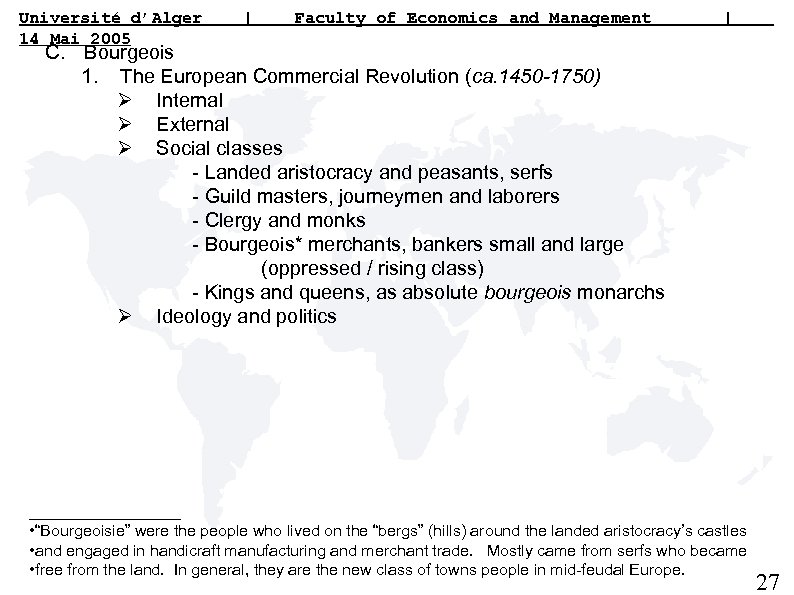 Université d’Alger 14 Mai 2005 | Faculty of Economics and Management | C. Bourgeois 1. The European Commercial Revolution (ca. 1450 -1750) Ø Internal Ø External Ø Social classes - Landed aristocracy and peasants, serfs - Guild masters, journeymen and laborers - Clergy and monks - Bourgeois* merchants, bankers small and large (oppressed / rising class) - Kings and queens, as absolute bourgeois monarchs Ø Ideology and politics _________ • “Bourgeoisie” were the people who lived on the “bergs” (hills) around the landed aristocracy’s castles • and engaged in handicraft manufacturing and merchant trade. Mostly came from serfs who became • free from the land. In general, they are the new class of towns people in mid-feudal Europe. 27
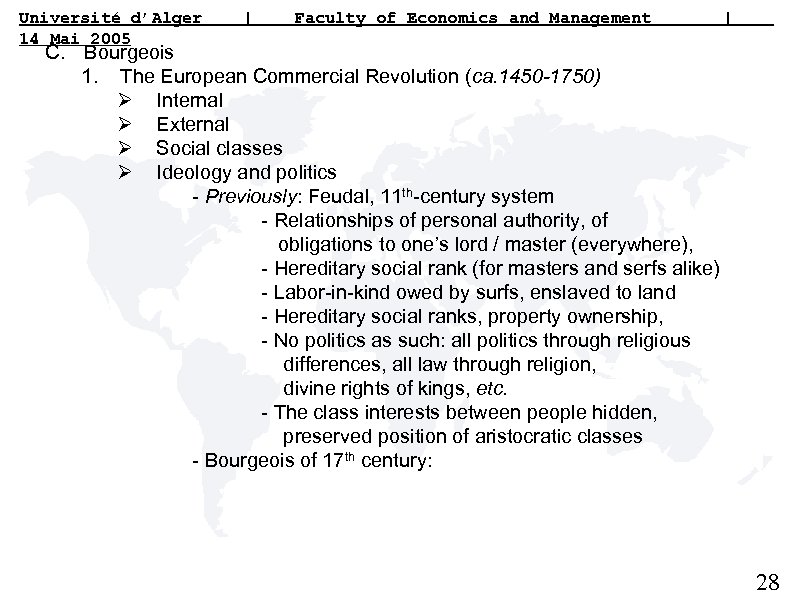 Université d’Alger 14 Mai 2005 | Faculty of Economics and Management | C. Bourgeois 1. The European Commercial Revolution (ca. 1450 -1750) Ø Internal Ø External Ø Social classes Ø Ideology and politics - Previously: Feudal, 11 th-century system - Relationships of personal authority, of obligations to one’s lord / master (everywhere), - Hereditary social rank (for masters and serfs alike) - Labor-in-kind owed by surfs, enslaved to land - Hereditary social ranks, property ownership, - No politics as such: all politics through religious differences, all law through religion, divine rights of kings, etc. - The class interests between people hidden, preserved position of aristocratic classes - Bourgeois of 17 th century: 28
 Université d’Alger 14 Mai 2005 | Faculty of Economics and Management | C. Bourgeois 1. The European Commercial Revolution (ca. 1450 -1750) Ø Internal Ø External Ø Social classes Ø Ideology and politics - Feudal 11 th century - Bourgeois of 17 th century: - Individual rights: Rights of Man, Declaration of Independence, democracy - Expressed bourgeois aspirations for “Free Market” and against aristocracy’s domination of commerce, property and individuals - Protestant Reformation had changed Christian ideology from a religion of 11 th-century feudal aristocracy into a religion of bourgeois merchants - Bourgeois revolutions (U. S. , France, …) ended bourg. absolute monarchs; bourgeois itself took over state directly, consolidated internal markets in the bourgeois nation 29
 Université d’Alger 14 Mai 2005 | Faculty of Economics and Management | C. Bourgeois 1. The Commercial Revolution (ca. 1450 -1750) 2. The 1 st Industrial Revolution (ca. 1780 – 1870) Ø Internal - Revolution in social production - Division of labor from period of Commercial Revolution allowed placing new machines into individual steps in production - Logic of division of labor was based on human capabilities with many machines, needed system based on machines’ capabilities; purely on scientific-technical basis, not human - Led to systems of machines, with division of labor based on the machines – this was Modern Industry - Use of machines required non-human, non-animal motive force, first water and wind power, then steam engines using coal which had no requirements of weather or location - Heightened capitalist competition drove innovation in machines and social organization of production to optimize their use Ø External Ø Social classes Ø Ideology and politics 30
 Université d’Alger 14 Mai 2005 | Faculty of Economics and Management | C. Bourgeois 1. The Commercial Revolution (ca. 1450 -1750) 2. The 1 st Industrial Revolution (ca. 1780 – 1870) Ø Internal Ø External - Surplus of colonial raw materials drove innovation as insufficient labor to process with handicraft methods - Modern Industry could process with machines cheaper than native traditional labor – cheap commodities broke down the barriers of all ancient, traditional nations (military assistance if resisted) - Story of “Victorian Holocausts” - Colonial and European markets to absorb new industrial commodities. - Uneven development of capitalism - Between industrialized nations (capitalist competition) - Between industrialized and non-industrialized (colonial) Ø Social classes Ø Ideology and politics 31
 Université d’Alger 14 Mai 2005 | Faculty of Economics and Management | C. Bourgeois 1. The Commercial Revolution (ca. 1450 -1750) 2. The 1 st Industrial Revolution (ca. 1780 – 1870) Ø Internal Ø External Ø Social classes - Weakening of landed aristocracy. Capitalist agriculture grows. - Requires less peasants. Peasants pushed from land by aristocracy, go to cities (or die). - Free small farmers engage in cottage industry, machine innovations force them to factories in cities - Proletariat working class grows rapidly in cities with industry - First large cities (e. g. , Manchester). Bourgeoisie further eliminates power of aristocracy. - Proletariat is concentrated, similar conditions, accustomed to cooperation at factories; first laboring class capable of organizing domestically and internationally, unions, political parties Ø Ideology and politics - I will show this below – differences between pre-industrial, and post-industrial ideology and social values 32
 Université d’Alger 14 Mai 2005 C. | Faculty of Economics and Management | Bourgeois 1. The Commercial Revolution (ca. 1450 -1750) 2. The 1 st Industrial Revolution (ca. 1780 – 1870) 3. The 2 nd Industrial Revolution Ø Phase I: Mass Production / Electrical (ca. 1880 – 1930) Ø Phase II: Automation / Electronic I (ca. 1945 -1970) - The Electronic Revolution and Ford-Taylor automated mass production: analog-controls and mechanical business machines to programmable logic computers (PLC) and mainframe computers - Development of large middle class (majority in ~1957) and democratizing experience of WW II led to - The social and cultural movements in especially the U. S. A. and Western European countries (late-1960 s-early-1970 s) movements which undermined traditional, personal authority relationships in favor of democratization: - Undermined: Personal authority of man over woman, parents over children, of teacher over pupils, of minister/priest over faithful, of majority over minority nationalities, of political leaders over citizens, etc. (Examples: wife beating, divorce rights, work outside; spanking, orders; rote learning, explanations required, dress codes; reasoned faith; civil rights movements; Watergate, legitimacy crisis) 33
 Université d’Alger 14 Mai 2005 C. | Faculty of Economics and Management | Bourgeois 1. The Commercial Revolution (ca. 1450 -1750) 2. The 1 st Industrial Revolution (ca. 1780 – 1870) 3. The 2 nd Industrial Revolution Ø Phase I: Mass Production / Electrical (ca. 1880 – 1930) Ø Phase II: Automation / Electronic I (ca. 1945 -1970) - The Electronic Revolution and Ford-Taylor - Development of large middle class - The social and cultural movements - Science: The intellectual-scientific history of information: from symbolic logic, incompleteness, and algorithms to universal computing machines (the Church-Turing Thesis), the modern theories of information, communication, and control - Technology: The realization of universal computing devices: 1. mechanical (Babbage); and single-purpose machines 2. electric (relays and solenoids) 3. electronic (i. vacuum tubes, ii. semiconductors). Dependent on quantum physics and material science: to develop electronic engineering. - Social-Organizational: evolution of computer architecture, applications, languages, software and interfaces. 4. The Information Revolution / Electronic II 34
 Université d’Alger 14 Mai 2005 C. | Faculty of Economics and Management | Bourgeois 4. The Information Revolution / Electronic II Ø Phase I: Computerized manufacturing (ca. 1970 -1980 s) - Marriage of electronic semiconductor universal processors with single-purpose machines to get smart machines robotics, CAD-CAM, digital-semiconductor controls, … - Japan & N. Europe develop lean management; “infomated” (Zuboff); broke Fordist “automate” imperative - Re-opening post-war industrial competition, Japanese and north European tactic of variety/quality, - The collapse of U. S. Fordist manufacturing monopoly, “rust belt” (biological-ecology analogy); US refused adapt - The continued lag of USA - sociology vs. Japan & N. Europe - Social: The demise of the industrial proletariat and its labor, socialist, and communist parties; not primarily lost to 3 rd world. - The differential effects on sections of the capitalist classes, the new inter-capitalist conflict - Political: The collapse of mass-industrial era’s liberal politics, and energizing of the Right. Ø Phase II (1990 s): Computerized communications and networks 35
 Université d’Alger 14 Mai 2005 C. | Faculty of Economics and Management | Bourgeois 4. The Information Revolution / Electronic II Ø Phase I: Computerized manufacturing (ca. 1970 -1980 s) Ø Phase II: Computerized communications and networks (ca. 1990 s-…) - The marriage of universal processors with communications and the network revolution in bureaucracies of production, commerce, finance, and personal networks - American government role in developing internet - The elaboration (2000 s) of information society from inside businesses to B 2 B and B 2 -the-public. The digital divide compared to the inequalities of previous mass I ndustrial era: within nations of the Information Revolution, between these and the information-underdeveloped world. - Education. US immigrant Vs. N. European welfare state strategies Phase III (20 XX): The monopolist blocking of Information-Age revolutions in transportation; the persistence of cheap oil. The persistence of the uneven development of capitalism (the digital divide) Ø Phase III: ? ? characteristics 36
 Université d’Alger 14 Mai 2005 | Faculty of Economics and Management | Today’s lecture: I. II. What is “The Information Revolution” ? As the material-economic base of “Globalization, ” and “Postmodern Society” III. Competition of U. S. A. vs. developed and developing countries (apropos ‘The New Empire’) 37
 Université d’Alger 14 Mai 2005 | Faculty of Economics and Management | The Information Revolution – globalization and post-modern society Summary: To be continued … but, for whom? The “Digital Divide” - How can developing nations participate on own terms? - There is a Digital Divide within developed nations too - Not North-South now (Castells, 2001) -Other key issues: New social movements, trajectory of classes, … 38