


 Скачать презентацию United States Power Squadrons Piloting Course Navigation
f848a1e97eae48f5b979909fc2b84123.ppt
- Количество слайдов: 38
 United States Power Squadrons Piloting Course Navigation) ® (Inland Chapter 3 Plotting and Planning Techniques SEO – Dave West dwest@voyager. net - 651 -429 -3840 Instructor – Art Mollica artmollica@usfamily. net - 651 -777 -0277
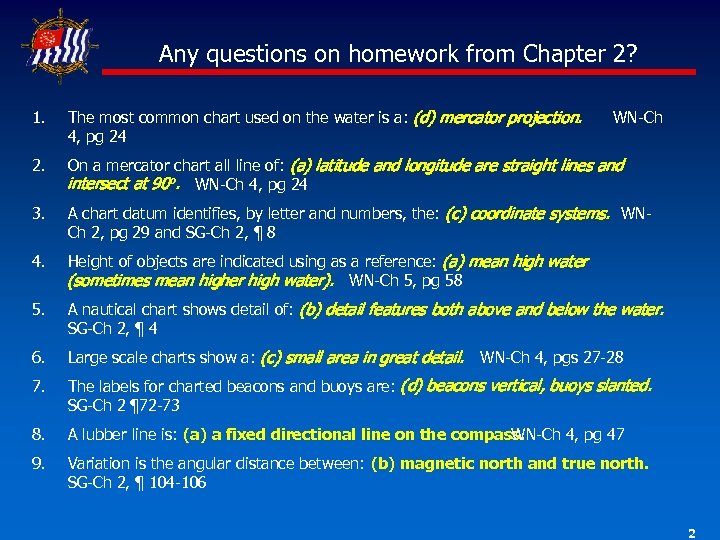 Any questions on homework from Chapter 2? 1. The most common chart used on the water is a: (d) mercator projection. 4, pg 24 2. On a mercator chart all line of: (a) latitude and longitude are straight lines and intersect at 90º. WN-Ch 4, pg 24 3. A chart datum identifies, by letter and numbers, the: (c) coordinate systems. WNCh 2, pg 29 and SG-Ch 2, ¶ 8 4. Height of objects are indicated using as a reference: (a) mean high water (sometimes mean higher high water). WN-Ch 5, pg 58 5. A nautical chart shows detail of: (b) detail features both above and below the water. SG-Ch 2, ¶ 4 6. Large scale charts show a: (c) small area in great detail. WN-Ch 4, pgs 27 -28 7. The labels for charted beacons and buoys are: (d) beacons vertical, buoys slanted. SG-Ch 2 ¶ 72 -73 8. A lubber line is: (a) a fixed directional line on the compass. WN-Ch 4, pg 47 9. Variation is the angular distance between: (b) magnetic north and true north. SG-Ch 2, ¶ 104 -106 WN-Ch 2
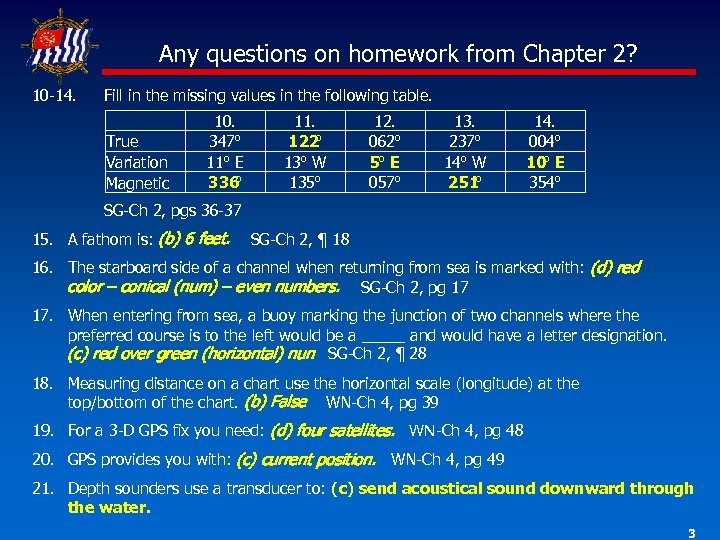 Any questions on homework from Chapter 2? 10 -14. Fill in the missing values in the following table. True Variation Magnetic 10. 347º 11º E 336 º 11. 122 º 13º W 135º 12. 062º 5º E 057º 13. 237º 14º W 251 º 14. 004º 10º E 354º SG-Ch 2, pgs 36 -37 15. A fathom is: (b) 6 feet. SG-Ch 2, ¶ 18 16. The starboard side of a channel when returning from sea is marked with: (d) red color – conical (num) – even numbers. SG-Ch 2, pg 17 17. When entering from sea, a buoy marking the junction of two channels where the preferred course is to the left would be a _____ and would have a letter designation. (c) red over green (horizontal) nun SG-Ch 2, ¶ 28 18. Measuring distance on a chart use the horizontal scale (longitude) at the top/bottom of the chart. (b) False WN-Ch 4, pg 39 19. For a 3 -D GPS fix you need: (d) four satellites. WN-Ch 4, pg 48 20. GPS provides you with: (c) current position. WN-Ch 4, pg 49 21. Depth sounders use a transducer to: (c) send acoustical sound downward through the water. 3
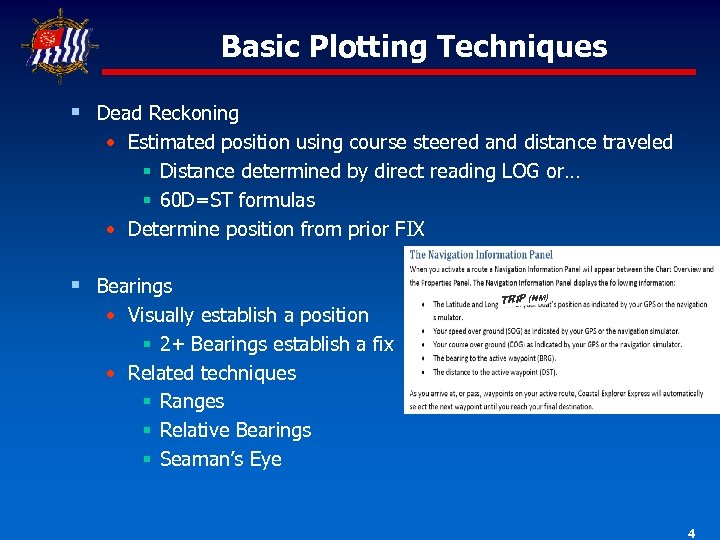 Basic Plotting Techniques § Dead Reckoning • Estimated position using course steered and distance traveled § Distance determined by direct reading LOG or… § 60 D=ST formulas • Determine position from prior FIX § Bearings • Visually establish a position § 2+ Bearings establish a fix • Related techniques § Ranges § Relative Bearings § Seaman’s Eye TRIP (NM) 4
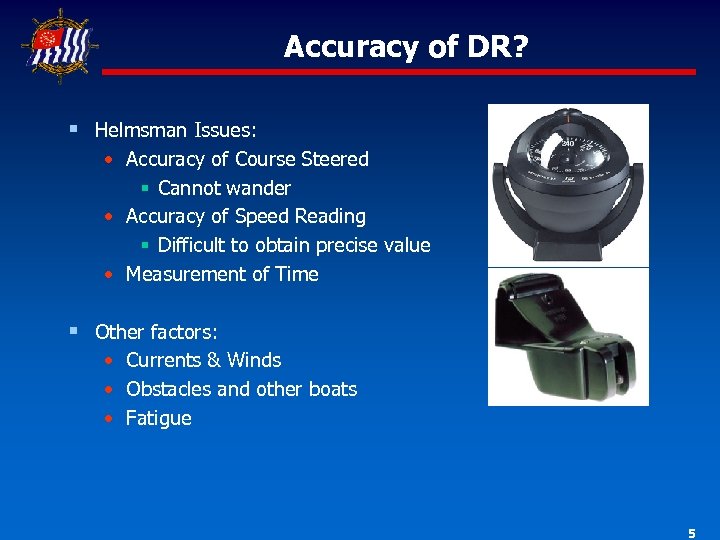 Accuracy of DR? § Helmsman Issues: • Accuracy of Course Steered § Cannot wander • Accuracy of Speed Reading § Difficult to obtain precise value • Measurement of Time § Other factors: • Currents & Winds • Obstacles and other boats • Fatigue 5
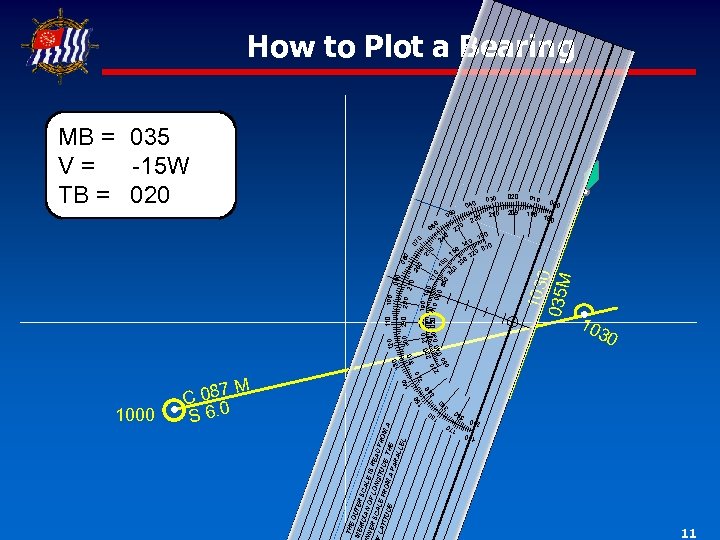
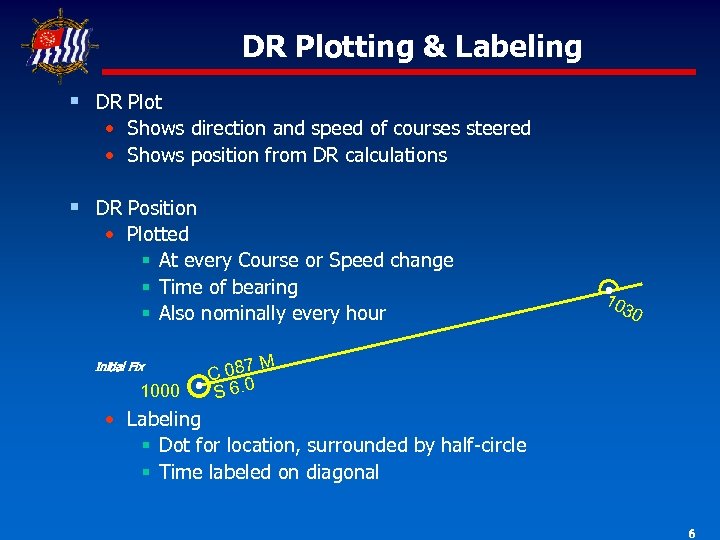 DR Plotting & Labeling § DR Plot • Shows direction and speed of courses steered • Shows position from DR calculations § DR Position • Plotted § At every Course or Speed change § Time of bearing § Also nominally every hour Initial Fix 1000 10 30 M C 087 S 6. 0 • Labeling § Dot for location, surrounded by half-circle § Time labeled on diagonal 6
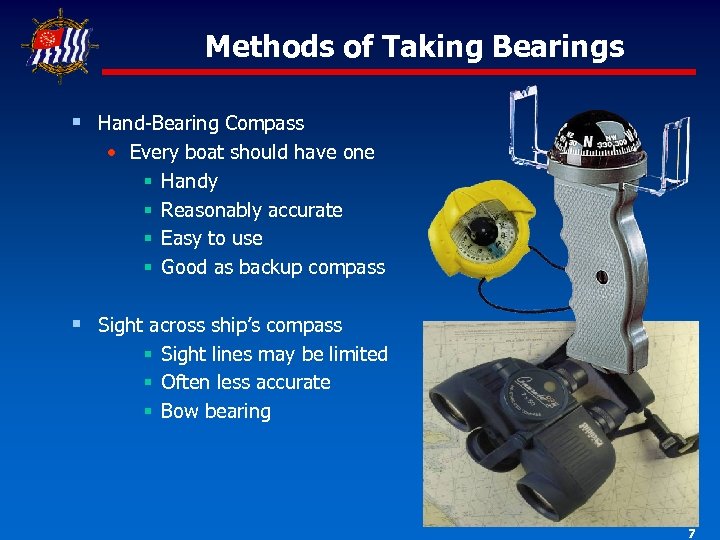 Methods of Taking Bearings § Hand-Bearing Compass • Every boat should have one § Handy § Reasonably accurate § Easy to use § Good as backup compass § Sight across ship’s compass § Sight lines may be limited § Often less accurate § Bow bearing 7
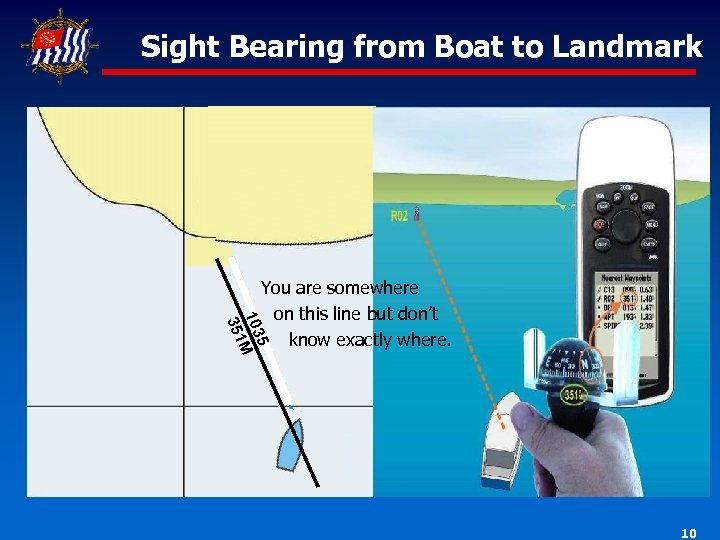
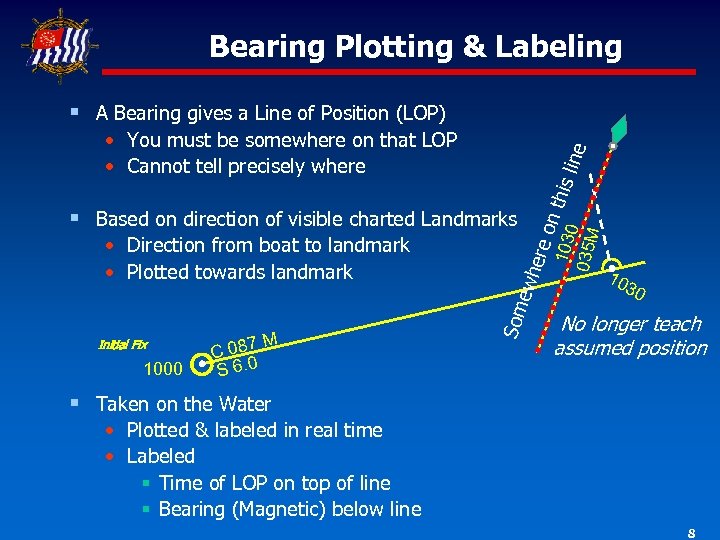 Bearing Plotting & Labeling • You must be somewhere on that LOP • Cannot tell precisely where Initial Fix 1000 M C 087 S 6. 0 Som • Direction from boat to landmark • Plotted towards landmark ewh ere o § Based on direction of visible charted Landmarks 103 n this 0 line 035 M § A Bearing gives a Line of Position (LOP) 10 30 No longer teach assumed position § Taken on the Water • Plotted & labeled in real time • Labeled § Time of LOP on top of line § Bearing (Magnetic) below line 8
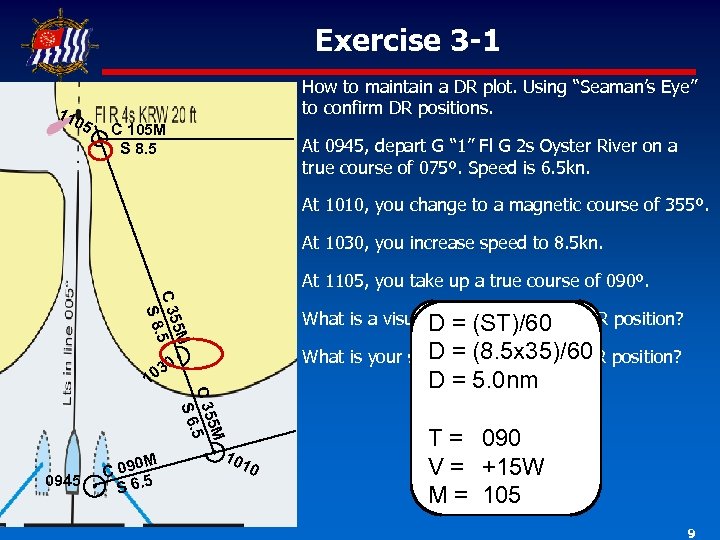 Exercise 3 -1 11 05 How to maintain a DR plot. Using “Seaman’s Eye” to confirm DR positions. C 105 M S 8. 5 At 0945, depart G “ 1” Fl G 2 s Oyster River on a true course of 075º. Speed is 6. 5 kn. At 1010, you change to a magnetic course of 355º. At 1030, you increase speed to 8. 5 kn. At 1105, you take up a true course of 090º. 55 M C 3. 5 S 8 What is a visual. D = (ST)/60 check on the 1030 DR position? D = (ST)/60 T = 075 D = (6. 5 x 20)/60 = +15 W D V 2. 7 nm = 5. 0 nm D = 2. 2 nm M = 090 D = (8. 5 x 35)/60 (6. 5 x 25)/60 What is your sounding at the 1105 DR position? 0 3 10 55 M C 3. 5 S 6 0945 0 M C 09 S 6. 5 10 10 T = 090 M = 355 +15 W V = -15 W M = 340 T = 105 9
 Sight Bearing from Boat to Landmark 5 103 M 351 You are somewhere on this line but don’t know exactly where. 10
 1000 16 1 70 50 1 34 0 0 33 3 0 14 300 120 290 110 280 100 090 270 26 0 08 1 07 0 0 24 0 50 103 0 035 M 0 210 200 190 180 25 220 0 17 0 020 010 0 0 23 0 030 00 16 04 35 0 0 03 05 40 20 310 130 06 35 0 0 50 360 MB = 035 V= -15 W TB = 020 180 0 M C 087 S 6. 0 THE OU TER ME RID SCA IAN LE NER OF LON IS REA SCA DF G LE LAT RO FRO ITUDE ITU MA. TH MA DE. E PAR ALL EL How to Plot a Bearing 040 0 23 0 14 0 33 030 220 210 020 209 190 010 180 000 130 32 10 0 3 30 10 11
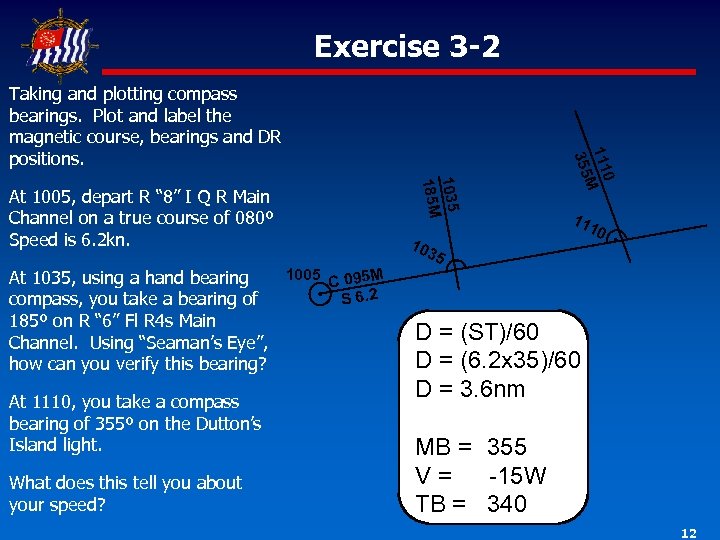 Exercise 3 -2 1005 095 M At 1035, using a hand bearing C S 6. 2 compass, you take a bearing of 185º on R “ 6” Fl R 4 s Main Channel. Using “Seaman’s Eye”, how can you verify this bearing? At 1110, you take a compass bearing of 355º on the Dutton’s Island light. What does this tell you about your speed? 1035 185 M At 1005, depart R “ 8” I Q R Main Channel on a true course of 080º Speed is 6. 2 kn. 0 111 M 355 Taking and plotting compass bearings. Plot and label the magnetic course, bearings and DR positions. 11 10 35 10 D = (ST)/60 D = (6. 2 x 30)/60 (6. 2 x 35)/60 D T = 080 = 3. 1 nm 3. 6 nm V = +15 W M = 355 095 MB = 185 V= -15 W TB = 170 340 12
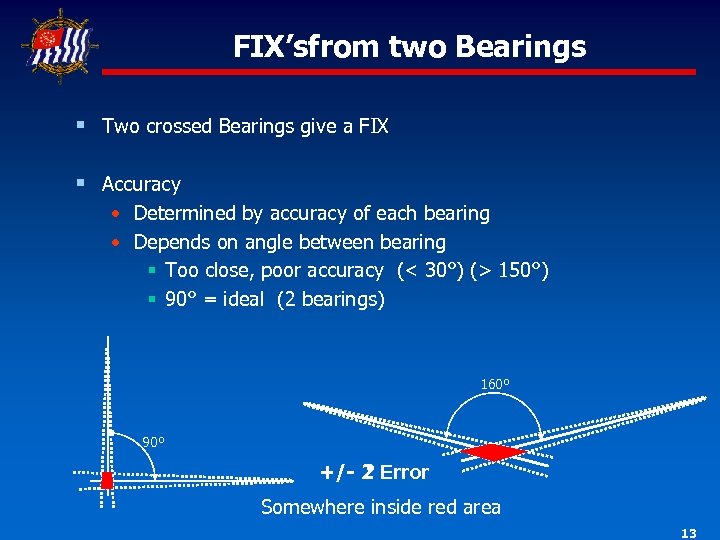 FIX’sfrom two Bearings § Two crossed Bearings give a FIX § Accuracy • Determined by accuracy of each bearing • Depends on angle between bearing § Too close, poor accuracy (< 30°) (> 150°) § 90° = ideal (2 bearings) 160º 90º +/- 2 Error º Somewhere inside red area 13
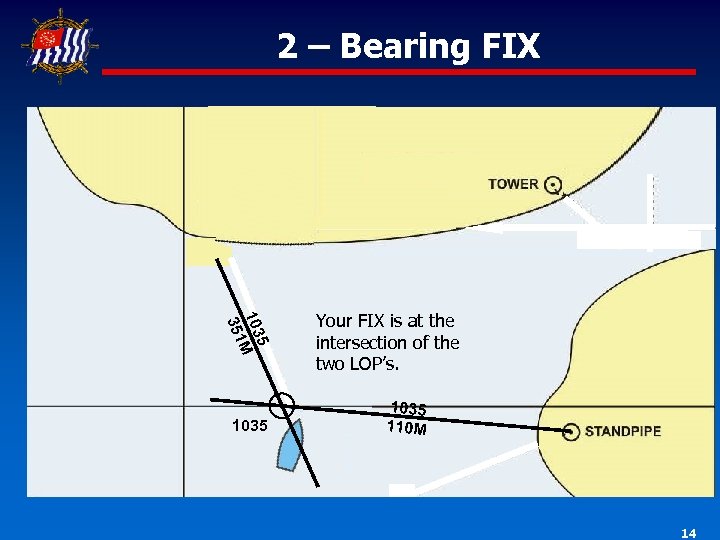 2 – Bearing FIX 5 103 M 351 1035 Your FIX is at the intersection of the two LOP’s. 1035 110 M 14
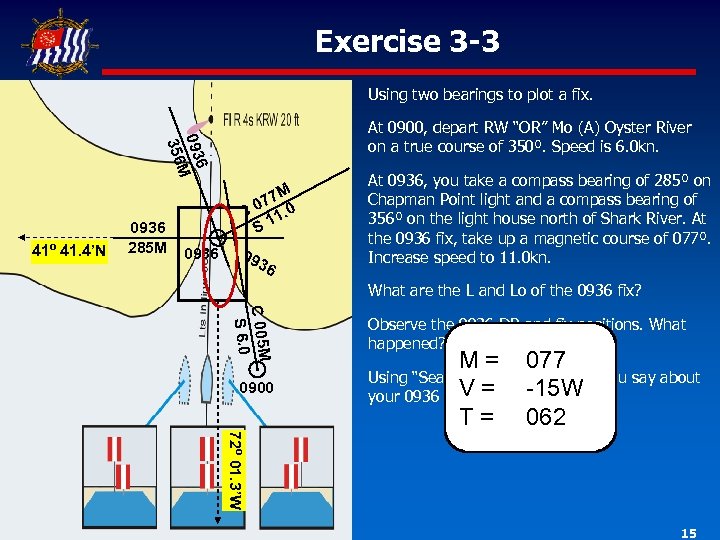 Exercise 3 -3 Using two bearings to plot a fix. 6 093 M 356 At 0900, depart RW “OR” Mo (A) Oyster River on a true course of 350º. Speed is 6. 0 kn. 41º 41. 4’N 0936 285 M 0936 7 M 07. 0 C 11 S 09 36 At 0936, you take a compass bearing of 285º on Chapman Point light and a compass bearing of 356º on the light house north of Shark River. At the 0936 fix, take up a magnetic course of 077º. Increase speed to 11. 0 kn. What are the L and Lo of the 0936 fix? C 005 M S 6. 0 0900 Observe the 0936 DR and fix positions. What happened? M = 285 CB 077 D = (ST)/60 T = =350 356 Using “Seaman’s Eye”, what can you say about D V +15 W -15 W your 0936 fix? = 6. 0 x 36/60 T TB= 062 D = 3. 6 nm M = = 005 341 270 72º 01. 3’W 15
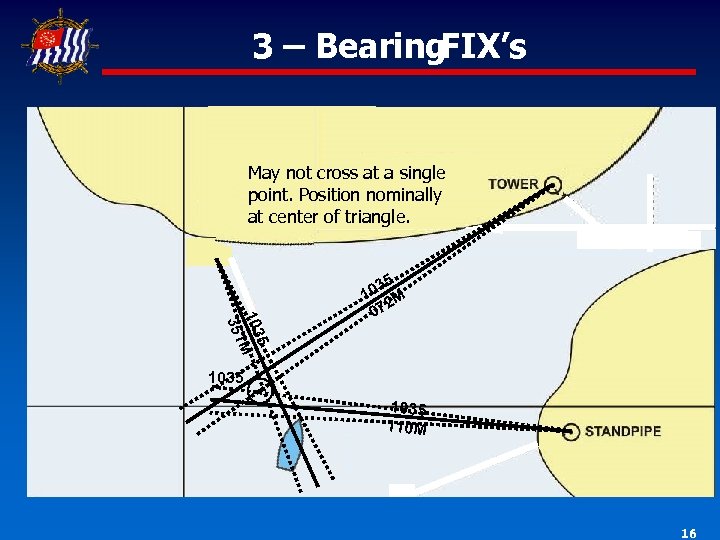 3 – Bearing. FIX’s May not cross at a single point. Position nominally at center of triangle. 5 103 M 351 5 03 1 M 2 07 1035 110 M 16
 10 MINUTE BREAK 10 9 8 PLEASE 7 6 YOUR SEATS TAKE 5 4 3 2 1
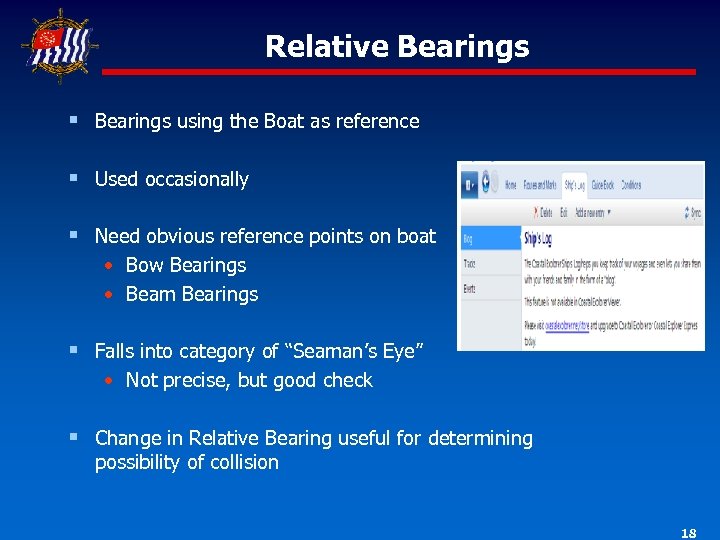 Relative Bearings § Bearings using the Boat as reference § Used occasionally § Need obvious reference points on boat • Bow Bearings • Beam Bearings § Falls into category of “Seaman’s Eye” • Not precise, but good check § Change in Relative Bearing useful for determining possibility of collision 18
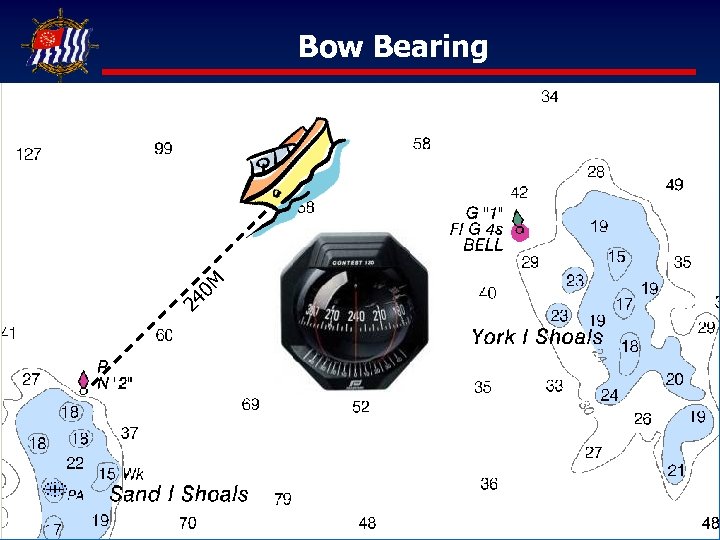 24 0 M Bow Bearing 19
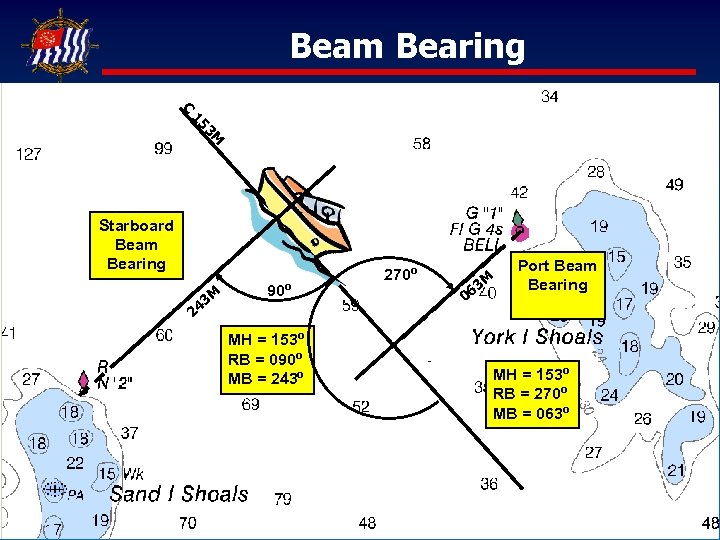 Beam Bearing C 3 M 15 Starboard Beam Bearing M 43 2 90º MH = 153º RB = 090º MB = 243º 270º 3 06 M Port Beam Bearing MH = 153º RB = 270º MB = 063º 20
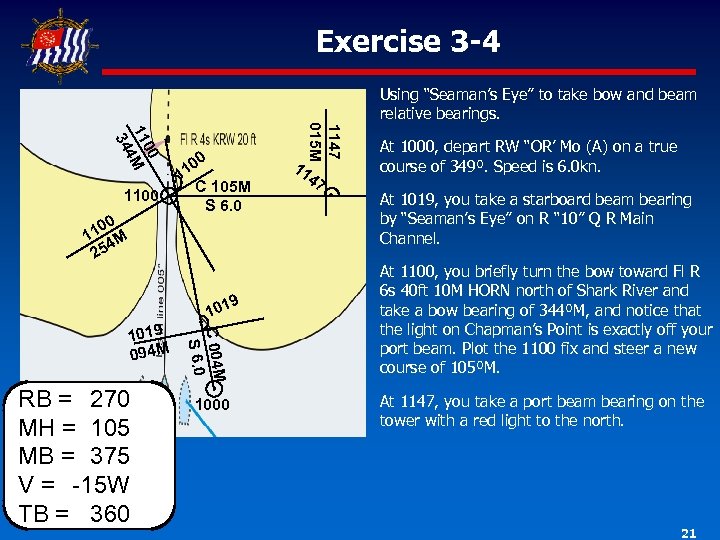 Exercise 3 -4 0 10 1 M 4 25 1147 015 M 00 11 M 4 34 1100 00 11 C 105 M S 6. 0 9 090 RB = 000 270 004 D= 349 MH = 105/ 60 105 344 M = (ST) D = (ST)/60 T = (ST)/60 094 D=(6. 0 x 41)/60 MB -15 W 375 254 344 D=(6. 0 x 47)/60 D = =+15 W V 6. 0 x 19/60 D= 004 T V 4. 7 nm -15 W 090 -15 W D = 4. 1 nm M = 1. 9 nm TB = 079 360 239 329 C 004 M S 6. 0 1019 094 M 101 1000 11 47 Using “Seaman’s Eye” to take bow and beam relative bearings. At 1000, depart RW “OR’ Mo (A) on a true course of 349º. Speed is 6. 0 kn. At 1019, you take a starboard beam bearing by “Seaman’s Eye” on R “ 10” Q R Main Channel. At 1100, you briefly turn the bow toward Fl R 6 s 40 ft 10 M HORN north of Shark River and take a bow bearing of 344ºM, and notice that the light on Chapman’s Point is exactly off your port beam. Plot the 1100 fix and steer a new course of 105ºM. At 1147, you take a port beam bearing on the tower with a red light to the north. 21
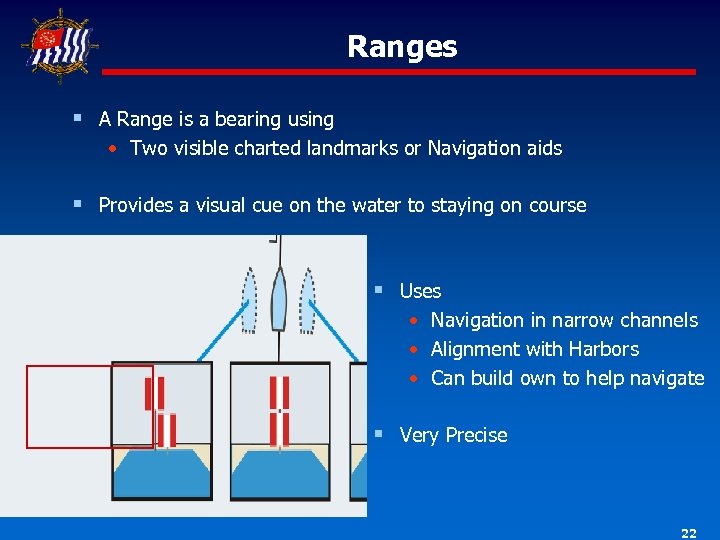 Ranges § A Range is a bearing using • Two visible charted landmarks or Navigation aids § Provides a visual cue on the water to staying on course § Uses • Navigation in narrow channels • Alignment with Harbors • Can build own to help navigate § Very Precise 22
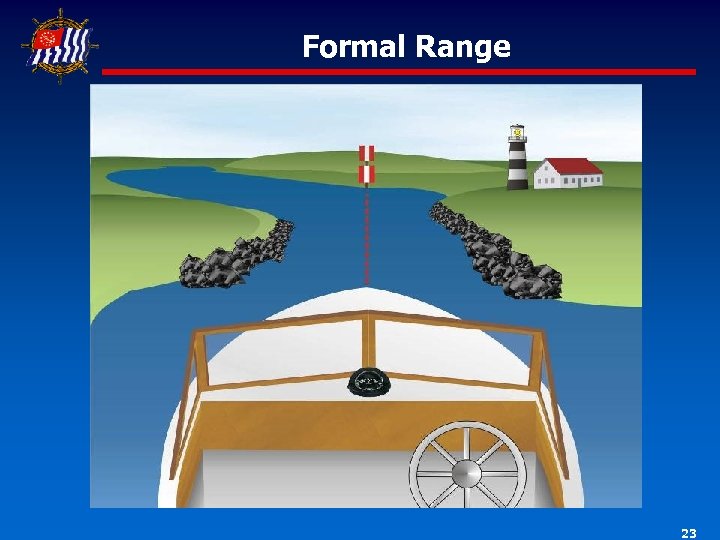 Formal Range 23
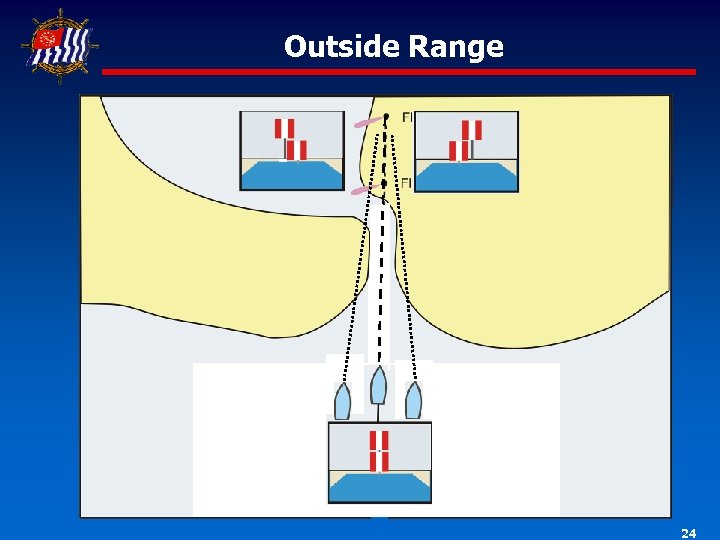 Outside Range 24
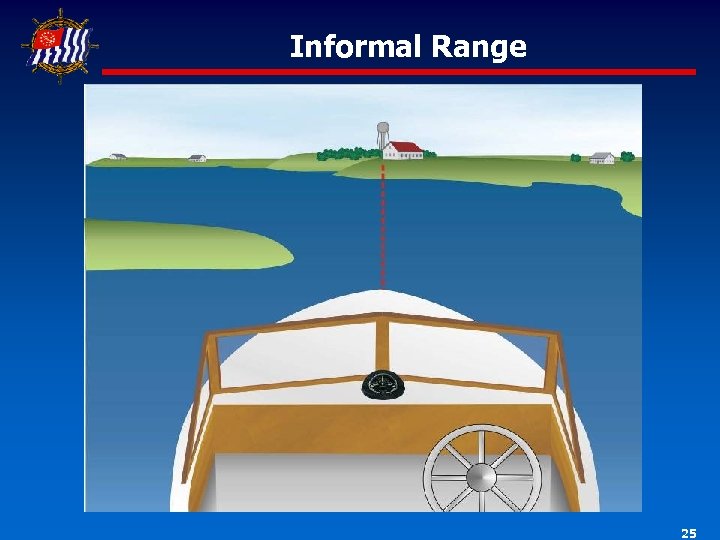 Informal Range 25
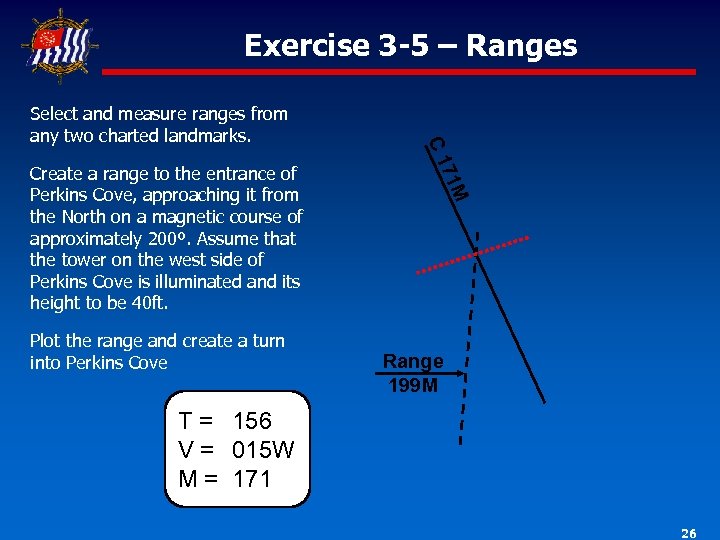 Exercise 3 -5 – Ranges Plot the range and create a turn into Perkins Cove 71 M Create a range to the entrance of Perkins Cove, approaching it from the North on a magnetic course of approximately 200º. Assume that the tower on the west side of Perkins Cove is illuminated and its height to be 40 ft. C 1 Select and measure ranges from any two charted landmarks. Range 199 M T = 184 156 V = 015 W M = 199 171 26
 Using GPS to Navigate § GPS gives your position – precisely and continuously § But, how do you navigate and stay safe? § Must periodically plot position on a chart • • • Essential to have reference to what is nearby Or, along your path Or, beneath you Can be a tedious task Best approach - Create pre-qualified legs on the water and Follow your plan 27
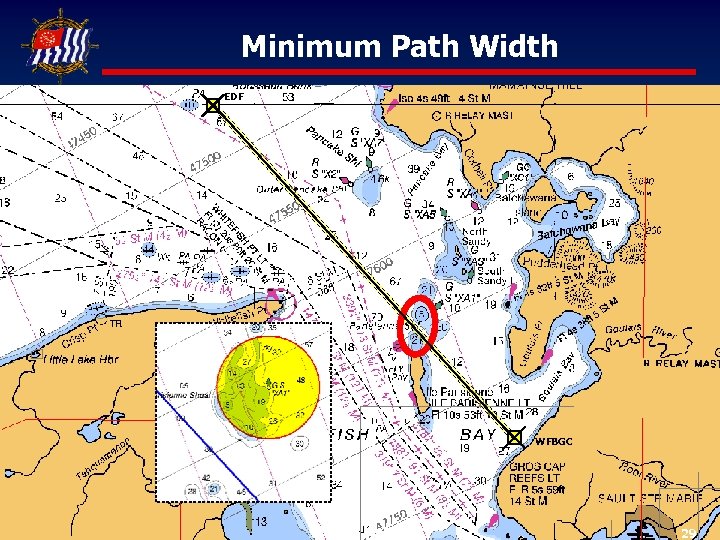
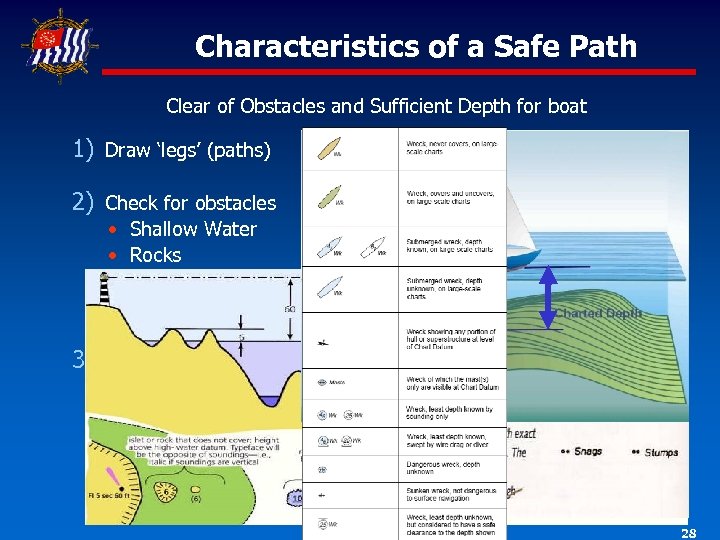 Characteristics of a Safe Path Clear of Obstacles and Sufficient Depth for boat 1) Draw ‘legs’ (paths) 2) Check for obstacles • • Shallow Water Rocks Wrecks Other Obstacles 3) Safe Path Width • Nominally about 1/10 th nm on each side § Equal to smallest increment on latitude scale § About 600 feet • Allows for helmsmanship, other boats, some drift 28
 Minimum Path Width EDF WFBGC 29
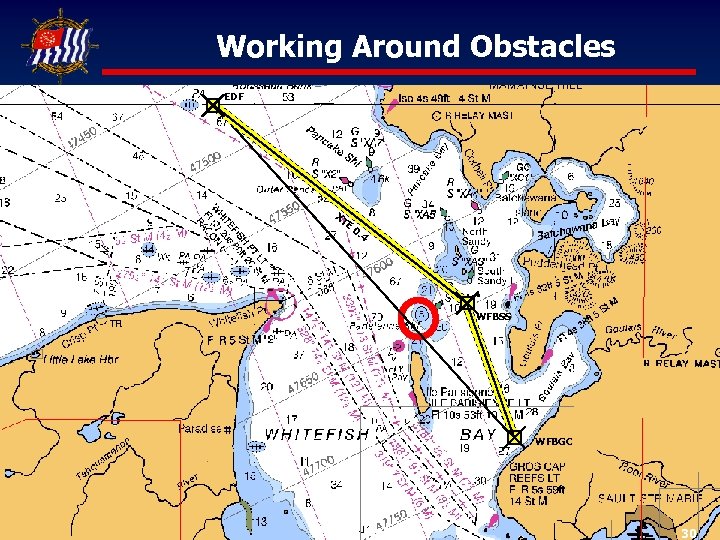 Working Around Obstacles EDF XT E 0. 4 WFBSS WFBGC 30
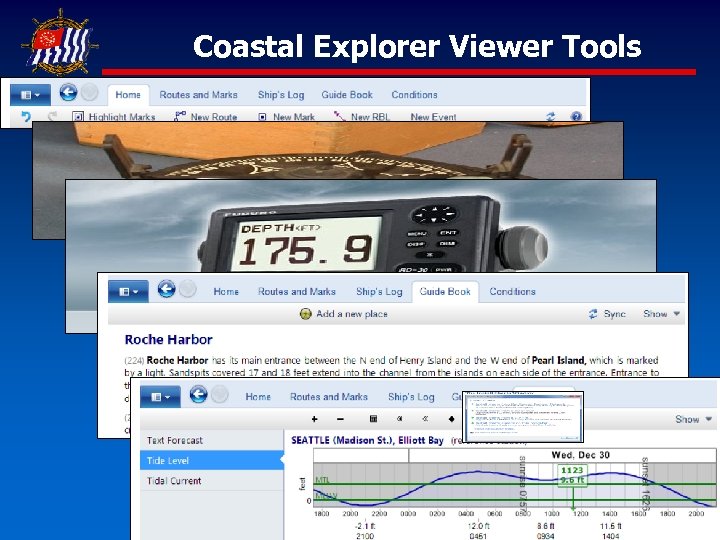
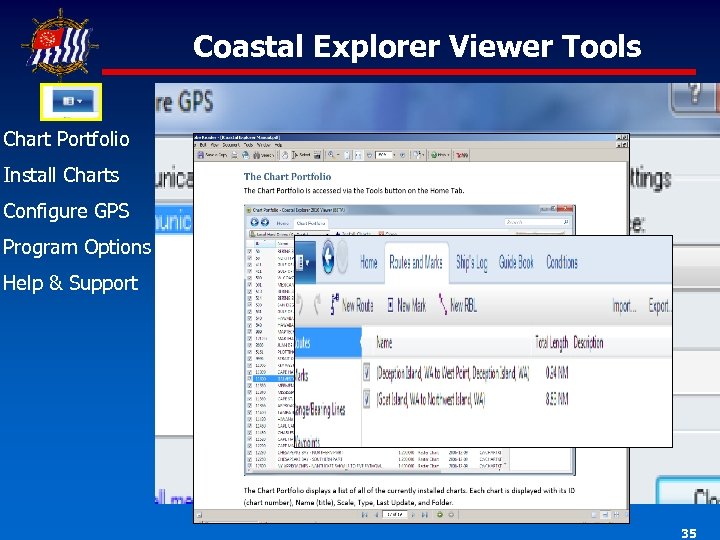
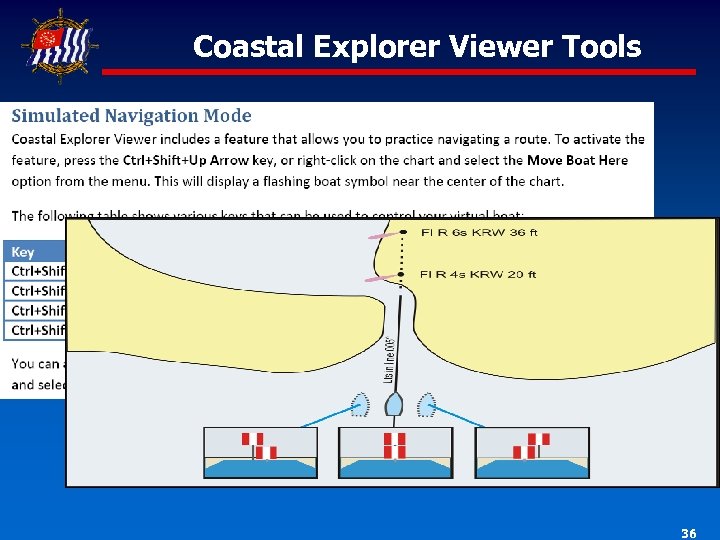
 Digital Charting CD § Coastal Explorer Viewer Software • • Plot marks, waypoints, routes Annotate charts (Raster) Upload, download to GPS Edit § Charts • Bowditch Bay, 1210 tr • Chart set – Block Is to Martha’s Vineyard § Nautical, Topo, Photo, Aerial – selected • Charts – § Small scale – Entire U. S. coasts, Great Lakes, Hawaii, Alaska, North Pacific, Caribbean areas, World 31
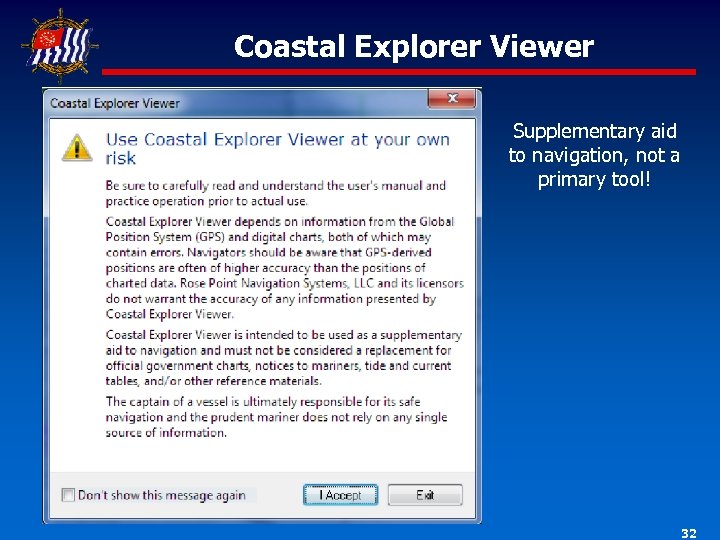 Coastal Explorer Viewer Supplementary aid to navigation, not a primary tool! 32
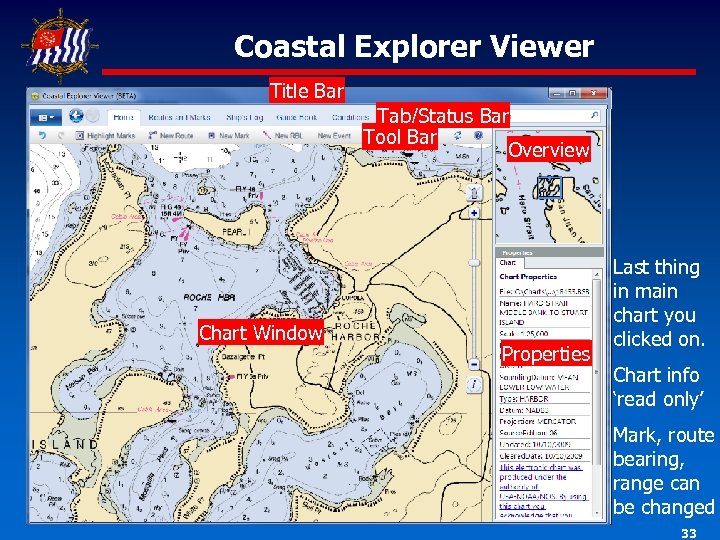 Coastal Explorer Viewer Title Bar Tab/Status Bar Tool Bar Overview Chart Window Properties Last thing in main chart you clicked on. Chart info ‘read only’ Mark, route bearing, range can be changed 33
 Coastal Explorer Viewer Tools 34
 Coastal Explorer Viewer Tools Chart Portfolio Install Charts Configure GPS Program Options Help & Support 35
 Coastal Explorer Viewer Tools 36
 Questions ? … Comments 37
 Homework § Read Chapter 4 – Student Guide § Review Chapters 4 & 5 – Weekend Navigator § Do Chapter 3 homework § Next class – 14 February 38