


 Скачать презентацию United Nations Economic Commission for Europe Integrated Management
1aaec14978fa615031b2f8827d7bca32.ppt
- Количество слайдов: 30
 United Nations Economic Commission for Europe Integrated Management of Trade Information Flows: What must a country do? Mario Apostolov, Regional Adviser, UNECE Trade mario. apostolov@unece. org
 UNECE support for trade facilitation and PRO committees Over 40 years of work on trade facilitation standards: UNLK, codes, EDIFACT, etc. Recommendation 4: PRO Committees http: //www. unece. org/cefact/rec 04 en. htm A network in SEE – SECI PRO Committees l l Create a regional network (commitment – the SECI model) Link to projects
 UNECE support for trade facilitation and PRO committees Support for PRO committees: Czech-UNECE technical assistance project: internship in CZ, TF seminars in the region Contact: mario. apostolov@unece. org
 The importance of managing trade information flows Efficiency -> basic trade facilitation (cutting red tape, faster and efficient movement of trade information and goods) Security -> improving information gathering is the key
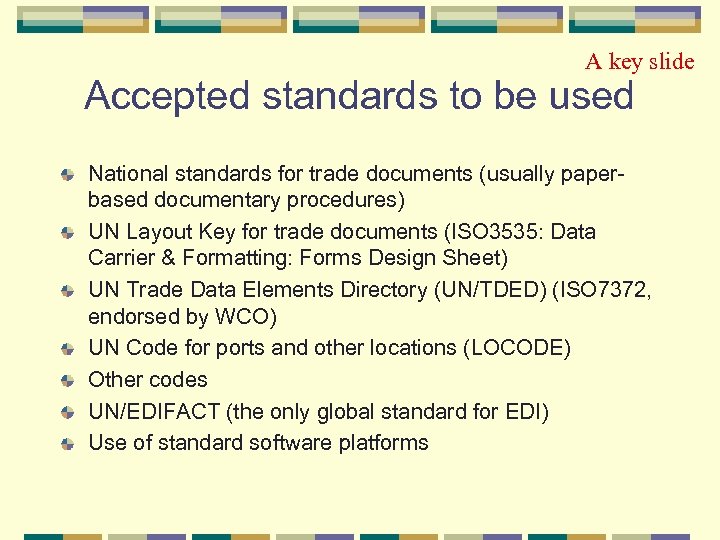 A key slide Accepted standards to be used National standards for trade documents (usually paperbased documentary procedures) UN Layout Key for trade documents (ISO 3535: Data Carrier & Formatting: Forms Design Sheet) UN Trade Data Elements Directory (UN/TDED) (ISO 7372, endorsed by WCO) UN Code for ports and other locations (LOCODE) Other codes UN/EDIFACT (the only global standard for EDI) Use of standard software platforms
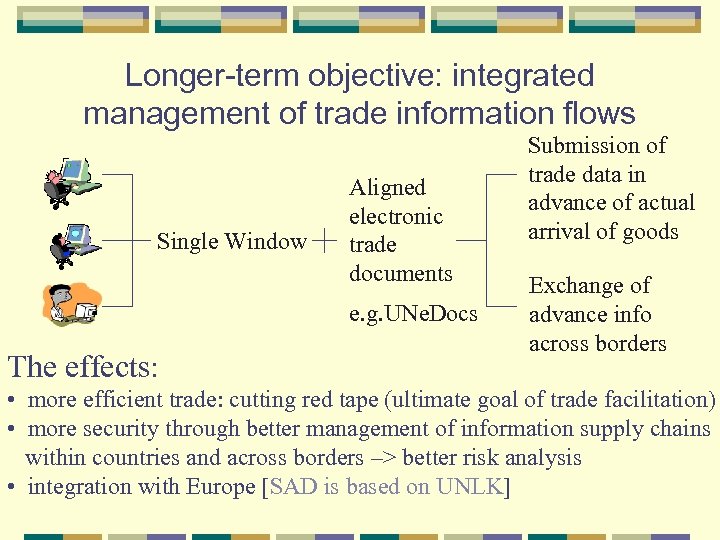 Longer-term objective: integrated management of trade information flows Single Window Aligned electronic trade documents e. g. UNe. Docs The effects: Submission of trade data in advance of actual arrival of goods Exchange of advance info across borders • more efficient trade: cutting red tape (ultimate goal of trade facilitation) • more security through better management of information supply chains within countries and across borders –> better risk analysis • integration with Europe [SAD is based on UNLK]
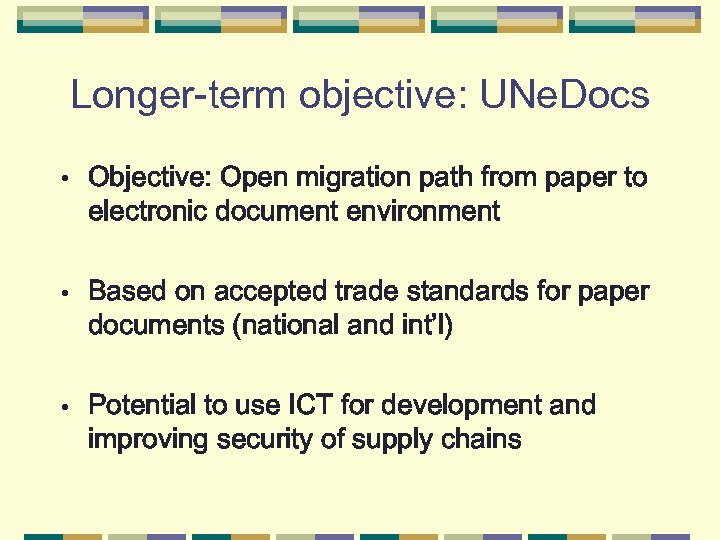 Longer-term objective: UNe. Docs • Objective: Open migration path from paper to electronic document environment • Based on accepted trade standards for paper documents (national and int’l) • Potential to use ICT for development and improving security of supply chains
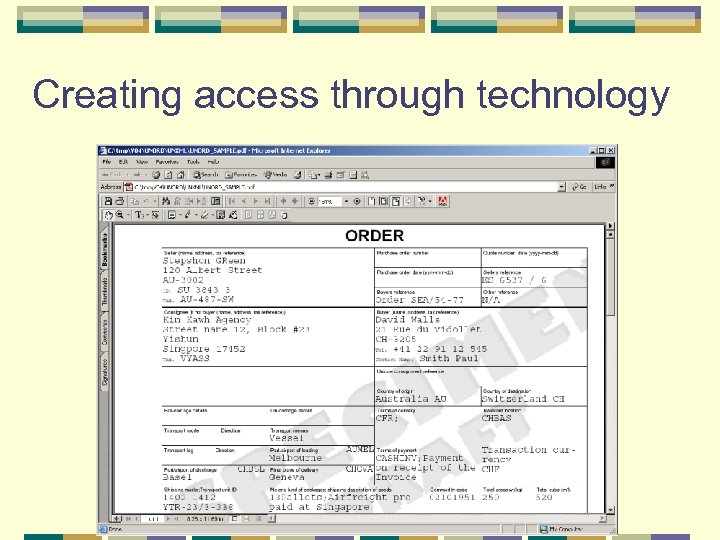 Creating access through technology
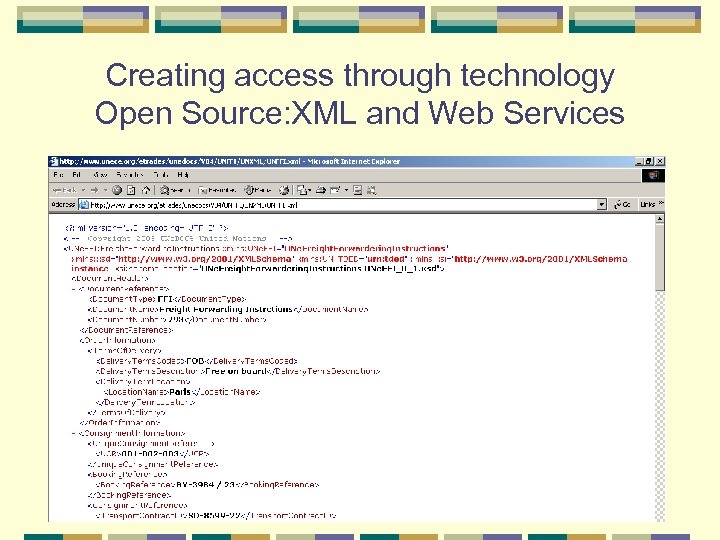 Creating access through technology Open Source: XML and Web Services
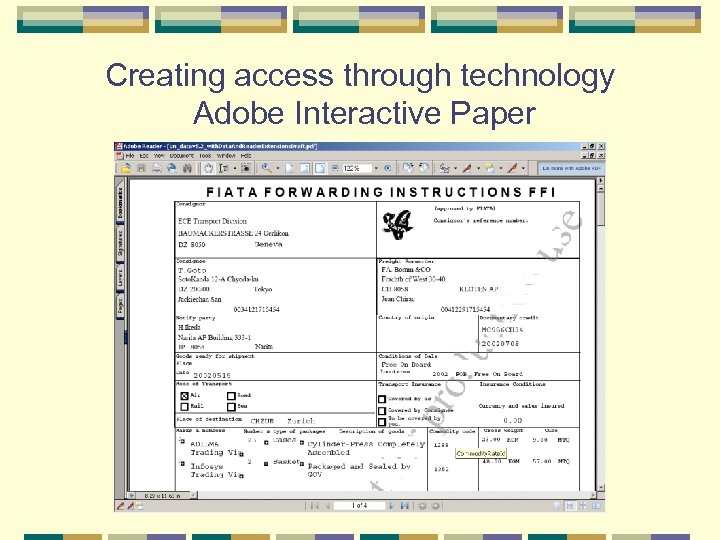 Creating access through technology Adobe Interactive Paper
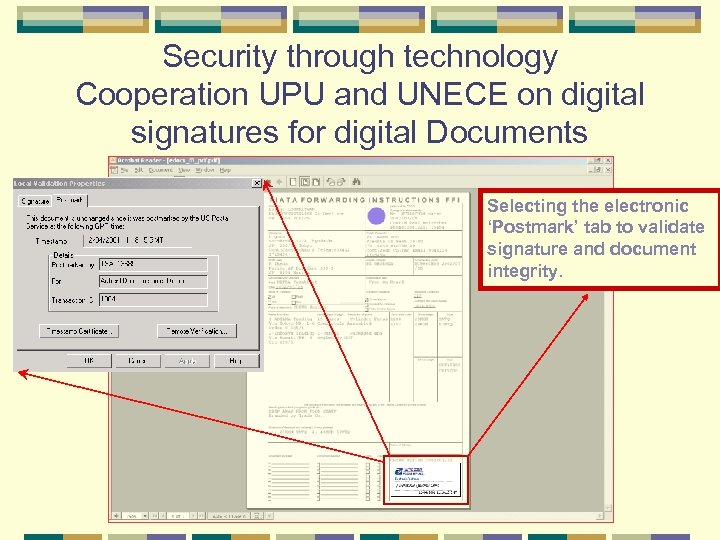 Security through technology Cooperation UPU and UNECE on digital signatures for digital Documents Selecting the electronic ‘Postmark’ tab to validate signature and document integrity.
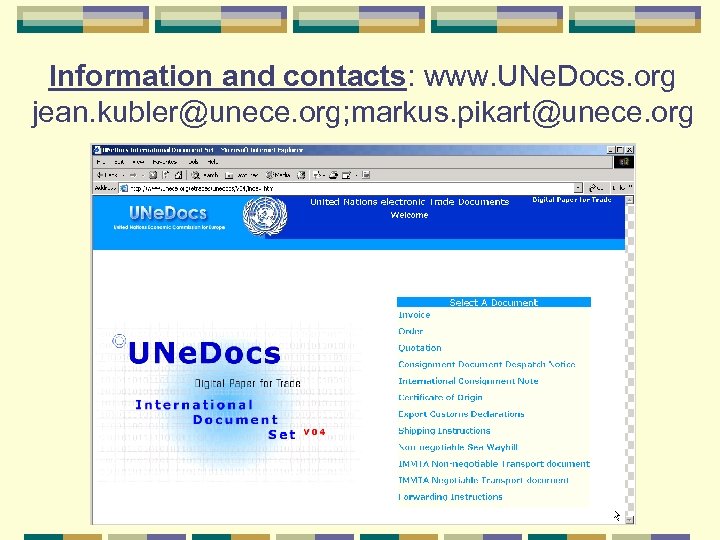 Information and contacts: www. UNe. Docs. org jean. kubler@unece. org; markus. pikart@unece. org
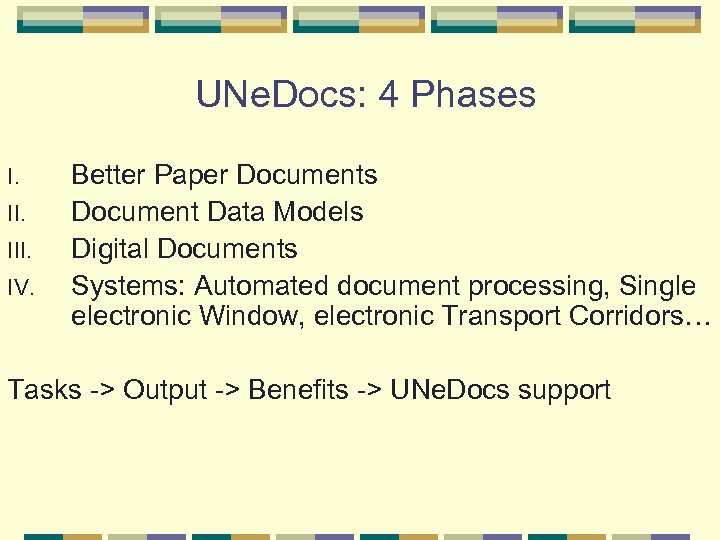 UNe. Docs: 4 Phases I. III. IV. Better Paper Documents Document Data Models Digital Documents Systems: Automated document processing, Single electronic Window, electronic Transport Corridors… Tasks -> Output -> Benefits -> UNe. Docs support
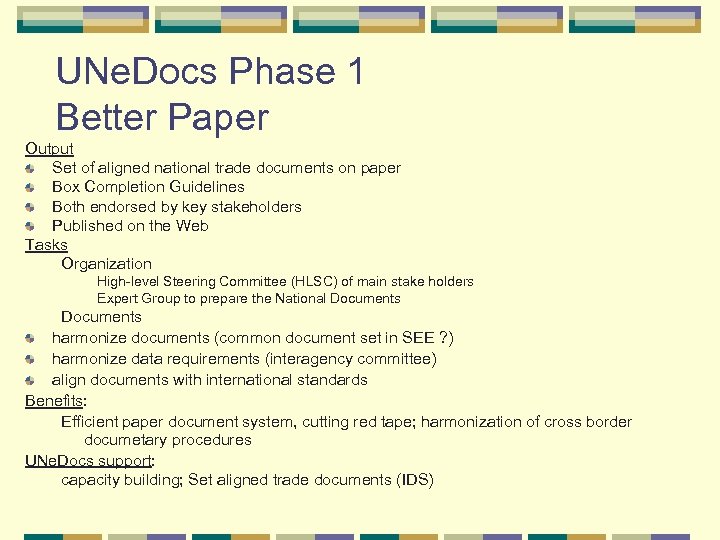 UNe. Docs Phase 1 Better Paper Output Set of aligned national trade documents on paper Box Completion Guidelines Both endorsed by key stakeholders Published on the Web Tasks Organization High-level Steering Committee (HLSC) of main stake holders Expert Group to prepare the National Documents harmonize documents (common document set in SEE ? ) harmonize data requirements (interagency committee) align documents with international standards Benefits: Efficient paper document system, cutting red tape; harmonization of cross border documetary procedures UNe. Docs support: capacity building; Set aligned trade documents (IDS)
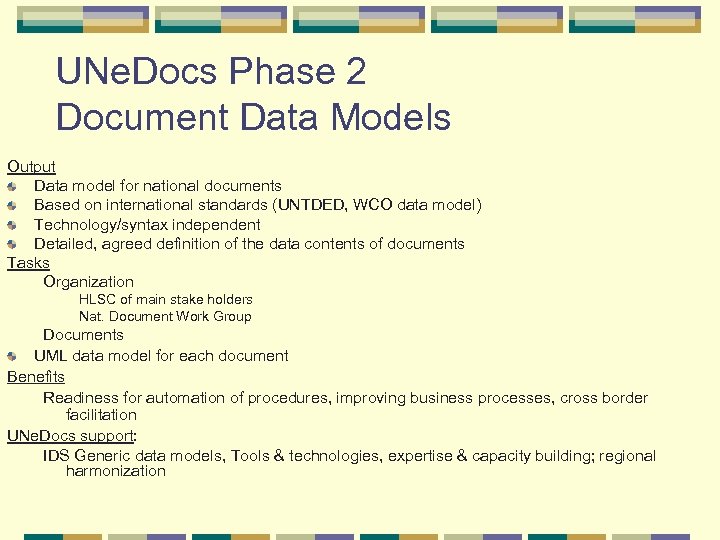 UNe. Docs Phase 2 Document Data Models Output Data model for national documents Based on international standards (UNTDED, WCO data model) Technology/syntax independent Detailed, agreed definition of the data contents of documents Tasks Organization HLSC of main stake holders Nat. Document Work Group Documents UML data model for each document Benefits Readiness for automation of procedures, improving business processes, cross border facilitation UNe. Docs support: IDS Generic data models, Tools & technologies, expertise & capacity building; regional harmonization
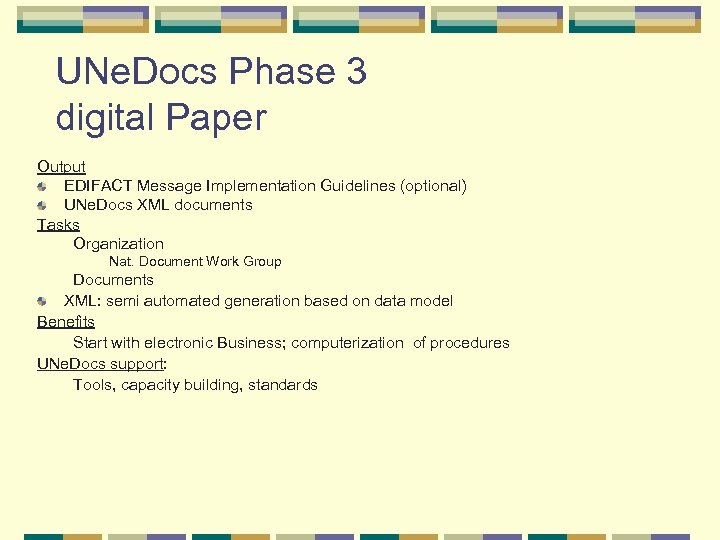 UNe. Docs Phase 3 digital Paper Output EDIFACT Message Implementation Guidelines (optional) UNe. Docs XML documents Tasks Organization Nat. Document Work Group Documents XML: semi automated generation based on data model Benefits Start with electronic Business; computerization of procedures UNe. Docs support: Tools, capacity building, standards
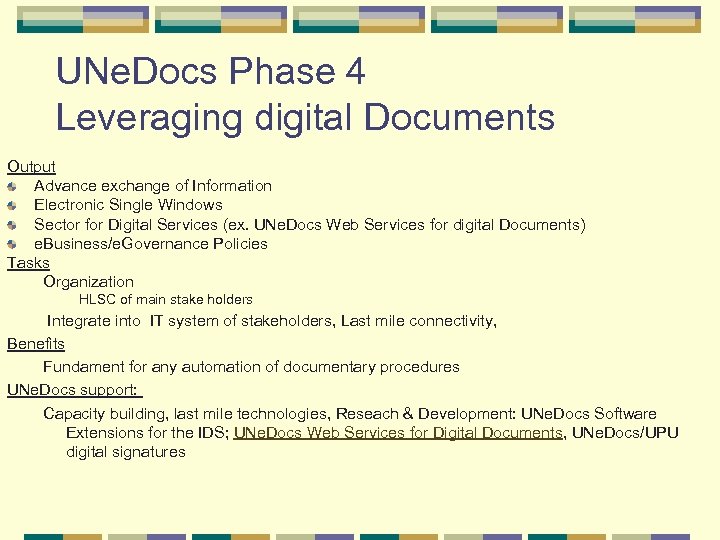 UNe. Docs Phase 4 Leveraging digital Documents Output Advance exchange of Information Electronic Single Windows Sector for Digital Services (ex. UNe. Docs Web Services for digital Documents) e. Business/e. Governance Policies Tasks Organization HLSC of main stake holders Integrate into IT system of stakeholders, Last mile connectivity, Benefits Fundament for any automation of documentary procedures UNe. Docs support: Capacity building, last mile technologies, Reseach & Development: UNe. Docs Software Extensions for the IDS; UNe. Docs Web Services for Digital Documents, UNe. Docs/UPU digital signatures
 Harmonization – a key If countries harmonize documentary and data requirements with international standards (or create a common document set), UNECE can help with tools – a project to gather the documents and assess their alignment. Political will needed – support from existing structures (TRACECA, PRO Cttees, etc) and the donors – EU, World Bank, US, private sector.
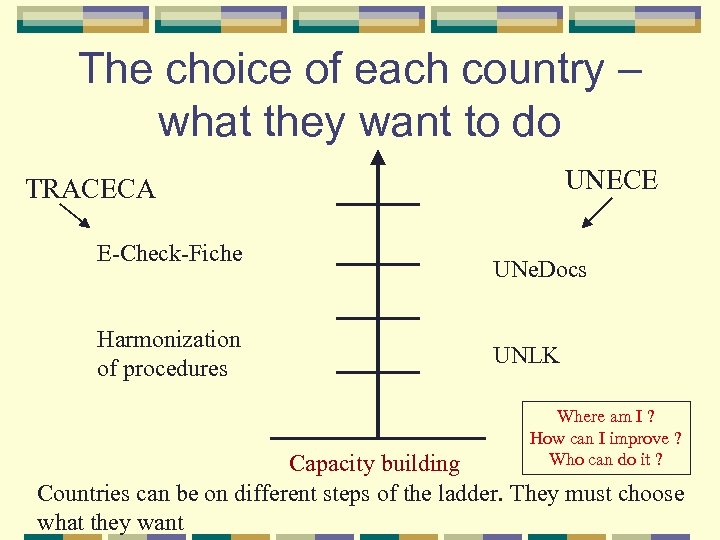 The choice of each country – what they want to do UNECE TRACECA E-Check-Fiche Harmonization of procedures UNe. Docs UNLK Where am I ? How can I improve ? Who can do it ? Capacity building Countries can be on different steps of the ladder. They must choose what they want
 What a country should do to prepare for a pilot project 1. 2. 3. 4. 5. 6. create a national e-document strategic vision make a review of the UNe. Docs documents focus on one or two key documents investigate feasibility for cross border exchange of electronic documents establish and/or strengthen cooperation with international organizations build support for pilot project & create a data model Before starting implementation – financing and donor support should be guaranteed, and a resource plan developed.
 Expected benefits Efficient supply of information for managing supply chains • Scalable to user requirements • Compatible with existing procedures and regulation • Security of investments •
 Longer-term objective: Single Window Definition (from UN/CEFACT draft Recommendation) • Single Window – “a facility that allows parties involved in trade and transport to lodge standardized information and documents with a single entry point to fulfil all import, export, and transit-related regulatory requirements. ” • If information is electronic – electronic SW (not obligatory), individual data elements should only be submitted once. • UN/CEFACT will adopt a Recommendation and Guidelines on SW in summer 2004 (text available)
 For an electronic Single Window one needs: Well defined documents. • Description of the required information • Electronic documents • This is the link to UNe. Docs
 Benefits from a Single Window For government (both lead agencies and other agencies) More effective and efficient deployment of resources Correct (and often increased) revenue yield Improved trader compliance Enhanced security (risk profiling & management) Increased integrity and transparency For trade Cutting cost through reducing delays Faster clearance and release Predictable application and explanation of rules More effective and efficient implementation of rules Increased transparency
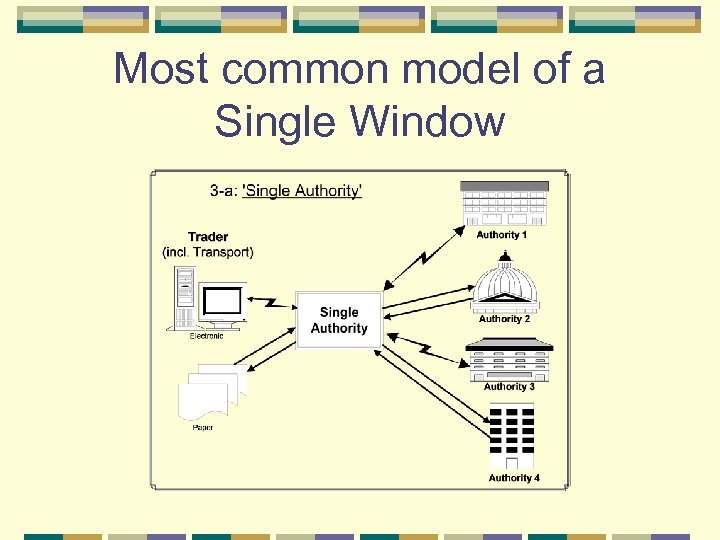 Most common model of a Single Window
 Practical steps in planning and implementing a Single Window Developing the Initial Concept Initial Decision to Examine the Feasibility of a Single Window Undertaking a Feasibility Study Consideration of the Feasibility Study Report Implementation For more information: tom. butterly@unece. org
 Managing risk and information in container trade Importance of managing trade information flows: Efficiency Security (information for risk profiling) “If we do not know what is in it, it will not move!” Douglas Browning, US Deputy Customs Commissioner, statement at UNECE’s Second International Forum on Trade Facilitation, Geneva, 14 May 2003.
 The role of TRACECA, World Bank (TTFSC), etc. in the implementation of TF tools Help implement existing TF tools and standards? If countries request – implementation projects of UNe. Docs & SW. Can TTFSE link to implementation projects on improving the management of information supply chains?
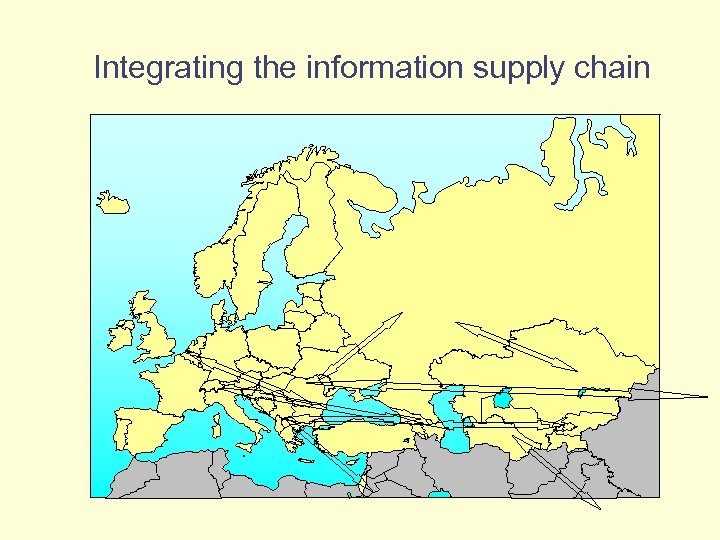 Integrating the information supply chain
 United Nations Economic Commission for Europe Thank you ! www. unece. org mario. apostolov@unece. org