


 Скачать презентацию Unit II The Price Discovery Mechanism 2007
4972b2590f57de791b46d66d5948abde.ppt
- Количество слайдов: 100
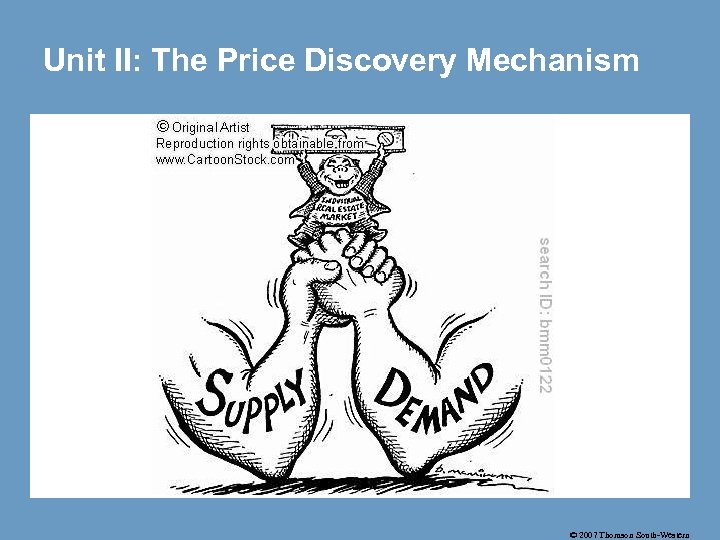 Unit II: The Price Discovery Mechanism © 2007 Thomson South-Western
 Consumer Activity • This requires full class participation • All you need to do is raise your hand • I will be polling the class on their willingness to pay for a certain good or service • We all will copy the data down in our notes… © 2007 Thomson South-Western
 © 2007 Thomson South-Western
 What Is a Market? • A market is a group of buyers and sellers of a particular good or service. Apple Store: I-Phone 4 Launch © 2007 Thomson South-Western
 Competitive Markets • A market in which there are many buyers and sellers so that no individual has an impact on the market price. © 2007 Thomson South-Western
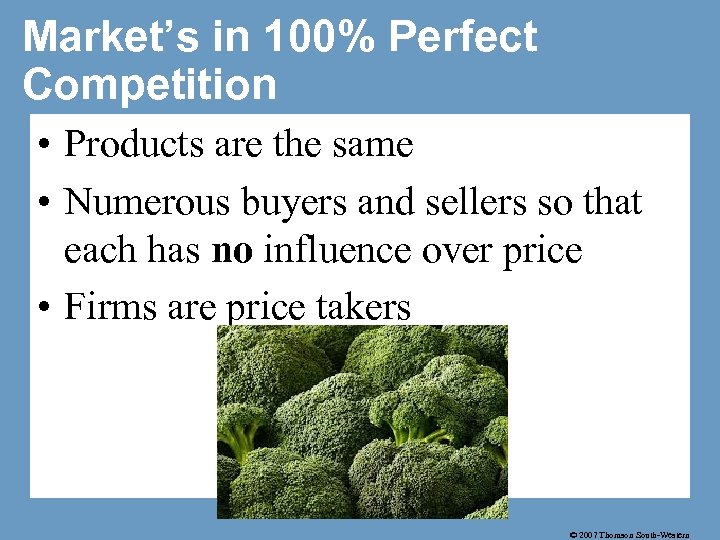 Market’s in 100% Perfect Competition • Products are the same • Numerous buyers and sellers so that each has no influence over price • Firms are price takers © 2007 Thomson South-Western
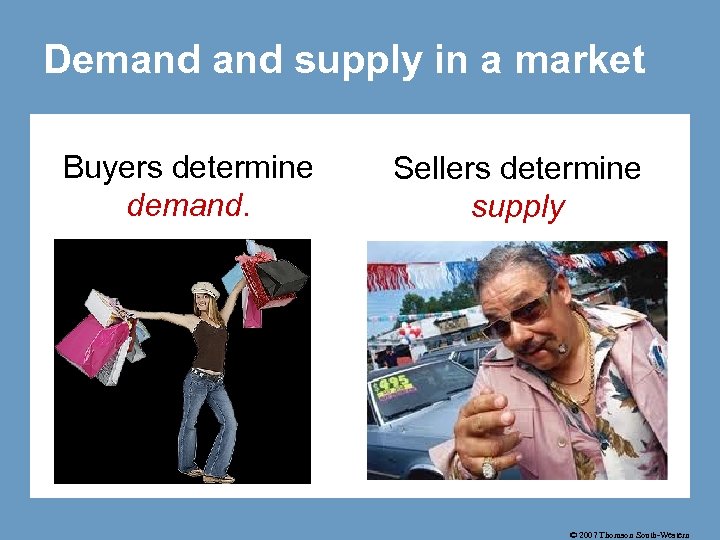 Demand supply in a market Buyers determine demand. Sellers determine supply © 2007 Thomson South-Western
 Demand!!!! © 2007 Thomson South-Western
 Demand • Shows the amount people are willing to buy at every price © 2007 Thomson South-Western
 Quantity Demanded • The amount of a good that buyers are able and willing to purchase at a specific price. • You want the good, and you can afford it © 2007 Thomson South-Western
 Would this factor into your quantity demanded? © 2007 Thomson South-Western
 The Law of Demand • When a good’s price is lower, consumers will buy more of it. When the price is higher, consumers will buy less of it. © 2007 Thomson South-Western
 The Demand Curve: The Relationship between Price and Quantity Demanded • Demand Schedule • The demand schedule is a table that shows the relationship between the price of the good and the quantity demanded. © 2007 Thomson South-Western
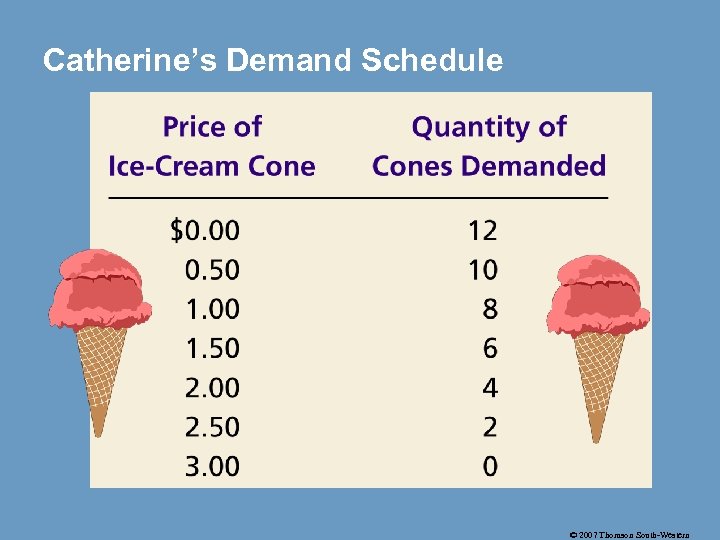 Catherine’s Demand Schedule © 2007 Thomson South-Western
 The Demand Curve: The Relationship between Price and Quantity Demanded • Demand Curve • The demand curve is a graph of the relationship between the price of a good and the quantity demanded. © 2007 Thomson South-Western
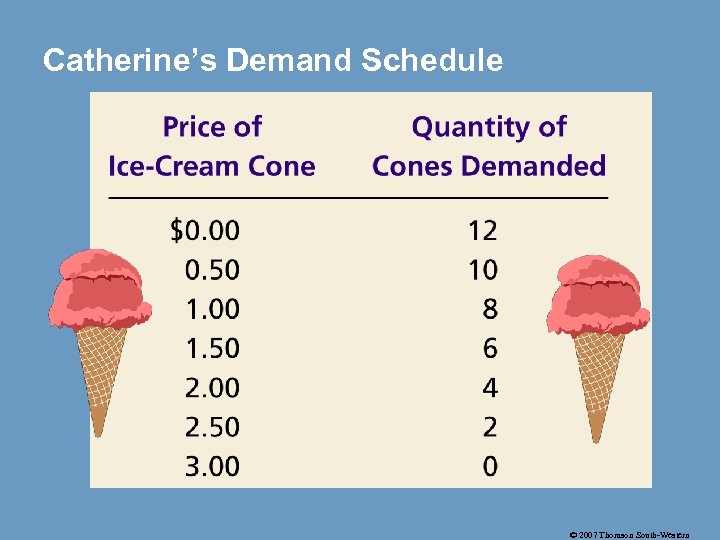 Catherine’s Demand Schedule © 2007 Thomson South-Western
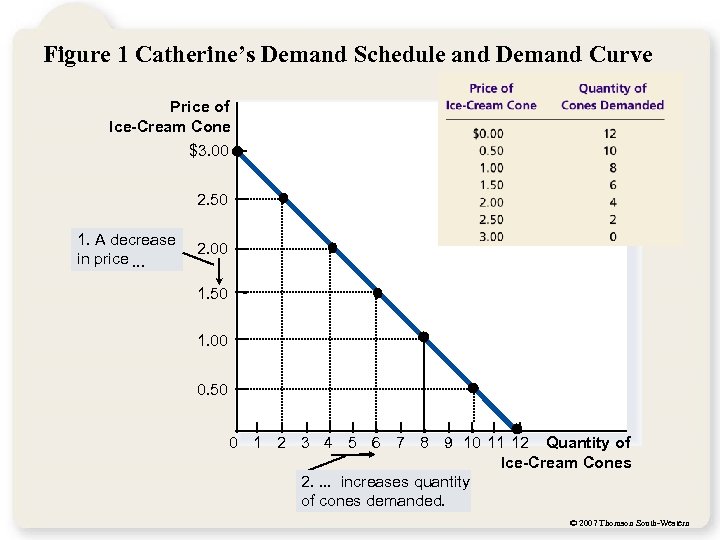 Figure 1 Catherine’s Demand Schedule and Demand Curve Price of Ice-Cream Cone $3. 00 2. 50 1. A decrease in price. . . 2. 00 1. 50 1. 00 0. 50 0 1 2 3 4 5 6 7 8 9 10 11 12 Quantity of Ice-Cream Cones 2. . increases quantity of cones demanded. © 2007 Thomson South-Western
 Market Demand versus Individual Demand • Market demand refers to the sum of all individual demands for a particular good or service. © 2007 Thomson South-Western
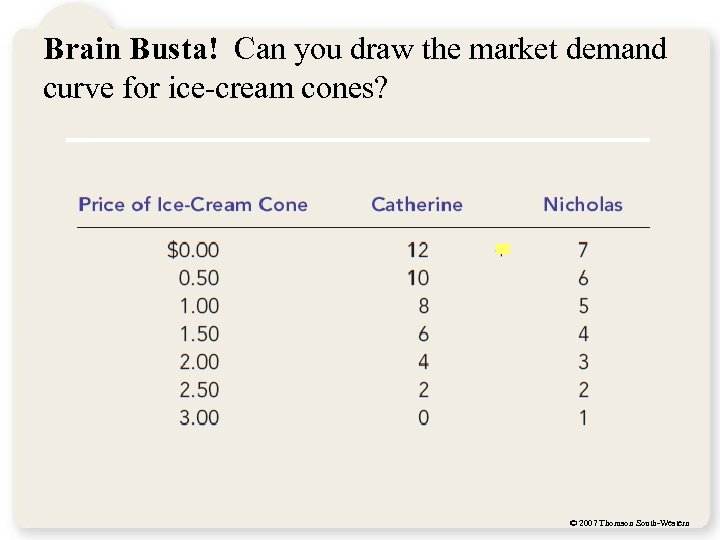 Brain Busta! Can you draw the market demand curve for ice-cream cones? © 2007 Thomson South-Western
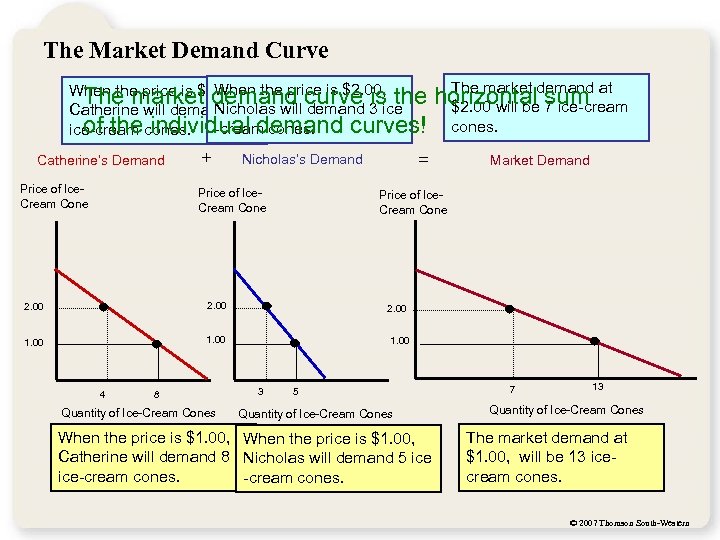 The Market Demand Curve When the price is $2. 00, the The market demand curve 3 ice is Nicholas will demand Catherine will demand 4 of the individual demand curves! ice-cream cones. Catherine’s Demand Price of Ice. Cream Cone + = Nicholas’s Demand Price of Ice. Cream Cone The market horizontaldemand at sum $2. 00 will be 7 ice-cream cones. Market Demand Price of Ice. Cream Cone 2. 00 1. 00 4 8 Quantity of Ice-Cream Cones 3 5 Quantity of Ice-Cream Cones When the price is $1. 00, Catherine will demand 8 Nicholas will demand 5 ice-cream cones. 7 13 Quantity of Ice-Cream Cones The market demand at $1. 00, will be 13 icecream cones. © 2007 Thomson South-Western
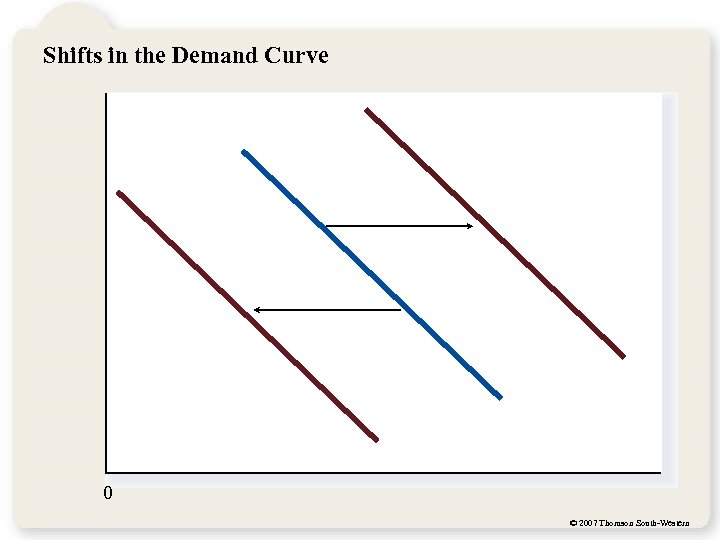 Shifts in the Demand Curve 0 © 2007 Thomson South-Western
 First know this!! • Quantity Demanded and Demand are two different things! • Quantity Demanded is referring to the amount of demand at a give price • Demand refers to the actual curve itself • Let’s take a look… © 2007 Thomson South-Western
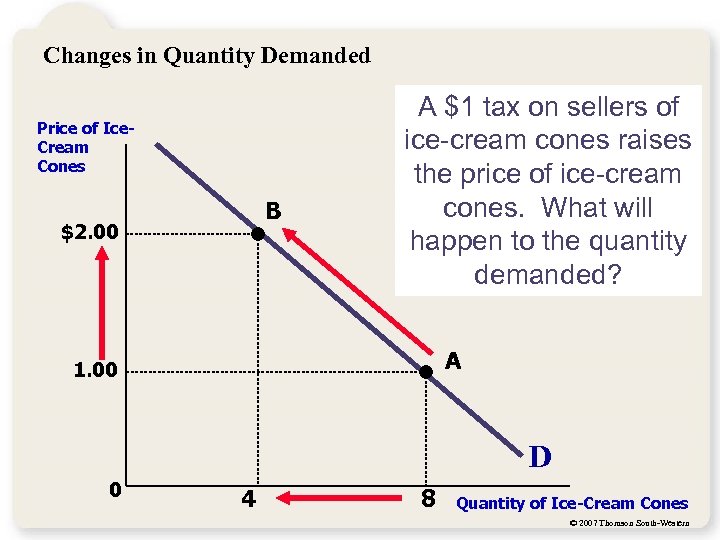 Changes in Quantity Demanded Price of Ice. Cream Cones B $2. 00 A $1 tax on sellers of ice-cream cones raises the price of ice-cream cones. What will happen to the quantity demanded? A 1. 00 D 0 4 8 Quantity of Ice-Cream Cones © 2007 Thomson South-Western
 Does a change in the price of goods shift the demand curve? NO!!! © 2007 Thomson South-Western
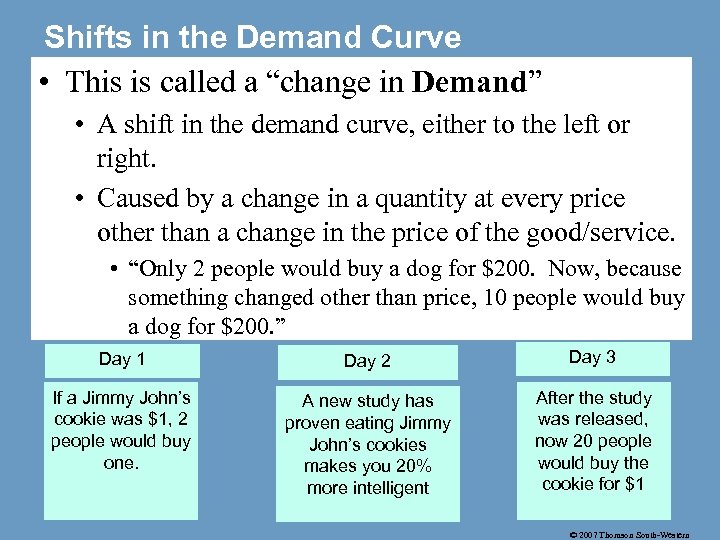 Shifts in the Demand Curve • This is called a “change in Demand” • A shift in the demand curve, either to the left or right. • Caused by a change in a quantity at every price other than a change in the price of the good/service. • “Only 2 people would buy a dog for $200. Now, because something changed other than price, 10 people would buy a dog for $200. ” Day 1 Day 2 Day 3 If a Jimmy John’s cookie was $1, 2 people would buy one. A new study has proven eating Jimmy John’s cookies makes you 20% more intelligent After the study was released, now 20 people would buy the cookie for $1 © 2007 Thomson South-Western
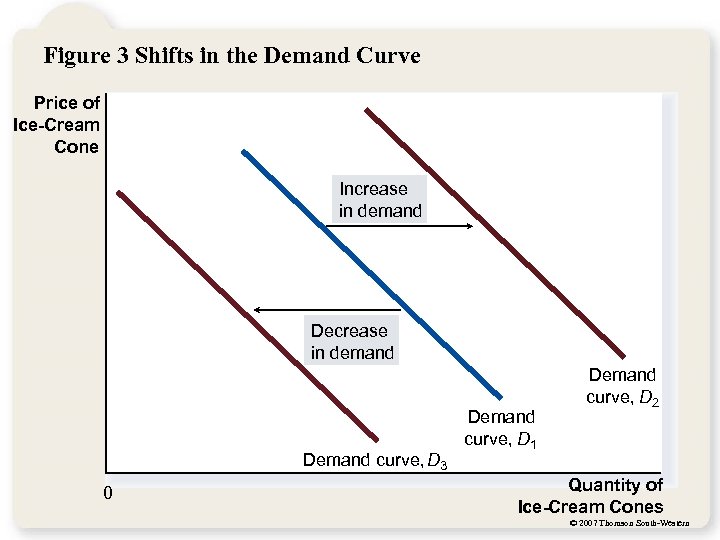 Figure 3 Shifts in the Demand Curve Price of Ice-Cream Cone Increase in demand Demand curve, D 3 0 Demand curve, D 1 Demand curve, D 2 Quantity of Ice-Cream Cones © 2007 Thomson South-Western
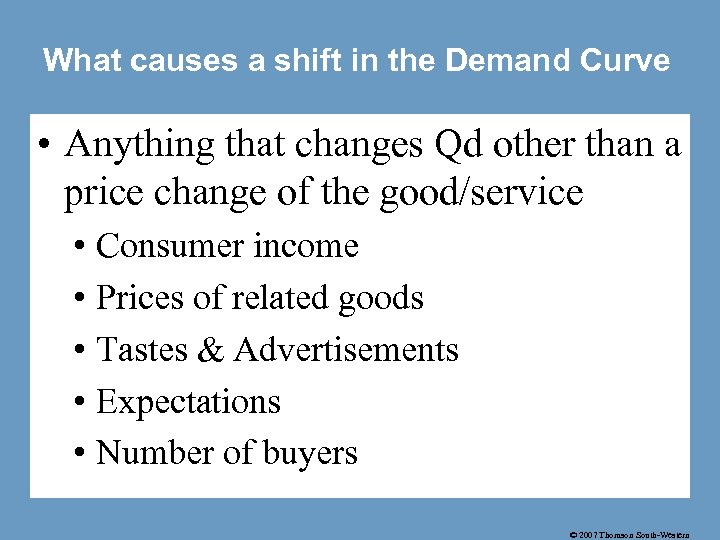 What causes a shift in the Demand Curve • Anything that changes Qd other than a price change of the good/service • Consumer income • Prices of related goods • Tastes & Advertisements • Expectations • Number of buyers © 2007 Thomson South-Western
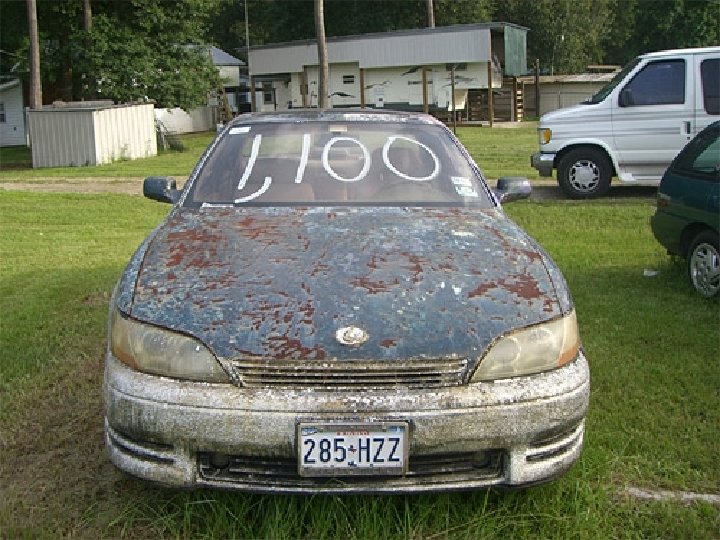
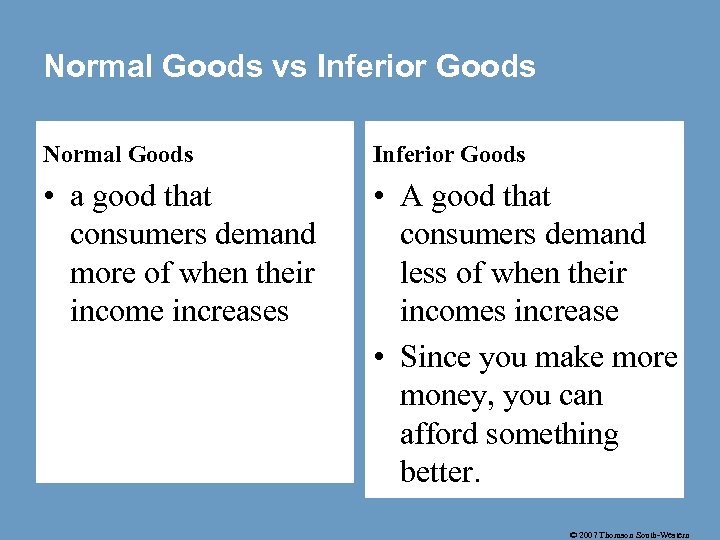 Normal Goods vs Inferior Goods Normal Goods Inferior Goods • a good that consumers demand more of when their income increases • A good that consumers demand less of when their incomes increase • Since you make more money, you can afford something better. © 2007 Thomson South-Western
 Normal or Inferior Good? © 2007 Thomson South-Western
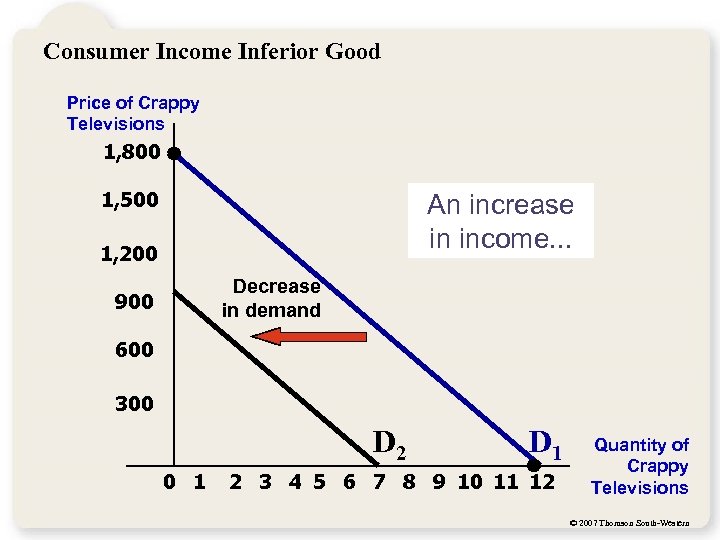 Consumer Income Inferior Good Price of Crappy Televisions 1, 800 1, 500 An increase in income. . . 1, 200 Decrease in demand 900 600 300 D 2 0 1 D 1 2 3 4 5 6 7 8 9 10 11 12 Quantity of Crappy Televisions © 2007 Thomson South-Western
 © 2007 Thomson South-Western
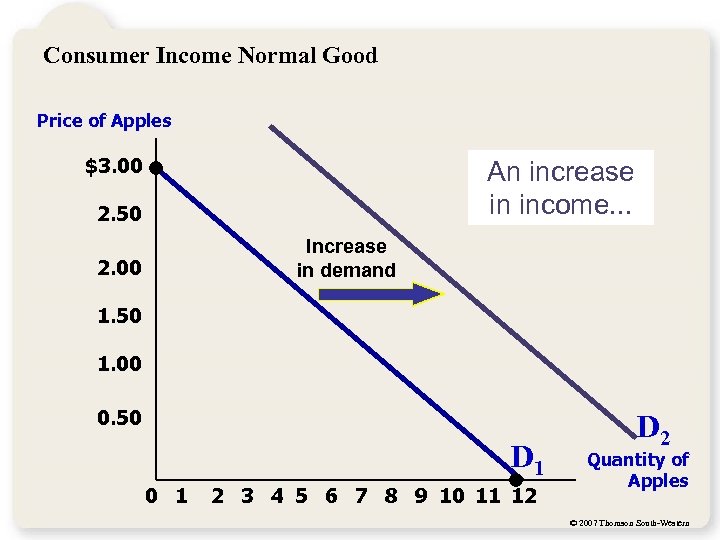 Consumer Income Normal Good Price of Apples $3. 00 An increase in income. . . 2. 50 Increase in demand 2. 00 1. 50 1. 00 0. 50 D 1 0 1 2 3 4 5 6 7 8 9 10 11 12 D 2 Quantity of Apples © 2007 Thomson South-Western
 © 2007 Thomson South-Western
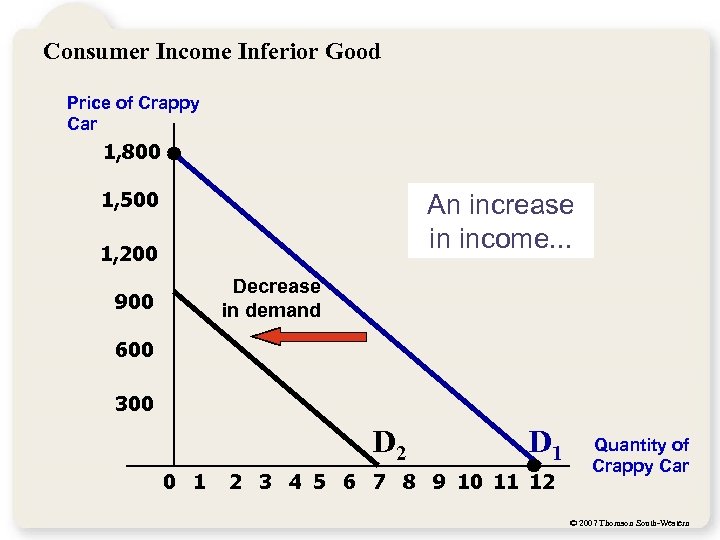 Consumer Income Inferior Good Price of Crappy Car 1, 800 1, 500 An increase in income. . . 1, 200 Decrease in demand 900 600 300 D 2 0 1 D 1 2 3 4 5 6 7 8 9 10 11 12 Quantity of Crappy Car © 2007 Thomson South-Western
 Shifts in the Demand Curve • Prices of Related Goods • When a fall in the price of one good reduces the demand for another good, the two goods are called substitutes. • When a fall in the price of one good increases the demand for another good, the two goods are called complements. © 2007 Thomson South-Western
 Substitute Example © 2007 Thomson South-Western
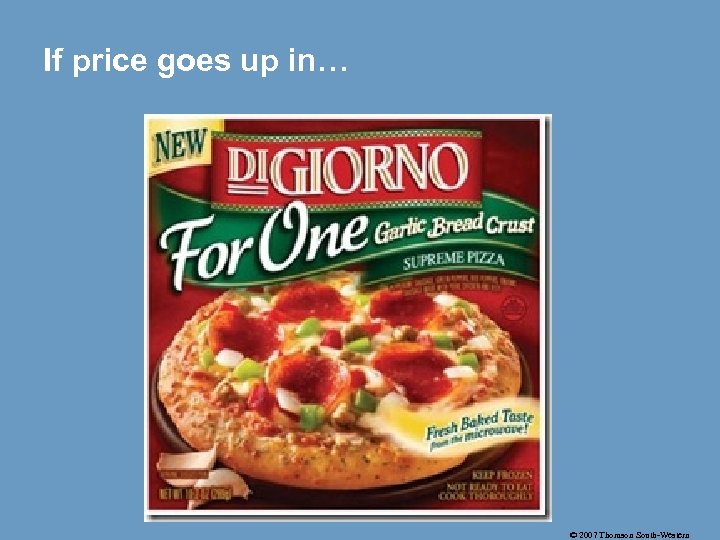 If price goes up in… © 2007 Thomson South-Western
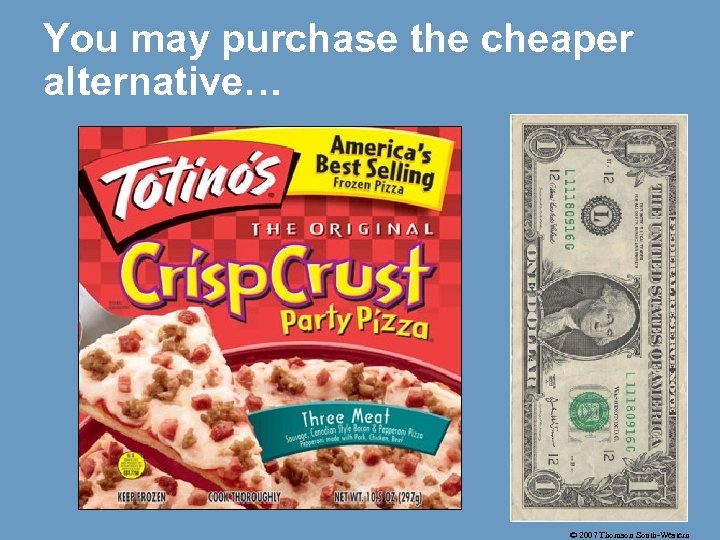 You may purchase the cheaper alternative… © 2007 Thomson South-Western
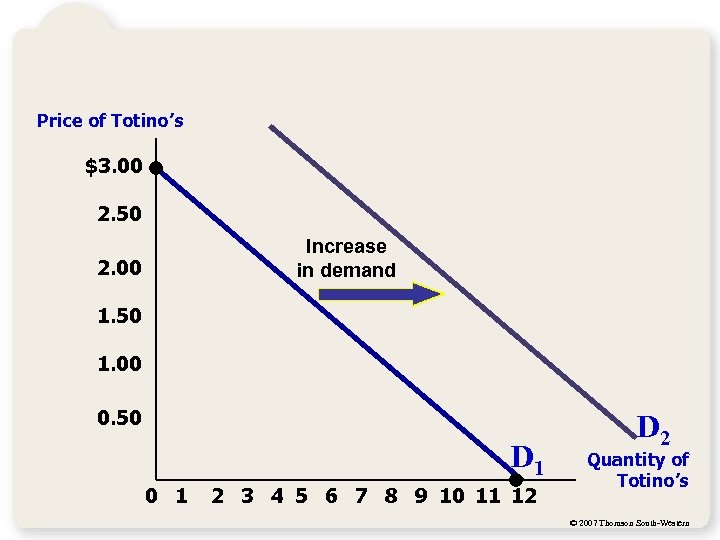 Price of Totino’s $3. 00 2. 50 Increase in demand 2. 00 1. 50 1. 00 0. 50 D 1 0 1 2 3 4 5 6 7 8 9 10 11 12 D 2 Quantity of Totino’s © 2007 Thomson South-Western
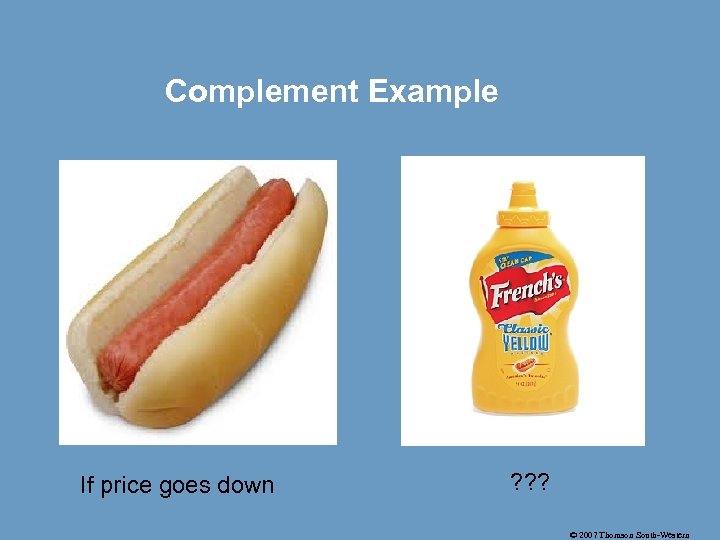 Complement Example If price goes down ? ? ? © 2007 Thomson South-Western
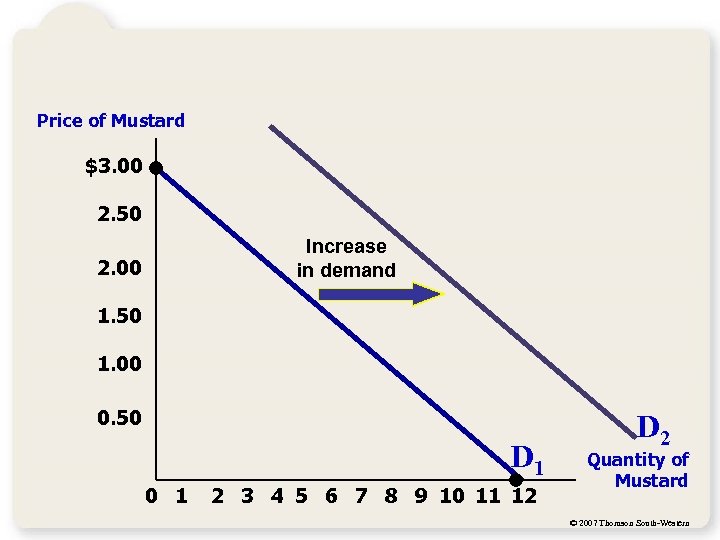 Price of Mustard $3. 00 2. 50 Increase in demand 2. 00 1. 50 1. 00 0. 50 D 1 0 1 2 3 4 5 6 7 8 9 10 11 12 D 2 Quantity of Mustard © 2007 Thomson South-Western
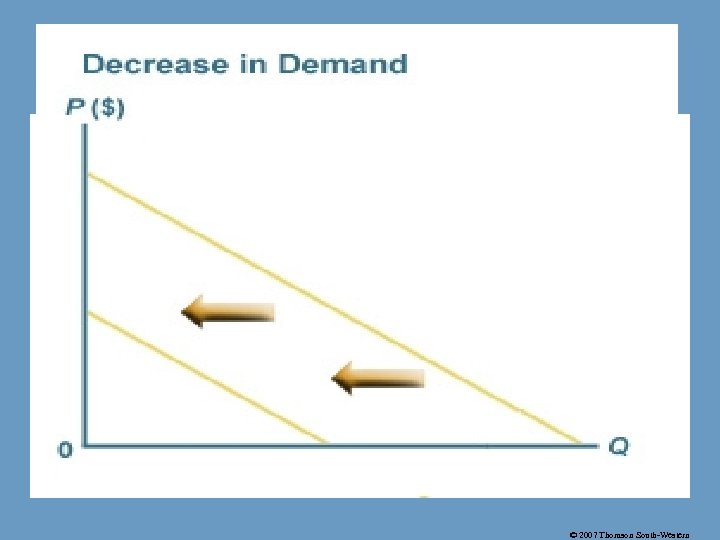
 Consumer Expectations • Expectations about the future • What if someone told you a bike would be on sale in a week, which way would the demand curve shift on that day you found out about the impending sale? © 2007 Thomson South-Western
 © 2007 Thomson South-Western
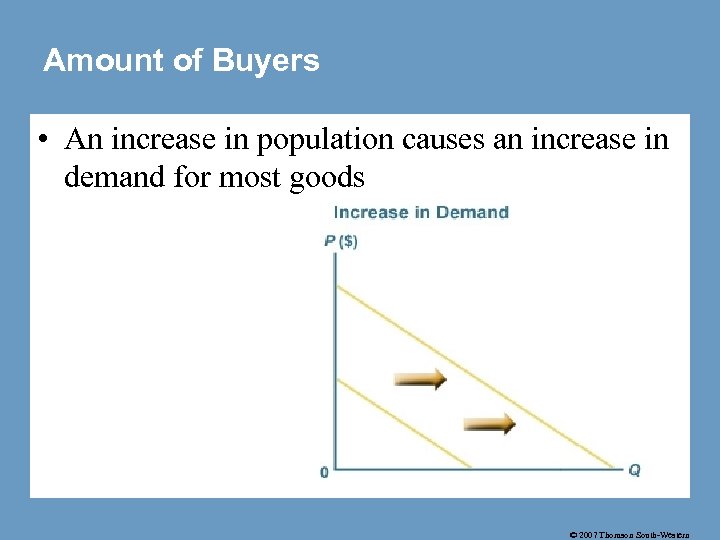 Amount of Buyers • An increase in population causes an increase in demand for most goods © 2007 Thomson South-Western
 Consumer Tastes and Advertising • Fads affect demand © 2007 Thomson South-Western
 © 2007 Thomson South-Western
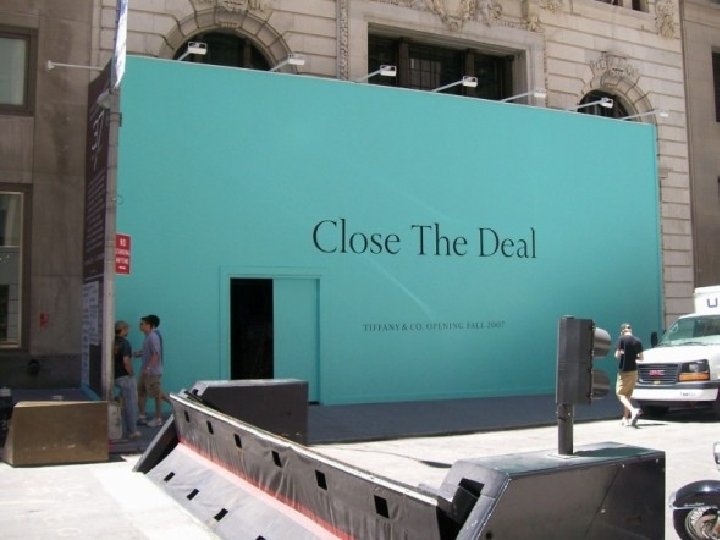
 Advertisements • Good advertisements can increase demand © 2007 Thomson South-Western
 © 2007 Thomson South-Western
 © 2007 Thomson South-Western
 © 2007 Thomson South-Western
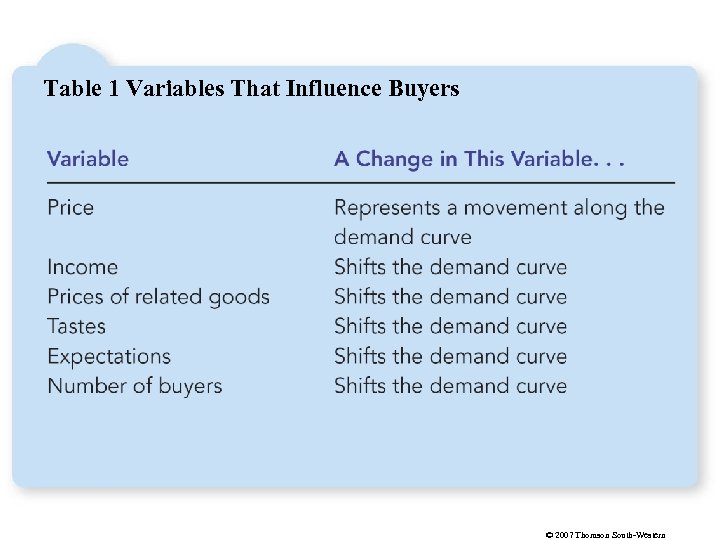 Table 1 Variables That Influence Buyers © 2007 Thomson South-Western
 SUPPLY 51
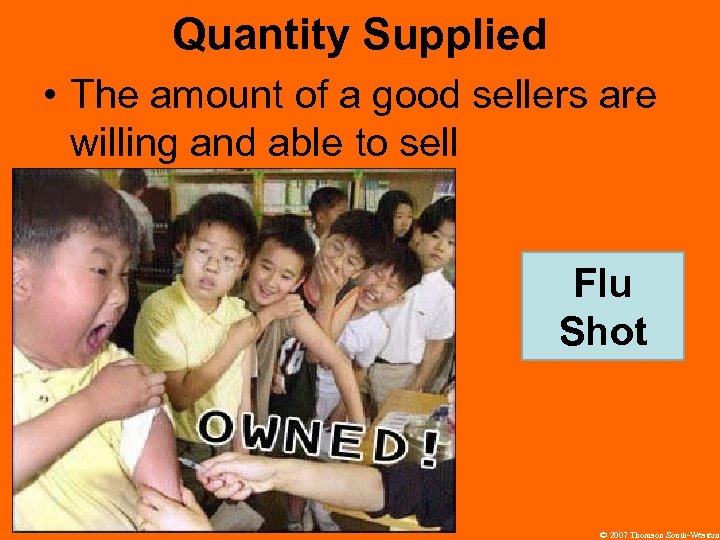 Quantity Supplied • The amount of a good sellers are willing and able to sell Flu Shot © 2007 Thomson South-Western
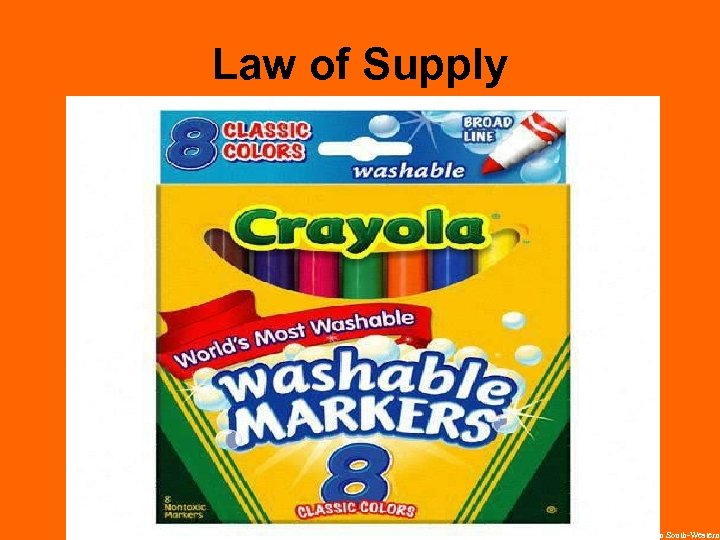 Law of Supply When Price Increases Quantity Supplied Increases © 2007 Thomson South-Western
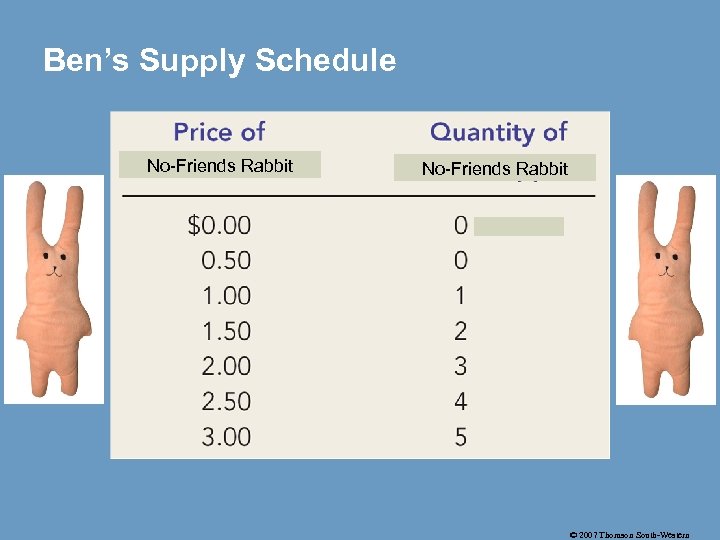 Ben’s Supply Schedule No-Friends Rabbit © 2007 Thomson South-Western
 The Supply Curve: The Relationship between Price and Quantity Supplied • Supply Curve • The supply curve is the graph of the relationship between the price of a good and the quantity supplied. © 2007 Thomson South-Western
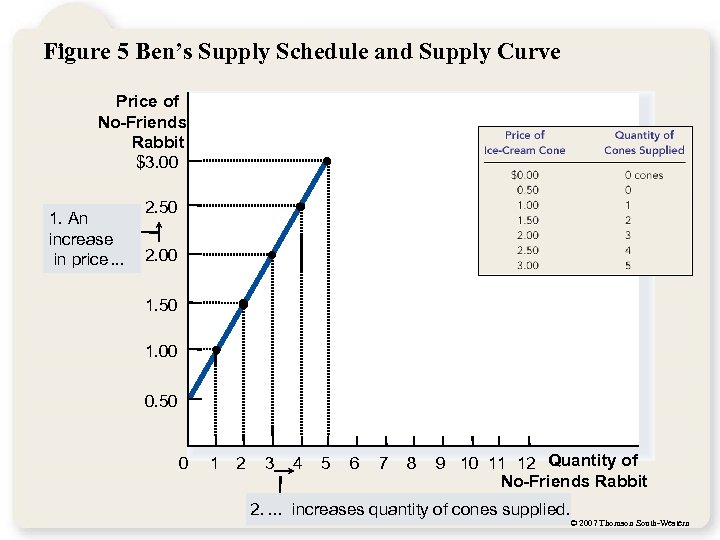 Figure 5 Ben’s Supply Schedule and Supply Curve Price of No-Friends Rabbit $3. 00 1. An increase in price. . . 2. 50 2. 00 1. 50 1. 00 0. 50 0 1 2 3 4 5 6 7 8 9 10 11 12 Quantity of No-Friends Rabbit 2. . increases quantity of cones supplied. © 2007 Thomson South-Western
 Market Supply versus Individual Supply • Market supply refers to the sum of all individual supplies for all sellers of a particular good or service. • Graphically, individual supply curves are summed horizontally to obtain the market supply curve. © 2007 Thomson South-Western
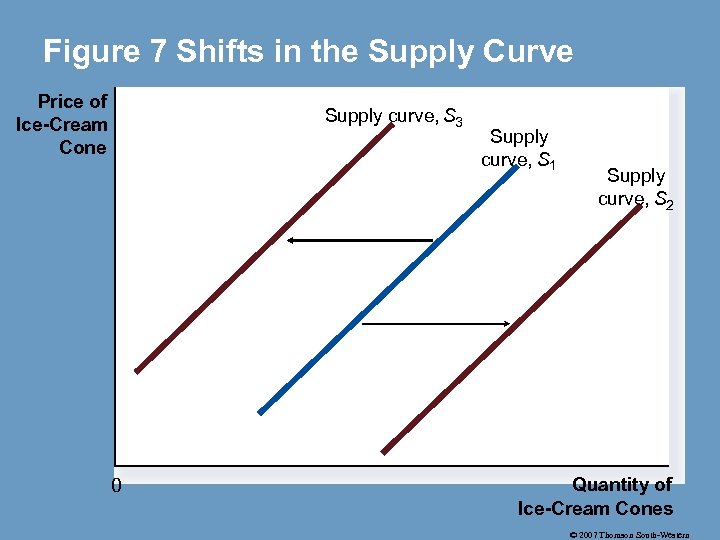 Figure 7 Shifts in the Supply Curve Price of Ice-Cream Cone Supply curve, S 3 0 Supply curve, S 1 Supply curve, S 2 Quantity of Ice-Cream Cones © 2007 Thomson South-Western
 First know this!!! • Quantity Supplied and Supply are two different things! • Quantity Supplied is referring to the amount of supply at a given price • Supply refers to the actual curve itself • Let’s take a look… © 2007 Thomson South-Western
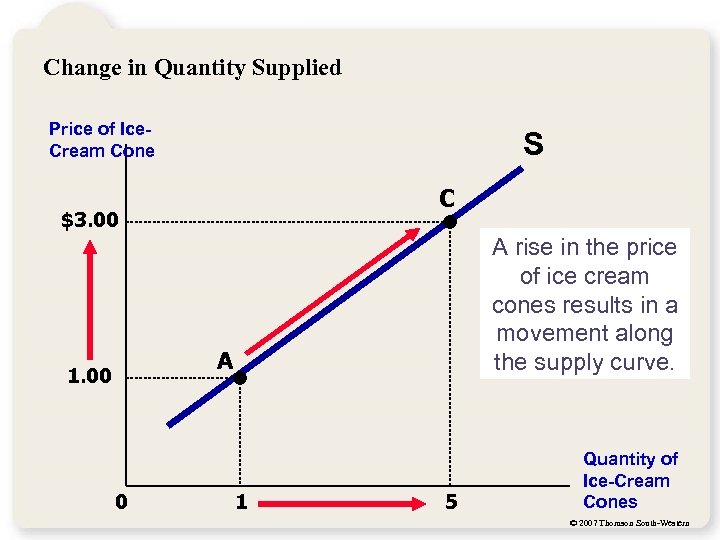 Change in Quantity Supplied Price of Ice. Cream Cone S C $3. 00 A rise in the price of ice cream cones results in a movement along the supply curve. A 1. 00 0 1 5 Quantity of Ice-Cream Cones © 2007 Thomson South-Western
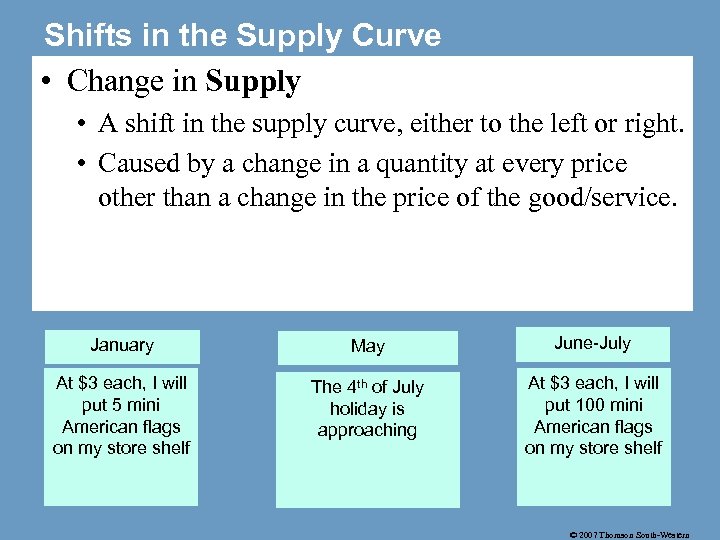 Shifts in the Supply Curve • Change in Supply • A shift in the supply curve, either to the left or right. • Caused by a change in a quantity at every price other than a change in the price of the good/service. January May June-July At $3 each, I will put 5 mini American flags on my store shelf The 4 th of July holiday is approaching At $3 each, I will put 100 mini American flags on my store shelf © 2007 Thomson South-Western
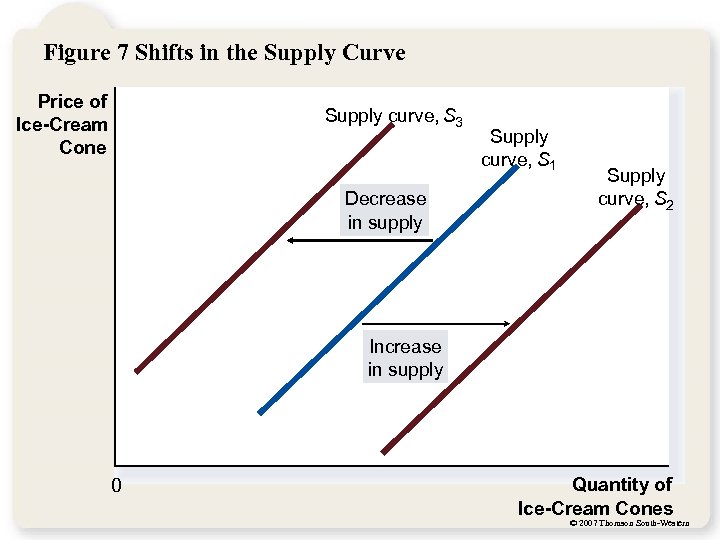 Figure 7 Shifts in the Supply Curve Price of Ice-Cream Cone Supply curve, S 3 Decrease in supply Supply curve, S 1 Supply curve, S 2 Increase in supply 0 Quantity of Ice-Cream Cones © 2007 Thomson South-Western
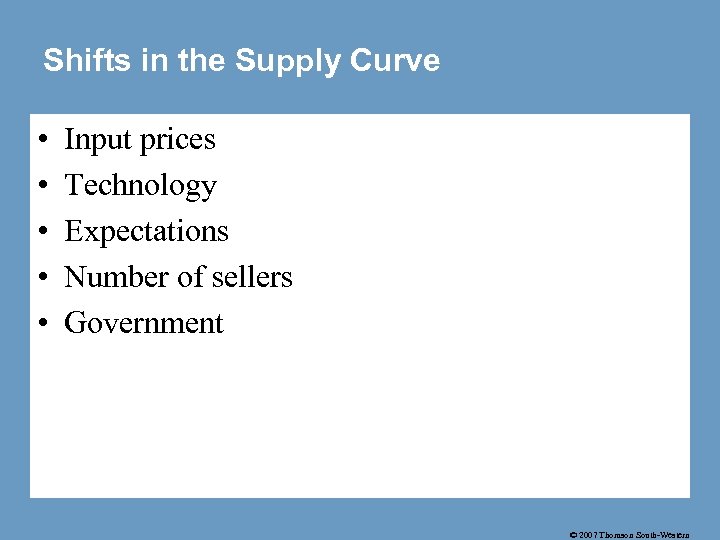 Shifts in the Supply Curve • • • Input prices Technology Expectations Number of sellers Government © 2007 Thomson South-Western
 Input Costs • Any change of an input cost (production costs) will affect supply © 2007 Thomson South-Western
 Lets say you produce these… © 2007 Thomson South-Western
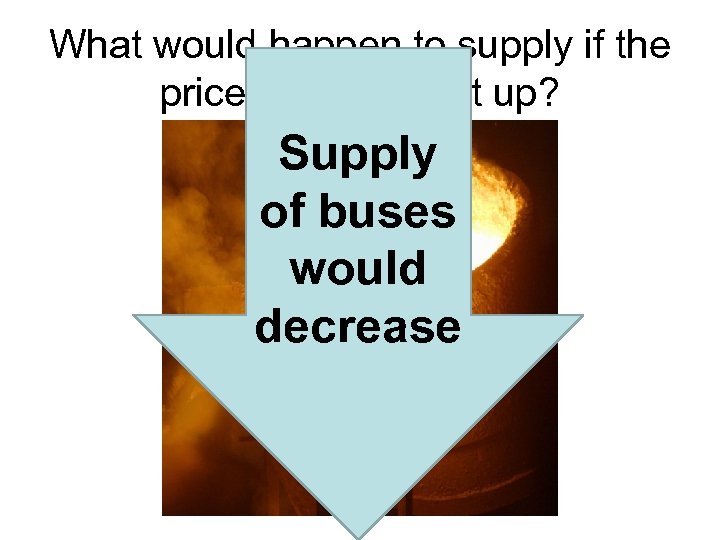 What would happen to supply if the price of steel went up? Supply of buses would decrease © 2007 Thomson South-Western
 Technology Example © 2007 Thomson South-Western
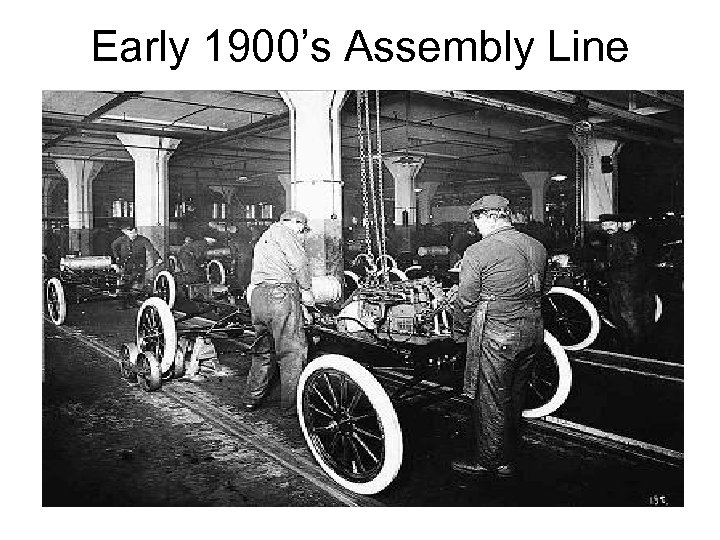 Early 1900’s Assembly Line © 2007 Thomson South-Western
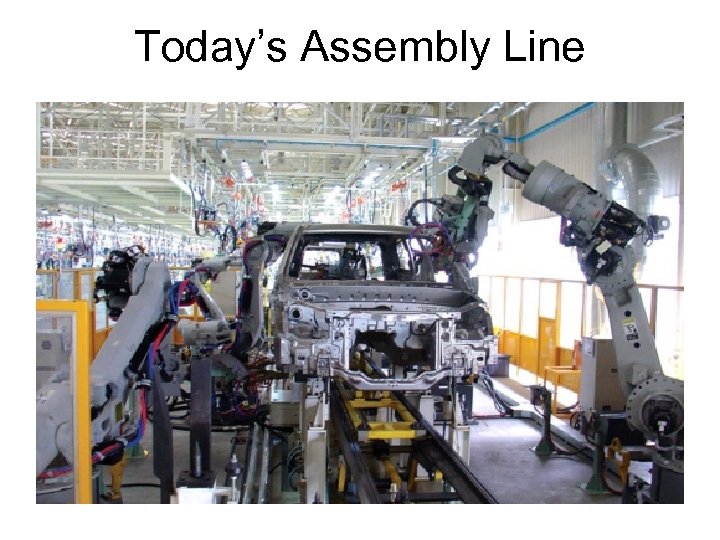 Today’s Assembly Line © 2007 Thomson South-Western
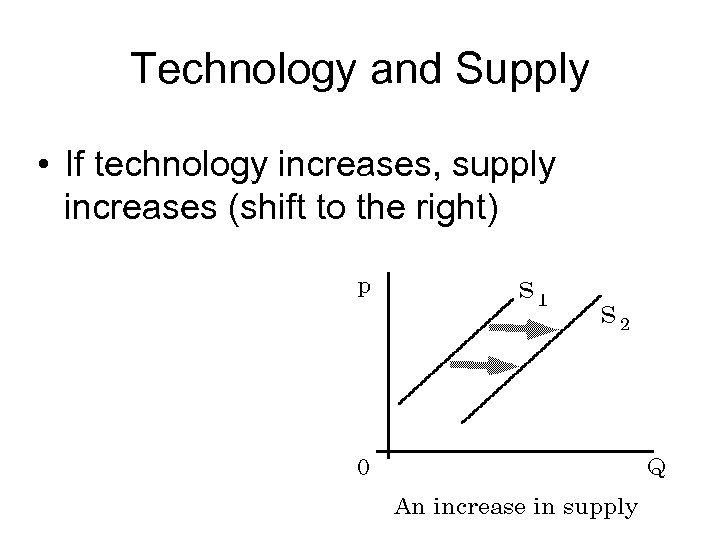 Technology and Supply • If technology increases, supply increases (shift to the right) © 2007 Thomson South-Western
 Government’s Influence on Supply • Subsidy – Government payment that supports a business market – Increases supply/shift to the right © 2007 Thomson South-Western
 True Subsidy Story • Tax authorities in the Netherlands agreed to provide an education subsidy to a Dutch woman who was studying and training to be a witch. The woman’s attendance at the 13 -weekend witchery program, which cost $3, 003, was ruled a legitimate taxdeductible schooling expense by government officials. Students in the program reportedly learned to cast spells, prepare herbs and potions, and to use crystal balls while generally using magic as “a force for good. ” © 2007 Thomson South-Western
 Other Examples • Expectations – If you expect the price of an input cost to rise in the future, than you current supply will increase and shift to the right • Number of Sellers – If a new hospital in Plainfield opens, the following supply will increase and shift to the right: doctors, hospital beds, MRI machines, vaccinations, etc… © 2007 Thomson South-Western
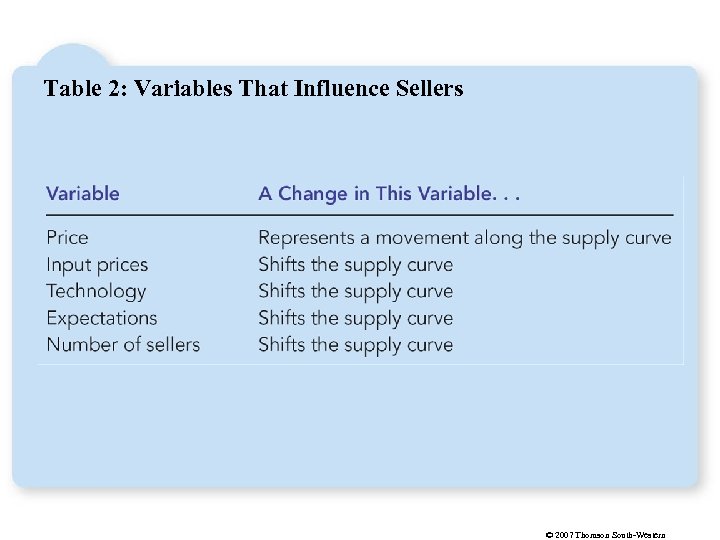 Table 2: Variables That Influence Sellers © 2007 Thomson South-Western
 Market Equilibrium © 2007 Thomson South-Western
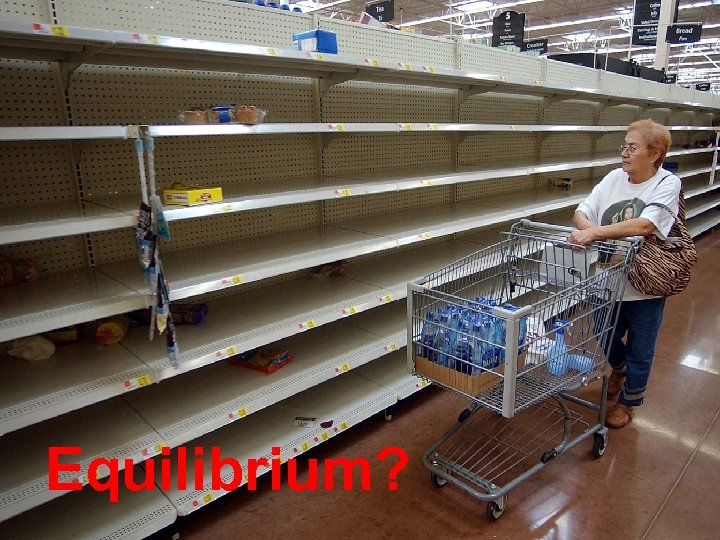 Market Equilibrium • Market for a good is stable • Price and quantity is exactly what both buyers and sellers are willing to give up • Quantity supplied = Quantity demanded Equilibrium? © 2007 Thomson South-Western
 SUPPLY AND DEMAND TOGETHER • Equilibrium Price – The price that balances quantity supplied and quantity demanded. • Equilibrium Quantity – The quantity supplied and the quantity demanded at the equilibrium price. • Both are found where supply and demand intersect © 2007 Thomson South-Western
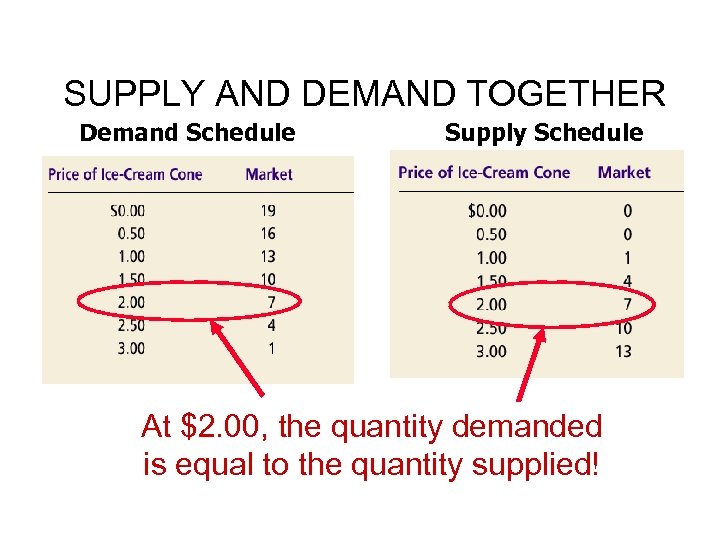 SUPPLY AND DEMAND TOGETHER Demand Schedule Supply Schedule At $2. 00, the quantity demanded is equal to the quantity supplied! © 2007 Thomson South-Western
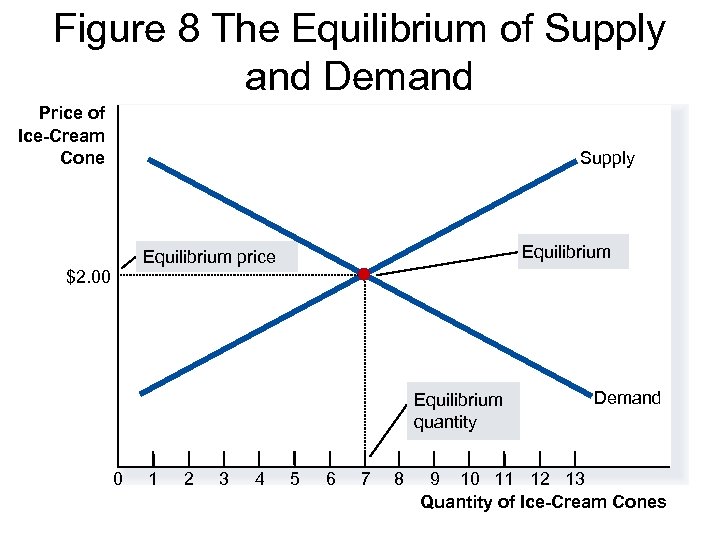 Figure 8 The Equilibrium of Supply and Demand Price of Ice-Cream Cone Supply Equilibrium price $2. 00 Equilibrium quantity 0 1 2 3 4 5 6 7 8 Demand 9 10 11 12 13 Quantity of Ice-Cream Cones © 2007 Thomson South-Western
 © 2007 Thomson South-Western
 Disequilibrium • When quantity supplied is NOT equal to quantity demanded in the market © 2007 Thomson South-Western
 Two Types of Disequilibrium • Shortage (excess demand) – When quantity demanded is more than quantity supplied – Price is below equilibrium price © 2007 Thomson South-Western
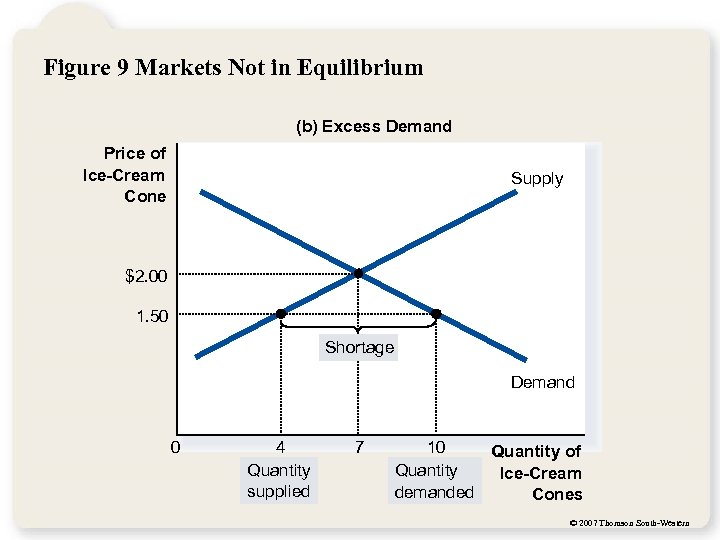 Figure 9 Markets Not in Equilibrium (b) Excess Demand Price of Ice-Cream Cone Supply $2. 00 1. 50 Shortage Demand 0 4 Quantity supplied 7 10 Quantity of Quantity Ice-Cream demanded Cones © 2007 Thomson South-Western
 Two Types of Disequilibrium • Shortage (excess demand) – When quantity demanded is more than quantity supplied – Price is below equilibrium price • Surplus (excess supply) – When quantity supplied is more than quantity demanded – Price is above equilibrium price © 2007 Thomson South-Western
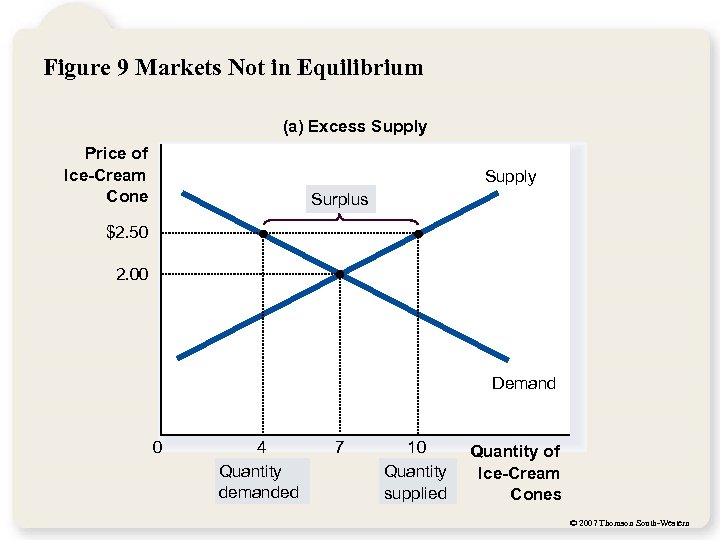 Figure 9 Markets Not in Equilibrium (a) Excess Supply Price of Ice-Cream Cone Supply Surplus $2. 50 2. 00 Demand 0 4 Quantity demanded 7 10 Quantity supplied Quantity of Ice-Cream Cones © 2007 Thomson South-Western
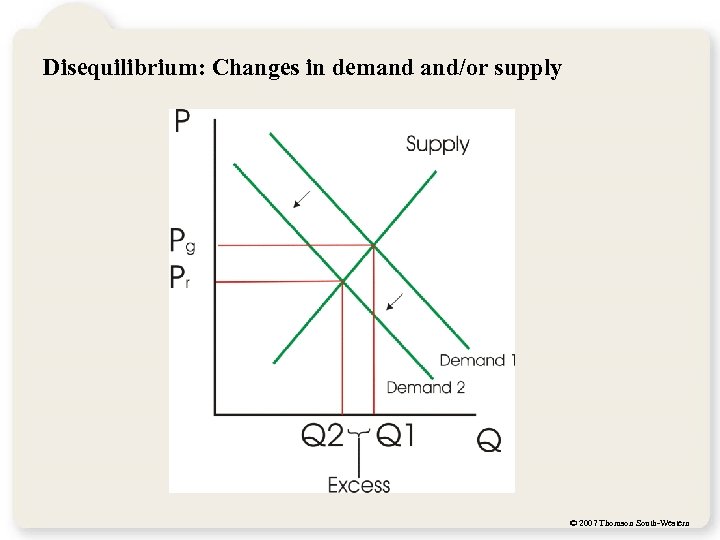 Disequilibrium: Changes in demand and/or supply © 2007 Thomson South-Western
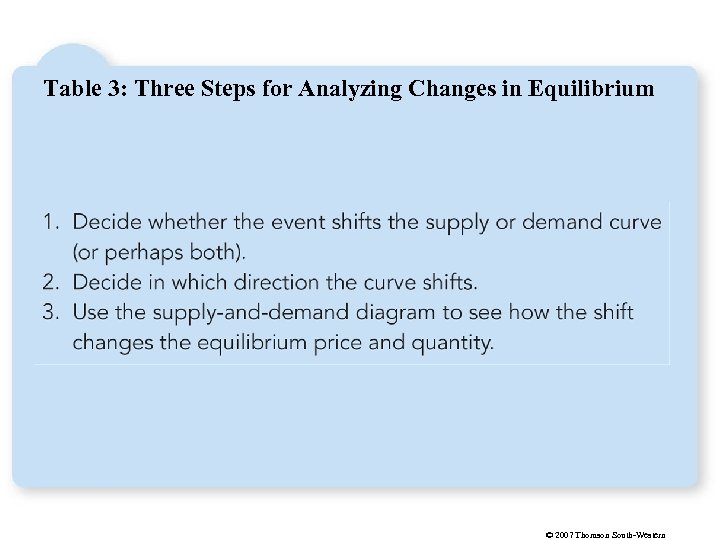 Table 3: Three Steps for Analyzing Changes in Equilibrium © 2007 Thomson South-Western
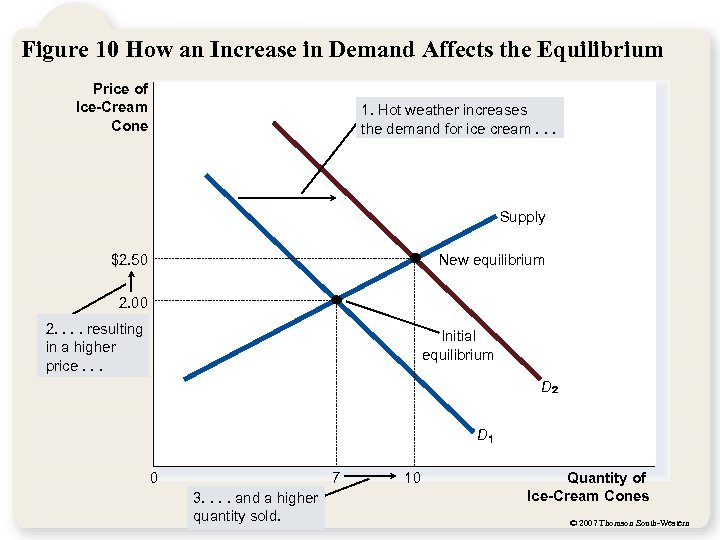 Figure 10 How an Increase in Demand Affects the Equilibrium Price of Ice-Cream Cone 1. Hot weather increases the demand for ice cream. . . Supply New equilibrium $2. 50 2. 00 2. . resulting in a higher price. . . Initial equilibrium D D 0 7 3. . and a higher quantity sold. 10 Quantity of Ice-Cream Cones © 2007 Thomson South-Western
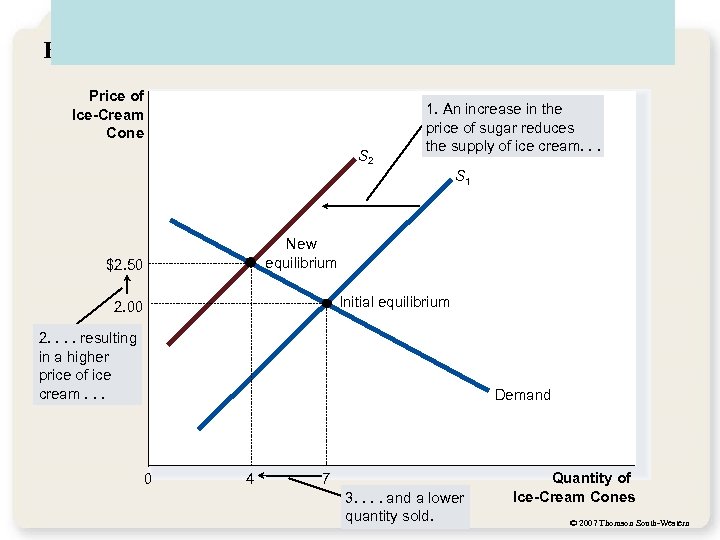 Figure 11 How a Decrease in Supply Affects the Equilibrium Price of Ice-Cream Cone S 2 1. An increase in the price of sugar reduces the supply of ice cream. . . S 1 New equilibrium $2. 50 Initial equilibrium 2. 00 2. . resulting in a higher price of ice cream. . . Demand 0 4 7 3. . and a lower quantity sold. Quantity of Ice-Cream Cones © 2007 Thomson South-Western
 Last one…. What happens to the equilibrium price and equilibrium quantity if BOTH supply and demand increase? © 2007 Thomson South-Western
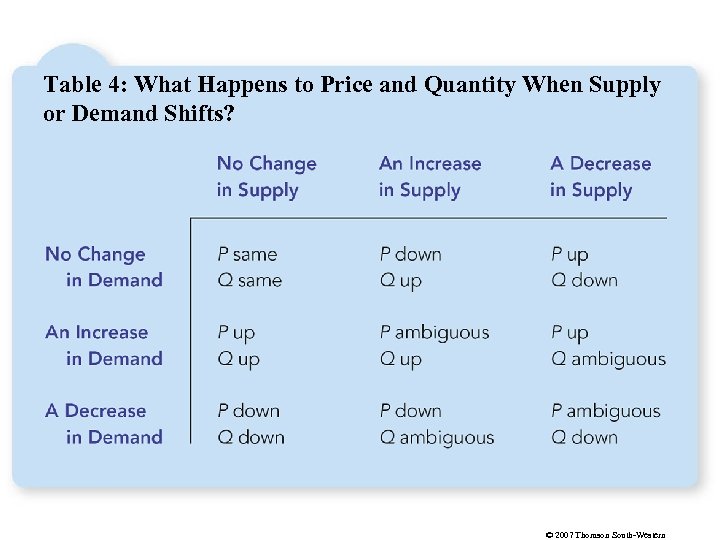 Table 4: What Happens to Price and Quantity When Supply or Demand Shifts? © 2007 Thomson South-Western
 Summary • Economists use the model of supply and demand to analyze competitive markets. • In a competitive market, there are many buyers and sellers, each of whom has little or no influence on the market price. © 2007 Thomson South-Western
 Summary • The demand curve shows how the quantity of a good depends upon the price. – According to the law of demand, as the price of a good falls, the quantity demanded rises. Therefore, the demand curve slopes downward. – In addition to price, other determinants of how much consumers want to buy include income, the prices of complements and substitutes, tastes, expectations, and the number of buyers. – If one of these factors changes, the demand curve shifts. © 2007 Thomson South-Western
 Summary • The supply curve shows how the quantity of a good supplied depends upon the price. – According to the law of supply, as the price of a good rises, the quantity supplied rises. Therefore, the supply curve slopes upward. – In addition to price, other determinants of how much producers want to sell include input prices, technology, expectations, and the number of sellers. – If one of these factors changes, the supply curve shifts. © 2007 Thomson South-Western
 Summary • Market equilibrium is determined by the intersection of the supply and demand curves. • At the equilibrium price, the quantity demanded equals the quantity supplied. • The behavior of buyers and sellers naturally drives markets toward their equilibrium. © 2007 Thomson South-Western
 Summary • To analyze how any event influences a market, we use the supply-and-demand diagram to examine how the event affects the equilibrium price and quantity. • In market economics, prices are the signals that guide economic decisions and thereby allocate resources. © 2007 Thomson South-Western
 Supply or Demand Activity • On a separate sheet of blank paper, please do the following: – Write a specific market at the top (Shoes for example) – Write a scenario that will affect that market (Adidas spends 50 million dollars on a new advertisement campaign). – MAKE IT UNIQUE (take your time thinking) – Pass the paper behind you (group at the end…walk to the front) © 2007 Thomson South-Western
 Partner Activity • Read your market and the scenario. • Determine if the scenario would have an impact on supply or demand. • Then, graph and provide a written description of the market change © 2007 Thomson South-Western
 Bringing it Back • Each group will read their market and scenario they received. – Every student must write the market and scenario they hear in their notes • Each group will then explain the affect the scenario had on their demand. – Every student must write the effect in their notes. © 2007 Thomson South-Western