


 Скачать презентацию Unit II Notes Origins of the National Government
b405d0c624f6ad8d6f85ea052c352000.ppt
- Количество слайдов: 77
 Unit II Notes: Origins of the National Government
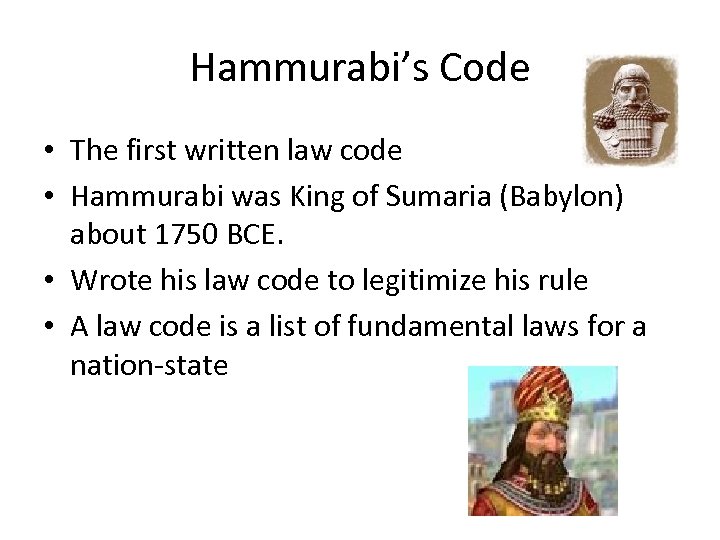 Hammurabi’s Code • The first written law code • Hammurabi was King of Sumaria (Babylon) about 1750 BCE. • Wrote his law code to legitimize his rule • A law code is a list of fundamental laws for a nation-state
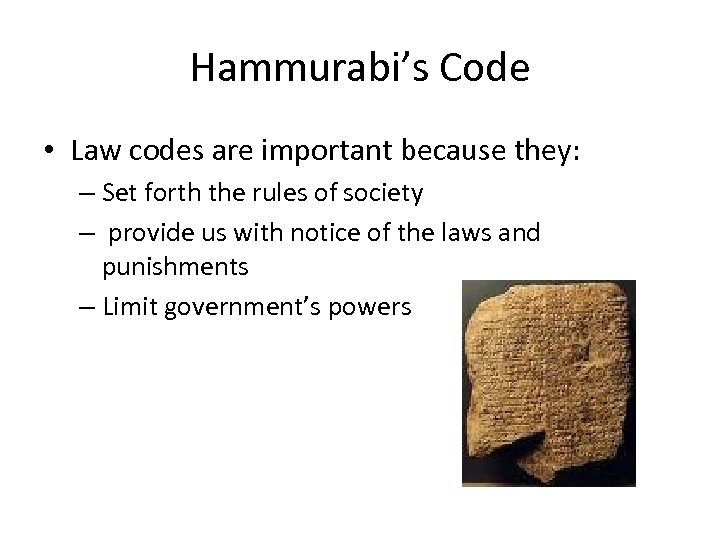 Hammurabi’s Code • Law codes are important because they: – Set forth the rules of society – provide us with notice of the laws and punishments – Limit government’s powers
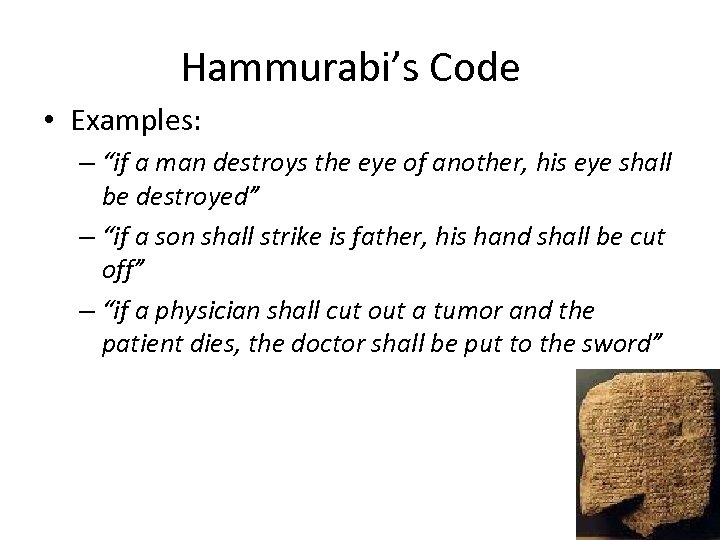 Hammurabi’s Code • Examples: – “if a man destroys the eye of another, his eye shall be destroyed” – “if a son shall strike is father, his hand shall be cut off” – “if a physician shall cut out a tumor and the patient dies, the doctor shall be put to the sword”
 Law Codes • We have law codes at the national, State, and local level in order to: – Limit the powers of government – Provide notice of the law – Provide notice in changes in the law – Prevent arbitrary prosecution – Etc…
 The Ten Commandments • A list of universal laws • Similar lists found for all cultures • Idea that some things are fundamentally wrong • Basis for US criminal law code
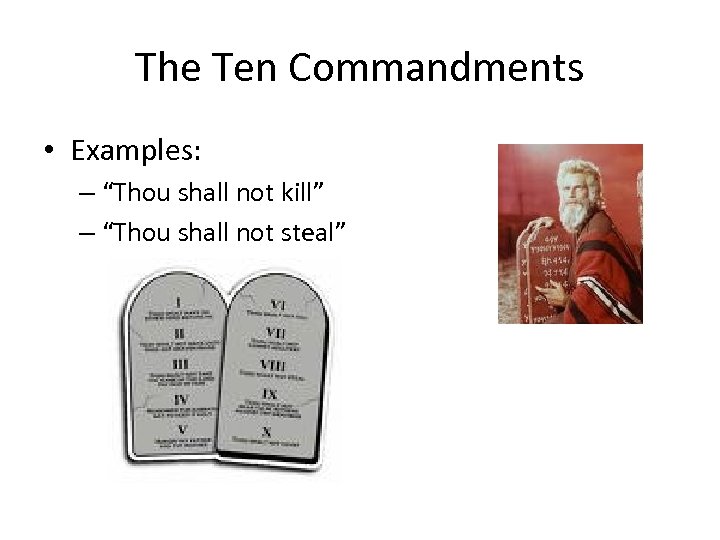 The Ten Commandments • Examples: – “Thou shall not kill” – “Thou shall not steal”
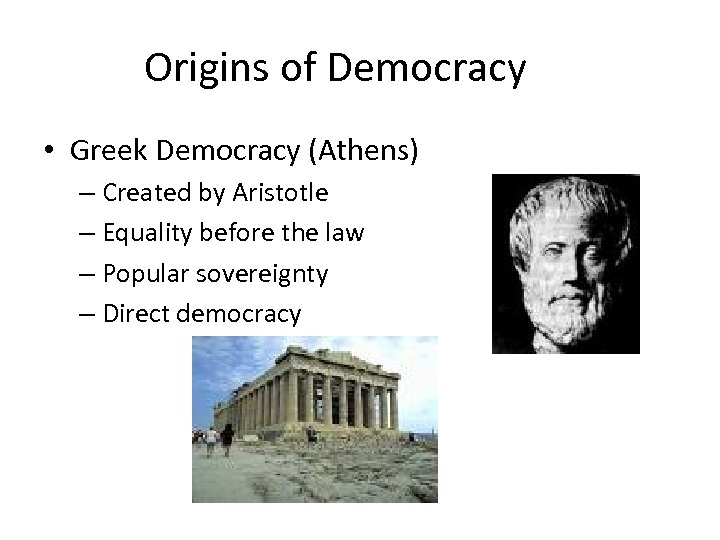 Origins of Democracy • Greek Democracy (Athens) – Created by Aristotle – Equality before the law – Popular sovereignty – Direct democracy
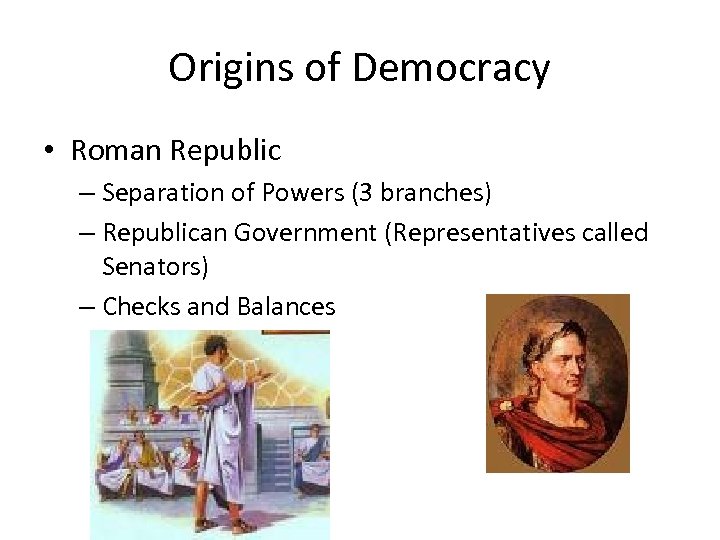 Origins of Democracy • Roman Republic – Separation of Powers (3 branches) – Republican Government (Representatives called Senators) – Checks and Balances
 Justinian’s Code • First civil law code • Civil Law- laws which pertain to a citizen’s conflicts with other citizens, not the government – Examples: • • Marriage Law Divorce Law Wills and Probate Contract Law
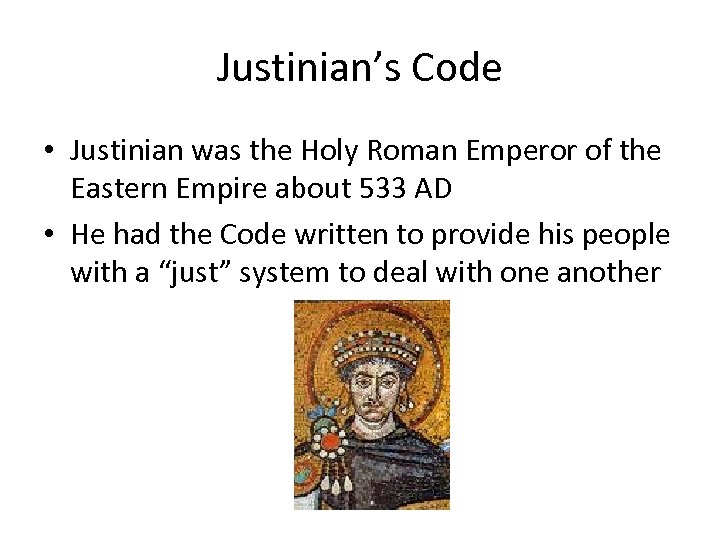 Justinian’s Code • Justinian was the Holy Roman Emperor of the Eastern Empire about 533 AD • He had the Code written to provide his people with a “just” system to deal with one another
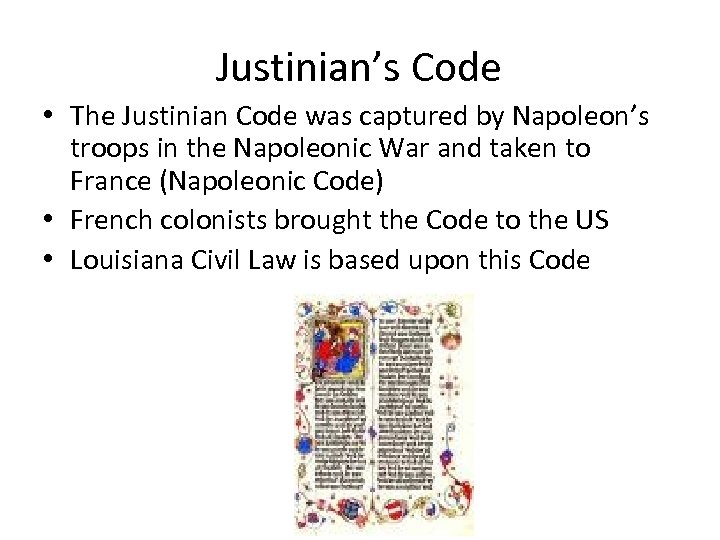 Justinian’s Code • The Justinian Code was captured by Napoleon’s troops in the Napoleonic War and taken to France (Napoleonic Code) • French colonists brought the Code to the US • Louisiana Civil Law is based upon this Code
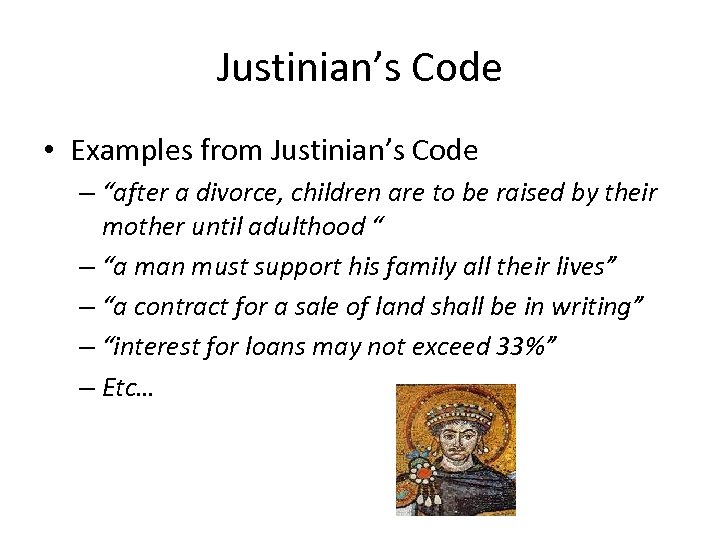 Justinian’s Code • Examples from Justinian’s Code – “after a divorce, children are to be raised by their mother until adulthood “ – “a man must support his family all their lives” – “a contract for a sale of land shall be in writing” – “interest for loans may not exceed 33%” – Etc…
 English Sources The English Constitution is made up of: The Magna Carta The Petition of Right The English Bill of Rights
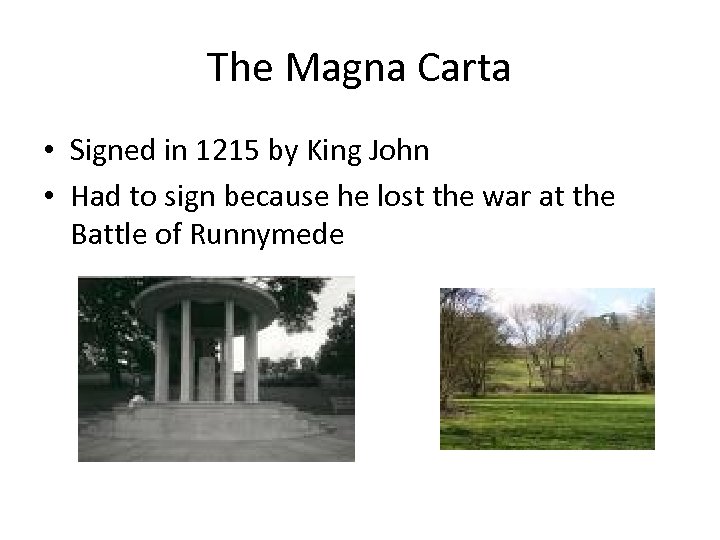 The Magna Carta • Signed in 1215 by King John • Had to sign because he lost the war at the Battle of Runnymede
 The Magna Carta • Prince/King John Hated by the Nobility because he: 1. increased taxes dramatically 2. did not use the tax money to ransom King Richard 3. created estate taxes 4. imprisoned political rivals without trial 5. sold widows and orphans into “ward ships” 6. outlawed those who protested against his rule
 The Magna Carta • Major Democratic ideas we borrowed – Freedom from unjust arrest( warrants) – Trial by a jury of peers for noblemen (12) – No taxation without representation – Elected legislature; the Great Council
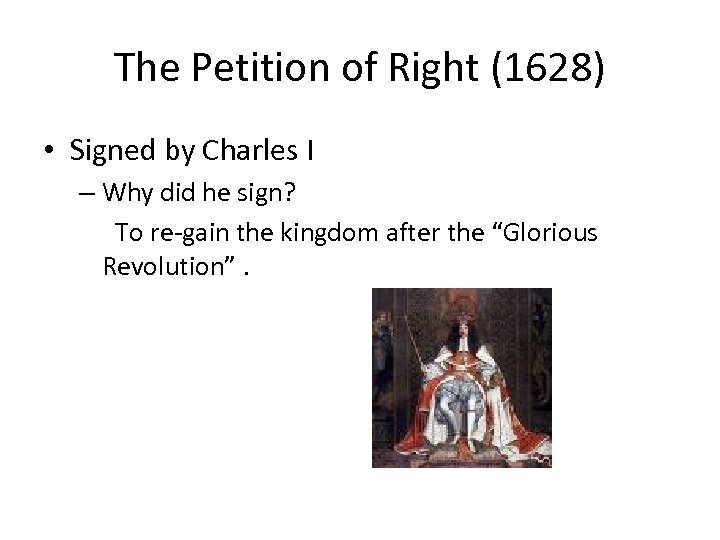 The Petition of Right (1628) • Signed by Charles I – Why did he sign? To re-gain the kingdom after the “Glorious Revolution”.
 The Petition of Right • Major democratic ideas borrowed: – No taxation without representation (elections!) – Can’t be jailed without a jury trial (bail) – No quartering of troops in private homes during peacetime – No martial law (military rule) in peacetime
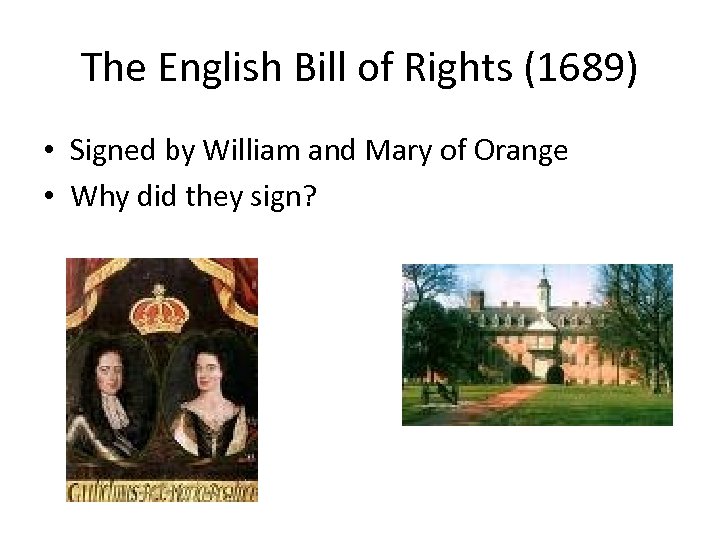 The English Bill of Rights (1689) • Signed by William and Mary of Orange • Why did they sign?
 The English Bill of Rights • Major democratic ideas borrowed: – Free speech and press – No excessive bail/fines – No cruel and unusual punishment – “free” elections for Parliament – Laws must have the consent of Parliament
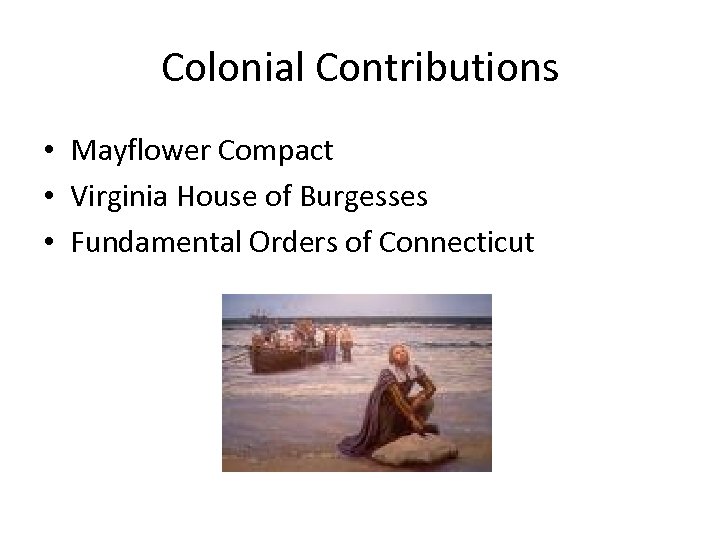 Colonial Contributions • Mayflower Compact • Virginia House of Burgesses • Fundamental Orders of Connecticut
 The Mayflower Compact (1620) • First Social Contract in America • Agreement among Pilgrims to form a government • Created 1 st democratic government in America • Gave us the idea for social contracts or constitutions and government with the consent of the people
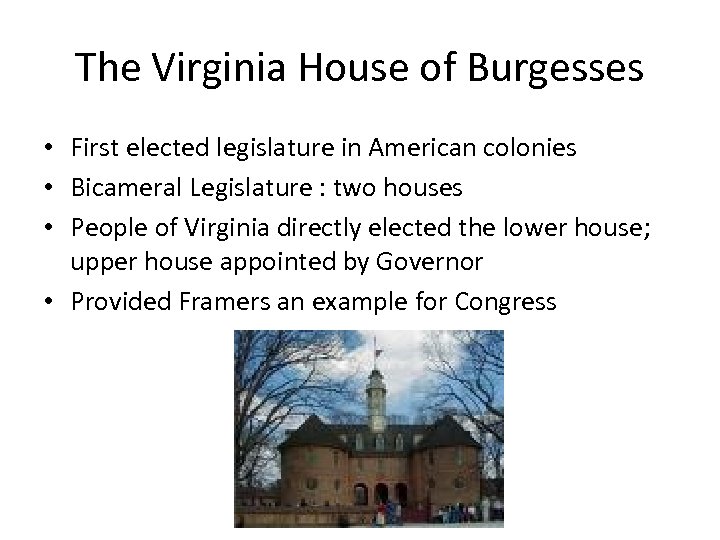 The Virginia House of Burgesses • First elected legislature in American colonies • Bicameral Legislature : two houses • People of Virginia directly elected the lower house; upper house appointed by Governor • Provided Framers an example for Congress
 The Fundamental Orders of Connecticut • First colonial charter /constitution to list the powers of government and rights of the people • Guaranteed free speech, press, and religion to all residents of Conn. • Guaranteed voting rights to all free adult males
 Colonial Self-Rule • Why did people come to America? – Religious Freedom – Forced immigration (convictions) – Personal Freedom – Economics (#1)
 Colonial Self Rule • Colonists were self-governing because – England is too far away – Some colonies were created as Charter Colonies – Some colonial Governors did not work – England is at war with France for almost 200 years
 Colonial Self-Rule • The impact of self rule – Britain ignores most colonial affairs – Colonies develop independent legislatures – Colonies become economically and politically selfreliant – Colonists demand the rights of Englishmen
 Colonial Self-Rule • Ideas that emerged from experiences with self -governing – 1. written charters/constitutions – 2. separation of powers – 3. Bicameralism – 4. Judicial Review of Laws – 5. No taxation without representation
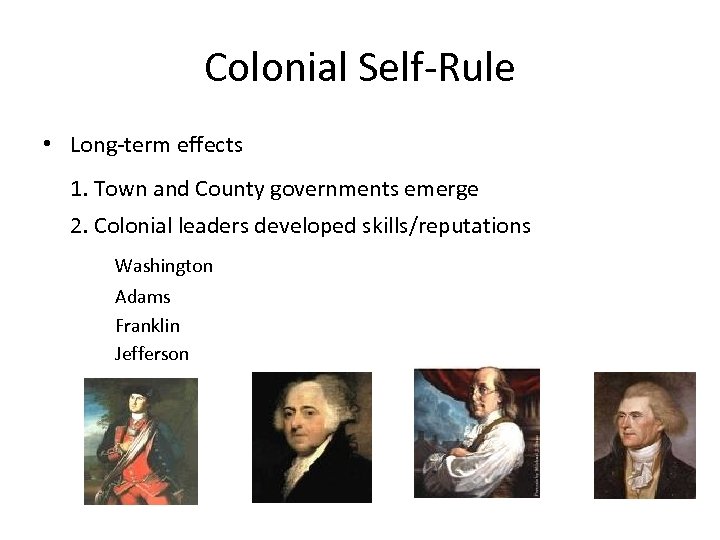 Colonial Self-Rule • Long-term effects 1. Town and County governments emerge 2. Colonial leaders developed skills/reputations Washington Adams Franklin Jefferson
 Colonial Self-Rule • Why did colonists begin to protest against British rule? – Taxes – Trade Restrictions – Quartering of Troops – Denial of the right to trial by jury – Etc…
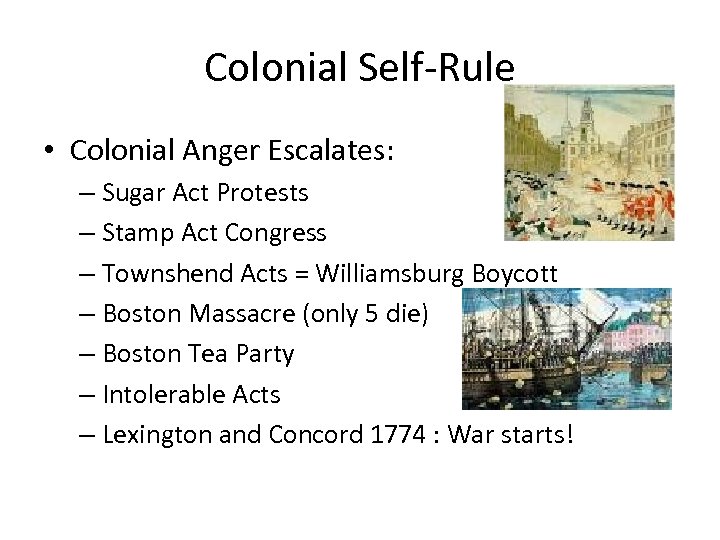 Colonial Self-Rule • Colonial Anger Escalates: – Sugar Act Protests – Stamp Act Congress – Townshend Acts = Williamsburg Boycott – Boston Massacre (only 5 die) – Boston Tea Party – Intolerable Acts – Lexington and Concord 1774 : War starts!
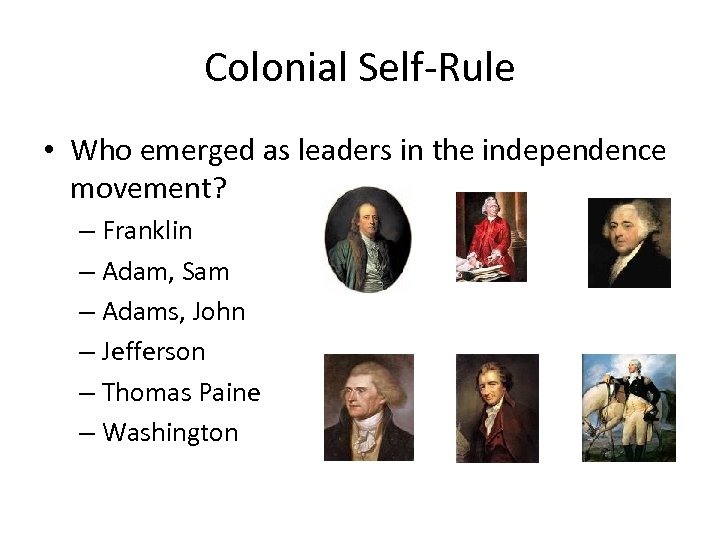 Colonial Self-Rule • Who emerged as leaders in the independence movement? – Franklin – Adam, Sam – Adams, John – Jefferson – Thomas Paine – Washington
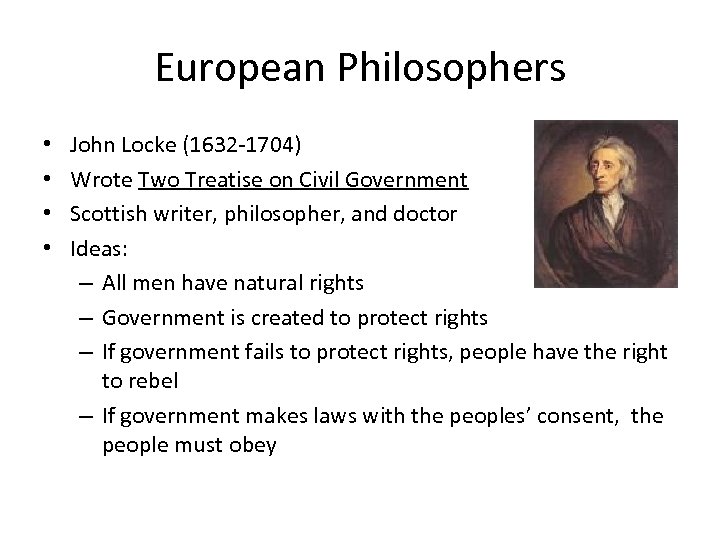 European Philosophers • • John Locke (1632 -1704) Wrote Two Treatise on Civil Government Scottish writer, philosopher, and doctor Ideas: – All men have natural rights – Government is created to protect rights – If government fails to protect rights, people have the right to rebel – If government makes laws with the peoples’ consent, the people must obey
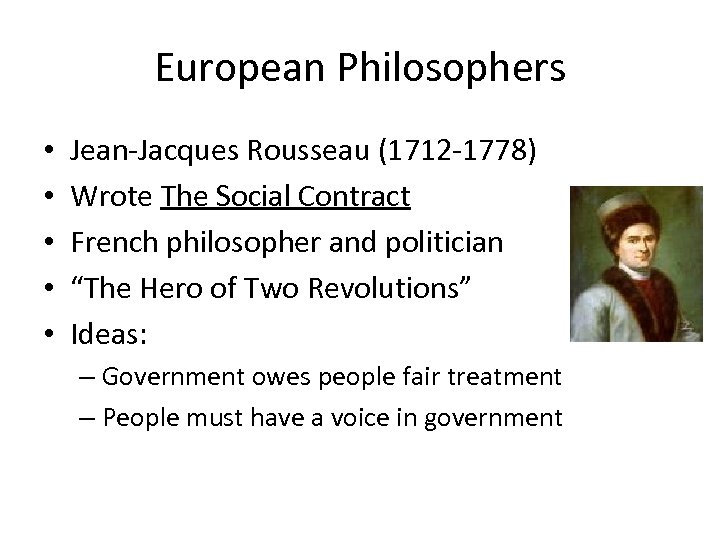 European Philosophers • • • Jean-Jacques Rousseau (1712 -1778) Wrote The Social Contract French philosopher and politician “The Hero of Two Revolutions” Ideas: – Government owes people fair treatment – People must have a voice in government
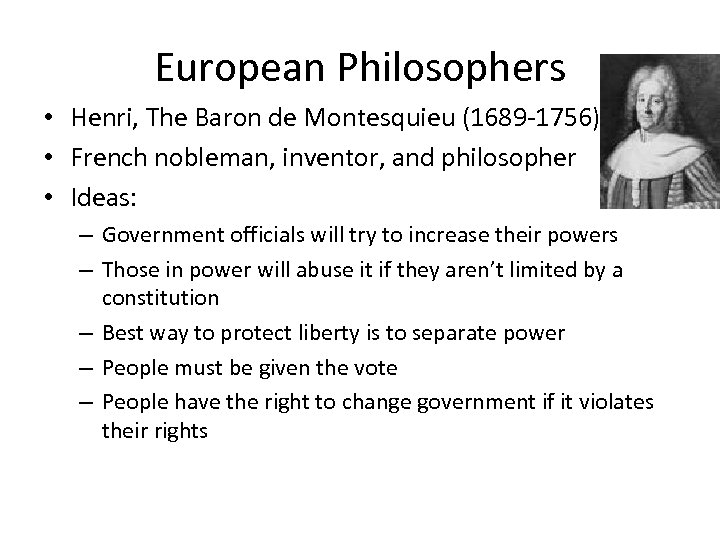 European Philosophers • Henri, The Baron de Montesquieu (1689 -1756) • French nobleman, inventor, and philosopher • Ideas: – Government officials will try to increase their powers – Those in power will abuse it if they aren’t limited by a constitution – Best way to protect liberty is to separate power – People must be given the vote – People have the right to change government if it violates their rights
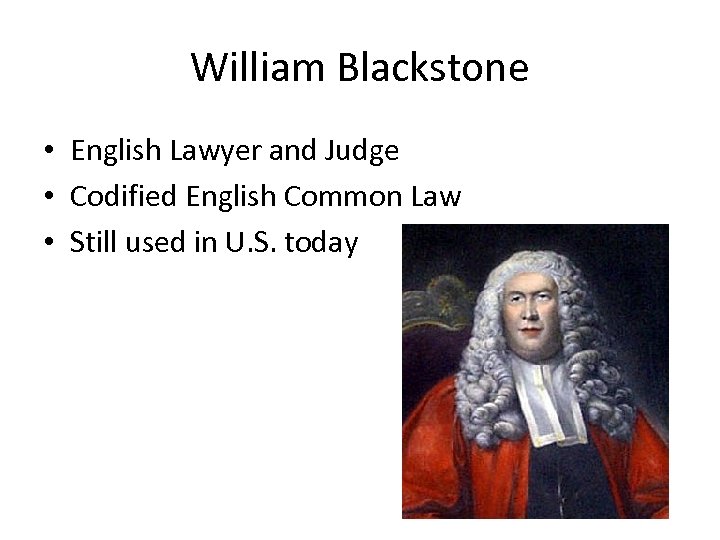 William Blackstone • English Lawyer and Judge • Codified English Common Law • Still used in U. S. today
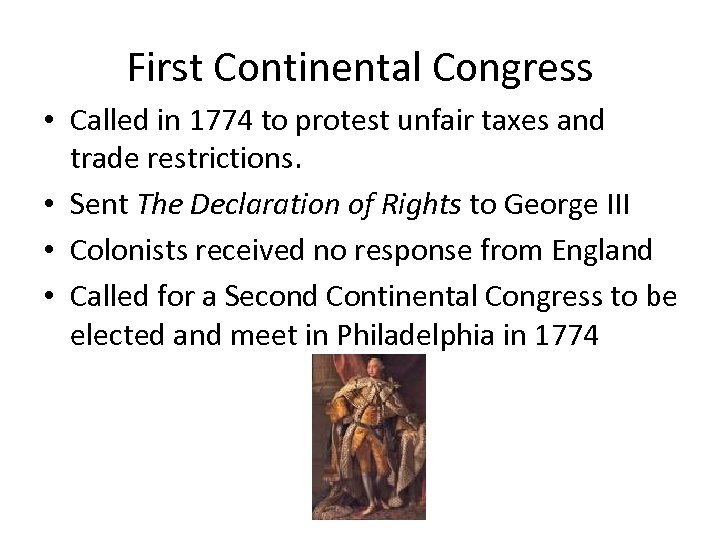 First Continental Congress • Called in 1774 to protest unfair taxes and trade restrictions. • Sent The Declaration of Rights to George III • Colonists received no response from England • Called for a Second Continental Congress to be elected and meet in Philadelphia in 1774
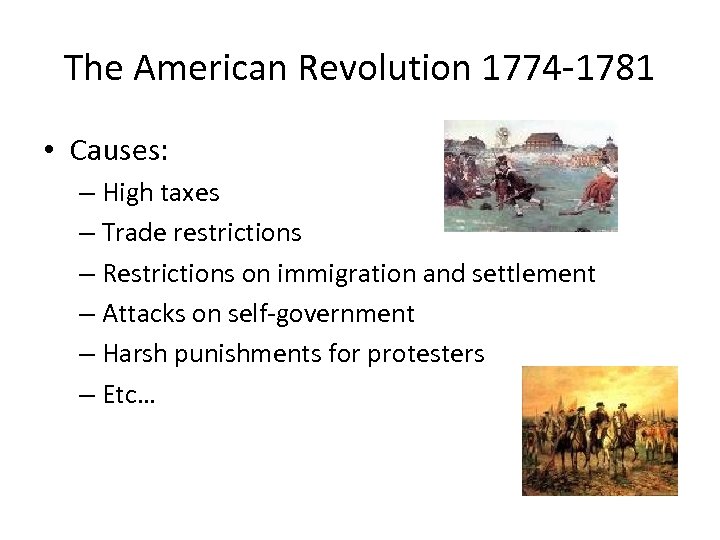 The American Revolution 1774 -1781 • Causes: – High taxes – Trade restrictions – Restrictions on immigration and settlement – Attacks on self-government – Harsh punishments for protesters – Etc…
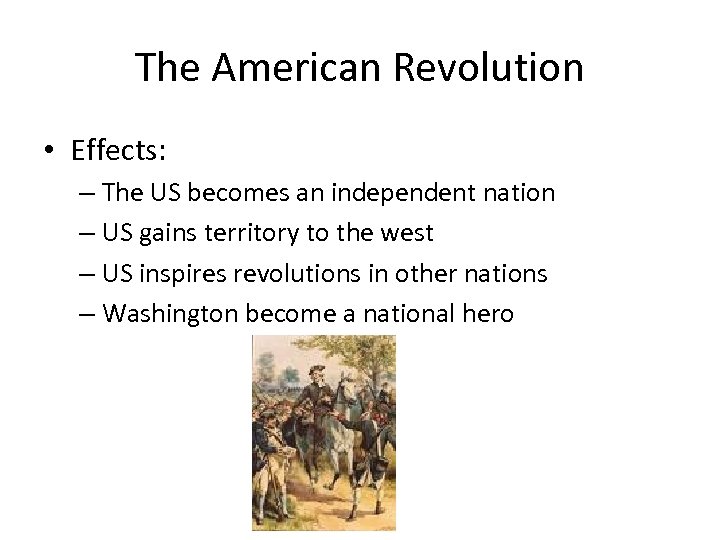 The American Revolution • Effects: – The US becomes an independent nation – US gains territory to the west – US inspires revolutions in other nations – Washington become a national hero
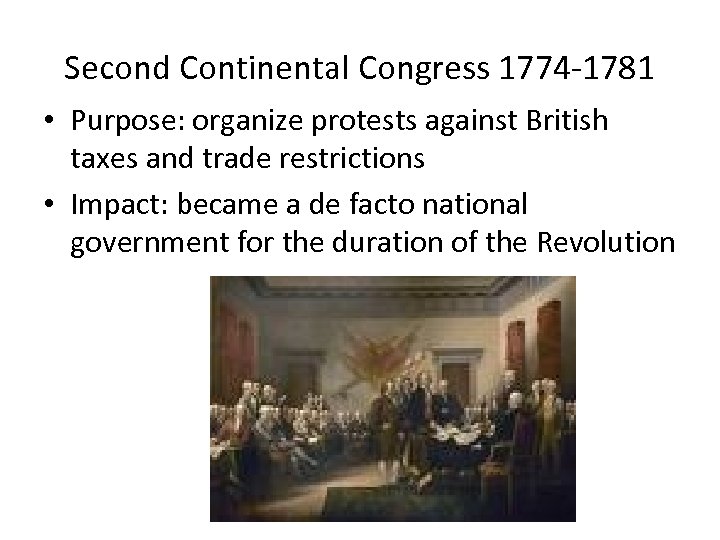 Second Continental Congress 1774 -1781 • Purpose: organize protests against British taxes and trade restrictions • Impact: became a de facto national government for the duration of the Revolution
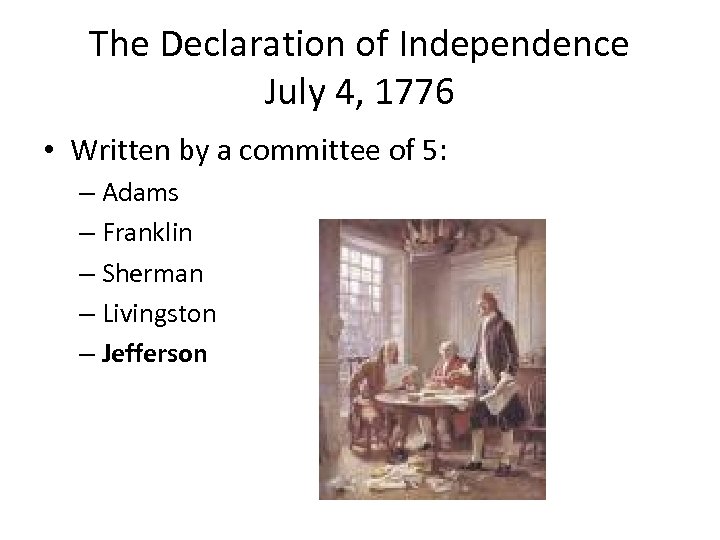 The Declaration of Independence July 4, 1776 • Written by a committee of 5: – Adams – Franklin – Sherman – Livingston – Jefferson
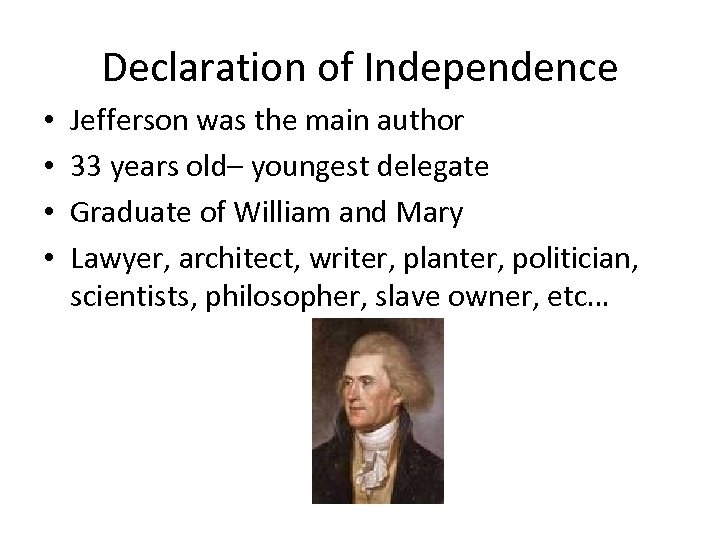 Declaration of Independence • • Jefferson was the main author 33 years old– youngest delegate Graduate of William and Mary Lawyer, architect, writer, planter, politician, scientists, philosopher, slave owner, etc…
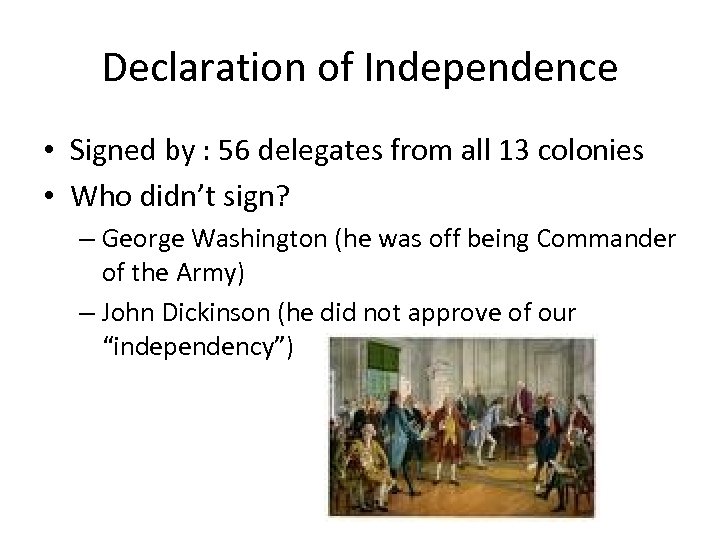 Declaration of Independence • Signed by : 56 delegates from all 13 colonies • Who didn’t sign? – George Washington (he was off being Commander of the Army) – John Dickinson (he did not approve of our “independency”)
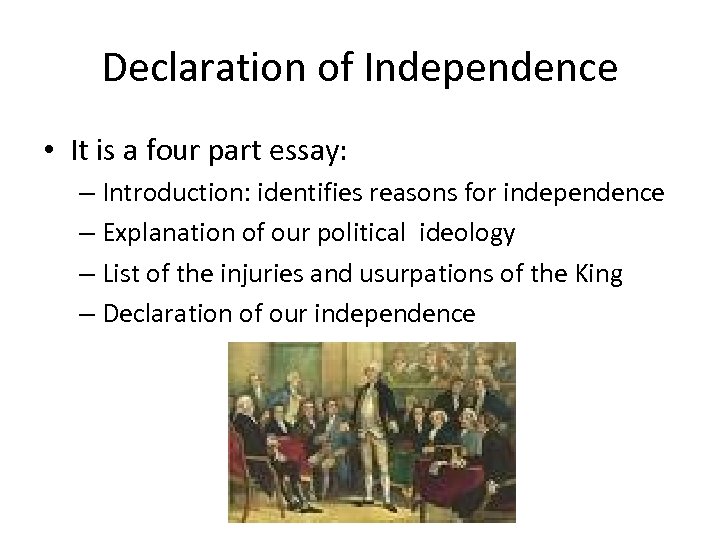 Declaration of Independence • It is a four part essay: – Introduction: identifies reasons for independence – Explanation of our political ideology – List of the injuries and usurpations of the King – Declaration of our independence
 Declaration of Independence • Five purposes for writing the Declaration: – – – Gain international support ($, troops, weapons, etc…) Gain popular support in the colonies Set up a democratic government Propaganda (increase enlistments and support) Declare our Independence (hence the title!)
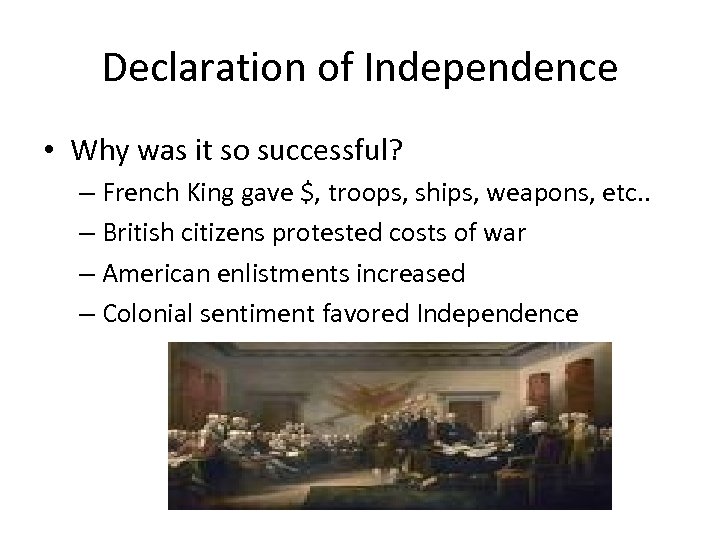 Declaration of Independence • Why was it so successful? – French King gave $, troops, ships, weapons, etc. . – British citizens protested costs of war – American enlistments increased – Colonial sentiment favored Independence
 Declaration of Independence – Four Democratic Principles: • “all men are created equal…” • “they are endowed by their creator with certain inalienable rights…” (life, liberty, pursuit of happiness) • “governments are instituted among men deriving their just powers from the consent of the governed…” • Whenever any government becomes destructive of the ends, it is the right of the people to alter or abolish it…”
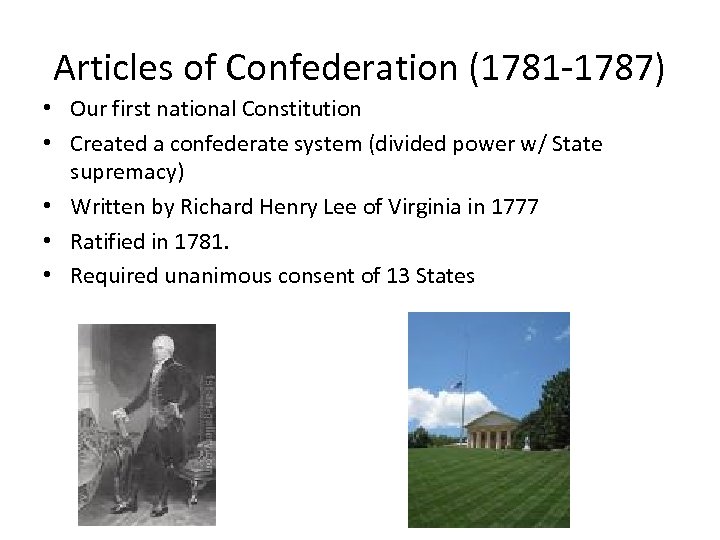 Articles of Confederation (1781 -1787) • Our first national Constitution • Created a confederate system (divided power w/ State supremacy) • Written by Richard Henry Lee of Virginia in 1777 • Ratified in 1781. • Required unanimous consent of 13 States
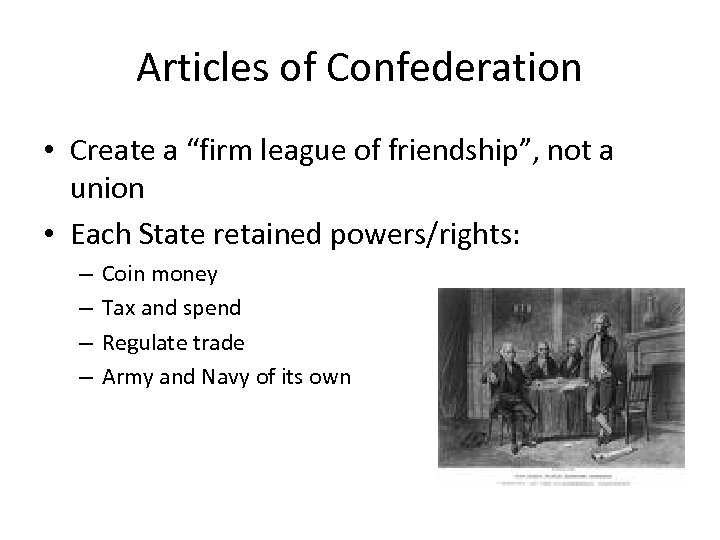 Articles of Confederation • Create a “firm league of friendship”, not a union • Each State retained powers/rights: – – Coin money Tax and spend Regulate trade Army and Navy of its own
 Articles of Confederation • Successes: – Land Ordinance of 1781: created townships in Kentucky territories – Northwest Ordinance : outlawed slavery in the territory and set up requirements for statehood.
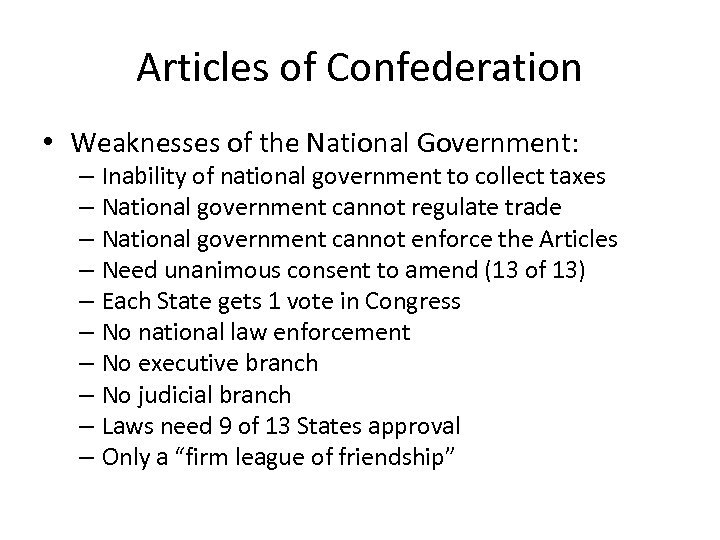 Articles of Confederation • Weaknesses of the National Government: – Inability of national government to collect taxes – National government cannot regulate trade – National government cannot enforce the Articles – Need unanimous consent to amend (13 of 13) – Each State gets 1 vote in Congress – No national law enforcement – No executive branch – No judicial branch – Laws need 9 of 13 States approval – Only a “firm league of friendship”
 The Critical Period 1781 -1789 • Why “critical”? – High inflation (increase in prices over 1, 000+%) – Recession (economy has shrunk) – Massive war debt that we cannot repay (France) – 1/3 rd of the adult male population has been killed or disabled in the Revolution – Destruction of personal property during the War – Etc…
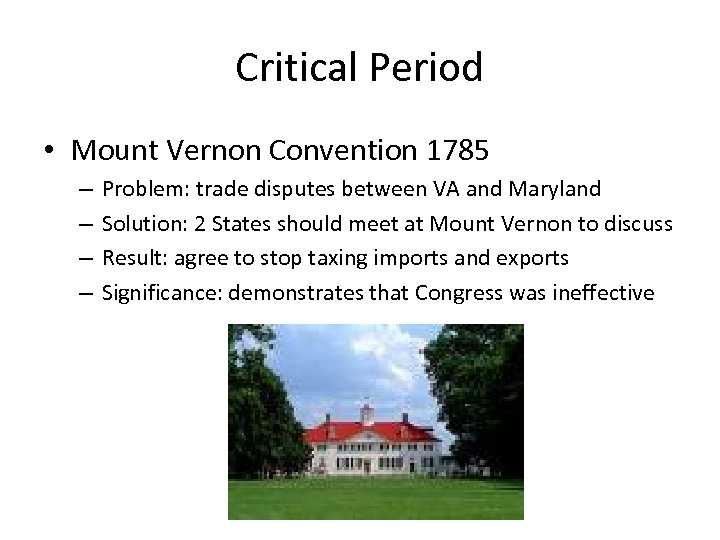 Critical Period • Mount Vernon Convention 1785 – – Problem: trade disputes between VA and Maryland Solution: 2 States should meet at Mount Vernon to discuss Result: agree to stop taxing imports and exports Significance: demonstrates that Congress was ineffective
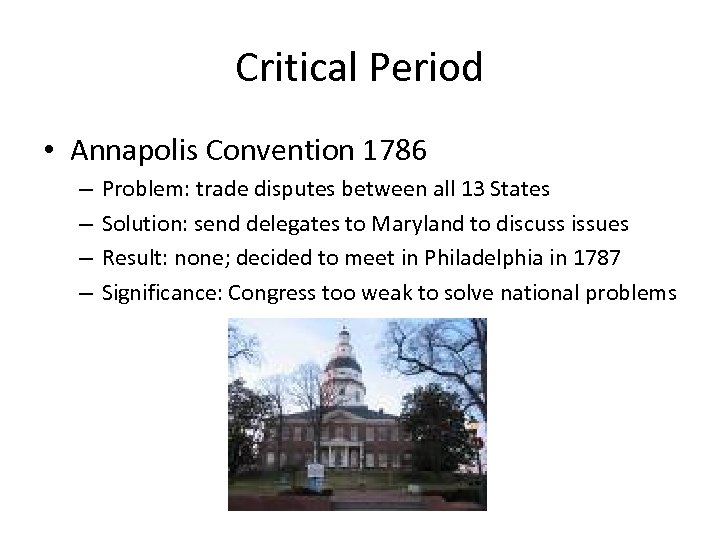 Critical Period • Annapolis Convention 1786 – – Problem: trade disputes between all 13 States Solution: send delegates to Maryland to discuss issues Result: none; decided to meet in Philadelphia in 1787 Significance: Congress too weak to solve national problems
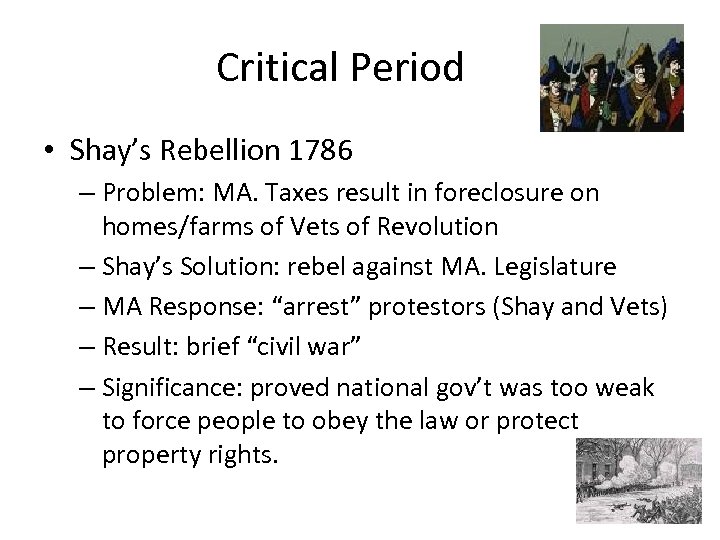 Critical Period • Shay’s Rebellion 1786 – Problem: MA. Taxes result in foreclosure on homes/farms of Vets of Revolution – Shay’s Solution: rebel against MA. Legislature – MA Response: “arrest” protestors (Shay and Vets) – Result: brief “civil war” – Significance: proved national gov’t was too weak to force people to obey the law or protect property rights.
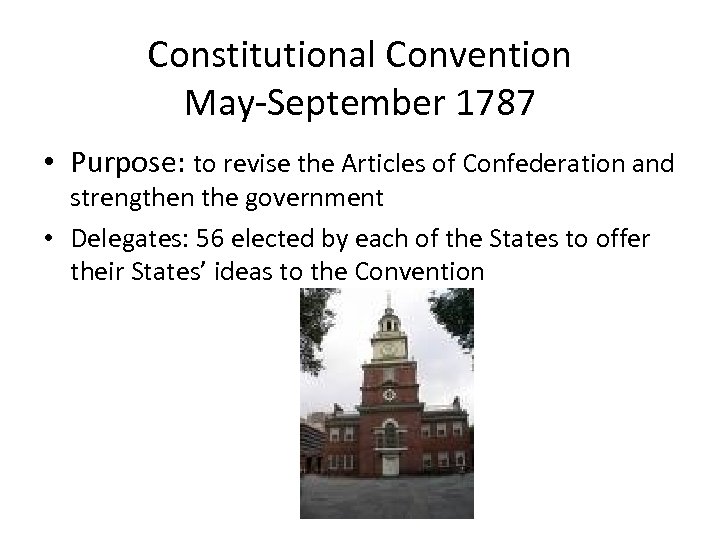 Constitutional Convention May-September 1787 • Purpose: to revise the Articles of Confederation and strengthen the government • Delegates: 56 elected by each of the States to offer their States’ ideas to the Convention
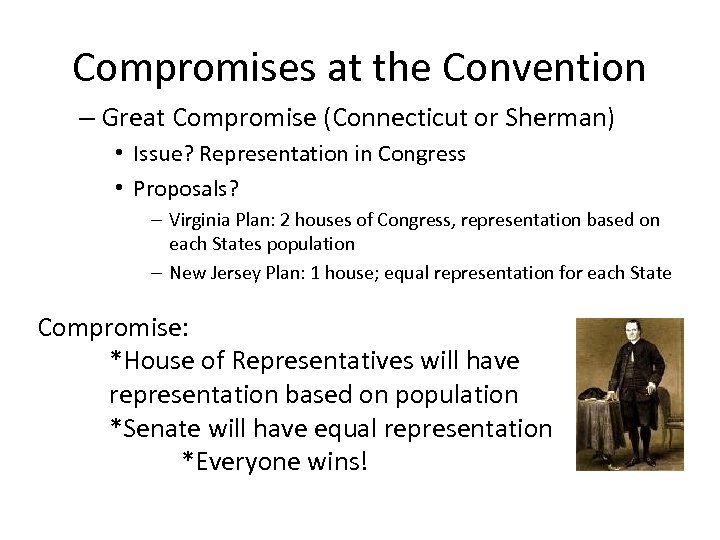 Compromises at the Convention – Great Compromise (Connecticut or Sherman) • Issue? Representation in Congress • Proposals? – Virginia Plan: 2 houses of Congress, representation based on each States population – New Jersey Plan: 1 house; equal representation for each State Compromise: *House of Representatives will have representation based on population *Senate will have equal representation *Everyone wins!
 Compromises at the Convention • Executive Compromise – Issue? What kind of executive should we have? – Virginia Plan: one person should be elected at-large by the people – New Jersey Plan: five people should make up an executive TEAM and be elected by the State Governors – Compromise: one person will be elected indirectly by the people through the Electoral College
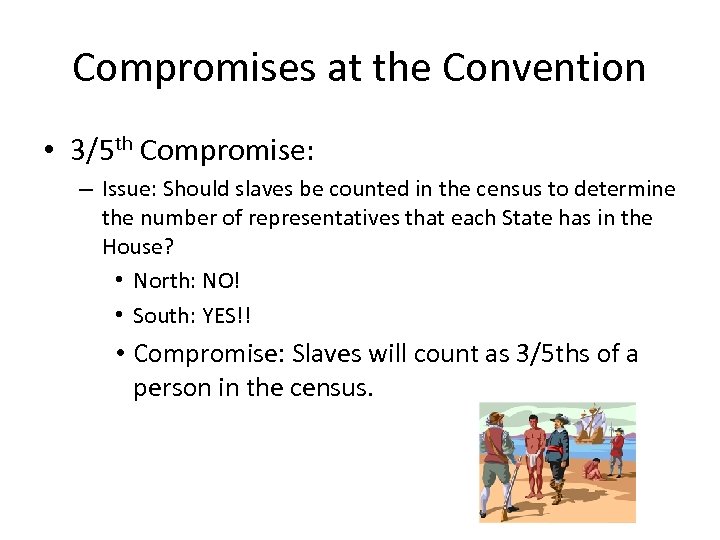 Compromises at the Convention • 3/5 th Compromise: – Issue: Should slaves be counted in the census to determine the number of representatives that each State has in the House? • North: NO! • South: YES!! • Compromise: Slaves will count as 3/5 ths of a person in the census.
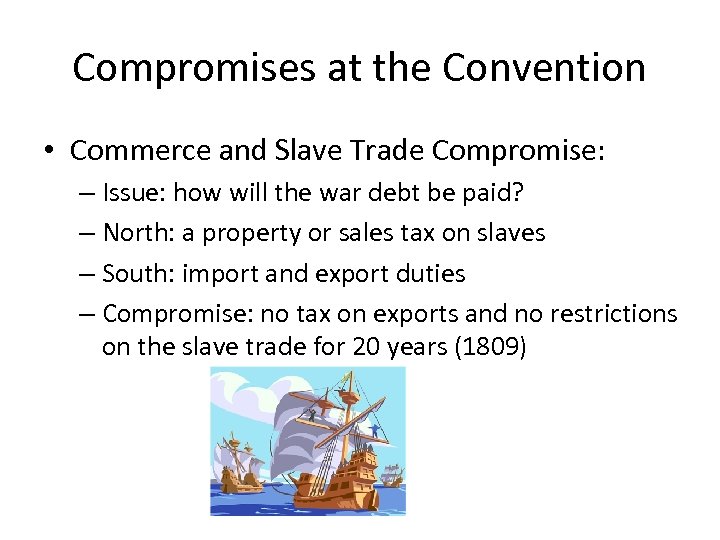 Compromises at the Convention • Commerce and Slave Trade Compromise: – Issue: how will the war debt be paid? – North: a property or sales tax on slaves – South: import and export duties – Compromise: no tax on exports and no restrictions on the slave trade for 20 years (1809)
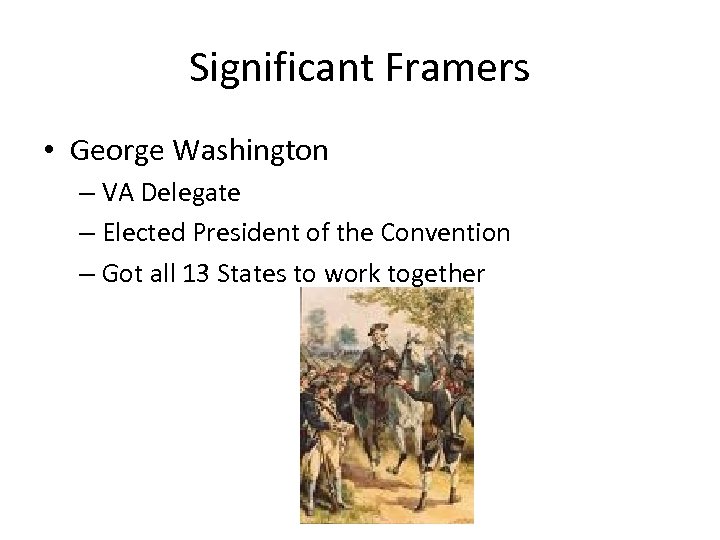 Significant Framers • George Washington – VA Delegate – Elected President of the Convention – Got all 13 States to work together
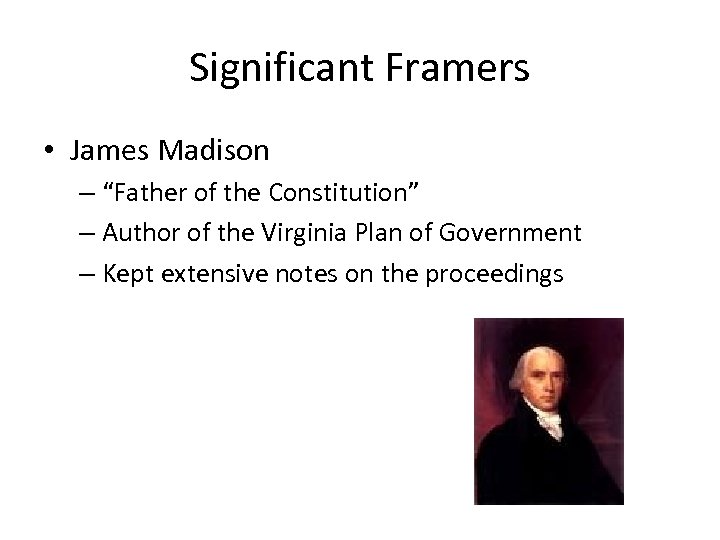 Significant Framers • James Madison – “Father of the Constitution” – Author of the Virginia Plan of Government – Kept extensive notes on the proceedings
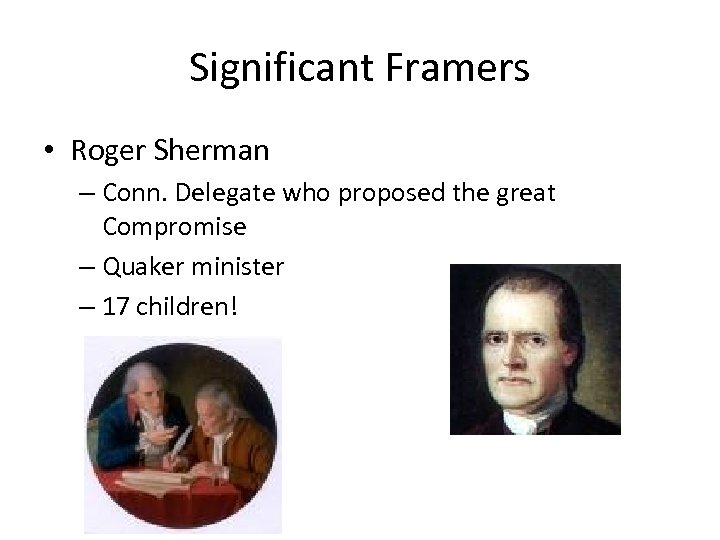 Significant Framers • Roger Sherman – Conn. Delegate who proposed the great Compromise – Quaker minister – 17 children!
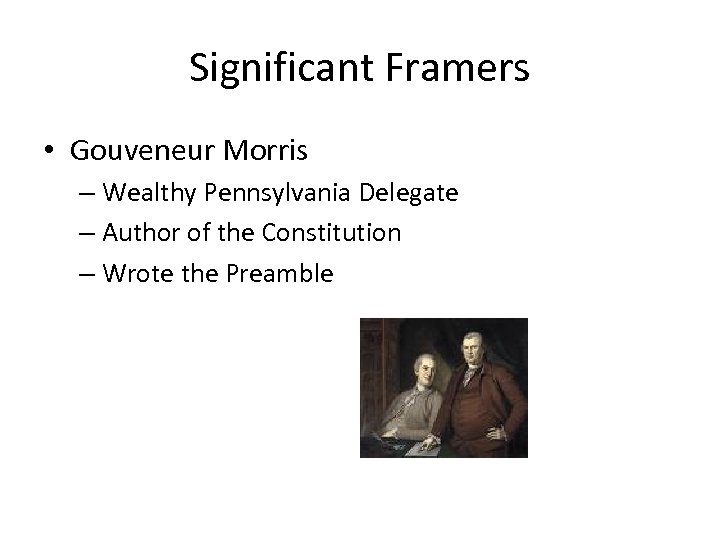 Significant Framers • Gouveneur Morris – Wealthy Pennsylvania Delegate – Author of the Constitution – Wrote the Preamble
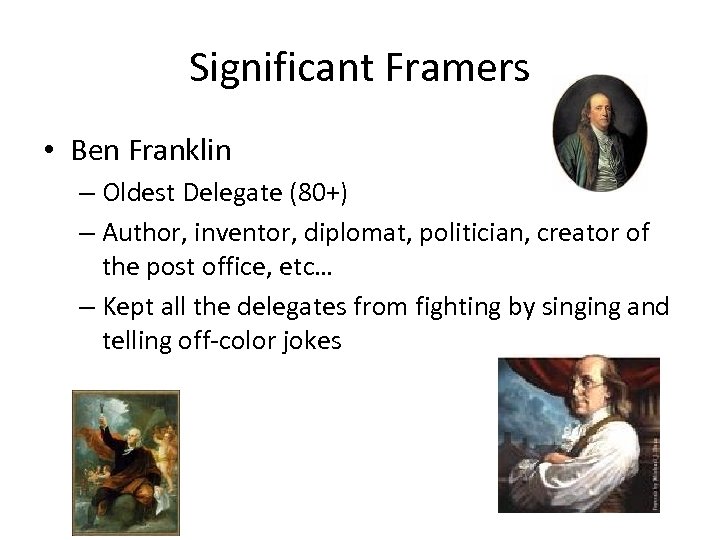 Significant Framers • Ben Franklin – Oldest Delegate (80+) – Author, inventor, diplomat, politician, creator of the post office, etc… – Kept all the delegates from fighting by singing and telling off-color jokes
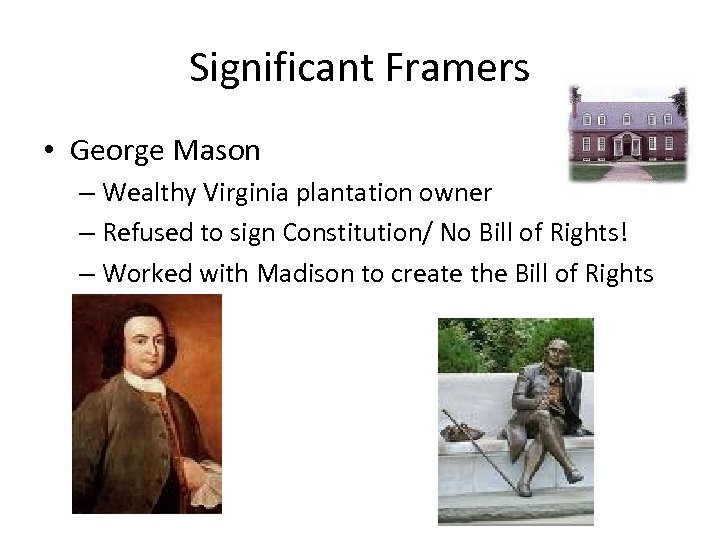 Significant Framers • George Mason – Wealthy Virginia plantation owner – Refused to sign Constitution/ No Bill of Rights! – Worked with Madison to create the Bill of Rights
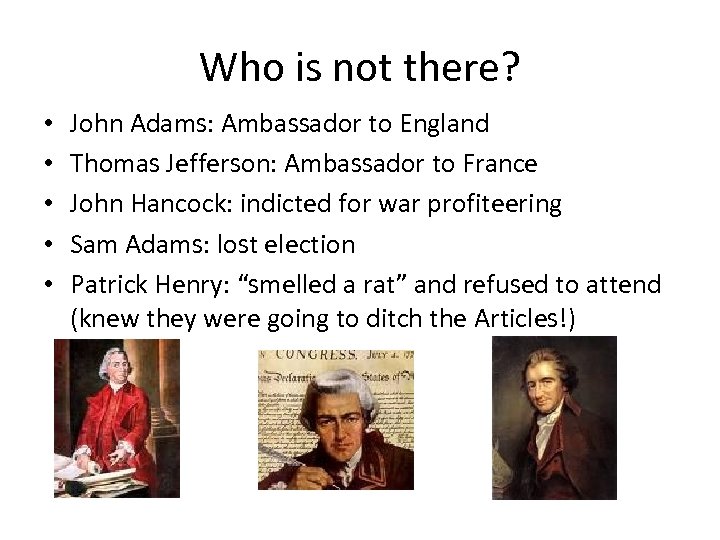 Who is not there? • • • John Adams: Ambassador to England Thomas Jefferson: Ambassador to France John Hancock: indicted for war profiteering Sam Adams: lost election Patrick Henry: “smelled a rat” and refused to attend (knew they were going to ditch the Articles!)
 Ratification • Ratification means formal approval – Federalists • Who are they? : People who wanted the Constitution to pass – – – Washington Hamilton Madison Jay Franklin • What do they want? : stronger national government
 Ratification • Anti-federalist: – Who are they? People who opposed the Constitution. • • George Mason Patrick Henry John Hancock Sam Adams – What don’t they like about the Constitution? • • • No mention of God or religion Ratification process “illegal” Denied States’ Rights Too much power granted to national gov’t No Bill of Rights!!!
 Ratification • Why did the Federalists manages to get the Constitution ratified? – People knew the Articles were ineffective – Good leadership (Washington, Hamilton, Madison) – People wanted a stronger national government – Poor economic conditions – The publication of the Federalist Papers
 Ratification • The Federalist Papers – – Authors: Hamilton, Madison, Jay Purpose: convince New Yorkers to ratify Publius: the name they wrote under; “man of the people” Propaganda: 85 newspaper editorials used to explain every section of the Constitution in the common language of the day. Highly persuasive language was used.
 New Government • March 4, 1789 Washington is inaugurated as our 1 st President on Wall Street in New York City • Why V-P John Adams ? He lost the electoral vote • Why New York City? Largest city in US. Washington, D. C. has not been built yet • Why move the capitol to D. C. ? Compromise at the convention. North gets rid of war debt, South gets Capitol
 Reasons for creating a new government: • The confederacy couldn’t effectively tax • Articles couldn’t protect property rights • US unable to respond to foreign attacks under the Articles • Economic Problems
 Main Effects of New Government • • New 3 branch national government created National power increased dramatically Government become effective (Executive!) States compromise for common good National Bill of Rights is ratified Slavery remains legal Political Parties begin Regional conflicts escalate over power and States’ rights
 Complete your test review, notes, and study for your test over Unit II.
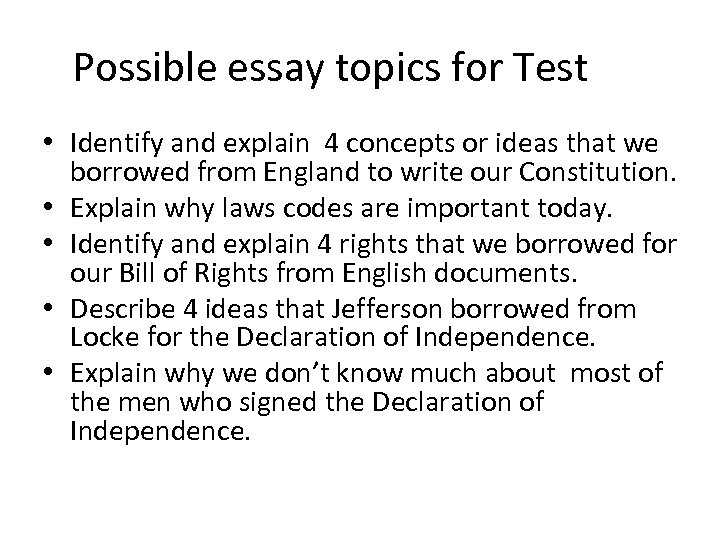 Possible essay topics for Test • Identify and explain 4 concepts or ideas that we borrowed from England to write our Constitution. • Explain why laws codes are important today. • Identify and explain 4 rights that we borrowed for our Bill of Rights from English documents. • Describe 4 ideas that Jefferson borrowed from Locke for the Declaration of Independence. • Explain why we don’t know much about most of the men who signed the Declaration of Independence.