



 Unit F 321 Module 1. 2. 1 Electron Structure
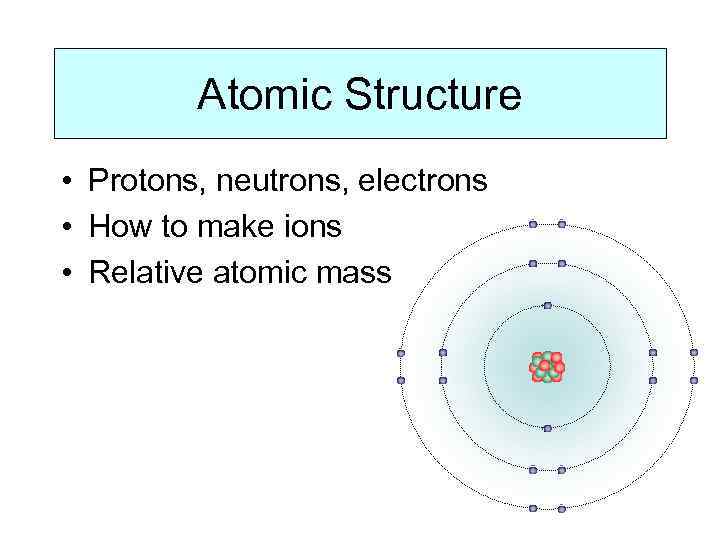 Atomic Structure • Protons, neutrons, electrons • How to make ions • Relative atomic mass
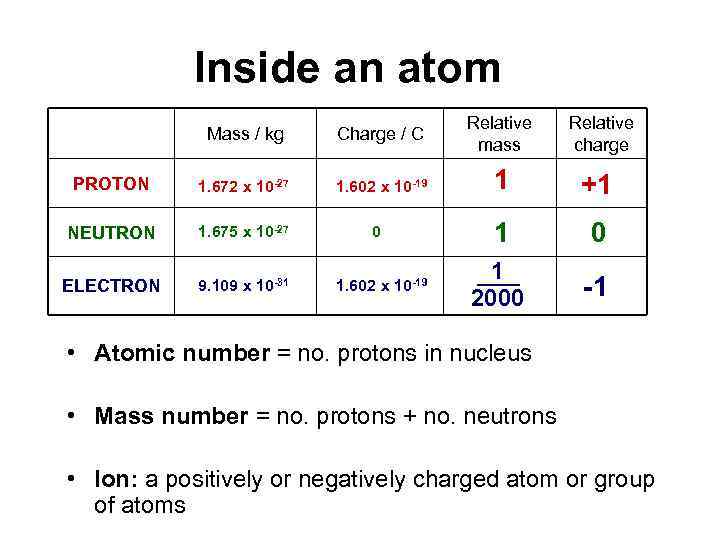 Inside an atom Mass / kg Charge / C Relative mass Relative charge PROTON 1. 672 x 10 -27 1. 602 x 10 -19 1 +1 NEUTRON 1. 675 x 10 -27 1 0 ELECTRON 9. 109 x 10 -31 1 2000 -1 0 1. 602 x 10 -19 • Atomic number = no. protons in nucleus • Mass number = no. protons + no. neutrons • Ion: a positively or negatively charged atom or group of atoms
 Ionisation Energy • What is ionisation energy? • Definitions – First ionisation energy – Successive ionisation energies • What affects ionisation energy?
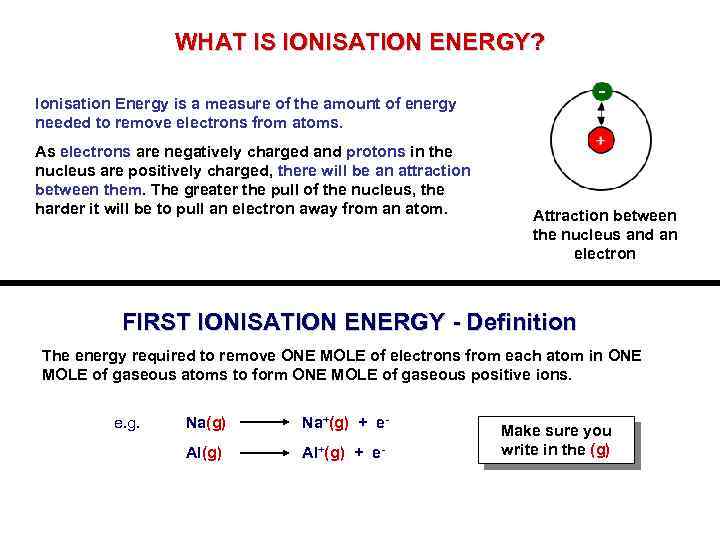 WHAT IS IONISATION ENERGY? - Ionisation Energy is a measure of the amount of energy needed to remove electrons from atoms. As electrons are negatively charged and protons in the nucleus are positively charged, there will be an attraction between them. The greater the pull of the nucleus, the harder it will be to pull an electron away from an atom. Attraction between the nucleus and an electron FIRST IONISATION ENERGY - Definition The energy required to remove ONE MOLE of electrons from each atom in ONE MOLE of gaseous atoms to form ONE MOLE of gaseous positive ions. e. g. Na(g) Na+(g) + e- Al(g) Al+(g) + e- Make sure you write in the (g)
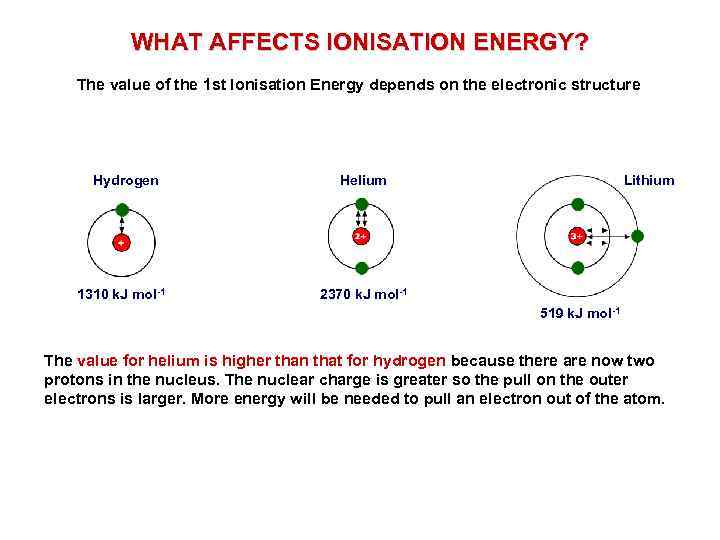 WHAT AFFECTS IONISATION ENERGY? The value of the 1 st Ionisation Energy depends on the electronic structure Hydrogen 1310 k. J mol-1 Helium Lithium 2370 k. J mol-1 519 k. J mol-1 The value for helium is higher than that for hydrogen because there are now two protons in the nucleus. The nuclear charge is greater so the pull on the outer electrons is larger. More energy will be needed to pull an electron out of the atom.
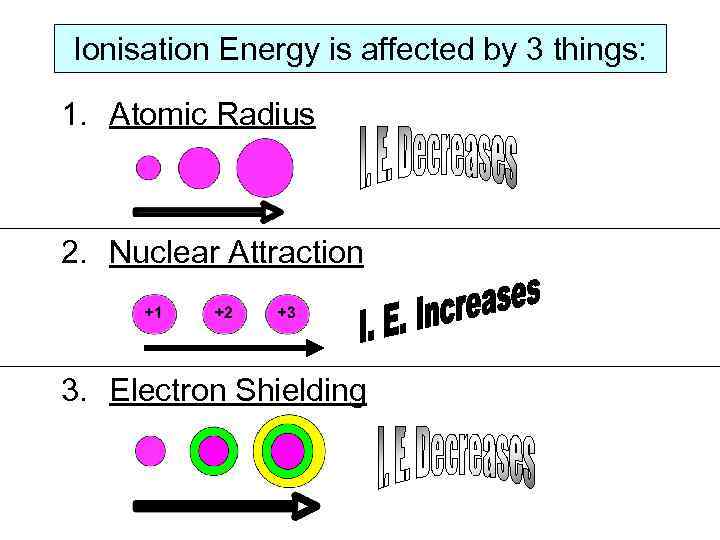 Ionisation Energy is affected by 3 things: 1. Atomic Radius 2. Nuclear Attraction 3. Electron Shielding
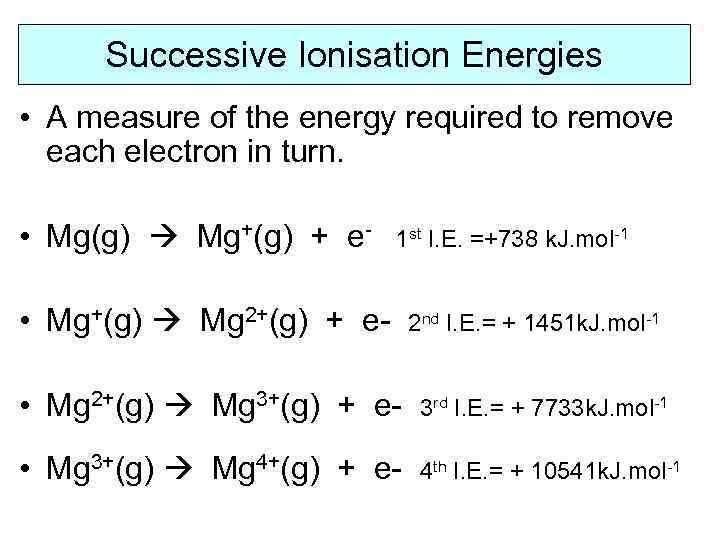 Successive Ionisation Energies • A measure of the energy required to remove each electron in turn. • Mg(g) Mg+(g) + e- 1 st I. E. =+738 k. J. mol-1 • Mg+(g) Mg 2+(g) + e- 2 nd I. E. = + 1451 k. J. mol-1 • Mg 2+(g) Mg 3+(g) + e- 3 rd I. E. = + 7733 k. J. mol-1 • Mg 3+(g) Mg 4+(g) + e- 4 th I. E. = + 10541 k. J. mol-1
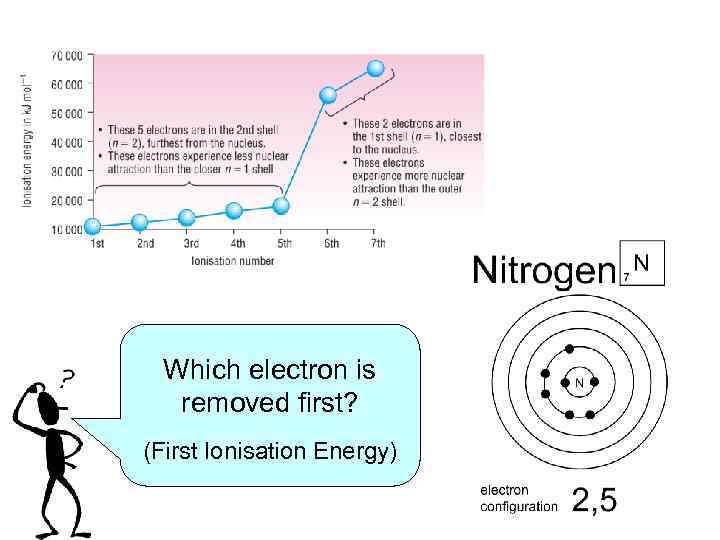 Which electron is removed first? (First Ionisation Energy)
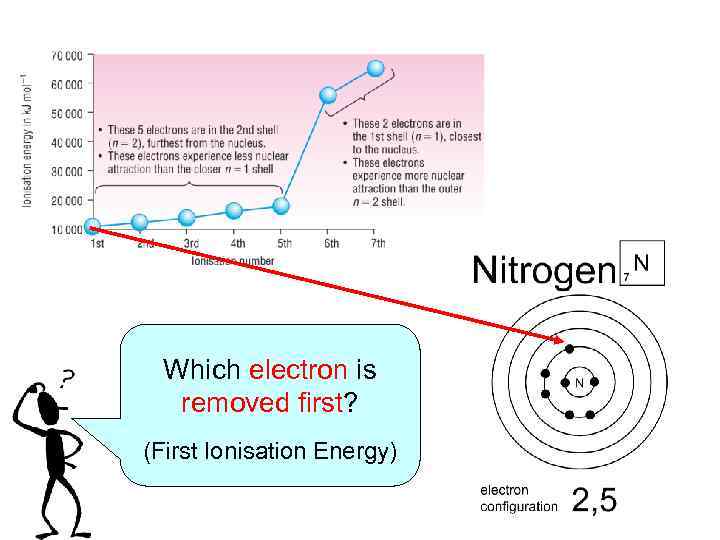 Which electron is removed first? (First Ionisation Energy)
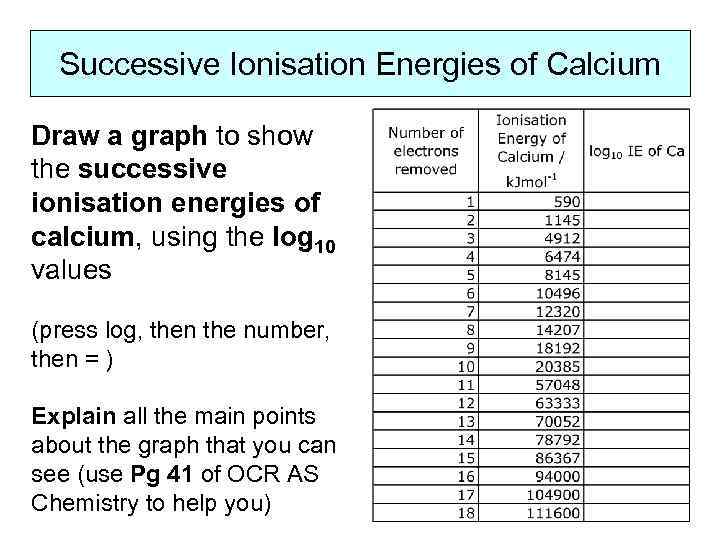 Successive Ionisation Energies of Calcium Draw a graph to show the successive ionisation energies of calcium, using the log 10 values (press log, then the number, then = ) Explain all the main points about the graph that you can see (use Pg 41 of OCR AS Chemistry to help you)
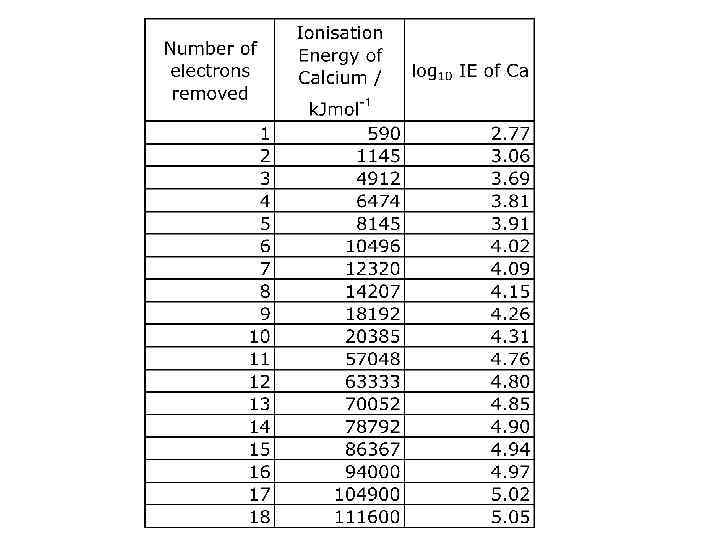
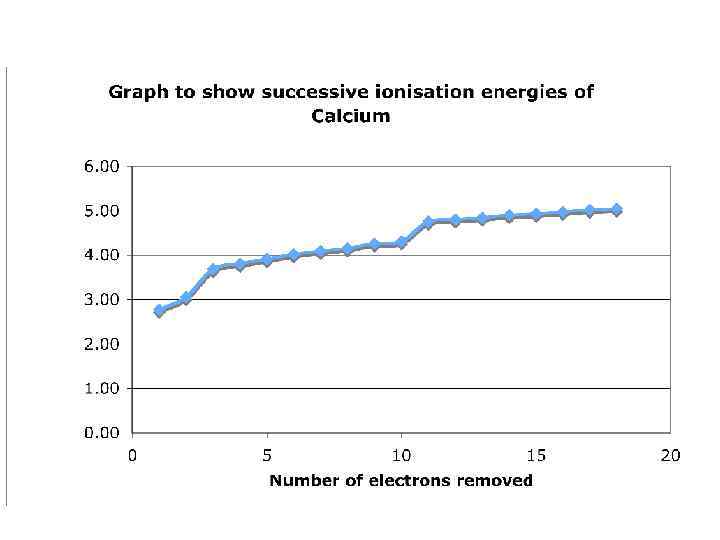
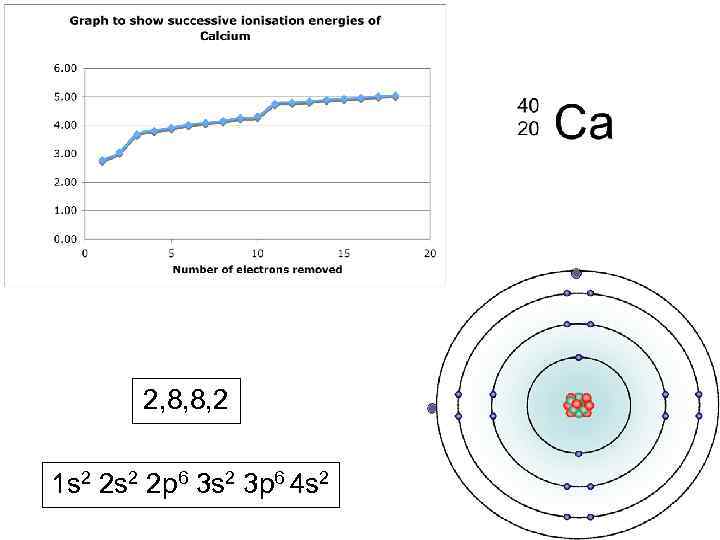 2, 8, 8, 2 1 s 2 2 p 6 3 s 2 3 p 6 4 s 2
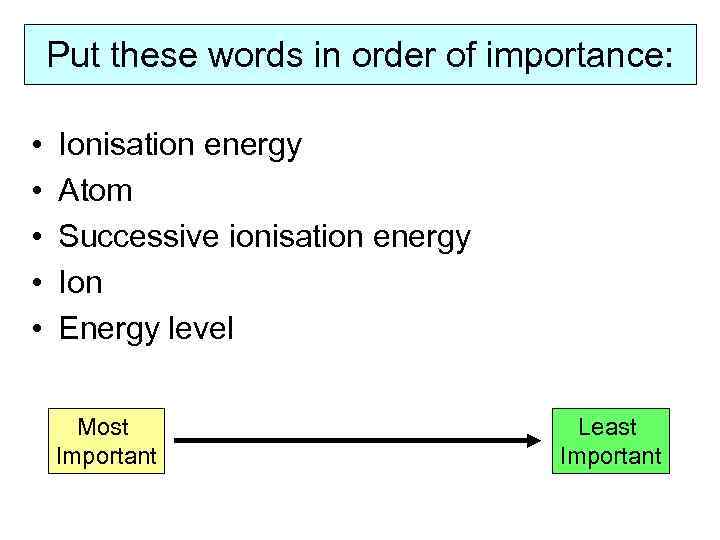 Put these words in order of importance: • • • Ionisation energy Atom Successive ionisation energy Ion Energy level Most Important Least Important