


 Скачать презентацию Unit 6 The Middle East S W Asia
b40f279323ae8ff5a747caecad5b6773.ppt
- Количество слайдов: 31
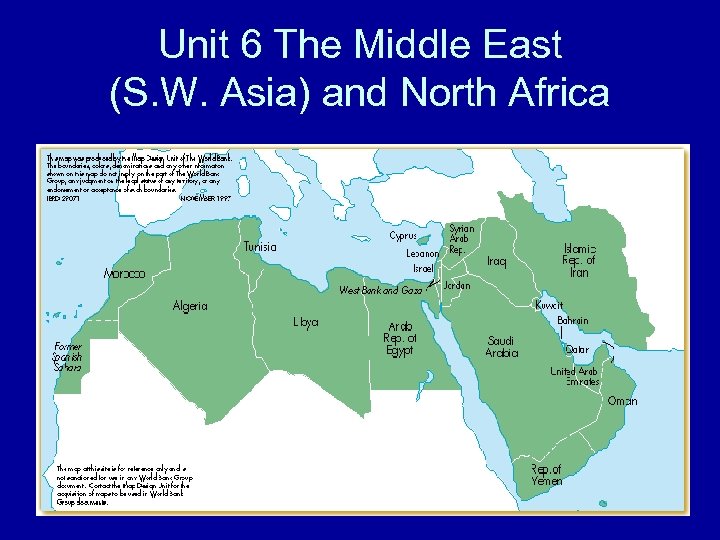 Unit 6 The Middle East (S. W. Asia) and North Africa
 Physical Features of the Middle East • This area is the crossroads of Europe, Africa and Asia • This region also spans two continents (Asia and Africa) • This area of Asia was given the nickname of the Middle East by the British because of its relative location to the Far East (China & Japan)
 Mountains • This area includes several mountain chains • The Atlas mountains are located in N. Africa and create a rain shadow for the rest of N. Africa • The Taurus and the Zagros are also large mountain chains within this region
 Rivers • This region has many historical rivers • The Nile R. is the world’s longest river system and provides most of Egypt with the water it needs to survive • The Tigris and Euphrates Rivers create the area known as Mesopotamia • The Jordan River runs through Israel and is an important resource for Israel and Jordan
 Deserts • The climate within this region has created desert areas • The Sahara Desert located in N. Africa is the world’s largest desert and also creates a natural barrier between the nations of N. Africa and the rest of Africa • This barrier also accounts for the cultural differences between the two parts of Africa • The Rub-al- Khali is another desert located in the southern portions of the Arabian Peninsula
 Bodies of Water • Red Sea, Persian Gulf, Arabian Sea • The Dead Sea is fed by the Jordan R. and is the worlds lowest (1, 300 ft below sea level) and saltiest body of water
 Natural Resources • Oil and water are the most important resources in this region • Oil is the most valuable resource for the nation of this region • Other resources include coal, copper, iron ore, lead, and potash
 Climates • This region contains mostly dry climate zones (desert and semiarid) • Along the coastal areas of this region you will find Mediterranean climates • The dryer climates limit the amount of vegetation within the region which also limits the agriculture • Cotton and wheat are among the major crops and in the Mediterranean climates citrus fruits can be grown
 Human and Environment Interaction • Water is a critical resource since the region is so dry; it is needed for drinking and agriculture • Most nations struggle to meet the needs of its people in relation to water so they create ways to supply water • Building dams and irrigations systems, desalinization of water, waste water treatment plants, and taking water from aquifers are ways these nations have addressed water needs • Israel built a National Water Carrier System to get water to drier areas
 • Half of the worlds oil supply is found in this region (Arabian Peninsula and the Persian Gulf) • The petroleum and crude oil is shipped through pipelines to refineries or ships • While the revenue from the oil is important for the economy of this region there are hazards which can hurt the environment • There is always a risk of a spill or leak with the pipelines or tankers • During the 1 st Persian Gulf War the oil tankers and terminals were blown up as part of Iraqi strategy to stop the advance of UN forces
 Economic Characteristics • The nations of this region depend heavily on primary economic activities (oil drilling, agriculture, and pastoralism {raising livestock}) • Some nations in the Middle East and N. Africa are major producers of the world’s oil • The nations in this region created OPEC which controls oil production and sets limits and pricing • The money from the oil is used to fund projects that these nations could not afford otherwise (schools, power plants, transportation systems) • There is a wide range in the GDP of the nations in this region
 • Countries like Kuwait, United Arab Emirates and Israel are among the most developed and richest nations • Afghanistan is one of the poorest nations • Afghanistan has been restricted by its religious government and refusal to industrialize • For these reasons it lacks developed infrastructure (roads and schools) • In Egypt the government built the Aswan High Dam on the Nile River • Positives: provides electricity, increases water supply, increases the harvest of crops, less flooding, fewer droughts, increases the farmland • Negatives: relocation of people, decrease in the fertility of the soil, disease from stagnant water, and loss of fresh water down river from the dam
 • This area is at the intersection of Africa, Asia and Europe which creates good access to trade • In ancient times it served as a trade center for caravans crossing the deserts, a port for the Silk Road, and trade off of the Indian Ocean and Mediterranean Sea • The building of the Suez Canal have created better shipping routes which allow greater access to the Mediterranean Sea
 Cultural Characteristics • Most of these nations are Arabic nations where the main language spoken is Arabic • The exceptions to this are Israel, Iran, and Turkey • While these nations are centered around traditional lifestyles (especially in rural areas) they are becoming more modern and urban • People have flocked to urban areas for jobs as the agriculture and rural jobs have gotten fewer
 • Most people live near cities, or areas with water leaving large areas of land with very little population because of the climate and vegetation (uneven population distribution) • Most nations in this region are still highly rural areas with large agricultural populations • The fact that these nations are largely rural leads to a high percentage of the population being under 15 • The marketplace is a major part of the lifestyles of these people; agricultural goods and hand made products are traded and sold here • This area was first settled by nomadic people known as Bedouins
 • The Bedouins and their nomadic lifestyle led to the spread of the Islamic religion • This area is home to the three major monotheistic world religions 1) Islam, 2) Christianity, and 3) Judaism • This area also houses important symbols for these religions (Islam – Dome of the Rock; Judaism – the Western Wall; Christianity – location of Jesus’ crucifixion) • The fact that this region is the home to three religions has led to much conflict in its history
 • The largest of these conflicts is the one between the Israelis and the Palestinians • The land of Palestine was inhabited by Muslims since the Crusades • After WWII the UN gave the territory of Palestine to the Jews as their homeland • The Palestinians and other Arab nations protested the land going to the Jews • The land of Palestine is now Israel, and the fighting between the Palestinians and Israelis has been non-stop since 1947
 • Important cities for trade and culture include Baghdad, Cairo, Istanbul, Jerusalem, Mecca, and Tehran
 Places and things of interest
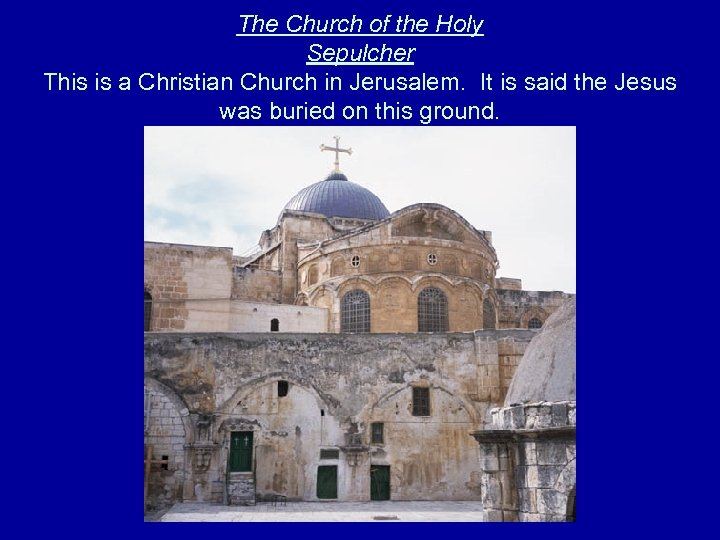 The Church of the Holy Sepulcher This is a Christian Church in Jerusalem. It is said the Jesus was buried on this ground.
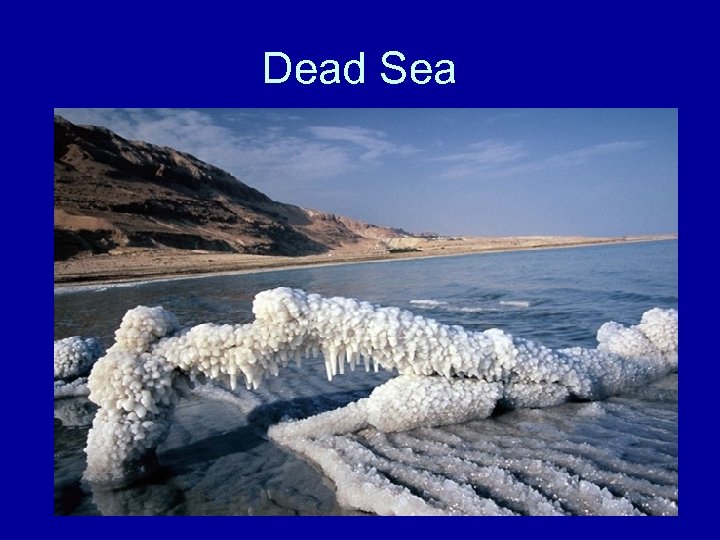 Dead Sea
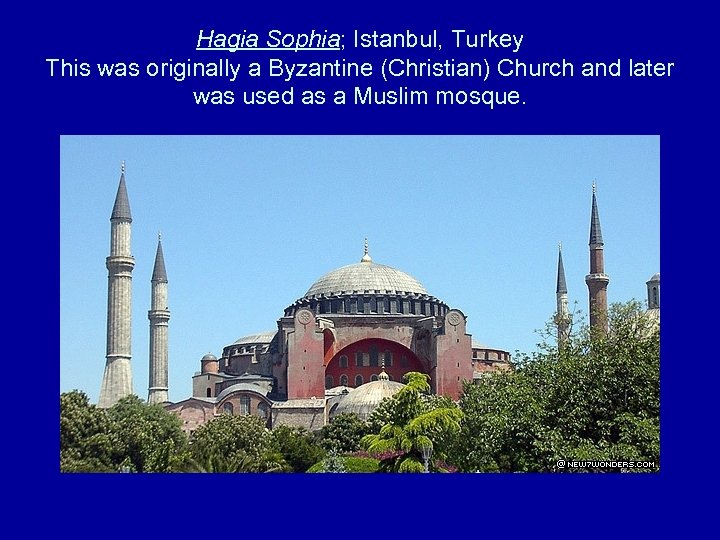 Hagia Sophia; Istanbul, Turkey This was originally a Byzantine (Christian) Church and later was used as a Muslim mosque.
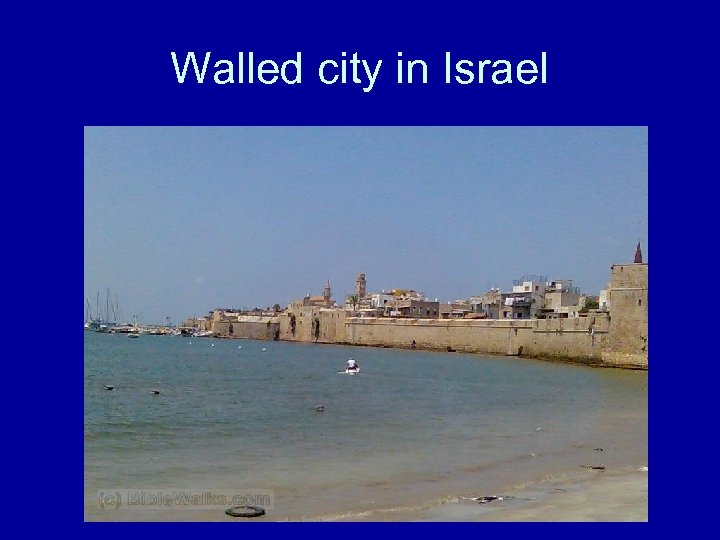 Walled city in Israel
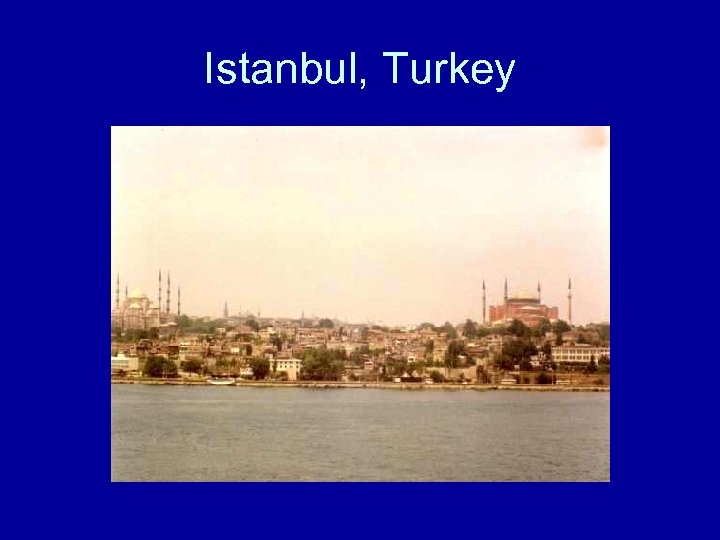 Istanbul, Turkey
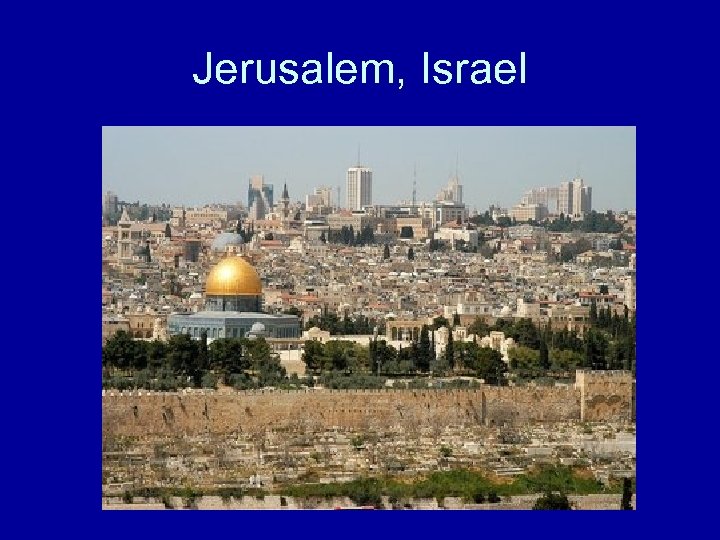 Jerusalem, Israel
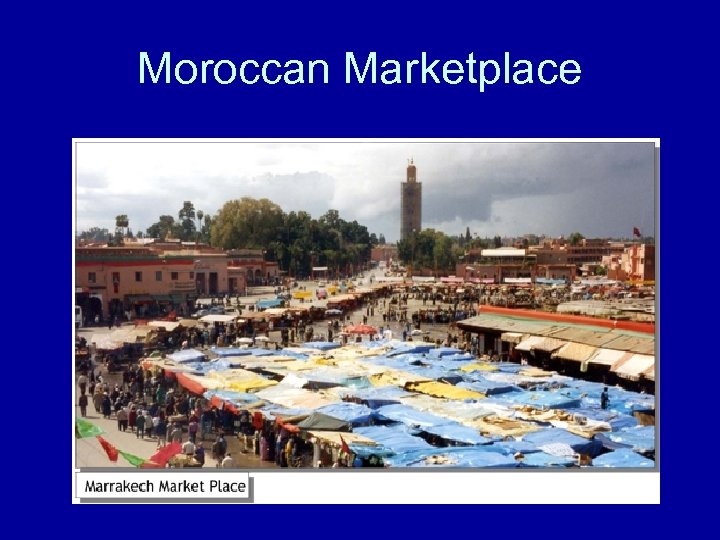 Moroccan Marketplace
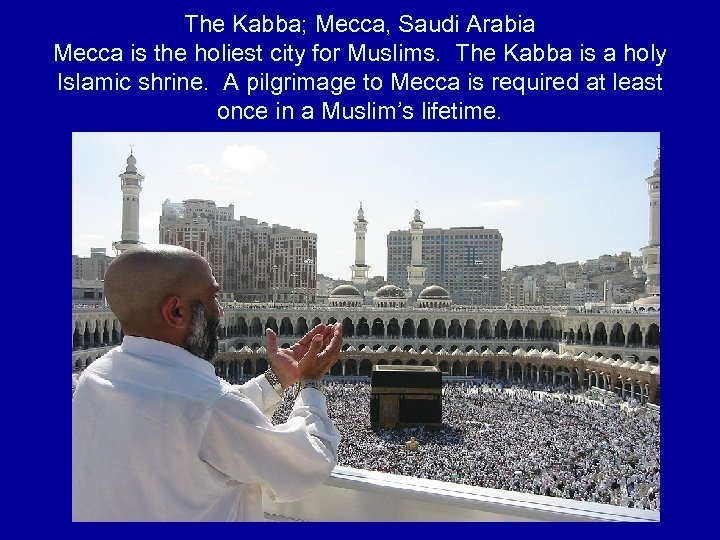 The Kabba; Mecca, Saudi Arabia Mecca is the holiest city for Muslims. The Kabba is a holy Islamic shrine. A pilgrimage to Mecca is required at least once in a Muslim’s lifetime.
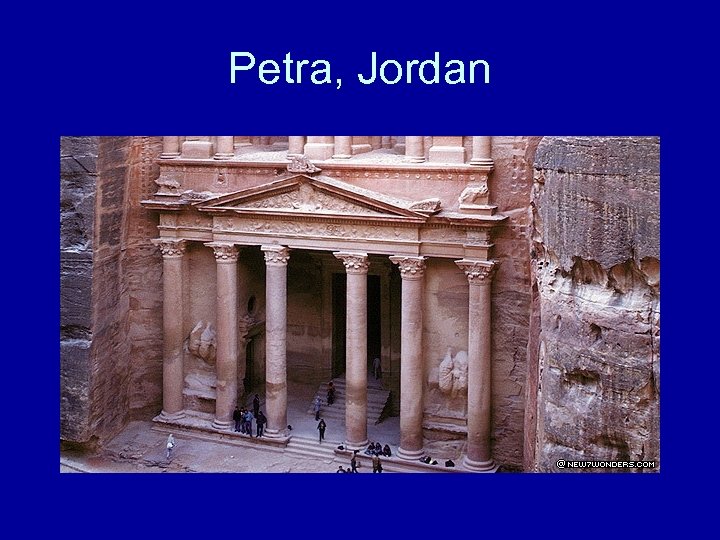 Petra, Jordan
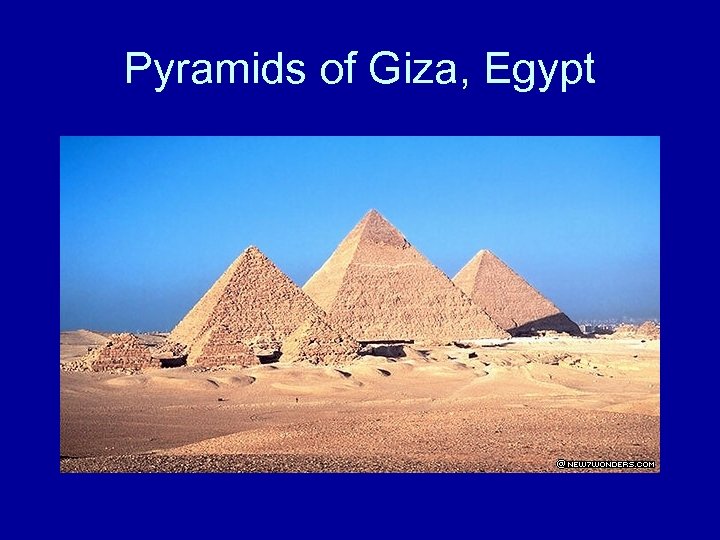 Pyramids of Giza, Egypt
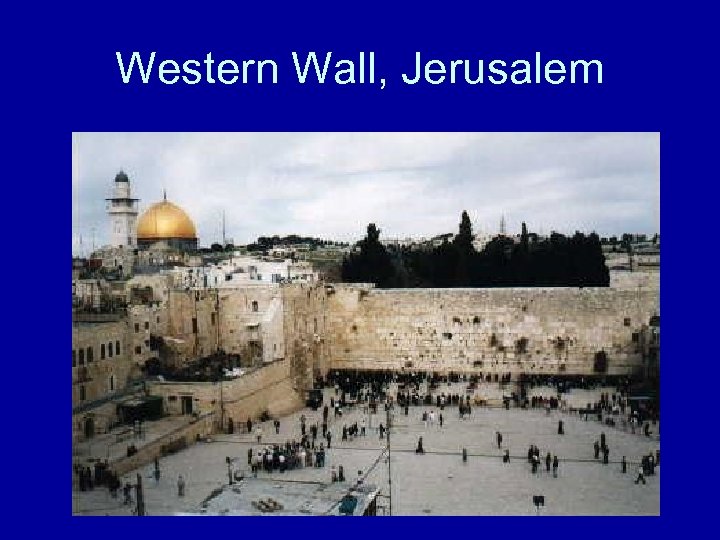 Western Wall, Jerusalem
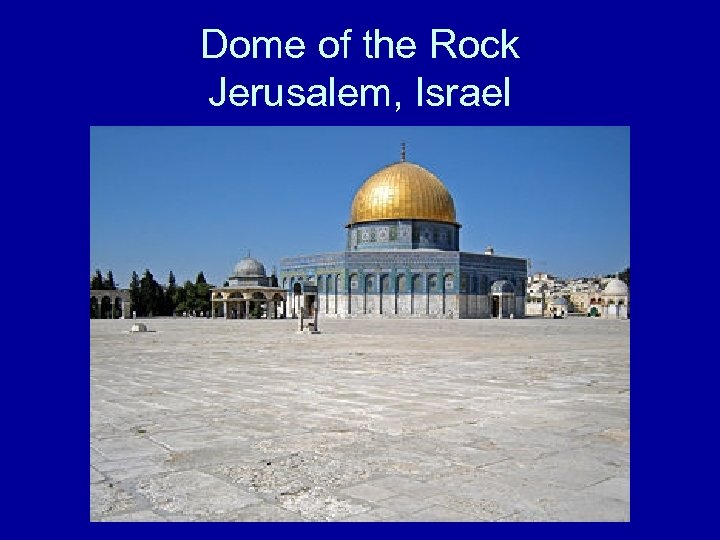 Dome of the Rock Jerusalem, Israel