Скачать презентацию Unit 5 Wild Animals Integrated Skills Wujiang Experimental
bcc6bb2d4d1cc7ac6079a5abe6160951.ppt
- Количество слайдов: 33
 Unit 5 Wild Animals Integrated Skills Wujiang Experimental Middle School By Xu Feng
 Teaching aims and Demands • To identify specific characteristics, appearance, abilities, eating habits and danger in the context of animals. • To develop students’ ability to infer meaning from context and key words. • To learn more about the endangered animals and talk about how to protect them. • To listen and develop students’ ability to extract information in order to complete two fact sheets.
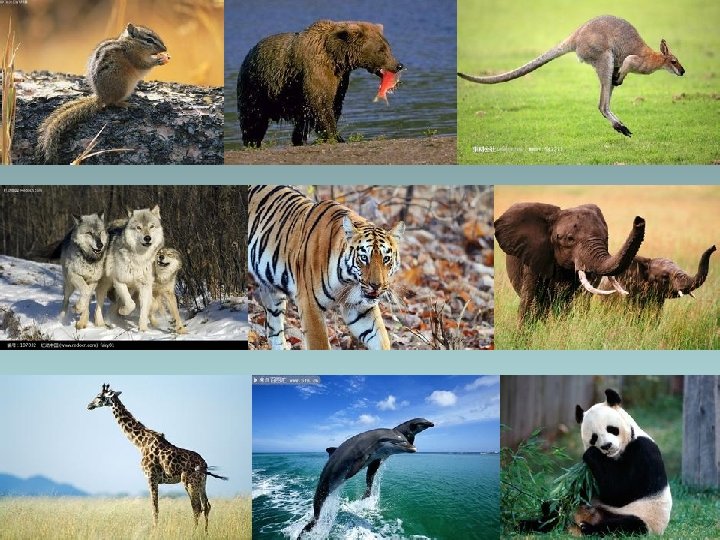
 Step 1 warm up and lead in In this unit, we have learned a lot about wild animals. Please guess what kind of animal it is according to descriptions.
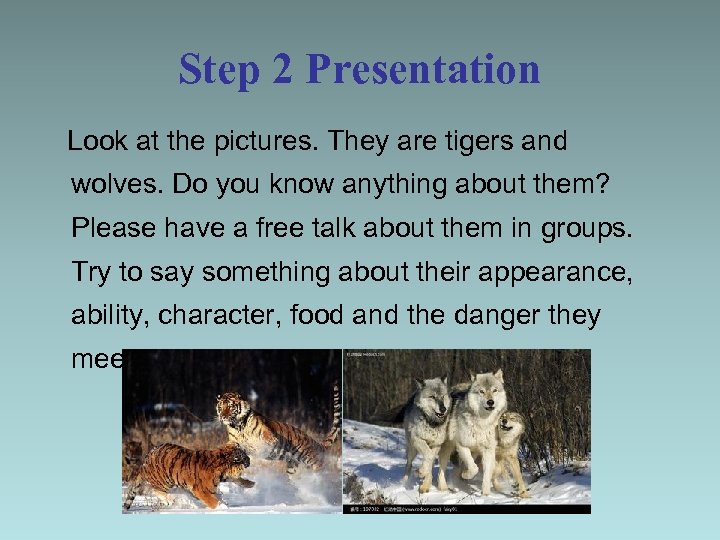 Step 2 Presentation Look at the pictures. They are tigers and wolves. Do you know anything about them? Please have a free talk about them in groups. Try to say something about their appearance, ability, character, food and the danger they meet.
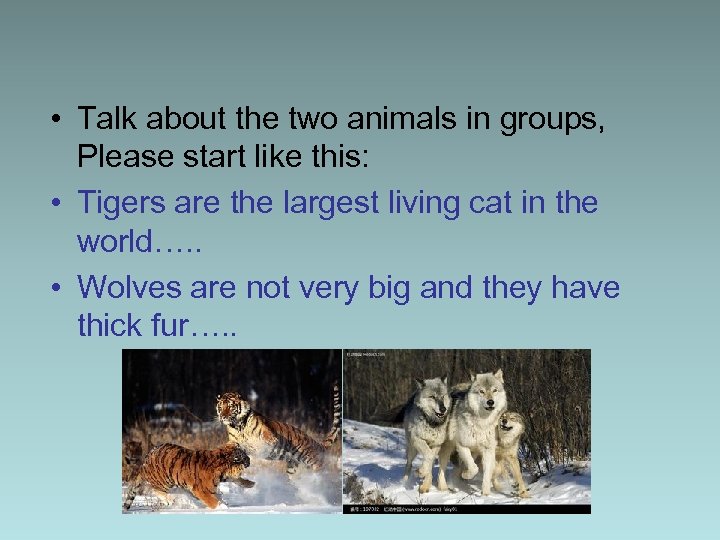 • Talk about the two animals in groups, Please start like this: • Tigers are the largest living cat in the world…. . • Wolves are not very big and they have thick fur…. .
 Step 3 Listening Millie and Daniel want to help wild animals. They read a book about animals. Listen to the tape carefully and answer the following questions. ① What is the largest living cat in the world? ② What is Millie’s favourite animal? ③ Are wolves friendly animals? ④ What kind of food do wolves eat?
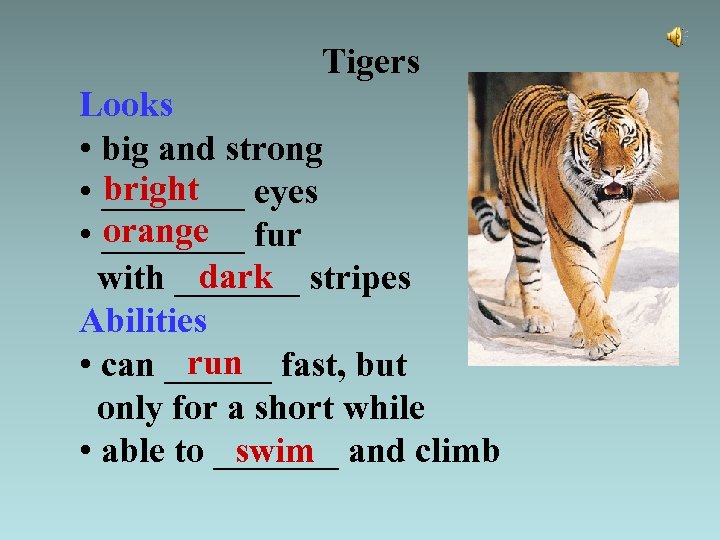 Tigers Looks • big and strong bright • ____ eyes orange • ____ fur dark with _______ stripes Abilities run • can ______ fast, but only for a short while swim • able to _______ and climb
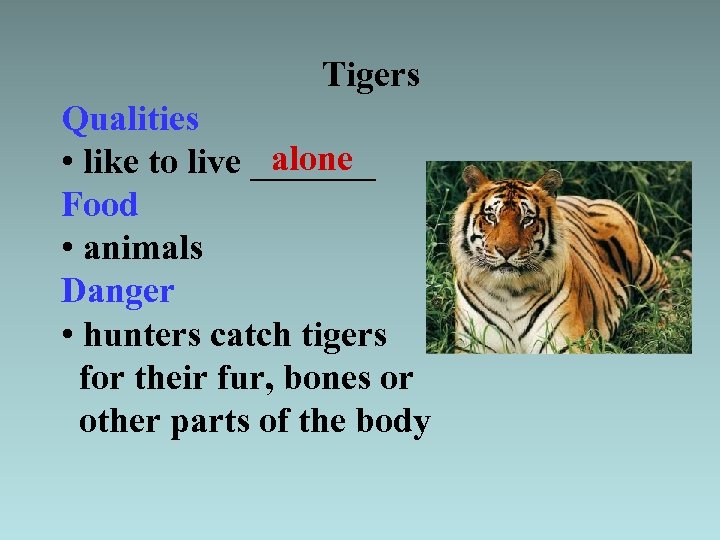 Tigers Qualities alone • like to live _______ Food • animals Danger • hunters catch tigers for their fur, bones or other parts of the body
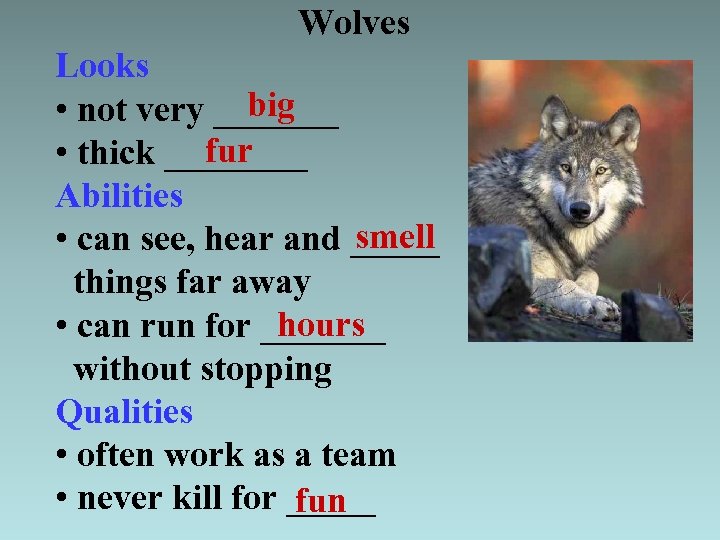 Wolves Looks big • not very _______ fur • thick ____ Abilities smell • can see, hear and _____ things far away hours • can run for _______ without stopping Qualities • often work as a team • never kill for _____ fun
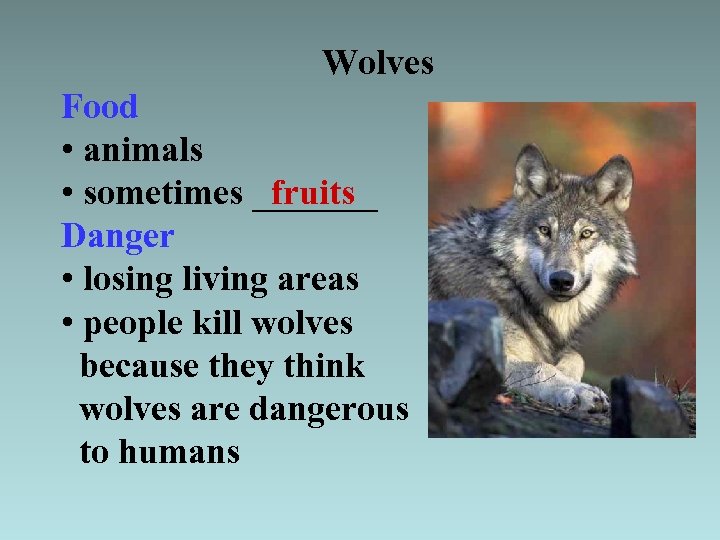 Wolves Food • animals fruits • sometimes _______ Danger • losing living areas • people kill wolves because they think wolves are dangerous to humans
 Step 4 Describe tigers and wolves Let’s help Millie and Daniel to finish the letter with the information in Part A 1 on page 63.
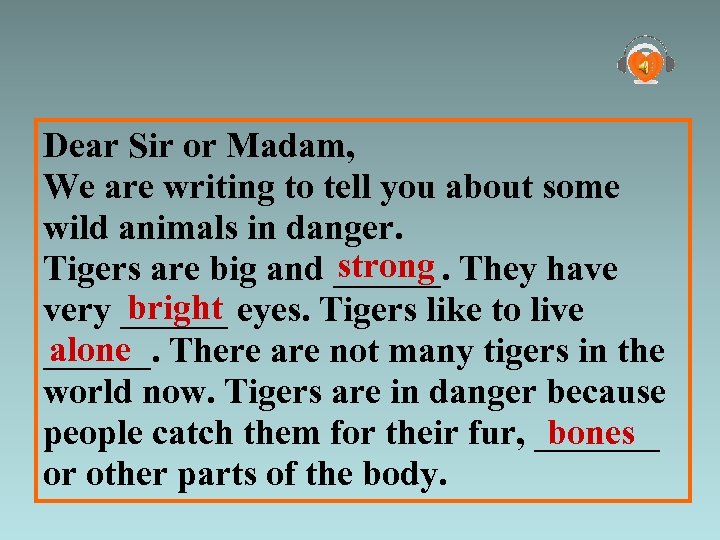 Dear Sir or Madam, We are writing to tell you about some wild animals in danger. strong Tigers are big and ______. They have bright very ______ eyes. Tigers like to live alone ______. There are not many tigers in the world now. Tigers are in danger because people catch them for their fur, _______ bones or other parts of the body.
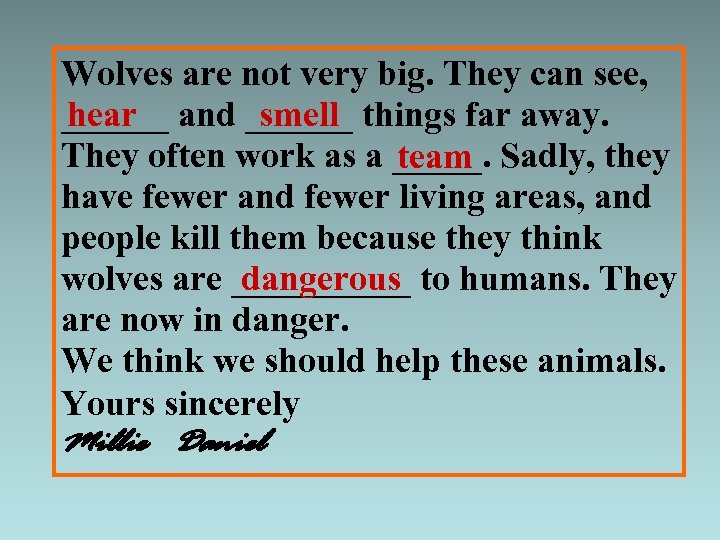 Wolves are not very big. They can see, ______ and ______ things far away. hear smell They often work as a _____. Sadly, they team have fewer and fewer living areas, and people kill them because they think wolves are _____ to humans. They dangerous are now in danger. We think we should help these animals. Yours sincerely Millie Daniel
 Step 5 Speak up It’s a great pity! We should help wild animals. They are our best friends. Millie is talking to her mum about how to protect wild animals. Are you interested in it? Let’s listen to their conversation and answer the questions.
 Why are some wild animals in danger? They lose their lives because people hunt them. People sell their fur, bones or other parts of the body. What do they suggest to protect wild animals? We shouldn’t buy fur coats any more.
 Think and answer Why are wild animals in danger?
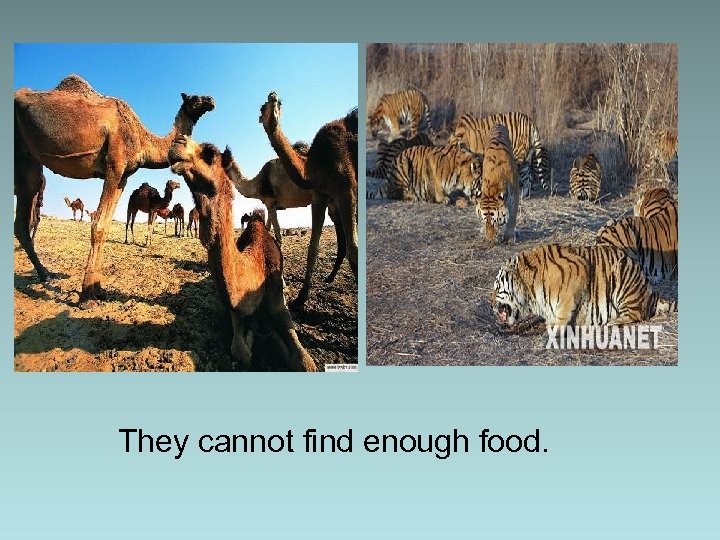 They cannot find enough food.
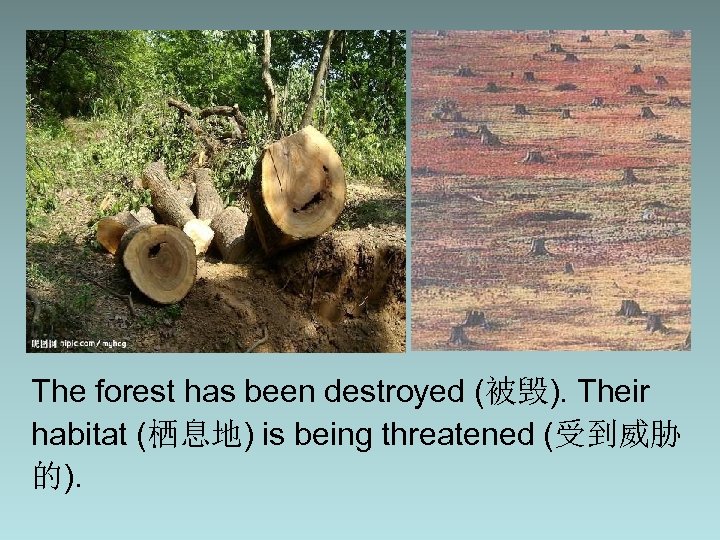 The forest has been destroyed (被毁). Their habitat (栖息地) is being threatened (受到威胁 的).
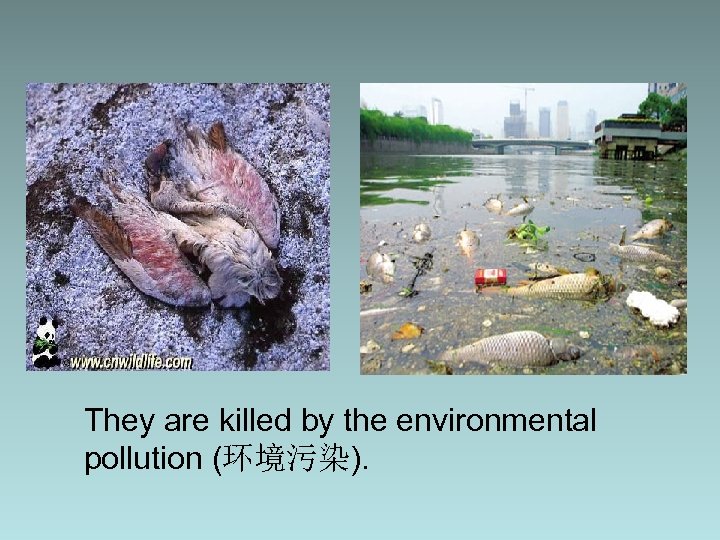 They are killed by the environmental pollution (环境污染).
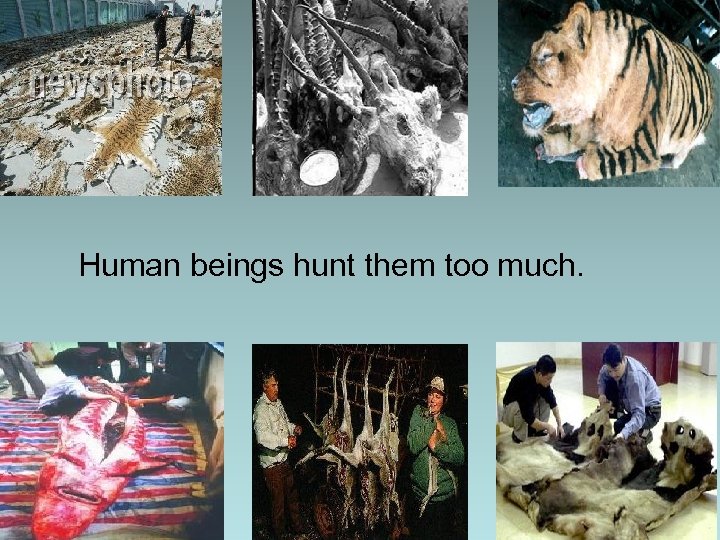 Human beings hunt them too much.
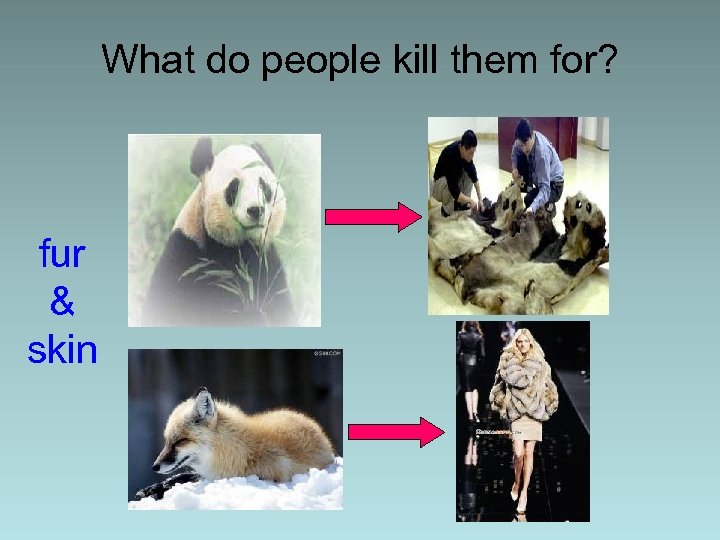 What do people kill them for? fur & skin
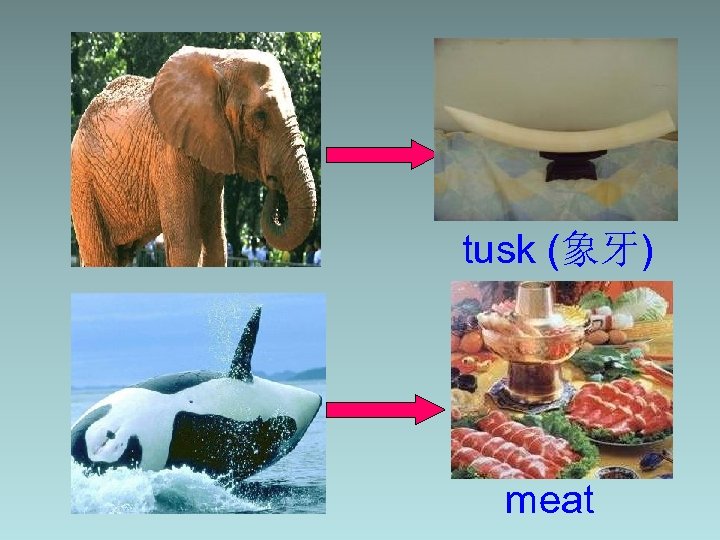 tusk (象牙) meat
 What should we do to protect wild animals? Not to over kill them. Not to pollute our environment. Not to over cut forests. To collect money to help them. To build nature reserves. …
 What does WWF stand for? World Wildlife Fund 世界野生生物基金会 The logo of WWF
 World Wildlife Fund 世界野生生物基金会 protect endangered species and their habitats works in more than 100 countries with nearly 5 million members
 Step 6 Discussion How can we protect wild animals? Make a conversation about protecting wild animals with your partner. Use the sample conversation as a model.
 Sample conversation A: Jane, I think you should stop eating shark’s fin soup. B: Why? It tastes delicious. A: Many sharks are killed because people eat shark’s fin soup. I think it’s wrong to eat it. Sharks have a right to live. B: If I don’t eat it, someone else will eat it. A: If everyone stops eating shark’s fin soup, then hunters won’t kill sharks any more. B: Maybe you are right. OK, I’ll stop eating shark’s fin soup.
 Step 7 Summary u. Let’s protect animals in danger. Please watch Yao Ming’s advertisement on protecting wild animals.
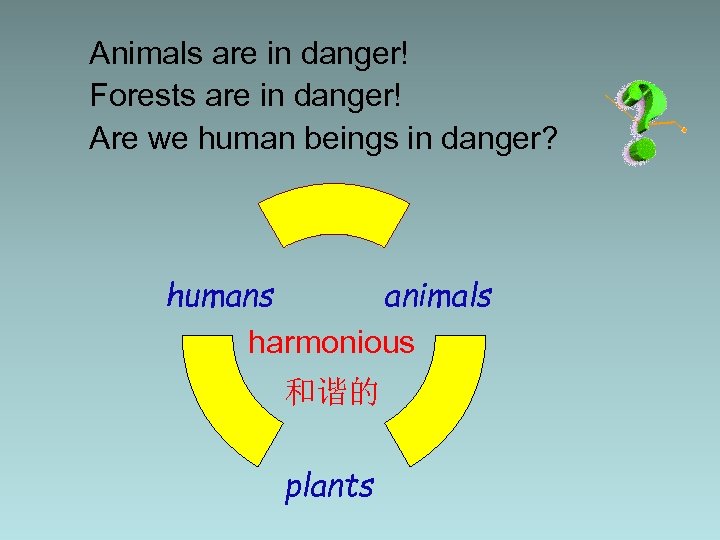 Animals are in danger! Forests are in danger! Are we human beings in danger? humans animals harmonious 和谐的 plants
 Wildlife (野生动物) is our friends. They can keep the balance of nature and make the whole world colorful. To protect wildlife is to protect ourselves.
 Step 8 Homework Try to find some materials about wild animals. Then write a passage to tell people why we should protect them and how to protect them.