 Скачать презентацию Unit 5 Emergence of the Americas in Global
7efed8455f5d6fab6b92483e79d35e34.ppt
- Количество слайдов: 48



Unit 5 Emergence of the Americas in Global Affairs 1880 -1929
Topic #1 ► United States’ expansionist foreign policies § Political § Economic § Social § Ideological
Stirrings ► In the years after the Civil War, the US paid little attention to the outside world. ► New diplomacy develops § Result of agriculture, industry, social structure ► Path of imperialism is departure from anticolonial traditions
Expand or Explode The Economic Boom ► Agriculture and Industry flourish ► Desire for the Hawaiian Islands ► James G. Blaine’s “Big Sister” Policy
Big Stick Diplomacy ► TR “Speak softly and carry a big stick” § Willingness to use force to achieve gains § Influence of Mahan, Naval Power ► Venezuela Affair § Roosevelt Corollary ►US may be forced to the exercise of an international police power § Helped lead to Panama Canal
The Panama Canal ► Desire for canal linking two oceans § Spanish American War § Desire for Military Strength ► Colombia Resists § “We were dealing with a government of irresponsible bandits” - TR § Revolt in Panama – US supports with Navy § US recognizes new Panamanian Republic, makes deal, begins construction § Canal Completed in 1914
Dollar Diplomacy ► Goal: create stability/ order abroad that would best promote American commercial interests ► Examples § § § in: (extension of Monroe Doctrine) Honduras Haiti Cuba Dominican Republic Nicaragua
Moral Diplomacy ► Woodrow Wilson § The United States would only support Latin American countries that were democratic or otherwise supported US interests. ► “The force of America is the force of moral principle. ”
Pros of Moral Diplomacy ► Increasing American soft power ► Advancing American economic interests in other countries ► Advancing human rights in Latin America Cons of Moral Diplomacy ► Eventual use of force ► Overprotecting business interests
The Spanish-American War (1898) Causes and Effects
Spain’s Holdings/Prelude ► Spanish holdings at the end of 19 th Century § Philippines/Guam in Pacific § A few outposts in Africa § Cuba and Puerto Rico ► American Interest in Cuba § 1854 Ostend Manifesto
Cuban Revolutions ► First War of Independence § 1868 -1878 ►Was a failure, but Cuba did manage to abolish slavery in 1886 § After emancipation, USA invests millions in sugar plantations ► Second War of Independence § Begins in 1895 ►Guerilla campaign ►Attempted to provoke the United States
Important People ► Jose Marti (1853 -1895) § Organized 2 nd Cuban Revolution ► Valeriano Weyler § Spanish General ► William § § Randolph Hearst New York Journal “You furnish the pictures, I’ll furnish the war. ” ► Joseph Pulitzer § New York World
American Interest ► Public opinion in the USA is split § Businesses Spanish § Other civilians Cubans ► Mc. Kinley takes office (1897) § Attempts Diplomatic solution ►Spain calls back Weyler ►Modifies concentration camps ►Spain offers Cuba limited self-government
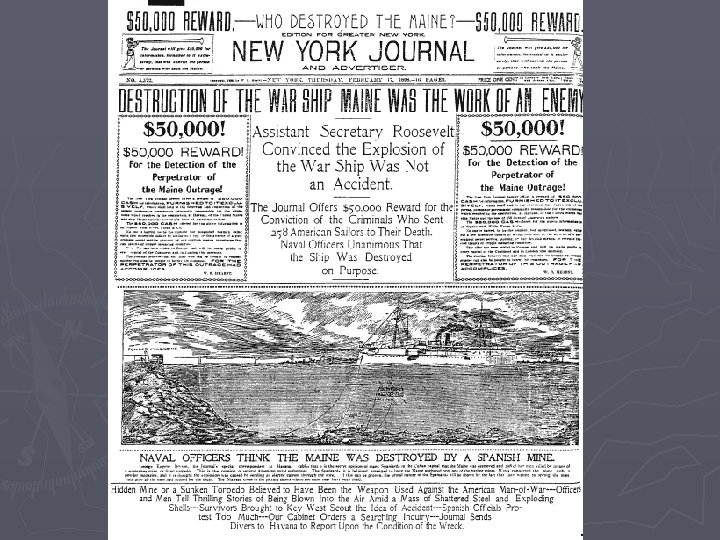
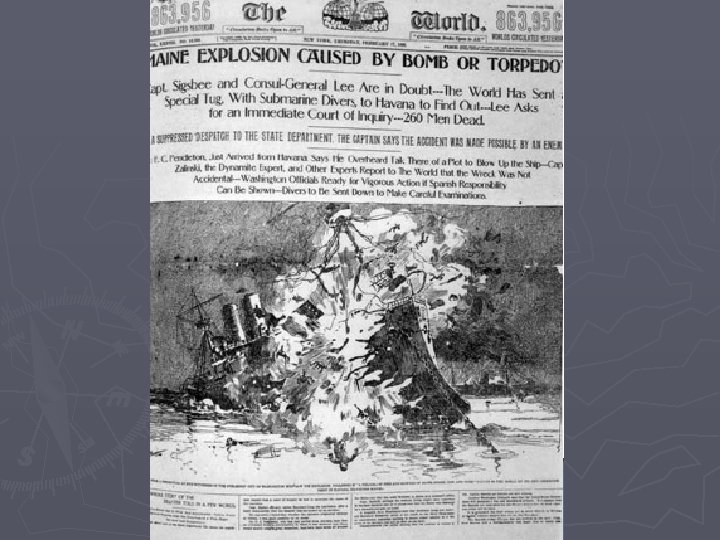
The de Lome Letter & the U. S. S. Maine ► Enrique Dupuy de Lome § Spanish minister to the United States ► The U. S. S. Maine § Sent to Cuba to evacuate Americans § February 15 th, 1898 explodes in Havana Harbor, 260+ KIA § Spanish and US investigations took place
Outcry for War ► USA sends Spain ultimatum § End concentration camps § Armistice with Cuban rebels ► Mc. Kinley wanted to avoid war at all cost § Public Outcry § Doubts about Spain § Personal political gain
Mc. Kinley Asks for War ► April 11 th, 1898 § Mc. Kinley sends his war message to Congress § Urged armed intervention to free the oppressed Cubans ► Congress passes Teller Amendment § Cuba would be given their freedom after the US had overthrown Spanish ‘misrule’
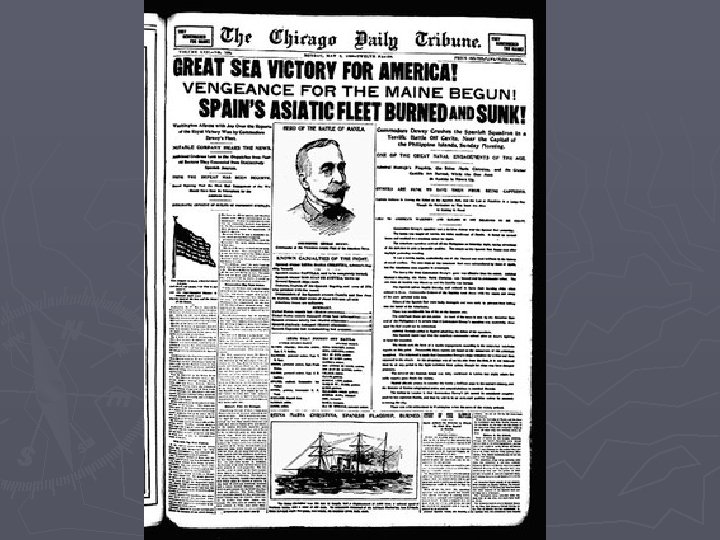
War in the Pacific ► Spain expected first attack to be in Cuba ► American Pacific fleet steams to the Philippines § Strong steel navy (Mahan) § Led by Commodore George Dewey ► US fleet defeats Spanish fleet in Manila Bay on May 1 st, 1898
Poor Spain ► Spain loses Pacific fleet § 400 Sailors dead (Dewey = 0 casualties) ► Dewey becomes national hero § But could not invade Philippines with his sailors, was forced to wait for reinforcements ► European Imperialists protect interests in the Philippines, war with Germany avoided
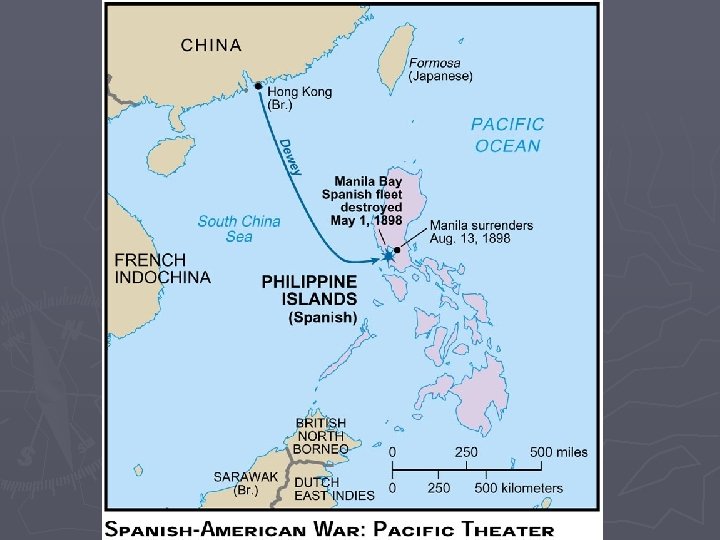
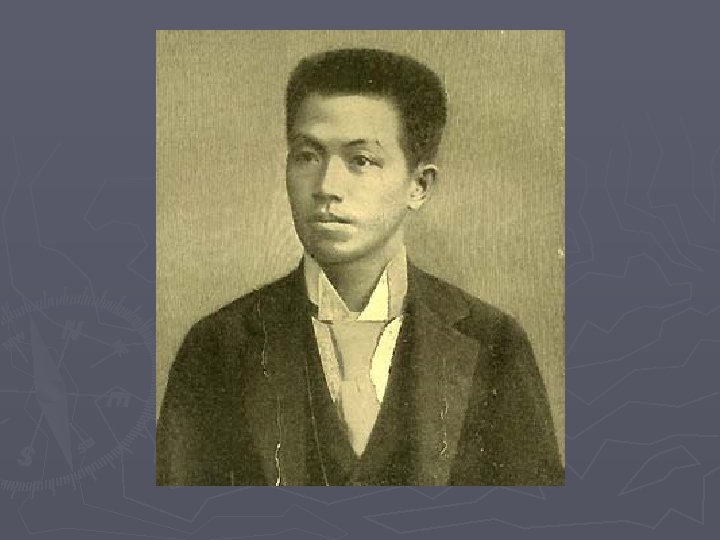
Fighting in the Philippines ► Dewey had the support of the Filipinos ► 11, 000+ American soldiers travel to the Philippines, join Filipino rebels § Filipinos led by Emilio Aguinaldo ► Capture Manila ► Total American losses in Philippines § 136 Casualties
The War in the Caribbean ► Blockade of Cuba § Demonstrated strength of new US Navy ► Army was very small § Relied on volunteers § Unsuited for tropical climate ► 17, 000 land in Cuba (June) § Four African American regiments § Calvary units (Rough Riders)
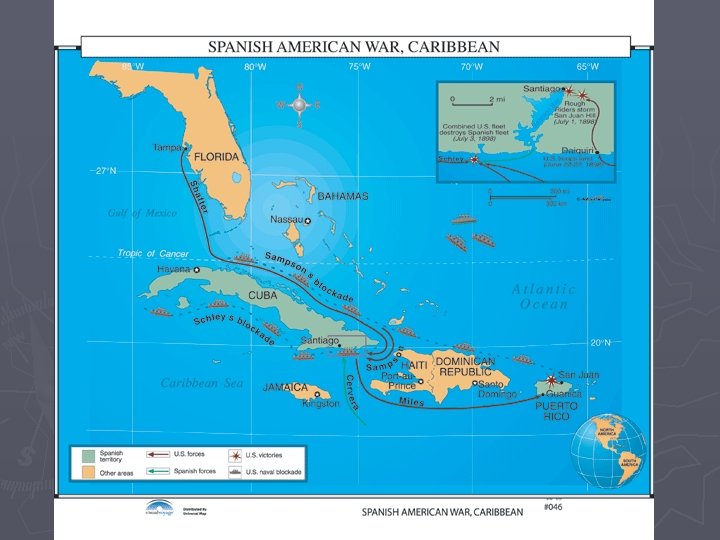
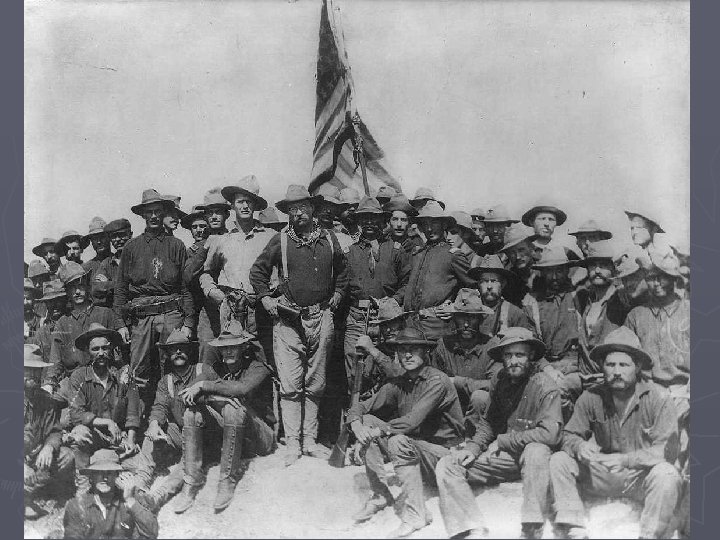
Fighting in the Caribbean ► Shafer lands near Santiago § Little resistance ► Spanish were too unorganized, Santiago taken easily § Battle of Kettle/San Juan Hills (July 1) ► Puerto Rico (July 25) taken after destruction of Spanish fleet (July 3)
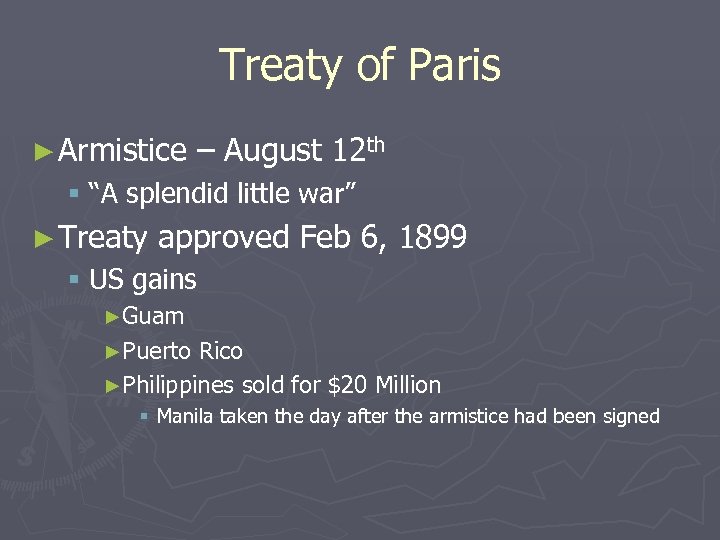
Treaty of Paris ► Armistice – August 12 th § “A splendid little war” ► Treaty approved Feb 6, 1899 § US gains ►Guam ►Puerto Rico ►Philippines sold for $20 Million § Manila taken the day after the armistice had been signed
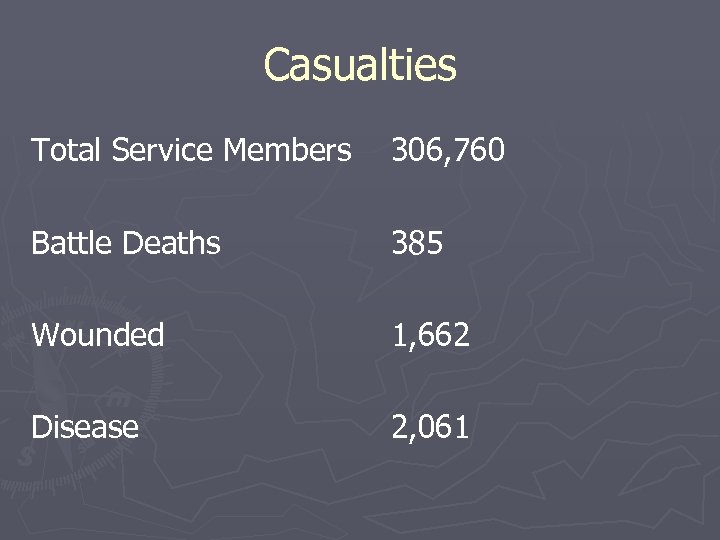
Casualties Total Service Members 306, 760 Battle Deaths 385 Wounded 1, 662 Disease 2, 061
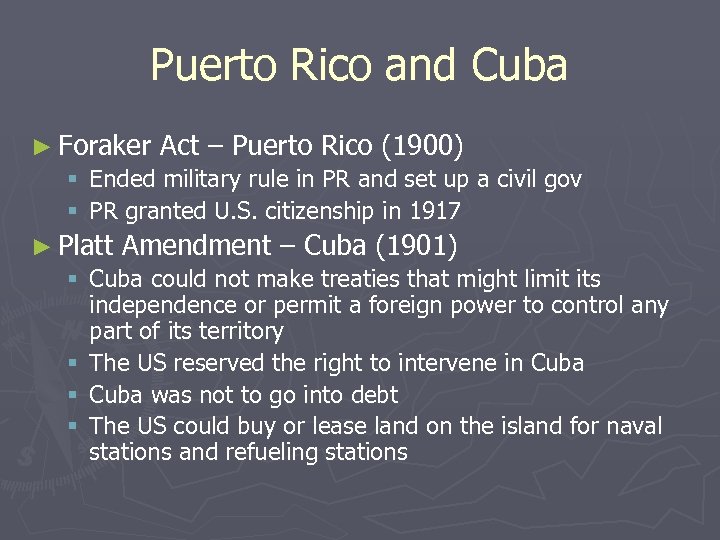
Puerto Rico and Cuba ► Foraker Act – Puerto Rico (1900) § Ended military rule in PR and set up a civil gov § PR granted U. S. citizenship in 1917 ► Platt Amendment – Cuba (1901) § Cuba could not make treaties that might limit its independence or permit a foreign power to control any part of its territory § The US reserved the right to intervene in Cuba § Cuba was not to go into debt § The US could buy or lease land on the island for naval stations and refueling stations
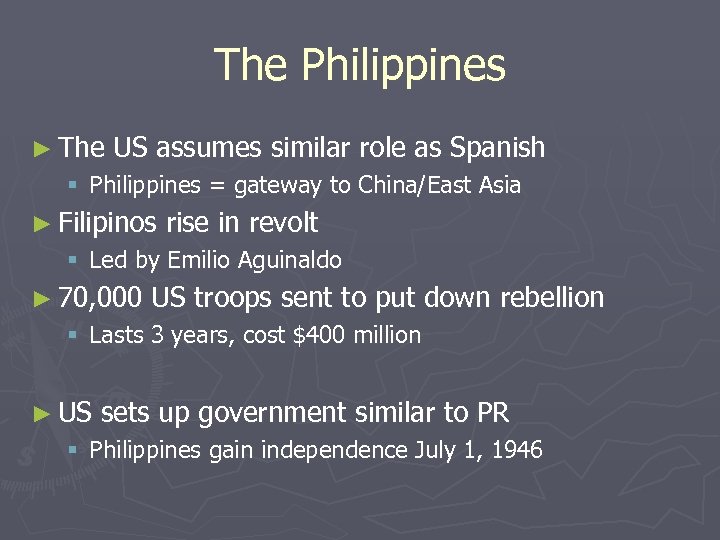
The Philippines ► The US assumes similar role as Spanish § Philippines = gateway to China/East Asia ► Filipinos rise in revolt § Led by Emilio Aguinaldo ► 70, 000 US troops sent to put down rebellion § Lasts 3 years, cost $400 million ► US sets up government similar to PR § Philippines gain independence July 1, 1946
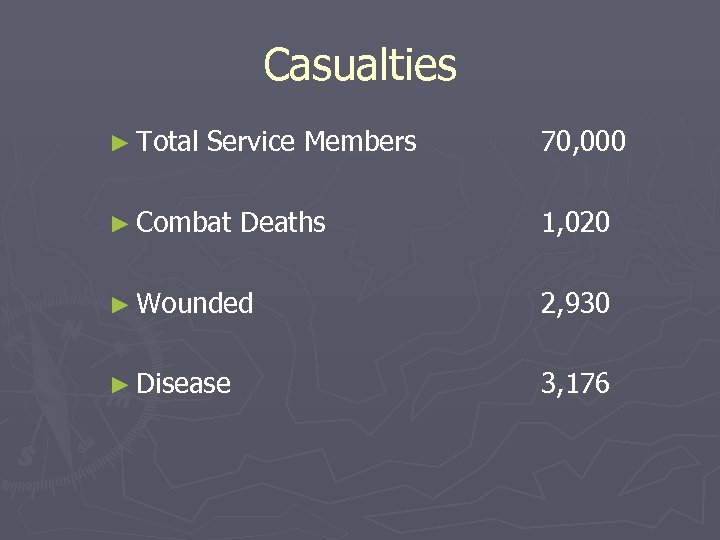
Casualties ► Total Service Members ► Combat Deaths 70, 000 1, 020 ► Wounded 2, 930 ► Disease 3, 176
Impact of the War ► Emergence of the U. S. as a great power § Industrial § Military ► Naval Power ► U. S. move toward Imperialism ► First “Media War”
Liberty Cabbage! ► MAIN Causes § Militarism § Alliances § Imperialism § Nationalism ► Assassination § Ultimatum of Franz Ferdinand
World War I From the Non-Canadian Perspective
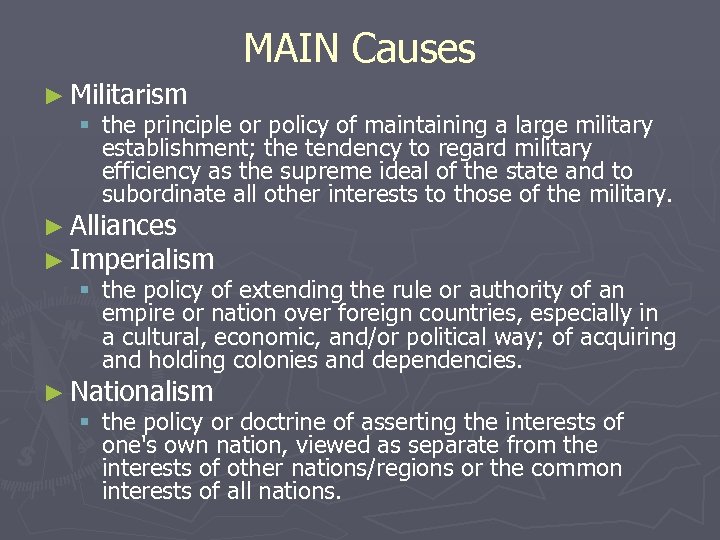
MAIN Causes ► Militarism § the principle or policy of maintaining a large military establishment; the tendency to regard military efficiency as the supreme ideal of the state and to subordinate all other interests to those of the military. ► Alliances ► Imperialism § the policy of extending the rule or authority of an empire or nation over foreign countries, especially in a cultural, economic, and/or political way; of acquiring and holding colonies and dependencies. ► Nationalism § the policy or doctrine of asserting the interests of one's own nation, viewed as separate from the interests of other nations/regions or the common interests of all nations.
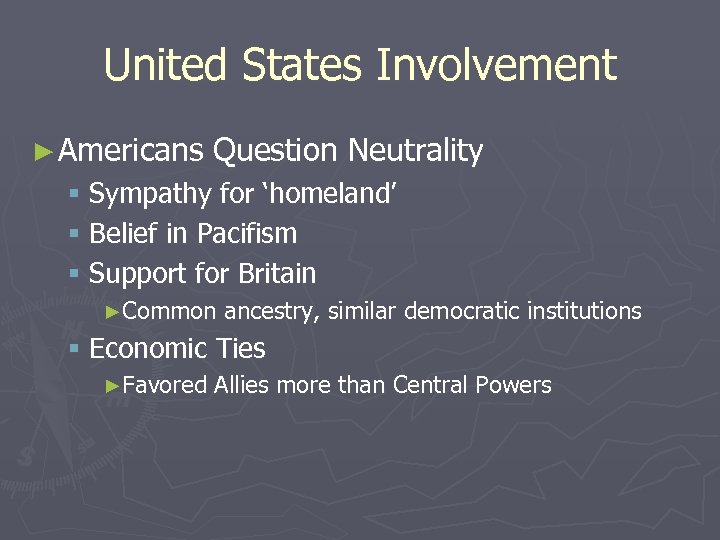
United States Involvement ► Americans Question Neutrality § Sympathy for ‘homeland’ § Belief in Pacifism § Support for Britain ►Common ancestry, similar democratic institutions § Economic Ties ►Favored Allies more than Central Powers
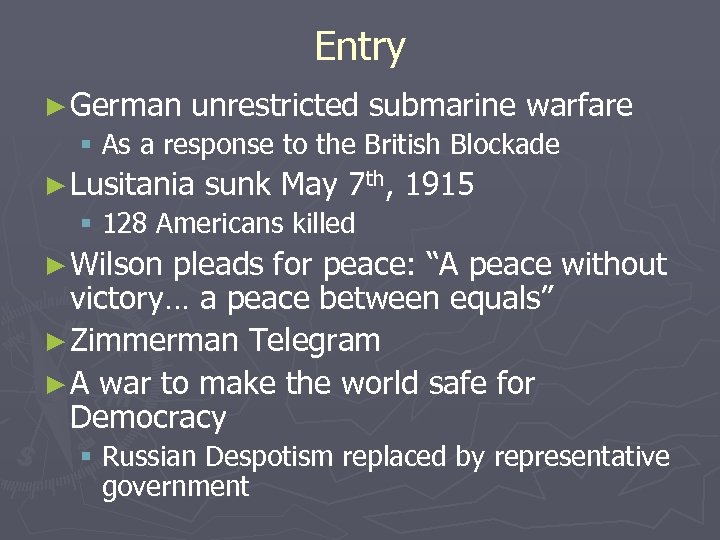
Entry ► German unrestricted submarine warfare § As a response to the British Blockade ► Lusitania sunk May 7 th, 1915 § 128 Americans killed ► Wilson pleads for peace: “A peace without victory… a peace between equals” ► Zimmerman Telegram ► A war to make the world safe for Democracy § Russian Despotism replaced by representative government
Importance of the Navy ► United States needed to increase the size of the Navy § 1. Government exempted ship builders from the draft § 2. Public relations message campaign to emphasize the importance of shipping § 3. Fabrication Techniques § 4. Government took over commercial/private ships and converted them for war use ► Convoy System
“Labor Will Win the War” ► “Work or fight” ► Gompers, AFL support the war effort § Most heavily unionized sectors > 20% ► Economics/Rationing motivate 18 th Amendment ► Contributions by women spur the 19 th Amendment
Doughboys ► Selective Service Act – May 1917 § 24 Million register § 3 Million called up § 2 Million reach France § 1. 5 Million see combat § Conscientious objectors ► American Expeditionary Force (AEF) § John J. Pershing
New Weapons ► Machine Guns § Trench Warfare (trench foot/mouth), Barbed Wire ► Poison Gas § Chlorine, Mustard (Gas Masks) ► Balloons, Zeppelins, ► Mechanized Warfare § Tanks, Airplanes ►Anti-Aircraft Guns
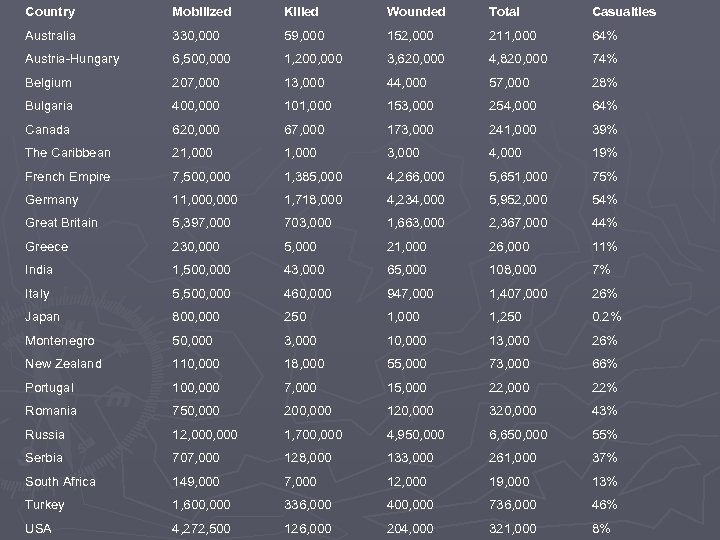
Country Mobilized Killed Wounded Total Casualties Australia 330, 000 59, 000 152, 000 211, 000 64% Austria-Hungary 6, 500, 000 1, 200, 000 3, 620, 000 4, 820, 000 74% Belgium 207, 000 13, 000 44, 000 57, 000 28% Bulgaria 400, 000 101, 000 153, 000 254, 000 64% Canada 620, 000 67, 000 173, 000 241, 000 39% The Caribbean 21, 000 3, 000 4, 000 19% French Empire 7, 500, 000 1, 385, 000 4, 266, 000 5, 651, 000 75% Germany 11, 000 1, 718, 000 4, 234, 000 5, 952, 000 54% Great Britain 5, 397, 000 703, 000 1, 663, 000 2, 367, 000 44% Greece 230, 000 5, 000 21, 000 26, 000 11% India 1, 500, 000 43, 000 65, 000 108, 000 7% Italy 5, 500, 000 460, 000 947, 000 1, 407, 000 26% Japan 800, 000 250 1, 000 1, 250 0. 2% Montenegro 50, 000 3, 000 10, 000 13, 000 26% New Zealand 110, 000 18, 000 55, 000 73, 000 66% Portugal 100, 000 7, 000 15, 000 22% Romania 750, 000 200, 000 120, 000 320, 000 43% Russia 12, 000 1, 700, 000 4, 950, 000 6, 650, 000 55% Serbia 707, 000 128, 000 133, 000 261, 000 37% South Africa 149, 000 7, 000 12, 000 19, 000 13% Turkey 1, 600, 000 336, 000 400, 000 736, 000 46% USA 4, 272, 500 126, 000 204, 000 321, 000 8%
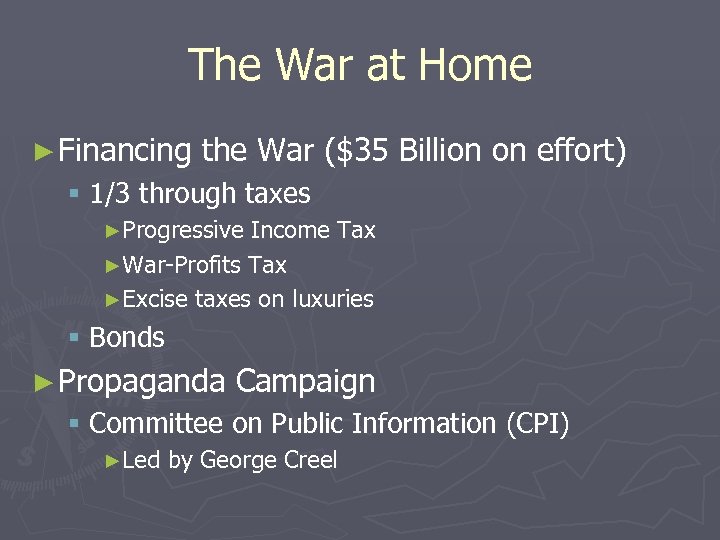
The War at Home ► Financing the War ($35 Billion on effort) § 1/3 through taxes ►Progressive Income Tax ►War-Profits Tax ►Excise taxes on luxuries § Bonds ► Propaganda Campaign § Committee on Public Information (CPI) ►Led by George Creel
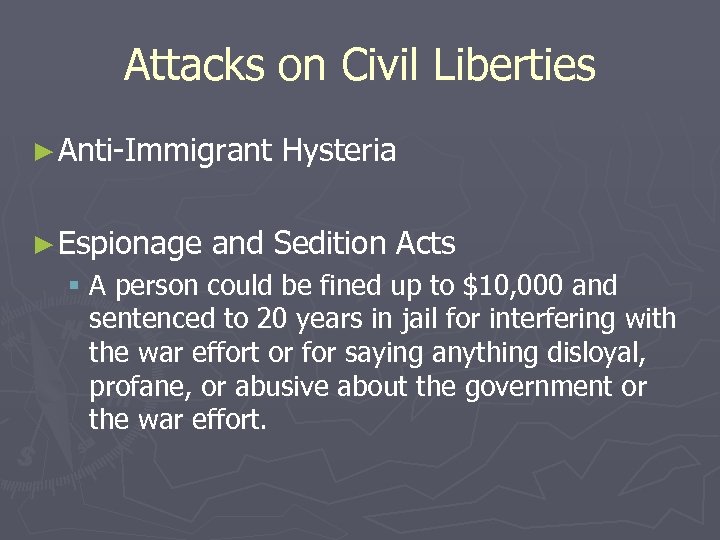
Attacks on Civil Liberties ► Anti-Immigrant ► Espionage Hysteria and Sedition Acts § A person could be fined up to $10, 000 and sentenced to 20 years in jail for interfering with the war effort or for saying anything disloyal, profane, or abusive about the government or the war effort.
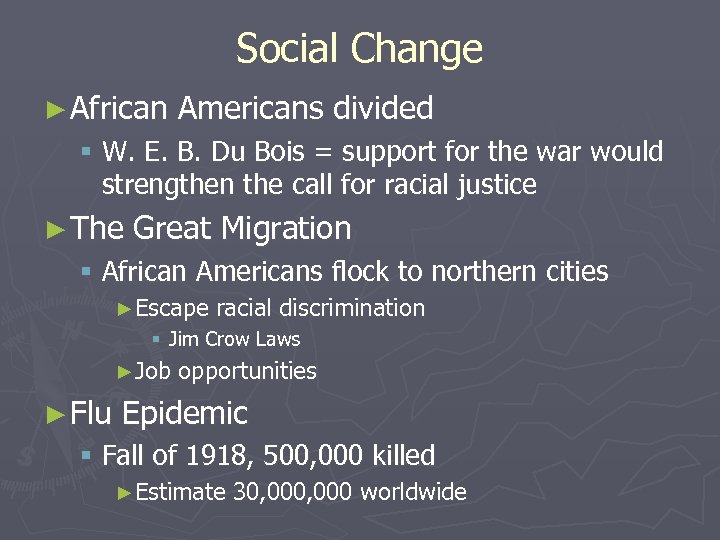
Social Change ► African Americans divided § W. E. B. Du Bois = support for the war would strengthen the call for racial justice ► The Great Migration § African Americans flock to northern cities ►Escape racial discrimination § Jim Crow Laws ►Job ► Flu opportunities Epidemic § Fall of 1918, 500, 000 killed ►Estimate 30, 000 worldwide
Скачать презентацию Unit 5 Emergence of the Americas in Global
7efed8455f5d6fab6b92483e79d35e34.ppt