 Скачать презентацию Unit 4 The Branches of the American Government
ba819e9e6474acc9838bddd1d405846a.ppt
- Количество слайдов: 59



Unit 4 The Branches of the American Government Part I – The Legislative Branch
Home Work Check Pages 23 -24 1. What is the legislative branch of the United States called? n 2. What is a census? n 3. How many members are there in the US House of Representatives? n 4. Who draws Congressional districts? n 5. What does the Seniority System refer to? n
Bicameral n Two Houses
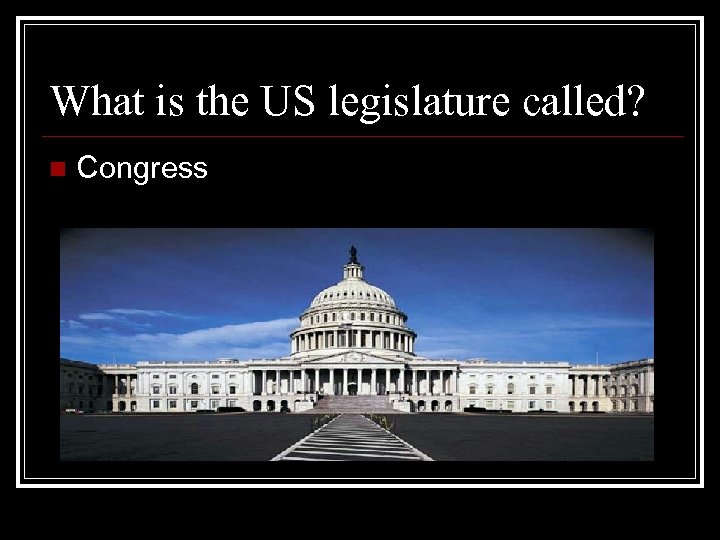
What is the US legislature called? n Congress
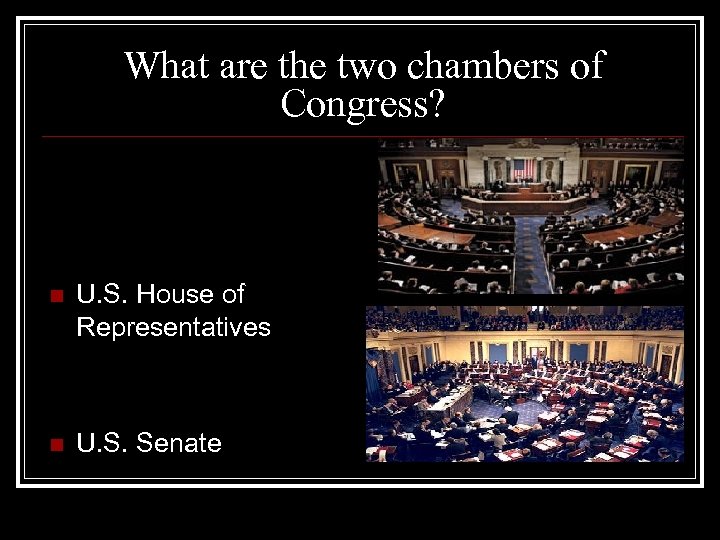
What are the two chambers of Congress? n U. S. House of Representatives n U. S. Senate
House of Representatives Term Length = 2 years n Term Limits = none n Requirements = 25 years old, U. S. Citizen 7 years, resident of district they represent n Members = 435 n Number per state = depends on population n
US Senate Term Length = 6 Years n Term Limits = None n Requirements = 30 years old, 9 year citizen, resident of state they represent n Number of members = 100 n Number per state = 2 n
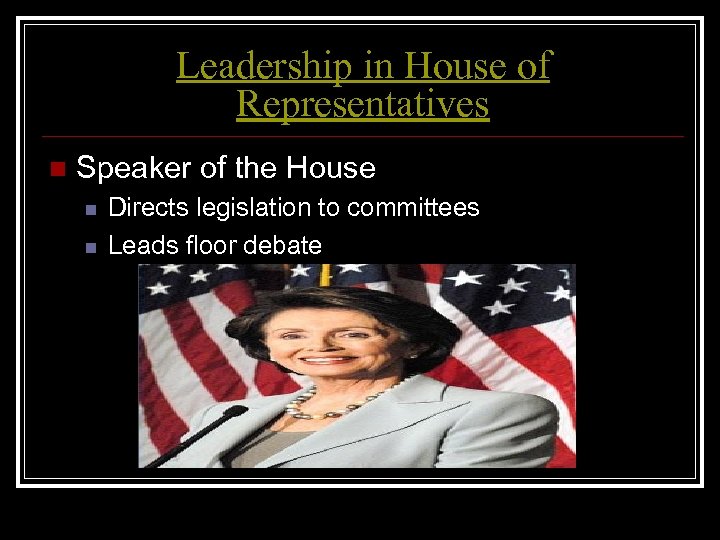
Leadership in House of Representatives n Speaker of the House n n Directs legislation to committees Leads floor debate
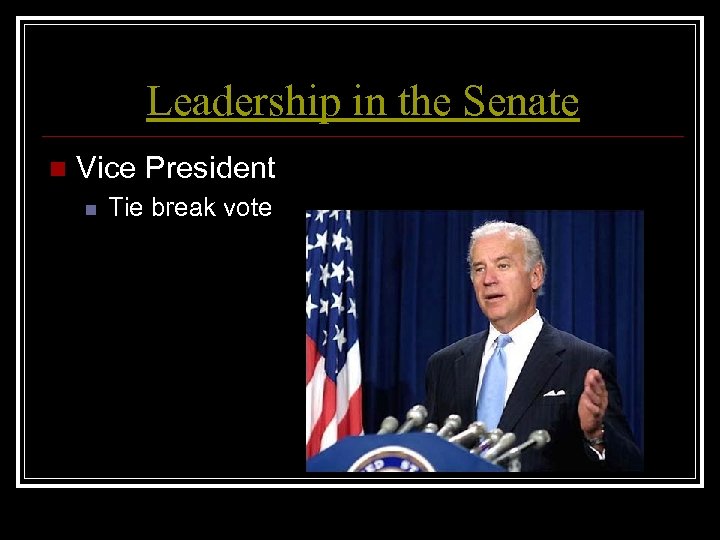
Leadership in the Senate n Vice President n Tie break vote
President Pro-tempore “For the time being” – In VPs absence n No real power n Oldest member of majority party n
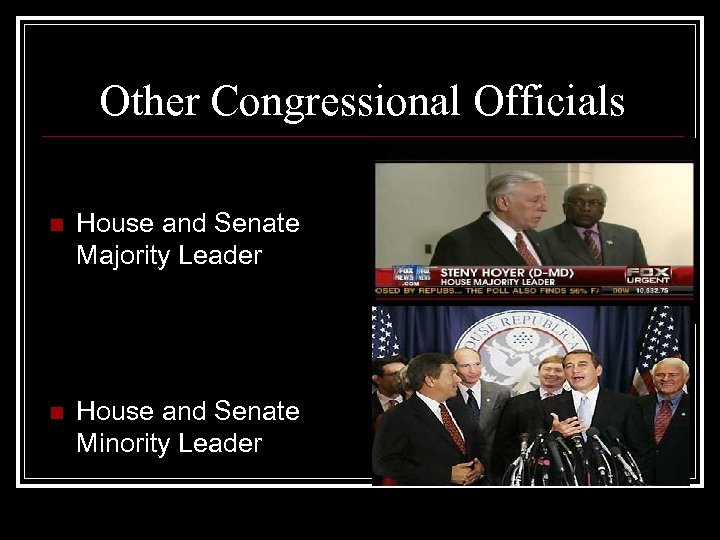
Other Congressional Officials n House and Senate Majority Leader n House and Senate Minority Leader
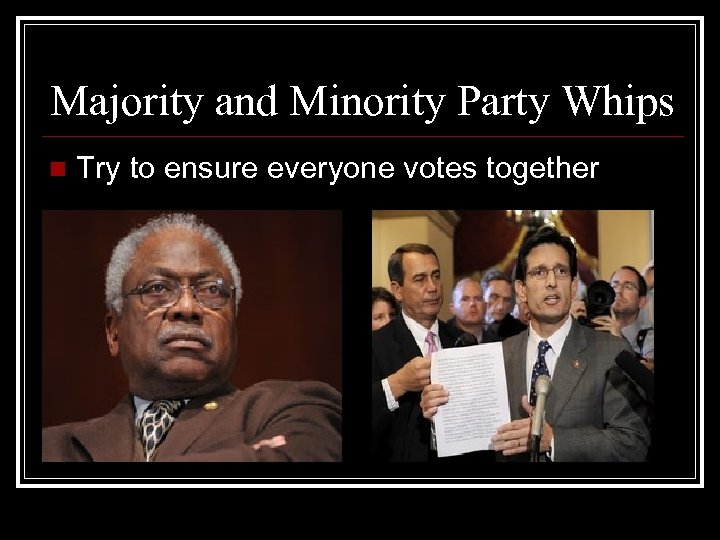
Majority and Minority Party Whips n Try to ensure everyone votes together
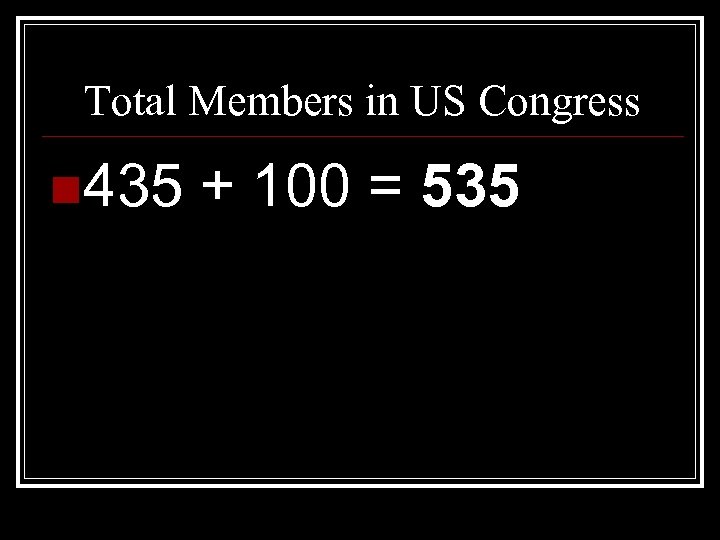
Total Members in US Congress n 435 + 100 = 535
Constituents The people who a member of Congress represents n Senate = entire state n House of Representative = residents of their community n
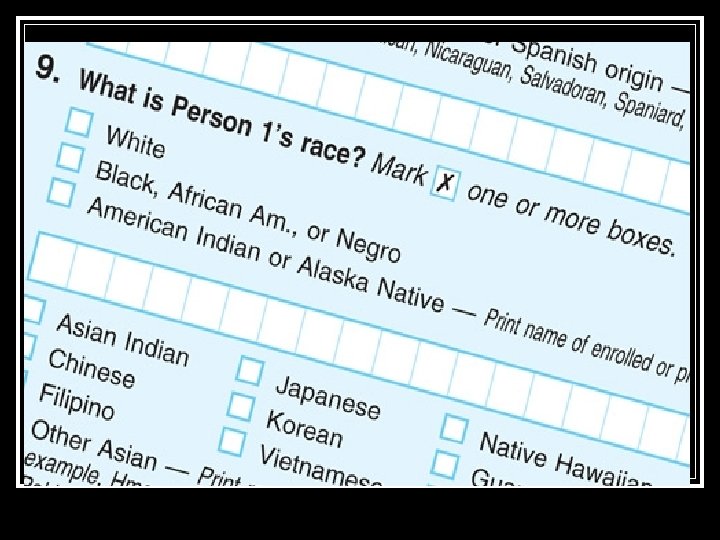
Census Population Count n Happens every ten years n Impacts the House of Representatives by redistributing a states representation n
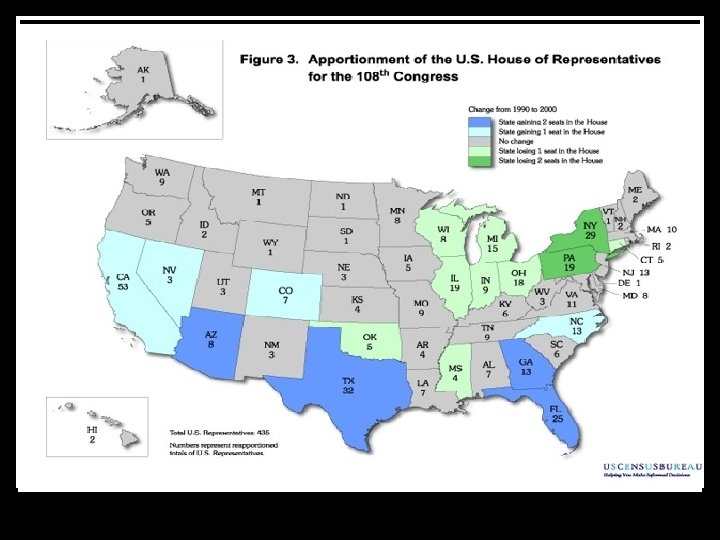
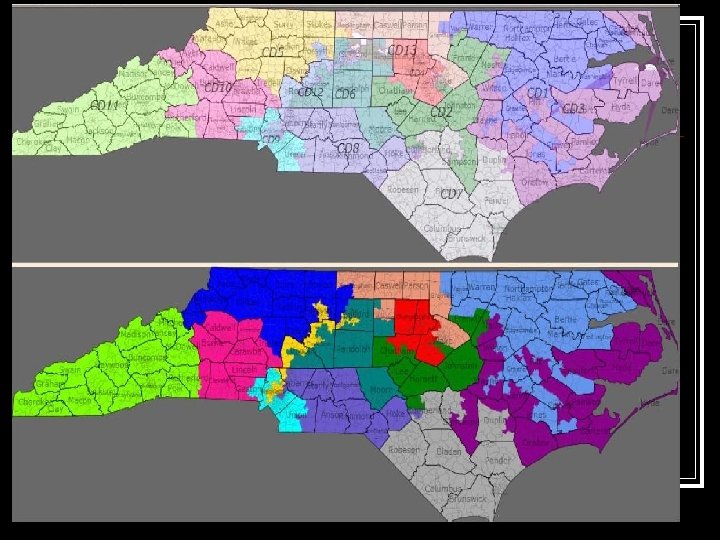
Who draws Congressional districts? n State legislature – each district must have roughly the same number of people
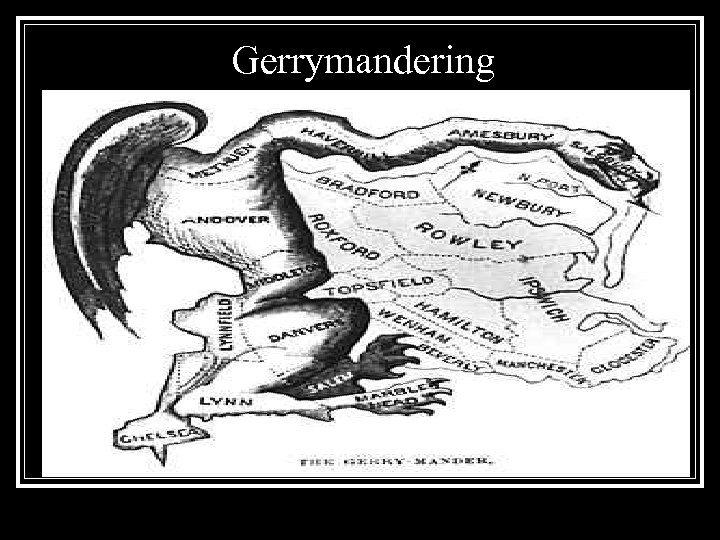
Gerrymandering
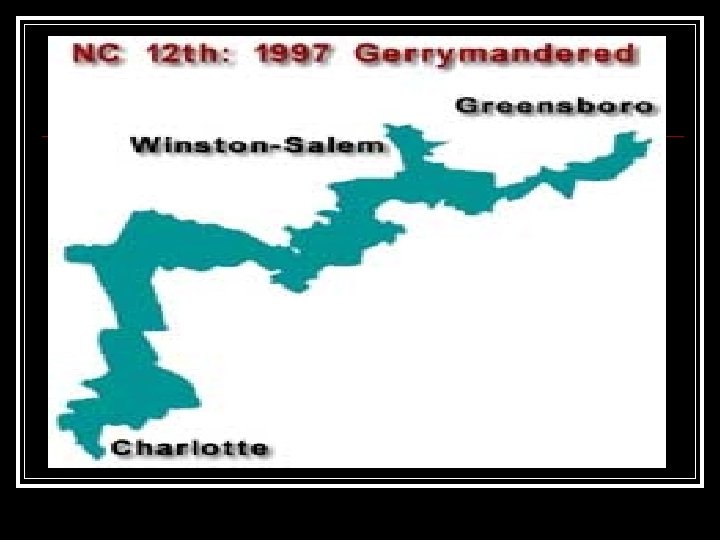
Gerrymandering n Drawing a Congressional district to favor a particular party
Purpose of Committees n To enable each chamber to handle the many bills they have
Standing Committees Permanent committees that handle reoccurring issues n i. e. Armed Services Committee, Budget Committee n
Select Committee Temporary committees to handle special issues. n i. e. Select Committee on 9/11 n
Joint Committee n Committees that include members of both chambers to handle special issues.
Conference Committee n Members of both houses that iron out the final wording of a bill before it can be sent to the President
How are committee assignments determined? Party leaders select. n Consider preferences, expertise and party loyalty n
Seniority System Longer serving members get the better committee spots n i. e. Oldest committee member of the majority party is usually the committee chairperson n
Powers of Congress n Legislate – to make laws
Where are the powers of Congress listed in the US Constitution n Article 1 -18 1 Section 8 Paragraphs
How many specifically stated powers does the Constitution grant Congress? n 18 EXPRESSED POWERS n Enumerated = numbered n Called
How can Congress make laws other than those specifically mentioned in the Constitution? n By using the power granted to it by the “necessary and proper clause”
Necessary and Proper Clause n Congress shall have the power to do whatever is “necessary and proper” to carry out the expressed powers
Elastic Clause n Stretches the power of Congress to meet new needs
IMPLIED POWERS n Must relate to an expressed power
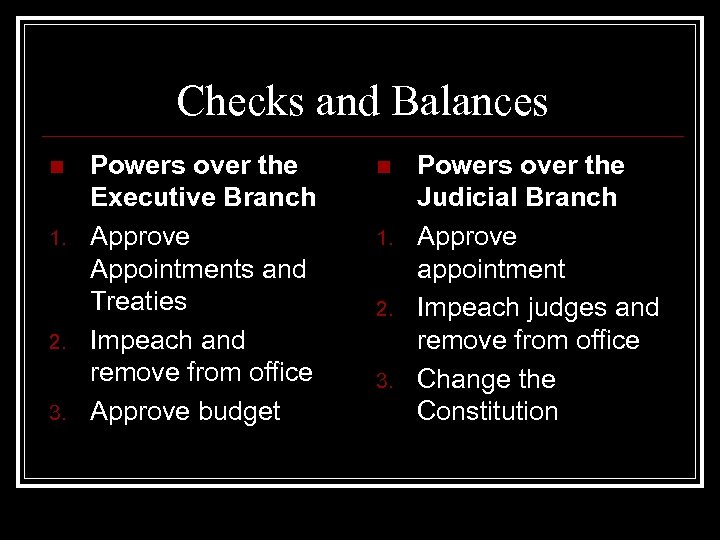
Checks and Balances n 1. 2. 3. Powers over the Executive Branch Approve Appointments and Treaties Impeach and remove from office Approve budget n 1. 2. 3. Powers over the Judicial Branch Approve appointment Impeach judges and remove from office Change the Constitution
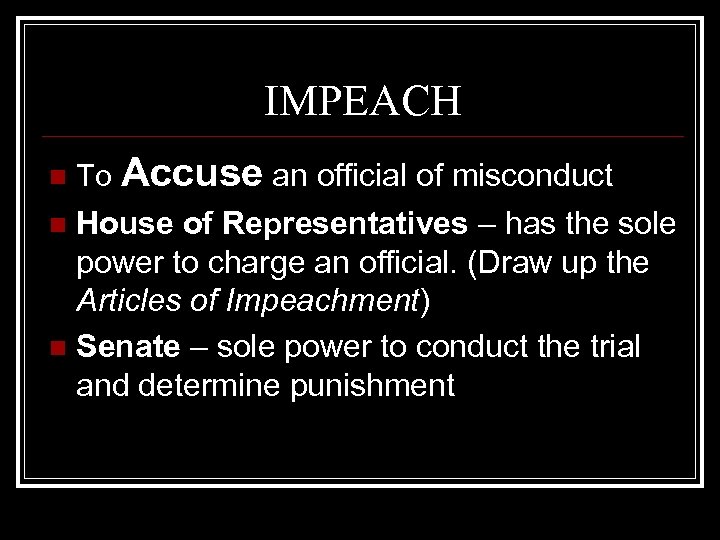
IMPEACH n To Accuse an official of misconduct House of Representatives – has the sole power to charge an official. (Draw up the Articles of Impeachment) n Senate – sole power to conduct the trial and determine punishment n
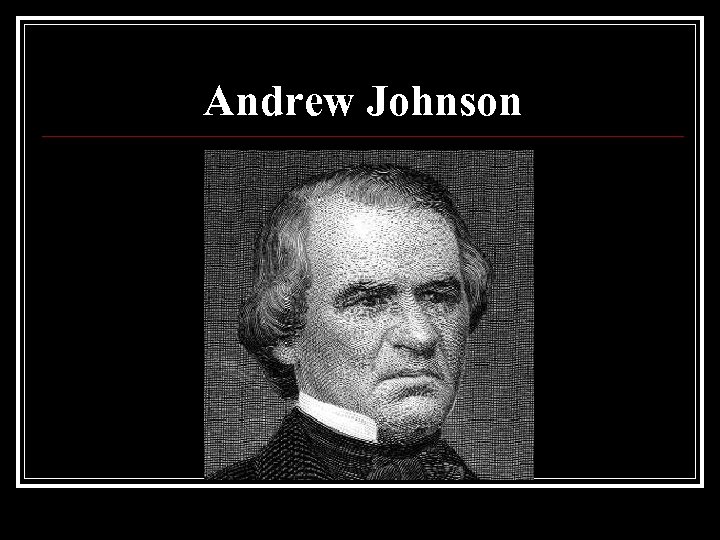
Andrew Johnson
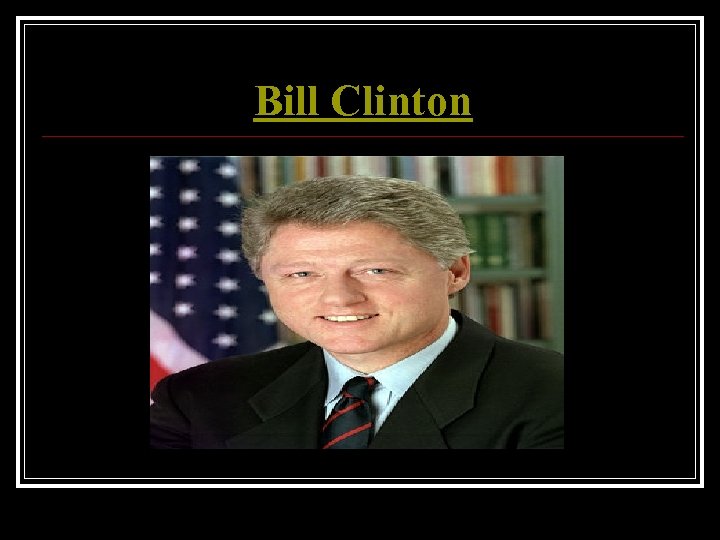
Bill Clinton
What is Congress’ power of oversight? n The power of Congress to make sure laws are working
Limits on Congressional Power n Cannot violate the freedoms protected in the Constitution n Cannot favor one State over another n Cannot tax Interstate Commerce or Exports
Congress cannot suspend the Writ of Habeas Corpus n Requires police to take those arrested before a judge to explain why they are holding a person
Cannot pass Bills of Attainder n Laws that punish a person without a jury trial
Cannot pass Ex Post Facto Laws n Laws that punish someone for an act that was committed before it was illegal
Checks and Balances on Congressional Power n 1. 2. Checks by Executive over Congress Pres. can veto laws Pres. Is only one who can send troops into battle n 1. Checks by Judicial over Congress Supreme Court can declare acts unconstitutional
Special Privileges of Congress Franking Privilege – free mail for business purposes n Immunity – legal protection from prosecution in some instances n Personal Staff – help paid for with tax dollars n
Responsibilities of Congressmen n 1. 2. Be a voice for Constituents – people they represent Casework – help constituents deal with the government Public Works – get (appropriate) government money for local projects (damns, military bases, transit stations)
Responsibilities of Congressmen n Grants and Contracts – try to ensure their constituents get a share of billions in government funded projects and jobs (making military uniforms) n Pork-barrel projects – grants that benefit just the home district. “Adding the fat” to governments budget
Responsibilities of Congressmen n Lawmaking – represent the wishes and opinions of their constituents in the lawmaking process
A Bill A proposed law n Anyone can have an idea for a bill n
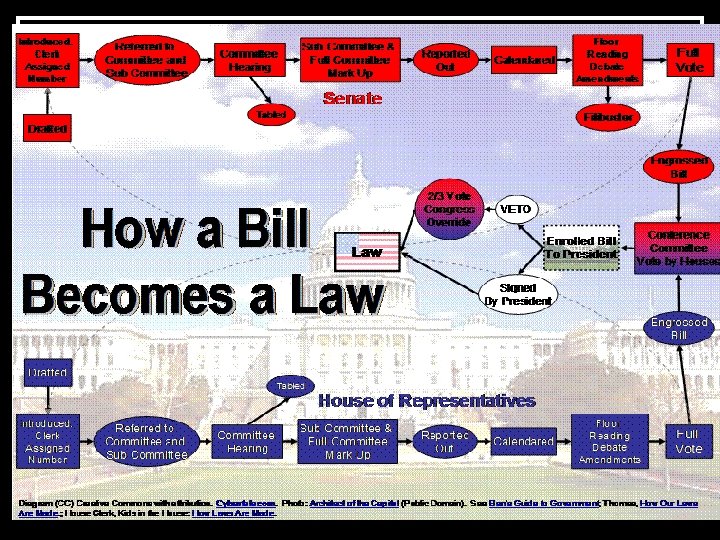
What actions can a committee take with a bill? Pass the bill n Mark up a bill – amend it or add to it n Replace with a new bill n Pigeonhole – kill it by not letting it out of committee n Kill with a – majority vote n
How rules for passing laws different in the House than in the Senate?
House of Representatives Amendments – have to be related to the topic of the bill n Rules for Debate – there is a time limit for each member to talk, must talk about the bill n
Senate n Amendments – do not have to be related to bill n Riders – attachments to a bill that are not related to its subject
Rules for Debate Very few Rules n Filibuster – killing a bill by talking until it is dropped n Cloture – vote to end a filibuster, 60 votes needed n
What actions can the President take with a bill? Sign it into law n Veto (I forbid) – Deny it n Pocket Veto – do nothing and Congress dismisses before 10 days n Pass without signature – do nothing for 10 days and Congress is still in session n
If the President vetoes a bill what can Congress do? n Override a veto with a 2/3 rds vote in both houses
Скачать презентацию Unit 4 The Branches of the American Government
ba819e9e6474acc9838bddd1d405846a.ppt