


 Скачать презентацию Unit 3 Pesticides in agriculture and the environment
35b5bc1143726e76d1c7d1e5b06ec152.ppt
- Количество слайдов: 43
 Unit 3: Pesticides in agriculture and the environment C. D. Caldwell Section 4 Unit 3 Adapted by Wang
 Learning objectives Define the following terms: n NOEL n ADI n Differentiate among the terms: acute 急性的, sub-acute and chronic慢性的 testing for toxicity. n Compare the relative acute toxicities of chemicals using LD 50 values. n
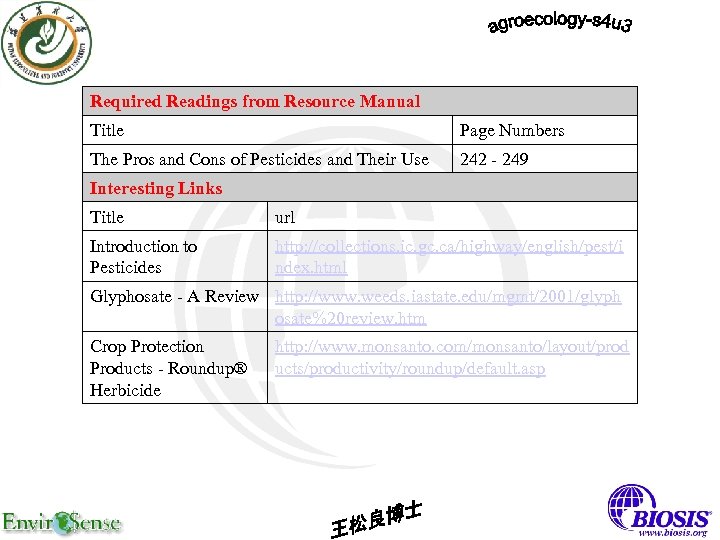 Required Readings from Resource Manual Title Page Numbers The Pros and Cons of Pesticides and Their Use 242 - 249 Interesting Links Title url Introduction to Pesticides http: //collections. ic. gc. ca/highway/english/pest/i ndex. html Glyphosate - A Review http: //www. weeds. iastate. edu/mgmt/2001/glyph osate%20 review. htm Crop Protection Products - Roundup® Herbicide http: //www. monsanto. com/monsanto/layout/prod ucts/productivity/roundup/default. asp
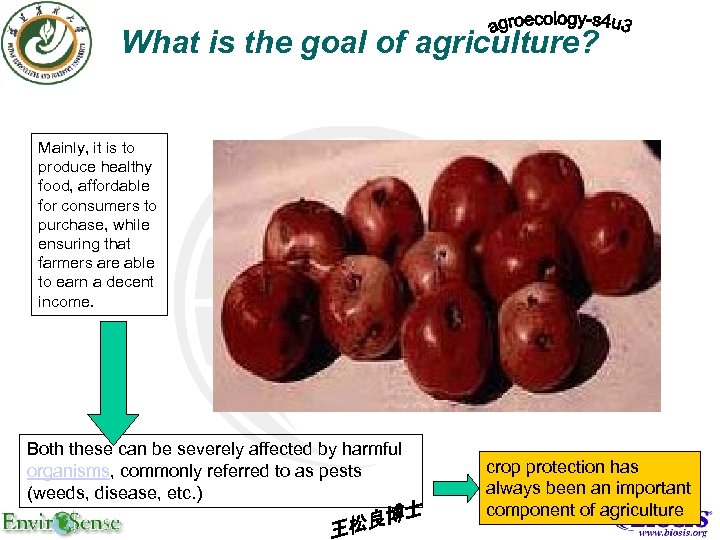 What is the goal of agriculture? Mainly, it is to produce healthy food, affordable for consumers to purchase, while ensuring that farmers are able to earn a decent income. Both these can be severely affected by harmful organisms, commonly referred to as pests (weeds, disease, etc. ) crop protection has always been an important component of agriculture
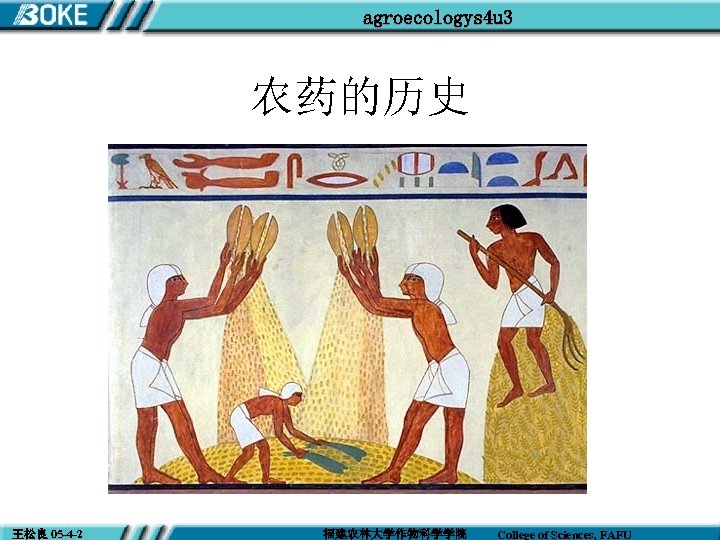 agroecologys 4 u 3 农药的历史 王松良 05 -4 -2 福建农林大学作物科学学院 College of Sciences, FAFU
 agroecologys 4 u 3 • the advent of pests is coincident with the advent of agriculture and that makes pests a human invention • before 2, 500 bc Sumerians闪族人 were using sulfur compounds to control insects and mites • By 2, 500 bc the Chinese figured out plant phenology生物气候学 and adjusted crop planting times to avoid pest outbreaks 王松良 05 -4 -2 福建农林大学作物科学学院 College of Sciences, FAFU
 agroecologys 4 u 3 • By 1, 200 bc China was using plant-derived insecticides and had already developed seed treatment practices. They also used chalk石灰 and wood ash for control of stored product pests, and mercury and arsenic compounds for body 虱子 • The earliest record for using natural enemies was in China about 300 BC- they used predatory ants to help control caterpillars毛虫 and beetles in citrus plantings • they understood the concept of food webs and natural population regulation • early 1700’s the rediscovery and introduction into Europe of various botanical insecticides like pyrethrum 除虫菊, and tobacco leaf infusion 王松良 05 -4 -2 福建农林大学作物科学学院 College of Sciences, FAFU
 agroecologys 4 u 3 SO • The first step in any pest management program is to accurately identify the pest 王松良 05 -4 -2 福建农林大学作物科学学院 College of Sciences, FAFU
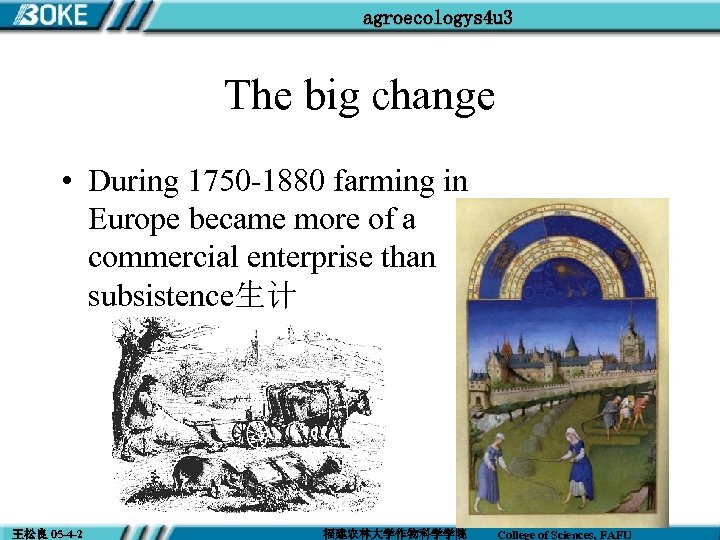 agroecologys 4 u 3 The big change • During 1750 -1880 farming in Europe became more of a commercial enterprise than subsistence生计 王松良 05 -4 -2 福建农林大学作物科学学院 College of Sciences, FAFU
 agroecologys 4 u 3 Insecticide era • In the late 1930’s the Swiss and Germans were making significant advances in synthetic chemistry • Specifically they were working with petroleum distillates and developing the science of organic chemistry 王松良 05 -4 -2 福建农林大学作物科学学院 College of Sciences, FAFU
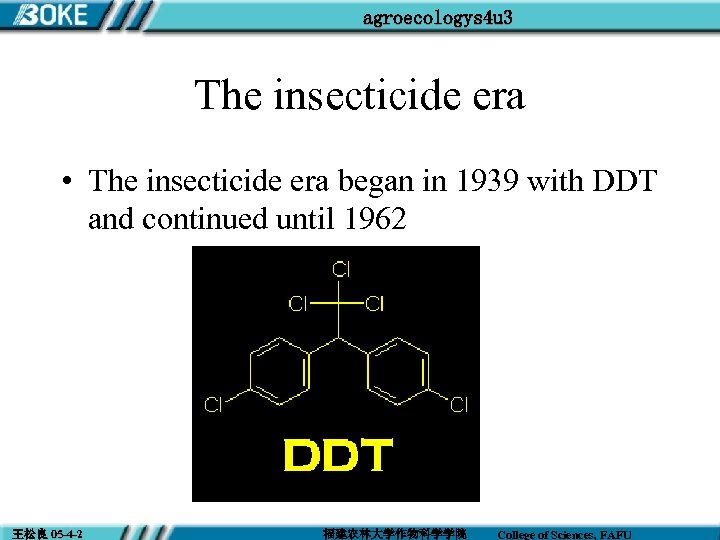 agroecologys 4 u 3 The insecticide era • The insecticide era began in 1939 with DDT and continued until 1962 王松良 05 -4 -2 福建农林大学作物科学学院 College of Sciences, FAFU
 agroecologys 4 u 3 DDT • The insecticidal properties were discovered by a Swiss, Paul Müller, working for Geigy Corp. • DDT is in the class of compounds called chlorinated 氯代烃类hydrocarbons 王松良 05 -4 -2 福建农林大学作物科学学院 College of Sciences, FAFU
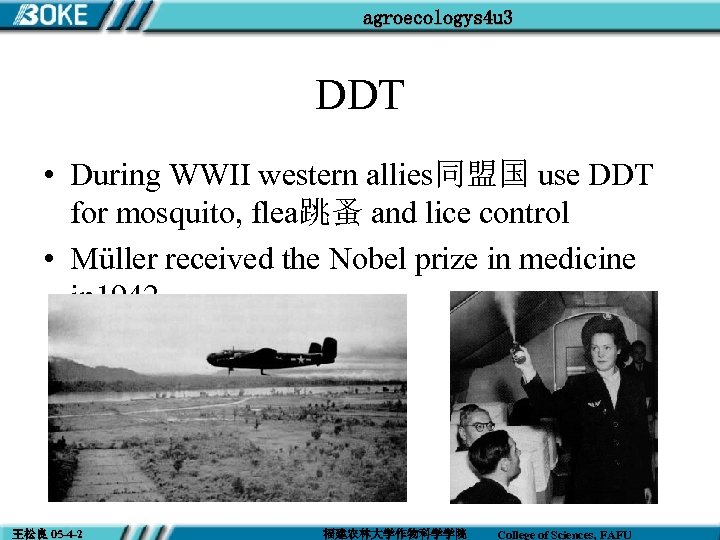 agroecologys 4 u 3 DDT • During WWII western allies同盟国 use DDT for mosquito, flea跳蚤 and lice control • Müller received the Nobel prize in medicine in 1942 王松良 05 -4 -2 福建农林大学作物科学学院 College of Sciences, FAFU
 agroecologys 4 u 3 More chemistry • The Europeans continued work on other insecticidal compounds including the organophosphates有机磷酸酯杀虫剂which were originally developed as nerve gases 王松良 05 -4 -2 福建农林大学作物科学学院 College of Sciences, FAFU
 agroecologys 4 u 3 Chemistry in agriculture • After the war DDT was pressed into service for use in agriculture • As these compounds gained in popularity research in pest management moved away from sanitation, planting dates, trap crops and natural enemies toward the exclusive use of insecticides 王松良 05 -4 -2 福建农林大学作物科学学院 College of Sciences, FAFU
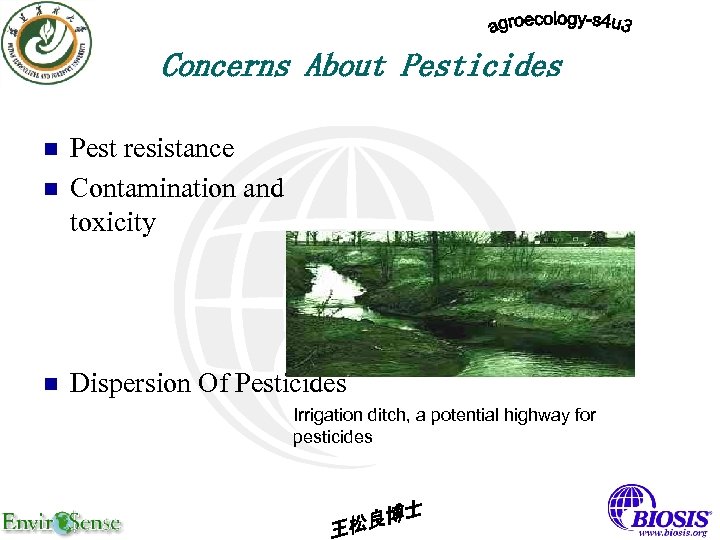 Concerns About Pesticides n Pest resistance Contamination and toxicity n Dispersion Of Pesticides n Irrigation ditch, a potential highway for pesticides
 agroecologys 4 u 3 The problems start… Resistance • 100% kill was never achieved • those that survived reproduced • These populations became so resistant they could soak in pesticide without harm 王松良 05 -4 -2 福建农林大学作物科学学院 College of Sciences, FAFU
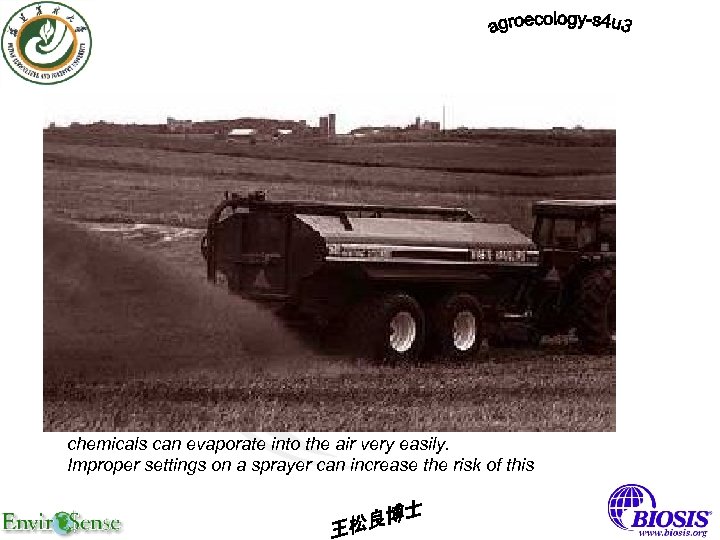 chemicals can evaporate into the air very easily. Improper settings on a sprayer can increase the risk of this
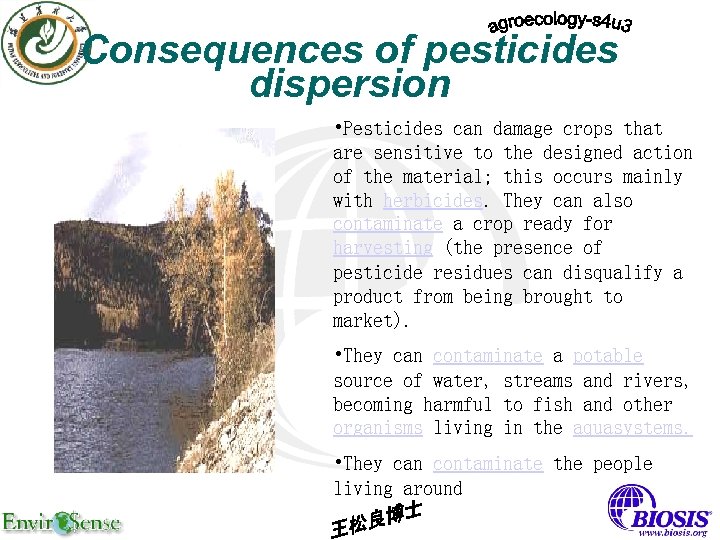 Consequences of pesticides dispersion • Pesticides can damage crops that are sensitive to the designed action of the material; this occurs mainly with herbicides. They can also contaminate a crop ready for harvesting (the presence of pesticide residues can disqualify a product from being brought to market). • They can contaminate a potable source of water, streams and rivers, becoming harmful to fish and other organisms living in the aquasystems. • They can contaminate the people living around
 agroecologys 4 u 3 More problems Biomagnification • residues of DDT showed up in milk supplies and other foods • We still have DDT in our fat cells • Upper trophic level side effects 王松良 05 -4 -2 福建农林大学作物科学学院 College of Sciences, FAFU
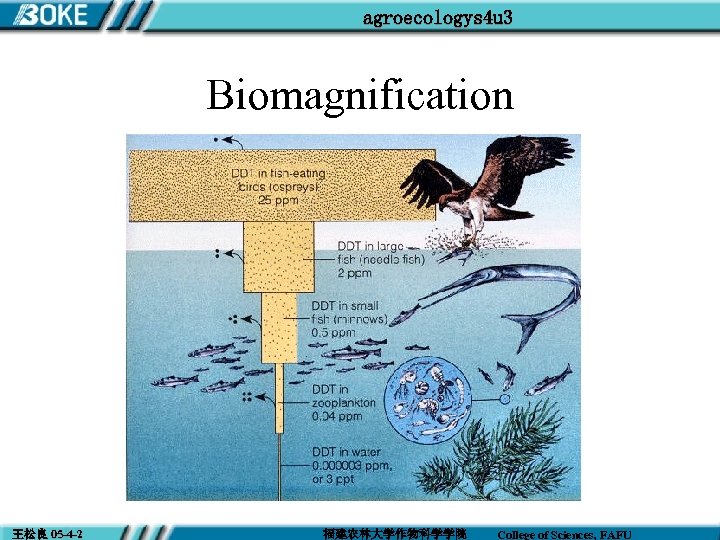 agroecologys 4 u 3 Biomagnification 王松良 05 -4 -2 福建农林大学作物科学学院 College of Sciences, FAFU
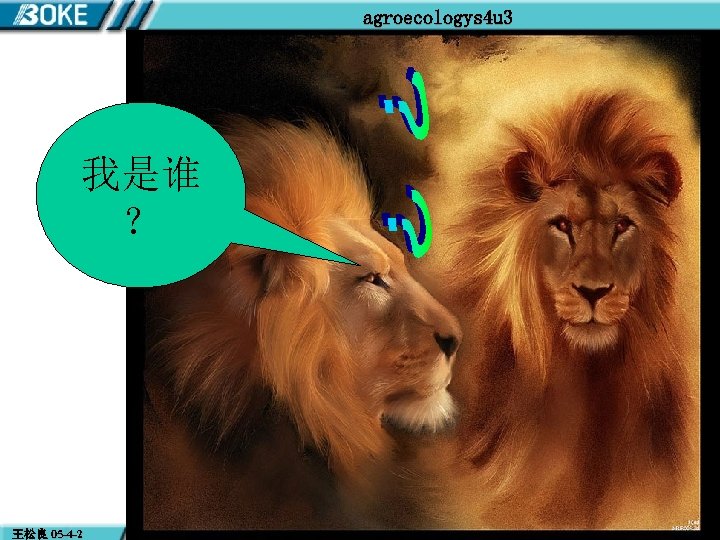
 agroecologys 4 u 3 哇!好吃! 王松良 05 -4 -2 福建农林大学作物科学学院 College of Sciences, FAFU
 agroecologys 4 u 3 妈咪,我要吃! 王松良 05 -4 -2 福建农林大学作物科学学院 College of Sciences, FAFU
 agroecologys 4 u 3 我是谁 ? 王松良 05 -4 -2 福建农林大学作物科学学院 College of Sciences, FAFU
 Conclusion on pesticide n Benefits n Yield n and Profitability Risks n Mainly to the applicator n Risk to environment if mis-used
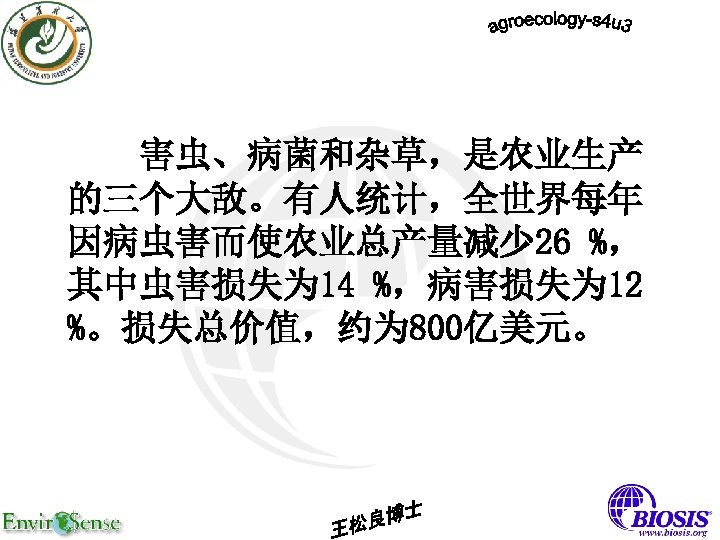 害虫、病菌和杂草,是农业生产 的三个大敌。有人统计,全世界每年 因病虫害而使农业总产量减少 26 %, 其中虫害损失为 14 %,病害损失为 12 %。损失总价值,约为 800亿美元。
 自从20世纪 40年代有机氯和有机汞农药 问世以后,人们与农业病虫和杂草斗争中, 主要是依靠化学农药这一现代化武器。但是, 随着化学农药的品种和产量激增,使用范围 日益扩大,农药残毒污染而造成的世界性公 害,引起人们的忧虑。于是很多国家在努力 研制高效低毒农药的同时,开展了综合防治 的研究。生物防治是综合防治的主要内容, 而微生物农药的生产和使用,又是生物防治 的重要手段。
 Therefore, pesticides Broad Topic n Concentration on Food Safety/Environmental Safety n Not an issue in isolation n Not just scientific; larger philosophical issues n
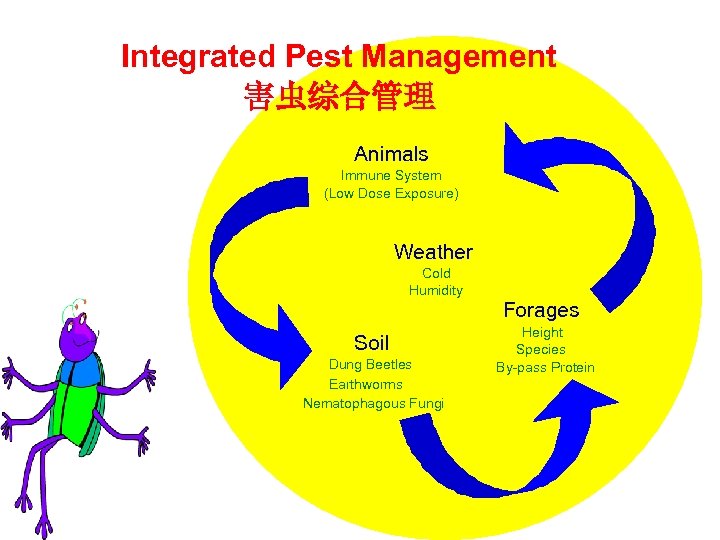 agroecologys 4 u 3 Integrated Pest Management 害虫综合管理 Animals Immune System (Low Dose Exposure) Weather Cold Humidity Forages Soil Dung Beetles Earthworms Nematophagous Fungi 王松良 05 -4 -2 福建农林大学作物科学学院 Height Species By-pass Protein College of Sciences, FAFU
 Learning objectives-2 n Differentiate among the terms: acute, sub-acute and chronic testing for toxicity.
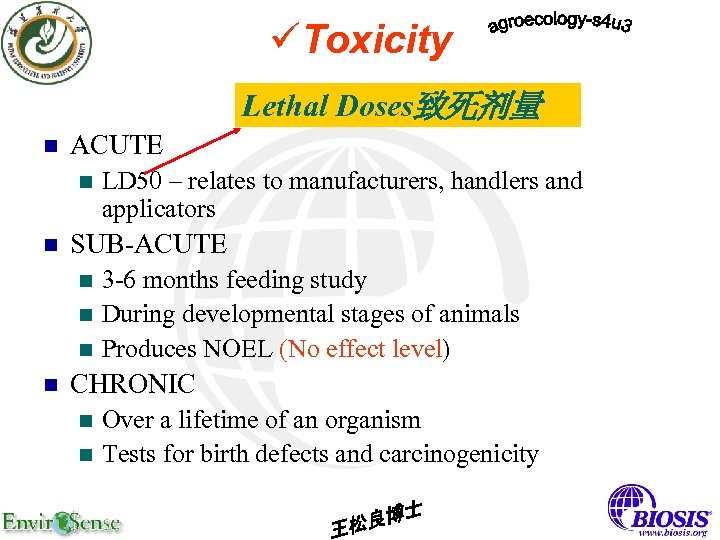 üToxicity Lethal Doses致死剂量 n ACUTE n n LD 50 – relates to manufacturers, handlers and applicators SUB-ACUTE 3 -6 months feeding study n During developmental stages of animals n Produces NOEL (No effect level) n n CHRONIC Over a lifetime of an organism n Tests for birth defects and carcinogenicity n
 Learning objectives-1 n Define n NOEL n ADI the following terms:
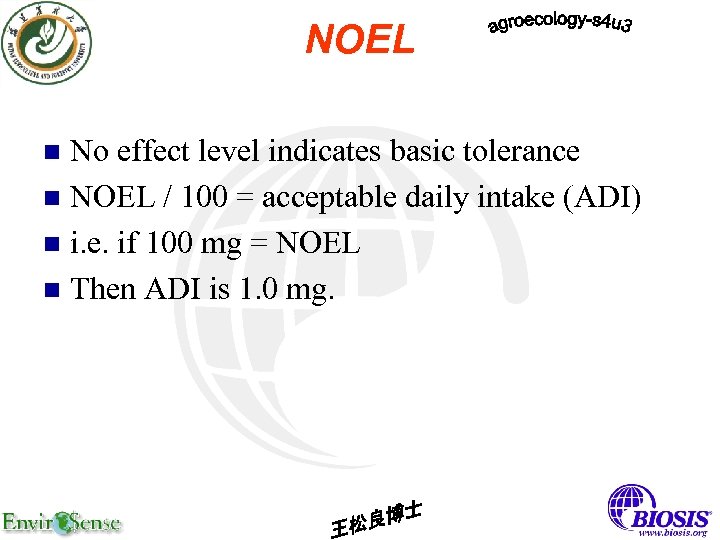 NOEL No effect level indicates basic tolerance n NOEL / 100 = acceptable daily intake (ADI) n i. e. if 100 mg = NOEL n Then ADI is 1. 0 mg. n
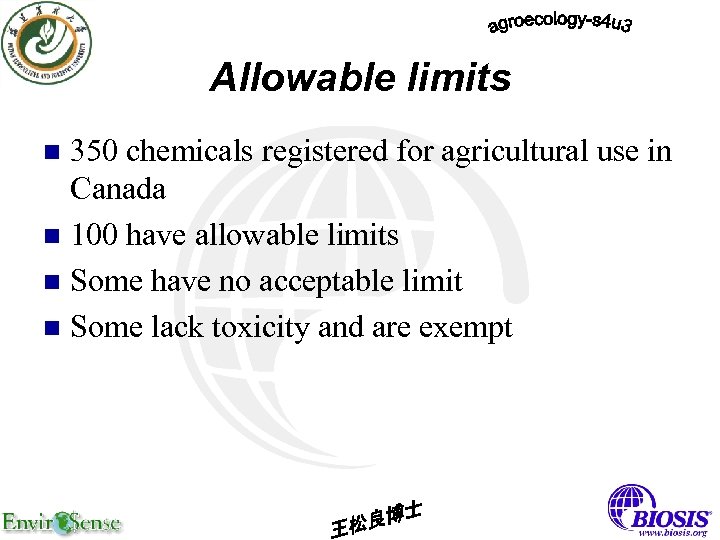 Allowable limits 350 chemicals registered for agricultural use in Canada n 100 have allowable limits n Some have no acceptable limit n Some lack toxicity and are exempt n
 Learning objectives-3 n Compare the relative acute toxicities of chemicals using LD 50 values. Lethal Doses致死剂量
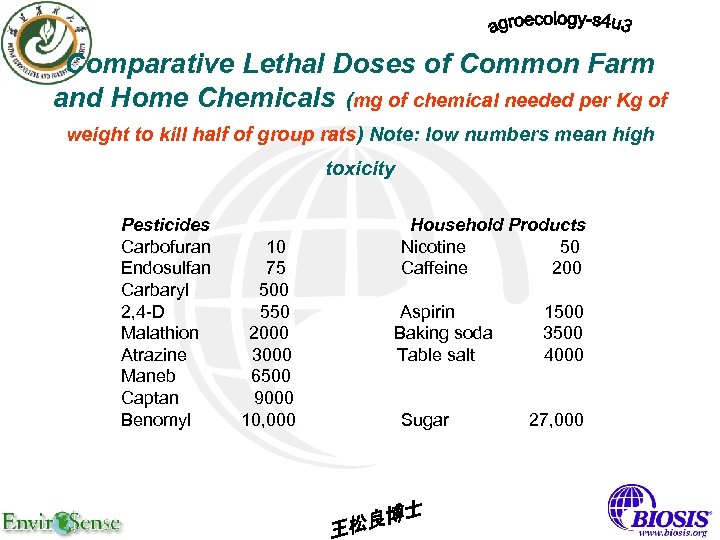 Comparative Lethal Doses of Common Farm and Home Chemicals (mg of chemical needed per Kg of weight to kill half of group rats) Note: low numbers mean high toxicity Pesticides Household Products Carbofuran 10 Nicotine 50 Endosulfan 75 Caffeine 200 Carbaryl 500 2, 4 -D 550 Aspirin 1500 Malathion 2000 Baking soda 3500 Atrazine 3000 Table salt 4000 Maneb 6500 Captan 9000 Benomyl 10, 000 Sugar 27, 000
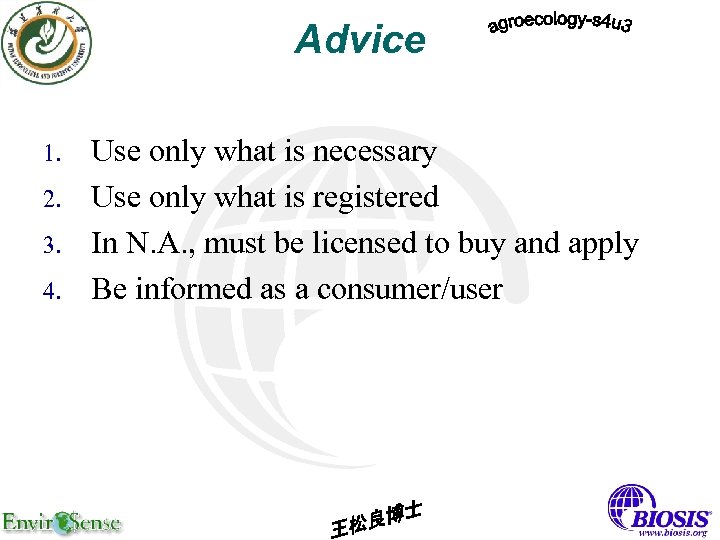 Advice 1. 2. 3. 4. Use only what is necessary Use only what is registered In N. A. , must be licensed to buy and apply Be informed as a consumer/user
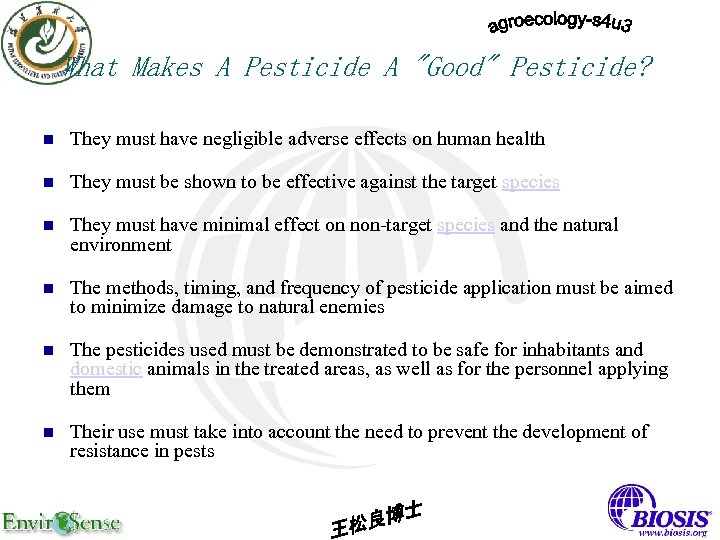 What Makes A Pesticide A "Good" Pesticide? n They must have negligible adverse effects on human health n They must be shown to be effective against the target species n They must have minimal effect on non-target species and the natural environment n The methods, timing, and frequency of pesticide application must be aimed to minimize damage to natural enemies n The pesticides used must be demonstrated to be safe for inhabitants and domestic animals in the treated areas, as well as for the personnel applying them n Their use must take into account the need to prevent the development of resistance in pests
 FOOD LAW n 《种子法》 n 《渔业法》 n 《动物防疫法》 n 《种畜禽管理条例》 n 《农药管理条例》 n 《兽药管理条例》 n 《饲料和饲料添加剂管理条例》
 生物防治的主力—— 微生物农药
 使用微生物农药,对人畜安全无毒, 不伤害天敌,不会使害虫产生抗药性, 又不污染环境,所以从第二次世界大战 以后,得到了迅速的发展。同时,微生 物农药的生产原料大多为农副产品,设 备较简单,成本低,便于就地取材,就 地生产使用。微生物农药已成为国内外 一个十分活跃的科学领域。
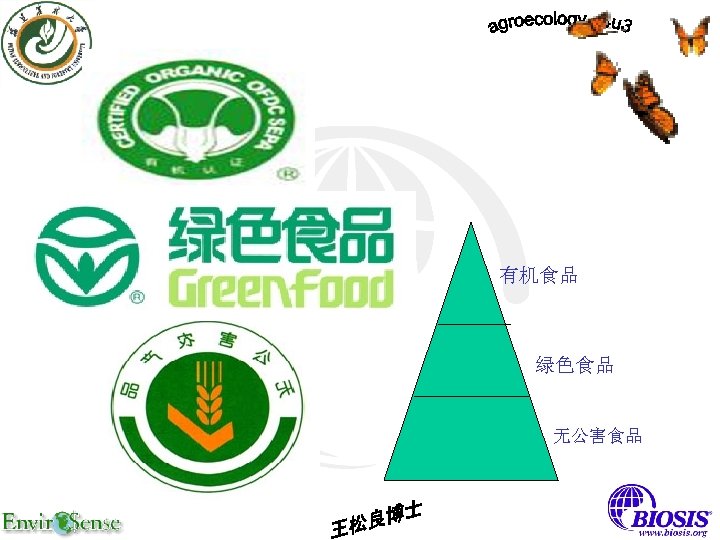 有机食品 绿色食品 无公害食品
 全面实施“无公害食品行动计划” 中加食品安全论坛