


 Скачать презентацию Unit 3 Motion Science 10 8 1
77433b6fd37cbfd62e55035df2bf85ca.ppt
- Количество слайдов: 24
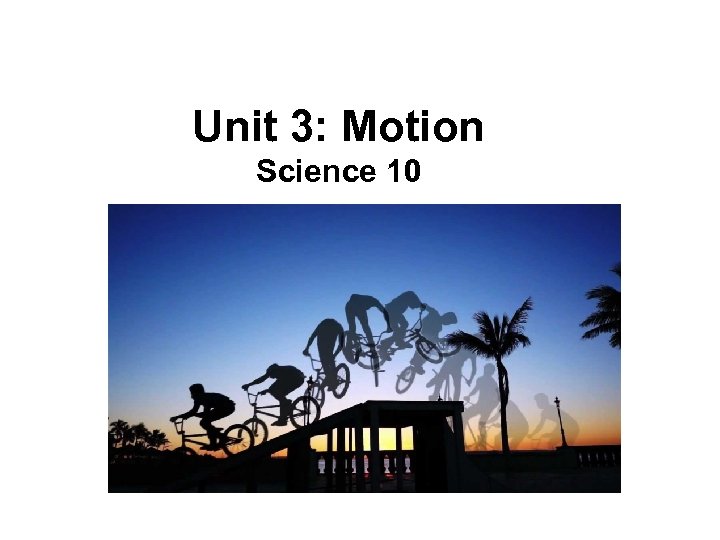 Unit 3: Motion Science 10
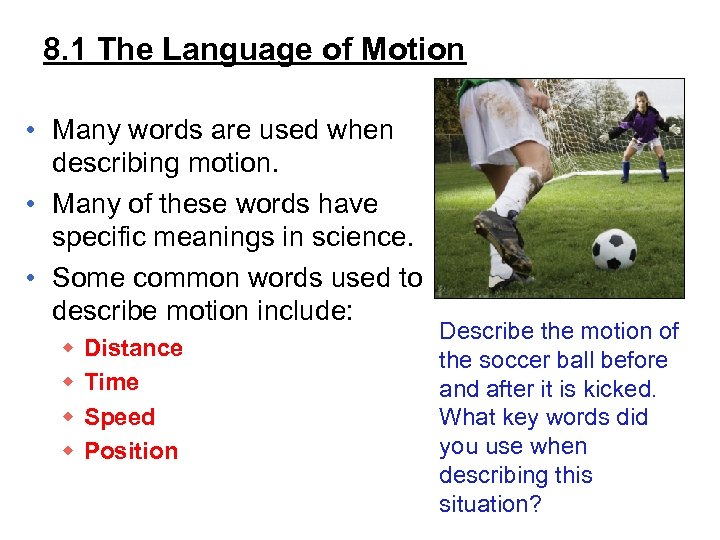 8. 1 The Language of Motion • Many words are used when describing motion. • Many of these words have specific meanings in science. • Some common words used to describe motion include: w w Distance Time Speed Position Describe the motion of the soccer ball before and after it is kicked. What key words did you use when describing this situation?
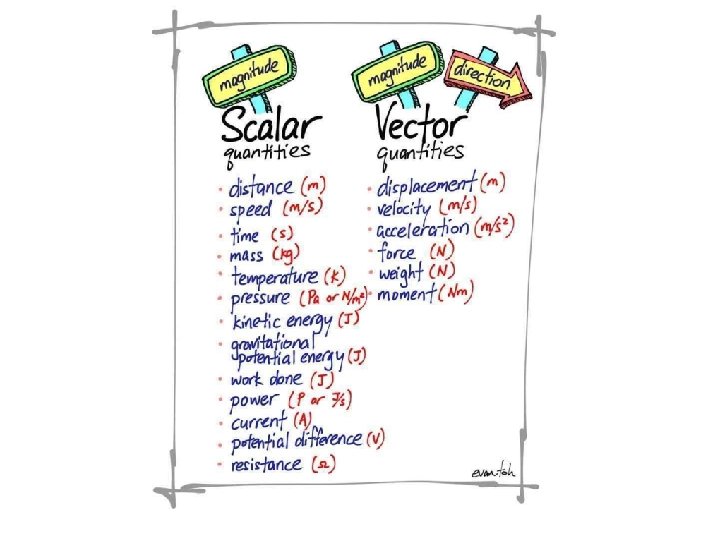
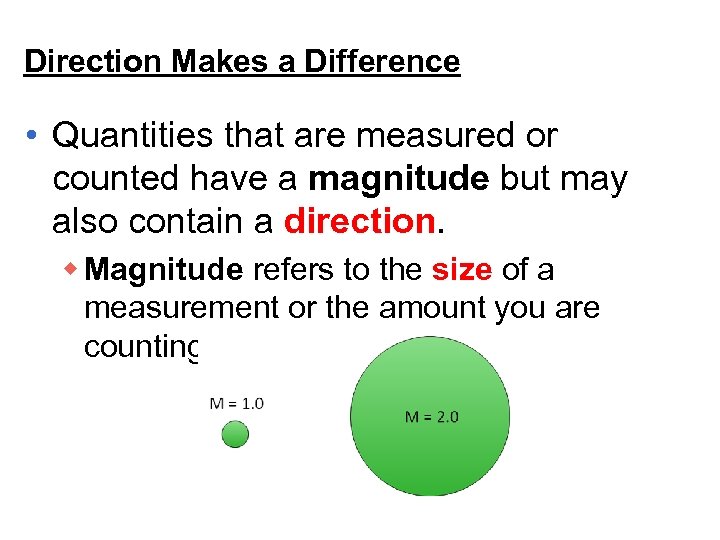 Direction Makes a Difference • Quantities that are measured or counted have a magnitude but may also contain a direction. w Magnitude refers to the size of a measurement or the amount you are counting.
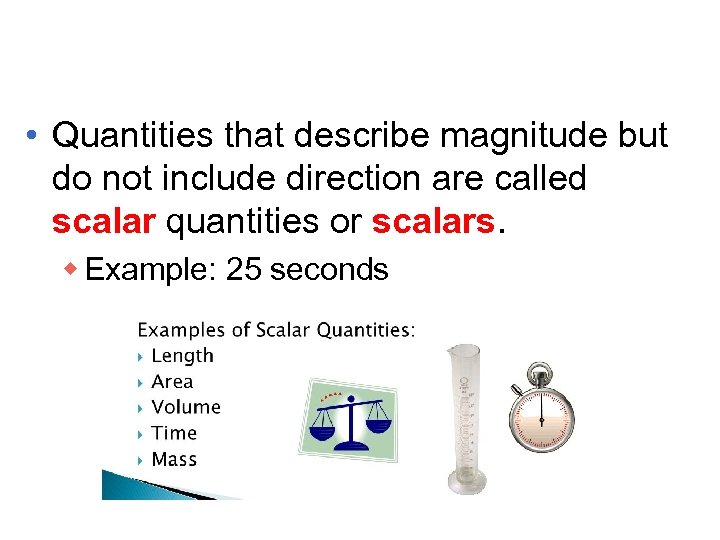 • Quantities that describe magnitude but do not include direction are called scalar quantities or scalars. w Example: 25 seconds
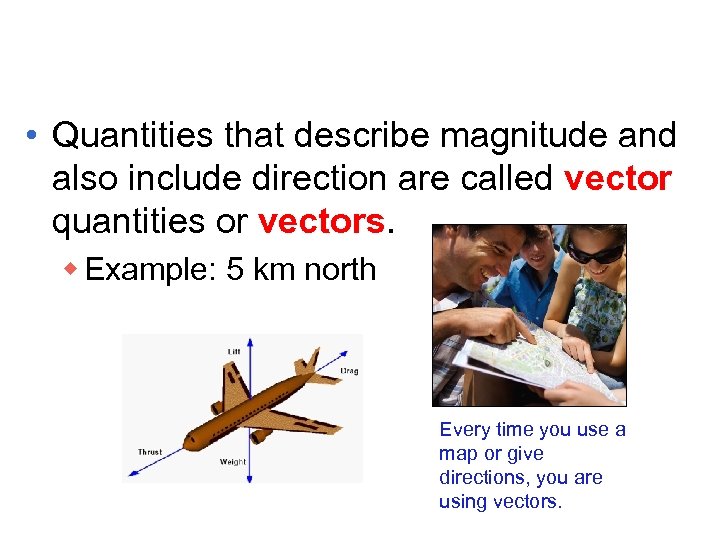 • Quantities that describe magnitude and also include direction are called vector quantities or vectors. w Example: 5 km north Every time you use a map or give directions, you are using vectors.
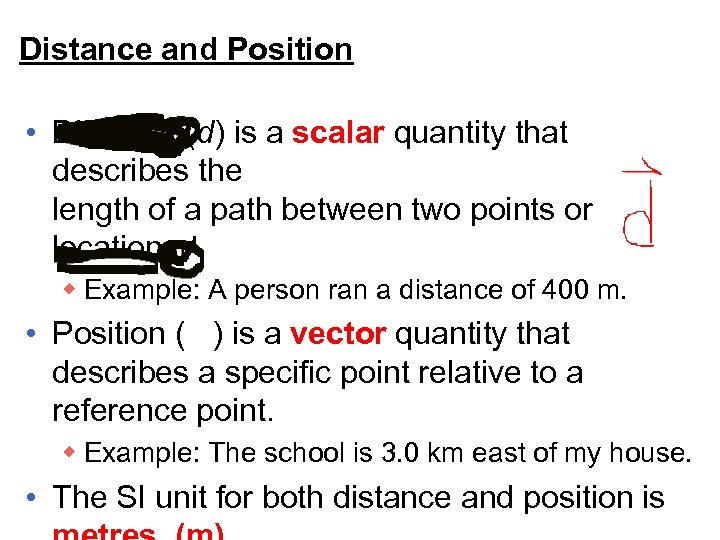 Distance and Position • Distance (d) is a scalar quantity that describes the length of a path between two points or locations. w Example: A person ran a distance of 400 m. • Position ( ) is a vector quantity that describes a specific point relative to a reference point. w Example: The school is 3. 0 km east of my house. • The SI unit for both distance and position is
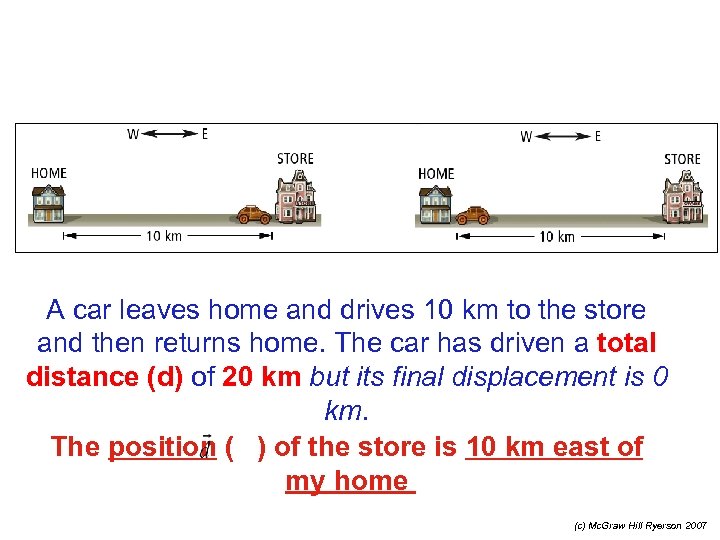 A car leaves home and drives 10 km to the store and then returns home. The car has driven a total distance (d) of 20 km but its final displacement is 0 km. The position ( ) of the store is 10 km east of my home (c) Mc. Graw Hill Ryerson 2007
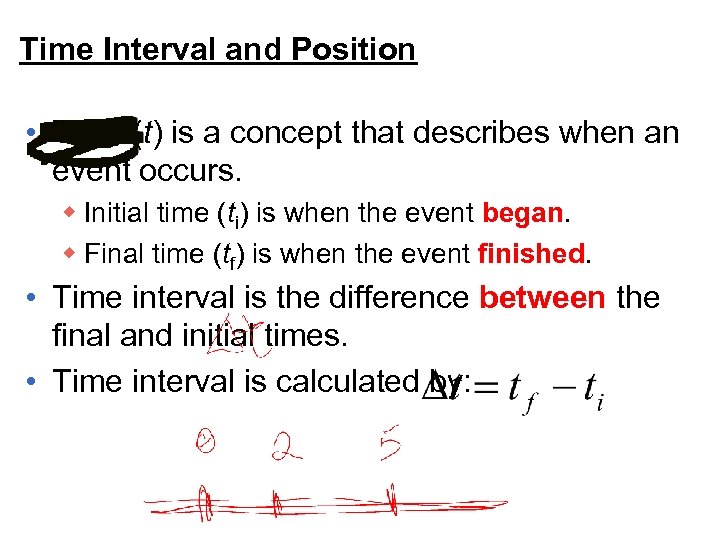 Time Interval and Position • Time (t) is a concept that describes when an event occurs. w Initial time (ti) is when the event began. w Final time (tf) is when the event finished. • Time interval is the difference between the final and initial times. • Time interval is calculated by:
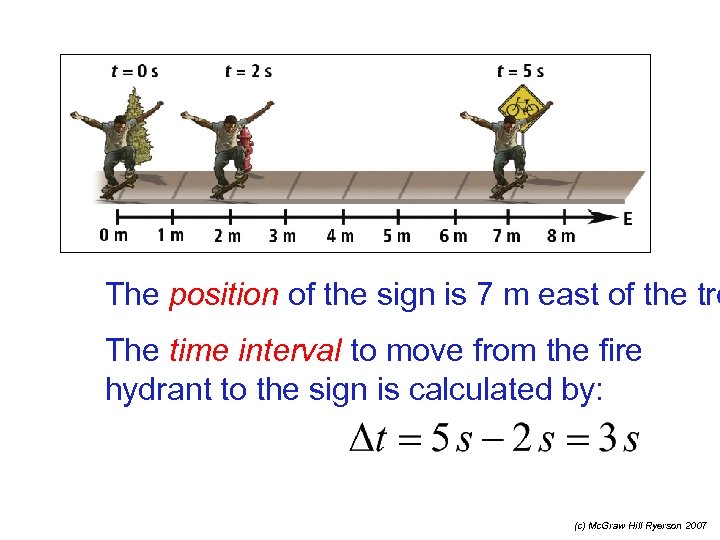 The position of the sign is 7 m east of the tre The time interval to move from the fire hydrant to the sign is calculated by: (c) Mc. Graw Hill Ryerson 2007
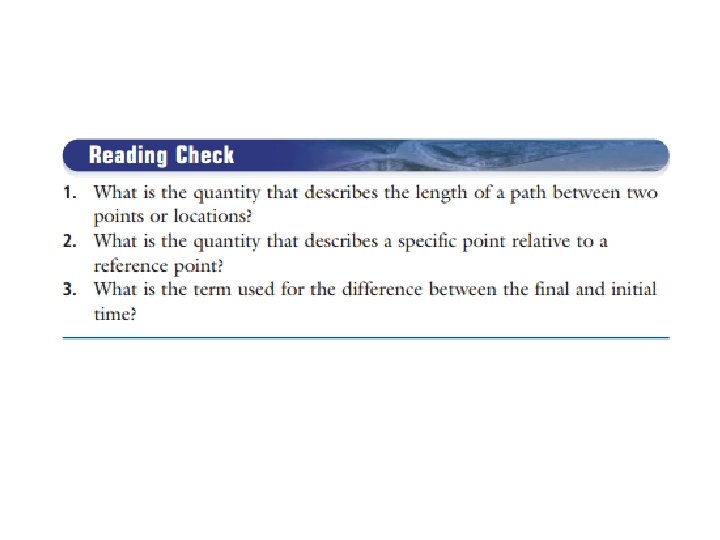
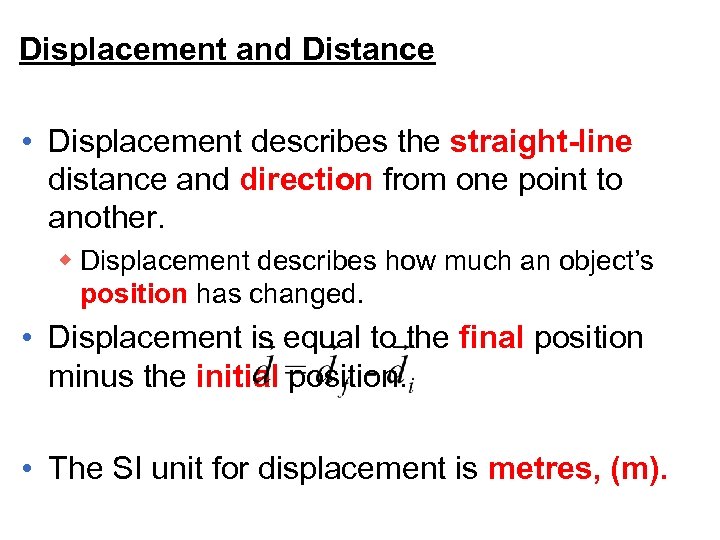 Displacement and Distance • Displacement describes the straight-line distance and direction from one point to another. w Displacement describes how much an object’s position has changed. • Displacement is equal to the final position minus the initial position. • The SI unit for displacement is metres, (m).
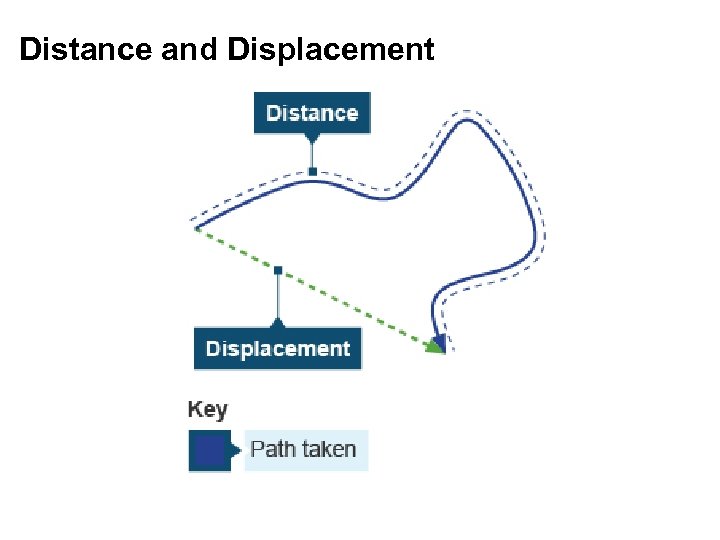 Distance and Displacement
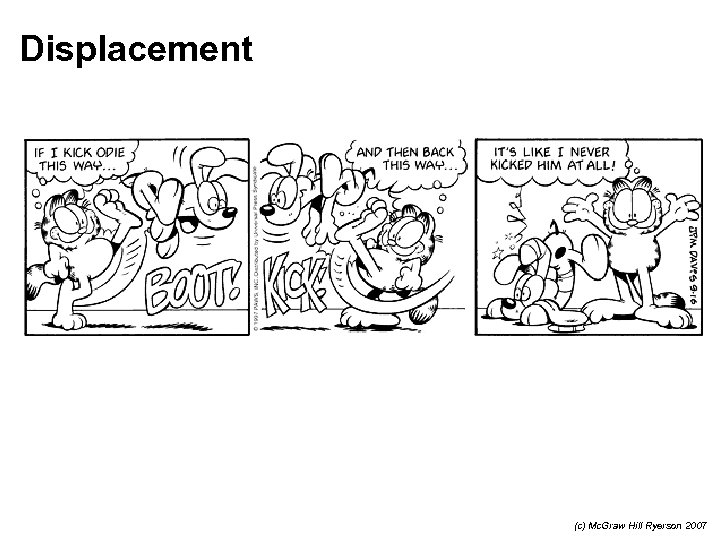 Displacement (c) Mc. Graw Hill Ryerson 2007
![Between 2 s and 5 s the skateboarder’s displacement is 5 m [E]. The](https://present5.com/presentation/77433b6fd37cbfd62e55035df2bf85ca/image-15.jpg "Between 2 s and 5 s the skateboarder’s displacement is 5 m [E]. The") Between 2 s and 5 s the skateboarder’s displacement is 5 m [E]. The skateboarder’s distance travelled is 5 m.
Between 2 s and 5 s the skateboarder’s displacement is 5 m [E]. The skateboarder’s distance travelled is 5 m.
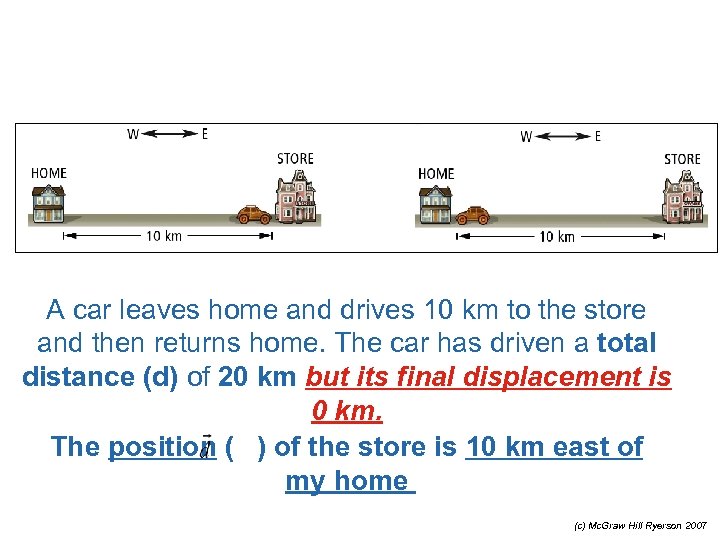 A car leaves home and drives 10 km to the store and then returns home. The car has driven a total distance (d) of 20 km but its final displacement is 0 km. The position ( ) of the store is 10 km east of my home (c) Mc. Graw Hill Ryerson 2007
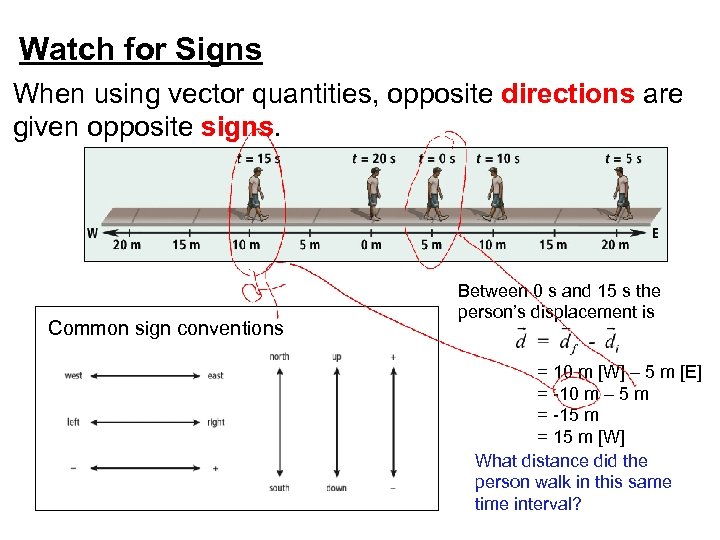 Watch for Signs When using vector quantities, opposite directions are given opposite signs. Common sign conventions Between 0 s and 15 s the person’s displacement is = 10 m [W] – 5 m [E] = -10 m – 5 m = -15 m = 15 m [W] What distance did the person walk in this same time interval?
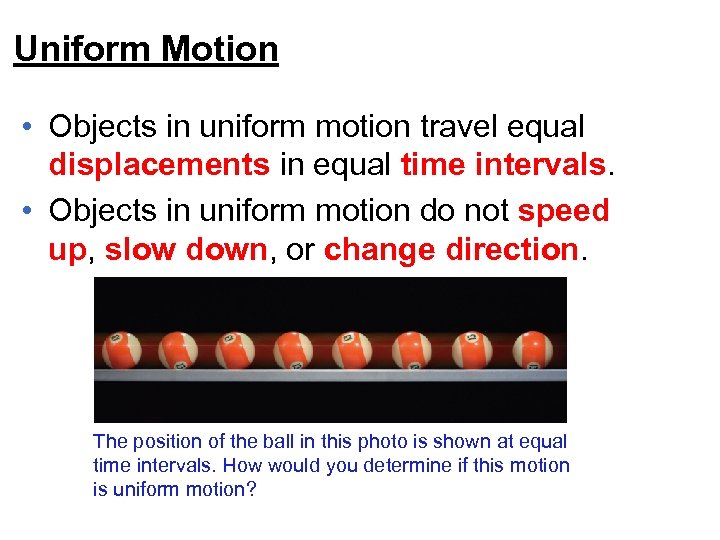 Uniform Motion • Objects in uniform motion travel equal displacements in equal time intervals. • Objects in uniform motion do not speed up, slow down, or change direction. The position of the ball in this photo is shown at equal time intervals. How would you determine if this motion is uniform motion?
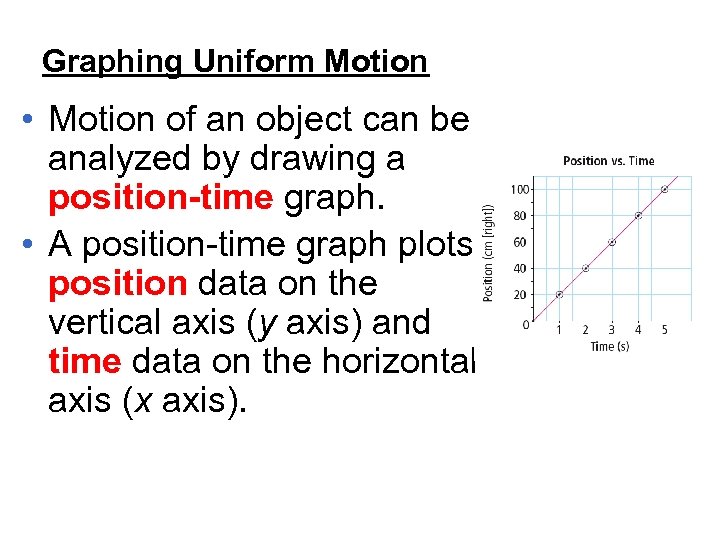 Graphing Uniform Motion • Motion of an object can be analyzed by drawing a position-time graph. • A position-time graph plots position data on the vertical axis (y axis) and time data on the horizontal axis (x axis).
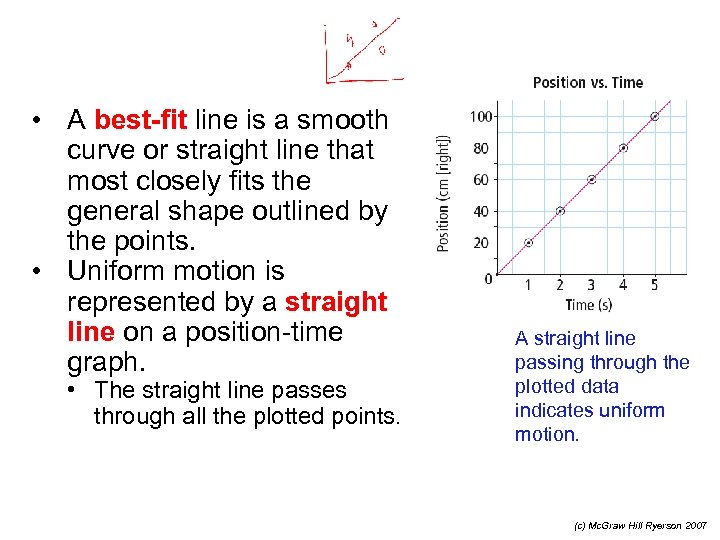 • A best-fit line is a smooth curve or straight line that most closely fits the general shape outlined by the points. • Uniform motion is represented by a straight line on a position-time graph. • The straight line passes through all the plotted points. A straight line passing through the plotted data indicates uniform motion. (c) Mc. Graw Hill Ryerson 2007
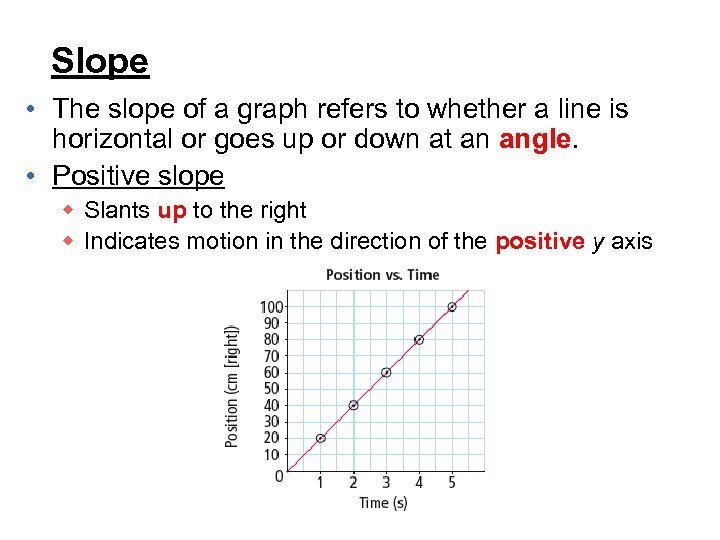 Slope • The slope of a graph refers to whether a line is horizontal or goes up or down at an angle. • Positive slope w Slants up to the right w Indicates motion in the direction of the positive y axis
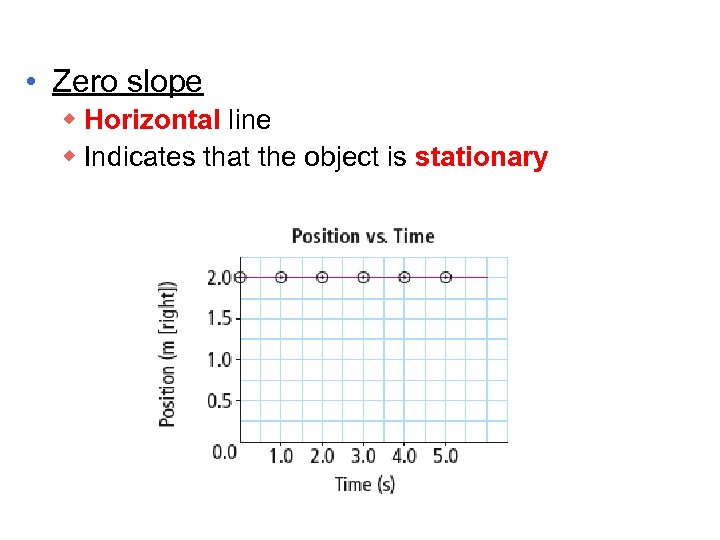 • Zero slope w Horizontal line w Indicates that the object is stationary
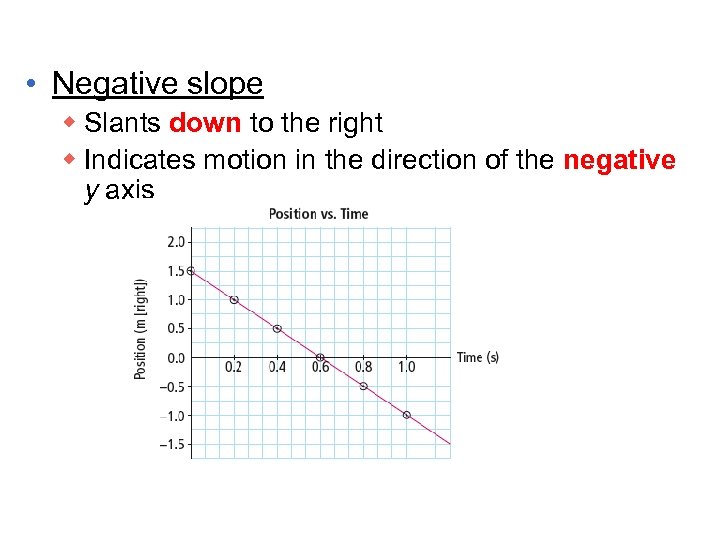 • Negative slope w Slants down to the right w Indicates motion in the direction of the negative y axis
 To Do: • Workbook Q’s pg 147, 148, 149 (c) Mc. Graw Hill Ryerson 2007