


 Скачать презентацию Unit 3 Ancient Egypt Chapter 4 Ancient
1ffab4958ccd4bdaf9a66cddd14e3f94.ppt
- Количество слайдов: 137
 Unit 3 Ancient Egypt
 Chapter 4 Ancient Egyptian Geography
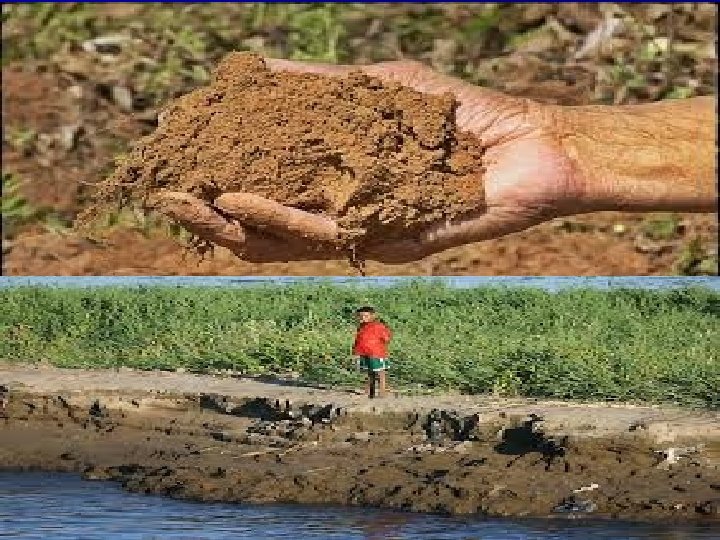
 Preface n Like Mesopotamian rivers, the Nile River brought fertile silt that invited human settlement along the Nile. n However, due to the geography of Egypt, Egyptian culture was more stable and enduring than that of Mesopotamia n Geography is destiny!
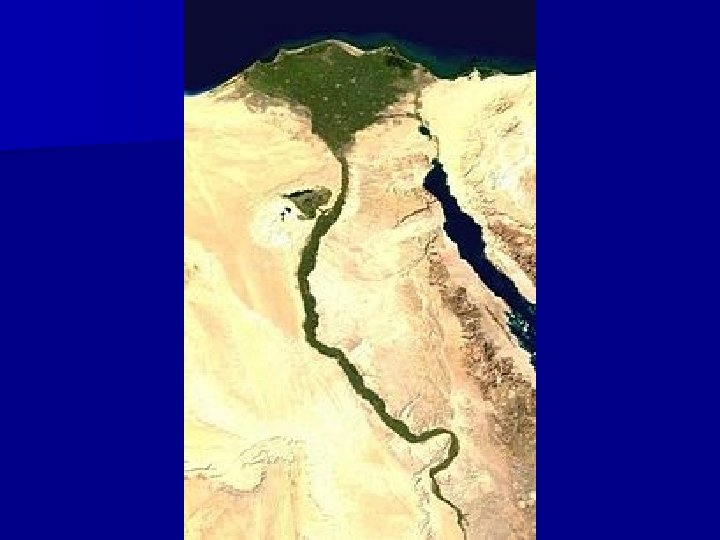
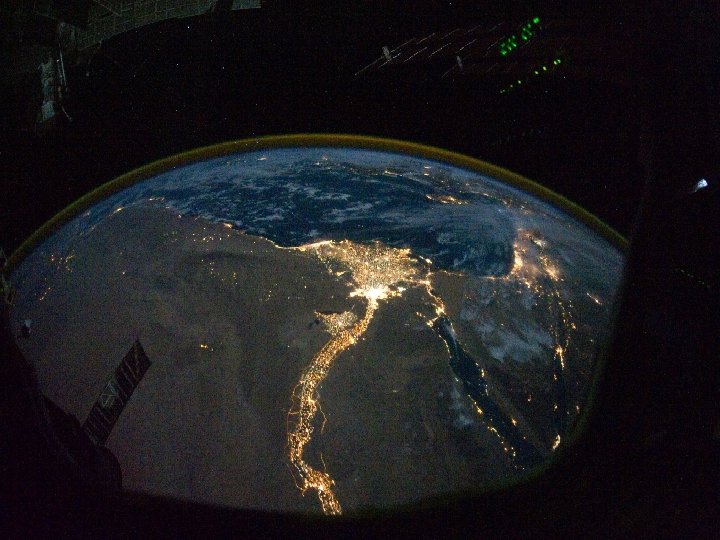
 The Gift of The Nile n n n Geography was destiny for Egypt. The Nile was the key to Egypt’s success. Herodotus named Egypt the Gift of The Nile is the longest river in the world. It runs for 4, 000 miles northward from central Africa, through Egypt and into the Mediterranean Sea. Ancient Egypt occupied a 750 mile stretch of the river valley.
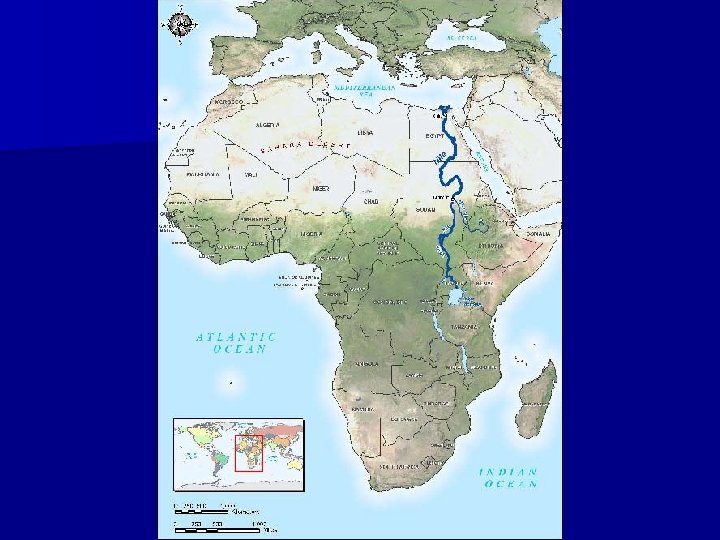
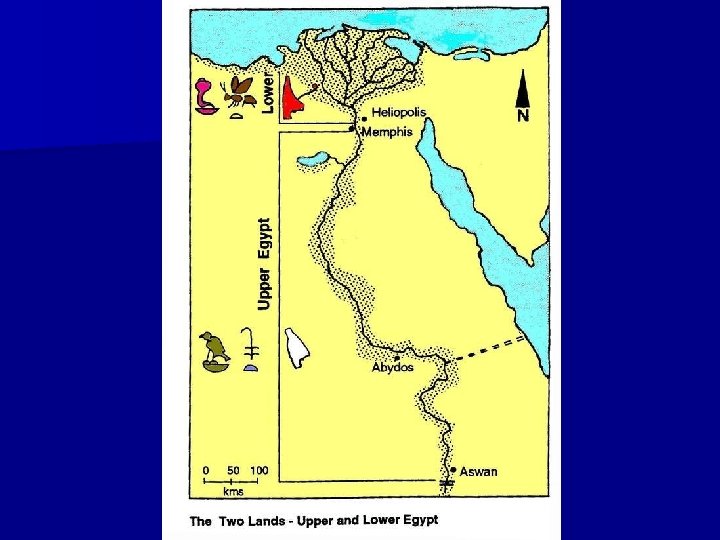
 Two Egypts n Upper Egypt is the southern portion. n Lower Egypt is the northern portion. n The Nile flows north from Upper Egypt to Lower Egypt. n The Nile river valley is 13 miles wide. n Beyond this fertile strip lies hundreds of miles of desert.
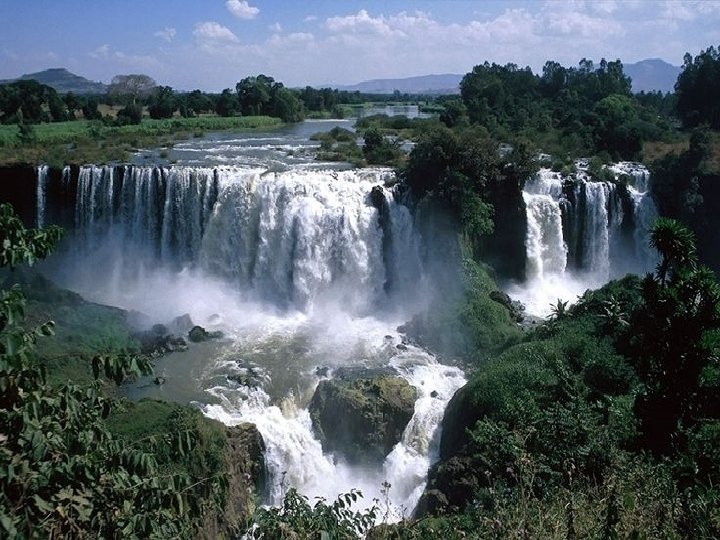
 Cataracts n In Upper Egypt the rocky, hilly terrain caused cataracts, rapids, to form. n The 1 st cataract is 750 miles south of the Mediterranean Sea. n The 1 st cataract was the southerly border of Egypt. n 5 more cataracts lay south of Egypt and made sailing in that region quite difficult.
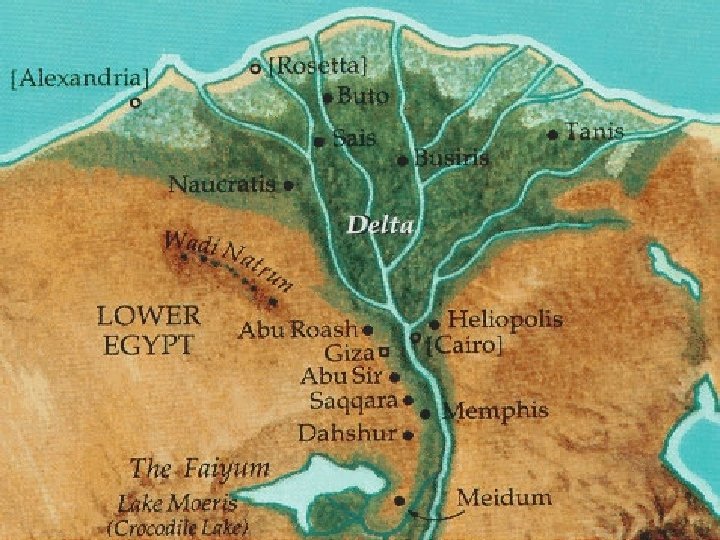
 The Delta n. A delta is a triangle-shaped region of land made of soil deposited by a river. n As the Nile pours into the Mediterranean it fans out into several branches forming a delta. n 2/3 of the fertile farmland in Egypt was located in the Delta. n The Delta was covered in swamps and marshes.
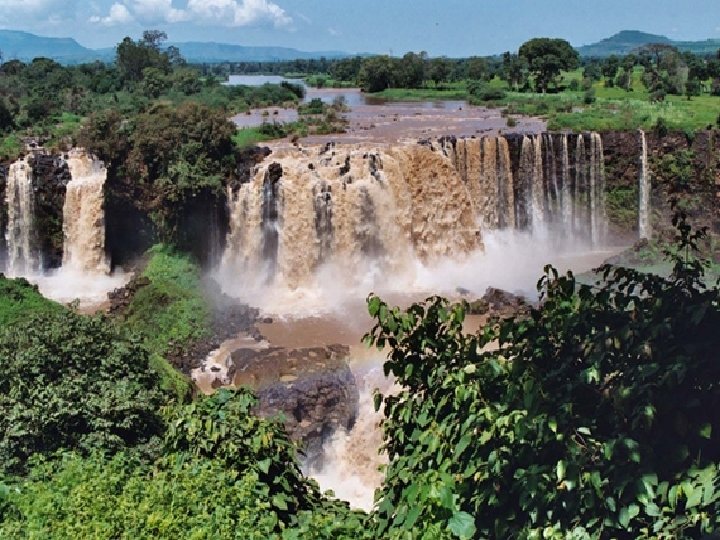
 The Nile Floods n n n n While little rain fell in Egypt, rain fell annually in the highlands of East Africa south of Egypt causing the Nile to flood. These floods were easy to predict. The Nile floods Upper Egypt mid-summer. The Nile floods Lower Egypt in the fall. The floods deposited fertile silt. Silt is black, so Egyptians called their land the Black Land. The dessert beyond the Nile was called the Red Land. Without the floods, Egypt would be lifeless.
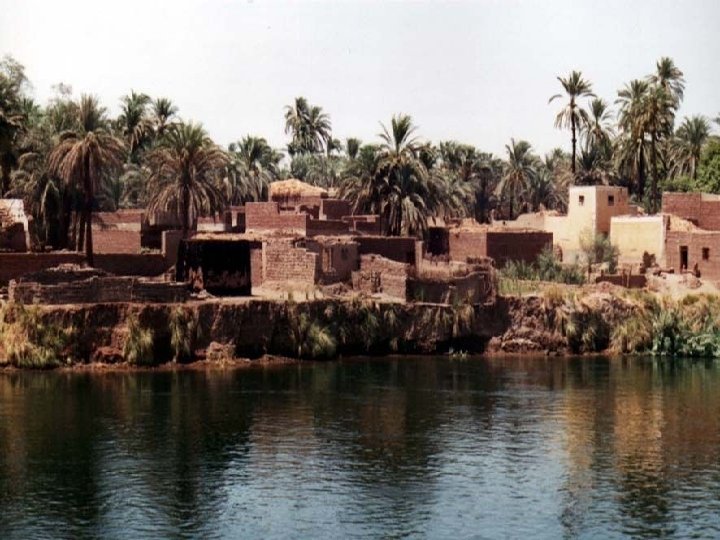
 Egyptian Civilization Develops n The Nile provided water and fertile land. n Hunter-Gatherers arrived 12, 000 years ago. They found edible animals, plants and fish. n Slowly farming developed and the HG settled along the Nile. n By 4, 500 BC farmers in small villages grew Wheat & Barley. n More food led to more people=>villages
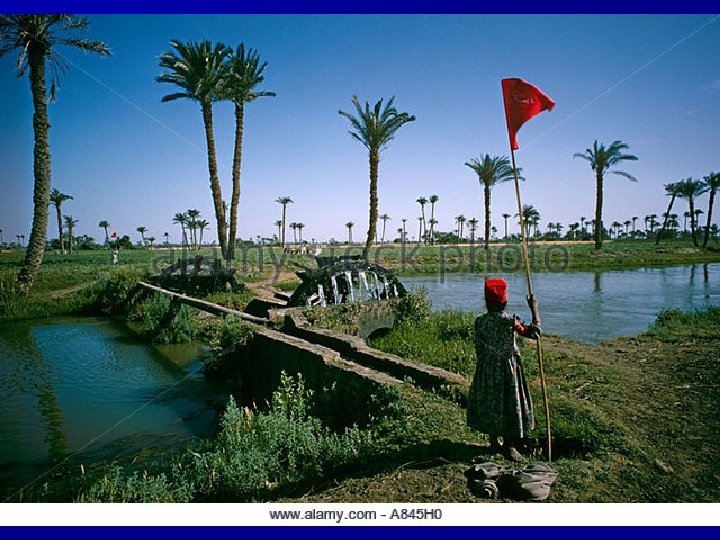
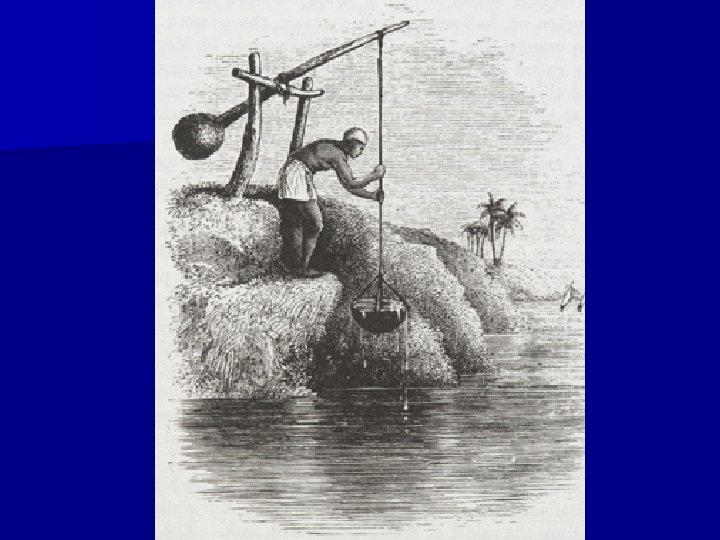
 Irrigation Develops n Egyptians developed irrigation systems to direct water to crops and homes. n Egyptians built canals, but did not need to build basins for storing water like the Mesopotamians. n The Nile water sustained crops and allowed the raising of domestic families. n The Egyptians raised wheat, barley, fruits, vegetables, cattle and sheep. They caught fish also. They hunted geese and ducks. They ate a varied diet.
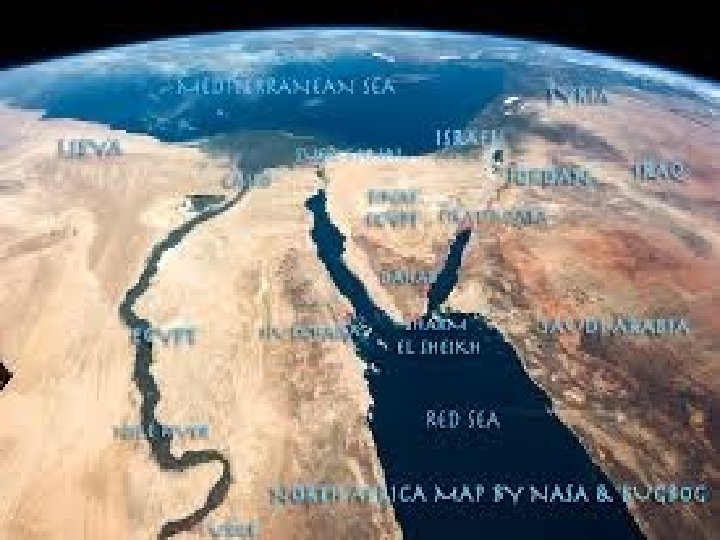
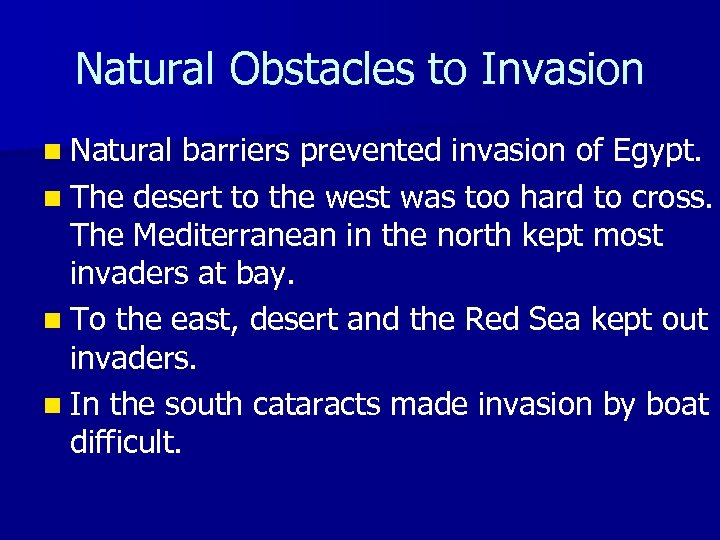 Natural Obstacles to Invasion n Natural barriers prevented invasion of Egypt. n The desert to the west was too hard to cross. The Mediterranean in the north kept most invaders at bay. n To the east, desert and the Red Sea kept out invaders. n In the south cataracts made invasion by boat difficult.
 The 2 Kingdoms n n n n Protected from invasion villages grew. Wealthy farmers became leaders. Strong leaders took over several villages By 3, 200 BC there were two kingdoms: Upper & Lower Egypt Pe, on the NW Delta, was the capital of Lower Egypt. Nekhen, on the west bank, was the capital of Upper Egypt. The king of UE wore a white crown. The king of LE wore a red crown.
 Menes Unifies Egypt n 3, 100 BC Menes rises to power in UE. n Menes might have been mythical. n Maybe he was Aha, Narmer or Scorpion. n His goal was to unify Egypt. n He conquers LE and marries a LE princess. n He wore both crowns and later combined them into a single crown.
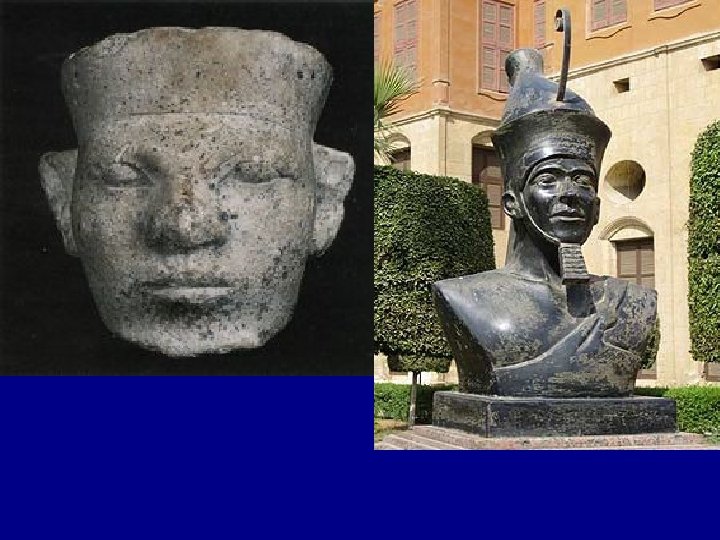
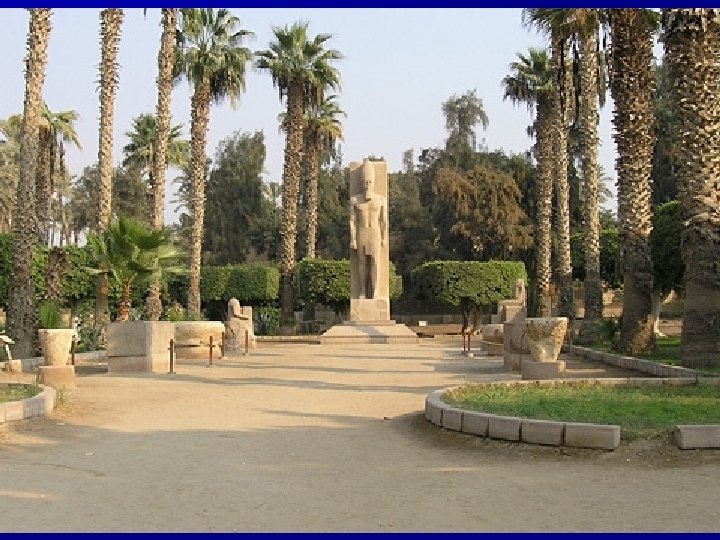
 Pharaoh Menes n Pharaoh, the title of the king of Egypt, means “great house. ” n Menes founded the first dynasty of Egypt. n A dynasty is a series of rulers from the same family. n Menes built a new capital at Memphis located on the southern tip of the Delta. n Memphis was the political & cultural center of Egypt for 100’s of years.
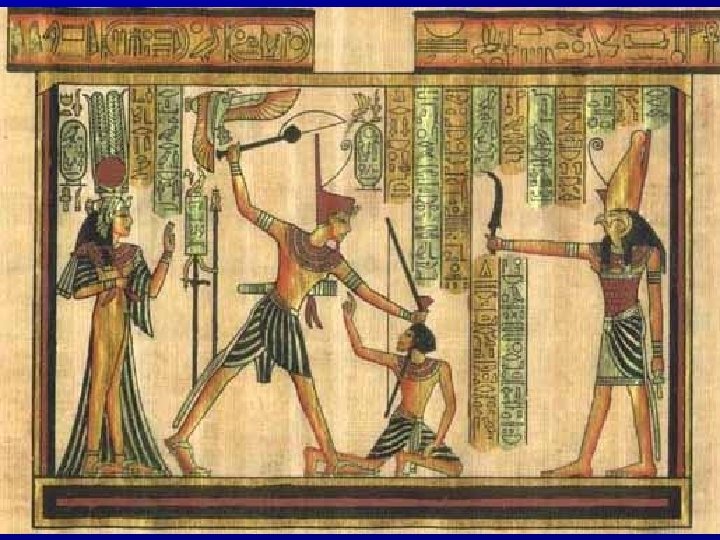
 First Dynasties n 1 st Dynasty lasted 200 years. n The 1 st Dynasty pharaohs extended Egyptian territory south along the Nile and into SW Asia. n Rivals eventually arose and deposed the 1 st Dynasty and established the 2 nd Dynasty. n Together the 1 st & 2 nd Dynasties ruled for 400 years.
 Chapter 4 The Old Kingdom 2, 700 BC – 2, 200 BC
 Preface n Egyptian society was based on a strict hierarchy of social classes. n A few royalty and nobles ruled Egypt. n The vast rest of the population supplied food, crafts & labor. n Few questioned this arrangement. n 2, 700 BC the 3 rd Dynasty came to power and began the Old Kingdom.
 The Pharaoh n Egyptian society was based on the belief Pharaoh was a God and a king. n Egypt belonged to the gods and pharaoh came to earth to manage Egypt for the gods. n Being a god and representing the gods, Pharaoh’s power was absolute over everything.
 Pharaoh’s Duties n Pharaoh had to ensure a good harvest. n He had to prevent disease, n Pharaoh had to guarantee profitable trade. n Pharaoh had to prevent war.
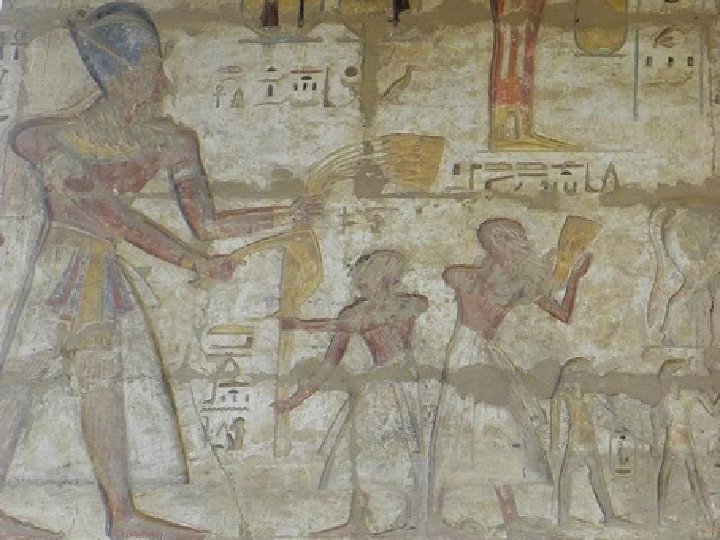
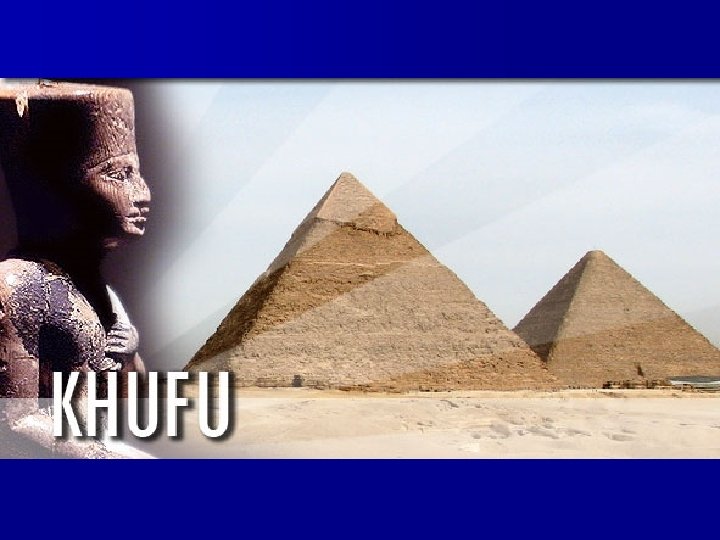
 Khufu n Ruling in the 2, 500’s, Khufu was the most famous Old Kingdom pharaoh. n Although he was cruel, he kept Egyptians well fed. n Khufu is best known for his monuments.
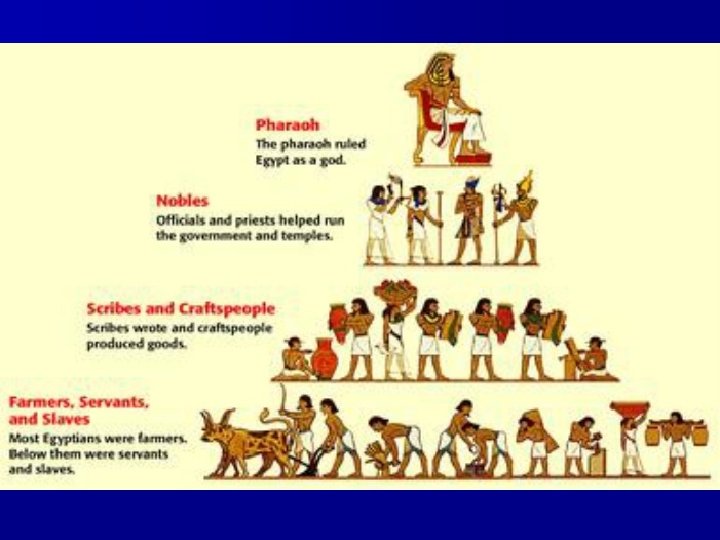
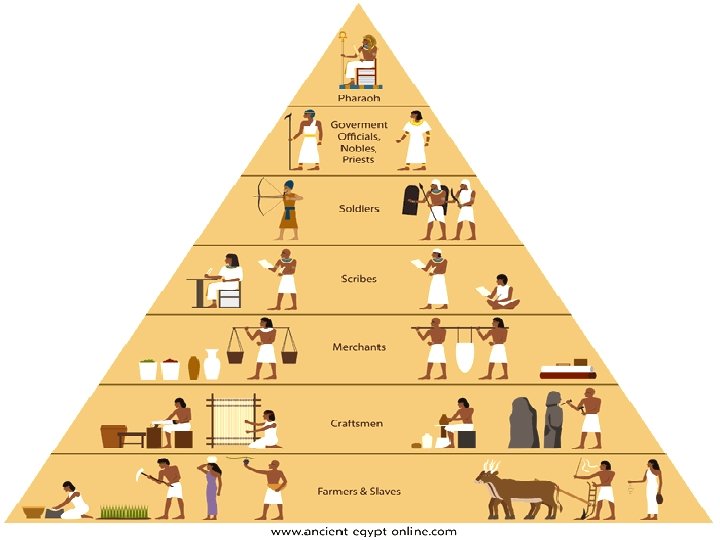
 Social Hierarchy n n n n By 2, 200 BC Egypt had 2 million people. Social classes developed. A hierarchy developed. Egyptians believed a well ordered society kept the kingdom strong. At the top was Pharaoh. Below pharaoh was the upper class: nobles, priests & government officials. Next was the middle class: scribes, craftsmen & lower government officials. The next 80% was the low class: farmers, servants & slaves. When not farming, farmers worked on pharaoh’s building projects.
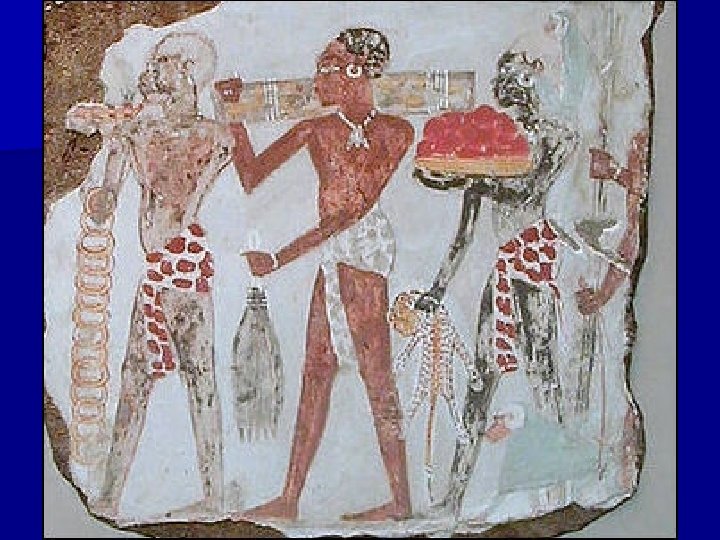
 Trade n As society developed trade increased. n Traders traveled south along the Nile to Nubia to acquire, get, gold, copper, ivory, slaves and stone. n Traders venturing to Syria brought back wood for building and fuel.
 Religion n Egyptians worshipped the gods daily. n Life was spent preparing for the afterlife. n Egypt was polytheistic, had many gods. n At first every village had its own god, but the OK demanded that Egyptians worship all the same gods. n The manner of worship varied from place to place.
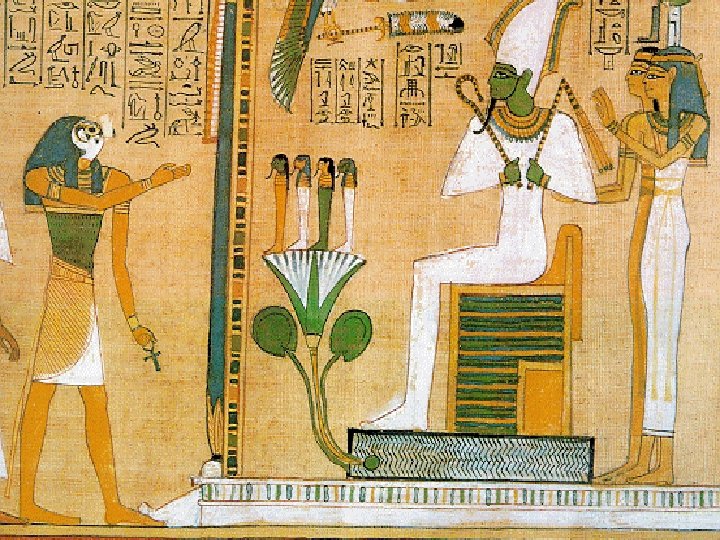
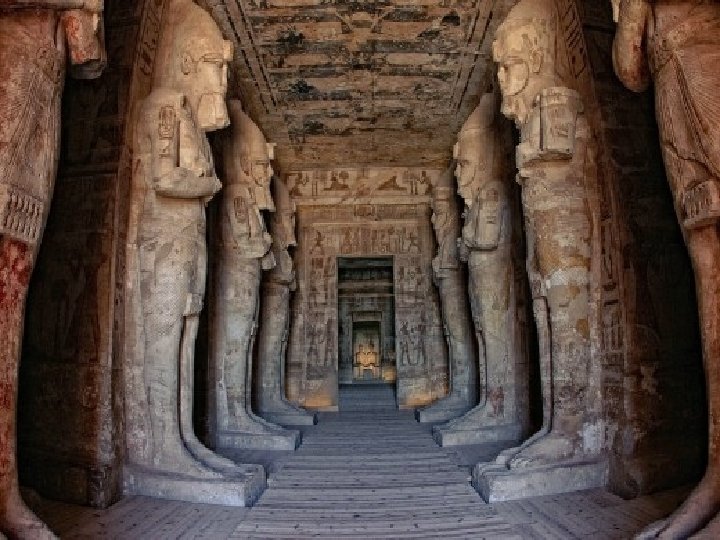
 Temples n Temples were built throughout Egypt for worshipping the gods. n Temples collected payments from worshippers and the government. n This wealth made the temples influential. n Over time certain cities became associated with the worship of particular gods. n Memphis was dedicated to Ptah.
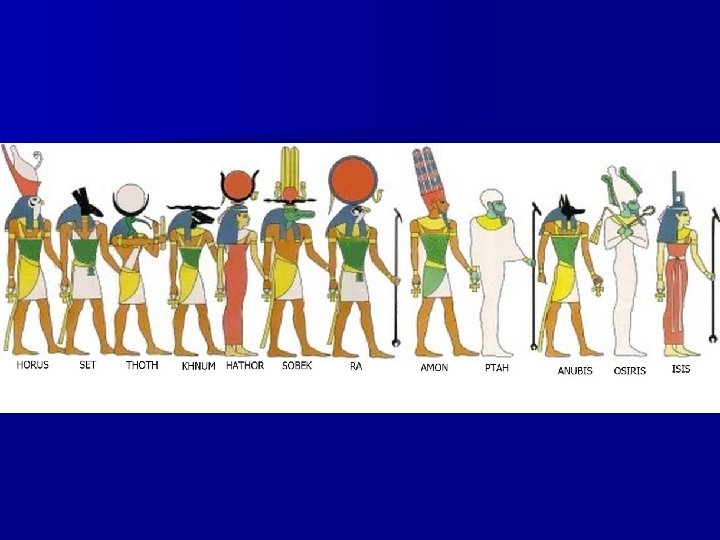
 The Gods n n n n n Egyptian had a god for almost everything. Many gods mixed human and animal forms. Here a few gods: Ptah = creator of the world; Anubis = god of the dead; Re (Amon-Re) = sun god; Isis = goddess of magic; Horus = sky god, god of pharaohs; Thoth = god of wisdom Geb = earth god. Egyptians had household gods they worshipped in household shrines.
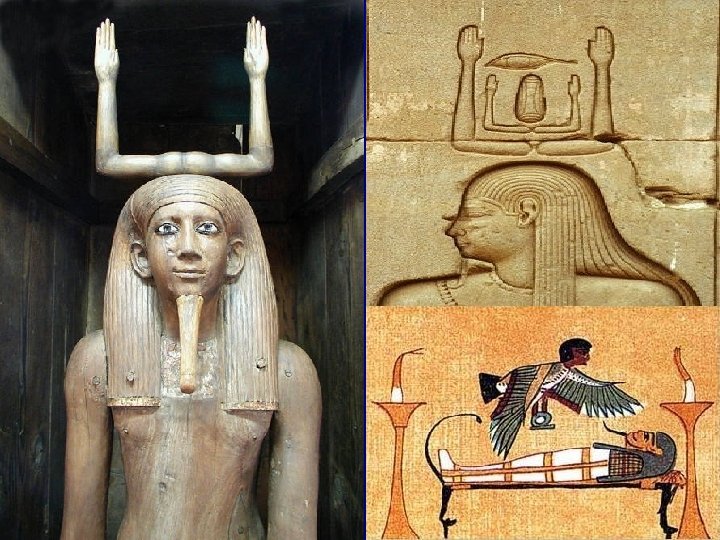
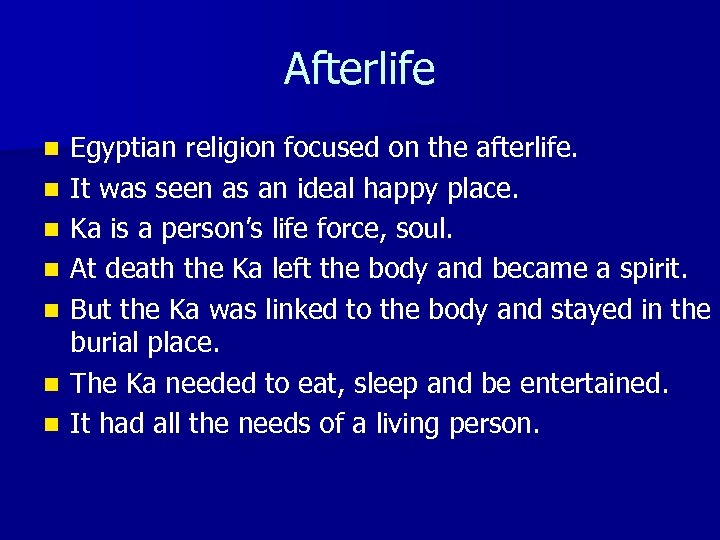 Afterlife n n n n Egyptian religion focused on the afterlife. It was seen as an ideal happy place. Ka is a person’s life force, soul. At death the Ka left the body and became a spirit. But the Ka was linked to the body and stayed in the burial place. The Ka needed to eat, sleep and be entertained. It had all the needs of a living person.
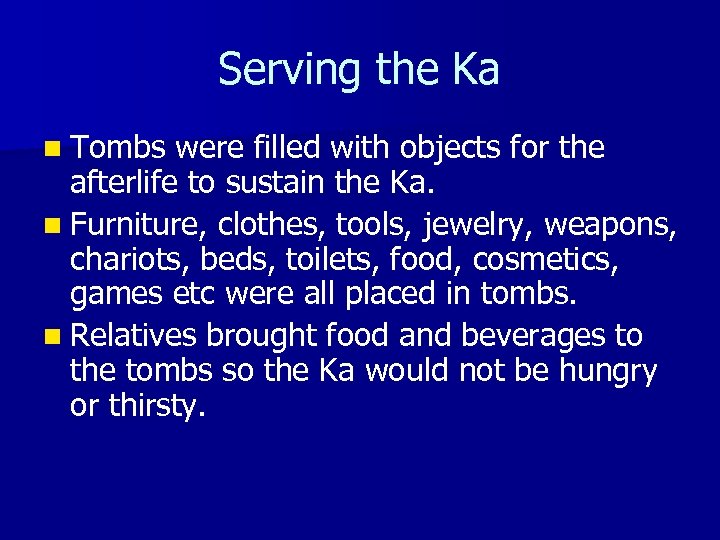 Serving the Ka n Tombs were filled with objects for the afterlife to sustain the Ka. n Furniture, clothes, tools, jewelry, weapons, chariots, beds, toilets, food, cosmetics, games etc were all placed in tombs. n Relatives brought food and beverages to the tombs so the Ka would not be hungry or thirsty.
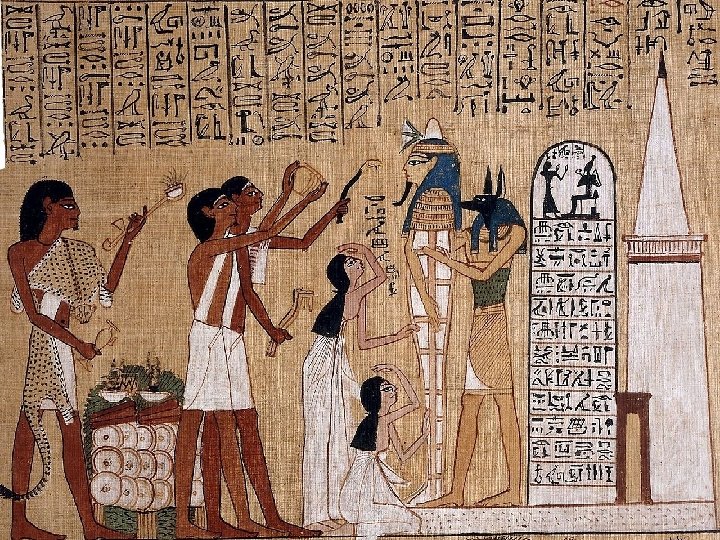
 Burial n Egyptians believed the body had to be prepared for and preserved for burial. n If the body decayed the Ka would not recognize it and be lost, hungry & thirsty. n Embalming, preserving, was developed to protect the Ka from suffering.
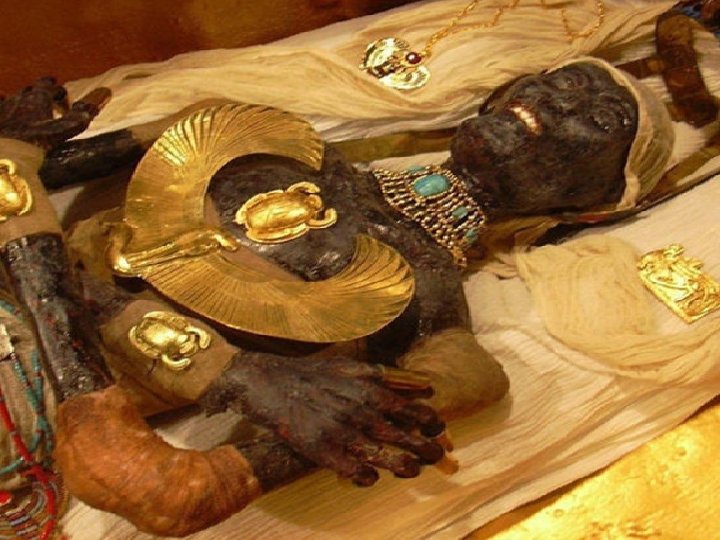
 Mummies n Mummies, preserved bodies wrapped in cloth, were the Egyptian answer to protecting the body from decay. n Embalming lasted a great time. A body not embalmed would decay in a few days in a tomb. n Embalming was complex and took several weeks.
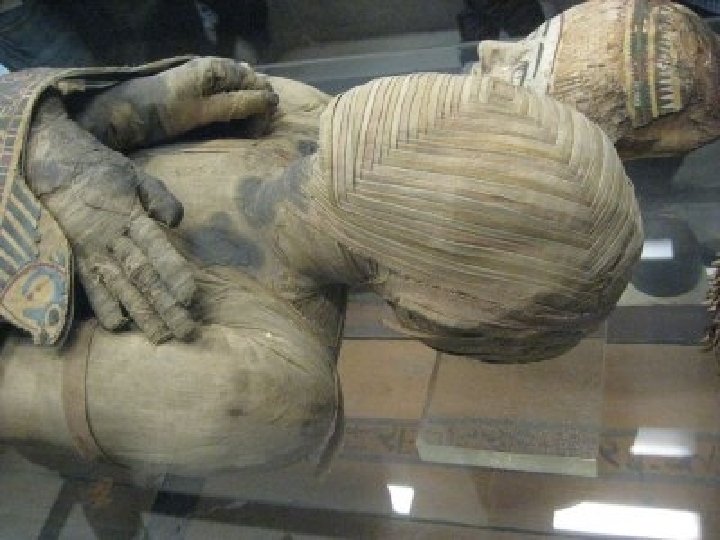
 From Body to Mummy n n n First the body is cut open and the organs except the heart removed. The organs were put in canopic jars. Next the body was dried out and then oils were applied. The dried body was wrapped in linens and bandages. Charms & amulets were placed inside the wrappings. Once wrapped, the mummy was placed in a coffin.
 An Elite Practice n Only royalty and other elite members of society could afford mummification. n However, peasants did not need mummification because burial in shallow desert graves ensured preservation of the corpse by the hot dry sand of the desert.
 Pyramids n Pyramids are huge stone tombs with a square base and four triangle sides that meet in a point at their top. n Egyptians believed burial sites, especially that of the pharaoh, were essential. n During the OK pyramid building began and some of the largest pyramids were built then.
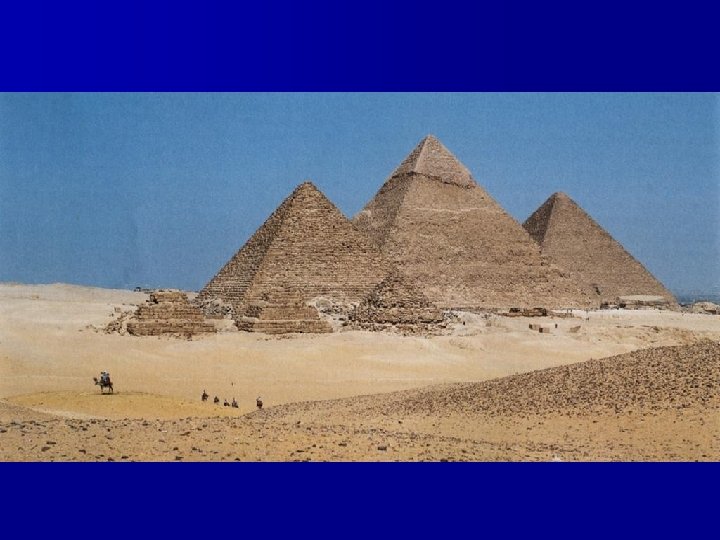
 The Pyramid of Khufu at Giza n The Great Pyramid’s base covers more than 13 acres. It stands 481 feet high. n It required 1000’s of workers and 2 million limestone blocks. n It is a tribute to Egyptian Engineering, the application of science to practical purposes.
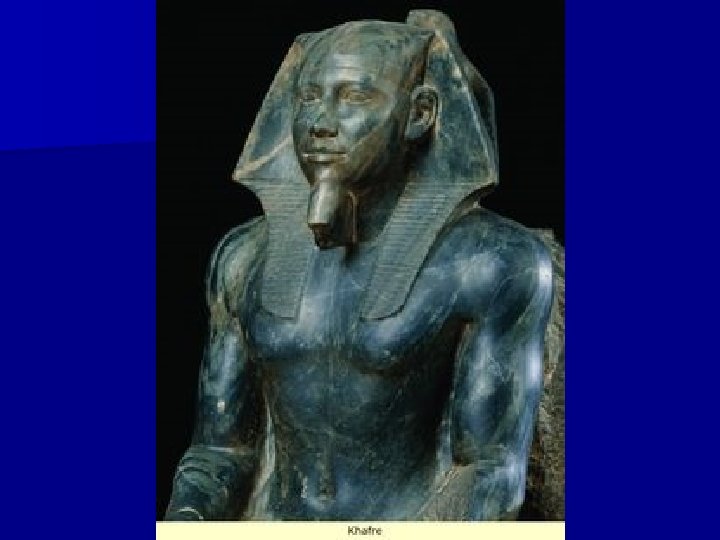
 The Pyramids at Giza n 4, 000 years ago, near Giza, 3 massive pyramids were built. n 10, 000’s of workers worked for decades to build these 3 pyramids. n Pharaoh Khafre’s is one of the 3. n The Sphinx was carved out of rock and left to guard Khafre’s tomb.
 Building the Pyramids n n n n The first pyramids did not have smooth sides. Smooth sided pyramids appear around 2, 700 BC. These pyramids had limestone facing. Burial chambers were placed deep inside. Access to these were sealed by massive stone blocks. Some pyramids required over 100, 000 workers. The government kept records of who worked and the workers, peasants, were paid for their work. Workers were paid in food and other goods, not money.
 Building Debate n n n It is unsure how the pyramids were built. There are competing theories. How were the massive stone blocks moved? Floated down the Nile on barges? Were huge ramps built adjacent to the pyramids? Then dismantled? Were sleds used to drag the stones?
 Pyramid Significance n n n Burial in a pyramid signified Pharaoh’s import. It pointed to the sky, symbolizing Pharaoh’s journey to the afterlife. Since Pharaoh was the link between Egypt and the gods, Egyptians wanted Pharaohs tomb to be spectacular, pleasing both the gods and pharaoh. If pharaoh’s Ka was happy, then everyone else would gain entrance to the afterlife as well. Magic spells and hymns, known as Pyramid Texts, were placed in the tombs to protect the Pharaoh’s remains and Ka. Everyone’s Ka depended on it!
 Chapter 4 The Middle Kingdom and The New Kingdom
 The Old Kingdom Falters n At the end of the OK the wealth and power of pharaoh declined. n Pharaoh could not collect enough taxes to meet the expense of building and maintaining pyramids. n Ambitious nobles used their government positions to take power from pharaoh.
 Period of Chaos n Nobles challenged pharaoh’s rule. n By 2, 200 BC the OK had fallen. n For 160 years regional nobles ruled Egypt. n Egypt had no central authority.
 The Middle Kingdom n 2050 BC Montuhotep II defeated his rivals and became pharaoh and began the MK. n The MK lasted until 1, 750 BC. n The MK was a period of stability and order.
 Hyksos n 1750 BC, Hyksos invaded Egypt from SW Asia. Where? n They used chariots, horses and superior weaponry to conquer Lower Egypt. n The Hyksos ruled as pharaohs in LE for 200 years. n In the mid-1500’s BC Ahmose of Thebes declared himself king and drove out the Hyksos. n He became pharaoh of all Egypt.
 The New Kingdom n Ahmose marked the beginning of the new Kingdom. He began the 18 th Dynasty. n The NK was the time when Egypt reaches its greatest power and glory. n It was a period of conquest and trade that lasted from 1550 BC to 1050 BC.
 Egypt becomes an Empire n n n n n The Egyptians took control of all possible invasion routes into Egypt. They conquered the Hyksos homeland then conquered Syria. They conquered the eastern shore of the Mediterranean and the Kingdom of the Kush in the south. By the 1400’s BC, Egypt’s empire stretched from the Euphrates to southern Nubia. Egypt was the region’s leading military power. Military conquest (plunder) made Egypt rich. The conquered sent annual tribute to Egypt. The Kush sent gold, leopards & precious stones. Babylonians, Assyrians & Hittites sent annual tribute.
 Trade n Trade expanded as the empire expanded. n Profitable trade routes developed. n Conquered areas had valuable resources. n The Sinai had copper and turquoise. n Queen Hatshepsut sent traders south to Punt on the Red Sea and north to trade in Asia Minor and Greece.
 Queen Hatshepsut n n n n n Ruled from 1503 BC to 1482 BC. Married to Thutmose II (half brother) he died leaving her regent to Thutmose III (another woman’s child). Hatshepsut took power. She dressed as a man and referred to herself as king. She wore a fake beard. She was a good ruler. She built many impressive monuments and temples. At Thebes she built a magnificent temple for herself. When she died Thutmose III vandalized her monuments. Many NK pharaohs used money from trade to support and architecture.
 An Era of Invasions n n n n In the 1200 BC’s Ramses II fought the invading Hittites from Asia Minor. The Tehenu invaded the Delta from the west. Ramses defeated them and built a series of forts to defend Egypt’s western frontier. 100 years later these forts aided in the second defeat of the Tehenu. After Ramses died, the Sea Peoples invaded SW Asia, defeated the Hittites and crushed SW Asia. It took the Egyptians 50 years to repel the Sea Peoples. These battles cost Egypt it’s Asian empire. Shortly after battling the Hittites and Sea Peoples the NK ended. Egypt fell into a final period of chaos and never recovered.
 Ramses The Great n n n n As a child Ramses was trained to rule. He was trained as a warrior as well. At 10 he was an army captain. He greatly increased the size of Egypt. He is considered the last great pharaoh. He was a great warrior and builder. He is known for building the Temples at Karnak, Luxor & Abu Simbel. He built the city Pi-Ramesse (House of Ramses) on the Delta.
 Work and Daily Life n n n Daily life was unchanged through most of Egypt’s history. As the population grew society became more complex. Greater division of labor and specialization was required. Professions were passed from father to sons. At a young age boys apprenticed in their future occupations.
 Scribes n Scribes were highly honored. Middle class. n Ranked below and worked for priests and government officials. n They kept records and accounts. n They copied and wrote religious texts. n They wrote poems and stories. n They were tax exempt. n Many became wealthy.
 Artisans n Their work required advanced skill. n They included sculptors, builders, carpenters, jewelers, metalworkers and leatherworkers. n Most worked for the government and temples. n They were paid well. n Many made sculptures, furniture, pottery, shoes, jewelry and other items.
 Architects and Artists n Both were admired. n Architects designed temples and royal tombs. n Artists decorated and embellished temples and tombs. n Both worked for the government and temples. n Both could rise to high government positions.
 Merchants and Traders n Only a small percentage became merchants or traders. n Both often had to travel great distances to buy and sell goods. n On such journeys they were accompanied by soldiers, scribes and laborers. Why?
 Soldiers n After the MK wars, a professional army was created. n The military represented a venue for social advancement. n Soldiers were paid in land allowed to keep any booty they acquired. n Soldiers might become officers and rise up the ranks to highly paid powerful ranks.
 Farmers and Peasants n n n 80% of society were farmers and peasants. Farmers relied on the Nile's flooding to grow crops to feed their families and supply Egypt with food. They used wooden hoes and plows pulled by cows. They grew wheat and barley. Farmers worked together to gather the harvest. Farmers gave crops to pharaoh as a tax for using the land. Pharaoh controlled all the land.
 Duty to Pharaoh n All peasants and farmers were required to work on pharaoh's projects if he so demanded. n These included building pyramids, temples and tombs, mining gold or fighting in the army. n They were paid in grain.
 Slaves n They were at the bottom of the social hierarchy. n Most were criminals and prisoners of war. n Slaves worked on farms, on building projects, in workshops and in households. n Some could earn their freedom.
 Family Life n Most Egyptians lived in their own home. n Men married young and began families early. n Unmarried females relatives lived with their relatives.
 Women n Most were mothers and ran their household. n Some worked outside the home. n Some were priestesses, royal officials, administrators, artisans and even pharaoh. n They had rights. They could own property, make contracts and divorce.
 Children n Childhood was not structured. n Children played. n They had dolls, tops, animal figures and games. n Board games were quite popular. n They hunted and played games outdoors.
 Education n Most children received some schooling. n They were taught morals, writing, math, music and athletics. n At 14 boys entered their father’s profession.
 Chapter 4 Egyptian Achievements
 Hieroglyphics n n Egyptians invented one of the earliest writing systems. Hieroglyphics used 600 pictographs (symbols) to represent one of more sounds. Hieroglyphics could be written horizontally or vertically. They could be written left to right or right to left. It is a flexible but difficult to read language.
 Papyrus n n n n The earliest examples of Egyptian writing date from 3, 300 BC. This writing was carved in stone. Later, Egyptians developed papyrus for writing. Papyrus is a long lasting material made from reeds. The reeds were pounded into sheets. These sheets could be rolled into scrolls. Papyrus is tough and durable. Scribes wrote on papyrus with a brush and ink.
 Rosetta Stone n In 1799, a French soldier discovered the Rosetta stone. n This huge stone slab is inscribed with a passage written in three languages: Greek, a later form of Egyptian and Egyptian Hieroglyphics. n Since scholars knew Greek they were able to decipher and translate the hieroglyphics!
 Texts n n Papyrus did not decay in the dry hot Egyptian climate. Egyptian governmental and temple records as well as science and medical writings and historical accounts survive to this day. The Book of the Dead is the most significant literary work that has survived. From this work, we understand Egyptian views of the afterlife.
 Sphinxes n These are imaginary creatures with the bodies of lions and the head of other animals or humans. n Statues of sphinxes lined the path leading to the huge thick gates that led into temples. n A gigantic sphinx guards the Greta Pyramid of Giza.
 Obelisk n These are four sided tall pillars that come to a point at the top. n These could be found throughout Egypt and prominently erected at the national borders of Egypt. n Temples had one on each side of the gate leading into the temple.
 Temples n n n n Egypt is known for its spectacular architecture. Egyptians felt temples were the homes of gods. Temples were sites of worship, offerings, prayers and requests for favors. Interiors were lavishly decorated with paintings and hieroglyphics. . Huge columns supported heavy roofs. Statues of gods and pharaohs stood along the walls. The sanctuary, most sacred place, was at the farend of the temple.
 Temple of Karnak n n n One of the greatest temples and the largest. Built by Ramses II. Karnak was built to honor Amon-Re, the sun god. Karnak was a religious center for 100’s of years. He built The Temple of Luxor and Abu Simbel also. Abu Simbel has 66 foot tall statues of Ramses.
 Egyptian Artists believed the dead would see and enjoy their art in the afterlife. n Great care and skill is exhibited in their art.
 Paintings n Paintings covered temples and tombs. The art was lively and colorful. n Artists painted on walls, canvas, papyrus, pottery, plaster and wood. n The subjects of their art were historic events, religious rituals, hunting scenes, and ever day life.
 Egyptian Style n The style was distinctive and uniform. n People are depicted in a certain way, heads and legs always in profile, seen from the side but torsos and shoulders are shown straight on. n People are not depicted all the same size. n More important figures, pharaoh, are painted much larger. n Animals were drawn realistically.
 Carvings n Egyptians were skilled stoneworkers. n Egypt, especially tombs and temples, were populated by exquisite statues and carvings.
 Jewelry n Jewelers made beautiful objects out of gold and precious gems. n Men and women wore jewelry. n Pieces included necklaces, collars, bracelets, amulets, pendants and rings. n Gold was used in many burial tombs.
 Tutankhamen In 1922 Carter discovered Tut’s tomb. Although the tomb had been raided by robbers in the past, it was full of treasures. n There were boxes of jewelry, robes, a burial mask, ivory statues, a throne, canopic jars, idols of gods. n This find is more amazing when one realizes Tut was not a significant pharaoh. Why? n
 Chapter 5 Kush
 Chapter 5 Egypt and Kush
 Preface n Along the Nile south of Egypt lies Nubia. n Egyptians called it Kush. n Kush was the first large kingdom in the interior of Africa. n Through trade, conquest and political interaction Kush’s development was linked to Egypt. n Of course, the geography of Nubia influenced Kush development as well.
 Nubia n Nubia lies in NE Africa south of Egypt. n In ancient times Nubia was more fertile than today. Today Nubia is desert. Why? n Nile flooding and silt deposits were key to Kush survival as in Egypt. n Nubia is rich in resources: gold, copper and stone. n These resources gave Nubia wealth and value to outsiders.
 Early Civilization n Nubia relied on the Nile for survival. n Early settlers relied on agriculture. n Summer and Winter crops were planted. n Wheat, barley and grains were planted. n Cattle and other livestock grazed on the Nile banks. n By 3, 500 BC villages populated the entire length of the Nile.
 A Civilization develops n More successful farmers became wealthy and powerful. n These farmers became village leaders. n By 2, 000 BC one leader took control of surrounding villages and proclaimed himself king. n This kingdom was Kush.
 Kerma n Kerma was the capital of Kush. n It is located just south of the third cataract. n The cataracts provided natural barriers to invasion. n The third cataract protected Kush from Egyptian invasion.
 Kush Becomes More Complex n Kushite society became more complex with time. n A class of priests and artisans developed. n Of course most people were farmers and herders. n At first Kush was influenced by Ethiopia and other more southerly cultures. n Later, Egypt greatly influenced Kush.
 Egypt Trades With Kush neighbored Egypt. n Kush supplied slaves and raw materials to Egypt. (When did slavery begin in Africa? ) n Gold, copper and stone left Kush for Egypt. n Egyptians prized ebony (wood) and ivory (tusk) from Kush.
 Egypt Conquers Kush n n n Kush grew wealthy trading with Egypt and built a large army. Egypt was weary of Kush’s large army. In 1500 BC, Thutmose I launched a preemptive strike and invaded Kush. He conquered all of Nubia north of the 5 th cataract. Kush became part of Egypt. The Kush palace at Kerma was destroyed. Later pharaohs (Ramses) built temples in Kush.
 Egypt Dominates Kush n Kush was an Egyptian territory for 450 years. n Egyptians settled in Kush. n Egyptian became the language of Kush. n Kush took Egyptian names and wore Egyptian clothing. n Kush practiced Egyptian religion. n Egyptian domination ended when the New Kingdom fell.
 New Kingdom Fails n By the mid – 1000’s the NK was failing. n This created a power vacuum. n Kush leaders regained control of Kush. n Kush was independent. n About the next 200 years of Kush history, historians know nothing. n Not until the 700 BC’s is Kush mentioned in any history.
 Kush Conquers Egypt n By 850 BC, Kush was again strong. n The king ruled from the new capital, Napata, which was located 100 miles SE of Kerma. n As Kush grew stronger, Egypt grew weaker. n In 751 BC, Kush King Kasta conquered Upper Egypt. n He established diplomatic relations with Lower Egypt.
 Piankhi n Kashta’s son, Piankhi, aka Plye, attacked Lower Egypt and conquered Memphis. n He believed the gods wanted him to rule Egypt. n At his death in 716 BC, he ruled all of Egypt. n Kush ran from Napata to the Nile Delta. n He was a great military leader. n He was entombed with 8 of his best horses.
 The Kushite Dynasty n n n Piankhi’s brother, Shabaka, succeeded him and declared himself pharaoh thus beginning the 25 th dynasty of Egypt. He and his successors tried to revive old faded Egyptian cultural practices. Shabaka was buried in a pyramid, the first in many centuries. New temples were built and old ones restored. Egypt experienced a renaissance during the Kushite Dynasty.
 Kushite Egypt Falls to Assyria n The KD lasted 40 years. n In 670 BC Assyria invaded and conquered Egypt. n In 10 years the Kush were driven out of Egypt. n The Assyrian IRON weapons were far superior to the Kushite bronze ones. n Assyria is in Mesopotamia.
 Chapter 5 The Kush Apart From Egypt: Later Kush
 Preface n After being driven from Egypt the Kush built a wealthy trading kingdom in the African interior. n They also developed a strong iron industry. n The Kush were known for their metal work and gold jewelry.
 Meroe The new Kush capital was Meroe, Kush’s economic center. n Located on the east bank of the Nile near forests of ebony and other woods gold deposits and iron ore deposits, Meroe was ideal for rapidly developing a trading network and an iron industry. n The Kush reached their apex in the first century BC. 400 years later they were gone. n
 Trade n Meroe was the center of a large trade network (people in different regions who trade). n Kush traded with Egypt and Egypt traded throughout the Mediterranean, along the red sea, throughout Mesopotamia and Southern Africa. n Kush goods could travel to China and India.
 Terminology n. A merchant is a trader, businessman, seller. n Exports are goods sent outside a country and sold. Kush’s were: slaves, gold, pottery, iron tools, leopard skins, ostrich feathers, ivory and elephants. n Imports are goods brought into a country and bought. Kush’s were; jewelry and luxury items from Egypt, Asia and the Mediterranean.
 Culture n Kush culture was a blend of many cultures, but Egyptian culture had the greatest influence. n Kush buildings resembled Egyptian ones. n Kush worshipped Egyptian gods and wore Egyptian clothing. n Kush rulers used the title pharaoh. n Houses and daily life were not copies o Egypt.
 Unique Cultural Elements n Kush had their own language, Meroitic. n Kush worshipped Apedemek, a lion – headed god.
 Women Nubian society is matriarchal. Women were active members of society. They worked alongside men in the fields. Womena lso fought with men in times of war. Some women rose to positions of great authority, especially as priestesses. n Often royal princesses became priestesses. n Priestesses performed coronations. n A few women co-ruled with their kingly husbands or sons as co-equal queens. n n n
 Queen Shanakhdakheto n She was one of the women who ascended to absolute power and ruled Kush as its sole ruler. n Other Queens followed, but most rulers were Kings.
 Decline & Defeat n Overgrazing led to soil depletion and erosion. n Less food was produced and people starved. n The forest were depleted of wood so the iron industry failed. n Without iron the Kush had no weapons and their military failed. n Economic and military failure spread.
 Trade Faltered n Trade routes that circumvented Kush developed. n Merchants favored Aksum over Kush.
 Rise of Aksum n Aksum was located SE of Kush on the Red Sea in present day Ethiopia and Eritrea. n In the first two centuries AD Aksum rose in power and wealth as Kush was eclipsed. n By 300 AD, Kush was ripe for invasion. n In 350 AD, Aksum King Ezana conquered Meroe and Kush became a part of Aksum.
 Aksum Becomes Christian n In the late 300’s AD, Aksum became Christianity reshaped Nubian culture and the remnants of Kush society were forever lost.