


 Скачать презентацию Unit 2 Part 3 Notes Food Chains Food
cf5d3df46051d157c1cfff1f263d8214.ppt
- Количество слайдов: 26
 Unit 2, Part 3 Notes Food Chains, Food Webs, and the Transfer of Energy
 Autotrophs • Autotrophs are also called Producers because they produce all of the food that heterotrophs use • Without autotrophs, there would be no life on this planet • Ex. Plants and Algae
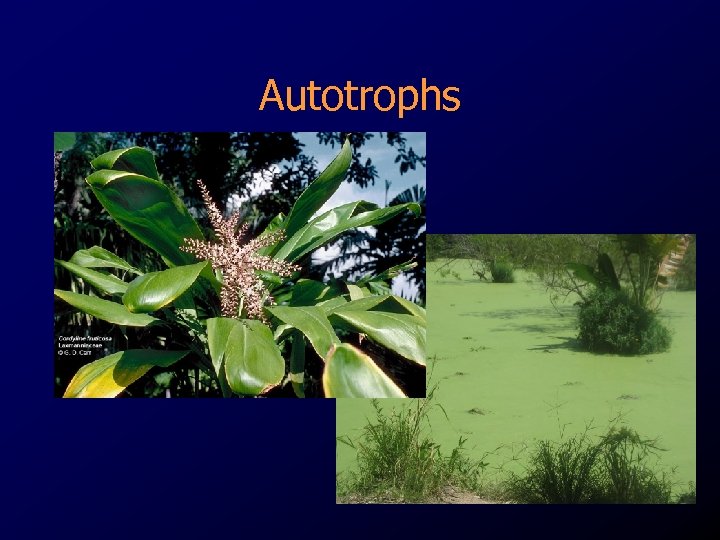 Autotrophs
 Heterotrophs • Organisms that do not make their own food • Another term for Heterotroph is consumer because they consume other organisms in order to live • Ex. Rabbits, Deer, Mushrooms
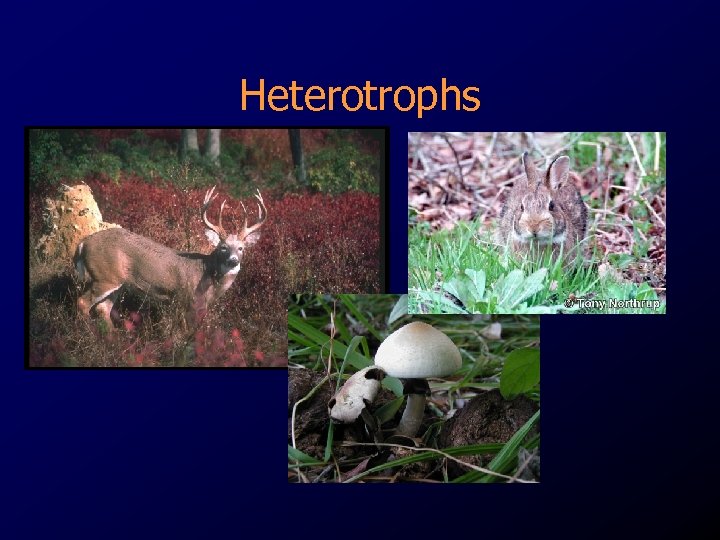 Heterotrophs
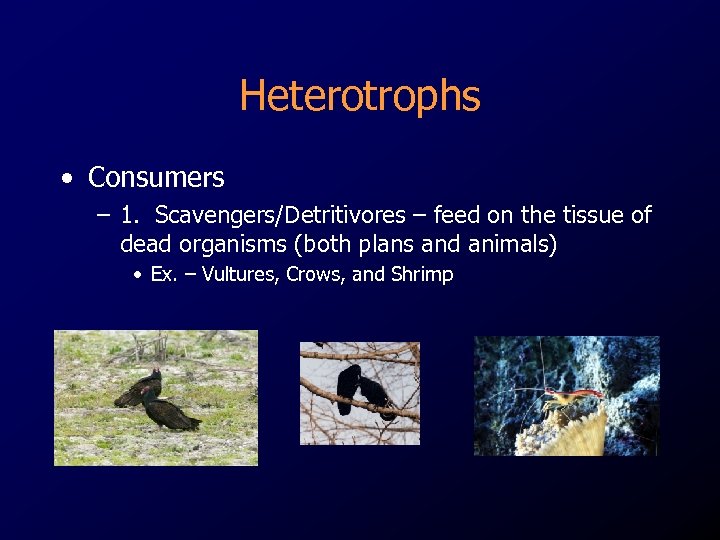 Heterotrophs • Consumers – 1. Scavengers/Detritivores – feed on the tissue of dead organisms (both plans and animals) • Ex. – Vultures, Crows, and Shrimp
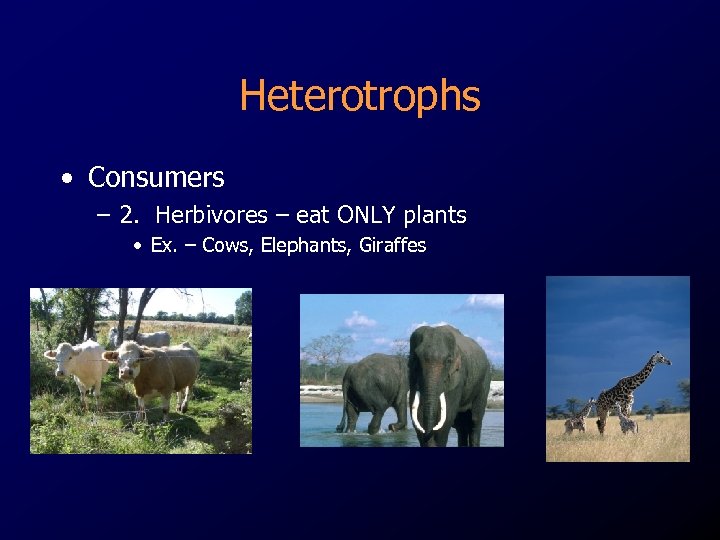 Heterotrophs • Consumers – 2. Herbivores – eat ONLY plants • Ex. – Cows, Elephants, Giraffes
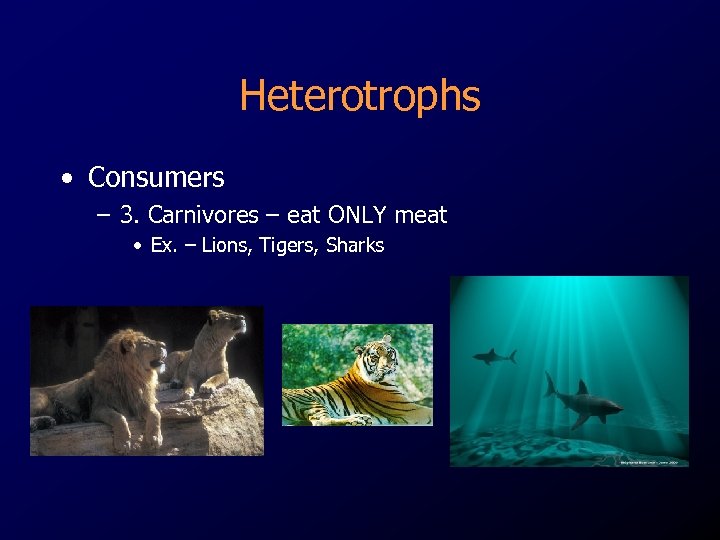 Heterotrophs • Consumers – 3. Carnivores – eat ONLY meat • Ex. – Lions, Tigers, Sharks
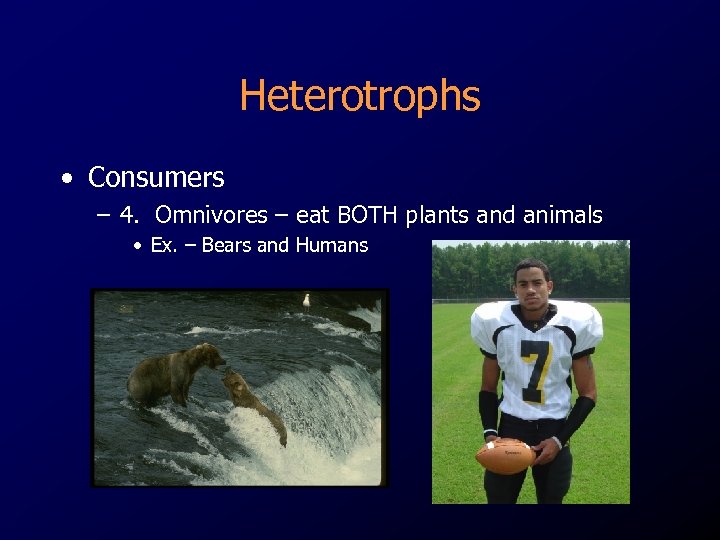 Heterotrophs • Consumers – 4. Omnivores – eat BOTH plants and animals • Ex. – Bears and Humans
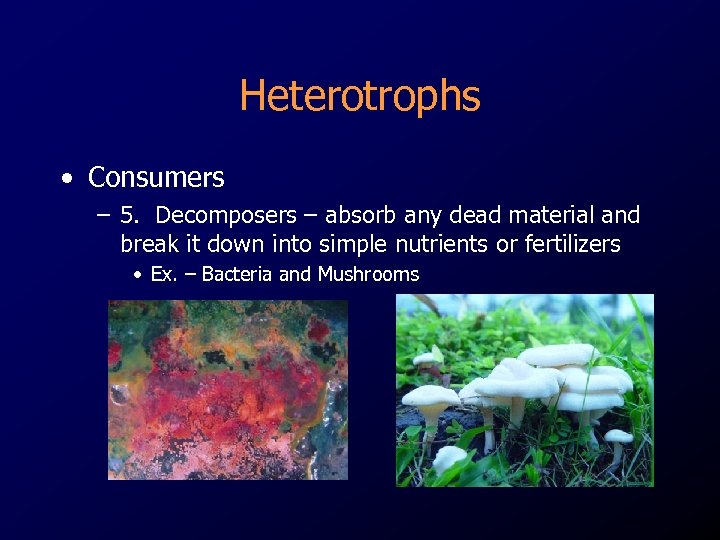 Heterotrophs • Consumers – 5. Decomposers – absorb any dead material and break it down into simple nutrients or fertilizers • Ex. – Bacteria and Mushrooms
 Transfer of Energy • When a zebra eats the grass, it does not obtain all of the energy the grass has (much of it is not eaten) • When a lion eats a zebra, it does not get all of the energy from the zebra (much of it is lost as heat)
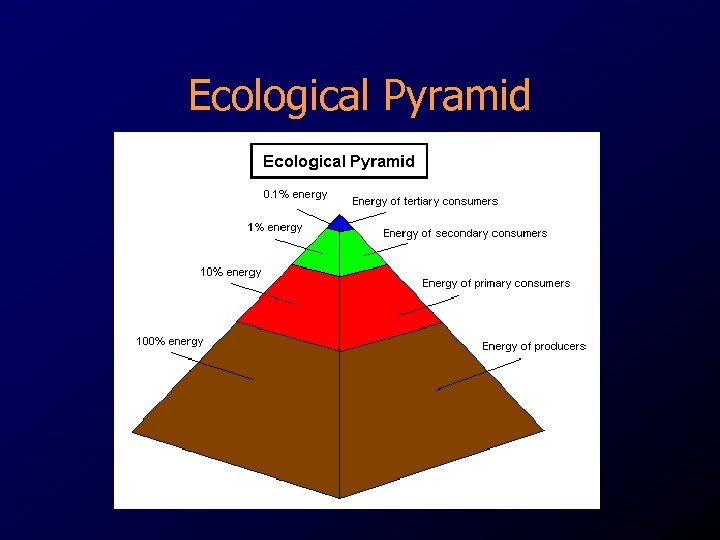
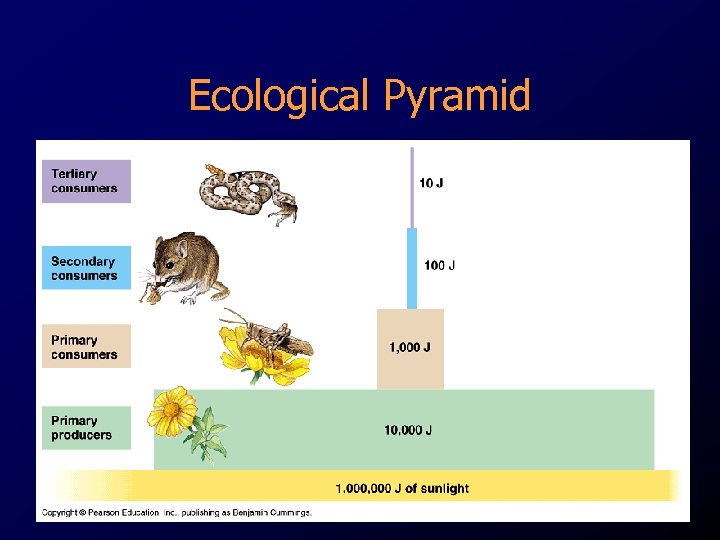
 Transfer of Energy • The two (2) previous examples of energy transfer show that no organism EVER receives all of the energy from the organism they just ate • Only 10% of the energy from one trophic level is transferred to the next – this is called the 10% law
 Trophic Levels • Energy moves from one organisms to another when it is eaten • Each step in this transfer of energy is know as a trophic level – The main trophic levels are producers, consumers, and decomposers
 Food Chains • The energy flow from one trophic level to the other is know as a food chain • A food chain is simple and direct • It involves one organism at each trophic level – – Primary Consumers – eat autotrophs (producers) Secondary Consumers – eat the primary consumers Tertiary Consumers – eat the secondary consumers Decomposers – bacteria and fungi that break down dead organisms and recycle the material back into the environment
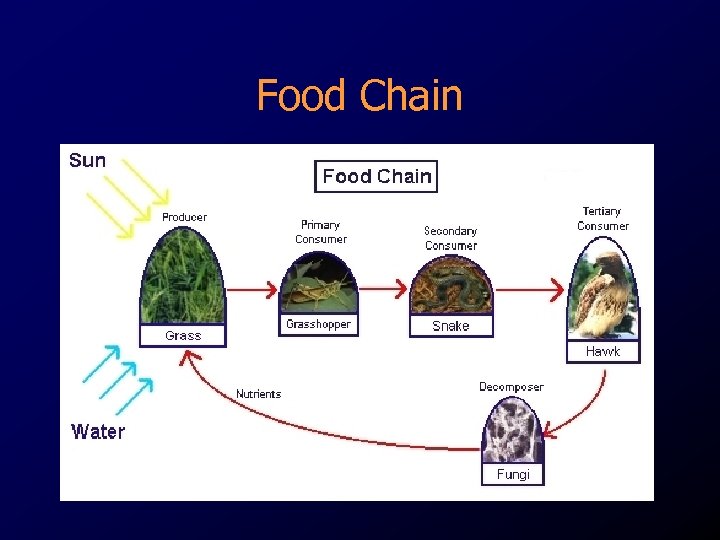 Food Chain
 Food Web • Most organisms eat more the JUST one organism • When more organism are involved it is know as a FOOD WEB • Food webs are more complex and involve lots of organisms
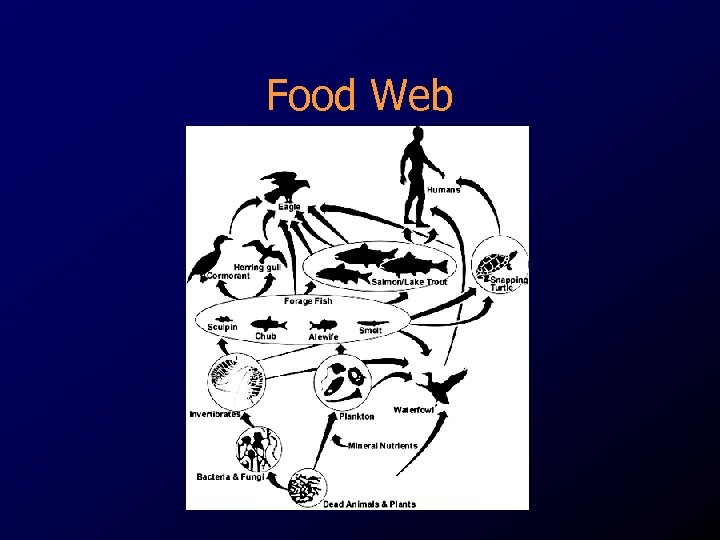 Food Web
 Food Web • Notice that the direction the arrow points in the direction of the energy transfer, NOT “what ate what”
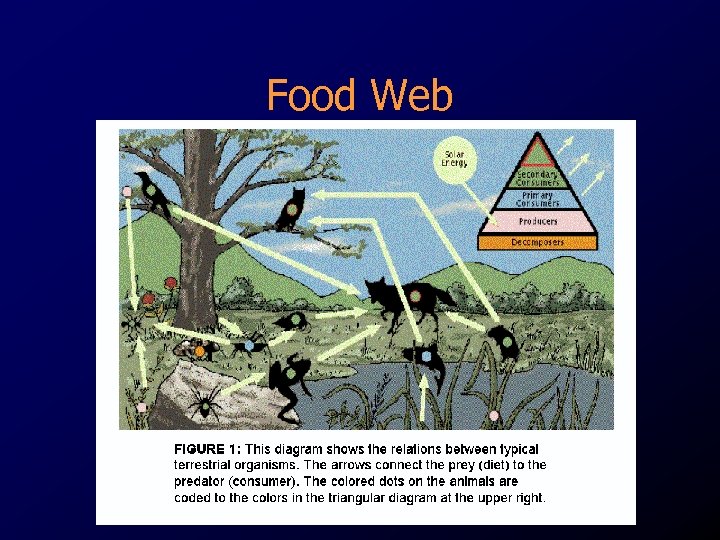 Food Web
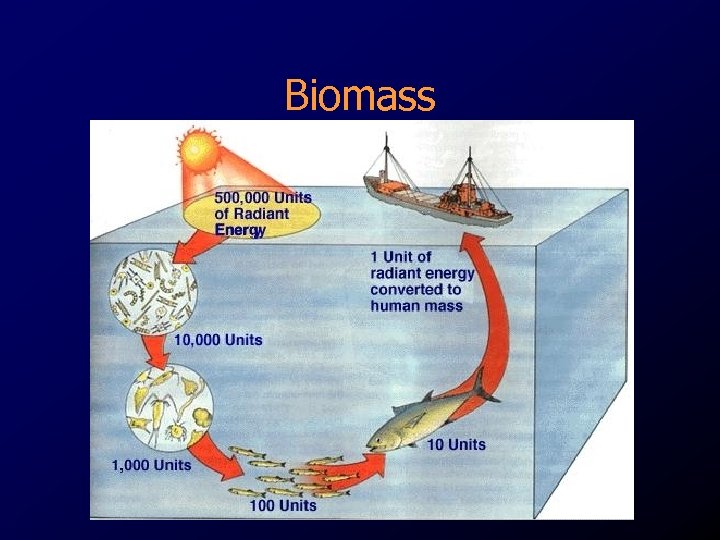
 Biomass • The total mass of the organic matter at each trophic level is called biomass • Biomass is just another term for potential energy – energy that is to be eaten and used. • The transfer of energy from one level to another is very inefficient (10% Law)
 Biomass
 Ecological Pyramid • An ecological pyramid shows the relationship between consumers and producers at different trophic levels in an ecosystem • Shows the relative amounts of energy or matter contained at each trophic level • The Pyramid shows which level has the most energy and the highest number of organisms
 Ecological Pyramid
 Ecological Pyramid
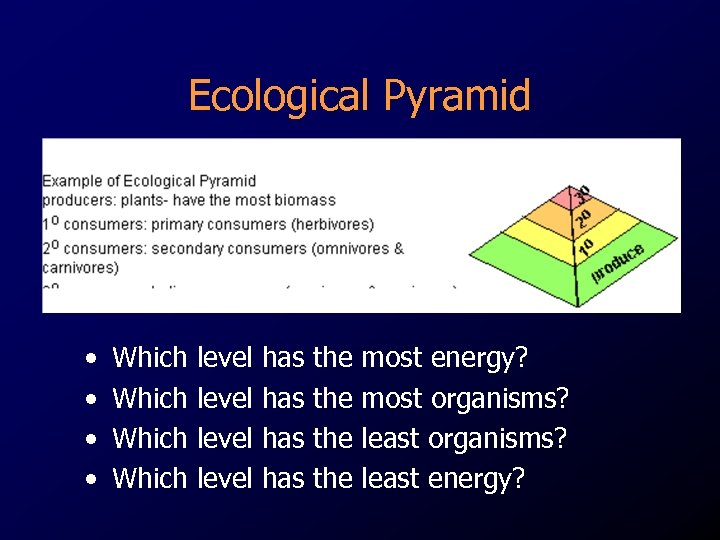 Ecological Pyramid • • Which level has has the the most energy? most organisms? least energy?
 Symbiosis • A close and permanent association between organisms of different species – Commensalism – a relationship in which one organism benefits and the other is not affected • Example: Barnacles on a whale – Mutualism – a relationship in which both organisms benefit from each other • Example: Birds eating pest off a rhino’s back – Parasitism – A relationship in which one organism benefits and the other is harmed • Example: Ticks on a dog