


 Скачать презентацию Unit 18 Marketing for Hospitality Task 1
06f7271fdc4d7766c5178301eaa5cbe7.ppt
- Количество слайдов: 71
 Unit 18: Marketing for Hospitality
 Task 1 (P 1)
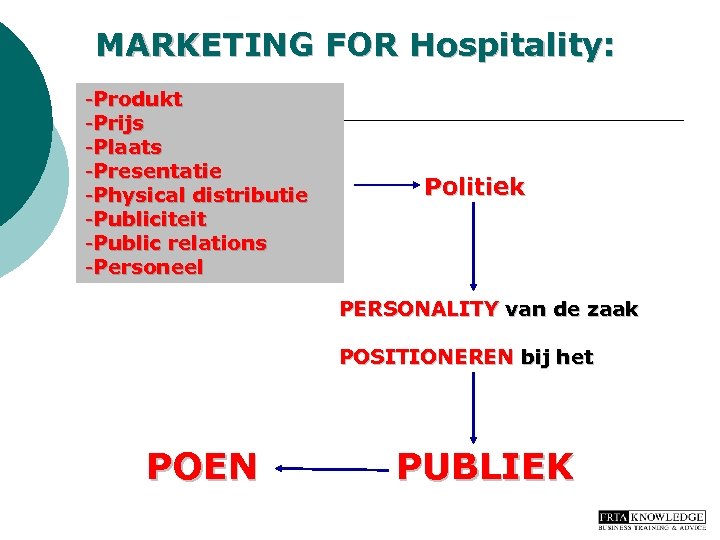 MARKETING FOR Hospitality: -Produkt -Prijs -Plaats -Presentatie -Physical distributie -Publiciteit -Public relations -Personeel Politiek PERSONALITY van de zaak POSITIONEREN bij het POEN PUBLIEK
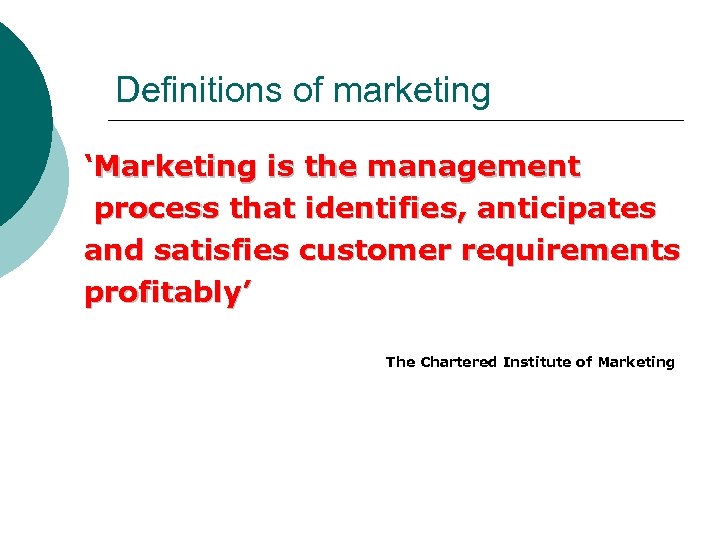 Definitions of marketing ‘Marketing is the management process that identifies, anticipates and satisfies customer requirements profitably’ The Chartered Institute of Marketing
 Definitions of marketing ‘The right product, in the right place, at the right time, and at the right price’ Adcock et al
 Definitions of marketing ‘Marketing is the human activity directed at satisfying human needs and wants through an exchange process’ Kotler 1980
 Definitions of marketing ‘Marketing is a social and managerial process by which individuals and groups obtain what they want and need through creating, offering and exchanging products of value with others’ Kotler 1991
 Implications of marketing Who are our existing / potential customers? ¡ What are their current / future needs? ¡ How can we satisfy these needs? ¡ Can we offer a product/ service that the customer would value? ¡ Can we communicate with our customers? ¡ Can we deliver a competitive product of service? ¡ ¡ Why should customers buy from us?
 Marketing definitie: stel eerst vast wat de consument wil en wat uzelf als ondernemer wil verdienen, maak daarna een product of dienst dat aansluit op die consumentenwensen, plak er een prijs op die de consument bereid is te betalen, breng het op die plaatsen waar de consument bereid is het op te halen of te gebruiken, en zorg ervoor dat de consument goed is geïnformeerd en wordt gestimuleerd om in te gaan op uw unieke propositie. F. J. Roelfsema
 Successful marketing requires: Profitable Offensive (rather than defensive) I ntegrated S trategic (is future orientated) E ffective (gets results) Hugh Davidson 1972
 The marketing concept ¡ choosing and targeting appropriate customers ¡ positioning your offering ¡ interacting with those customers ¡ controlling the marketing effort ¡ continuity of performance
 Objectives of the marketing plan ¡ ¡ ¡ Acts as a roadmap assist in management control and monitoring the implementation of strategy informs new participants in the plan of their role and function to obtain resources for implementation to stimulate thinking and make better use of resources
 Objectives of the marketing plan ¡ ¡ Assignment of responsibilities, tasks and timing Awareness of problems, opportunities and threats Essential marketing information may have been missing if implementation is not carefully controlled by managers, the plan is worthless!
 Part 2 Task 1:
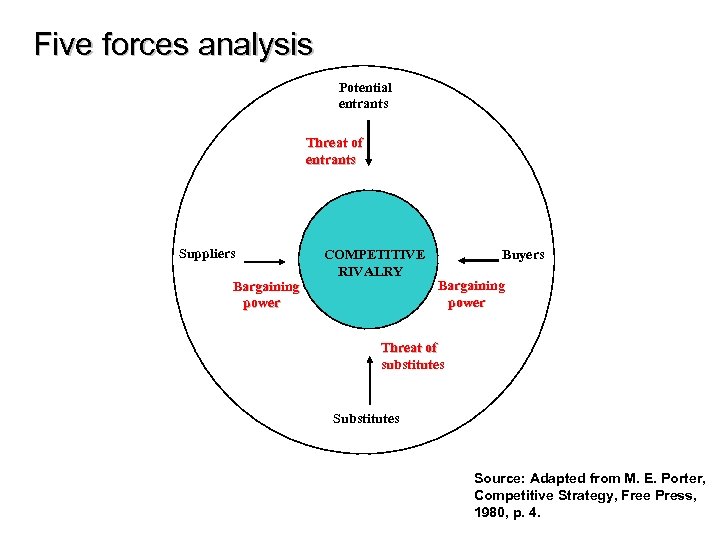 Five forces analysis Potential entrants Threat of entrants Suppliers Bargaining power COMPETITIVE RIVALRY Buyers Bargaining power Threat of substitutes Source: Adapted from M. E. Porter, Competitive Strategy, Free Press, 1980, p. 4.
 Five Forces Analysis: Key Questions and Implications • What are the key forces at work in the competitive environment? • Are there underlying forces driving competitive forces? • Will competitive forces change? • What are the strengths and weaknesses of competitors in relation to the competitive forces? • Can competitive strategy influence competitive forces (eg by building barriers to entry or reducing competitive rivalry)?
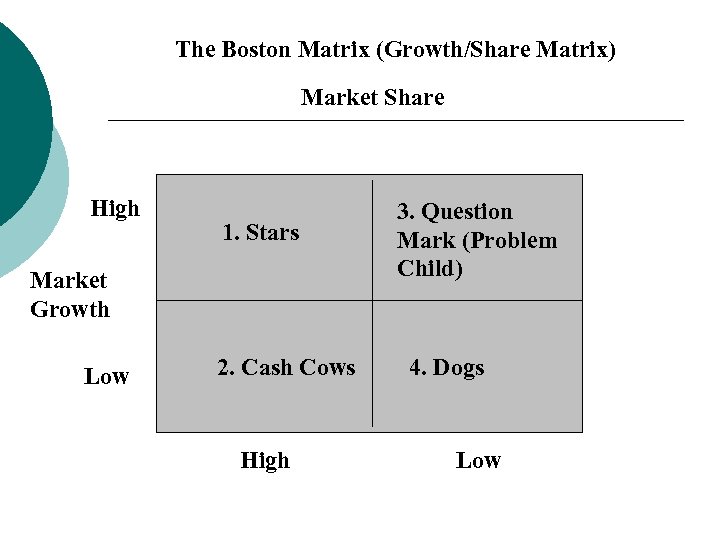 The Boston Matrix (Growth/Share Matrix) Market Share High 1. Stars Market Growth Low 2. Cash Cows High 3. Question Mark (Problem Child) 4. Dogs Low
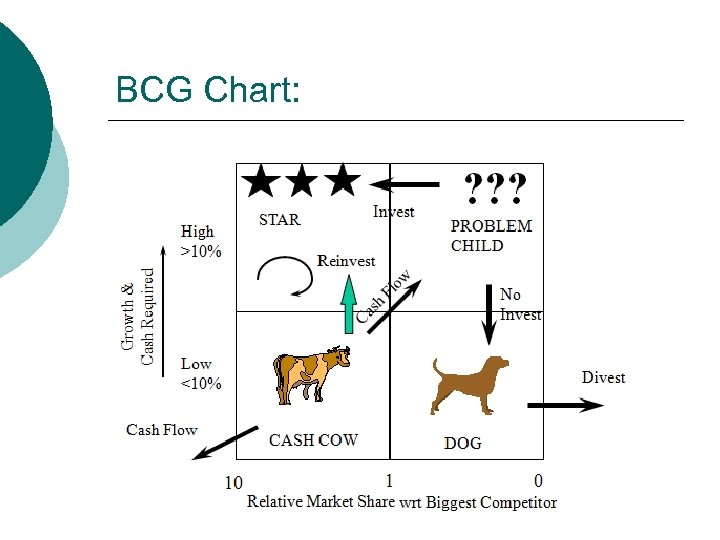 BCG Chart:
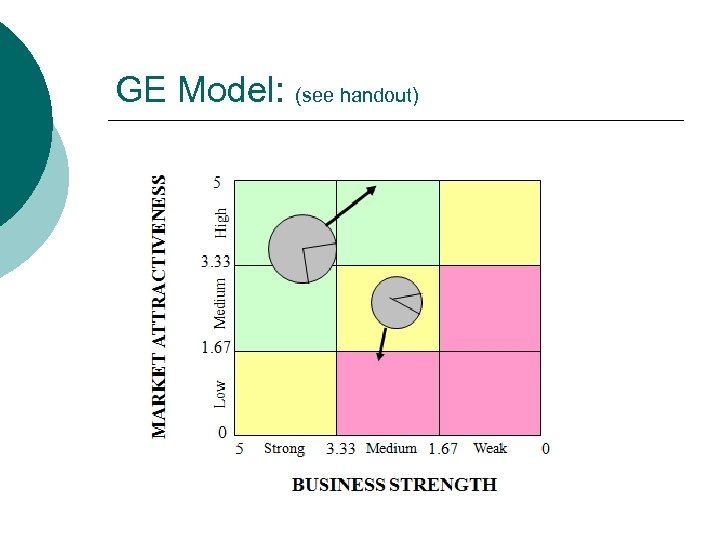 GE Model: (see handout)
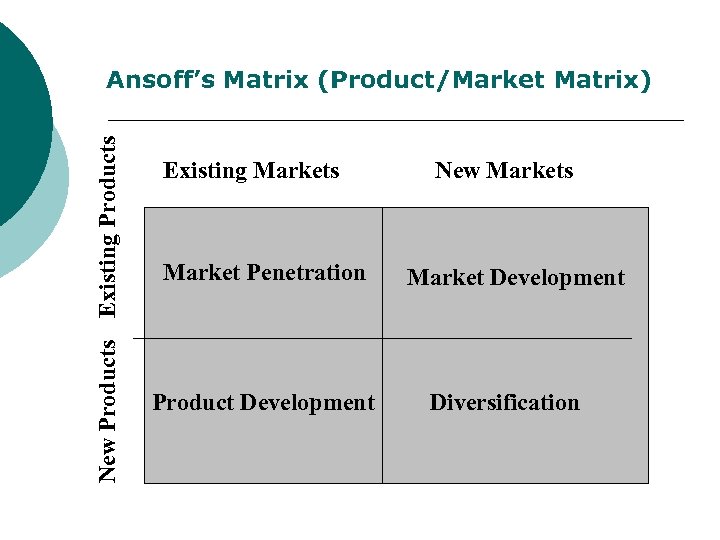 New Products Existing Products Ansoff’s Matrix (Product/Market Matrix) Existing Markets Market Penetration Product Development New Markets Market Development Diversification
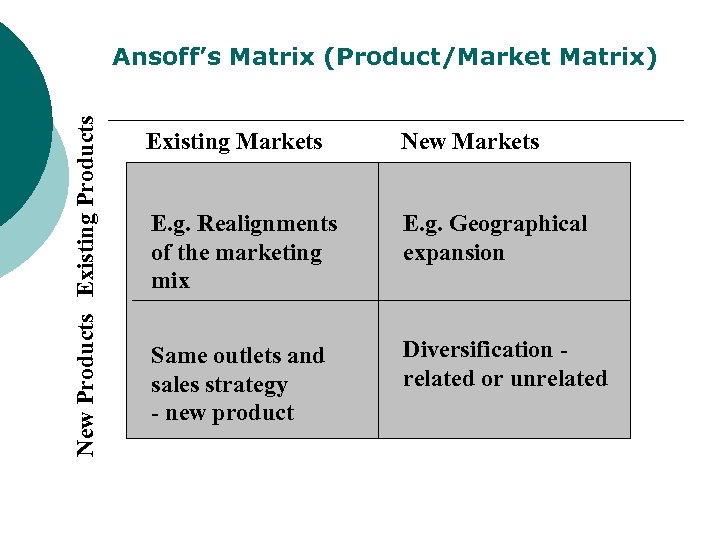 New Products Existing Products Ansoff’s Matrix (Product/Market Matrix) Existing Markets New Markets E. g. Realignments of the marketing mix E. g. Geographical expansion Same outlets and sales strategy - new product Diversification related or unrelated
 7 S Model Het Zeven-S-model beschrijft zeven belangrijke dimensies van een organisatie, een handige checklist bij het bepalen van managementactiviteiten en het achterhalen knel- en aandachtspunten in een organisatie. ¡ Shared Values: de waarden die in de organisatie gedeeld worden en waarmee wordt aangegeven wat de organisatie wil en waar deze voor staat ¡ Strategy: welke doelen de organisatie heeft en hoe deze bereikt moeten worden ¡ Structure: de inrichting van de organisatie, onder meer de taakverdeling, hiërarchie en coördinatie ¡ Staff: de personele aspecten zoals beloning, opleiding, motivatie en gedrag ¡ Systems: de formele en informele regels ¡ Skills: de belangrijkste, onderscheidende vaardigheden van de organisatie ¡ Style: gedrag, omgang en wijze van samenwerking
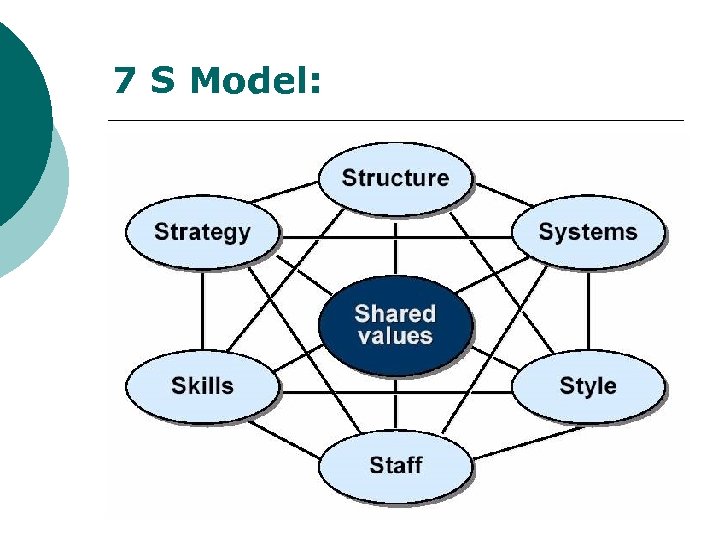 7 S Model:
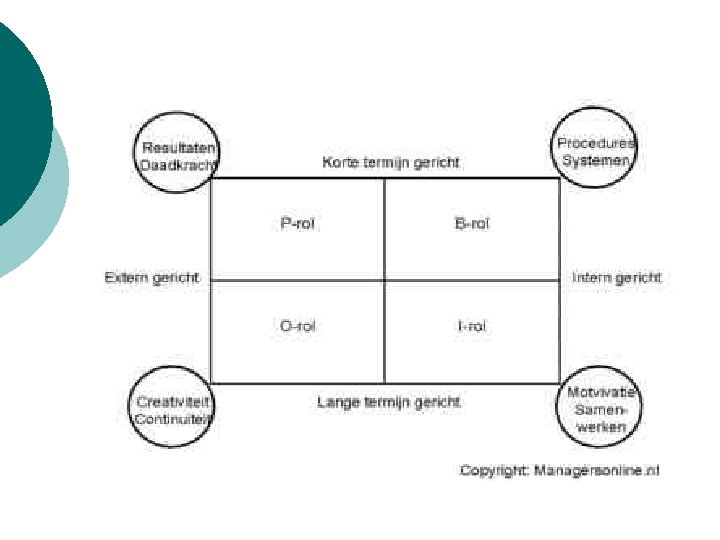
 PBOI-concept Het PBOI-concept onderscheidt een viertal rollen voor managers: de Producent (P), de Beheerder (B), de Ondernemer (O) en de Integrator (I). De vereiste rol voor een bepaalde managementpositie hangt sterk af van het soort organisatie, de omvang, de markt en de groei- of ontwikkelingsfase van de organisatie.
 Organisatiecultuurdimensies Organisatiecultuur is een modewoord waar dankbaar naar gerefereerd wordt door managers als ze geen handen willen vuil maken. Toch is cultuur te karakteriseren. Een zestal organisatie-eigenschappen kan erg behulpzaam zijn bij het in kaart brengen van de eigen organisatiecultuu en biedt aanknopingspunten om veranderingen aan te brengen. Het gat tussen analyse en actie blijkt voor dit onderwerp echter een hele grote te zijn. Cultuurverandering begint in principe bij de top en die verandert niet zo graag. ¡ Procesgericht versus resultaatgericht ¡ Mensgericht versus Werkgericht ¡ Organisatie gebonden versus professioneel ¡ Open versus gesloten ¡ Strakke controle versus losse controle ¡ Pragmatisch versus normatief
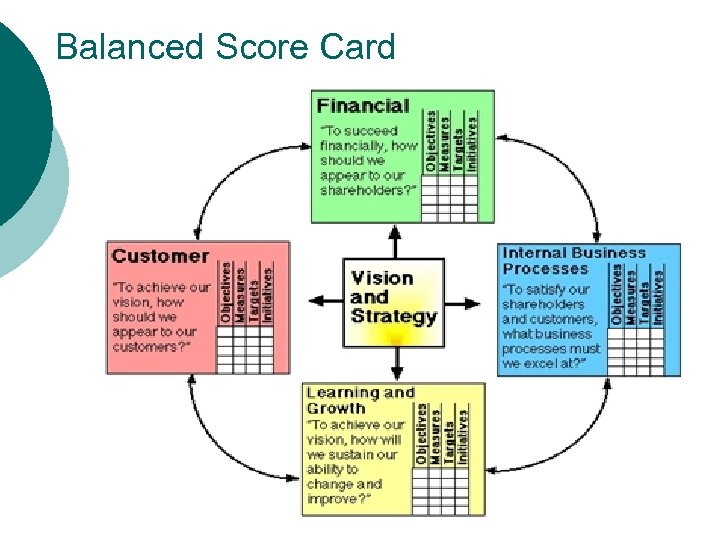 Balanced Score Card
 The Marketing Environment and Competitor Analysis ¡ SWOT analysis ¡ PEST(LE)- SLEPT analysis ¡ Five forces analysis
 SWOT analysis ¡ Strengths (internal) ¡ Weaknesses (internal) ¡ Opportunities (external) ¡ Threats (external)
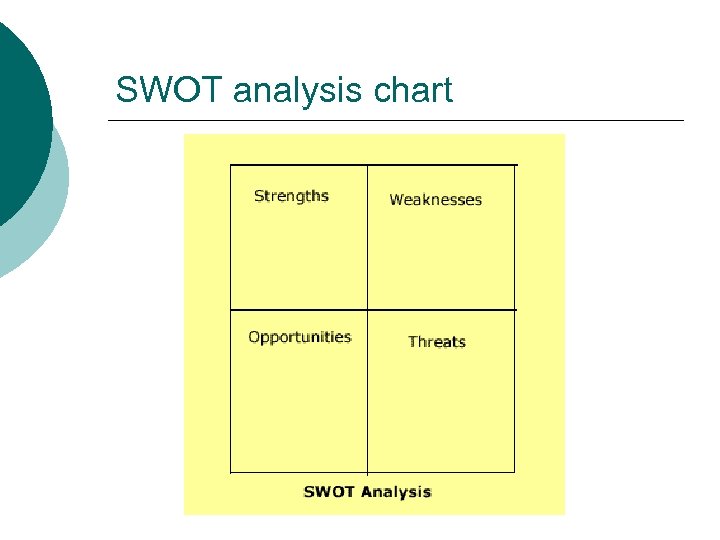 SWOT analysis chart
 PEST(LE) - SLEPT analysis ¡ Political factors ¡ Economic factors ¡ Socio-cultural factors ¡ Technological factors ¡ Law ¡ Environment
 Political/legal Monopolies legislation ¡ Environmental protection laws ¡ Taxation policy ¡ Employment laws ¡ Government policy ¡ Legislation ¡ Others? ¡
 Economic Factors ¡ ¡ ¡ Inflation Employment Disposable income Business cycles Energy availability and cost Others?
 Sociocultural factors Demographics ¡ Distribution of income ¡ Social mobility ¡ Lifestyle changes ¡ Consumerism ¡ Levels of education ¡ Others? ¡
 Technological ¡ ¡ ¡ New discoveries and innovations Speed of technology transfer Rates of obsolescence Internet Information technology Others?
 Task 2:
 Buyer Behaviour ¡ ¡ ¡ ¡ Dominant Family Purchase - Cozenza 1985 Demographic Factors The Consumer Buying Process Maslow’s hierarchy of needs UK/NL socioeconomic classification scheme Types of buyer behaviour The Buying Decision Process Organisational Buyer Behaviour
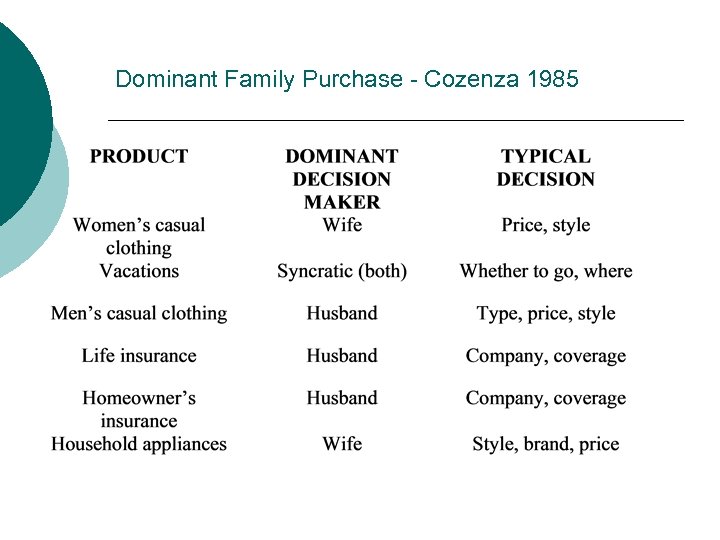 Dominant Family Purchase - Cozenza 1985
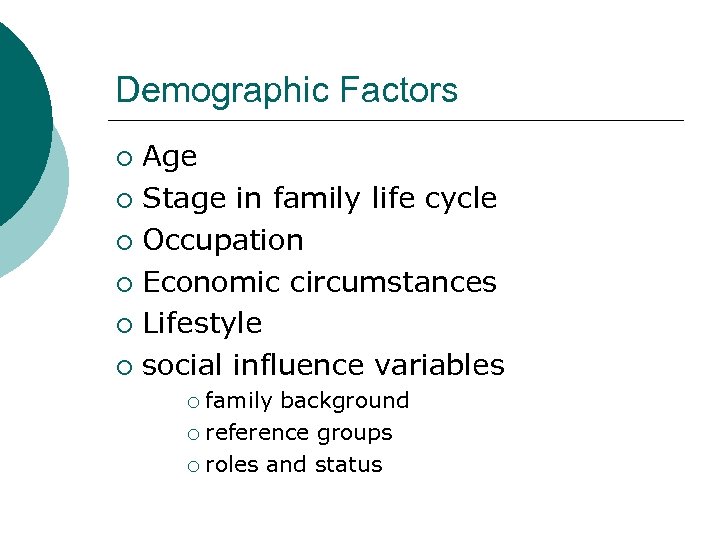 Demographic Factors Age ¡ Stage in family life cycle ¡ Occupation ¡ Economic circumstances ¡ Lifestyle ¡ social influence variables ¡ family background ¡ reference groups ¡ roles and status ¡
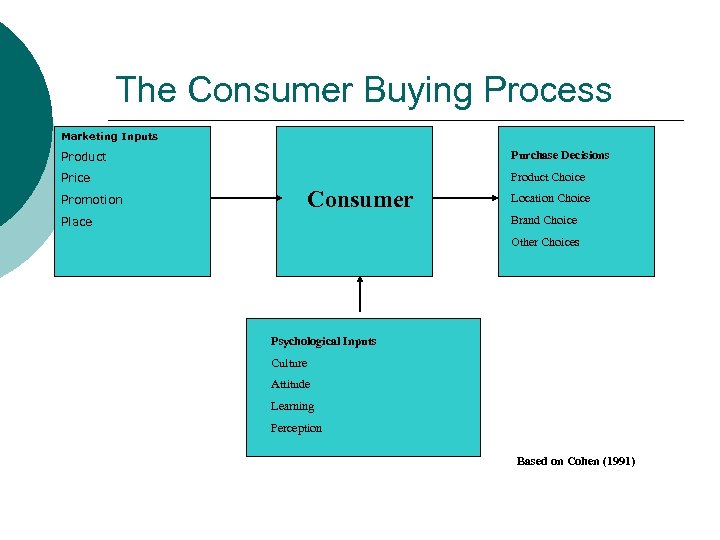 The Consumer Buying Process Marketing Inputs Product Purchase Decisions Price Product Choice Consumer Promotion Location Choice Brand Choice Place Other Choices Psychological Inputs Culture Attitude Learning Perception Based on Cohen (1991)
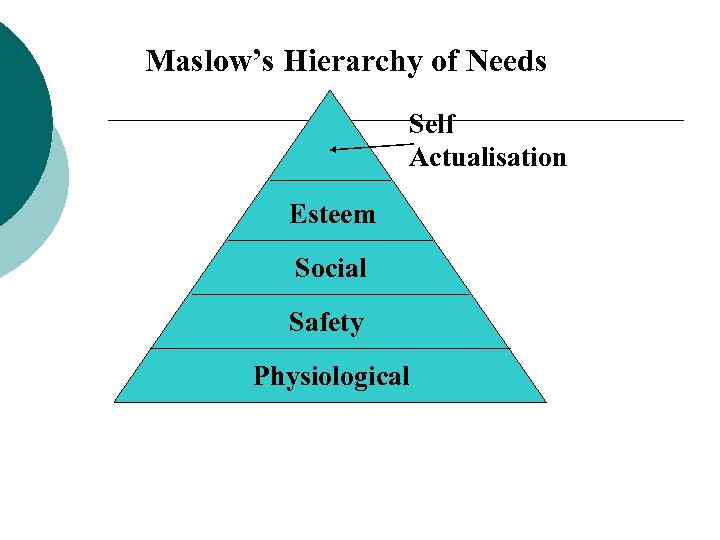 Maslow’s Hierarchy of Needs Self Actualisation Esteem Social Safety Physiological
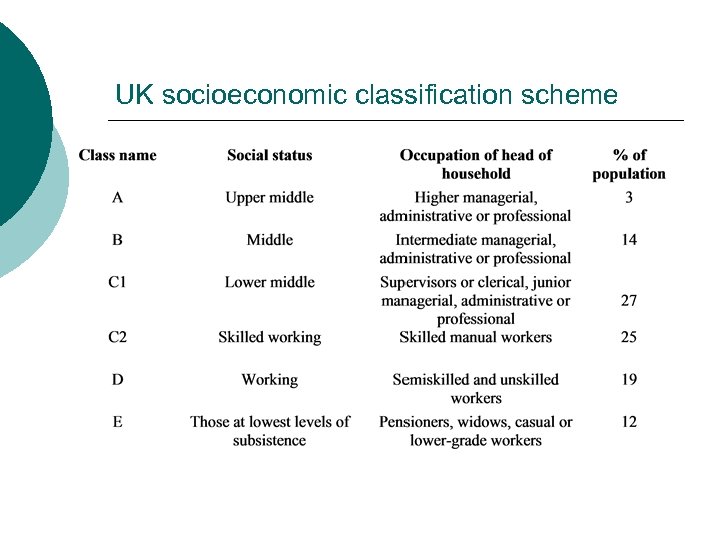 UK socioeconomic classification scheme
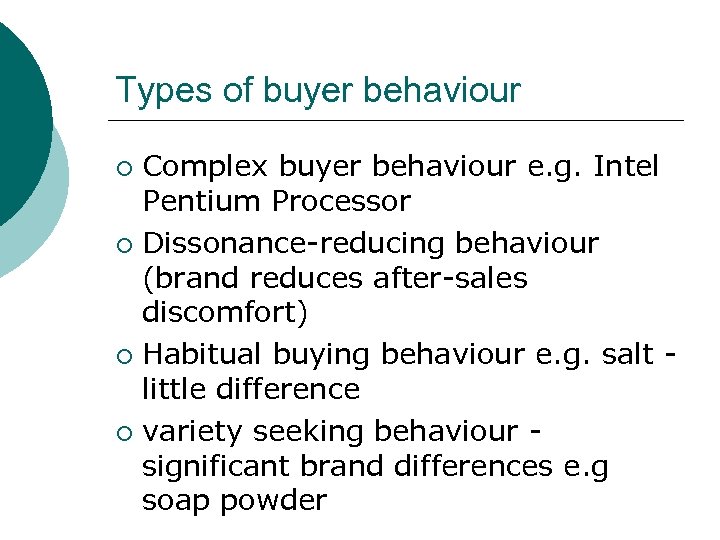 Types of buyer behaviour Complex buyer behaviour e. g. Intel Pentium Processor ¡ Dissonance-reducing behaviour (brand reduces after-sales discomfort) ¡ Habitual buying behaviour e. g. salt little difference ¡ variety seeking behaviour significant brand differences e. g soap powder ¡
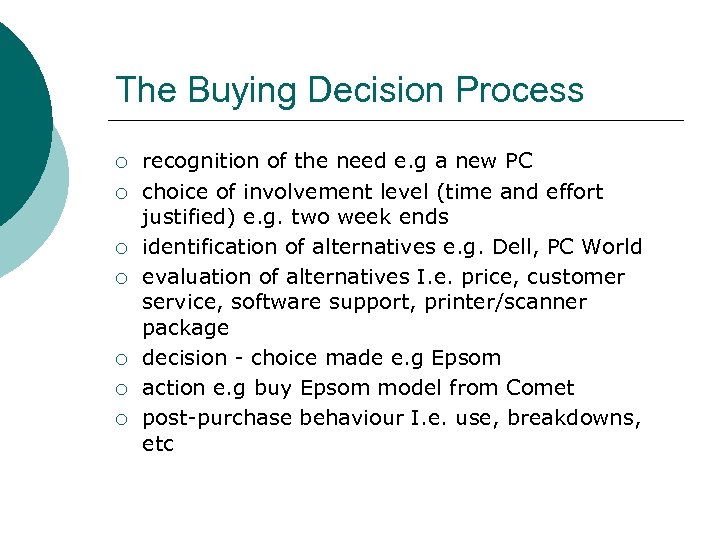 The Buying Decision Process ¡ ¡ ¡ ¡ recognition of the need e. g a new PC choice of involvement level (time and effort justified) e. g. two week ends identification of alternatives e. g. Dell, PC World evaluation of alternatives I. e. price, customer service, software support, printer/scanner package decision - choice made e. g Epsom action e. g buy Epsom model from Comet post-purchase behaviour I. e. use, breakdowns, etc
 Organisational Buyer Behaviour ‘The decision-making process by which formal organisations establish the need for purchased products and services, and identify, evaluate, and choose among alternative brands and suppliers’ Kotler and Armstrong 1989
 Characteristics of organisational buyer behaviour ¡ ¡ ¡ Organisation purpose - Goodyear Tyres Derived demand - follows cars and lorries Concentrated purchasing - stockholdings of rubber Direct dealings - large purchaser of basic rubber - no intermediaries Specialist activities - learns about the product Multiple purchase influences - DMU Decision making unit
 Part 2 Task 3 / Task 4:
 Marketing Information Systems ¡ Marketing Research What is Marketing Research? ¡ Process ¡ Terminology ¡ Techniques ¡ ¡ MKIS - Marketing Information Systems What is MKIS ¡ Components of an electronic MKIS ¡
 Marketing Research ‘the systematic gathering, recording and analysing of data about problems relating to the marketing of goods and services’ American Marketing Association
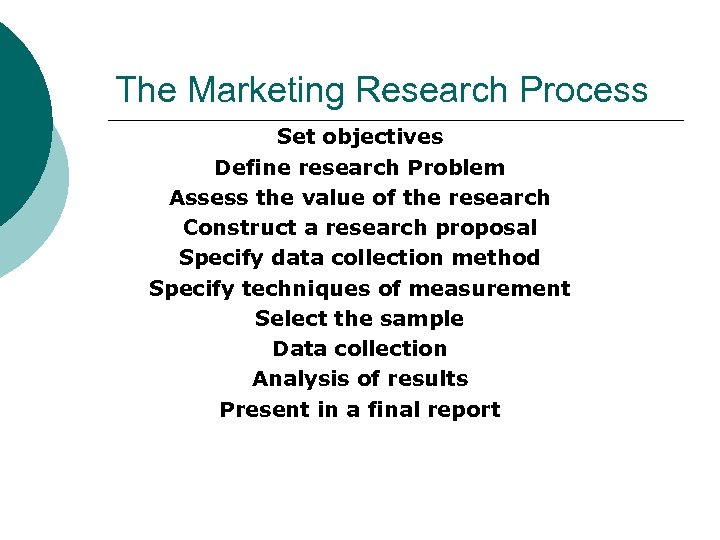 The Marketing Research Process Set objectives Define research Problem Assess the value of the research Construct a research proposal Specify data collection method Specify techniques of measurement Select the sample Data collection Analysis of results Present in a final report
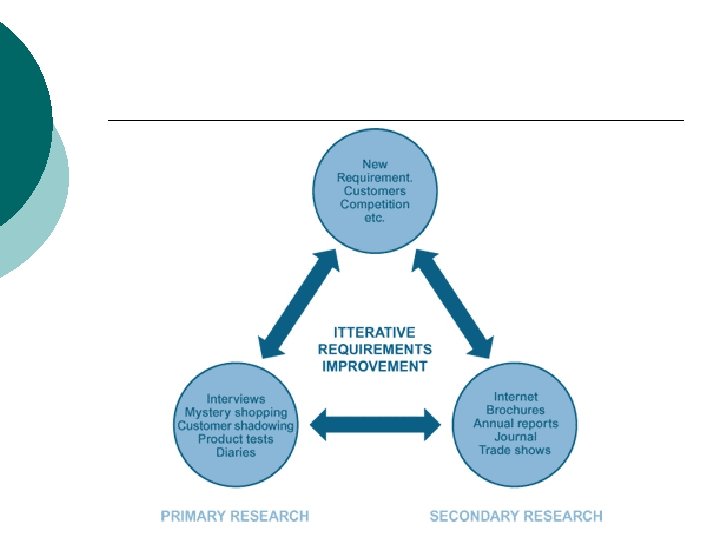
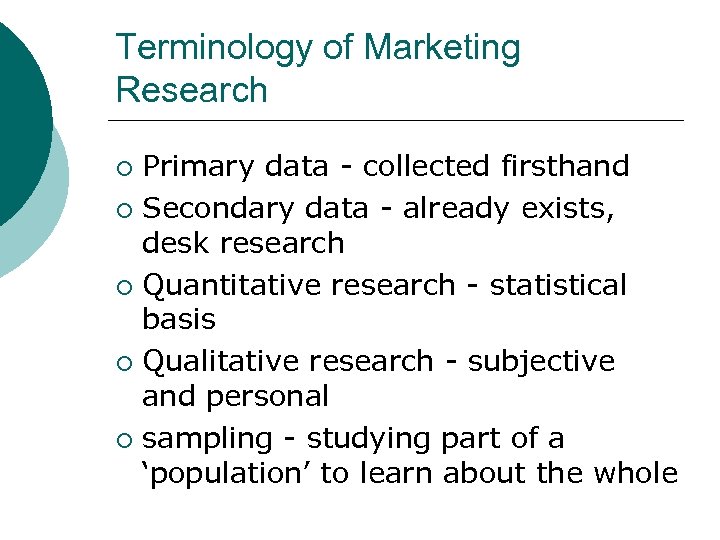 Terminology of Marketing Research Primary data - collected firsthand ¡ Secondary data - already exists, desk research ¡ Quantitative research - statistical basis ¡ Qualitative research - subjective and personal ¡ sampling - studying part of a ‘population’ to learn about the whole ¡
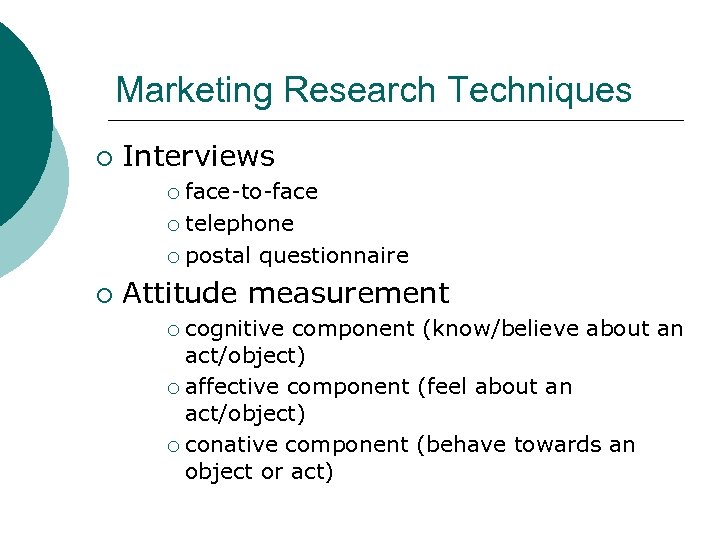 Marketing Research Techniques ¡ Interviews face-to-face ¡ telephone ¡ postal questionnaire ¡ ¡ Attitude measurement cognitive component (know/believe about an act/object) ¡ affective component (feel about an act/object) ¡ conative component (behave towards an object or act) ¡
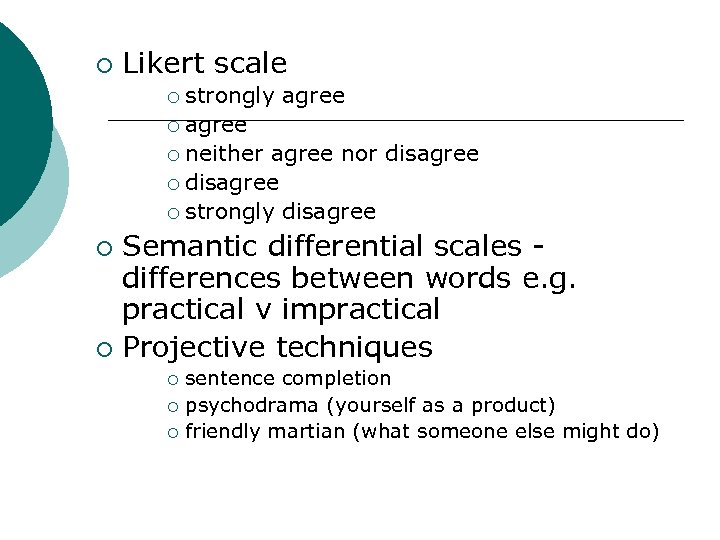 ¡ Likert scale strongly agree ¡ neither agree nor disagree ¡ strongly disagree ¡ Semantic differential scales differences between words e. g. practical v impractical ¡ Projective techniques ¡ sentence completion ¡ psychodrama (yourself as a product) ¡ friendly martian (what someone else might do) ¡
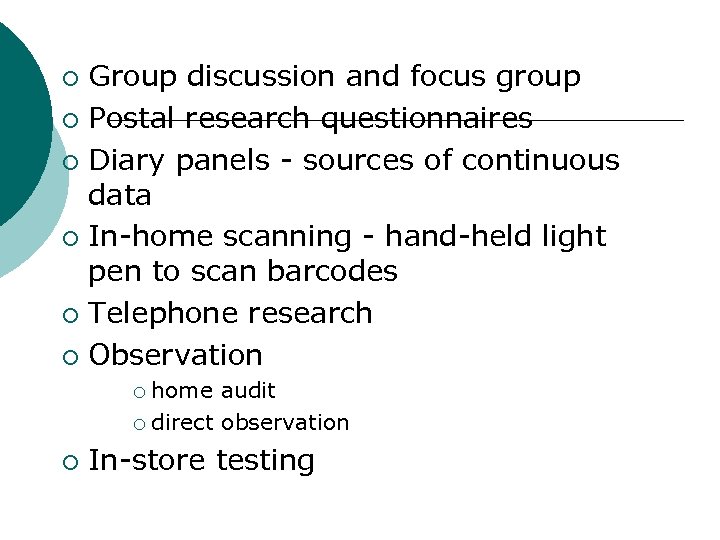 Group discussion and focus group ¡ Postal research questionnaires ¡ Diary panels - sources of continuous data ¡ In-home scanning - hand-held light pen to scan barcodes ¡ Telephone research ¡ Observation ¡ home audit ¡ direct observation ¡ ¡ In-store testing
 What is MKIS? ‘MKIS (MIS) is a set of procedures and methods for the regular, planned collection, analysis and presentation of information for use in marketing decisions’ American Marketing Association
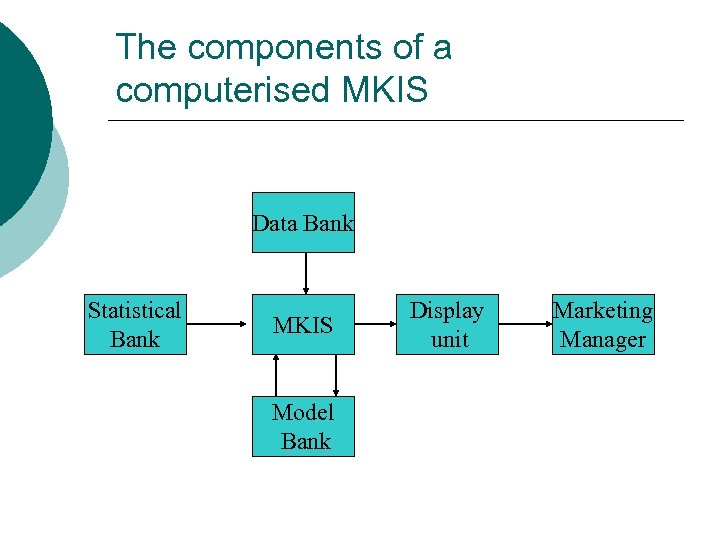 The components of a computerised MKIS Data Bank Statistical Bank MKIS Model Bank Display unit Marketing Manager
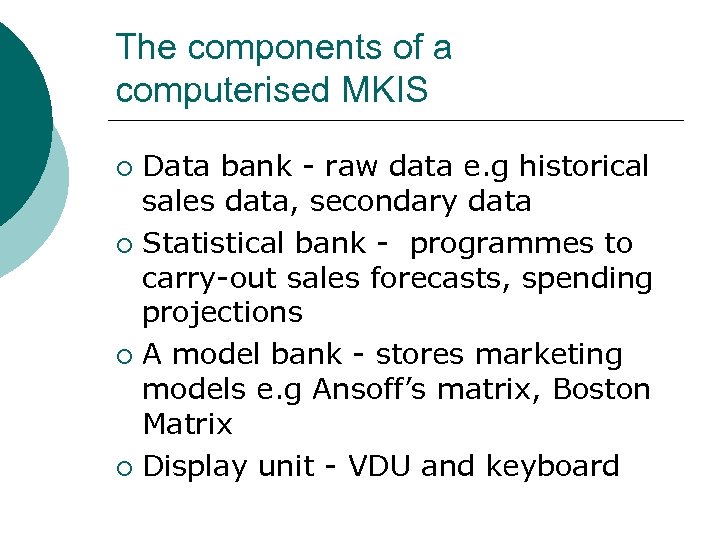 The components of a computerised MKIS Data bank - raw data e. g historical sales data, secondary data ¡ Statistical bank - programmes to carry-out sales forecasts, spending projections ¡ A model bank - stores marketing models e. g Ansoff’s matrix, Boston Matrix ¡ Display unit - VDU and keyboard ¡
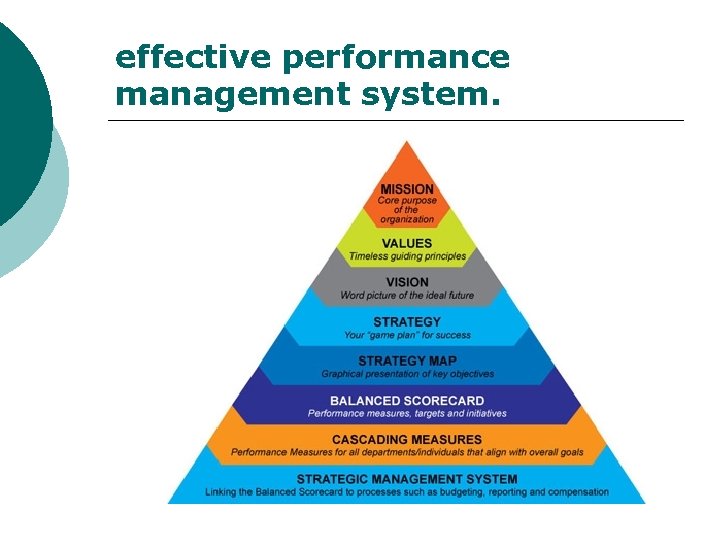 effective performance management system.
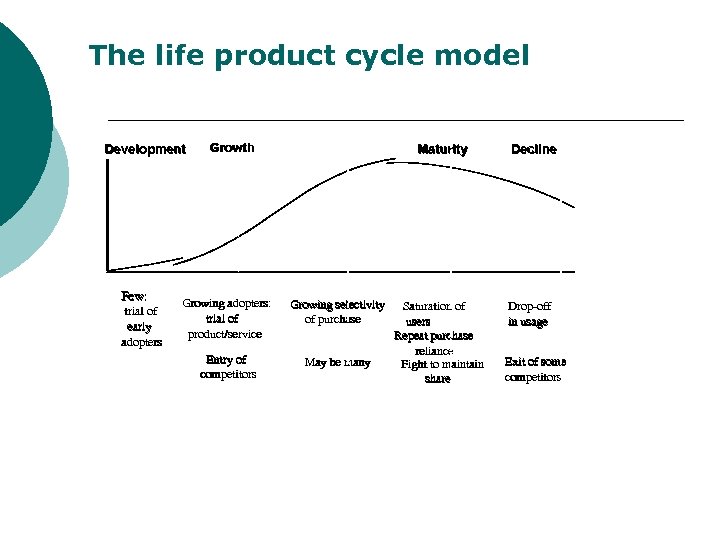 The life product cycle model Development Few: trial of early adopters Growth Maturity Growing adopters: trial of product/service Growing selectivity of purchase Entry of competitors May be many Saturation of users Repeat purchase reliance Fight to maintain share Decline Drop-off in usage Exit of some competitors
 Products Decisions ¡ Product and Service Classification System ¡ The Product Life Cycle ¡ Introduction to product matrices ¡ Boston Matrix (Growth/Share) ¡ Ansoff’s Matrix (Product Market)
 Product and Service Classification System Convenience goods - little effort, relatively inexpensive ¡ Shopping goods - e. g ‘white goods’, DIY equipment, more expensive, infrequent ¡ Speciality goods - extensive search e. g Jewellery, gourmet food ¡ Unsought goods - e. g. double glazing, ¡
 Product and Service Classification System Industrial goods ¡ Installations - ‘speciality’ goods of industrial markets - plant and machinery ¡ Accessories - maintenance and office equipment ¡ Raw materials ¡ components ¡ Business to business e. g. consultants, accountants ¡
 Products Decisions ¡ Product and Service Classification System? ¡ The Product Life Cycle stages? ¡ Growth/Share? ¡ Product Market?
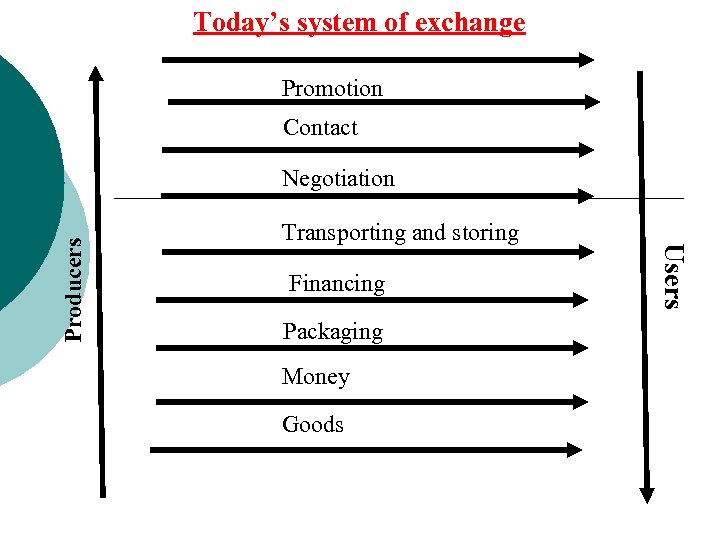 Today’s system of exchange Promotion Contact Transporting and storing Financing Packaging Money Goods Users Producers Negotiation
 Six basic channel decisions Direct or indirect channels ¡ Single or multiple channels ¡ Length of channel ¡ Types of intermediaries ¡ Number of intermediaries at each level ¡ Which intermediaries? Avoid intrachannel conflict ¡
 Selection consideration ¡ ¡ ¡ Market segment - must know the specific segment and target customer Changes during plc - different channels are exploited at various stages of plc Producer-distributor fit - their policies, strategies and image Qualification assessment - experience and track record must be established Distributor training and support
 Potential Influence Strategies. Frazier and Sheth (1989) Indirect influence strategies information is merely exchanged with channel member personnel ¡ Direct unmediated strategies consequences of a poor response from the market are stressed ¡ Reward and punishment strategies given to channel members and their firms ¡
 Direct unweighted strategy or request - producer’s wishes are communicated. No consequences are applied or mentioned ¡ Direct mediated strategies - specific action is requested and consequences of rejection are stressed ¡ l l l e. g. 1 control of retail pricing e. g. 2 minimum order size e. g. 3 salesperson training e. g. 4 physical layout of store e. g. 5 territorial and customer restrictions
 Part 3 Task 5:
 Part 4 Task 6: