


 Скачать презентацию Unit 1 Part 3 The Mediterranean and Middle
e77151d941321ad58ae0e70de6f4052b.ppt
- Количество слайдов: 37
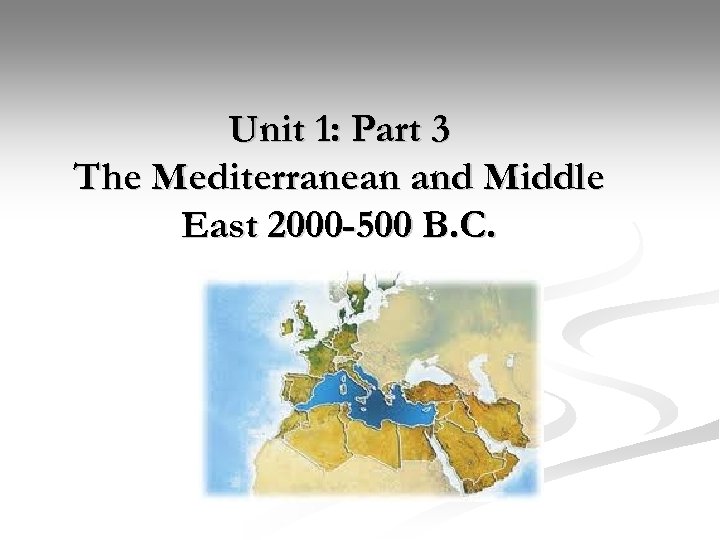 Unit 1: Part 3 The Mediterranean and Middle East 2000 -500 B. C.
 Empire Rule over distant lands and diverse people. n If conquest occurs over land= land based empire n If conquest occurs by colonization= maritime/overseas empire n Examples: n Which is easier to control? Why? n
 Why do rulers seek to create empires? Control trade- avoid middleman n Relief from overpopulation n Builds up image of powerful ruler- propaganda n
 How are empires created? Government adopts policy of expansion, like Hittites, Egyptians, and Assyrians n Military technology makes it possible n Iron n Horses n n Assimilation n n Hyksos and Egyptians Physiological warfare n Assyrians
 Conquest Brings n Resources, tribute, booty, and taxes How to maintain control? Buffer zone n Garrisons n Win loyalty of local rulers and elites n Establish a professional army n n conscription
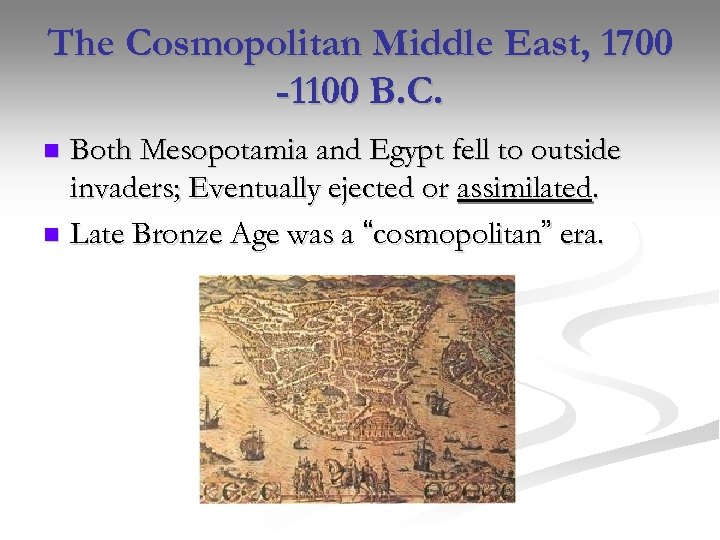 The Cosmopolitan Middle East, 1700 -1100 B. C. Both Mesopotamia and Egypt fell to outside invaders; Eventually ejected or assimilated. n Late Bronze Age was a “cosmopolitan” era. n
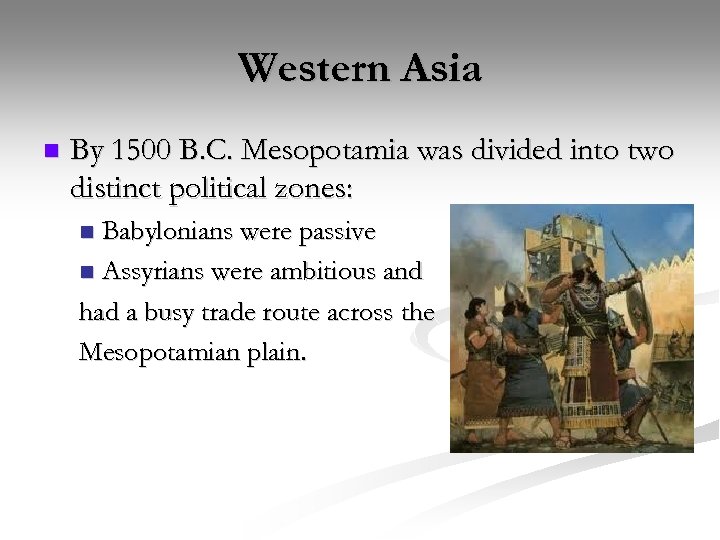 Western Asia n By 1500 B. C. Mesopotamia was divided into two distinct political zones: Babylonians were passive n Assyrians were ambitious and had a busy trade route across the Mesopotamian plain. n
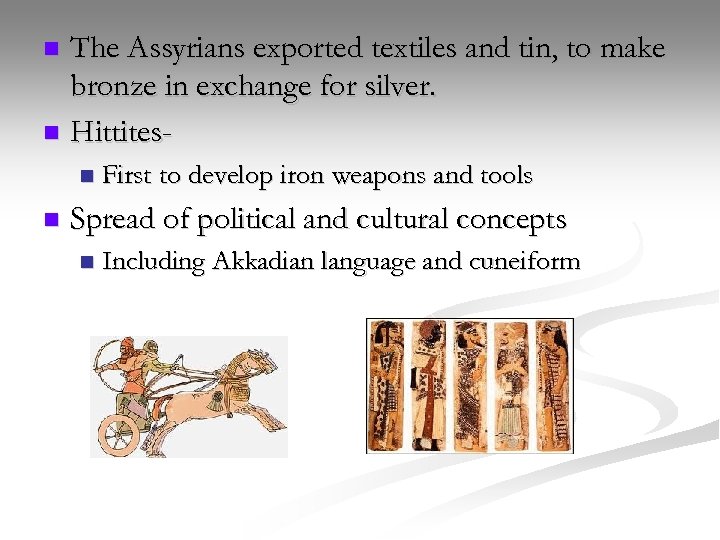 The Assyrians exported textiles and tin, to make bronze in exchange for silver. n Hittitesn n n First to develop iron weapons and tools Spread of political and cultural concepts n Including Akkadian language and cuneiform
 New Kingdom Egypt Central v. Local Authority n Egyptian Middle Kingdom declined. Why? n n Hyksosn Superior military techniques n They assimilated n After 30 years they were expelled and the New Kingdom of Egypt began
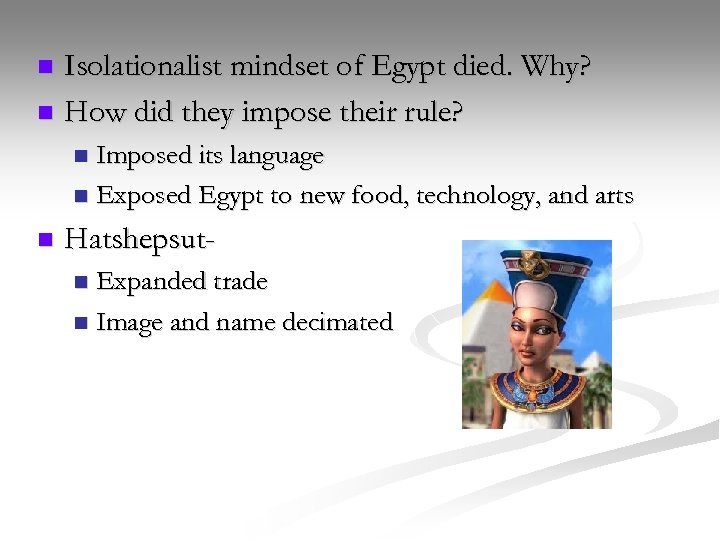 Isolationalist mindset of Egypt died. Why? n How did they impose their rule? n Imposed its language n Exposed Egypt to new food, technology, and arts n n Hatshepsut. Expanded trade n Image and name decimated n
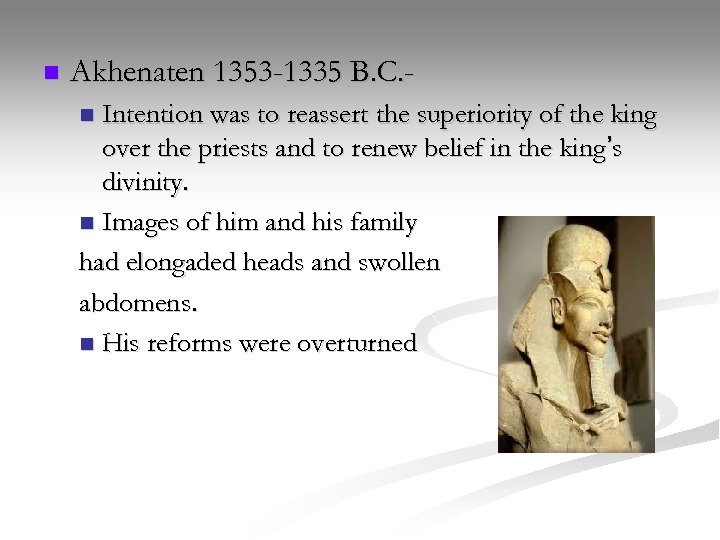 n Akhenaten 1353 -1335 B. C. Intention was to reassert the superiority of the king over the priests and to renew belief in the king’s divinity. n Images of him and his family had elongaded heads and swollen abdomens. n His reforms were overturned n
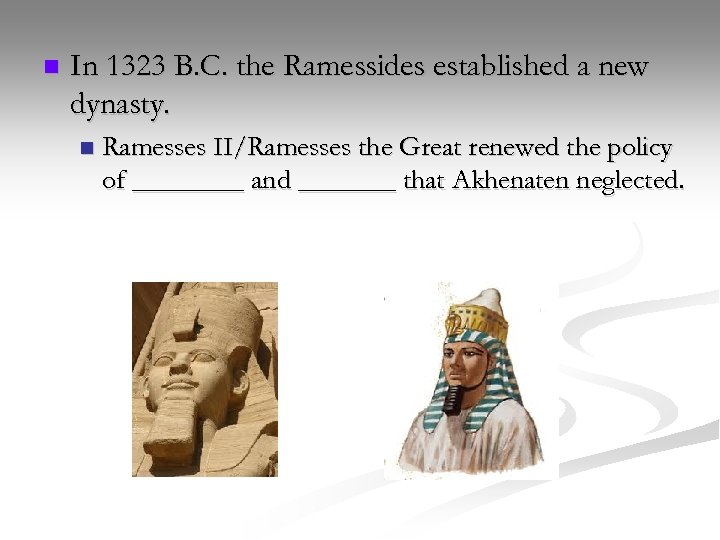 n In 1323 B. C. the Ramessides established a new dynasty. n Ramesses II/Ramesses the Great renewed the policy of ____ and _______ that Akhenaten neglected.
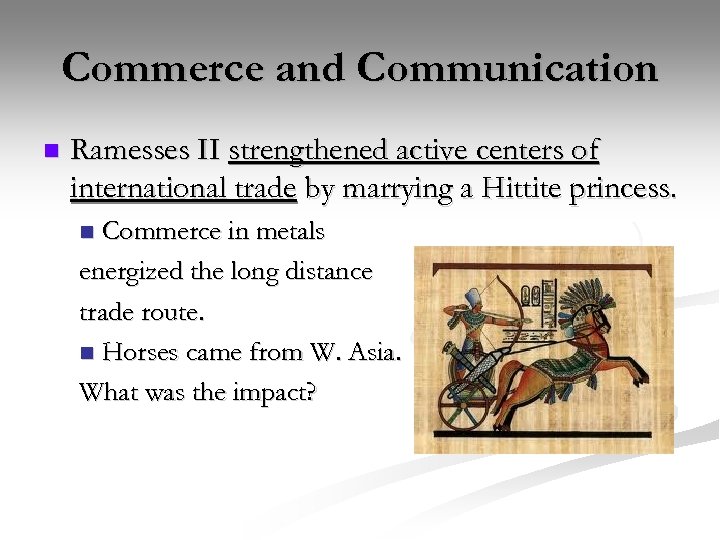 Commerce and Communication n Ramesses II strengthened active centers of international trade by marrying a Hittite princess. Commerce in metals energized the long distance trade route. n Horses came from W. Asia. What was the impact? n
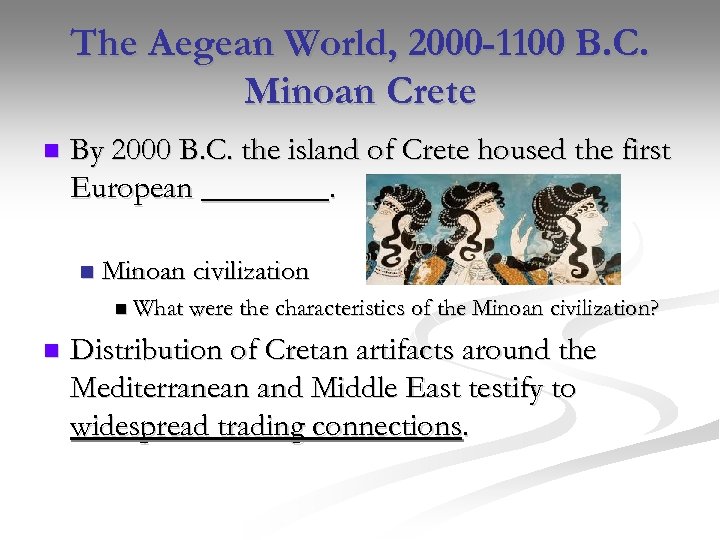 The Aegean World, 2000 -1100 B. C. Minoan Crete n By 2000 B. C. the island of Crete housed the first European ____. n Minoan civilization n What were the characteristics of the Minoan civilization? n Distribution of Cretan artifacts around the Mediterranean and Middle East testify to widespread trading connections.
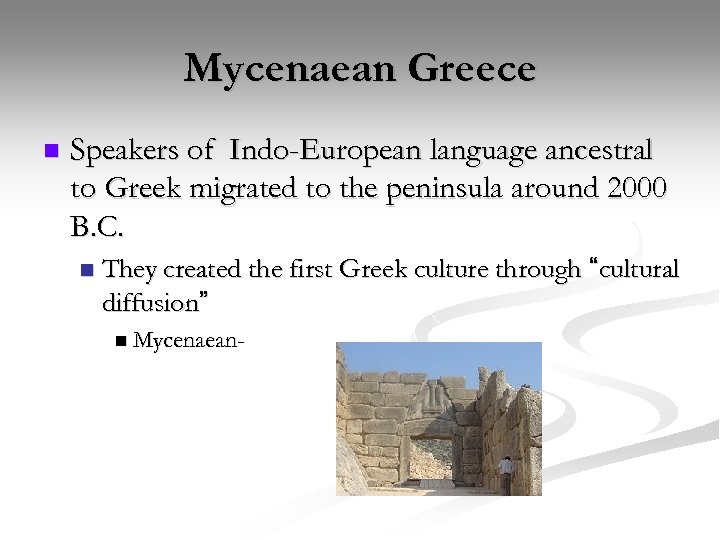 Mycenaean Greece n Speakers of Indo-European language ancestral to Greek migrated to the peninsula around 2000 B. C. n They created the first Greek culture through “cultural diffusion” n Mycenaean-
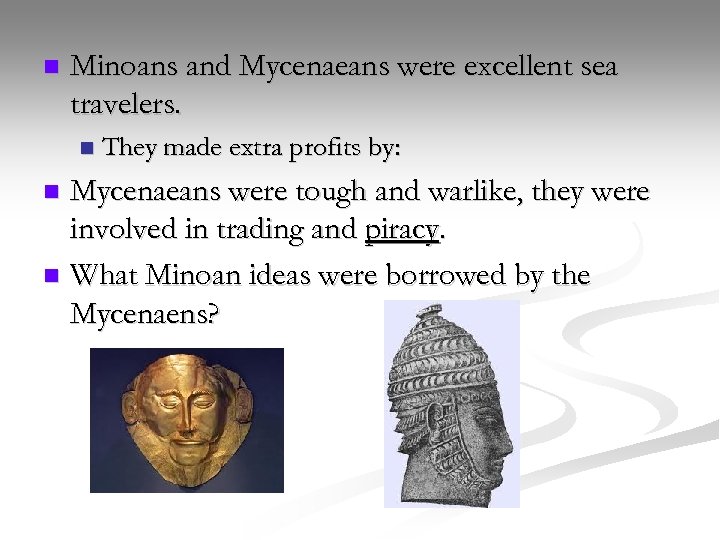 n Minoans and Mycenaeans were excellent sea travelers. n They made extra profits by: Mycenaeans were tough and warlike, they were involved in trading and piracy. n What Minoan ideas were borrowed by the Mycenaens? n
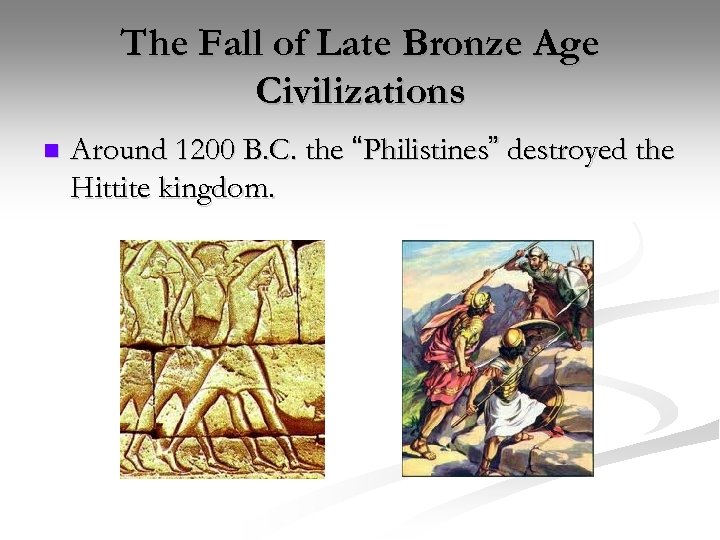 The Fall of Late Bronze Age Civilizations n Around 1200 B. C. the “Philistines” destroyed the Hittite kingdom.
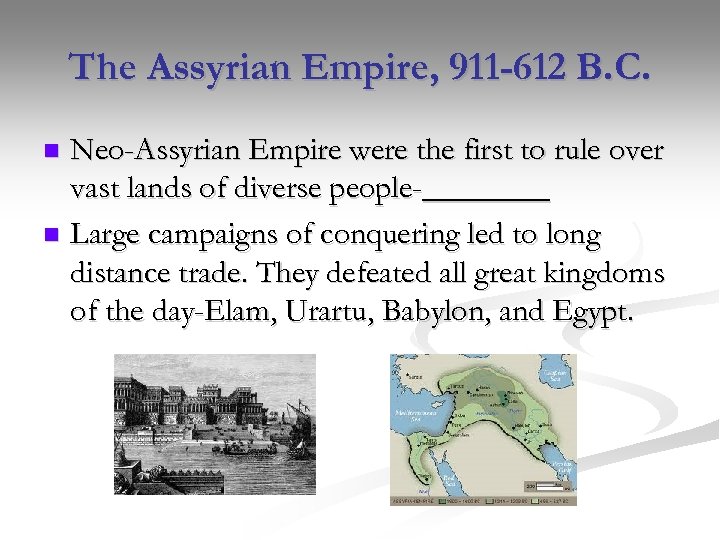 The Assyrian Empire, 911 -612 B. C. Neo-Assyrian Empire were the first to rule over vast lands of diverse people-____ n Large campaigns of conquering led to long distance trade. They defeated all great kingdoms of the day-Elam, Urartu, Babylon, and Egypt. n
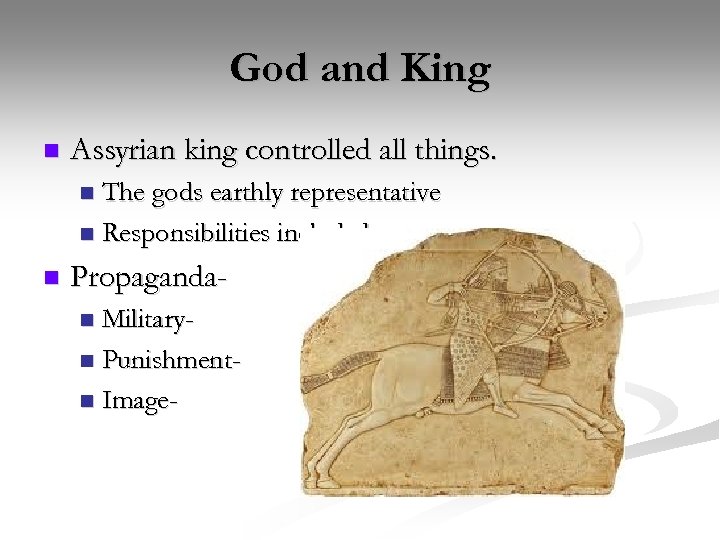 God and King n Assyrian king controlled all things. The gods earthly representative n Responsibilities included: n n Propaganda. Militaryn Punishmentn Imagen
 Conquest and Control Armies consisted of: peasants, men serving to receive land grants and _____. n Used terror tactics to discourage resistance and rebellion. n Assyrian provincial officials oversaw the payment of tribute and taxes, raised troops, public works, and territorial issues. n
 Assyrian Society and Culture n Three classes: 1. 2. 3. n n Free, landowning citizens Farmers and artisans attached to the estates of the king or other rich landholders Slaves- Silver was the basic medium of exchange May have had libraries in temples n Library of Ashurbanipal
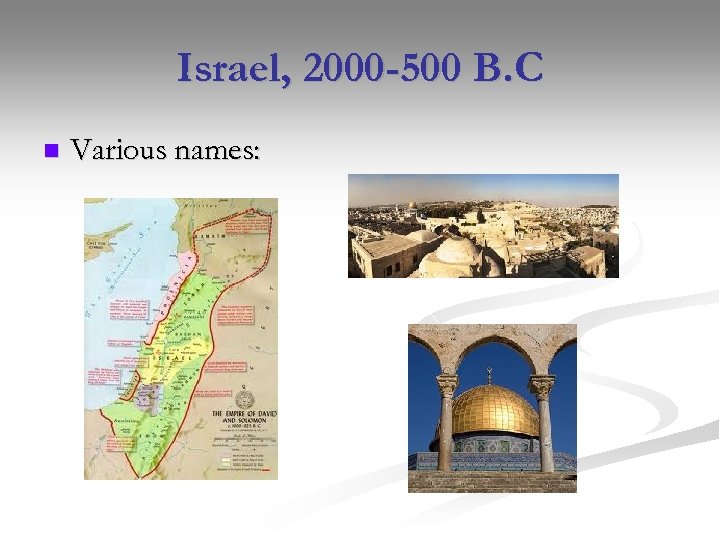 Israel, 2000 -500 B. C n Various names:
 Origins, Exodus, and Settlement n n n Fundamental source of Israel’s culture is documented in the ____. Language was Arabic and Akkadian language of Assyrians. Abraham was born in the city Ur in south Mesopotamia. n n “the covenant” Isaac and Joseph became leaders of the wandering group of herders. Joseph’s brother Jacob was eventually sold into slavery to the Egyptians.
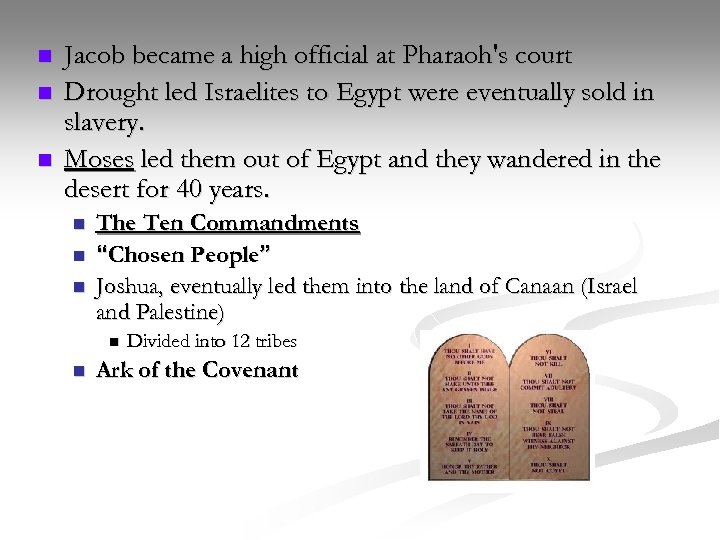 n n n Jacob became a high official at Pharaoh's court Drought led Israelites to Egypt were eventually sold in slavery. Moses led them out of Egypt and they wandered in the desert for 40 years. n n n The Ten Commandments “Chosen People” Joshua, eventually led them into the land of Canaan (Israel and Palestine) n n Divided into 12 tribes Ark of the Covenant
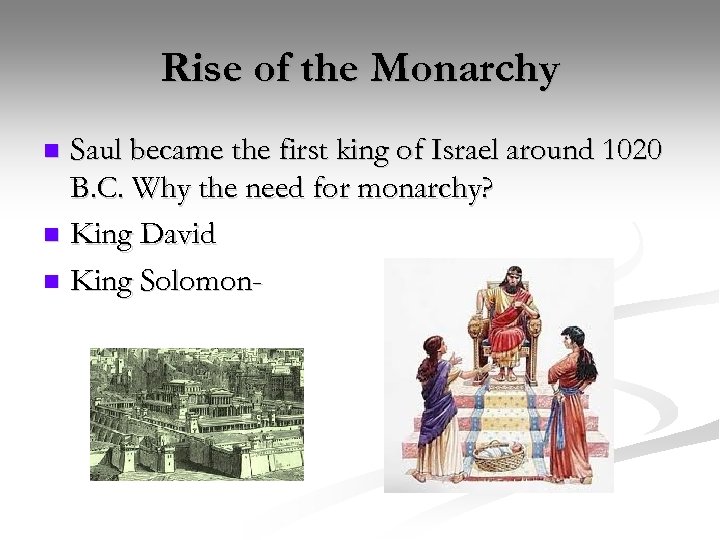 Rise of the Monarchy Saul became the first king of Israel around 1020 B. C. Why the need for monarchy? n King David n King Solomonn
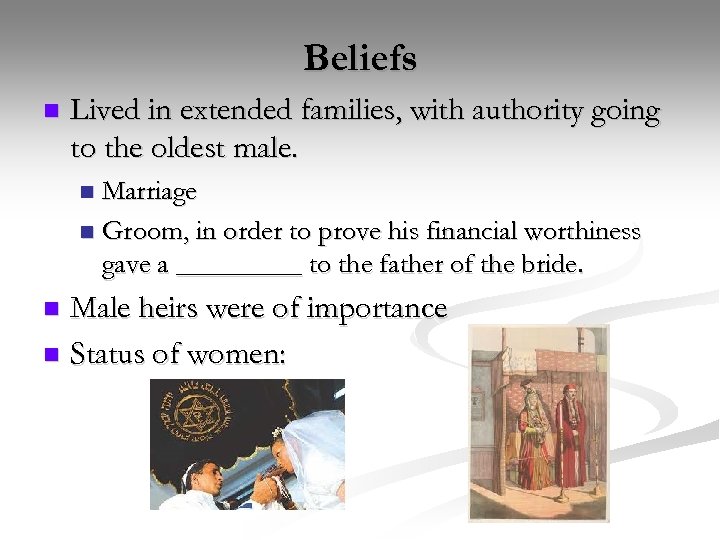 Beliefs n Lived in extended families, with authority going to the oldest male. Marriage n Groom, in order to prove his financial worthiness gave a _____ to the father of the bride. n Male heirs were of importance n Status of women: n
 Fragmentation and Dispersal n After Solomon’s death, the monarchy split into two kingdoms: Israel n Judah n Monotheismn Assyrians destroyed Israel and deported much of the population. King Nebuchadnezzar of Neo. Babylon deported the tribe of Judah to Babylon. n
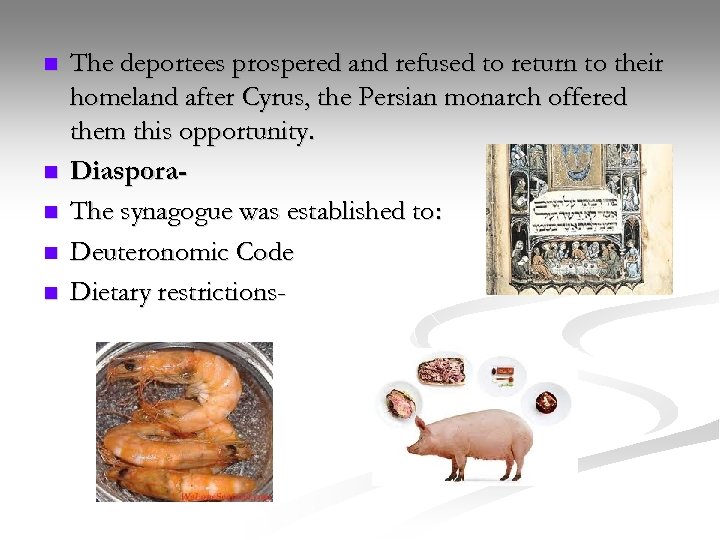 n n n The deportees prospered and refused to return to their homeland after Cyrus, the Persian monarch offered them this opportunity. Diaspora. The synagogue was established to: Deuteronomic Code Dietary restrictions-
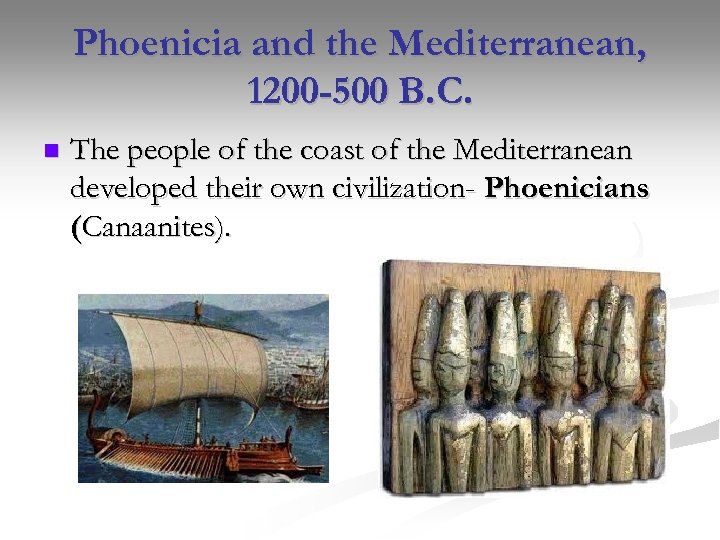 Phoenicia and the Mediterranean, 1200 -500 B. C. n The people of the coast of the Mediterranean developed their own civilization- Phoenicians (Canaanites).
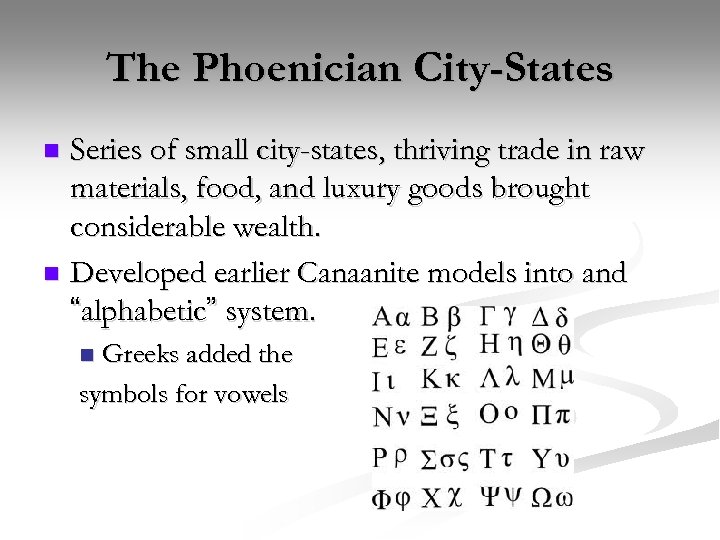 The Phoenician City-States Series of small city-states, thriving trade in raw materials, food, and luxury goods brought considerable wealth. n Developed earlier Canaanite models into and “alphabetic” system. n Greeks added the symbols for vowels n
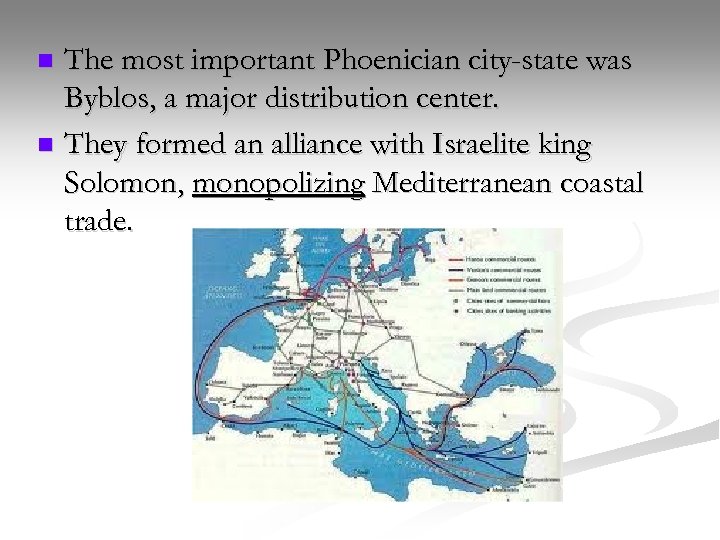 The most important Phoenician city-state was Byblos, a major distribution center. n They formed an alliance with Israelite king Solomon, monopolizing Mediterranean coastal trade. n
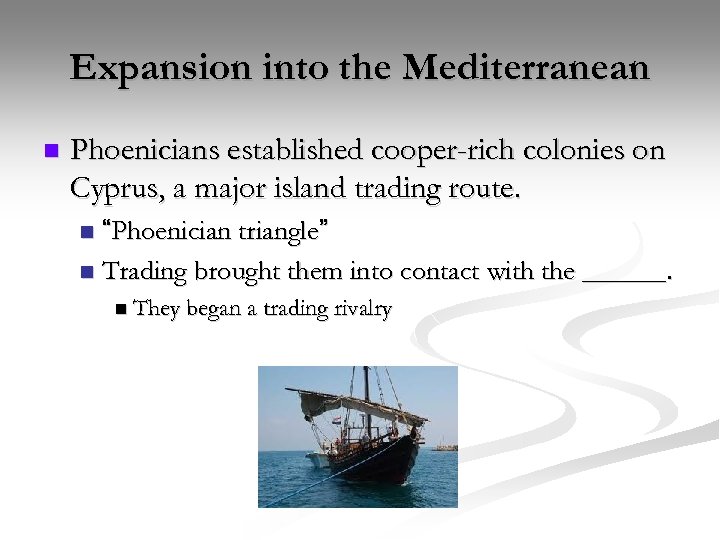 Expansion into the Mediterranean n Phoenicians established cooper-rich colonies on Cyprus, a major island trading route. “Phoenician triangle” n Trading brought them into contact with the ______. n n They began a trading rivalry
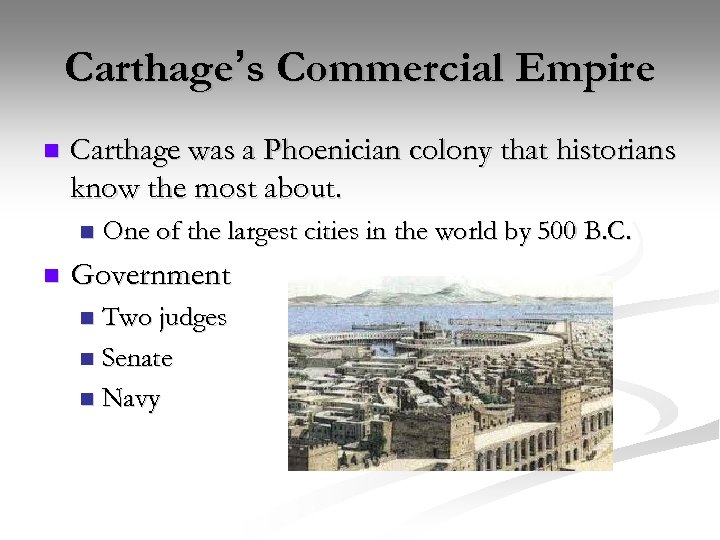 Carthage’s Commercial Empire n Carthage was a Phoenician colony that historians know the most about. n n One of the largest cities in the world by 500 B. C. Government Two judges n Senate n Navy n
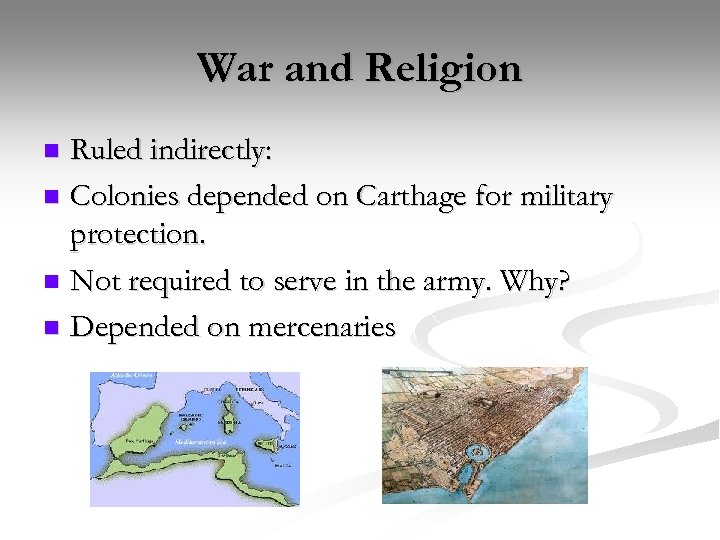 War and Religion Ruled indirectly: n Colonies depended on Carthage for military protection. n Not required to serve in the army. Why? n Depended on mercenaries n
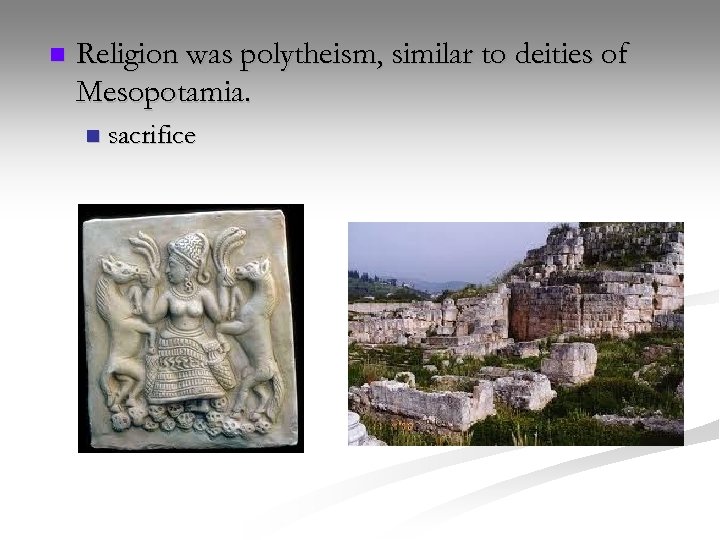 n Religion was polytheism, similar to deities of Mesopotamia. n sacrifice
 Failure and Transformation, 750 -550 B. C. Assyrian power caused converging of Mesopotamia, Israel and Phoenicia. n Decline: n Two new political challengers destroyed Assyrian chief cities: n Babylonia n The Medes (Iran) n
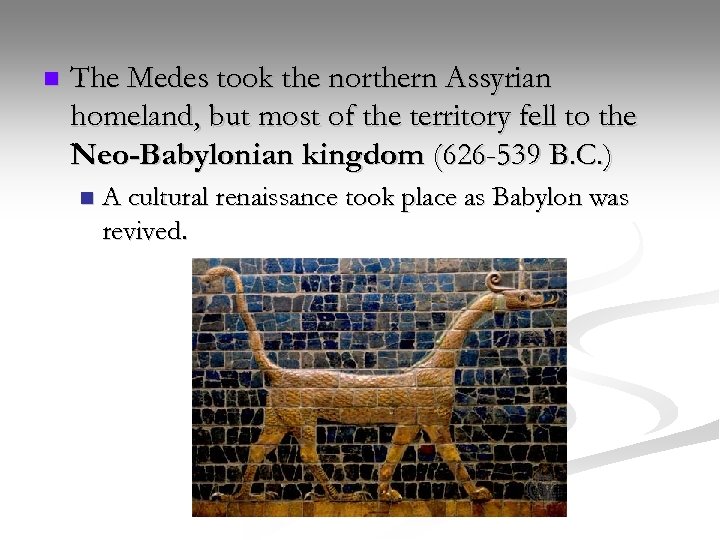 n The Medes took the northern Assyrian homeland, but most of the territory fell to the Neo-Babylonian kingdom (626 -539 B. C. ) n A cultural renaissance took place as Babylon was revived.