 Скачать презентацию Unit 1 Basic Economic Concepts 1 Note
c84e29feaab25c7024acd88dc8184963.ppt
- Количество слайдов: 14



Unit 1: Basic Economic Concepts 1
Note to Teachers: Questions on price controls and elasticity are very rarely asked on the AP Macro exam. Price Controls Who likes the idea of having a price ceiling on gas so prices will never go over $2 per gallon? 2
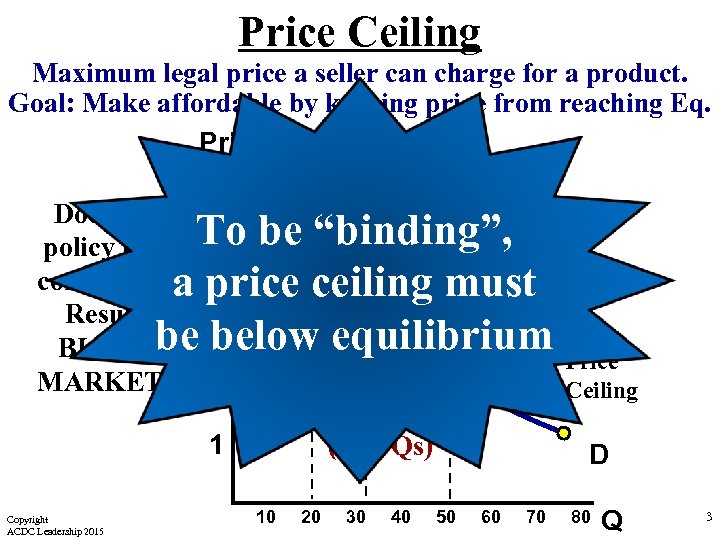
Price Ceiling Maximum legal price a seller can charge for a product. Goal: Make affordable by keeping price from reaching Eq. Price Gasoline S $8 Does this To be “binding”, policy help 6 consumers? price ceiling must a 4 Result: BLACKbe below equilibrium Price MARKETS 2 Ceiling Shortage 1 (Qd>Qs) D Copyright ACDC Leadership 2015 10 20 30 40 50 60 70 80 Q 3
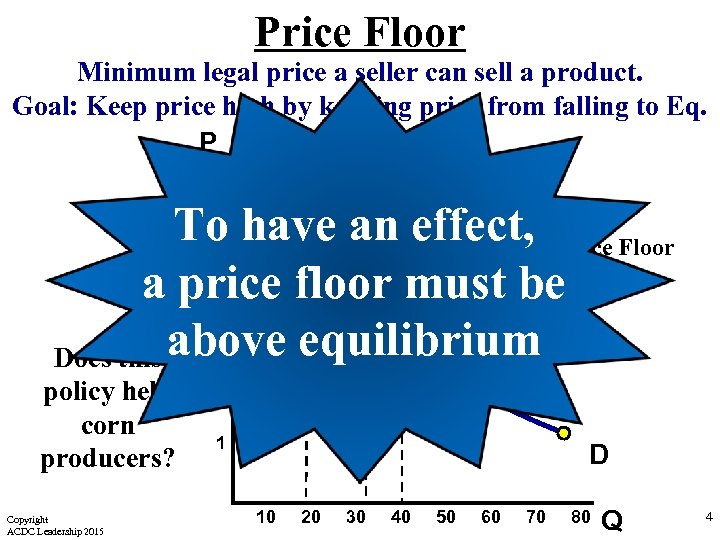
Price Floor Minimum legal price a seller can sell a product. Goal: Keep price high by keeping price from falling to Eq. P Corn S $ Surplus (Qd<Qs) To have an effect, Price Floor a price floor must be Does this above equilibrium 4 3 policy help corn producers? Copyright ACDC Leadership 2015 2 1 D 10 20 30 40 50 60 70 80 Q 4
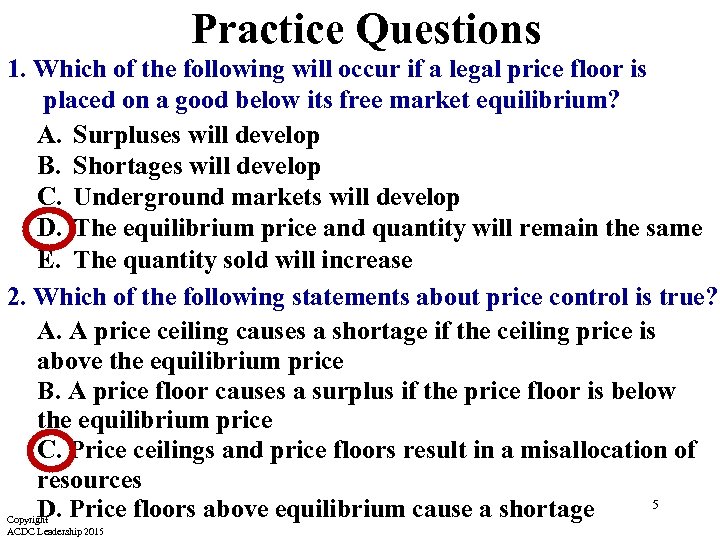
Practice Questions 1. Which of the following will occur if a legal price floor is placed on a good below its free market equilibrium? A. Surpluses will develop B. Shortages will develop C. Underground markets will develop D. The equilibrium price and quantity will remain the same E. The quantity sold will increase 2. Which of the following statements about price control is true? A. A price ceiling causes a shortage if the ceiling price is above the equilibrium price B. A price floor causes a surplus if the price floor is below the equilibrium price C. Price ceilings and price floors result in a misallocation of resources 5 D. Price floors above equilibrium cause a shortage Copyright ACDC Leadership 2015
Elasticity shows how sensitive quantity is to a change in price. Copyright ACDC Leadership 2015
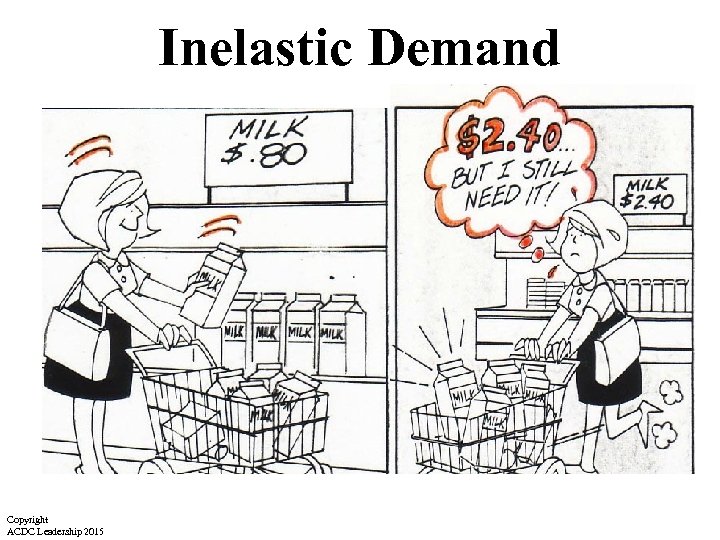
Inelastic Demand Copyright ACDC Leadership 2015
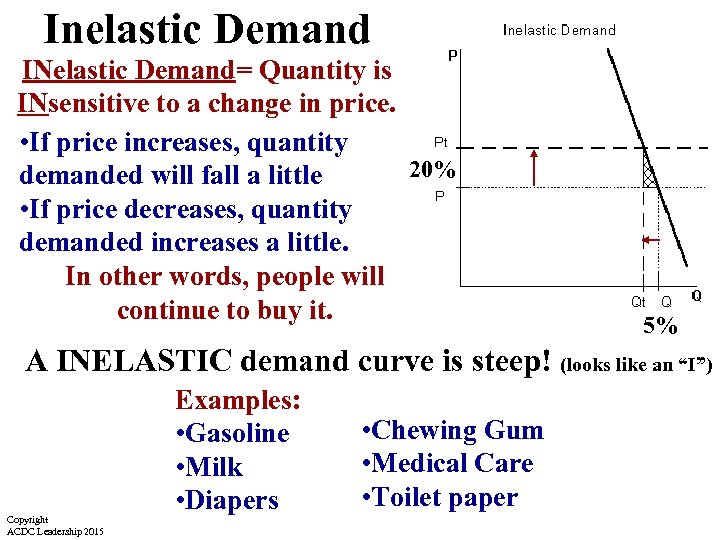
Inelastic Demand INelastic Demand= Quantity is INsensitive to a change in price. • If price increases, quantity 20% demanded will fall a little • If price decreases, quantity demanded increases a little. In other words, people will continue to buy it. 5% A INELASTIC demand curve is steep! (looks like an “I”) Copyright ACDC Leadership 2015 Examples: • Gasoline • Milk • Diapers • Chewing Gum • Medical Care • Toilet paper
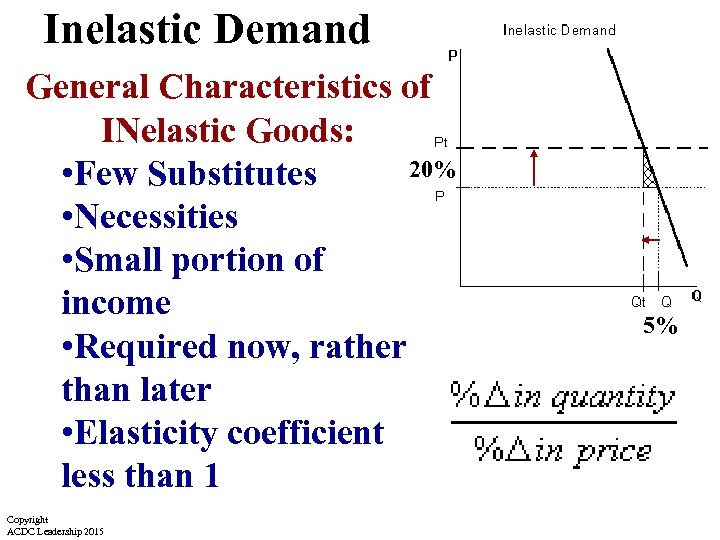
Inelastic Demand General Characteristics of INelastic Goods: 20% • Few Substitutes • Necessities • Small portion of income • Required now, rather than later • Elasticity coefficient less than 1 Copyright ACDC Leadership 2015 5%
Elastic Demand Copyright ACDC Leadership 2015
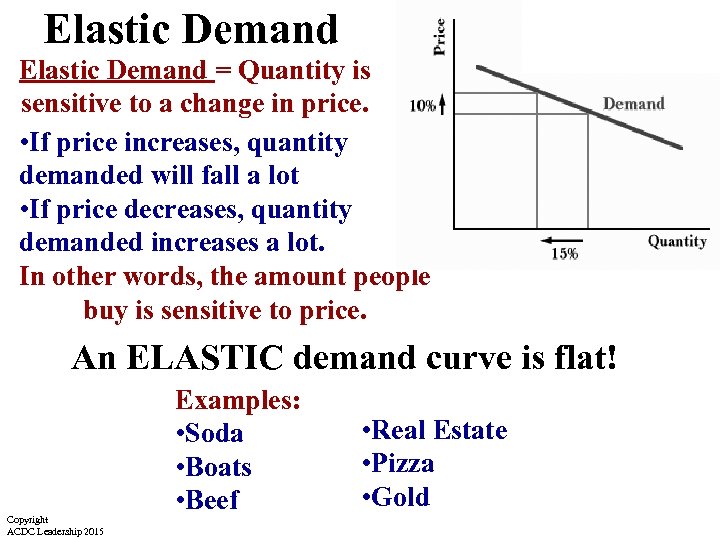
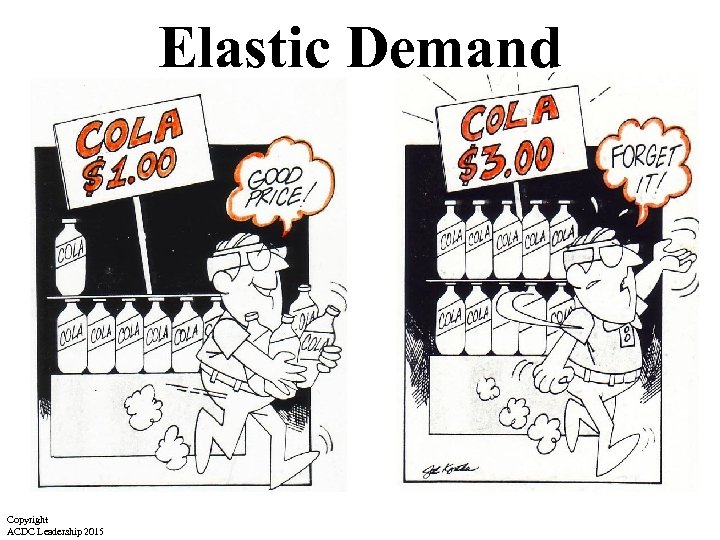
Elastic Demand = Quantity is sensitive to a change in price. • If price increases, quantity demanded will fall a lot • If price decreases, quantity demanded increases a lot. In other words, the amount people buy is sensitive to price. An ELASTIC demand curve is flat! Copyright ACDC Leadership 2015 Examples: • Soda • Boats • Beef • Real Estate • Pizza • Gold
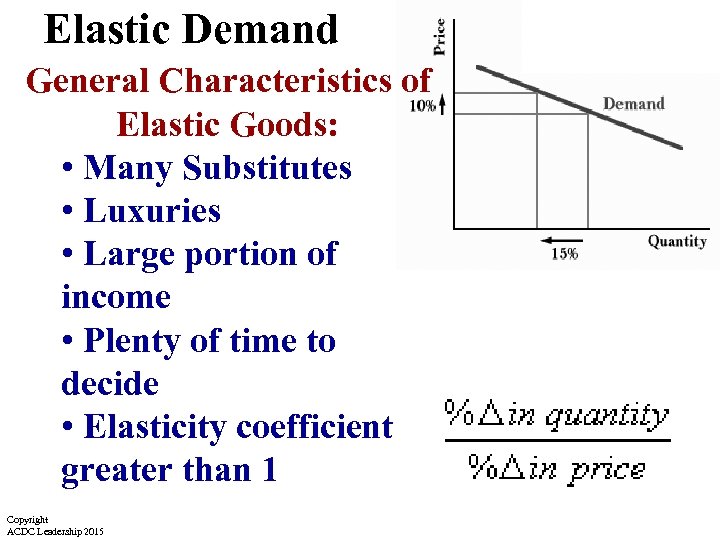
Elastic Demand General Characteristics of Elastic Goods: • Many Substitutes • Luxuries • Large portion of income • Plenty of time to decide • Elasticity coefficient greater than 1 Copyright ACDC Leadership 2015
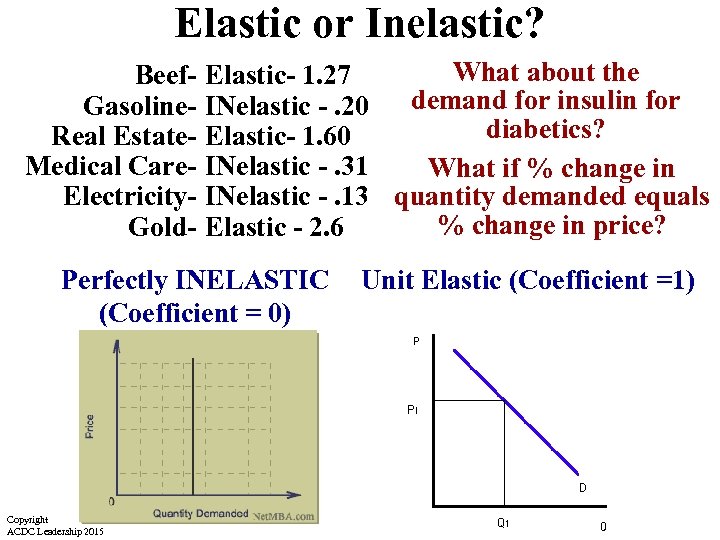
Elastic or Inelastic? Beef. Gasoline. Real Estate. Medical Care. Electricity. Gold- What about the Elastic- 1. 27 INelastic -. 20 demand for insulin for diabetics? Elastic- 1. 60 INelastic -. 31 What if % change in INelastic -. 13 quantity demanded equals % change in price? Elastic - 2. 6 Perfectly INELASTIC (Coefficient = 0) Copyright ACDC Leadership 2015 Unit Elastic (Coefficient =1)
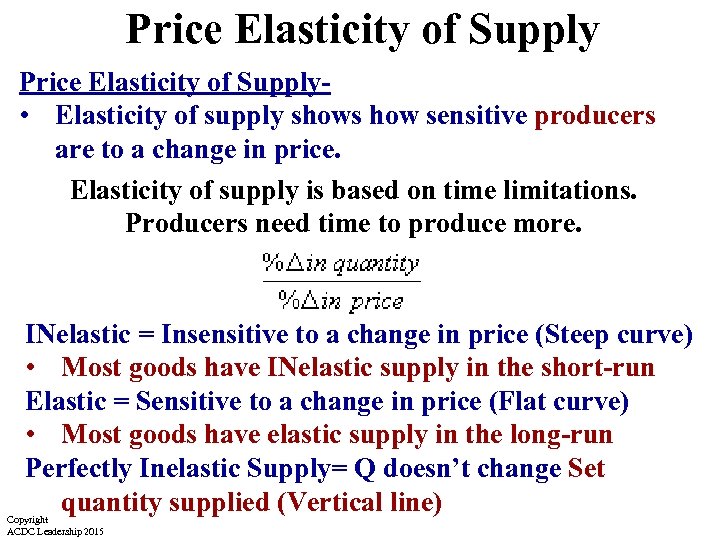
Price Elasticity of Supply • Elasticity of supply shows how sensitive producers are to a change in price. Elasticity of supply is based on time limitations. Producers need time to produce more. INelastic = Insensitive to a change in price (Steep curve) • Most goods have INelastic supply in the short-run Elastic = Sensitive to a change in price (Flat curve) • Most goods have elastic supply in the long-run Perfectly Inelastic Supply= Q doesn’t change Set quantity supplied (Vertical line) Copyright ACDC Leadership 2015
Скачать презентацию Unit 1 Basic Economic Concepts 1 Note
c84e29feaab25c7024acd88dc8184963.ppt