 Скачать презентацию Unified Cognitive Science Neurobiology Psychology
eaaff06a74532c9d0917be37f23a3f84.ppt
- Количество слайдов: 82



Unified Cognitive Science • Neurobiology • Psychology • Computer Science • Linguistics • Philosophy • Social Sciences • Experience Take all the Findings and Constraints Seriously
What are schemas? • • • Regularities in our perceptual, motor and cognitive systems Structure our experiences and interactions with the world. May be grounded in a specific cognitive system, but are not situation-specific in their application (can apply to many domains of experience)
Basis of Image schemas • Perceptual systems • Motor routines • Social Cognition • Image Schema properties depend on • Neural circuits • Interactions with the world
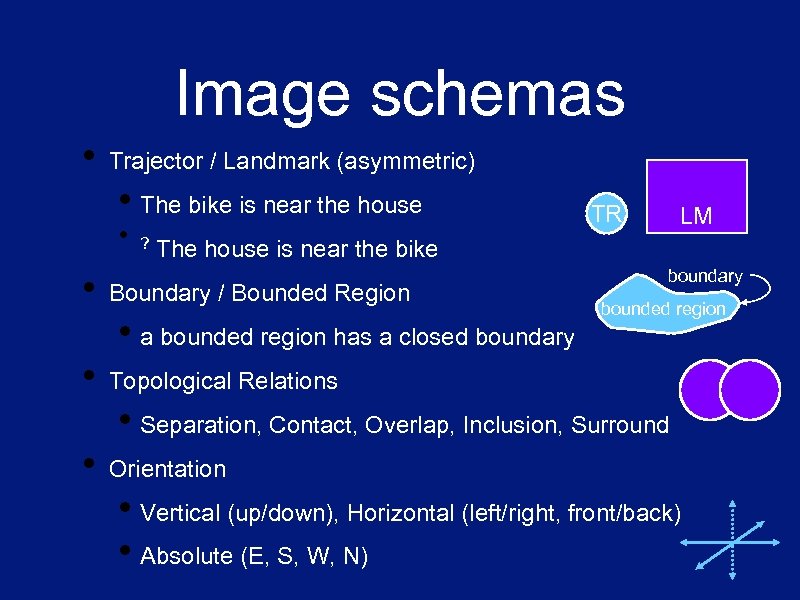
Image schemas • Trajector / Landmark (asymmetric) • The bike is near the house • ? The house is near the bike TR LM • Boundary / Bounded Region bounded region • a bounded region has a closed boundary • Topological Relations • Separation, Contact, Overlap, Inclusion, Surround • Orientation • Vertical (up/down), Horizontal (left/right, front/back) • Absolute (E, S, W, N) boundary
Similarity: • Perceptual and motor systems • Basic functional interactions with the world • Environment Variation: Cross-linguistic variation in how schemas are used.
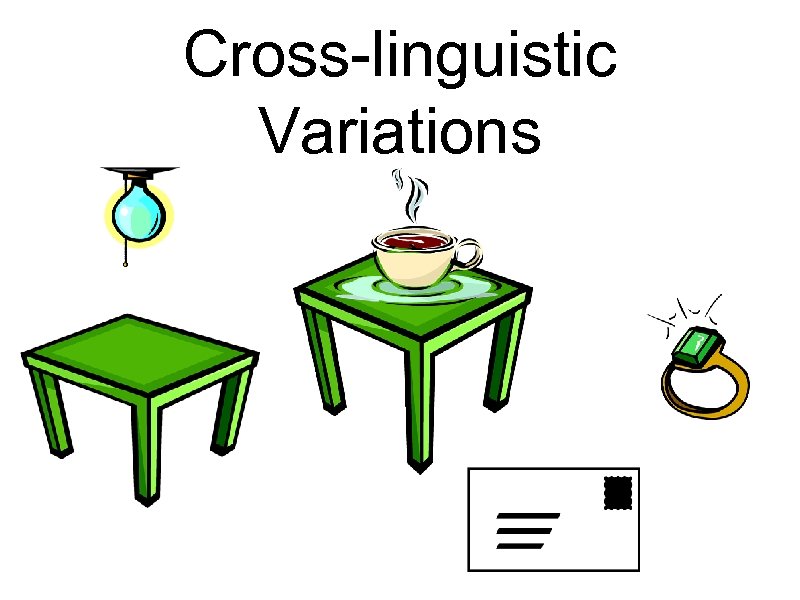
Cross-linguistic Variations
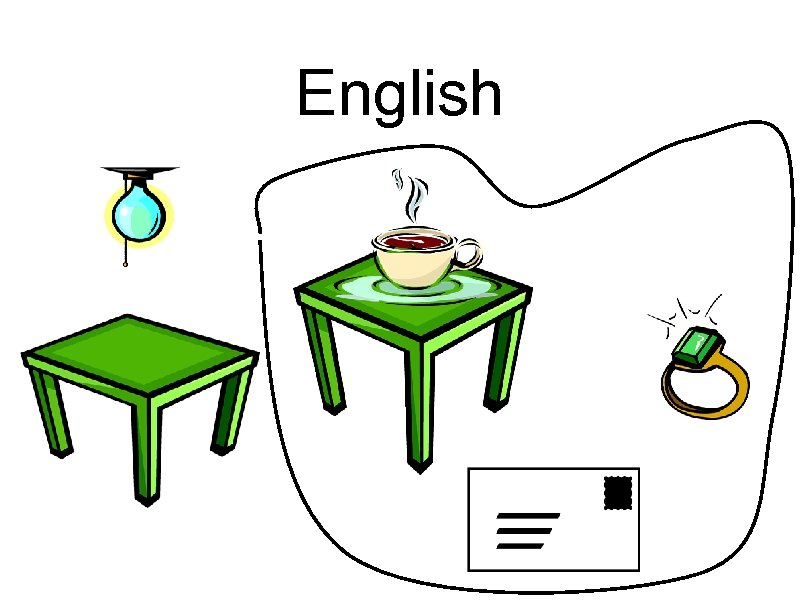
English
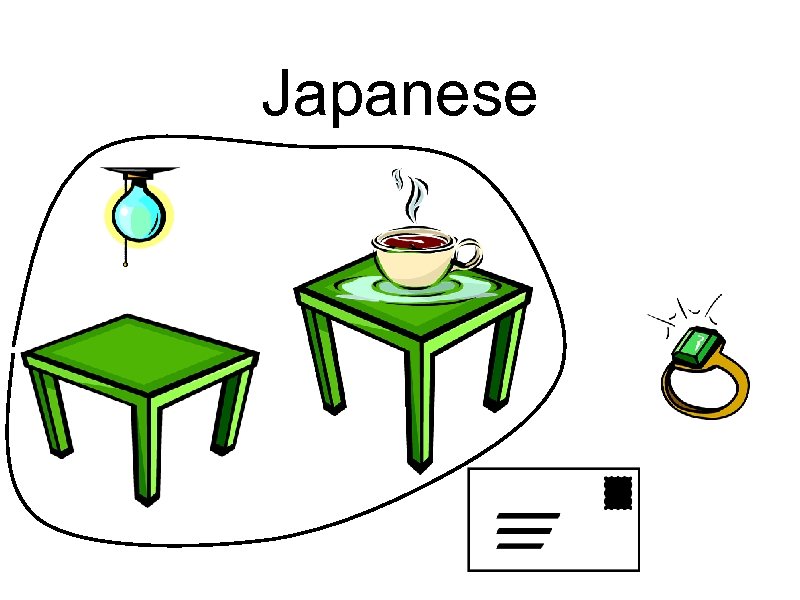
Japanese
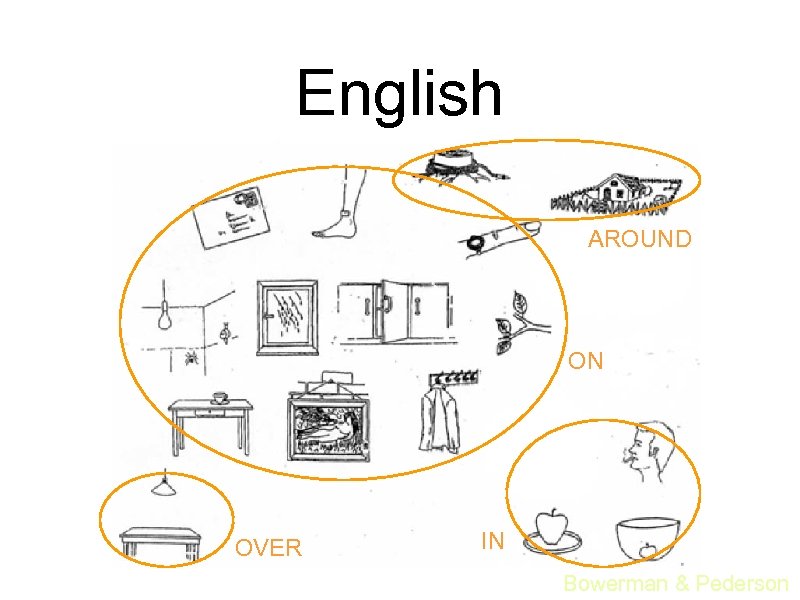
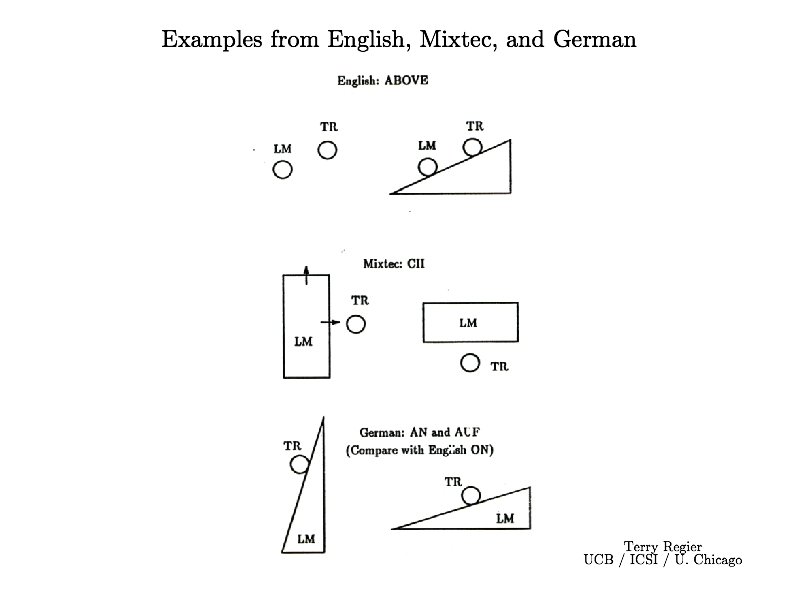
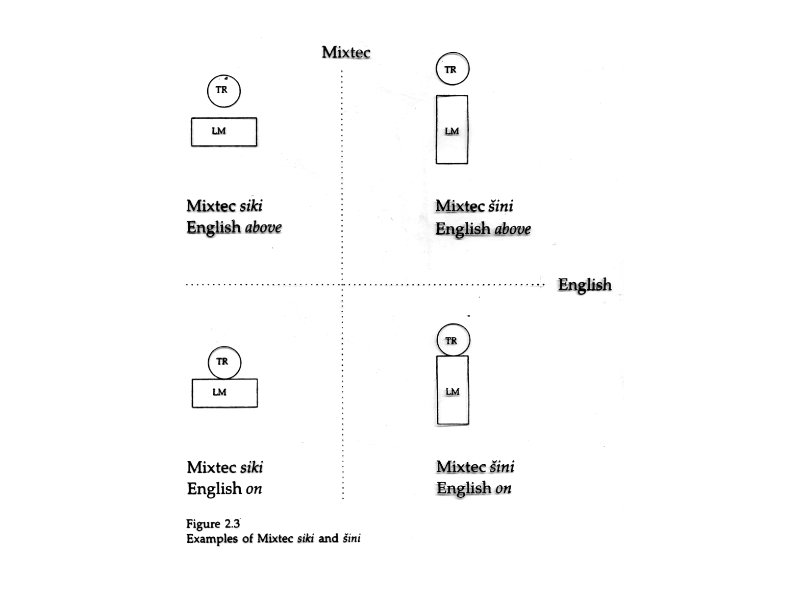
English AROUND ON OVER IN Bowerman & Pederson
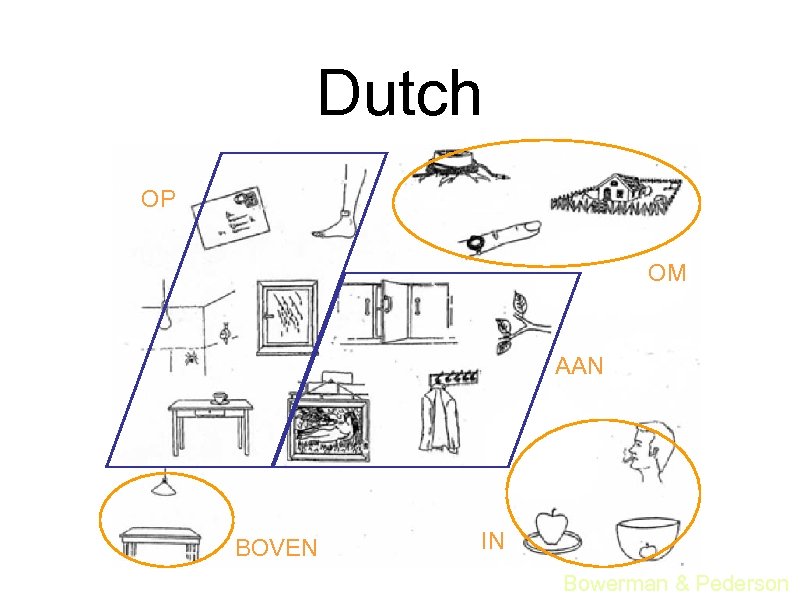
Dutch OP OM AAN BOVEN IN Bowerman & Pederson
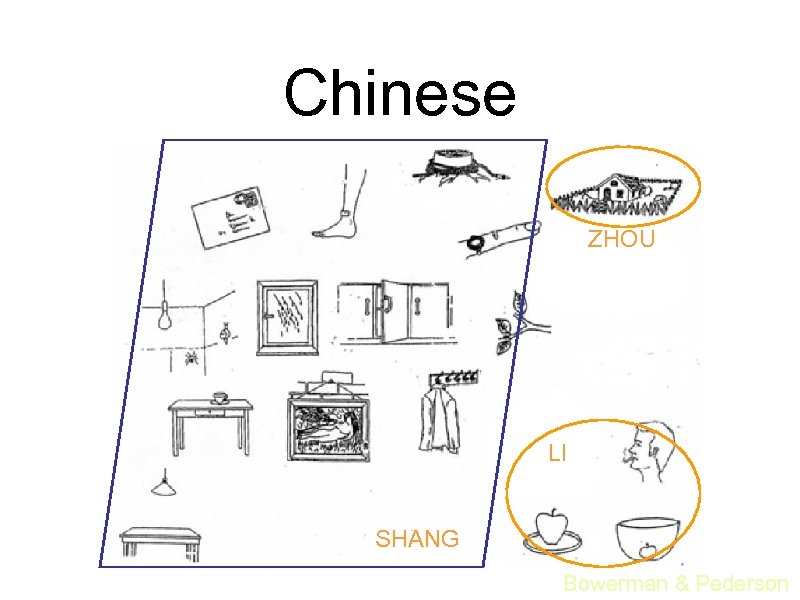
Chinese ZHOU LI SHANG Bowerman & Pederson
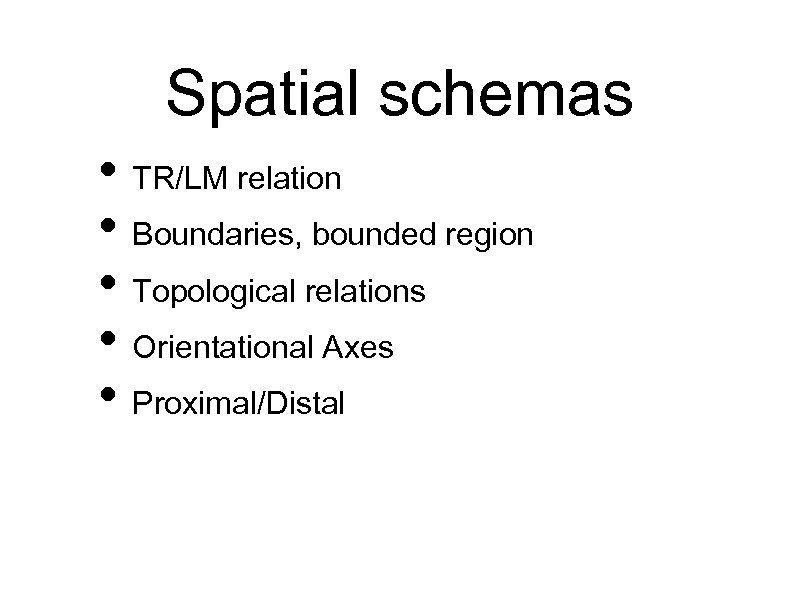
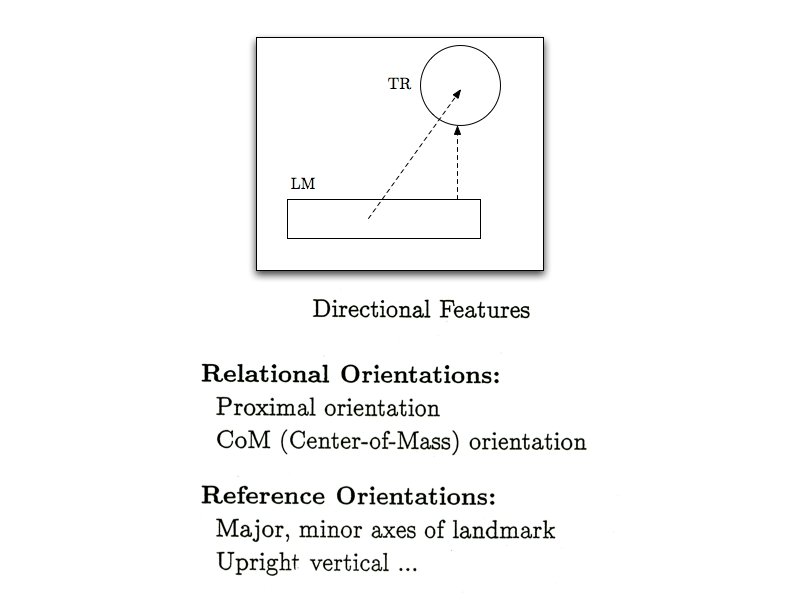
Spatial schemas • TR/LM relation • Boundaries, bounded region • Topological relations • Orientational Axes • Proximal/Distal
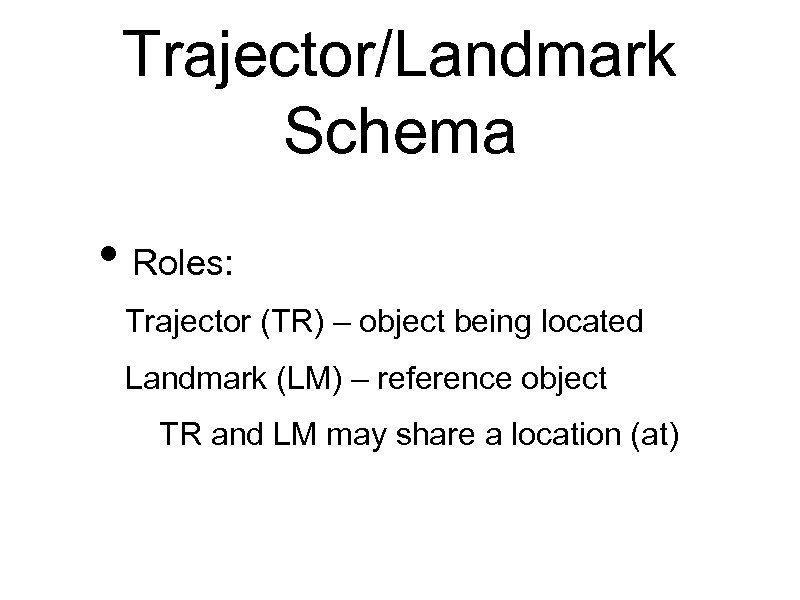
Trajector/Landmark Schema • Roles: Trajector (TR) – object being located Landmark (LM) – reference object TR and LM may share a location (at)
TR/LM -- asymmetry • The cup is on the table • ? The table is under the cup. • The skateboard is next to the post. • ? The post is next to the skateboard.
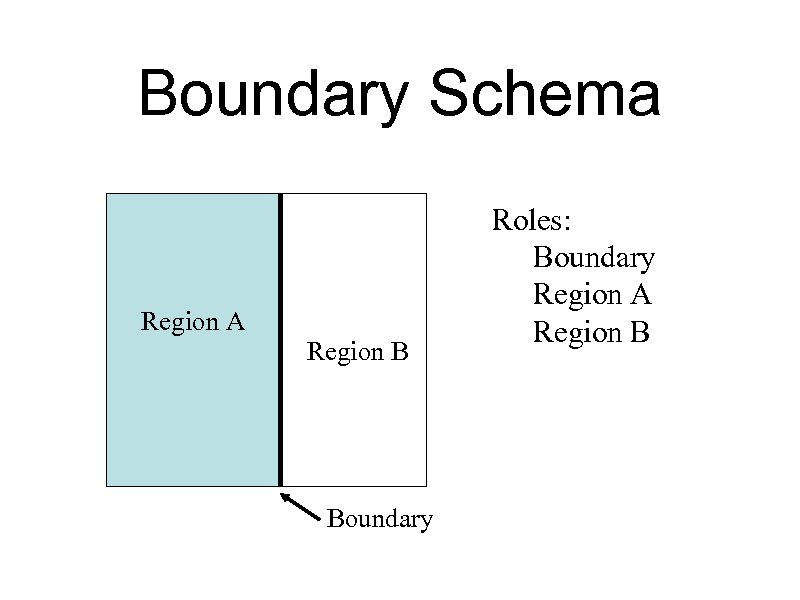
Boundary Schema Region A Region B Boundary Roles: Boundary Region A Region B
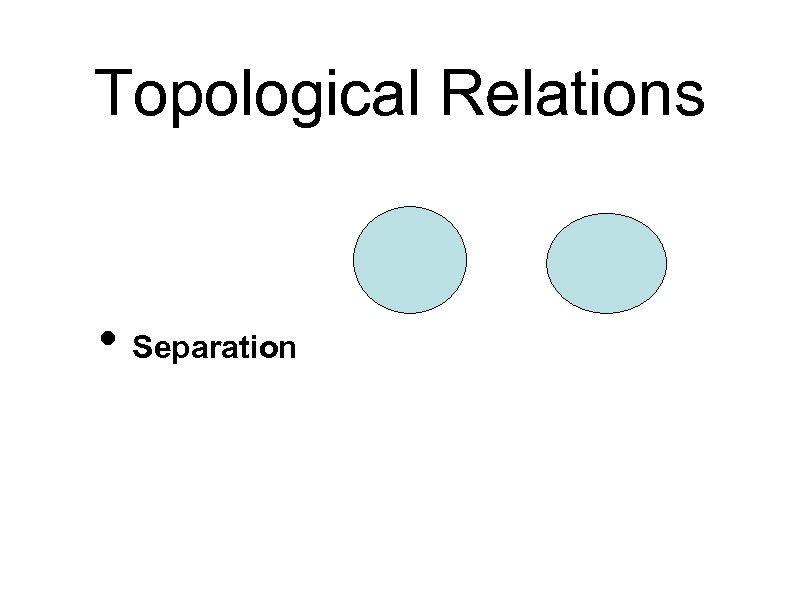
Topological Relations • Separation
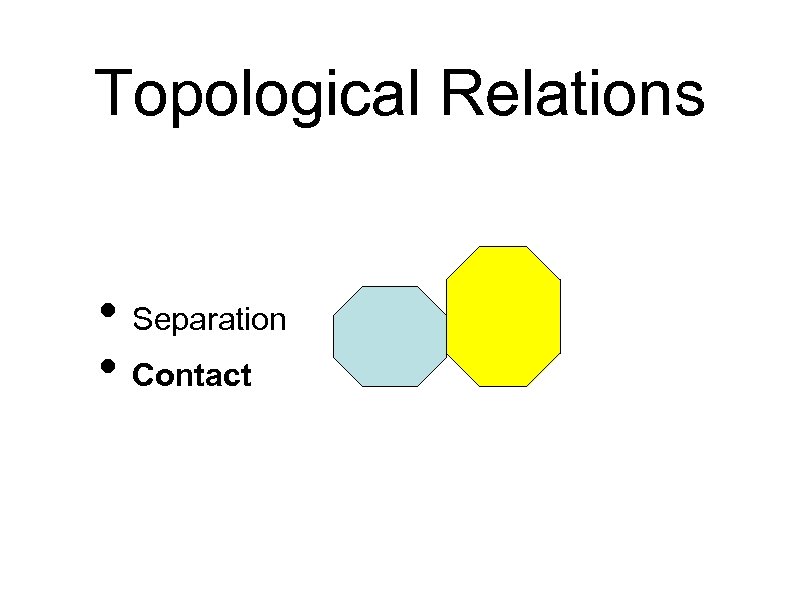
Topological Relations • Separation • Contact
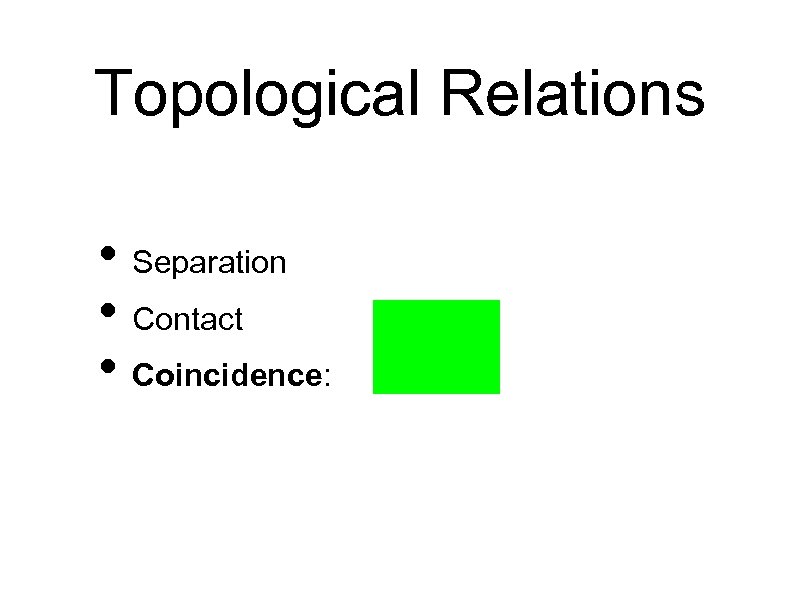
Topological Relations • Separation • Contact • Coincidence:
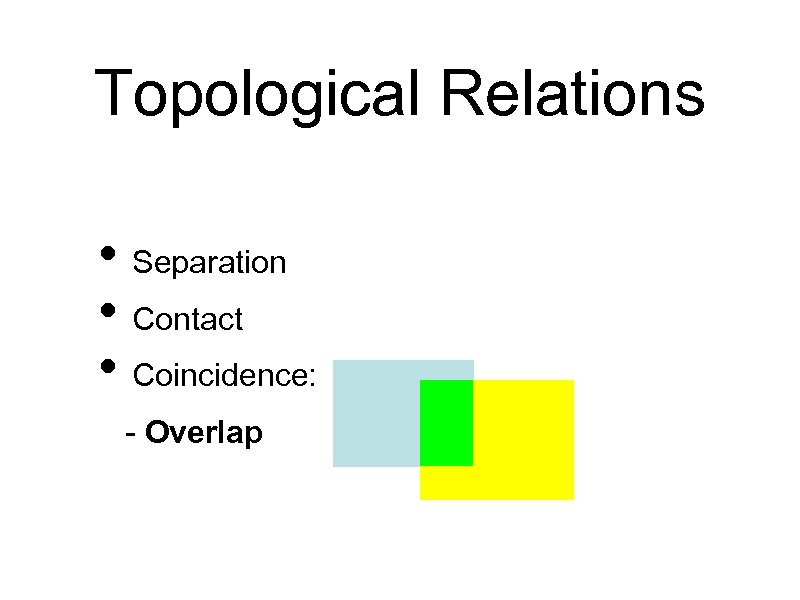
Topological Relations • Separation • Contact • Coincidence: - Overlap
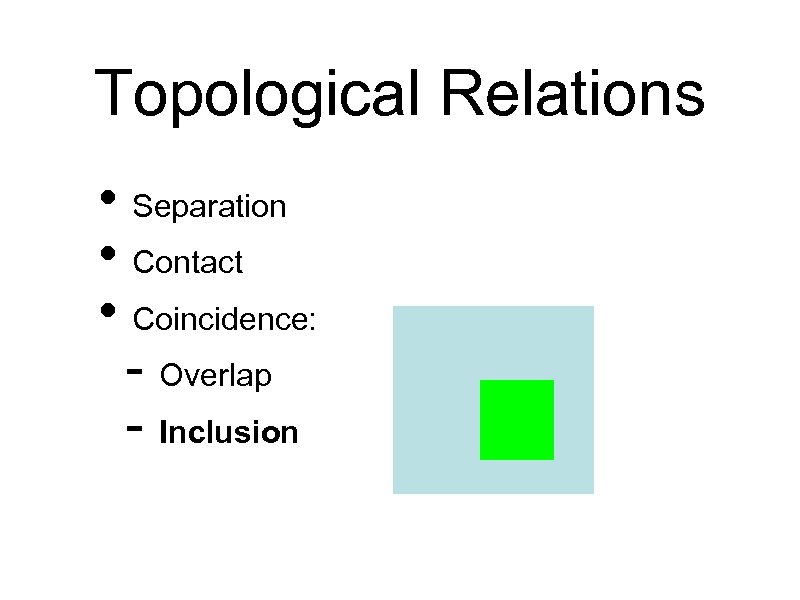
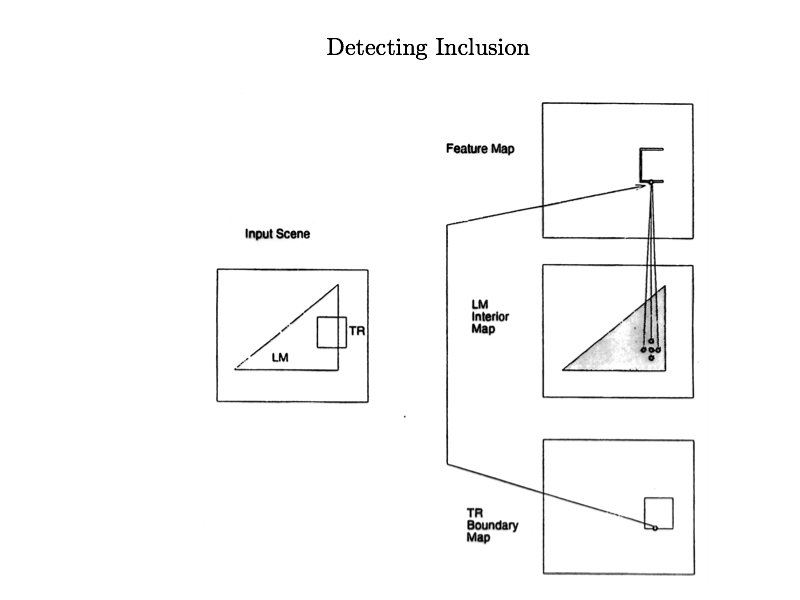
Topological Relations • Separation • Contact • Coincidence: - Overlap - Inclusion
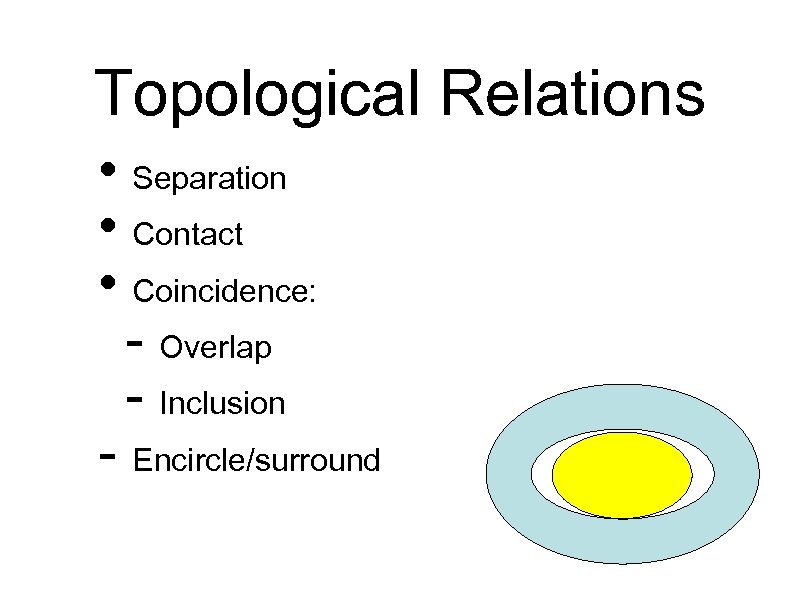
Topological Relations • Separation • Contact • Coincidence: - Overlap - Inclusion - Encircle/surround
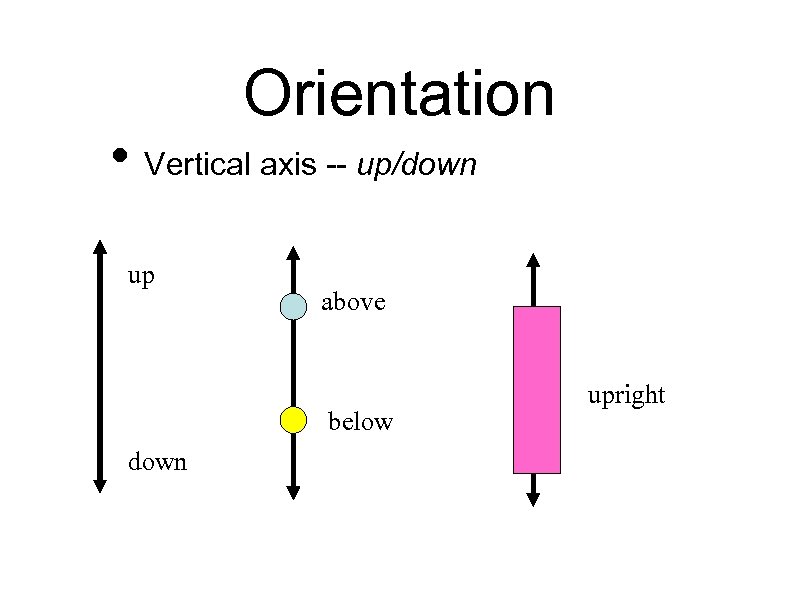
Orientation • Vertical axis -- up/down up above below down upright
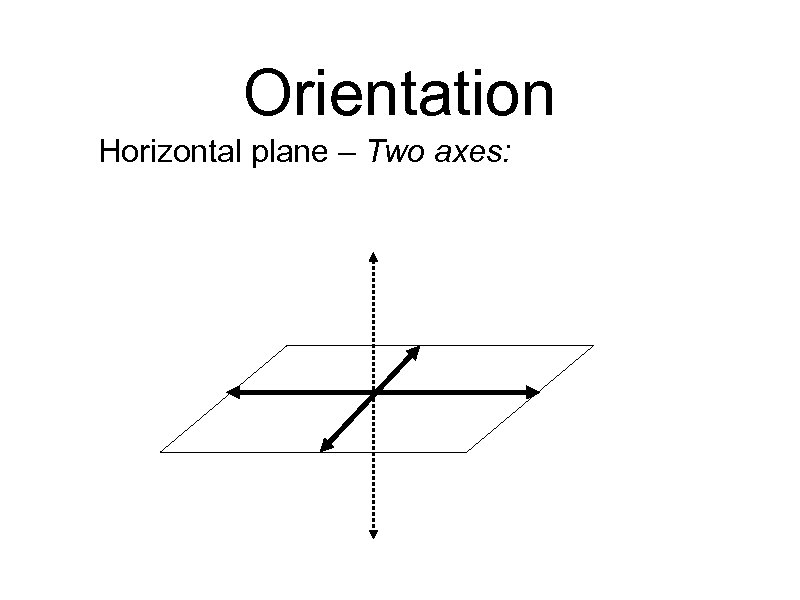
Orientation Horizontal plane – Two axes:
Language and Frames of Reference • There seem to be three prototypical frames of reference in language (Levinson) • Intrinsic • Relative • Absolute
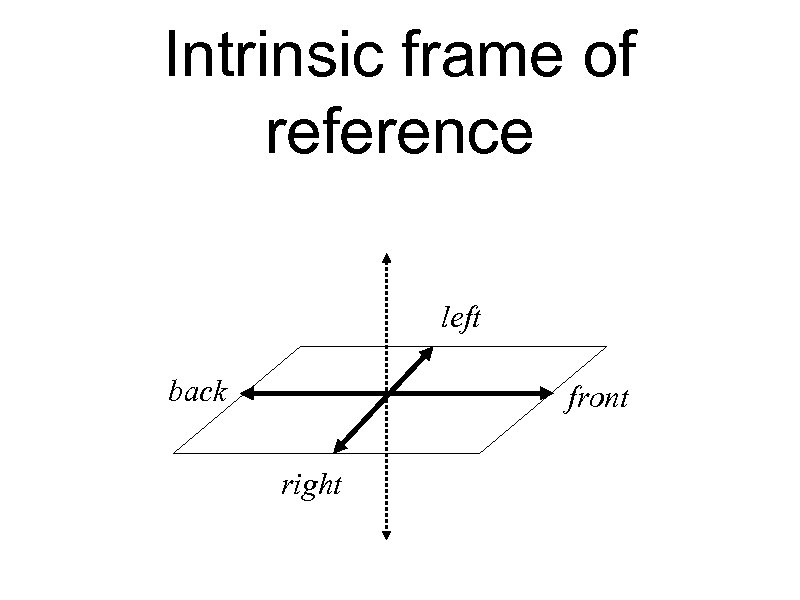
Intrinsic frame of reference left back front right
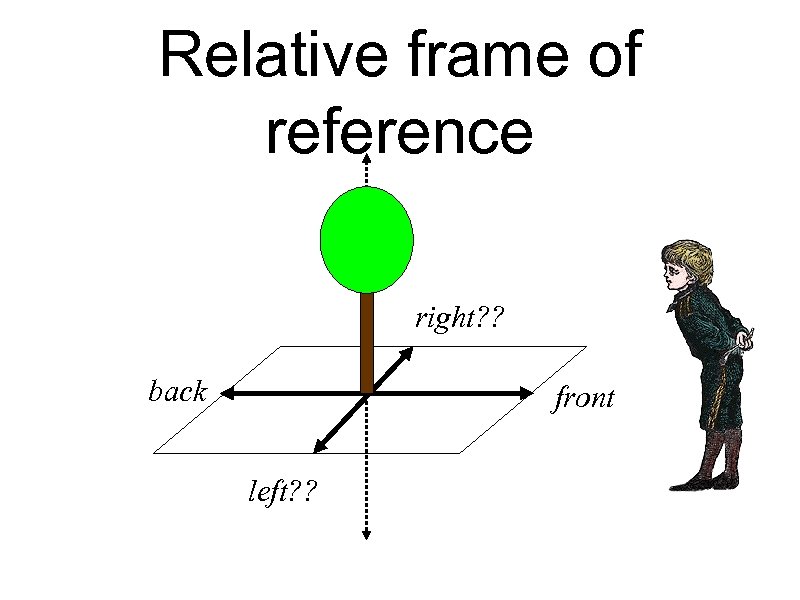
Relative frame of reference right? ? back front left? ?
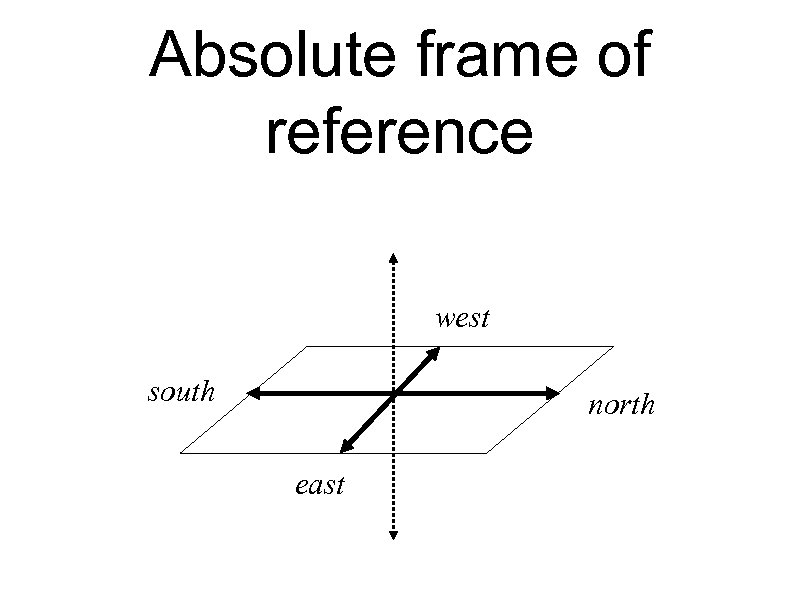
Absolute frame of reference west south north east
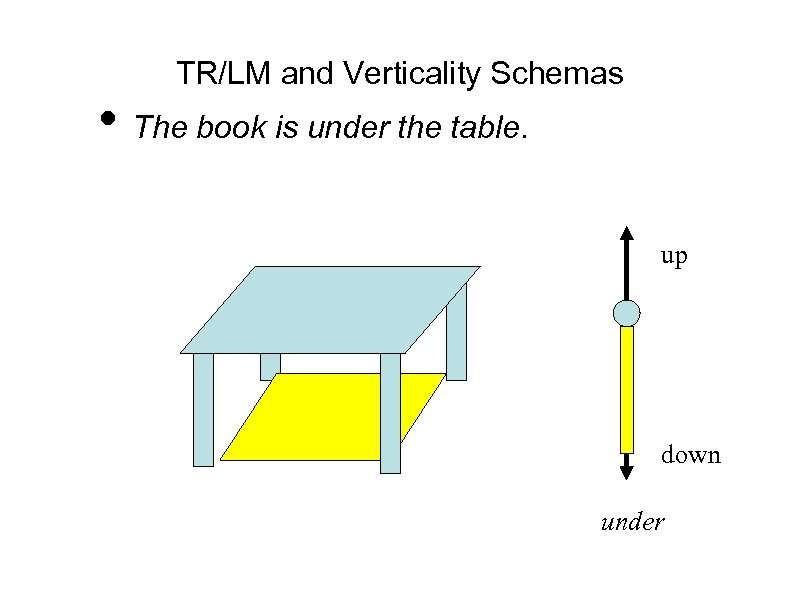
TR/LM and Verticality Schemas • The book is under the table. up down under
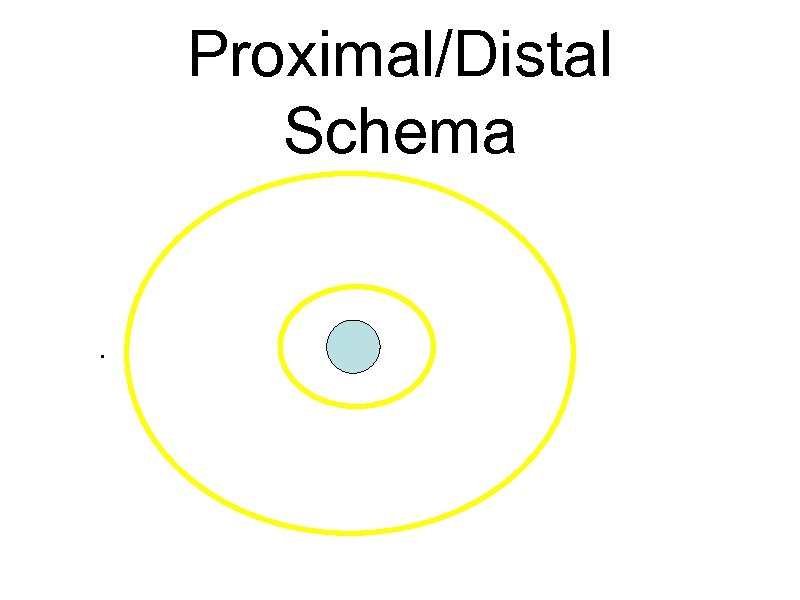
Proximal/Distal Schema .
Simple vs. Complex Schemas
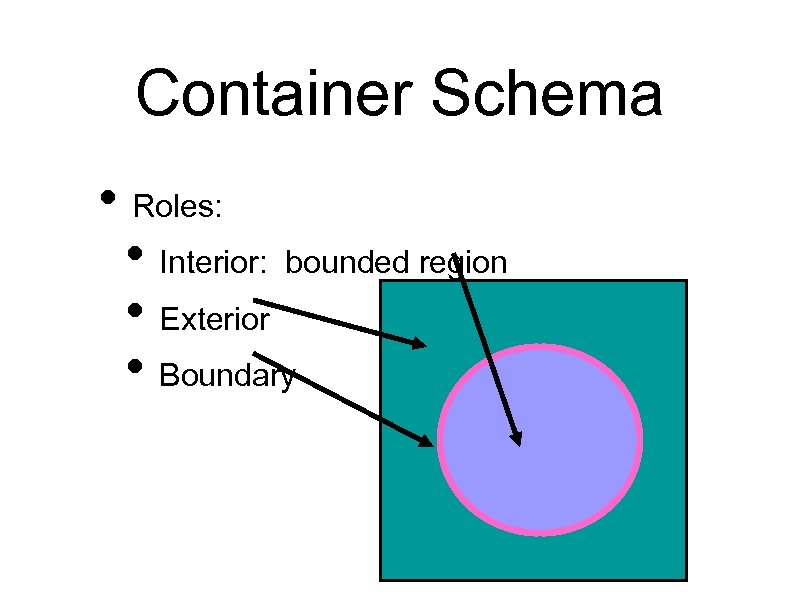
Container Schema • Roles: • Interior: bounded region • Exterior • Boundary C
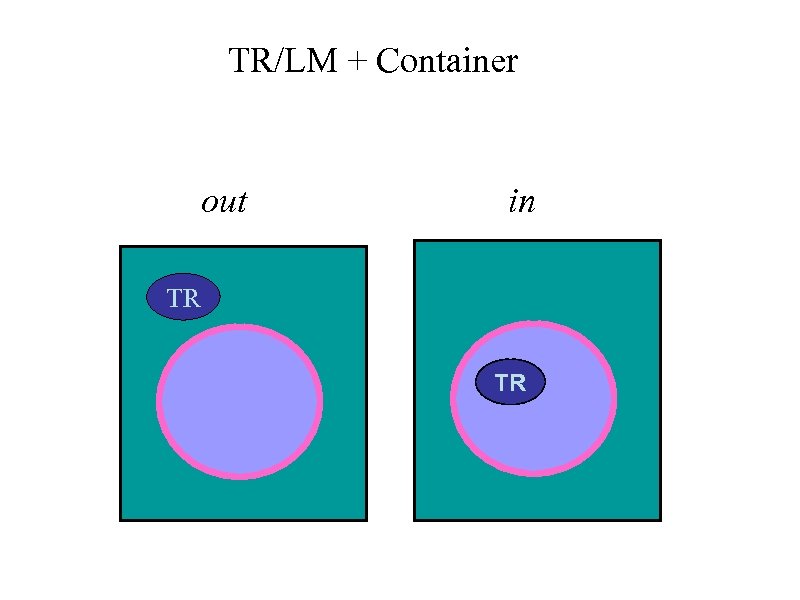
TR/LM + Container out in TR C
Container Schema Elaborated • Complexities –more roles/specifications: • Boundary properties • Strength • Porosity • Portals
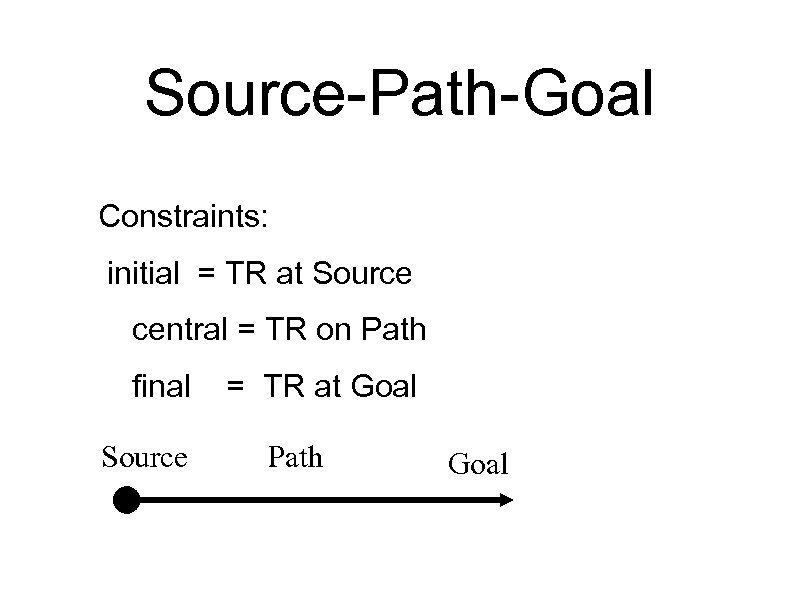
Source-Path-Goal Constraints: initial = TR at Source central = TR on Path final Source = TR at Goal Path Goal
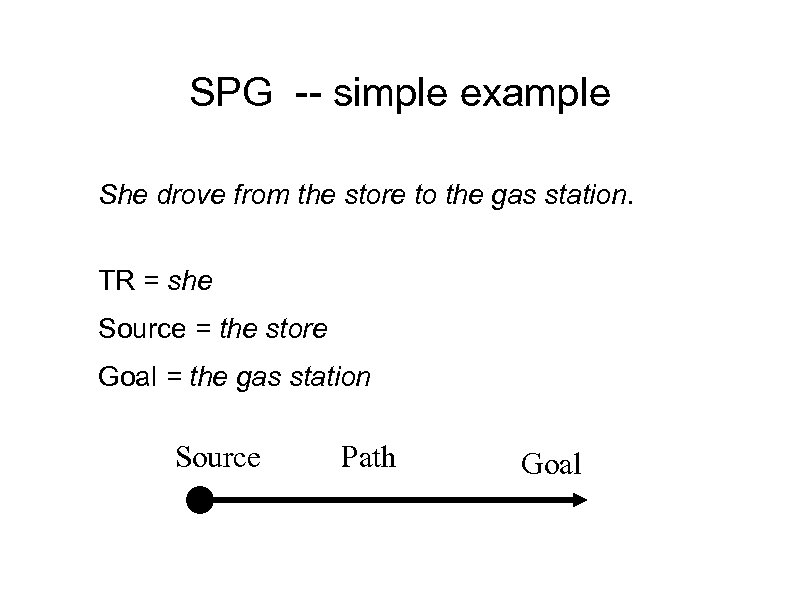
SPG -- simple example She drove from the store to the gas station. TR = she Source = the store Goal = the gas station Source Path Goal
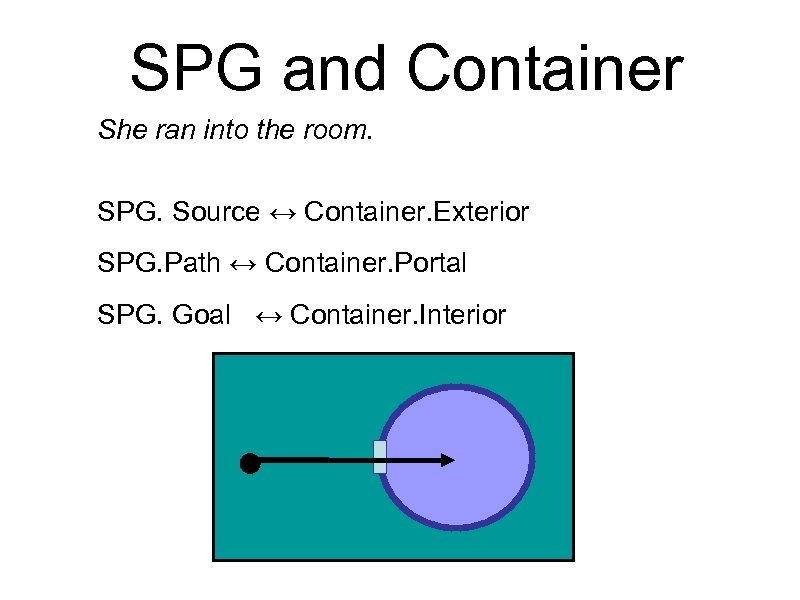
SPG and Container She ran into the room. SPG. Source ↔ Container. Exterior SPG. Path ↔ Container. Portal SPG. Goal ↔ Container. Interior
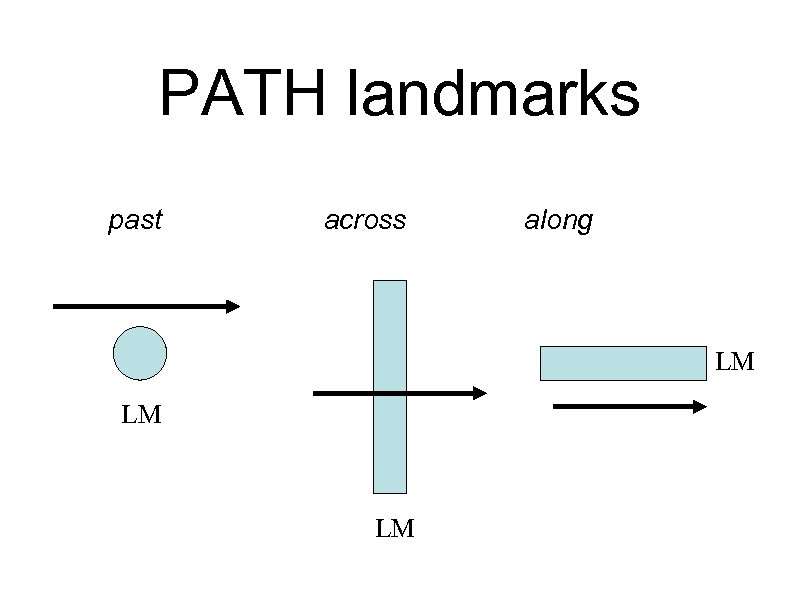
PATH landmarks past across along LM LM LM
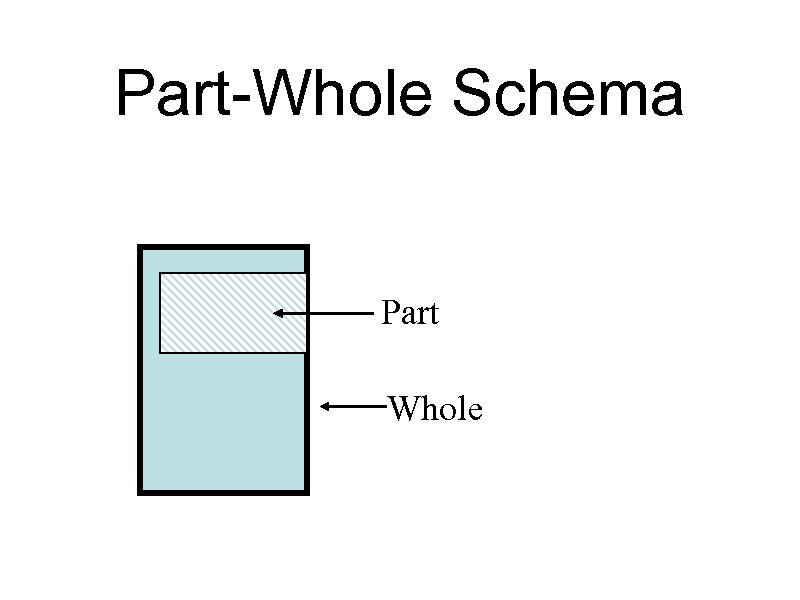
Part-Whole Schema Part Whole
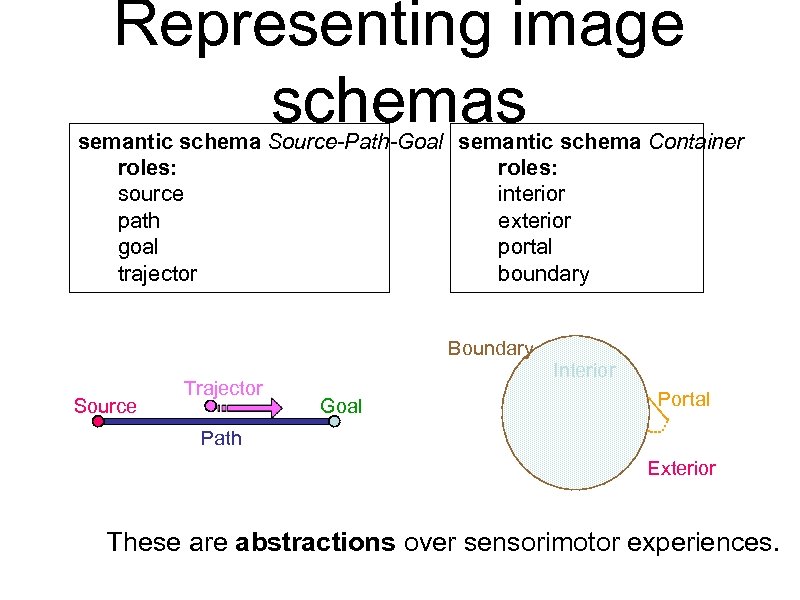
Representing image schemas semantic schema Source-Path-Goal semantic schema Container roles: source interior path exterior goal portal trajector boundary Boundary Source Trajector Goal Interior Portal Path Exterior These are abstractions over sensorimotor experiences.
Language and Spatial Schemas • • People say that they look up to some people, but look down on others because those we deem worthy of respect are somehow “above” us, and those we deem unworthy are somehow “beneath” us. But why does respect run along a vertical axis (or any spatial axis, for that matter)? Much of our language is rich with such spatial talk. Concrete actions such as a push or a lift clearly imply a vertical or horizontal motion, but so too can more abstract concepts. Metaphors: Arguments can go “back and forth, ” and hopes can get “too high. ”
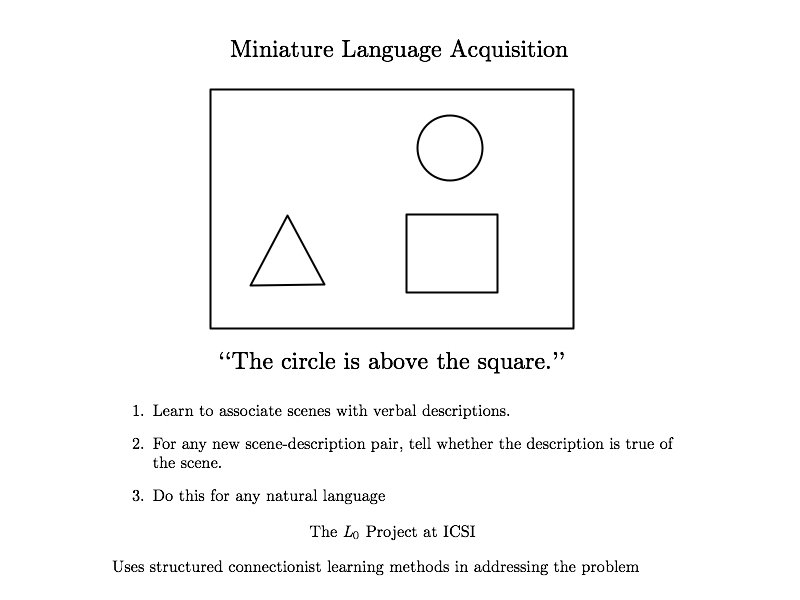
Regier Model Lecture Jerome A. Feldman February 27, 2007 With help from Matt Gedigian
Neural Theory of Language
Language Development in Children • 0 -3 mo: prefers sounds in native language • 3 -6 mo: imitation of vowel sounds only • 6 -8 mo: babbling in consonant-vowel segments • 8 -10 mo: word comprehension, starts to lose sensitivity to consonants outside native language • 12 -13 mo: word production (naming) • 16 -20 mo: word combinations, relational words (verbs, adj. ) • 24 -36 mo: grammaticization, inflectional morphology • 3 years – adulthood: vocab. growth, sentence-level grammar for discourse purposes
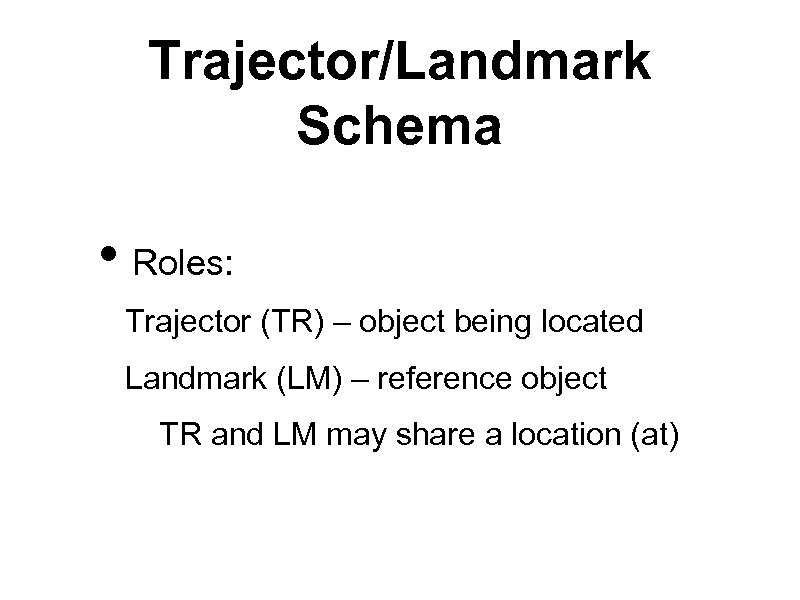
Trajector/Landmark Schema • Roles: Trajector (TR) – object being located Landmark (LM) – reference object TR and LM may share a location (at)
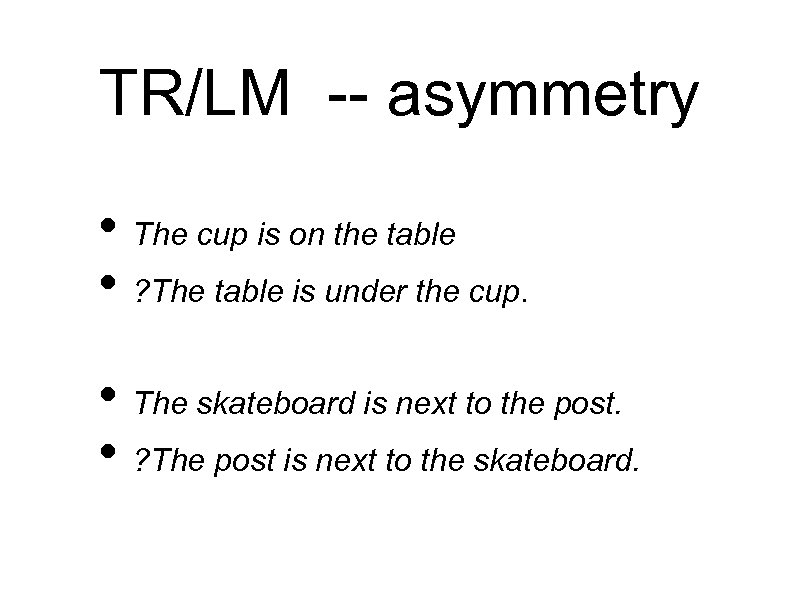
TR/LM -- asymmetry • The cup is on the table • ? The table is under the cup. • The skateboard is next to the post. • ? The post is next to the skateboard.
Language and Frames of Reference • There seem to be three prototypical frames of reference in language (Levinson) • Intrinsic • Relative • Absolute
Basis of Image Schemas • Perceptual systems • Motor routines • Social Cognition • Image Schema properties depend on • Neural circuits • Interactions with the world
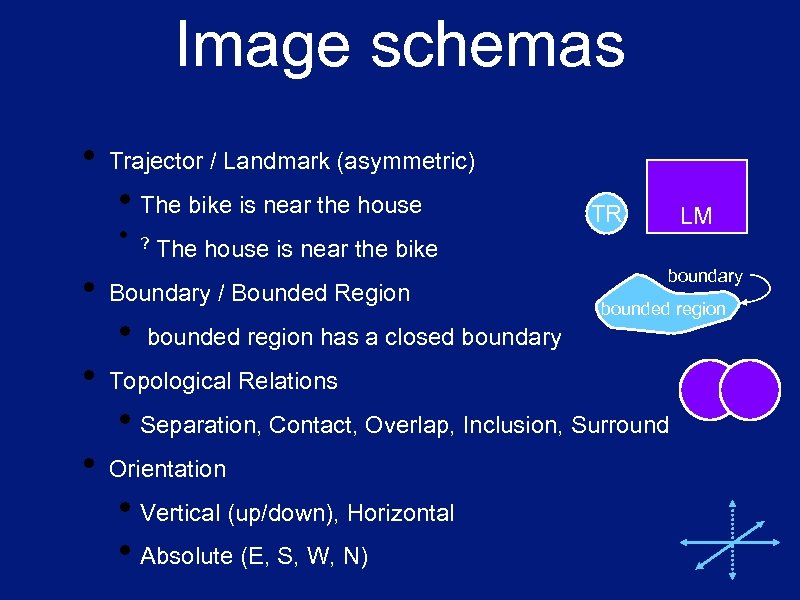
Image schemas • Trajector / Landmark (asymmetric) • The bike is near the house • ? The house is near the bike TR LM • Boundary / Bounded Region bounded region • bounded region has a closed boundary • Topological Relations • Separation, Contact, Overlap, Inclusion, Surround • Orientation • Vertical (up/down), Horizontal • Absolute (E, S, W, N) boundary
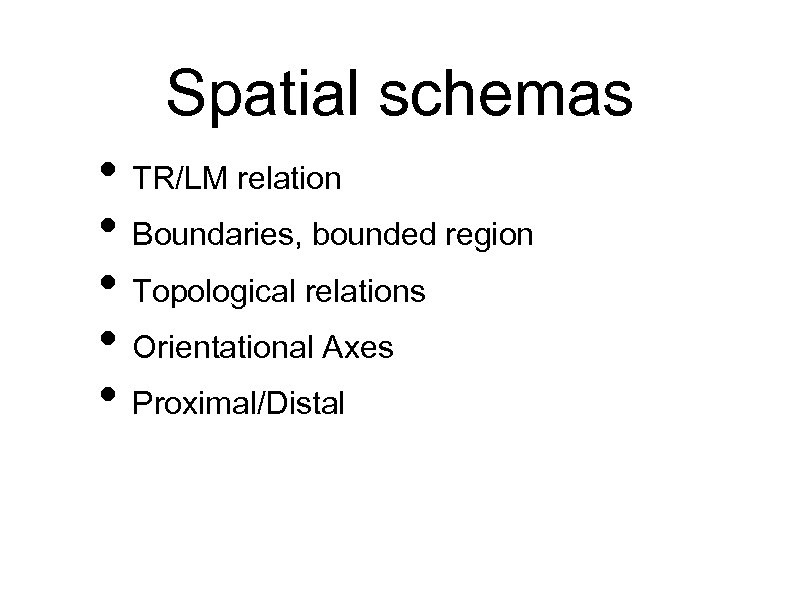
Spatial schemas • TR/LM relation • Boundaries, bounded region • Topological relations • Orientational Axes • Proximal/Distal
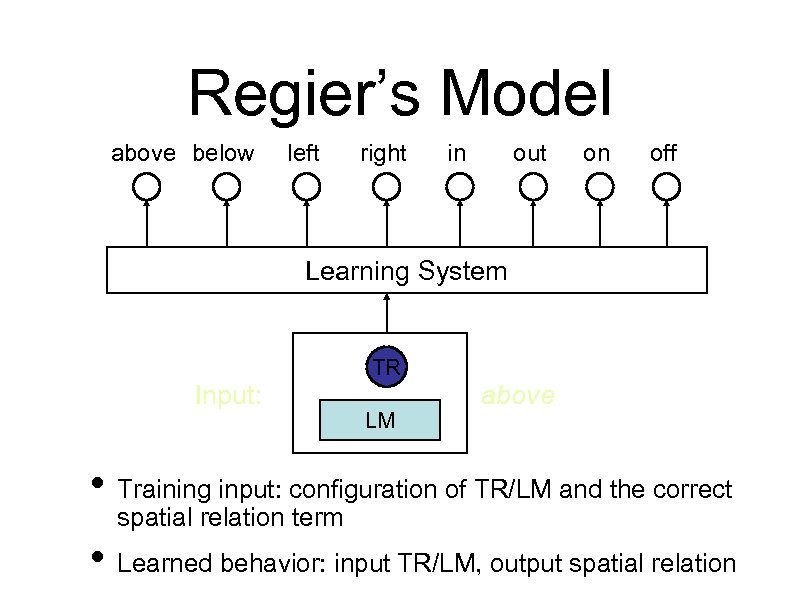
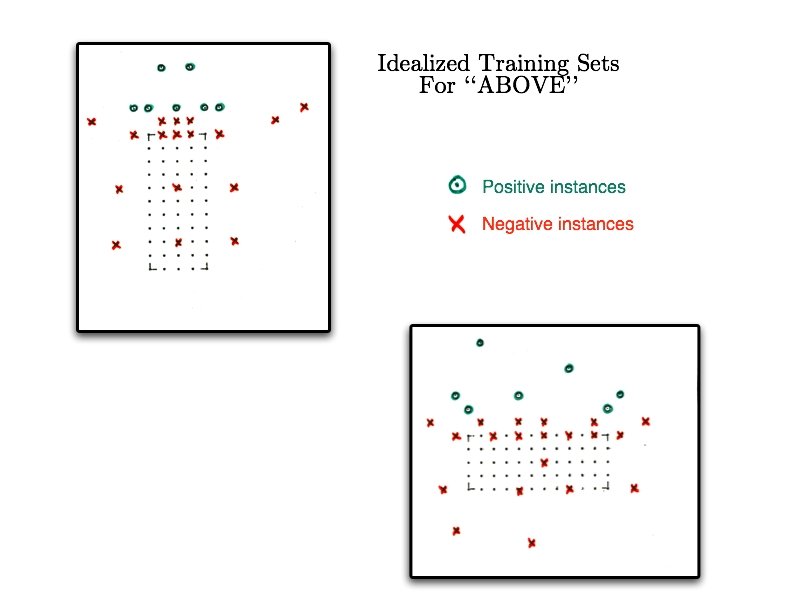
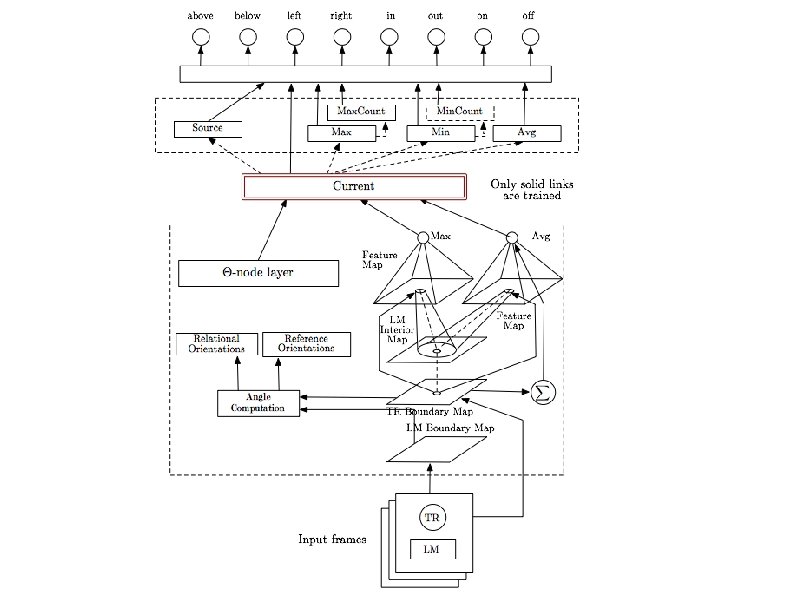
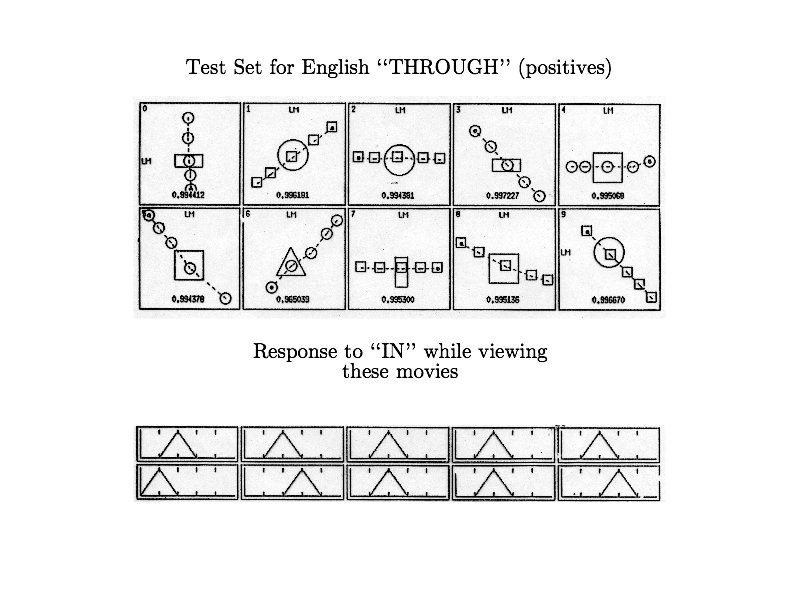
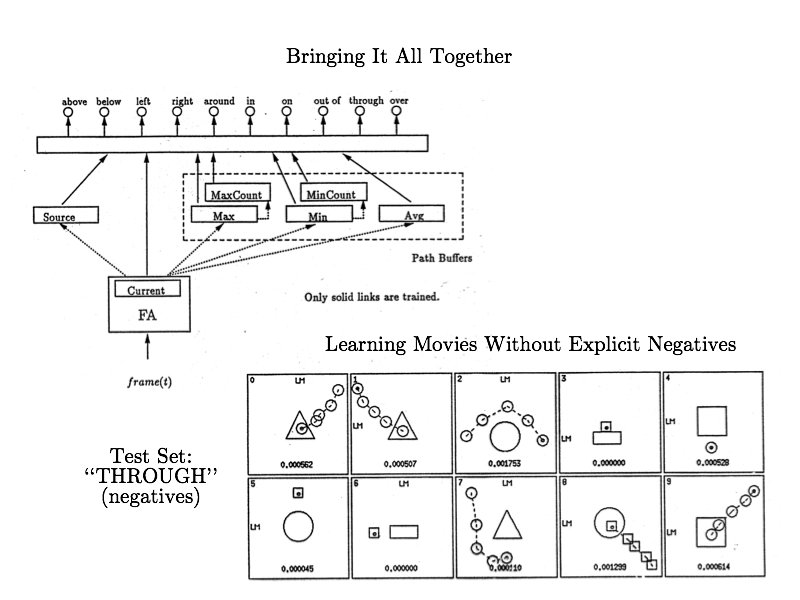
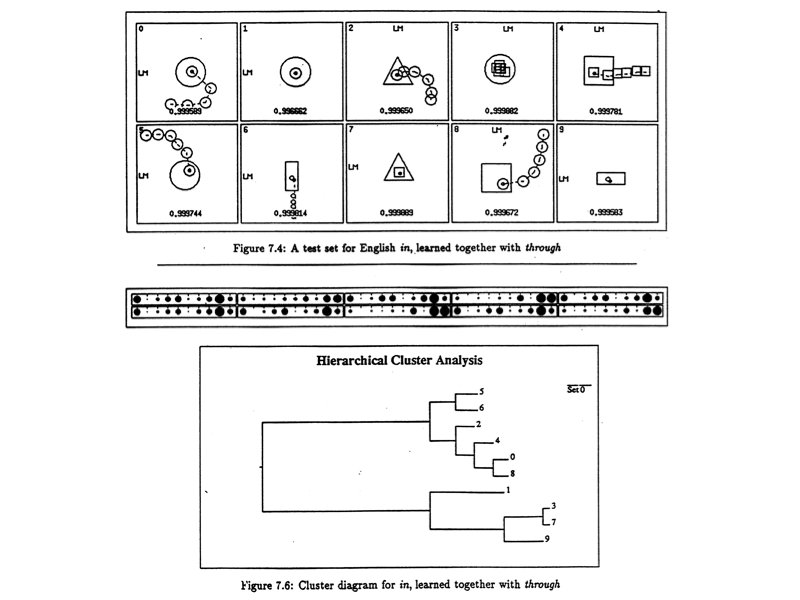
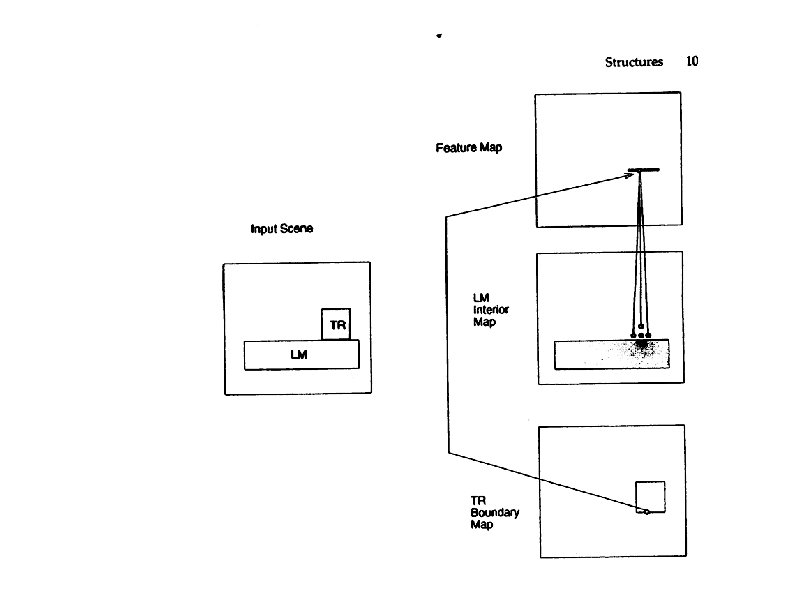
Regier’s Model above below left right in out on off Learning System Input: TR LM above • Training input: configuration of TR/LM and the correct spatial relation term • Learned behavior: input TR/LM, output spatial relation
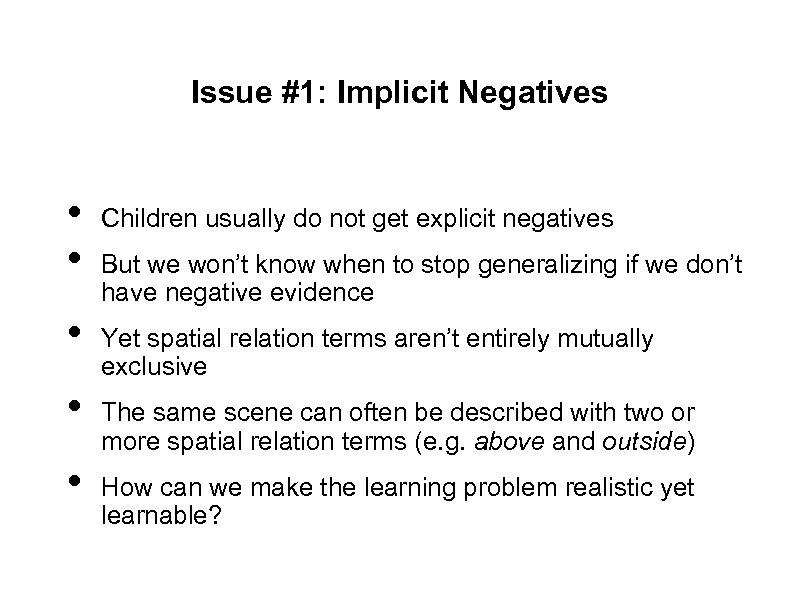
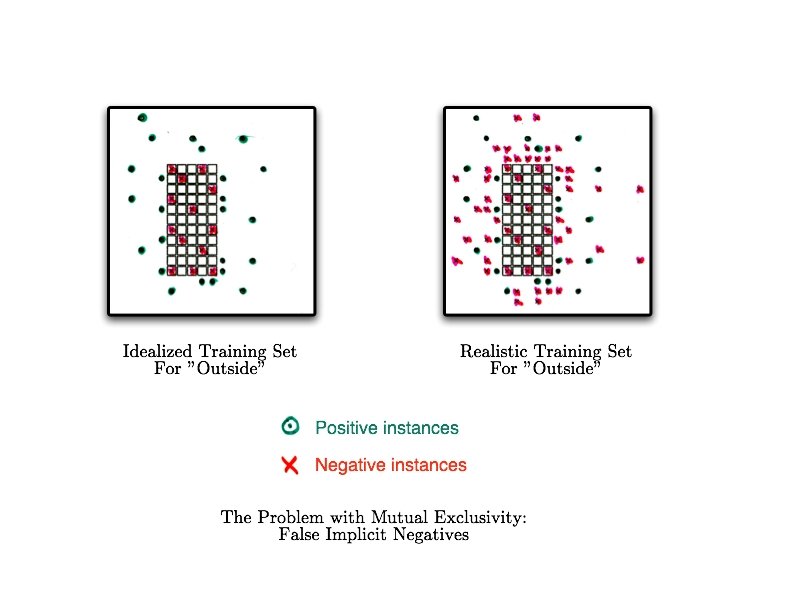
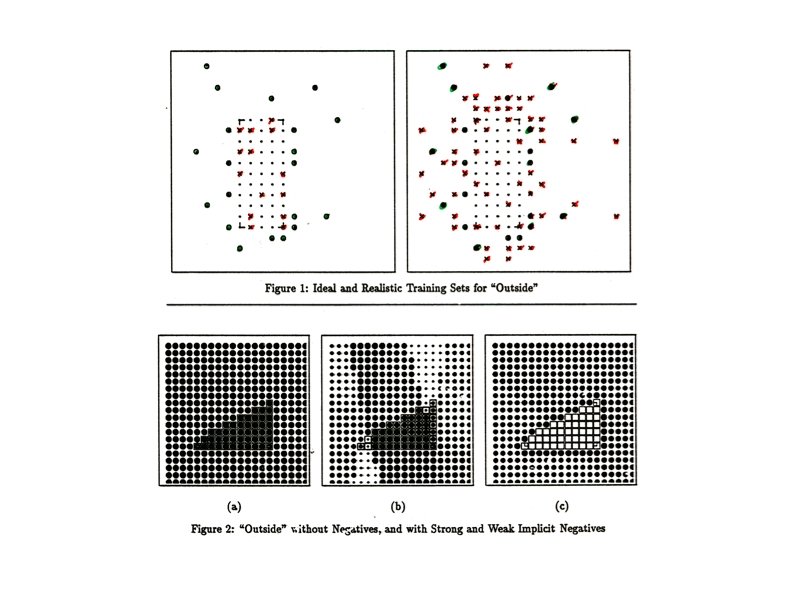
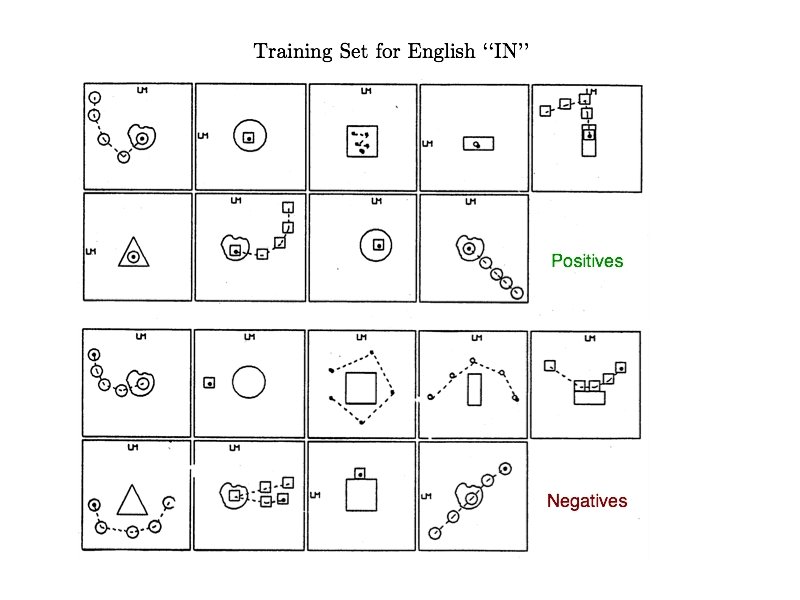
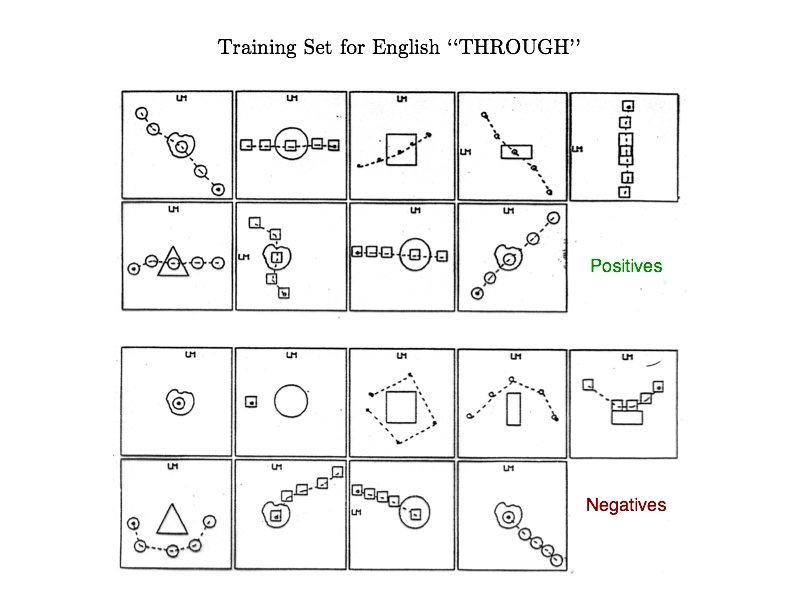
Issue #1: Implicit Negatives • • • Children usually do not get explicit negatives But we won’t know when to stop generalizing if we don’t have negative evidence Yet spatial relation terms aren’t entirely mutually exclusive The same scene can often be described with two or more spatial relation terms (e. g. above and outside) How can we make the learning problem realistic yet learnable?
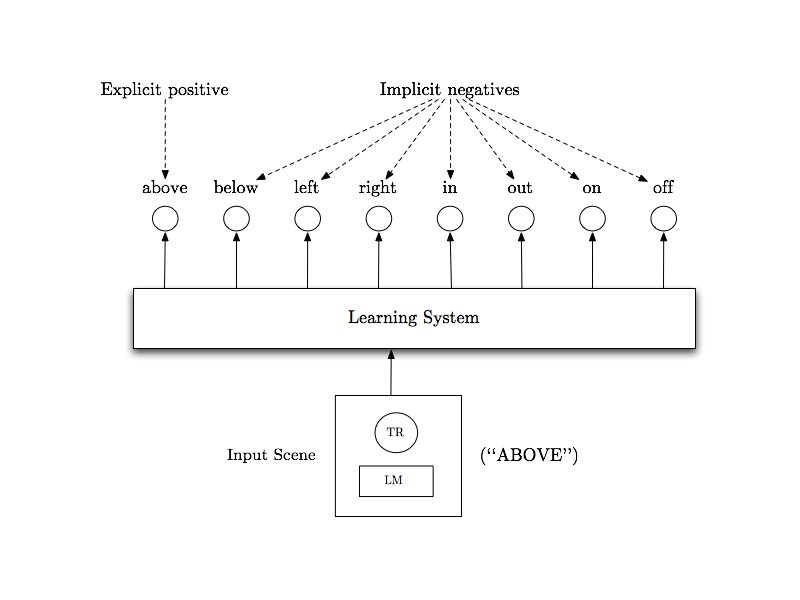
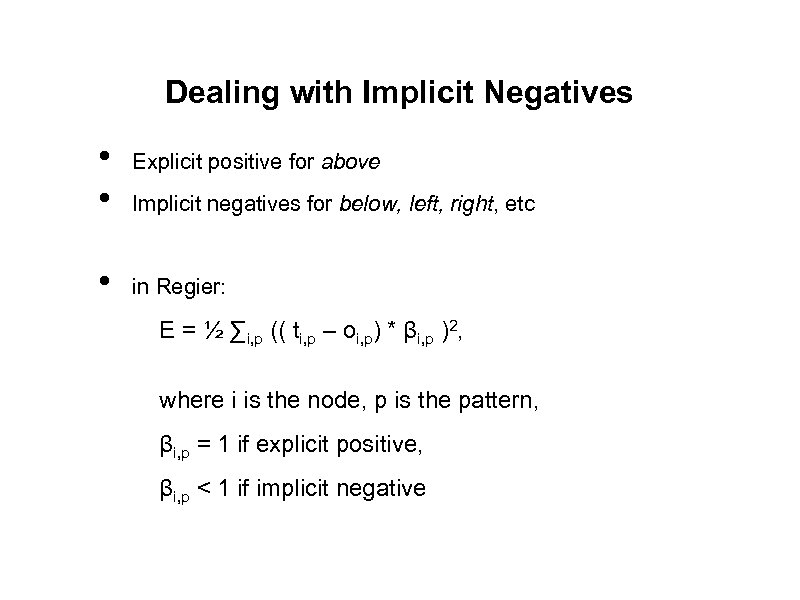
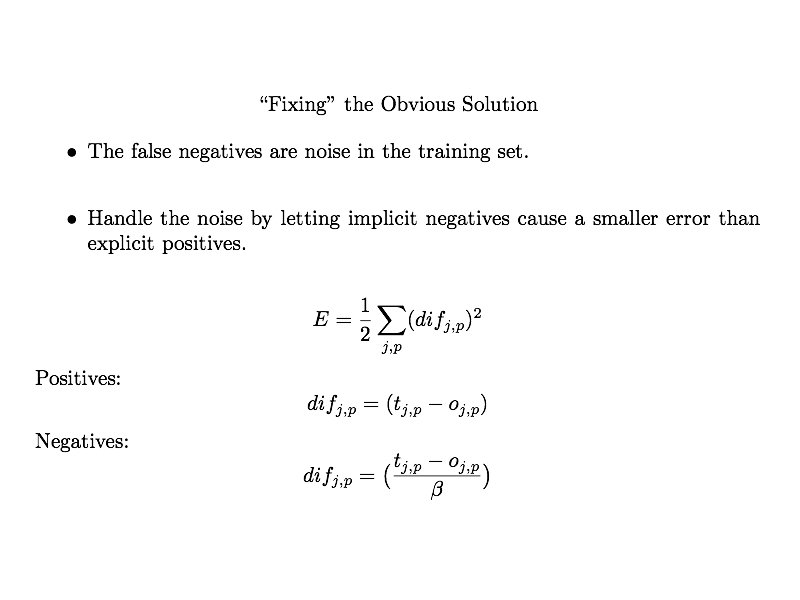
Dealing with Implicit Negatives • • • Explicit positive for above Implicit negatives for below, left, right, etc in Regier: E = ½ ∑i, p (( ti, p – oi, p) * βi, p )2, where i is the node, p is the pattern, βi, p = 1 if explicit positive, βi, p < 1 if implicit negative
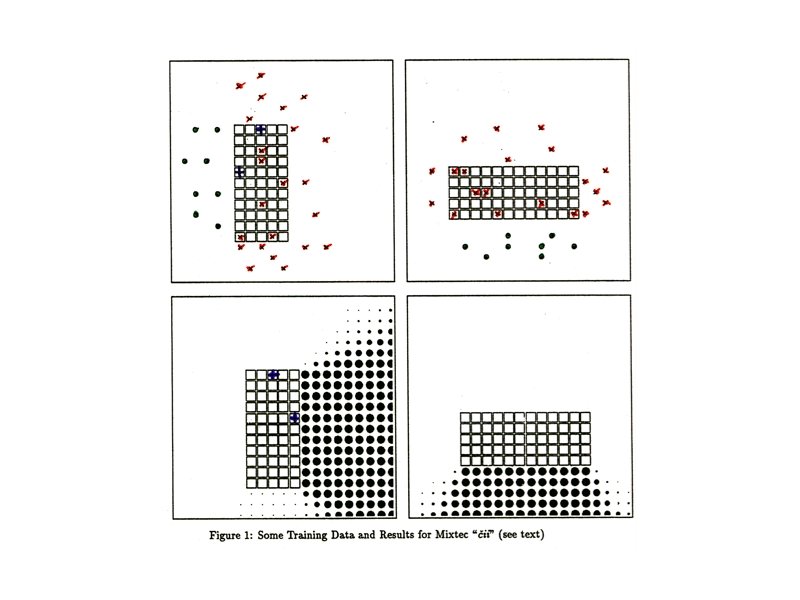
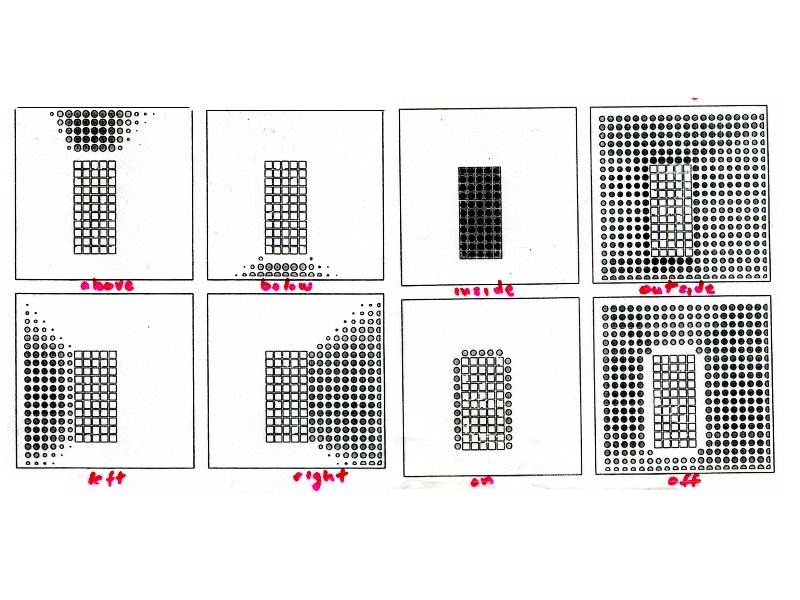
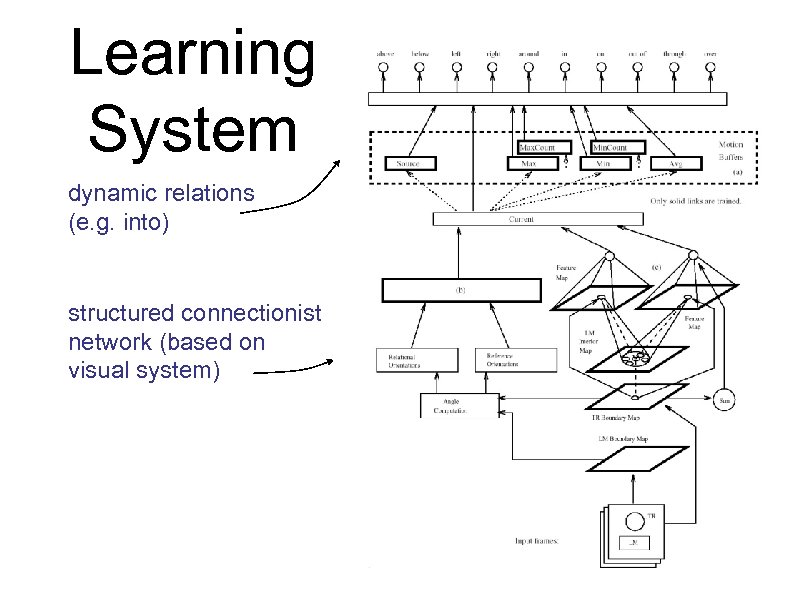
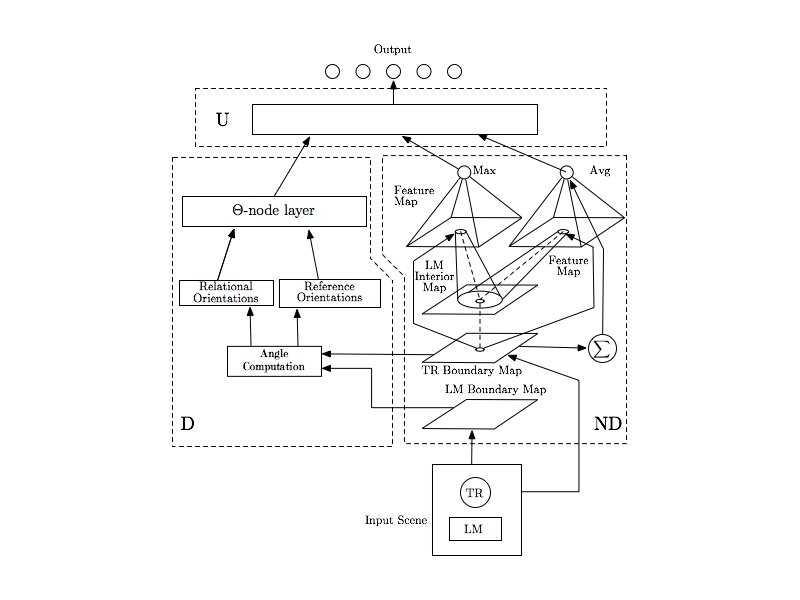
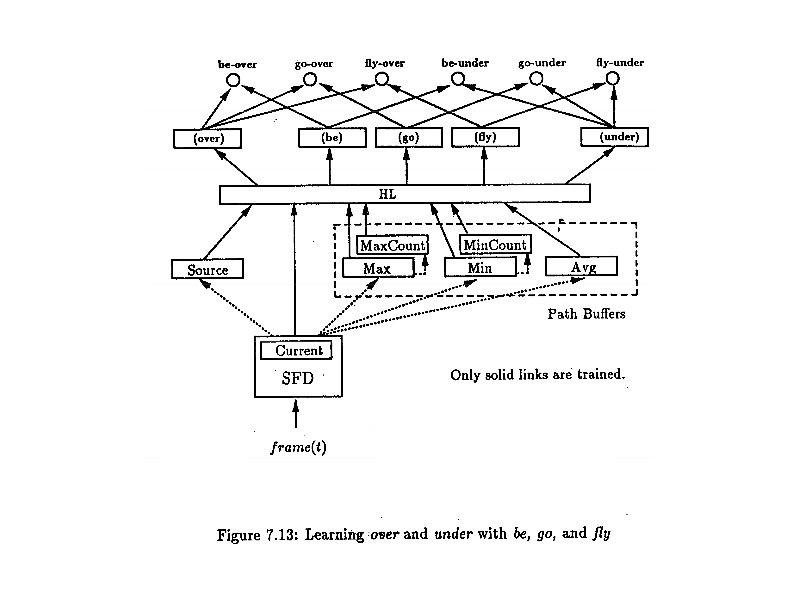
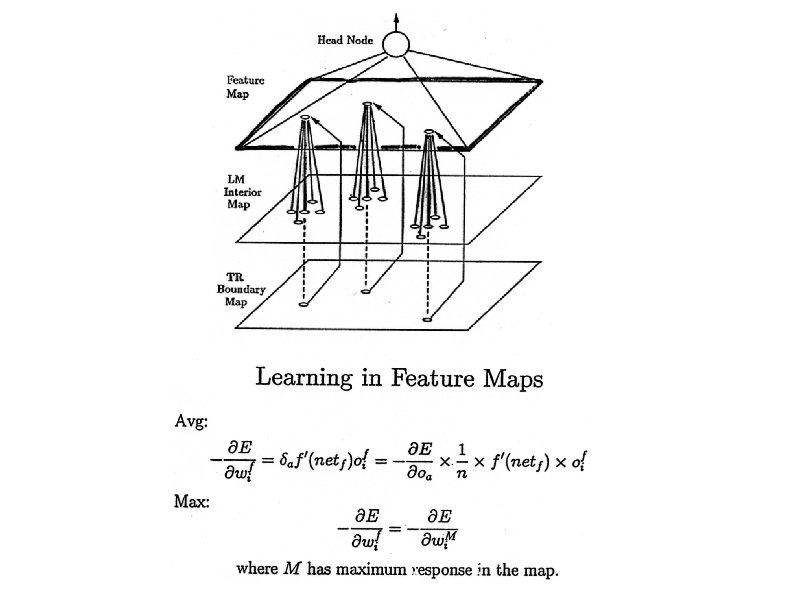
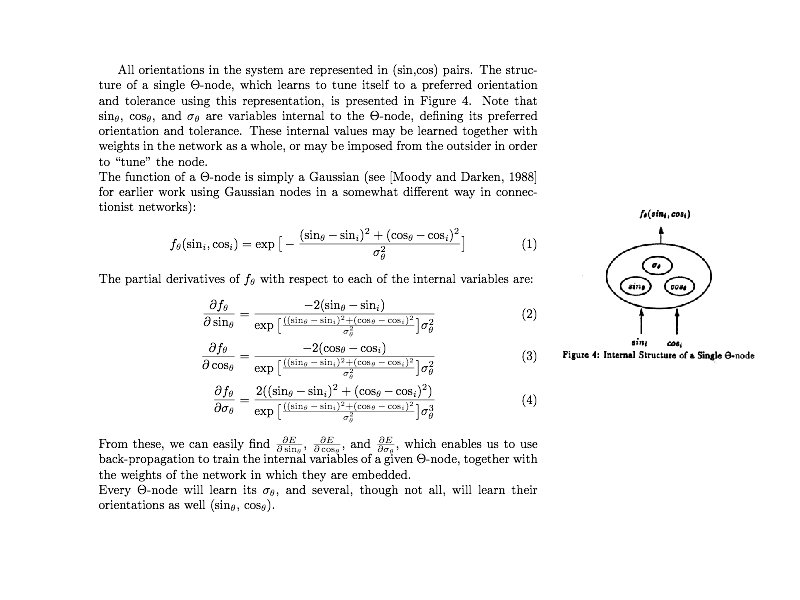
Learning System dynamic relations (e. g. into) structured connectionist network (based on visual system)
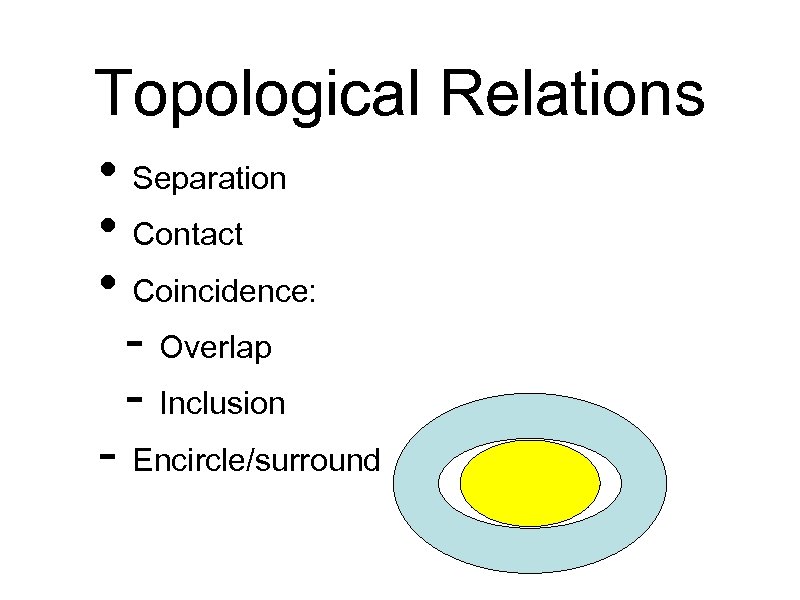
Topological Relations • Separation • Contact • Coincidence: - Overlap - Inclusion - Encircle/surround
Issue #2: Shift Invariance • • • Backprop cannot handle shift invariance (it cannot generalize from 0011, 0110 to 1100) But the cup is on the table whether you see it right in the center or from the corner of your eyes (i. e. in different areas of the retina map) What structure can we utilize to make the input shift-invariant?
Limitations • Scale • Uniqueness/Plausibility • Grammar • Abstract Concepts • Inference • Representation
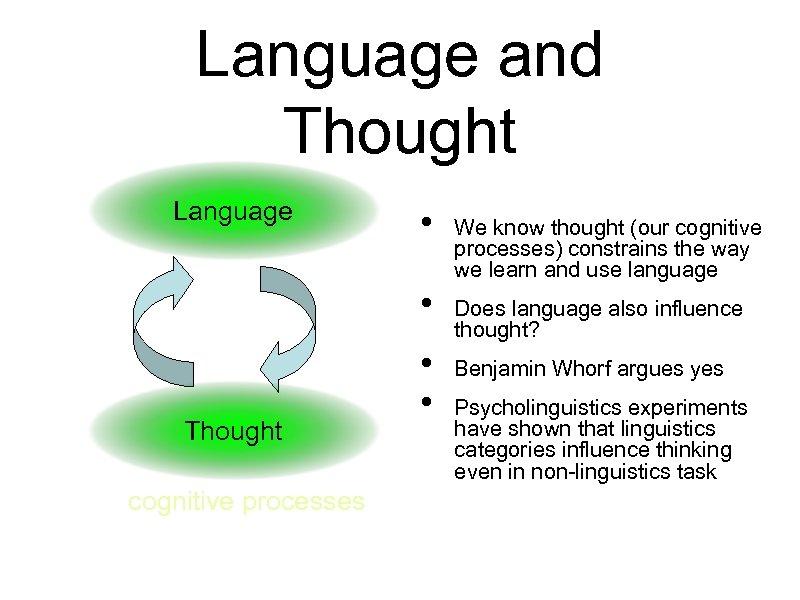
Language and Thought Language • • Thought cognitive processes • • We know thought (our cognitive processes) constrains the way we learn and use language Does language also influence thought? Benjamin Whorf argues yes Psycholinguistics experiments have shown that linguistics categories influence thinking even in non-linguistics task
Скачать презентацию Unified Cognitive Science Neurobiology Psychology
eaaff06a74532c9d0917be37f23a3f84.ppt