 Скачать презентацию UNICEF s work in humanitarian situations 10 October 2013
227e1bc801c5cf841baa3d7793fccce2.ppt
- Количество слайдов: 21



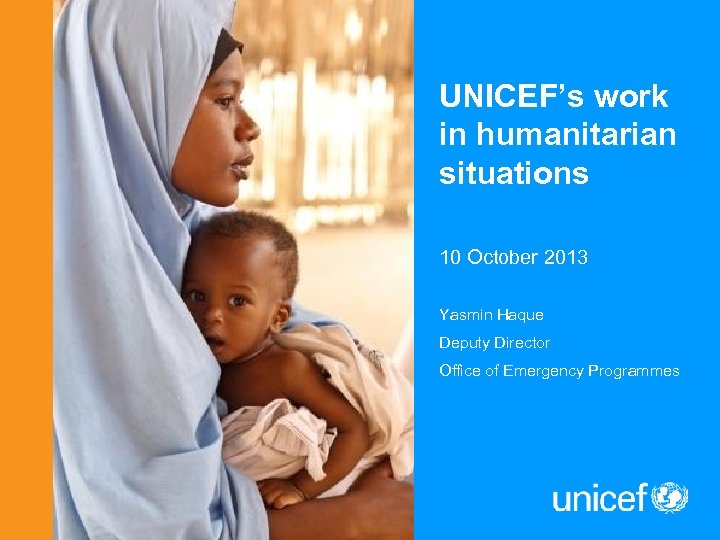
UNICEF’s work in humanitarian situations 10 October 2013 Yasmin Haque Deputy Director Office of Emergency Programmes
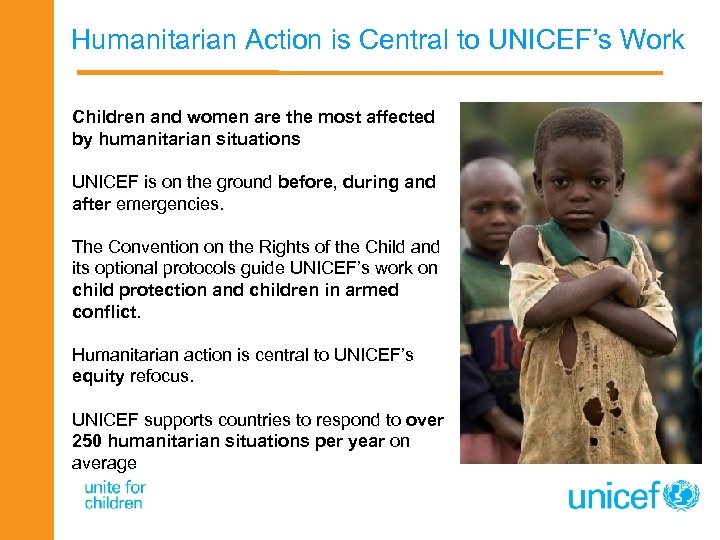
Humanitarian Action is Central to UNICEF’s Work Children and women are the most affected by humanitarian situations UNICEF is on the ground before, during and after emergencies. The Convention on the Rights of the Child and its optional protocols guide UNICEF’s work on child protection and children in armed conflict. Humanitarian action is central to UNICEF’s equity refocus. UNICEF supports countries to respond to over 250 humanitarian situations per year on average
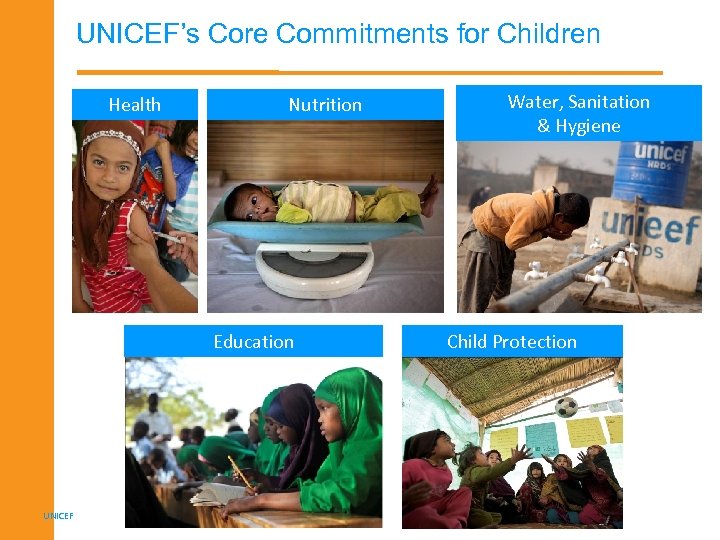
UNICEF’s Core Commitments for Children Health Nutrition Education UNICEF Water, Sanitation & Hygiene Child Protection
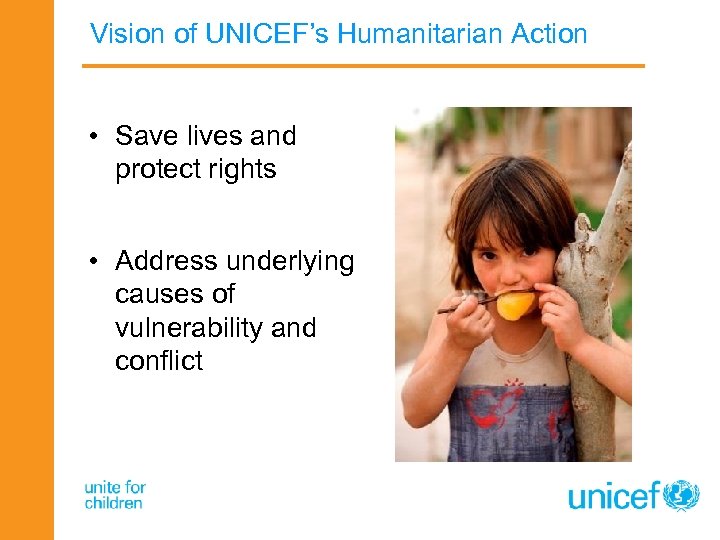
Vision of UNICEF’s Humanitarian Action • Save lives and protect rights • Address underlying causes of vulnerability and conflict
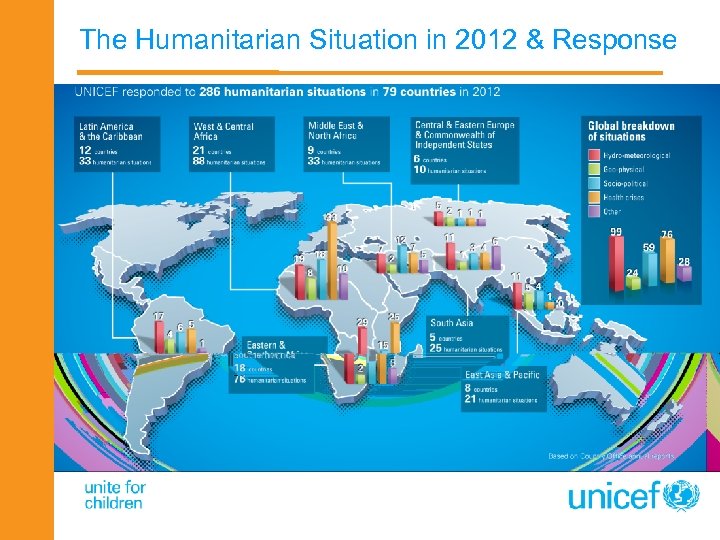
The Humanitarian Situation in 2012 & Response
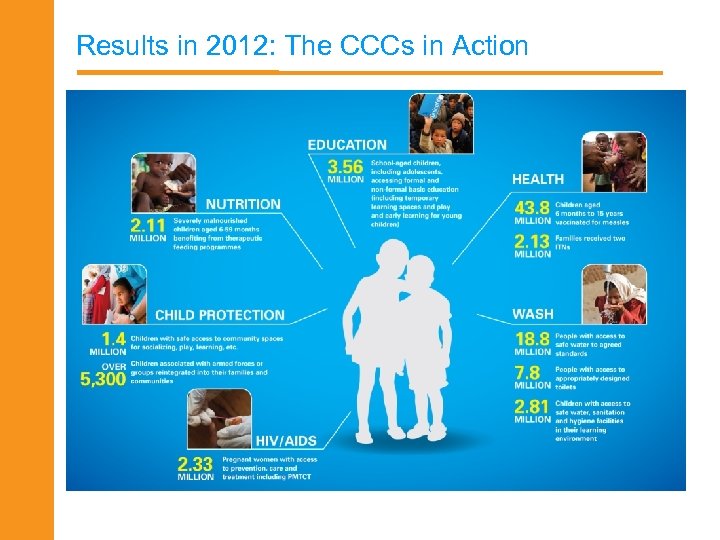
Results in 2012: The CCCs in Action
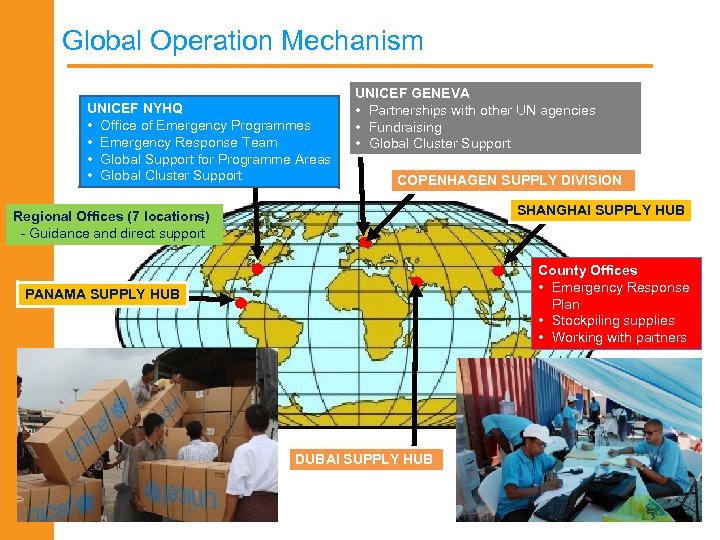
Global Operation Mechanism UNICEF NYHQ • Office of Emergency Programmes • Emergency Response Team • Global Support for Programme Areas • Global Cluster Support UNICEF GENEVA • Partnerships with other UN agencies • Fundraising • Global Cluster Support COPENHAGEN SUPPLY DIVISION SHANGHAI SUPPLY HUB Regional Offices (7 locations) - Guidance and direct support County Offices • Emergency Response Plan • Stockpiling supplies • Working with partners PANAMA SUPPLY HUB DUBAI SUPPLY HUB UNICEF 3/16/2018
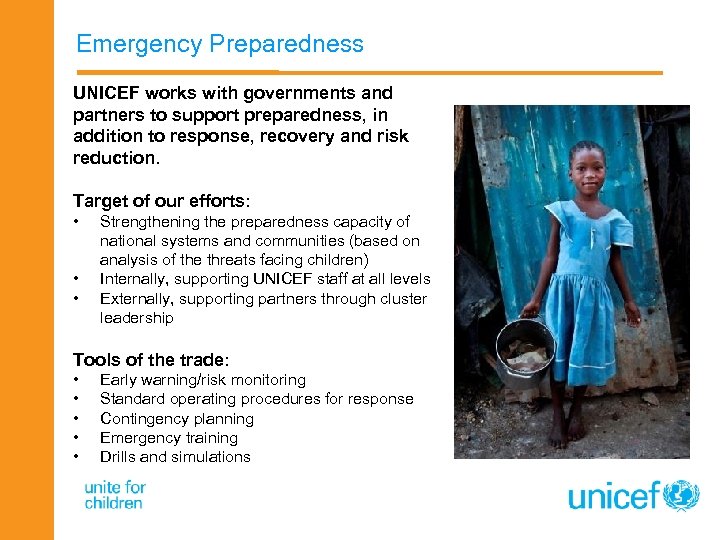
Emergency Preparedness UNICEF works with governments and partners to support preparedness, in addition to response, recovery and risk reduction. Target of our efforts: • • • Strengthening the preparedness capacity of national systems and communities (based on analysis of the threats facing children) Internally, supporting UNICEF staff at all levels Externally, supporting partners through cluster leadership Tools of the trade: • • • Early warning/risk monitoring Standard operating procedures for response Contingency planning Emergency training Drills and simulations
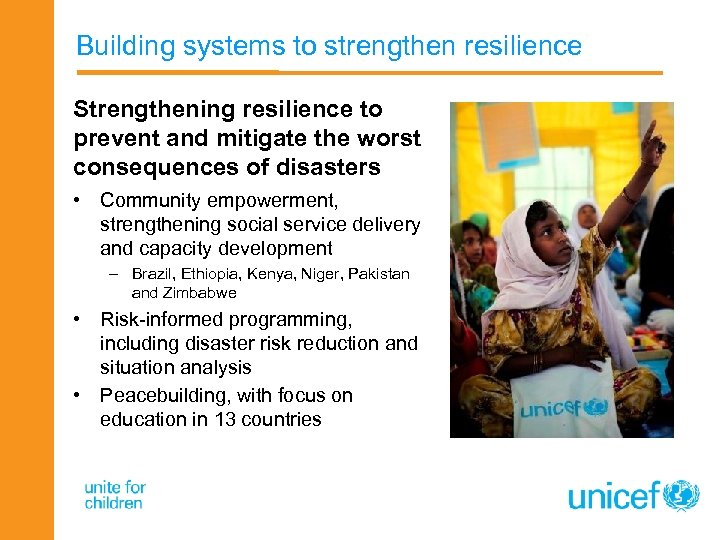
Building systems to strengthen resilience Strengthening resilience to prevent and mitigate the worst consequences of disasters • Community empowerment, strengthening social service delivery and capacity development – Brazil, Ethiopia, Kenya, Niger, Pakistan and Zimbabwe • Risk-informed programming, including disaster risk reduction and situation analysis • Peacebuilding, with focus on education in 13 countries
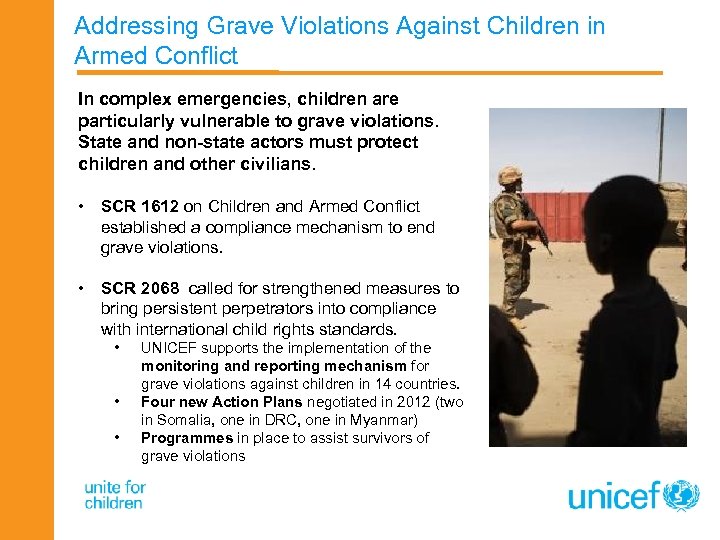
Addressing Grave Violations Against Children in Armed Conflict In complex emergencies, children are particularly vulnerable to grave violations. State and non-state actors must protect children and other civilians. • SCR 1612 on Children and Armed Conflict established a compliance mechanism to end grave violations. • SCR 2068 called for strengthened measures to bring persistent perpetrators into compliance with international child rights standards. • • • UNICEF supports the implementation of the monitoring and reporting mechanism for grave violations against children in 14 countries. Four new Action Plans negotiated in 2012 (two in Somalia, one in DRC, one in Myanmar) Programmes in place to assist survivors of grave violations
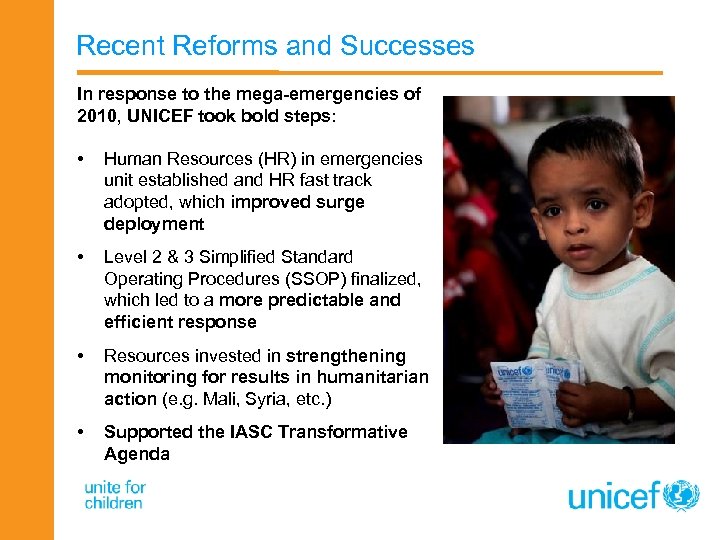
Recent Reforms and Successes In response to the mega-emergencies of 2010, UNICEF took bold steps: • Human Resources (HR) in emergencies unit established and HR fast track adopted, which improved surge deployment • Level 2 & 3 Simplified Standard Operating Procedures (SSOP) finalized, which led to a more predictable and efficient response • Resources invested in strengthening monitoring for results in humanitarian action (e. g. Mali, Syria, etc. ) • Supported the IASC Transformative Agenda
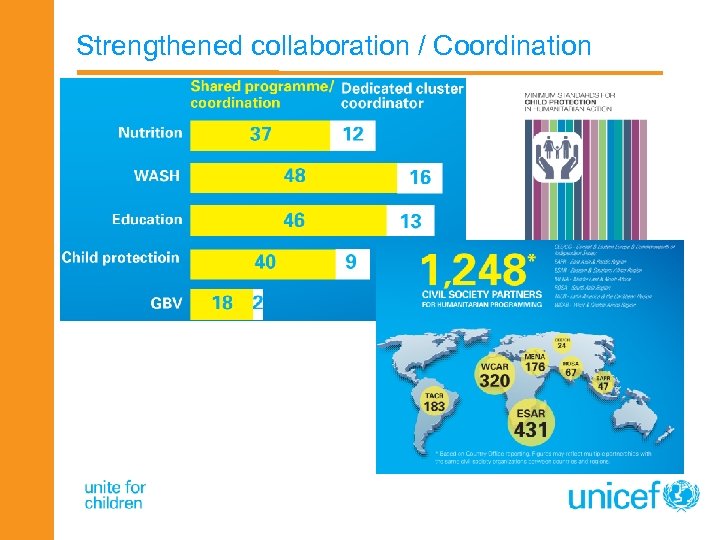
Strengthened collaboration / Coordination
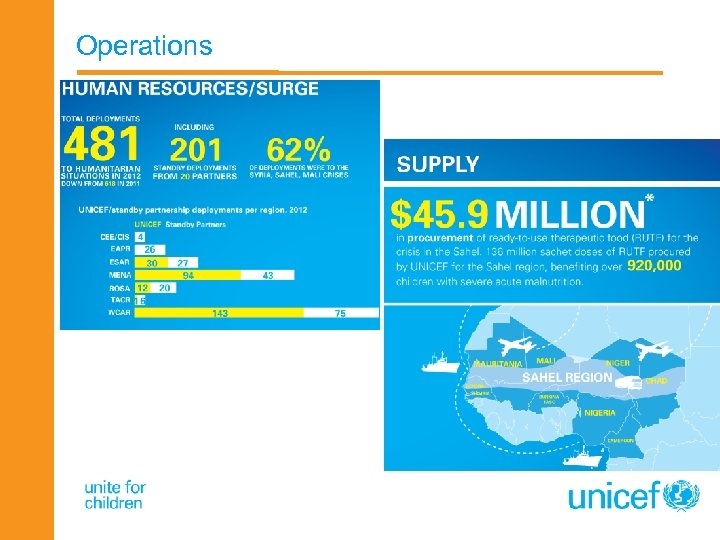
Operations
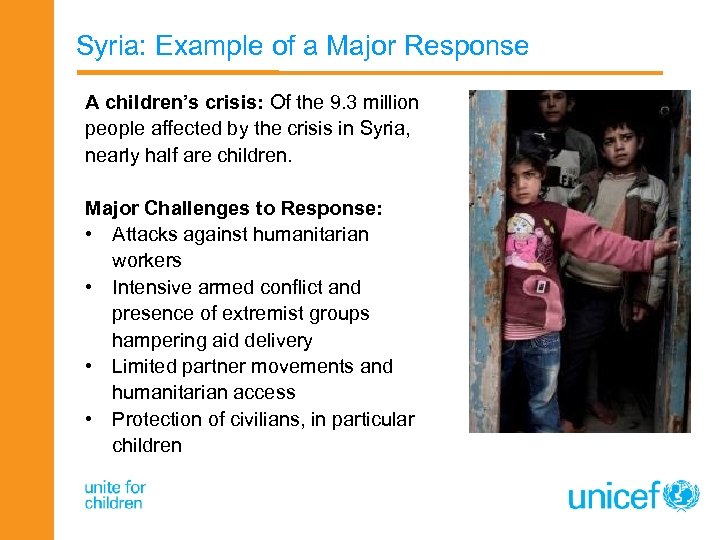
Syria: Example of a Major Response A children’s crisis: Of the 9. 3 million people affected by the crisis in Syria, nearly half are children. Major Challenges to Response: • Attacks against humanitarian workers • Intensive armed conflict and presence of extremist groups hampering aid delivery • Limited partner movements and humanitarian access • Protection of civilians, in particular children
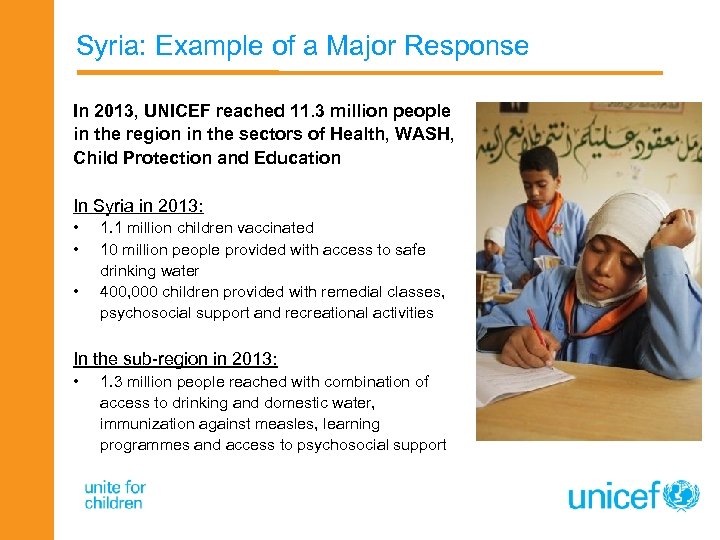
Syria: Example of a Major Response In 2013, UNICEF reached 11. 3 million people in the region in the sectors of Health, WASH, Child Protection and Education In Syria in 2013: • • • 1. 1 million children vaccinated 10 million people provided with access to safe drinking water 400, 000 children provided with remedial classes, psychosocial support and recreational activities In the sub-region in 2013: • 1. 3 million people reached with combination of access to drinking and domestic water, immunization against measles, learning programmes and access to psychosocial support
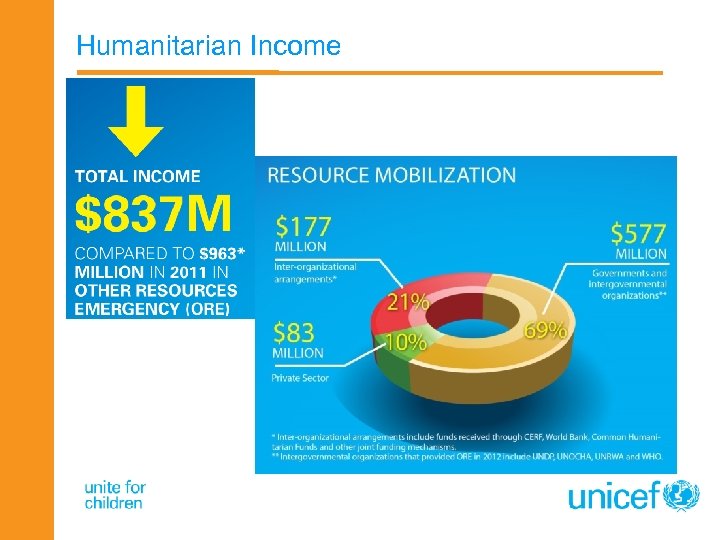
Humanitarian Income
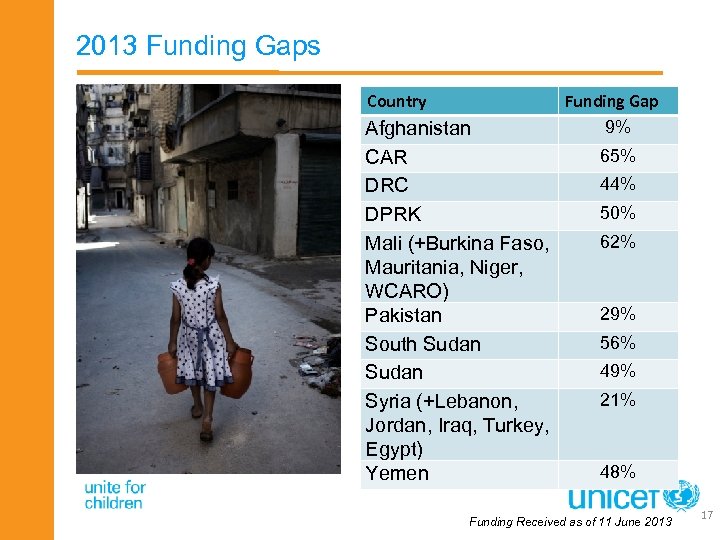
2013 Funding Gaps Country Afghanistan CAR DRC DPRK Mali (+Burkina Faso, Mauritania, Niger, WCARO) Pakistan South Sudan Syria (+Lebanon, Jordan, Iraq, Turkey, Egypt) Yemen Funding Gap 9% 65% 44% 50% 62% 29% 56% 49% 21% 48% Funding Received as of 11 June 2013 17
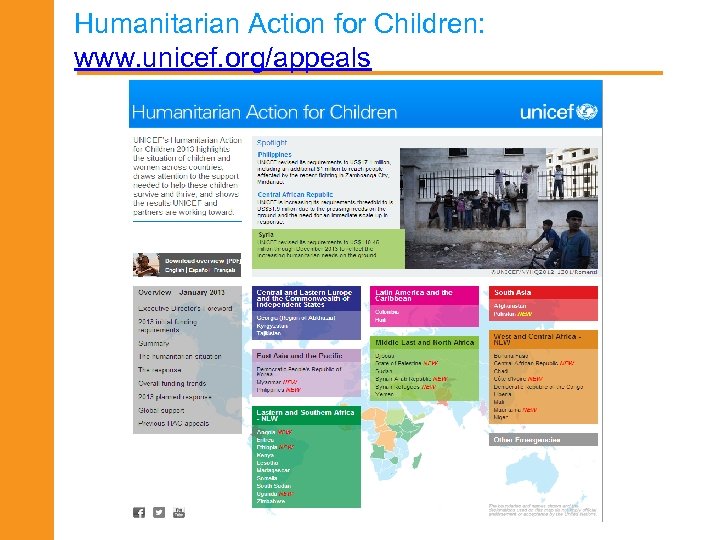
Humanitarian Action for Children: www. unicef. org/appeals 18
Looking ahead • Strategic Plan and post-2015 agenda: new opportunities for resilience • Further simplification • Helping to improve inter-agency response to non-Level 3 emergencies • A practical and inclusive humanitarian partnership system (regional and South) 19
Meeting the Challenge of the Next 5 Years Two Key Questions: 1. Reflecting on UNICEF’s Humanitarian Action over the next 5 years: What adjustments do we need to make to be better fit for purpose for the challenges ahead? 2. Ensuring that children’s issues are at the core of key, high level deliberations: How can we continue to enhance the role of UNICEF and partners as champions of children’s issues? 20
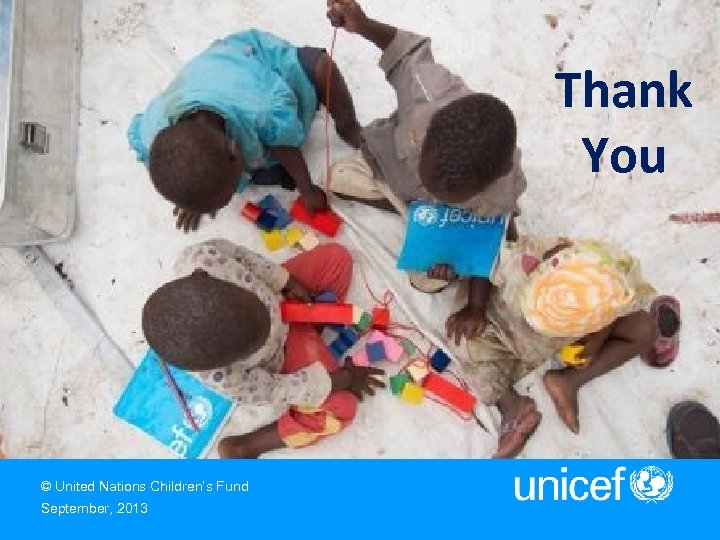
Thank You United Nations Children’s Fund 3 United Nations Plaza New York, NY 10017, USA Tel: 212 -326 -7000 www. unicef. org © United Nations Children’s Fund September, 2013
Скачать презентацию UNICEF s work in humanitarian situations 10 October 2013
227e1bc801c5cf841baa3d7793fccce2.ppt