


 Скачать презентацию UNESCO s approach to policy support in the field
d54c2e1dfdb997dd0310259351ab46b8.ppt
- Количество слайдов: 19
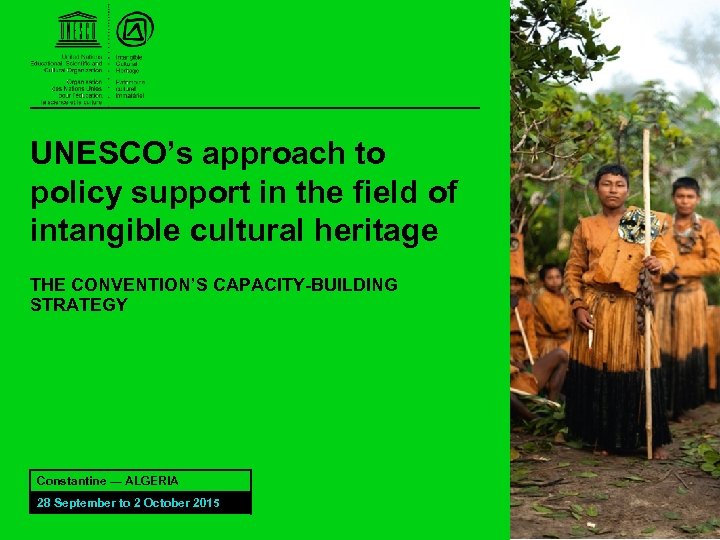 UNESCO’s approach to policy support in the field of intangible cultural heritage THE CONVENTION’S CAPACITY-BUILDING STRATEGY Constantine — ALGERIA 28 September to 2 October 2015
 A global strategy • Create institutional and professional environments for safeguarding ICH and harnessing its potential for development • Promote broad public knowledge and support for the Convention’s concepts and objectives
 5 priority issues • Redesign of institutional infrastructure • Revision of cultural and other policies • Development of inventory methods and systems • Development of effective safeguarding plans and measures • Effective participation in the Convention’s international cooperation mechanisms
 Four axes 1. Content and materials 2. Network of expert facilitators 3. Delivery at country level 4. Monitoring and evaluation
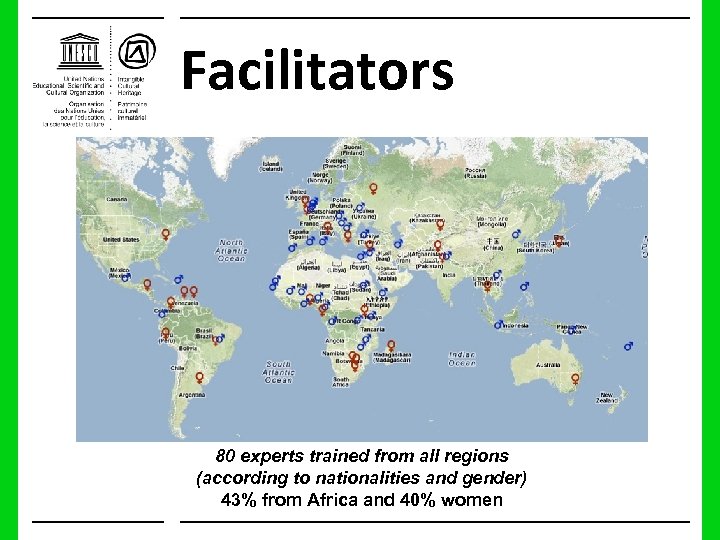 Facilitators 80 experts trained from all regions (according to nationalities and gender) 43% from Africa and 40% women
 Delivery • 75 countries • 25 in Africa • 2700 individuals
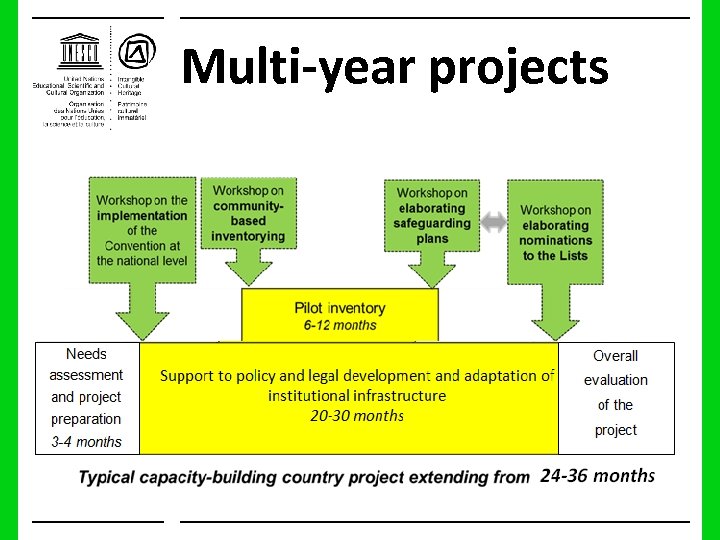 Multi-year projects
 Policy support initially • General discussions in specific workshop sessions • Some advisory services but not systematic not enough
 Challenges • Lack of conceptual clarity – what is policy advice for ICH • Not much experience or research to draw upon • Facilitators not always at ease • No guidance or training materials available
 Today • Approach and format refined • Provisions for policy support in all projects • Guidance Note available • Training materials under development • Consultation with experts from relevant policy fields ongoing
 Approach • Responding to the key objective of the Convention – safeguarding ICH • ‘Policy’ understood in a large sense • Concerns culture and other policy areas
 Approach (2) • Synergies with other Conventions and relevant policy frameworks • Matching expertise (policy making, ICH, other)
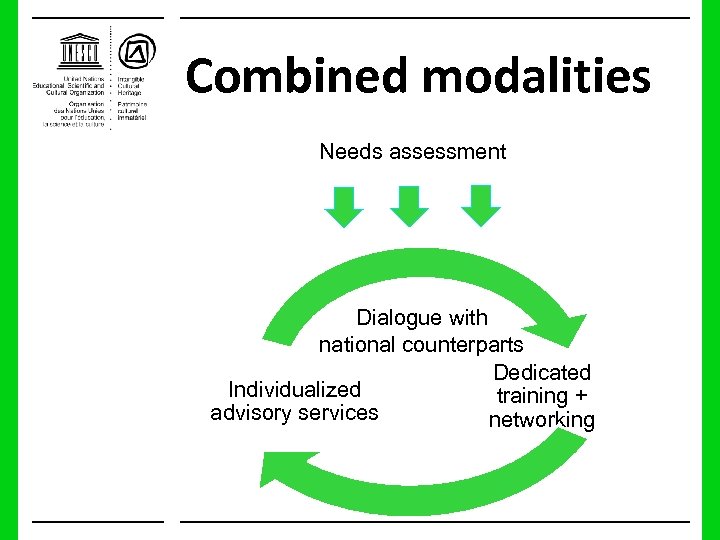 Combined modalities Needs assessment Dialogue with national counterparts Dedicated Individualized training + advisory services networking
 Parameters • Demand driven • Not a quick-fix, but long-term investment • Participatory • Issues-based
 Requirements • Solid assessments • Long-term services • Involving all stakeholders • Building local expert networks – not relying on the facilitator alone
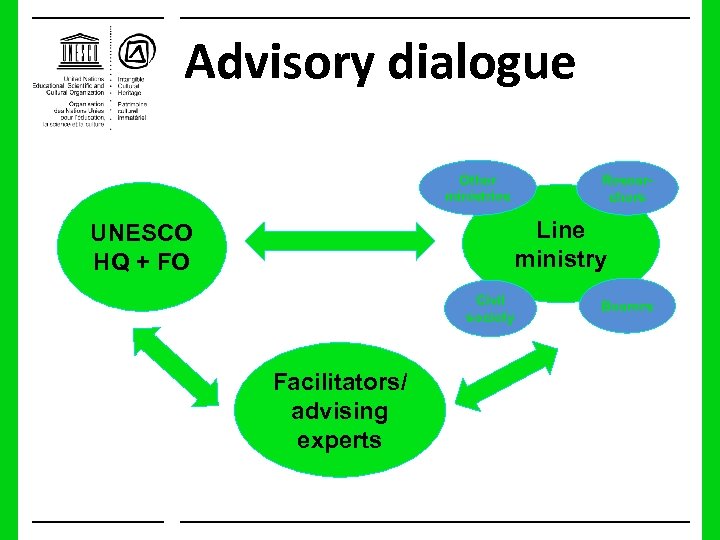 Advisory dialogue Other ministries Researchers Line ministry UNESCO HQ + FO Civil society Facilitators/ advising experts Bearers
 Role of advising expert • NOT to suggest model solutions or write policy documents for States • Assist country counterparts to make locally-appropriate, informed choices
 Role of advising expert (2) • Provide analysis • Act as a sounding board • Facilitate consensus building • Make recommendations
 THANK YOU