


 Скачать презентацию UNDS ECLAC WORKSHOP ON STATISTICS AND INTERNATIONAL TRADE IN
76d599980cbf0fcb512bb496fd4b7a17.ppt
- Количество слайдов: 39
 UNDS/ECLAC WORKSHOP ON STATISTICS AND INTERNATIONAL TRADE IN SERVICES 13 -16 SEPTEMBER 2005 PANAMA CITY Juan Falconi Morales World Tourism Organization, WTO
 First subjects to be discussed… The TSA as a Response to User Needs Positioning Tourism Analysis in the Mainstream of Economic Analysis …or… What is a TSA and what can it do for tourism activity?
 In Most Countries, Economic Importance of Tourism needs to be recognized • Generation of output and demand in a variety of activities and products • Generation of GDP (primary income) • Generation of net foreign earnings • Generation of tax earnings • Generation of employment • Maintaining a balance between the regions and stopping the migration of population to the major cities • Participation in the preservation and enhancement of natural resources and historical heritage • etc… 3
 Why this Lack of Recognition? Basically because the indicators used by tourism to communicate with other stakeholders… …concentrate on: - Number of arrivals - c Statistics on accommodation Scattered data on supply by “tourism” activities (those exclusively under the control of the corresponding ministry) …. while other activities speak of: - Share in GDP, Share in employment, Share in earnings, etc… 4
 How to Gain Recognition Strategy: use the same concepts use hard facts Methodology: use a conceptual framework linked to more general conceptual frameworks such as NA and Bo. P This provides: comparability with other activities international comparability credibility 5
 The Difficulties of the Exercise Due to the nature of tourism: – Tourism is a demand side activity: it is the visitor which makes tourism to happen; – It is neither product nor activity driven; – All consumption products which can be acquired by visitors and the activities that provide them to visitors fall into the scope of tourism: no product limitation Due to the history of tourism observation: – It has been confined to the observation of arrivals and exits of travelers; – It has been confined to the observation of “tourism” activities which tourism character is undeniable and almost exclusive (accommodation, travel agencies, ) A total shift of attitude is needed 6
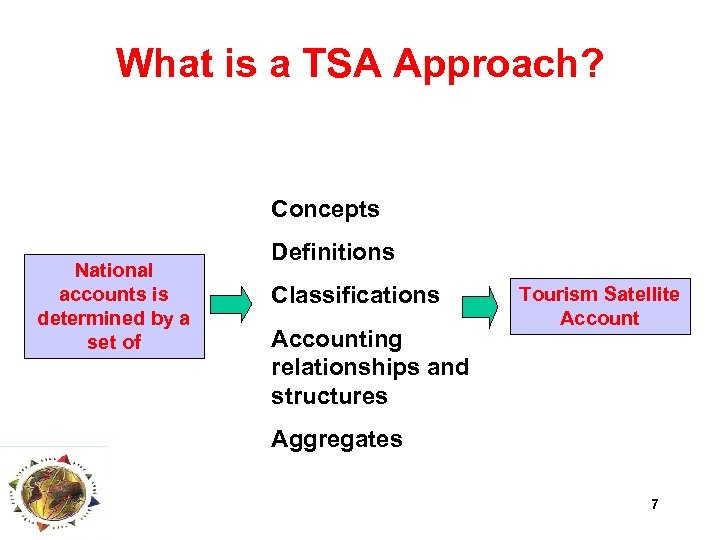 What is a TSA Approach? Concepts National accounts is determined by a set of Definitions Classifications Accounting relationships and structures Tourism Satellite Account Aggregates 7
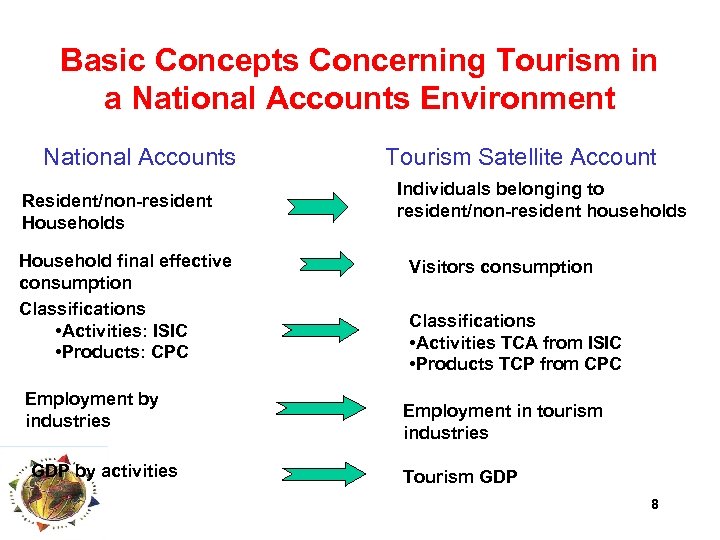 Basic Concepts Concerning Tourism in a National Accounts Environment National Accounts Resident/non-resident Households Household final effective consumption Classifications • Activities: ISIC • Products: CPC Employment by industries GDP by activities Tourism Satellite Account Individuals belonging to resident/non-resident households Visitors consumption Classifications • Activities TCA from ISIC • Products TCP from CPC Employment in tourism industries Tourism GDP 8
 TSA and National Accounts Conceptually the TSA should be viewed as a further elaboration of parts of the system of national accounts so that tourism might be apparent All the basic concepts and definitions will be shared, in particular the boundaries of production The TSA should be constructed within a supply and use table framework to provide maximum analytical usefulness Strong structural relationship between the two systems 9
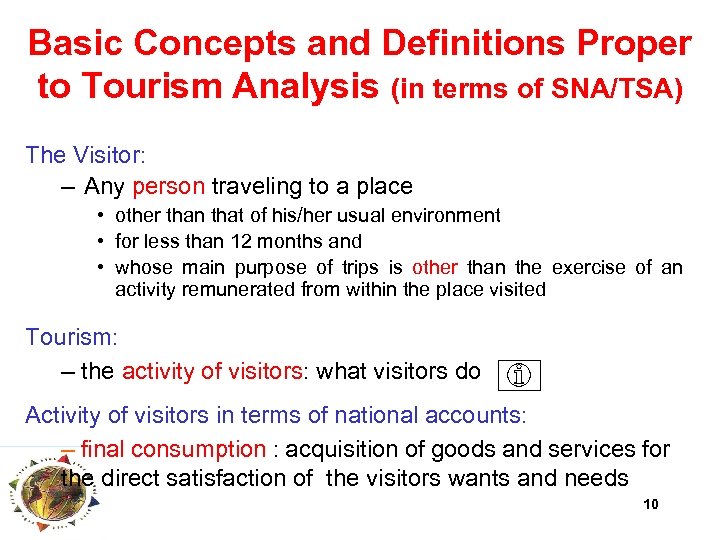 Basic Concepts and Definitions Proper to Tourism Analysis (in terms of SNA/TSA) The Visitor: – Any person traveling to a place • other than that of his/her usual environment • for less than 12 months and • whose main purpose of trips is other than the exercise of an activity remunerated from within the place visited Tourism: – the activity of visitors: what visitors do Activity of visitors in terms of national accounts: – final consumption : acquisition of goods and services for the direct satisfaction of the visitors wants and needs 10
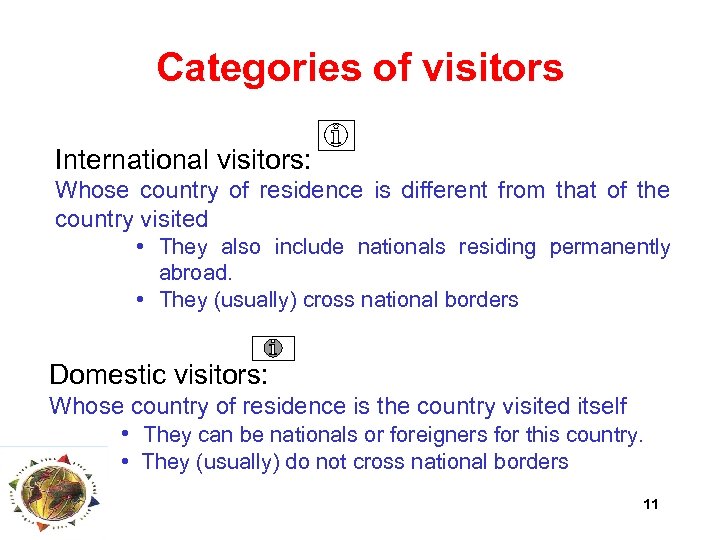 Categories of visitors International visitors: Whose country of residence is different from that of the country visited • They also include nationals residing permanently abroad. • They (usually) cross national borders Domestic visitors: Whose country of residence is the country visited itself • They can be nationals or foreigners for this country. • They (usually) do not cross national borders 11
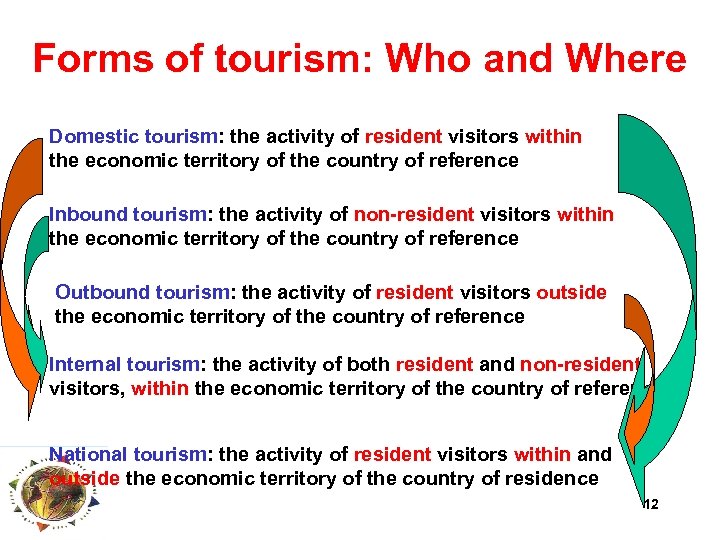 Forms of tourism: Who and Where Domestic tourism: the activity of resident visitors within the economic territory of the country of reference Inbound tourism: the activity of non-resident visitors within the economic territory of the country of reference Outbound tourism: the activity of resident visitors outside the economic territory of the country of reference Internal tourism: the activity of both resident and non-resident visitors, within the economic territory of the country of reference National tourism: the activity of resident visitors within and outside the economic territory of the country of residence 12
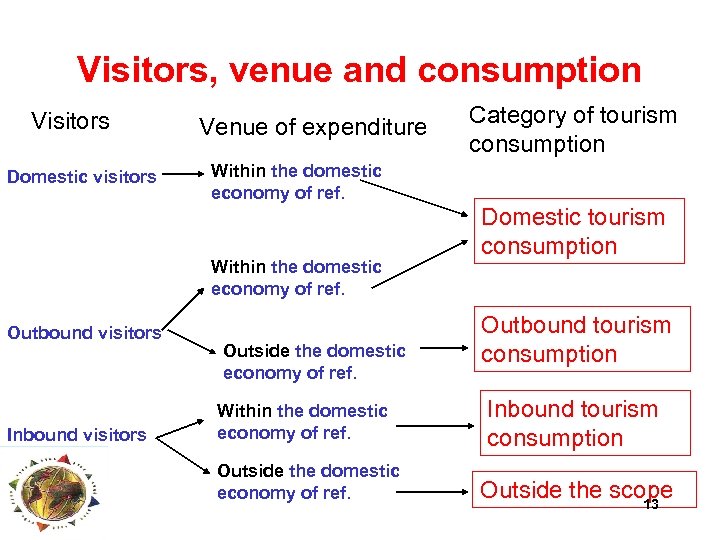 Visitors, venue and consumption Visitors Domestic visitors Venue of expenditure Within the domestic economy of ref. Outbound visitors Inbound visitors Category of tourism consumption Outside the domestic economy of ref. Within the domestic economy of ref. Outside the domestic economy of ref. Domestic tourism consumption Outbound tourism consumption Inbound tourism consumption Outside the scope 13
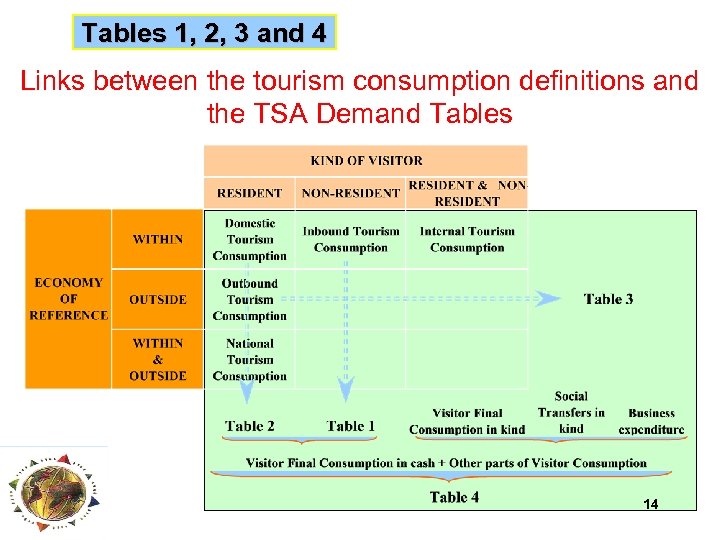 Tables 1, 2, 3 and 4 Links between the tourism consumption definitions and the TSA Demand Tables 14
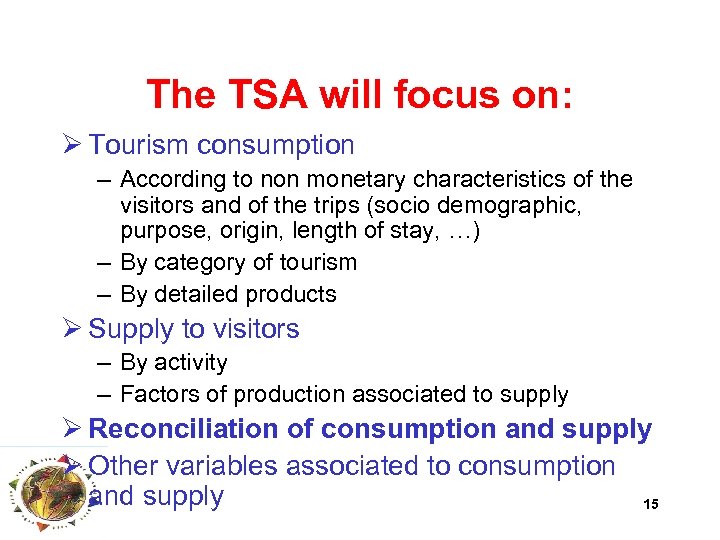 The TSA will focus on: Ø Tourism consumption – According to non monetary characteristics of the visitors and of the trips (socio demographic, purpose, origin, length of stay, …) – By category of tourism – By detailed products Ø Supply to visitors – By activity – Factors of production associated to supply Ø Reconciliation of consumption and supply Ø Other variables associated to consumption and supply 15
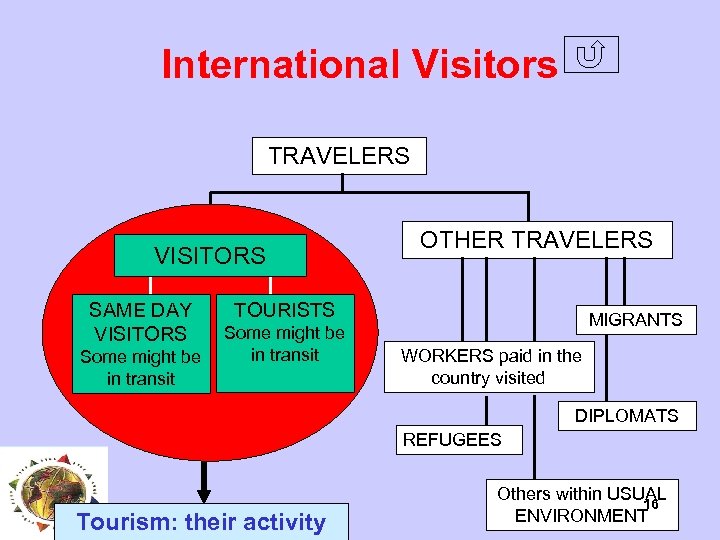 International Visitors TRAVELERS VISITORS SAME DAY VISITORS Some might be in transit OTHER TRAVELERS TOURISTS Some might be in transit MIGRANTS WORKERS paid in the country visited DIPLOMATS REFUGEES Tourism: their activity Others within USUAL 16 ENVIRONMENT
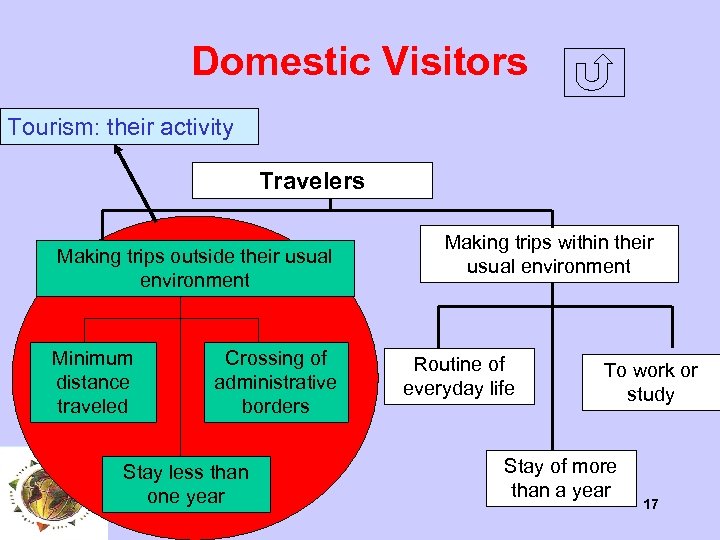 Domestic Visitors Tourism: their activity Travelers Making trips outside their usual environment Minimum distance traveled Crossing of administrative borders Stay less than one year Making trips within their usual environment Routine of everyday life To work or study Stay of more than a year 17
 Tourism: the activity of visitors • Impact of visitors viewed through – their consumption – The implication of this consumption • Directly or • Indirectly – On the supply by activities – On the factors of production • In terms of National Accounts, tourism is a demand defined activity 18
 The TSA tables T
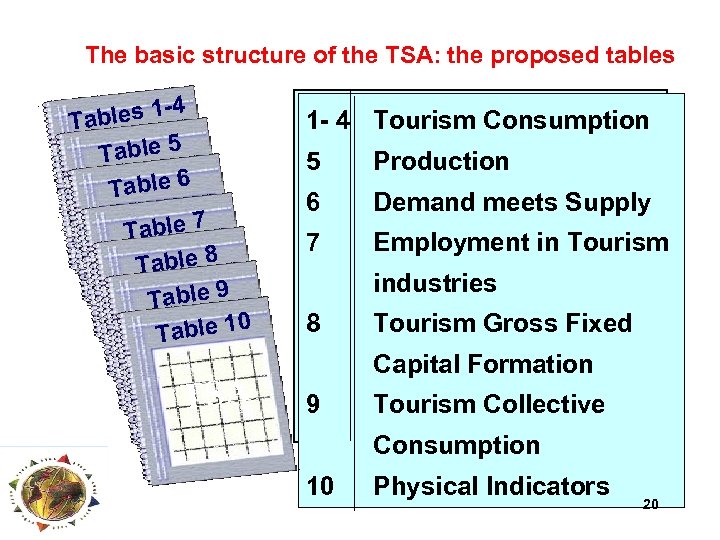 The basic structure of the TSA: the proposed tables -4 ables 1 T Table 5 Table 6 Table 7 Table 8 Table 9 0 Table 1 TSA 1 - 4 Tourism Consumption 5 Production 6 Demand meets Supply 7 Employment in Tourism industries 8 Tourism Gross Fixed Capital Formation 9 Tourism Collective Consumption 10 Physical Indicators 20
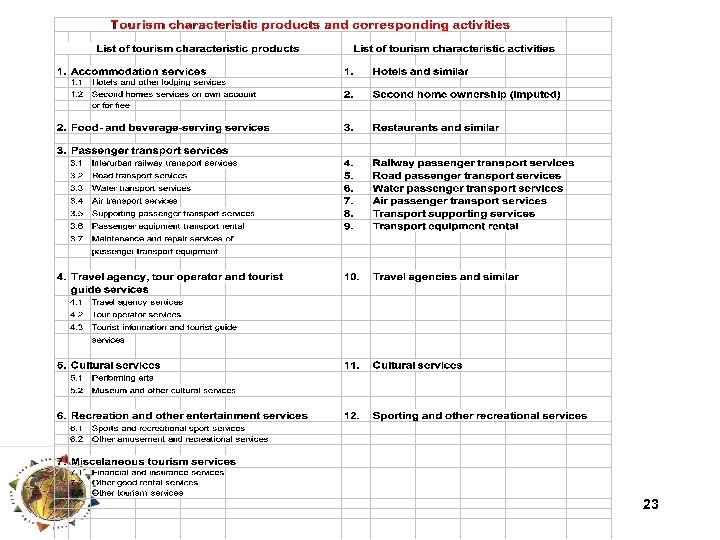
 TSA and the National Accounts • The measurement of the supply by economic activities to meet tourism demand requires: – A more detailed classification of producing units by industry (from ISIC to TCA) – A detailed breakdown of output by product (goods and services) (from CPC to TCP) – Specification of tourism-related investment/capital expenditure – Specification of tourism associated employment/labour income 21
 Some of the Aggregates which can be derived from the tables: • Internal tourism consumption • Value added of tourism industries (VATI) • Tourism value added (TVA) • Tourism Gross domestic product (Tourism GDP) • Others: Tourism gross fixed capital formation - Tourism collective consumption - Total tourism demand - Tourism employment 22
 23
23
 Particularities of the tables • Unique classification of products and activities through the tables • Format inspired by Supply and use tables of SNA • Strong link between most of them: – Tables 1 and 2 feed into table 4 – Tables 4 and 5 feed into 6 24
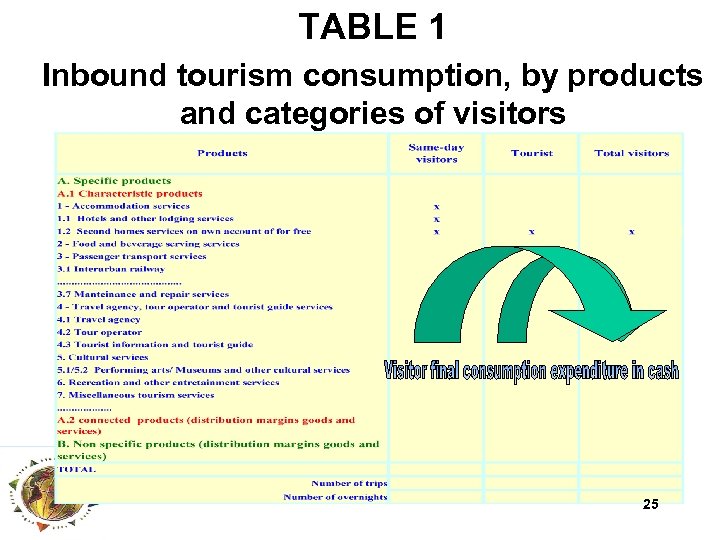 TABLE 1 Inbound tourism consumption, by products and categories of visitors 25
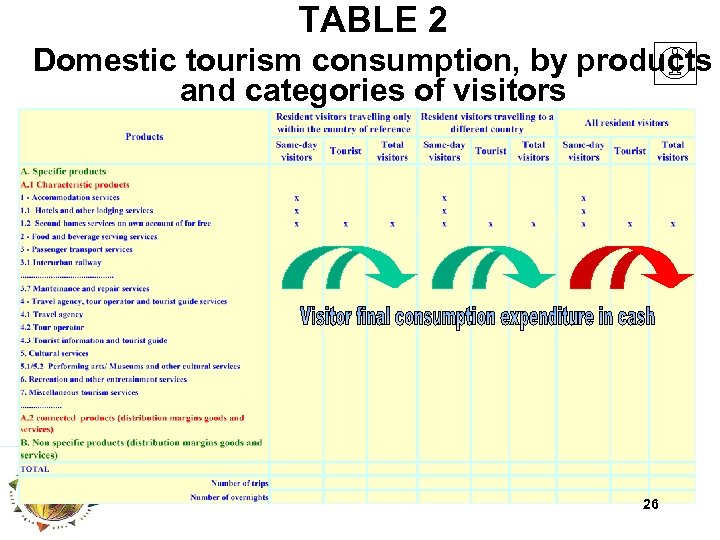 TABLE 2 Domestic tourism consumption, by products and categories of visitors 26
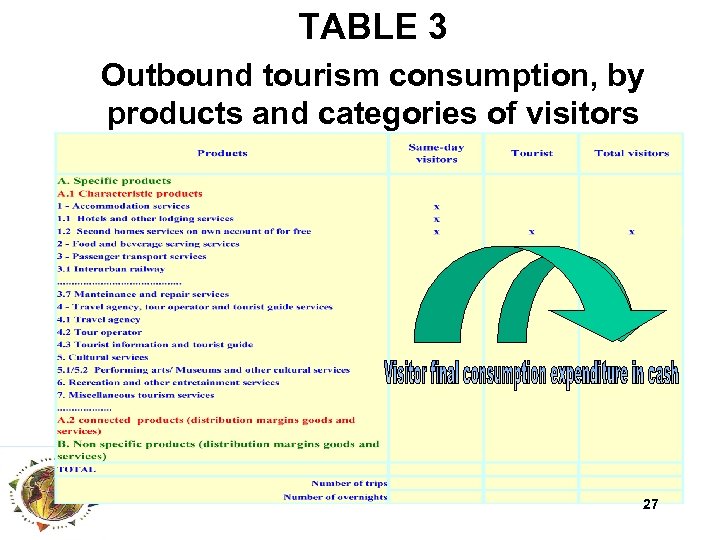 TABLE 3 Outbound tourism consumption, by products and categories of visitors 27
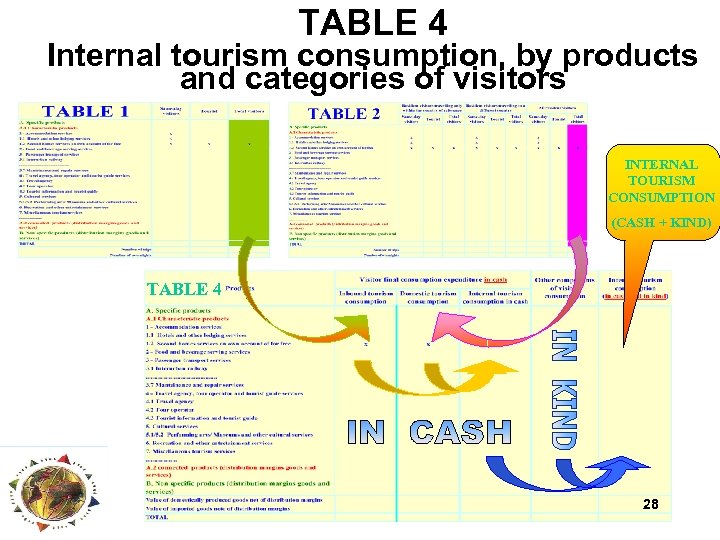 TABLE 4 Internal tourism consumption, by products and categories of visitors INTERNAL TOURISM CONSUMPTION (CASH + KIND) TABLE 4 28
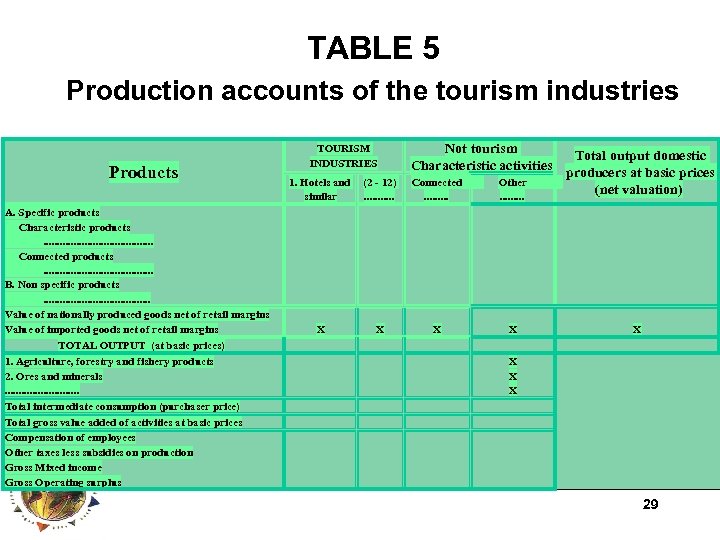 TABLE 5 Production accounts of the tourism industries Products A. Specific products Characteristic products. . . . . Connected products. . . . . B. Non specific products. . . . . Value of nationally produced goods net of retail margins Value of imported goods net of retail margins TOTAL OUTPUT (at basic prices) 1. Agriculture, forestry and fishery products 2. Ores and minerals. . . . Total intermediate consumption (purchaser price) Total gross value added of activities at basic prices Compensation of employees Other taxes less subsidies on production Gross Mixed income Gross Operating surplus TOURISM INDUSTRIES 1. Hotels and similar (2 - 12). . . X X Not tourism Total output domestic Characteristic activities producers at basic prices Connected Other (net valuation). . . . X X X 29
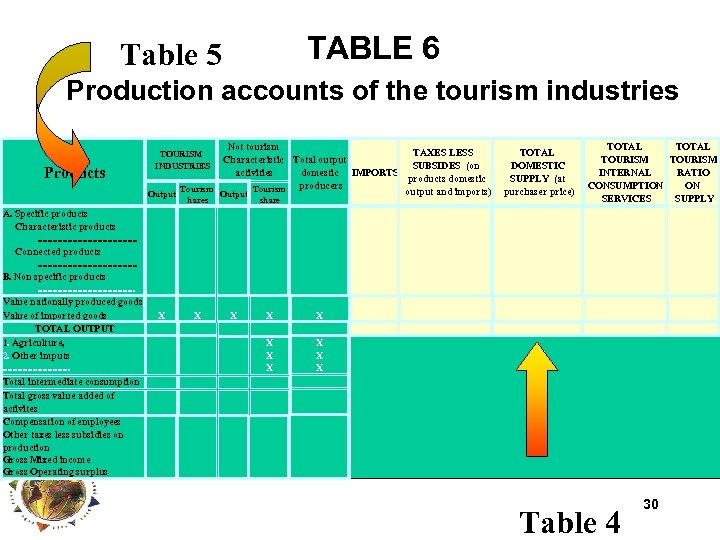 TABLE 6 Table 5 Production accounts of the tourism industries Products Not tourism TAXES LESS Characteristic Total output SUBSIDES (on domestic IMPORTS activities products domestic producers Tourism output and imports) Output TOURISM INDUSTRIES hares A. Specific products Characteristic products. . . . . Connected products. . . . . B. Non specific products. . . . . Value nationally produced goods Value of imported goods TOTAL OUTPUT 1. Agriculture, 2. Other imputs. . . . Total intermediate consumption Total gross value added of activites Compensation of employees Other taxes less subsidies on production Gross Mixed income Gross Operating surplus X X share X X TOTAL TOURISM INTERNAL RATIO CONSUMPTION ON SERVICES SUPPLY X X TOTAL DOMESTIC SUPPLY (at purchaser price) X X X Table 4 30
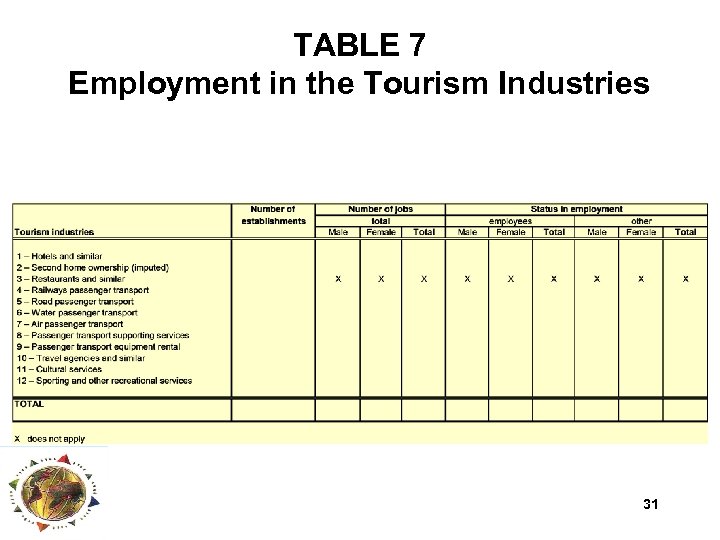 TABLE 7 Employment in the Tourism Industries 31
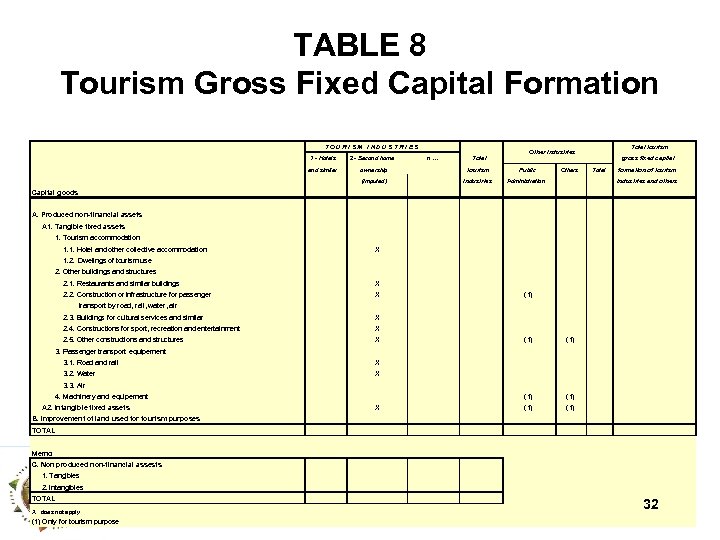 TABLE 8 Tourism Gross Fixed Capital Formation TOURISM INDUSTRIES 1 - Hotels and similar 2 - Second home n… Total tourism Other industries ownership tourism Public (imputed) industries Administration Others gross fixed capital Total formation of tourism industries and others Capital goods A. Produced non-financial assets A 1. Tangible fixed assets 1. Tourism accommodation 1. 1. Hotel and other collective accommodation X 1. 2. Dwelings of tourism use 2. Other buildings and structures 2. 1. Restaurants and similar buildings X 2. 2. Construction or infrastructure for passenger X (1) transport by road, rail, water, air 2. 3. Buildings for cultural services and similar X 2. 4. Constructions for sport, recreation and entertainment X 2. 5. Other constructions and structures X (1) (1) (1) 3. Passenger transport equipement 3. 1. Road and rail X 3. 2. Water X 3. 3. Air 4. Machinery and equipement A 2. Intangible fixed assets X B. Improvement of land used for tourism purposes TOTAL Memo: C. Non produced non-financial assests 1. Tangibles 2. Intangibles TOTAL X does not apply (1) Only for tourism purpose 32
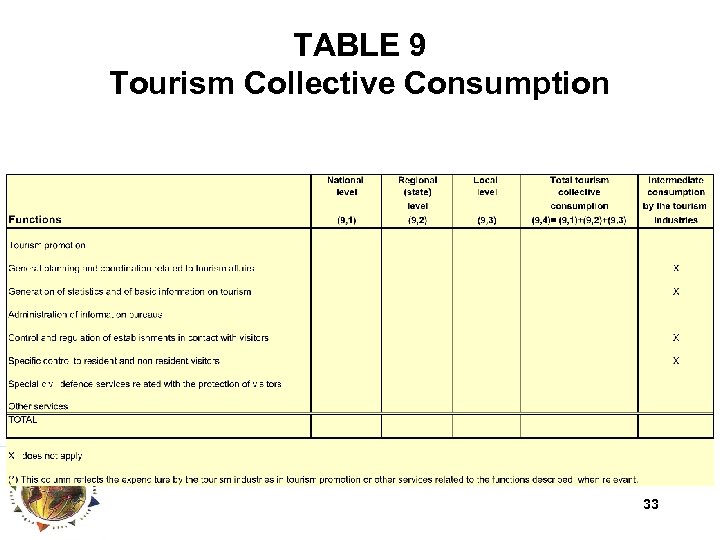 TABLE 9 Tourism Collective Consumption 33
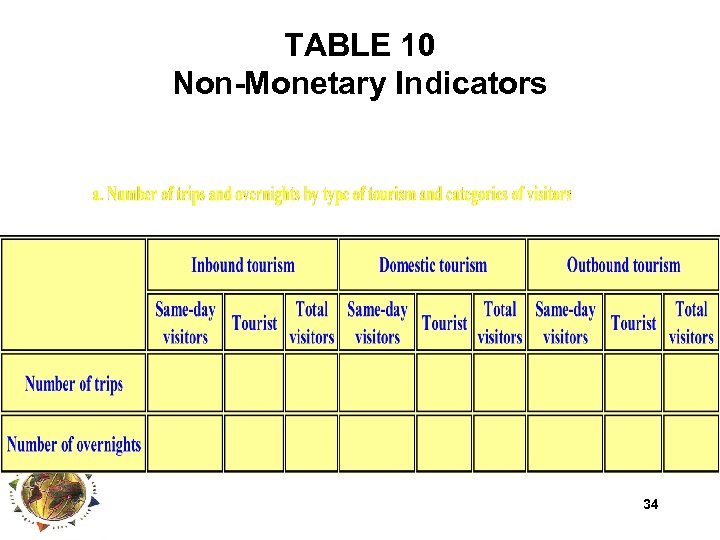 TABLE 10 Non-Monetary Indicators 34
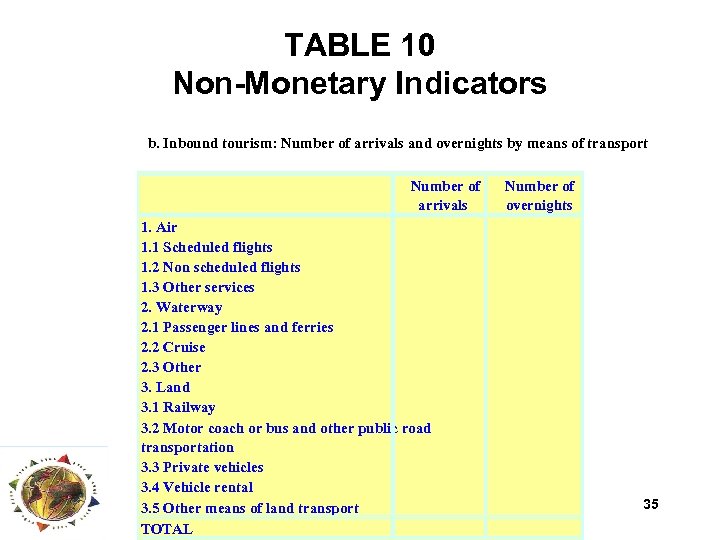 TABLE 10 Non-Monetary Indicators b. Inbound tourism: Number of arrivals and overnights by means of transport Number of arrivals 1. Air 1. 1 Scheduled flights 1. 2 Non scheduled flights 1. 3 Other services 2. Waterway 2. 1 Passenger lines and ferries 2. 2 Cruise 2. 3 Other 3. Land 3. 1 Railway 3. 2 Motor coach or bus and other public road transportation 3. 3 Private vehicles 3. 4 Vehicle rental 3. 5 Other means of land transport TOTAL Number of overnights 35
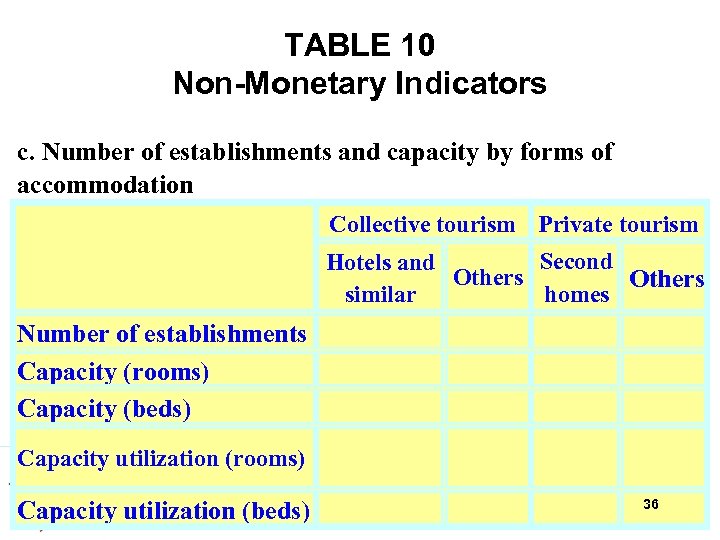 TABLE 10 Non-Monetary Indicators c. Number of establishments and capacity by forms of accommodation Collective tourism Private tourism Second Hotels and Others similar homes Number of establishments Capacity (rooms) Capacity (beds) Capacity utilization (rooms) Capacity utilization (beds) 36
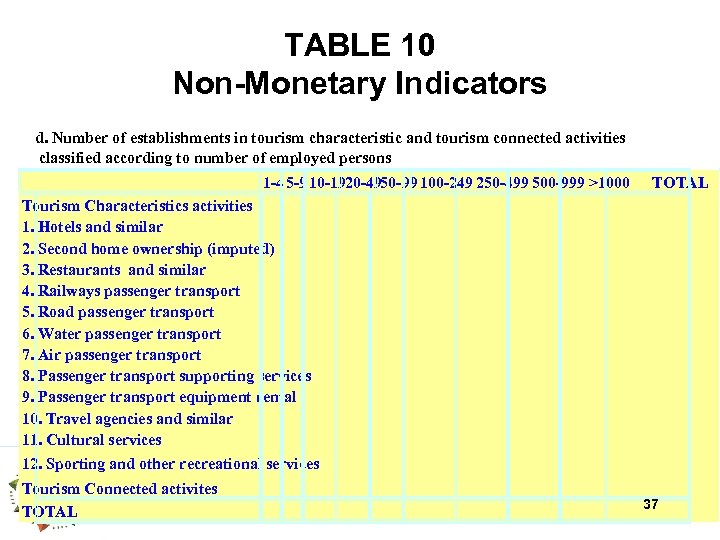 TABLE 10 Non-Monetary Indicators d. Number of establishments in tourism characteristic and tourism connected activities classified according to number of employed persons 1 -45 -9 10 -1920 -4950 -99 100 -249 250 -499 500 -999 >1000 TOTAL Tourism Characteristics activities 1. Hotels and similar 2. Second home ownership (imputed) 3. Restaurants and similar 4. Railways passenger transport 5. Road passenger transport 6. Water passenger transport 7. Air passenger transport 8. Passenger transport supporting services 9. Passenger transport equipment rental 10. Travel agencies and similar 11. Cultural services 12. Sporting and other recreational services Tourism Connected activites TOTAL 37
 The Balance of Payments: Transportation and Travel items… -Transportation in the BOP: a description -Travel in the BOP: a description -The TSA and its main statistical needs… - The TSA and its relationship with the BOP 38
 The Balance of Payments: Transportation and Travel items… -Tourism economic indicators: a proposal - The Transportation and Travel items: the need of introducing methodological changes. The WTO approach… - Conclusions 39