


 Скачать презентацию Understanding Wastewater Sewers Erie County Department of
0fb4e0934987aeb53da602dcbfc3d9e9.ppt
- Количество слайдов: 57
 Understanding Wastewater & Sewers Erie County Department of Environment & Planning Division of Sewerage Management 1
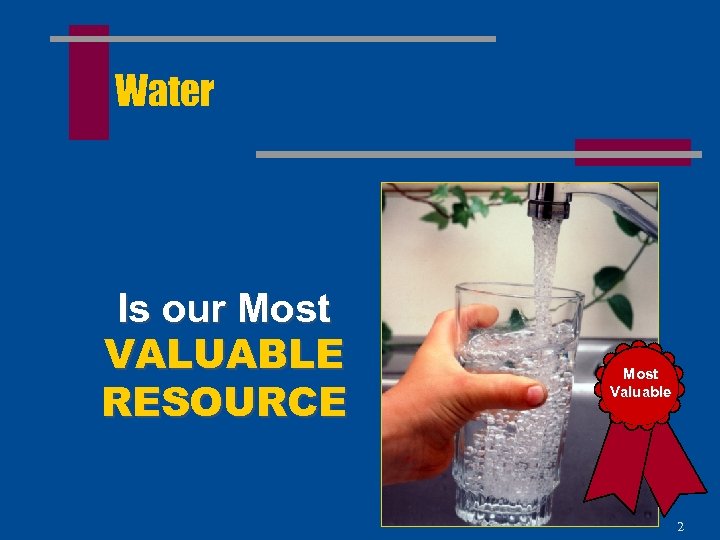 Water Is our Most VALUABLE RESOURCE Most Valuable 2
 Why is Water IMPORTANT ? § Water is necessary to all living things § People can live for weeks without food, but only a few days without water § Water is a delivery system • Nutrients in soil • Blood in humans/animals • Carries off bodily wastes § Our body is water cooled 3
 Why Conserve Water ? We have a limited amount of water and a growing population! 4
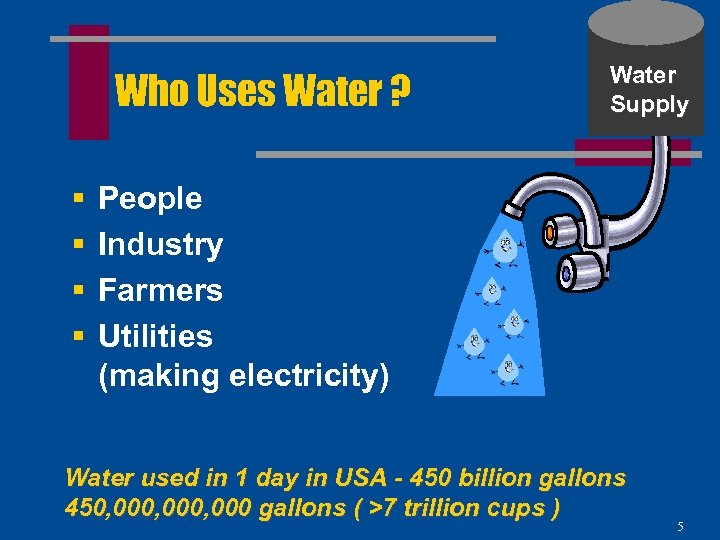 Who Uses Water ? § § Water Supply People Industry Farmers Utilities (making electricity) Water used in 1 day in USA - 450 billion gallons 450, 000, 000 gallons ( >7 trillion cups ) 5
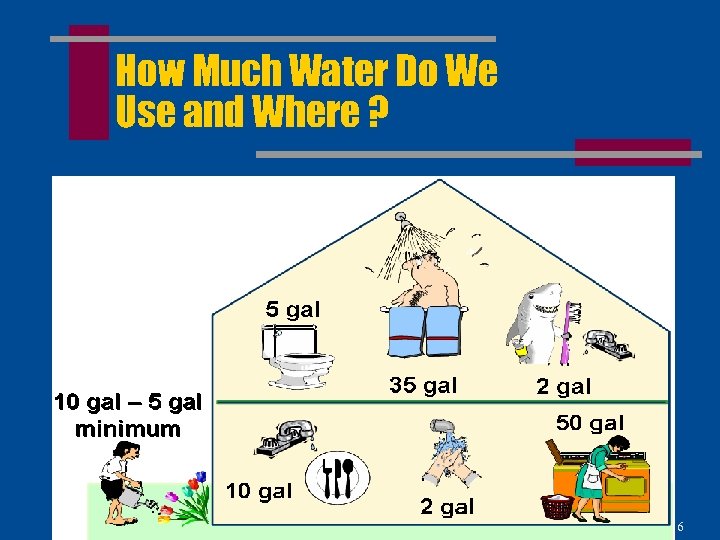 How Much Water Do We Use and Where ? 6
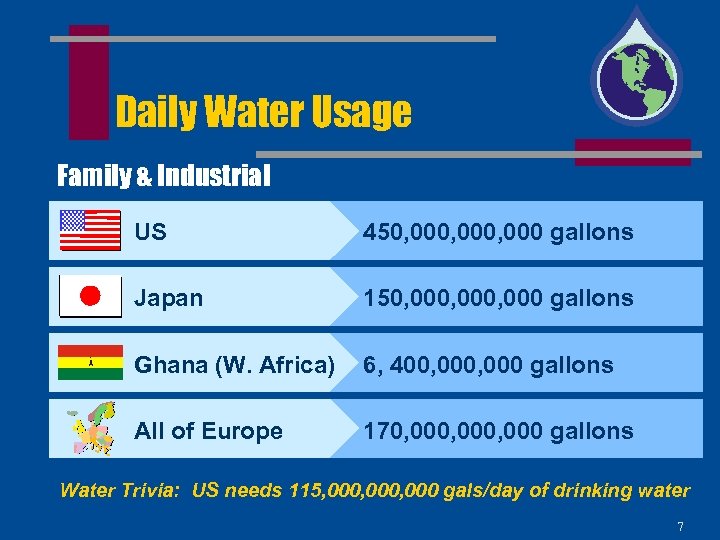 Daily Water Usage Family & Industrial US 450, 000, 000 gallons Japan 150, 000, 000 gallons Ghana (W. Africa) 6, 400, 000 gallons All of Europe 170, 000, 000 gallons Water Trivia: US needs 115, 000, 000 gals/day of drinking water 7
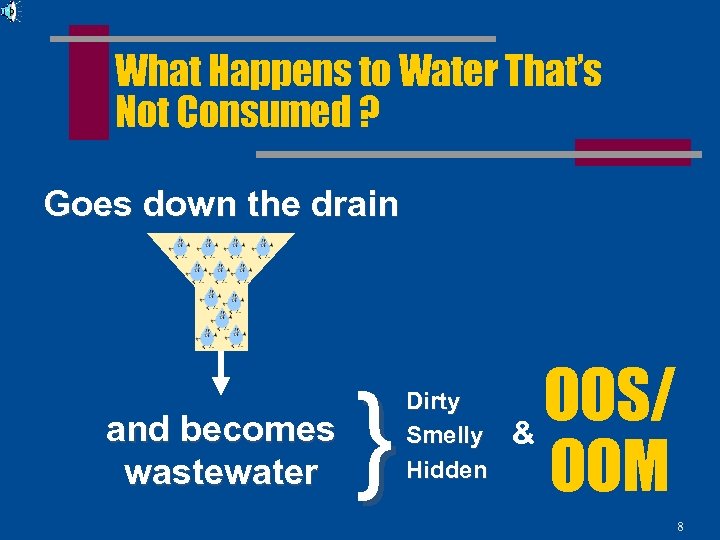 What Happens to Water That’s Not Consumed ? Goes down the drain and becomes wastewater } Dirty Smelly Hidden OOS/ & OOM 8
 “OOS/OOM” Out Of Sight Out Of Mind 9
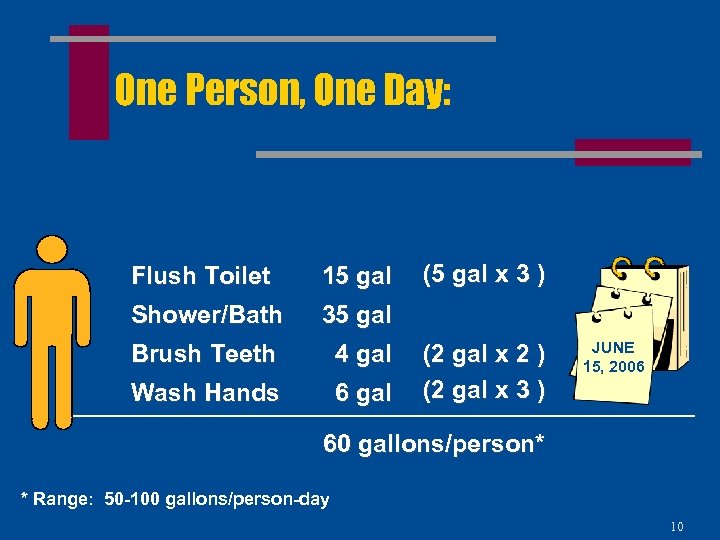 One Person, One Day: Flush Toilet 15 gal Shower/Bath 35 gal Brush Teeth 4 gal Wash Hands 6 gal (5 gal x 3 ) (2 gal x 2 ) (2 gal x 3 ) JUNE 15, 2006 60 gallons/person* * Range: 50 -100 gallons/person-day 10
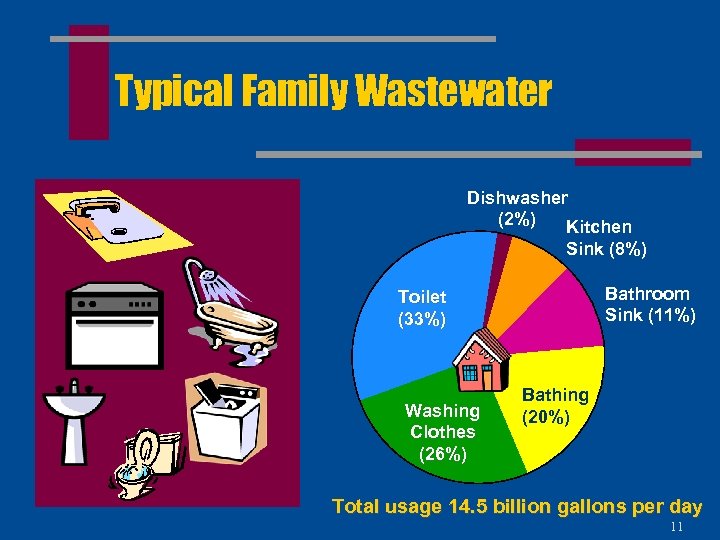 Typical Family Wastewater Dishwasher (2%) Kitchen Sink (8%) Bathroom Sink (11%) Toilet (33%) Washing Clothes (26%) Bathing (20%) Total usage 14. 5 billion gallons per day 11
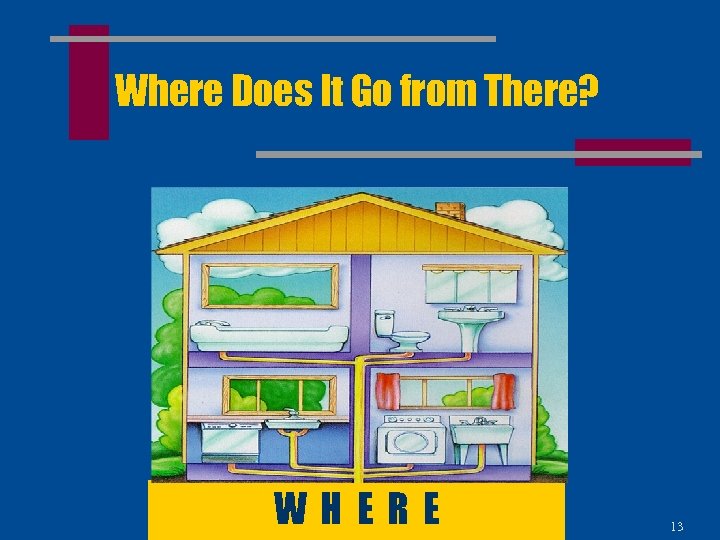
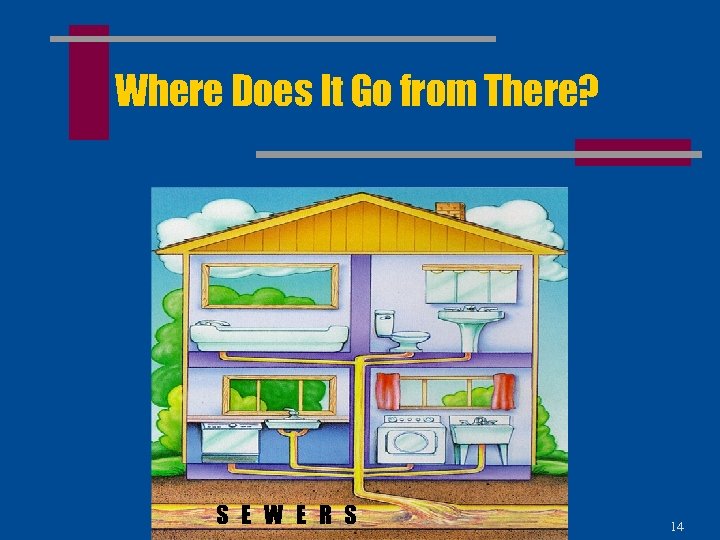
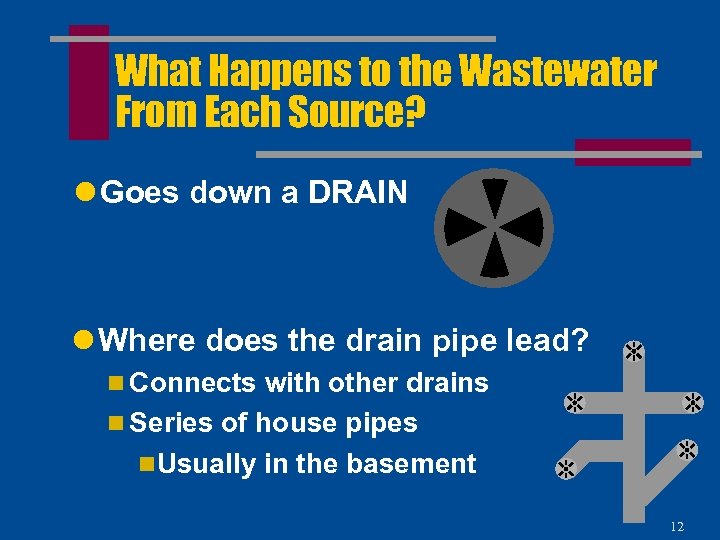 What Happens to the Wastewater From Each Source? l Goes down a DRAIN l Where does the drain pipe lead? n Connects with other drains n Series of house pipes n. Usually in the basement 12
 Where Does It Go from There? WHERE 13
 Where Does It Go from There? S E W E R S 14
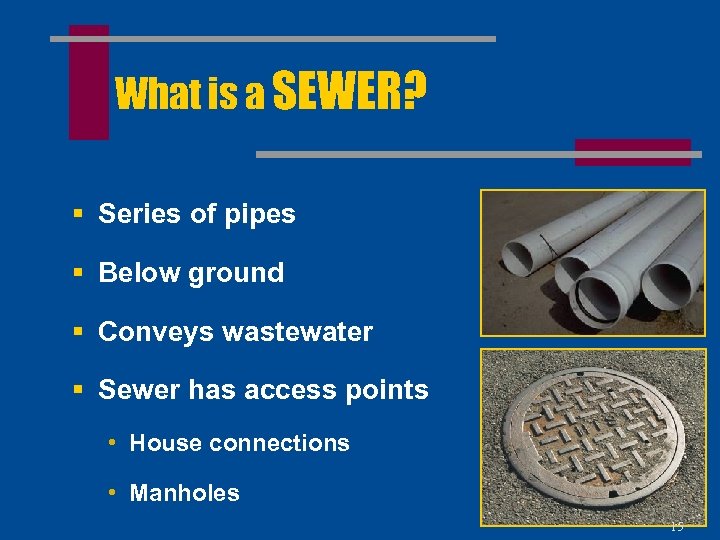 What is a SEWER? § Series of pipes § Below ground § Conveys wastewater § Sewer has access points • House connections • Manholes 15
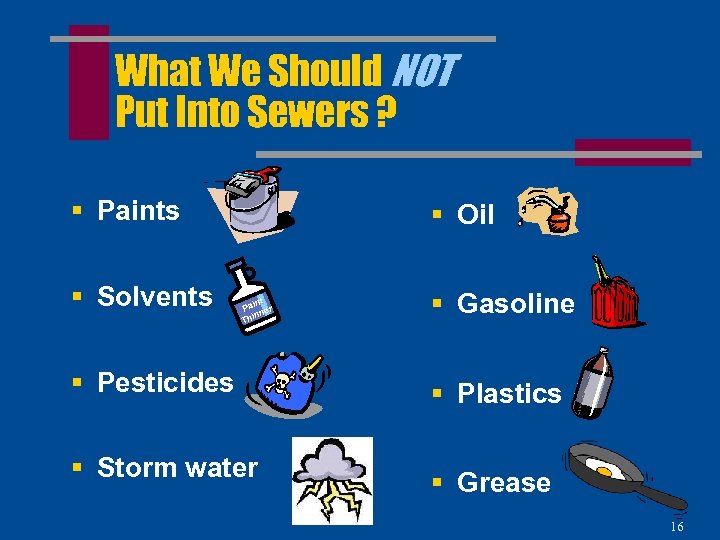 What We Should NOT Put Into Sewers ? § Paints § Solvents § Oil nt Pai er inn Th § Gasoline § Pesticides § Plastics § Storm water § Grease 16
 Why Not? l Damage Sewers n Corrosive n Explosive n Fire l Block Sewers l Difficult to remove l Create odors l Overload Treatment Plant Reduce Capacity 17
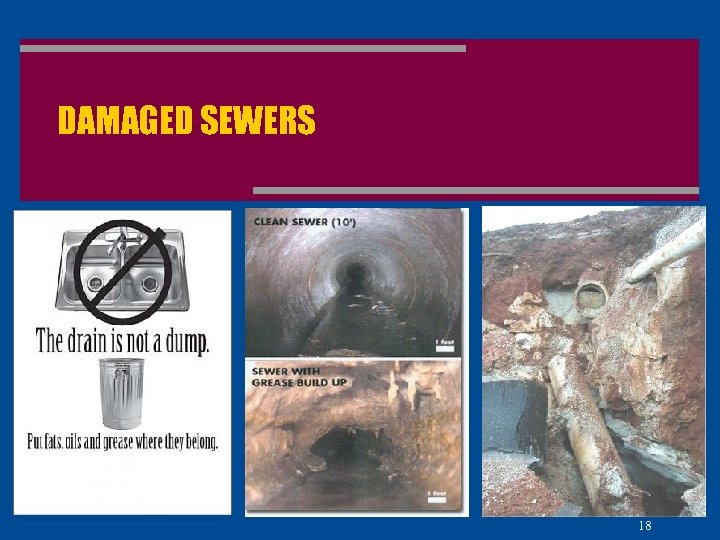 DAMAGED SEWERS 18
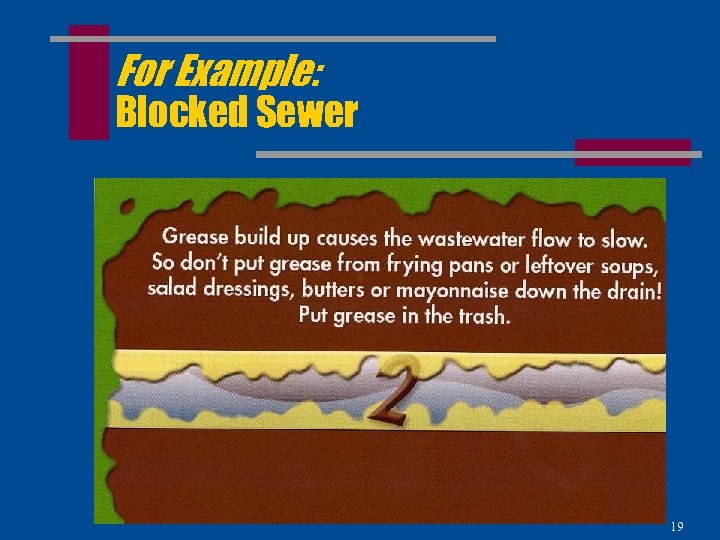 For Example: Blocked Sewer 19
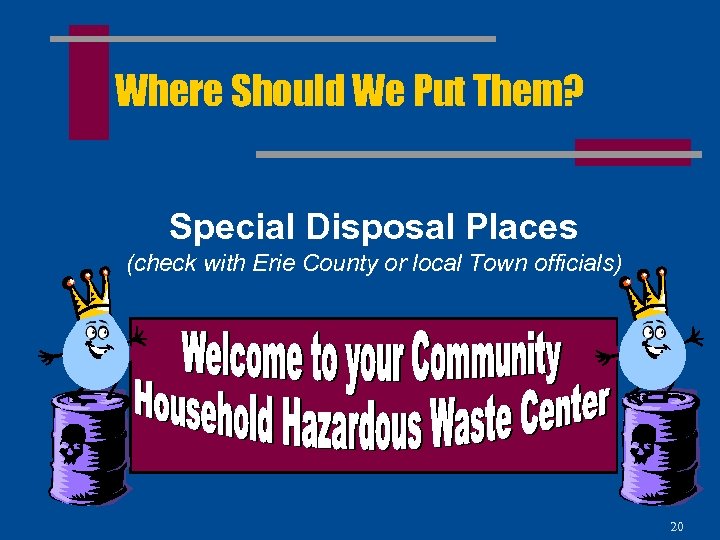 Where Should We Put Them? Special Disposal Places (check with Erie County or local Town officials) 20
 HOUSEHOLD WASTE DISPOSAL Erie County Household Hazardous Waste Drop-Off Day Contact: (716)858 -6800 Or www. erie. gov/environment 21
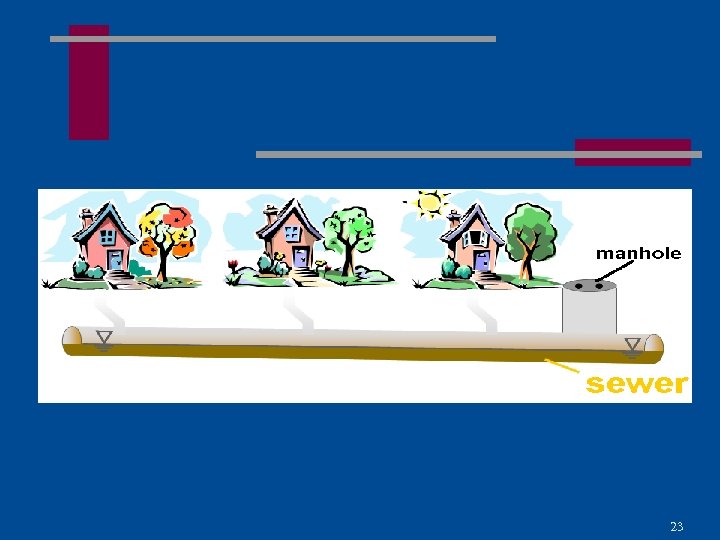
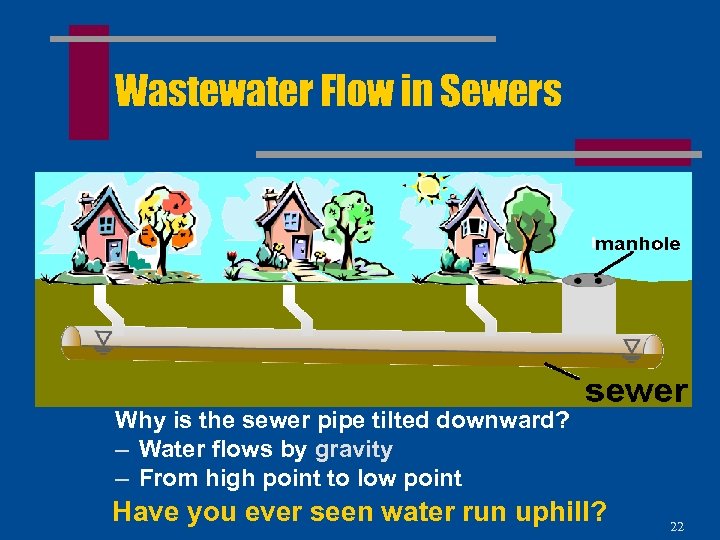 Wastewater Flow in Sewers Why is the sewer pipe tilted downward? – Water flows by gravity – From high point to low point Have you ever seen water run uphill? 22
 23
23
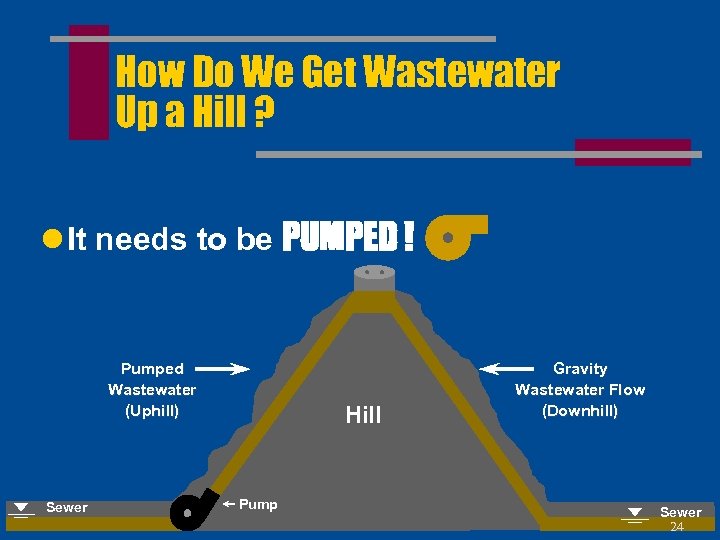 How Do We Get Wastewater Up a Hill ? l It needs to be PUMPED ! Pumped Wastewater (Uphill) Sewer Hill Pump Gravity Wastewater Flow (Downhill) Sewer 24
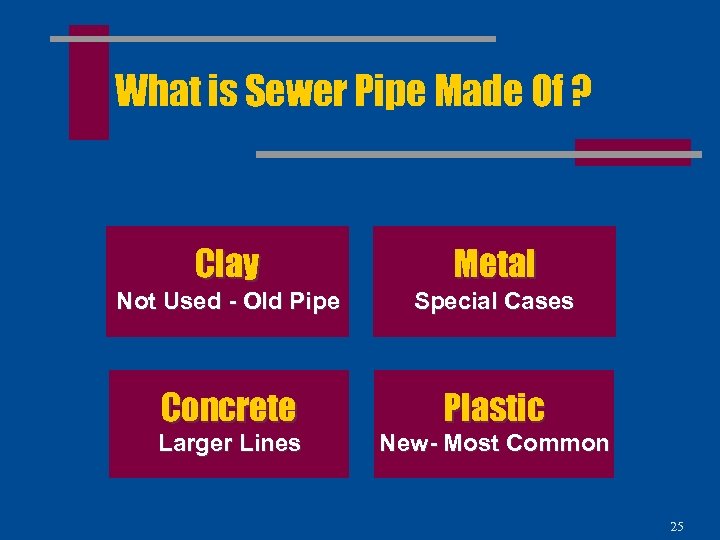 What is Sewer Pipe Made Of ? Clay Metal Not Used - Old Pipe Special Cases Concrete Plastic Larger Lines New- Most Common 25
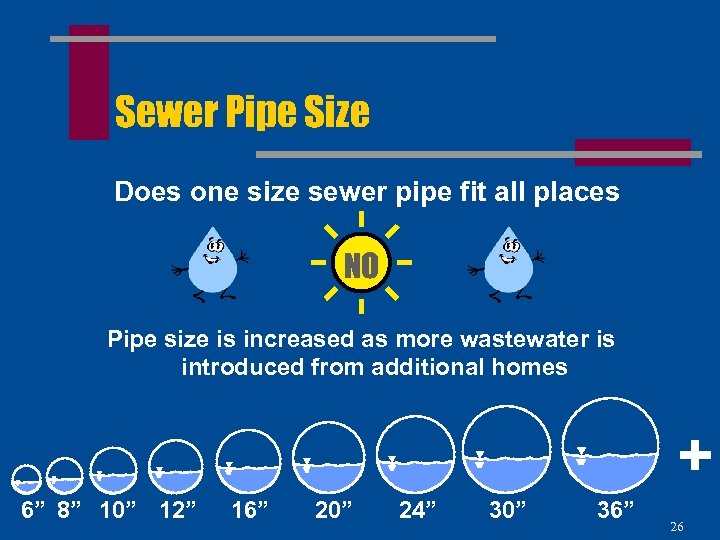 Sewer Pipe Size Does one size sewer pipe fit all places NO Pipe size is increased as more wastewater is introduced from additional homes + 6” 8” 10” 12” 16” 20” 24” 30” 36” 26
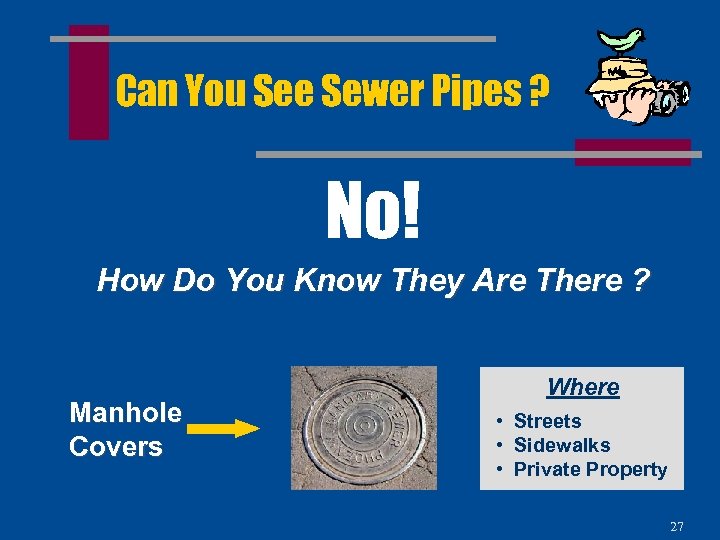 Can You See Sewer Pipes ? No! How Do You Know They Are There ? Manhole Covers Where • Streets • Sidewalks • Private Property 27
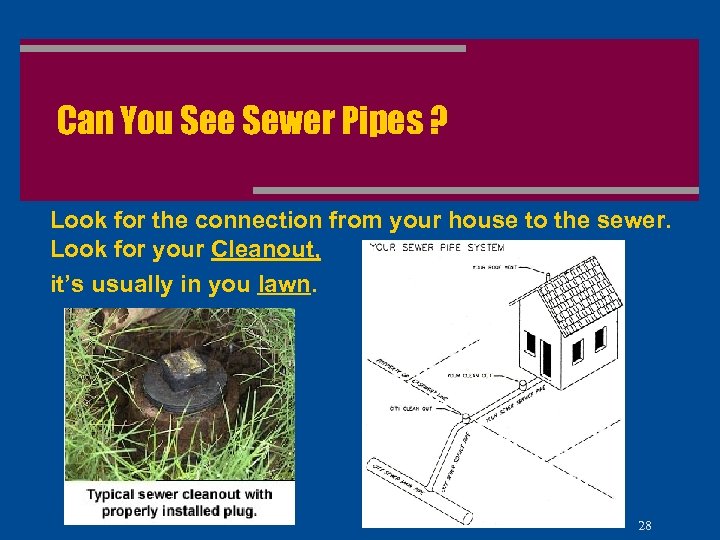 Can You See Sewer Pipes ? Look for the connection from your house to the sewer. Look for your Cleanout, it’s usually in you lawn. 28
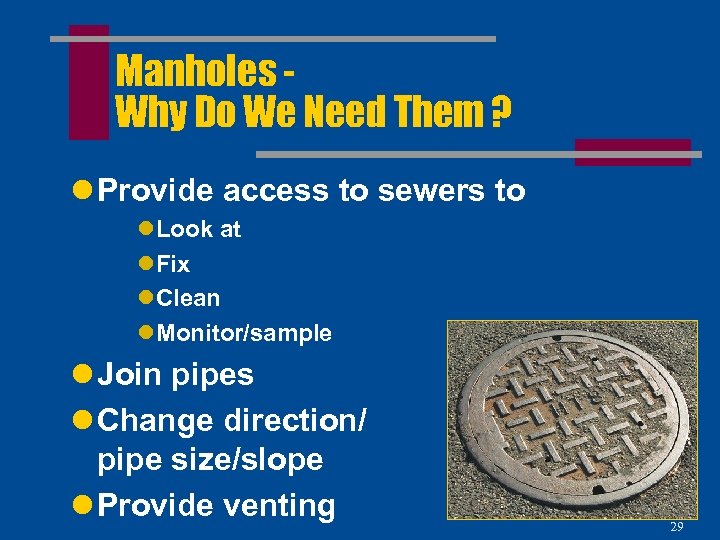 Manholes Why Do We Need Them ? l Provide access to sewers to l. Look at l. Fix l. Clean l. Monitor/sample l Join pipes l Change direction/ pipe size/slope l Provide venting 29
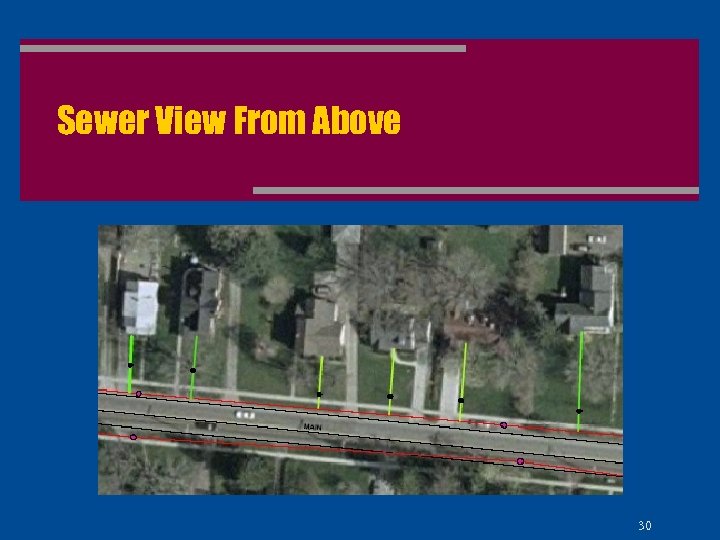 Sewer View From Above 30
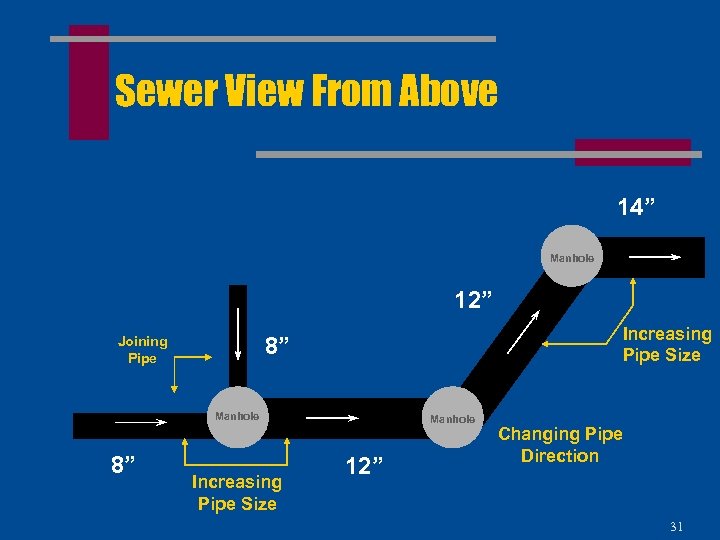 Sewer View From Above 14” Manhole 12” Increasing Pipe Size 8” Joining Pipe Manhole 8” Increasing Pipe Size Manhole 12” Changing Pipe Direction 31
 What Happens at a Wastewater Treatment Plant ? Dirty water (called wastewater or sewage) is cleaned…. HOW? Through by treatment process 32
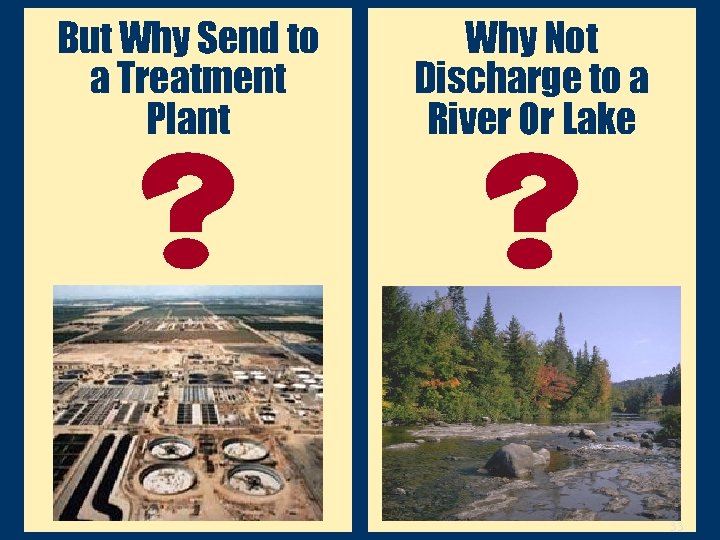 But Why Send to a Treatment Plant Why Not Discharge to a River Or Lake 33
 Why Not Discharge to a River or Lake? § River/Lake • Untreated wastewater will make humans sick • Untreated wastewater will kill fish and other aquatic life. • Impacts water quality 34
 Why Not Discharge to a River or Lake? § Major concern – BACTERIA/HEALTH & LOW OXYGEN LEVEL 35
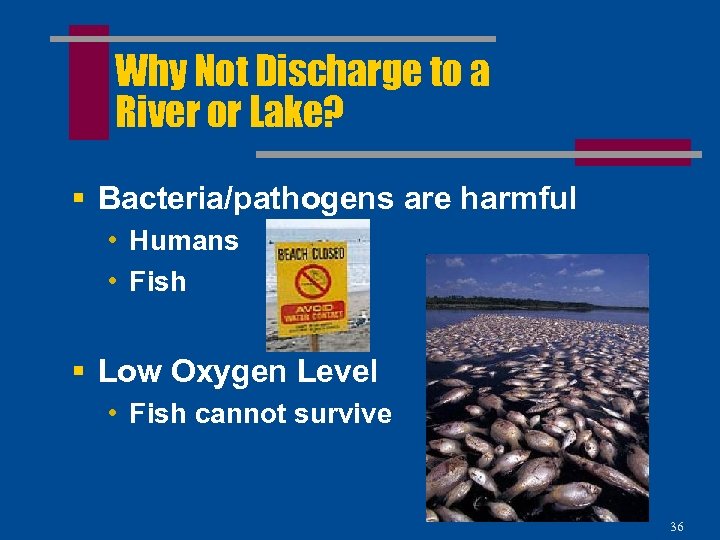 Why Not Discharge to a River or Lake? § Bacteria/pathogens are harmful • Humans • Fish § Low Oxygen Level • Fish cannot survive 36
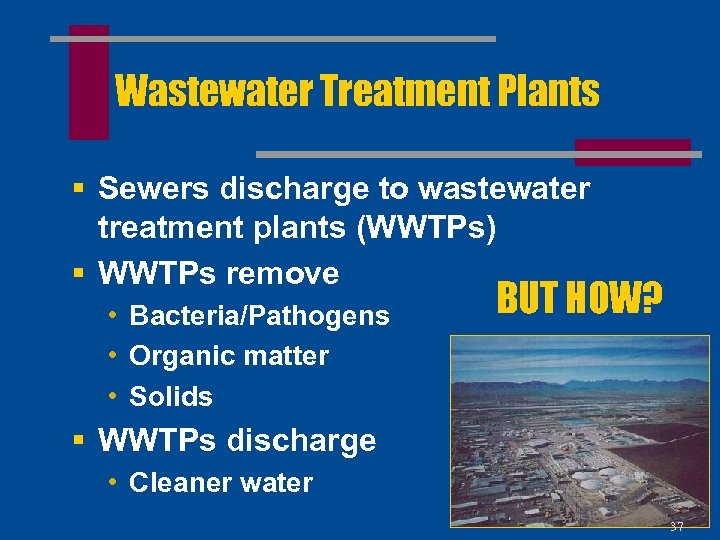 Wastewater Treatment Plants § Sewers discharge to wastewater treatment plants (WWTPs) § WWTPs remove • Bacteria/Pathogens • Organic matter • Solids BUT HOW? § WWTPs discharge • Cleaner water 37
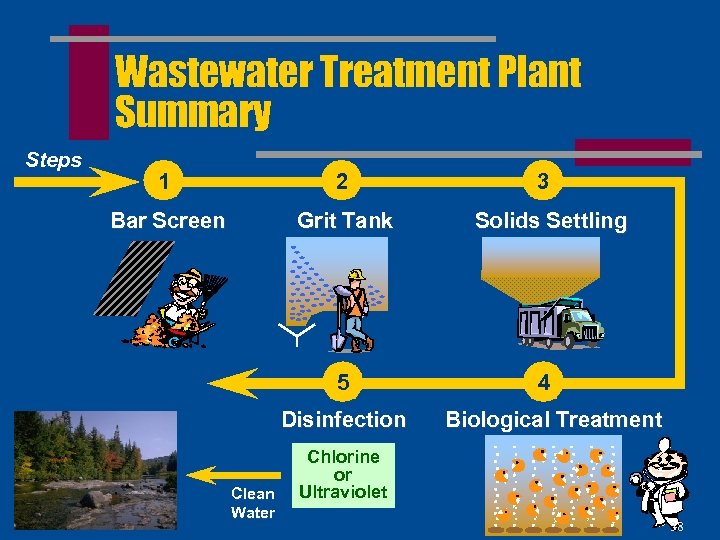 Wastewater Treatment Plant Summary Steps 1 2 Bar Screen Grit Tank 5 Disinfection Clean Water 3 Solids Settling 4 Biological Treatment Chlorine or Ultraviolet 38
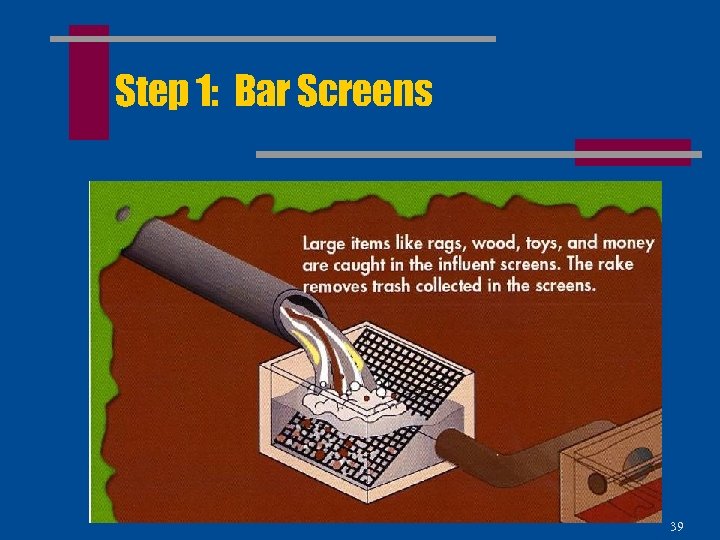 Step 1: Bar Screens 39
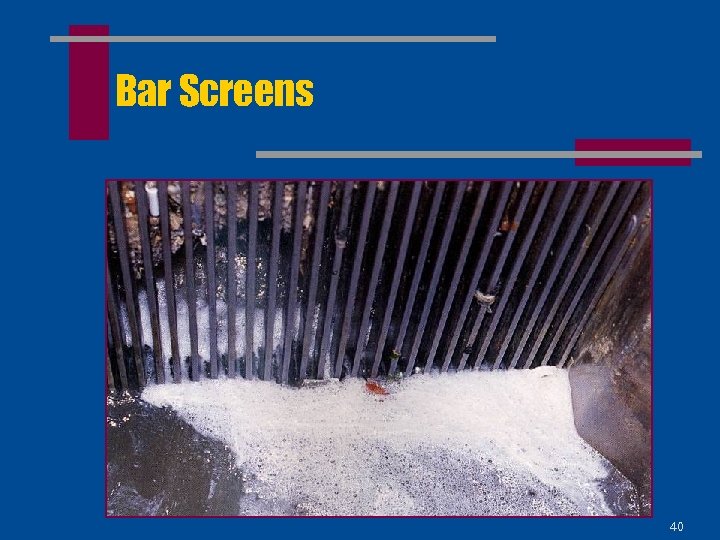 Bar Screens 40
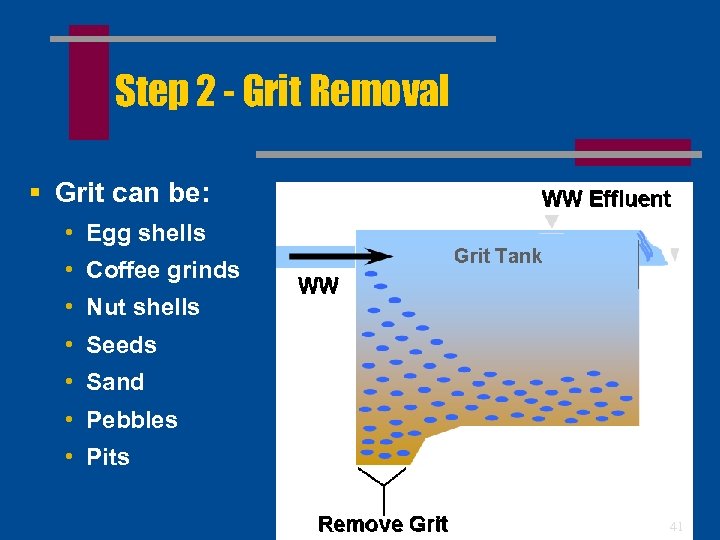 Step 2 - Grit Removal § Grit can be: • • Egg shells Coffee grinds Nut shells Seeds Sand Pebbles Pits 41
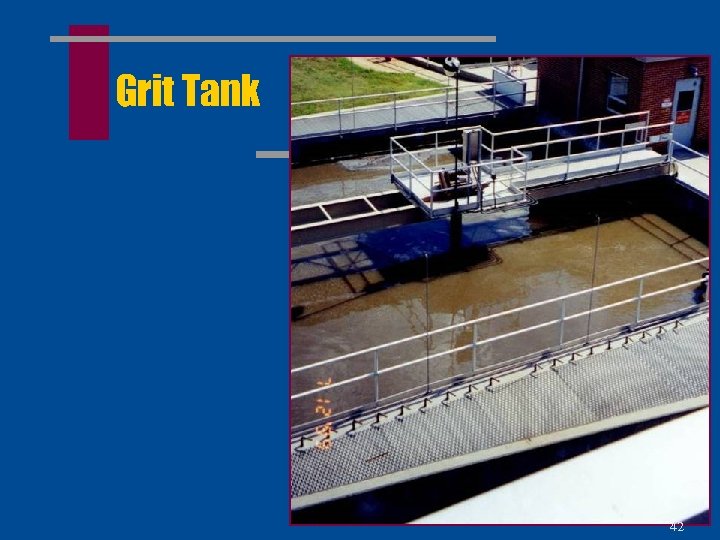 Grit Tank 42
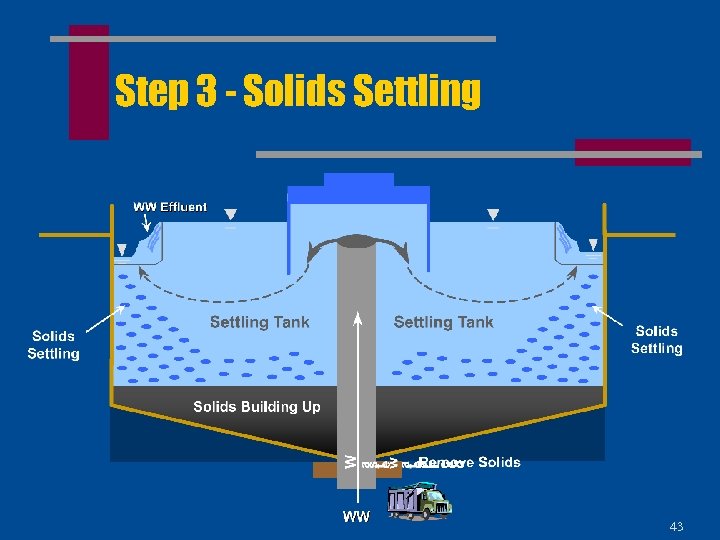 Step 3 - Solids Settling 43
 Step 3 - Solids Settling Tank Removes Solids from Wastewater § Solids can be: l. Food l. Poop 44
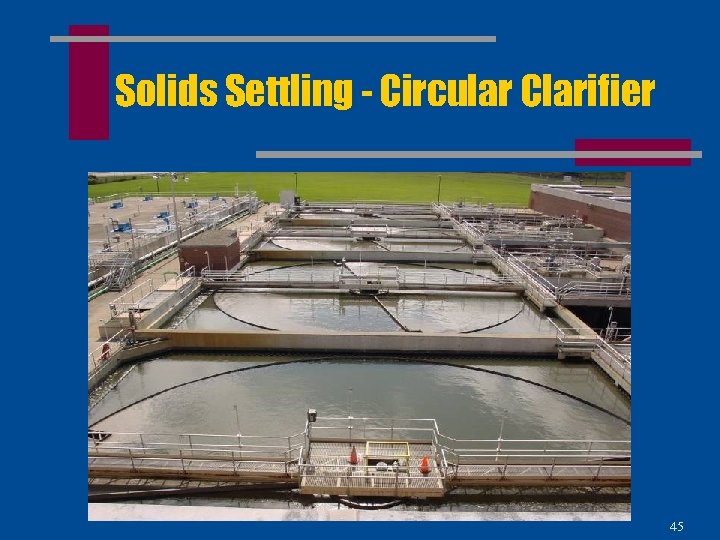 Solids Settling - Circular Clarifier 45
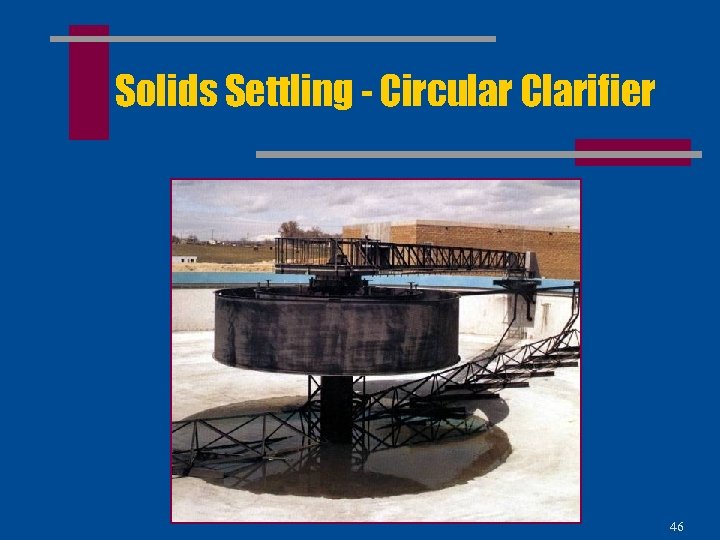 Solids Settling - Circular Clarifier 46
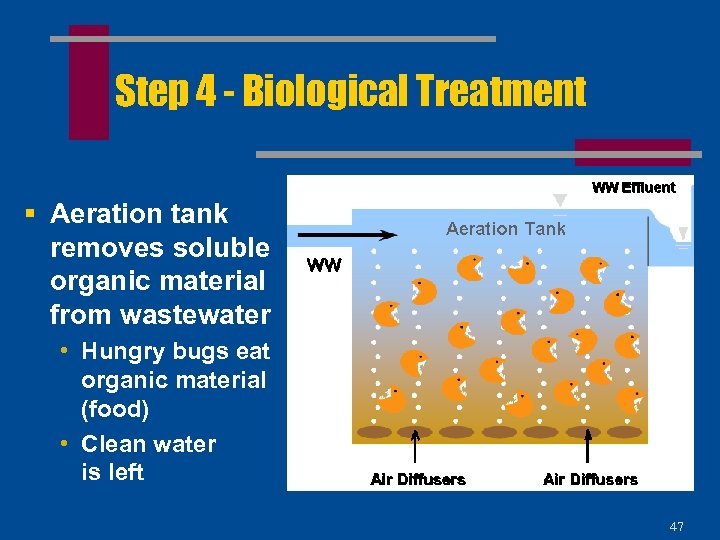 Step 4 - Biological Treatment § Aeration tank removes soluble organic material from wastewater • Hungry bugs eat organic material (food) • Clean water is left 47
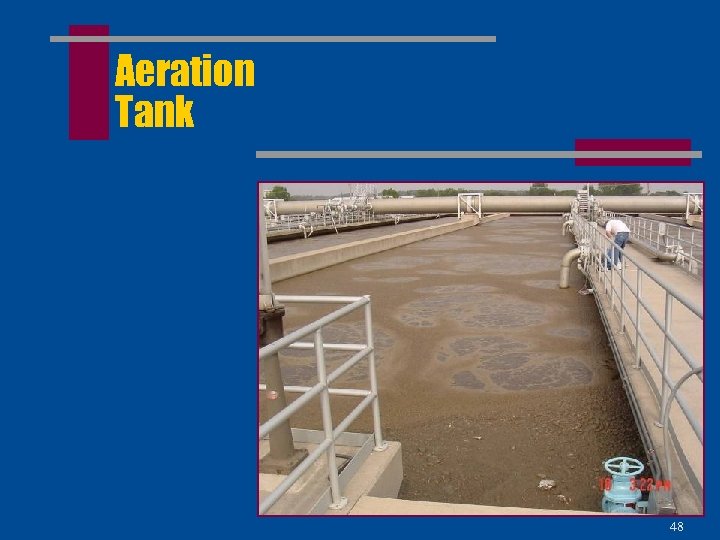 Aeration Tank 48
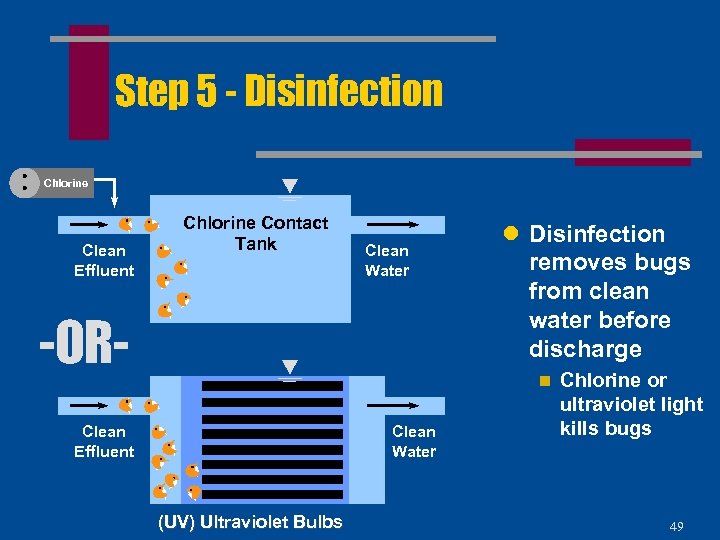 Step 5 - Disinfection Chlorine Clean Effluent Chlorine Contact Tank Clean Water -OR- l Disinfection removes bugs from clean water before discharge n Chlorine or Clean Effluent Clean Water (UV) Ultraviolet Bulbs ultraviolet light kills bugs 49
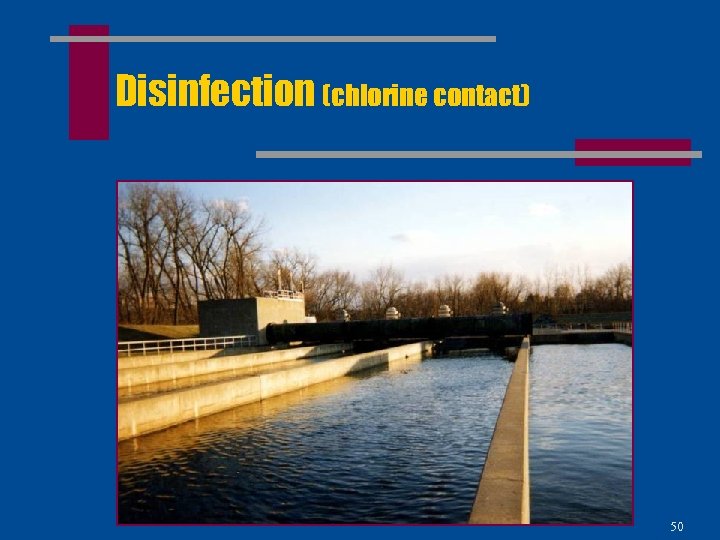 Disinfection (chlorine contact) 50
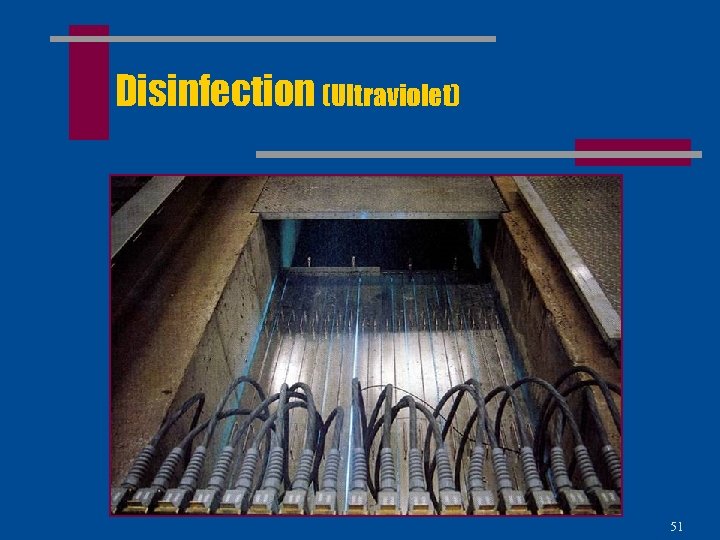 Disinfection (Ultraviolet) 51
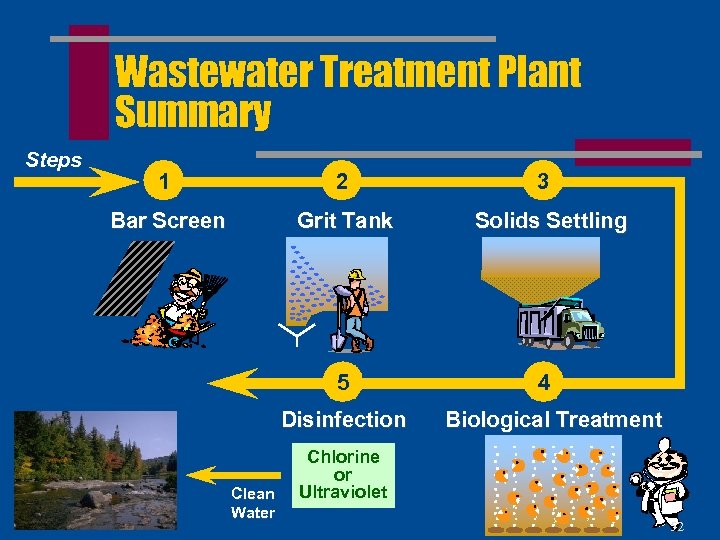 Wastewater Treatment Plant Summary Steps 1 2 Bar Screen Grit Tank 5 Disinfection Clean Water 3 Solids Settling 4 Biological Treatment Chlorine or Ultraviolet 52
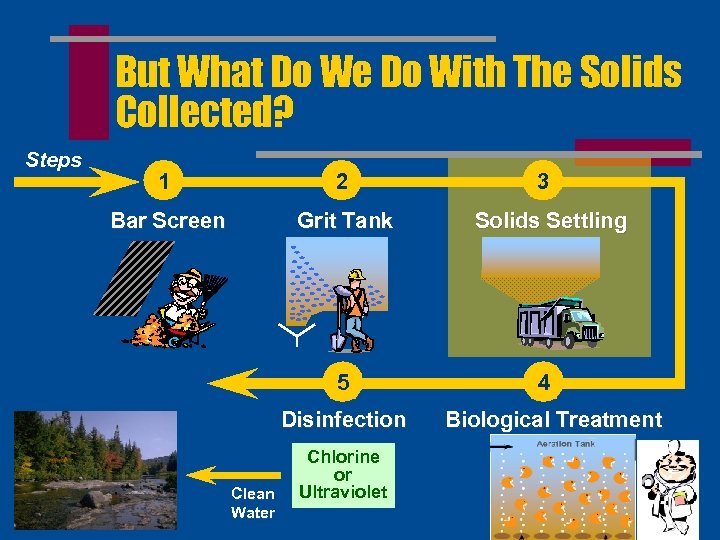 But What Do We Do With The Solids Collected? Steps 1 2 Bar Screen Grit Tank 5 Disinfection Clean Water 3 Solids Settling 4 Biological Treatment Chlorine or Ultraviolet 53
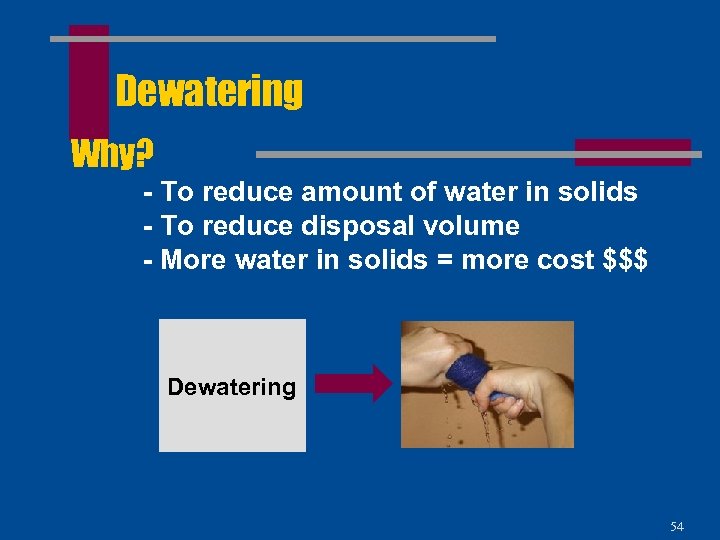 Dewatering Why? - To reduce amount of water in solids - To reduce disposal volume - More water in solids = more cost $$$ Dewatering 54
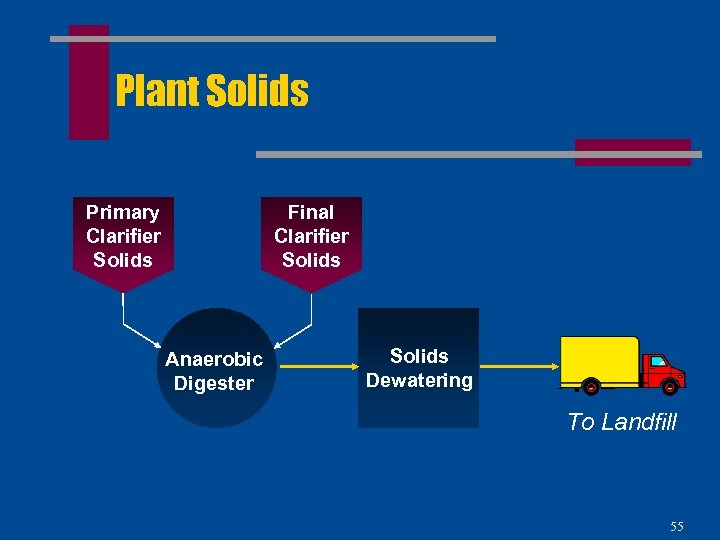 Plant Solids Primary Clarifier Solids Final Clarifier Solids Anaerobic Digester Solids Dewatering To Landfill 55
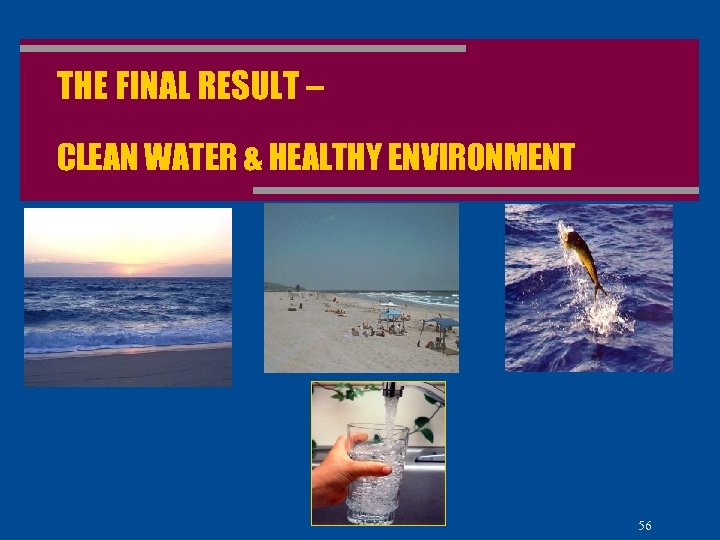 THE FINAL RESULT – CLEAN WATER & HEALTHY ENVIRONMENT 56
 ECDSM 57