


 Скачать презентацию Understanding governance through the management of traffic flow
d163edce60f4ecc8d3e0e9f7649c1e2a.ppt
- Количество слайдов: 23
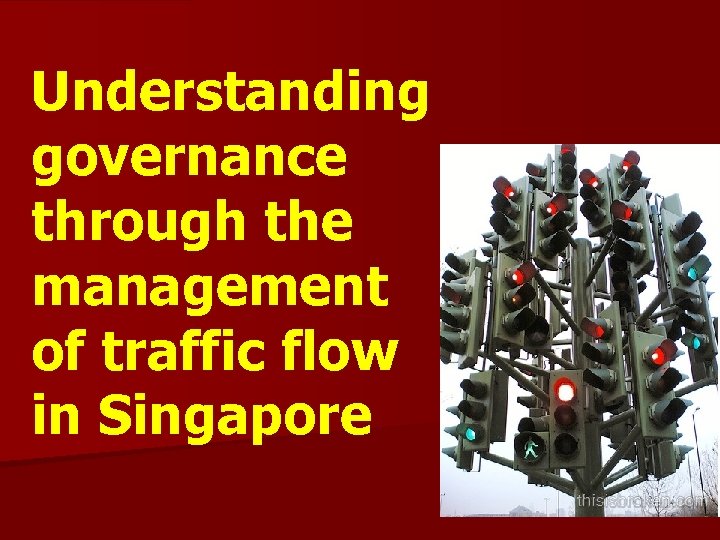 Understanding governance through the management of traffic flow in Singapore
 Learning Points Identify the methods that the government used to control traffic flow in Singapore which are: Area Licensing Scheme 2. Electronic Road Pricing 3. Park-and-Ride Scheme 1.
 Why is there a need to control the flow of traffic in S’pore? Singapore needs to manage the use of land carefully as: n Small land area n Increase in population → increase in demand of land for roads & other uses (housing, infrastructure, working space)
 Measures to control traffic flow Area Licensing Scheme 2. Electronic Road Pricing 3. Park-and-Ride Scheme 1.
 Area Licensing Scheme (ALS) n In 1970 s, rapid growth in population → increase in traffic in city area especially during peak hours n ALS introduced to control traffic flow in Central Business District (CBD) from 730 am – 930 am n Motorists had to pay for the use of certain roads enclosed within areas called “Restricted Zones”
 Area Licensing Scheme (ALS) n Gantries set up at the boundaries of city areas to monitor the vehicles that drove into “Restricted Zones” n To support ALS, the following measures are introduced: - improving bus services - increasing cost of parking in the city areas - providing part-and-ride facilities
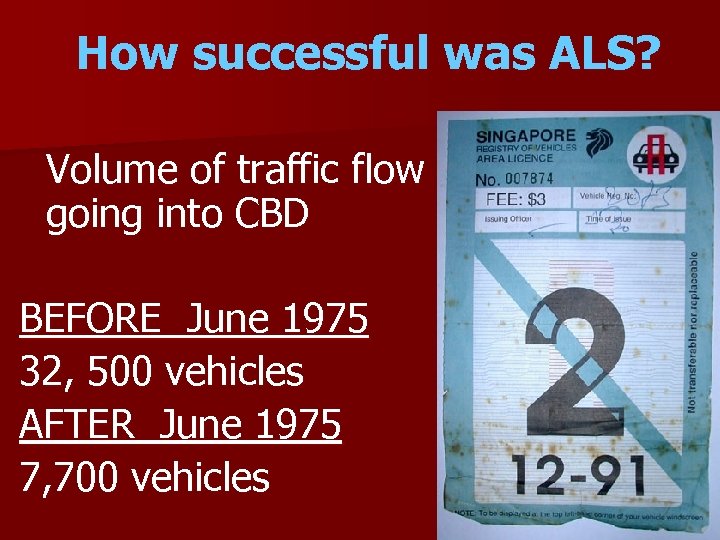 How successful was ALS? Volume of traffic flow going into CBD BEFORE June 1975 32, 500 vehicles AFTER June 1975 7, 700 vehicles
 Effects of Area Licensing Scheme (ALS) n Motorists were unhappy about the increased costs n BUT overall ALS was successful in ensuring smooth traffic flow in CBD
 Replacing ALS with Electronic Road Pricing (ERP) n ERP replaced ALS in 1998 due to improved technology which allows more efficient ways of controlling traffic flow n Serve the same purpose as ALS but is more effective What is the guiding principle of governance in action here?
 Electronic Road Pricing (ERP) n Electronic system of road pricing based on pay-as-you-use principle where motorists are charged when they use the road during peak hours n ERP charges are automatically deducted from the Cash. Cards inserted in the In-vehicle Units (IUs) of vehicles when they pass through the gantry
 Locations of Electronic Road Pricing (ERP) n Ayer Rajah Expressway (AYE) n Bukit Timah Expressway (BKE) n Central Business District (CBD) n Dunearn Road (DR) n East Coast Parkway (ECP) n Kallang-Paya Lebar Expressway (KPE) n Orchard Cordon (OC) n Pan-Island Expressway (PIE)
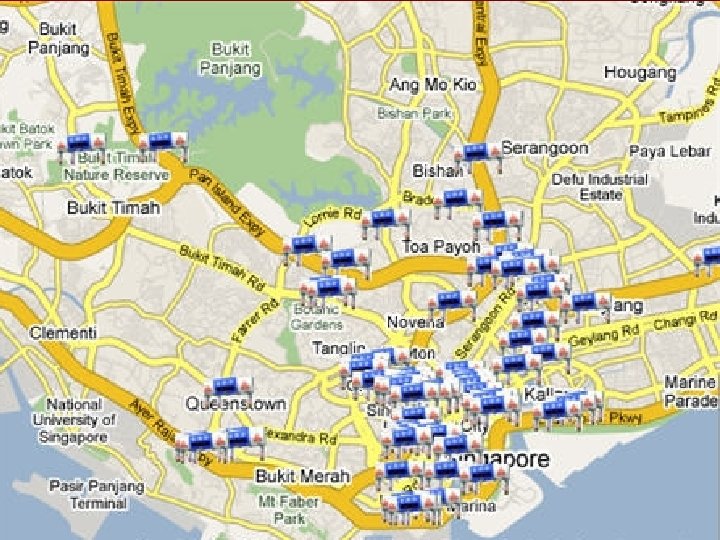
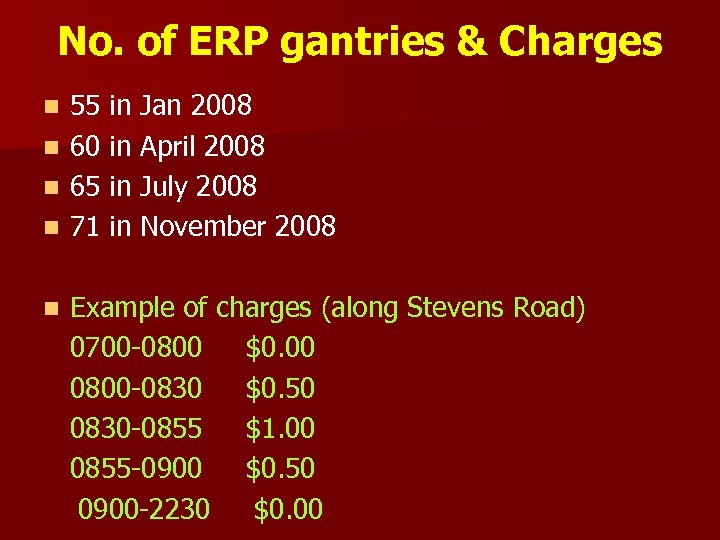 No. of ERP gantries & Charges n n n 55 in Jan 2008 60 in April 2008 65 in July 2008 71 in November 2008 Example of charges (along Stevens Road) 0700 -0800 $0. 00 0800 -0830 $0. 50 0830 -0855 $1. 00 0855 -0900 $0. 50 0900 -2230 $0. 00
 Aim of Electronic Road Pricing (ERP) n Motorists are encouraged to decide whether to drive, when to drive and where to drive Smoother traffic
 Effects of ERP Motorists are unhappy about the charges and the number of gantries n Motorists still find themselves getting caught in slow traffic, despite fine weather and with no accident in sight n Reason: n More vehicles on the roads as motorists are also earning more these days n Current charges are just not hitting motorists' pockets hard enough to keep enough of them away n Government solution: frequent increases to ERP rates
 Park-and-Ride Scheme n Introduced at the same time as ALS n To control traffic flow in CBD by having fewer vehicles in CBD n Motorists to park their vehicles at specific car parks outside CBD and then take shutter transport into CBD
 Park-and-Ride Scheme UNSUCCESSUL in the 1970 s n Motorists took public transport directly or they drove into the CBD before 730 am n Felt that it was not worthwhile to leave their cars outside CBD
 Park-and-Ride Scheme UNSUCCESSUL in the 1970 s Result: n Millions n Land of dollars wasted used for building the car parks wasted n Shuttle bus companies set up for the scheme could not survived
 Park-and-Ride Scheme SUCCESSUL NOW n The n As scheme is still in use today time passes, the habits of people change. Measures that did not work in the past might work now
 Vehicle Quota System (VQS) WHY implement this policy? n SHARP increase in car ownership in the 1990 s as more people can afford to buy cars n VQS was implemented to control the car population n Under this system, Land Transport Authority decides the no. of new vehicles allowed for registration
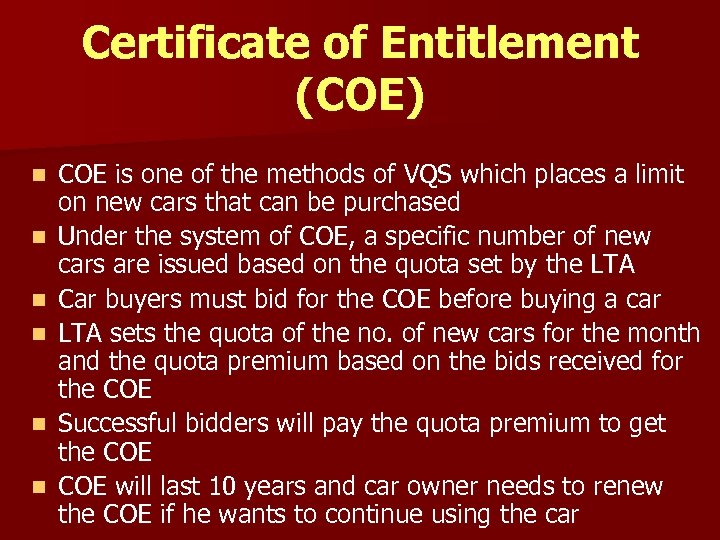 Certificate of Entitlement (COE) n n n COE is one of the methods of VQS which places a limit on new cars that can be purchased Under the system of COE, a specific number of new cars are issued based on the quota set by the LTA Car buyers must bid for the COE before buying a car LTA sets the quota of the no. of new cars for the month and the quota premium based on the bids received for the COE Successful bidders will pay the quota premium to get the COE will last 10 years and car owner needs to renew the COE if he wants to continue using the car
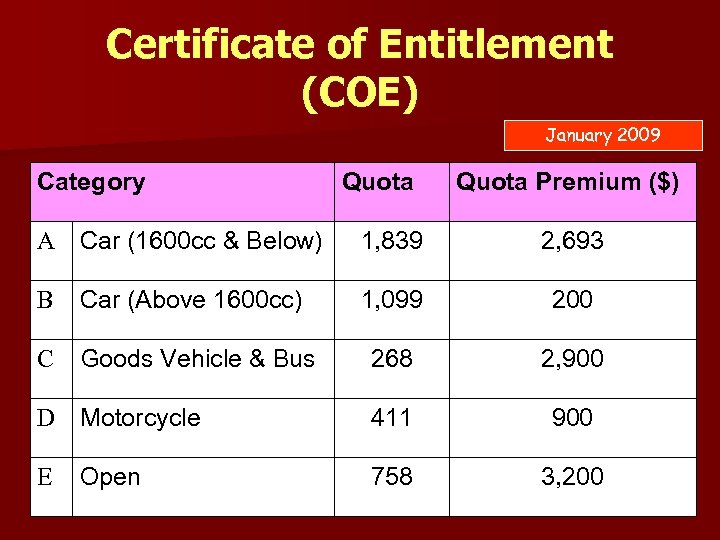 Certificate of Entitlement (COE) January 2009 Category A Car (1600 cc & Below) Quota Premium ($) 1, 839 2, 693 B Car (Above 1600 cc) 1, 099 200 C Goods Vehicle & Bus 268 2, 900 411 900 758 3, 200 D Motorcycle E Open
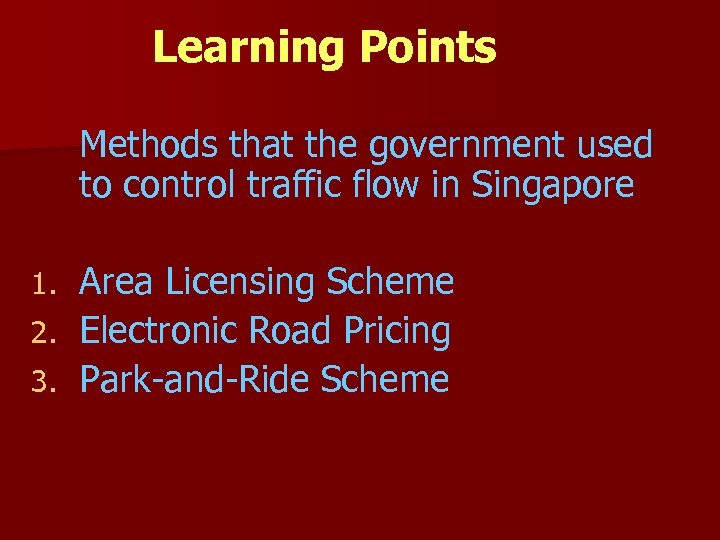 Learning Points Methods that the government used to control traffic flow in Singapore Area Licensing Scheme 2. Electronic Road Pricing 3. Park-and-Ride Scheme 1.