 Скачать презентацию Understanding diabetes risk among Latinos in eastern North
d9d3fce2fa3c4b7080cafdc7cd15d551.ppt
- Количество слайдов: 17



Understanding diabetes risk among Latinos in eastern North Carolina: perceptions regarding nutrition and physical activity Shahna Arps, East Carolina University; Ricardo Contreras, East Carolina University; Luci Fernandez, East Carolina University
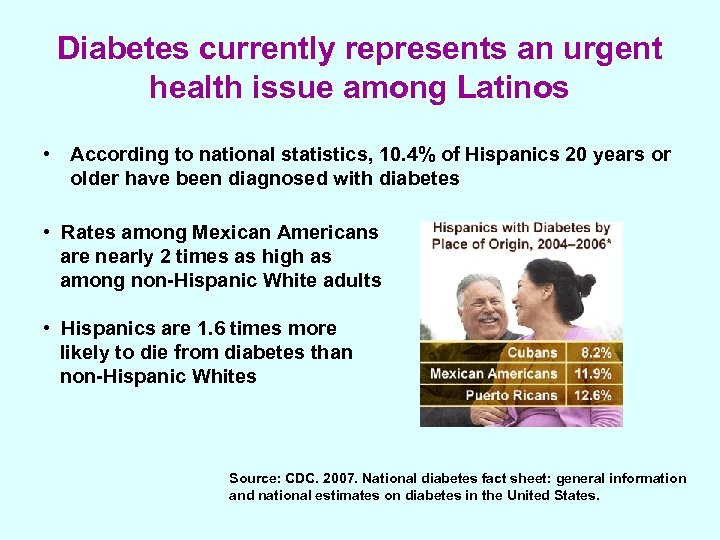
Diabetes currently represents an urgent health issue among Latinos • According to national statistics, 10. 4% of Hispanics 20 years or older have been diagnosed with diabetes • Rates among Mexican Americans are nearly 2 times as high as among non-Hispanic White adults • Hispanics are 1. 6 times more likely to die from diabetes than non-Hispanic Whites Source: CDC. 2007. National diabetes fact sheet: general information and national estimates on diabetes in the United States.
Latinos suffer disproportionately from health problems, because they lack access to education, information, & health services • Although 1 in 10 Hispanics in the United States is living with diabetes, only 1 in 3 may know he/she has the disease (National Alliance for Hispanic Health) • Obesity & lack of physical activity are the leading risk factors for diabetes among Latinos • Many cases of diabetes could be prevented or delayed if these risk factors were addressed by public health interventions • Designing effective health programs that promote behavioral changes depends on understanding beliefs, values, customs, and constraints among individuals in the target population
Perceptions of diabetes, nutrition, and physical activity among Latino immigrants Goals: • To examine factors that contribute to obesity & physical inactivity • To develop culturally-appropriate strategies to prevent diabetes In collaboration with AMEXCAN (Asociación de Mexicanos en Carolina del Norte) which has developed a diabetes awareness program in Pitt County, NC
Methods • Focus group discussions with adults of various ages attending AMEXCAN’s diabetes awareness workshops • Held in a local church (n=11) & community center (n=12) • Discussions were conducted in Spanish • Most participants were from Mexico • Open-ended questions about diabetes, nutrition, & physical activity • Differences in diet & physical activity since migrating to the US • Responses transcribed during the discussions & later translated into English for analysis
Results What is diabetes? • Terrible illness • Incurable illness (? ) • It is easy to get • It is very dangerous • Diabetes can cause death
Diabetes, cont. Symptoms • Thirst • The need to urinate often • Disturbed sleep • Blurred vision Causes • Poor nutrition • Being overweight • Not doing physical activities/exercising • Eating sugar • Genetics/heredity
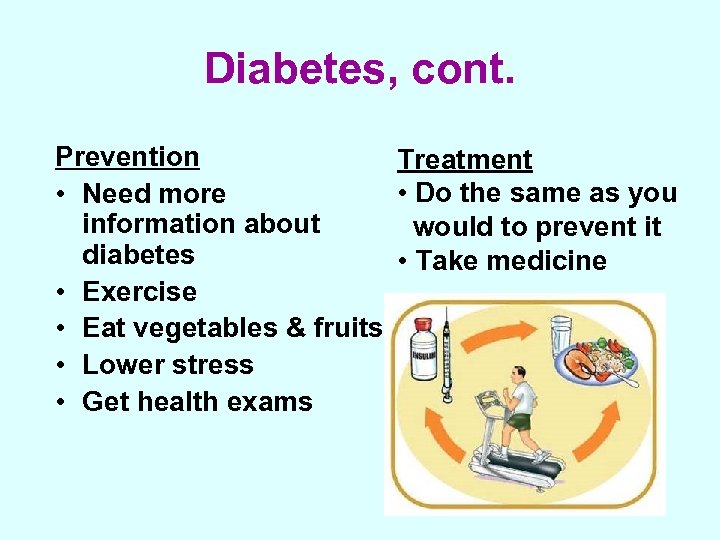
Diabetes, cont. Prevention Treatment • Do the same as you • Need more information about would to prevent it diabetes • Take medicine • Exercise • Eat vegetables & fruits • Lower stress • Get health exams
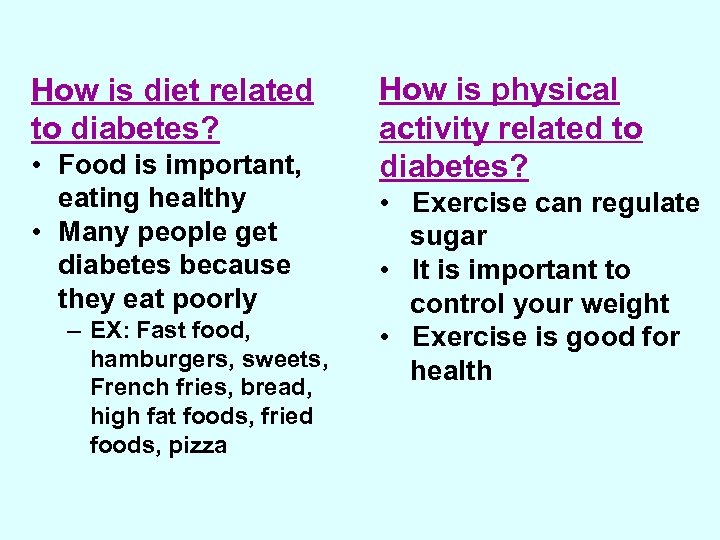
How is diet related to diabetes? • Food is important, eating healthy • Many people get diabetes because they eat poorly – EX: Fast food, hamburgers, sweets, French fries, bread, high fat foods, fried foods, pizza How is physical activity related to diabetes? • Exercise can regulate sugar • It is important to control your weight • Exercise is good for health
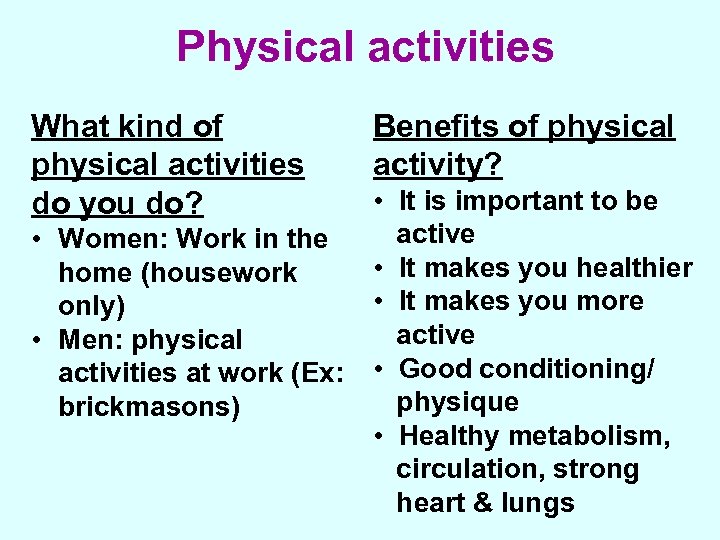
Physical activities What kind of physical activities do you do? • Women: Work in the home (housework only) • Men: physical activities at work (Ex: brickmasons) Benefits of physical activity? • It is important to be active • It makes you healthier • It makes you more active • Good conditioning/ physique • Healthy metabolism, circulation, strong heart & lungs
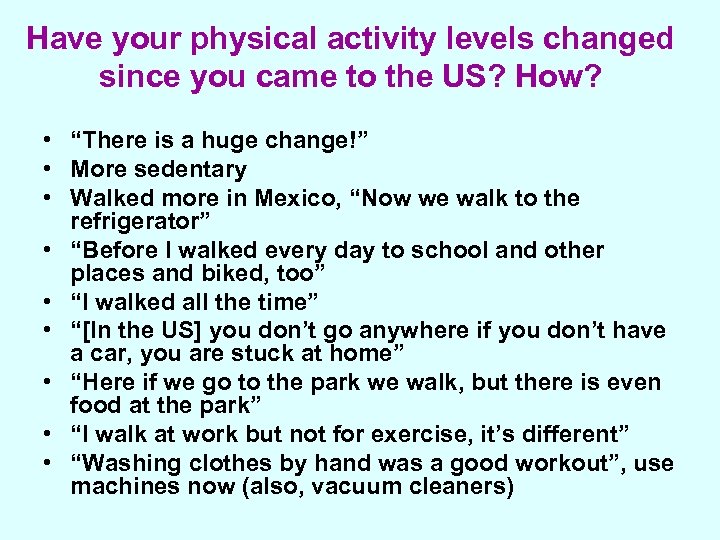
Have your physical activity levels changed since you came to the US? How? • “There is a huge change!” • More sedentary • Walked more in Mexico, “Now we walk to the refrigerator” • “Before I walked every day to school and other places and biked, too” • “I walked all the time” • “[In the US] you don’t go anywhere if you don’t have a car, you are stuck at home” • “Here if we go to the park we walk, but there is even food at the park” • “I walk at work but not for exercise, it’s different” • “Washing clothes by hand was a good workout”, use machines now (also, vacuum cleaners)
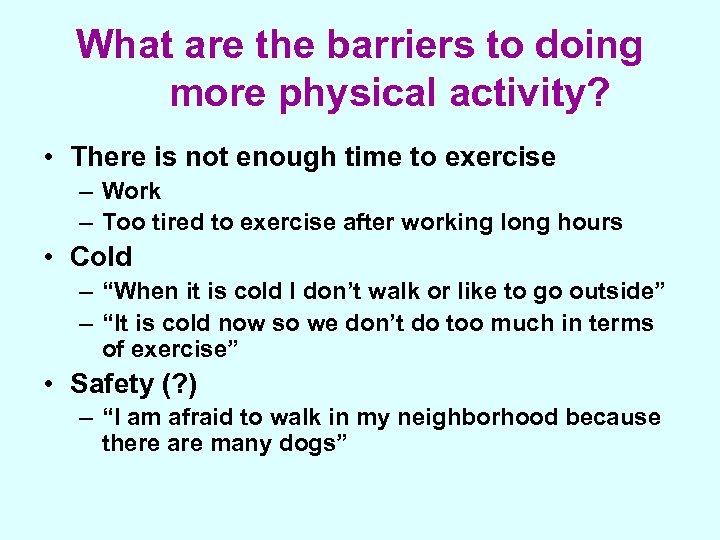
What are the barriers to doing more physical activity? • There is not enough time to exercise – Work – Too tired to exercise after working long hours • Cold – “When it is cold I don’t walk or like to go outside” – “It is cold now so we don’t do too much in terms of exercise” • Safety (? ) – “I am afraid to walk in my neighborhood because there are many dogs”
Nutrition What is a healthy diet? • Low in fat • Low in bread • High in fruit • Plenty of fruits and vegetables • drinking water • Eating grains, beans • Corn is very nutritious Benefits of good nutrition? • If eat well, less illnesses and disease
Has your diet changed since you came to the US? How? • • Ate better in Mexico, more nutritious diet Eat less vegetables and fruit now Vegetables and fruit are different here than in Mexico Food has more fat and grease in the US – “Here they sell a lot of things with fat” – Eat more fast foods • Not as fresh, healthy, less flavor – “Meat is old because it’s frozen and shipped” – Meat is “injected” - has a different taste – “Before we could grow many things like corn, lettuce, tomatoes, cabbage, garlic, and peppers on our own land” – “Food was from the country, not bought” – “We ate more grains and meat” – Food in the US isn’t “original” • Men & women have gained weight, health has declined
Barriers to eating healthier? • Time constraints (to cook and eat healthy) • “It is our custom to spend a lot of time cooking and eating, but it is not possible because we do not have time” – Work • Eat fast food now because of time constraints with work • 30 minutes to eat at work – Eating is organized around children’s schedules (coming home from school) and husband coming home from work • “I buy fresh fruit and vegetables but I don’t have time to prepare them before they go bad and I need to throw them away” • Buy more canned food (not accustomed to canned food) • Children refuse to eat traditional Mexican food, “they are picky and want American food like pizza” – Too difficult to prepare two kinds of food (American & traditional Mexican) • Customs – Don’t eat many vegetables, not in traditional diet, cook with lard • Money is not a barrier to eating healthier, can buy cheaper food
Discussion • Emphasized seriousness of diabetes • Importance of nutrition & physical activity/exercise • But described barriers that specifically relate to life in the US – Had more nutritious diets and active lifestyles in Mexico – In the US, less fresh food, more high fat, convenient food – More sedentary, depend on cars, washing machines, don’t walk as much – Lead busy lives with insufficient time for cooking traditional meals and exercising
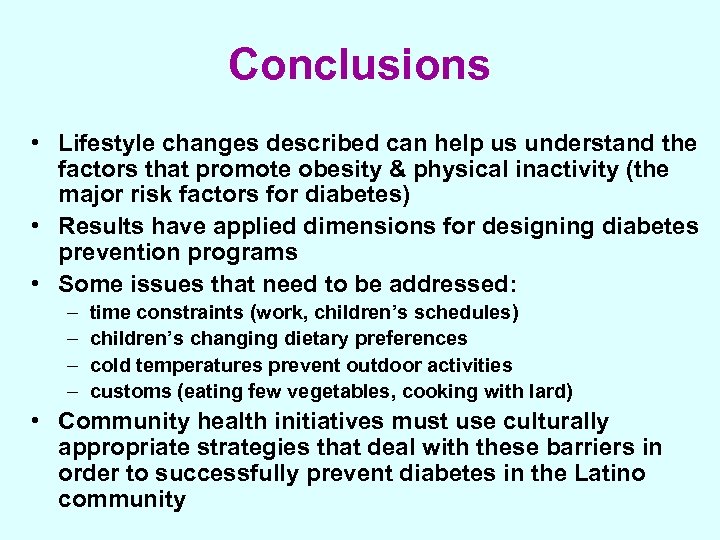
Conclusions • Lifestyle changes described can help us understand the factors that promote obesity & physical inactivity (the major risk factors for diabetes) • Results have applied dimensions for designing diabetes prevention programs • Some issues that need to be addressed: – – time constraints (work, children’s schedules) children’s changing dietary preferences cold temperatures prevent outdoor activities customs (eating few vegetables, cooking with lard) • Community health initiatives must use culturally appropriate strategies that deal with these barriers in order to successfully prevent diabetes in the Latino community
Скачать презентацию Understanding diabetes risk among Latinos in eastern North
d9d3fce2fa3c4b7080cafdc7cd15d551.ppt