


 Скачать презентацию Understanding Dementia and Dementia Services Dr Dev Malhotra
8495f93228ff684d883d584cb53bd57f.ppt
- Количество слайдов: 39
 Understanding Dementia and Dementia Services Dr Dev Malhotra General Practitioner Sessional Mental Health Lead Croydon Clinical Commissioning Group
 Aims of the session To provide an overview of the types, symptoms and stages of Dementia. To explore the cognitive, behavioural and psychological symptoms that people with Dementia may present with and carers may have to manage. To consider what psychosocial and pharmacological interventions are available for people with Dementia. To outline the organisation of services for people with dementia and their families.
 Normal Ageing and Cognition Language is modestly affected by ageing Language comprehension is preserved, as are vocabulary and syntax Some modest decline is seen with spontaneous word finding and verbal fluency While verbal intelligence remains unchanged with ageing, the speed of information processing gradually slows Executive functions remain normal for everyday tasks, but are slowed when faced with novel tasks or divided attention A slowing of the speed of cognitive processing and reaction time occur with ageing (Lezak, 2004)
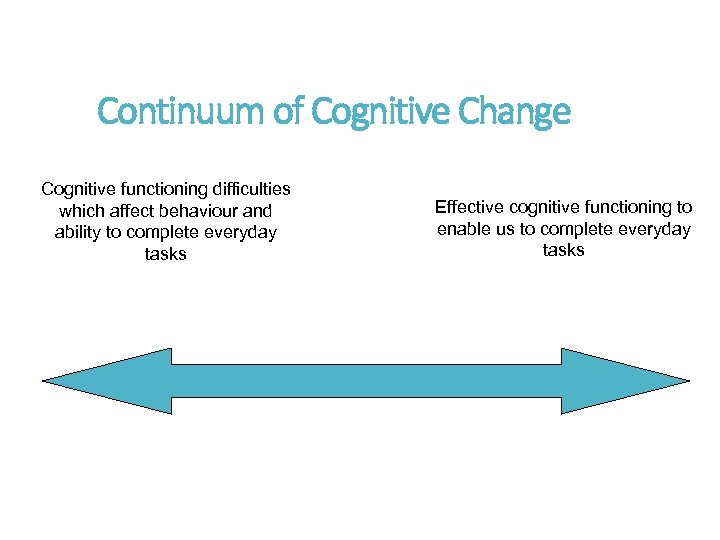 Continuum of Cognitive Change Cognitive functioning difficulties which affect behaviour and ability to complete everyday tasks Effective cognitive functioning to enable us to complete everyday tasks
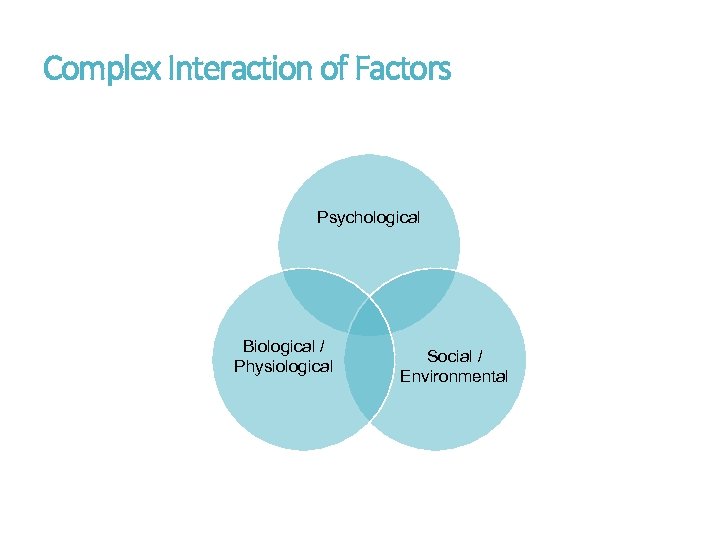 Complex Interaction of Factors Psychological Biological / Physiological Social / Environmental
 What is Dementia? Dementia is characterised by a decline of information processing abilities accompanied by changes in personality and behaviour. Dementia is an umbrella term for progressive disorder of cognition.
 Statistics 1 in 20 people over 60 have a diagnosis of dementia 1 in 5 people over 80 have a diagnosis of dementia There about 800, 000 people in the UK with dementia (Alzheimer's society, 2012) Around 2/3 people with Dementia are cared for at home Dementia mainly affects people over the age of 65 and the likelihood increases with age However, it can affect younger people: there are over 17, 000 people in the UK under the age of 65 who have dementia (Alzheimer's society, 2012) By 2025 estimated 34 million sufferers worldwide (NICE) Growing problem in BME communities - underdiagnosis
 Context (1) Dementia Strategy (2009) Objective 1: Improving public and professional awareness and understanding of dementia Objective 2: Good-quality early diagnosis and intervention for all Objective 3: Good-quality information for those with diagnosed dementia and their carers. Providing Objective 7: Implementing the Carers’ Strategy.
 Context (2) NICE Guidelines suggest Carers of people with dementia who experience psychological distress and negative psychological impact should be offered psychological therapy, including cognitive behavioural therapy, conducted by a specialist practitioner. National IAPT agenda to increase access for carers
 Diagnosis of dementia NICE guidance is that Memory assessment services (which may be provided by a memory assessment clinic or by community mental health teams should be the single point of referral for all people with a possible diagnosis of dementia. There are three generally accepted criteria for the diagnosis of dementia
 Diagnosis 1. Memory impairment Impaired ability to learn new information and to recall previously learned information.
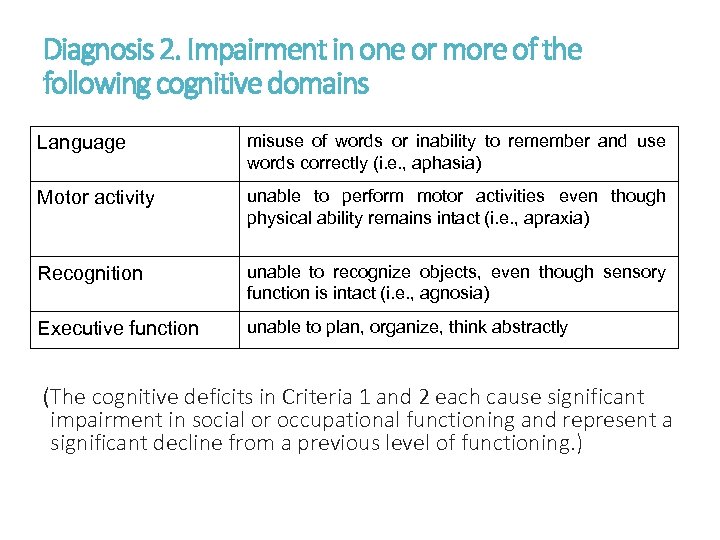 Diagnosis 2. Impairment in one or more of the following cognitive domains Language misuse of words or inability to remember and use words correctly (i. e. , aphasia) Motor activity unable to perform motor activities even though physical ability remains intact (i. e. , apraxia) Recognition unable to recognize objects, even though sensory function is intact (i. e. , agnosia) Executive function unable to plan, organize, think abstractly (The cognitive deficits in Criteria 1 and 2 each cause significant impairment in social or occupational functioning and represent a significant decline from a previous level of functioning. )
 Diagnosis 3. Gradual onset / continued decline The course is characterised by gradual onset and continuing cognitive decline. (usually for 6 months or more)
 Most common Types of Dementia In order of prevalence Alzheimer's Disease Vascular Dementia Lewy Body Dementia Frontotemporal
 Rarer forms of Dementia Pre-senile Dementia Ø Creutzfeldt-Jakob Disease Picks Disease Ø Aids-related Dementia Korsakov Dementia* Ø Wernickes Pseudo-dementia* Ø Pernicious anaemia* Ø Subdural haematoma* Ø Subcortical dementias Parkinson's Disease Ø Progressive supranuclear palsy Huntington's chorea Ø Binswangers disease Ø Semantic dementia Ø Dementia Pugilistica Endocrine related Dementia* Posterior cortical atrophy Normal Pressure Hydrocephalus* Neurosyphilis* * Reversible
 Alzheimer's disease Early symptoms: Predominately early episodic memory difficulties Difficulties with STM and recall / orientation Confrontational naming Word finding and ability to generate words (Salmon & Bondi 2009)
 Stages of Alzheimer’s Disease 1 Mild Primary early symptom is forgetfulness names/words addresses shopping items Main deficit is in recent memory Intellectual deficits confirmed by neuropsychological testing Some awareness of their symptoms, so the person may become anxious, depressed and may be in denial No distinguishing features on physical examination
 Stages of Alzheimer’s Disease 2 Moderate Significant memory loss – close family members / well known routes/places Personality and behavioural changes Self-neglect Disorientation in time and space Inability to undertake simple tasks i. e. dressing Reduced range of thinking (intellectual deficits) Language problems start Disinhibition
 Stages of Alzheimer’s Disease 3 Severe Dysphasia with disordered and fragmented speech Aggression, restlessness and wandering Hallucinations and delusions Incontinence Immobility, rigidity and recurrent falls General physical deterioration
 Vascular Dementia Refers to the pathology – many different types Early symptoms are memory difficulties and executive difficulties Often history of stroke / falls Stepwise progression Vascular risk factors usually present (High blood pressure, high cholesterol, diabetes) (Salmon & Bondi, 2009)
 Lewy Body Dementia Under umbrella of disease related to Parkinson's disease Early symptoms include executive difficulties Visuospatial problems Hallucinations of animals and children common (Salmon & Bondi, 2009)
 Frontotemporal dementia Frontotemporal variant Umbrella term – may different variants including Picks, semantic dementia, primary progressive aphasia (PPA) Main cognitive deficits are in executive functioning and attention Memory and visuospatial abilities mostly spared (Lezak, 2004)
 Interventions for cognitive symptoms and maintenance of function (1) Pharmacological interventions include: The three acetylcholinesterase (ACh. E) inhibitors donepezil, galantamine and rivastigmine for managing mild to moderate Alzheimer’s disease. Memantine is recommended for people with Moderate Alzheimer’s disease (if ACh. E inhibitors are not tolerated) and for people with Severe Alzheimer’s disease
 Interventions for cognitive symptoms and maintenance of function (2) Non pharmacological interventions include: Structured group Cognitive Stimulation Therapy for people with Mild to Moderate Dementia
 Non cognitive symptoms of Dementia (BPSD) Delusions Apathy / Indifference Hallucination Disinhibition Agitation / wandering Irritability / lability / aggression Depression / dysphoria Aberrant motor behaviour Anxiety Night-time behaviour Euphoria/elation Appetite / Eating change
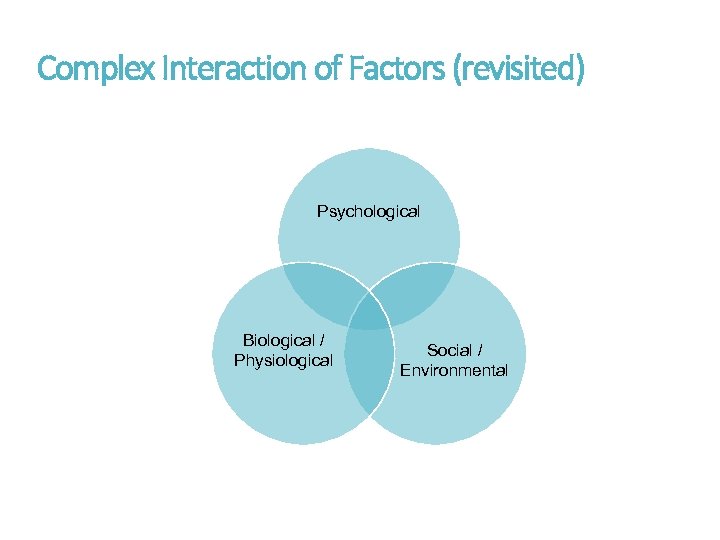 Complex Interaction of Factors (revisited) Psychological Biological / Physiological Social / Environmental
 Interventions for non-cognitive symptoms and behaviour that challenges (1) Offer thorough assessment to Include: – physical health – depression – possible undetected pain or discomfort – side effects of medication – individual biography – psychosocial factors – physical environmental factors – behavioural and functional analysis
 Interventions for non-cognitive symptoms and behaviour that challenges (2) Develop individual care plans /behavioural management plans For comorbid agitation, consider interventions tailored to the person’s preferences, skills and abilities. – Monitor response and adapt the care plan as needed. – Depending on availability, consider options including: 5 aromatherapy multisensory stimulation therapeutic use of music and/or dancing animal-assisted therapy massage.
 Organisation of Services – Primary care GP IAPT / Psychological treatment service District Nursing "I said I must take you to the doctor and he resisted, cos he hates going to doctors, …. . he hadn’t seen his GP for nearly two years, and luckily for me they sent a letter saying that they needed to see him, and I just said to him, it’s common courtesy to go. " (Black Caribbean wife)
 Organisation of Services - Secondary Mental Health Services Old age psychiatry (people aged 65+ and those with dementia) Community Mental Health Team Memory service In patient services
 Organisation of Services - Secondary Mental Health Services – Memory Service What does a Memory Service do? See and diagnose people with memory problems without a diagnosis of dementia Give information Treat – medication, psychological and social treatments Signpost to other appropriate services
 Memory Service (cont. ) "I found, when he was first diagnosed, it was an awful lot to take in, you’re given all this information on what you should be doing you don’t really want to know it ‘cos you, at the time, my husband was healthy. " (WUK wife of young onset) "The advice that I would give is get as much information as possible, because information is really hard to get… but …is there. " (Italian wife of Black British Caribbean)
 Organisation of Services - Secondary Mental Health Services (CMHT) What does a CMHT do? Sees all other people aged 65+ or with dementia who need mental health treatment. People with psychiatric problems other than dementia People with a diagnosis of dementia who need specialist care eg due to neuropsychiatric symptoms
 Organisation of Services - Secondary Mental Health Services (Inpatient) When are inpatient services needed? "He refused all help. He wouldn’t let anyone come into the house, no form of carer. But then, he was wandering. . and …. . a danger to himself, he would get lost … he was out all night, no idea where he had been…[admitted on section]. " (WUK wife)
 Organisation of Services (Social Services) Social Services Managing “care package” (unless a CMHT patient) Carers Occupational therapy Social workers Respite, day centres Arranging placement in 24 hour care
 Social Services (Cont. ) Call up Social Services if you feel you need more help, contact them. They can always say no, but …it is always worth it. "(Black African daughter) “He has to be at the day centre six days a week … just one day a week when he’s home on Sunday, it’s very difficult, but it’s better than him being in a nursing home" (WUK wife of young onset)
 Decisions about care homes "And because I had …somebody [brother] close to me saying [a care home], he could see it from a different angle to me and I think that’s when I decided" (Irish daughter) “At the end of the four weeks of respite, the man in charge in the home said to me “how can you take him home? It always needs two people to see to him” So, after that, I decided to leave him there…" (White other wife) "I had to start looking for care homes … the worry about the cost of them was an issue and… I…looked at all the information available on the internet, contacted the Alzheimer’s Society and so forth …" (WUK wife)
 Voluntary Sector Organisations Alzheimer’s Society www. alzheimers. org. uk Croydon Voluntary Action www. cvalive. org. uk
 Questions? For further information see Alzheimer’s society website.