


 Скачать презентацию -UNCLASSIFIED- Missile Defense Exercise Planning May 5 2010
35e2a2772d6adb8906b64ef62661adca.ppt
- Количество слайдов: 20
 -UNCLASSIFIED- Missile Defense Exercise Planning May 5 2010 First Annual Israel Multinational Ballistic Missile Defense Conference Presented By: Mr. Ohad Elbahar Israel Missile Defense Organization -UNCLASSIFIED-
 -UNCLASSIFIED- About the Speaker • Mr. Ohad Elbahar: • B. Sc. In Engineering from the TECHNION Israel Institute of Technology. • MBA from Ben-Gurion University of the Negev. • Served as an officer in the IAF Test Range to conduct the Arrow Flight Tests. • Served as an officer in the Israeli Missile Defense Organization (IMDO). • Active consultant at IMDO for Interoperability. -UNCLASSIFIED-
 -UNCLASSIFIED- Abstract • Exercises of missile defense can easily become very complicated. • Defining the proper Training Audience, the proper Trainer, the proper systems etc. is very difficult. • Building the exercise infrastructure, the simulation systems, the Intel for the exercise etc. is a real art. • Getting most of the exercise in an organized After Action Review (AAR). -UNCLASSIFIED-
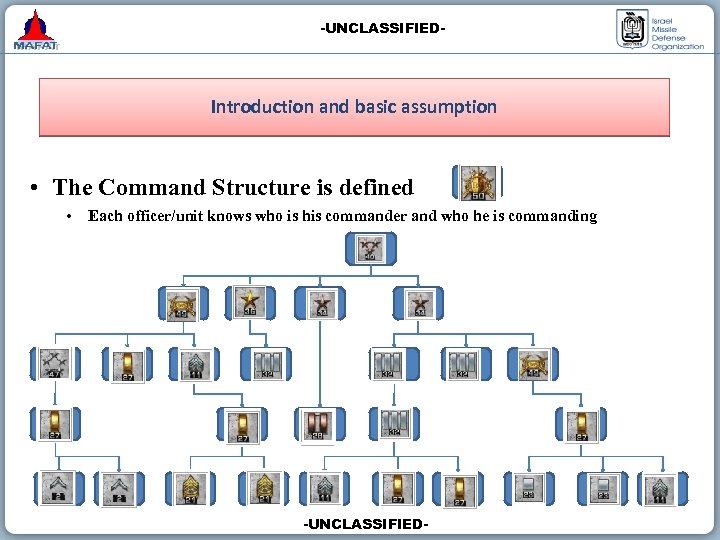 -UNCLASSIFIED- Introduction and basic assumption • The Command Structure is defined • Each officer/unit knows who is his commander and who he is commanding -UNCLASSIFIED-
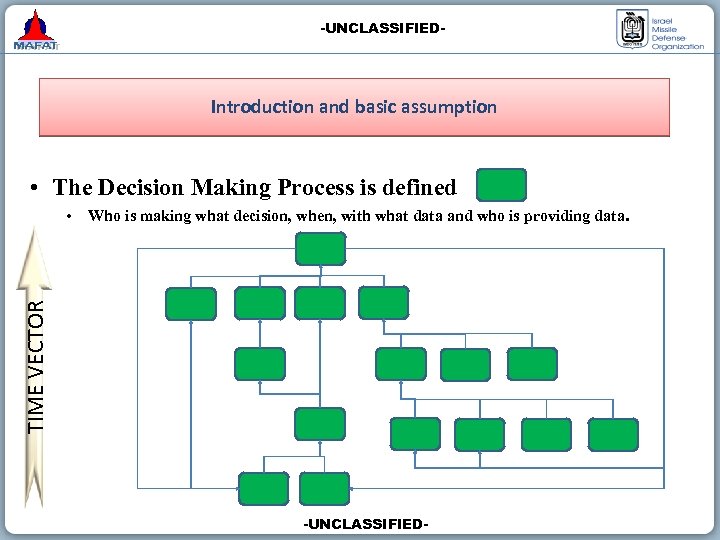 -UNCLASSIFIED- Introduction and basic assumption • The Decision Making Process is defined Who is making what decision, when, with what data and who is providing data. TIME VECTOR • -UNCLASSIFIED-
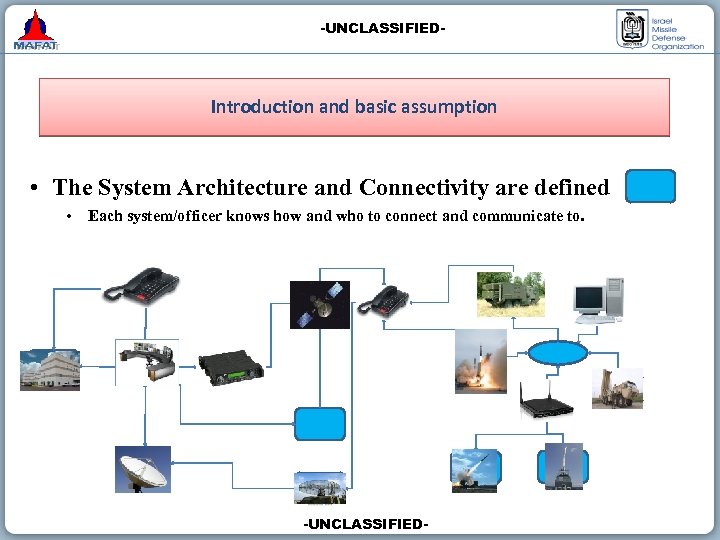 -UNCLASSIFIED- Introduction and basic assumption • The System Architecture and Connectivity are defined • Each system/officer knows how and who to connect and communicate to. -UNCLASSIFIED-
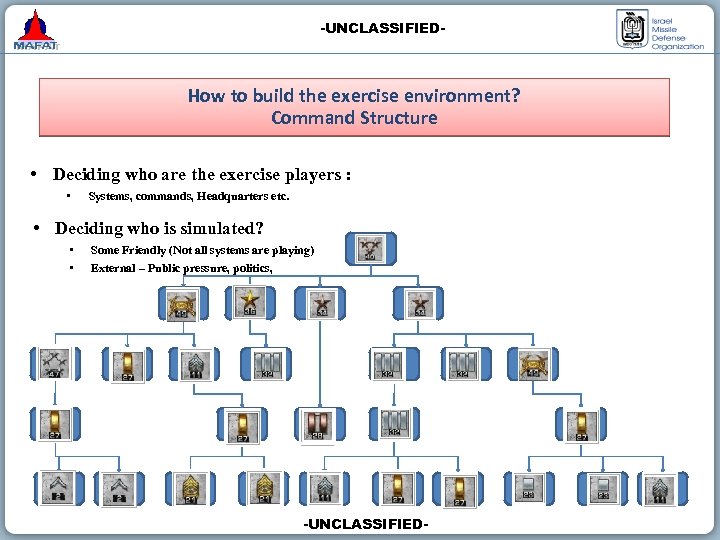 -UNCLASSIFIED- How to build the exercise environment? Command Structure • Deciding who are the exercise players : • Systems, commands, Headquarters etc. • Deciding who is simulated? • • Some Friendly (Not all systems are playing) External – Public pressure, politics, -UNCLASSIFIED-
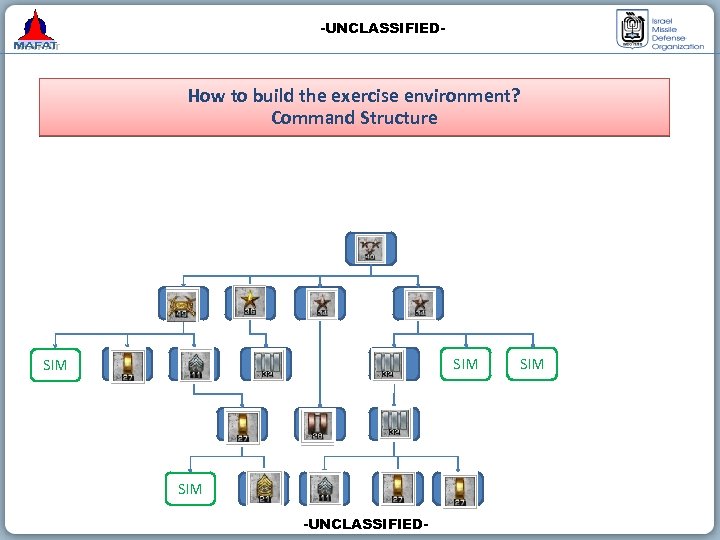 -UNCLASSIFIED- How to build the exercise environment? Command Structure SIM SIM -UNCLASSIFIED- SIM
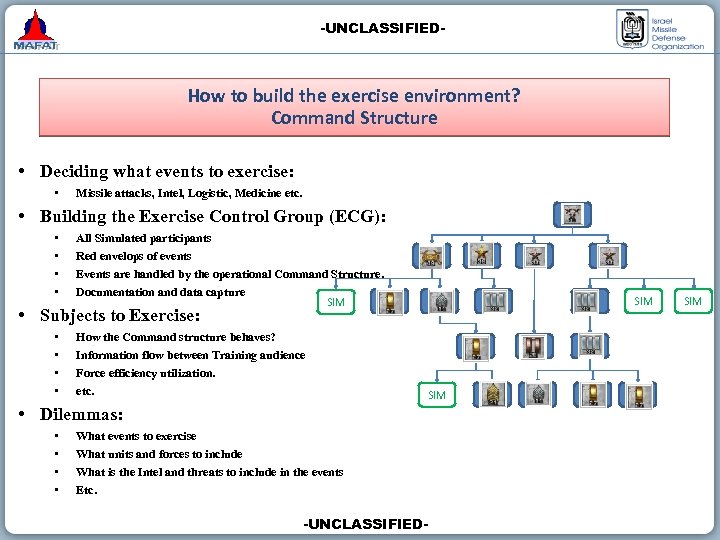 -UNCLASSIFIED- How to build the exercise environment? Command Structure • Deciding what events to exercise: • Missile attacks, Intel, Logistic, Medicine etc. • Building the Exercise Control Group (ECG): • • All Simulated participants Red envelops of events Events are handled by the operational Command Structure. Documentation and data capture SIM • Subjects to Exercise: • • How the Command structure behaves? Information flow between Training audience Force efficiency utilization. etc. SIM • Dilemmas: • • What events to exercise What units and forces to include What is the Intel and threats to include in the events Etc. -UNCLASSIFIED- SIM
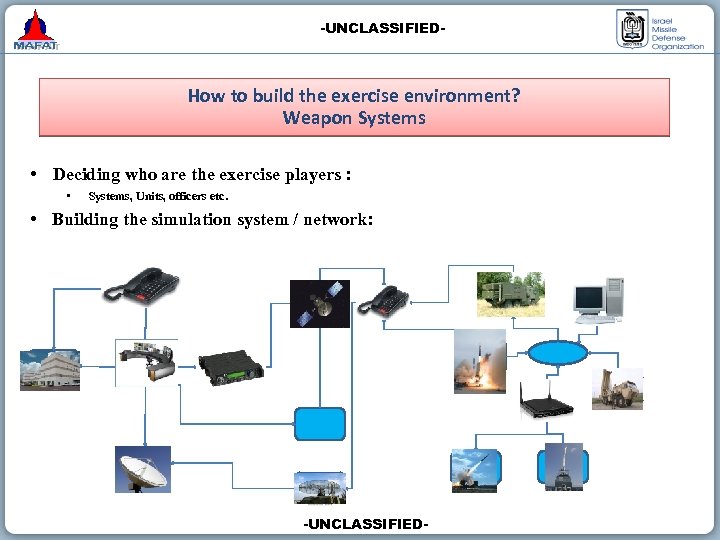 -UNCLASSIFIED- How to build the exercise environment? Weapon Systems • Deciding who are the exercise players : • Systems, Units, officers etc. • Building the simulation system / network: -UNCLASSIFIED-
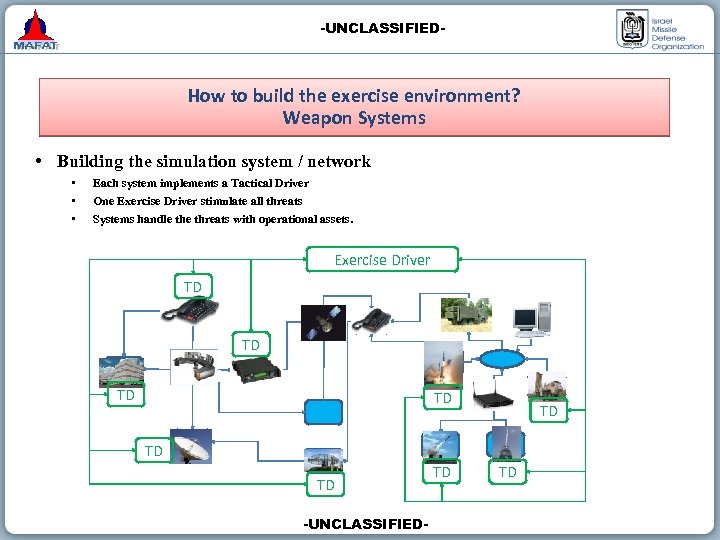 -UNCLASSIFIED- How to build the exercise environment? Weapon Systems • Building the simulation system / network • • • Each system implements a Tactical Driver One Exercise Driver stimulate all threats Systems handle threats with operational assets. Exercise Driver TD TD -UNCLASSIFIED- TD TD
 -UNCLASSIFIED- How to build the exercise environment? Weapon Systems Exercise Driver TD TD -UNCLASSIFIED- TD TD
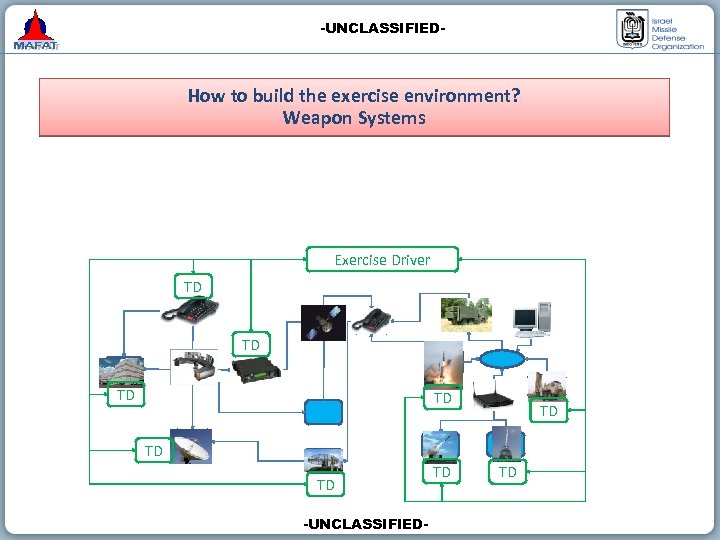
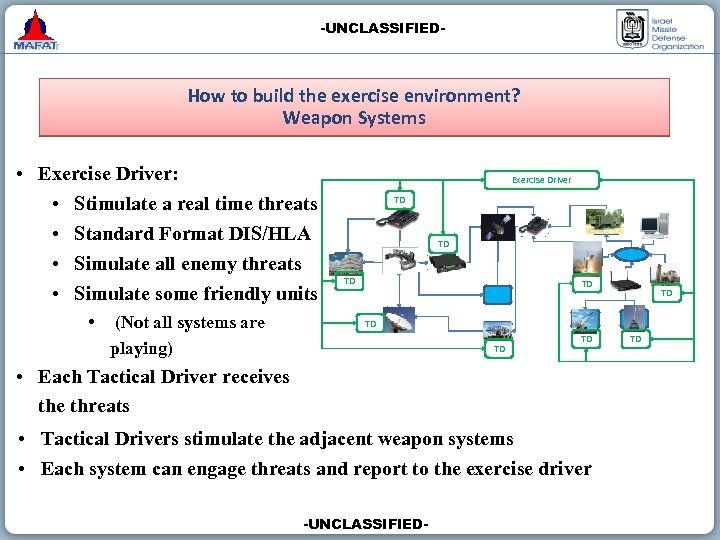 -UNCLASSIFIED- How to build the exercise environment? Weapon Systems • Exercise Driver: • Stimulate a real time threats • Standard Format DIS/HLA • Simulate all enemy threats • Simulate some friendly units • (Not all systems are playing) Exercise Driver TD TD • Each Tactical Driver receives the threats • Tactical Drivers stimulate the adjacent weapon systems • Each system can engage threats and report to the exercise driver -UNCLASSIFIED- TD
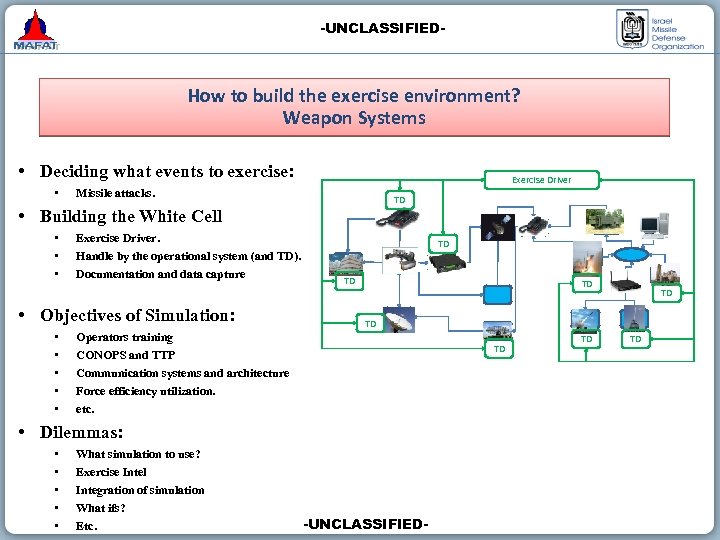 -UNCLASSIFIED- How to build the exercise environment? Weapon Systems • Deciding what events to exercise: • Exercise Driver Missile attacks. TD • Building the White Cell • • • Exercise Driver. Handle by the operational system (and TD). Documentation and data capture • Objectives of Simulation: • • • TD TD Operators training CONOPS and TTP Communication systems and architecture Force efficiency utilization. TD etc. • Dilemmas: • • • What simulation to use? Exercise Intel Integration of simulation What ifs? Etc. TD -UNCLASSIFIED- TD TD
 -UNCLASSIFIED- Data Analysis and AAR • Two Analysis teams work during the exercise: • Operational Team. • Exercise Team. • The operational team work with operational data to derive operational decision making. • The exercise team have all the data (God’s view) and is examining the operation activities for later AAR. • On a schedule exercise break, the two teams meet to exchange insights and lessons learned to improve the exercise -UNCLASSIFIED-
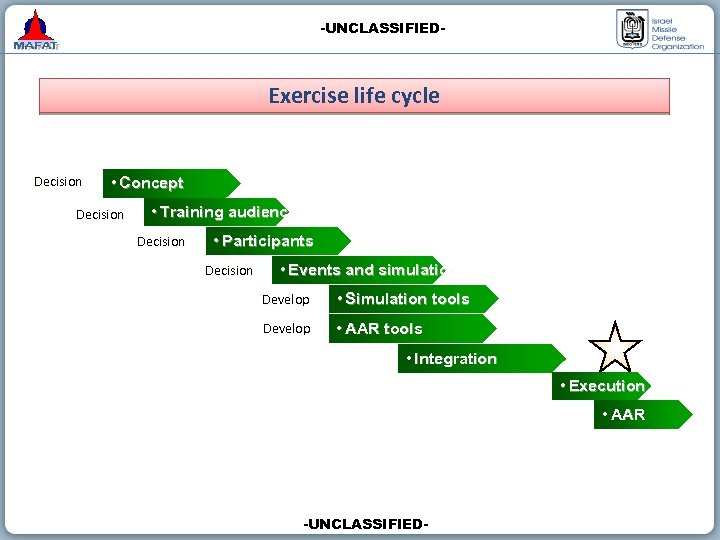 -UNCLASSIFIED- Exercise life cycle Decision • Concept Decision • Training audience Decision • Participants Decision • Events and simulation Develop • Simulation tools Develop • AAR tools • Integration • Execution • AAR -UNCLASSIFIED-
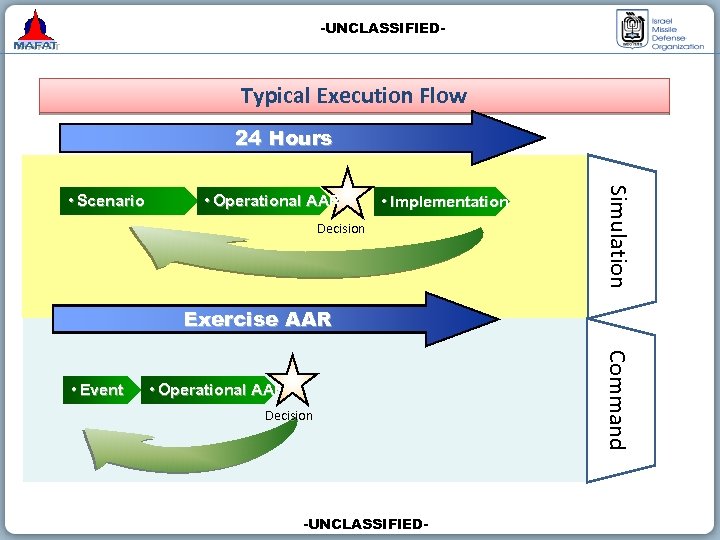 -UNCLASSIFIED- Typical Execution Flow 24 Hours • Operational AAR • Implementation Decision Simulation • Scenario Exercise AAR • Operational AAR Decision -UNCLASSIFIED- Command • Event
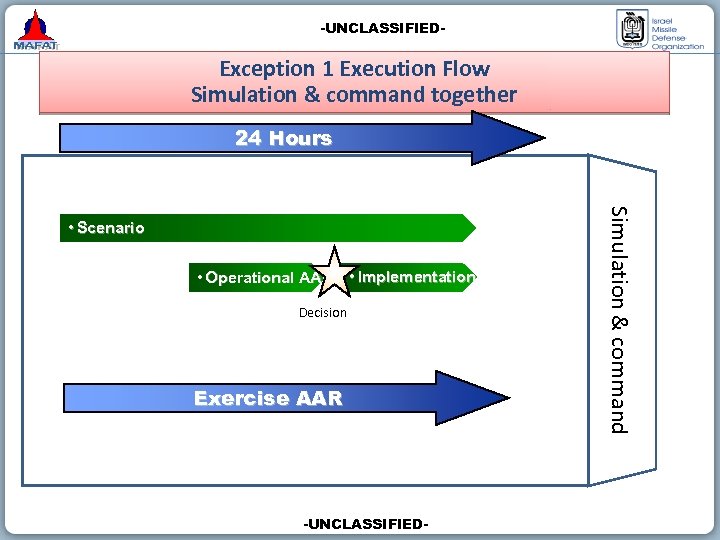 -UNCLASSIFIED- Exception 1 Execution Flow Simulation & command together 24 Hours • Operational AAR • Implementation Decision Exercise AAR -UNCLASSIFIED- Simulation & command • Scenario
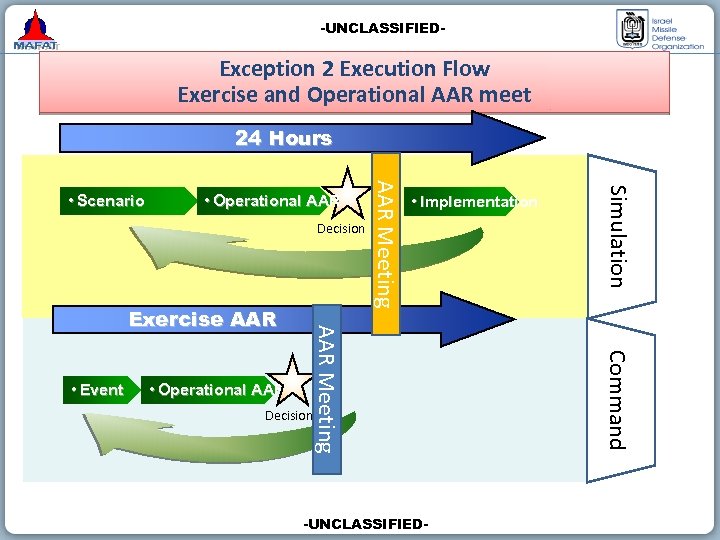 -UNCLASSIFIED- Exception 2 Execution Flow Exercise and Operational AAR meet 24 Hours Decision • Operational AAR Decision -UNCLASSIFIED- Command • Event AAR Meeting Exercise AAR • Implementation Simulation • Operational AAR Meeting • Scenario
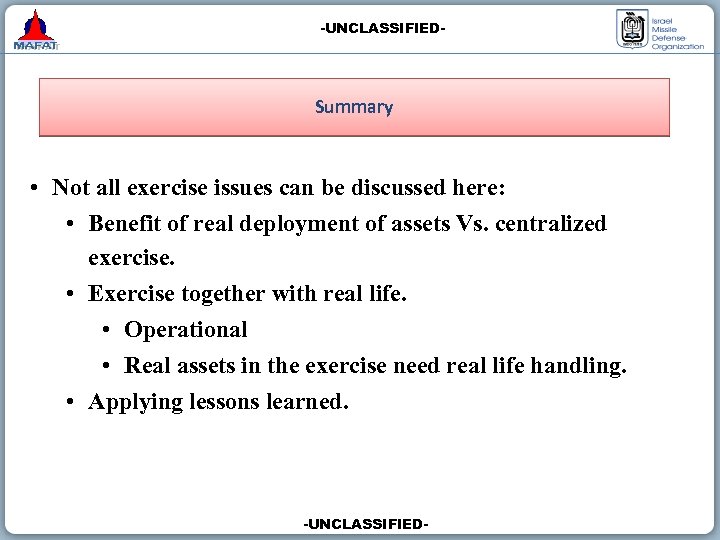 -UNCLASSIFIED- Summary • Not all exercise issues can be discussed here: • Benefit of real deployment of assets Vs. centralized exercise. • Exercise together with real life. • Operational • Real assets in the exercise need real life handling. • Applying lessons learned. -UNCLASSIFIED-