 Скачать презентацию Ukraine Sustainable Energy Lending Facility USELF Strategic Environmental
a65475e9832648ddbfcf58e240f664bd.ppt
- Количество слайдов: 24



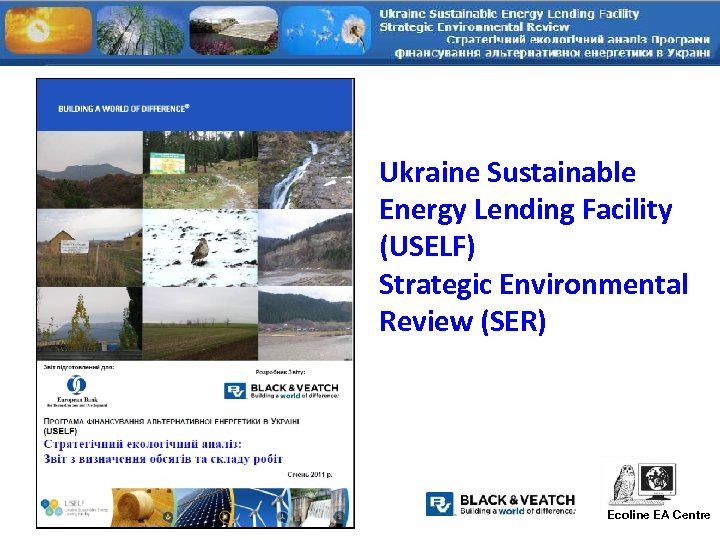
Ukraine Sustainable Energy Lending Facility (USELF) Strategic Environmental Review (SER) Ecoline EA Centre
Objectives of Strategic Environmental Review (SER) • The European Bank for Reconstruction and Development (EBRD) launched the Ukraine Sustainable Energy Lending Facility (USELF) • USELF commissioned a Strategic Environmental Review (SER) of renewable energy technologies in optimal areas of Ukraine • The purpose of the SER is to lay out a path for later environmental reviews of specific renewable energy projects within Ukraine • Types of renewable projects: Biogas Biomass Small Hydro Solar Wind 2
SER Approach • No Legislative requirement in Ukraine for SER • EBRD Environmental and Social Policy requires compliance with EU Directives and national law for projects and programmes funded by EBRD • SER aligned with EU SEA Directive (2001/42/EC), UK SEA Guidance and Ukraine OVNS • The SER uses objectives developed through scoping for each environmental topic to describe, analyse and compare environment effects 3
Energy Production in Ukraine • The demand for electricity is expected to double between 2005 and 2030 • The majority of power generation relies on thermal power stations (64%), nuclear (26%) & large hydropower (9%). • Renewable energy (excluding large hydro) accounts for <1% • Government of Ukraine is seeking to significantly increase renewable energy capacity through the Green Tariff mechanism 4
Assessment Scenarios • The SER has developed five renewable energy scenarios to identify the potential significant environment effects. • The scenarios consider: – – – Technology characteristics and likely construction activities; Areas of good potential for renewables development; Geographical constraints; Existing infrastructure; and, Transmission constraints • An estimate of the potential scale of potential energy generation (MW) has been made for each scenario with a focus on those areas which are technically suitable for development 5
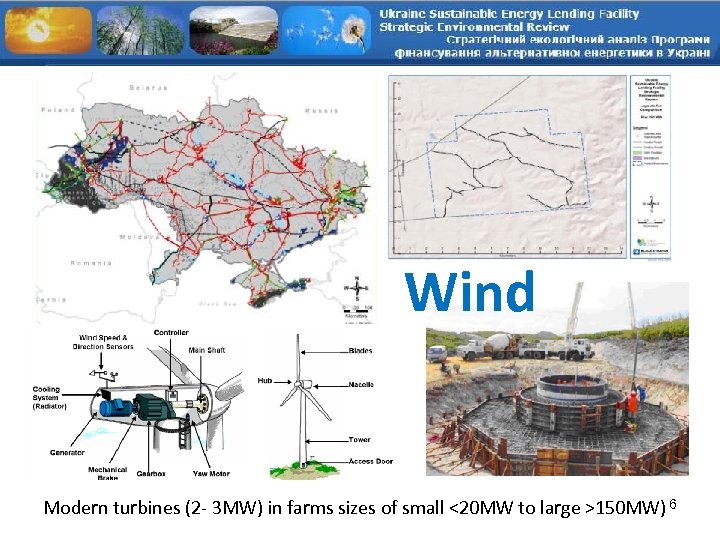
Wind Modern turbines (2 - 3 MW) in farms sizes of small <20 MW to large >150 MW) 6
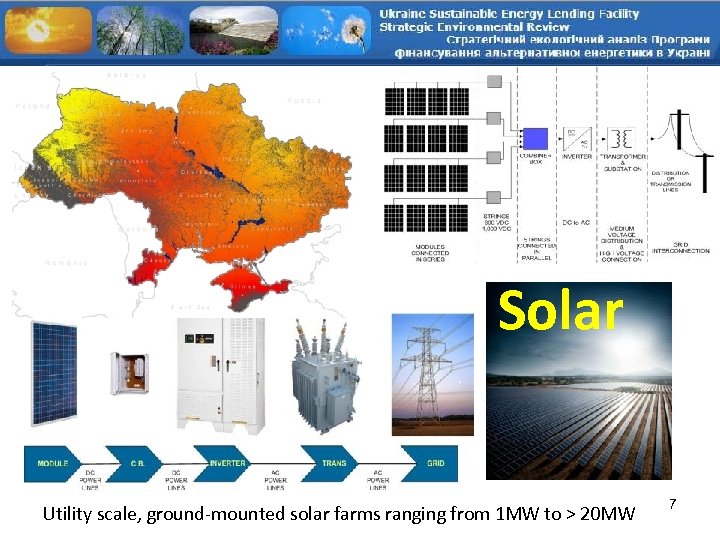
Solar Utility scale, ground-mounted solar farms ranging from 1 MW to > 20 MW 7
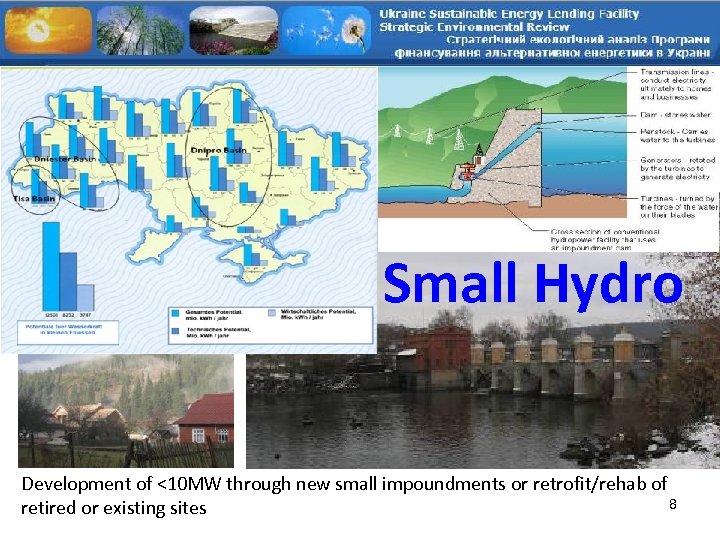
Small Hydro Development of <10 MW through new small impoundments or retrofit/rehab of 8 retired or existing sites
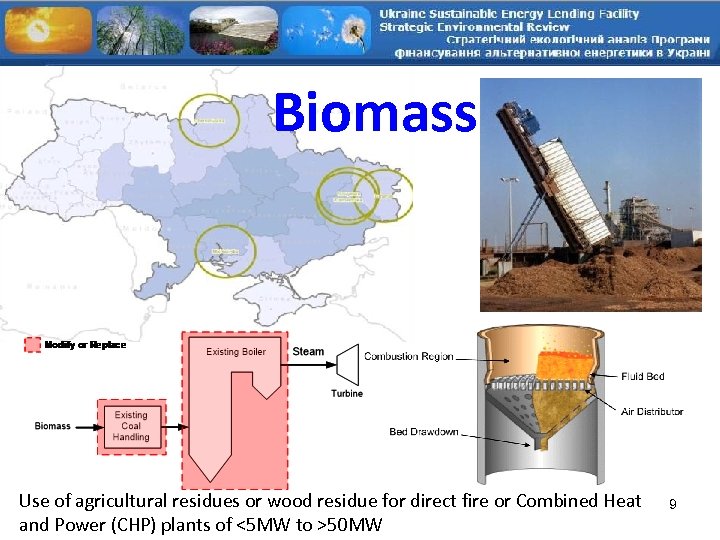
Biomass Use of agricultural residues or wood residue for direct fire or Combined Heat and Power (CHP) plants of <5 MW to >50 MW 9
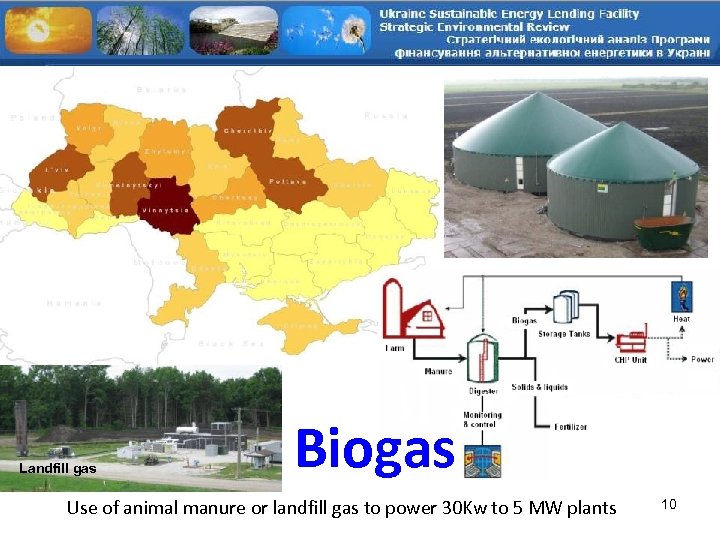
Landfill gas Biogas Use of animal manure or landfill gas to power 30 Kw to 5 MW plants 10
SER Consultation • Guided by the EU Strategic Environmental Assessment (SEA) Directive • Stakeholder engagement and public consultation process was governed by EBRD’s Environmental and Social Policy (2008) and EBRD’s Public Information Policy (2008) • Stakeholder Engagement Plan (SEP) set out the nature, extent and timing of consultation with a wide range of stakeholder groups throughout the SER process • The Draft SER Environmental Report published for stakeholder comments and feedback • Informed earlier through consultation on the SER Scoping Report and meetings with 51 stakeholders from 8 stakeholder groups 11
Spatial Constraints Analysis • The SER provides a high-level analysis of environmental sensitivity to potential renewable energy projects • Analysis is based on spatial data held in a Geographical Information system (GIS) • The analysis has been carried out for each scenario and topic to provide an overall picture of technical, environmental and social constraints • Development in highly sensitive areas is likely to require developers to demonstrate with certainty that impacts can be avoided or minimized to acceptable levels • Further detailed assessment is required to identify project specific issues 12
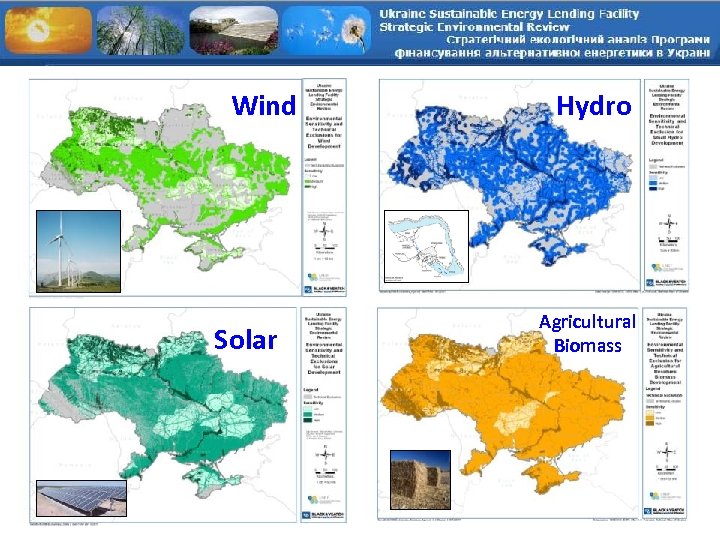
Wind Solar Hydro Agricultural Biomass 13
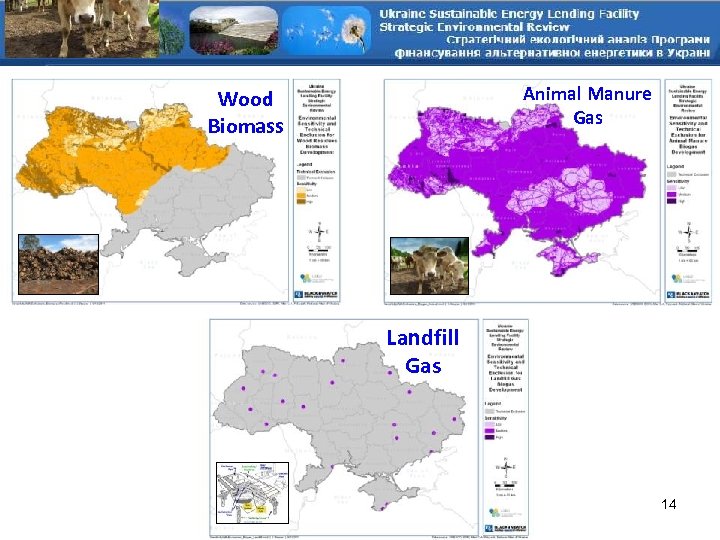
Animal Manure Gas Wood Biomass Landfill Gas 14
Likely Significant Effects on the Environment and Mitigation Measures • Undertaken in line with EU SEA Directive • Assessment by specialists for each topic area using expert judgment to consider if effects are significant based on: • Receptor value, vulnerability and sensitivity • Renewable scenario effects which can be direct or indirect, far-field, cumulative • The magnitude of the effects and their spatial extent • The probability of when or how long construction or operation effects would last for and whether they are permanent or temporary • Uncertainty over data, limitations or assumptions noted 15
Potentially Significant Effects Positive Effects Negative Effects Socio-economic benefits through employment from construction and operation Localised construction effects on surface water, air quality, soil composition, human health Socio-economic benefits from sustainable energy supply Potential for dislocation of communities within/adjacent to development footprint Cumulative effects on climate through reduction in GHGs Potential loss of natural habitats and species from development footprint and through operation Potential improvements for ecotourism Potential impacts on cultural heritage and landscape setting 16
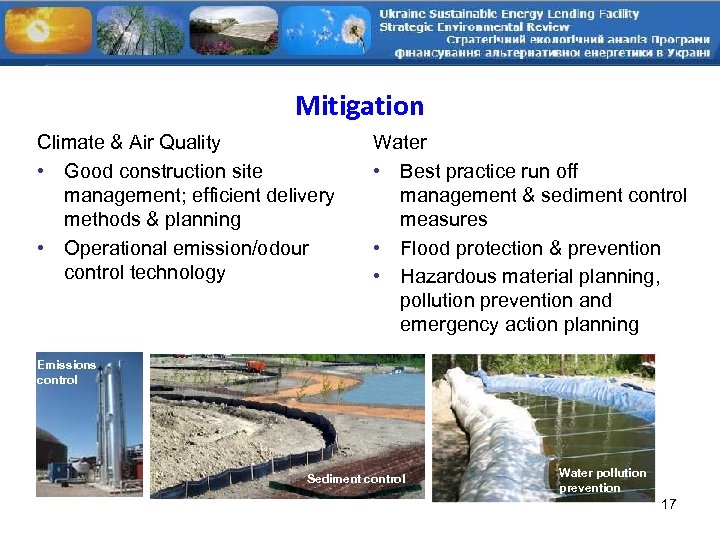
Mitigation Climate & Air Quality • Good construction site management; efficient delivery methods & planning • Operational emission/odour control technology Water • Best practice run off management & sediment control measures • Flood protection & prevention • Hazardous material planning, pollution prevention and emergency action planning Emissions control Sediment control Water pollution prevention 17
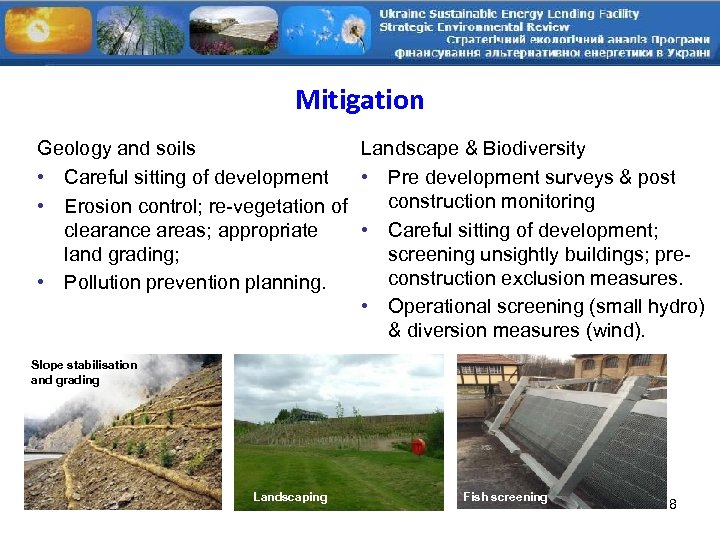
Mitigation Geology and soils Landscape & Biodiversity • Careful sitting of development • Pre development surveys & post construction monitoring • Erosion control; re-vegetation of clearance areas; appropriate • Careful sitting of development; land grading; screening unsightly buildings; preconstruction exclusion measures. • Pollution prevention planning. • Operational screening (small hydro) & diversion measures (wind). Slope stabilisation and grading Landscaping Fish screening 18
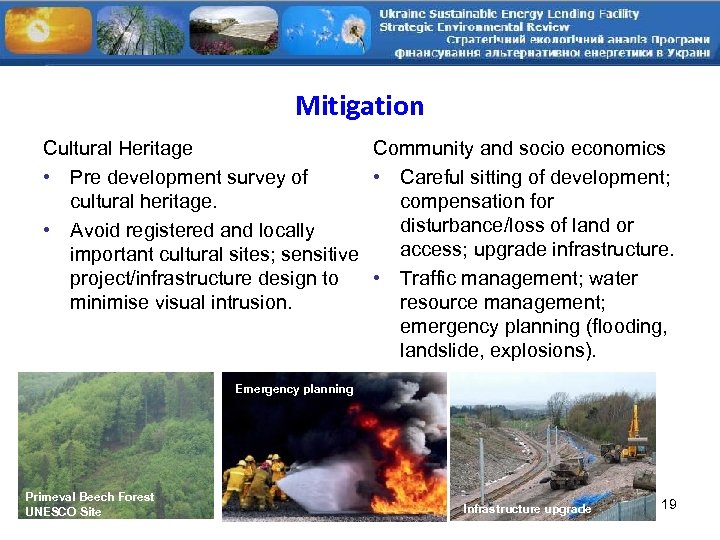
Mitigation Cultural Heritage Community and socio economics • Pre development survey of • Careful sitting of development; cultural heritage. compensation for disturbance/loss of land or • Avoid registered and locally access; upgrade infrastructure. important cultural sites; sensitive project/infrastructure design to • Traffic management; water minimise visual intrusion. resource management; emergency planning (flooding, landslide, explosions). Emergency planning Primeval Beech Forest UNESCO Site Infrastructure upgrade 19
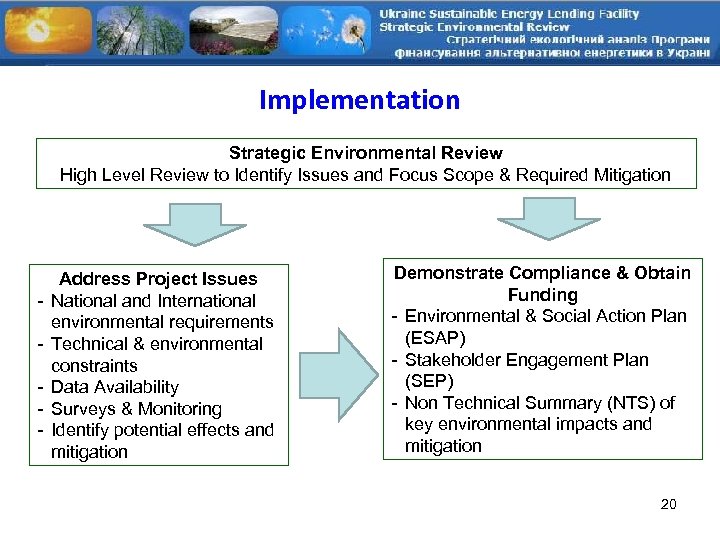
Implementation Strategic Environmental Review High Level Review to Identify Issues and Focus Scope & Required Mitigation - Address Project Issues National and International environmental requirements Technical & environmental constraints Data Availability Surveys & Monitoring Identify potential effects and mitigation Demonstrate Compliance & Obtain Funding - Environmental & Social Action Plan (ESAP) - Stakeholder Engagement Plan (SEP) - Non Technical Summary (NTS) of key environmental impacts and mitigation 20
Bonus case : Kazakhstan 21
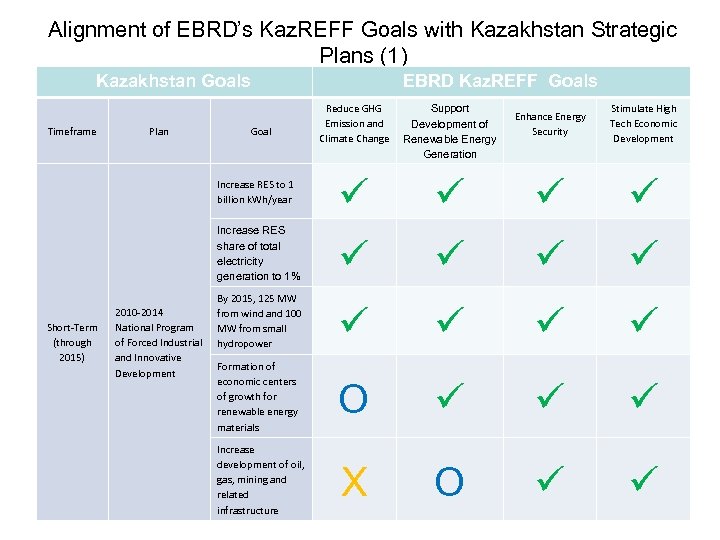
Alignment of EBRD’s Kaz. REFF Goals with Kazakhstan Strategic Plans (1) Kazakhstan Goals EBRD Kaz. REFF Goals Short-Term (through 2015) 2010 -2014 National Program of Forced Industrial and Innovative Development Enhance Energy Security Stimulate High Tech Economic Development Increase RES share of total electricity generation to 1% Plan Support Development of Renewable Energy Generation Increase RES to 1 billion k. Wh/year Timeframe Reduce GHG Emission and Climate Change By 2015, 125 MW from wind and 100 MW from small hydropower Formation of economic centers of growth for renewable energy materials O Increase development of oil, gas, mining and related infrastructure X O Goal
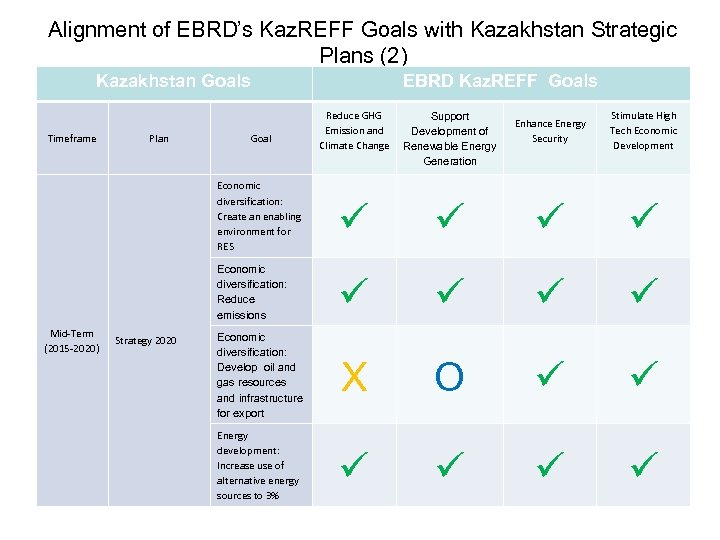
Alignment of EBRD’s Kaz. REFF Goals with Kazakhstan Strategic Plans (2) Kazakhstan Goals EBRD Kaz. REFF Goals Mid-Term (2015 -2020) Strategy 2020 Goal Enhance Energy Security Stimulate High Tech Economic Development Economic diversification: Reduce emissions Plan Support Development of Renewable Energy Generation Economic diversification: Create an enabling environment for RES Timeframe Reduce GHG Emission and Climate Change Economic diversification: Develop oil and gas resources and infrastructure for export X O Energy development: Increase use of alternative energy sources to 3%
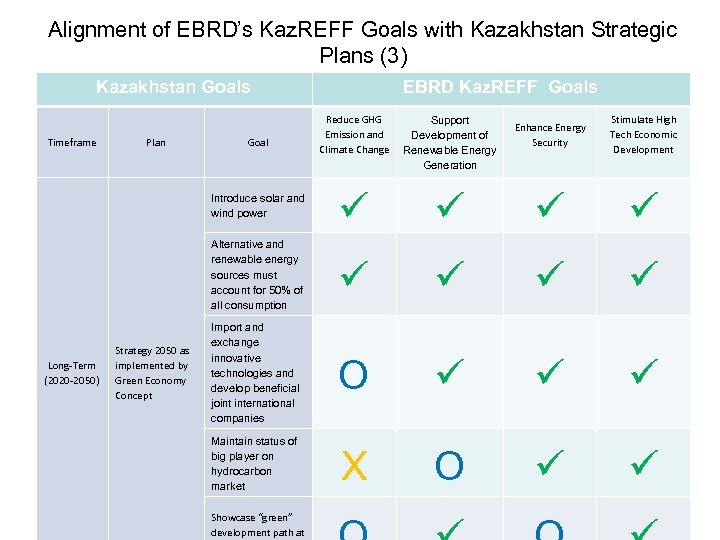
Alignment of EBRD’s Kaz. REFF Goals with Kazakhstan Strategic Plans (3) Kazakhstan Goals EBRD Kaz. REFF Goals Long-Term (2020 -2050) Strategy 2050 as implemented by Green Economy Concept Goal Enhance Energy Security Stimulate High Tech Economic Development Alternative and renewable energy sources must account for 50% of all consumption Plan Support Development of Renewable Energy Generation Introduce solar and wind power Timeframe Reduce GHG Emission and Climate Change Import and exchange innovative technologies and develop beneficial joint international companies O Maintain status of big player on hydrocarbon market X O Showcase “green” development path at
Скачать презентацию Ukraine Sustainable Energy Lending Facility USELF Strategic Environmental
a65475e9832648ddbfcf58e240f664bd.ppt