 Скачать презентацию UK Disability Inclusion Training Coaches Volunteers
0a108d9bc9719b26e4b2fd5efc399f43.ppt
- Количество слайдов: 39



UK Disability Inclusion Training: Coaches & Volunteers
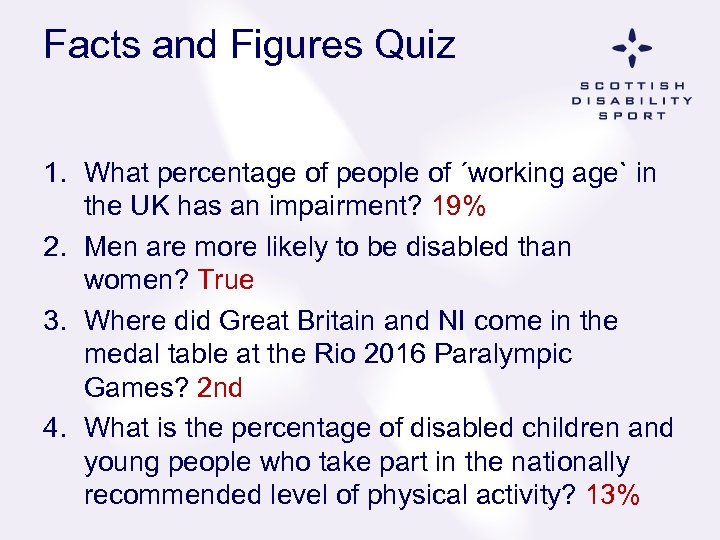
Facts and Figures Quiz 1. What percentage of people of ´working ageˋ in the UK has an impairment? 19% 2. Men are more likely to be disabled than women? True 3. Where did Great Britain and NI come in the medal table at the Rio 2016 Paralympic Games? 2 nd 4. What is the percentage of disabled children and young people who take part in the nationally recommended level of physical activity? 13%
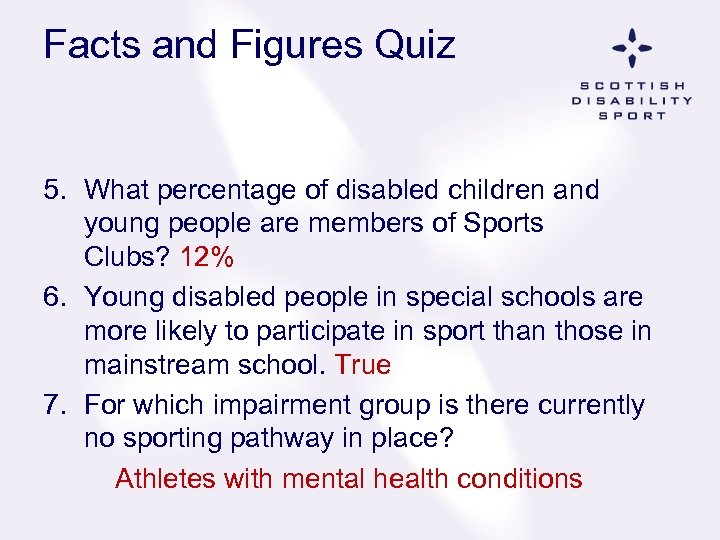
Facts and Figures Quiz 5. What percentage of disabled children and young people are members of Sports Clubs? 12% 6. Young disabled people in special schools are more likely to participate in sport than those in mainstream school. True 7. For which impairment group is there currently no sporting pathway in place? Athletes with mental health conditions
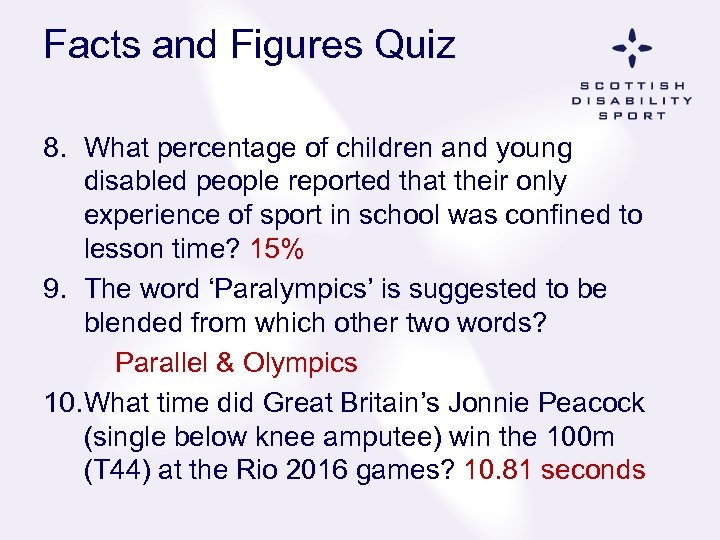
Facts and Figures Quiz 8. What percentage of children and young disabled people reported that their only experience of sport in school was confined to lesson time? 15% 9. The word ‘Paralympics’ is suggested to be blended from which other two words? Parallel & Olympics 10. What time did Great Britain’s Jonnie Peacock (single below knee amputee) win the 100 m (T 44) at the Rio 2016 games? 10. 81 seconds
Statistics • 19% of the Scottish population have a disability (SHS 2015) • Only 20 % of people with disabilities take the recommended level of physical activity compared to 52% of non-disabled people. (SHS 2015) • 2% of the coaching workforce have a disability (Sports Coach UK 2015) • 7 in 10 disabled people want to take part in more sport and physical activity (EFDS, Sport England Talk to Me Oct 2014) • 7% of children and young people with a disability attending a mainstream school participate in two hours’ quality physical education per week (SDS Research 2011) Participants/ performers with disabilities experience lowest participation levels in sport & physical activity
Workshop Outcomes By the end of the workshop, participants should be able to: • Recognise the influence of perceptions and experiences • Identify techniques for good inclusive practice • Recognise appropriate coaching implications • Identify potential challenges to participation and identify possible solutions • Appreciate the importance of effective communication in inclusive practice • Identify sources of additional information and guidance relevant to disability sport and coaches and volunteers
Workshop Principles • Focus on ability rather than disability • Influence and deliver good practice to suit all involved • Communicate appropriately and effectively • Support the inclusion of disabled people in sport and physical activity • Understand how to challenge real and perceived barriers • Where to go to for further information
Section 1 Perceptions and Experiences By the end of this section candidates should be able to • Recognise the influence of perceptions and experiences
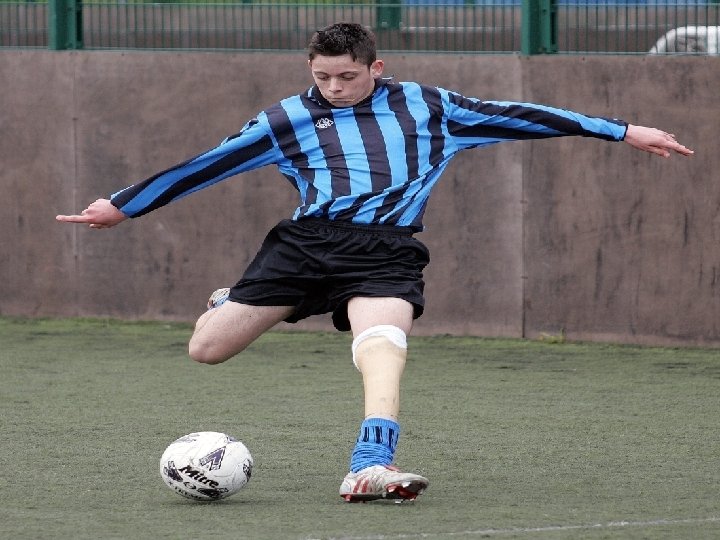
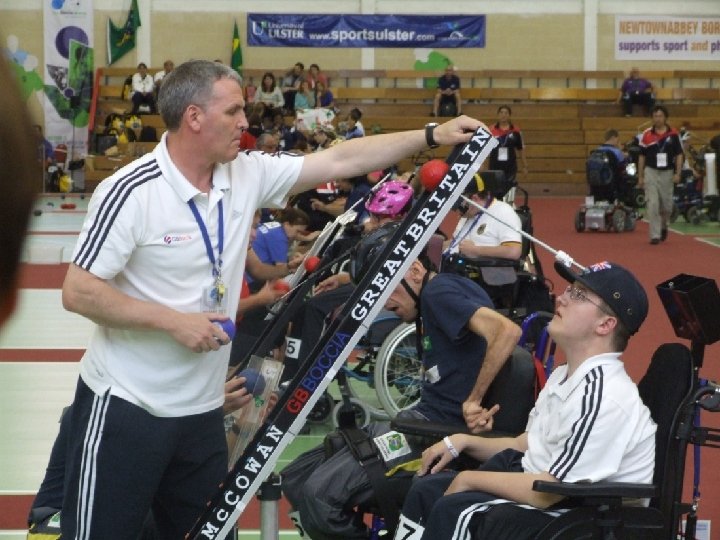
Perceptions & Experiences Why do children, athletes and players with a physical, sensory or learning disability participate in sport?
Perceptions & Experiences “People only see what they are prepared to see” (R. W. Emerson, 1803 -1882)
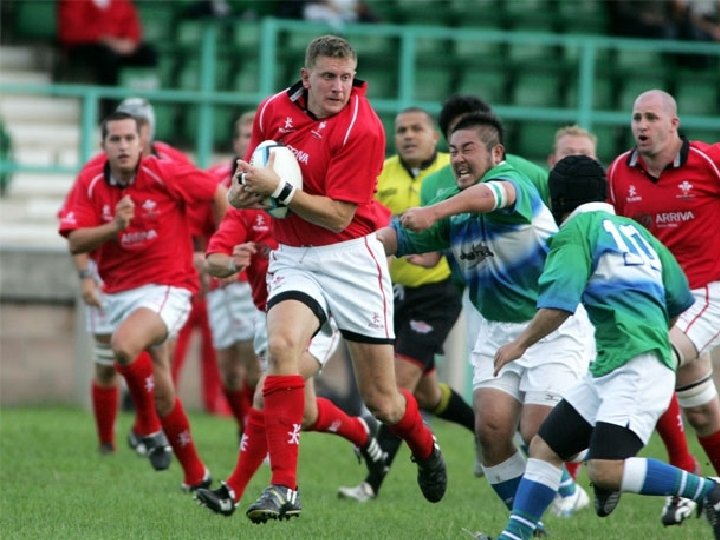
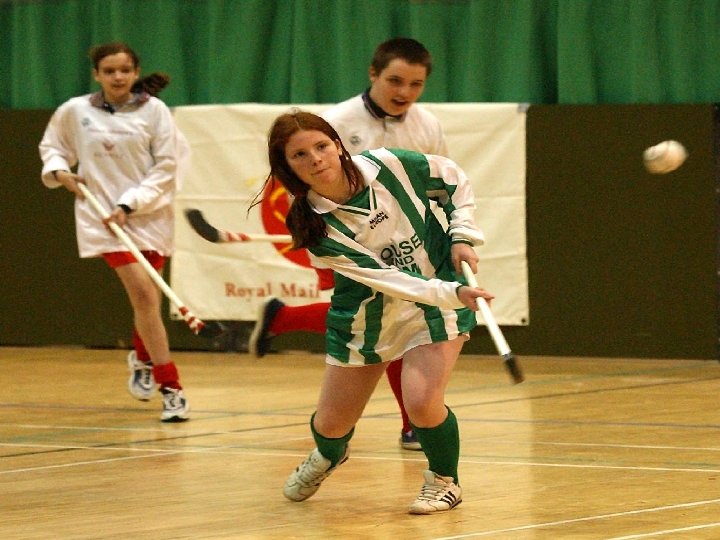
Section 2 Understanding the Participant By the end of this section candidates should be able to • Recognise appropriate coaching implications • Identify potential challenges to participation and identify possible solutions
Activity Task 1 • Make a list of different impairments/health conditions Task 2 • Create 3 – 4 groups of similar impairments/health conditions
Categories in Disability Sport Children, athletes and players with a physical impairment • ambulant • use a wheelchair for sports Children, athletes and players with a learning disability Children, athletes and players with a sensory impairment • Blind or partially sighted • Deaf or hard of hearing
Physical • Cerebral Palsy • Amputation • Spinal Injury • Dwarfism/Restricted Growth may be ambulant, a wheelchair user, or use a wheelchair for sport What are the practical implications?
Learning • Intelligence Quotient (IQ) of less than 75 e. g. Down’s Syndrome, Fragile X Syndrome What are the practical implications? NB: No sporting pathway exists specifically for those on the Autistic Spectrum. Autism is NOT necessarily a Learning Disability
Sensory • Visual Blind Partially Sighted • Hearing Profoundly deaf Hard of Hearing What are the practical implications?
Functional Approach • Considers the functional ability of the athlete – What is the participant ABLE to do rather than unable to do? • Assesses the impact of the impairment and environment on an individuals ability to master specific sport skills • Consider how the participant moves – observe upper and lower extremities and trunk
Impairment Considerations Minimal Congenital Progressive Severe or or Acquired Non-progressive
Key Messages 1. Be proactive rather than reactive • Talk to the people involved • Anticipate potential challenges 2. Be aware of your environment • Be realistic but constructively critical 3. YOU are important • Remember you CAN make a difference • Changes do not have to cost money – a short return to the drawing board may suffice • Small changes can have large impacts
Section 3: Models of Inclusion By the end of this section candidates should be able to • Identify techniques for good inclusive practice
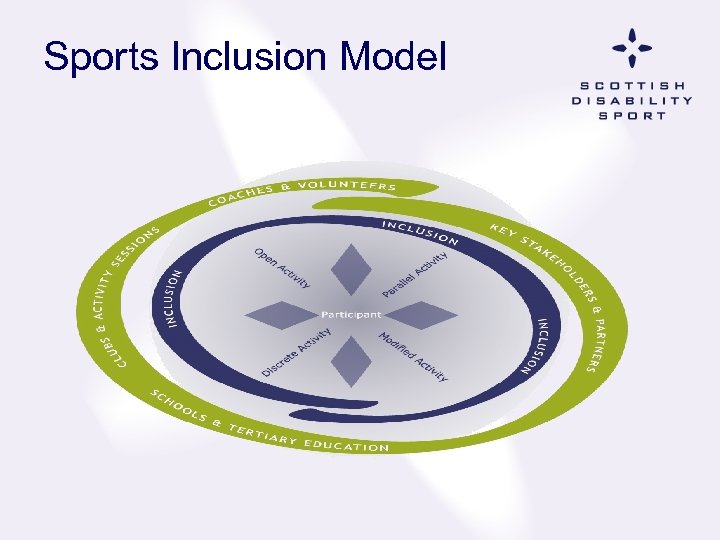
Sports Inclusion Model
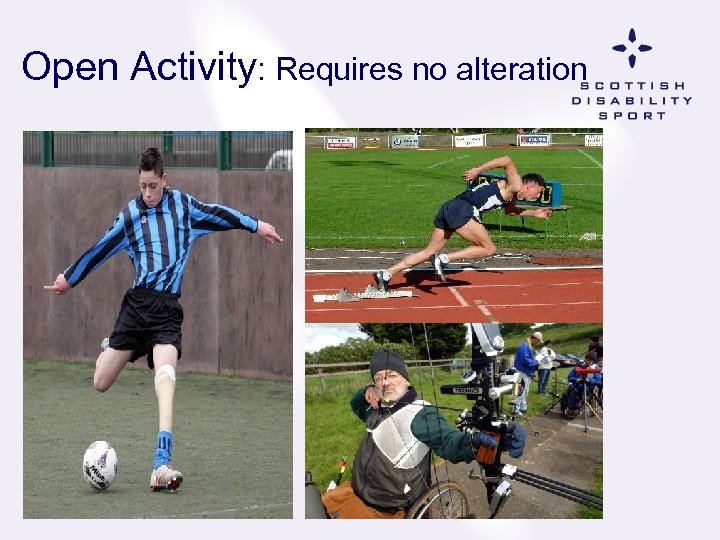
Open Activity: Requires no alteration
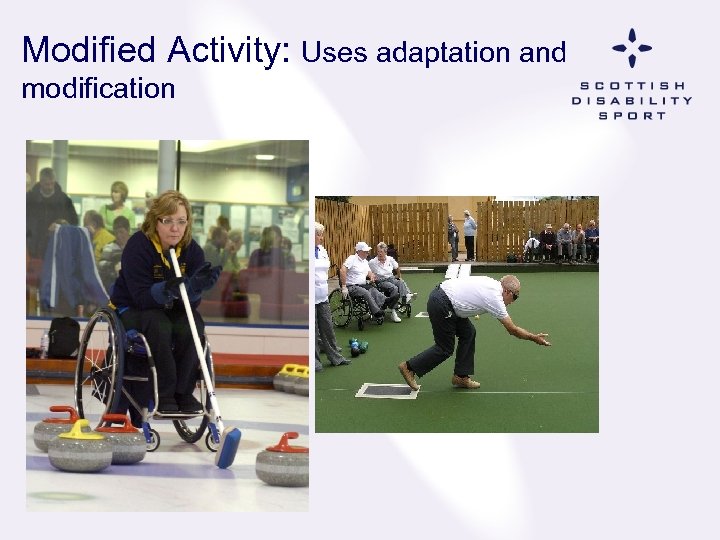
Modified Activity: Uses adaptation and modification
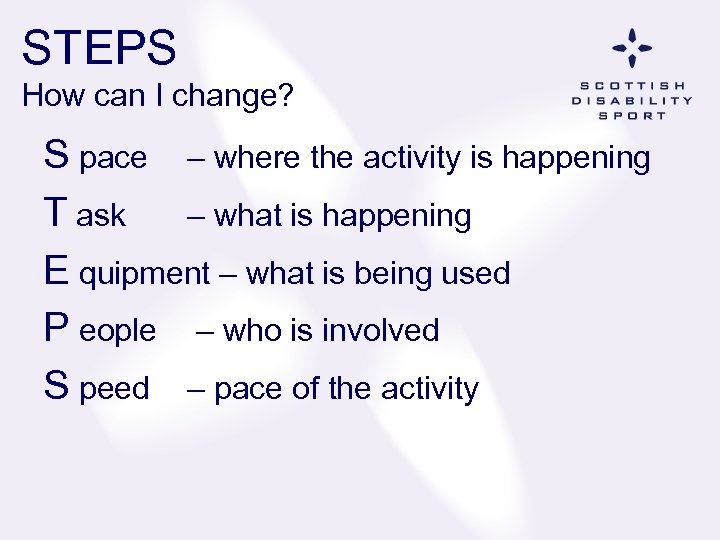
STEPS How can I change? S pace – where the activity is happening T ask – what is happening E quipment – what is being used P eople – who is involved S peed – pace of the activity
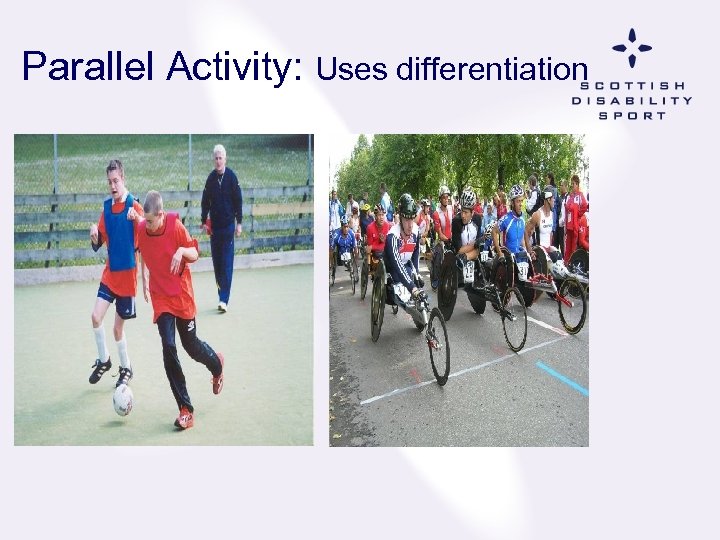
Parallel Activity: Uses differentiation
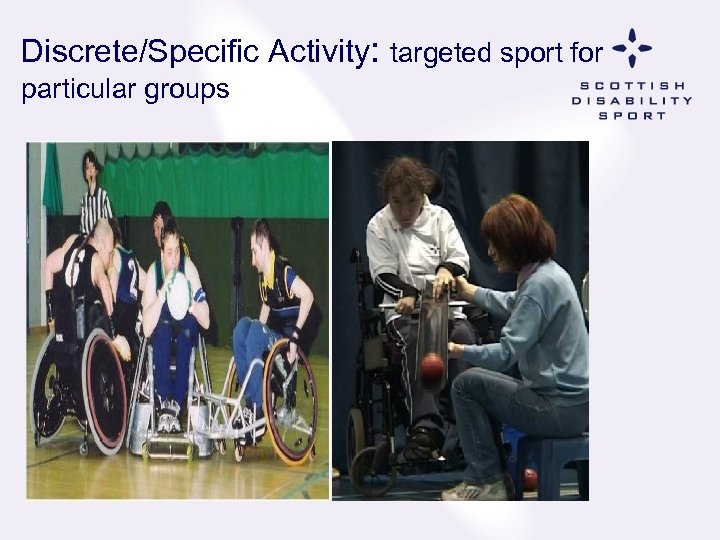
Discrete/Specific Activity: targeted sport for particular groups
Section 4: Communication By the end of this section you should be able to use communication to: • Identify techniques for good inclusive practice • Recognise appropriate teaching implications • Appreciate the importance of effective communication in inclusive practice
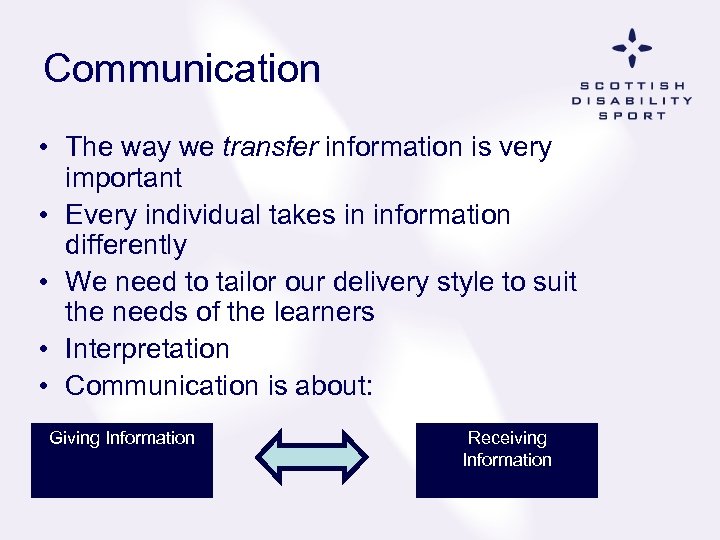
Communication • The way we transfer information is very important • Every individual takes in information differently • We need to tailor our delivery style to suit the needs of the learners • Interpretation • Communication is about: Giving Information Receiving Information
Positive Behaviour • Respect individual participants • Challenging the social norms to ensure behaviour and interaction with disabled people are appropriate • THINK about your behaviour and how it might make other people feel
Thinking about what we do • Using Worksheet: Positive Behaviour • individually identify whether you think the statement are; True or False • In small groups, compare your answers, and discuss any differences.
Section 5 Further information By the end of this section candidates should be able to • Identify sources of additional information and guidance relevant to disability sport and coaching
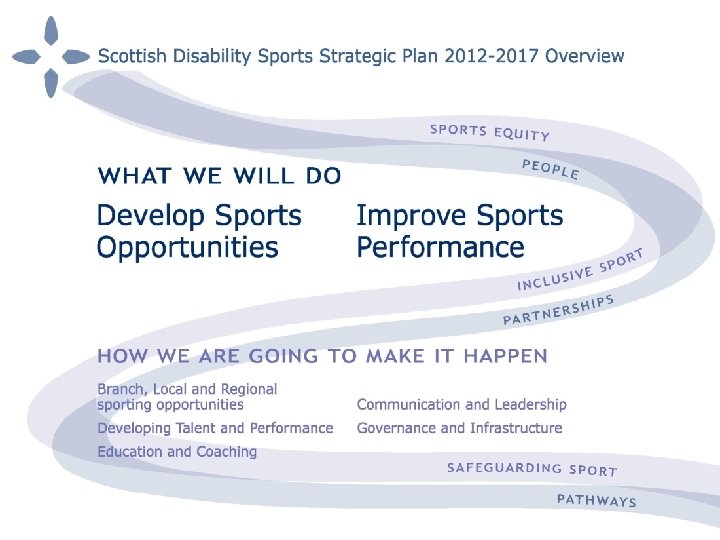
Scottish Disability Sport: Strategic Plan Overview 2012 - 2017 WHAT WE WILL DO Improving Sports Performance HOW WE ARE GOING TO MAKE IT HAPPEN Branch, Local and Regional sporting opportunities Education & Coaching Developing Talent and Performance Governance and Infrastructure Communication and Leadership People - Partnerships - Pathways Safeguarding in sport Inclusive Sports Equity Developing Sports Opportunities
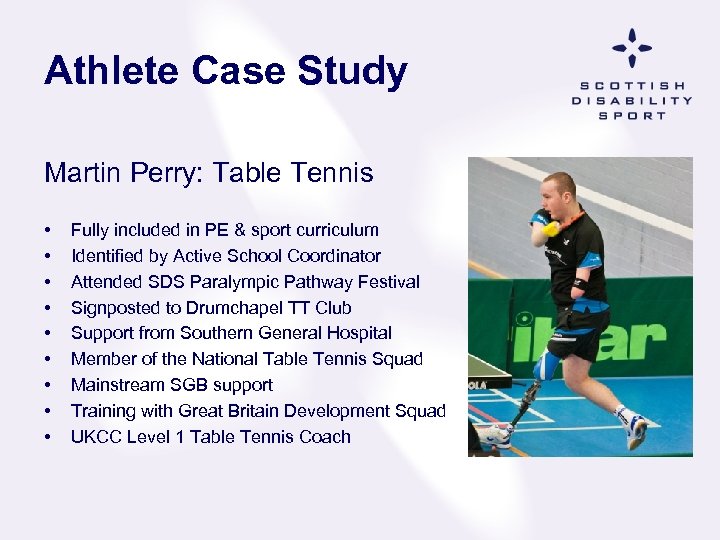
Athlete Case Study Martin Perry: Table Tennis • • • Fully included in PE & sport curriculum Identified by Active School Coordinator Attended SDS Paralympic Pathway Festival Signposted to Drumchapel TT Club Support from Southern General Hospital Member of the National Table Tennis Squad Mainstream SGB support Training with Great Britain Development Squad UKCC Level 1 Table Tennis Coach
Contacts Caroline Lyon Administrator Scottish Disability Sport Caledonia House South Gyle Edinburgh EH 12 9 DQ Tel: 0131 317 1130 Email: admin@scottishdisabilitysport. com Website: www. scottishdisabilitysport. com
Workshop Outcomes By the end of the workshop, participants should be able to: • Recognise the influence of perceptions and experiences • Identify techniques for good inclusive practice • Recognise appropriate teaching implications • Identify potential challenges to participation and identify possible solutions • Appreciate the importance of effective communication in inclusive practice • Understand key aspects of legislation • Recognise pathways within disability sport • Appreciate classification in disability sport • Identify sources of additional information and guidance relevant to disability sport & PE
Скачать презентацию UK Disability Inclusion Training Coaches Volunteers
0a108d9bc9719b26e4b2fd5efc399f43.ppt