 Скачать презентацию УЧИСЬ БЫТЬ УСПЕШНЫМ ОРАТОРОМ Автор ст пр Грушко
LEARN_TO_BE_A_SUCCESSFUL_PRESENTER_modified2.ppt
- Количество слайдов: 41



УЧИСЬ БЫТЬ УСПЕШНЫМ ОРАТОРОМ Автор –ст. пр. Грушко Е. И. Кафедра английского языка естественных факультетов Южный федеральный университет
Author – Elena I. Grushko The English Language Department for Science Students Southern Federal University
CONTENTS: § Preparing the presentation § Performing the presentation ü Language ü Structure (introduction, main part, conclusion) ü Questions ü Visual aids ü Body language ü Voice
PREPARING THE PRESENTATION In all things success depends on previous preparation, and without such preparation there is sure to be failure. ” - Confucius “
WHY –the Purpose of Presentation • to inform the audience about your research subject • to gain some publicity in your professional community • to persuade the audience in the value and novelty of your research • to get experience of public speaking • …………
WHO – the Target Audience “ Never overestimate an audience’s knowledge, never underestimate their intelligence. ” - G. K. Chesterton
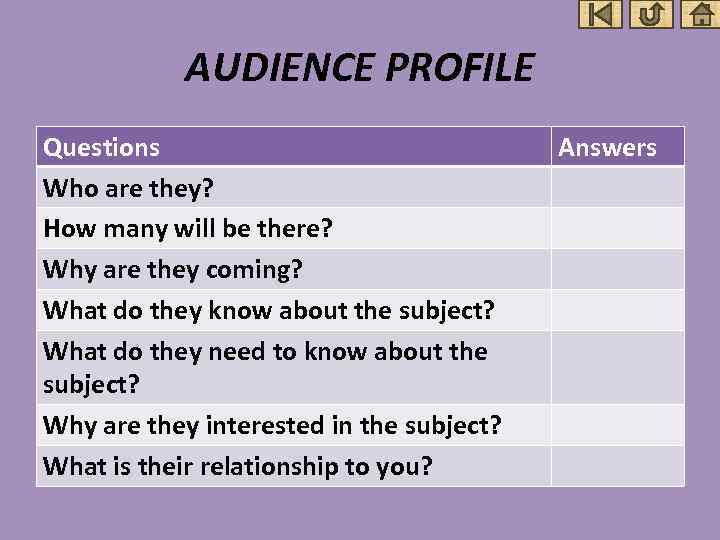
AUDIENCE PROFILE Questions Who are they? How many will be there? Why are they coming? What do they know about the subject? What do they need to know about the subject? Why are they interested in the subject? What is their relationship to you? Answers
WHO – the PRESENTER “ Three things matter in a speech; who says it, how it is said, and what is said – and of the three, the last matters least. ” – John Morley
Characteristics of a Good Speaker Confidence Plenty of eye contact Good body language Speaking, not reading Commanding attention Speaking with authority
WHAT – Good Organization § allows you to pre-think & plan everything in detail § helps you remember § helps them understand § helps you keep to the point § helps you reduce your nervousness
WHEN – the Right Thing at the Right Time § The best times are: ü Tuesday to Thursday ü from 10 to 12 § If you have choice, avoid: ü early mornings ü just before lunch ü after lunch ü end of the day
FEARS – Can Be Helpful § nervousness is natural before a presentation § nerves get the adrenalin running and the mind working § the best presenters are always nervous before a performance, but they can: ü control their nerves ü get across their message ü communicate efficiently with the audience ü achieve their purpose
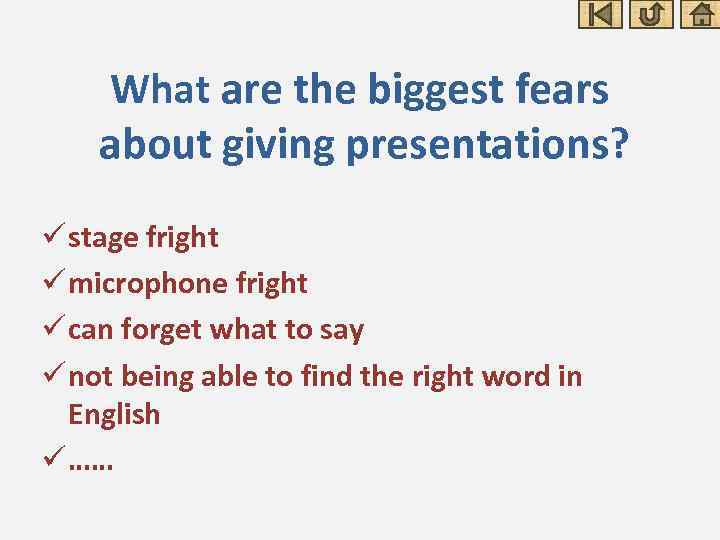
What are the biggest fears about giving presentations? ü stage fright ü microphone fright ü can forget what to say ü not being able to find the right word in English ü ……
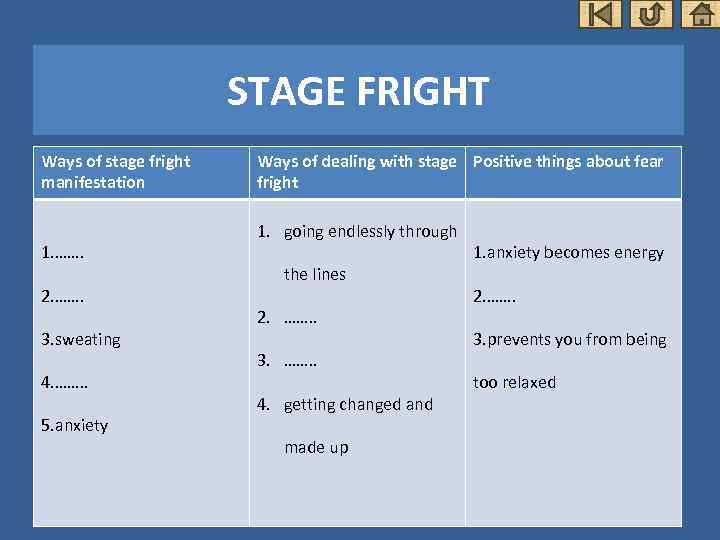
STAGE FRIGHT Ways of stage fright manifestation 1. ……. 2. ……. 3. sweating 4. ……. . 5. anxiety Ways of dealing with stage Positive things about fear fright 1. going endlessly through the lines 2. ……. . 3. ……. . 4. getting changed and made up 1. anxiety becomes energy 2. ……. 3. prevents you from being too relaxed
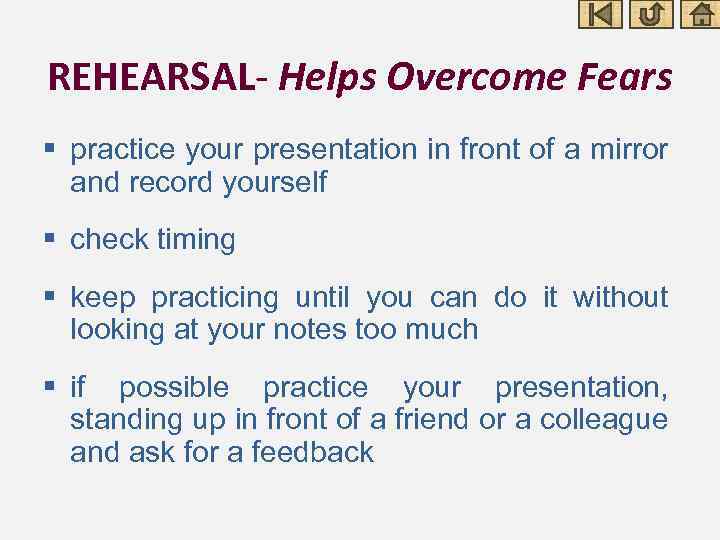
REHEARSAL- Helps Overcome Fears § practice your presentation in front of a mirror and record yourself § check timing § keep practicing until you can do it without looking at your notes too much § if possible practice your presentation, standing up in front of a friend or a colleague and ask for a feedback
PERFORMING THE PRESENTATION “The human brain starts working the moment we are born and never stops until you stand up to speak in public. ” - George Jessel
LANGUAGE “ The person who uses a lot of big words is not trying to inform you; he’s trying to impress you. ” – O. Miller
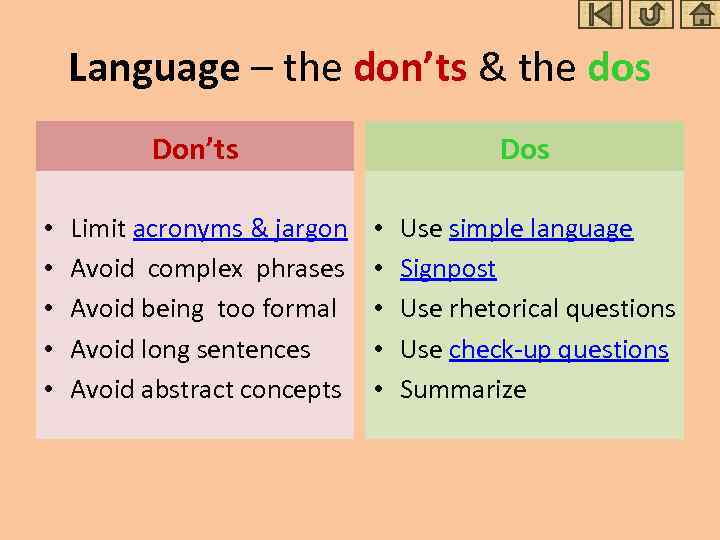
Language – the don’ts & the dos Don’ts • • • Limit acronyms & jargon Avoid complex phrases Avoid being too formal Avoid long sentences Avoid abstract concepts Dos • • • Use simple language Signpost Use rhetorical questions Use check-up questions Summarize
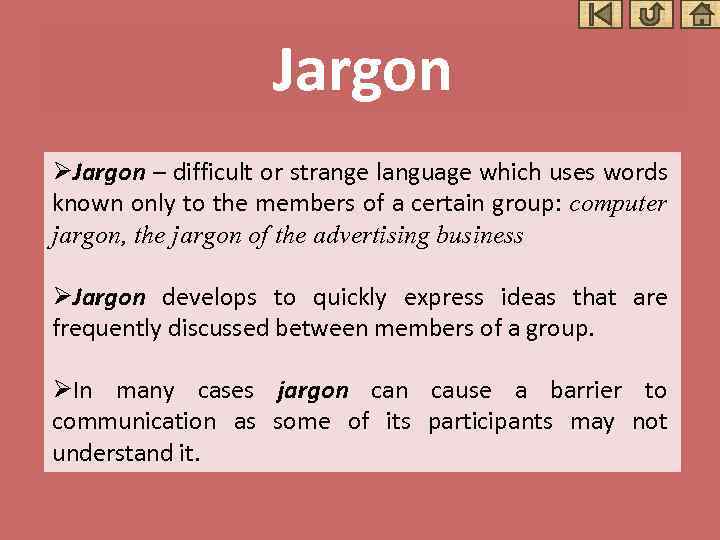
Jargon ØJargon – difficult or strange language which uses words known only to the members of a certain group: computer jargon, the jargon of the advertising business ØJargon develops to quickly express ideas that are frequently discussed between members of a group. ØIn many cases jargon cause a barrier to communication as some of its participants may not understand it.
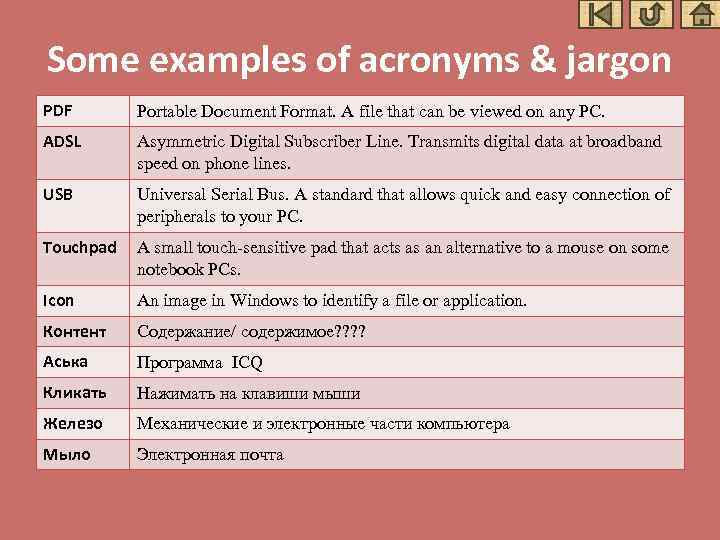
Some examples of acronyms & jargon PDF Portable Document Format. A file that can be viewed on any PC. ADSL Asymmetric Digital Subscriber Line. Transmits digital data at broadband speed on phone lines. USB Universal Serial Bus. A standard that allows quick and easy connection of peripherals to your PC. Touchpad A small touch-sensitive pad that acts as an alternative to a mouse on some notebook PCs. Icon An image in Windows to identify a file or application. Контент Содержание/ содержимое? ? Аська Программа ICQ Кликать Нажимать на клавиши мыши Железо Механические и электронные части компьютера Мыло Электронная почта
SIMPLICITY & CLARITY • use short words and sentences • active verbs are better than passive • prefer concrete words to abstract concepts illustration
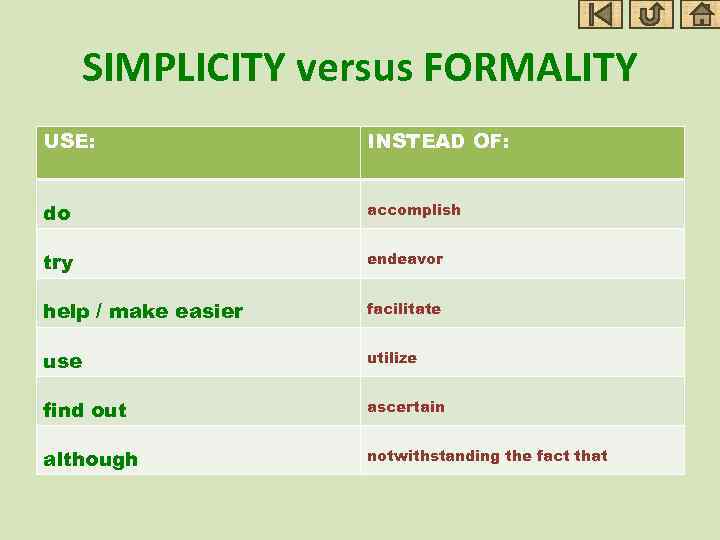
SIMPLICITY versus FORMALITY USE: INSTEAD OF: do accomplish try endeavor help / make easier facilitate use utilize find out ascertain although notwithstanding the fact that
SIGNPOSTING
SIGNPOSTING
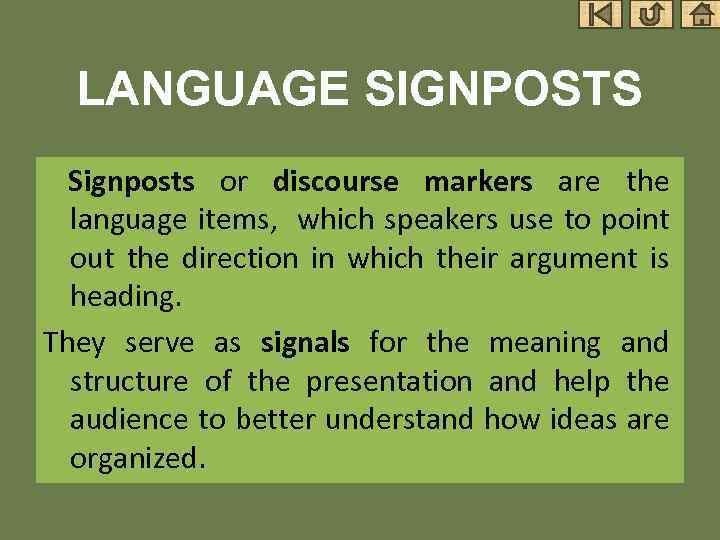
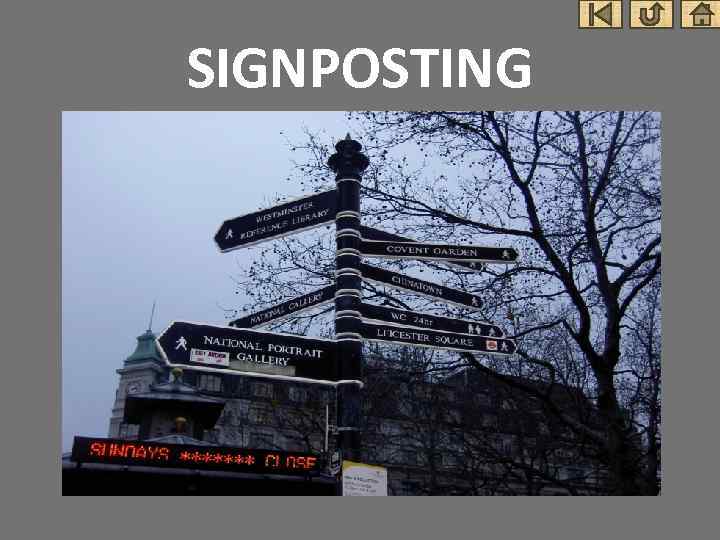
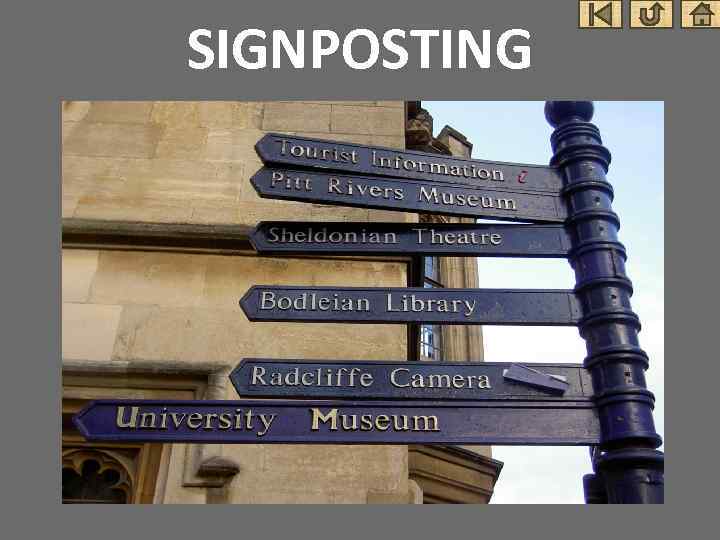
LANGUAGE SIGNPOSTS Signposts or discourse markers are the language items, which speakers use to point out the direction in which their argument is heading. They serve as signals for the meaning and structure of the presentation and help the audience to better understand how ideas are organized.
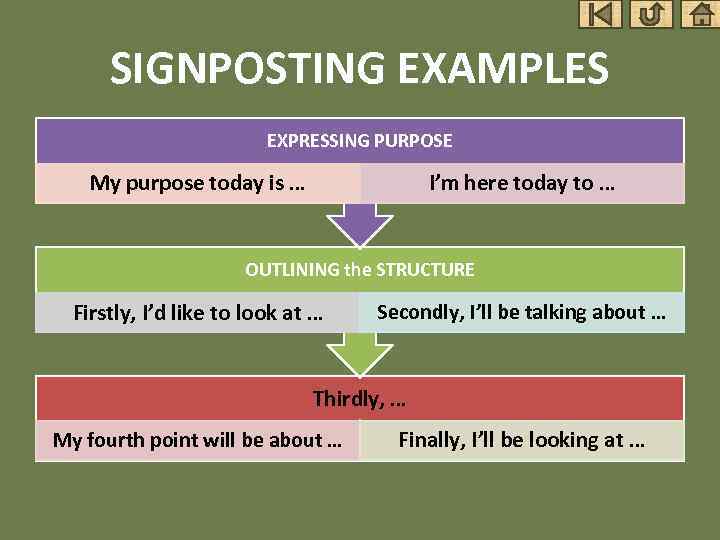
SIGNPOSTING EXAMPLES EXPRESSING PURPOSE My purpose today is … I’m here today to … OUTLINING the STRUCTURE Firstly, I’d like to look at … Secondly, I’ll be talking about … Thirdly, … My fourth point will be about … Finally, I’ll be looking at …
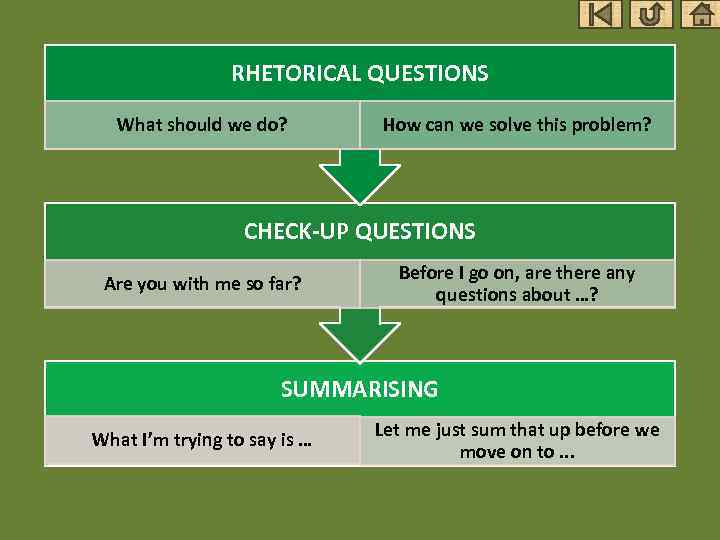
RHETORICAL QUESTIONS What should we do? How can we solve this problem? CHECK-UP QUESTIONS Are you with me so far? Before I go on, are there any questions about …? SUMMARISING What I’m trying to say is … Let me just sum that up before we move on to. . .
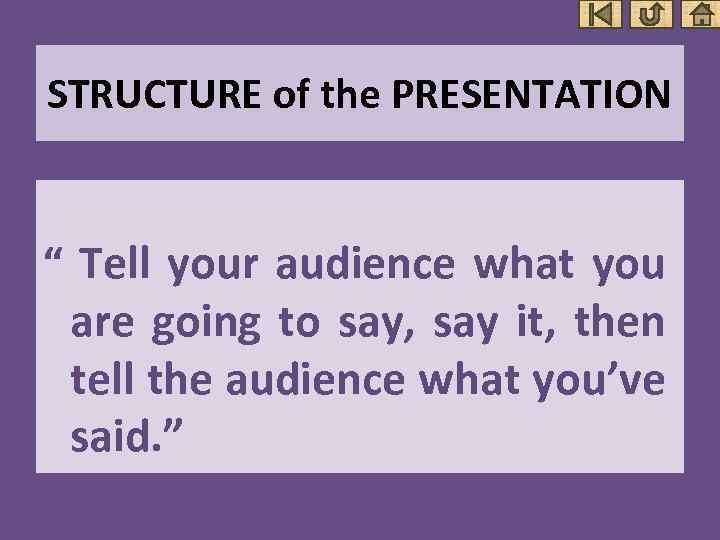
STRUCTURE of the PRESENTATION “ Tell your audience what you are going to say, say it, then tell the audience what you’ve said. ”
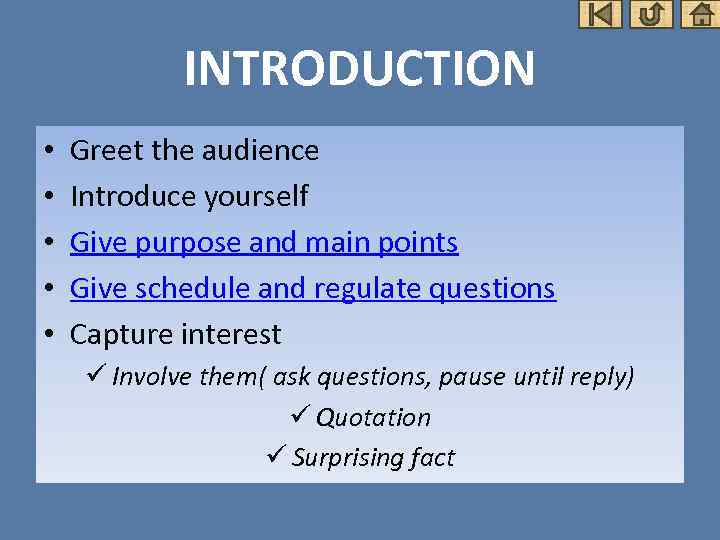
INTRODUCTION • • • Greet the audience Introduce yourself Give purpose and main points Give schedule and regulate questions Capture interest ü Involve them( ask questions, pause until reply) ü Quotation ü Surprising fact
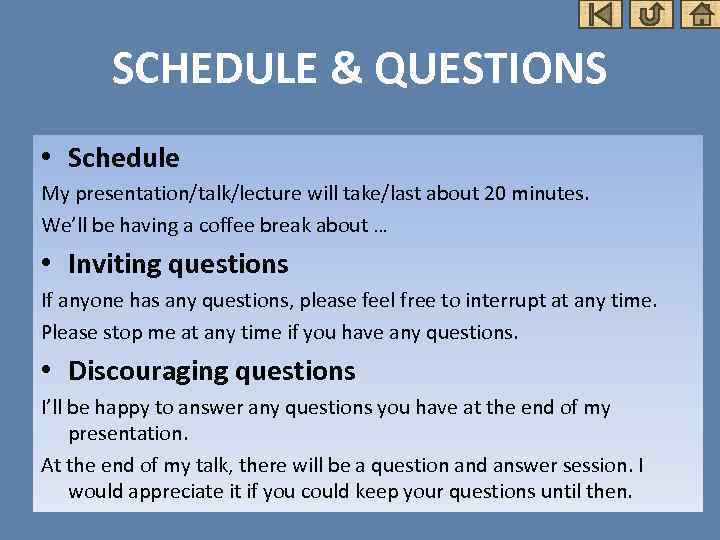
SCHEDULE & QUESTIONS • Schedule My presentation/talk/lecture will take/last about 20 minutes. We’ll be having a coffee break about … • Inviting questions If anyone has any questions, please feel free to interrupt at any time. Please stop me at any time if you have any questions. • Discouraging questions I’ll be happy to answer any questions you have at the end of my presentation. At the end of my talk, there will be a question and answer session. I would appreciate it if you could keep your questions until then.
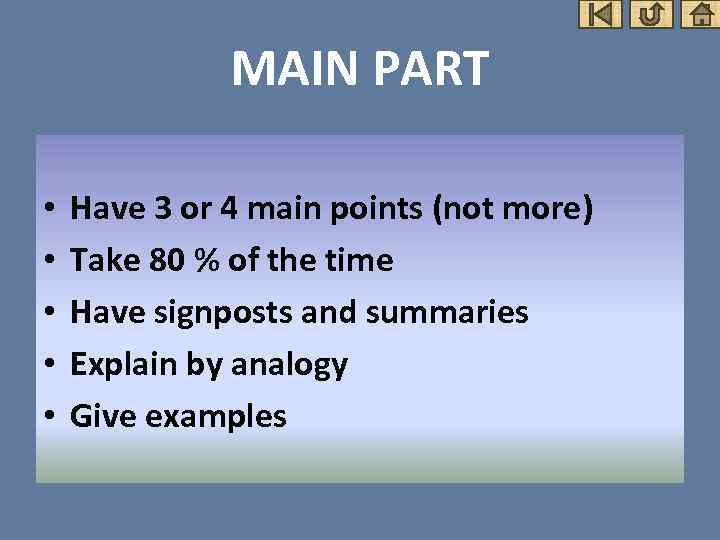
MAIN PART • • • Have 3 or 4 main points (not more) Take 80 % of the time Have signposts and summaries Explain by analogy Give examples
CONCLUSION “ Make sure you have finished speaking before your audience has finished listening. ” Dorothy Sarnoff
VISUAL AIDS Which tools will make your content easier to understand? Ø well-crafted slides Ø useful animations Ø appropriate graphics
VISUAL AIDS AVOID: ü slides cluttered with too much info ü poor choices of: § fonts, backgrounds or colors § graphics & animations § transition or sound effects
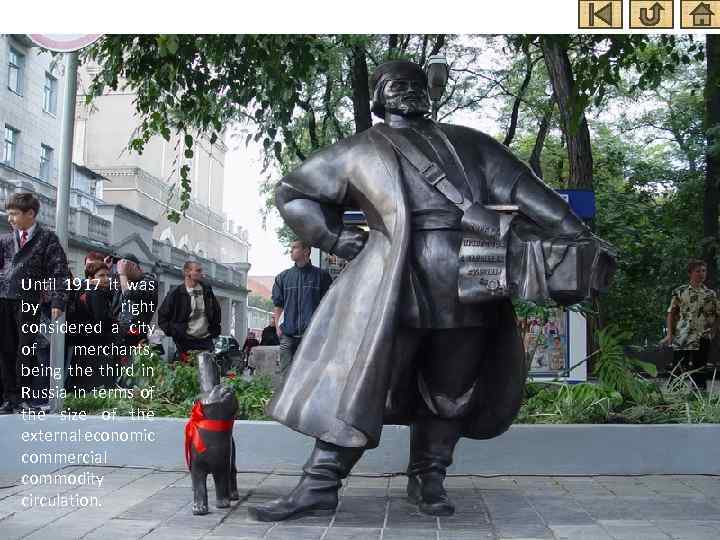
Until 1917 it was by right considered a city of merchants, being the third in Russia in terms of the size of the external economic commercial commodity circulation.
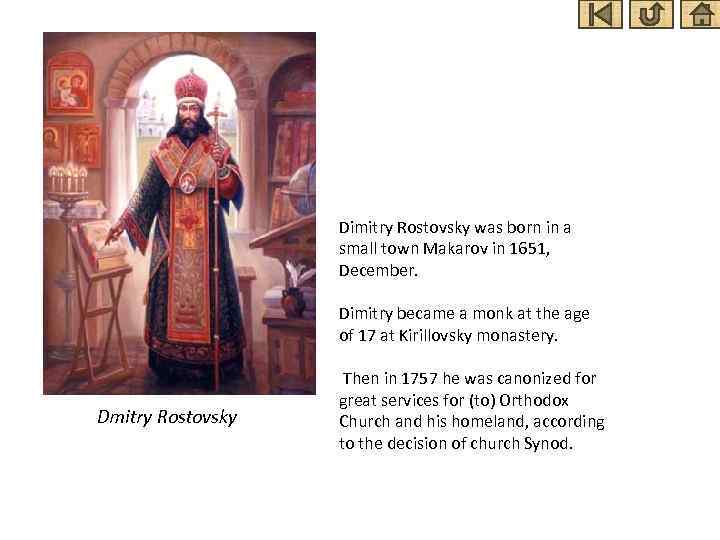
Dimitry Rostovsky was born in a small town Makarov in 1651, December. Dimitry became a monk at the age of 17 at Kirillovsky monastery. Dmitry Rostovsky Then in 1757 he was canonized for great services for (to) Orthodox Church and his homeland, according to the decision of church Synod.
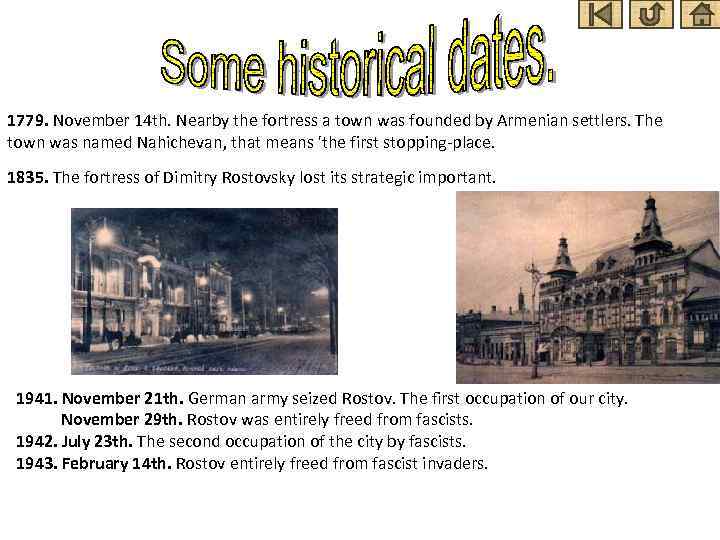
1779. November 14 th. Nearby the fortress a town was founded by Armenian settlers. The town was named Nahichevan, that means 'the first stopping-place. 1835. The fortress of Dimitry Rostovsky lost its strategic important. 1941. November 21 th. German army seized Rostov. The first occupation of our city. November 29 th. Rostov was entirely freed from fascists. 1942. July 23 th. The second occupation of the city by fascists. 1943. February 14 th. Rostov entirely freed from fascist invaders.
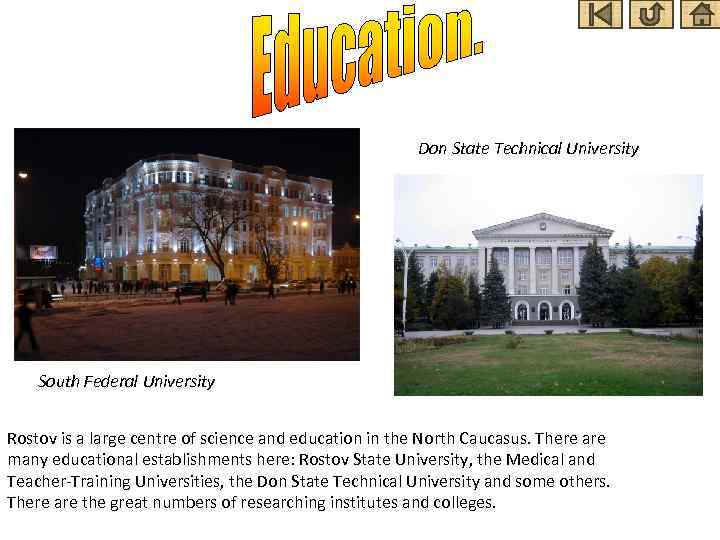
Don State Technical University South Federal University Rostov is a large centre of science and education in the North Caucasus. There are many educational establishments here: Rostov State University, the Medical and Teacher-Training Universities, the Don State Technical University and some others. There are the great numbers of researching institutes and colleges.
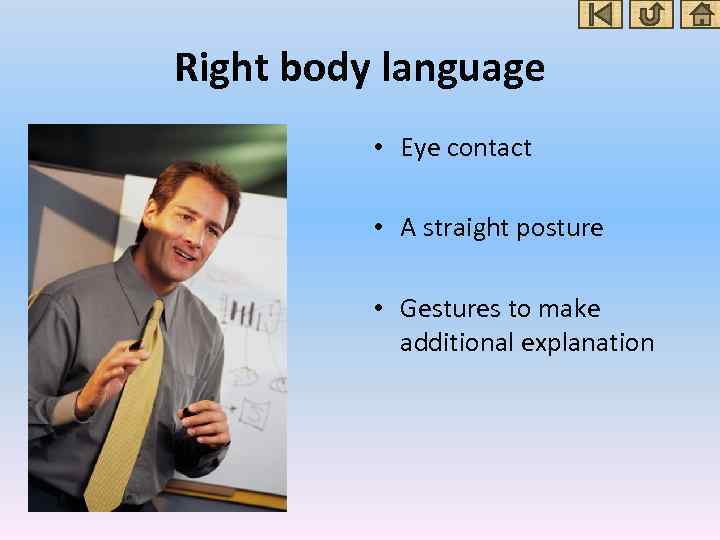
Right body language • Eye contact • A straight posture • Gestures to make additional explanation
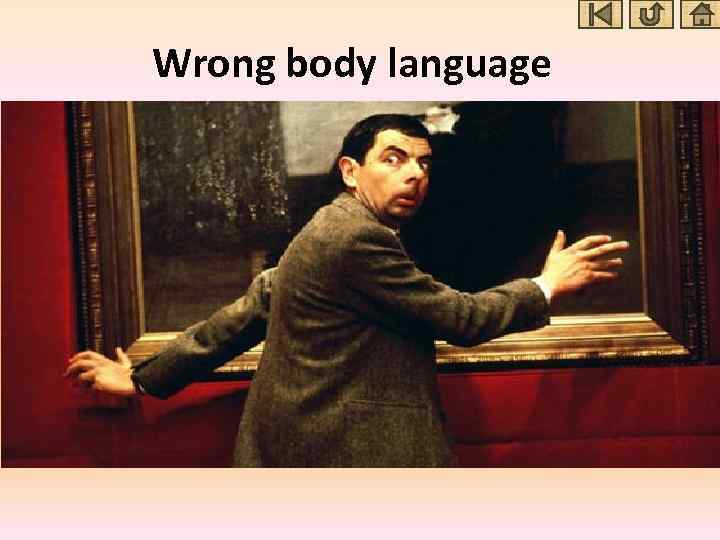
Wrong body language
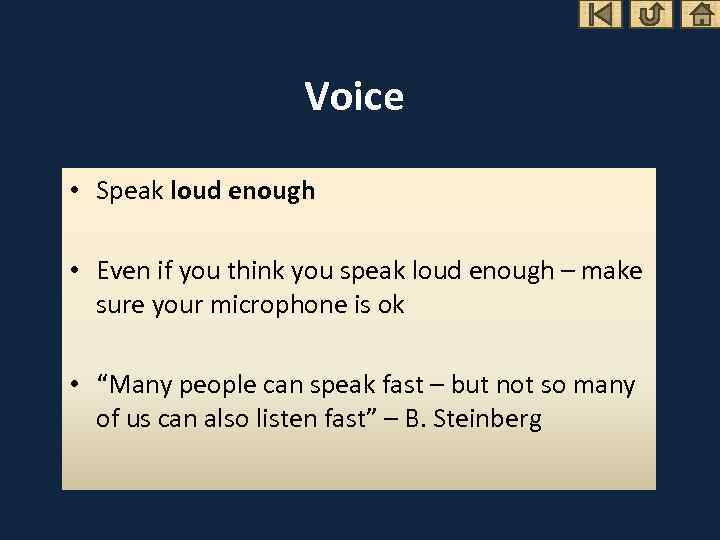
Voice • Speak loud enough • Even if you think you speak loud enough – make sure your microphone is ok • “Many people can speak fast – but not so many of us can also listen fast” – B. Steinberg
Скачать презентацию УЧИСЬ БЫТЬ УСПЕШНЫМ ОРАТОРОМ Автор ст пр Грушко
LEARN_TO_BE_A_SUCCESSFUL_PRESENTER_modified2.ppt