 Скачать презентацию UBI 532 -WIRELESS SENSOR NETWORKS International Computer Institute
d1f9abc2e4ccae5c0a6cb21100cf3cce.ppt
- Количество слайдов: 26




UBI 532 -WIRELESS SENSOR NETWORKS International Computer Institute by Murat Kurt 22. 05. 2008

Paper Presentation
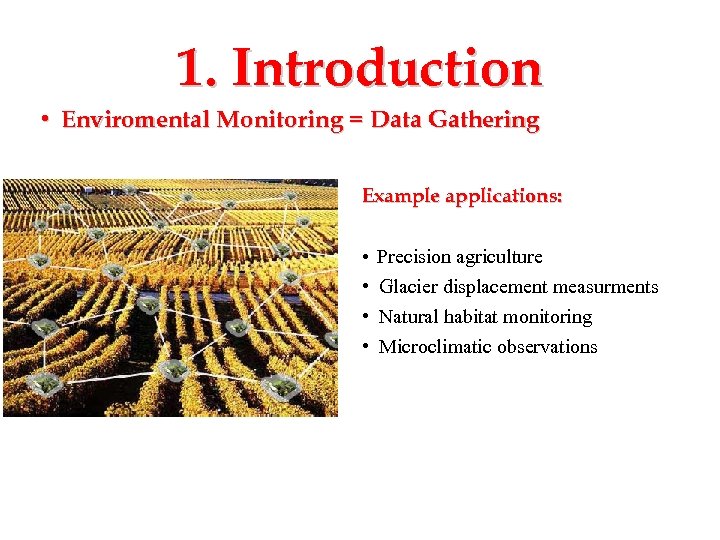
1. Introduction • Enviromental Monitoring = Data Gathering Example applications: • Precision agriculture • Glacier displacement measurments • Natural habitat monitoring • Microclimatic observations
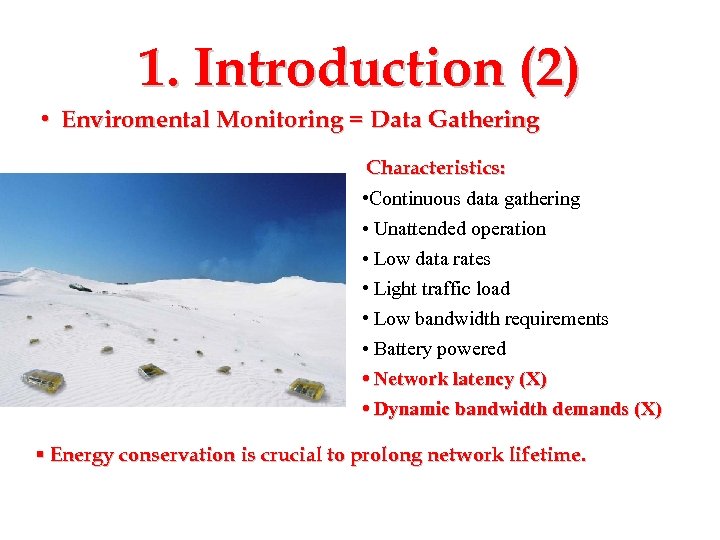
1. Introduction (2) • Enviromental Monitoring = Data Gathering Characteristics: • Continuous data gathering • Unattended operation • Low data rates • Light traffic load • Low bandwidth requirements • Battery powered • Network latency (X) • Dynamic bandwidth demands (X) § Energy conservation is crucial to prolong network lifetime.
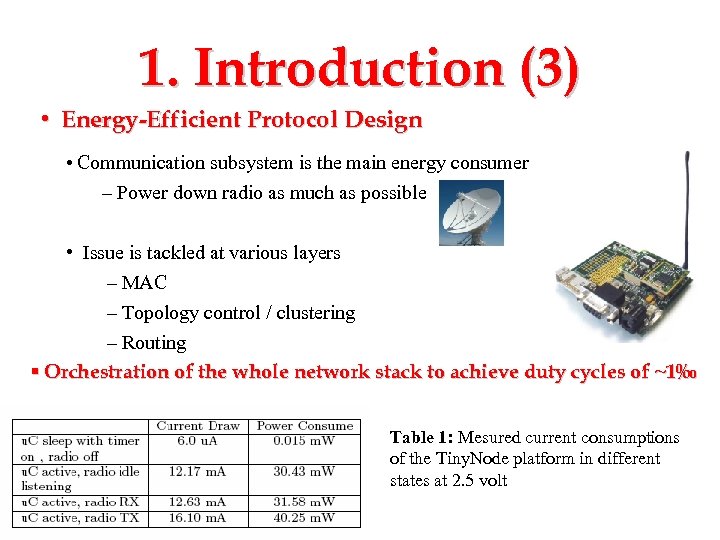
1. Introduction (3) • Energy-Efficient Protocol Design • Communication subsystem is the main energy consumer – Power down radio as much as possible • Issue is tackled at various layers – MAC – Topology control / clustering – Routing § Orchestration of the whole network stack to achieve duty cycles of ~1‰ Table 1: Mesured current consumptions of the Tiny. Node platform in different states at 2. 5 volt
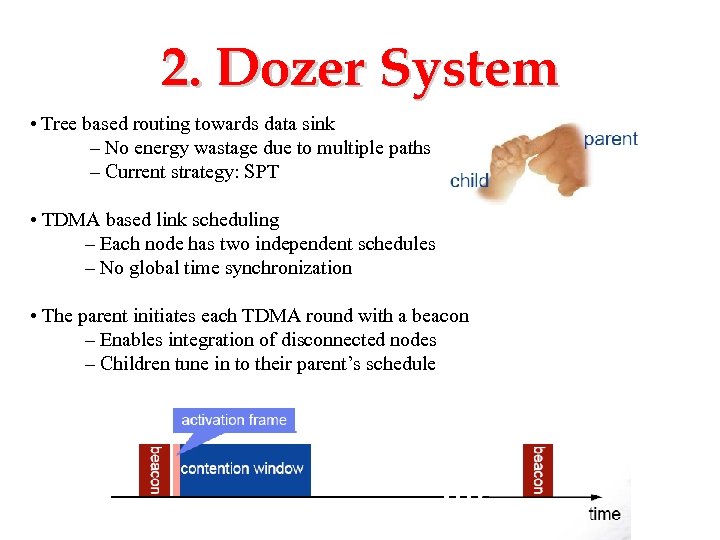
2. Dozer System • Tree based routing towards data sink – No energy wastage due to multiple paths – Current strategy: SPT • TDMA based link scheduling – Each node has two independent schedules – No global time synchronization • The parent initiates each TDMA round with a beacon – Enables integration of disconnected nodes – Children tune in to their parent’s schedule
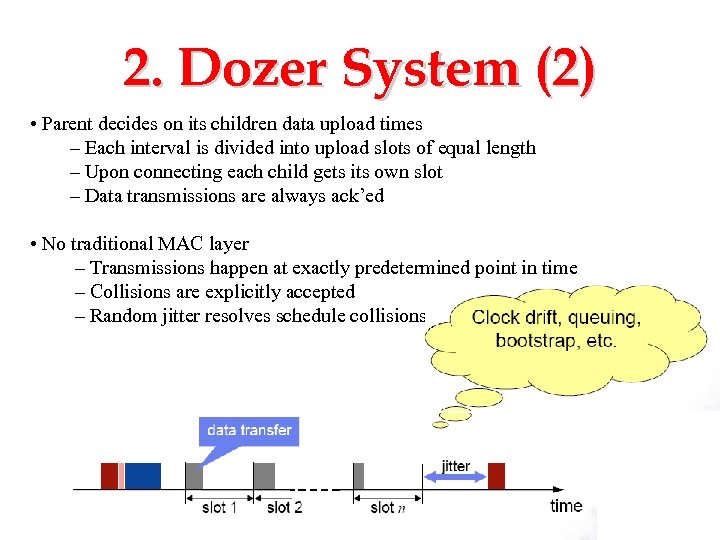
2. Dozer System (2) • Parent decides on its children data upload times – Each interval is divided into upload slots of equal length – Upon connecting each child gets its own slot – Data transmissions are always ack’ed • No traditional MAC layer – Transmissions happen at exactly predetermined point in time – Collisions are explicitly accepted – Random jitter resolves schedule collisions
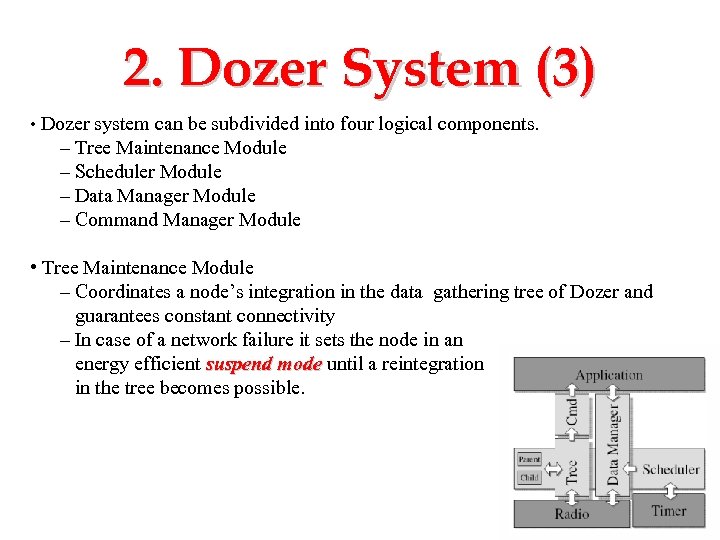
2. Dozer System (3) • Dozer system can be subdivided into four logical components. – Tree Maintenance Module – Scheduler Module – Data Manager Module – Command Manager Module • Tree Maintenance Module – Coordinates a node’s integration in the data gathering tree of Dozer and guarantees constant connectivity – In case of a network failure it sets the node in an energy efficient suspend mode until a reintegration in the tree becomes possible.
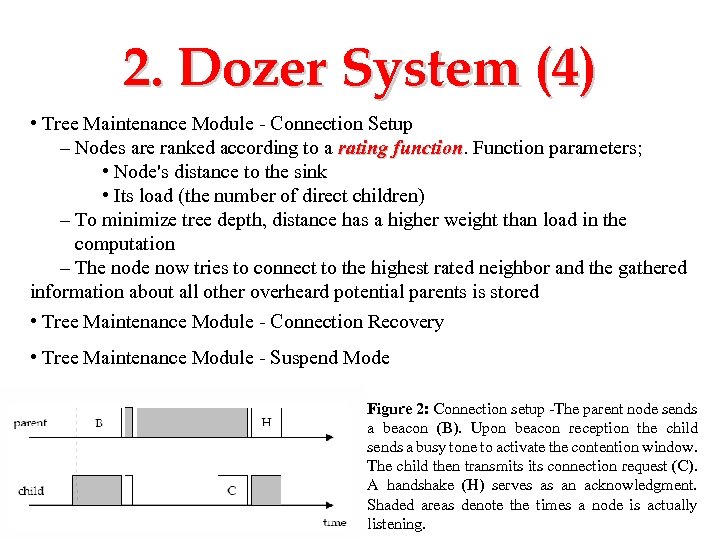
2. Dozer System (4) • Tree Maintenance Module - Connection Setup – Nodes are ranked according to a rating function. Function parameters; function • Node's distance to the sink • Its load (the number of direct children) – To minimize tree depth, distance has a higher weight than load in the computation – The node now tries to connect to the highest rated neighbor and the gathered information about all other overheard potential parents is stored • Tree Maintenance Module - Connection Recovery • Tree Maintenance Module - Suspend Mode Figure 2: Connection setup -The parent node sends a beacon (B). Upon beacon reception the child sends a busy tone to activate the contention window. The child then transmits connection request (C). A handshake (H) serves as an acknowledgment. Shaded areas denote the times a node is actually listening.
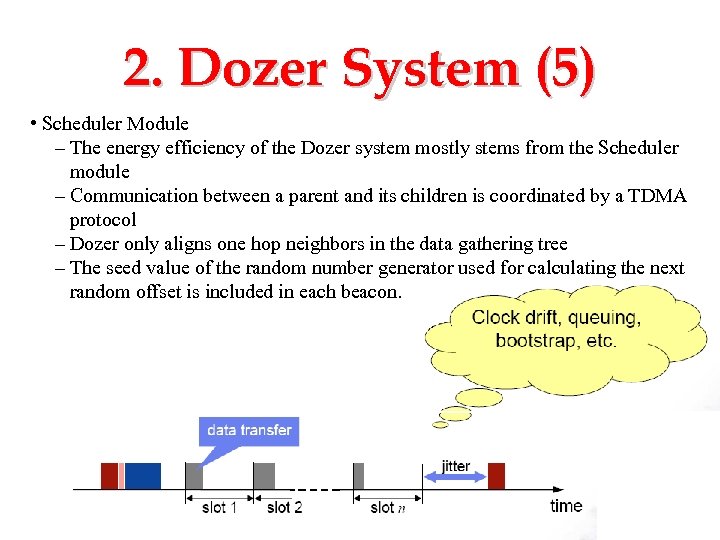
2. Dozer System (5) • Scheduler Module – The energy efficiency of the Dozer system mostly stems from the Scheduler module – Communication between a parent and its children is coordinated by a TDMA protocol – Dozer only aligns one hop neighbors in the data gathering tree – The seed value of the random number generator used for calculating the next random offset is included in each beacon.
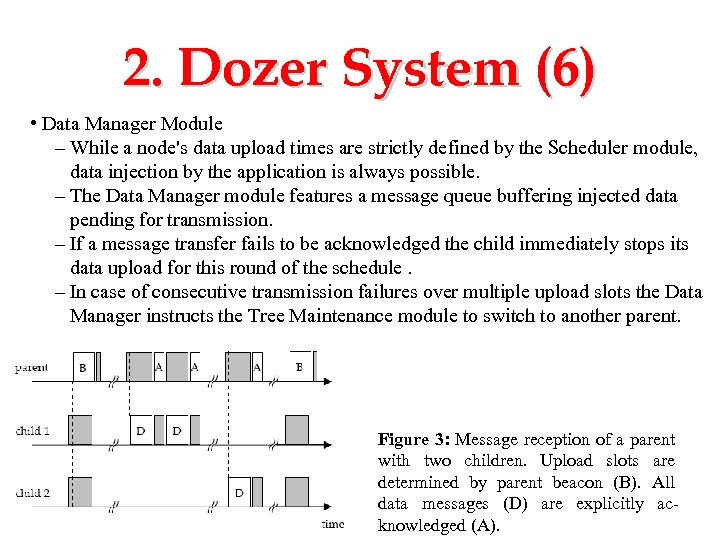
2. Dozer System (6) • Data Manager Module – While a node's data upload times are strictly defined by the Scheduler module, data injection by the application is always possible. – The Data Manager module features a message queue buffering injected data pending for transmission. – If a message transfer fails to be acknowledged the child immediately stops its data upload for this round of the schedule. – In case of consecutive transmission failures over multiple upload slots the Data Manager instructs the Tree Maintenance module to switch to another parent. Figure 3: Message reception of a parent with two children. Upload slots are determined by parent beacon (B). All data messages (D) are explicitly acknowledged (A).
2. Dozer System (7) • Command Manager Module – While data flow in Dozer is strictly unidirectional towards the sink it is often desirable to be able to send information to one or several nodes in the network. – Dozer establishes such a lightweight backward channel by making use of the beacon messages. – Commands injected at the data sink are included in the sink's next beacon message. – Every node receiving a beacon containing a command temporarily stores the command includes it in its next beacon. – By repeating this procedure at each level of the tree the command is disseminated through the whole network. – Besides addressing a command to all nodes in the network the injection of commands for individual nodes is also supported. – Upon reception of a beacon message from the parent the Tree Management component hands the command to the Command Manager module for further processing. The module checks if this node belongs to the set of intended recipients of the command.
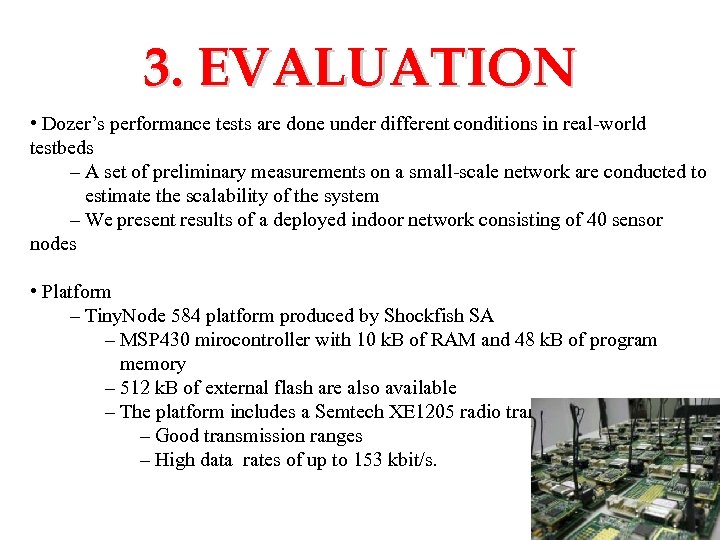
3. EVALUATION • Dozer’s performance tests are done under different conditions in real-world testbeds – A set of preliminary measurements on a small-scale network are conducted to estimate the scalability of the system – We present results of a deployed indoor network consisting of 40 sensor nodes • Platform – Tiny. Node 584 platform produced by Shockfish SA – MSP 430 mirocontroller with 10 k. B of RAM and 48 k. B of program memory – 512 k. B of external flash are also available – The platform includes a Semtech XE 1205 radio transceiver – Good transmission ranges – High data rates of up to 153 kbit/s.
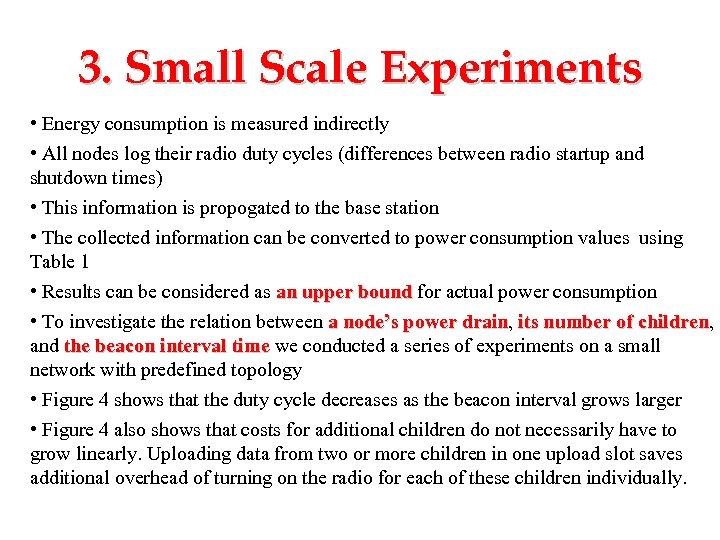
3. Small Scale Experiments • Energy consumption is measured indirectly • All nodes log their radio duty cycles (differences between radio startup and shutdown times) • This information is propogated to the base station • The collected information can be converted to power consumption values using Table 1 • Results can be considered as an upper bound for actual power consumption • To investigate the relation between a node’s power drain, its number of children, drain children and the beacon interval time we conducted a series of experiments on a small network with predefined topology • Figure 4 shows that the duty cycle decreases as the beacon interval grows larger • Figure 4 also shows that costs for additional children do not necessarily have to grow linearly. Uploading data from two or more children in one upload slot saves additional overhead of turning on the radio for each of these children individually.
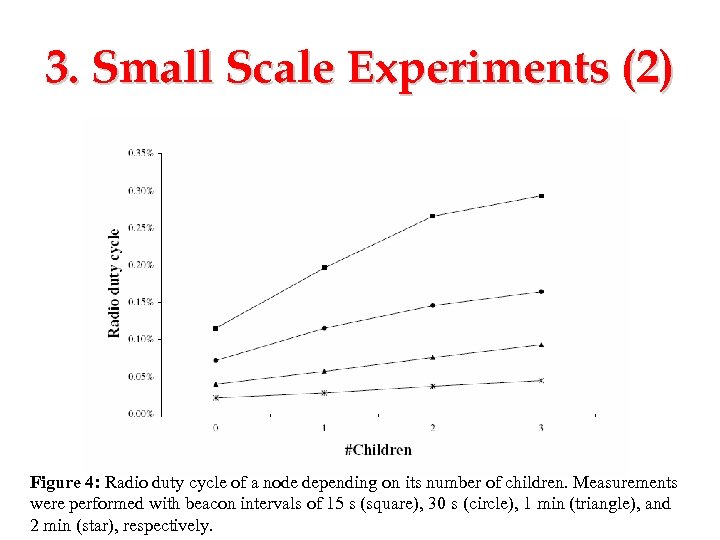
3. Small Scale Experiments (2) Figure 4: Radio duty cycle of a node depending on its number of children. Measurements were performed with beacon intervals of 15 s (square), 30 s (circle), 1 min (triangle), and 2 min (star), respectively.
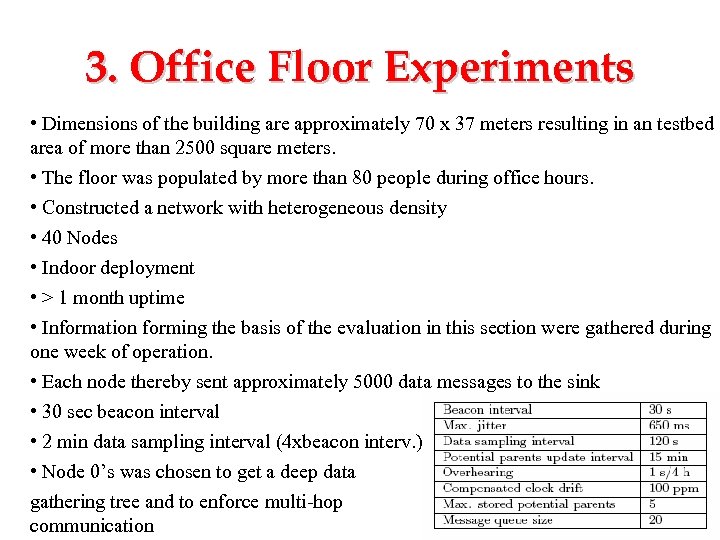
3. Office Floor Experiments • Dimensions of the building are approximately 70 x 37 meters resulting in an testbed area of more than 2500 square meters. • The floor was populated by more than 80 people during office hours. • Constructed a network with heterogeneous density • 40 Nodes • Indoor deployment • > 1 month uptime • Information forming the basis of the evaluation in this section were gathered during one week of operation. • Each node thereby sent approximately 5000 data messages to the sink • 30 sec beacon interval • 2 min data sampling interval (4 xbeacon interv. ) • Node 0’s was chosen to get a deep data gathering tree and to enforce multi-hop communication
3. 1 Tree Topology
3. 1 Tree Topology (2)
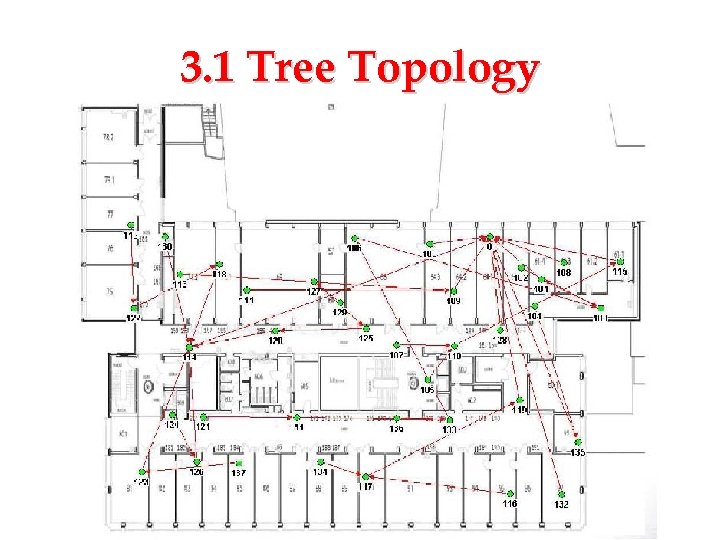
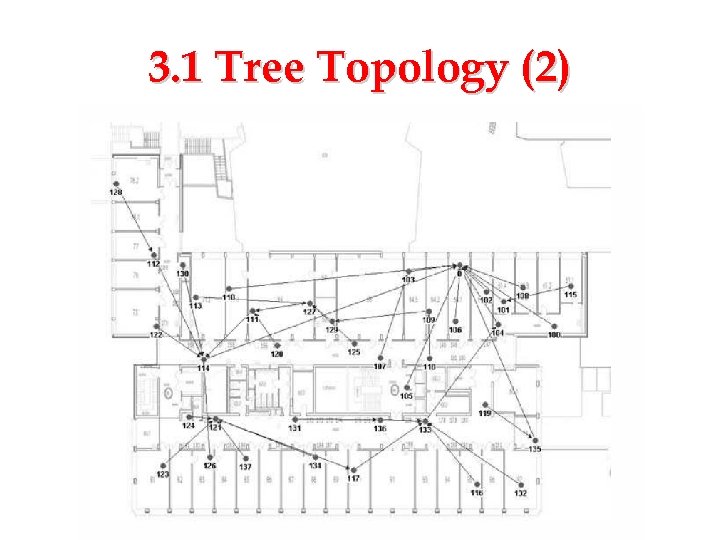
3. 1 Tree Topology (3) • Base station (Node 0) has numerous children. Two reason; • The parent rating function promotes connections to the sink since it has zero tree depth. • The sink was configured to accept more than one child per connection phase. • Hardly any connections passed the central core of the building. • We examine the stability of the data gathering tree by investigating topology changes and message loss. Topology changes are indicated by a node exchanging its parent. • As hoped for, message loss was low, in average 1. 2% and at maximum 3. 15%. • However, Node 128 is excluded from this analysis. It was only able to connect to analysis one single other node (Node 112) • Suspend mode • Message loss of approximately 30%
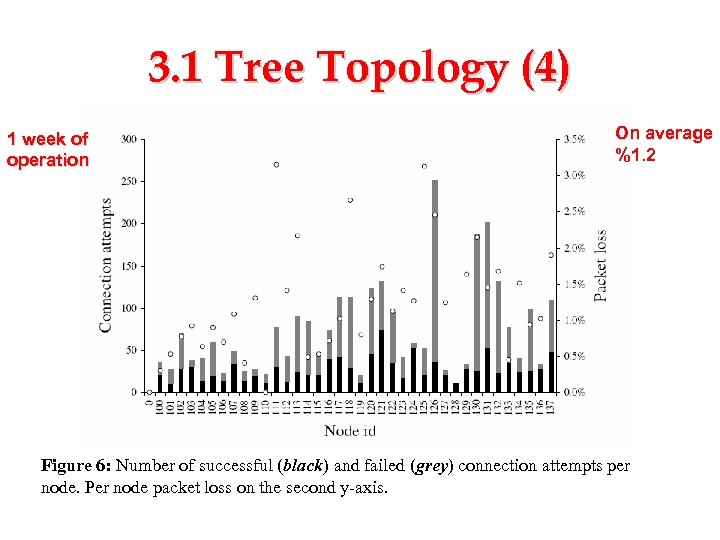
3. 1 Tree Topology (4) 1 week of operation On average %1. 2 Figure 6: Number of successful (black) and failed (grey) connection attempts per node. Per node packet loss on the second y-axis.
3. 2 Energy Consumption • Energy consumption of the deployed nodes were measured indirectly via their duty cycles. • Figure 7 depicts the average radio activity of each node in the network. • The upward error bar shows the RMS error of all measurments exceeding the average duty cycles. • The overall average duty cycle of all sensing nodes is 1. 67‰ with a standard deviation of 0. 0004 • Applying the values from Table 1 results in a mean energy consumption of 0. 082 m. W. • The sink had by far the highest radio uptime of almost 1%. • It had to process the data of the whole network. • The extended contention window.
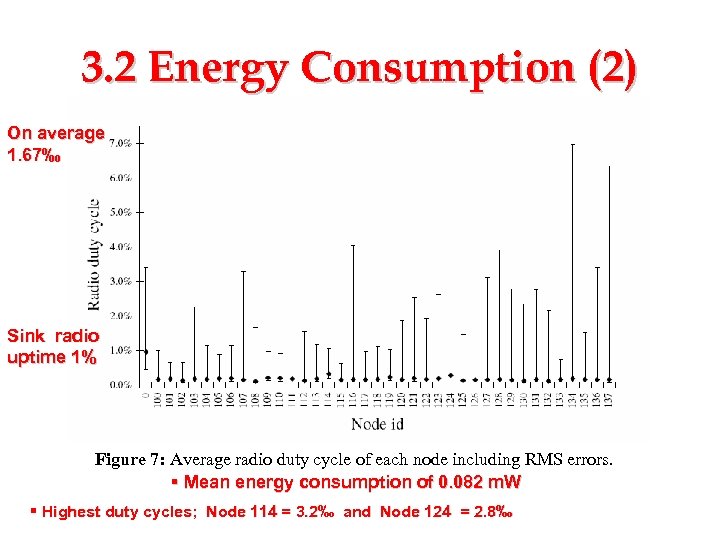
3. 2 Energy Consumption (2) On average 1. 67‰ Sink radio uptime 1% Figure 7: Average radio duty cycle of each node including RMS errors. § Mean energy consumption of 0. 082 m. W § Highest duty cycles; Node 114 = 3. 2‰ and Node 124 = 2. 8‰
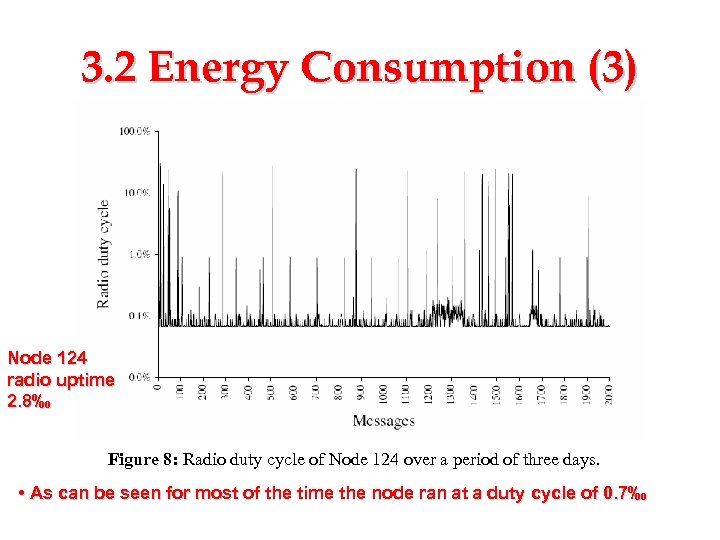
3. 2 Energy Consumption (3) Node 124 radio uptime 2. 8‰ Figure 8: Radio duty cycle of Node 124 over a period of three days. • As can be seen for most of the time the node ran at a duty cycle of 0. 7‰
3. 2 Energy Consumption (4) • Node 124: • The node is a leaf in the data gathering tree. • Three different energy intensive effects can be observed • Exceeding 20% are scans for a full beacon interval • The overhearing phase once every four hours results in a temporary duty cycle of around 1% • The potential parents updates lead to the fringes of up to 1‰. • Located in a small storage room • It had but a small neighborhood • Consequently, in times of normal operation it was able to run at nearly optimal duty cycle. • In case of connection interruptions the interference affected all its possible connections resulting in a fallback to bootstrap mode.
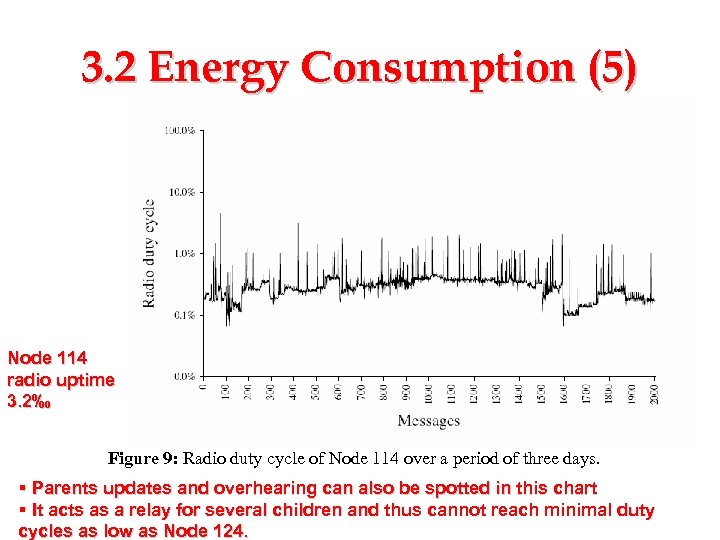
3. 2 Energy Consumption (5) Node 114 radio uptime 3. 2‰ Figure 9: Radio duty cycle of Node 114 over a period of three days. § Parents updates and overhearing can also be spotted in this chart § It acts as a relay for several children and thus cannot reach minimal duty cycles as low as Node 124.
4 CONCLUSION • Environmental monitoring requirements – Long network lifetime – High delivery rate of sampled sensor readings to a central authority. • Dozer, a new data gathering system designed to meet these requirements. • Conclusions – Dozer achieves duty cycles in the magnitude of 1. 6‰. – Abandoning collision avoidance was the right thing to do. • Future work – Incorporate clock drift compensation. – Optimize delivery latency of sampled sensor data. – Make use of multiple frequencies to further reduce collisions. • It is our goal to see Dozer running on a genuine large scale sensor network collecting meaningful data.
Скачать презентацию UBI 532 -WIRELESS SENSOR NETWORKS International Computer Institute
d1f9abc2e4ccae5c0a6cb21100cf3cce.ppt