 Скачать презентацию u Trade Hub — Korea s National Single Window
612dcc8f33ea73ee47b47302ddc611d8.ppt
- Количество слайдов: 34



u. Trade. Hub - Korea’s National Single Window for Paperless Trading Dr. Jae-hyun Lee Korea e-Trade Facilitation Committee Managing Director, e-Biz Bureau Korea International Trade Association
Contents 1. What is Single Window for Trade Facilitation? 2. Why Do We Need It? : Korean Case 3. Where Are We Now? : e-Trade Korea 2007 Project 4. u. Trade. Hub: Korea’s Single Window 5. Critical Success Factors 6. Challenges Ahead
1. What Is Single Window?
Single Window Definition • UN/CEFACT Recommendation 33 A facility that allows parties involved in trade and transport to lodge standardized information and documents with a single entry point to fulfill all import, export and transit-related regulatory requirements. If information is electronic, then individual data elements should only be submitted once.
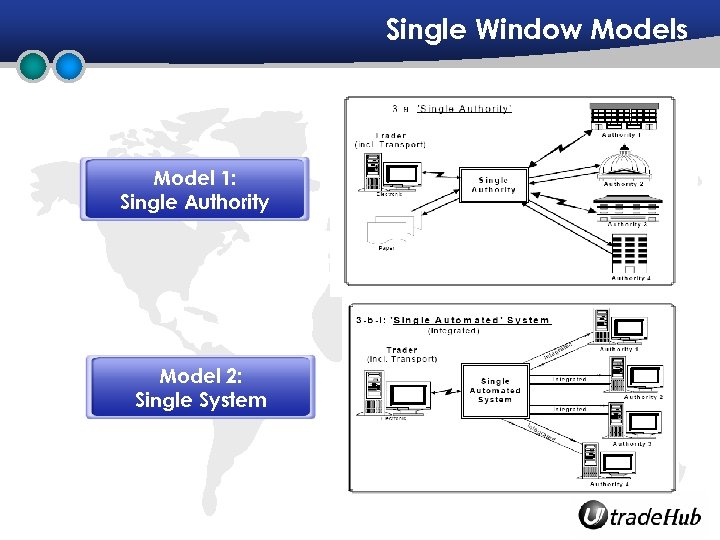
Single Window Models Model 1: Single Authority Model 2: Single System
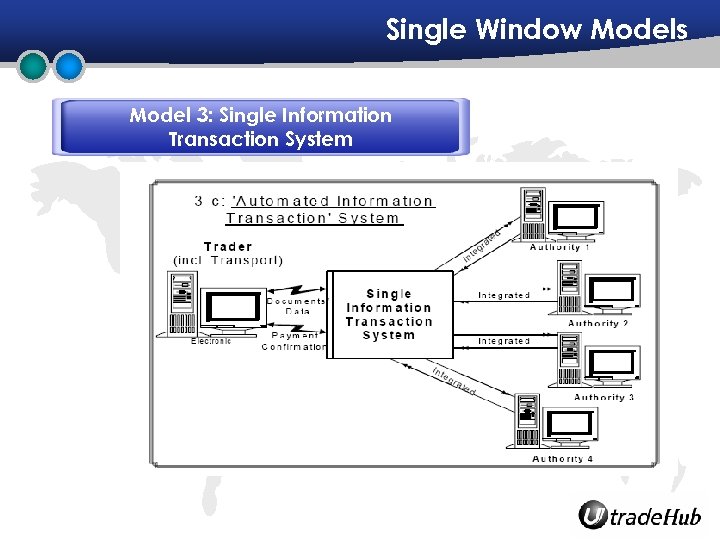
Single Window Models Model 3: Single Information Transaction System
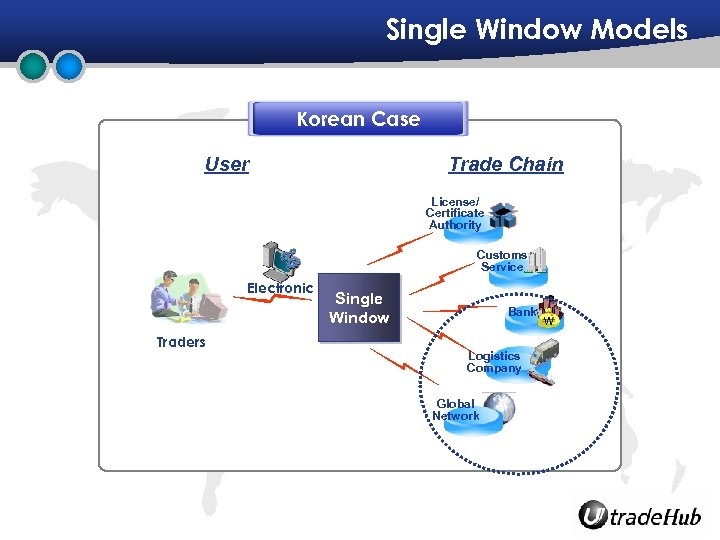
Single Window Models Korean Case User Trade Chain License/ Certificate Authority Customs Service Electronic Traders Single Window Bank Logistics Company Global Network
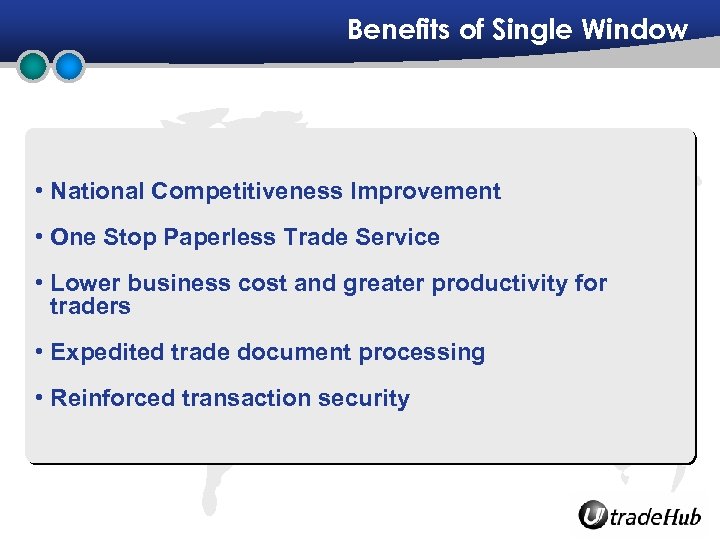
Benefits of Single Window • National Competitiveness Improvement • One Stop Paperless Trade Service • Lower business cost and greater productivity for traders • Expedited trade document processing • Reinforced transaction security
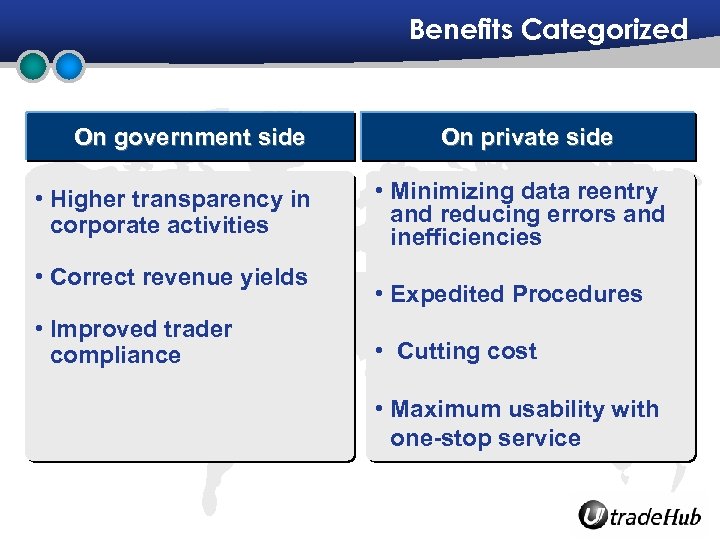
Benefits Categorized On government side • Higher transparency in corporate activities • Correct revenue yields • Improved trader compliance On private side • Minimizing data reentry and reducing errors and inefficiencies • Expedited Procedures • Cutting cost • Maximum usability with one-stop service
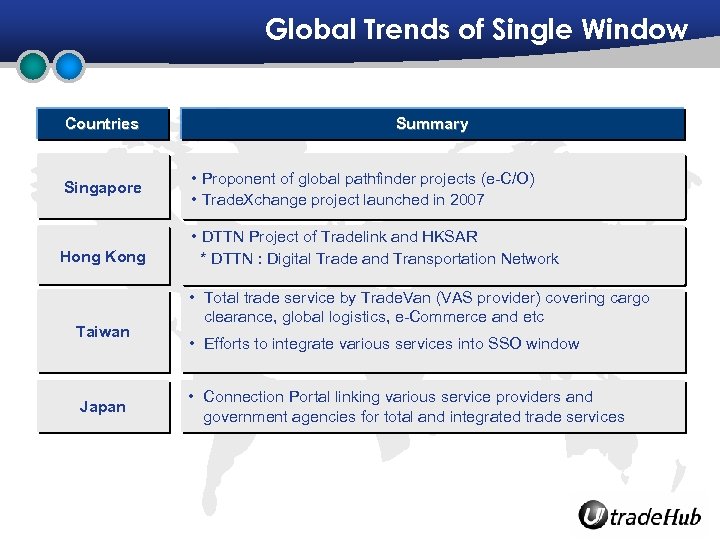
Global Trends of Single Window Countries Singapore Hong Kong Taiwan Japan Summary • Proponent of global pathfinder projects (e-C/O) • Trade. Xchange project launched in 2007 • DTTN Project of Tradelink and HKSAR * DTTN : Digital Trade and Transportation Network • Total trade service by Trade. Van (VAS provider) covering cargo clearance, global logistics, e-Commerce and etc • Efforts to integrate various services into SSO window • Connection Portal linking various service providers and government agencies for total and integrated trade services
2. Why Do We Need It?
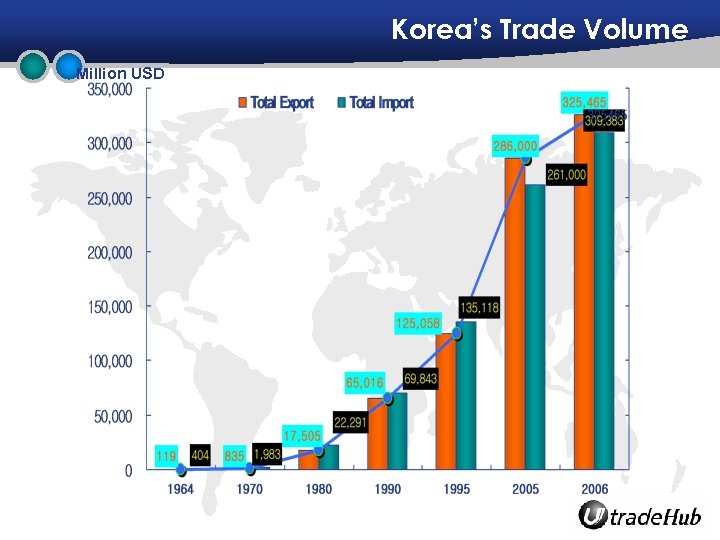
Korea’s Trade Volume Million USD
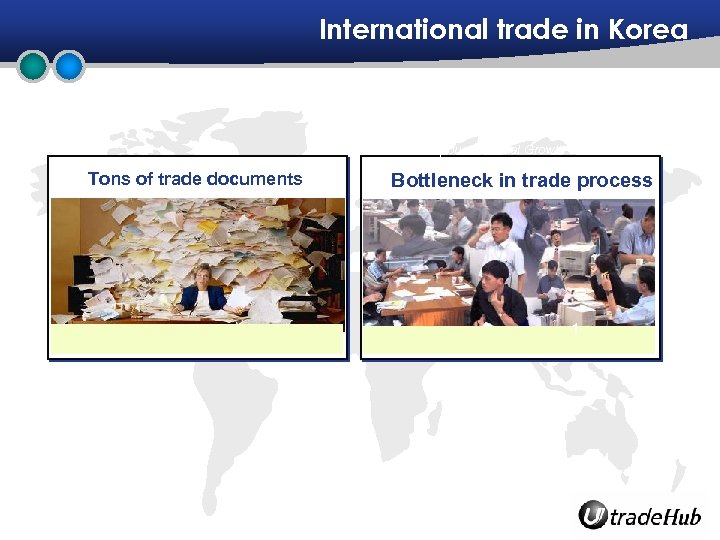
International trade in Korea * CAGR: Compound Annual Growth Rate Tons of trade documents Bottleneck in trade process 1
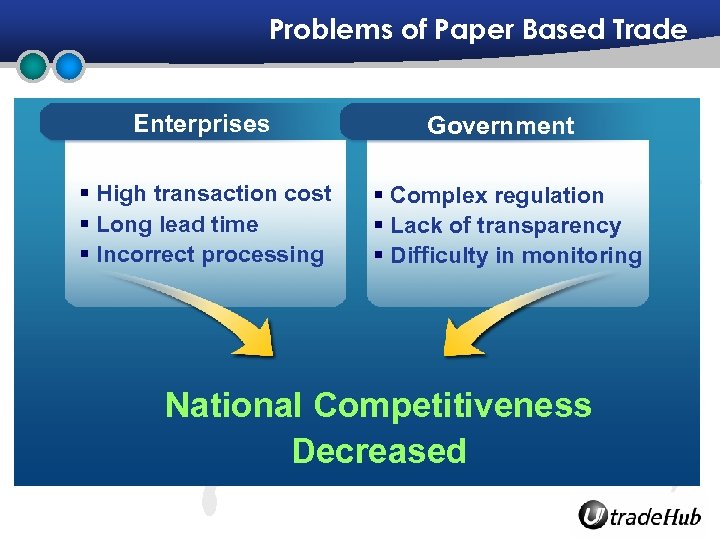
Problems of Paper Based Trade Enterprises § High transaction cost § Long lead time § Incorrect processing Government § Complex regulation § Lack of transparency § Difficulty in monitoring National Competitiveness Decreased 2
3. Where Are We Now? : e-Trade Korea 2007 Project
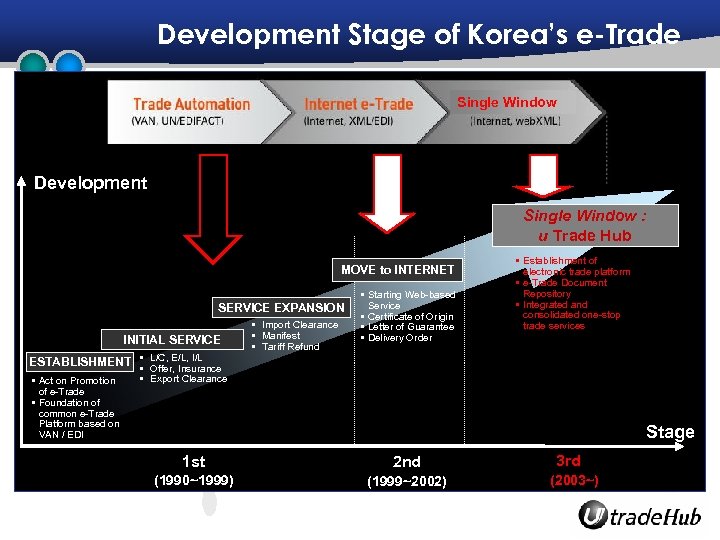
Development Stage of Korea’s e-Trade Single Window Development Single Window : u Trade Hub MOVE to INTERNET SERVICE EXPANSION INITIAL SERVICE ESTABLISHMENT • L/C, E/L, I/L • Offer, Insurance • Act on Promotion of e-Trade • Foundation of common e-Trade Platform based on VAN / EDI • Import Clearance • Manifest • Tariff Refund • Starting Web-based Service • Certificate of Origin • Letter of Guarantee • Delivery Order • Establishment of electronic trade platform • e-Trade Document Repository • Integrated and consolidated one-stop trade services • Export Clearance Stage 1 st 2 nd (1990~1999) (1999~2002) 3 rd (2003~)
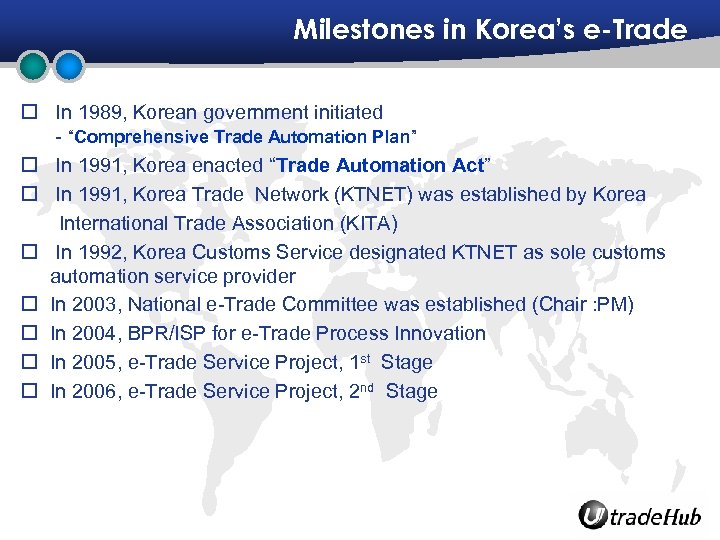
Milestones in Korea’s e-Trade o In 1989, Korean government initiated - “Comprehensive Trade Automation Plan” o In 1991, Korea enacted “Trade Automation Act” o In 1991, Korea Trade Network (KTNET) was established by Korea International Trade Association (KITA) o In 1992, Korea Customs Service designated KTNET as sole customs automation service provider o In 2003, National e-Trade Committee was established (Chair : PM) o In 2004, BPR/ISP for e-Trade Process Innovation o In 2005, e-Trade Service Project, 1 st Stage o In 2006, e-Trade Service Project, 2 nd Stage
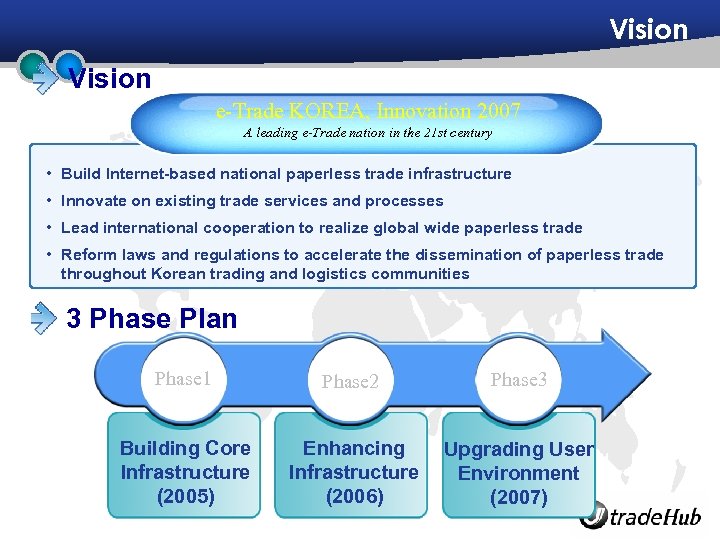
Vision e-Trade KOREA, Innovation 2007 A leading e-Trade nation in the 21 st century • Build Internet-based national paperless trade infrastructure • Innovate on existing trade services and processes • Lead international cooperation to realize global wide paperless trade • Reform laws and regulations to accelerate the dissemination of paperless trade throughout Korean trading and logistics communities 3 Phase Plan Phase 1 Phase 2 Phase 3 Building Core Infrastructure (2005) Enhancing Infrastructure (2006) Upgrading User Environment (2007)
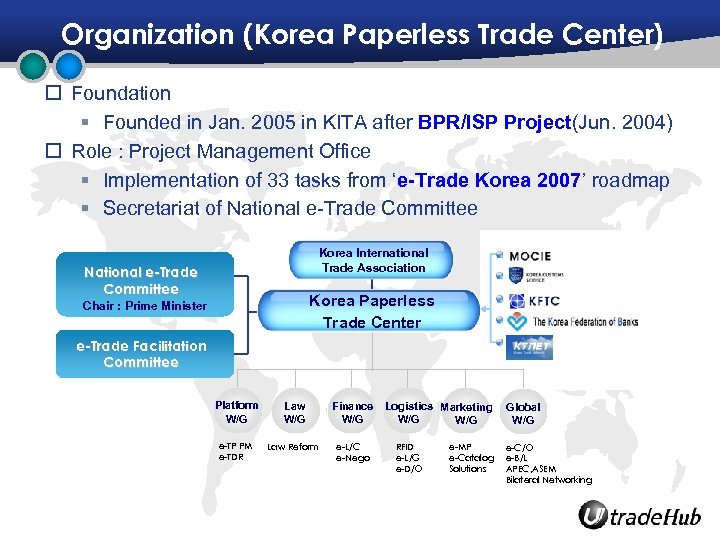
Organization (Korea Paperless Trade Center) o Foundation § Founded in Jan. 2005 in KITA after BPR/ISP Project(Jun. 2004) o Role : Project Management Office § Implementation of 33 tasks from ‘e-Trade Korea 2007’ roadmap § Secretariat of National e-Trade Committee Korea International Trade Association National e-Trade Committee Korea Paperless Trade Center Chair : Prime Minister e-Trade Facilitation Committee Platform W/G Law W/G Finance W/G e-TP PM e-TDR Law Reform e-L/C e-Nego Logistics Marketing W/G RFID e-L/G e-D/O e-MP e-Catalog Solutions Global W/G e-C/O e-B/L APEC, ASEM Bilateral Networking
4. u. Trade. Hub : Korea’s Single Window for Paperless Trading
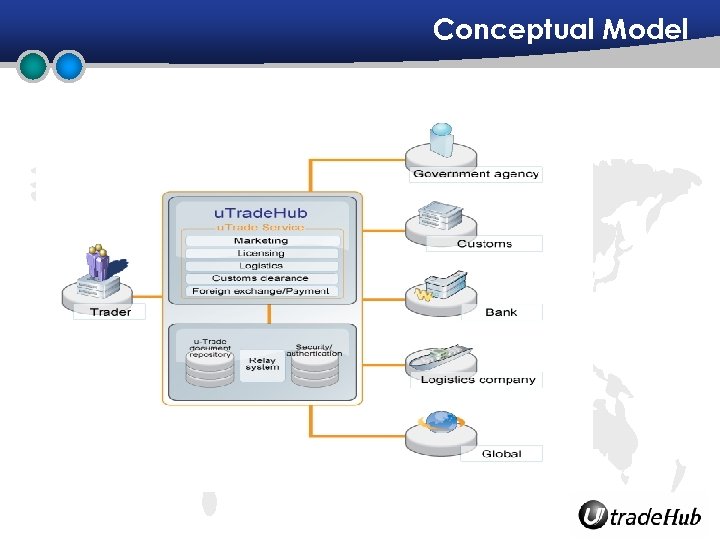
Conceptual Model
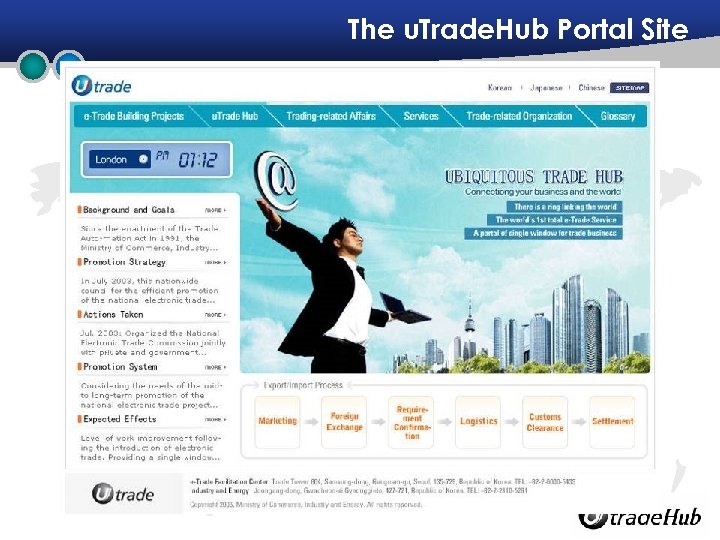
The u. Trade. Hub Portal Site
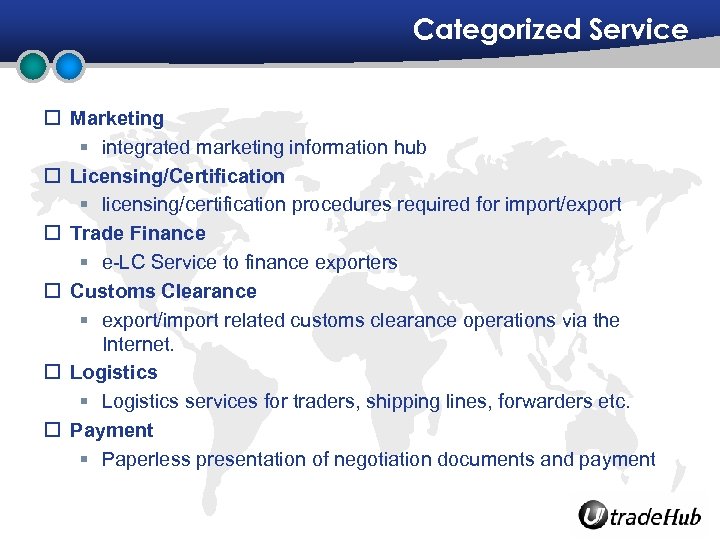
Categorized Service o Marketing § integrated marketing information hub o Licensing/Certification § licensing/certification procedures required for import/export o Trade Finance § e-LC Service to finance exporters o Customs Clearance § export/import related customs clearance operations via the Internet. o Logistics § Logistics services for traders, shipping lines, forwarders etc. o Payment § Paperless presentation of negotiation documents and payment
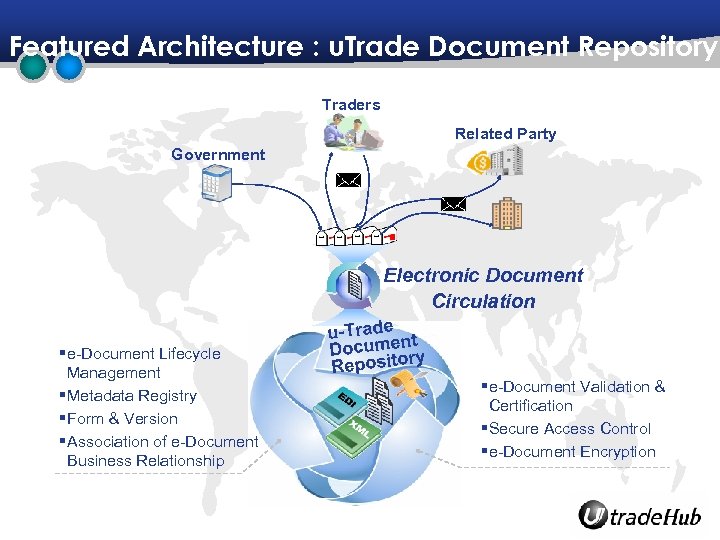
Featured Architecture : u. Trade Document Repository Traders Related Party Government Electronic Document Circulation §e-Document Lifecycle Management §Metadata Registry §Form & Version §Association of e-Document Business Relationship u-Trade nt Docume ry Reposito §e-Document Validation & Certification §Secure Access Control §e-Document Encryption
u. Trade. Hub: Benefits o One stop service integrates existing paperless trading services in Korea o Reduces business cost and improves productivity o Expedites trade document processing o Offers smart service based on BPM (business process management)

5. u. Trade. Hub : Success Factors
Critical Success Factors o Strong leadership by government o Budget o IT infrastructure (Network, Hardware, Software) o System Integration experience o Legal framework readiness o e-Readiness of Industry o Adopting International standards and trends
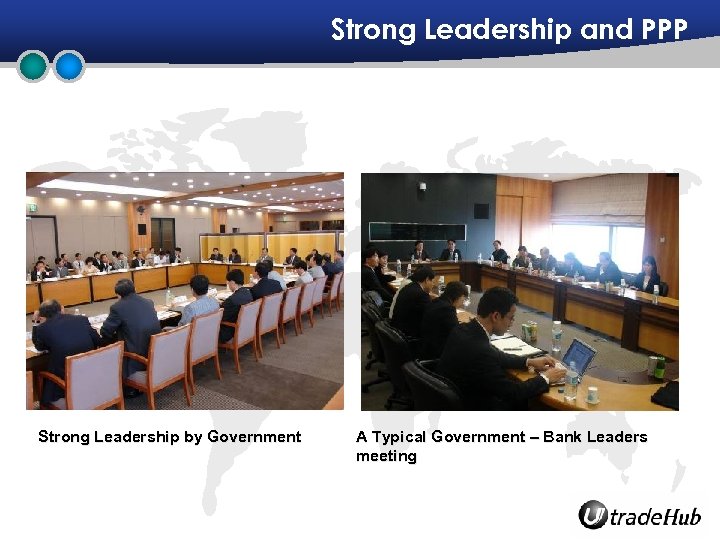
Strong Leadership and PPP Strong Leadership by Government A Typical Government – Bank Leaders meeting

IT Infrastructure of Korea Broadband Network 24. 9 No. 1 in Broadband Internet Penetration Rate ※subscriber/100 persons 19 (Source: OECD, 2005) 17. 8 15 서울 2 서울 1 1위 2위 Korea Netherlands Canada 대전 12. 8 Japan U. S. No. of broadband subscribing households: 11. 8 million (77%) 대구 부산 Korea’s Broadband Penetration 광주 House -holds Penetration : 80%(2005) - Available to over 97% of population School s All Primary & Secondary Schools Connected to Broadband (Sept. 2000)

Legal Infrastructure Foreign Trade Act Digital Signature Act Electronic Transactions Act e-Trade Facilitation Act Trade Transactions Facilitation Act Customs Law In 1991, Enacted ‘Trade Automation Act’ In 2004, Revised the Act to ‘e-Trade Facilitation Act’

6. Challenges Ahead

Connectivity to the global trade o Encouraging Industry Awareness and Adoption o Establishing International Standard § eb. XML § the UN Trade Data Elements Directory (UNTDED) § UN EDIFACT § WCO Data Model etc o Connection among National Single Windows § Mutual Authentication and systemic connectivity

Korea’s Initiatives as an e-Trade Leader o e-Certificate of Origin Pathfinder Project - Korea-Chinese Taipei o e-Bill of Lading Project - Connecting national SWs for title documents - APEC Initiative by Korea - Singapore’s Trade. Xchange as a project partner o e-Negotiation Project - Pilot project with China - Presenting negotiation documents in electronic formats and complete electronic payment

Thank you ! (Q&A)
Скачать презентацию u Trade Hub — Korea s National Single Window
612dcc8f33ea73ee47b47302ddc611d8.ppt