


 Скачать презентацию U S Political Parties U S Political
debd8e32988de0bd7abc692f48e30db8.ppt
- Количество слайдов: 47
 U. S. Political Parties
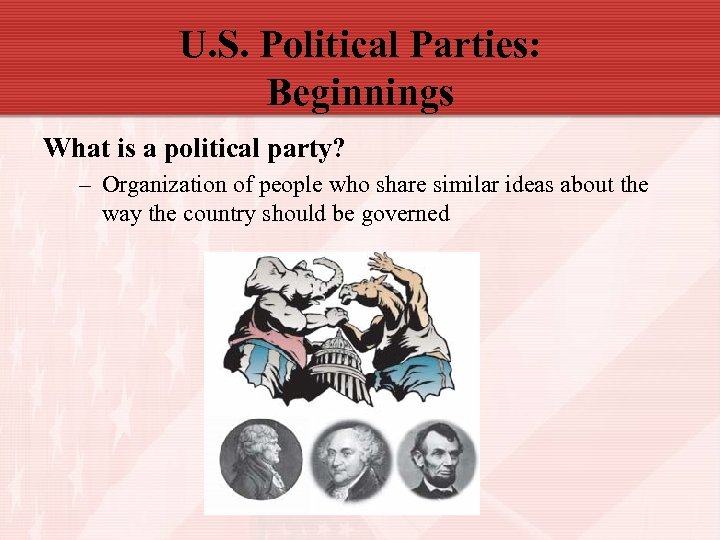 U. S. Political Parties: Beginnings What is a political party? – Organization of people who share similar ideas about the way the country should be governed
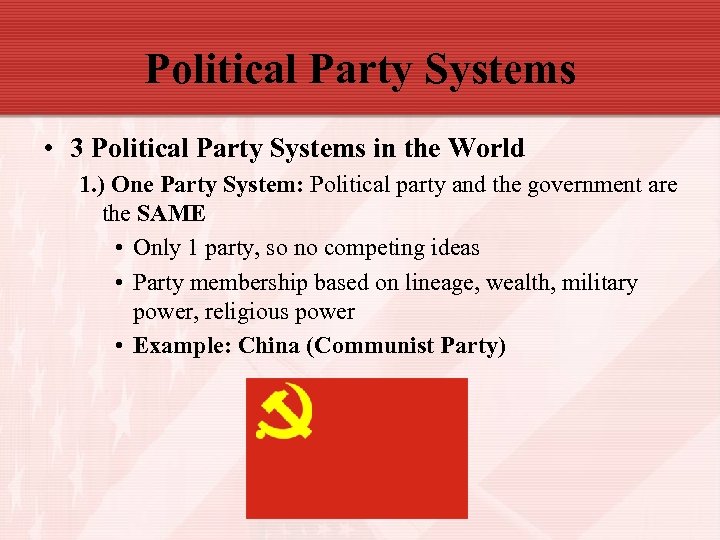 Political Party Systems • 3 Political Party Systems in the World 1. ) One Party System: Political party and the government are the SAME • Only 1 party, so no competing ideas • Party membership based on lineage, wealth, military power, religious power • Example: China (Communist Party)
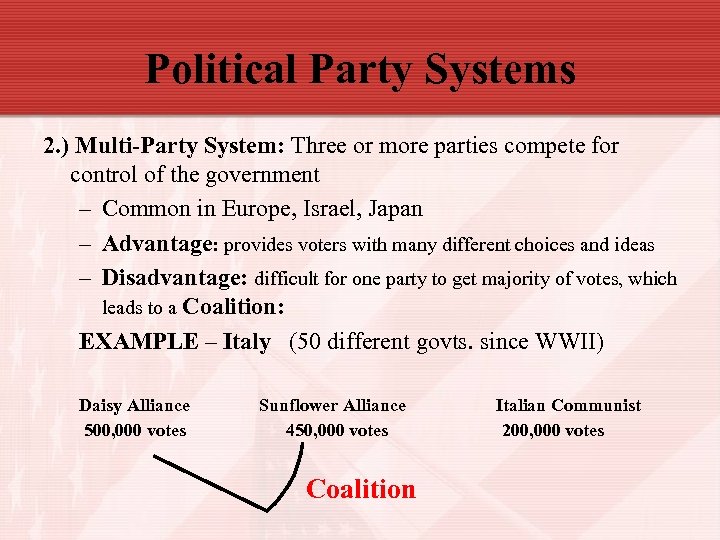 Political Party Systems 2. ) Multi-Party System: Three or more parties compete for control of the government – Common in Europe, Israel, Japan – Advantage: provides voters with many different choices and ideas – Disadvantage: difficult for one party to get majority of votes, which leads to a Coalition: EXAMPLE – Italy (50 different govts. since WWII) Daisy Alliance 500, 000 votes Sunflower Alliance 450, 000 votes Coalition Italian Communist 200, 000 votes
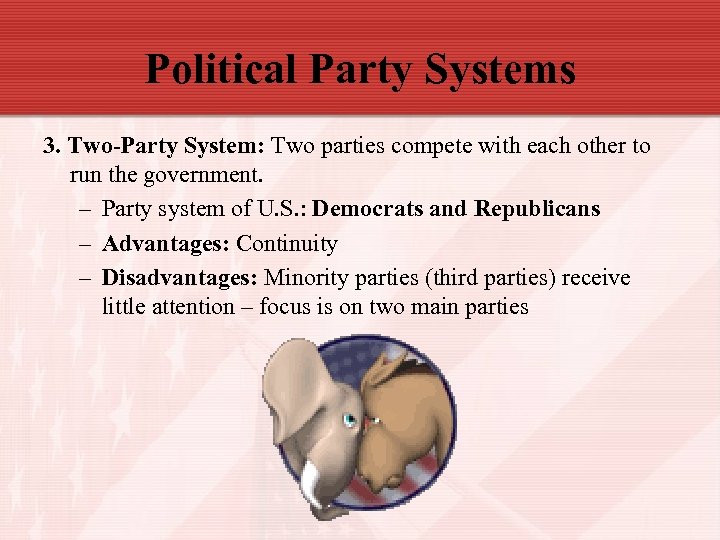 Political Party Systems 3. Two-Party System: Two parties compete with each other to run the government. – Party system of U. S. : Democrats and Republicans – Advantages: Continuity – Disadvantages: Minority parties (third parties) receive little attention – focus is on two main parties
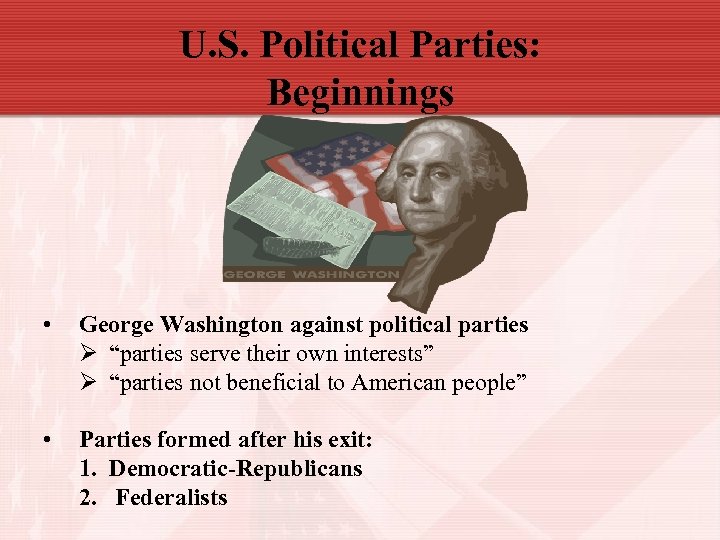 U. S. Political Parties: Beginnings • George Washington against political parties Ø “parties serve their own interests” Ø “parties not beneficial to American people” • Parties formed after his exit: 1. Democratic-Republicans 2. Federalists
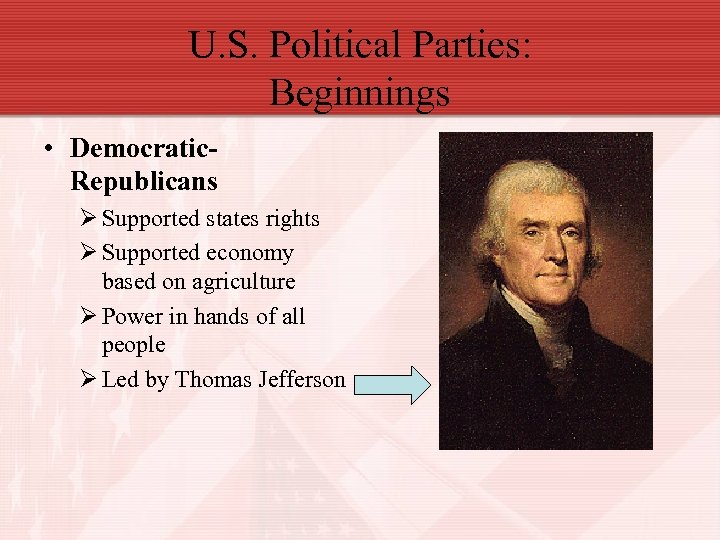 U. S. Political Parties: Beginnings • Democratic. Republicans Ø Supported states rights Ø Supported economy based on agriculture Ø Power in hands of all people Ø Led by Thomas Jefferson
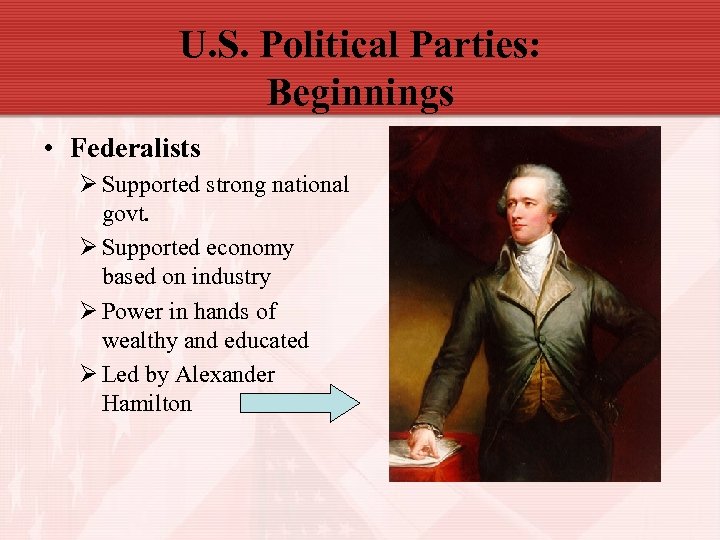 U. S. Political Parties: Beginnings • Federalists Ø Supported strong national govt. Ø Supported economy based on industry Ø Power in hands of wealthy and educated Ø Led by Alexander Hamilton
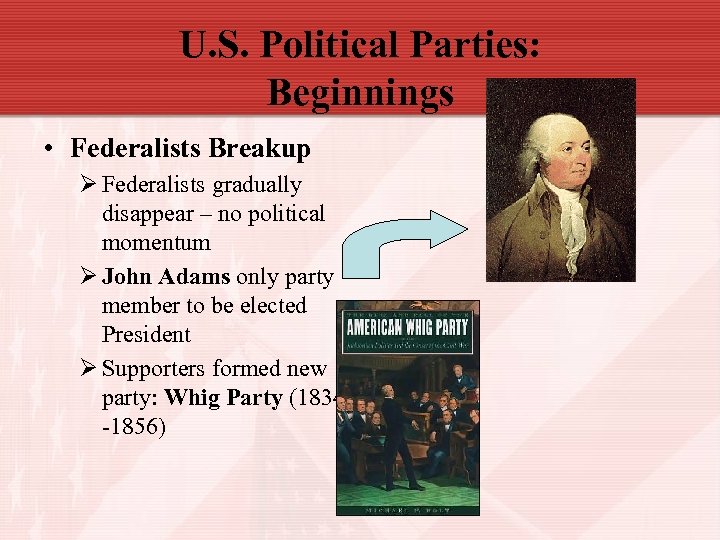 U. S. Political Parties: Beginnings • Federalists Breakup Ø Federalists gradually disappear – no political momentum Ø John Adams only party member to be elected President Ø Supporters formed new party: Whig Party (1834 -1856)
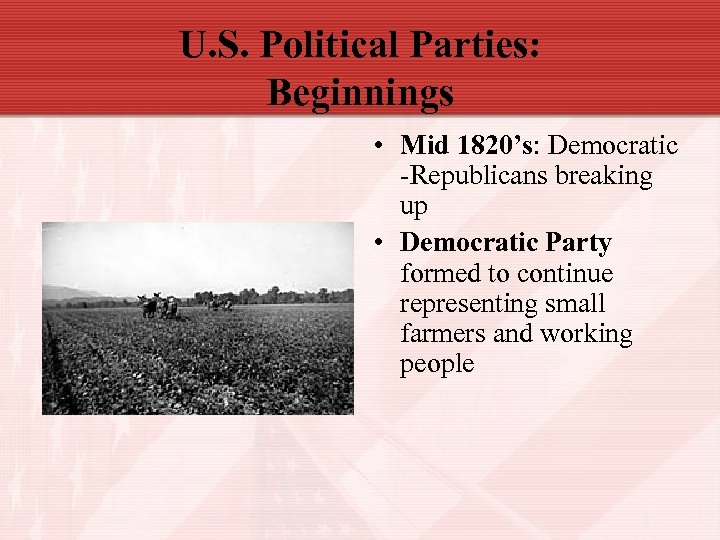 U. S. Political Parties: Beginnings • Mid 1820’s: Democratic -Republicans breaking up • Democratic Party formed to continue representing small farmers and working people
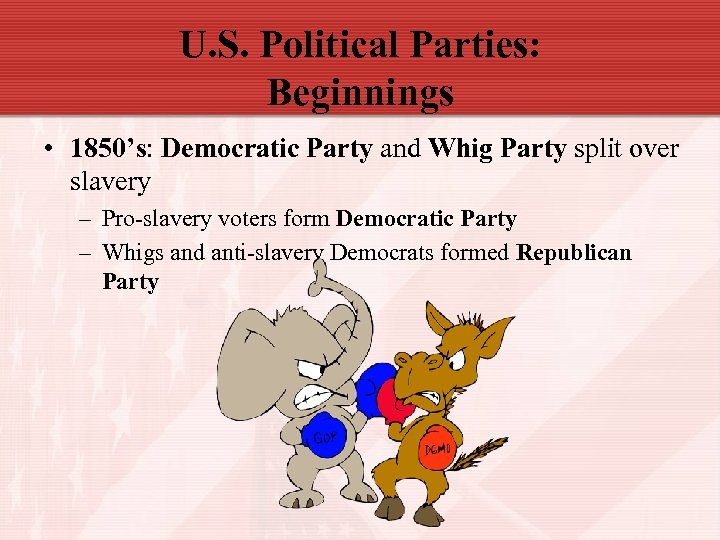 U. S. Political Parties: Beginnings • 1850’s: Democratic Party and Whig Party split over slavery – Pro-slavery voters form Democratic Party – Whigs and anti-slavery Democrats formed Republican Party
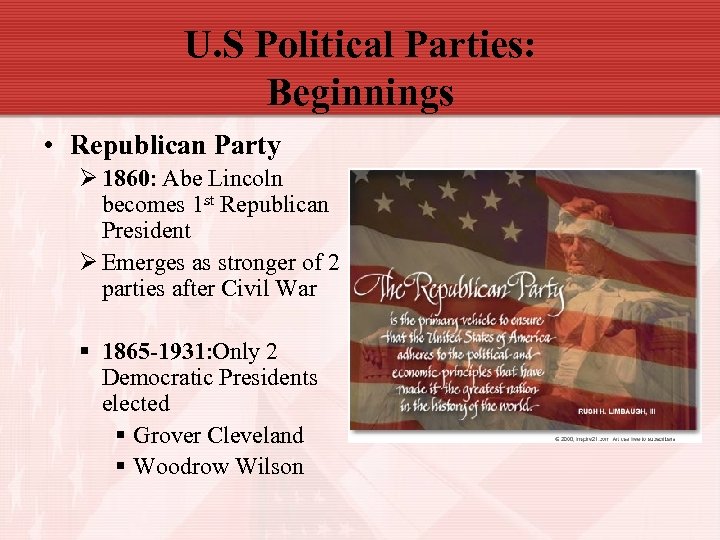 U. S Political Parties: Beginnings • Republican Party Ø 1860: Abe Lincoln becomes 1 st Republican President Ø Emerges as stronger of 2 parties after Civil War § 1865 -1931: Only 2 Democratic Presidents elected § Grover Cleveland § Woodrow Wilson
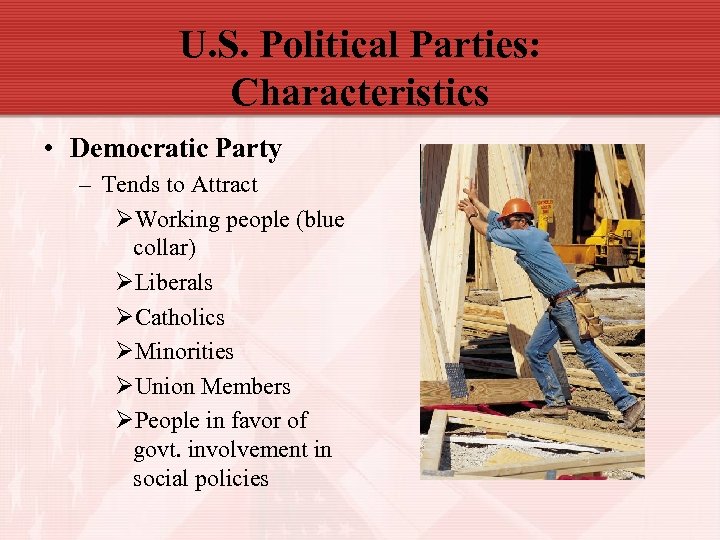 U. S. Political Parties: Characteristics • Democratic Party – Tends to Attract ØWorking people (blue collar) ØLiberals ØCatholics ØMinorities ØUnion Members ØPeople in favor of govt. involvement in social policies
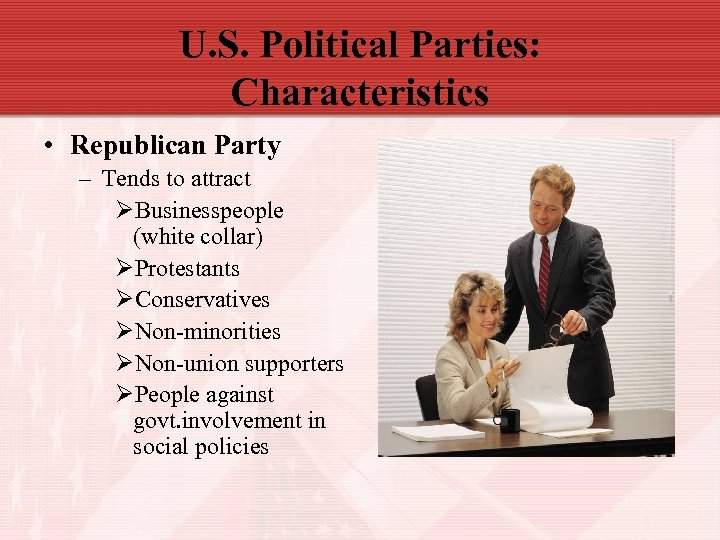 U. S. Political Parties: Characteristics • Republican Party – Tends to attract ØBusinesspeople (white collar) ØProtestants ØConservatives ØNon-minorities ØNon-union supporters ØPeople against govt. involvement in social policies
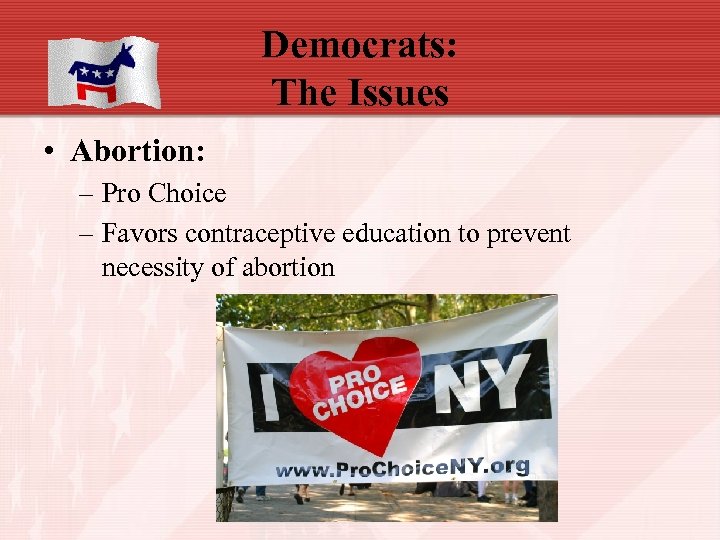 Democrats: The Issues • Abortion: – Pro Choice – Favors contraceptive education to prevent necessity of abortion
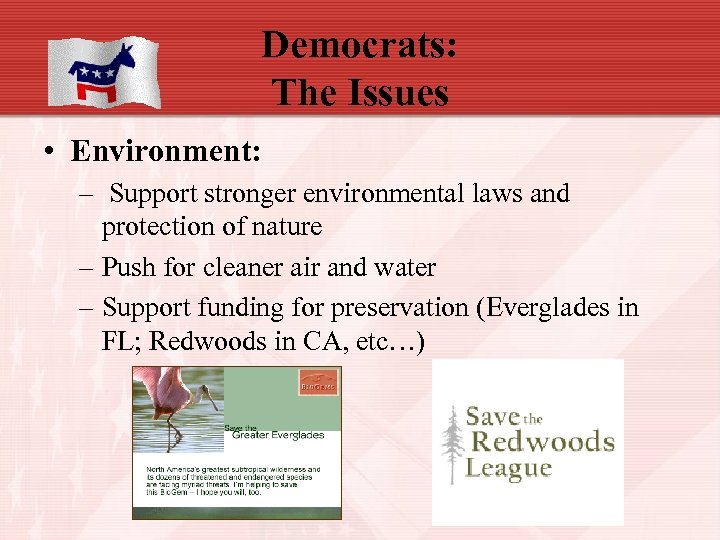 Democrats: The Issues • Environment: – Support stronger environmental laws and protection of nature – Push for cleaner air and water – Support funding for preservation (Everglades in FL; Redwoods in CA, etc…)
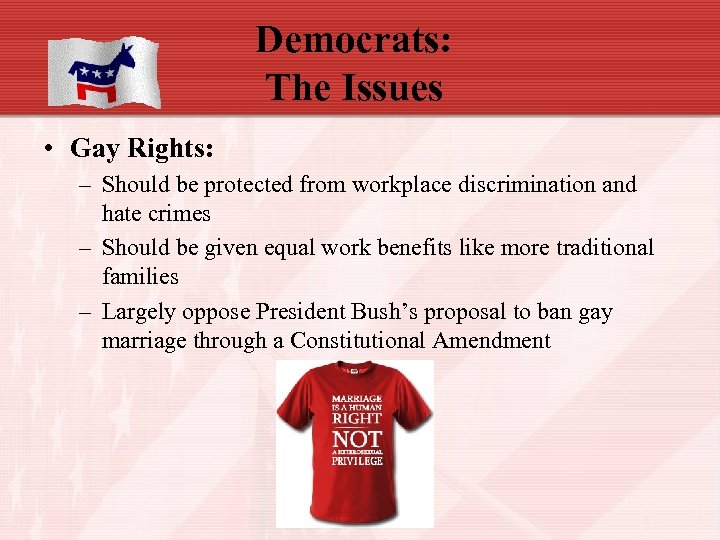 Democrats: The Issues • Gay Rights: – Should be protected from workplace discrimination and hate crimes – Should be given equal work benefits like more traditional families – Largely oppose President Bush’s proposal to ban gay marriage through a Constitutional Amendment
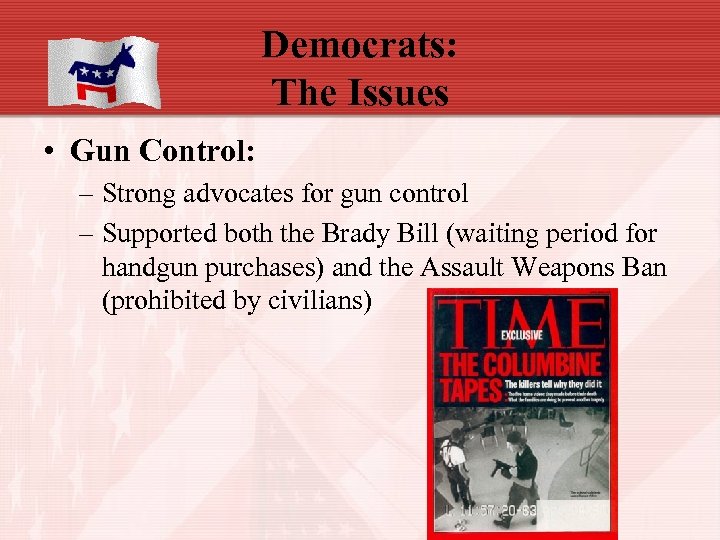 Democrats: The Issues • Gun Control: – Strong advocates for gun control – Supported both the Brady Bill (waiting period for handgun purchases) and the Assault Weapons Ban (prohibited by civilians)
 Democrats: The Issues • Health Care: – Push for more Heath Care funding (Medicare, Children’s Health Insurance Program) – In favor of program to ensure all Americans have quality, affordable health care. (100% government funded)
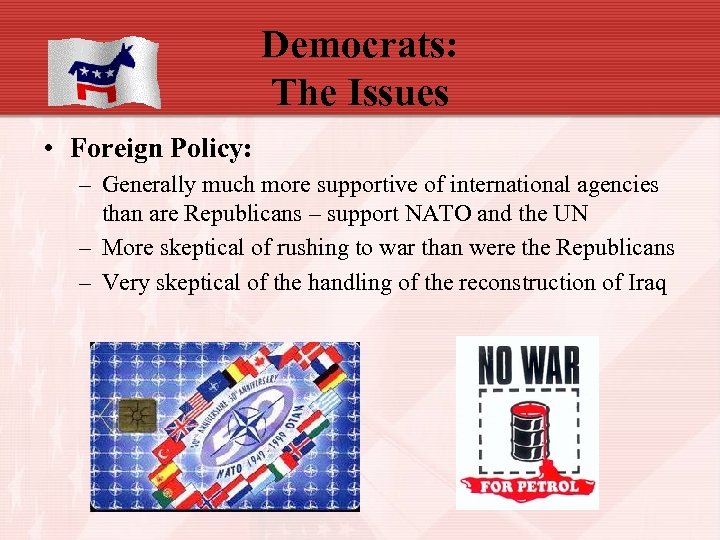 Democrats: The Issues • Foreign Policy: – Generally much more supportive of international agencies than are Republicans – support NATO and the UN – More skeptical of rushing to war than were the Republicans – Very skeptical of the handling of the reconstruction of Iraq
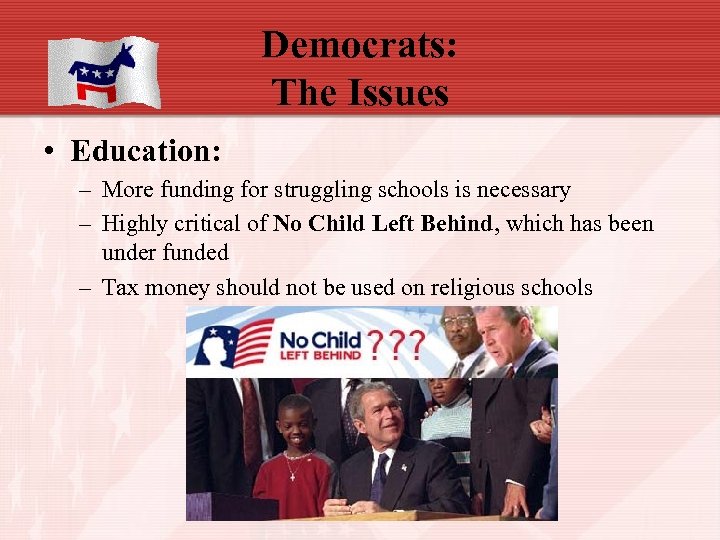 Democrats: The Issues • Education: – More funding for struggling schools is necessary – Highly critical of No Child Left Behind, which has been under funded – Tax money should not be used on religious schools
 Democrats: The Issues • Social Security: – Fundamental right of Americans – Best way to protect is to maintain federal government control – Largely oppose privatizing
 Democrats: The Issues • Welfare: – Support increased child care for welfare recipients so they are more able to work steady jobs – Support funding for job training so recipients will be more competitive in the job market
 Democrats: The Issues • Women’s Rights: – For over 20 years, have been pushing to ratify the Treaty of the Rights of Women that arose from the Convention on the Elimination of All Forms of Discrimination Against Women (would be a statement on America’s part saying that we support equal rights for all women)
 Democrats: The Issues • Worker’s Rights: – Favor labor unions and workers rights • Includes right to organize free from harassment and the right to challenge employers for disability and discrimination cases. – Support worker movements to increase the minimum wage and worker benefits
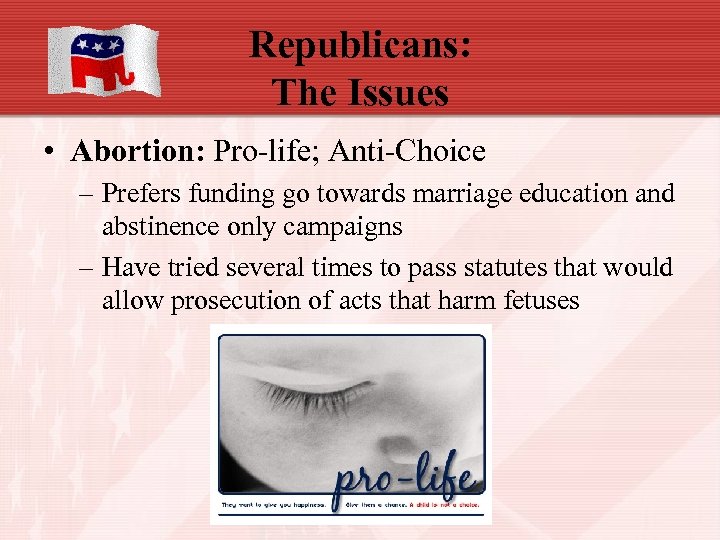 Republicans: The Issues • Abortion: Pro-life; Anti-Choice – Prefers funding go towards marriage education and abstinence only campaigns – Have tried several times to pass statutes that would allow prosecution of acts that harm fetuses
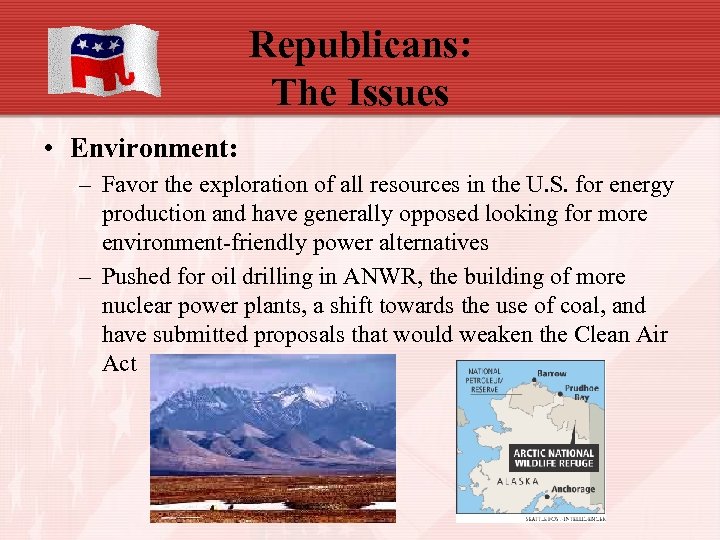 Republicans: The Issues • Environment: – Favor the exploration of all resources in the U. S. for energy production and have generally opposed looking for more environment-friendly power alternatives – Pushed for oil drilling in ANWR, the building of more nuclear power plants, a shift towards the use of coal, and have submitted proposals that would weaken the Clean Air Act
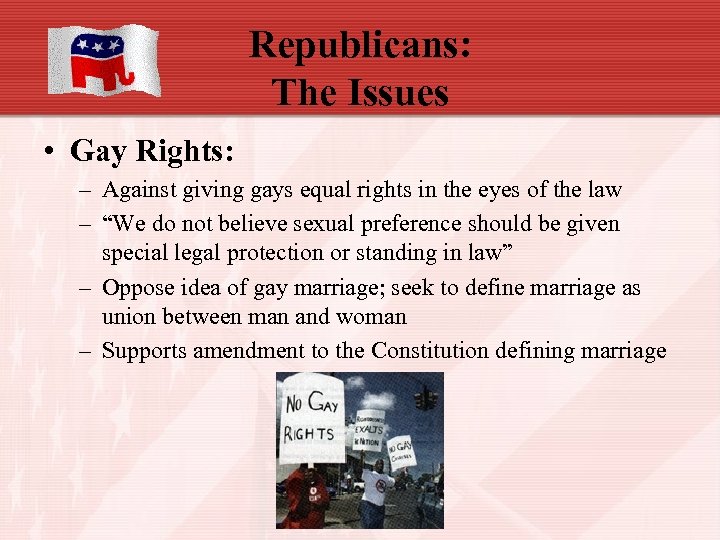 Republicans: The Issues • Gay Rights: – Against giving gays equal rights in the eyes of the law – “We do not believe sexual preference should be given special legal protection or standing in law” – Oppose idea of gay marriage; seek to define marriage as union between man and woman – Supports amendment to the Constitution defining marriage
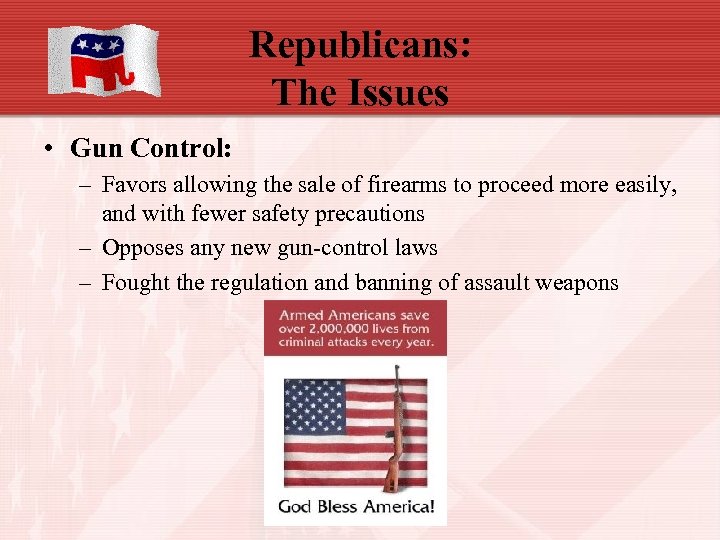 Republicans: The Issues • Gun Control: – Favors allowing the sale of firearms to proceed more easily, and with fewer safety precautions – Opposes any new gun-control laws – Fought the regulation and banning of assault weapons
 Republicans: The Issues • Health Care: – Believes health care should work within the free market system where competition will lower the costs of healthcare (no federal govt. involvement)
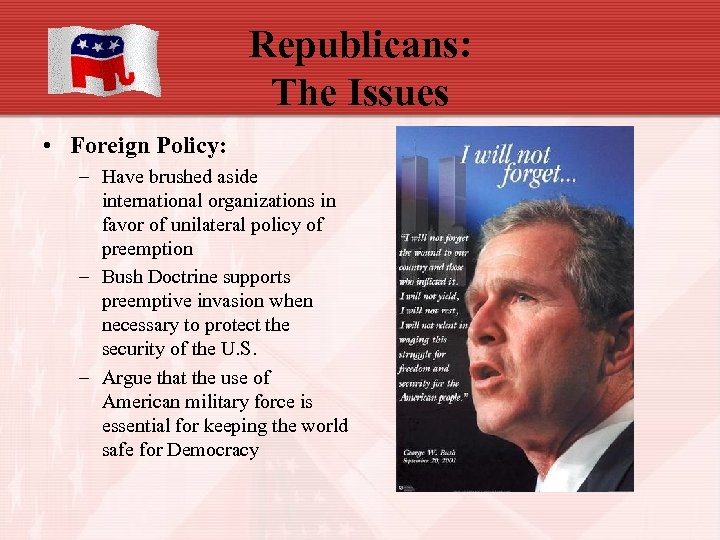 Republicans: The Issues • Foreign Policy: – Have brushed aside international organizations in favor of unilateral policy of preemption – Bush Doctrine supports preemptive invasion when necessary to protect the security of the U. S. – Argue that the use of American military force is essential for keeping the world safe for Democracy
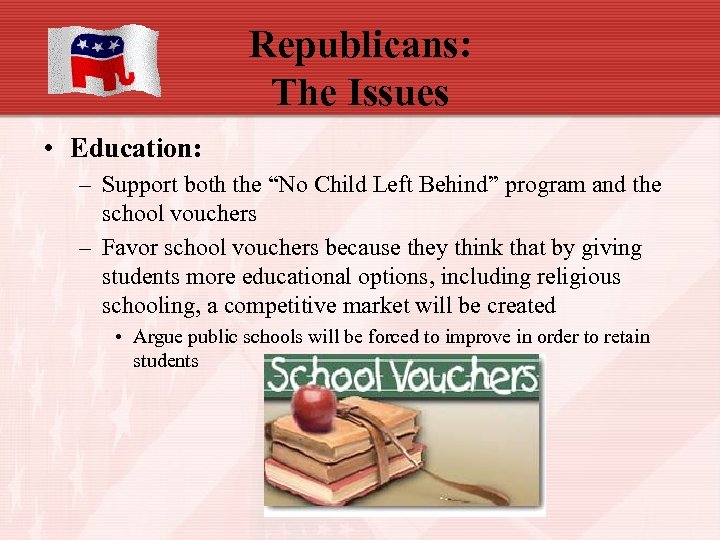 Republicans: The Issues • Education: – Support both the “No Child Left Behind” program and the school vouchers – Favor school vouchers because they think that by giving students more educational options, including religious schooling, a competitive market will be created • Argue public schools will be forced to improve in order to retain students
 Republicans: The Issues • Social Security: Favor privatization of social security – Citizens will be able to opt to place portions of money that would have gone into Social Security into other types of accounts. Accounts will give the opportunity to play the stock market in an attempt to increase returns. (takes away Federal responsibility)
 Republicans: The Issues • Welfare: – Favors increasing the mandatory work week for those receiving government assistance – Support cuts in child care and training funding while pushing $200 million for marriage education – Pushing for more funding for religious organizations and charities, which then will be responsible to caring for our nation’s poor
 Republicans: The Issues • Workers’ Rights: – Favor the rights of businesses to maximize profits – Favors workers and management working together to do what is in the best of all involved; no outside influences (against Labor Unions) – Believes Labor Unions restrict production of businesses; sees it as a regulation of business
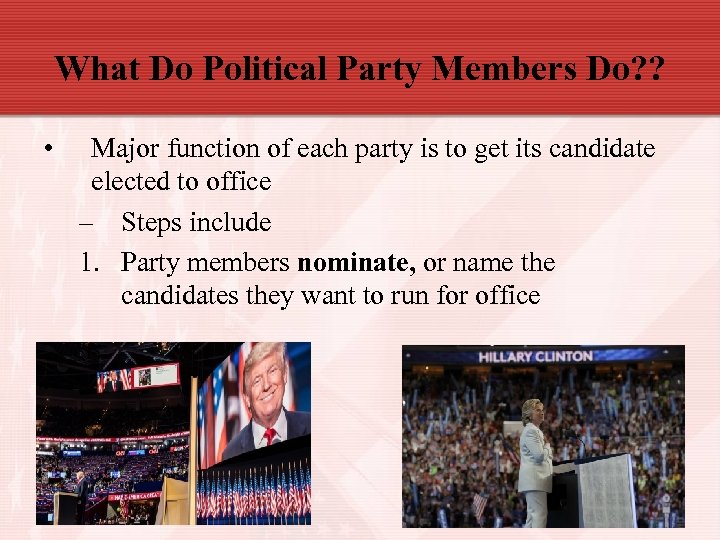 What Do Political Party Members Do? ? • Major function of each party is to get its candidate elected to office – Steps include 1. Party members nominate, or name the candidates they want to run for office
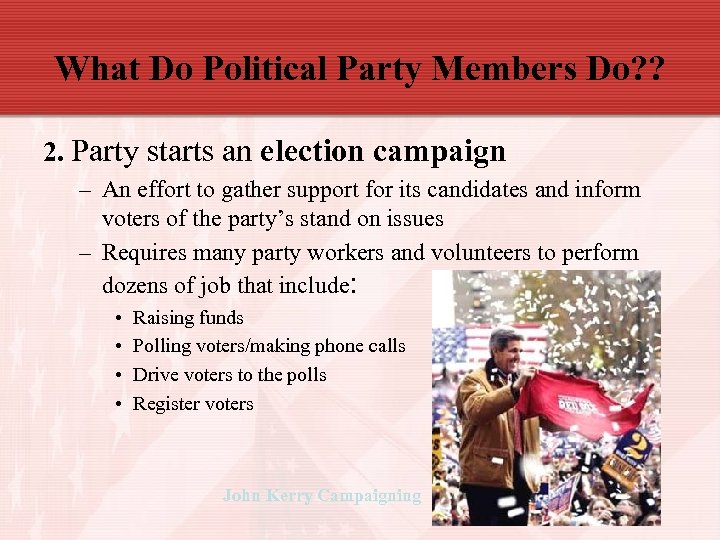 What Do Political Party Members Do? ? 2. Party starts an election campaign – An effort to gather support for its candidates and inform voters of the party’s stand on issues – Requires many party workers and volunteers to perform dozens of job that include: • • Raising funds Polling voters/making phone calls Drive voters to the polls Register voters John Kerry Campaigning
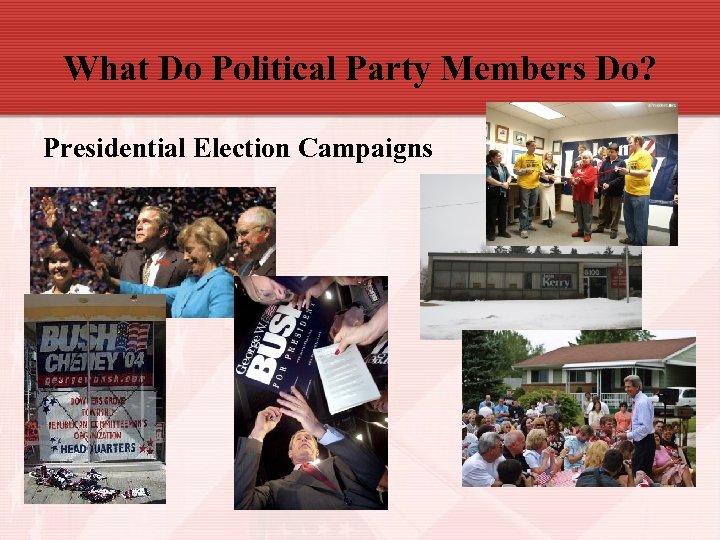 What Do Political Party Members Do? Presidential Election Campaigns
 What Do Political Party Members Do? 3. Once a party’s candidate is elected, the party helps the candidate organize and manage the govt. – Example: When a President is elected, 100’s of job vacancies in govt. must be filled. Jobs usually filled by party members who have contributed time, energy and money to the campaign. – Patronage: giving jobs or special favors to party workers
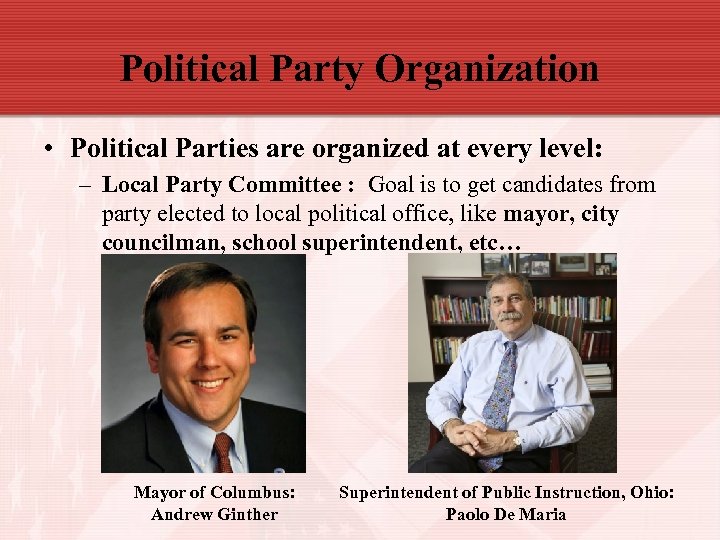 Political Party Organization • Political Parties are organized at every level: – Local Party Committee : Goal is to get candidates from party elected to local political office, like mayor, city councilman, school superintendent, etc… Mayor of Columbus: Andrew Ginther Superintendent of Public Instruction, Ohio: Paolo De Maria
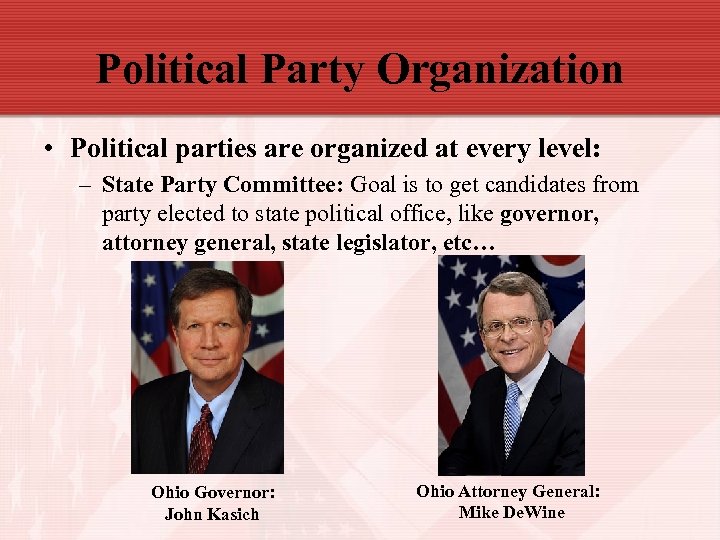 Political Party Organization • Political parties are organized at every level: – State Party Committee: Goal is to get candidates from party elected to state political office, like governor, attorney general, state legislator, etc… Ohio Governor: John Kasich Ohio Attorney General: Mike De. Wine
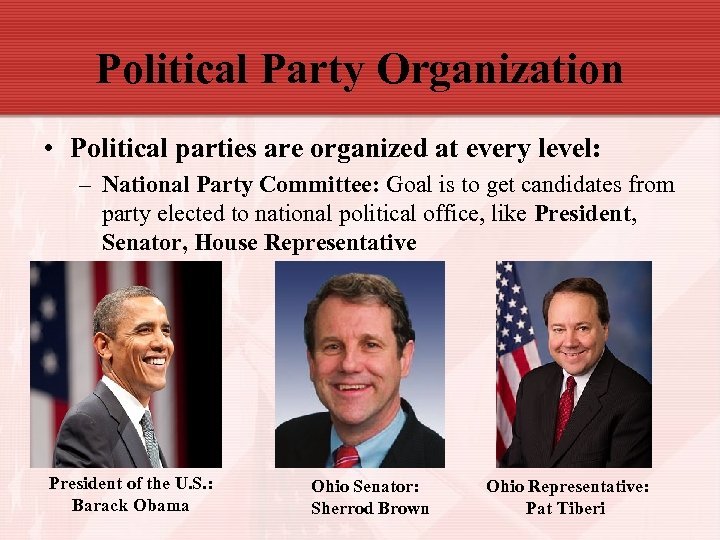 Political Party Organization • Political parties are organized at every level: – National Party Committee: Goal is to get candidates from party elected to national political office, like President, Senator, House Representative President of the U. S. : Barack Obama Ohio Senator: Sherrod Brown Ohio Representative: Pat Tiberi
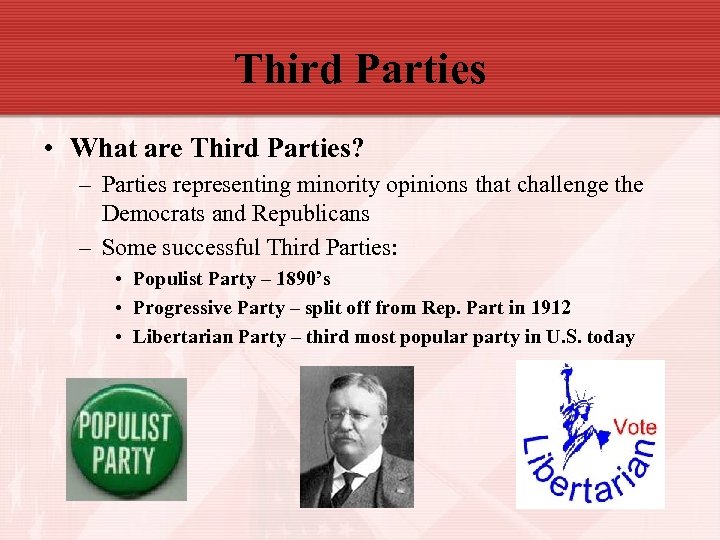 Third Parties • What are Third Parties? – Parties representing minority opinions that challenge the Democrats and Republicans – Some successful Third Parties: • Populist Party – 1890’s • Progressive Party – split off from Rep. Part in 1912 • Libertarian Party – third most popular party in U. S. today
 Third Parties • 3 Kinds of Third Parties – 1. Parties Tied to a Single Issue: ØExamples: v Prohibition Party: formed in 1872 to support banning of alcohol in the U. S. v U. S. Marijuana Party: formed to support the legalization of marijuana in the U. S. v Green Party: formed to protect the environment
 Third Parties • 3 Kinds of Third Parties – 2. Parties Tied to a Political Belief ØExamples: v Libertarian Party v The Third Party v Socialist Parties
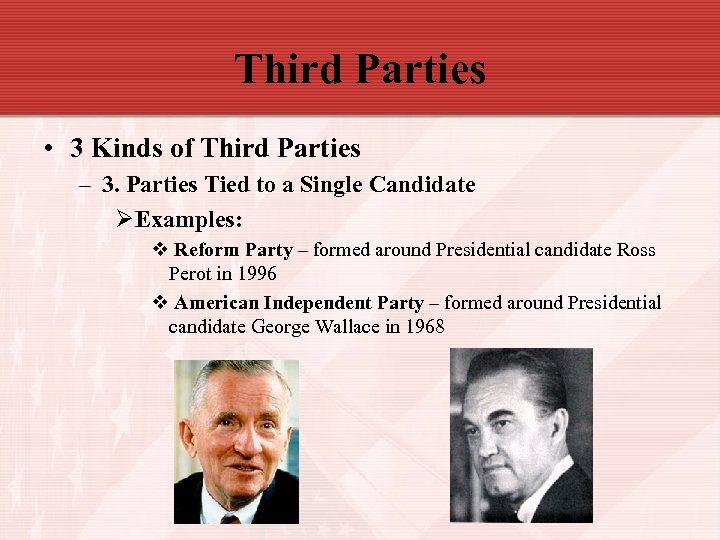 Third Parties • 3 Kinds of Third Parties – 3. Parties Tied to a Single Candidate ØExamples: v Reform Party – formed around Presidential candidate Ross Perot in 1996 v American Independent Party – formed around Presidential candidate George Wallace in 1968
 Third Parties • • • • America First Party American Heritage Party American Independent Party American Nazi Party Communist Party USA Constitution Party Family Values Party Grassroots Party Green Party Independence Party Labor Party Libertarian Party Light Party Natural Law Party The Third Party Worker’s World Party • • • • Peace and Freedom Party Prohibition Party Reform party The Revolution Socialist Party, USA Southern Independence Party U. S. Pacifist Party Veterans Party of America We the People Party Knights Party Libertarian National Socialist Green Party Pansexual Peace Party Pot Party Constitutional Action Party American Falangist Party U. S. Marijuana Party