


 Скачать презентацию U S History-Honors Unit 4 Division and Uneasy
aa48885b9a734553e74eb0eada01695d.ppt
- Количество слайдов: 85
 U. S. History-Honors Unit 4: Division and Uneasy Reunion (1846 -1877) Chapters 10 -12
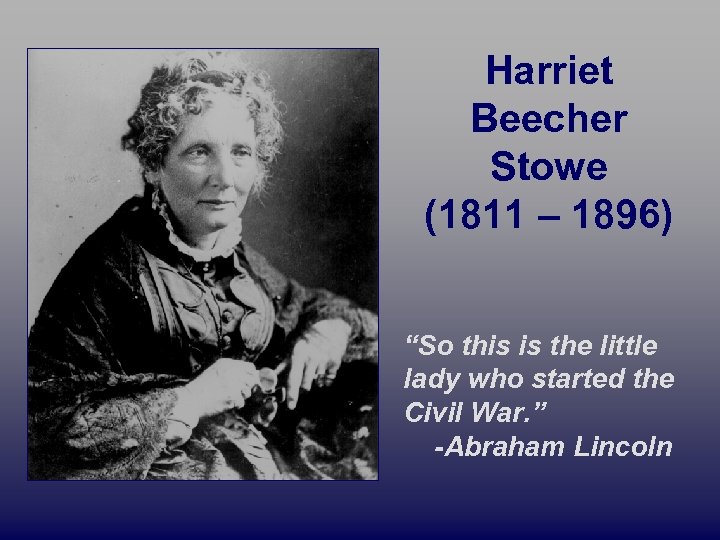 Harriet Beecher Stowe (1811 – 1896) “So this is the little lady who started the Civil War. ” -Abraham Lincoln
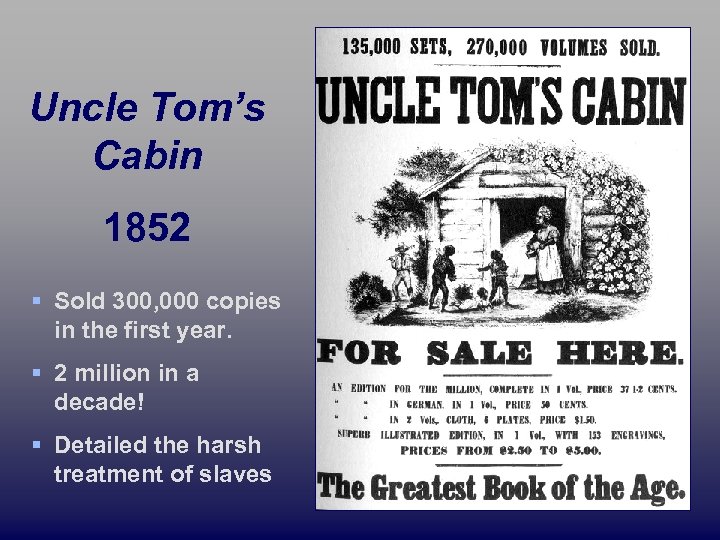 Uncle Tom’s Cabin 1852 § Sold 300, 000 copies in the first year. § 2 million in a decade! § Detailed the harsh treatment of slaves
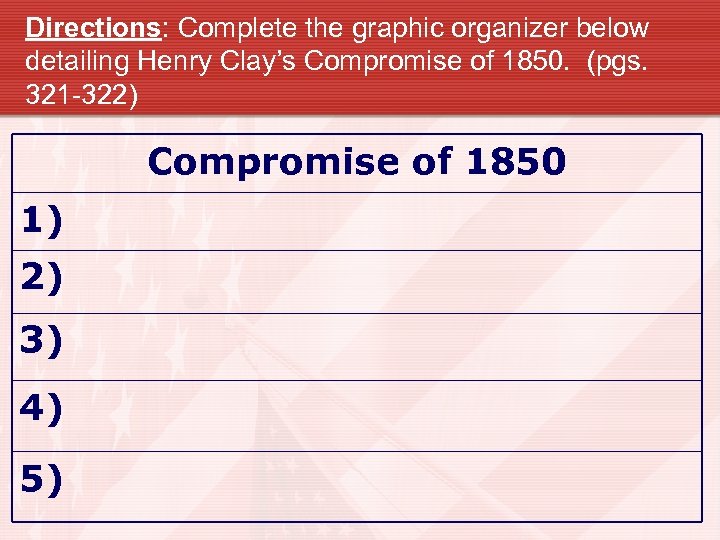 Directions: Complete the graphic organizer below detailing Henry Clay’s Compromise of 1850. (pgs. 321 -322) Compromise of 1850 1) 2) 3) 4) 5)
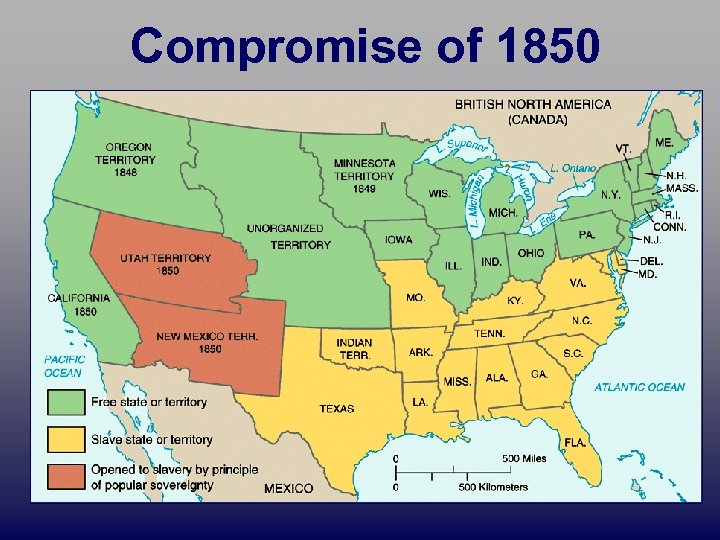 Compromise of 1850
 New Political Parties • Whigs Ø 1852: last election where the Whigs are a powerhouse Ø Many northern supporters abandon the party due to their willingness to compromise on slavery issues • Free Soil Party Ø Created in 1848 Ø Sought to end slavery in new territories.
![The “Know-Nothings” [The American Party] v Nativists. v Anti-Catholics. v Antiimmigrants. 1849 Secret Order](https://present5.com/presentation/aa48885b9a734553e74eb0eada01695d/image-7.jpg "The “Know-Nothings” [The American Party] v Nativists. v Anti-Catholics. v Antiimmigrants. 1849 Secret Order") The “Know-Nothings” [The American Party] v Nativists. v Anti-Catholics. v Antiimmigrants. 1849 Secret Order of the Star-Spangled Banner created in NYC.
The “Know-Nothings” [The American Party] v Nativists. v Anti-Catholics. v Antiimmigrants. 1849 Secret Order of the Star-Spangled Banner created in NYC.
 Birth of the Republican Party, 1854 Ø Northern Whigs. Ø Northern Democrats. Ø Free-Soilers. Ø Know-Nothings. Ø Other miscellaneous opponents of the Kansas. Nebraska Act.
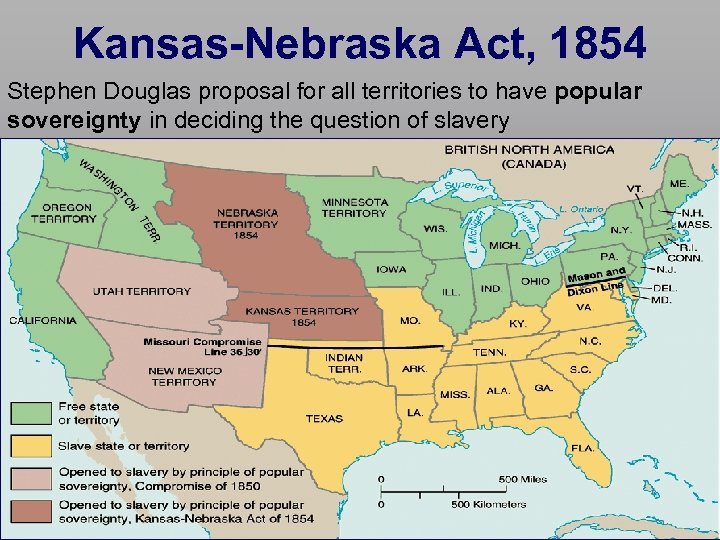 Kansas-Nebraska Act, 1854 Stephen Douglas proposal for all territories to have popular sovereignty in deciding the question of slavery
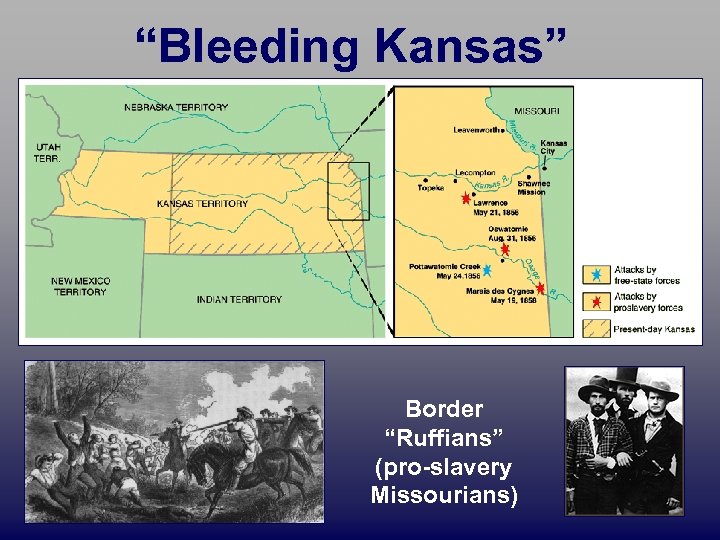 “Bleeding Kansas” Border “Ruffians” (pro-slavery Missourians)
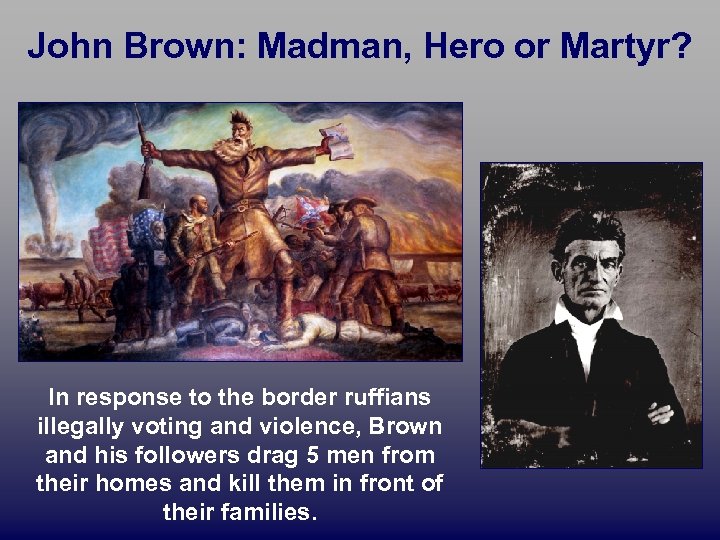 John Brown: Madman, Hero or Martyr? In response to the border ruffians illegally voting and violence, Brown and his followers drag 5 men from their homes and kill them in front of their families.
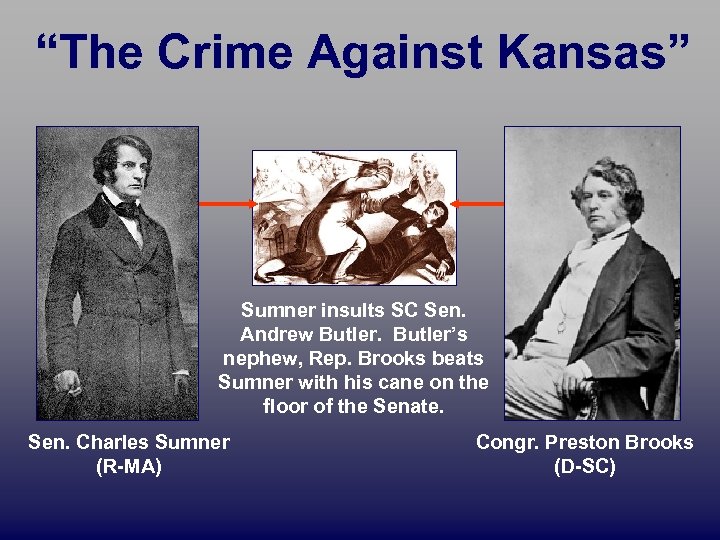 “The Crime Against Kansas” Sumner insults SC Sen. Andrew Butler’s nephew, Rep. Brooks beats Sumner with his cane on the floor of the Senate. Sen. Charles Sumner (R-MA) Congr. Preston Brooks (D-SC)
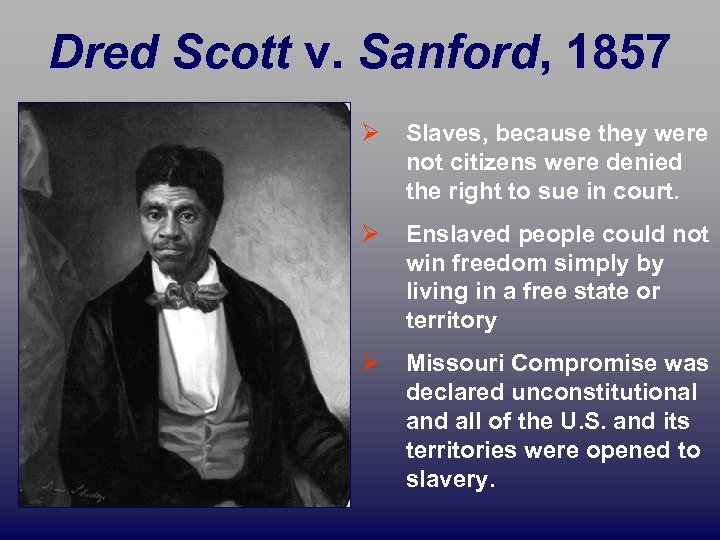 Dred Scott v. Sanford, 1857 Ø Slaves, because they were not citizens were denied the right to sue in court. Ø Enslaved people could not win freedom simply by living in a free state or territory Ø Missouri Compromise was declared unconstitutional and all of the U. S. and its territories were opened to slavery.
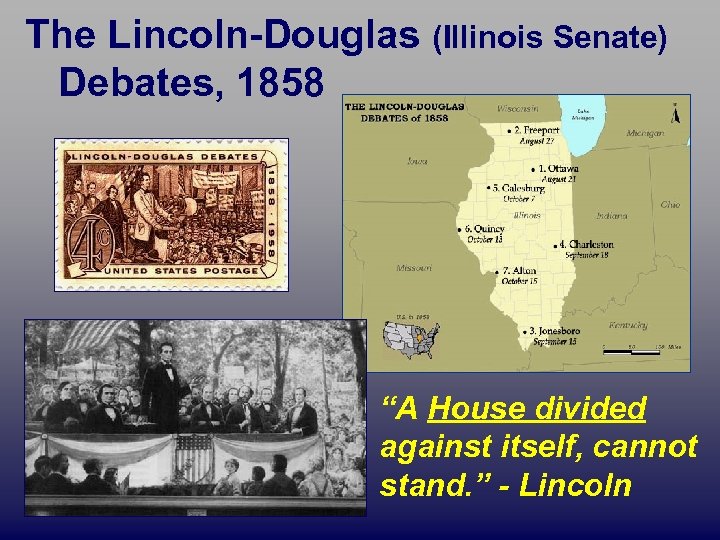 The Lincoln-Douglas (Illinois Senate) Debates, 1858 “A House divided against itself, cannot stand. ” - Lincoln
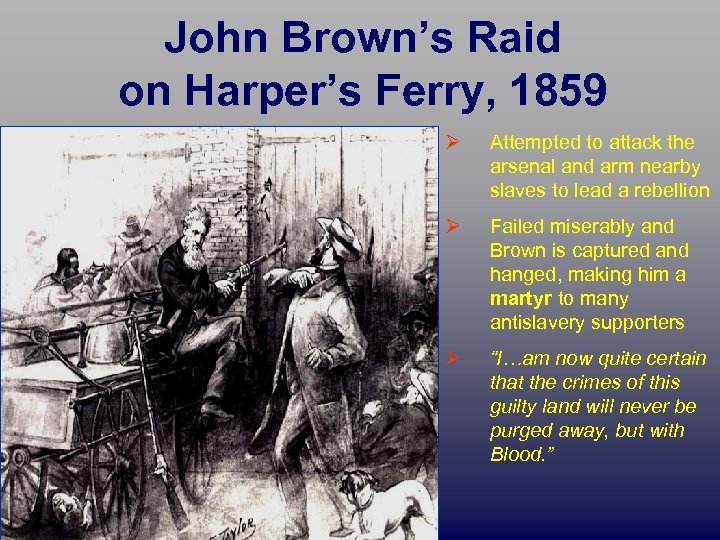 John Brown’s Raid on Harper’s Ferry, 1859 Ø Attempted to attack the arsenal and arm nearby slaves to lead a rebellion Ø Failed miserably and Brown is captured and hanged, making him a martyr to many antislavery supporters Ø “I…am now quite certain that the crimes of this guilty land will never be purged away, but with Blood. ”
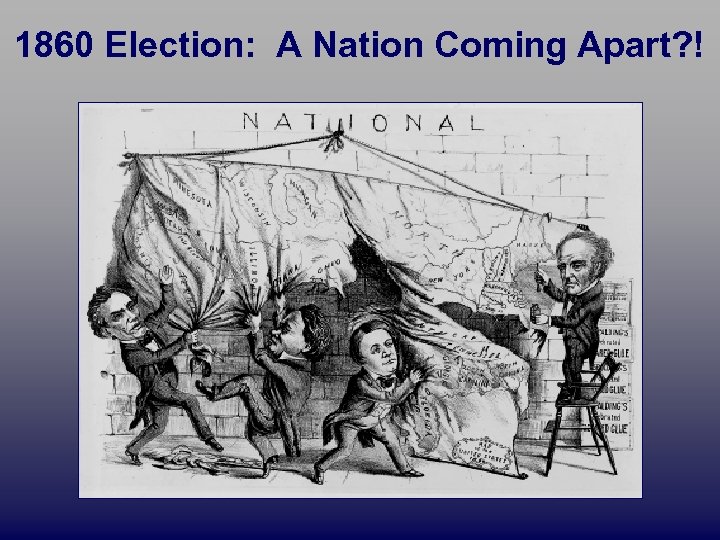 1860 Election: A Nation Coming Apart? !
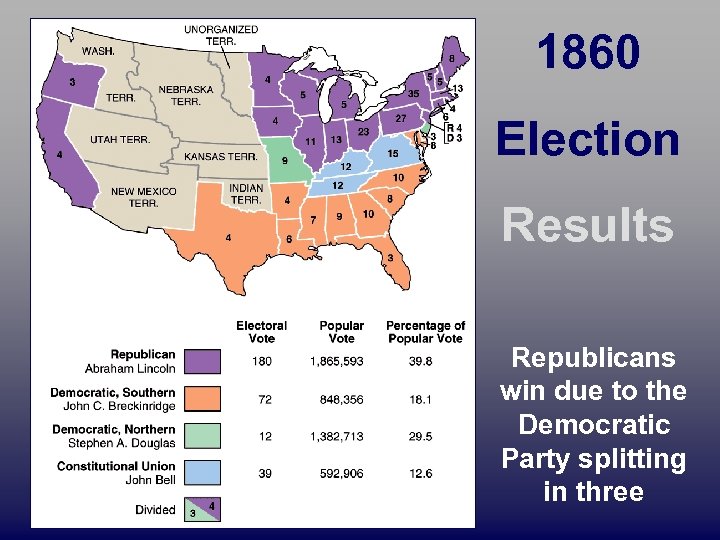 1860 Election Results Republicans win due to the Democratic Party splitting in three
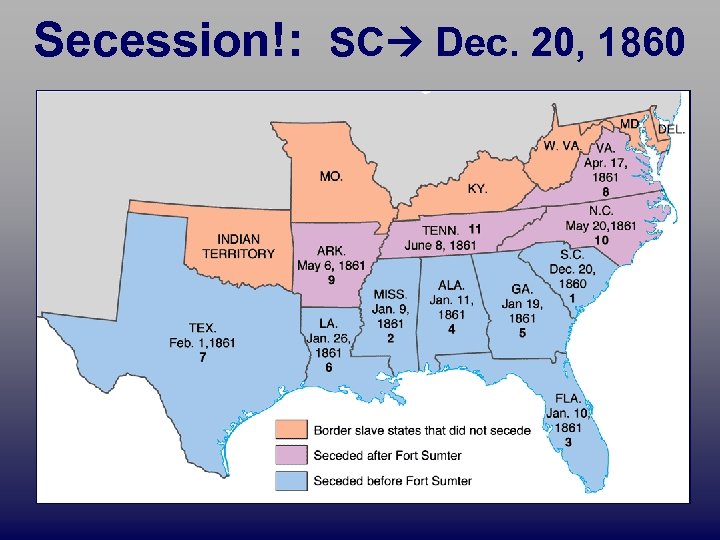 Secession!: SC Dec. 20, 1860
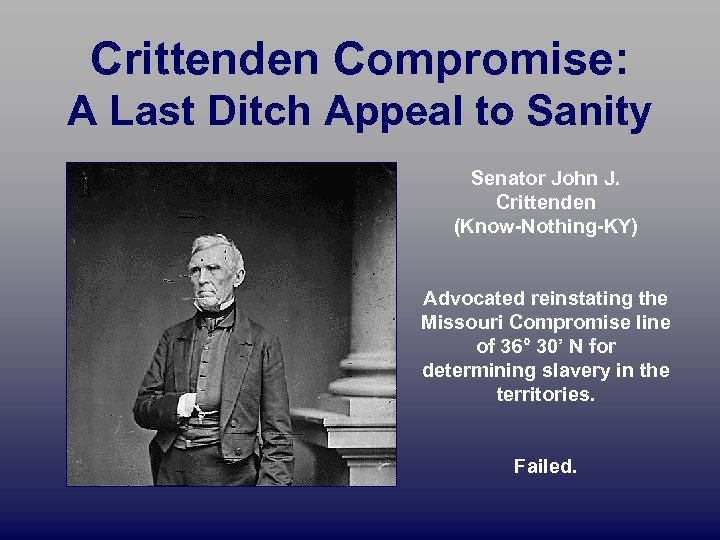 Crittenden Compromise: A Last Ditch Appeal to Sanity Senator John J. Crittenden (Know-Nothing-KY) Advocated reinstating the Missouri Compromise line of 36° 30’ N for determining slavery in the territories. Failed.
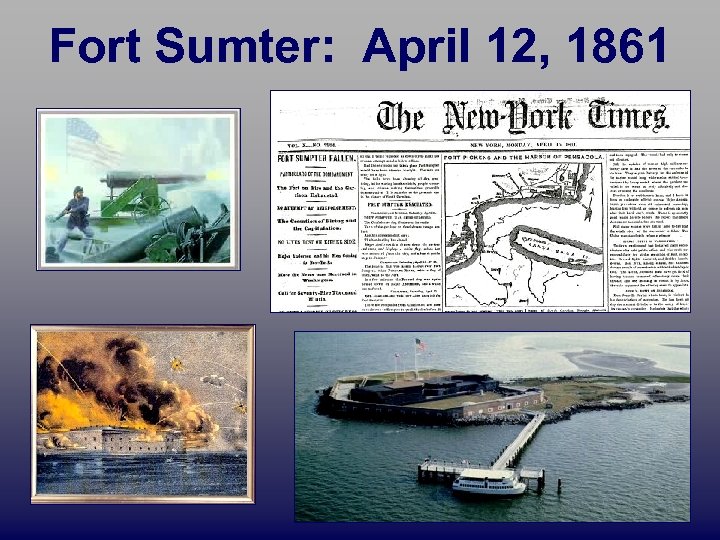 Fort Sumter: April 12, 1861
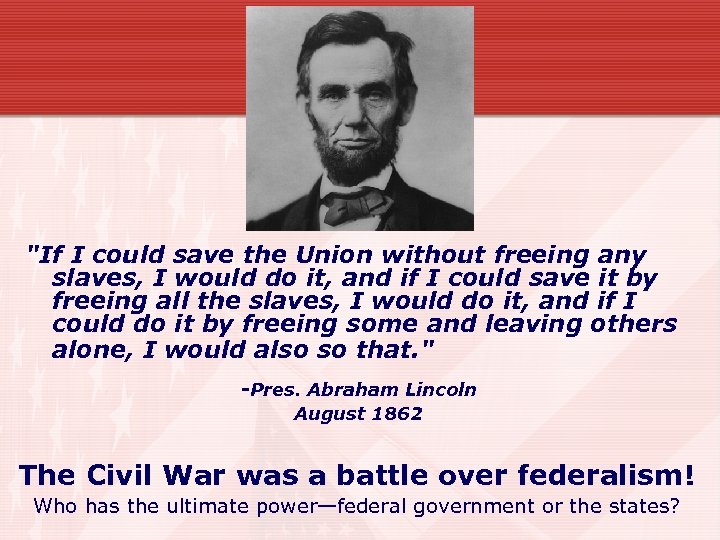 "If I could save the Union without freeing any slaves, I would do it, and if I could save it by freeing all the slaves, I would do it, and if I could do it by freeing some and leaving others alone, I would also so that. " -Pres. Abraham Lincoln August 1862 The Civil War was a battle over federalism! Who has the ultimate power—federal government or the states?
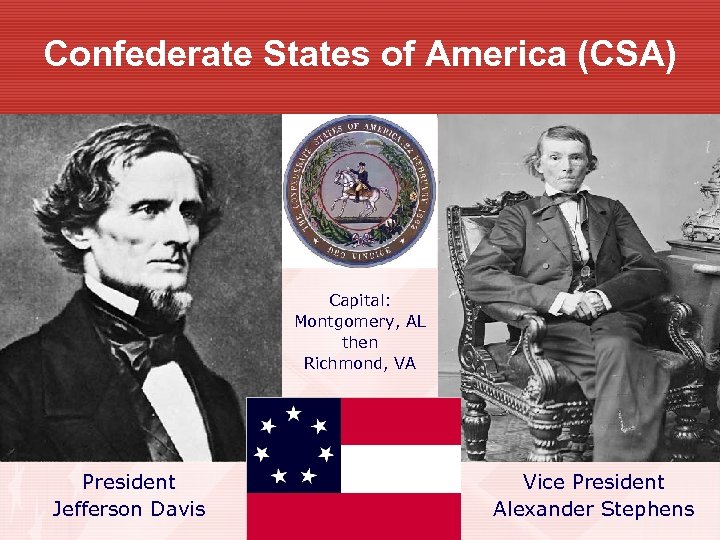 Confederate States of America (CSA) Capital: Montgomery, AL then Richmond, VA President Jefferson Davis Vice President Alexander Stephens
 “Dixie” O, I wish I was in the land of cotton Old times there are not forgotten Look away! Dixie Land. In Dixie Land where I was born in Early on one frosty mornin' Look away! Dixie Land. Chorus: O, I wish I was in Dixie! Hooray! In Dixie Land I'll take my stand To live and die in Dixie Away, away, Away down south in Dixie!
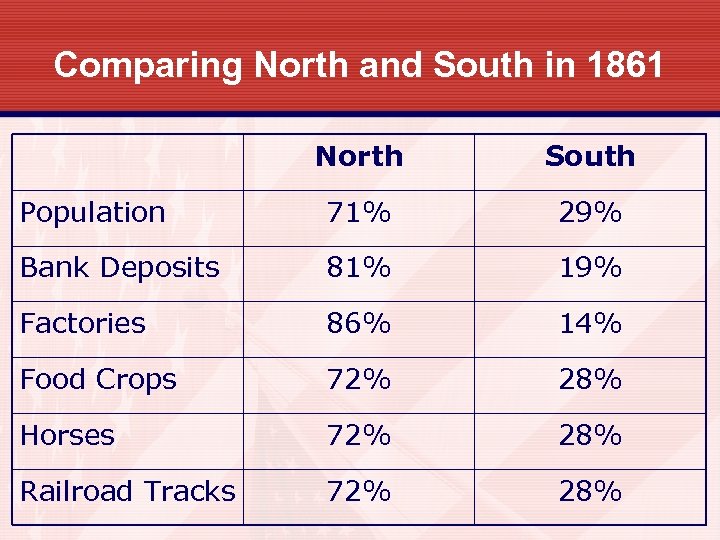 Comparing North and South in 1861 North South Population 71% 29% Bank Deposits 81% 19% Factories 86% 14% Food Crops 72% 28% Horses 72% 28% Railroad Tracks 72% 28%
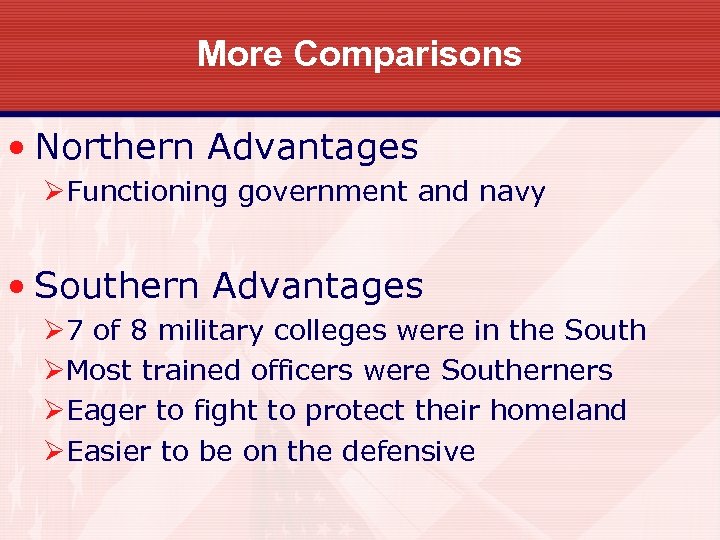 More Comparisons • Northern Advantages ØFunctioning government and navy • Southern Advantages Ø 7 of 8 military colleges were in the South ØMost trained officers were Southerners ØEager to fight to protect their homeland ØEasier to be on the defensive
 Early Military Strategy • North ØNaval blockade of the South cutting off trade with Europe • South ØWar of attrition ØVoluntarily stopped exporting cotton trying to get foreign nations to recognize their independence, thus reopening trade.
 “Battle Hymn of the Republic” Julia Ward Howe poem first appeared in The Atlantic Monthly in February 1862. She wrote it after visiting a Union army camp. It became the Union’s most famous song. Mine eyes have seen the glory of the coming of the Lord; He is trampling out the vintage where the grapes of wrath are stored; He hath loosed the fateful lightning of His terrible swift sword; His truth is marching on. Glory! Hallelujah! Glory! Hallelujah! His truth is marching on. He has sounded forth the trumpet that shall never call retreat; He is sifting out the hearts of men before His judgment seat; Oh, be swift, my soul, to answer Him! be jubilant, my feet; Our God is marching on. Glory! Hallelujah! Glory! Hallelujah! Our God is marching on. I have seen Him in the watch fires of a hundred circling camps They have builded Him an altar in the evening dews and damps; I can read His righteous sentence by the dim and flaring lamps; His day is marching on. Glory! Hallelujah! Glory! Hallelujah! His day is marching on. In the beauty of the lilies Christ was born across the sea, With a glory in His bosom that transfigures you and me: As He died to make men holy, let us live to make men free; [originally …let us die to make men free] While God is marching on. Glory! Hallelujah! Glory! Hallelujah! While God is marching on. I have read a fiery Gospel writ in burnished rows of steel; “As ye deal with My contemners, so with you My grace shall deal”; Let the Hero, born of woman, crush the serpent with His heel, Since God is marching on. Glory! Hallelujah! Glory! Hallelujah! Since God is marching on. He is coming like the glory of the morning on the wave, He is wisdom to the mighty, He is honor to the brave; So the world shall be His footstool, and the soul of wrong His slave, Our God is marching on. Glory! Hallelujah! Glory! Hallelujah! Our God is marching on.
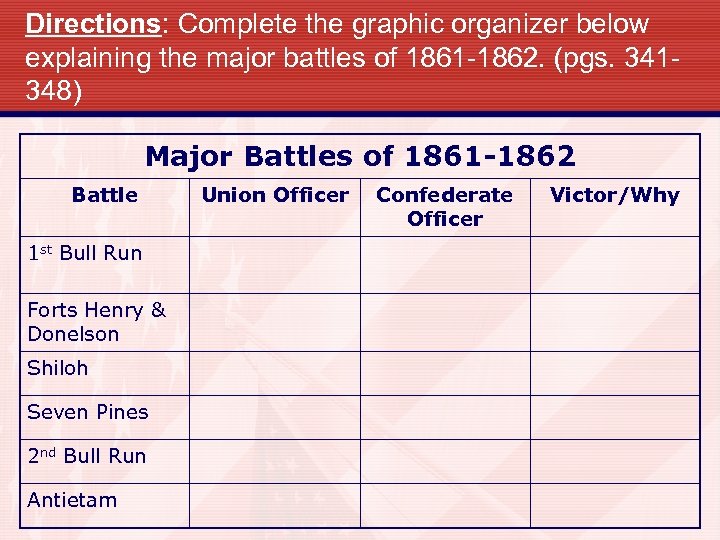 Directions: Complete the graphic organizer below explaining the major battles of 1861 -1862. (pgs. 341348) Major Battles of 1861 -1862 Battle 1 st Bull Run Forts Henry & Donelson Shiloh Seven Pines 2 nd Bull Run Antietam Union Officer Confederate Officer Victor/Why
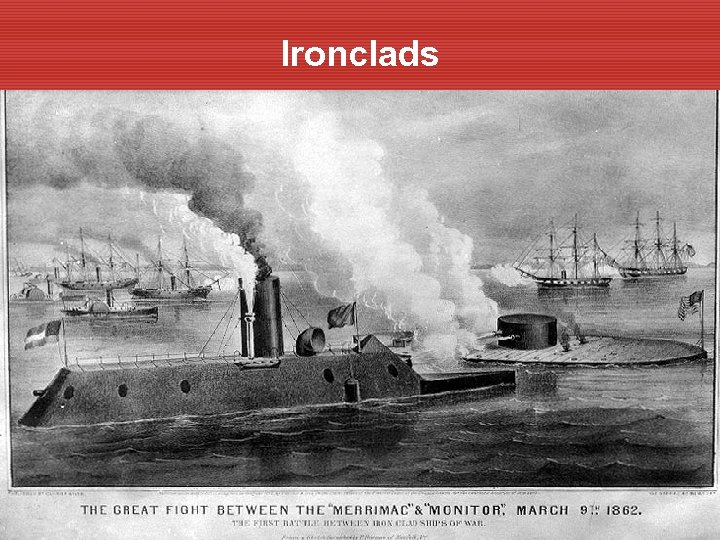 Ironclads
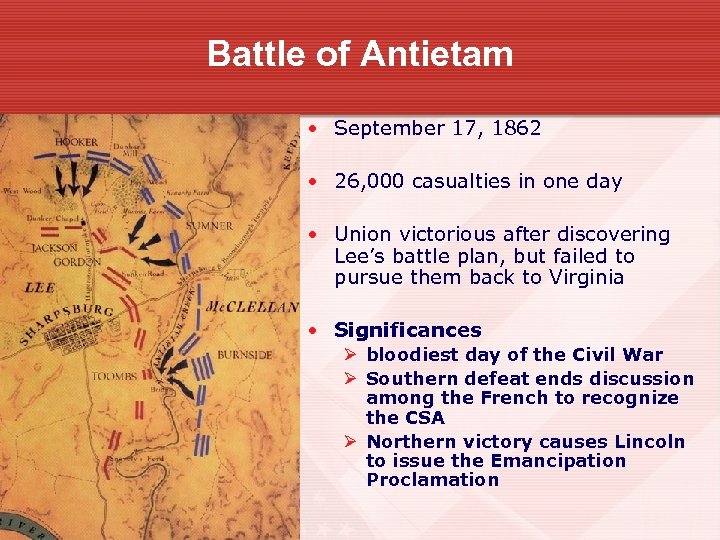 Battle of Antietam • September 17, 1862 • 26, 000 casualties in one day • Union victorious after discovering Lee’s battle plan, but failed to pursue them back to Virginia • Significances Ø bloodiest day of the Civil War Ø Southern defeat ends discussion among the French to recognize the CSA Ø Northern victory causes Lincoln to issue the Emancipation Proclamation
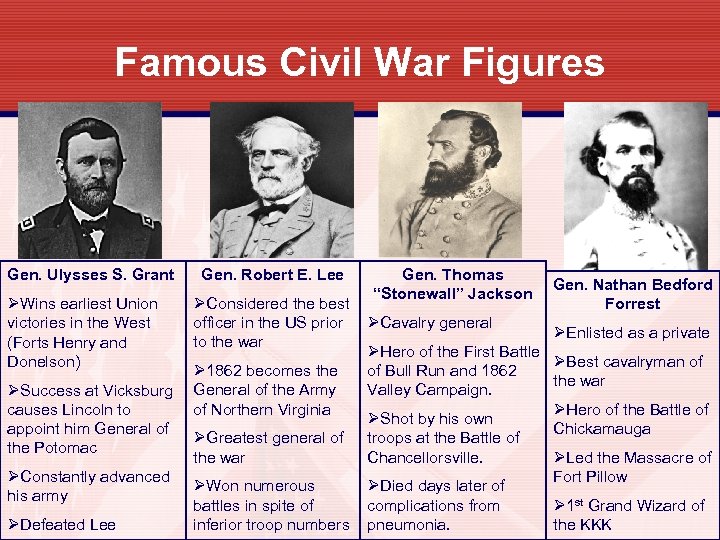 Famous Civil War Figures Gen. Ulysses S. Grant ØWins earliest Union victories in the West (Forts Henry and Donelson) ØSuccess at Vicksburg causes Lincoln to appoint him General of the Potomac ØConstantly advanced his army ØDefeated Lee Gen. Robert E. Lee ØConsidered the best officer in the US prior to the war Ø 1862 becomes the General of the Army of Northern Virginia ØGreatest general of the war ØWon numerous battles in spite of inferior troop numbers Gen. Thomas “Stonewall” Jackson ØCavalry general Gen. Nathan Bedford Forrest ØEnlisted as a private ØHero of the First Battle ØBest cavalryman of of Bull Run and 1862 the war Valley Campaign. ØHero of the Battle of ØShot by his own Chickamauga troops at the Battle of Chancellorsville. ØLed the Massacre of Fort Pillow ØDied days later of complications from Ø 1 st Grand Wizard of pneumonia. the KKK
 Politics in the South • CSA constitution reiterated the legality of slavery and states’ rights • Violations of states’ rights Ø April 1862 – passed the first conscription (draft) act in US history Ø Seized control of railroads Ø Planned economy Ø Farmers were required to contribute 1/10 th of products Ø Imposed personal income tax • Sought recognition from Europe
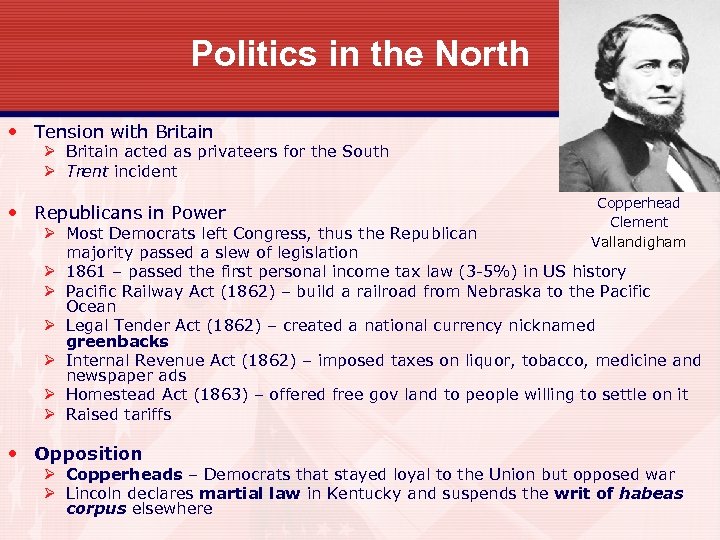 Politics in the North • Tension with Britain Ø Britain acted as privateers for the South Ø Trent incident • Republicans in Power Copperhead Clement Vallandigham Ø Most Democrats left Congress, thus the Republican majority passed a slew of legislation Ø 1861 – passed the first personal income tax law (3 -5%) in US history Ø Pacific Railway Act (1862) – build a railroad from Nebraska to the Pacific Ocean Ø Legal Tender Act (1862) – created a national currency nicknamed greenbacks Ø Internal Revenue Act (1862) – imposed taxes on liquor, tobacco, medicine and newspaper ads Ø Homestead Act (1863) – offered free gov land to people willing to settle on it Ø Raised tariffs • Opposition Ø Copperheads – Democrats that stayed loyal to the Union but opposed war Ø Lincoln declares martial law in Kentucky and suspends the writ of habeas corpus elsewhere
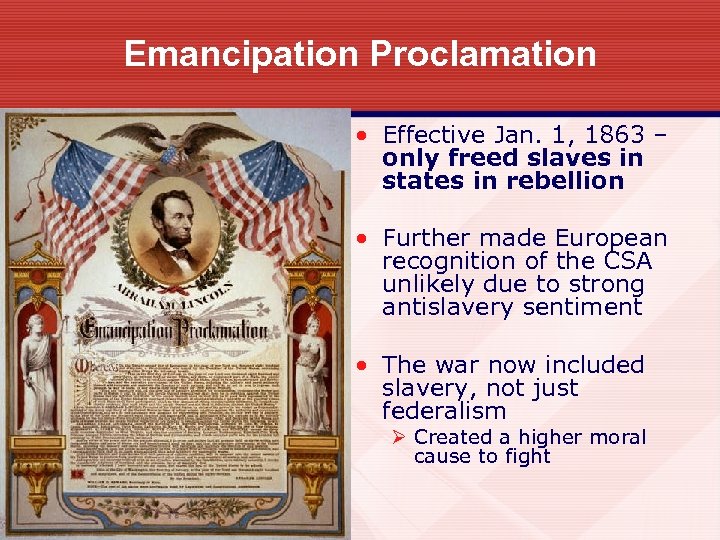 Emancipation Proclamation • Effective Jan. 1, 1863 – only freed slaves in states in rebellion • Further made European recognition of the CSA unlikely due to strong antislavery sentiment • The war now included slavery, not just federalism Ø Created a higher moral cause to fight
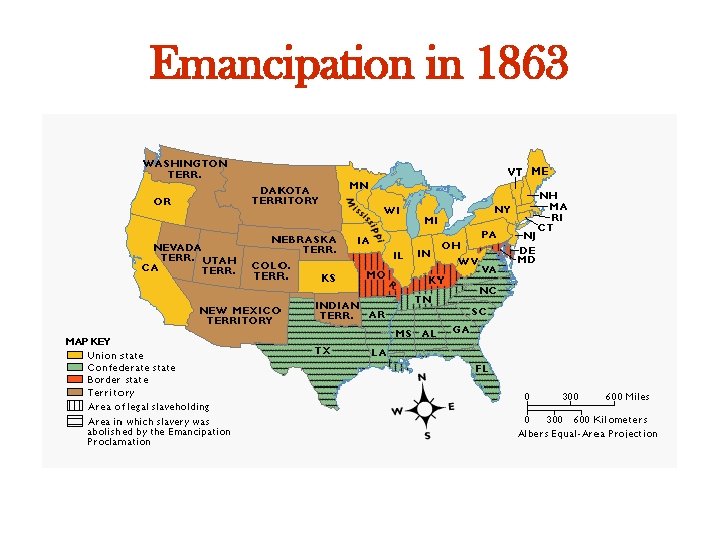 Emancipation in 1863
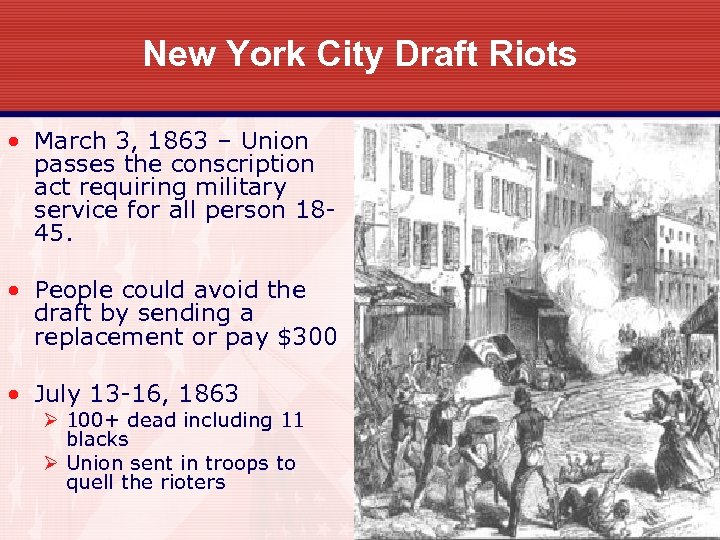 New York City Draft Riots • March 3, 1863 – Union passes the conscription act requiring military service for all person 1845. • People could avoid the draft by sending a replacement or pay $300 • July 13 -16, 1863 Ø 100+ dead including 11 blacks Ø Union sent in troops to quell the rioters
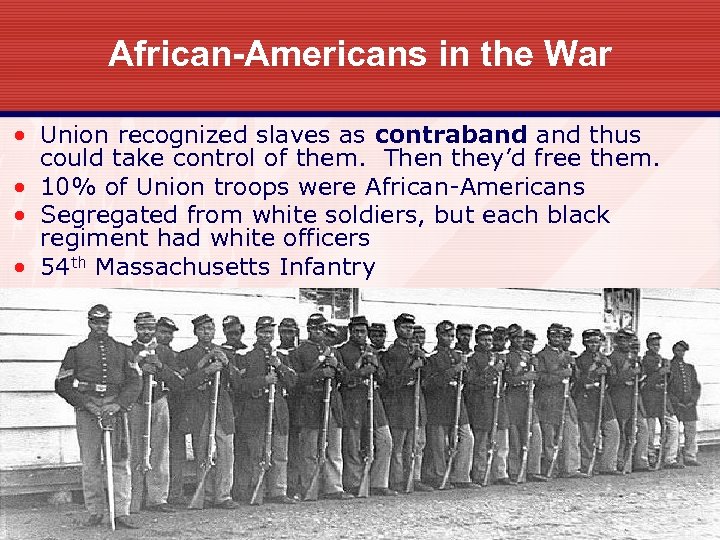 African-Americans in the War • Union recognized slaves as contraband thus could take control of them. Then they’d free them. • 10% of Union troops were African-Americans • Segregated from white soldiers, but each black regiment had white officers • 54 th Massachusetts Infantry
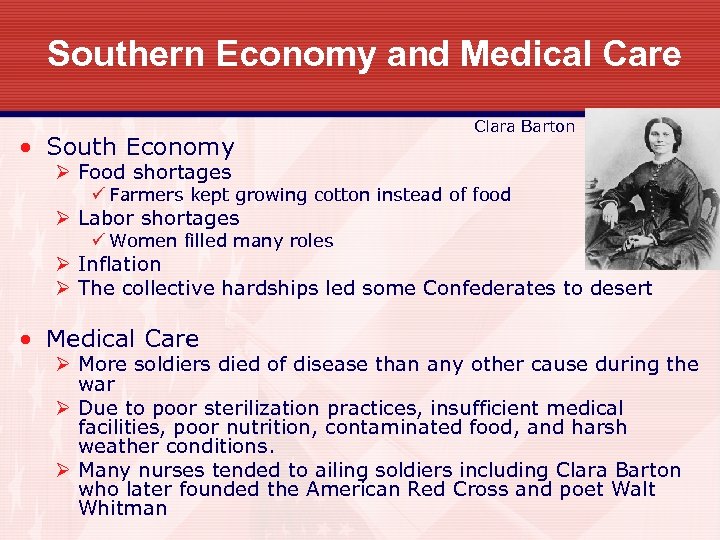 Southern Economy and Medical Care • South Economy Clara Barton Ø Food shortages ü Farmers kept growing cotton instead of food Ø Labor shortages ü Women filled many roles Ø Inflation Ø The collective hardships led some Confederates to desert • Medical Care Ø More soldiers died of disease than any other cause during the war Ø Due to poor sterilization practices, insufficient medical facilities, poor nutrition, contaminated food, and harsh weather conditions. Ø Many nurses tended to ailing soldiers including Clara Barton who later founded the American Red Cross and poet Walt Whitman
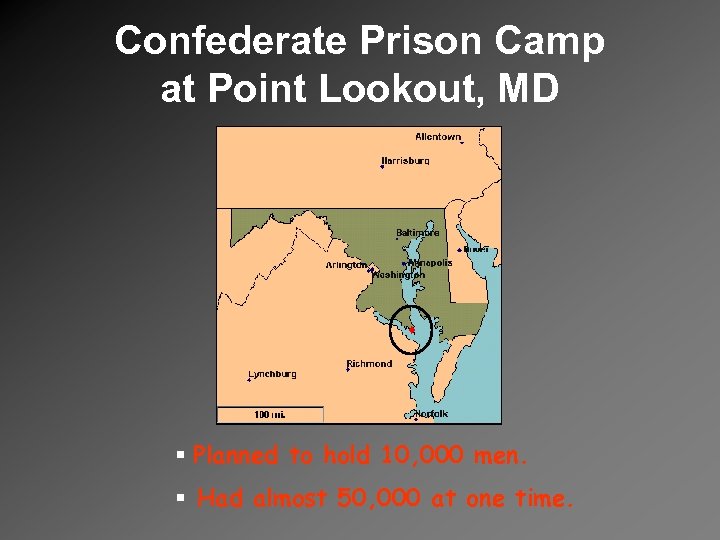 Confederate Prison Camp at Point Lookout, MD § Planned to hold 10, 000 men. § Had almost 50, 000 at one time.
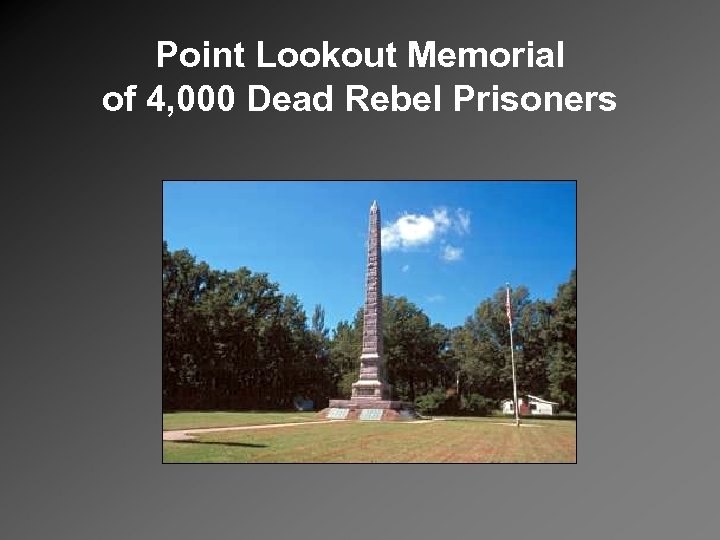 Point Lookout Memorial of 4, 000 Dead Rebel Prisoners
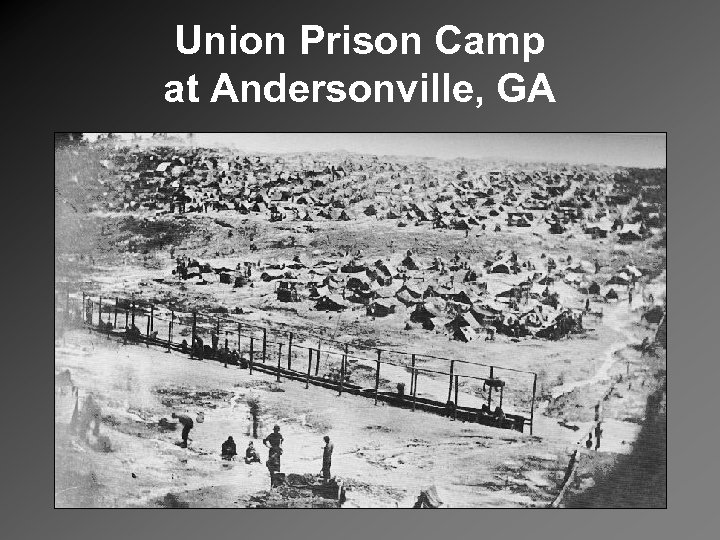 Union Prison Camp at Andersonville, GA
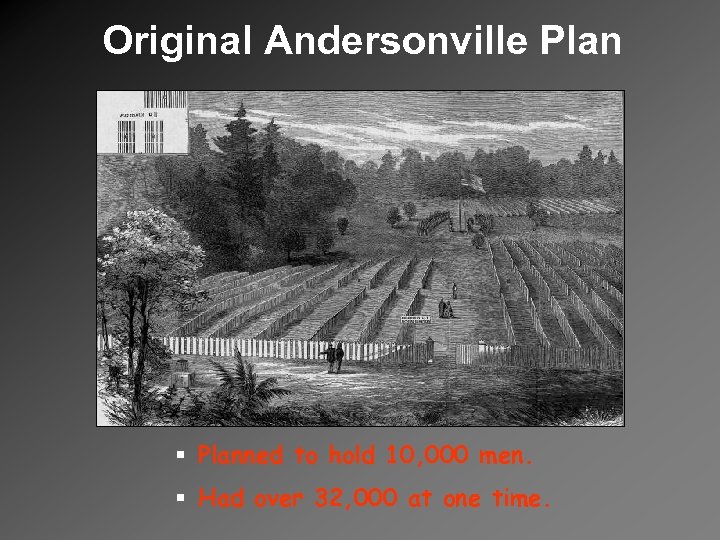 Original Andersonville Plan § Planned to hold 10, 000 men. § Had over 32, 000 at one time.
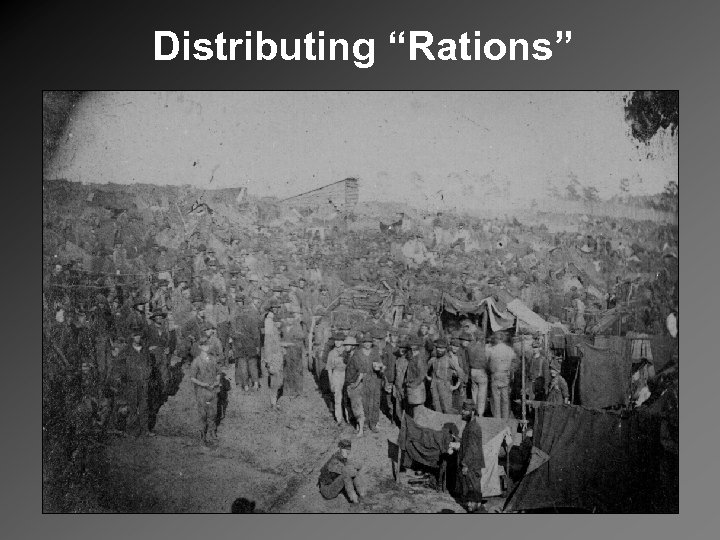 Distributing “Rations”
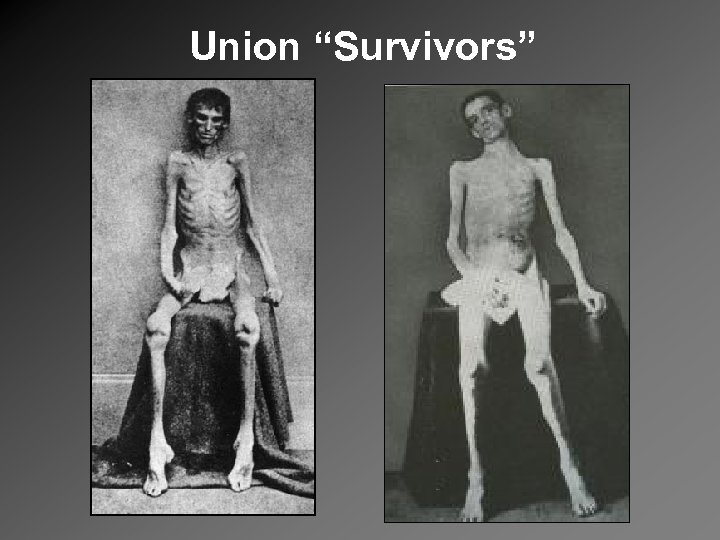 Union “Survivors”
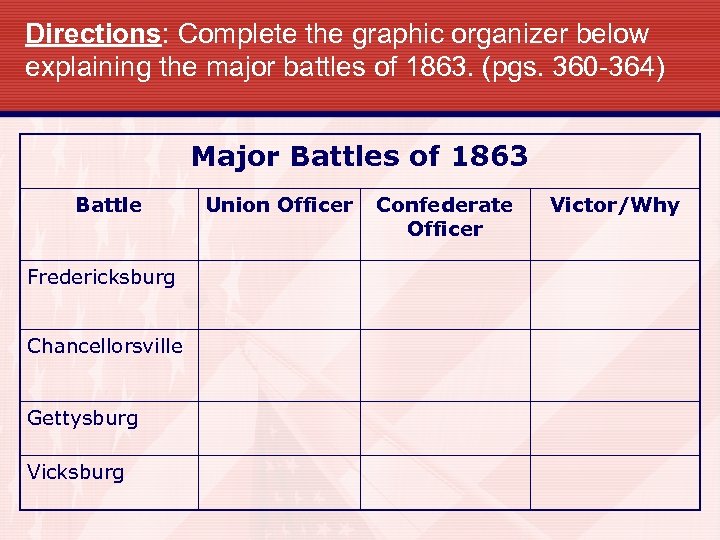 Directions: Complete the graphic organizer below explaining the major battles of 1863. (pgs. 360 -364) Major Battles of 1863 Battle Fredericksburg Chancellorsville Gettysburg Vicksburg Union Officer Confederate Officer Victor/Why
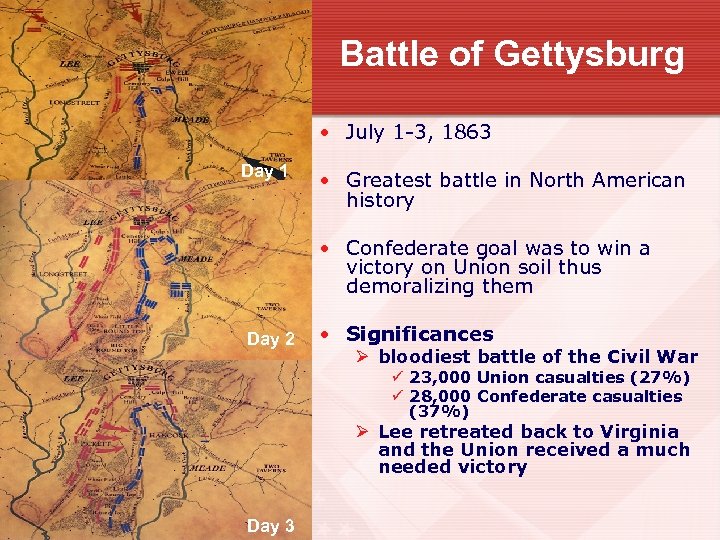 Battle of Gettysburg • July 1 -3, 1863 Day 1 • Greatest battle in North American history • Confederate goal was to win a victory on Union soil thus demoralizing them Day 2 • Significances Ø bloodiest battle of the Civil War ü 23, 000 Union casualties (27%) ü 28, 000 Confederate casualties (37%) Ø Lee retreated back to Virginia and the Union received a much needed victory Day 3
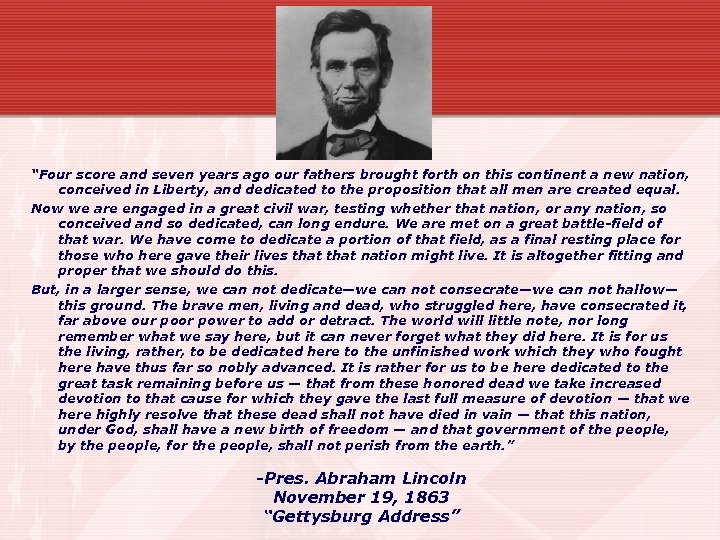 “Four score and seven years ago our fathers brought forth on this continent a new nation, conceived in Liberty, and dedicated to the proposition that all men are created equal. Now we are engaged in a great civil war, testing whether that nation, or any nation, so conceived and so dedicated, can long endure. We are met on a great battle-field of that war. We have come to dedicate a portion of that field, as a final resting place for those who here gave their lives that nation might live. It is altogether fitting and proper that we should do this. But, in a larger sense, we can not dedicate—we can not consecrate—we can not hallow— this ground. The brave men, living and dead, who struggled here, have consecrated it, far above our poor power to add or detract. The world will little note, nor long remember what we say here, but it can never forget what they did here. It is for us the living, rather, to be dedicated here to the unfinished work which they who fought here have thus far so nobly advanced. It is rather for us to be here dedicated to the great task remaining before us — that from these honored dead we take increased devotion to that cause for which they gave the last full measure of devotion — that we here highly resolve that these dead shall not have died in vain — that this nation, under God, shall have a new birth of freedom — and that government of the people, by the people, for the people, shall not perish from the earth. ” -Pres. Abraham Lincoln November 19, 1863 “Gettysburg Address”
 1864 • Ulysses S. Grant is given command of the Union forces Ø Appoints friend William Tecumseh Sherman as commander of Union troops in the West Ø Plan is to use the North’s superior population and industry to wear down the CSA • Eastern theater Ø Grant vs. Lee Ø Battles of the Wilderness, Spotsylvania and Cold Harbor all see Grant constantly advance his troops towards Richmond despite large number of casualties Ø Decides to lay siege to Petersburg, an important railroad hub, thus attempting to cut off supplies to Richmond Ø Lee’s troops dig trenches and wait for the November election hoping Lincoln will be voted out of office
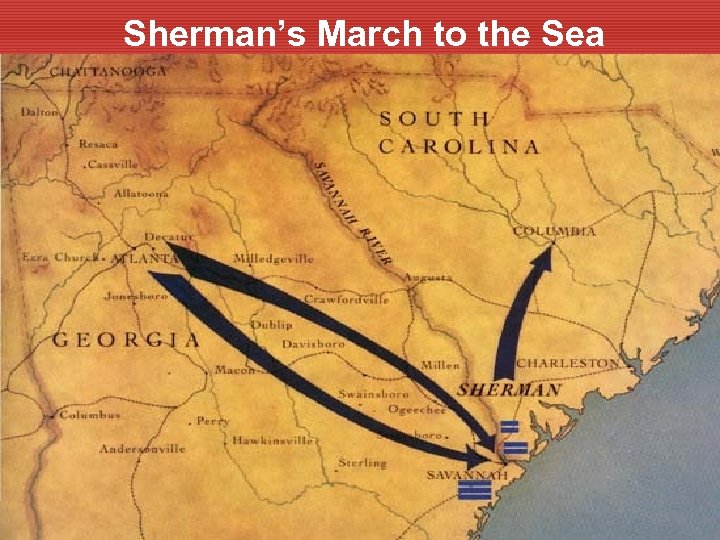 Sherman’s March to the Sea
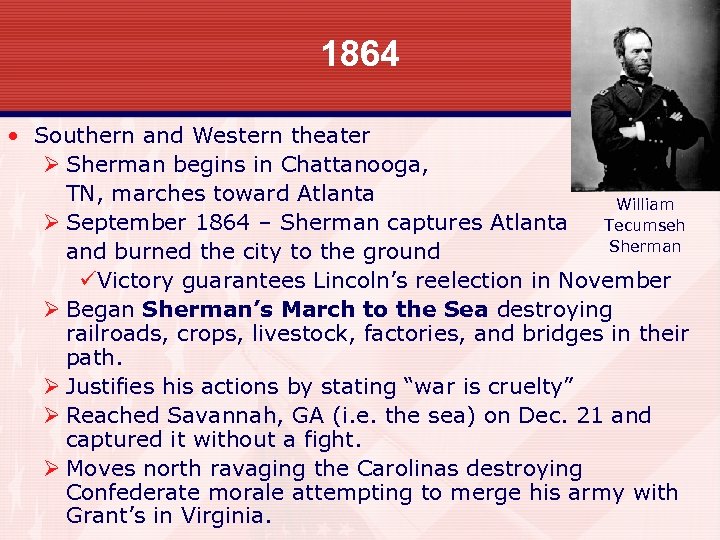 1864 • Southern and Western theater Ø Sherman begins in Chattanooga, TN, marches toward Atlanta William Ø September 1864 – Sherman captures Atlanta Tecumseh Sherman and burned the city to the ground üVictory guarantees Lincoln’s reelection in November Ø Began Sherman’s March to the Sea destroying railroads, crops, livestock, factories, and bridges in their path. Ø Justifies his actions by stating “war is cruelty” Ø Reached Savannah, GA (i. e. the sea) on Dec. 21 and captured it without a fight. Ø Moves north ravaging the Carolinas destroying Confederate morale attempting to merge his army with Grant’s in Virginia.
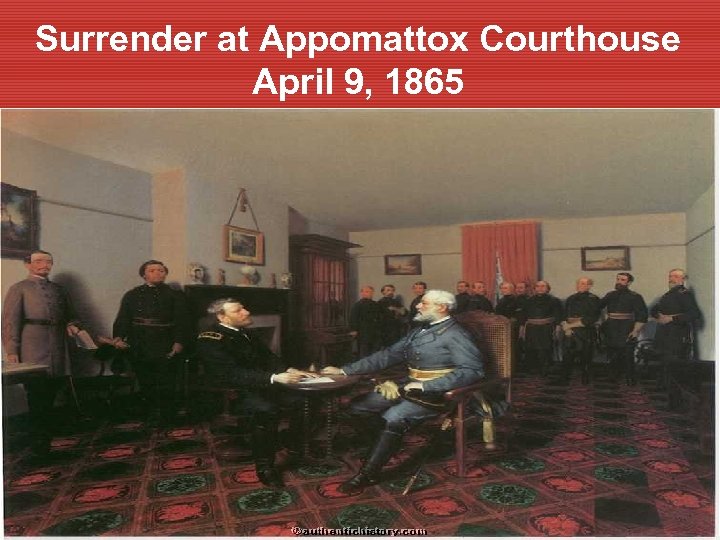 Surrender at Appomattox Courthouse April 9, 1865
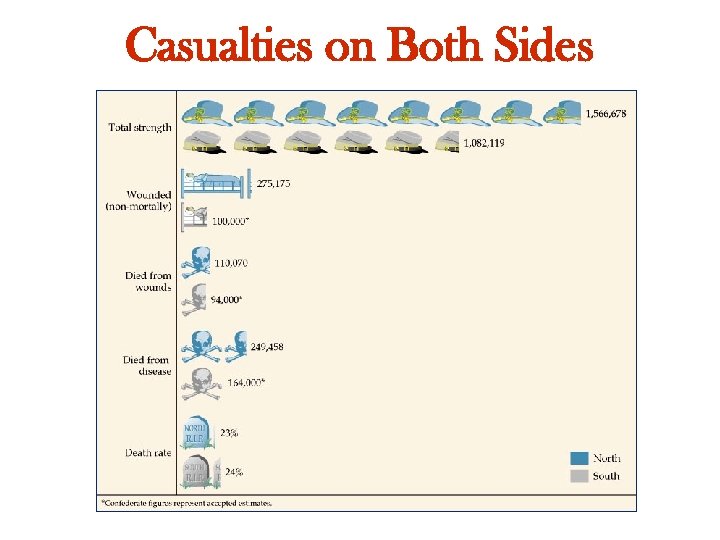 Casualties on Both Sides
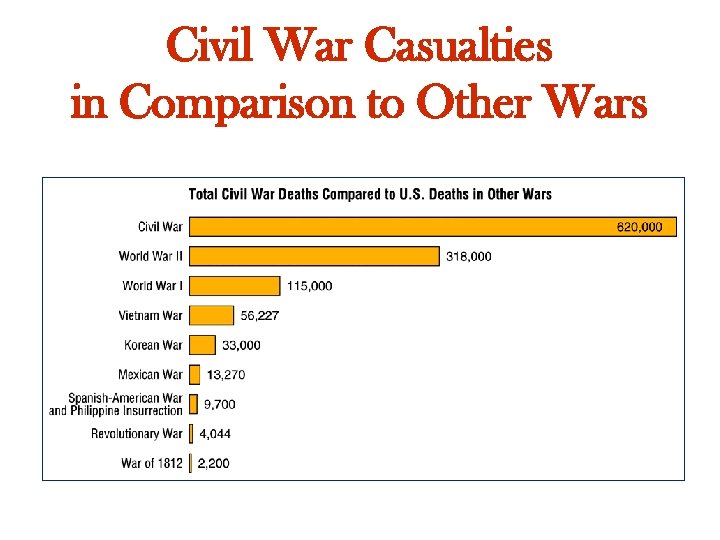 Civil War Casualties in Comparison to Other Wars
 “The Night They Drove Old Dixie Down” Virgil Caine is the name, and I served on the Danville train, 'Til Stoneman's cavalry came and tore up the tracks again. In the winter of '65, We were hungry, just barely alive. By May the tenth, Richmond had fell, it's a time I remember, oh so well, Chorus: The Night They Drove Old Dixie Down, and the bells were ringing, The Night They Drove Old Dixie Down, and the people were singin', They went La, La, La, La, La Back with my wife in Tennessee, When one day she called to me, "Virgil, quick, come see, there goes Robert E. Lee!" Now I don't mind choppin' wood, and I don't care if the money's no good. Ya take what ya need and ya leave the rest, But they should never have taken the very best. Chorus Like my father before me, I will work the land, Like my brother above me, who took a rebel stand. He was just eighteen, proud and brave, But a Yankee laid him in his grave, I swear by the mud below my feet, You can't raise a Caine back up when he's in defeat
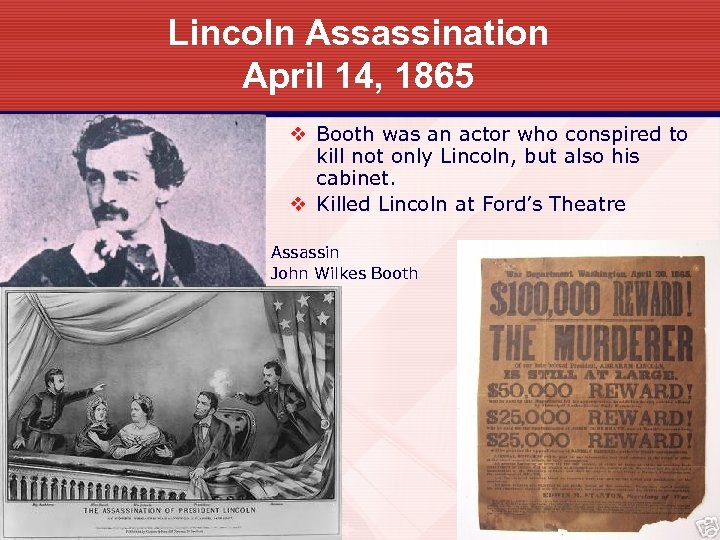 Lincoln Assassination April 14, 1865 v Booth was an actor who conspired to kill not only Lincoln, but also his cabinet. v Killed Lincoln at Ford’s Theatre Assassin John Wilkes Booth
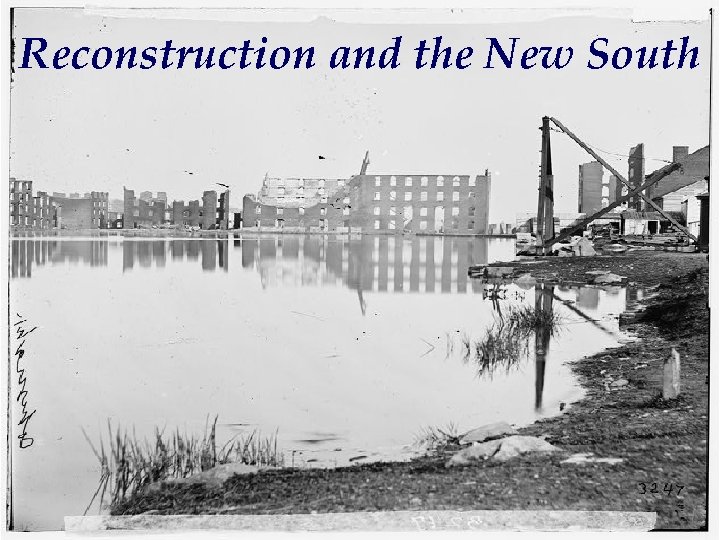 Reconstruction and the New South
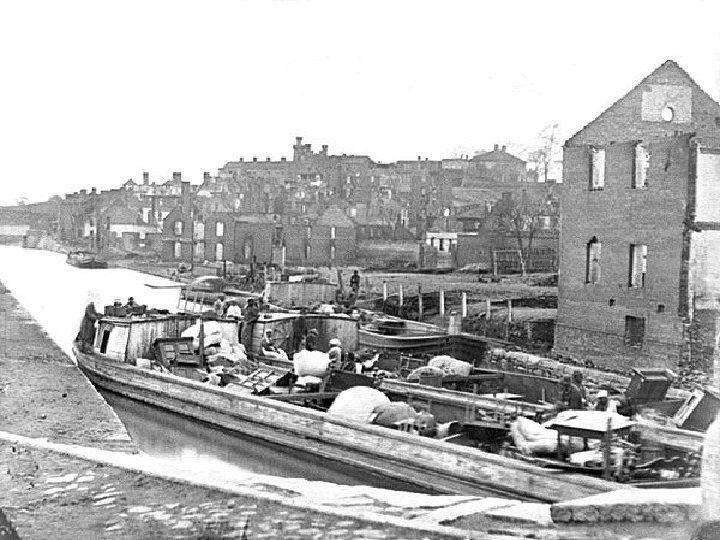
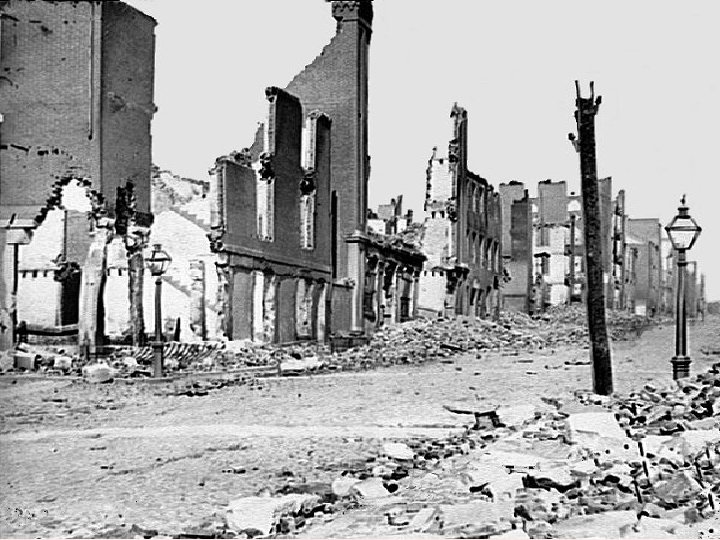
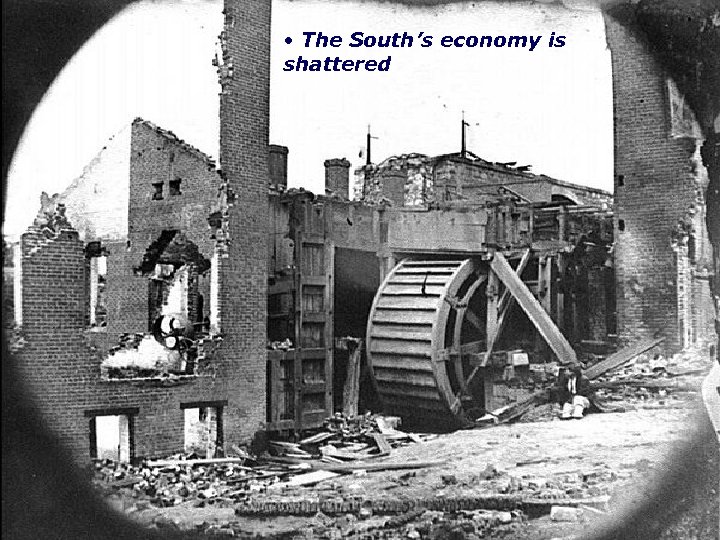 • The South’s economy is shattered
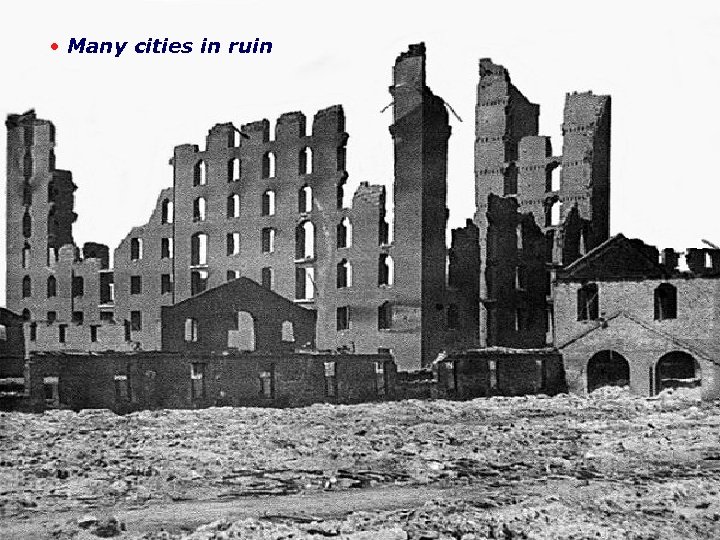 • Many cities in ruin
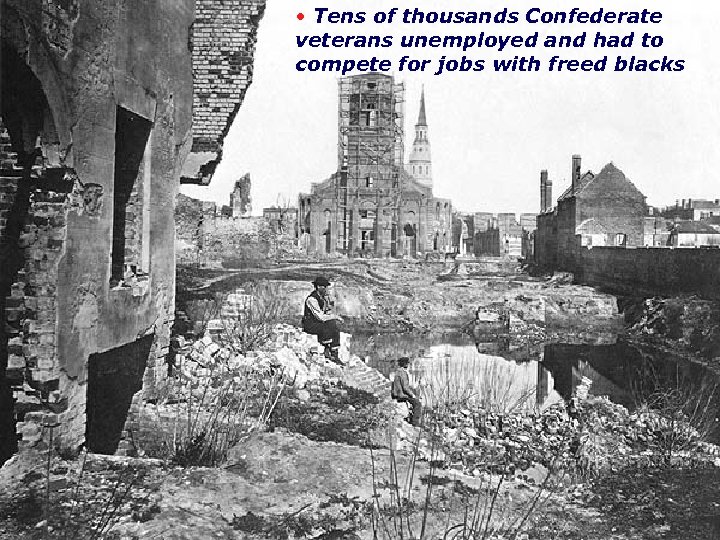 • Tens of thousands Confederate veterans unemployed and had to compete for jobs with freed blacks
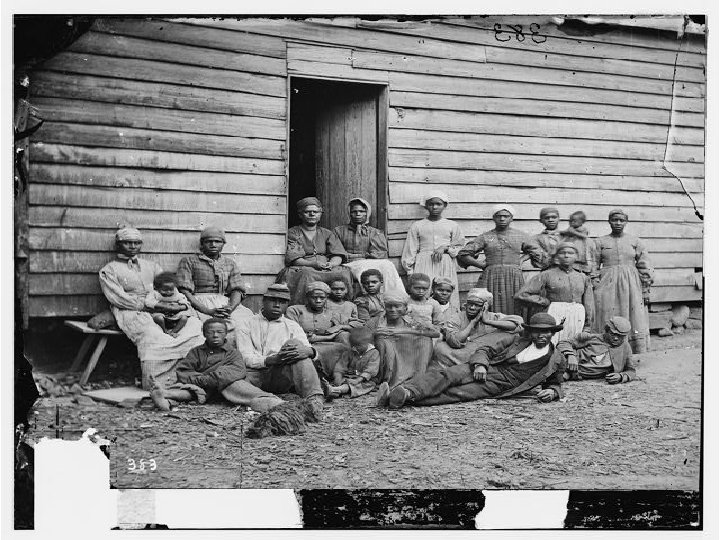
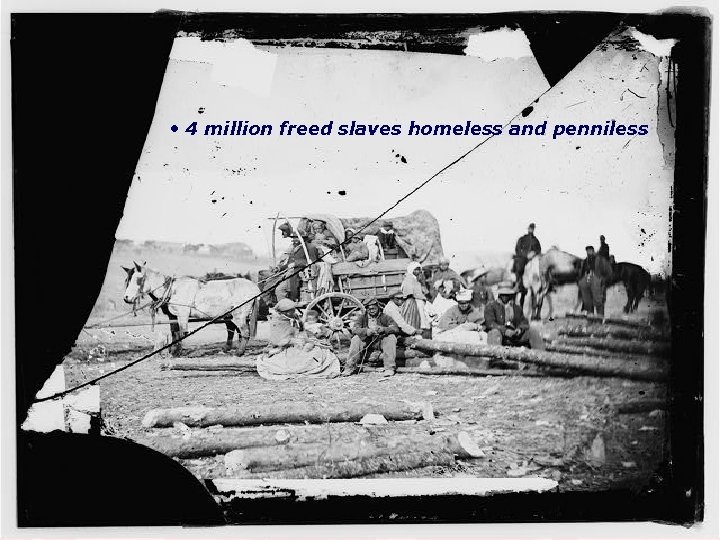 • 4 million freed slaves homeless and penniless
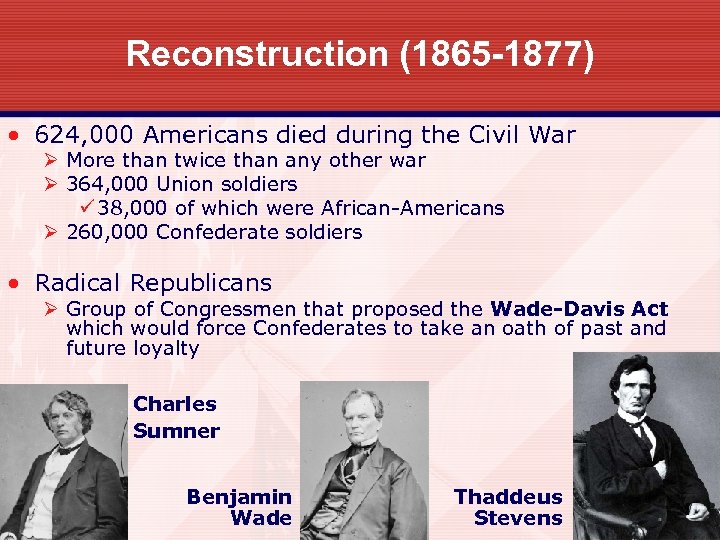 Reconstruction (1865 -1877) • 624, 000 Americans died during the Civil War Ø More than twice than any other war Ø 364, 000 Union soldiers ü 38, 000 of which were African-Americans Ø 260, 000 Confederate soldiers • Radical Republicans Ø Group of Congressmen that proposed the Wade-Davis Act which would force Confederates to take an oath of past and future loyalty Charles Sumner Benjamin Wade Thaddeus Stevens
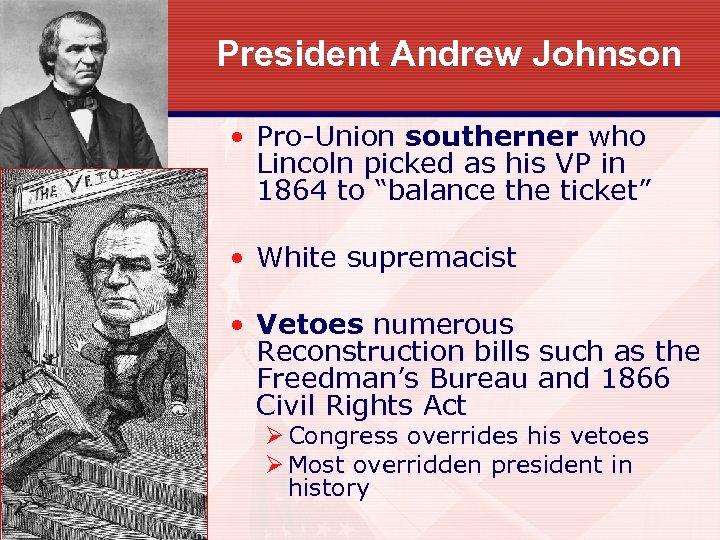 President Andrew Johnson • Pro-Union southerner who Lincoln picked as his VP in 1864 to “balance the ticket” • White supremacist • Vetoes numerous Reconstruction bills such as the Freedman’s Bureau and 1866 Civil Rights Act Ø Congress overrides his vetoes Ø Most overridden president in history
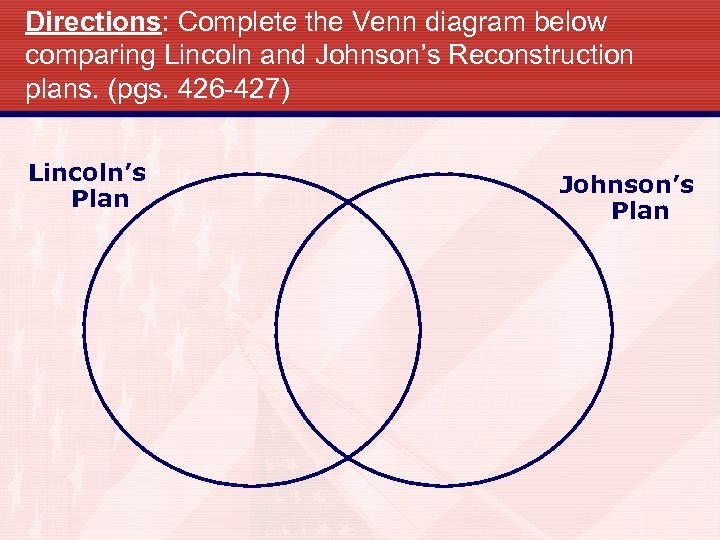 Directions: Complete the Venn diagram below comparing Lincoln and Johnson’s Reconstruction plans. (pgs. 426 -427) Lincoln’s Plan Johnson’s Plan
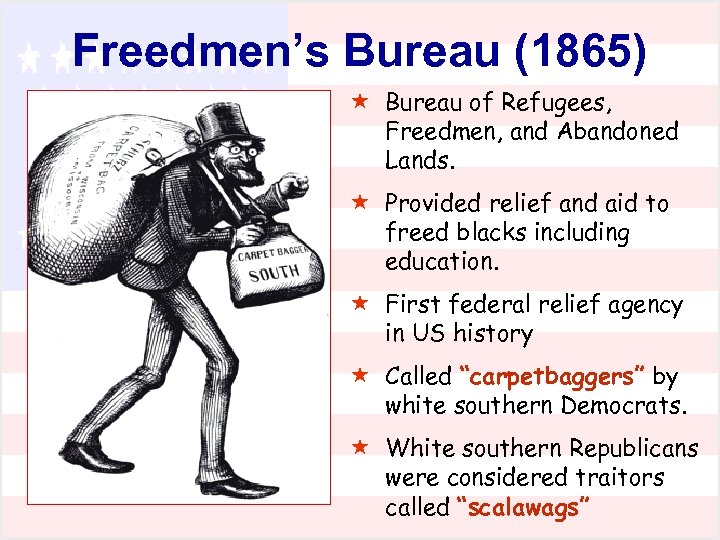 Freedmen’s Bureau (1865) « Bureau of Refugees, Freedmen, and Abandoned Lands. « Provided relief and aid to freed blacks including education. « First federal relief agency in US history « Called “carpetbaggers” by white southern Democrats. « White southern Republicans were considered traitors called “scalawags”
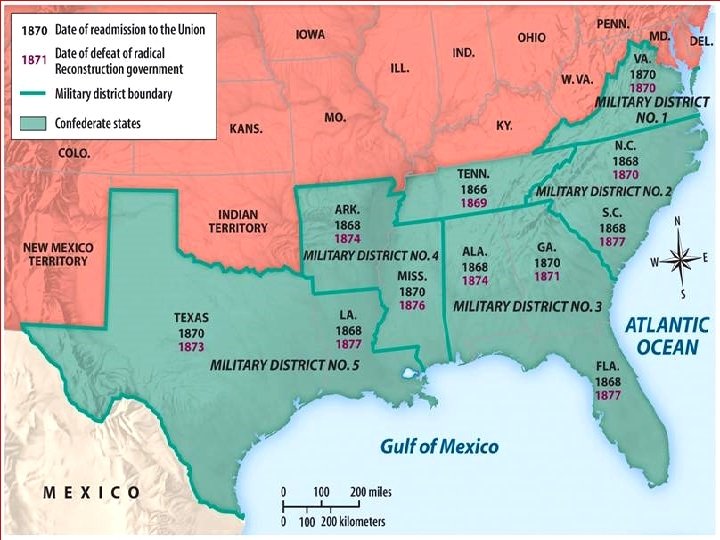
 Black Life in the South • Once states rejoined the Union, they quickly passed black codes which sought to restrict freedman’s rights Ø Curfews Ø Vagrancy laws Ø Labor Contracts Ø Land restrictions • Congress responds with the Civil Rights Act of 1866 and the Reconstruction Act of 1867 Ø Divided the South into 5 military districts Ø Ordered states to hold new elections fo rdelegates to create new state constitutions Ø Barred those who supported the Confederacy from voting Ø Required southern states to guarantee equal rights Ø Required states to ratify the 14 th Amendment.
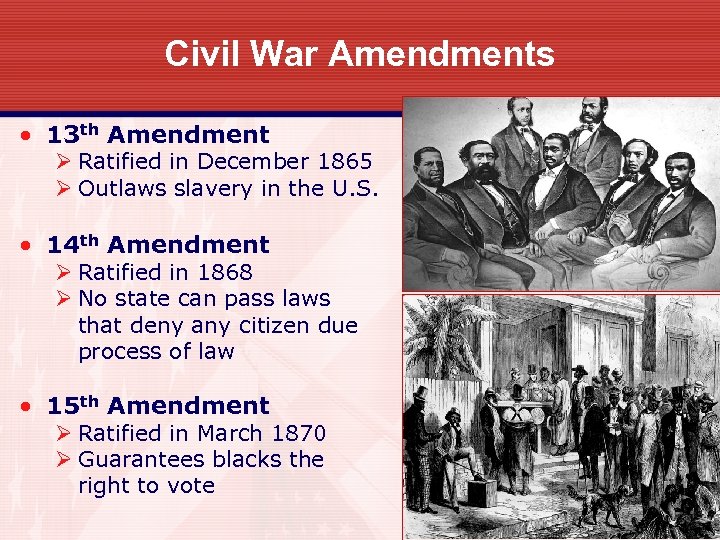 Civil War Amendments • 13 th Amendment Ø Ratified in December 1865 Ø Outlaws slavery in the U. S. • 14 th Amendment Ø Ratified in 1868 Ø No state can pass laws that deny any citizen due process of law • 15 th Amendment Ø Ratified in March 1870 Ø Guarantees blacks the right to vote
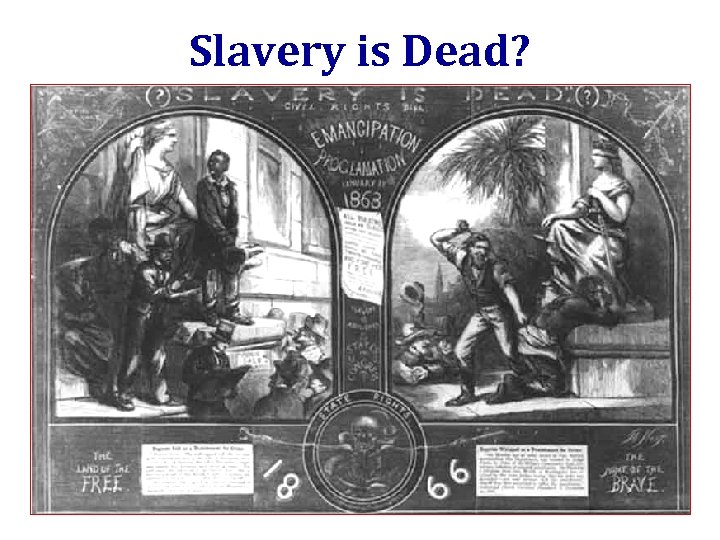 Slavery is Dead?
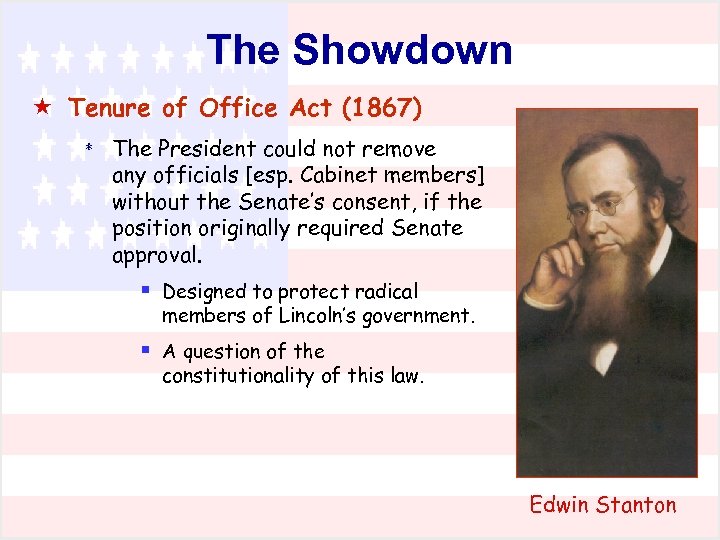 The Showdown « Tenure of Office Act (1867) * The President could not remove any officials [esp. Cabinet members] without the Senate’s consent, if the position originally required Senate approval. § Designed to protect radical members of Lincoln’s government. § A question of the constitutionality of this law. Edwin Stanton
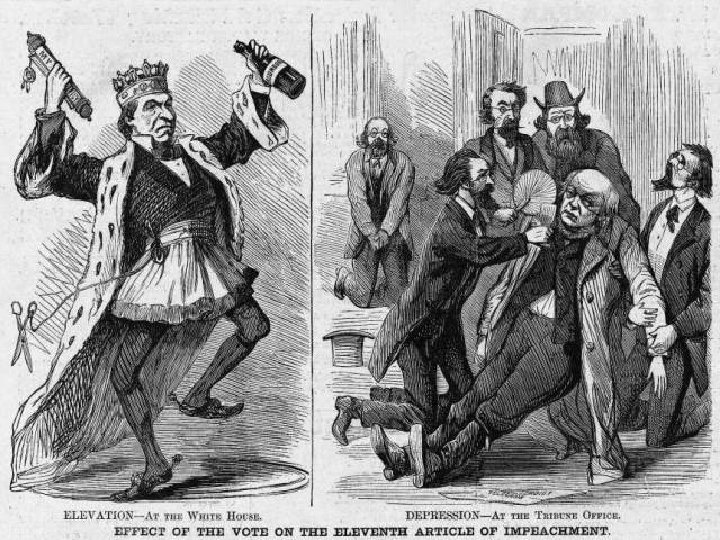
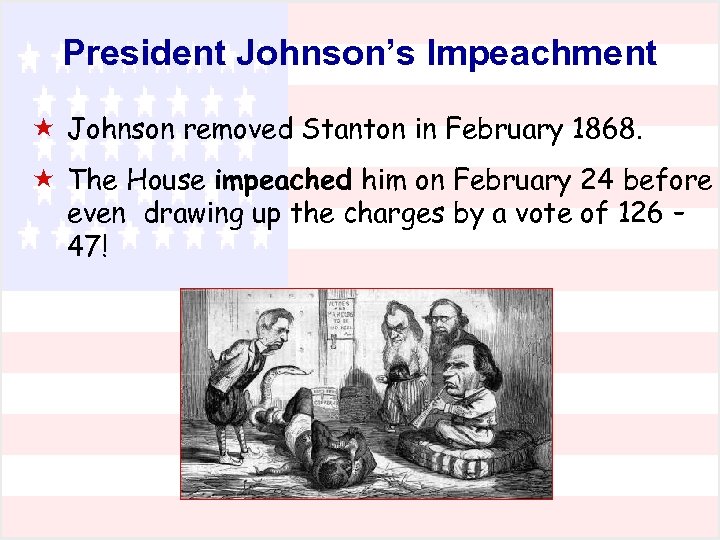 President Johnson’s Impeachment « Johnson removed Stanton in February 1868. « The House impeached him on February 24 before even drawing up the charges by a vote of 126 – 47!
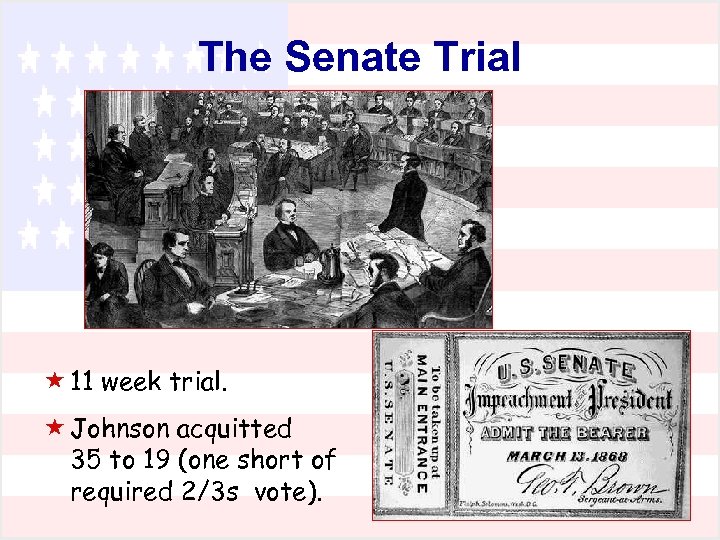 The Senate Trial « 11 week trial. « Johnson acquitted 35 to 19 (one short of required 2/3 s vote).
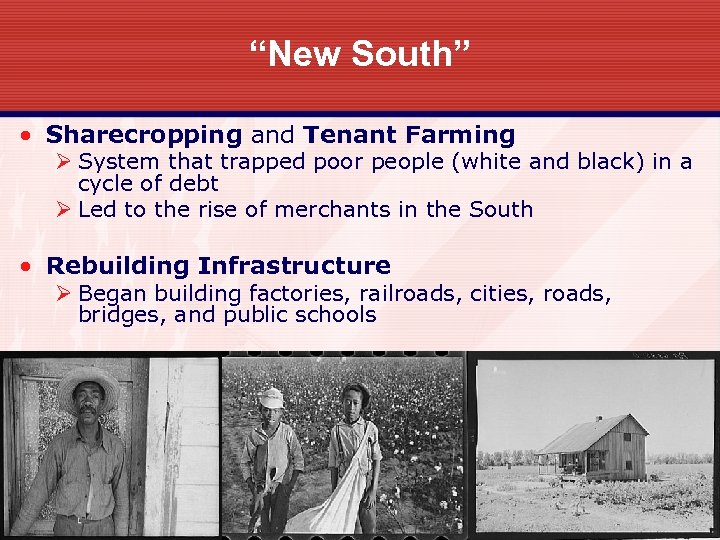 “New South” • Sharecropping and Tenant Farming Ø System that trapped poor people (white and black) in a cycle of debt Ø Led to the rise of merchants in the South • Rebuilding Infrastructure Ø Began building factories, railroads, cities, roads, bridges, and public schools
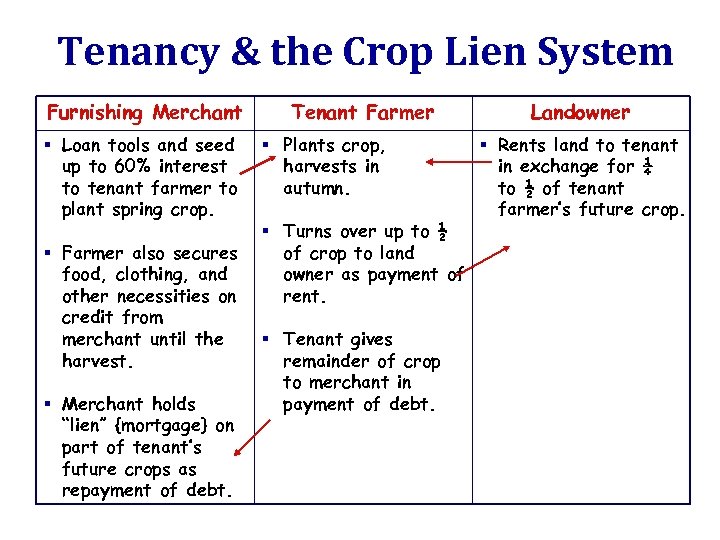 Tenancy & the Crop Lien System Furnishing Merchant § Loan tools and seed up to 60% interest to tenant farmer to plant spring crop. § Farmer also secures food, clothing, and other necessities on credit from merchant until the harvest. § Merchant holds “lien” {mortgage} on part of tenant’s future crops as repayment of debt. Tenant Farmer § Plants crop, harvests in autumn. § Turns over up to ½ of crop to land owner as payment of rent. § Tenant gives remainder of crop to merchant in payment of debt. Landowner § Rents land to tenant in exchange for ¼ to ½ of tenant farmer’s future crop.
 “Buffalo Soldiers” term used for all African-American army regiments Buffalo Soldier, Dreadlock Rasta: There was a Buffalo Soldier in the heart of America, Stolen from Africa, brought to America, Fighting on arrival, fighting for survival. Buffalo Soldier troddin' through the land, woho-ooh! Said he wanna ran, then you wanna hand, Troddin' through the land, yea-hea, yea-ea. I mean it, when I analyze the stench To me it makes a lot of sense: How the Dreadlock Rasta was the Buffalo Soldier, And he was taken from Africa, brought to America, Fighting on arrival, fighting for survival. Said he was a Buffalo Soldier win the war for America; Buffalo Soldier, Dreadlock Rasta, Fighting on arrival, fighting for survival; Driven from the mainland to the heart of the Caribbean. Said he was a Buffalo Soldier, Dreadlock Rasta Buffalo Soldier in the heart of America. Singing, woy yoy, woy yoy-yoy yoy, Woy yoy yoy, yoy-yoy yoy! Woy yoy, woy yoy-yoy yoy, Woy yoy yoy, yoy-yoy yoy! If you know your history, Then you would know where you coming from, Then you wouldn't have to ask me, Who the 'eck do I think I am. I'm just a Buffalo Soldier in the heart of America, Stolen from Africa, brought to America, Said he was fighting on arrival, fighting for survival; Said he was a Buffalo Soldier win the war for America. Dreadie, woy yoy, woy yoy-yoy yoy, Woy yoy yoy, yoy-yoy yoy! Woy yoy, woy yoy-yoy yoy, Woy yoy yoy, yoy-yoy yoy! Troddin' through San Juan in the arms of America; Troddin' through Jamaica, a Buffalo Soldier Fighting on arrival, fighting for survival: Buffalo Soldier, Dreadlock Rasta. Woy Woy yoy yoy yoy, woy yoy-yoy yoy, yoy yoy-yoy yoy!
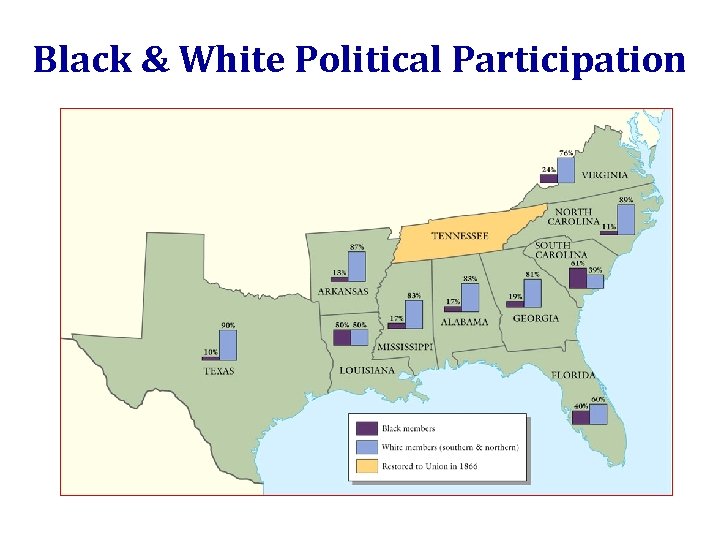 Black & White Political Participation
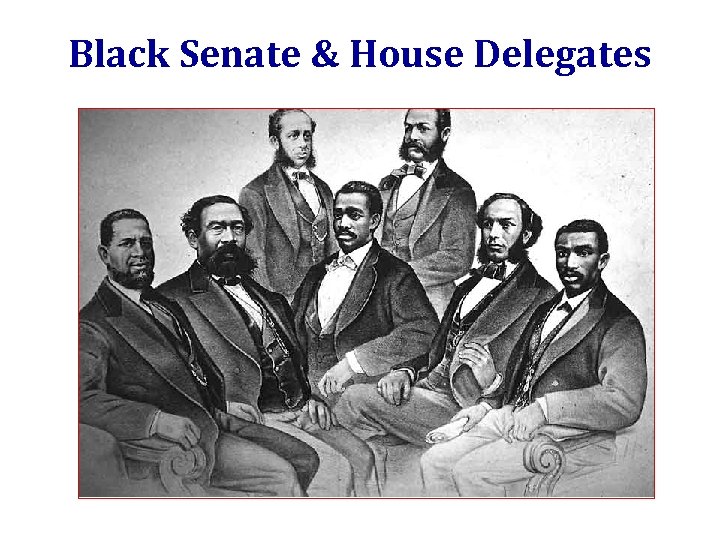 Black Senate & House Delegates
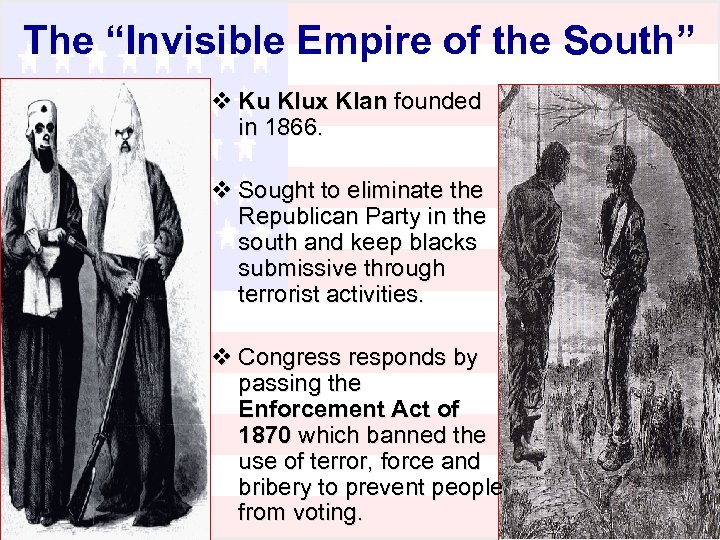 The “Invisible Empire of the South” v Ku Klux Klan founded in 1866. v Sought to eliminate the Republican Party in the south and keep blacks submissive through terrorist activities. v Congress responds by passing the Enforcement Act of 1870 which banned the use of terror, force and bribery to prevent people from voting.
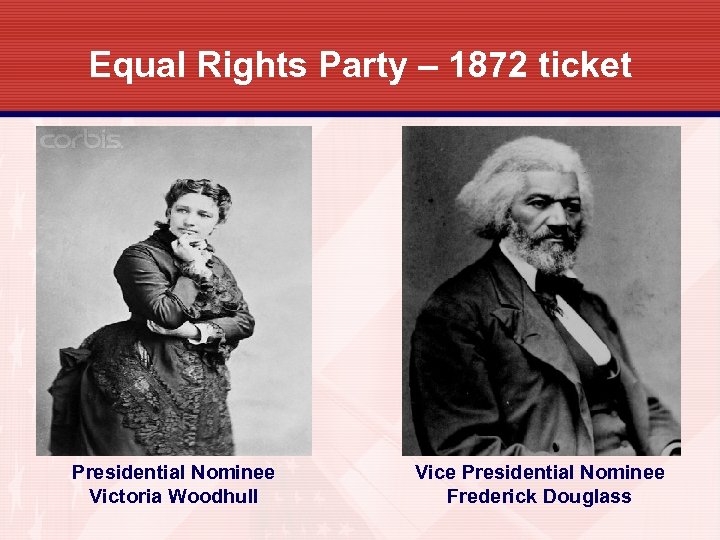 Equal Rights Party – 1872 ticket Presidential Nominee Victoria Woodhull Vice Presidential Nominee Frederick Douglass
 End of Reconstruction • Why? Ø Corruption: tons of money wasted or lost Ø Economy: southern states went deep into debt and the Panic of 1873 hit taking focus off the equality issue Ø Violence: scared blacks from exercising the right to vote Ø Democrats Return to Power: whites regain control of their state legislatures Ø Supreme Court limits the scope of the Civil Rights amendments thus allowing states to disenfranchise African-Americans • Compromise of 1877 Ø Republican Rutherford B. Hayes becomes president in return for the removal of federal troops in southern states
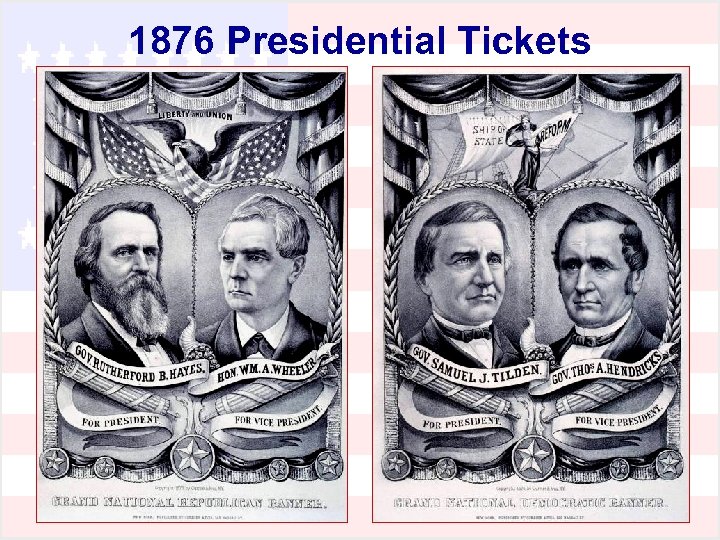 1876 Presidential Tickets
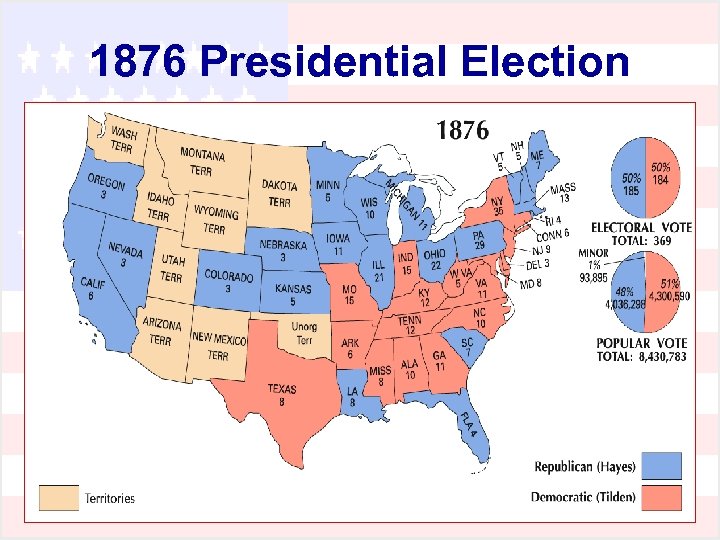 1876 Presidential Election