Скачать презентацию U S History 1 Roaring 20 s part
7b7dd5baba9c1d322de07c8480a5bd1a.ppt
- Количество слайдов: 12
 U. S. History 1 Roaring 20 s part 3: Prohibition, Business Boom, Cultural Conflicts
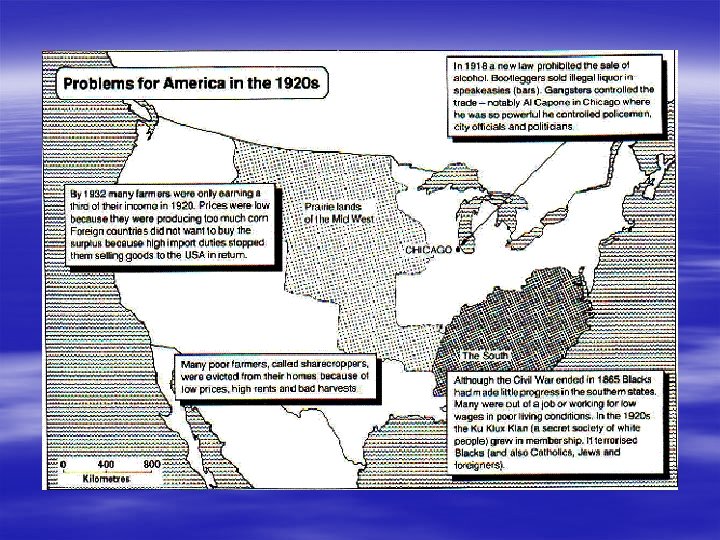
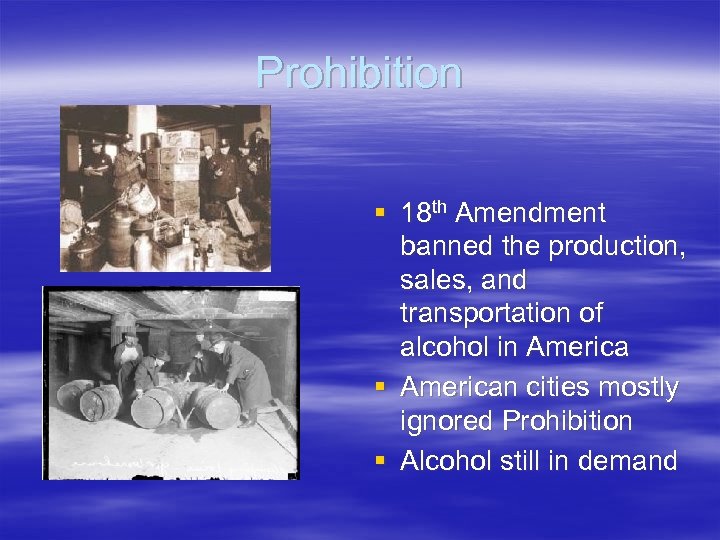 Prohibition § 18 th Amendment banned the production, sales, and transportation of alcohol in America § American cities mostly ignored Prohibition § Alcohol still in demand
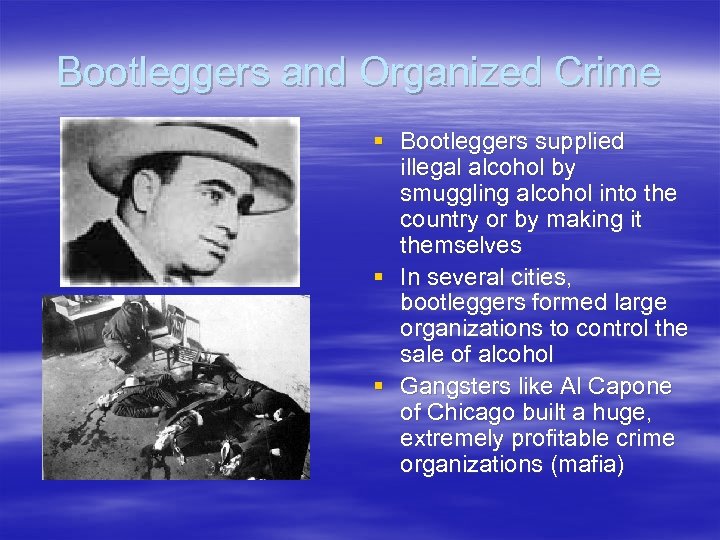 Bootleggers and Organized Crime § Bootleggers supplied illegal alcohol by smuggling alcohol into the country or by making it themselves § In several cities, bootleggers formed large organizations to control the sale of alcohol § Gangsters like Al Capone of Chicago built a huge, extremely profitable crime organizations (mafia)
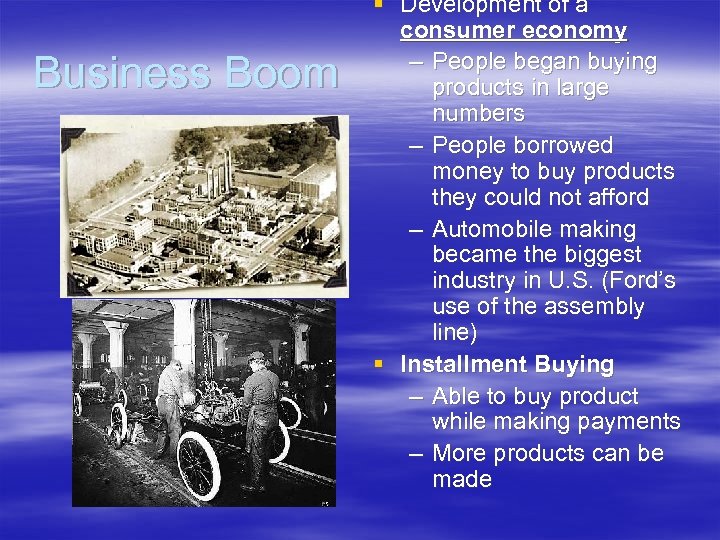 Business Boom § Development of a consumer economy – People began buying products in large numbers – People borrowed money to buy products they could not afford – Automobile making became the biggest industry in U. S. (Ford’s use of the assembly line) § Installment Buying – Able to buy product while making payments – More products can be made
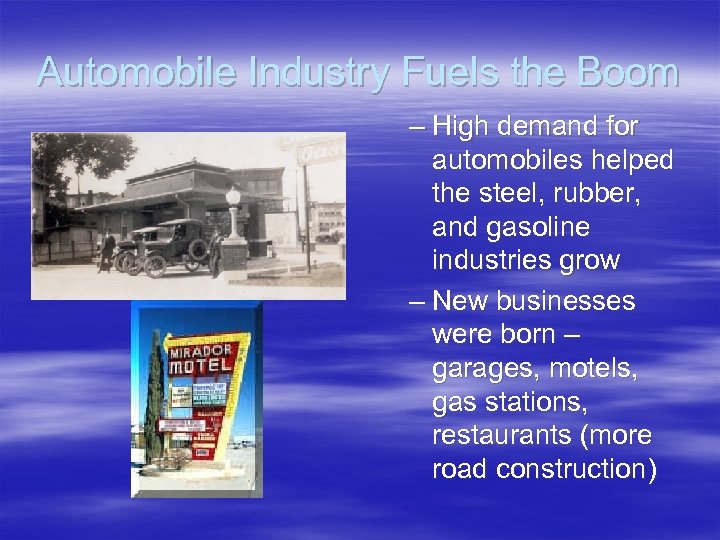 Automobile Industry Fuels the Boom – High demand for automobiles helped the steel, rubber, and gasoline industries grow – New businesses were born – garages, motels, gas stations, restaurants (more road construction)
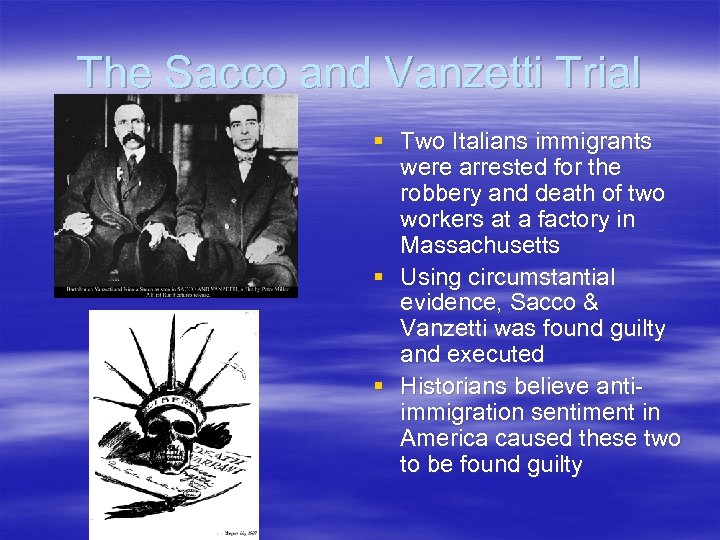 The Sacco and Vanzetti Trial § Two Italians immigrants were arrested for the robbery and death of two workers at a factory in Massachusetts § Using circumstantial evidence, Sacco & Vanzetti was found guilty and executed § Historians believe antiimmigration sentiment in America caused these two to be found guilty
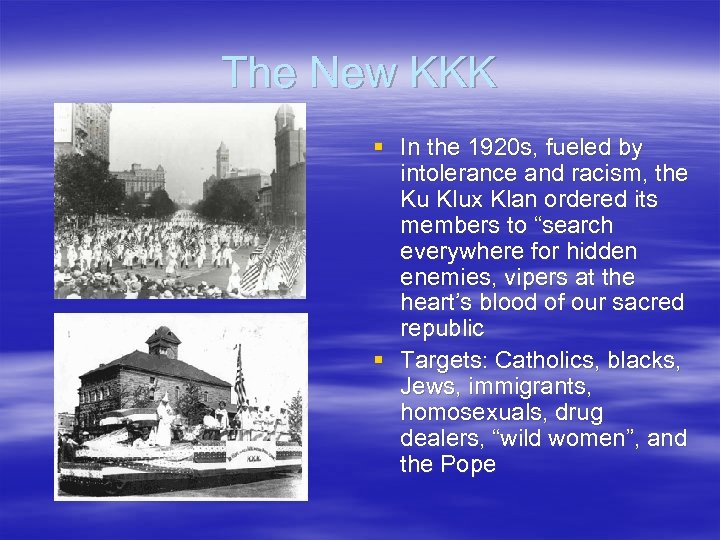 The New KKK § In the 1920 s, fueled by intolerance and racism, the Ku Klux Klan ordered its members to “search everywhere for hidden enemies, vipers at the heart’s blood of our sacred republic § Targets: Catholics, blacks, Jews, immigrants, homosexuals, drug dealers, “wild women”, and the Pope
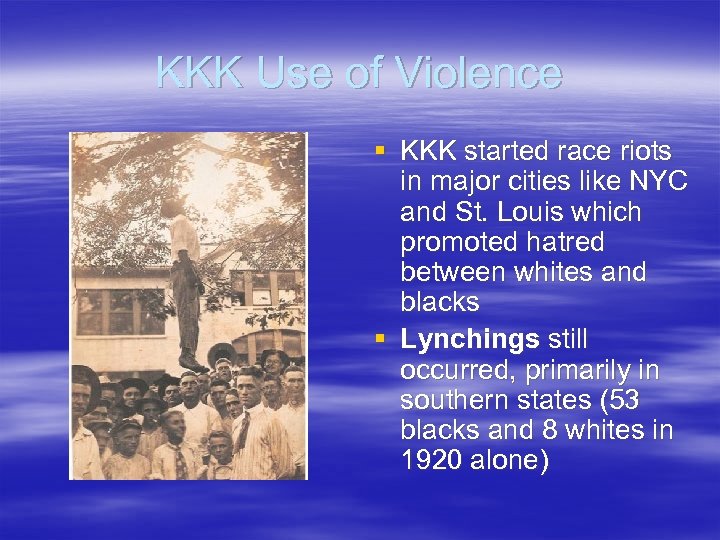 KKK Use of Violence § KKK started race riots in major cities like NYC and St. Louis which promoted hatred between whites and blacks § Lynchings still occurred, primarily in southern states (53 blacks and 8 whites in 1920 alone)
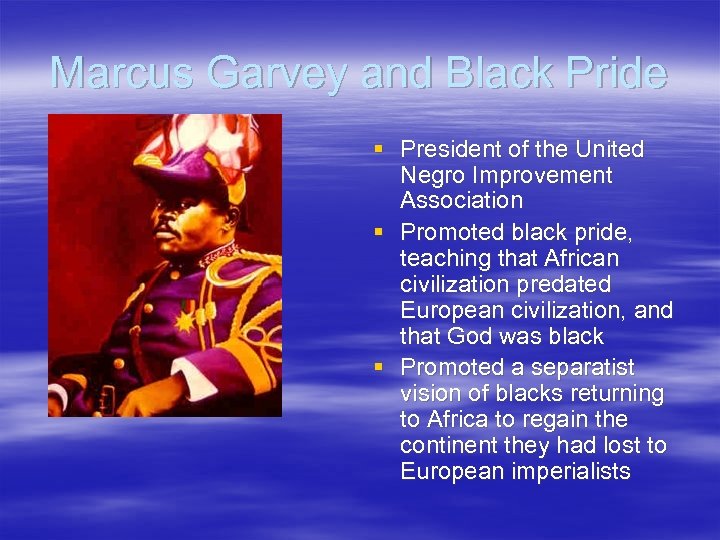 Marcus Garvey and Black Pride § President of the United Negro Improvement Association § Promoted black pride, teaching that African civilization predated European civilization, and that God was black § Promoted a separatist vision of blacks returning to Africa to regain the continent they had lost to European imperialists
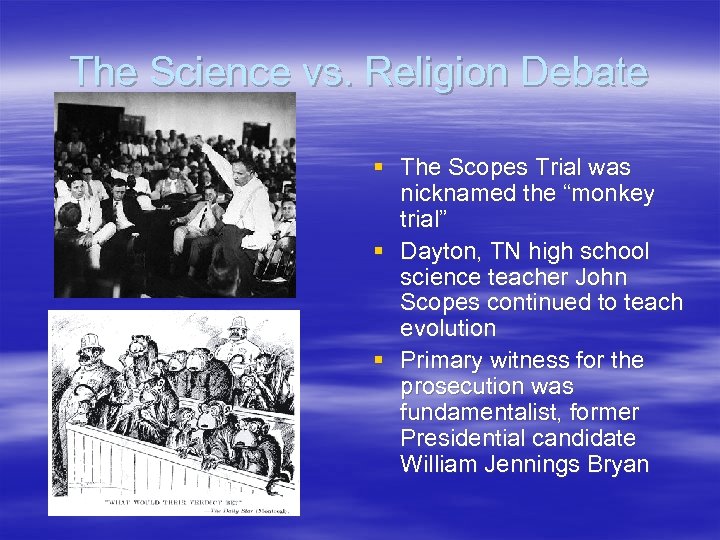 The Science vs. Religion Debate § The Scopes Trial was nicknamed the “monkey trial” § Dayton, TN high school science teacher John Scopes continued to teach evolution § Primary witness for the prosecution was fundamentalist, former Presidential candidate William Jennings Bryan
 Scopes Trial (cont) § Equally famous lawyer, Clarence Darrow, took up the defense § Immediately became a media frenzy; court proceedings were broadcast over the radio § On the stand, Darrow caught Bryan contradicting himself about biblical truths and scientific facts § The court decided Scopes was guilty for breaking the law (only legal to teach creationism, not evolution) § Caused a national debate between people who believed the Bible was the literal word of God and people who supported new scientific ideas (traditional vs. modern)