


 Скачать презентацию U S Department of Health and Human Services
0a94f1582826b0bae9c040d5facbe63d.ppt
- Количество слайдов: 23
 U. S. Department of Health and Human Services Office of the Surgeon General Medical Reserve Corps CDR Brad Austin, MPH, FACHE
 MRC “At A Glance” • Mission: Improve the health and safety of communities across the country by organizing and utilizing public health, medical and other volunteers • Key Points: – Organize/utilize locally – Integrate with existing programs and resources – Identify, screen/verify credentials, train and prepare – Include medical and public health professionals, as well as non-health professionals and other volunteers – Foster community resiliency
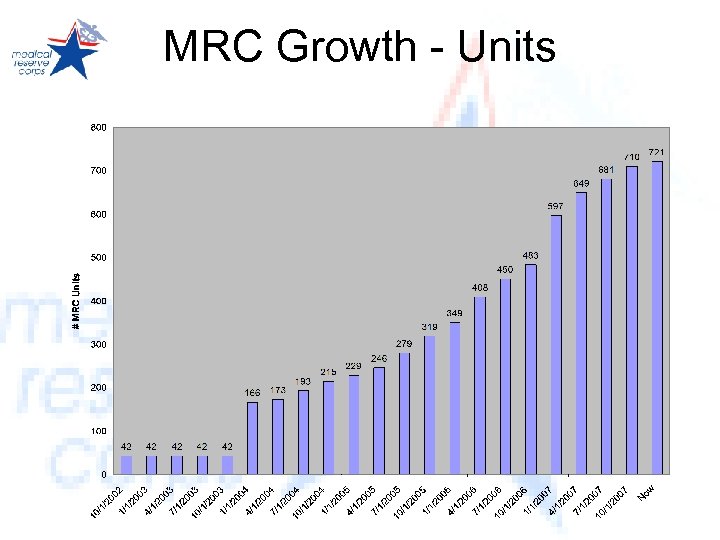 MRC Growth - Units
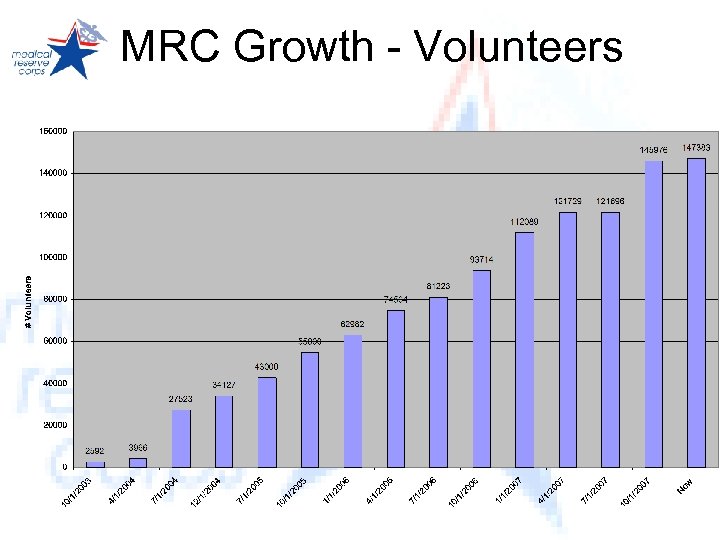 MRC Growth - Volunteers
 MRC Models • Community-based = No “typical” MRC • All MRC units: – – Provide an organization structure for utilizing members Pre-identify members Verify professional licensure/certification Train/prepare • Units vary by: – – Types/number of volunteers Sponsor organizations Partner organizations Local activities
 Sponsor Organizations • • • Health Departments Boards of Health Medical Centers/Hospitals Medical Societies Emergency Management Agencies Citizen Corps Councils Police/Fire Departments Volunteer Centers Regional Planning Groups Faith Based Organizations Non-Profit Community Organizations
 Partners • Health Departments • Boards of Health • Health Care Systems/Hospitals/Clinics • Medical Retiree Groups • Emergency Management • Local Emergency Planning Committees (LEPCs) • Police and Fire Departments • Community-Based Disaster Groups • Healthcare Outreach Coalitions • Retired and Senior Volunteer Programs • Schools and Universities • Emergency Medical Services • Military Organizations/National Guard • Neighborhood Associations • City Attorney Offices • Local Businesses/Corporations • Others…
 MRC Mission/Roles • “Ambassadors” of the U. S. Surgeon General…support SGs Priorities for Public Health – Increase Disease/Injury Prevention Efforts – Eliminate Health Disparities – Improve Public Health Preparedness • Specific missions and roles – locally determined
 Support Existing Public Health Resources Sedgwick Co (KS) MRC Health Screening and Education on Mother’s Day at Zoo Upper Merrimack Valley (MA) MRC Blood pressure clinic Support Existing Emergency Resources Omaha (NE) MRC Evacuee Shelter - 2005 Hurricane Bergen Co (NJ) MRC Dispensing Clinic
 Pandemic and All-Hazards Preparedness Act (PAHPA) • P. L. 109 -417 • Codified MRC • “…to provide for an adequate supply of volunteers in the case of a Federal, State, local, or tribal public health emergency”
 Homeland Security Presidential Directive (HSPD) 21 • Issued 18 October 2007 • Subject: Public Health and Medical Preparedness • Critical Components of Public Health and Medical Preparedness: – – Biosurveillance Countermeasure Stockpiling and Distribution Mass Casualty Care Community Resilience • Implementation Actions
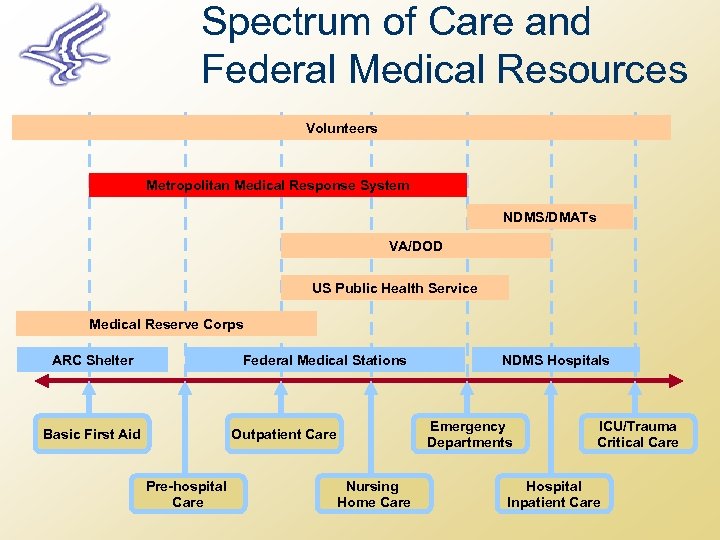 Spectrum of Care and Federal Medical Resources Volunteers Metropolitan Medical Response System NDMS/DMATs VA/DOD US Public Health Service Medical Reserve Corps ARC Shelter Federal Medical Stations Basic First Aid Emergency Departments Outpatient Care Pre-hospital Care NDMS Hospitals Nursing Home Care ICU/Trauma Critical Care Hospital Inpatient Care
 MRC Program Office • • • Support local efforts to establish, implement, and sustain MRC units nationwide Promote Community Resiliency! Goals: – Awareness and Understanding of the MRC – Strong and Active MRC Units – Federal Deployment Capability
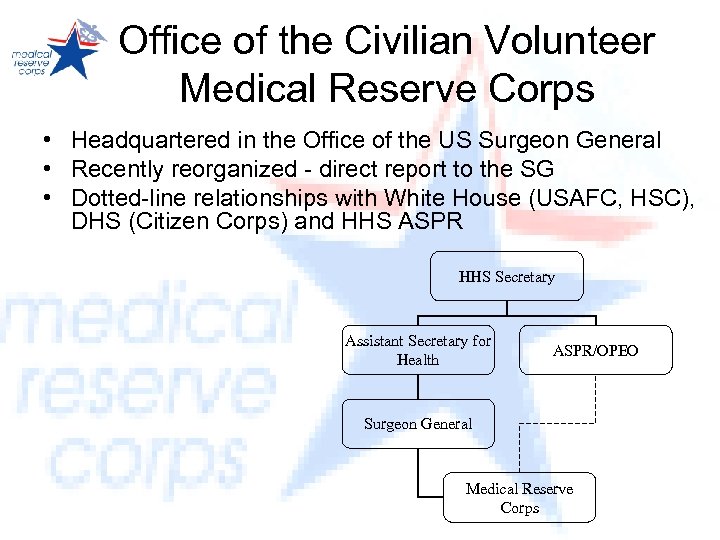 Office of the Civilian Volunteer Medical Reserve Corps • Headquartered in the Office of the US Surgeon General • Recently reorganized - direct report to the SG • Dotted-line relationships with White House (USAFC, HSC), DHS (Citizen Corps) and HHS ASPR HHS Secretary Assistant Secretary for Health ASPR/OPEO Surgeon General Medical Reserve Corps
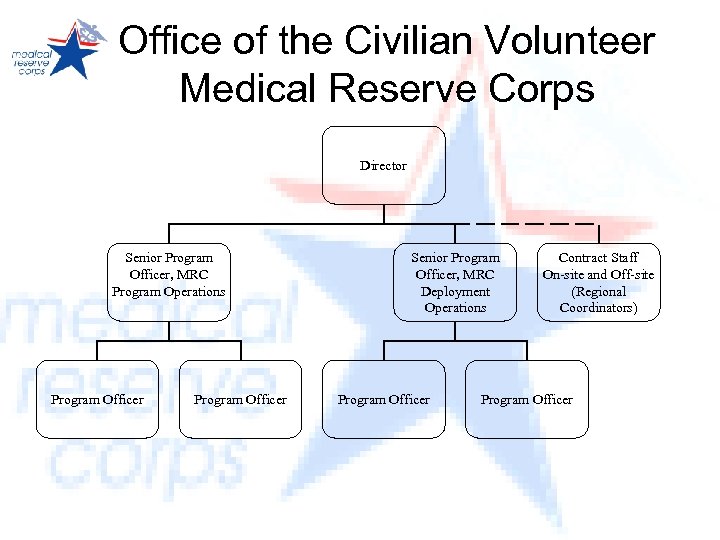 Office of the Civilian Volunteer Medical Reserve Corps Director Senior Program Officer, MRC Program Operations Program Officer Senior Program Officer, MRC Deployment Operations Program Officer Contract Staff On-site and Off-site (Regional Coordinators) Program Officer
 MRC Program Office • • • Support local efforts to establish, implement, and sustain MRC units nationwide Promote Community Resiliency! Goals: – Awareness and Understanding of the MRC – Strong and Active MRC Units – Federal Deployment Capability
 Awareness/Understanding • Leaders, policy makers, stakeholders, supporters, volunteers and other community members are aware of the MRC as a potential community resource, and understand the benefits and limitations of the MRC concept • Strategies – – – Website Partnerships/relationships Presentations/exhibits Marketing/brand awareness Newsletters/articles
 Strong/Active Units • MRC units are able to organize, train and utilize volunteers in public health, preparedness and emergency response activities • Strategies – – – Registration TA Assessments Technical Assistance Leveraging resources…capacity-building, training Strategic planning Information sharing
 Federal Deployment Capability • Willing, able and approved MRC members support and augment HHS response capabilities • Just starting… • Develop processes, policies and procedures – – Organization Roles/Enrollment Criteria Identification Screening • Background Checks • Credentials Verification – Training – Activation
 Getting Help or More Information • MRC Program Office – MRCcontact@hhs. gov – (301) 443 -4951 • MRC website – www. medicalreservecorps. gov • MRC Regional Coordinators • MRC State Coordinators • Contact existing MRC units
 Contact Information Brad Austin, MPH, FACHE CDR, USPHS Senior Program Officer Office of the Civilian Volunteer Medical Reserve Corps Office of the Surgeon General Room 18 C-14, Parklawn Building 5600 Fishers Lane Rockville, MD 20857 Tel. (301) 443 -1388 Fax (301) 443 -1163 brad. austin@hhs. gov www. medicalreservecorps. gov