 Скачать презентацию Typically in studies involving both polarimetric radar and
534bfaf5b0cc5f25f860350e3cbc73e7.ppt
- Количество слайдов: 19



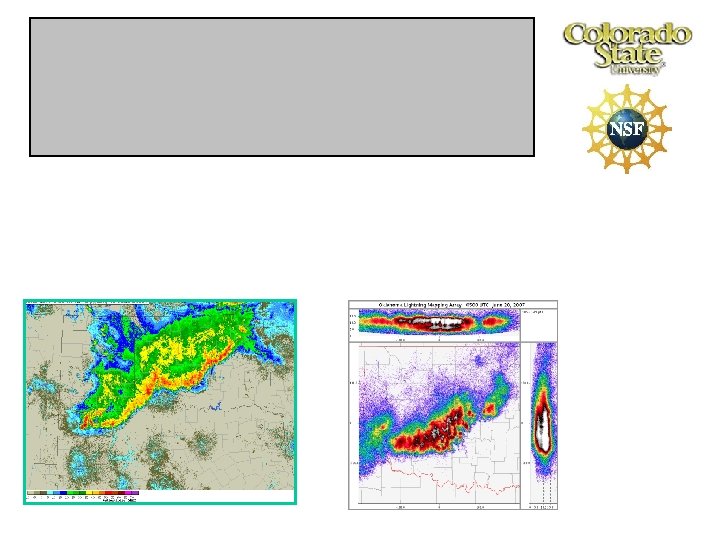
Typically, in studies involving both polarimetric radar and total lightning data, emphasis has been placed on a case study approach, borne largely out of necessity, as historically these datasets have been large and unwieldy given computational limitations. The case-study approach has yielded valuable scientific results and insight. However, there is a fundamental weakness, as all case studies ultimately suffer from lack of statistical significance in their results, and from sampling issues that make it difficult to generalize findings.

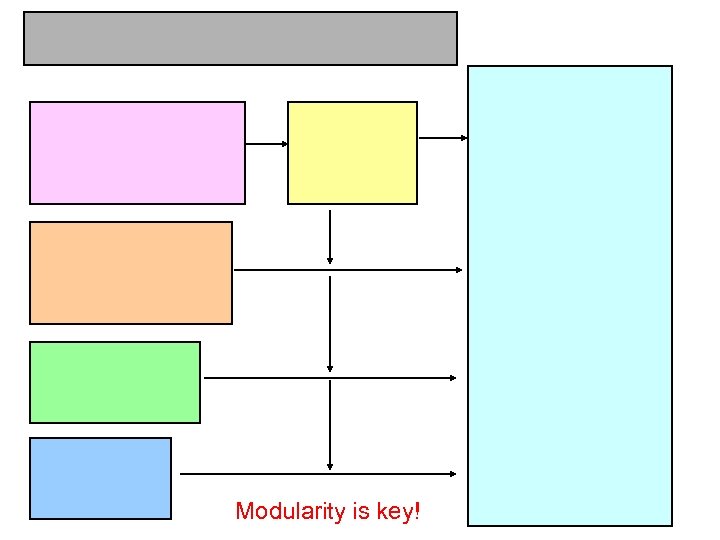
Modularity is key!
Hybrid of TITAN and SCIT Algorithms developed in house Works on Cartesian-gridded composite reflectivity field Ellipse fitting - used for tracking and handling mergers/splits Uses two radar reflectivity thresholds - 35 and 45 d. BZ Radar features analyzed in 3 -D; Tessendorf et al. (2005) used for polarimetric hydrometeor identification For testing and demonstration purposes, tracking of features done visually rather than automatically (tracking algorithm still undergoing evaluation and refinement)
Statistical Framework Protoype: Charge Analysis
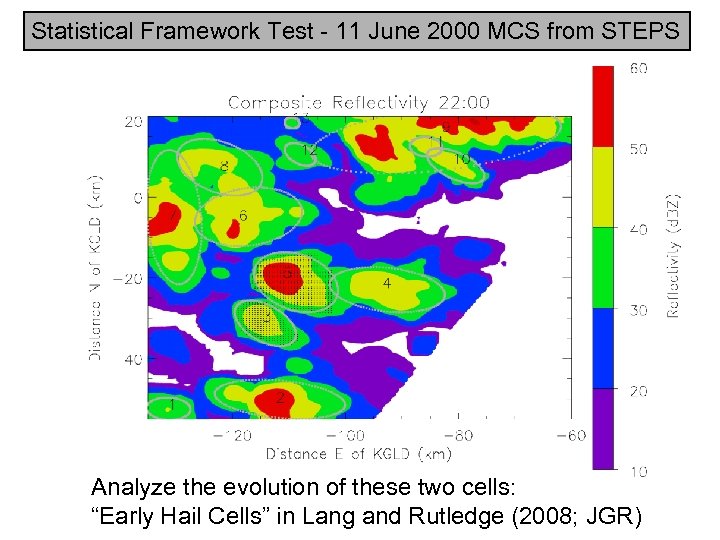
Statistical Framework Test - 11 June 2000 MCS from STEPS Analyze the evolution of these two cells: “Early Hail Cells” in Lang and Rutledge (2008; JGR)
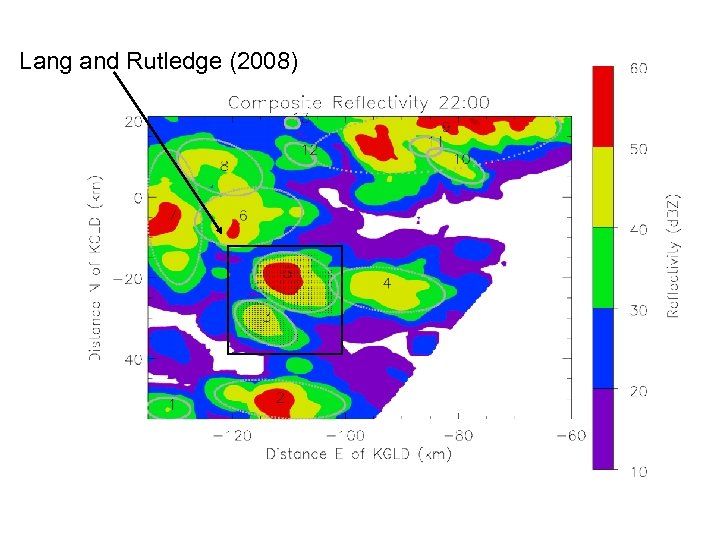
Lang and Rutledge (2008)
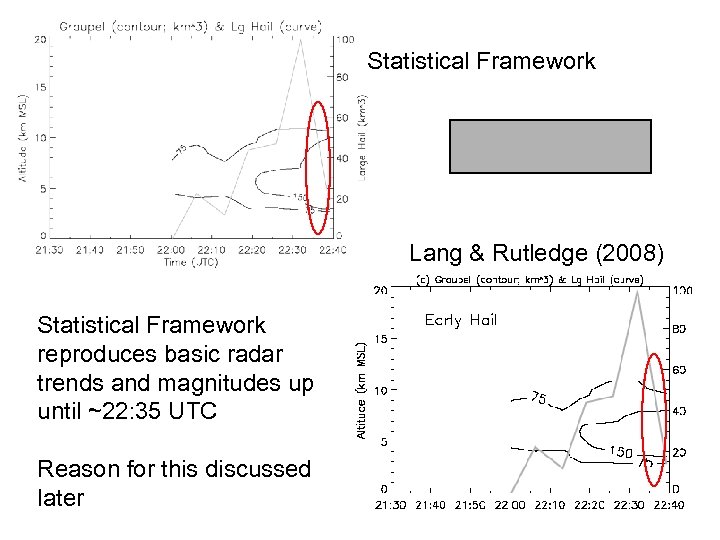
Statistical Framework Lang & Rutledge (2008) Statistical Framework reproduces basic radar trends and magnitudes up until ~22: 35 UTC Reason for this discussed later
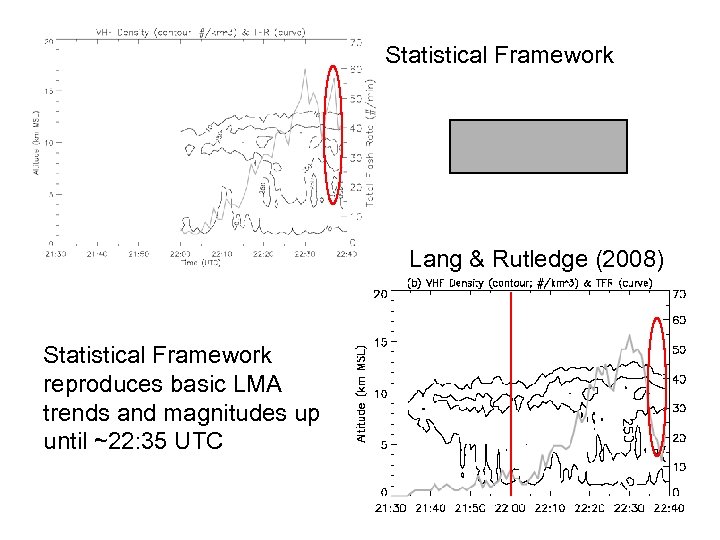
Statistical Framework Lang & Rutledge (2008) Statistical Framework reproduces basic LMA trends and magnitudes up until ~22: 35 UTC
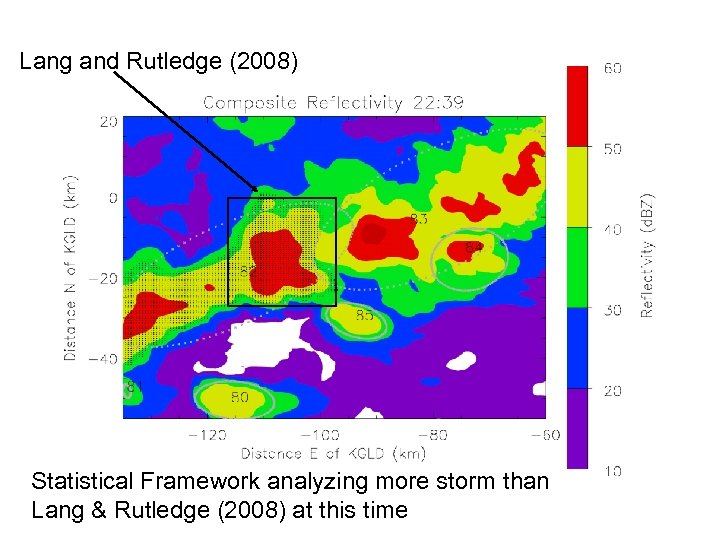
Lang and Rutledge (2008) Statistical Framework analyzing more storm than Lang & Rutledge (2008) at this time
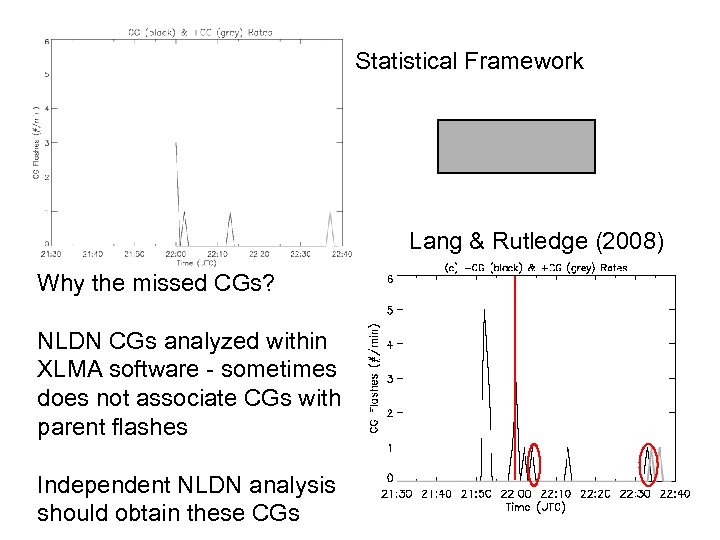
Statistical Framework Lang & Rutledge (2008) Why the missed CGs? NLDN CGs analyzed within XLMA software - sometimes does not associate CGs with parent flashes Independent NLDN analysis should obtain these CGs
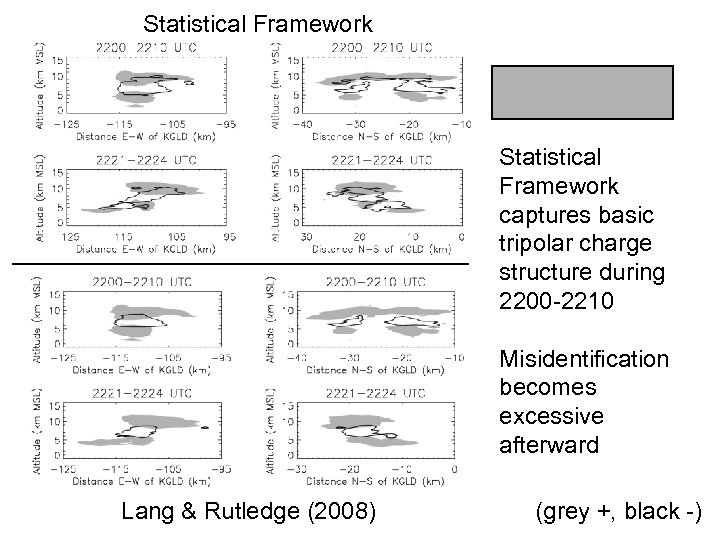
Statistical Framework captures basic tripolar charge structure during 2200 -2210 Misidentification becomes excessive afterward Lang & Rutledge (2008) (grey +, black -)
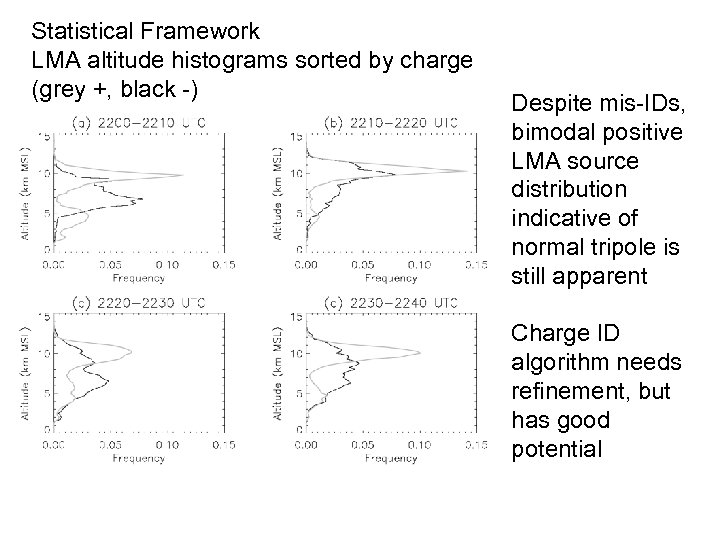
Statistical Framework LMA altitude histograms sorted by charge (grey +, black -) Despite mis-IDs, bimodal positive LMA source distribution indicative of normal tripole is still apparent Charge ID algorithm needs refinement, but has good potential
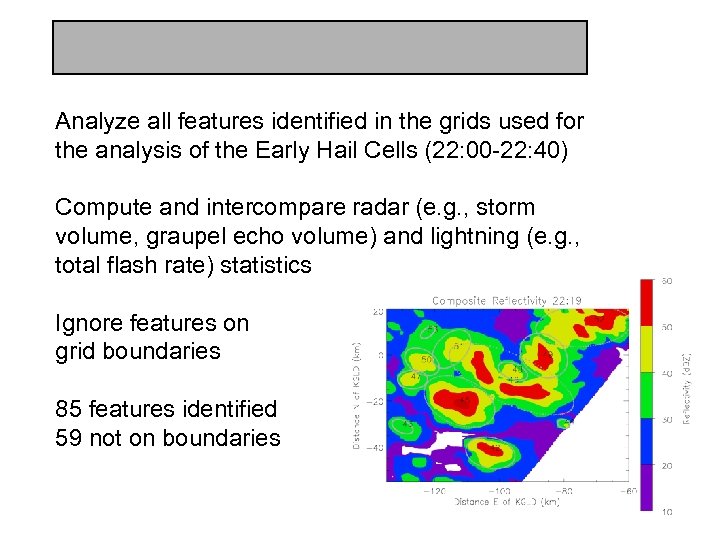
Analyze all features identified in the grids used for the analysis of the Early Hail Cells (22: 00 -22: 40) Compute and intercompare radar (e. g. , storm volume, graupel echo volume) and lightning (e. g. , total flash rate) statistics Ignore features on grid boundaries 85 features identified 59 not on boundaries
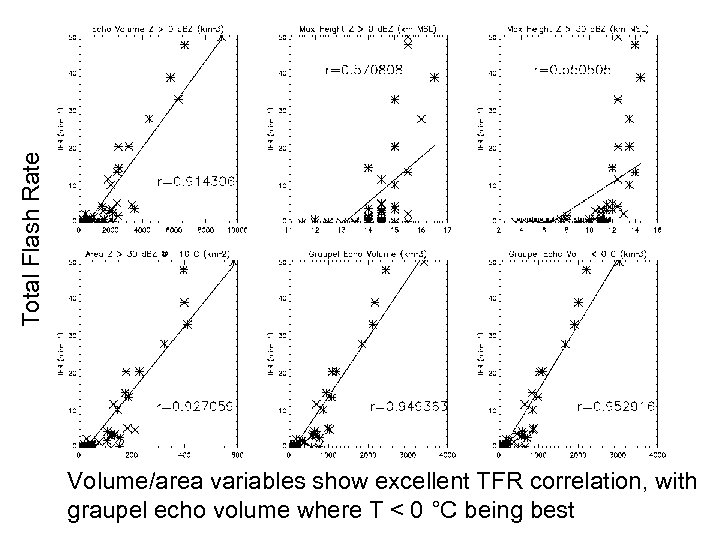
Total Flash Rate Volume/area variables show excellent TFR correlation, with graupel echo volume where T < 0 °C being best
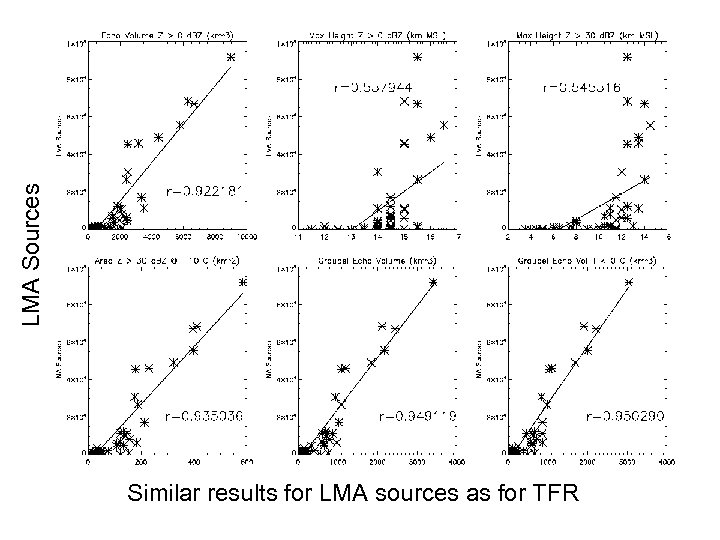
LMA Sources Similar results for LMA sources as for TFR
Statistical Framework faithfully reproduces most results from a hand-analyzed case study, in a fraction of the time Charge ID is weakest component, but shows good potential Framework generates physically reasonable results after mass processing of a small dataset Improve charge ID and fix other issues (e. g. , NLDN CGs) Test Framework on other STEPS cases Add capability for enviro, aerosol, and other data inputs
Скачать презентацию Typically in studies involving both polarimetric radar and
534bfaf5b0cc5f25f860350e3cbc73e7.ppt