Скачать презентацию Typical conventional antipsychotics Ø Other Adverse effects
Biologicol therapy Psychopharmacology and Antypsychotics Second Part.ppt
- Количество слайдов: 53
 Typical / conventional antipsychotics Ø Other Adverse effects Ø Neuroleptic malignant syndrome (NMS) Rare but serious reaction, 0. 2% of patients on neuroleptics Ø High fever, autonomic instability, mental status changes, leaden rigidity, elevated CK, WBC, myoglobinuria Ø Risk factors: Ø Age, male sex, Dementia, Dehydration, CVA, lithium Ø
 Neuroleptic malignant syndrome Ø Ø Rigidity Hyperthermia (homeostatic eg. labile BP, diaphoria, tachy, incontinence) Confusion (altered consciousness up to coma, dysphagia, mutism) Raised CK Ø Misc (incontinence, dysphagia) Ø Treat in ICU if severe: Ø Bromocriptine 2. 5 mg BD + dantrolene 50 mg IV Ø Prognosis: Ø 30% will have it again upon rechallenge with antipsychotics Ø Use low potency agent, wait 14 days, monitor carefully
 Typical / conventional antipsychotics Other Adverse effects Ø Neuroleptic malignant syndrome (NMS) Ø After symptom resolution Ø Some suggest to wait for at least 2 weeks before resuming Ø Use lowest effective dose Ø Avoid high potency agents Ø Consider atypical antipsychotics Ø However, NMS has been reported from patients taking clozapine, risperidone, olanzapine and quetiapine
 Antipsychotic side effects ECG changes i. Most seen with thioridazine, clozapine and ziprasidone ii. Drugs have quinidine- like effects – QT prolongation, ST depression, increased HR iii. Get baseline EKG in patients >50 years of age iv. Do serum K+ iv. D/C medication if QTc>500 msec Dermatological Increased photosensitivity – especially with chlorpromazine ii. Pigmentation changes with chlorpromazine iii. Rash – seen within first eight weeks IM chlorpromazine abscesses
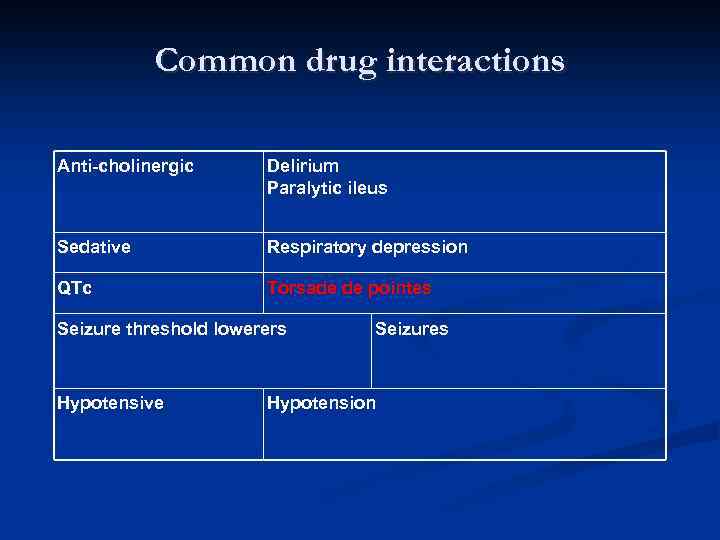 Common drug interactions Anti-cholinergic Delirium Paralytic ileus Sedative Respiratory depression QTc Torsade de pointes Seizure threshold lowerers Hypotensive Seizures Hypotension
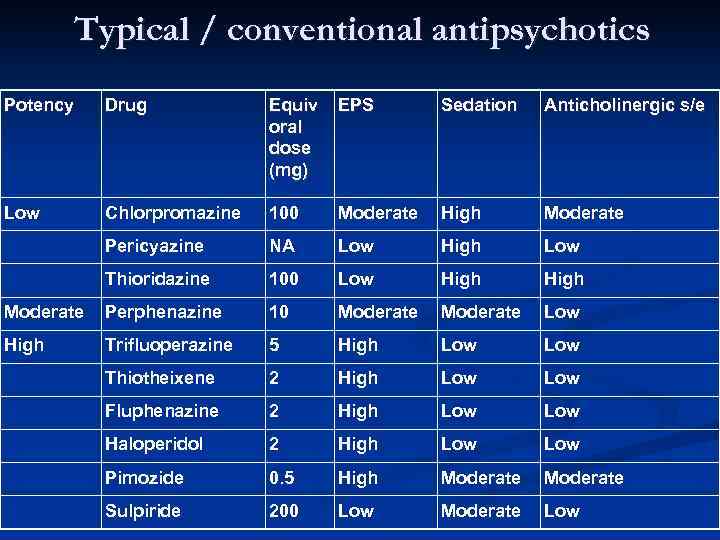 Typical / conventional antipsychotics Potency Drug Equiv oral dose (mg) EPS Sedation Anticholinergic s/e Low Chlorpromazine 100 Moderate High Moderate Pericyazine NA Low High Low Thioridazine 100 Low High Moderate Perphenazine 10 Moderate Low High Trifluoperazine 5 High Low Thiotheixene 2 High Low Fluphenazine 2 High Low Haloperidol 2 High Low Pimozide 0. 5 High Moderate Sulpiride 200 Low Moderate Low
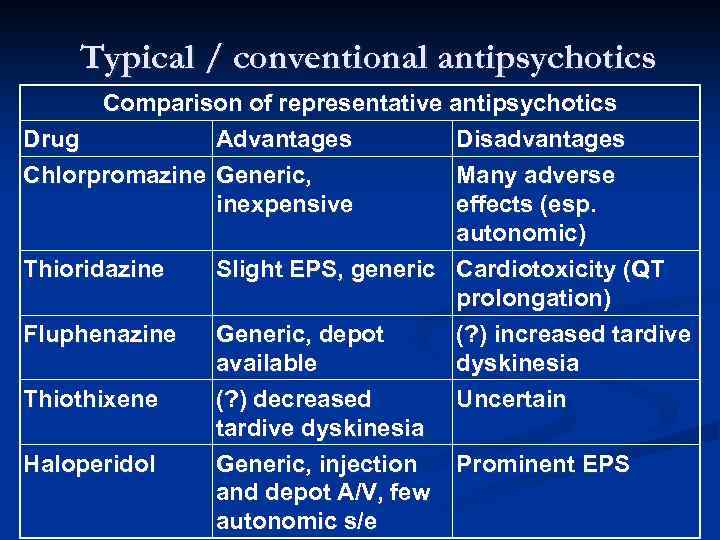 Typical / conventional antipsychotics Comparison of representative antipsychotics Drug Advantages Disadvantages Chlorpromazine Generic, Many adverse inexpensive effects (esp. autonomic) Thioridazine Slight EPS, generic Cardiotoxicity (QT prolongation) Fluphenazine Generic, depot (? ) increased tardive available dyskinesia Thiothixene (? ) decreased Uncertain tardive dyskinesia Haloperidol Generic, injection Prominent EPS and depot A/V, few autonomic s/e
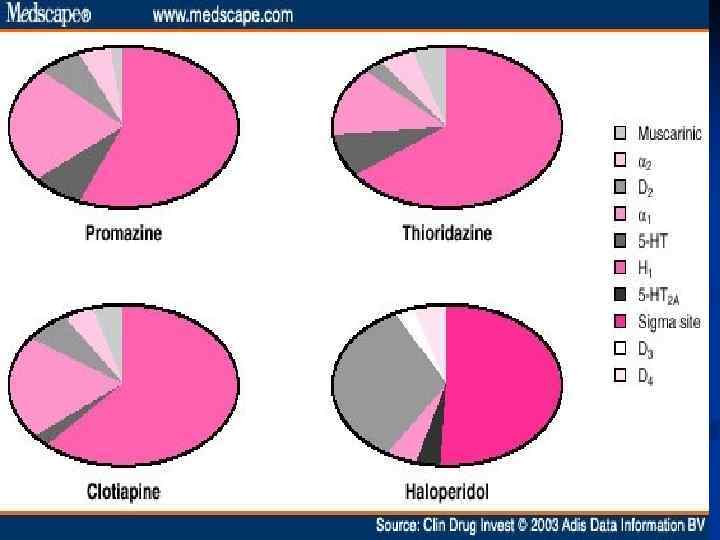
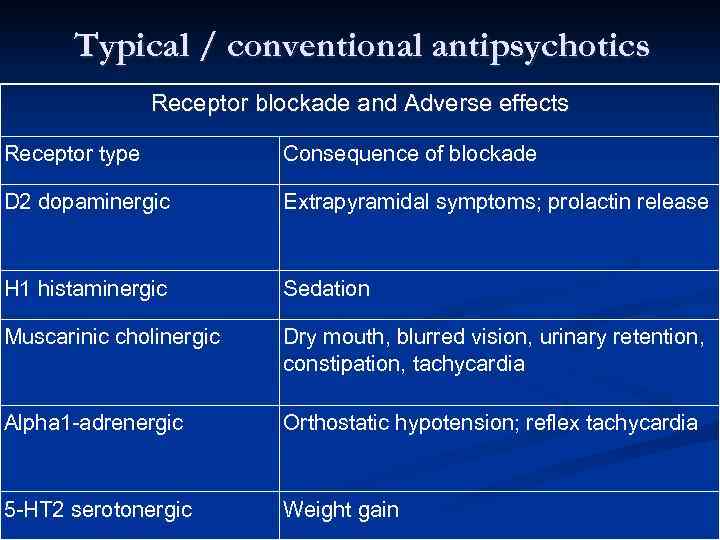 Typical / conventional antipsychotics Receptor blockade and Adverse effects Receptor type Consequence of blockade D 2 dopaminergic Extrapyramidal symptoms; prolactin release H 1 histaminergic Sedation Muscarinic cholinergic Dry mouth, blurred vision, urinary retention, constipation, tachycardia Alpha 1 -adrenergic Orthostatic hypotension; reflex tachycardia 5 -HT 2 serotonergic Weight gain
 Typical / conventional antipsychotics Other Adverse effects Ø Prolactinemia Ø Ø D 2 receptor blockade decreases dopamine inhibition of prolactin Results in galactorrhea, amenorrhea, loss of libido Ø Ø Sedation Ø Ø Managed with bromocriptine Administer once daily at bedtime Seizures Ø Ø Haloperidol has a lower risk of seizures Anticonvulsants (beware or possible interaction with antipsychotic)
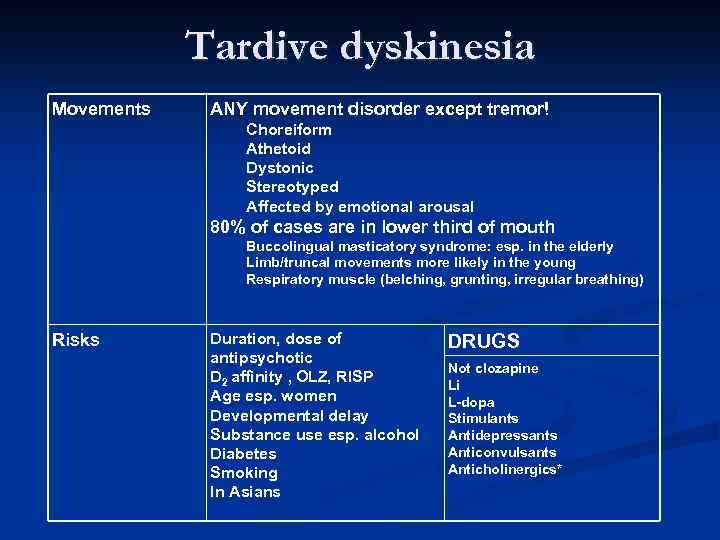 Tardive dyskinesia Movements ANY movement disorder except tremor! Choreiform Athetoid Dystonic Stereotyped Affected by emotional arousal 80% of cases are in lower third of mouth Buccolingual masticatory syndrome: esp. in the elderly Limb/truncal movements more likely in the young Respiratory muscle (belching, grunting, irregular breathing) Risks Duration, dose of antipsychotic D 2 affinity , OLZ, RISP Age esp. women Developmental delay Substance use esp. alcohol Diabetes Smoking In Asians DRUGS Not clozapine Li L-dopa Stimulants Antidepressants Anticonvulsants Anticholinergics*
 Antipsychotic side effects Hepatic i. Usually asymptomatic elevations in ALT ii. Not dose related iii. Usually in patients <50 years old iv. Can cause cholestatic jaundice – usually in first month 1. Resolves with D/C of drug without damage 2. Most commonly seen with chlorpromazine (0. 1 -0. 5%) Ophthalmic effects i. Blurred vision or narrow angle glaucoma secondary to anticholinergic effects (see anticholindergic side effects above) ii. Corneal and lens changes can occur with phenothiazines, especially chlorpromazine and quetiapine
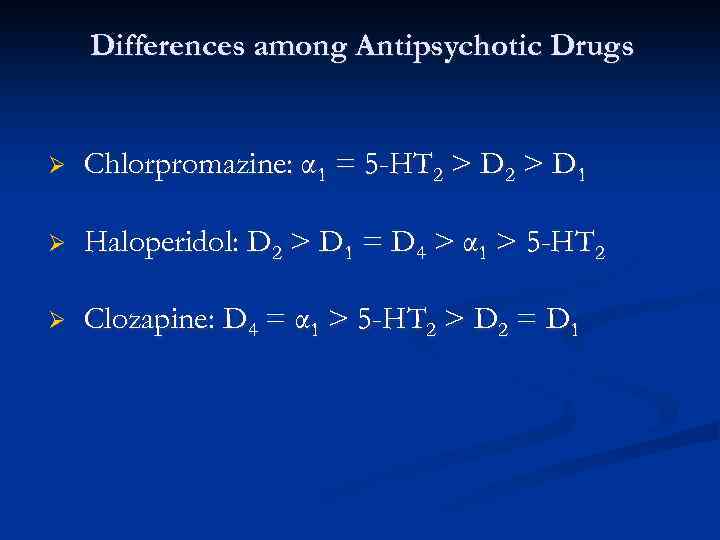 Differences among Antipsychotic Drugs Ø Chlorpromazine: α 1 = 5 -HT 2 > D 1 Ø Haloperidol: D 2 > D 1 = D 4 > α 1 > 5 -HT 2 Ø Clozapine: D 4 = α 1 > 5 -HT 2 > D 2 = D 1
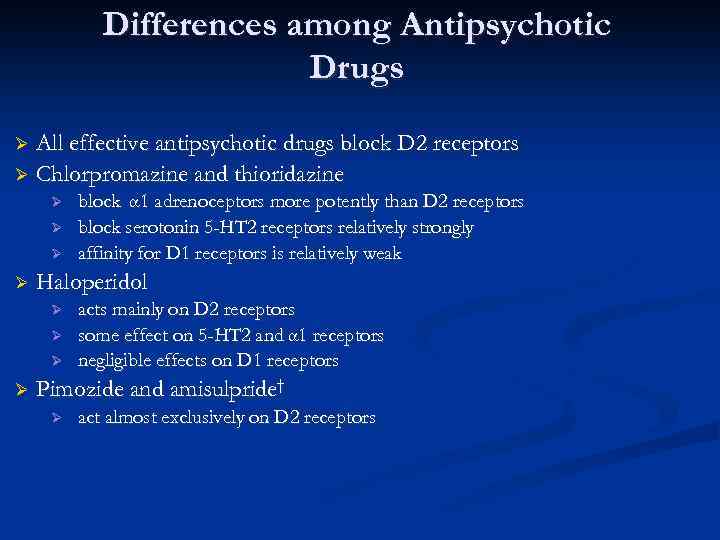 Differences among Antipsychotic Drugs All effective antipsychotic drugs block D 2 receptors Ø Chlorpromazine and thioridazine Ø Ø Ø Haloperidol Ø Ø block α 1 adrenoceptors more potently than D 2 receptors block serotonin 5 -HT 2 receptors relatively strongly affinity for D 1 receptors is relatively weak acts mainly on D 2 receptors some effect on 5 -HT 2 and α 1 receptors negligible effects on D 1 receptors Pimozide and amisulpride† Ø act almost exclusively on D 2 receptors
 Atypical antipsychotics
 Beyond dopamine • New generation antipsychotics affect serotonin as well • Glutamate antagonists can help with negative symptoms • Schizophrenia likely affects a host of systems perhaps by disturbing a fundamental balance among neurotransmitters
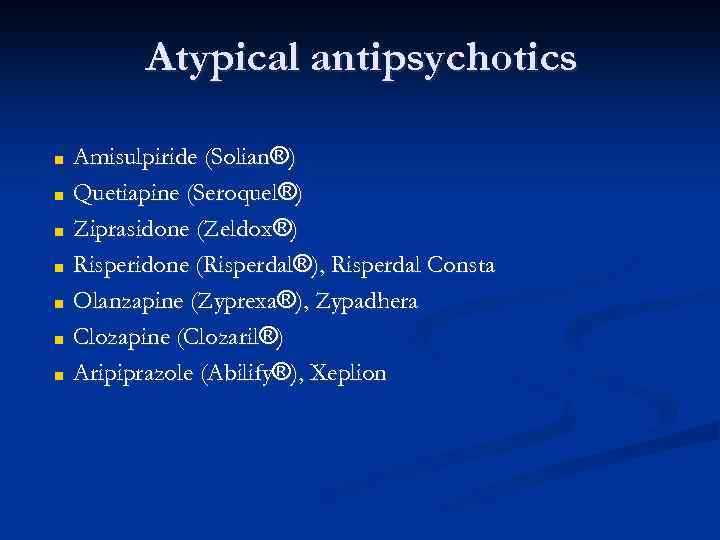 Atypical antipsychotics ■ ■ ■ ■ Amisulpiride (Solian®) Quetiapine (Seroquel®) Ziprasidone (Zeldox®) Risperidone (Risperdal®), Risperdal Consta Olanzapine (Zyprexa®), Zypadhera Clozapine (Clozaril®) Aripiprazole (Abilify®), Xeplion
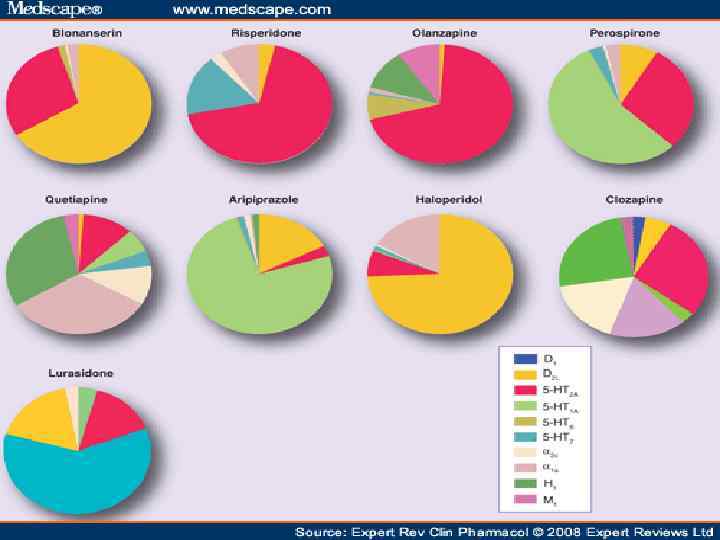
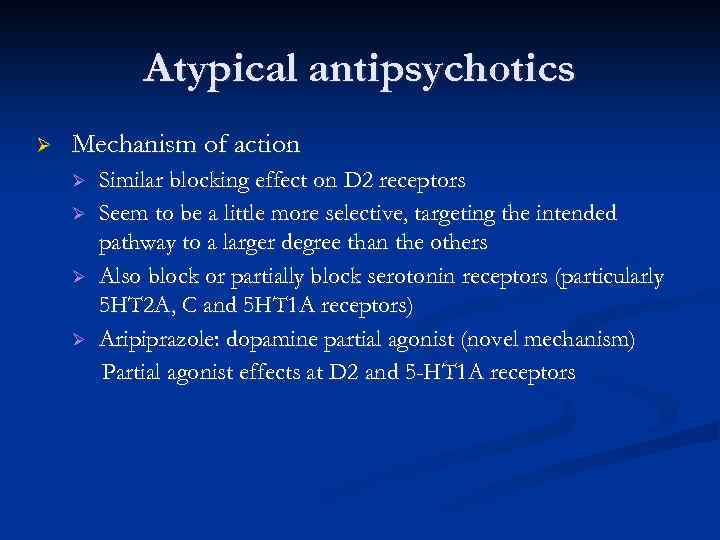 Atypical antipsychotics Ø Mechanism of action Ø Ø Similar blocking effect on D 2 receptors Seem to be a little more selective, targeting the intended pathway to a larger degree than the others Also block or partially block serotonin receptors (particularly 5 HT 2 A, C and 5 HT 1 A receptors) Aripiprazole: dopamine partial agonist (novel mechanism) Partial agonist effects at D 2 and 5 -HT 1 A receptors
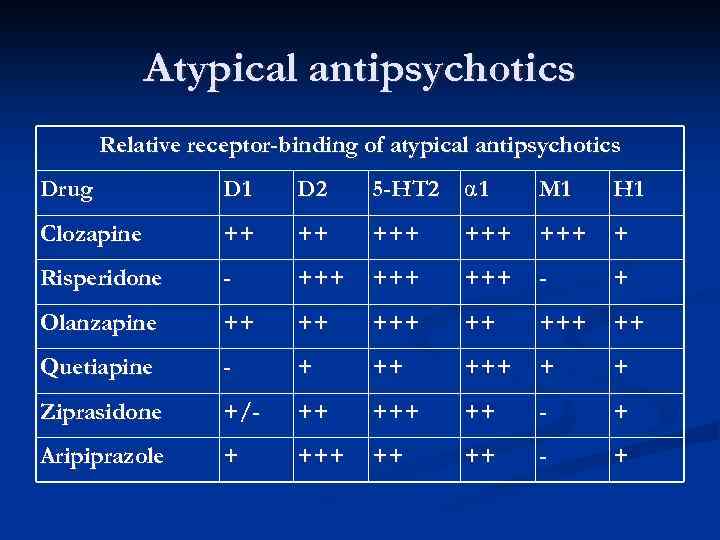 Atypical antipsychotics Relative receptor-binding of atypical antipsychotics Drug D 1 D 2 5 -HT 2 α 1 M 1 H 1 Clozapine ++ ++ +++ + Risperidone - +++ +++ - + Olanzapine ++ ++ +++ ++ Quetiapine - + ++ + + Ziprasidone +/- ++ ++ - + Aripiprazole + ++ ++ - +
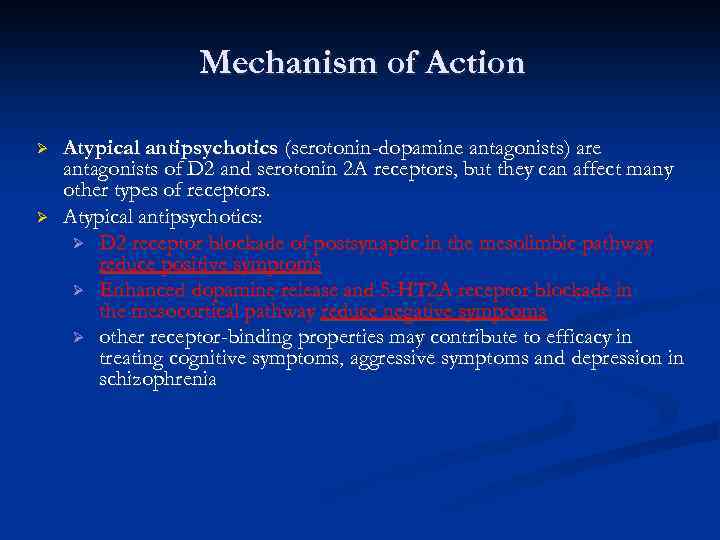 Mechanism of Action Ø Ø Atypical antipsychotics (serotonin-dopamine antagonists) are antagonists of D 2 and serotonin 2 A receptors, but they can affect many other types of receptors. Atypical antipsychotics: Ø D 2 receptor blockade of postsynaptic in the mesolimbic pathway reduce positive symptoms Ø Enhanced dopamine release and 5 -HT 2 A receptor blockade in the mesocortical pathway reduce negative symptoms Ø other receptor-binding properties may contribute to efficacy in treating cognitive symptoms, aggressive symptoms and depression in schizophrenia
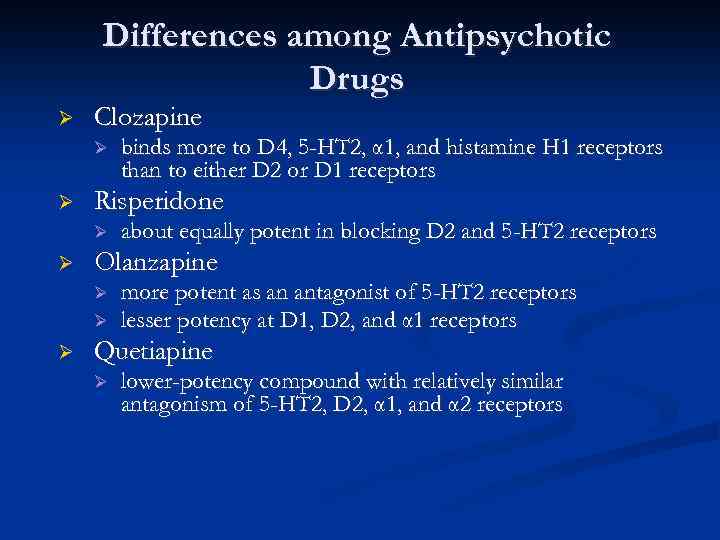 Differences among Antipsychotic Drugs Ø Clozapine Ø Ø Risperidone Ø Ø about equally potent in blocking D 2 and 5 -HT 2 receptors Olanzapine Ø Ø Ø binds more to D 4, 5 -HT 2, α 1, and histamine H 1 receptors than to either D 2 or D 1 receptors more potent as an antagonist of 5 -HT 2 receptors lesser potency at D 1, D 2, and α 1 receptors Quetiapine Ø lower-potency compound with relatively similar antagonism of 5 -HT 2, D 2, α 1, and α 2 receptors
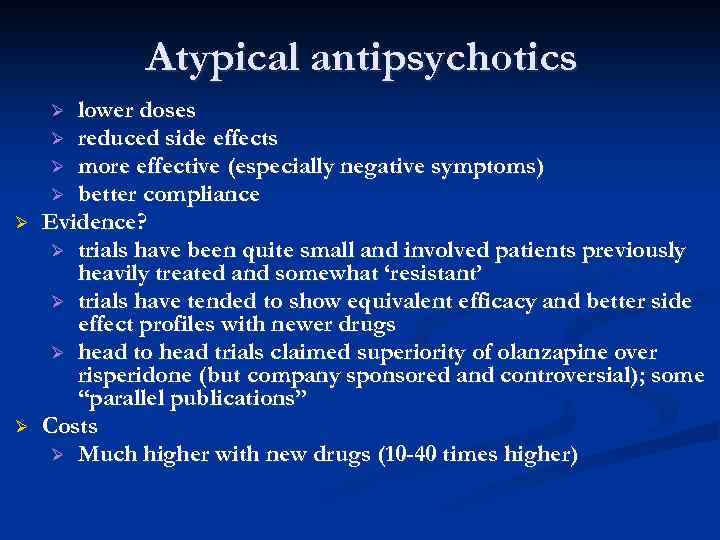 Atypical antipsychotics lower doses Ø reduced side effects Ø more effective (especially negative symptoms) Ø better compliance Evidence? Ø trials have been quite small and involved patients previously heavily treated and somewhat ‘resistant’ Ø trials have tended to show equivalent efficacy and better side effect profiles with newer drugs Ø head to head trials claimed superiority of olanzapine over risperidone (but company sponsored and controversial); some “parallel publications” Costs Ø Much higher with new drugs (10 -40 times higher) Ø Ø Ø
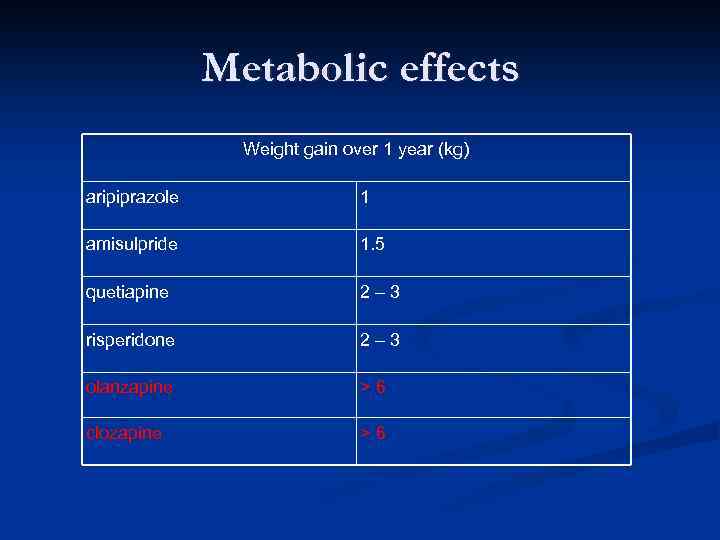 Metabolic effects Weight gain over 1 year (kg) aripiprazole 1 amisulpride 1. 5 quetiapine 2– 3 risperidone 2– 3 olanzapine >6 clozapine >6
 Insulin resistance Ø Ø Ø Prediabetes (impaired fasting glycaemia) has ~ 10% chance / year of converting to Type 2 diabetes Prediabetes plus olanzapine has a 6 -fold increased risk of conversion If olanzapine is stopped 70% will revert back to prediabetes
 Stroke in the elderly Ø Ø Risperidone and olanzapine associated with increased risk of stroke when used for behavioural control in dementia Risperidone 3. 3% vs 1. 2% for placebo Olanzapine 1. 3% vs 0. 4% for placebo However, large observational database studies Ø Show no increased risk of stroke compared with typical antipsychotics or untreated dementia patients
 Conclusions Ø Ø Ø Atypical antipsychotics have serotonin blocking effects as well as dopamine blockade As a group have less chance of extrapyramidal side effects Most have weight gain and insulin resistance as a side effect (except perhaps aripiprazole and maybe amisulpride) May be associated with stroke when used for behavioural control in dementia (? !) Many have idiosyncratic toxicities
 Atypical antipsychotics Ø Properties Ø Ø Ø Available evidence to show advantage for some (clozapine, risperidone, olanzapine) but not all atypicals when compared with typicals At least as effective as typicals for positive symptoms May be more efficacious for negative and cognitive symptoms (still under debate)
 Atypical antipsychotics Ø Potency Ø All atypical antipsychotics are equally effective at therapeutic doses Ø Ø Except clozapine Most effective antipsychotic For resistant schizophrenia 2 nd line due to life-threatening side effect
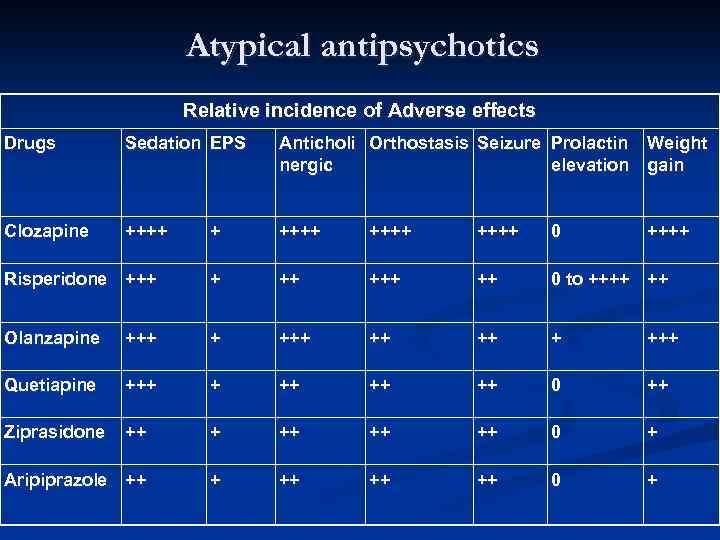 Atypical antipsychotics Relative incidence of Adverse effects Drugs Sedation EPS Anticholi Orthostasis Seizure Prolactin Weight nergic elevation gain Clozapine ++++ ++++ 0 Risperidone +++ ++ 0 to ++++ ++ Olanzapine +++ ++ +++ Quetiapine +++ ++ ++ 0 ++ Ziprasidone ++ ++ ++ 0 + Aripiprazole ++ ++ ++ 0 + ++++
 Atypical antipsychotics Ø 1 st line atypical antipsychotics Ø Ø All atypicals except clozapine NICE recommendations Ø Ø Atypical antipsychotics considered when choosing 1 st line treatment of newly diagnosed schizophrenia Treatment option of choice for managing acute schizophrenic episode Considered when suffering unacceptable adverse effects from a conventional antipsychotic Changing to an atypical not necessary if typical controls symptoms adequately and no unacceptable adverse effects
 Atypical antipsychotics Ø 2 nd line atypical antipsychotic Ø Clozapine Ø Ø Ø Most effective antipsychotic for reducing symptoms and preventing relapse Use of clozapine effectively reduce suicide risk 1% risk of potentially fatal agranulocytosis Ø Ø Acute pronounced leukopenia with great reduction in number of neutrophil NICE (The National Institute for Health and Care Excellence) recommendations Ø Clozapine should be introduced if schizophrenia is inadequately controlled despite sequential use of 2 or more antipsychotic (one of which should be an atypical) each for at least 6 -8 weeks)
 ARRIVAL OF THE ATYPICAL ANTIPSYCHOTIC Ø Ø Ø “German psychiatrists working with G. Stille at Wander Pharmaceuticals in Bern, Switzerland, in the early 1960 s worked to refute that EPS and antipsychotic efficacy were linked. Their work led to the introduction of Clozapine, an antipsychotic with no EPS. ” Clozapine was briefly marketed and quickly withdrawn for two reasons: Ø The embarrassment of not having any EPS, and Ø Agranulocytosis
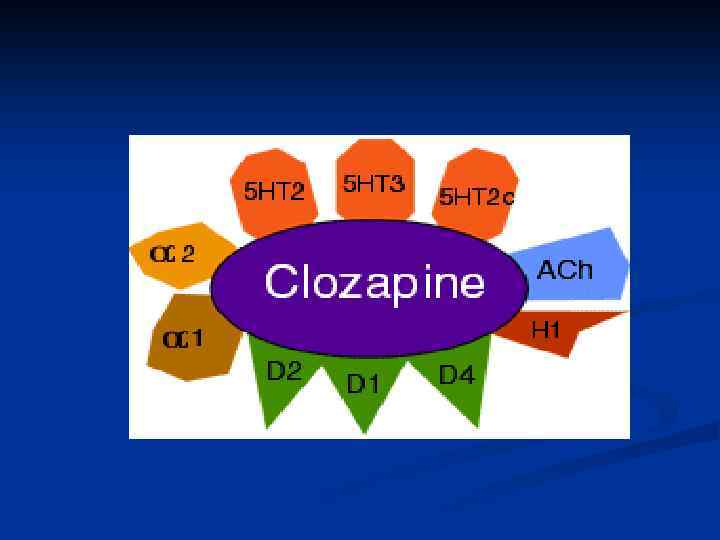
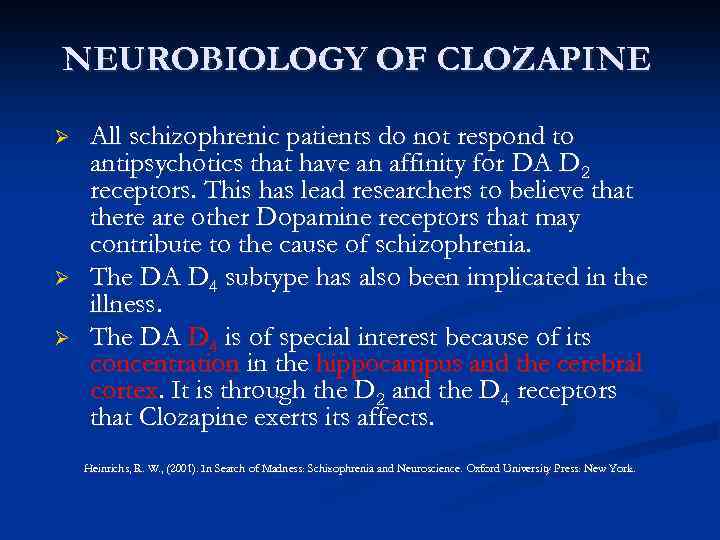 NEUROBIOLOGY OF CLOZAPINE Ø Ø Ø All schizophrenic patients do not respond to antipsychotics that have an affinity for DA D 2 receptors. This has lead researchers to believe that there are other Dopamine receptors that may contribute to the cause of schizophrenia. The DA D 4 subtype has also been implicated in the illness. The DA D 4 is of special interest because of its concentration in the hippocampus and the cerebral cortex. It is through the D 2 and the D 4 receptors that Clozapine exerts its affects. Heinrichs, R. W. , (2001). In Search of Madness: Schizophrenia and Neuroscience. Oxford University Press: New York.
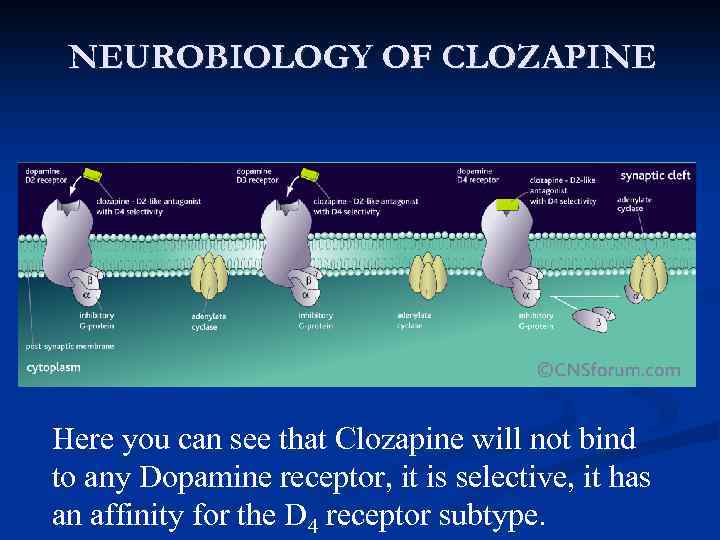 NEUROBIOLOGY OF CLOZAPINE Here you can see that Clozapine will not bind to any Dopamine receptor, it is selective, it has an affinity for the D 4 receptor subtype.
 Mechanism of Action Ø Ø Ø The exact mechanism of action unknown, however, it is believed that Clozapine selectively antagonizes dopamine D 1 and D 4 receptors, serotonin 5 -HT 2 receptors and others. Atypical antipsychotics, like Clozapine, are distinguished by their relatively low affinity for the DA D 2 receptor subtype and its high affinity for the DA D 4 receptor subtype and the 5 HT 2 receptor subtype. Clozapine may be able to permit more normal dopaminergic function in the anterior pituitary, the mesostriatal, mesolimbic and mesocortical regions
 Dosages and Treatment Length Ø Ø Ø The regular dosage given to patients is approximately 900 mg per day, but the regular range 400 -600 mg/d. To minimize side effects, the initial dose of Clozapine may start of low and progressively increase to 200 mg taken three times per day. Clozapine is not a cure for schizophrenia, rather, it is used to relieve the symptoms of the disease. Therefore, the use of antipsychotics is life-long to ensure that the symptoms are controlled. The patient may decide to discontinue the use of Clozapine due to its side effects and is usually placed on a less potent antipsychotic. The discontinuation of all anti-psychotics will cause a relapse of positive and negative symptoms.
 Atypical antipsychotics Ø Clozapine Ø BNF (British National Formulary)52 (September 2006) Ø Ø Ø Leucocyte and differential blood count normal before starting Monitor counts week for 18 weeks, then at least 2 weeks after 1 year At least 4 weeks after count stable for 1 year (for 4 more weeks after discontinuation) If leucocyte count < 3000/mm 3, or if ANC (Absolute Neutrophil Count) < 1500/mm 3, discontinue immediately and refer to hematologist Patient should report immediately symptoms of infection, esp. flu-like illness (fever, sore throat)
 Atypical antipsychotics Ø Clozapine Ø Rare cases of myocarditis and cardiomyopathy Ø Ø Ø Fatal Most commonly in first 2 months CSM (Committee on Safety of Medicines(recommendations Ø Ø Physical exam and medical history before starting Persistent tachycardia esp. in first 2 weeks should prompt observation for cardiomyopathy If myocarditis or cardiomyopathy, stop clozapine Inform patients for unexplained fatigue, dyspnea, tachypnea, chest pain, paipitation and ask them to report these signs and symptoms immediately
 Atypical antipsychotics Ø Clozapine Ø Contraindication Ø Ø History of clozapine-induced agranulocytosis Bone marrow suppression On myelosuppressive drugs Caution Ø Ø Seizure disorders Diabetes
 CLOZAPINE ADVANTAGES Ø Ø Clozapine is considered by many as the only atypical antipsychotic due to its elevated effects over other “atypical” antipsychotics. Patients do not experience extrapyramidal symptoms (EPS) Used for treatment-resistant patients that have not responded to any other medication. Has been shown to have some effectiveness in the treatment of negative symptoms. DISADVANTAGES Ø Ø There is a high correlation between patients who take this medication and the development of Agranulocytosis. Clozapine costs more than typical anti-psychotics, however, the cost is relatively the same for atypical antipsychotics The effective dose of Clozapine is higher than other atypical antipsychotics. Tends to work more effectively in younger patients (20 s) than older patients (30 s).
 CONCLUSIONS Ø Is there any controversy involved in using this treatment? Ø Ø Ø There is some controversy surrounding this drug. The debate is over when this drug should be used. Many say that due to the increased risk of attaining Agranulocytosis (which can be fatal is not detected) this drug should be used only if the individual is un responsive to other drugs. However, there has been findings that Clozapine is significantly more affective if administered to the patient at a younger age. Is this treatment appropriate for every patient? Ø Ø No Typically Clozapine is used on schizophrenic patients that are treatmentrefractory or unresponsive to other medications.
 Antipsychotic oral-dispersible and solution preparations Ø Oral-dispersible preps available for Ø 2 atypicals Ø Ø Ø Risperidone (Risperdal Quicklet®) Olanzapine (Zyprexa Zydis®) Carefully peel off packing, allow tablet to dissolve on tongue and swallow Do not break the tablet Some may be dispersed in fluids (consult manufacturer literature) Solutions available for Ø 1 typical Ø Ø 1 atypical Ø Ø Haloperidol (Haldol® drops) Risperidone (Risperdal® solution) Very concentrated, avoid from contact with skin (dermatitis)
 Antipsychotic depot injections Ø Available for Ø 4 typicals Ø Ø Ø 3 atypical Ø Ø Ø Haloperidol decanoate (Haldol Decanoate®) Fluphenazine decanoate (Modecate®) Flupenthixol (Fluanxol®) Zuclopenthixol (Clopixol Depot®) Risperidone (Risperdal Consta®) Zyprexa (Zypadhera®) Xeplion ( Aripiprizol ®) Used for chronic illness and history of noncompliance Trial of oral meds first to assess tolerability
 Antipsychotics in schizophrenia Ø Selection of typical antipsychotics Ø Ø Ø Atypical antipsychotics may be appropriate if Ø Ø Ø Equally efficacious Chosen by side effect profile Adverse effect is a particular concern Additional benefits for negative and cognitive symptoms required Clozapine Ø 2 nd line treatment when other agents are ineffective or not tolerated
 Antipsychotics in schizophrenia Ø Treatment response Ø First 7 days Ø Ø Ø First 2 -3 weeks Ø Ø Decreased agitation, hostility, combativeness, anxiety, tension and aggression Normalization of sleep and eating habits Increased socialization, improvement in self-care 6 -8 weeks Ø Improvement in formal thought disorder
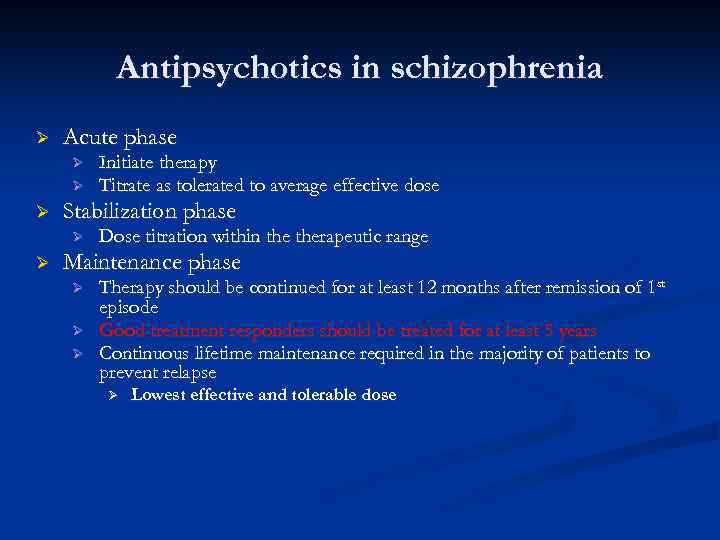 Antipsychotics in schizophrenia Ø Acute phase Ø Ø Ø Stabilization phase Ø Ø Initiate therapy Titrate as tolerated to average effective dose Dose titration within therapeutic range Maintenance phase Ø Ø Ø Therapy should be continued for at least 12 months after remission of 1 st episode Good treatment responders should be treated for at least 5 years Continuous lifetime maintenance required in the majority of patients to prevent relapse Ø Lowest effective and tolerable dose
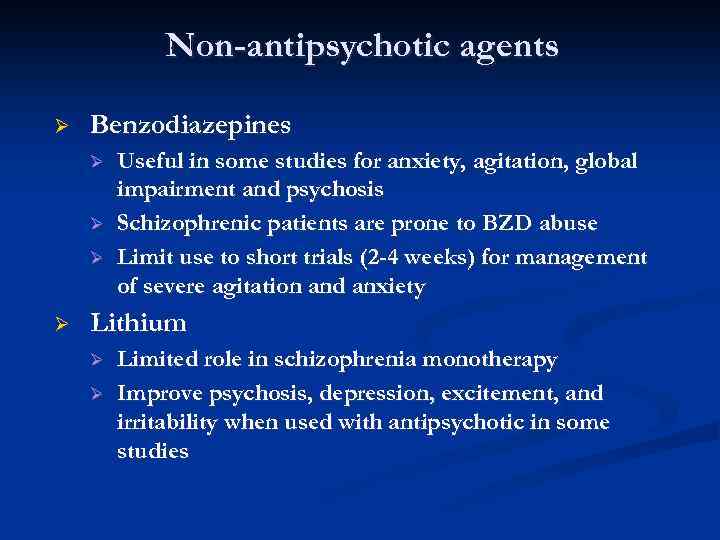 Non-antipsychotic agents Ø Benzodiazepines Ø Ø Useful in some studies for anxiety, agitation, global impairment and psychosis Schizophrenic patients are prone to BZD abuse Limit use to short trials (2 -4 weeks) for management of severe agitation and anxiety Lithium Ø Ø Limited role in schizophrenia monotherapy Improve psychosis, depression, excitement, and irritability when used with antipsychotic in some studies
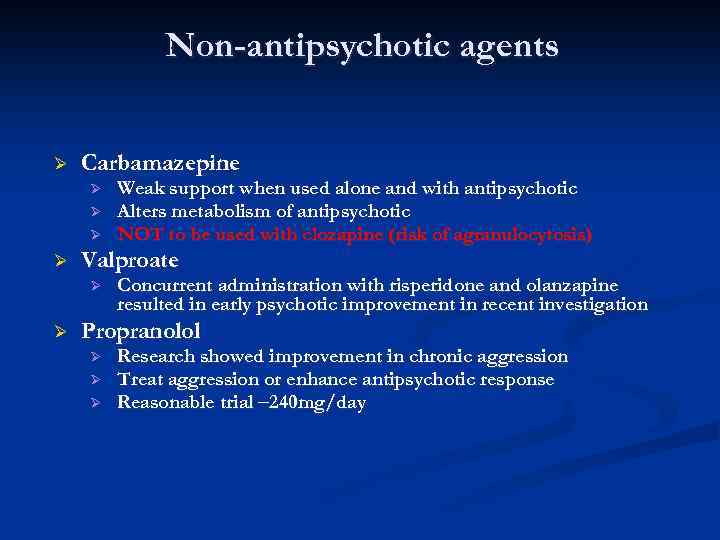 Non-antipsychotic agents Ø Carbamazepine Ø Ø Valproate Ø Ø Weak support when used alone and with antipsychotic Alters metabolism of antipsychotic NOT to be used with clozapine (risk of agranulocytosis) Concurrent administration with risperidone and olanzapine resulted in early psychotic improvement in recent investigation Propranolol Ø Ø Ø Research showed improvement in chronic aggression Treat aggression or enhance antipsychotic response Reasonable trial -240 mg/day
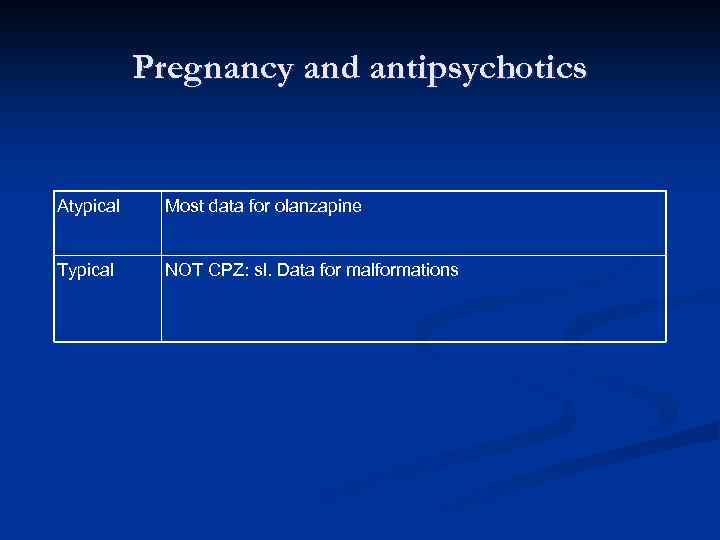 Pregnancy and antipsychotics Atypical Most data for olanzapine Typical NOT CPZ: sl. Data for malformations