


 Скачать презентацию Twentieth century trends in inequalities in housing consumption
66b8adfe38781b29e6399f2b6208150d.ppt
- Количество слайдов: 22
 Twentieth century trends in inequalities in housing consumption: The case of housing space in England Wales, 1911 -2001 Paper presented to the 2012 Social Policy Association conference, Social Policy in an unequal world, University of York, 16 th-18 th July 2012 Rebecca Tunstall, Centre for Housing Policy, Uni. of York. Becky. tunstall@york. ac. uk 1
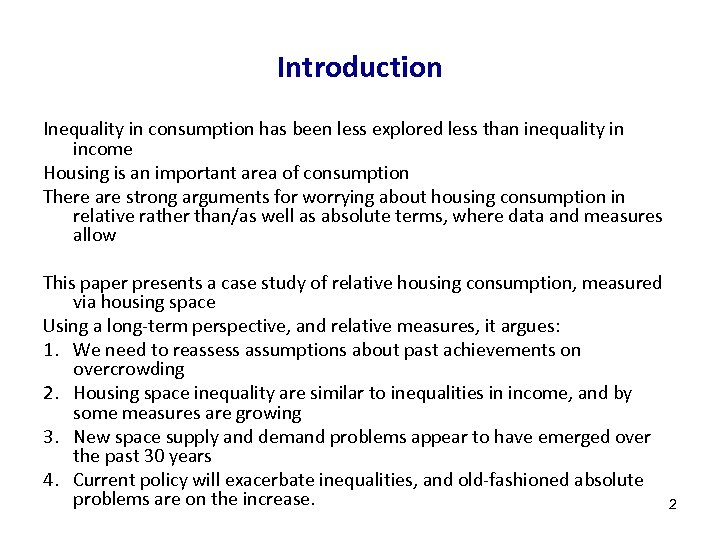 Introduction Inequality in consumption has been less explored less than inequality in income Housing is an important area of consumption There are strong arguments for worrying about housing consumption in relative rather than/as well as absolute terms, where data and measures allow This paper presents a case study of relative housing consumption, measured via housing space Using a long-term perspective, and relative measures, it argues: 1. We need to reassess assumptions about past achievements on overcrowding 2. Housing space inequality are similar to inequalities in income, and by some measures are growing 3. New space supply and demand problems appear to have emerged over the past 30 years 4. Current policy will exacerbate inequalities, and old-fashioned absolute problems are on the increase. 2
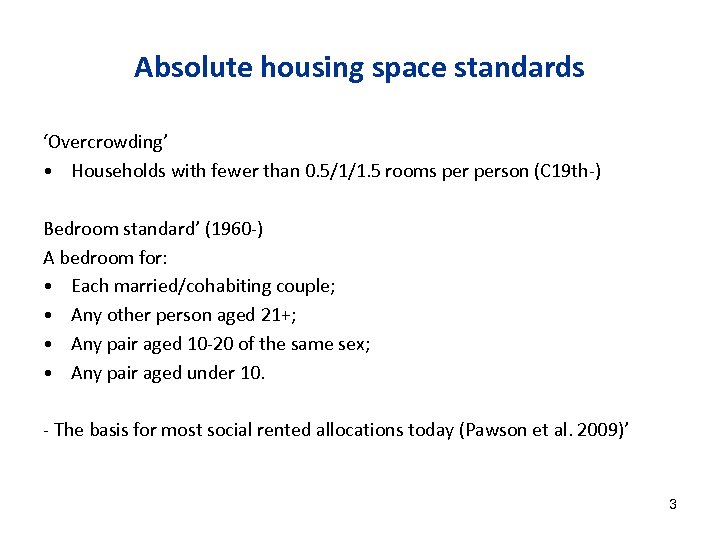 Absolute housing space standards ‘Overcrowding’ • Households with fewer than 0. 5/1/1. 5 rooms person (C 19 th-) Bedroom standard’ (1960 -) A bedroom for: • Each married/cohabiting couple; • Any other person aged 21+; • Any pair aged 10 -20 of the same sex; • Any pair aged under 10. - The basis for most social rented allocations today (Pawson et al. 2009)’ 3
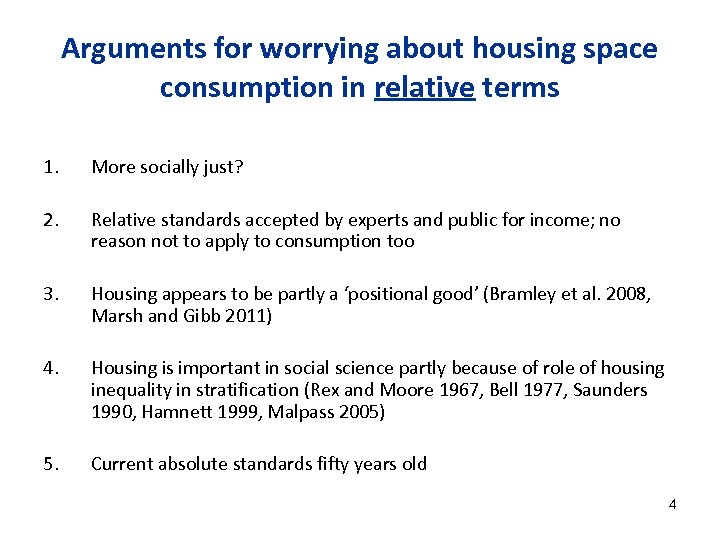 Arguments for worrying about housing space consumption in relative terms 1. More socially just? 2. Relative standards accepted by experts and public for income; no reason not to apply to consumption too 3. Housing appears to be partly a ‘positional good’ (Bramley et al. 2008, Marsh and Gibb 2011) 4. Housing is important in social science partly because of role of housing inequality in stratification (Rex and Moore 1967, Bell 1977, Saunders 1990, Hamnett 1999, Malpass 2005) 5. Current absolute standards fifty years old 4
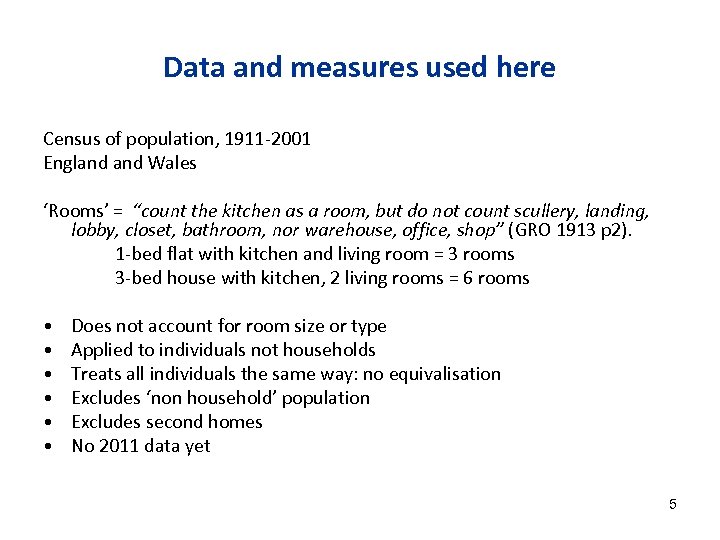 Data and measures used here Census of population, 1911 -2001 England Wales ‘Rooms’ = “count the kitchen as a room, but do not count scullery, landing, lobby, closet, bathroom, nor warehouse, office, shop” (GRO 1913 p 2). 1 -bed flat with kitchen and living room = 3 rooms 3 -bed house with kitchen, 2 living rooms = 6 rooms • • • Does not account for room size or type Applied to individuals not households Treats all individuals the same way: no equivalisation Excludes ‘non household’ population Excludes second homes No 2011 data yet 5
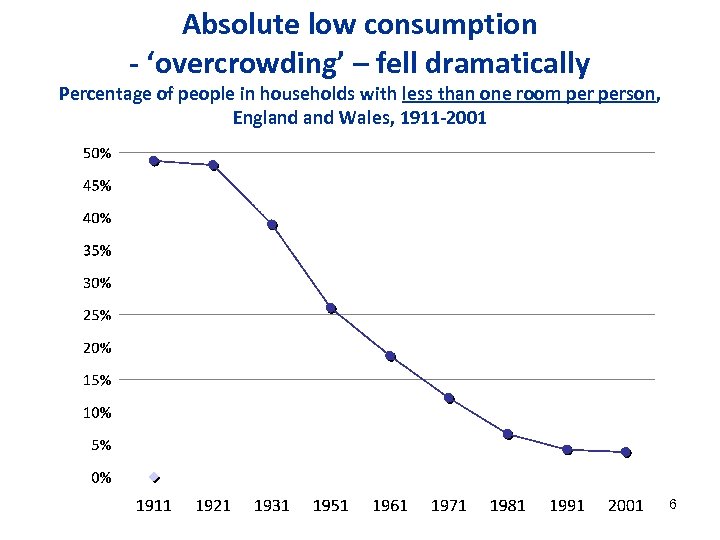 Absolute low consumption - ‘overcrowding’ – fell dramatically Percentage of people in households with less than one room person, England Wales, 1911 -2001 6
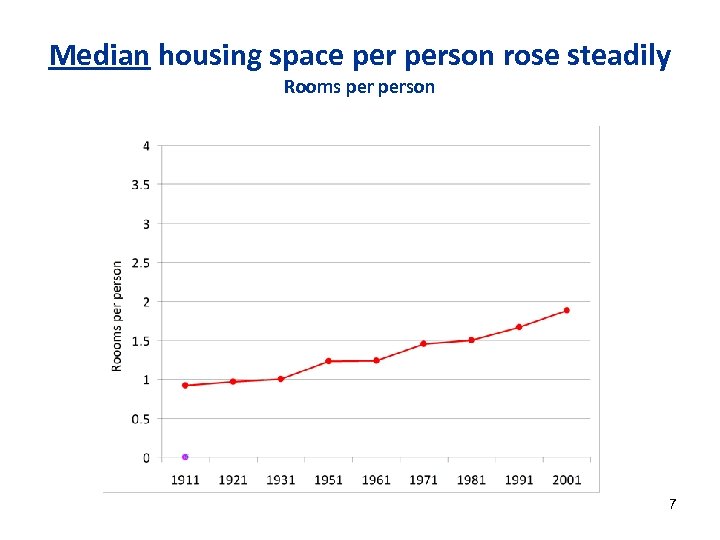 Median housing space person rose steadily Rooms person 7
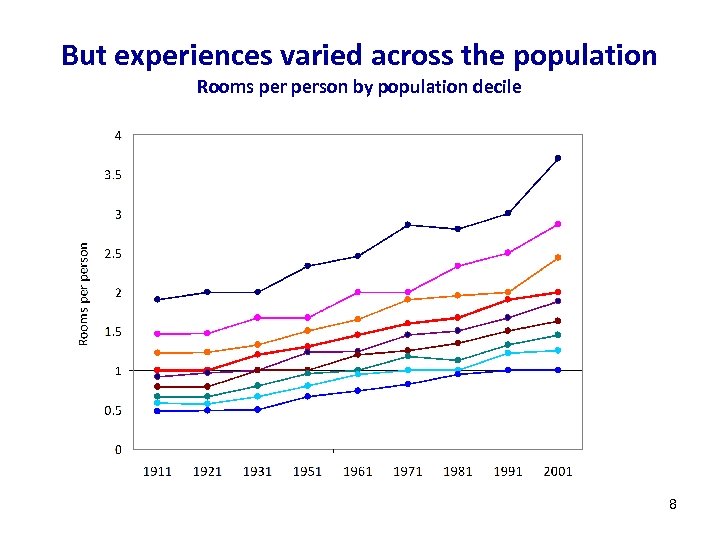 But experiences varied across the population Rooms person by population decile 8
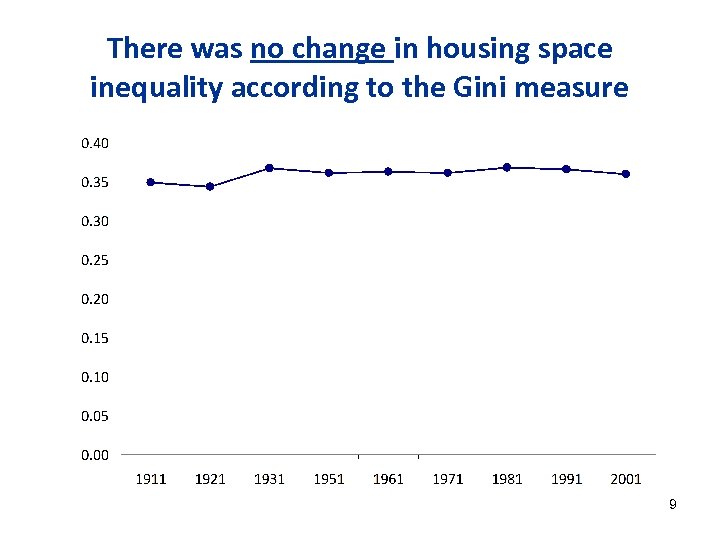 There was no change in housing space inequality according to the Gini measure 9
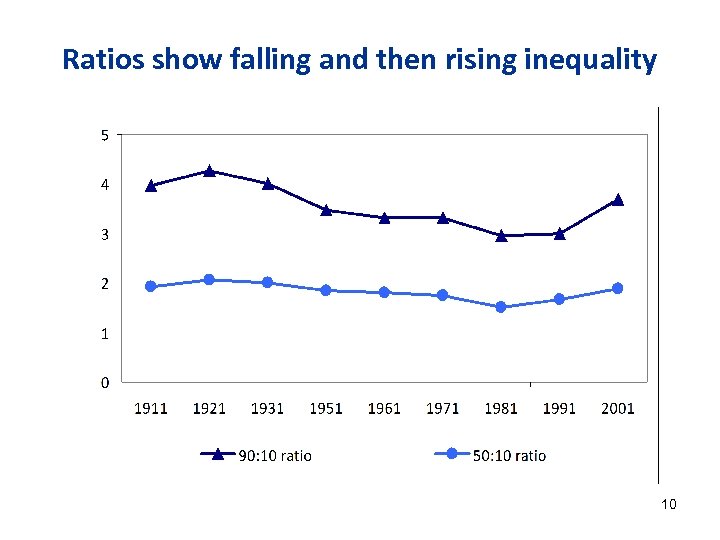 Ratios show falling and then rising inequality 10
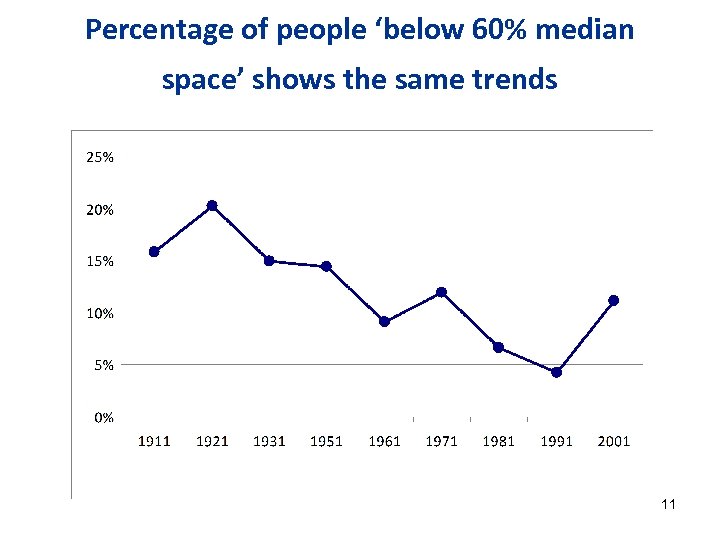 Percentage of people ‘below 60% median space’ shows the same trends 11
 Potential causes of rising housing space inequality 1. 2. 3. 4. Household-home size mismatch Blockage of ‘trickle down’ of space Income inequality? Tenure change? 12
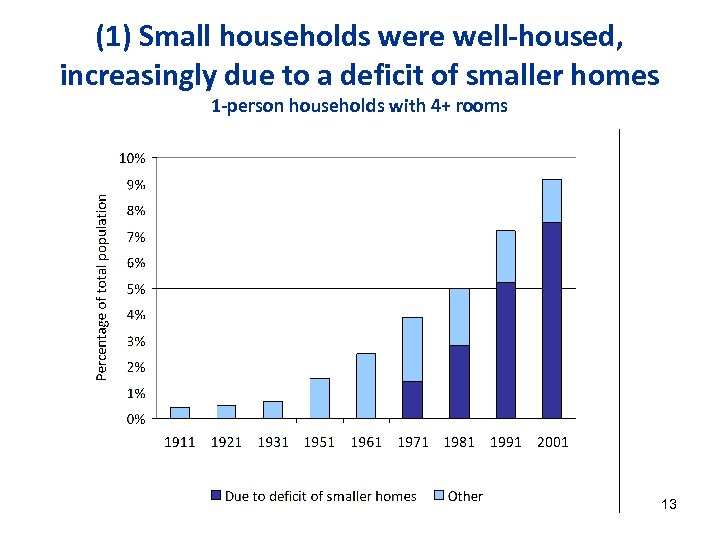 (1) Small households were well-housed, increasingly due to a deficit of smaller homes 1 -person households with 4+ rooms 13
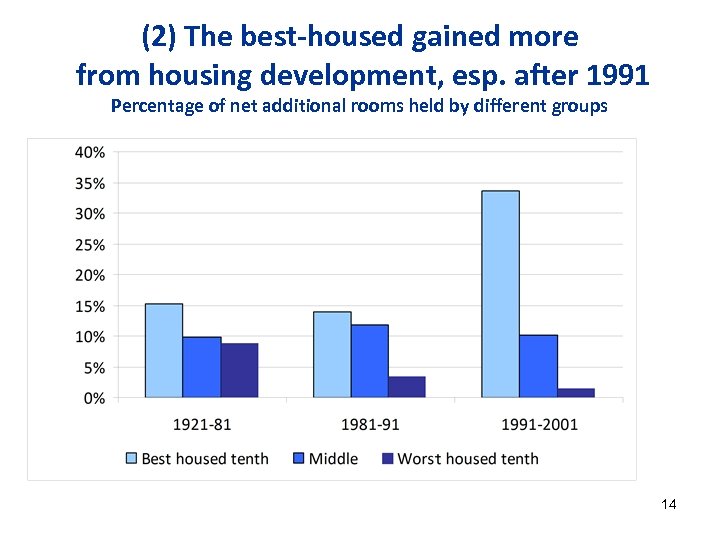 (2) The best-housed gained more from housing development, esp. after 1991 Percentage of net additional rooms held by different groups 14
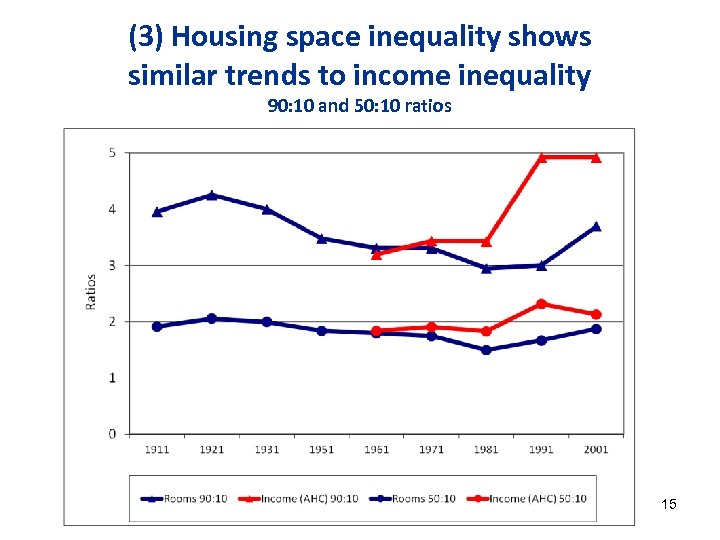 (3) Housing space inequality shows similar trends to income inequality 90: 10 and 50: 10 ratios 15
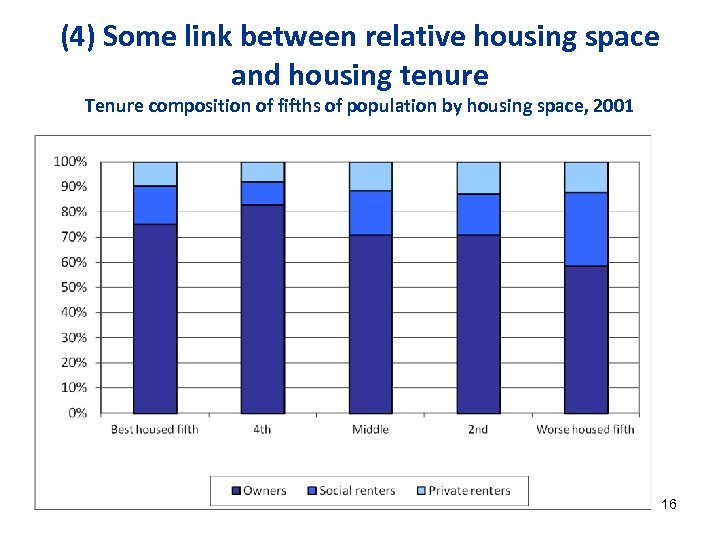 (4) Some link between relative housing space and housing tenure Tenure composition of fifths of population by housing space, 2001 16
 Potential consequences of rising housing space inequality 1. Reduced happiness, well-being? 2. Sustained or increased absolute low consumption? Implications: • Monitoring via relative standards • New development? • Redistribution? 17
 Potential relative housing space standards ‘Low relative housing space consumption’ standard: • Below 60% median housing space • In 2001, below 1. 9 rooms person - generally above bedroom standard ‘Consensual’ standard (Bradshaw et al. 2008): • Pensioner couple – 2 bedrooms - bedroom standard +1 • All children – own room - probably above bedroom standard 18
 The sudden re-emergence of the policy and politics of housing space New space policies via Housing Benefit changes: 1. The ‘single room rent’ and extension to all under 35 s– puts people below the bedroom standard 2. The ‘benefit cap’ – may put people at/below bedroom standard 3. The ‘bedroom tax’ – keeps people at bedroom standard Significant reduction in welfare rights? Regressive redistribution of space? Likely to result in increase in old-fashioned overcrowding 19
 Conclusion There are strong arguments for worrying about housing consumption in relative rather than/as well as in absolute terms, where data and measures allow Relative measures suggest: 1. We need to reassess assumptions about past achievements on low housing space: overcrowding could have been reduced faster 2. Housing space inequality are similar to inequalities in income, and by some measures are growing 3. New structural space supply and demand problems appear to have emerged over the past 30 years: size mismatch, trickle down blockage Current policy will exacerbate inequalities, and old-fashioned absolute problems may be on the increase. 20
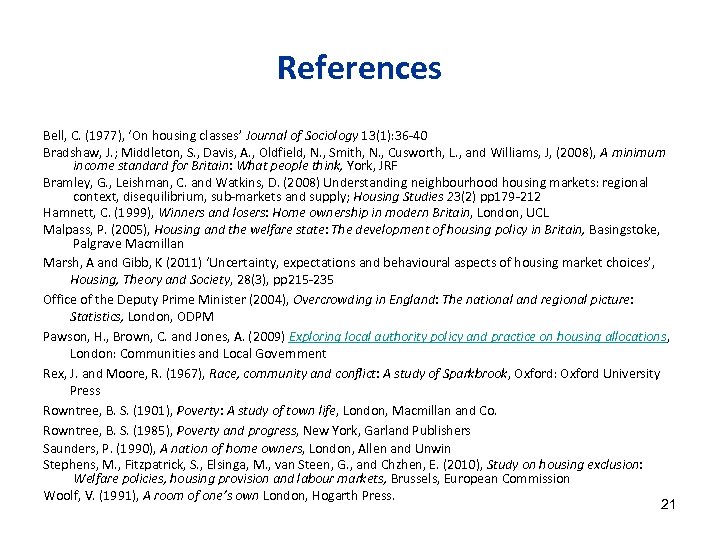 References Bell, C. (1977), ‘On housing classes’ Journal of Sociology 13(1): 36 -40 Bradshaw, J. ; Middleton, S. , Davis, A. , Oldfield, N. , Smith, N. , Cusworth, L. , and Williams, J, (2008), A minimum income standard for Britain: What people think, York, JRF Bramley, G. , Leishman, C. and Watkins, D. (2008) Understanding neighbourhood housing markets: regional context, disequilibrium, sub-markets and supply; Housing Studies 23(2) pp 179 -212 Hamnett, C. (1999), Winners and losers: Home ownership in modern Britain, London, UCL Malpass, P. (2005), Housing and the welfare state: The development of housing policy in Britain, Basingstoke, Palgrave Macmillan Marsh, A and Gibb, K (2011) ‘Uncertainty, expectations and behavioural aspects of housing market choices’, Housing, Theory and Society, 28(3), pp 215 -235 Office of the Deputy Prime Minister (2004), Overcrowding in England: The national and regional picture: Statistics, London, ODPM Pawson, H. , Brown, C. and Jones, A. (2009) Exploring local authority policy and practice on housing allocations, London: Communities and Local Government Rex, J. and Moore, R. (1967), Race, community and conflict: A study of Sparkbrook, Oxford: Oxford University Press Rowntree, B. S. (1901), Poverty: A study of town life, London, Macmillan and Co. Rowntree, B. S. (1985), Poverty and progress, New York, Garland Publishers Saunders, P. (1990), A nation of home owners, London, Allen and Unwin Stephens, M. , Fitzpatrick, S. , Elsinga, M. , van Steen, G. , and Chzhen, E. (2010), Study on housing exclusion: Welfare policies, housing provision and labour markets, Brussels, European Commission Woolf, V. (1991), A room of one’s own London, Hogarth Press. 21
 For more information: www. york. ac. uk/chp Becky. tunstall@york. ac. uk 22