 Скачать презентацию Turning Cro into a Transcriptional Activator Fred Bushman
c018250447fc78b2ef6fe6fb49d62560.ppt
- Количество слайдов: 18



Turning Cro into a Transcriptional Activator Fred Bushman and Mark Ptashne Cell (1988) 54: 191 -197 Presented by Natalie Kuldell for 20. 902 February 4 th, 2009
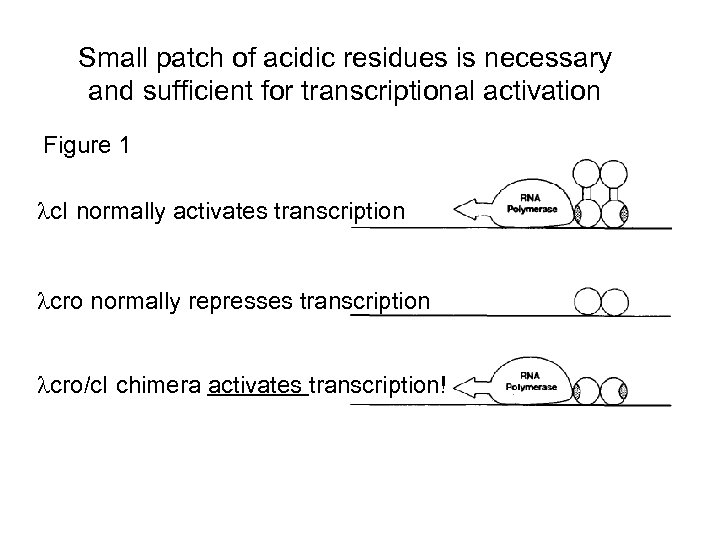
Small patch of acidic residues is necessary and sufficient for transcriptional activation Figure 1 c. I normally activates transcription cro normally represses transcription cro/c. I chimera activates transcription!
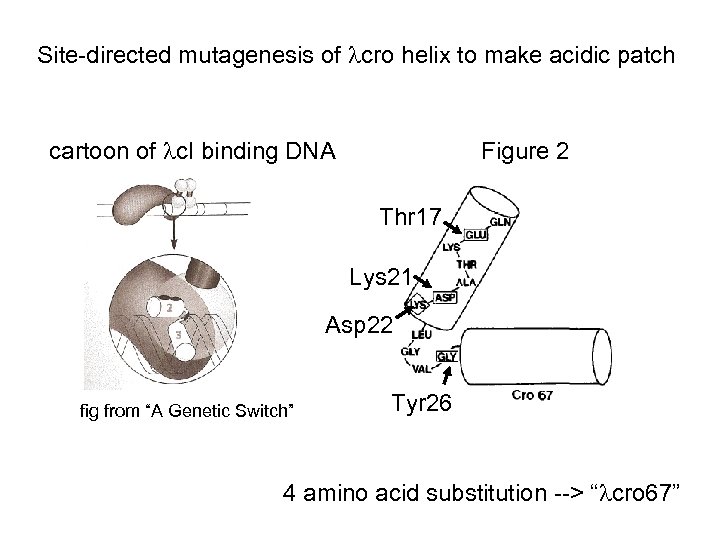
Site-directed mutagenesis of cro helix to make acidic patch cartoon of c. I binding DNA Figure 2 Thr 17 Lys 21 Asp 22 fig from “A Genetic Switch” Tyr 26 4 amino acid substitution --> “ cro 67”
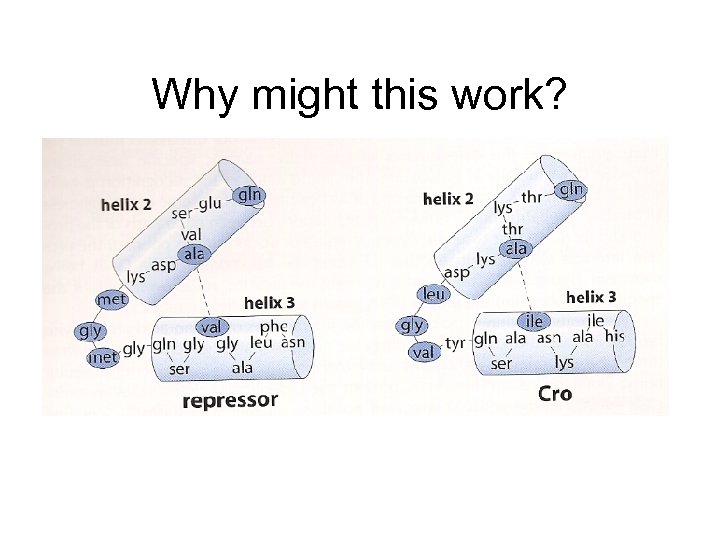
Why might this work?
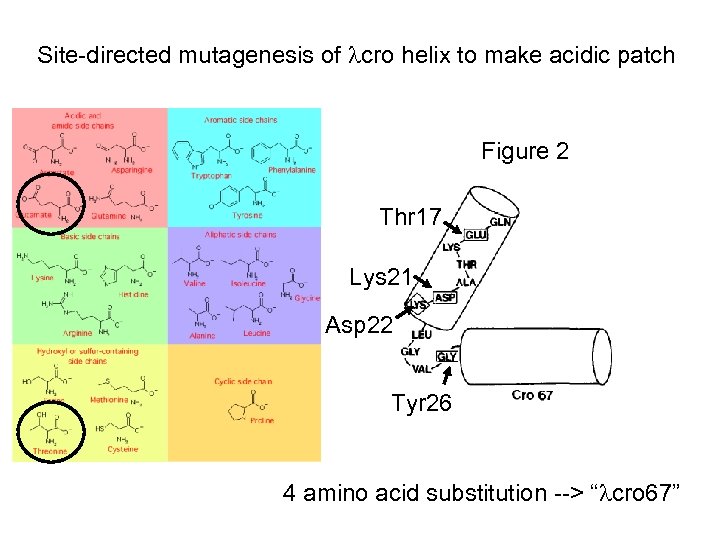
Site-directed mutagenesis of cro helix to make acidic patch Figure 2 Thr 17 Lys 21 Asp 22 Tyr 26 4 amino acid substitution --> “ cro 67”
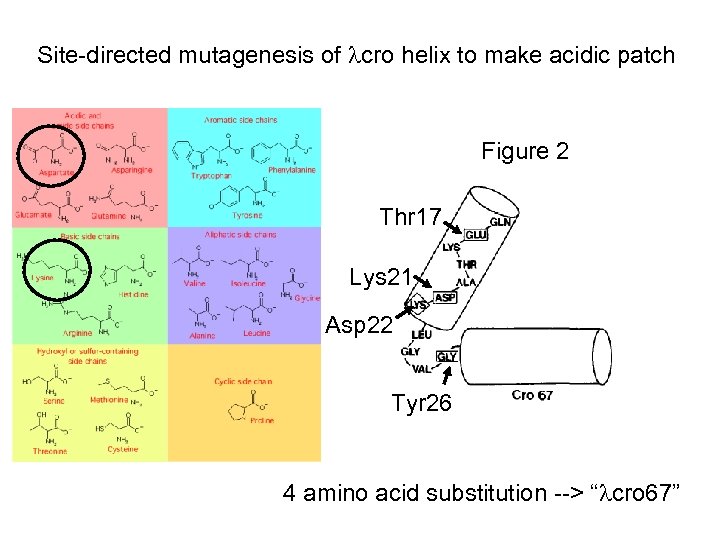
Site-directed mutagenesis of cro helix to make acidic patch Figure 2 Thr 17 Lys 21 Asp 22 Tyr 26 4 amino acid substitution --> “ cro 67”
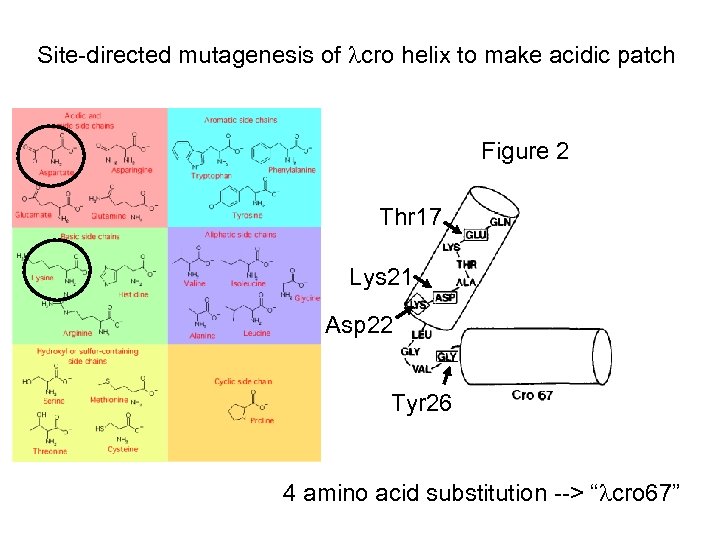
Site-directed mutagenesis of cro helix to make acidic patch Figure 2 Thr 17 Lys 21 Asp 22 Tyr 26 4 amino acid substitution --> “ cro 67”
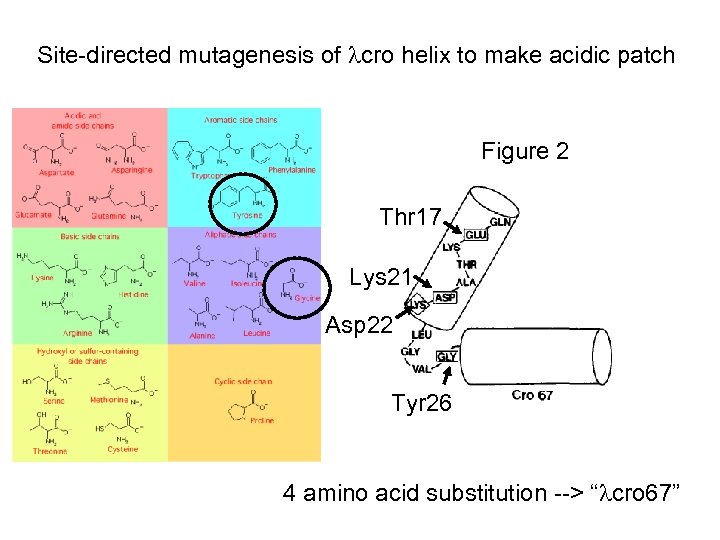
Site-directed mutagenesis of cro helix to make acidic patch Figure 2 Thr 17 Lys 21 Asp 22 Tyr 26 4 amino acid substitution --> “ cro 67”
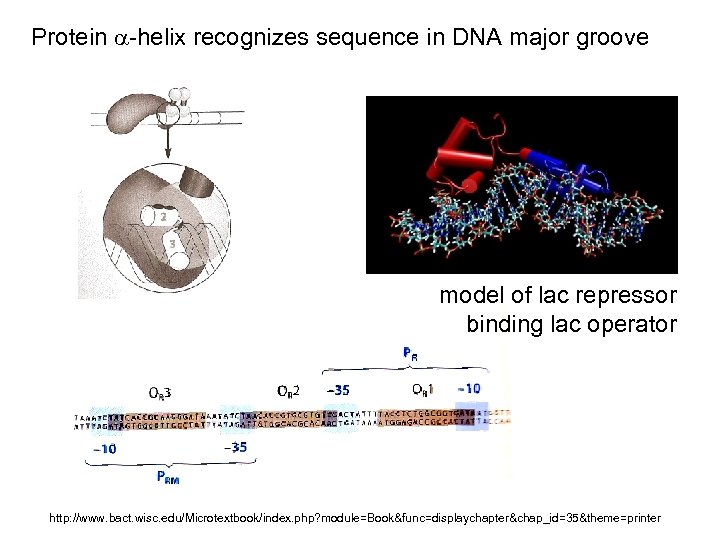
Protein -helix recognizes sequence in DNA major groove model of lac repressor binding lac operator http: //www. bact. wisc. edu/Microtextbook/index. php? module=Book&func=displaychapter&chap_id=35&theme=printer
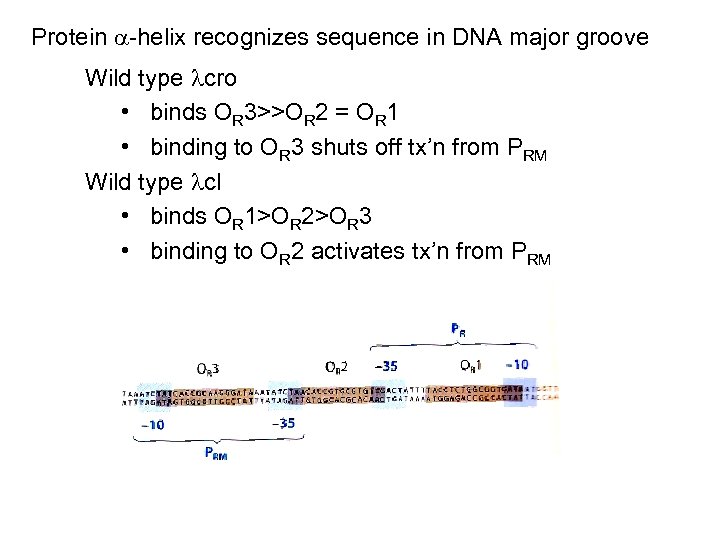
Protein -helix recognizes sequence in DNA major groove Wild type cro • binds OR 3>>OR 2 = OR 1 • binding to OR 3 shuts off tx’n from PRM Wild type c. I • binds OR 1>OR 2>OR 3 • binding to OR 2 activates tx’n from PRM
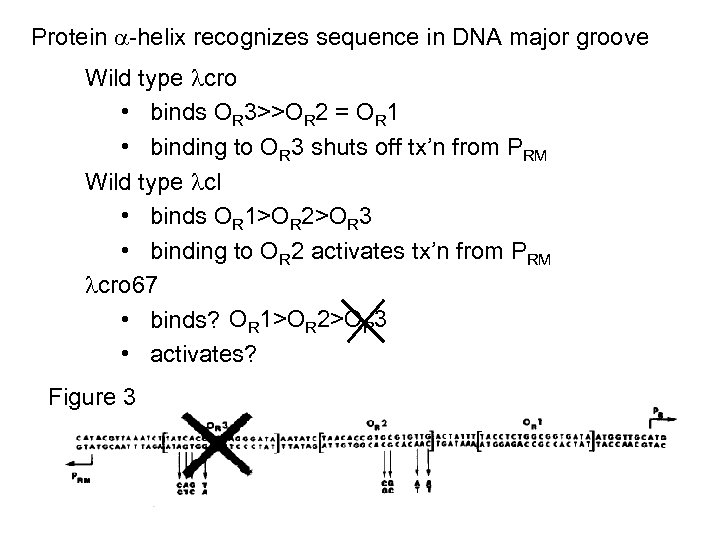
Protein -helix recognizes sequence in DNA major groove Wild type cro • binds OR 3>>OR 2 = OR 1 • binding to OR 3 shuts off tx’n from PRM Wild type c. I • binds OR 1>OR 2>OR 3 • binding to OR 2 activates tx’n from PRM cro 67 • binds? OR 1>OR 2>OR 3 • activates? Figure 3
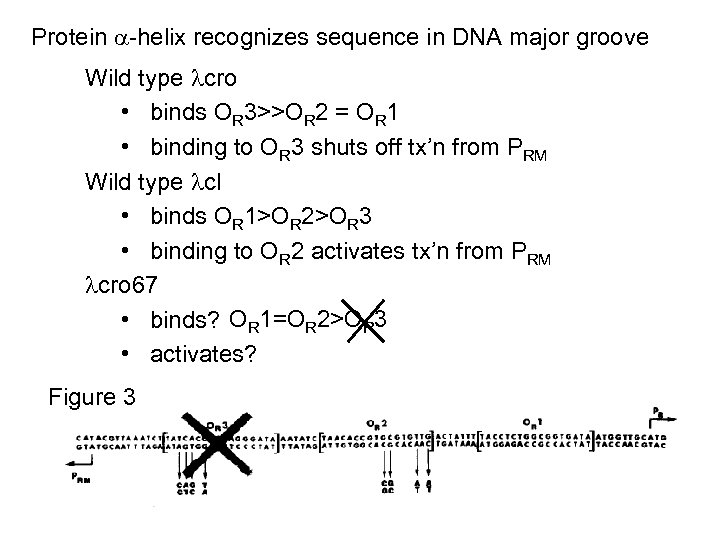
Protein -helix recognizes sequence in DNA major groove Wild type cro • binds OR 3>>OR 2 = OR 1 • binding to OR 3 shuts off tx’n from PRM Wild type c. I • binds OR 1>OR 2>OR 3 • binding to OR 2 activates tx’n from PRM cro 67 • binds? OR 1=OR 2>OR 3 • activates? Figure 3
![cro 67 activates transcription in vitro Figure 4 [ cro 67] In vitro](https://present5.com/presentation/c018250447fc78b2ef6fe6fb49d62560/image-13.jpg "cro 67 activates transcription in vitro Figure 4 [ cro 67] In vitro")
cro 67 activates transcription in vitro Figure 4 [ cro 67] In vitro tx’n rxn’s 0 395 bases + buffer + DNA w/ PRM + PR cro 67 (purified) 250 bases + 32 P-ATP, CTP, GTP or UTP 37° 10’ then + RNAP 37° 10’ then +formamide to gel
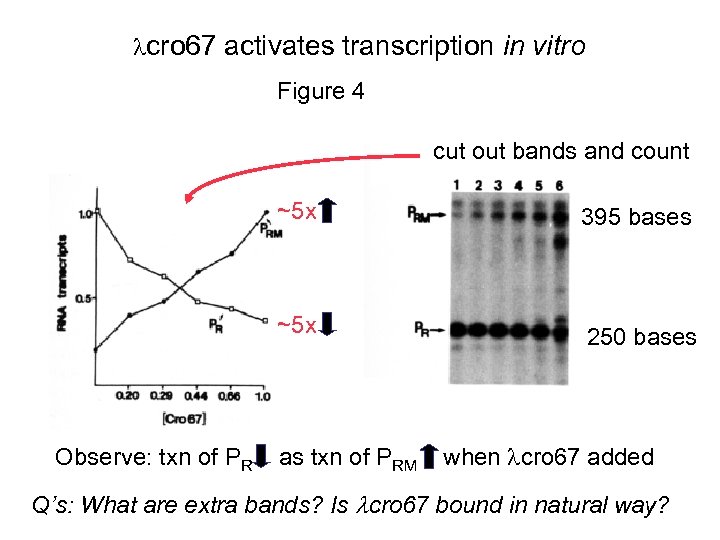
cro 67 activates transcription in vitro Figure 4 cut out bands and count ~5 x Observe: txn of PR 395 bases 250 bases as txn of PRM when cro 67 added Q’s: What are extra bands? Is cro 67 bound in natural way?
![cro 67 binds operator sequences as expected Figure 4 [ cro 67] DNase](https://present5.com/presentation/c018250447fc78b2ef6fe6fb49d62560/image-15.jpg "cro 67 binds operator sequences as expected Figure 4 [ cro 67] DNase")
cro 67 binds operator sequences as expected Figure 4 [ cro 67] DNase footprint 0 + buffer + 32 P-DNA w/ PRM + PR cro 67 (purified) 37° 10’? then + DNase 37° 10’? then +formamide to gel? Observe: OR 1=OR 2>OR 3 Q: is assay sensitive to different conformations of bound prot?
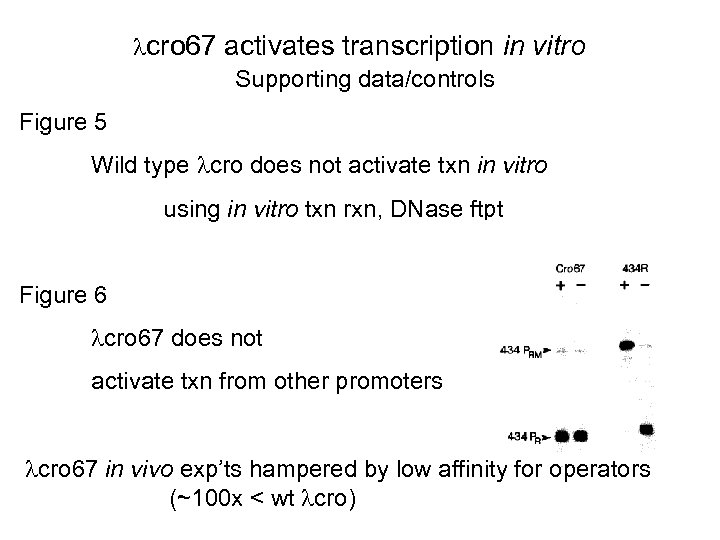
cro 67 activates transcription in vitro Supporting data/controls Figure 5 Wild type cro does not activate txn in vitro using in vitro txn rxn, DNase ftpt Figure 6 cro 67 does not activate txn from other promoters cro 67 in vivo exp’ts hampered by low affinity for operators (~100 x < wt cro)
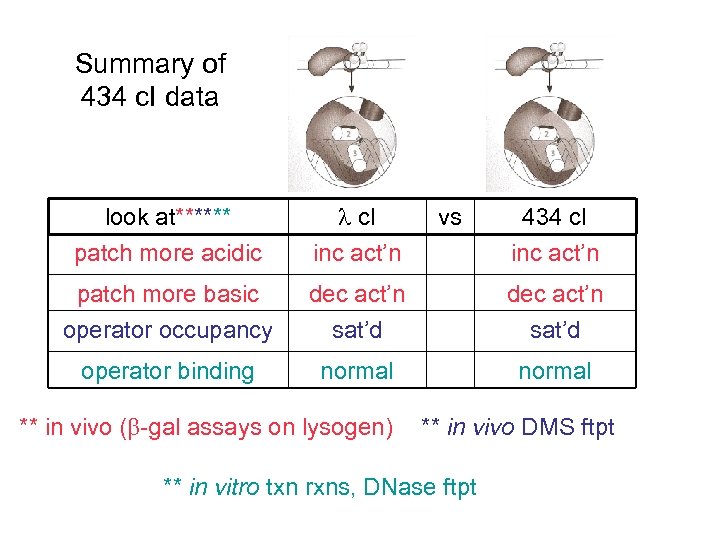
Summary of 434 c. I data look at****** patch more acidic c. I inc act’n patch more basic operator occupancy dec act’n sat’d operator binding normal ** in vivo ( -gal assays on lysogen) vs 434 c. I inc act’n ** in vivo DMS ftpt ** in vitro txn rxns, DNase ftpt
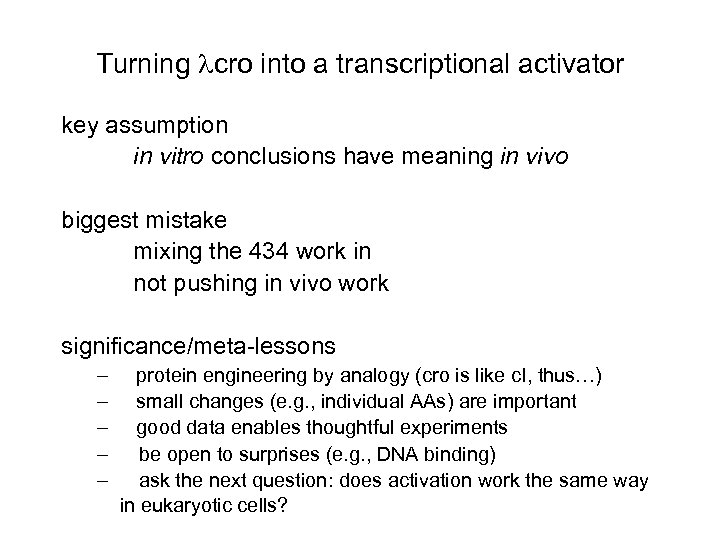
Turning cro into a transcriptional activator key assumption in vitro conclusions have meaning in vivo biggest mistake mixing the 434 work in not pushing in vivo work significance/meta-lessons – – – protein engineering by analogy (cro is like c. I, thus…) small changes (e. g. , individual AAs) are important good data enables thoughtful experiments be open to surprises (e. g. , DNA binding) ask the next question: does activation work the same way in eukaryotic cells?
Скачать презентацию Turning Cro into a Transcriptional Activator Fred Bushman
c018250447fc78b2ef6fe6fb49d62560.ppt