 Скачать презентацию TURKEY POULTRY BIOSECURITY Backyard and Small Scale Commercial
f4c77b732313397bb41e23ff4dfc783e.ppt
- Количество слайдов: 76



TURKEY POULTRY BIOSECURITY Backyard and Small Scale Commercial Production Nedret Durutan and Cüneyt Okan 1
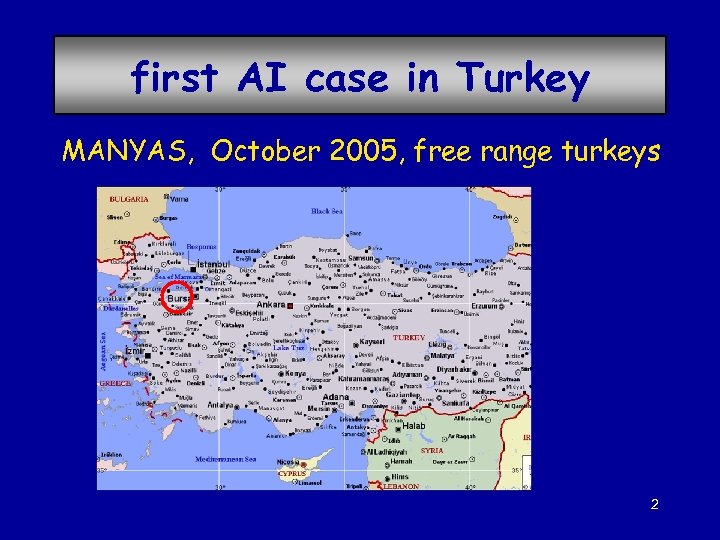
first AI case in Turkey MANYAS, October 2005, free range turkeys 2
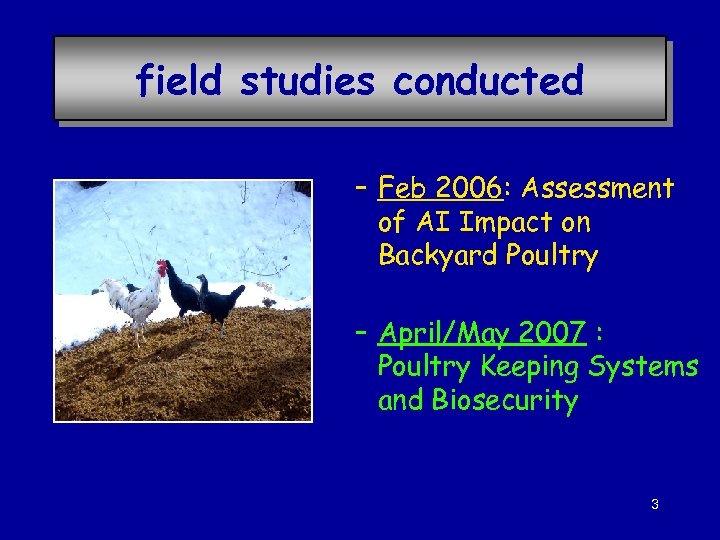
field studies conducted – Feb 2006: Assessment of AI Impact on Backyard Poultry – April/May 2007 : Poultry Keeping Systems and Biosecurity 3
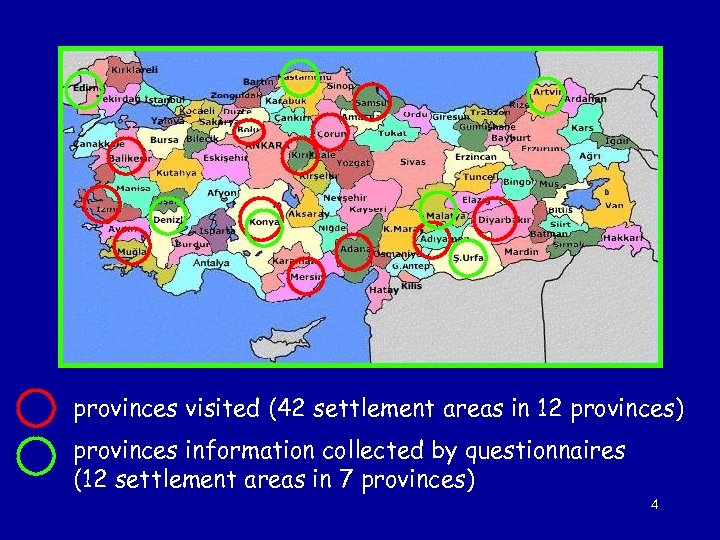
provinces visited (42 settlement areas in 12 provinces) provinces information collected by questionnaires (12 settlement areas in 7 provinces) 4
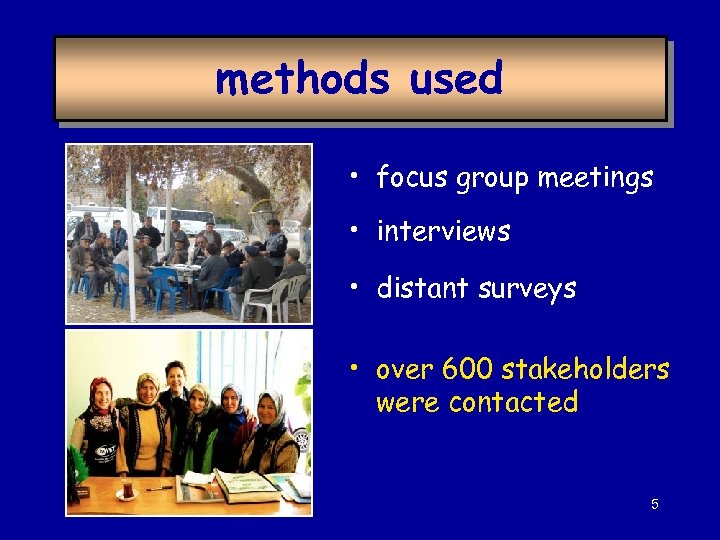
methods used • focus group meetings • interviews • distant surveys • over 600 stakeholders were contacted 5
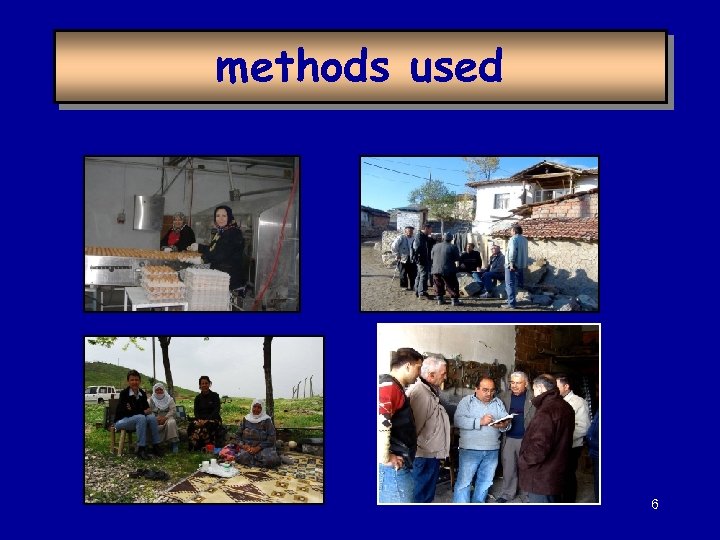
methods used 6
STUDY I: An Assessment of AI Impact on Backyard Poultry 7
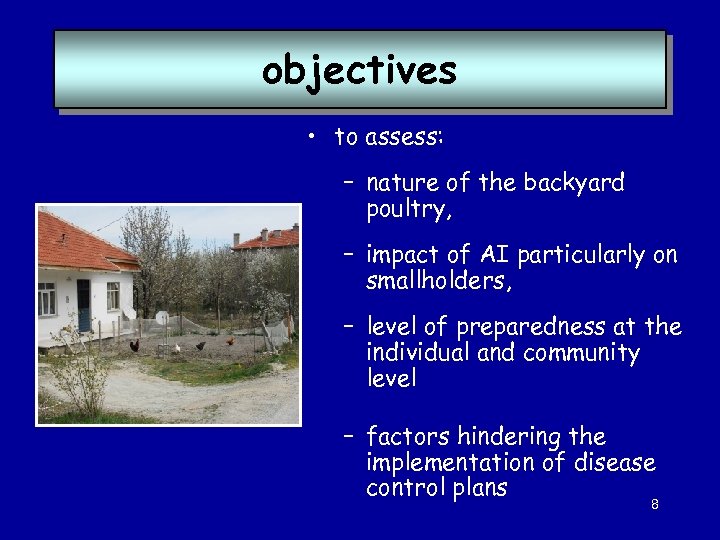
objectives • to assess: – nature of the backyard poultry, – impact of AI particularly on smallholders, – level of preparedness at the individual and community level – factors hindering the implementation of disease control plans 8
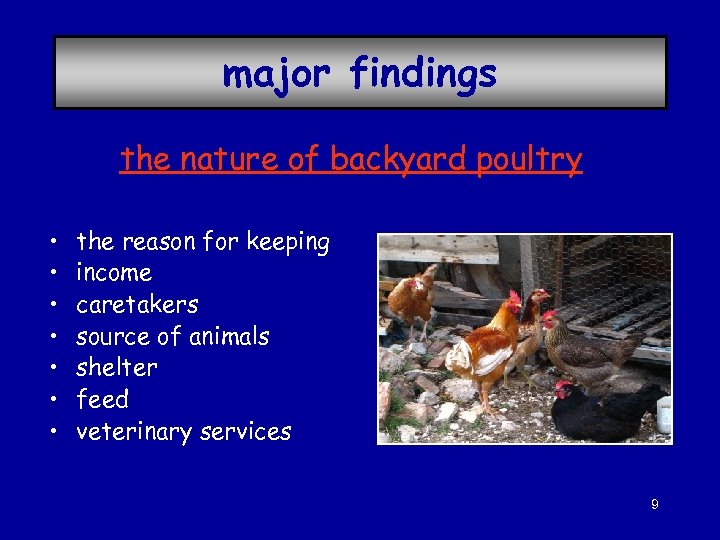
major findings the nature of backyard poultry • • the reason for keeping income caretakers source of animals shelter feed veterinary services 9
major findings the majority want to keep backyard poultry • • • to provide fresh eggs and meat for the family to offer guests to barter in the village to provide pocket money for women to provide income (selling oversupply) as companion animals and hobby 10
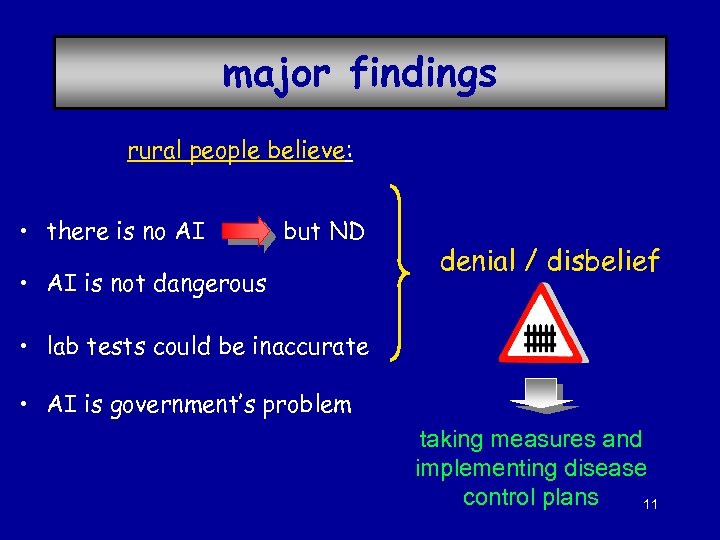
major findings rural people believe: • there is no AI but ND • AI is not dangerous denial / disbelief • lab tests could be inaccurate • AI is government’s problem taking measures and implementing disease control plans 11
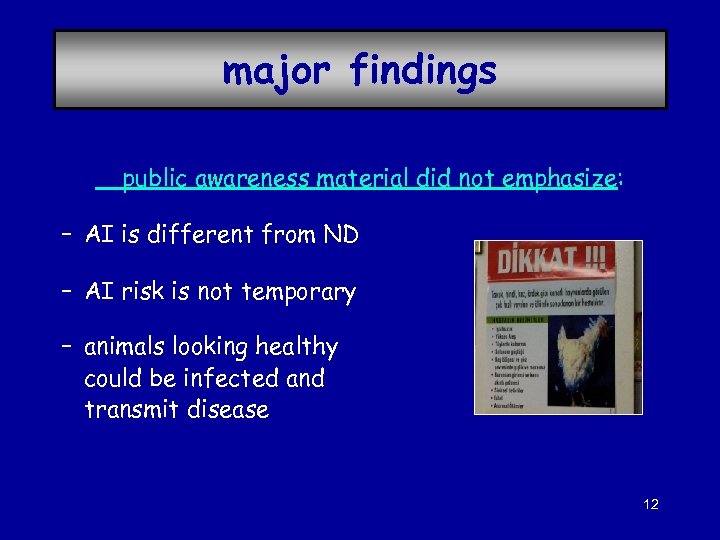
major findings public awareness material did not emphasize: – AI is different from ND – AI risk is not temporary – animals looking healthy could be infected and transmit disease 12
major findings communication during and after AI crisis – inconsistent, insufficient and random messages from too many sources – poor information dissemination at the village level – lack of guidance on the future of the backyard poultry 13
STUDY II: Poultry Keeping Systems and Biosecurity 14
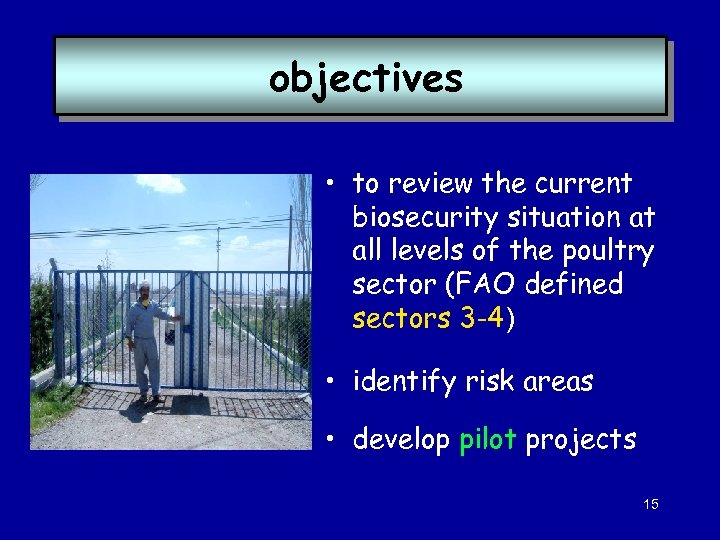
objectives • to review the current biosecurity situation at all levels of the poultry sector (FAO defined sectors 3 -4) • identify risk areas • develop pilot projects 15
major findings common biosecurity perception “biosecurity is to protect one’s own flock from diseases” this dictates how the stakeholders act 16
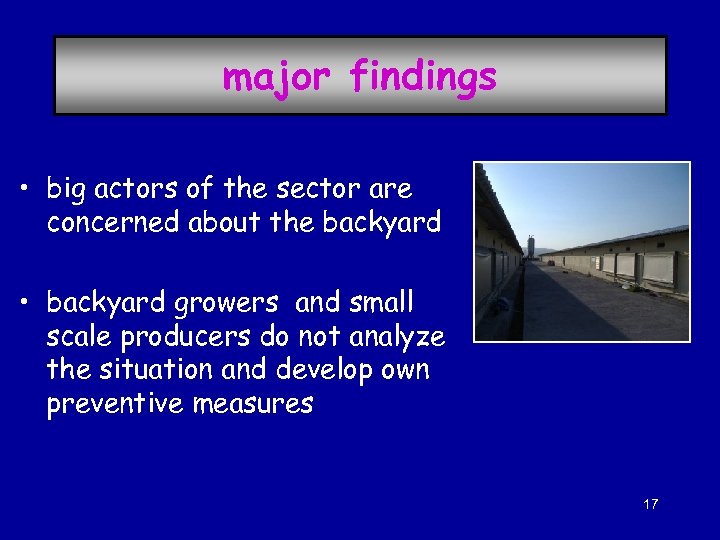
major findings • big actors of the sector are concerned about the backyard • backyard growers and small scale producers do not analyze the situation and develop own preventive measures 17
major findings Vaillancourt 2002: list of top biosecurity risks (16) assessment (yes /no) yes: indicate risk – – large export oriented broiler producers small scale locally operating broiler companies egg producers backyard growers 18
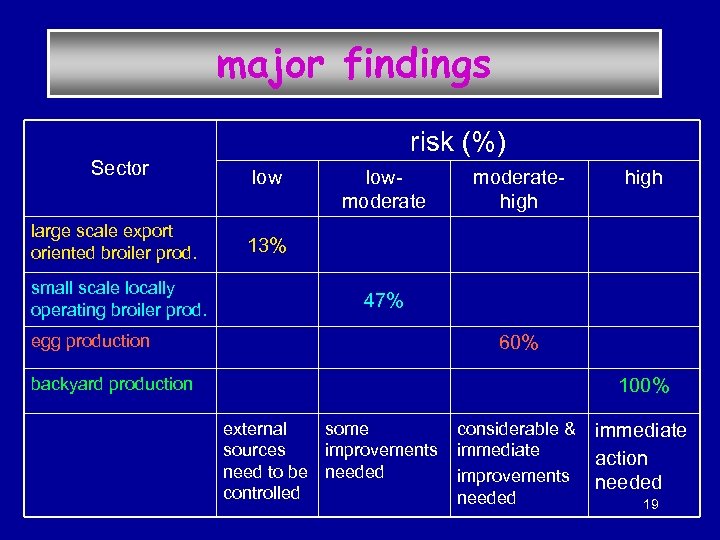
major findings risk (%) Sector large scale export oriented broiler prod. small scale locally operating broiler prod. lowmoderatehigh 13% 47% egg production 60% backyard production 100% external some sources improvements need to be needed controlled considerable & immediate improvements needed immediate action needed 19
behavioral patterns in biosecurity applications 1. a set of biosecurity measures were taken (Vaillancourt 2002) 2. poultry producers’ behaviors in applications of these were questioned (as always, frequently, sometimes, seldom, not practiced) 3. for those that are not applied as habit (always and frequently) costs were reviewed (as the cheapest, cheaper, expensive, most expensive) whether those are affordable 20
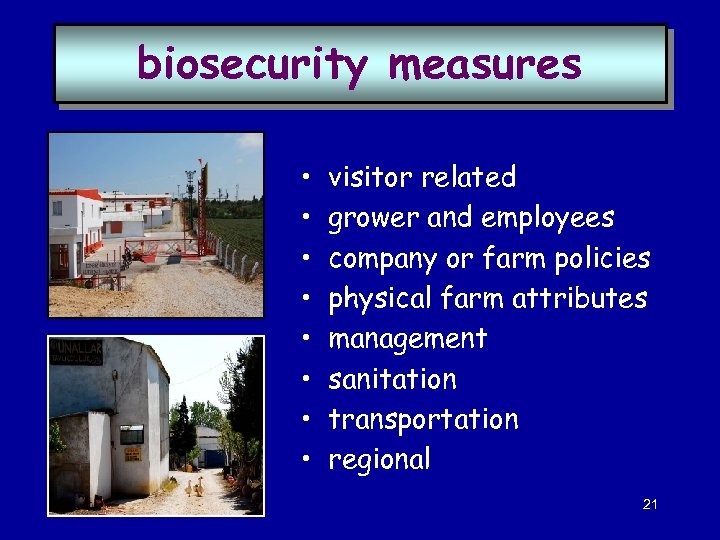
biosecurity measures • • visitor related grower and employees company or farm policies physical farm attributes management sanitation transportation regional 21
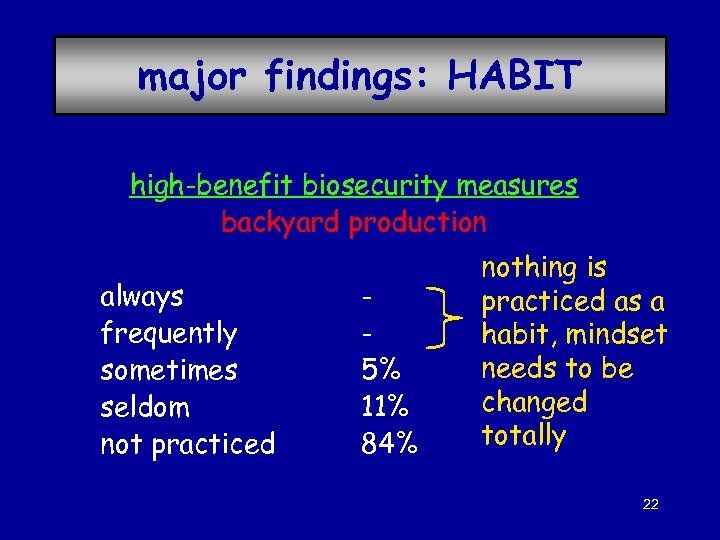
major findings: HABIT high-benefit biosecurity measures backyard production always frequently sometimes seldom not practiced 5% 11% 84% nothing is practiced as a habit, mindset needs to be changed totally 22
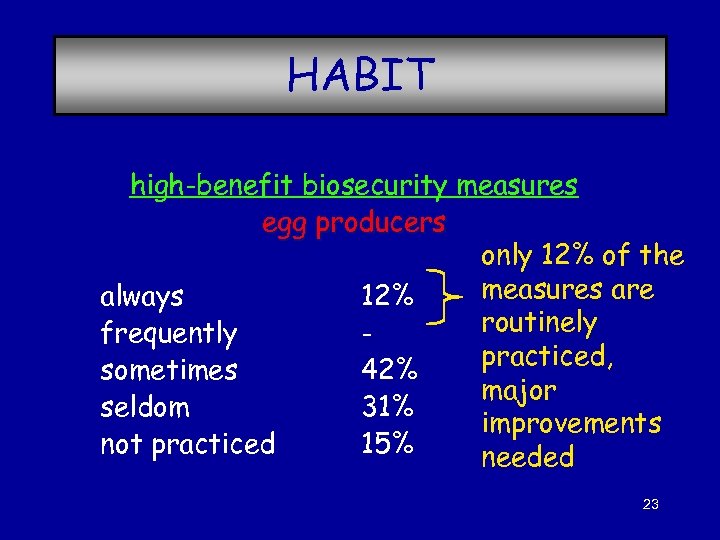
HABIT high-benefit biosecurity measures egg producers only 12% of the measures are always 12% routinely frequently practiced, sometimes 42% major seldom 31% improvements not practiced 15% needed 23
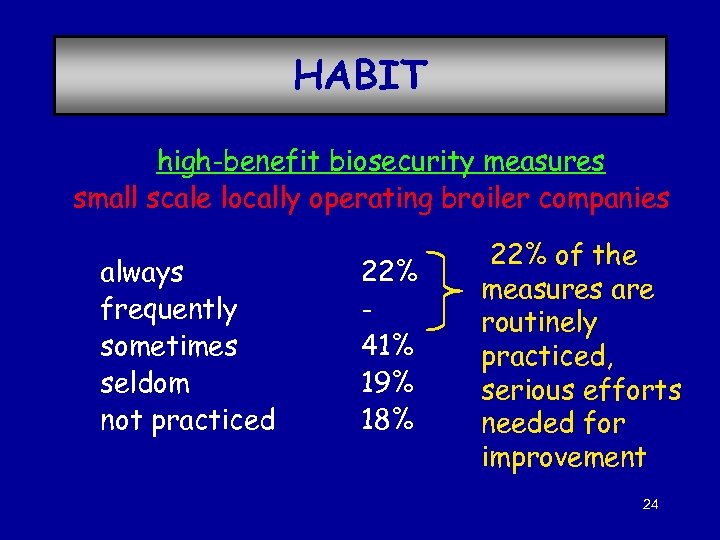
HABIT high-benefit biosecurity measures small scale locally operating broiler companies always frequently sometimes seldom not practiced 22% 41% 19% 18% 22% of the measures are routinely practiced, serious efforts needed for improvement 24
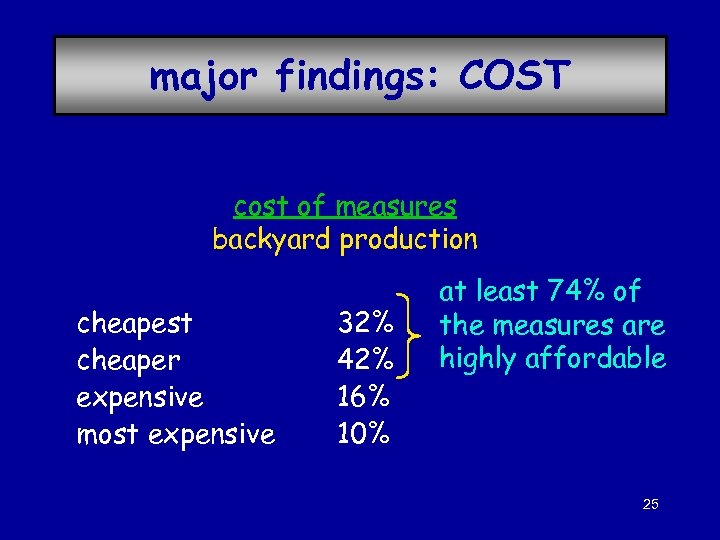
major findings: COST cost of measures backyard production cheapest cheaper expensive most expensive 32% 42% 16% 10% at least 74% of the measures are highly affordable 25
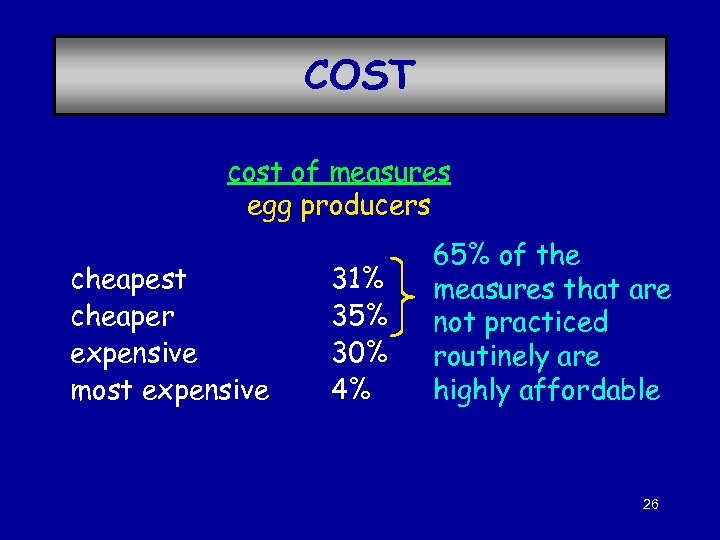
COST cost of measures egg producers cheapest cheaper expensive most expensive 31% 35% 30% 4% 65% of the measures that are not practiced routinely are highly affordable 26
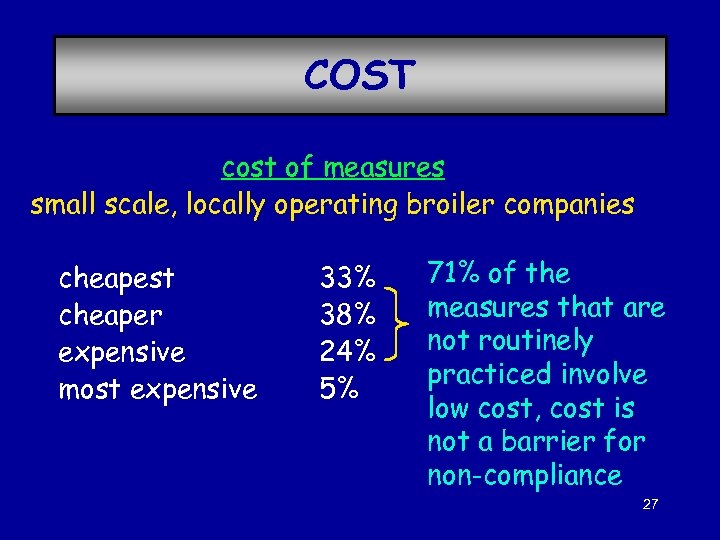
COST cost of measures small scale, locally operating broiler companies cheapest cheaper expensive most expensive 33% 38% 24% 5% 71% of the measures that are not routinely practiced involve low cost, cost is not a barrier for non-compliance 27
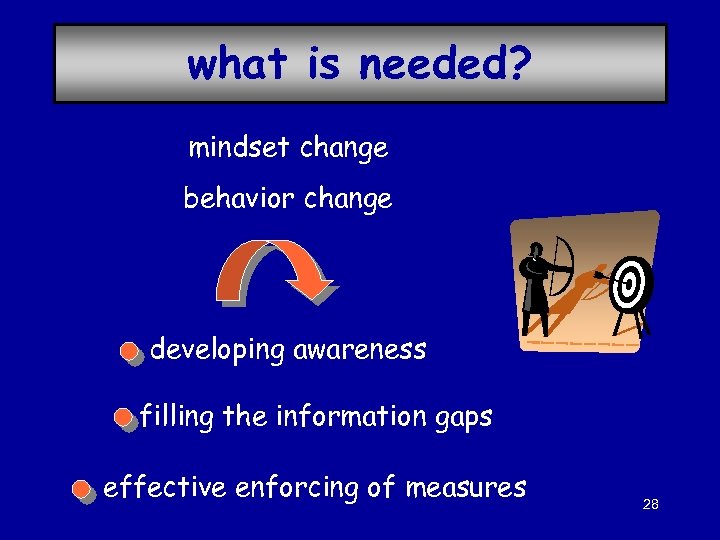
what is needed? mindset change behavior change developing awareness filling the information gaps effective enforcing of measures 28
major findings: backyard status of backyard production (in 2007) • in villages where culling took place, restocking has been done or is contemplated, • those who drop backyard production due to unsuppressed fear are contemplating re-starting production, 29
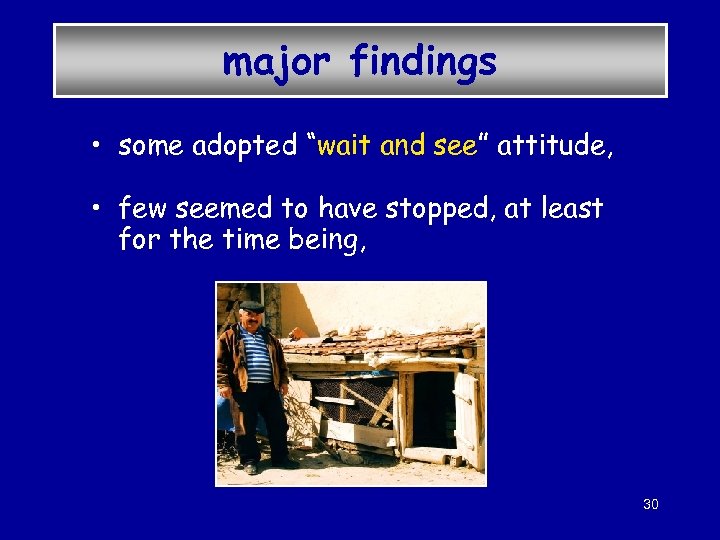
major findings • some adopted “wait and see” attitude, • few seemed to have stopped, at least for the time being, 30
misconceptions and beliefs • the major barrier in convincing the rural populations that AI is dangerous • their past experience with the New Castle Disease 31
misconceptions and beliefs • AI was a one-time problem, no mass poultry and human deaths in the country • wetlands are not a problem, ducks and geese always wonder around, nothing happened • wild birds are healthy, hunting them is not a problem • spent hen trade for re-stocking does not pose any problem 32
misconceptions and beliefs unless: • the differences of AI and ND are explained well to the rural people • they understand, realize, and believe that these two diseases are different 33
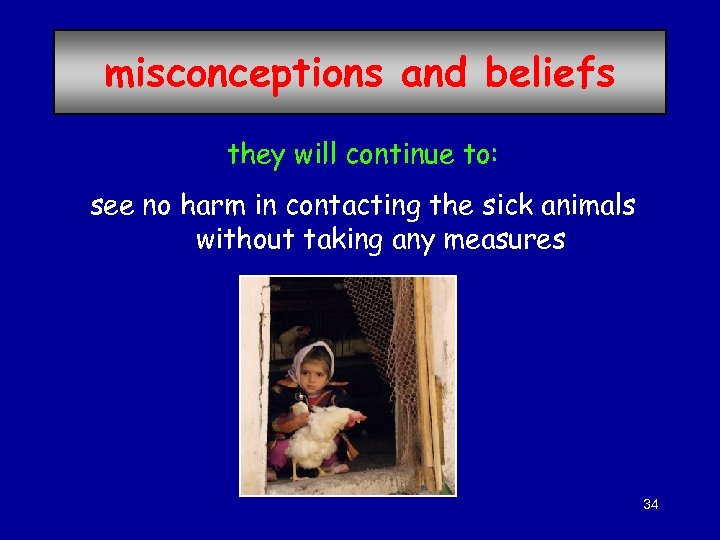
misconceptions and beliefs they will continue to: see no harm in contacting the sick animals without taking any measures 34
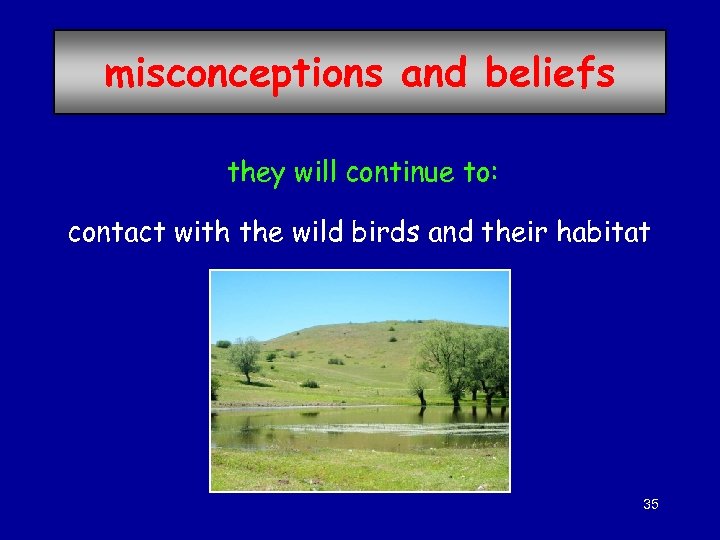
misconceptions and beliefs they will continue to: contact with the wild birds and their habitat 35
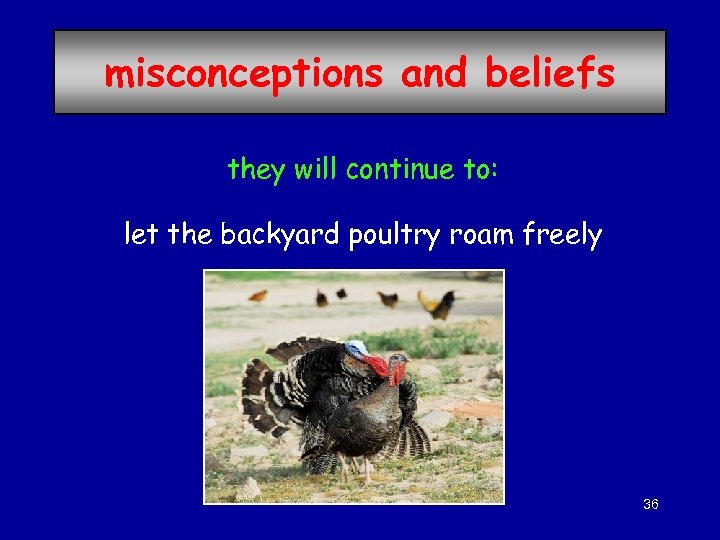
misconceptions and beliefs they will continue to: let the backyard poultry roam freely 36
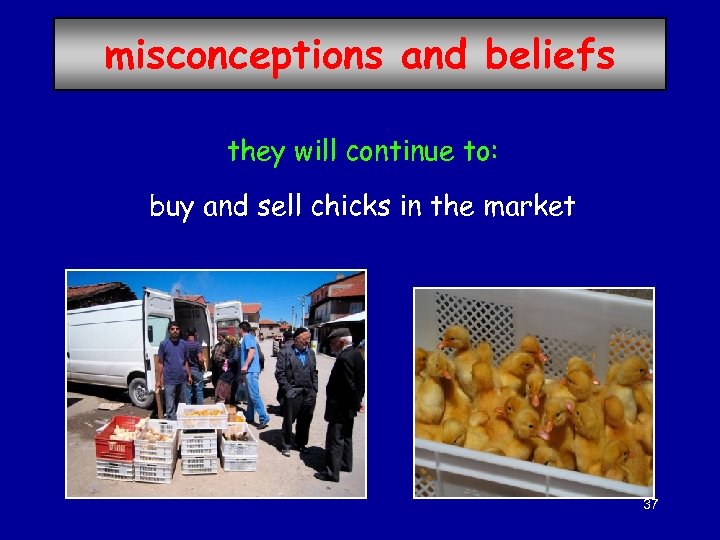
misconceptions and beliefs they will continue to: buy and sell chicks in the market 37
identifying risk • a set of criteria was developed by taking the various modes of AI spread, • the outbreaks in Turkey did not coincide necessarily with each and every criteria • the probabilities increase as a result of their singular or combined occurrence and they are considered as basic indicators of risk 38
criteria used • wetlands • major wild bird migration routes • high poultry population • high concentration of asymptomatic carriers • • high population (human density) • high agricultural activity • large rice fields high rural population • prolonged winters 39
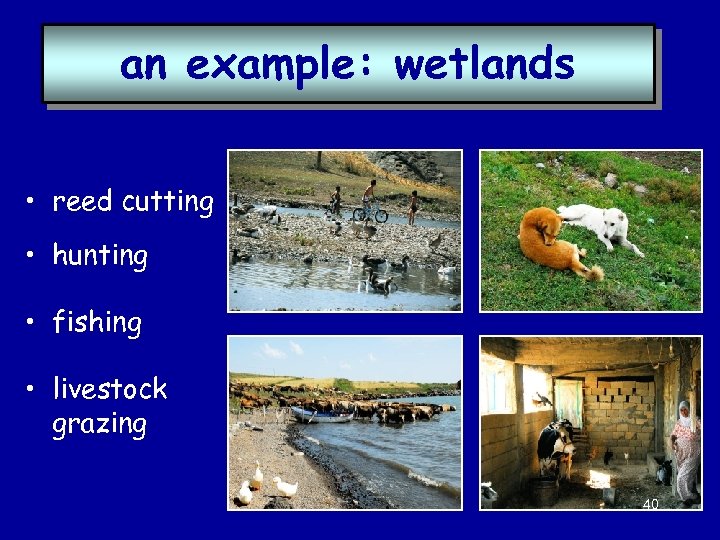
an example: wetlands • reed cutting • hunting • fishing • livestock grazing 40
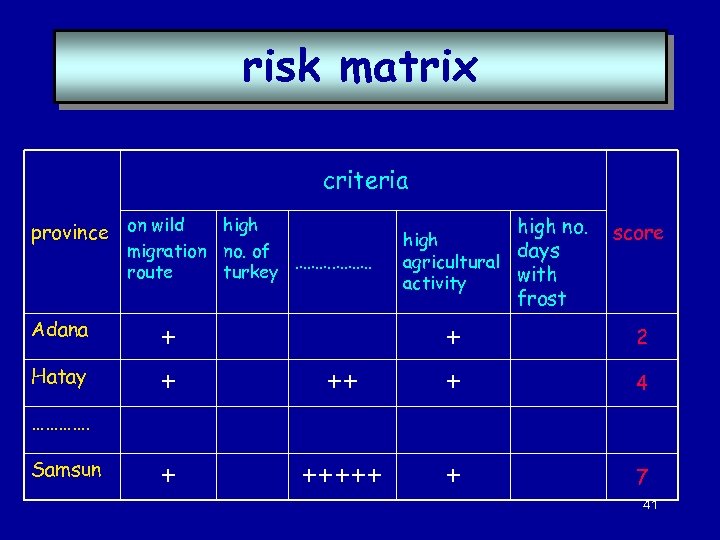
risk matrix criteria province on wild high migration no. of ………………. route turkey Adana + Hatay + + high no. high days agricultural with activity score frost + 2 ++ + 4 +++++ + 7 …………. Samsun 41
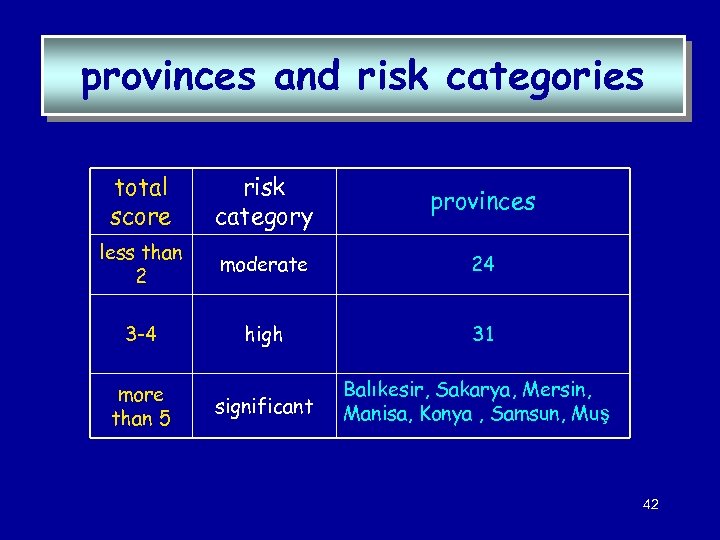
provinces and risk categories total score risk category provinces less than 2 moderate 24 3 -4 high 31 more than 5 significant Balıkesir, Sakarya, Mersin, Manisa, Konya , Samsun, Muş 42
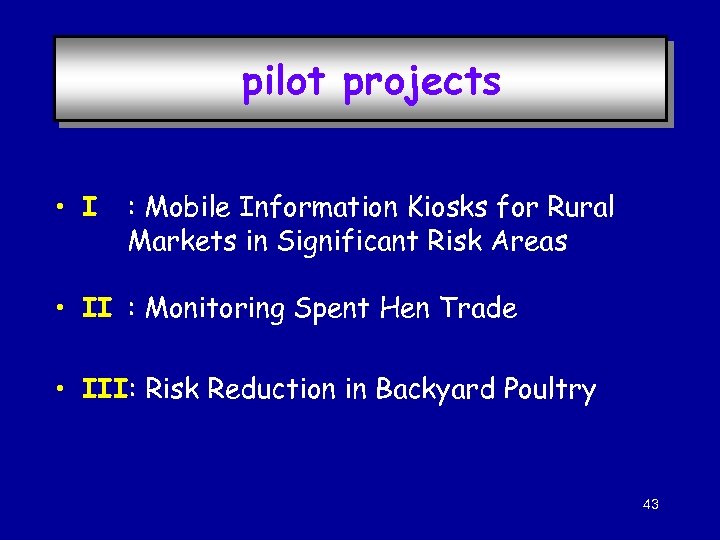
pilot projects • I : Mobile Information Kiosks for Rural Markets in Significant Risk Areas • II : Monitoring Spent Hen Trade • III: Risk Reduction in Backyard Poultry 43
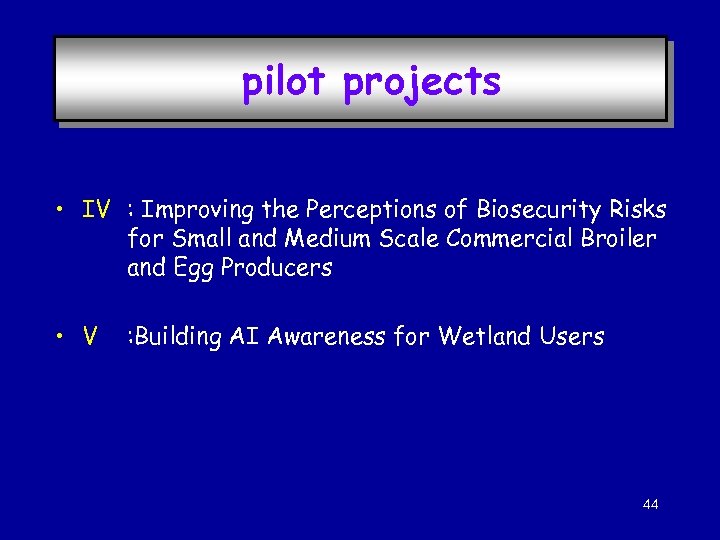
pilot projects • IV : Improving the Perceptions of Biosecurity Risks for Small and Medium Scale Commercial Broiler and Egg Producers • V : Building AI Awareness for Wetland Users 44
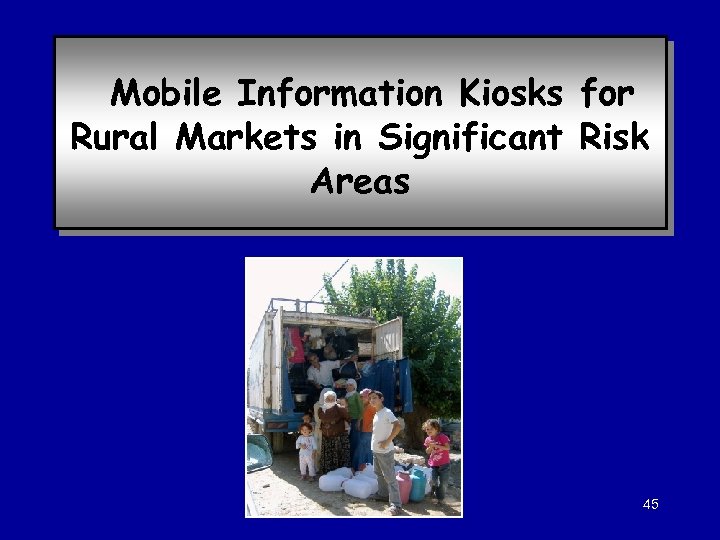
Mobile Information Kiosks for Rural Markets in Significant Risk Areas 45
objectives • to improve knowledge, awareness and vigilance in significant risk areas • by taking the information sources to locations where information exchange regularly takes place 46
objectives • facilitate face-to-face communication between the villagers and the professionals • to make the verbal and audio-visual information available to large audience in a cost effective manner 47
project description • a vehicle • a team of professionals ( for animal and human health-at least one female) • public awareness and training equipment and material • local market schedule 48
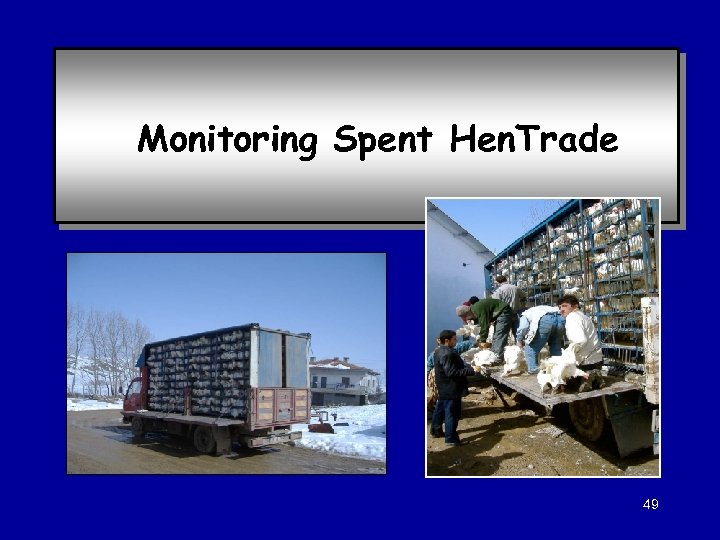
Monitoring Spent Hen. Trade 49
objectives • to ensure that the spent hens reach the intended slaughterhouses to be disposed • to improve the monitoring of spent layer transportation • to reduce the illicit live poultry trade 50
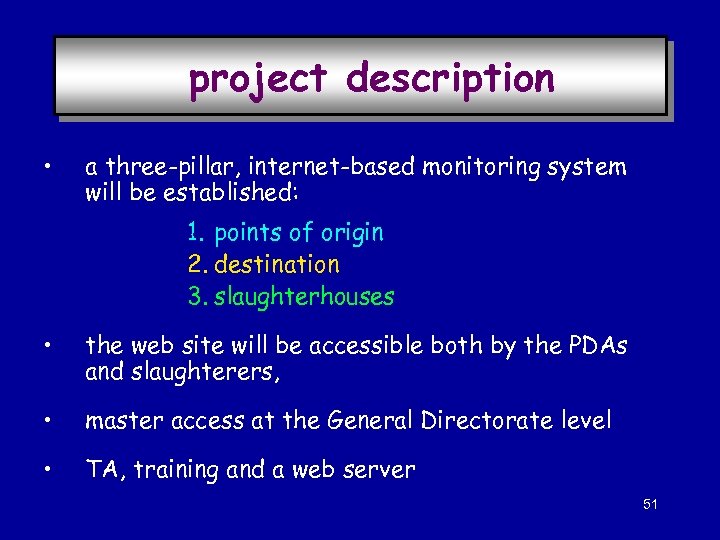
project description • a three-pillar, internet-based monitoring system will be established: 1. points of origin 2. destination 3. slaughterhouses • the web site will be accessible both by the PDAs and slaughterers, • master access at the General Directorate level • TA, training and a web server 51
expected results • improved enforcement of live poultry trade bans • reduced time required to monitor transportation • improved accuracy of data and information • reduced workloads at PDA for tracking transport • improved efficiency in data collection and compilation 52
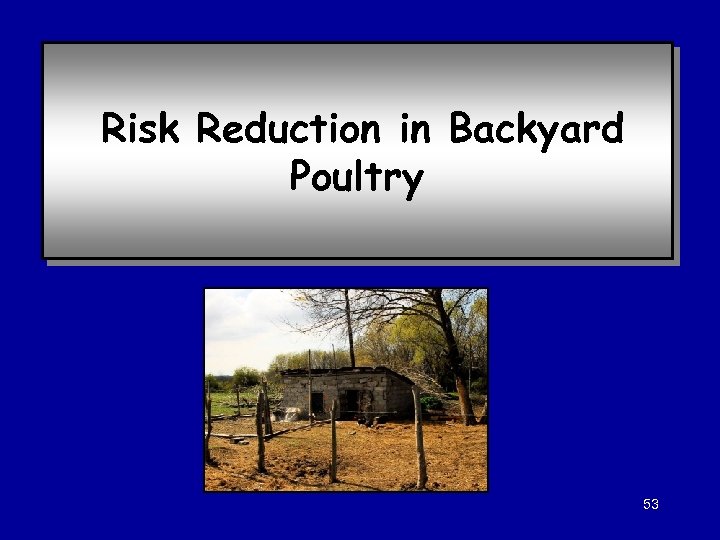
Risk Reduction in Backyard Poultry 53
objectives to enhance biosecurity: • to prevent disease outbreaks • facilitate containment • to control in case of AI outbreaks by reducing risks stemming from backyard poultry 54
expected results • better informed poultry keepers about the risks • enhanced biosecurity for backyard and commercial poultry, companies, individuals • improved understanding of disease situation by the poultry owner: educated guess about the possible reasons: ND or AI ? 55
expected results • timely reporting of AI suspected cases to the authorities • timely interventions to protect the family members and village community from AI • reduced need for restocking due to the losses stemming from mismanagement 56
project interventions 1. protection 2. training protection – from direct and/or indirect contamination through enclosure – against ND by increasing the specific immunity of the animals (vaccination) 57
project interventions physical protection (enclosure) – full protection: fenced perimeter of a run area with sealed top in significant risk areas – partial protection: fenced perimeter with an open top in lower risk areas 58
project interventions training – – – – misconceptions about AI symptoms of ND and AI modes of disease spread disease prevention practical vaccination basic hygiene practices (kitchen) simple record keeping 59
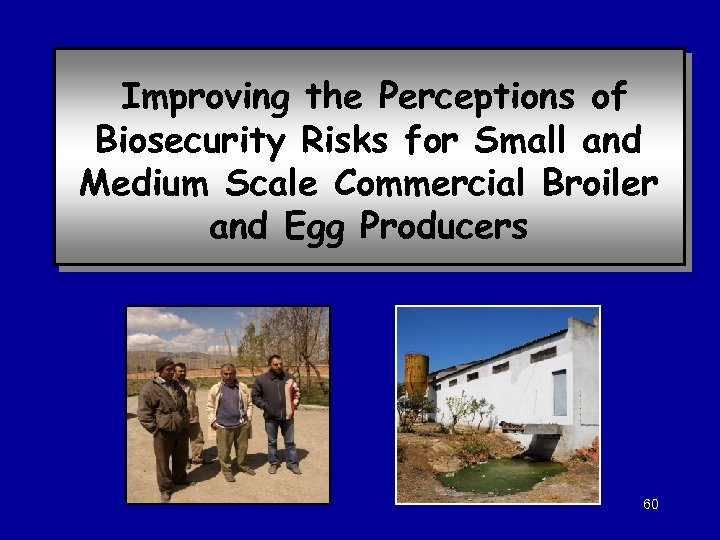
Improving the Perceptions of Biosecurity Risks for Small and Medium Scale Commercial Broiler and Egg Producers 60
objectives • develop or improve biosecurity awareness in the owners and labor force of small poultry enterprises • improve the ability of the owners in assessing biosecurity risks for their assets, employees and their families, other enterprises and humans 61
objectives • make the owners understand the costworthiness of investing in biosecurity measures • improve awareness in the labor force about the potential health risks • to contribute to the development of habit in practicing biosecurity measures 62
project interventions training program • BESD-BIR and YUM-Bir will identify the enterprises and localities • program will separately target owners employees • classroom and field training 63
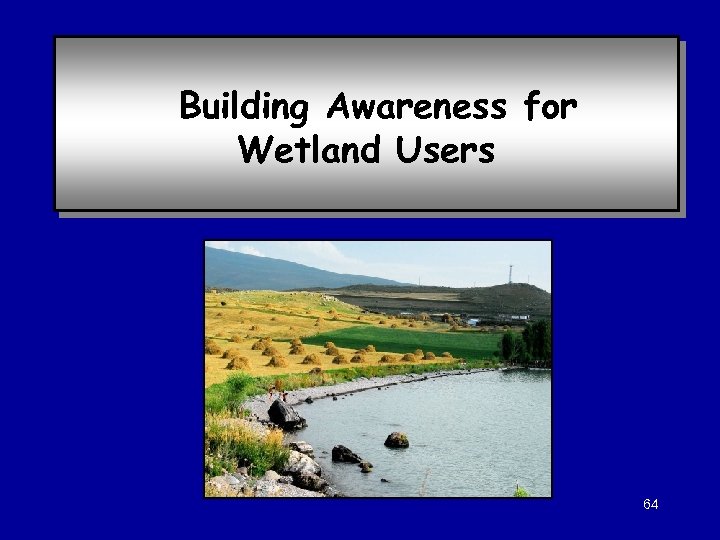
Building Awareness for Wetland Users 64
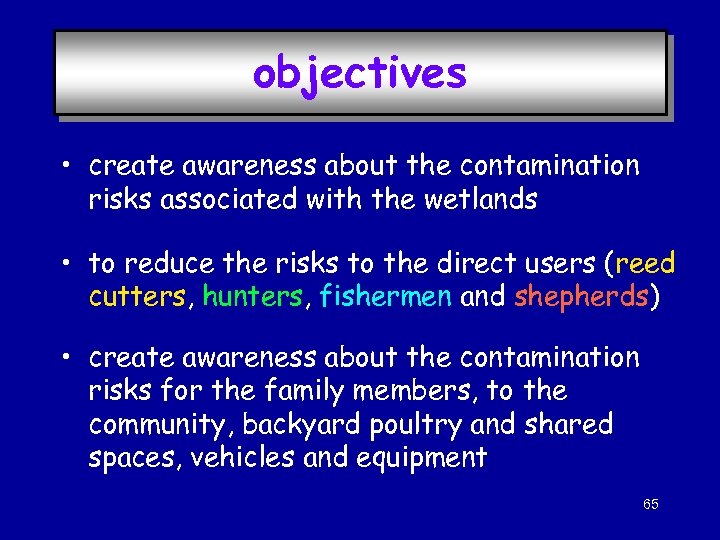
objectives • create awareness about the contamination risks associated with the wetlands • to reduce the risks to the direct users (reed cutters, hunters, fishermen and shepherds) • create awareness about the contamination risks for the family members, to the community, backyard poultry and shared spaces, vehicles and equipment 65
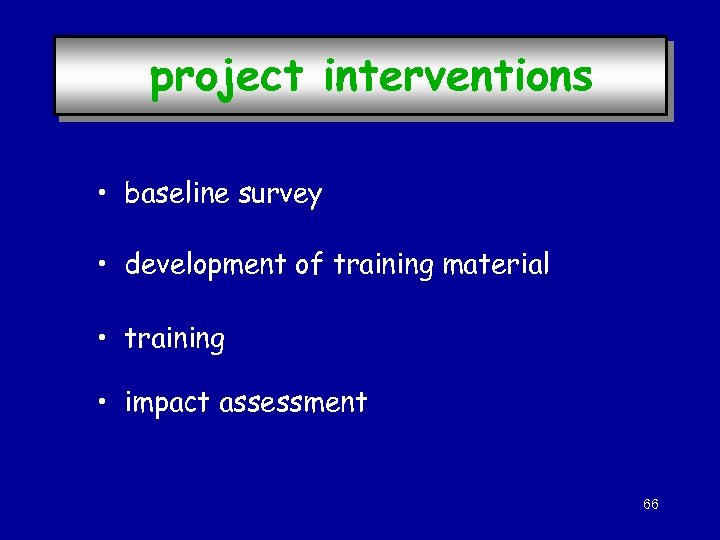
project interventions • baseline survey • development of training material • training • impact assessment 66

Q & A 67
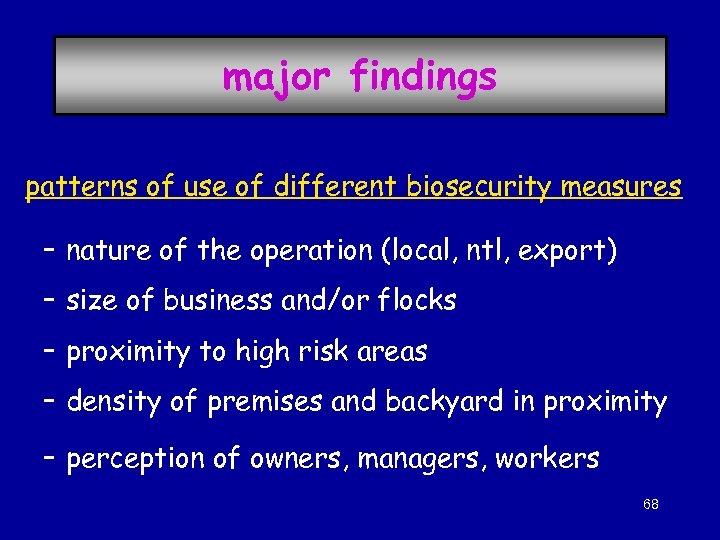
major findings patterns of use of different biosecurity measures – nature of the operation (local, ntl, export) – size of business and/or flocks – proximity to high risk areas – density of premises and backyard in proximity – perception of owners, managers, workers 68
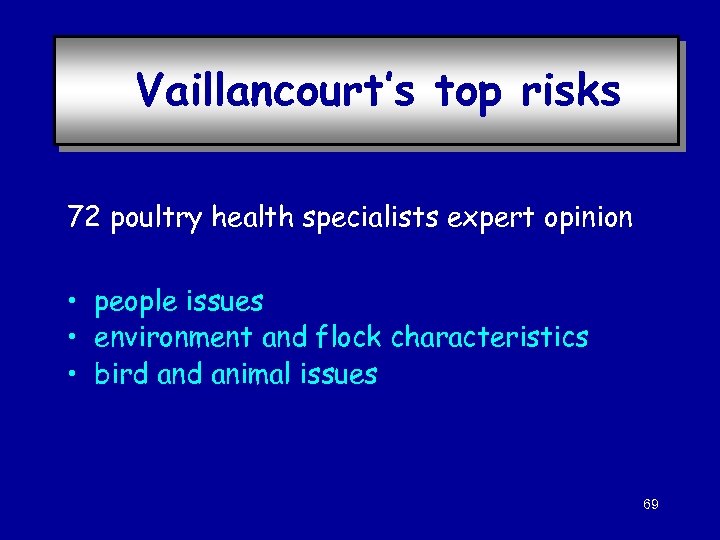
Vaillancourt’s top risks 72 poultry health specialists expert opinion • people issues • environment and flock characteristics • bird animal issues 69
Vaillancourt’s top measures (highest benefits) cost » Ykr: negligible » YTL, YTL: expensive 70
expected results: MIKs • informative documentation from different sources (NGOs, private sector, various gov. agencies) will be easily distributed • village administration can obtained the material at required amount • public announcements regarding updates on AI can be easily made 71
expected results: MIKs • more targeted audience will be reached • collaboration between human and animal health agencies will be better coordinated • locally targeted information to clusters of villages will be effectively disseminated 72
expected results: improving perception • facilitating changes in the perception of biosecurity risks • skills developed to assess the risks • making the owners understand the costeffectiveness of investing in biosecurity measures. 73
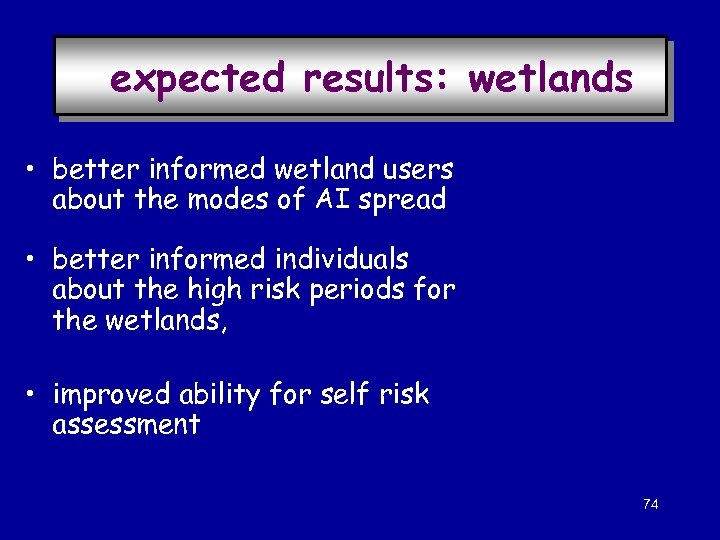
expected results: wetlands • better informed wetland users about the modes of AI spread • better informed individuals about the high risk periods for the wetlands, • improved ability for self risk assessment 74
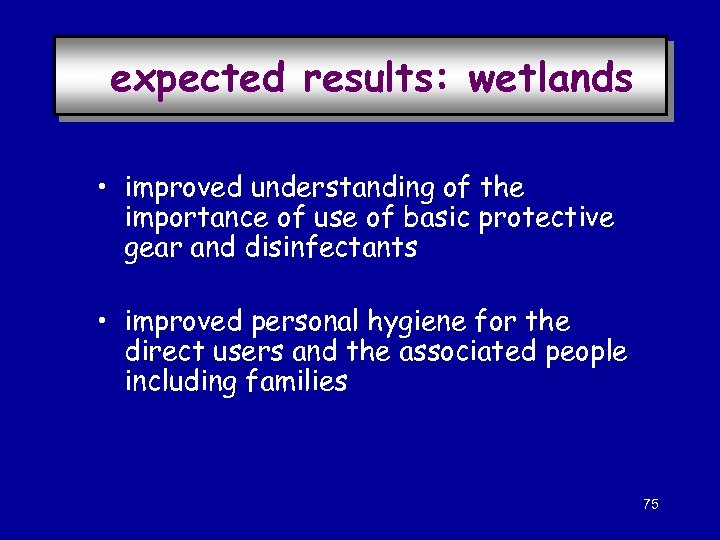
expected results: wetlands • improved understanding of the importance of use of basic protective gear and disinfectants • improved personal hygiene for the direct users and the associated people including families 75
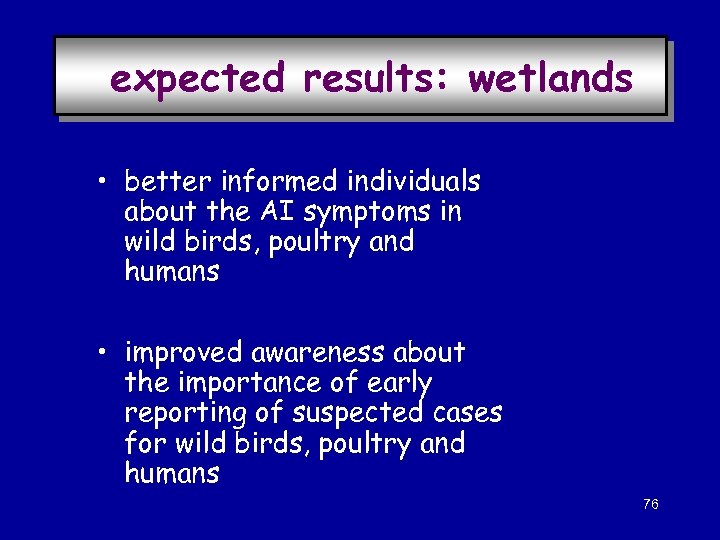
expected results: wetlands • better informed individuals about the AI symptoms in wild birds, poultry and humans • improved awareness about the importance of early reporting of suspected cases for wild birds, poultry and humans 76
Скачать презентацию TURKEY POULTRY BIOSECURITY Backyard and Small Scale Commercial
f4c77b732313397bb41e23ff4dfc783e.ppt