 Скачать презентацию Turbulent Times As more people compete for scarce
176b7fa943a69ef830c85cc1ffb17784.ppt
- Количество слайдов: 66





Turbulent Times As more people compete for scarce land, house prices and rents rise. As new technologies replace low-skilled labor, the demand for low-skilled workers falls. Can governments control prices and wages? How do taxes affect prices and quantities, and who pays the tax: the buyer or the seller? How are farm prices and incomes affected by fluctuations in harvests? What happens in a market when trading a good is illegal?

Housing Markets and Rent Ceilings
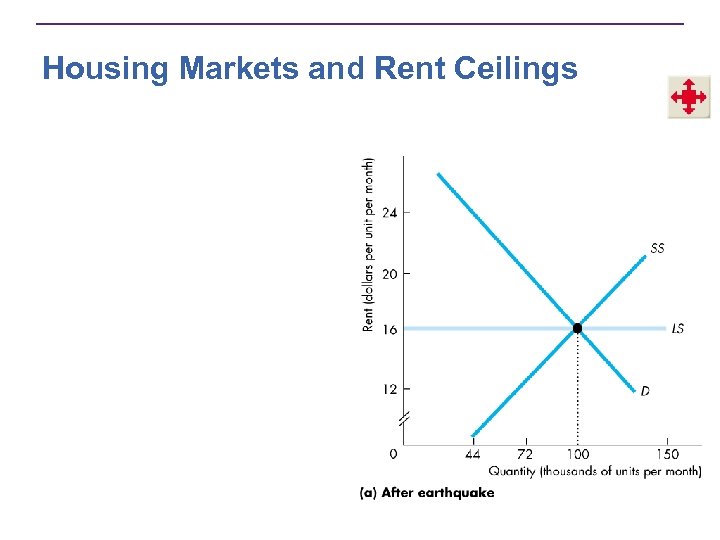
Housing Markets and Rent Ceilings
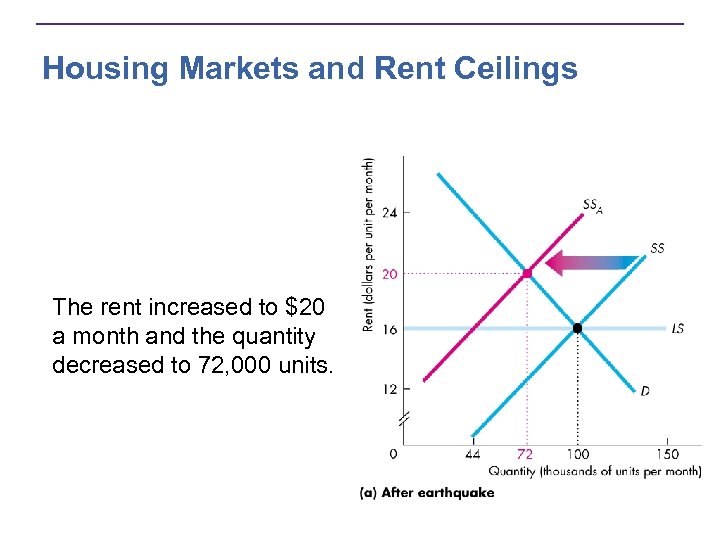
Housing Markets and Rent Ceilings The rent increased to $20 a month and the quantity decreased to 72, 000 units.
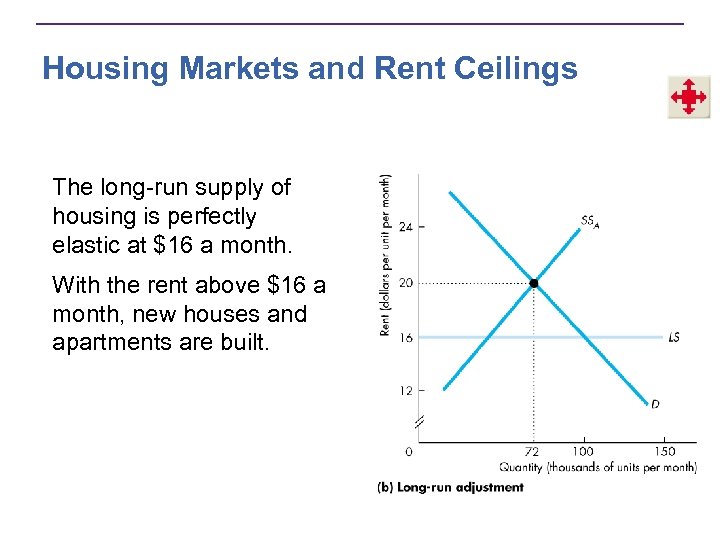
Housing Markets and Rent Ceilings The long-run supply of housing is perfectly elastic at $16 a month. With the rent above $16 a month, new houses and apartments are built.
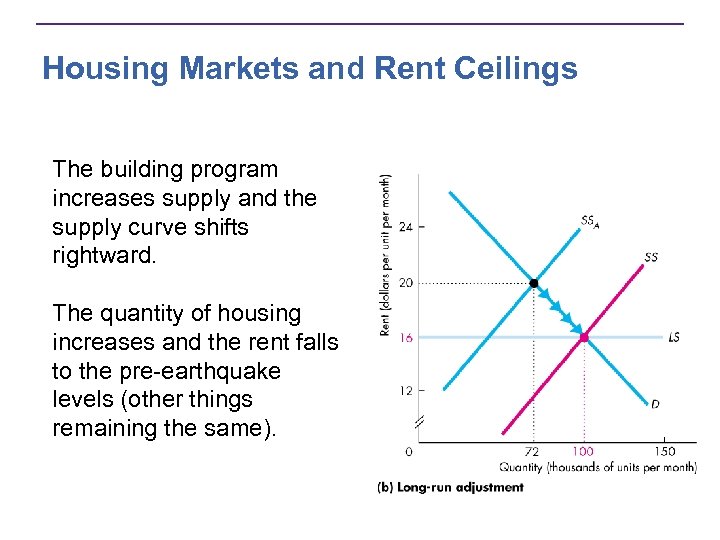
Housing Markets and Rent Ceilings The building program increases supply and the supply curve shifts rightward. The quantity of housing increases and the rent falls to the pre-earthquake levels (other things remaining the same).

Housing Markets and Rent Ceilings
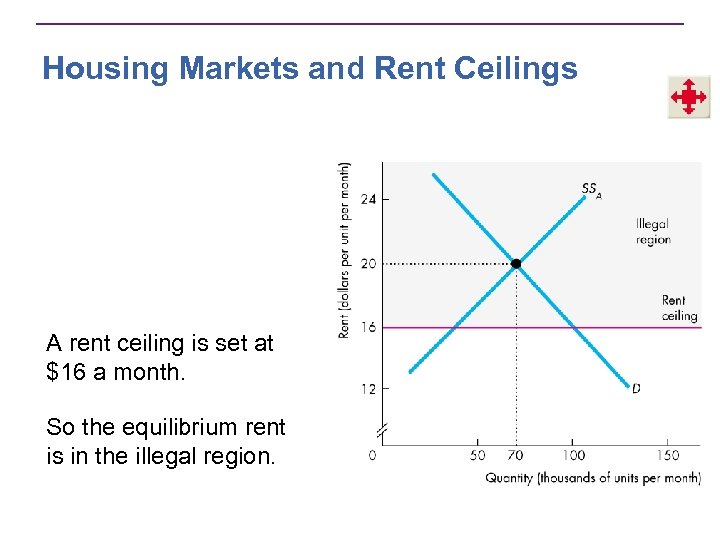
Housing Markets and Rent Ceilings A rent ceiling is set at $16 a month. So the equilibrium rent is in the illegal region.
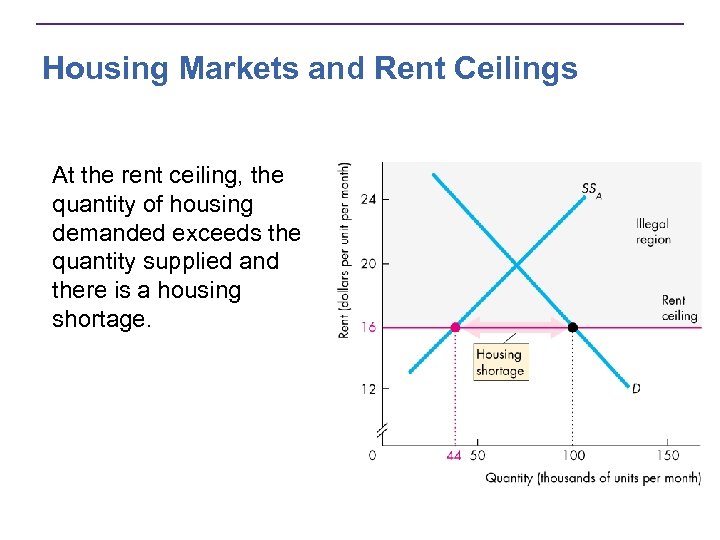
Housing Markets and Rent Ceilings At the rent ceiling, the quantity of housing demanded exceeds the quantity supplied and there is a housing shortage.
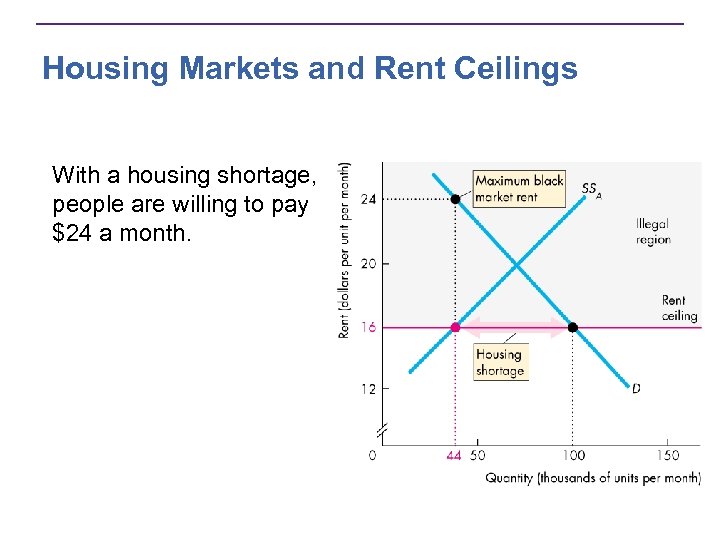
Housing Markets and Rent Ceilings With a housing shortage, people are willing to pay $24 a month.

Housing Markets and Rent Ceilings

Housing Markets and Rent Ceilings

Housing Markets and Rent Ceilings
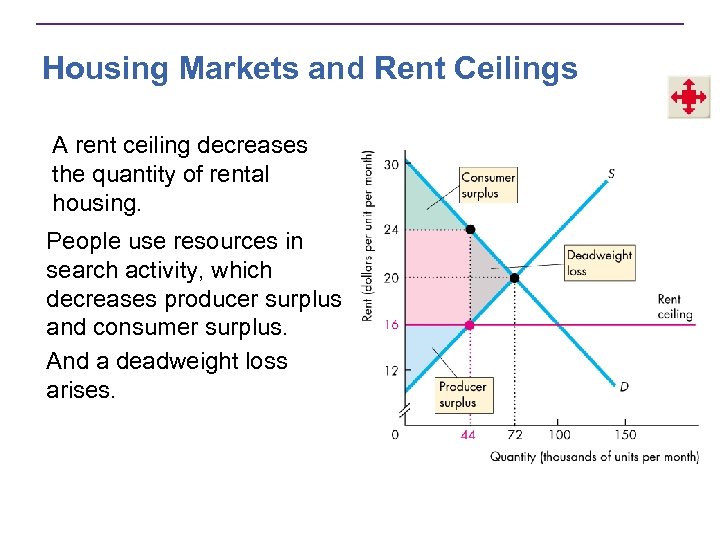
Housing Markets and Rent Ceilings A rent ceiling decreases the quantity of rental housing. People use resources in search activity, which decreases producer surplus and consumer surplus. And a deadweight loss arises.

Housing Markets and Rent Ceilings

Housing Markets and Rent Ceilings A lottery gives scarce housing to the lucky. A queue gives scarce housing to those who have the greatest foresight and get their names on the list first. Discrimination gives scarce housing to friends, family members, or those of the selected race or sex. None of these methods leads to a fair outcome.

Housing Markets and Rent Ceilings
The Labor Market and Minimum Wage New labor-saving technologies become available every year, which mainly replace low-skilled labor. Does the persistent decrease in the demand for low-skilled labor depress the wage rates of these workers? The immediate effect of these technological advances is a decrease in the demand for low-skilled labor, a fall in the wage rate, and a decrease in the quantity of labor supplied. Figure 6. 4 on the next slide illustrates this immediate effect.
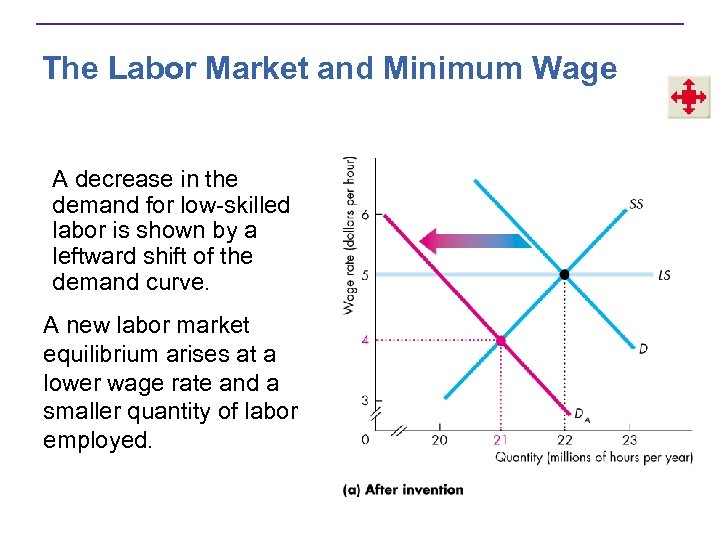
The Labor Market and Minimum Wage A decrease in the demand for low-skilled labor is shown by a leftward shift of the demand curve. A new labor market equilibrium arises at a lower wage rate and a smaller quantity of labor employed.
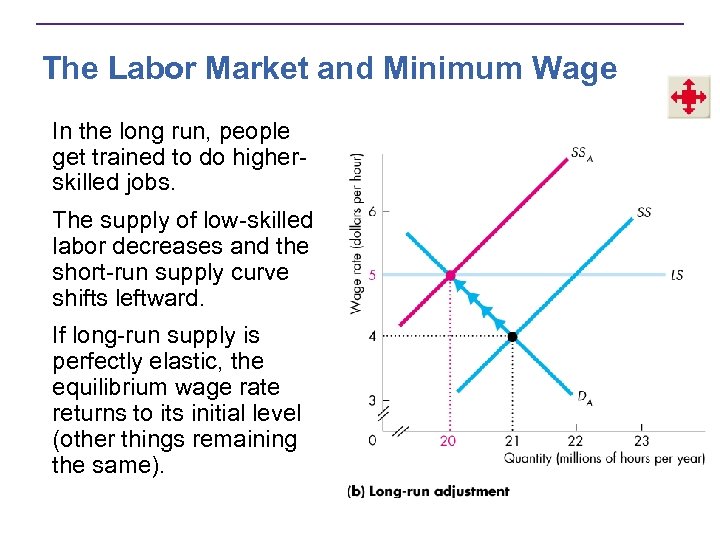
The Labor Market and Minimum Wage In the long run, people get trained to do higherskilled jobs. The supply of low-skilled labor decreases and the short-run supply curve shifts leftward. If long-run supply is perfectly elastic, the equilibrium wage rate returns to its initial level (other things remaining the same).
The Labor Market and Minimum Wage
The Labor Market and Minimum Wage
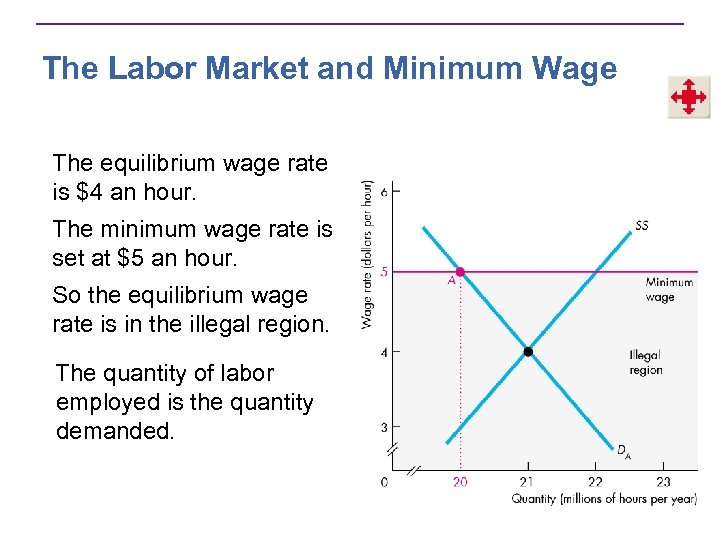
The Labor Market and Minimum Wage The equilibrium wage rate is $4 an hour. The minimum wage rate is set at $5 an hour. So the equilibrium wage rate is in the illegal region. The quantity of labor employed is the quantity demanded.
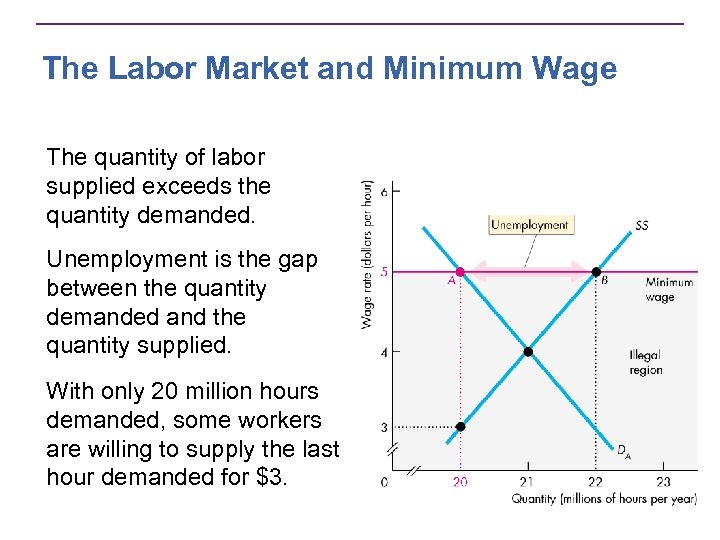
The Labor Market and Minimum Wage The quantity of labor supplied exceeds the quantity demanded. Unemployment is the gap between the quantity demanded and the quantity supplied. With only 20 million hours demanded, some workers are willing to supply the last hour demanded for $3.
The Labor Market and Minimum Wage
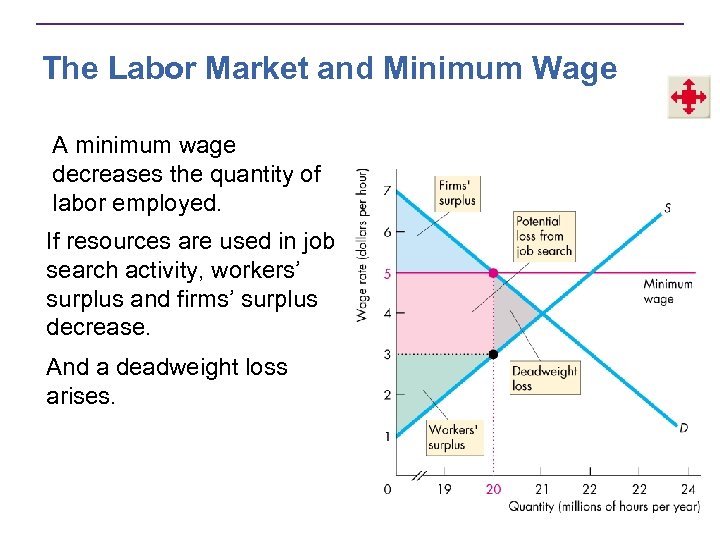
The Labor Market and Minimum Wage A minimum wage decreases the quantity of labor employed. If resources are used in job search activity, workers’ surplus and firms’ surplus decrease. And a deadweight loss arises.
The Labor Market and Minimum Wage
The Labor Market and Minimum Wage

Taxes

Taxes
Taxes Tax incidence doesn’t depend on tax law! The law might impose a tax on the buyer or the seller, but the outcome will be the same. To see why, we look at the tax on cigarettes in New York City. On July 1, 2002, New York City raised the tax on the sales of cigarettes from almost nothing to $1. 50 a pack. What are the effects of this tax?
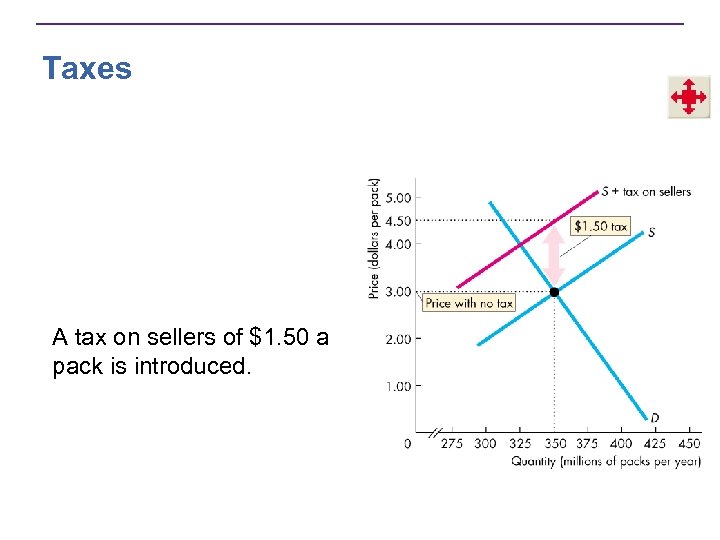
Taxes A tax on sellers of $1. 50 a pack is introduced.
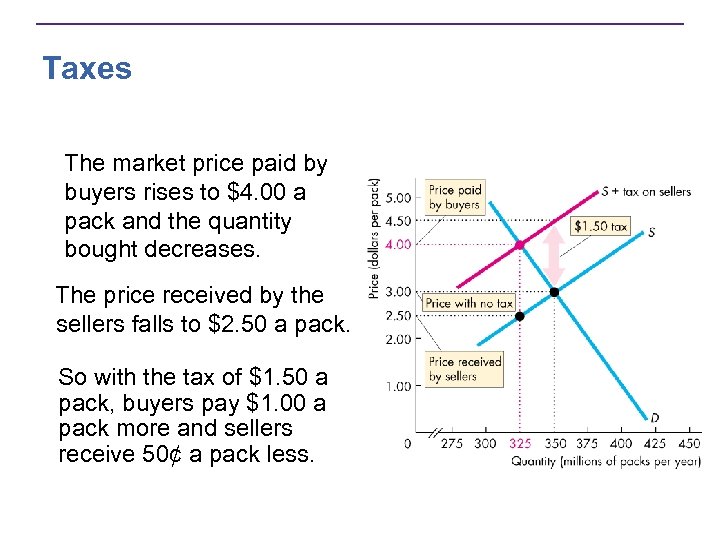
Taxes The market price paid by buyers rises to $4. 00 a pack and the quantity bought decreases. The price received by the sellers falls to $2. 50 a pack. So with the tax of $1. 50 a pack, buyers pay $1. 00 a pack more and sellers receive 50¢ a pack less.
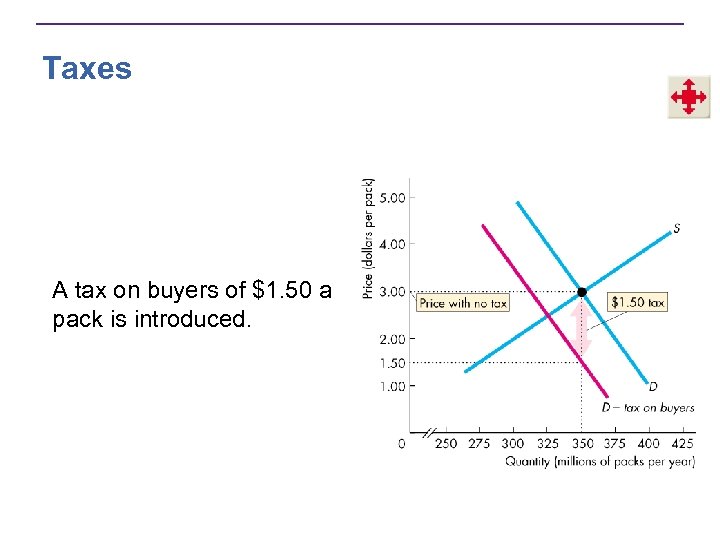
Taxes A tax on buyers of $1. 50 a pack is introduced.
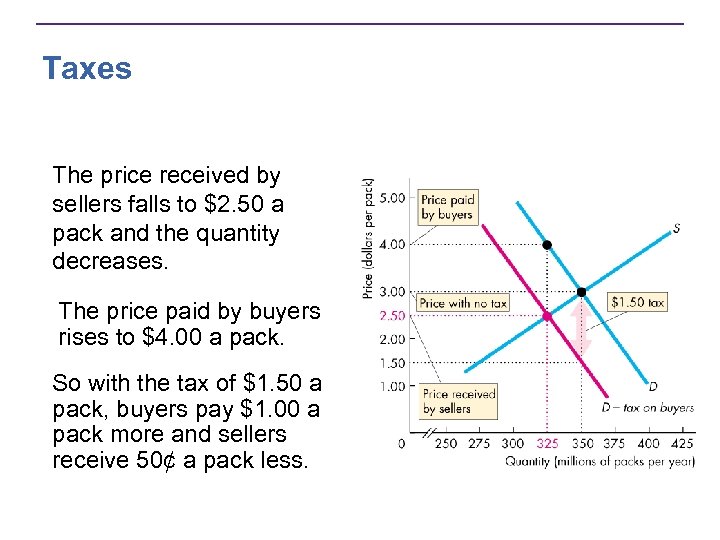
Taxes The price received by sellers falls to $2. 50 a pack and the quantity decreases. The price paid by buyers rises to $4. 00 a pack. So with the tax of $1. 50 a pack, buyers pay $1. 00 a pack more and sellers receive 50¢ a pack less.
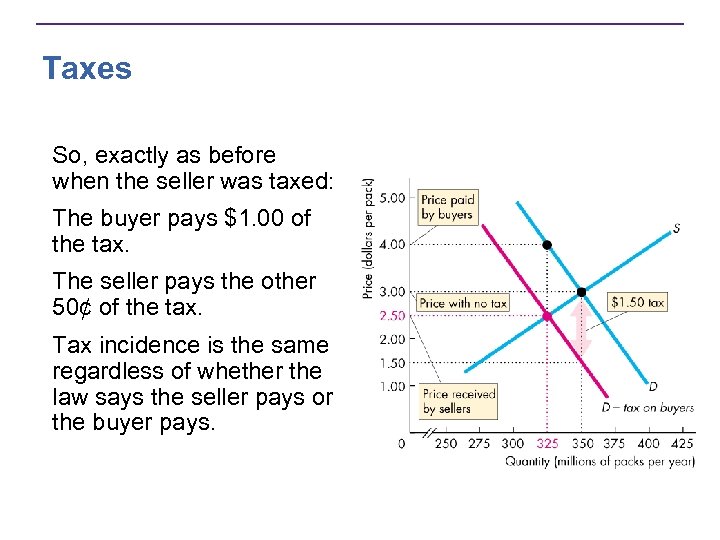
Taxes So, exactly as before when the seller was taxed: The buyer pays $1. 00 of the tax. The seller pays the other 50¢ of the tax. Tax incidence is the same regardless of whether the law says the seller pays or the buyer pays.

Taxes
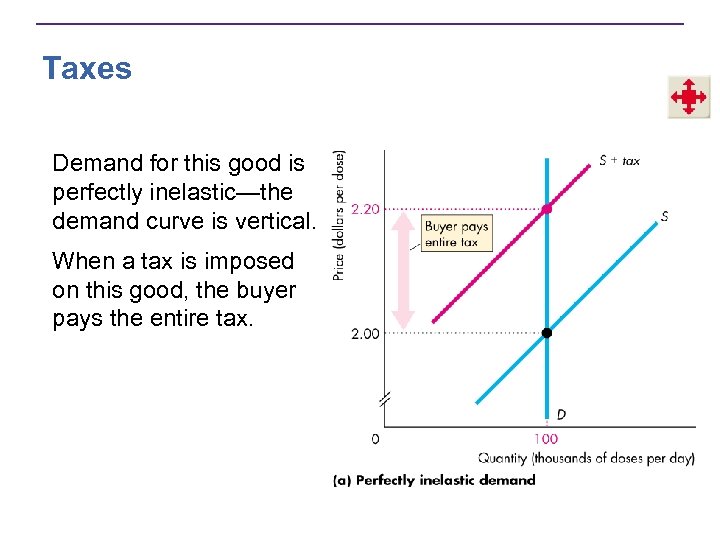
Taxes Demand for this good is perfectly inelastic—the demand curve is vertical. When a tax is imposed on this good, the buyer pays the entire tax.
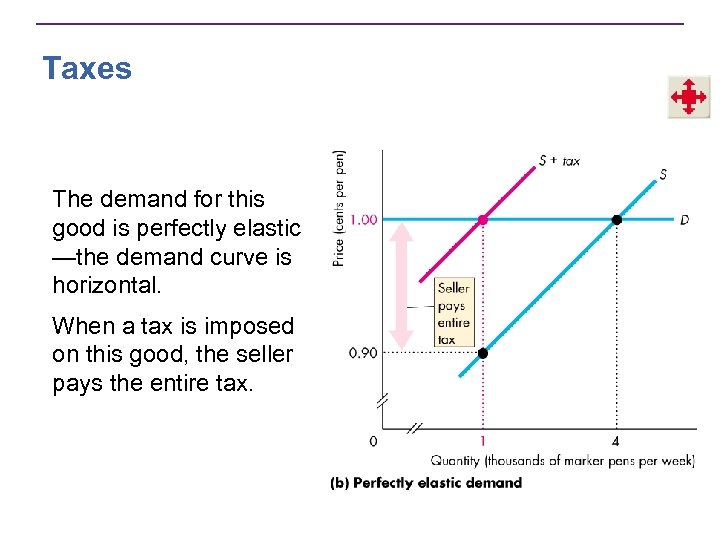
Taxes The demand for this good is perfectly elastic —the demand curve is horizontal. When a tax is imposed on this good, the seller pays the entire tax.

Taxes
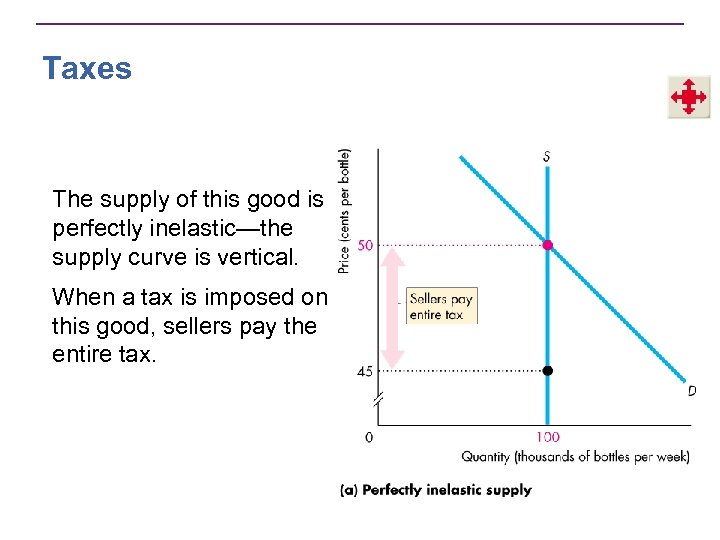
Taxes The supply of this good is perfectly inelastic—the supply curve is vertical. When a tax is imposed on this good, sellers pay the entire tax.
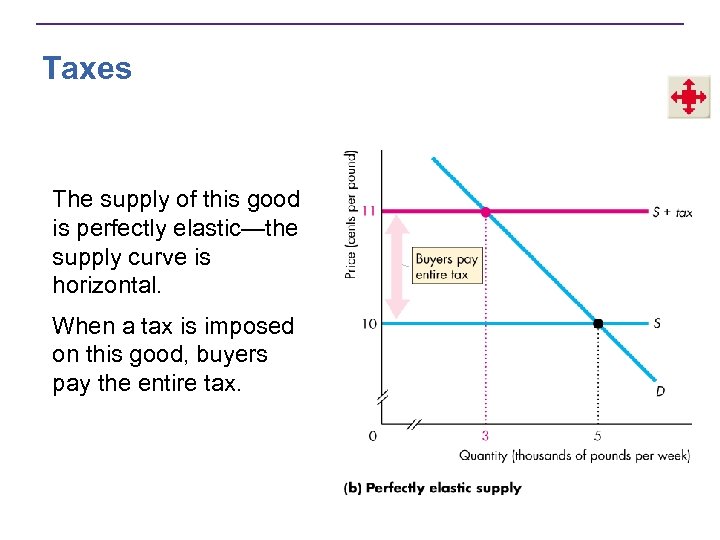
Taxes The supply of this good is perfectly elastic—the supply curve is horizontal. When a tax is imposed on this good, buyers pay the entire tax.

Taxes

Taxes
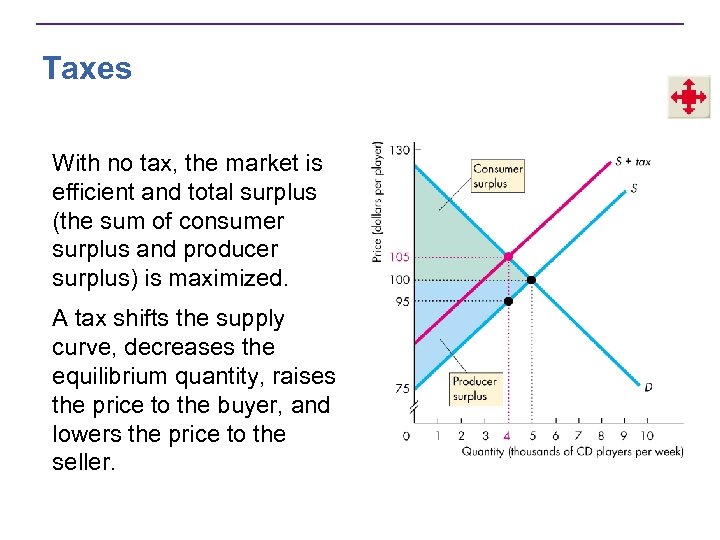
Taxes With no tax, the market is efficient and total surplus (the sum of consumer surplus and producer surplus) is maximized. A tax shifts the supply curve, decreases the equilibrium quantity, raises the price to the buyer, and lowers the price to the seller.
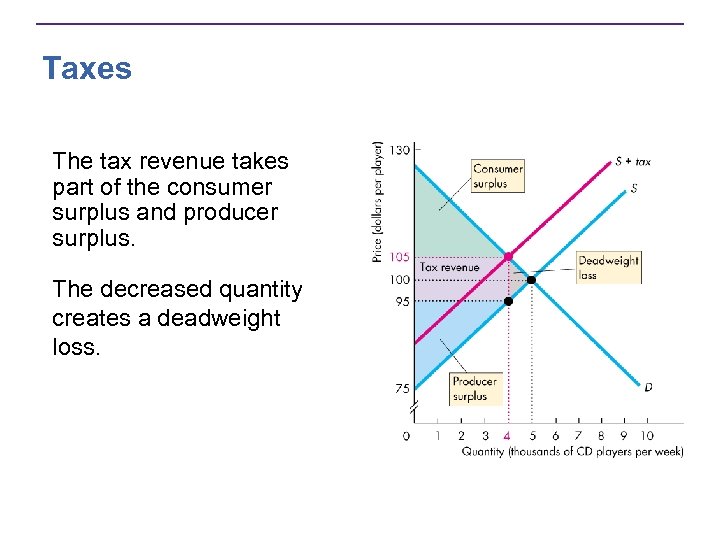
Taxes The tax revenue takes part of the consumer surplus and producer surplus. The decreased quantity creates a deadweight loss.
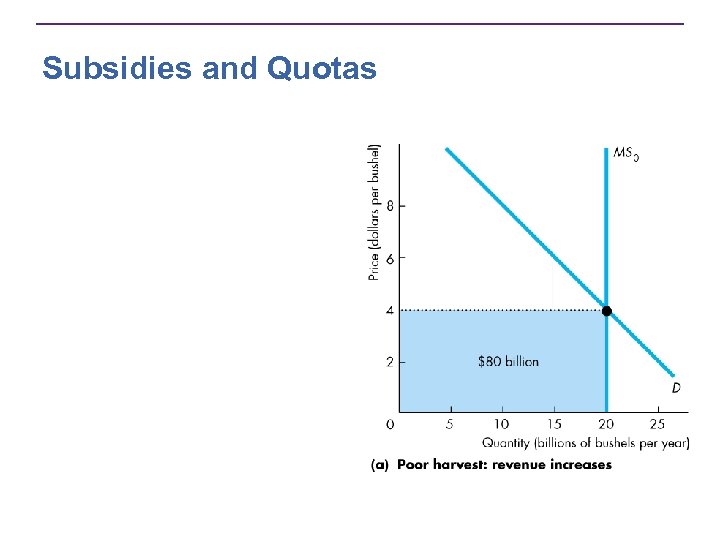
Subsidies and Quotas Fluctuations in the weather bring big fluctuations in farm output. How do changes in farm output affect the prices of farm products and farm revenues? How might farmers be helped by intervention in markets for farm products?
Subsidies and Quotas
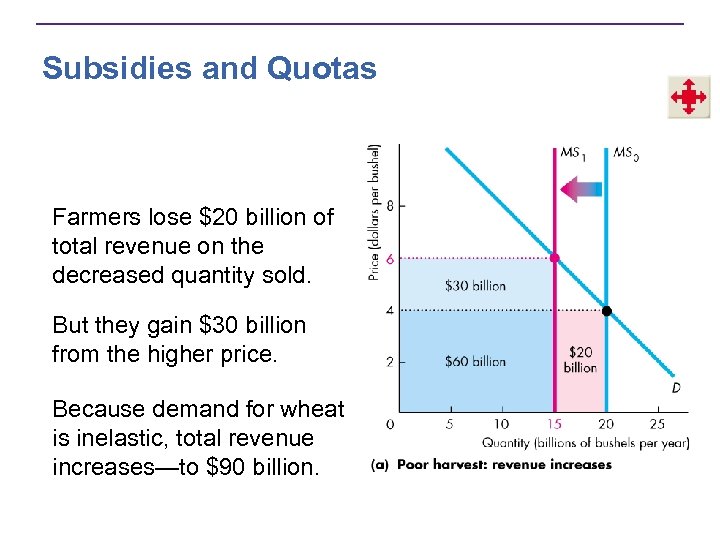
Subsidies and Quotas Farmers lose $20 billion of total revenue on the decreased quantity sold. But they gain $30 billion from the higher price. Because demand for wheat is inelastic, total revenue increases—to $90 billion.
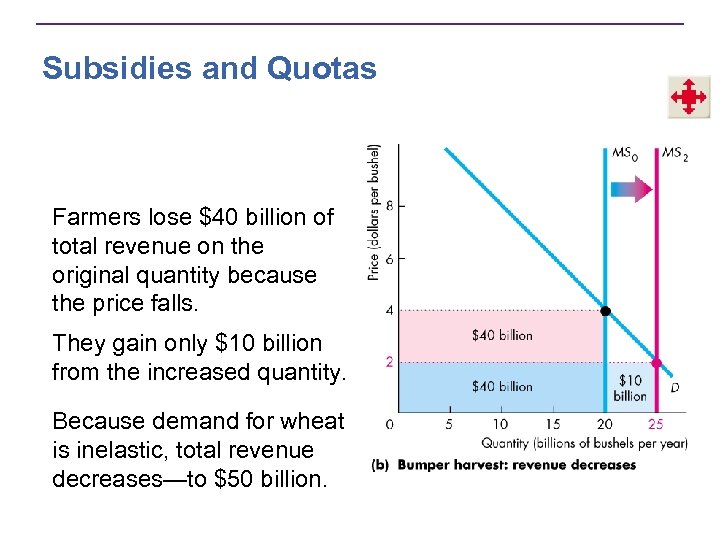
Subsidies and Quotas Farmers lose $40 billion of total revenue on the original quantity because the price falls. They gain only $10 billion from the increased quantity. Because demand for wheat is inelastic, total revenue decreases—to $50 billion.

Subsidies and Quotas
Subsidies and Quotas
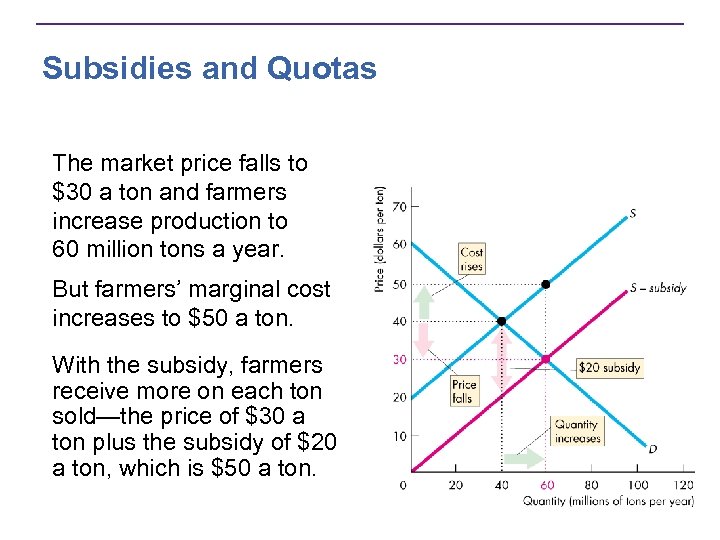
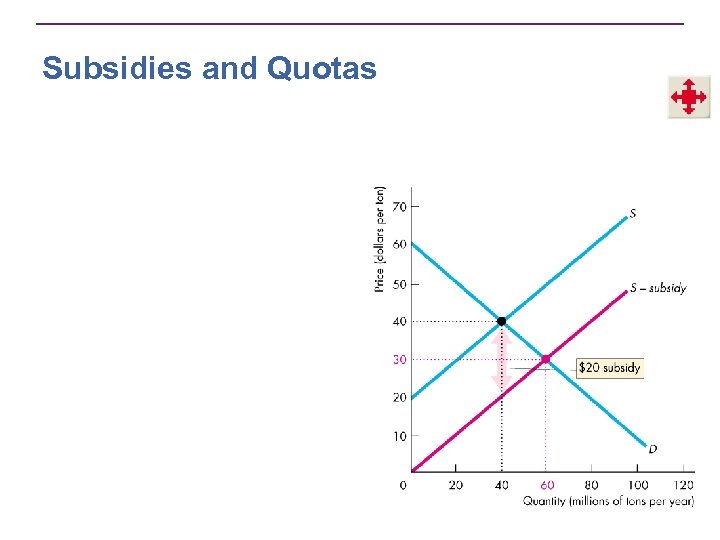
Subsidies and Quotas The market price falls to $30 a ton and farmers increase production to 60 million tons a year. But farmers’ marginal cost increases to $50 a ton. With the subsidy, farmers receive more on each ton sold—the price of $30 a ton plus the subsidy of $20 a ton, which is $50 a ton.
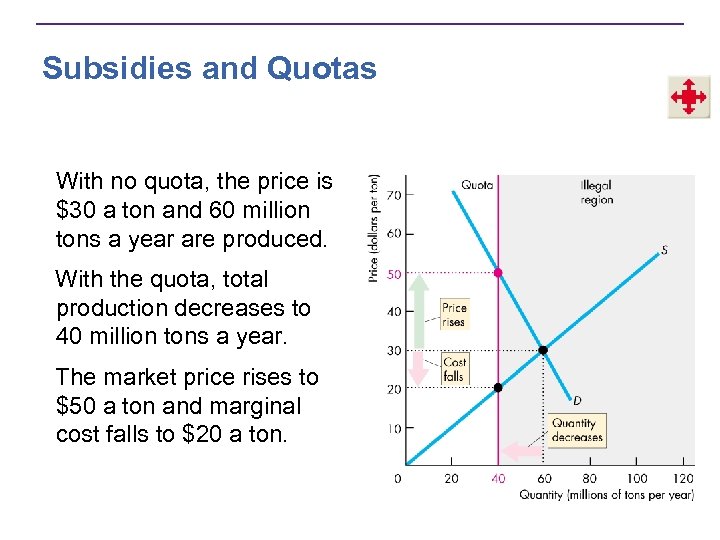
Subsidies and Quotas With no quota, the price is $30 a ton and 60 million tons a year are produced. With the quota, total production decreases to 40 million tons a year. The market price rises to $50 a ton and marginal cost falls to $20 a ton.
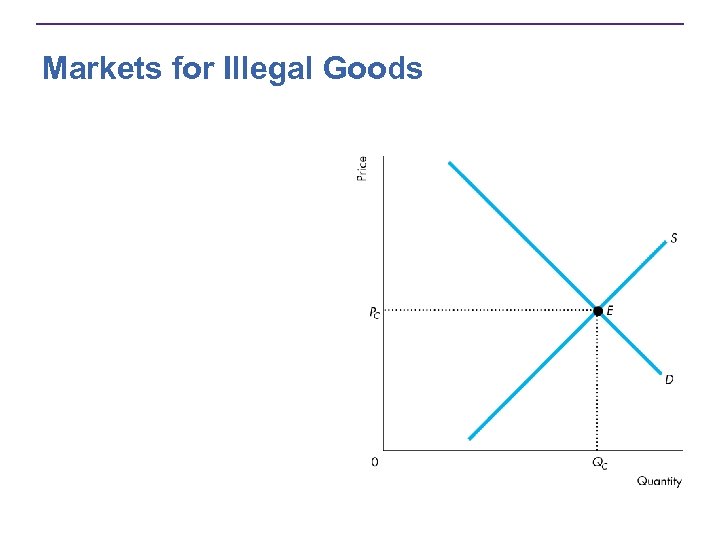
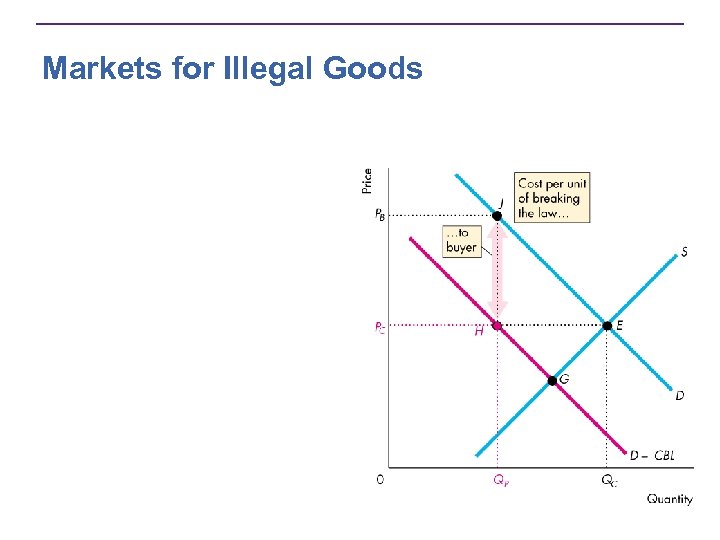
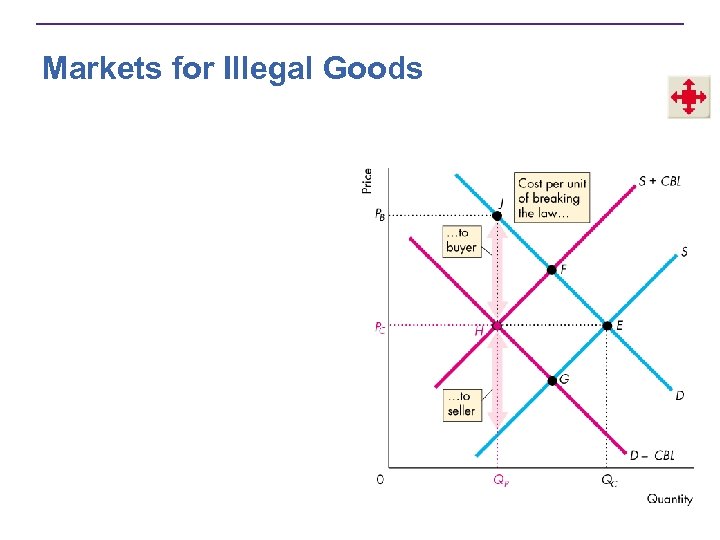
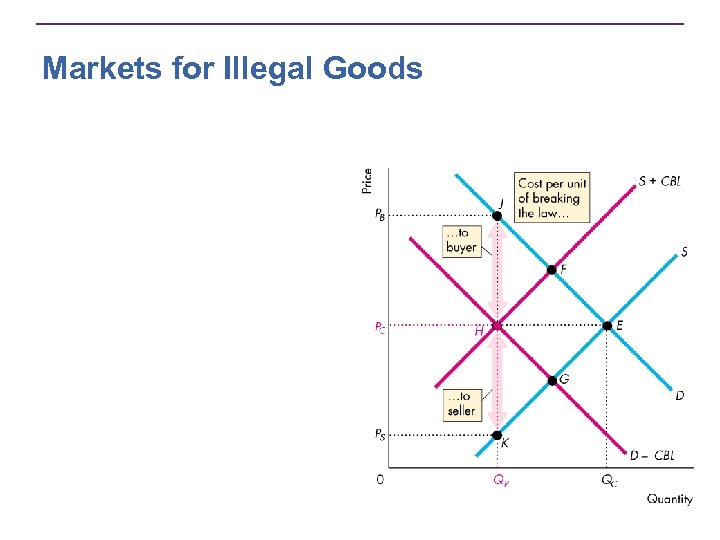
Markets for Illegal Goods The U. S. government prohibits trade of some goods, such as illegal drugs. Yet, markets exist for illegal goods and services. How does the market for an illegal good work? To see how the market for an illegal good works, we begin by looking at a free market and see the changes that occur when the good is made illegal.
Markets for Illegal Goods
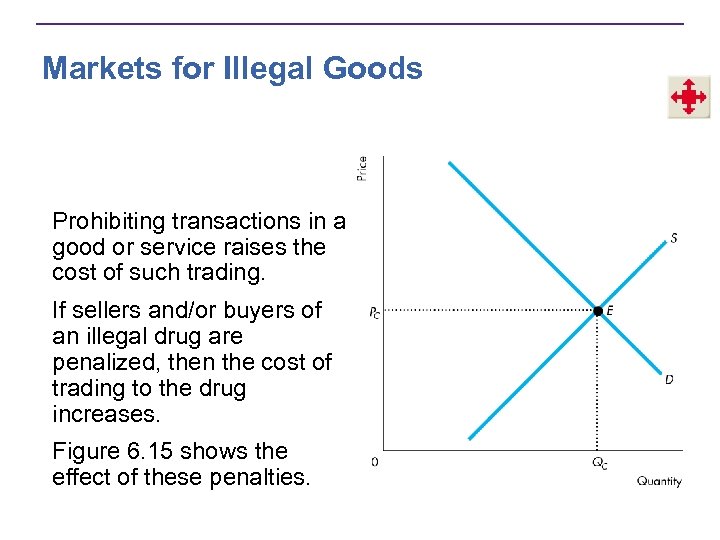
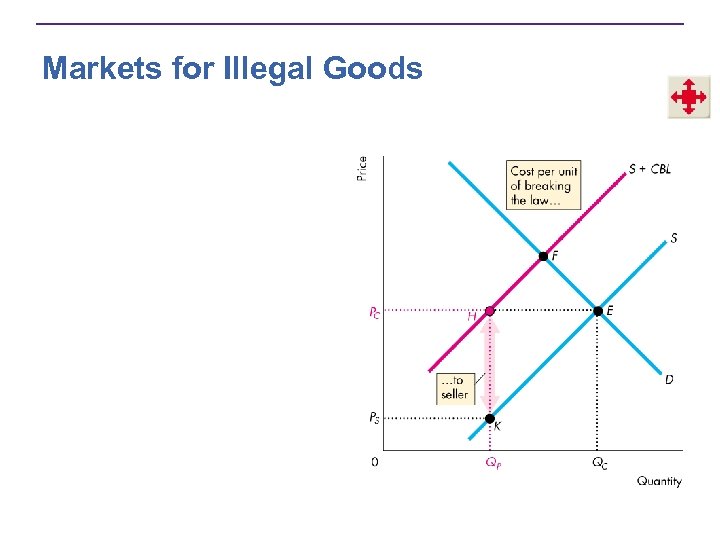
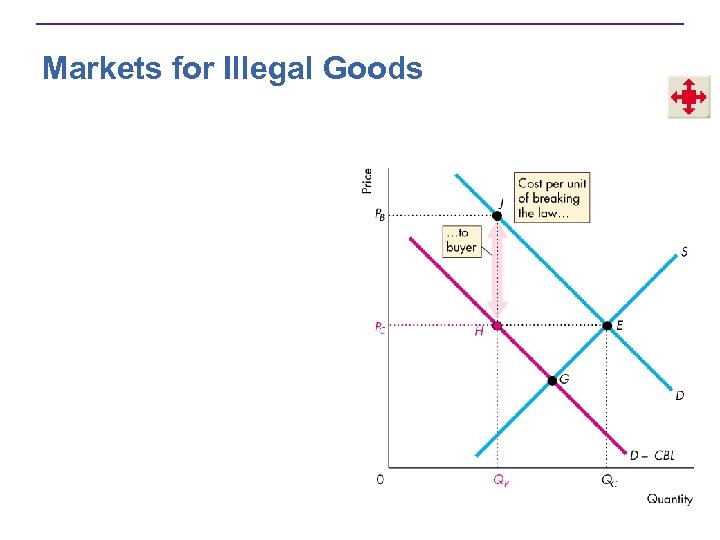
Markets for Illegal Goods Prohibiting transactions in a good or service raises the cost of such trading. If sellers and/or buyers of an illegal drug are penalized, then the cost of trading to the drug increases. Figure 6. 15 shows the effect of these penalties.
Markets for Illegal Goods
Markets for Illegal Goods
Markets for Illegal Goods
Markets for Illegal Goods
Markets for Illegal Goods

Markets for Illegal Goods
 Скачать презентацию Turbulent Times As more people compete for scarce
176b7fa943a69ef830c85cc1ffb17784.ppt