 Скачать презентацию Turbulence ahead Fasten Your Seat Belts What Physicians
66d4e587f698addc3bf2f6a0cfcac77d.ppt
- Количество слайдов: 56



Turbulence ahead! Fasten Your Seat Belts! What Physicians Can Expect from Health Reform Over the Next Five Years Bob Doherty SVP, Governmental Affairs and Public Policy, ACP Virginia Chapter, ACP March 1, 2013
Health reform: from here to there § Here: tens of millions uninsured, uneven quality, rising costs, intrusions on patientphysician relationship § There: near universal coverage--with better quality at a price we can afford? And fewer intrusions on patients and physicians? § How smooth or rough will the journey be?

How we would like it to be. . .

What we expect it will be. . .

What we fear it will be. . .

What we fear it will be. . .
Turbulence § Affordable Care Act § Entitlements § Budget and sequestration § Payment/delivery system reform
ACA: the political environment 1. No plausible scenario where the ACA will be repealed 2. State engagement/ resistance may determine the law’s effectiveness in expanding coverage
The role of the states § Medicaid: Accept/reject federal dollars § Exchanges: Set up own exchange, partner with federal government, or turn it over to the feds § Benefits: Establish “benchmark” for plans to be offered through state-exchanges or let feds determine § Enrollment: help/encourage people to get coverage thru Medicaid or exchanges, or do nothing to help
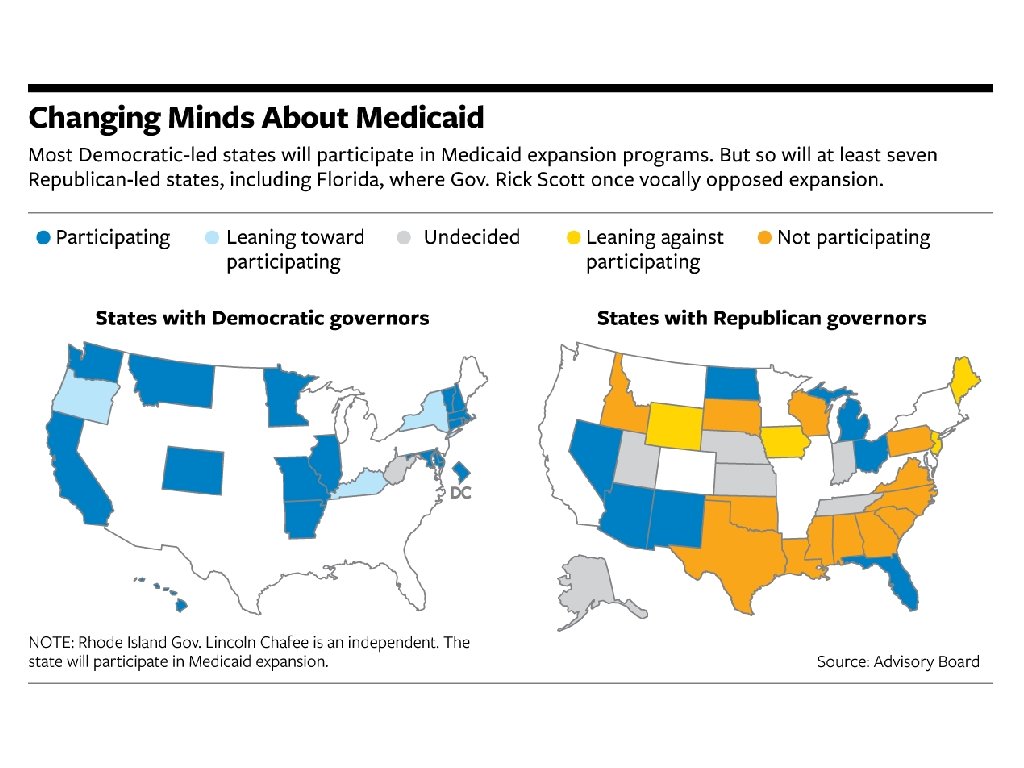
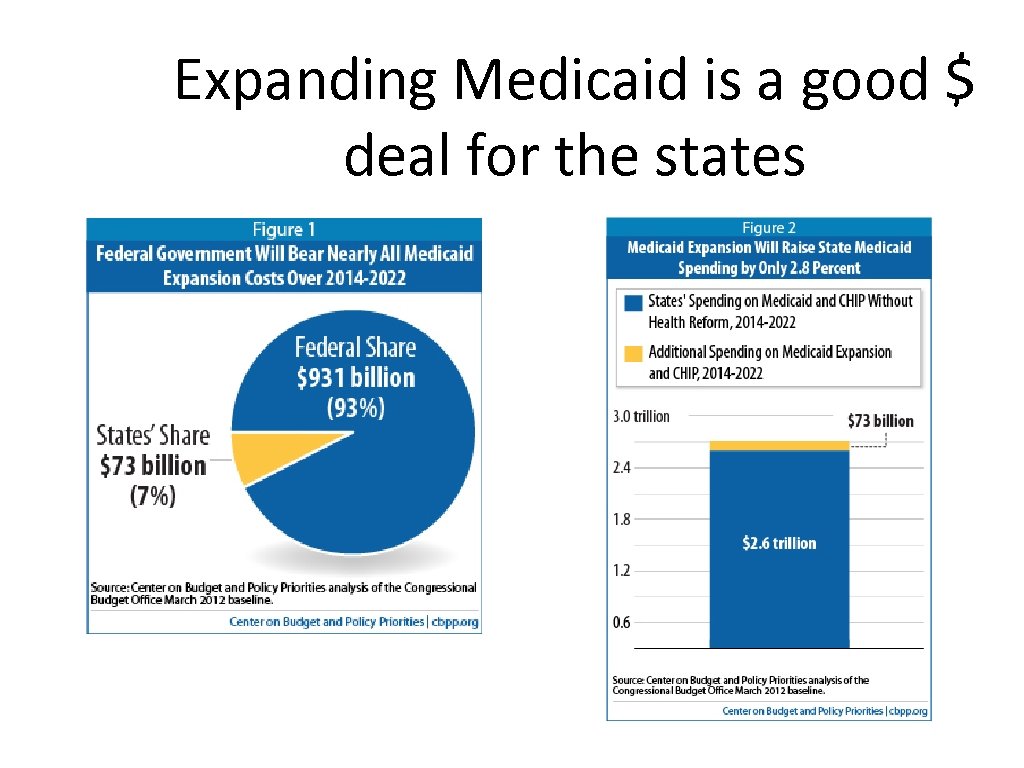
Expanding Medicaid is a good $ deal for the states
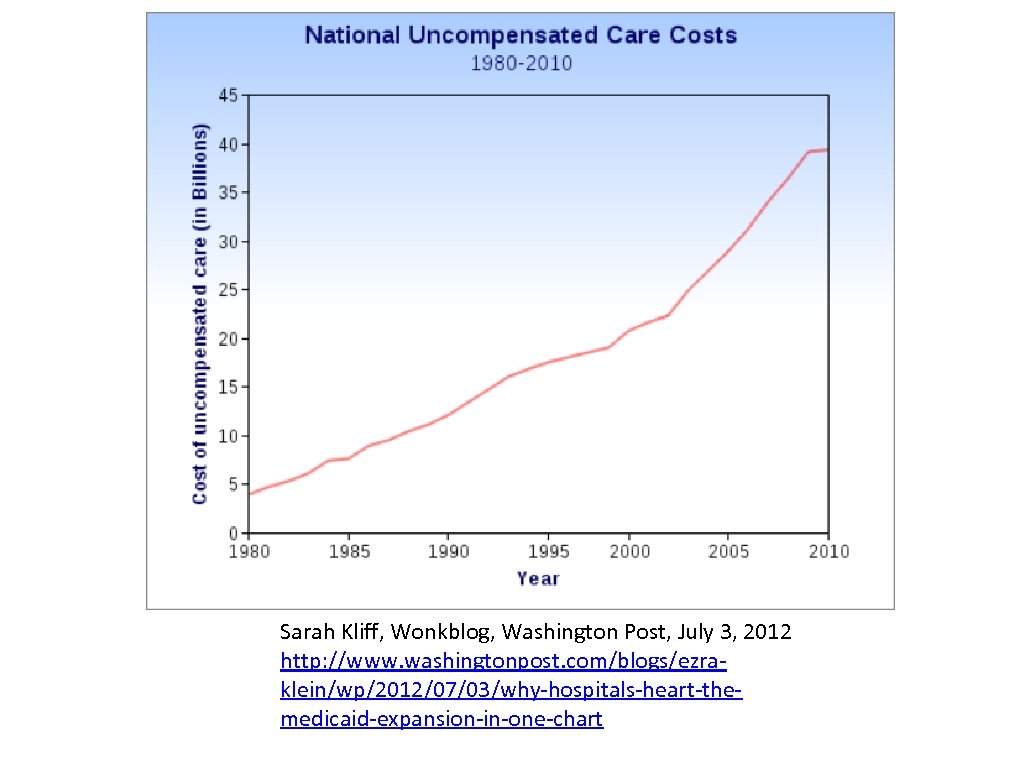
Sarah Kliff, Wonkblog, Washington Post, July 3, 2012 http: //www. washingtonpost. com/blogs/ezraklein/wp/2012/07/03/why-hospitals-heart-themedicaid-expansion-in-one-chart
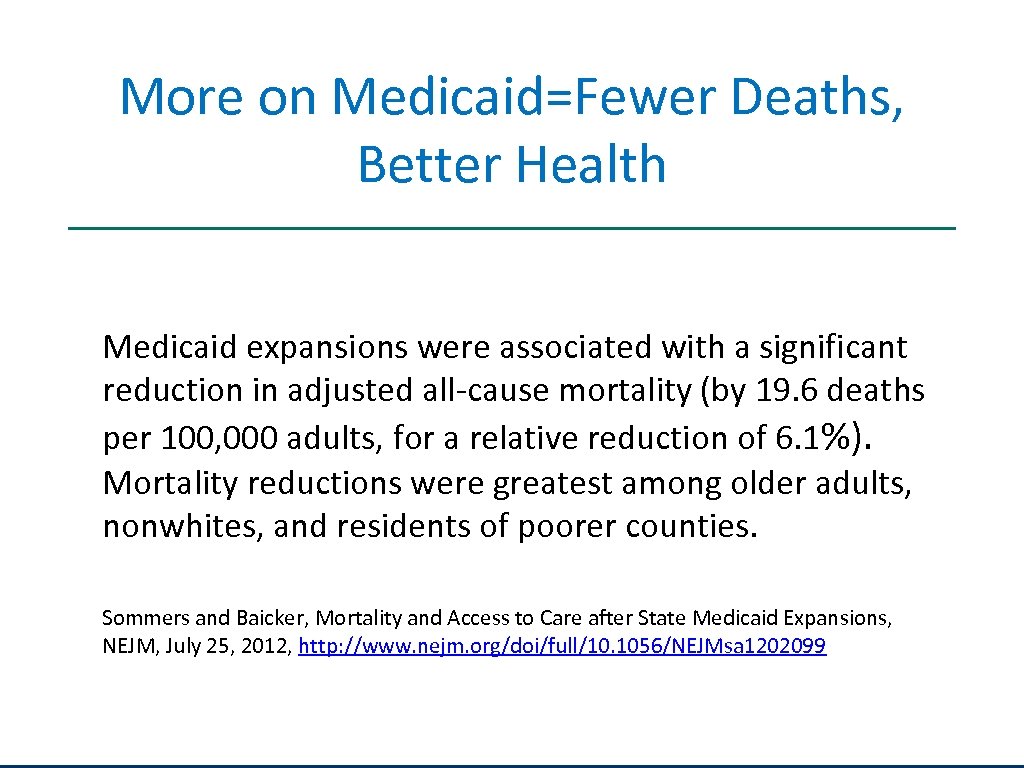
More on Medicaid=Fewer Deaths, Better Health Medicaid expansions were associated with a significant reduction in adjusted all-cause mortality (by 19. 6 deaths per 100, 000 adults, for a relative reduction of 6. 1%). Mortality reductions were greatest among older adults, nonwhites, and residents of poorer counties. Sommers and Baicker, Mortality and Access to Care after State Medicaid Expansions, NEJM, July 25, 2012, http: //www. nejm. org/doi/full/10. 1056/NEJMsa 1202099
ACP’s Medicaid Patient Advocacy Campaign Ø Cover letter from College leadership, seeking 100% U. S. chapter participation Ø Concise action plan with one-click links to all supporting materials, presentation slides, instructions and timetable Ø Customized state-specific reports now!) and press (available releases to be issued by all chapters http: //www. acponline. org/cln/medicaid_campaign. htm Ø Template and web interface to send the report to each state’s governor and legislators
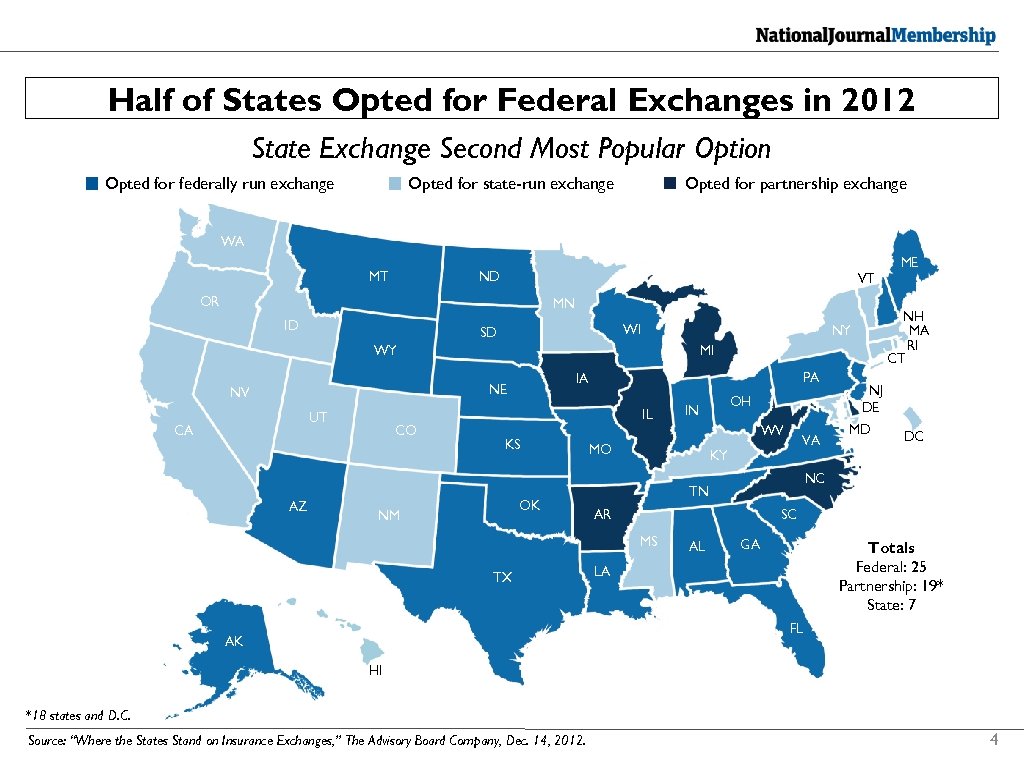
Half of States Opted for Federal Exchanges in 2012 State Exchange Second Most Popular Option Opted for federally run exchange Opted for state-run exchange Opted for partnership exchange WA MT ND VT OR MN ID WI SD MI IL UT CA AZ PA IA NE NV CO NH MA RI CT NY WY KS OK NM IN WV MO VA KY NJ DE MD DC NC TN AR SC MS TX OH ME AL GA Totals Federal: 25 Partnership: 19* State: 7 LA FL AK HI *18 states and D. C. Source: “Where the States Stand on Insurance Exchanges, ” The Advisory Board Company, Dec. 14, 2012. 4
Enrollment “States are rushing to decide whether to build their own health exchanges and the administration is readying final regulations, but a growing body of research suggests that most low-income Americans who will become eligible for subsidized insurance have no idea what is coming. Supporters of the health-care law say the plan will not be a success without a massive public relations campaign to build awareness. ” Many Americans Unaware of Health-care Law Changes, Sarah Kliff, Washington Post, November 21, 2012, http: //www. washingtonpost. com/business/economy/many-americans-unaware-of-healthcare-law-changes/2012/11/20/ee 02 b 0 bc-3272 -11 e 2 -9 cfa-e 41 bac 906 cc 9_story. html? hpid=z 2
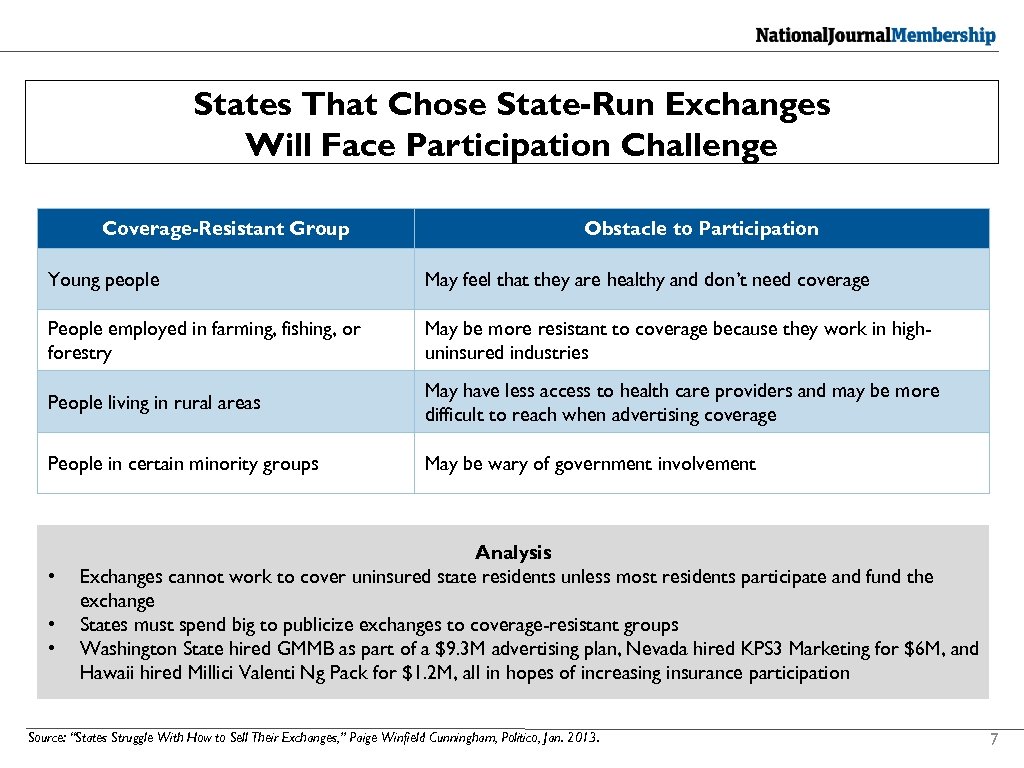
States That Chose State-Run Exchanges Will Face Participation Challenge Coverage-Resistant Group Obstacle to Participation Young people May feel that they are healthy and don’t need coverage People employed in farming, fishing, or forestry May be more resistant to coverage because they work in highuninsured industries People living in rural areas May have less access to health care providers and may be more difficult to reach when advertising coverage People in certain minority groups May be wary of government involvement • • • Analysis Exchanges cannot work to cover uninsured state residents unless most residents participate and fund the exchange States must spend big to publicize exchanges to coverage-resistant groups Washington State hired GMMB as part of a $9. 3 M advertising plan, Nevada hired KPS 3 Marketing for $6 M, and Hawaii hired Millici Valenti Ng Pack for $1. 2 M, all in hopes of increasing insurance participation Source: “States Struggle With How to Sell Their Exchanges, ” Paige Winfield Cunningham, Politico, Jan. 2013. 7
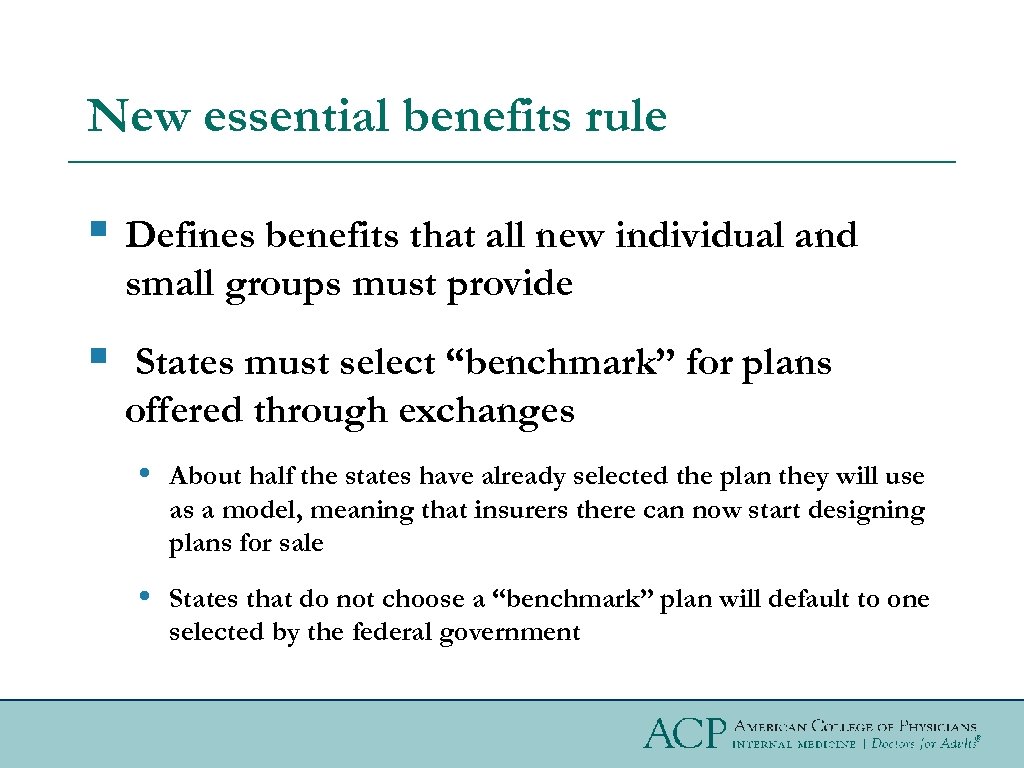
New essential benefits rule § Defines benefits that all new individual and small groups must provide § States must select “benchmark” for plans offered through exchanges • About half the states have already selected the plan they will use as a model, meaning that insurers there can now start designing plans for sale • States that do not choose a “benchmark” plan will default to one selected by the federal government
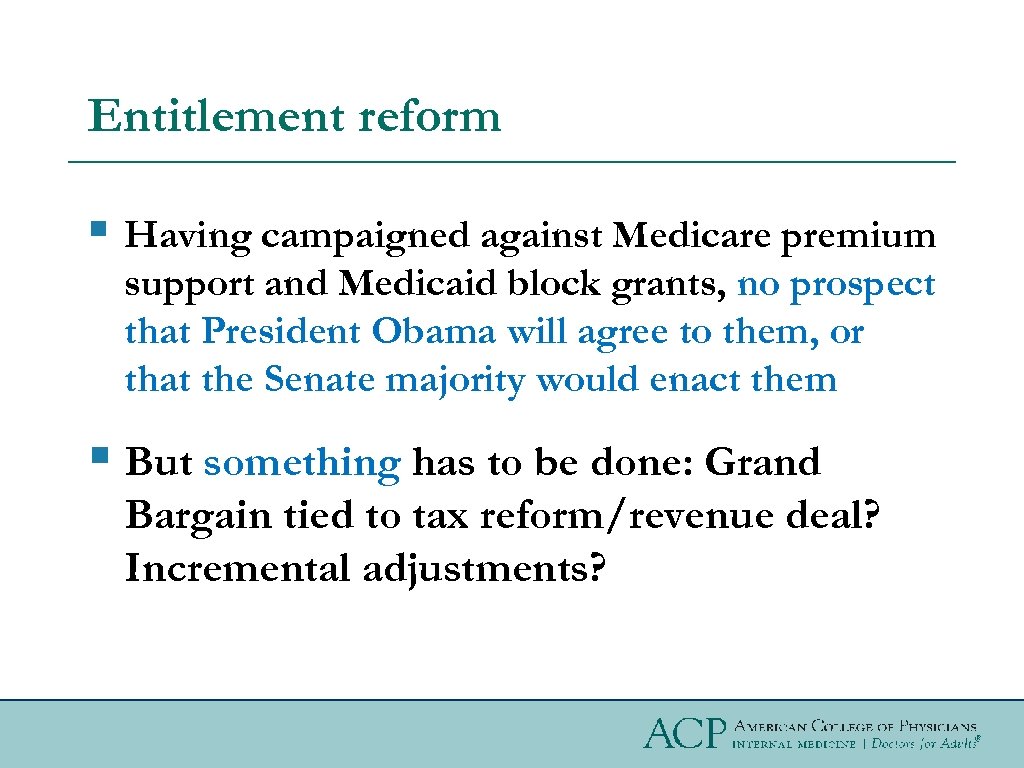
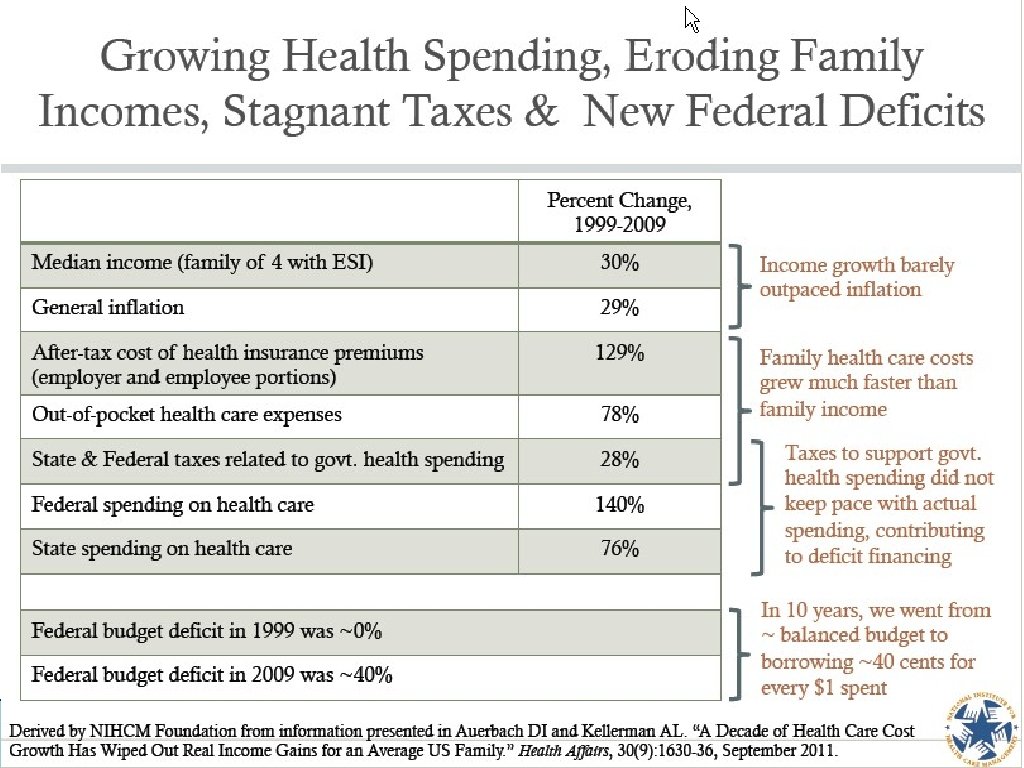
Entitlement reform § Having campaigned against Medicare premium support and Medicaid block grants, no prospect that President Obama will agree to them, or that the Senate majority would enact them § But something has to be done: Grand Bargain tied to tax reform/revenue deal? Incremental adjustments?
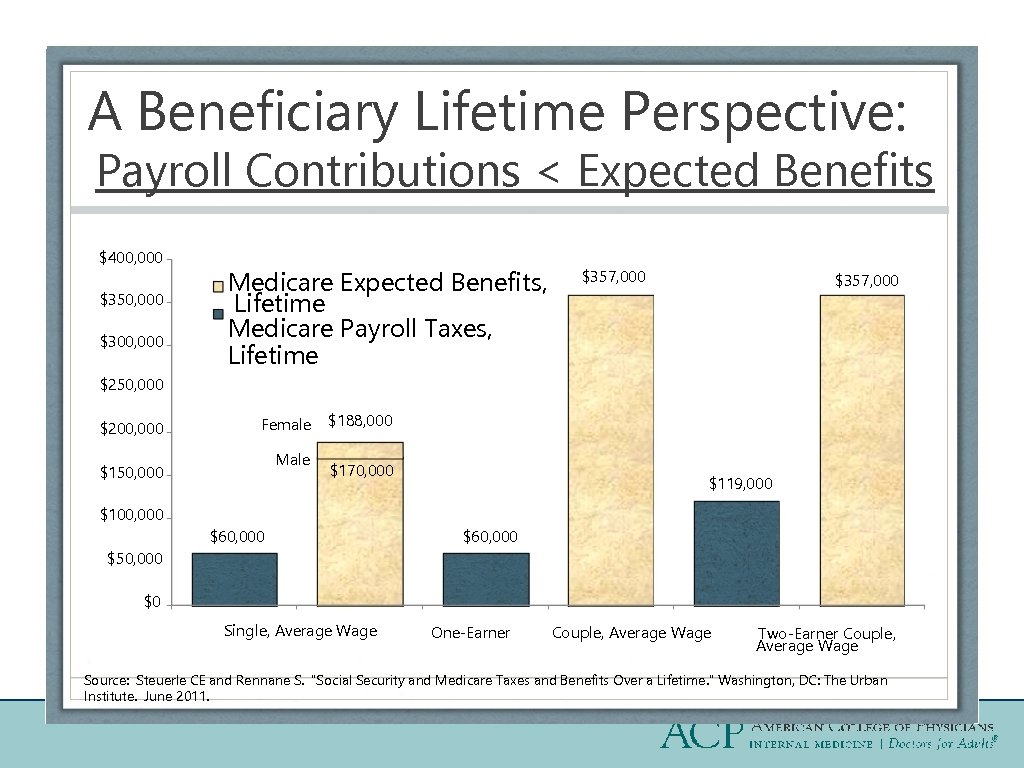
A Beneficiary Lifetime Perspective: Payroll Contributions < Expected Benefits $400, 000 $350, 000 $300, 000 Medicare Expected Benefits, Lifetime Medicare Payroll Taxes, Lifetime $357, 000 $250, 000 $200, 000 Female Male $150, 000 $188, 000 $170, 000 $119, 000 $100, 000 $60, 000 Single, Average Wage One-Earner Couple, One-Earner Wage Average $50, 000 $0 Single, Average Wage Two-Earner Couple, Average Wages Two-Earner Couple, Average Wage Source: Steuerle CE and Rennane S. "Social Security and Medicare Taxes and Benefits Over a Lifetime. ” Washington, DC: The Urban Institute. June 2011.
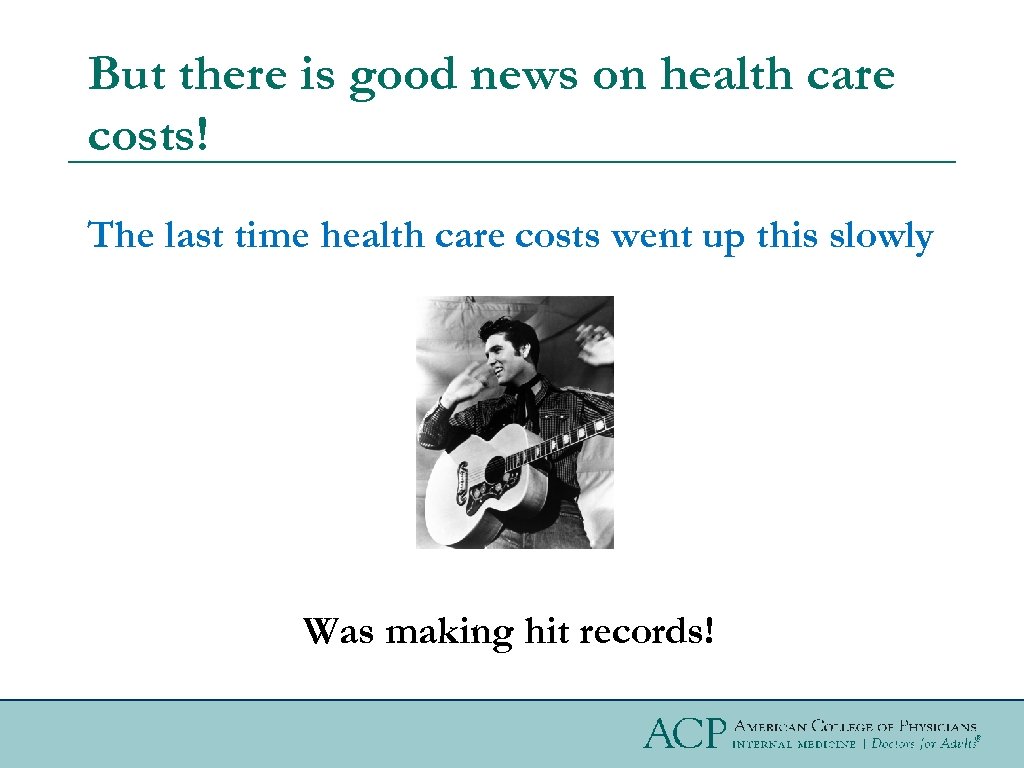
But there is good news on health care costs! The last time health care costs went up this slowly Was making hit records!
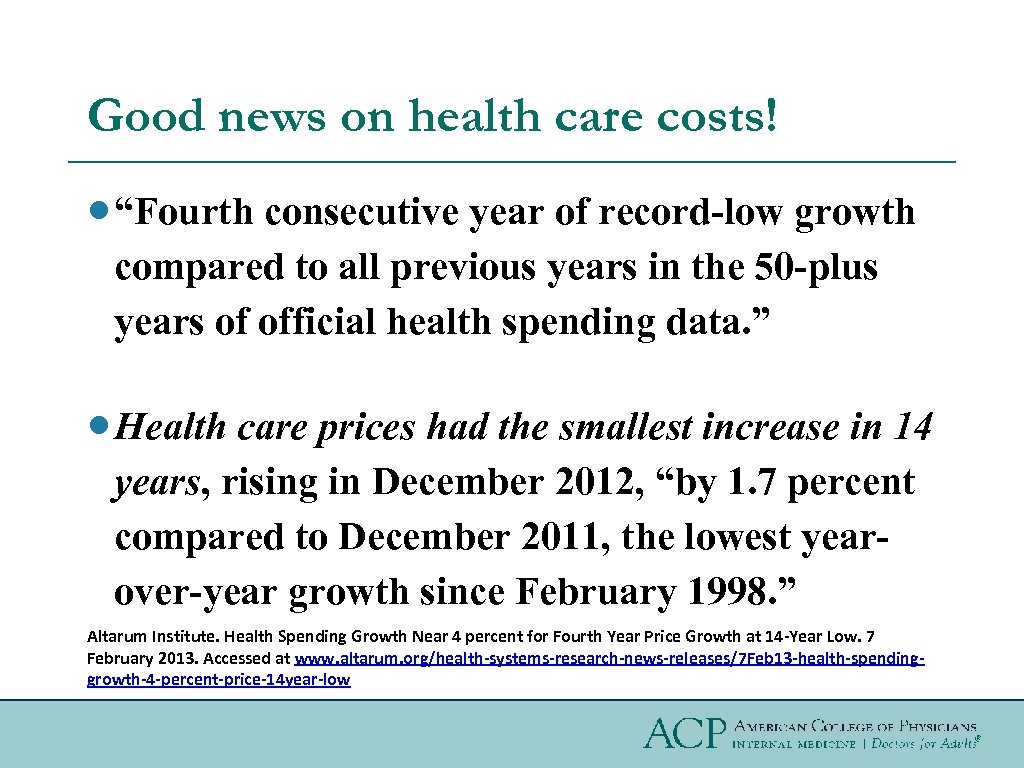
Good news on health care costs! “Fourth consecutive year of record-low growth compared to all previous years in the 50 -plus years of official health spending data. ” Health care prices had the smallest increase in 14 years, rising in December 2012, “by 1. 7 percent compared to December 2011, the lowest yearover-year growth since February 1998. ” Altarum Institute. Health Spending Growth Near 4 percent for Fourth Year Price Growth at 14 -Year Low. 7 February 2013. Accessed at www. altarum. org/health-systems-research-news-releases/7 Feb 13 -health-spendinggrowth-4 -percent-price-14 year-low
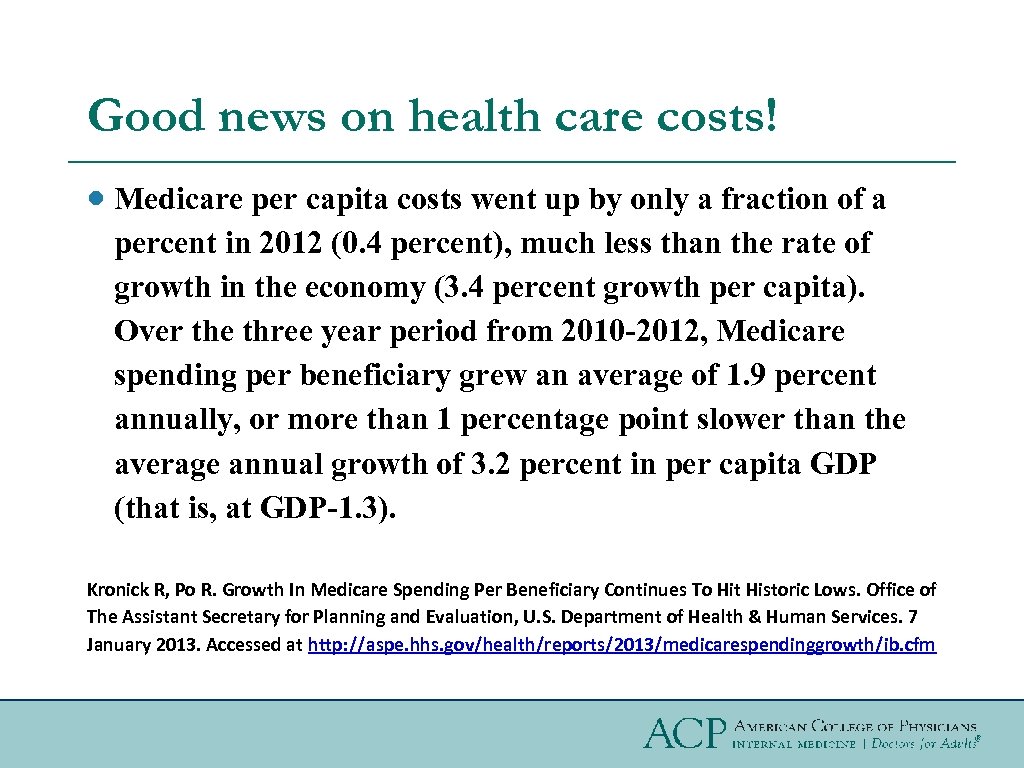
Good news on health care costs! Medicare per capita costs went up by only a fraction of a percent in 2012 (0. 4 percent), much less than the rate of growth in the economy (3. 4 percent growth per capita). Over the three year period from 2010 -2012, Medicare spending per beneficiary grew an average of 1. 9 percent annually, or more than 1 percentage point slower than the average annual growth of 3. 2 percent in per capita GDP (that is, at GDP-1. 3). Kronick R, Po R. Growth In Medicare Spending Per Beneficiary Continues To Hit Historic Lows. Office of The Assistant Secretary for Planning and Evaluation, U. S. Department of Health & Human Services. 7 January 2013. Accessed at http: //aspe. hhs. gov/health/reports/2013/medicarespendinggrowth/ib. cfm
Budget and sequestration § Fiscal cliff averted (for now) § But cuts, effective Marchwill , 1 endanger public health, medical research, workforce, and access
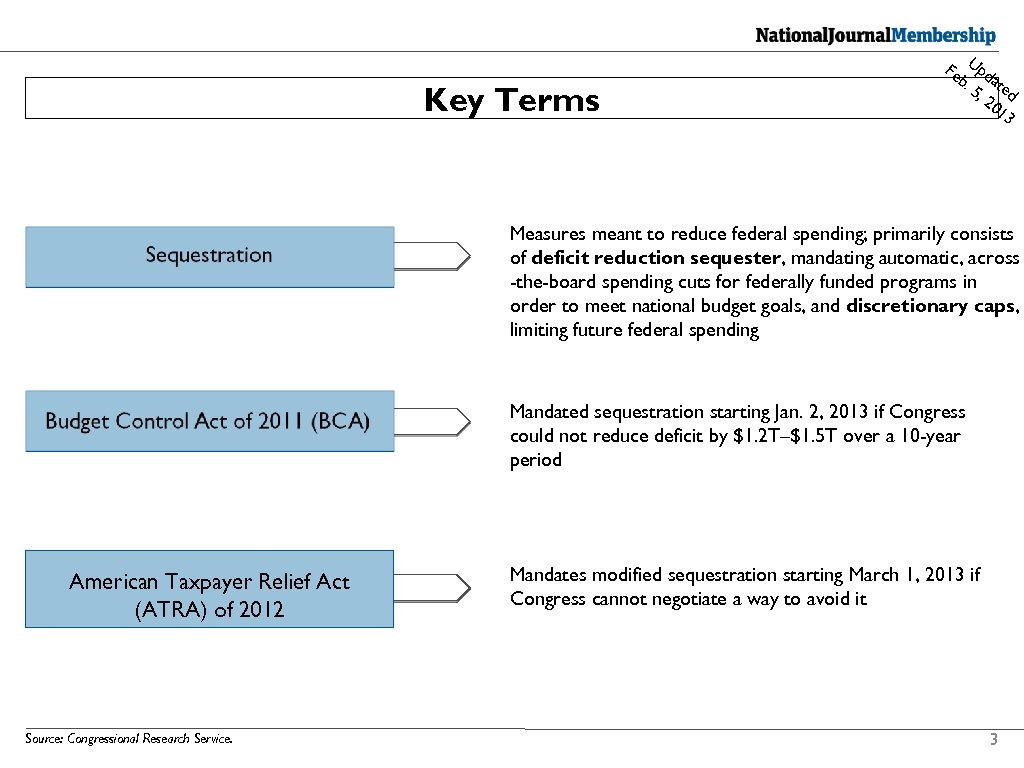
Key Terms Fe Upd b. at 5, ed 20 13 Measures meant to reduce federal spending; primarily consists of deficit reduction sequester, mandating automatic, across -the-board spending cuts for federally funded programs in order to meet national budget goals, and discretionary caps, limiting future federal spending Mandated sequestration starting Jan. 2, 2013 if Congress could not reduce deficit by $1. 2 T–$1. 5 T over a 10 -year period American Taxpayer Relief Act (ATRA) of 2012 Source: Congressional Research Service. Mandates modified sequestration starting March 1, 2013 if Congress cannot negotiate a way to avoid it 3
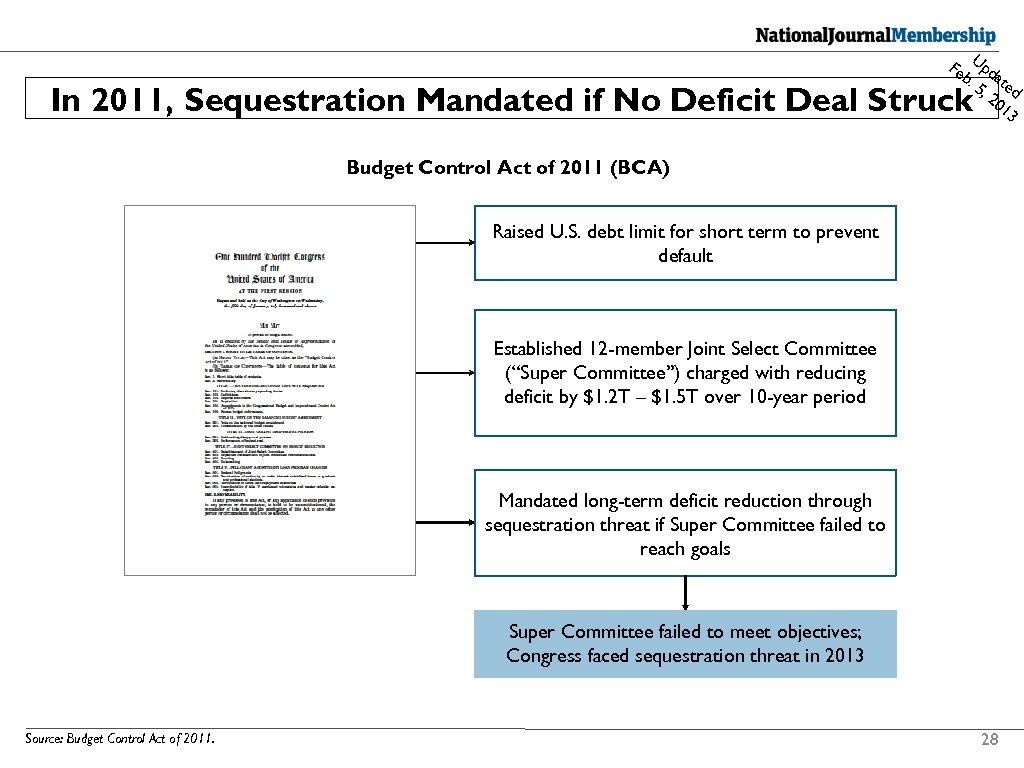
Fe Upd b. at 5, ed 20 13 In 2011, Sequestration Mandated if No Deficit Deal Struck Budget Control Act of 2011 (BCA) Raised U. S. debt limit for short term to prevent default Established 12 -member Joint Select Committee (“Super Committee”) charged with reducing deficit by $1. 2 T – $1. 5 T over 10 -year period Mandated long-term deficit reduction through sequestration threat if Super Committee failed to reach goals Super Committee failed to meet objectives; Congress faced sequestration threat in 2013 Source: Budget Control Act of 2011. 28
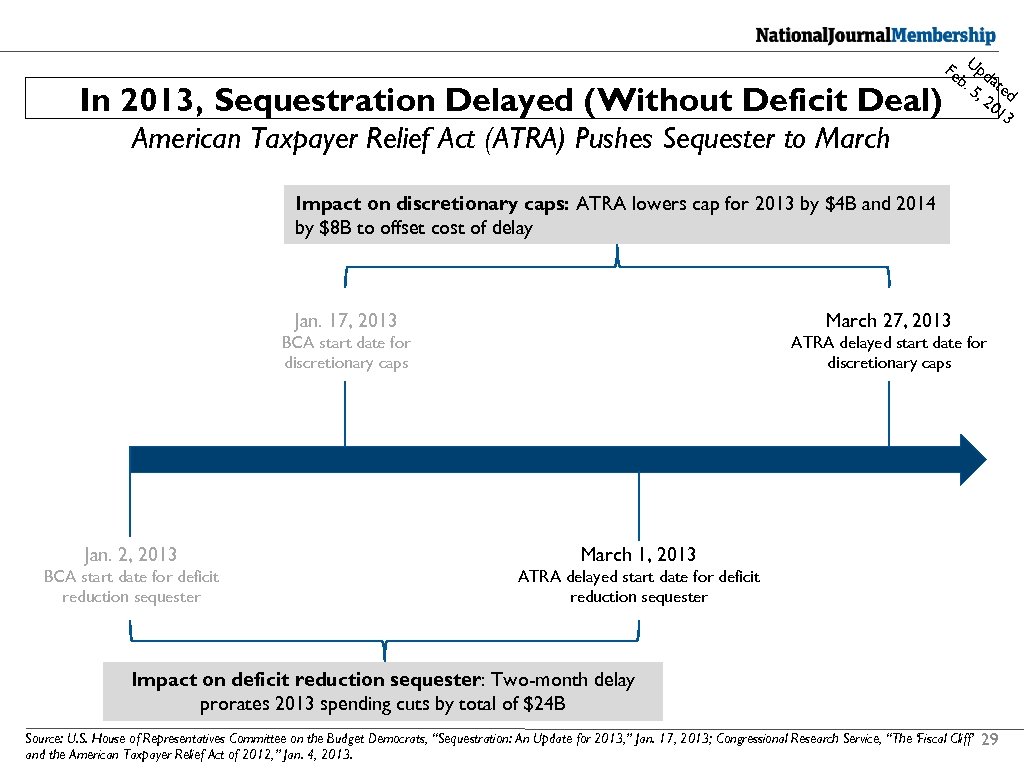
In 2013, Sequestration Delayed (Without Deficit Deal) American Taxpayer Relief Act (ATRA) Pushes Sequester to March Fe Upd b. at 5, ed 20 13 Impact on discretionary caps: ATRA lowers cap for 2013 by $4 B and 2014 by $8 B to offset cost of delay Jan. 17, 2013 March 27, 2013 BCA start date for discretionary caps ATRA delayed start date for discretionary caps Jan. 2, 2013 March 1, 2013 BCA start date for deficit reduction sequester ATRA delayed start date for deficit reduction sequester Impact on deficit reduction sequester: Two-month delay prorates 2013 spending cuts by total of $24 B Source: U. S. House of Representatives Committee on the Budget Democrats, “Sequestration: An Update for 2013, ” Jan. 17, 2013; Congressional Research Service, “The ‘Fiscal Cliff’ and the American Taxpayer Relief Act of 2012, ” Jan. 4, 2013. 29
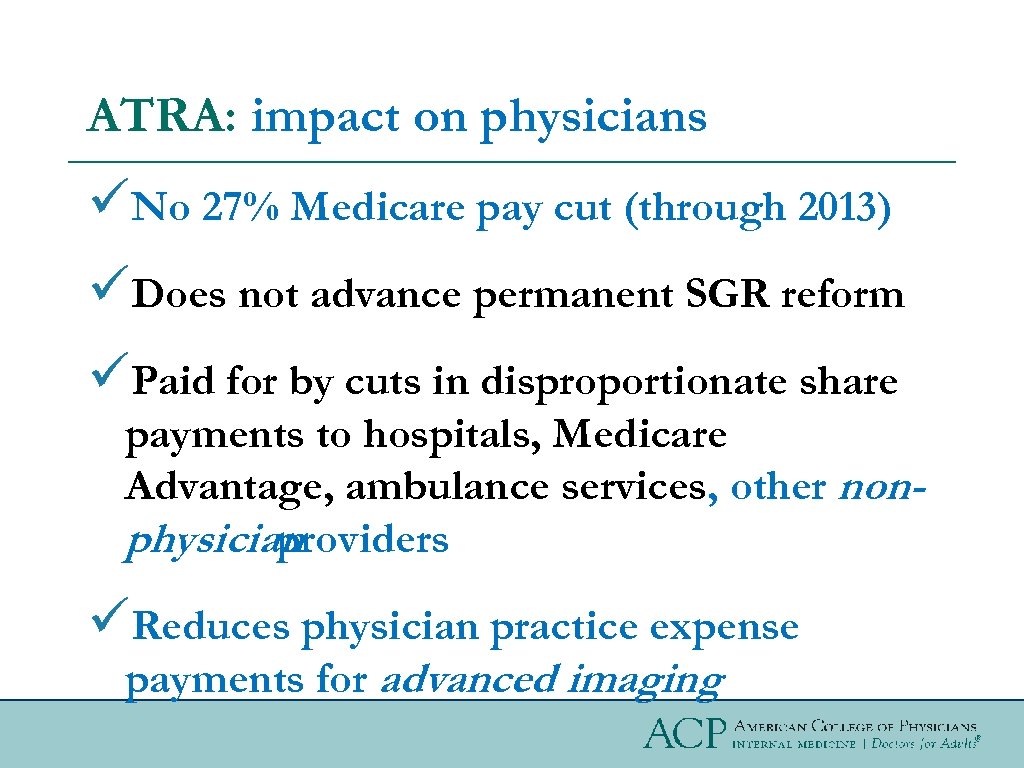
ATRA: impact on physicians üNo 27% Medicare pay cut (through 2013) üDoes not advance permanent SGR reform üPaid for by cuts in disproportionate share payments to hospitals, Medicare Advantage, ambulance services, other nonphysician providers üReduces physician practice expense payments for advanced imaging
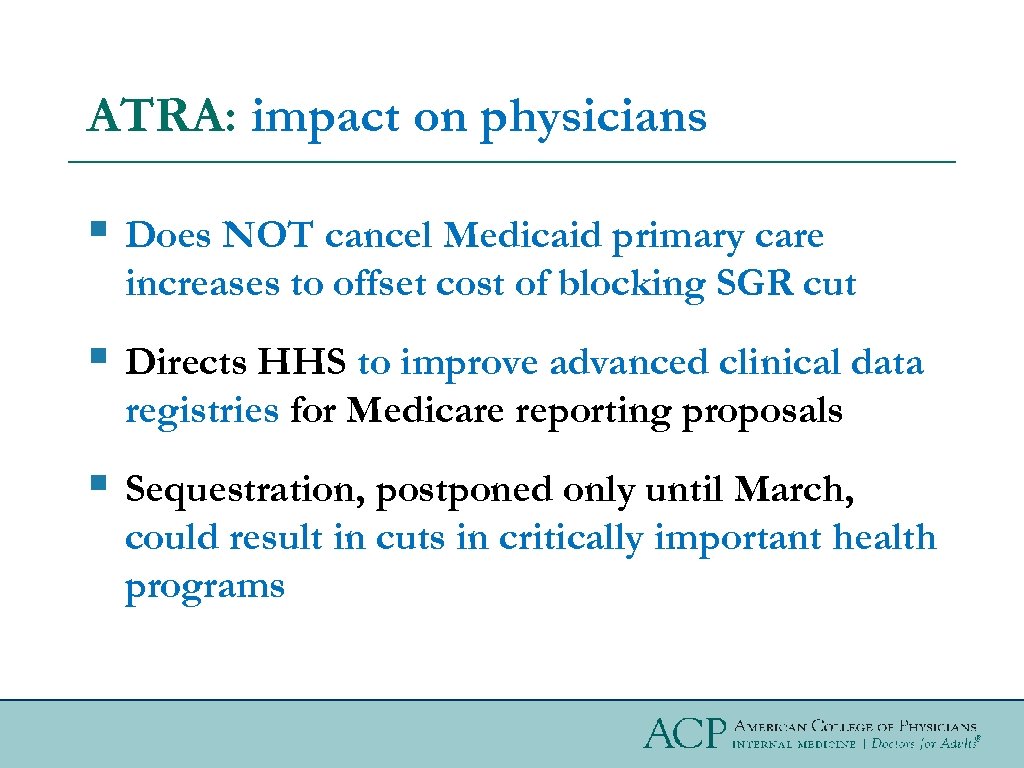
ATRA: impact on physicians § Does NOT cancel Medicaid primary care increases to offset cost of blocking SGR cut § Directs HHS to improve advanced clinical data registries for Medicare reporting proposals § Sequestration, postponed only until March, could result in cuts in critically important health programs
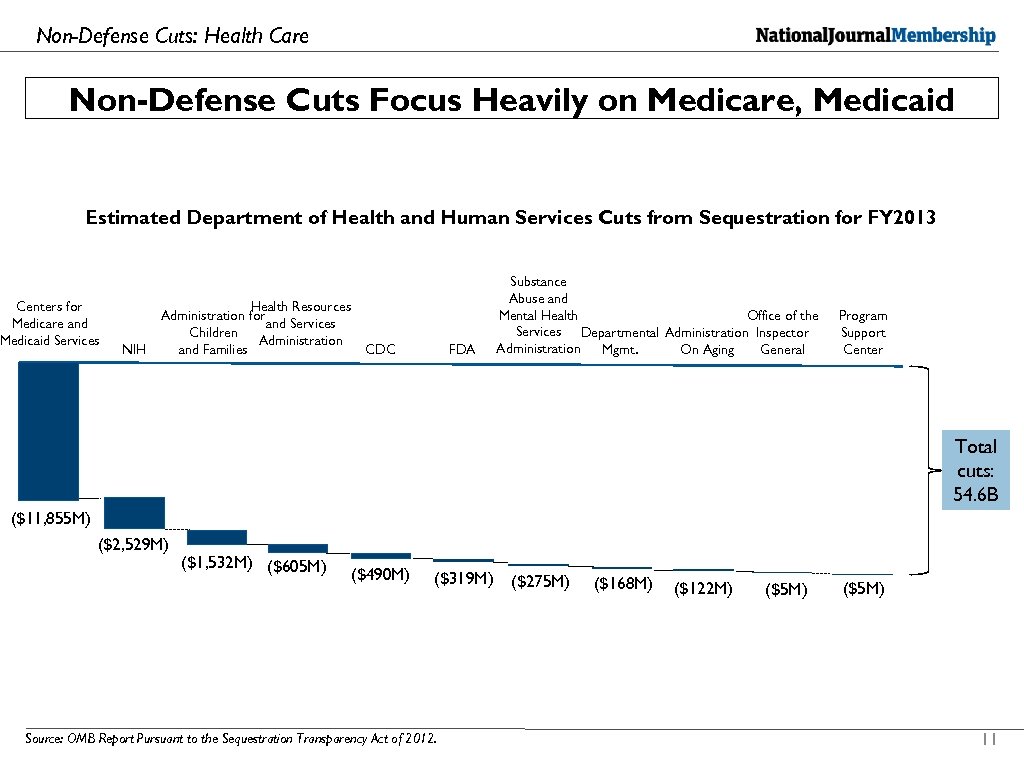
Non-Defense Cuts: Health Care Non-Defense Cuts Focus Heavily on Medicare, Medicaid Estimated Department of Health and Human Services Cuts from Sequestration for FY 2013 Centers for Medicare and Medicaid Services NIH Health Resources Administration for and Services Children Administration and Families CDC FDA Substance Abuse and Mental Health Office of the Services Departmental Administration Inspector Administration General Mgmt. On Aging Program Support Center Total cuts: 54. 6 B ($11, 855 M) ($2, 529 M) ($1, 532 M) ($605 M) ($490 M) ($319 M) Source: OMB Report Pursuant to the Sequestration Transparency Act of 2012. ($275 M) ($168 M) ($122 M) ($5 M) 11
Payment reform § Policymakers across the spectrum want to get rid of the SGR (but can’t agree on how to pay for it) § And move away from “volume” to “value” § But FFS will be a component value-based of payments, even as FFS itself will change
“New” approaches § ACOs § Episode-of-care bundles (new rule expected soon) § Risk-adjusted global capitation § PCMH and PCMH-N practices
Light at the end of the SGR tunnel? § House GOP committee chairs offer plan to eliminate SGR, seeking bipartisan support—August vote (? ) § Bipartisan Medicare Physician Payment Innovation Act re-introduced, supported by ACP (no cuts for five years, higher updates for E/M, transition to new models) § Medicine unified: 133 physician organizations, including AMA and ACP, offer principles for reform, commitment to new approaches
ACP advocacy § Build upon and ensure coverage gains from the Affordable Care Act § Reduce intrusions on Patient-Physician relationship § Improve fee-for-service AND influence new models of payment

SNHC 2013: improving the system 1. Renew commitment at both the national and state levels to effectively implement the coverage expansions and related policies under the ACA, with particular attention to ensuring the poorest and most vulnerable patients have access to affordable coverage. 2. Replace across-the-board sequestration cuts, prevent future disruptions and instead enact fiscally-and socially-responsible alternatives.
SNHC 2013: improving the system 3. Eliminate Medicare’s SGR formula and support the medical profession’s commitment to transition to new payment models. 4. Implement policies to recruit and retain primary care physicians. 5. Reduce firearms-related injuries and deaths by improving access to mental health services, supporting research, and enacting reasonable controls over access to firearms
SNHC 2013: reducing barriers to patient-physician relationship 1. Ensure that any payment reforms have, as an explicit goal, allowing physicians to spend more appropriate clinical time with their patients. 2. Reforms to hold physicians accountable for the outcomes of care (measurable performance on quality, cost, satisfaction and experience with care) should concurrently eliminate the layers of review and second-guessing of their clinical decisions.
SNHC 2013: reducing barriers to patient-physician relationship 3. Harmonize (and reduce to the extent possible) the measures used in the different reporting programs, work toward overall composite outcomes measures rather than a laundry-list of process measures. 4. Provide more clinically relevant ways to satisfy the requirement that physicians must transition to using ICD-10 codes.
SNHC 2013: reducing barriers to patient-physician relationship 5. CMS must reduce administrative barriers, improve bonuses to incentivize ongoing quality improvements, and broaden hardship exemptions. If necessary, Congress and CMS should consider delaying the penalties for not successfully participating in quality reporting programs, if it appears that the vast majority of physicians will be subject to penalties because of limitations in the programs themselves.
SNHC 2013: reducing barriers to patient-physician relationship 6. Improve the functional capabilities of EHR systems, the ability of those systems to report on quality measures and ensure that those systems improve rather than add to workflow inefficiency. 7. Payers should standardize claims administration requirements, preauthorization, and other administrative requirements even in advance of, and in addition to, the ACA’s simplification rules.
SNHC 2013: reducing barriers to patient-physician relationship 8. Congress should enact meaningful medical liability reforms including health courts, early disclosure of errors, and caps on noneconomic damages. 9. State and federal authorities should avoid enactment of mandates that interfere with physician free speech and the patientphysician relationship.
ACP advocacy on payment reform It’s not just about new payment models—ACP advocacy has resulted in big wins for internists on improving Medicare and Medicaid fee-forservice
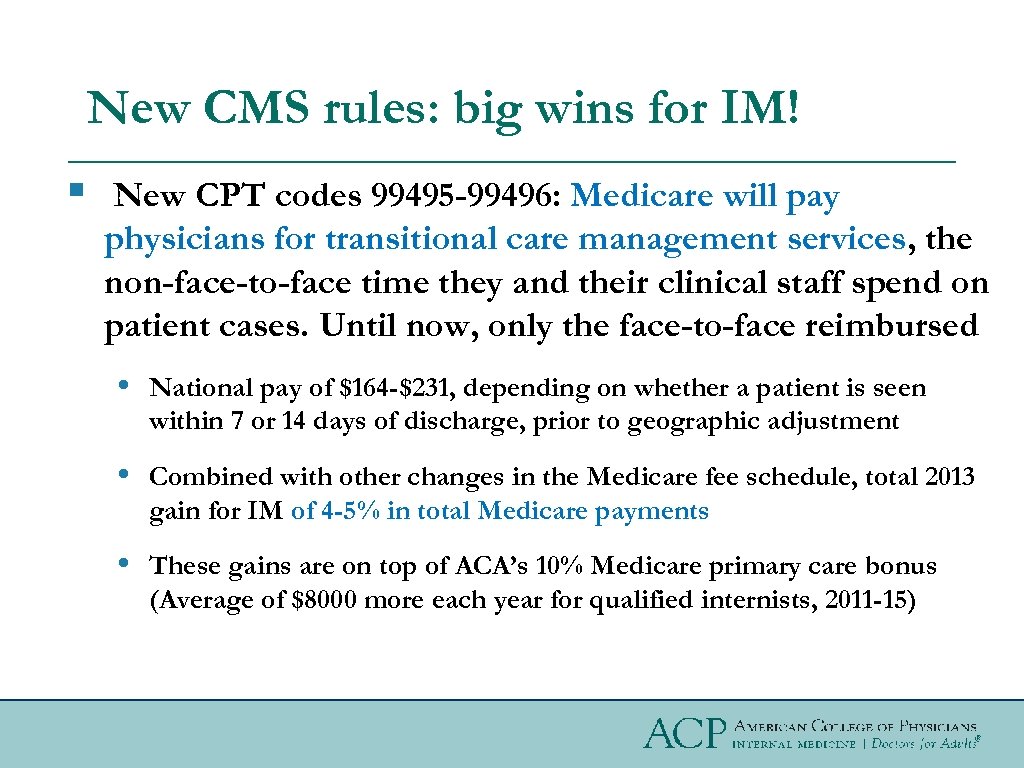
New CMS rules: big wins for IM! § New CPT codes 99495 -99496: Medicare will pay physicians for transitional care management services, the non-face-to-face time they and their clinical staff spend on patient cases. Until now, only the face-to-face reimbursed • National pay of $164 -$231, depending on whether a patient is seen within 7 or 14 days of discharge, prior to geographic adjustment • Combined with other changes in the Medicare fee schedule, total 2013 gain for IM of 4 -5% in total Medicare payments • These gains are on top of ACA’s 10% Medicare primary care bonus (Average of $8000 more each year for qualified internists, 2011 -15)
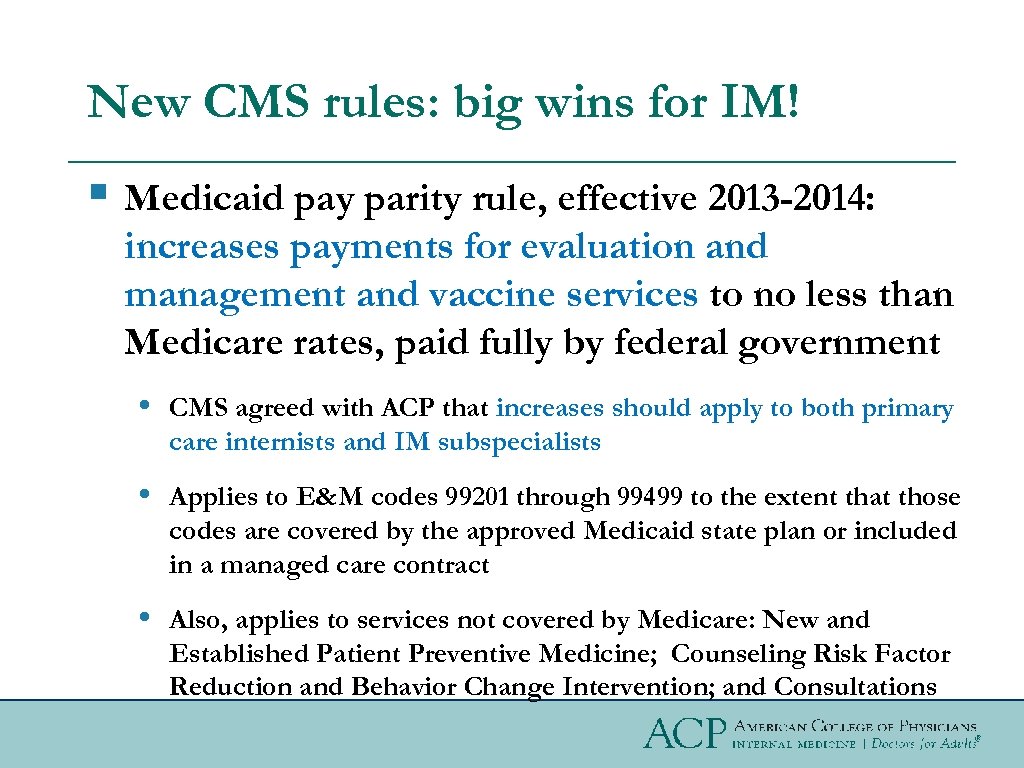
New CMS rules: big wins for IM! § Medicaid pay parity rule, effective 2013 -2014: increases payments for evaluation and management and vaccine services to no less than Medicare rates, paid fully by federal government • CMS agreed with ACP that increases should apply to both primary care internists and IM subspecialists • Applies to E&M codes 99201 through 99499 to the extent that those codes are covered by the approved Medicaid state plan or included in a managed care contract • Also, applies to services not covered by Medicare: New and Established Patient Preventive Medicine; Counseling Risk Factor Reduction and Behavior Change Intervention; and Consultations
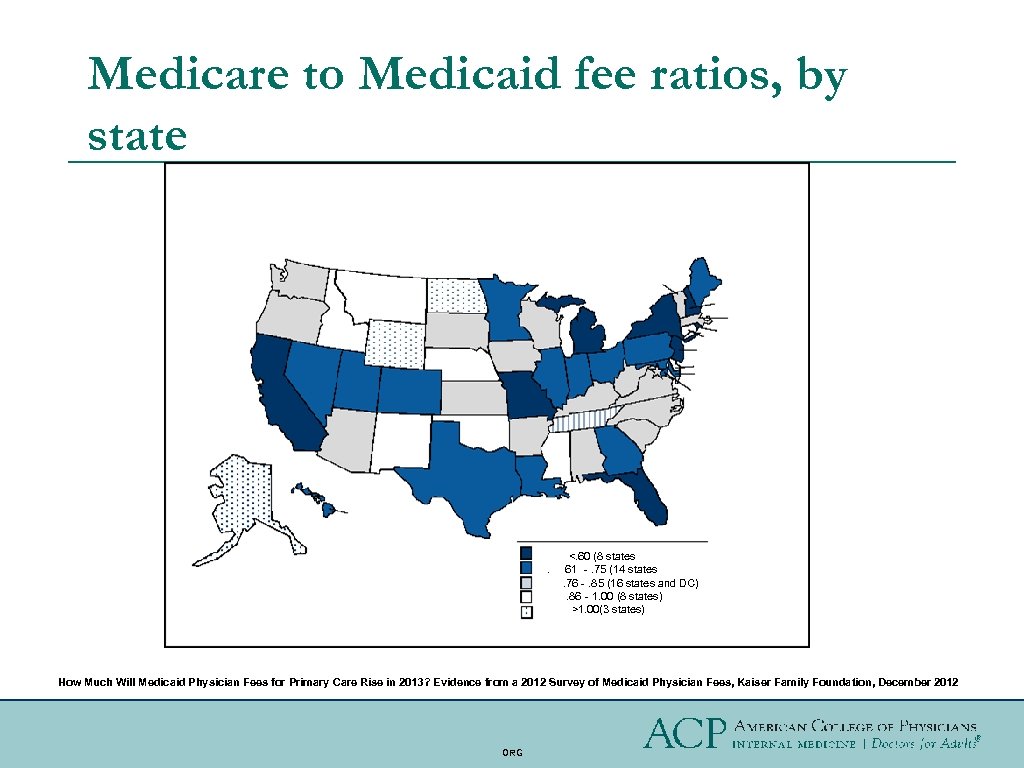
Medicare to Medicaid fee ratios, by state . <. 60 (8 states 61 ‐. 75 (14 states. 76‐. 85 (16 states and DC). 86‐ 1. 00 (8 states) >1. 00(3 states) How Much Will Medicaid Physician Fees for Primary Care Rise in 2013? Evidence from a 2012 Survey of Medicaid Physician Fees, Kaiser Family Foundation, December 2012 ORG
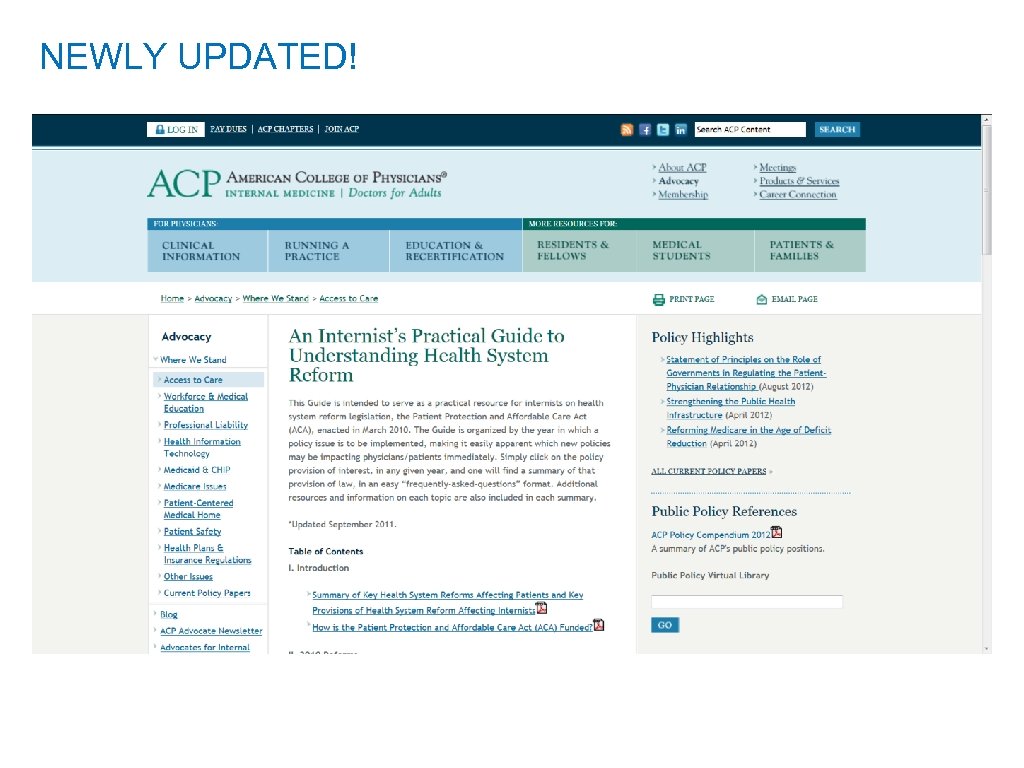
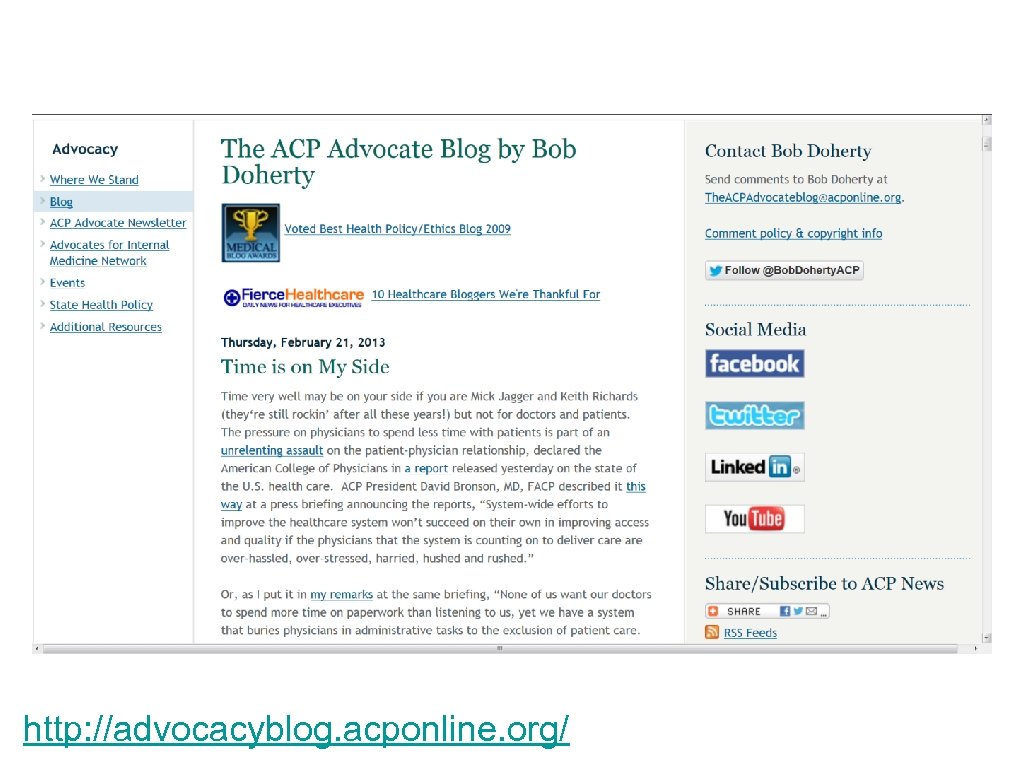
ACP: “go to” resource for members to prepare for changes § Practical guides § Social media § Policy summaries § Advocate newsletter § Coming soon: timeline of pending changes (regulation, payment, MOC) and promotion of resources from ACP
NEWLY UPDATED!
http: //advocacyblog. acponline. org/
Summary § 2012 election: the ACA is here to stay, only a minority of voters favor full repeal, but electorate remains divided, and law remains deeply unpopular in some states § States are the new battleground: decisions on Medicaid and exchanges may determine how effective the ACA is in covering uninsured
Summary § Coming up: new battles on spending and revenue, immediate cuts to essential programs including 2% Medicare pay cut § Entitlement reform will (must) happen —but how and when? Cuts in GME, other ACP priorities?
Summary § ACP advocacy: improve the system, reduce barriers to patient-physician relationships § ACP advocacy is paying off: big wins for internists in Medicare and Medicaid pay
The destination “A nationwide program is needed to assure access to h care for all Americans, and we recommend that develo such a program be adopted as a policy goal for the nat The College believes that health insurance coverage fo persons is needed to minimize financial barriers and a access to appropriate health care services. ” Ginsburg, et al, American College of Physicians, Position Paper, Annals of Internal Medicine, May 1, 1990 www. annals. org/search? fulltext=ACP+universal+health+insurance&submit=yes&x=15&y=9

Elaine Dickinson (flight attendant): There's no reason to become alarmed, and we hope you'll enjoy the rest of your flight. By the way, is there anyone on board who knows how to fly a plane?
Скачать презентацию Turbulence ahead Fasten Your Seat Belts What Physicians
66d4e587f698addc3bf2f6a0cfcac77d.ppt