 Скачать презентацию Tuberculosis Tuberculosis MTB or TB short for
СРС2 Туберкулез.pptx
- Количество слайдов: 7



Tuberculosis
Tuberculosis, MTB, or TB (short for tubercle bacillus), in the past also calledphthisis, phthisis pulmonalis, or consumption, is a widespread, infectious disease caused by various strains of mycobacteria, usually Mycobacterium tuberculosis.
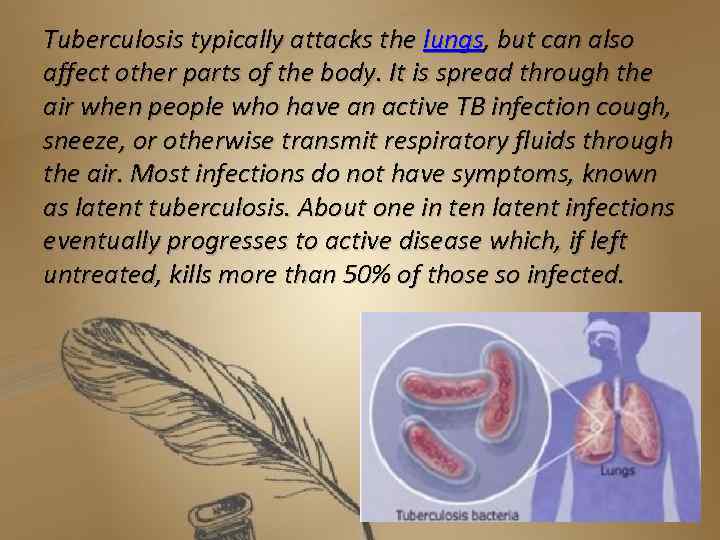
Tuberculosis typically attacks the lungs, but can also affect other parts of the body. It is spread through the air when people who have an active TB infection cough, sneeze, or otherwise transmit respiratory fluids through the air. Most infections do not have symptoms, known as latent tuberculosis. About one in ten latent infections eventually progresses to active disease which, if left untreated, kills more than 50% of those so infected.
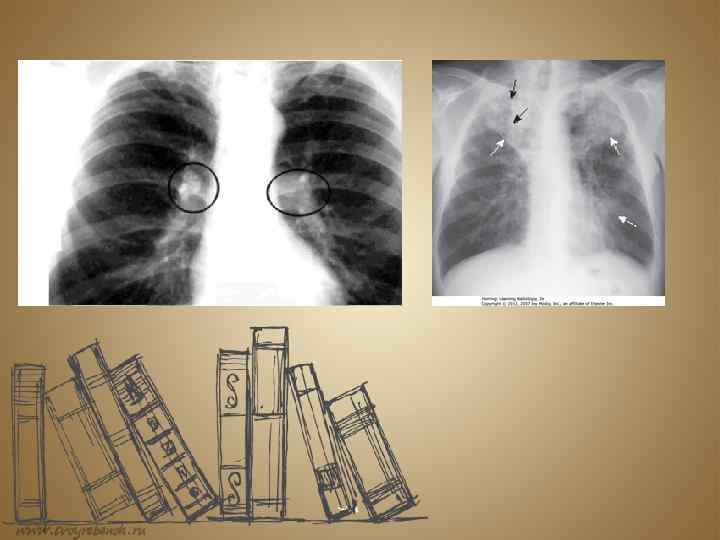
The classic symptoms of active TB infection are a chronic cough with blood-tinged sputum, fever, night sweats, and weight loss (the last of these giving rise to the formerly common term for the disease, "consumption"). Infection of other organs causes a wide range of symptoms. Diagnosis of active TB relies onradiology (commonly chest X-rays), as well as microscopic examination andmicrobiological culture of body fluids.
Diagnosis of latent TB relies on thetuberculin skin test (TST) and/or blood tests. Treatment is difficult and requires administration of multiple antibiotics over a long period of time. Household, workplace and social contacts are also screened and treated if necessary. Antibiotic resistance is a growing problem in multiple drugresistant tuberculosis (MDR-TB) infections. Prevention relies on early detection and treatment of cases and on screening programs and vaccination with thebacillus Calmette-Guérin vaccine.
For humans, the disease is socially dependent. prior To the twentieth century tuberculosis was incurable. Currently developed a comprehensive program to identify and cure the disease in the early stages of its development.
 Скачать презентацию Tuberculosis Tuberculosis MTB or TB short for
СРС2 Туберкулез.pptx