


 Скачать презентацию TTN vs TTT Time to Transport Assessment of
0b76e39bdb89a4d1b78c7ef272e5f2d5.ppt
- Количество слайдов: 55
 TTN vs. TTT (Time to Transport): Assessment of Neonatal Respiratory Distress Children’s/March of Dimes Neonatal Conference May 17, 2010 Mark Bergeron, MD, MPH Associates in Newborn Medicine, PA, St. Paul Assistant Professor, Pediatrics, University of Minnesota Medical School
 Disclosures • I will not be discussing any experimental or off-label uses for any therapies during this presentation. • I have no relevant financial relationships to declare.
 Objectives 1. Formulate a differential diagnosis for the infant in respiratory distress. 2. Describe initial stabilization measures for the infant in respiratory distress. 3. Describe situations where ongoing respiratory distress requires transfer to a NICU for further management.
 Introduction • Respiratory distress is a frequent problem in the newborn period. – Most common indication for evaluation or reevaluation of the newborn infant – Affects as many as 7% of newborns – Potentially life-threatening – Must be promptly assessed and managed by an on-site provider in the delivery room or newborn nursery
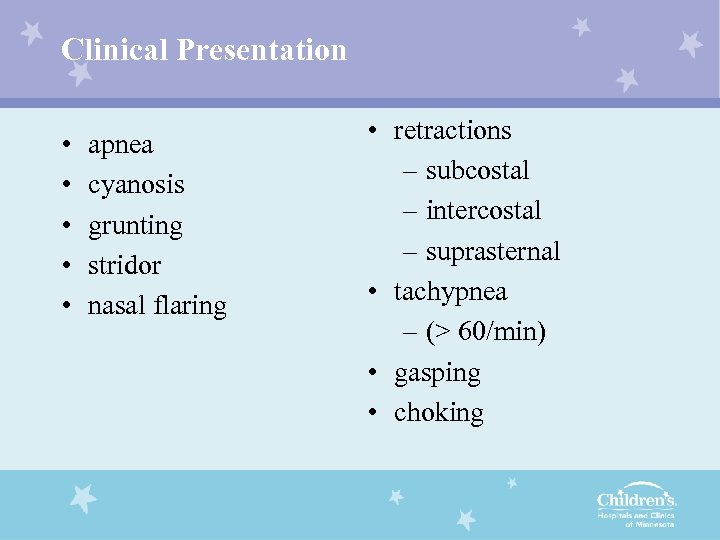 Clinical Presentation • • • apnea cyanosis grunting stridor nasal flaring • retractions – subcostal – intercostal – suprasternal • tachypnea – (> 60/min) • gasping • choking
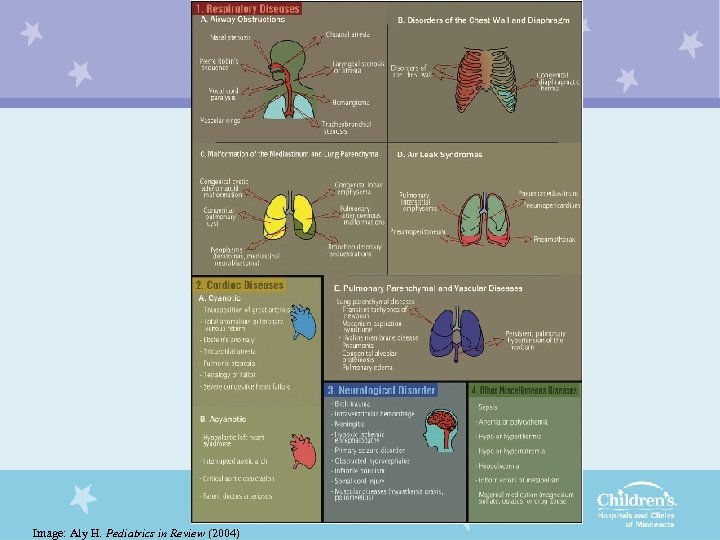 Image: Aly H. Pediatrics in Review (2004)
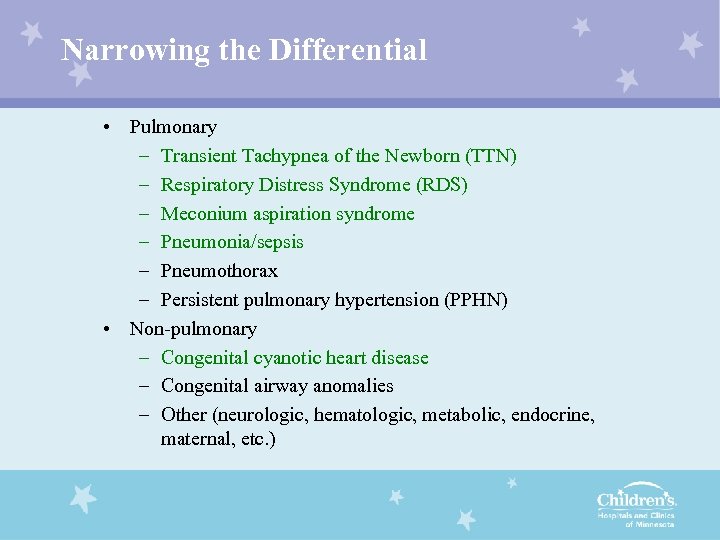 Narrowing the Differential • Pulmonary – Transient Tachypnea of the Newborn (TTN) – Respiratory Distress Syndrome (RDS) – Meconium aspiration syndrome – Pneumonia/sepsis – Pneumothorax – Persistent pulmonary hypertension (PPHN) • Non-pulmonary – Congenital cyanotic heart disease – Congenital airway anomalies – Other (neurologic, hematologic, metabolic, endocrine, maternal, etc. )
 Case Studies
 Case #1 • 3. 6 -kg term newborn female (20 minutes old) has tachypnea and acrocyanosis. She is 40 weeks EGA delivered by scheduled repeat c-section and Apgar scores were 7 and 8 at 1 and 5 minutes, respectively. • Vitals are normal with the exception of a respiratory rate of 84 and exam is notable for slight subcostal retractions but otherwise normal. Over the next several hours, her respiratory rate steadily improves to the 40 s and her acrocyanosis resolves.
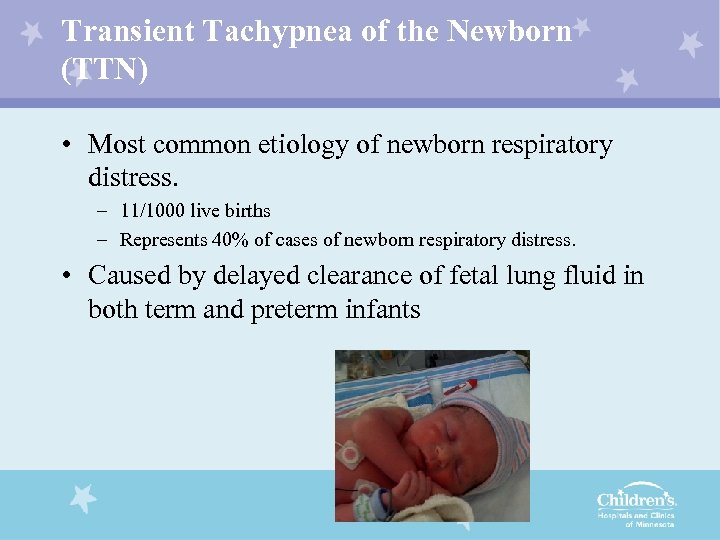 Transient Tachypnea of the Newborn (TTN) • Most common etiology of newborn respiratory distress. – 11/1000 live births – Represents 40% of cases of newborn respiratory distress. • Caused by delayed clearance of fetal lung fluid in both term and preterm infants
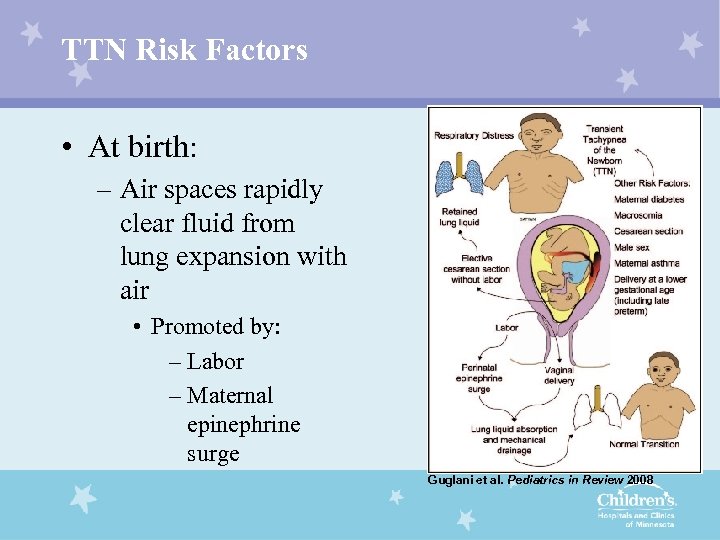 TTN Risk Factors • At birth: – Air spaces rapidly clear fluid from lung expansion with air • Promoted by: – Labor – Maternal epinephrine surge Guglani et al. Pediatrics in Review 2008
 TTN: Clinical Findings • History: – C/S > NSVD • Exam: – Tachypnea +/ • Grunting • Nasal flaring • Retractions • Transient oxygen need • Lab: – Mild respiratory acidosis or normal blood gas
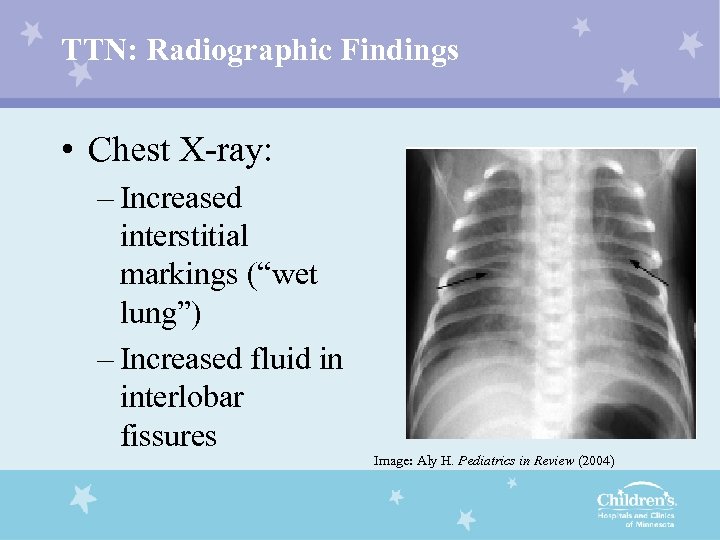 TTN: Radiographic Findings • Chest X-ray: – Increased interstitial markings (“wet lung”) – Increased fluid in interlobar fissures Image: Aly H. Pediatrics in Review (2004)
 TTN: Typical Course • Usually benign, self • Diuretics not -limited effective • Occasionally – i. e. Lasix requires therapy: • Typically resolves – Oxygen by 2 days of age – n. CPAP • No lasting sequalae – Mechanical ventilation
 Case #2 • 1. 2 -kg male infant born vaginally at 32 weeks EGA • Apgars 6, 8 • Required bulb suctioning, brief PPV. • Grunting, retractions, nasal flaring, acrocyanosis immediately after birth. • VS: HR 178, RR 79, Mean BP 39 mm. Hg. O 2 sat 74 -78% in room air.
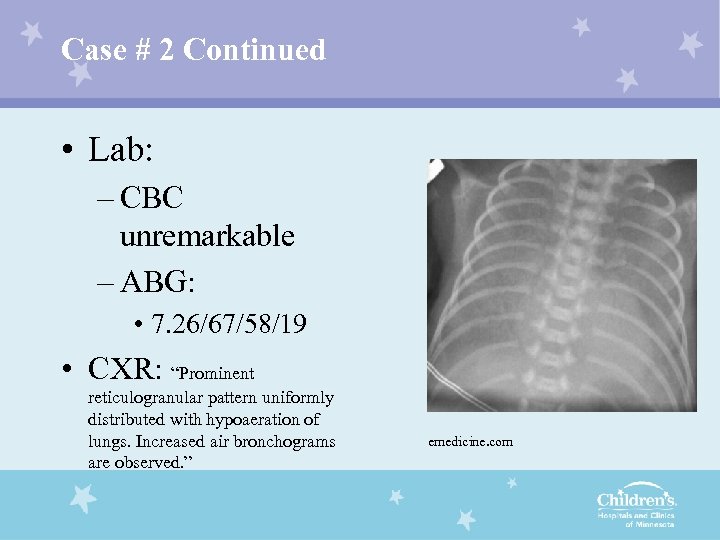 Case # 2 Continued • Lab: – CBC unremarkable – ABG: • 7. 26/67/58/19 • CXR: “Prominent reticulogranular pattern uniformly distributed with hypoaeration of lungs. Increased air bronchograms are observed. ” emedicine. com
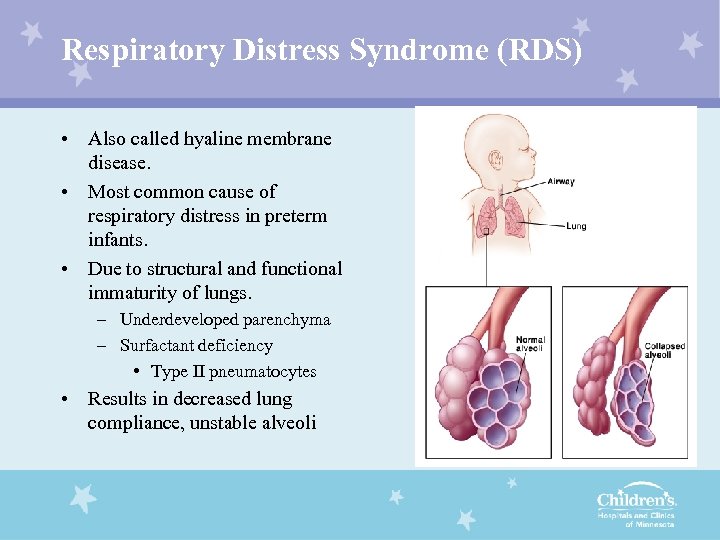 Respiratory Distress Syndrome (RDS) • Also called hyaline membrane disease. • Most common cause of respiratory distress in preterm infants. • Due to structural and functional immaturity of lungs. – Underdeveloped parenchyma – Surfactant deficiency • Type II pneumatocytes • Results in decreased lung compliance, unstable alveoli
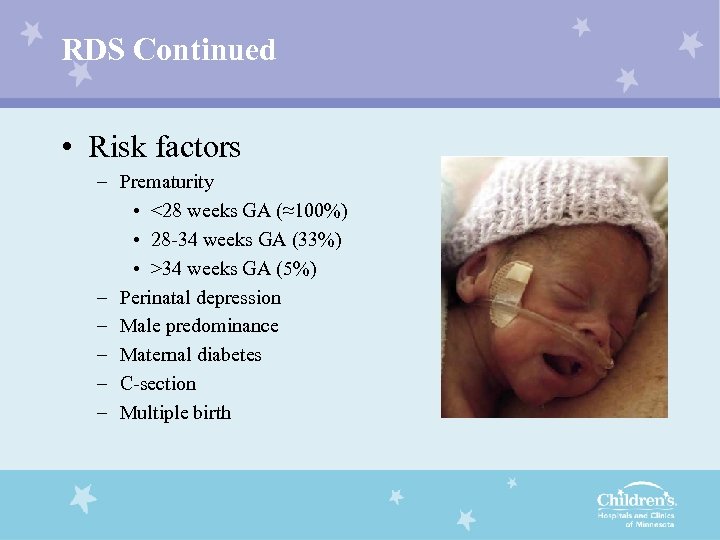 RDS Continued • Risk factors – Prematurity • <28 weeks GA (≈100%) • 28 -34 weeks GA (33%) • >34 weeks GA (5%) – Perinatal depression – Male predominance – Maternal diabetes – C-section – Multiple birth
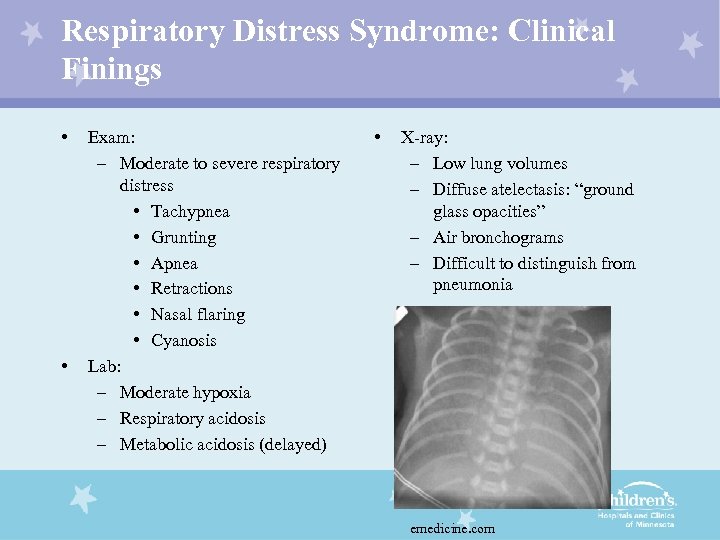 Respiratory Distress Syndrome: Clinical Finings • • Exam: – Moderate to severe respiratory distress • Tachypnea • Grunting • Apnea • Retractions • Nasal flaring • Cyanosis Lab: – Moderate hypoxia – Respiratory acidosis – Metabolic acidosis (delayed) • X-ray: – Low lung volumes – Diffuse atelectasis: “ground glass opacities” – Air bronchograms – Difficult to distinguish from pneumonia emedicine. com
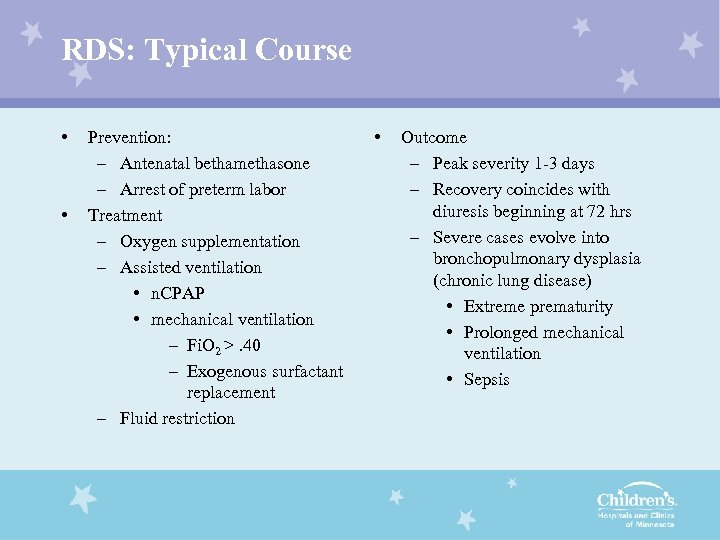 RDS: Typical Course • • Prevention: – Antenatal bethamethasone – Arrest of preterm labor Treatment – Oxygen supplementation – Assisted ventilation • n. CPAP • mechanical ventilation – Fi. O 2 >. 40 – Exogenous surfactant replacement – Fluid restriction • Outcome – Peak severity 1 -3 days – Recovery coincides with diuresis beginning at 72 hrs – Severe cases evolve into bronchopulmonary dysplasia (chronic lung disease) • Extreme prematurity • Prolonged mechanical ventilation • Sepsis
 Case #3 • 4. 2 -kg female infant is cyanotic and tachypneic at 30 minutes of age following a vaginal delivery through meconium-stained amniotic fluid. Apgar scores were 3 and 6. She had a spontaneous but weak cry at birth and received some positive pressure ventilation followed by suctioning. • Vitals signs reveal a pulse of 169, respiratory rate of 115, and a mean BP of 55. Sats are 76% despite 100% O 2 by headbox. She is barrelchested, retracting, grunting, and has diminished coarse breath sounds bilaterally. • She is electively intubated, lines placed and labs sent.
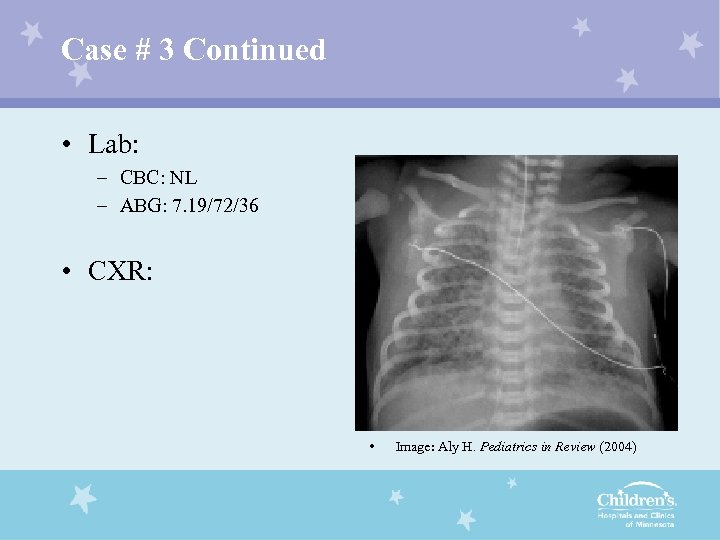 Case # 3 Continued • Lab: – CBC: NL – ABG: 7. 19/72/36 • CXR: • Image: Aly H. Pediatrics in Review (2004)
 Meconium Aspiration Syndrome (MAS) • Meconium staining of amniotic fluid complicates nearly 15% of all deliveries. – Fetal distress – Primarily term and post-term • Meconium can be aspirated before, during or after delivery. • Once aspirated, meconium causes – Chemical pneumonitis – Mechanical obstruction (“ball-valve”) with severe air-trapping • Pneumothoraces (10 -20%) – Surfactant inactivation – Severe hypoxemia and hypoventilation • V/Q mismatch
 Meconium Aspiration Syndrome: Clinical Presentation • Exam: – Air trapping with barrel chest – Moderate to severe respiratory distress – Rales and/or rhonchi – Hypoxia with cyanosis – Hypoperfusion • Lab: – Acidosis • Respiratory and metabolic • CXR: – Hyperinflation/overdistensi on – Diffuse, patchy intraparenchymal opacities
 Meconium Aspiration Syndrome: Typical Course • Prevention? – NRP • Treatment: – Oxygen – Mechanical ventilation • High-Frequency – Jet – Oscillator – Surfactant replacement • Complications – Sepsis/pneumonia – Airleaks • Pneumothorax/pneum opericardium – Persistent pulmonary hypertension (PPHN) • Treated with inhaled Nitric Oxide (i. NO) • ECMO • Resolution – Days to weeks – Mortality 10 -12%
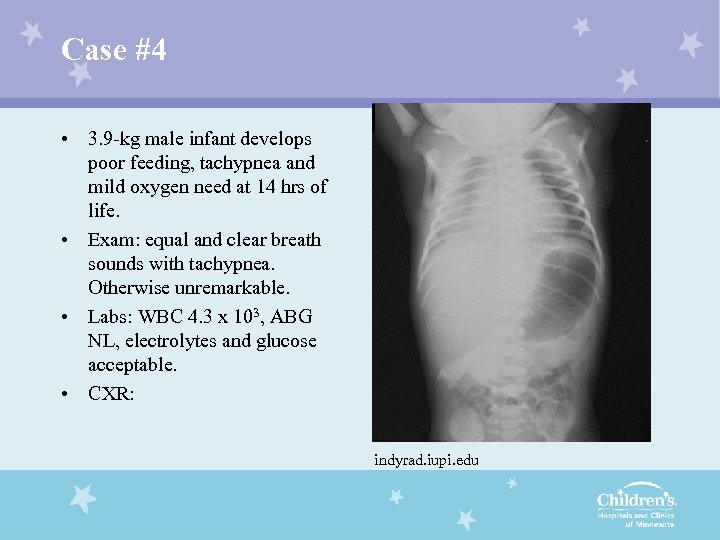 Case #4 • 3. 9 -kg male infant develops poor feeding, tachypnea and mild oxygen need at 14 hrs of life. • Exam: equal and clear breath sounds with tachypnea. Otherwise unremarkable. • Labs: WBC 4. 3 x 10³, ABG NL, electrolytes and glucose acceptable. • CXR: indyrad. iupi. edu
 Congenital Pneumonia: Clinical Presentation • Most common neonatal infection • Wide variety of presenting signs – Varying degree of respiratory distress – Lethargy, poor feeding – Apnea – Temperature instability • High or low • CXR: “Can look like anything!” – Mild focal opacities – Pleural effusion(s) – Complete white-out – Normal
 Pneumonia: Epidemiology • Hematogenous vs. aspiration acquisition • Antenatal, perinatal, or postnatally acquired • Common organisms: – Antenatal: rubella, CMV, HSV, adenovirus, Toxoplasma gondii, Treponema pallidum, Mycobacterium tuberculosis, Listeria monocytogenes, Varicella zoster and others – Perinatal: GBS, E. coli, Klebsiella, Chlamydia trachomatis – Postnatal: adenovirus, RSV, Streptococcus, Staphylococcus, gram negative enterics
 Congenital Pneumonia: Typical Course • Transient oxygen need • Gradual resolution of tachypnea • Antibiotic (ampicillin, gentamicin) therapy 5 -7 days unless complicated by sepsis or for specific organism requiring longer courses of therapy
 Other Pulmonary Causes of Respiratory Distress
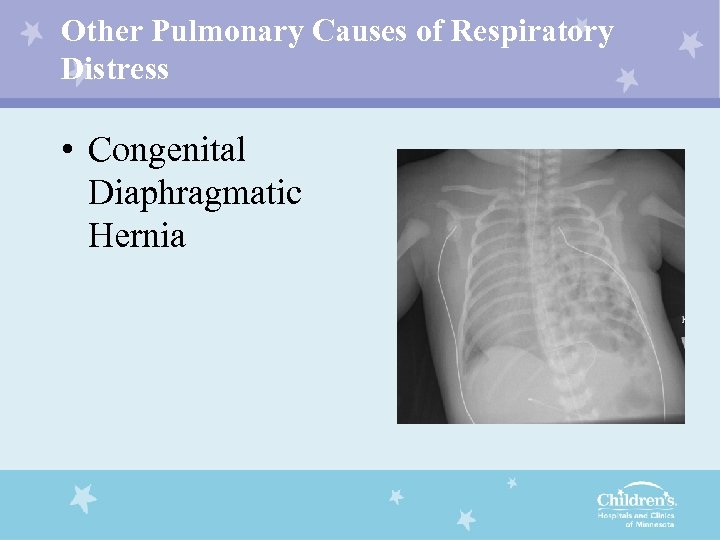 Other Pulmonary Causes of Respiratory Distress • Congenital Diaphragmatic Hernia
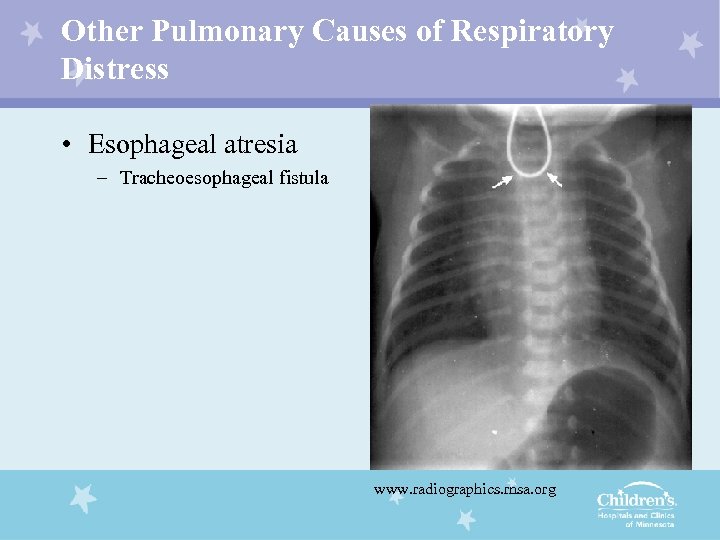 Other Pulmonary Causes of Respiratory Distress • Esophageal atresia – Tracheoesophageal fistula www. radiographics. rnsa. org
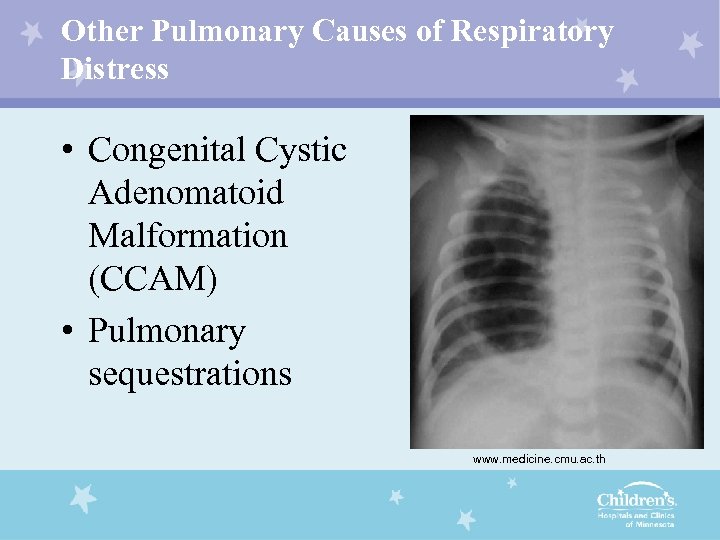 Other Pulmonary Causes of Respiratory Distress • Congenital Cystic Adenomatoid Malformation (CCAM) • Pulmonary sequestrations www. medicine. cmu. ac. th
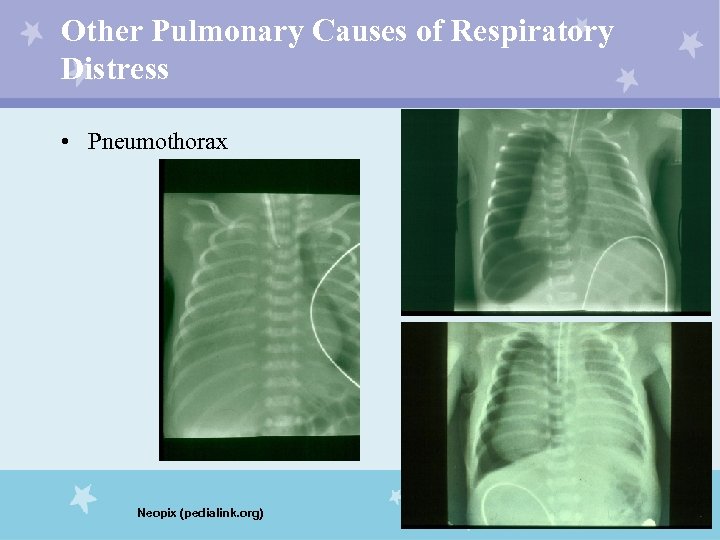 Other Pulmonary Causes of Respiratory Distress • Pneumothorax Neopix (pedialink. org)
 Non-Pulmonary Causes of Respiratory Distress: Congenital Heart Disease
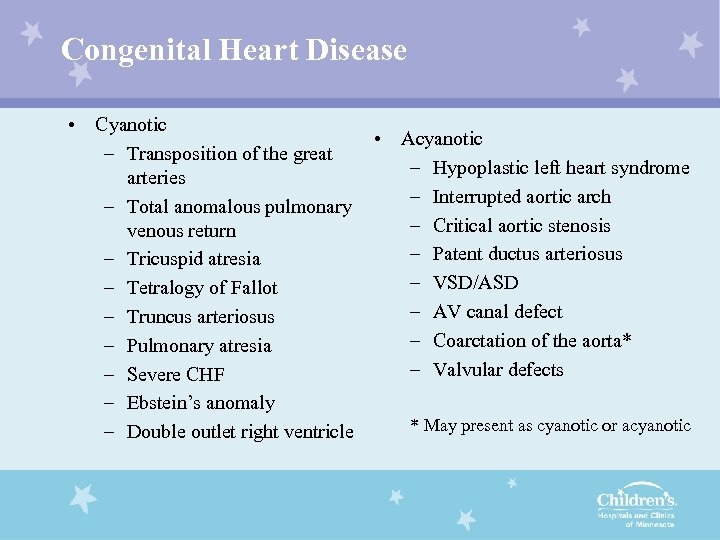 Congenital Heart Disease • Cyanotic – Transposition of the great arteries – Total anomalous pulmonary venous return – Tricuspid atresia – Tetralogy of Fallot – Truncus arteriosus – Pulmonary atresia – Severe CHF – Ebstein’s anomaly – Double outlet right ventricle • Acyanotic – Hypoplastic left heart syndrome – Interrupted aortic arch – Critical aortic stenosis – Patent ductus arteriosus – VSD/ASD – AV canal defect – Coarctation of the aorta* – Valvular defects * May present as cyanotic or acyanotic
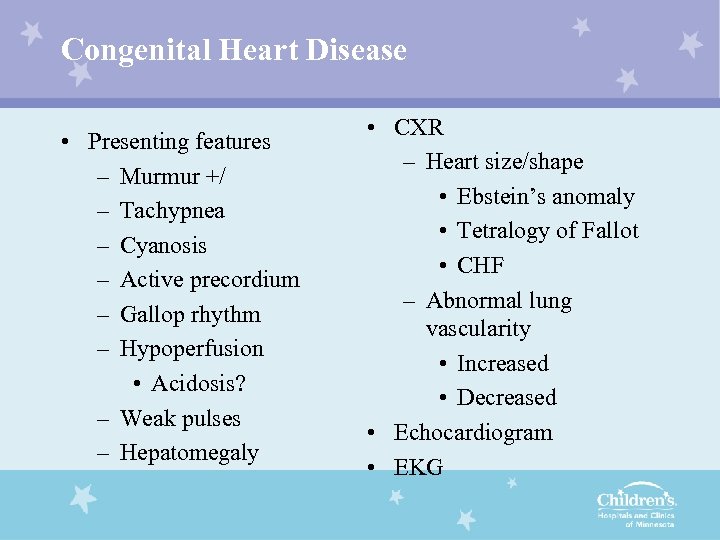 Congenital Heart Disease • Presenting features – Murmur +/ – Tachypnea – Cyanosis – Active precordium – Gallop rhythm – Hypoperfusion • Acidosis? – Weak pulses – Hepatomegaly • CXR – Heart size/shape • Ebstein’s anomaly • Tetralogy of Fallot • CHF – Abnormal lung vascularity • Increased • Decreased • Echocardiogram • EKG
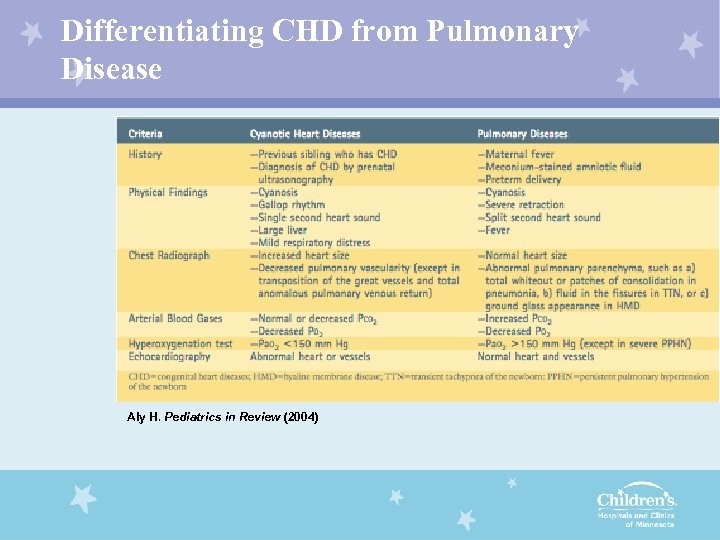 Differentiating CHD from Pulmonary Disease Aly H. Pediatrics in Review (2004)
 Management of the Newborn with Respiratory Distress
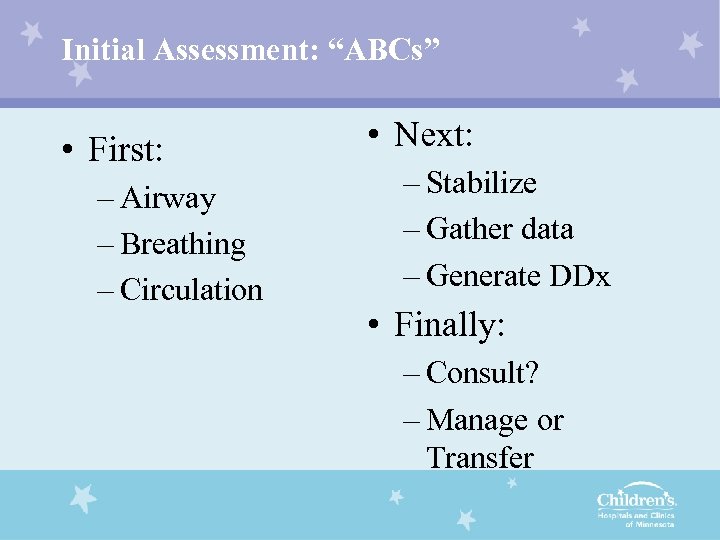 Initial Assessment: “ABCs” • First: – Airway – Breathing – Circulation • Next: – Stabilize – Gather data – Generate DDx • Finally: – Consult? – Manage or Transfer
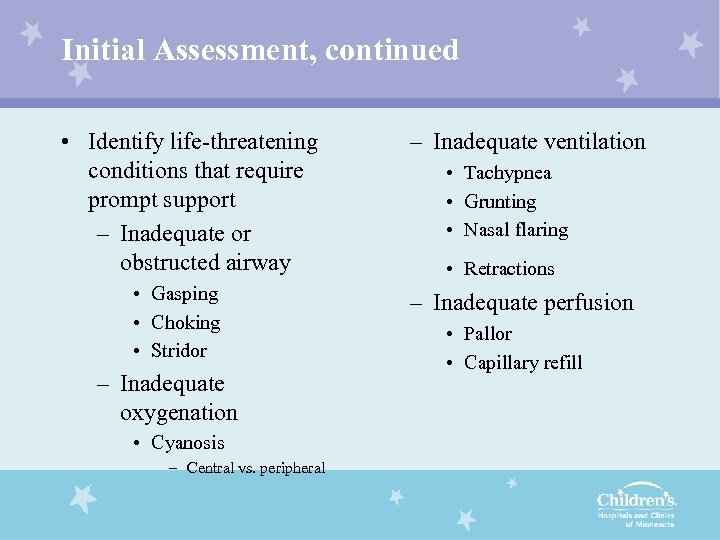 Initial Assessment, continued • Identify life-threatening conditions that require prompt support – Inadequate or obstructed airway • Gasping • Choking • Stridor – Inadequate oxygenation • Cyanosis – Central vs. peripheral – Inadequate ventilation • Tachypnea • Grunting • Nasal flaring • Retractions – Inadequate perfusion • Pallor • Capillary refill
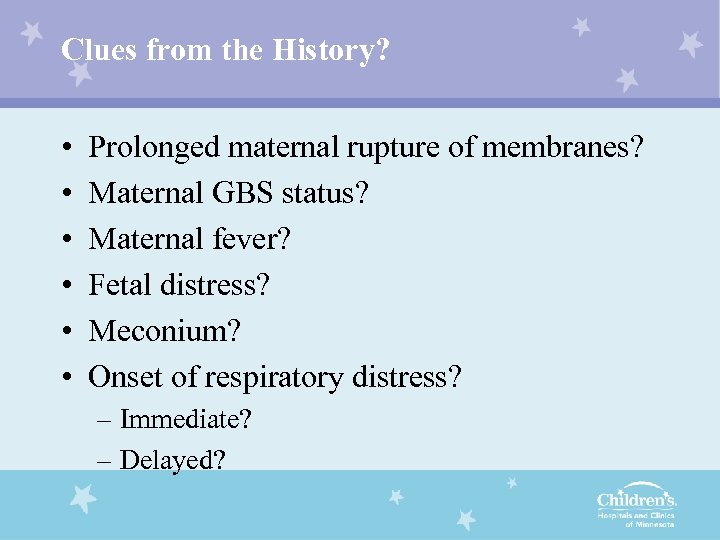 Clues from the History? • • • Prolonged maternal rupture of membranes? Maternal GBS status? Maternal fever? Fetal distress? Meconium? Onset of respiratory distress? – Immediate? – Delayed?
 Objective Data • Physical exam findings: – Breath sounds – Stridor – Severity • Laboratory data: – CBC w/ differential – Glucose – Blood gas – Blood culture – CXR – Hyperoxia test?
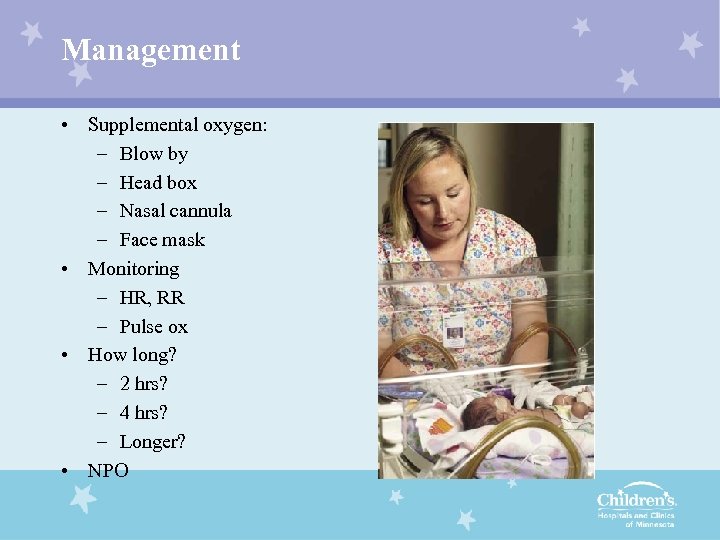 Management • Supplemental oxygen: – Blow by – Head box – Nasal cannula – Face mask • Monitoring – HR, RR – Pulse ox • How long? – 2 hrs? – 4 hrs? – Longer? • NPO
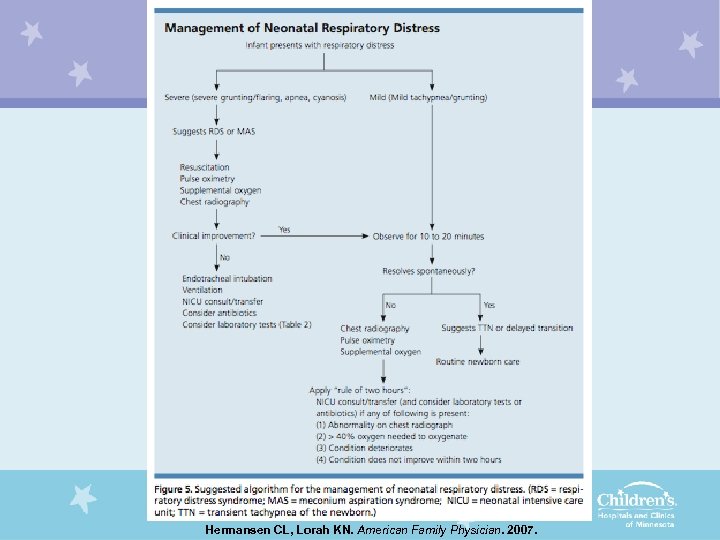 Hermansen CL, Lorah KN. American Family Physician. 2007.
 Management • Infants with TTN and no sepsis risk factors likely just need support and observation. • Infants with possible meconium aspiration, RDS, sepsis or pneumonia require a sepsis evaluation with blood culture, cbc and IV antibiotics x 48 hrs and repeat CXR(s). • Unclear risk factors or presentation? – Undertake sepsis evaluation
 So when to transport? ! • It depends… – Failure to resolve in 2 -4 hrs – Worsening condition • Perfusion • Oxygen needs • Distress – Staff ability/comfort/availability • IV access • Airway – Any suspicion of cardiac disease
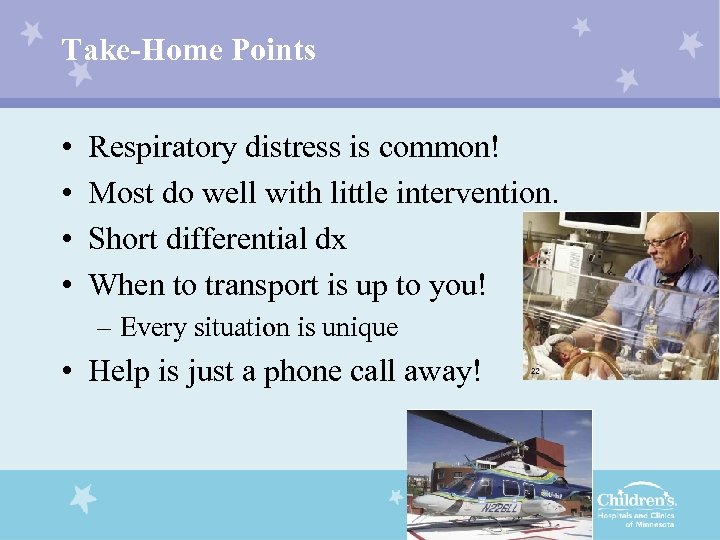 Take-Home Points • • Respiratory distress is common! Most do well with little intervention. Short differential dx When to transport is up to you! – Every situation is unique • Help is just a phone call away!
 How to Arrange Transport? • • Neonatologist on-call (In-house 24/7) – St. Paul NICU: • (800) 869 -1350 • (651) 220 -6210 – Minneapolis NICU: • (800) 636 -6283 • (612) 813 -6295 Transport team – Centralized Children’s Neonatal Transport Team in 2010 • Air – Helicopter – Fixed-wing plane • Ground
 References • • • Aly H. Respiratory disorders in the newborn: Identification and diagnosis. Pediatrics in Review 2004; 25: 201 -207. Guglani L, Lakshminrusimha S, Ryan RM. Transient tachypnea of the newborn. Pediatrics in Review 2008; 29: e 59 -e 65. Hermansen CL, Lorah KN. Respiratory distress in the newborn. American Family Physician 2007; 76: 98 -994. Additional suggested reading: • Fidel-Rimon O, Shinwell ES. Respiratory distress in the term and near-term infant. Neo. Reviews 2005; 6: e 289 -e 296. Suggested resources: • NRP Program, AAP/AHA • S. T. A. B. L. E. Program
 We’re online! www. newbornmed. com • Provider resources • Family resources • Meet our neonatologists • Articles • NICU profiles
 Thank You!