 Скачать презентацию Trust and Epistemic Communities in Biodiversity Data Sharing
95e6d4d52a0dfc8b98ed21685ffef1ea.ppt
- Количество слайдов: 47



Trust and Epistemic Communities in Biodiversity Data Sharing Nancy Van House SIMS, UC Berkeley www. sims. berkeley. edu/~vanhouse
Trust and Epistemic Communities in Biodiversity Data Sharing § DLs: ready access to unpublished information by variety of users - crossing sociotechnical boundaries § Raises issues of trust and credibility § Knowledge is social § What we know, whom we believe is determined by/within epistemic cultures § Biodiversity data § Great variety of information, sources, purposes § Cal. Flora: an example of a user-oriented DL § Incorporating users’ practices of trust and credibility § Negotiating differences x epistemic cultures
DLs Facilitate Access § To greater variety of information: § Unpublished (unreviewed) information § “Raw” data such as reports of observations § Information from outside own reference group § Problems: § Which info, sources do we believe? § How do we evaluate info from unfamiliar sources? § Which info do we use for what purposes? § By people from outside own reference group § Inappropriate use of information? § Burden on data owner of making data available, usable, and understandable to reduce misuse
Examples of Risks – Botanical Information § Unreliable Info § Erroneous, duplicative observations >> belief that a species is prevalent >> not preserving a population of a rare species § Chasing after erroneous reported sighting of a rare species –or discounting significant sighting as amateur’s error § Inappropriate Use of Info § Private landowners destroying specimens of a rare plant to avoid legal limits on land development § Collectors (over-)collecting specimens of rare species
Knowledge is Social § What we know comes primarily from others. § Cognitive efficiency: we don’t have time, resources § Expertise: we don’t have sufficient knowledge in all areas § Have to decide whom we trust, what we believe. § What we consider “good“ work, whom we believe and, how we decide are determined and learned in epistemic communities § DLs need to support the diverse practices of epistemic communities
Social Nature of Knowledge is of Concern in Many Areas § Science studies § Inquires into the construction of scientific knowledge & authority § Social epistemology § Asks: How should the collective pursuit of knowledge be organized? § Situated action/learning § Posits knowledge, action, identity, and community to be mutually constituted § Knowledge management § Is concerned with how to share knowledge
Cognitive Trust and DLs § For people to use a DL: § Information must be credible § Sources must be trustworthy § DL itself must be perceived to be trustworthy § How can DLs be designed to: § Facilitate users’ assessments of trust and credibility of info and sources? § Demonstrate their own trustworthiness?
Epistemic Cultures § “…those amalgams of arrangements and mechanisms … which, in a given field, make up how we know what we know. ” § “Epistemic cultures…create and warrant knowledge, and the premier knowledge institution throughout the world is, still, science. ” Karen Knorr-Cetina, Epistemic Cultures
Culture § Context of history and on-going events § Practice: how people actually do their doto-day work § Artifacts § Info artifacts include documents, images, thesauri, classification systems § Diversity § If all the same, no culture § Including diversity x areas of science
Epistemic Cultures Differ § Practices of work § Practices of trust § § § Artifacts – e. g. genres Methods of data collection and analysis Meanings, interpretations, understandings Tacit knowledge and understandings Values Methods, standards, and information for evaluating other participants’ work and values § Institutional arrangements
Communities and Knowledge § Becoming a member of a community of practice = identity § learning practices, values, orientation to the world § We learn what to believe, whom to believe, how to decide in epistemic communities. § We tend to trust people from within our own epistemic communities. § Similar values, orientation, practices, standards § Ability to assess their credibility
DLs and Epistemic Cultures § DLs enable information to cross epistemic communities. § More easily, more often than before. § Raw data, not just syntheses, analyses – e. g. publications § Crossing communities often undermines our practices of trust. § § Who are these people? How did they collect the data? What do they know? What are their goals, values, priorities? § DLs need to be designed to support practices of assessing trustworthiness and credibility.
Biodiversity Data § Biodiversity: studies diversity of life and ecosystems that maintain it § Central question: change over space and time § Uses large quantities of data that vary in: § Precision and accuracy § Methods of data collection, description, storage § Old data particularly valuable § Broad range of datasets: biological, geographical, meteorological, geological… § Created and used by different professions, disciplines, types of institutions…for different purposes § Politically, economically, sensitive data
“Citizen Science” § Fine-grained data from observers in the field § Observers with varying levels and types of expertise § E. g. , expert on an area, habitat, taxon… § Expert amateurs § Private-public cooperation § Government agencies, environmental action groups, university herbaria, membership organizations, concerned individuals…
Cal. Flora http: //www. calflora. org § Comprehensive web-accessible database of plant distribution information for California § Independent non-profit organization § Designed/managed by people from botanical community, not librarians or technologists § Free § In conjunction with UC Berkeley Digital Library (http: //elib. cs. berkeley. edu)
Cal. Flora Target Users § Researchers & prof’ls in land management § Ready access to data for § Addressing critical issues in plant biodiversity § Analyzing consequences of land use alternatives and environmental change on distribution of native and exotic species § The public: promoting interest in biodiversity § Active engagement in biodiversity issues/work § Wildflowers as “charismatic”
Cal. Flora Priorities § Focus on people; put technology in the back seat § Pay attention to how the world works for the people who produce and use information § Honor existing traditions of data exchange
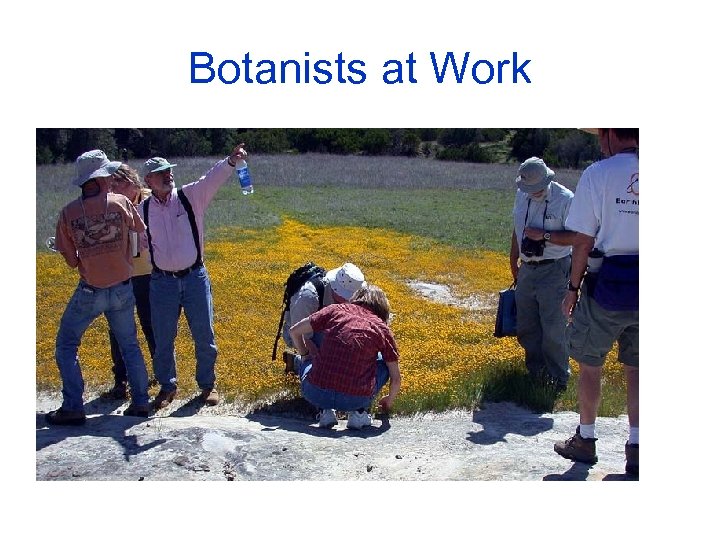
Botanists at Work
Components of Interest Today § Cal. Photos § Cal. Flora Occurrence Database
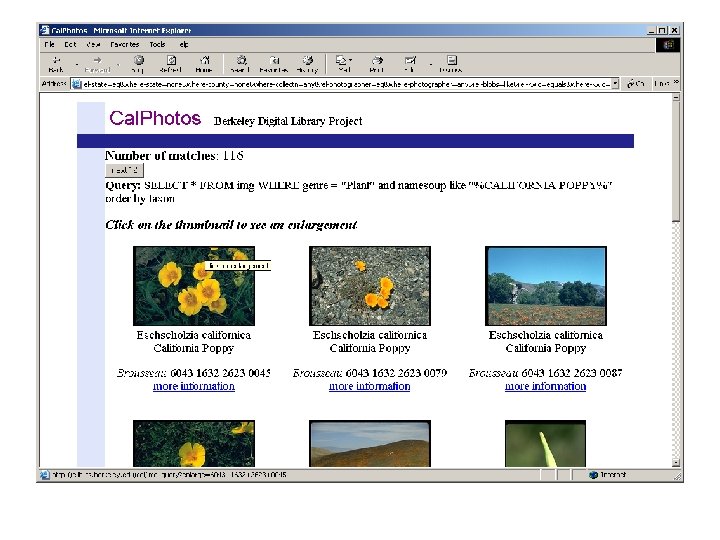
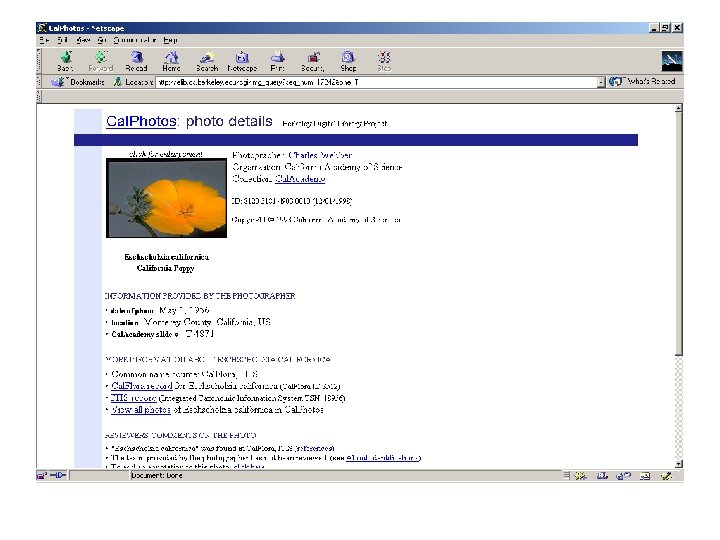
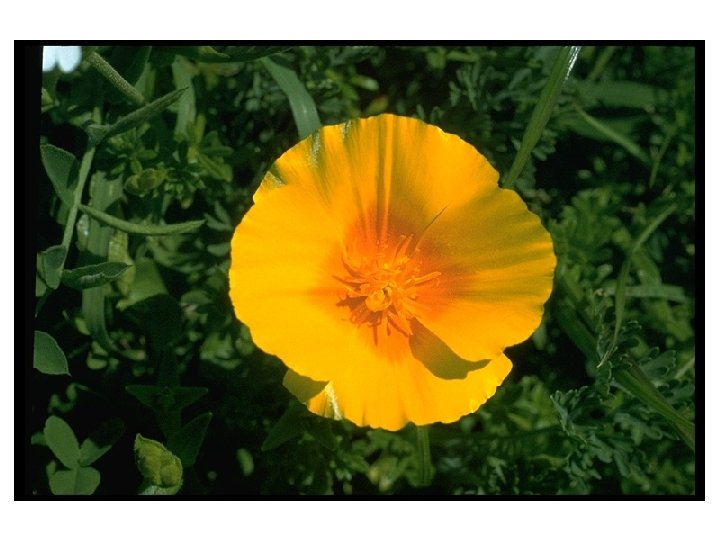
Cal. Photos § In conjunction with the UC Berkeley Digital Library Project http: //elib. cs. berkeley. edu § > 28, 000 images of California plants § Approx. half of all Calif. species are represented § Sources § Some institutions – e. g. Cal Academy of Sciences § Many from “native plant enthusiasts” § Currently accepting/soliciting contributions from users § Major reported uses § Plant identification § Illustrations
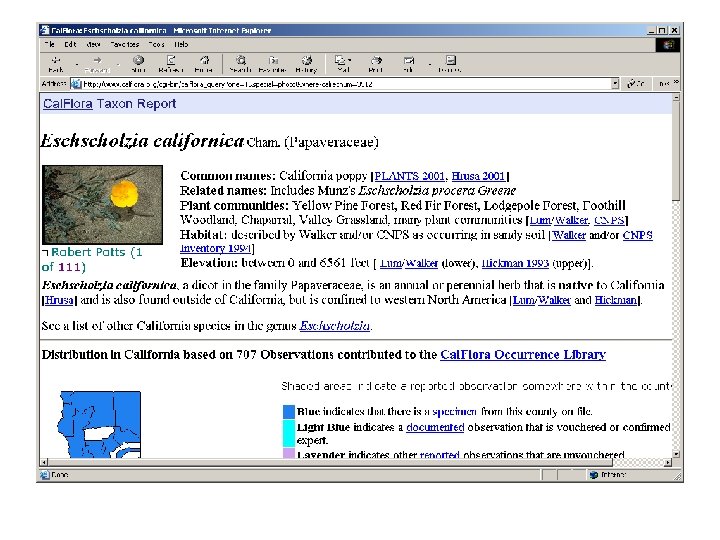
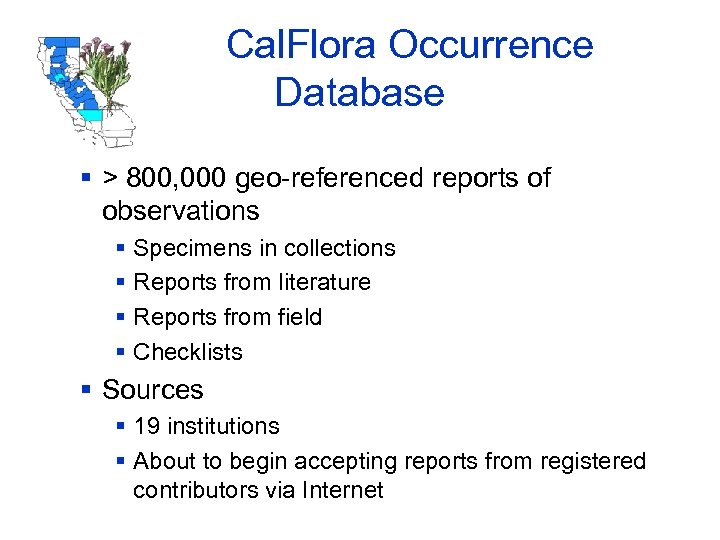
Cal. Flora Occurrence Database § > 800, 000 geo-referenced reports of observations § Specimens in collections § Reports from literature § Reports from field § Checklists § Sources § 19 institutions § About to begin accepting reports from registered contributors via Internet
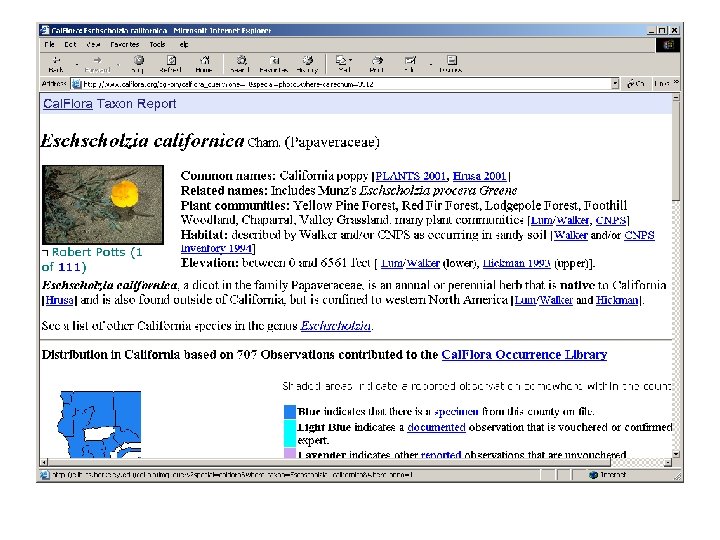
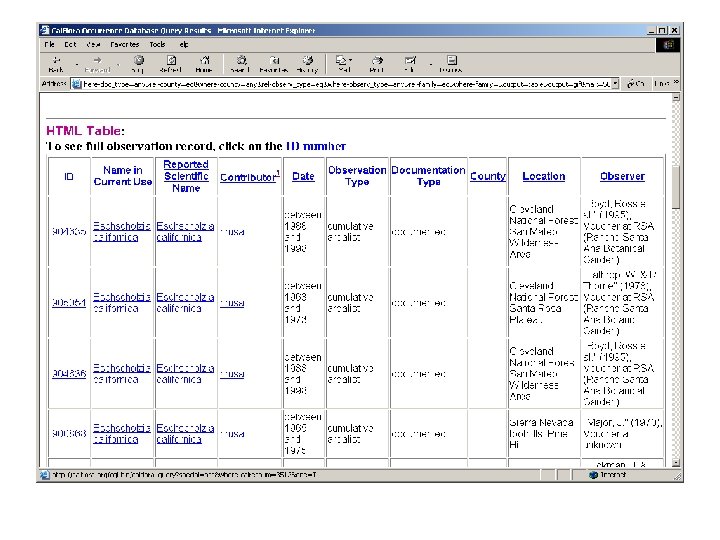
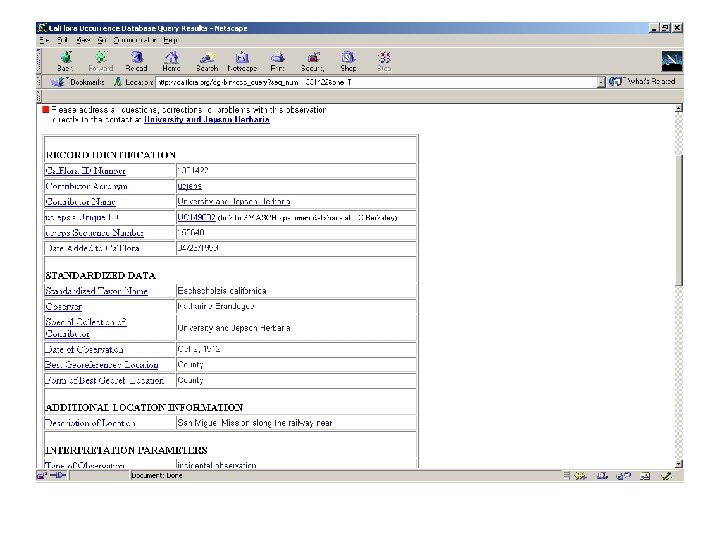
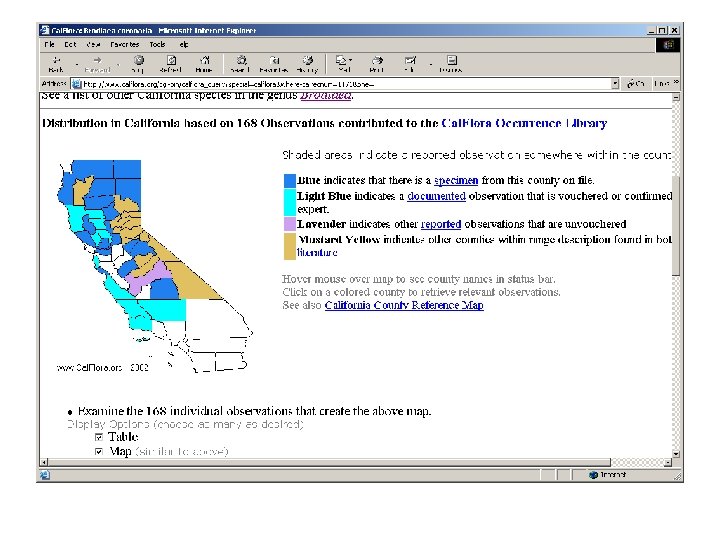
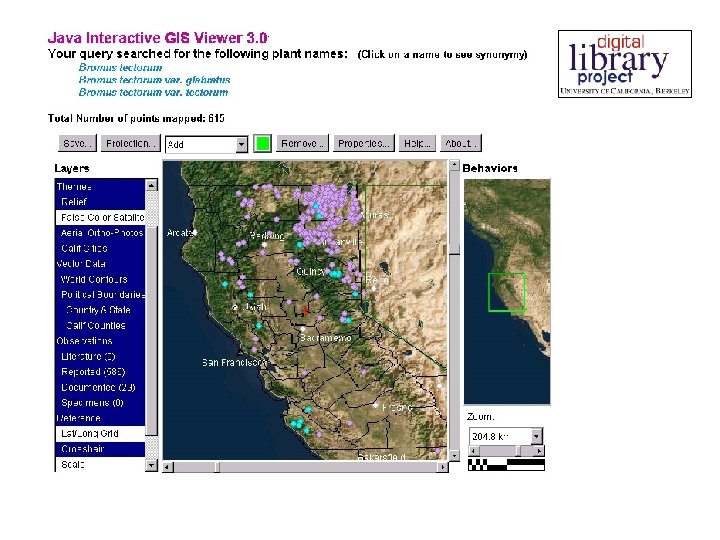
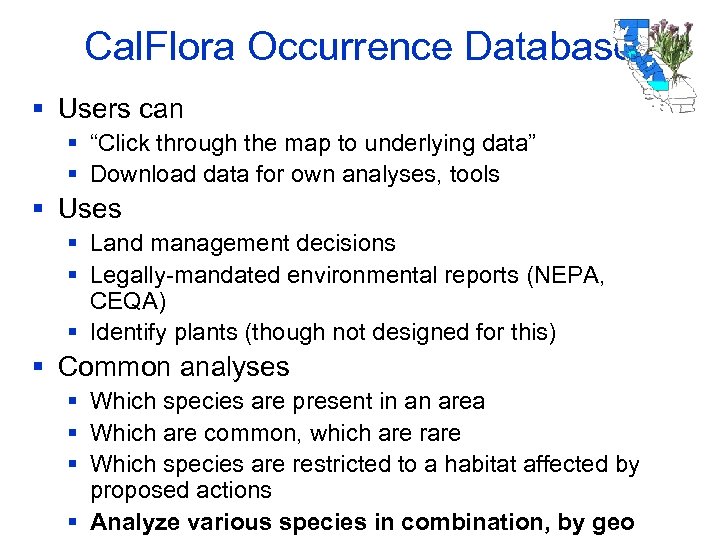
Cal. Flora Occurrence Database § Users can § “Click through the map to underlying data” § Download data for own analyses, tools § Uses § Land management decisions § Legally-mandated environmental reports (NEPA, CEQA) § Identify plants (though not designed for this) § Common analyses § Which species are present in an area § Which are common, which are rare § Which species are restricted to a habitat affected by proposed actions § Analyze various species in combination, by geo
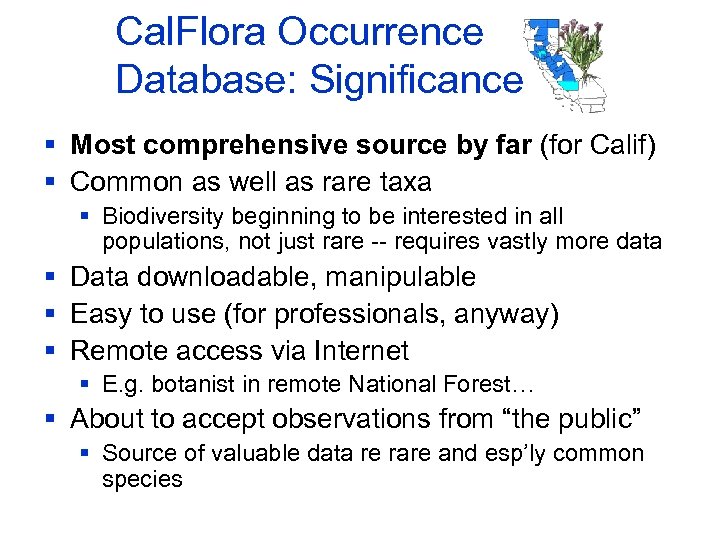
Cal. Flora Occurrence Database: Significance § Most comprehensive source by far (for Calif) § Common as well as rare taxa § Biodiversity beginning to be interested in all populations, not just rare -- requires vastly more data § Data downloadable, manipulable § Easy to use (for professionals, anyway) § Remote access via Internet § E. g. botanist in remote National Forest… § About to accept observations from “the public” § Source of valuable data re rare and esp’ly common species
Dilemmas and Conflicts § Useful place to see tensions, breakdowns, conflicts across epistemic cultures § Not whose right, wrong but underlying differences in values, priorities, practices, understandings
Cal. Flora Dilemmas § Quality filtering: made centrally vs. pushed down to user § Inclusiveness of observations vs. selectivity § Speed of additions vs. review, filtering § Labelling data for quality vs. providing info for users § Access § Benefits vs. dangers of wide access to information § Free vs. fee § Cost recovery § Discourage frivolous use § Who bears the costs? § Externalities
Dilemmas, Cont. § Institutional independence: § Autonomy, ability to be responsive to multiple stake-holder communities vs. security and credibility of institutional sponsorship
How (Some) Experts Assess Occurrence Reports § The evidence: § Type of report (specimen, field observation, list) § Type of search (casual, directed) § The source: § Personal knowledge of contributor’s expertise § Examination of other contributions, same person § Annotations by trusted others § Ancillary conditions: § Likelihood of that species appearing at that time, habitat, geographical location
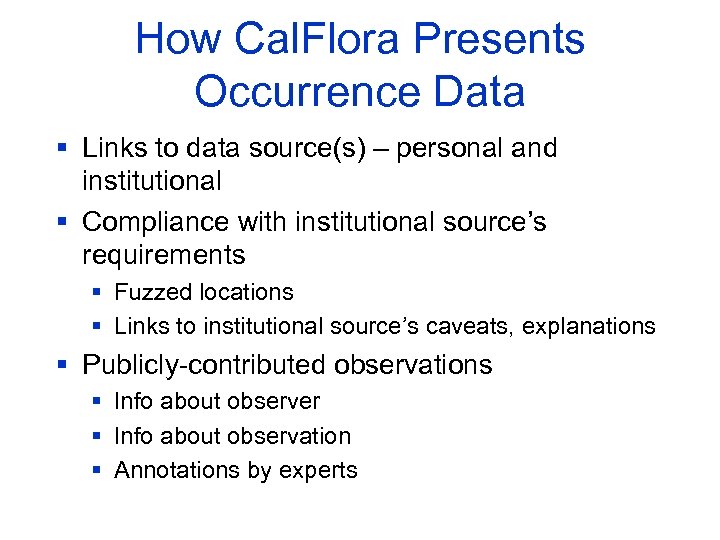
How Cal. Flora Presents Occurrence Data § Links to data source(s) – personal and institutional § Compliance with institutional source’s requirements § Fuzzed locations § Links to institutional source’s caveats, explanations § Publicly-contributed observations § Info about observer § Info about observation § Annotations by experts
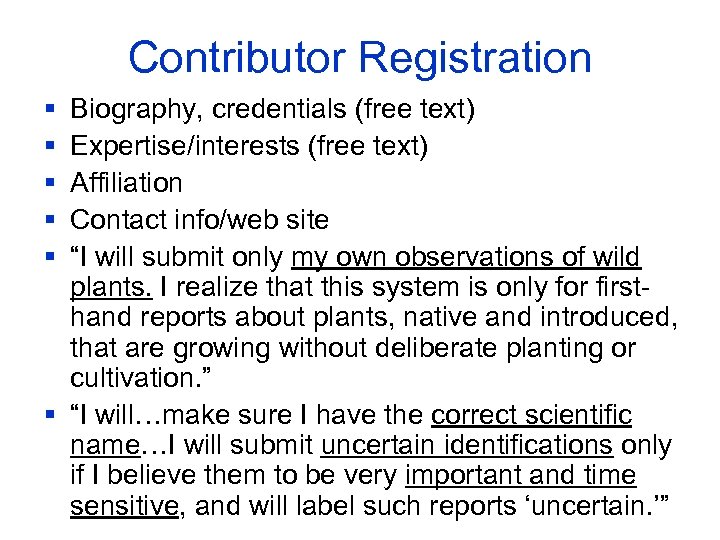
Contributor Registration § § § Biography, credentials (free text) Expertise/interests (free text) Affiliation Contact info/web site “I will submit only my own observations of wild plants. I realize that this system is only for firsthand reports about plants, native and introduced, that are growing without deliberate planting or cultivation. ” § “I will…make sure I have the correct scientific name…I will submit uncertain identifications only if I believe them to be very important and time sensitive, and will label such reports ‘uncertain. ’”
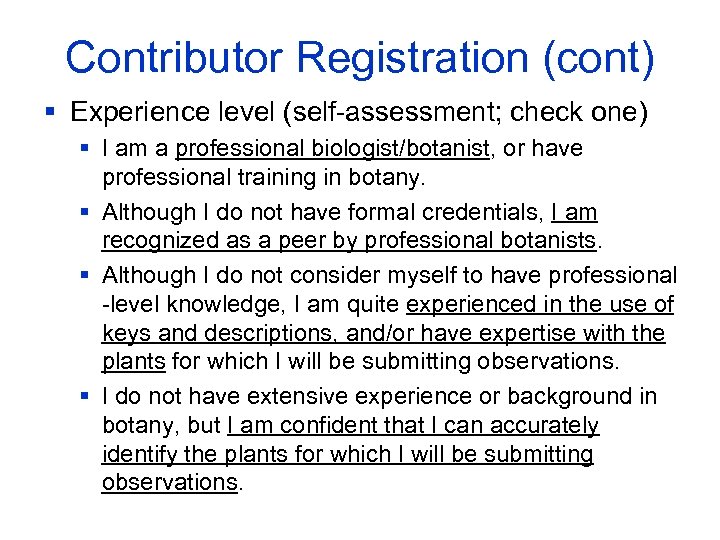
Contributor Registration (cont) § Experience level (self-assessment; check one) § I am a professional biologist/botanist, or have professional training in botany. § Although I do not have formal credentials, I am recognized as a peer by professional botanists. § Although I do not consider myself to have professional -level knowledge, I am quite experienced in the use of keys and descriptions, and/or have expertise with the plants for which I will be submitting observations. § I do not have extensive experience or background in botany, but I am confident that I can accurately identify the plants for which I will be submitting observations.
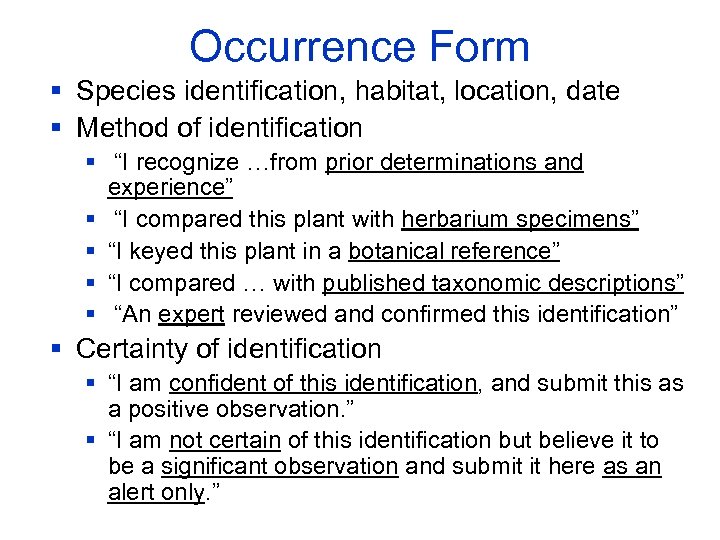
Occurrence Form § Species identification, habitat, location, date § Method of identification § “I recognize …from prior determinations and experience” § “I compared this plant with herbarium specimens” § “I keyed this plant in a botanical reference” § “I compared … with published taxonomic descriptions” § “An expert reviewed and confirmed this identification” § Certainty of identification § “I am confident of this identification, and submit this as a positive observation. ” § “I am not certain of this identification but believe it to be a significant observation and submit it here as an alert only. ”
Annotations § Herbarium practice: experts annotate records with corrections, comments. § Cal. Flora: registered experts can annotate photos and occurrence records. § Annotation by an expert raises the credibility of a record. § Actually – how often?
Cal. Flora Data and Trust § Trusting data § § § Every observation trackable to source(s) Detailed info & contact info for source, observer Detailed info about observation Observations categorized by type Annotation § Trusting users § NOT registering or charging users § Respecting source’s limits, caveats on data § Leaving quality decisions to the users § Trusting Cal. Flora § Detailed list of contributing organizations, advisors § NOT affiliated with another organization
Concerns § Cal. Flora relies on record-by-record examination § Looking at methods of classifying records in collections § Cal. Flora relies on voluntary contributions of data § Experts with lots of data and no time to contribute § Well-meaning volunteers with time but not expertise § Users need to be able to track back to source of each record, each data point § Concern about “modalities, ” uncertainties being lost § Archiving § Concern about dynamicism of Cal. Flora § Stability of electronic media § Stability of the organization § Delegating decisions about quality of observations to (inexpert) users
Implications for DLs, Other Info Systems § The social nature of knowledge § We have to decide on whom we will depend § We learn from others whom and what we can depend on § Information must be credible to be used § The importance of culture in constituting knowledge § Practice, values, orientations… § Epistemic cultures differ § Not simply a matter of experts vs. public
Therefore: § DLs need to accommodate practices § Incl. practices of trust and credibility § Users need to know provenance of data § Users differ § and not just experts vs. nonexperts § DLs serve multiple, varied epistemic cultures § Same person, multi cultures § Users need flexibility to accommodate the DL to their needs, practices § Some users need decisions made for them § >> involvement of users in design
Implications for DL Creation and Management § Different epistemic cultures participate in the design and management of DLs, as well § Librarians § Technologists § Various, differing user groups § Differences in practices, understandings, values >> differences in priorities and decisions § A continual process of negotiation and translation
`
Скачать презентацию Trust and Epistemic Communities in Biodiversity Data Sharing
95e6d4d52a0dfc8b98ed21685ffef1ea.ppt