


 Скачать презентацию TRIAGE Course Date 10 10 Expiration Date 10 13
45bef18f4ad8383d9135eed624a094f2.ppt
- Количество слайдов: 69
 TRIAGE Course Date: 10/10 Expiration Date: 10/13
 Objectives Provide general information on triage classification systems and patient categories. n Provide general information on factors to be considered by the triage officer during patient assessment. n
 Triage “Sorting” n Classifying of casualties n Establish priorities for treatment / evacuation n Dynamic process n
 Triage Multiple casualties n Single casualty with multiple injuries n
 Triage Classification Systems Military/International n START – Simple Triage and Rapid Treatment n Others n
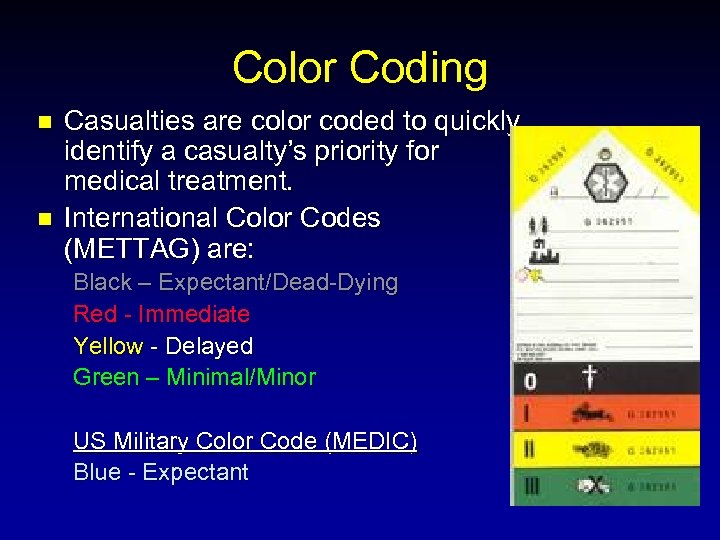 Color Coding n n Casualties are color coded to quickly identify a casualty’s priority for medical treatment. International Color Codes (METTAG) are: Black – Expectant/Dead-Dying Red - Immediate Yellow - Delayed Green – Minimal/Minor US Military Color Code (MEDIC) Blue - Expectant
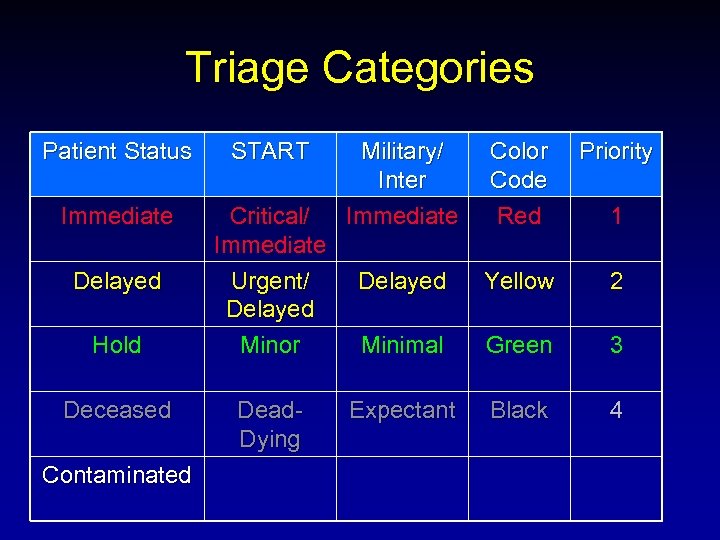 Triage Categories Patient Status START Immediate Critical/ Immediate Urgent/ Delayed Minor Delayed Hold Deceased Contaminated Dead. Dying Military/ Inter Immediate Color Code Red Priority Delayed Yellow 2 Minimal Green 3 Expectant Black 4 1
 Triage Principles Peacetime/Wartime n Life over limb n Bodily function over cosmetic appearance n Greatest good for the greatest number n
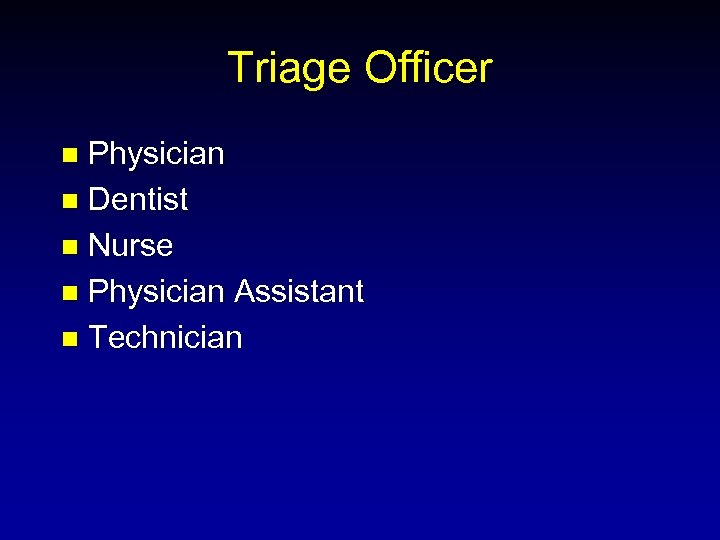 Triage Officer Physician n Dentist n Nurse n Physician Assistant n Technician n
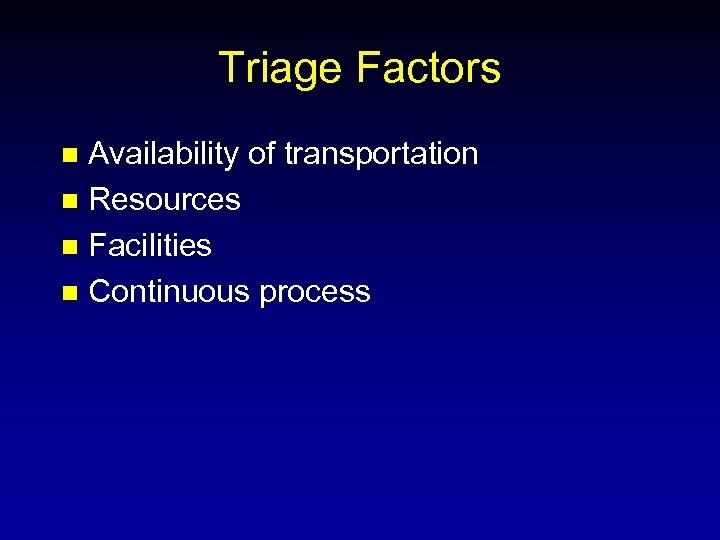 Triage Factors Availability of transportation n Resources n Facilities n Continuous process n
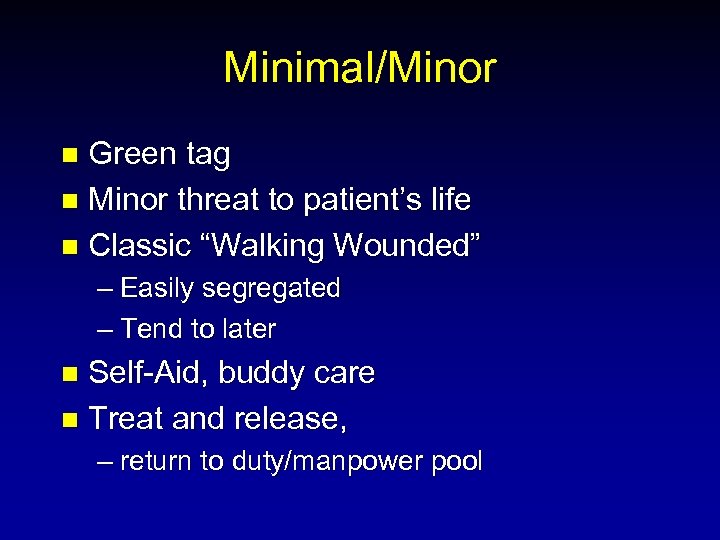 Minimal/Minor Green tag n Minor threat to patient’s life n Classic “Walking Wounded” n – Easily segregated – Tend to later Self-Aid, buddy care n Treat and release, n – return to duty/manpower pool
 Minimal/Minor lacerations n Abrasions n Sprains n Contusions n Burns under 20% BSA n – Rule of 9’s n Combat stress casualties
 Immediate Red tag n Threat to life is great n Simple procedure will be lifesaving n – Reposition airway, control hemorrhaging, … n Must receive urgent treatment
 Immediate Airway obstruction n Sucking chest wounds n Massive external bleeding n Shock n Incomplete Amputation n 2 nd/3 rd degree burns of face or neck n White phosphorus burns n
 Delayed Injuries that are serious n Delay in treatment is not life threatening n Require care but no immediate life saving procedures n Treatment, including surgery may be delayed several hours n
 Delayed Open chest wounds n Penetrating abdominal wound (evisceration) n Severe eye injury n Open wounds n Non-life threatening fractures n 2 nd/3 rd degree burns not involving the face/neck n
 Expectant/Dead-Dying Little hope of recovery n Great threat to life n Treatment is complicated/time consuming n Supportive vs curative treatment n Only used if resources are limited n
 Expectant/Dead-Dying n n n n Large open head wounds with loss of tissue Decapitation Massive crush injury of the chest/neck Large open chest wound Penetrating injury to trachea/neck 2 nd/3 rd degree burns greater then 60% BSA Multiple trauma
 Contaminated n n n Not a true triage category Be alert to possibility Segregate immediately Prevent contamination of other patients, medical staff, facility Complicates management and treatment – – n Biological, not likely to have conventional injuries Chemical, greater likelihood of combination conventional, chemical injuries Decontaminate prior to any treatment
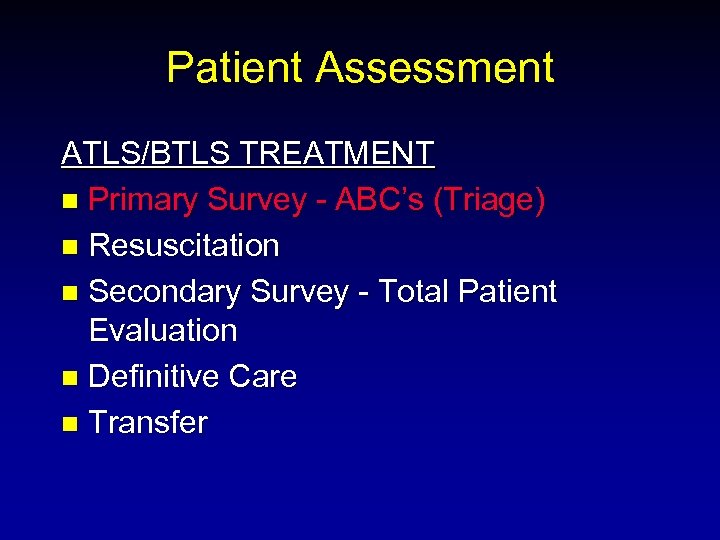 Patient Assessment ATLS/BTLS TREATMENT n Primary Survey - ABC’s (Triage) n Resuscitation n Secondary Survey - Total Patient Evaluation n Definitive Care n Transfer
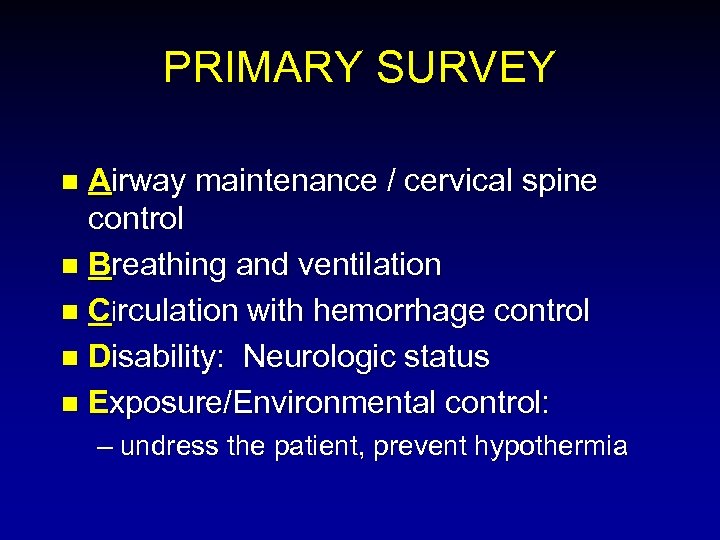 PRIMARY SURVEY Airway maintenance / cervical spine control n Breathing and ventilation n Circulation with hemorrhage control n Disability: Neurologic status n Exposure/Environmental control: n – undress the patient, prevent hypothermia
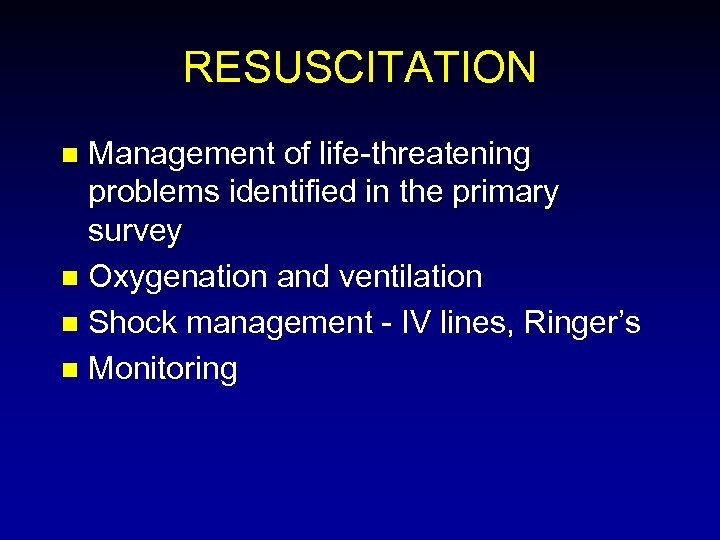 RESUSCITATION Management of life-threatening problems identified in the primary survey n Oxygenation and ventilation n Shock management - IV lines, Ringer’s n Monitoring n
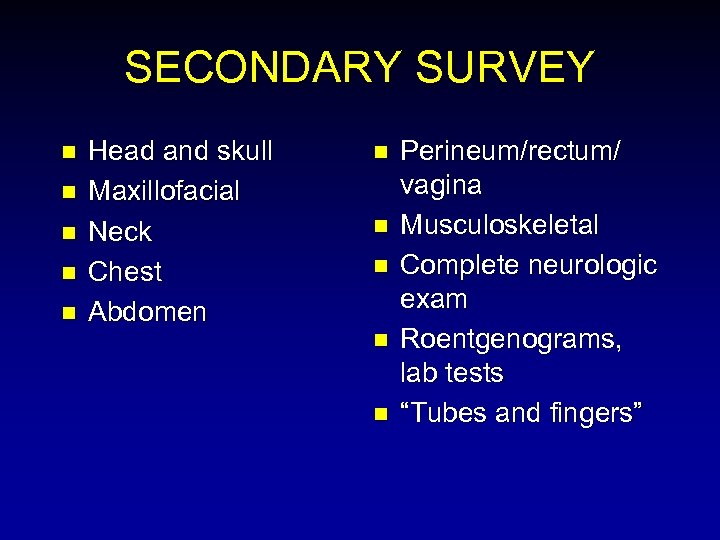 SECONDARY SURVEY n n n Head and skull Maxillofacial Neck Chest Abdomen n n Perineum/rectum/ vagina Musculoskeletal Complete neurologic exam Roentgenograms, lab tests “Tubes and fingers”
 DEFINITIVE CARE After identifying patient’s injuries n After managing life-threatening problems n After obtaining special studies n Definitive care begins n
 TRANSFER If the patient’s injuries exceed the immediate treatment capabilities n The process of transferring the patient is initiated as soon as the need is identified n Delay may significantly increase the patient’s risk of mortality n Availability of airlift n
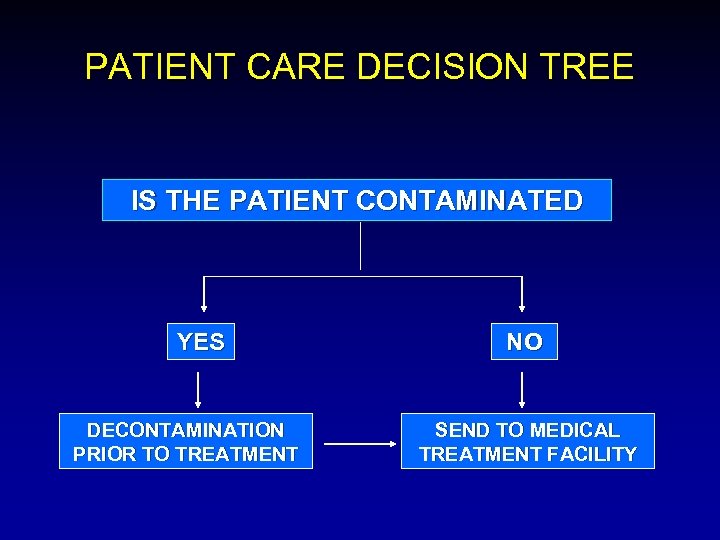 PATIENT CARE DECISION TREE IS THE PATIENT CONTAMINATED YES DECONTAMINATION PRIOR TO TREATMENT NO SEND TO MEDICAL TREATMENT FACILITY
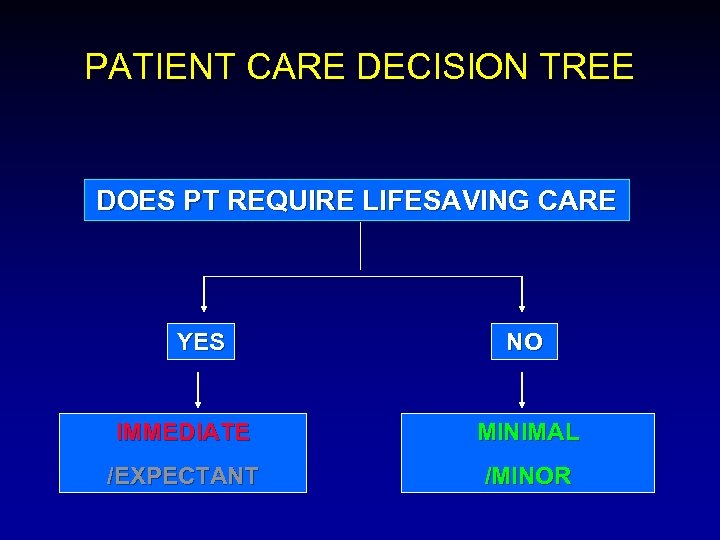 PATIENT CARE DECISION TREE DOES PT REQUIRE LIFESAVING CARE YES NO IMMEDIATE MINIMAL /EXPECTANT /MINOR
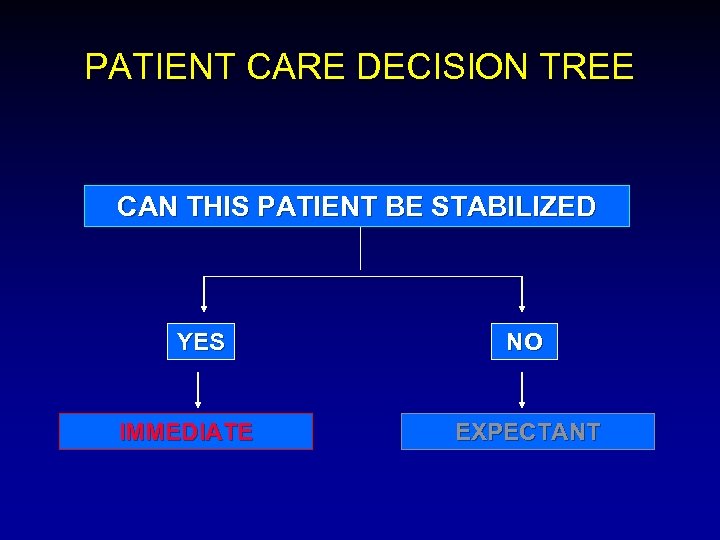 PATIENT CARE DECISION TREE CAN THIS PATIENT BE STABILIZED YES IMMEDIATE NO EXPECTANT
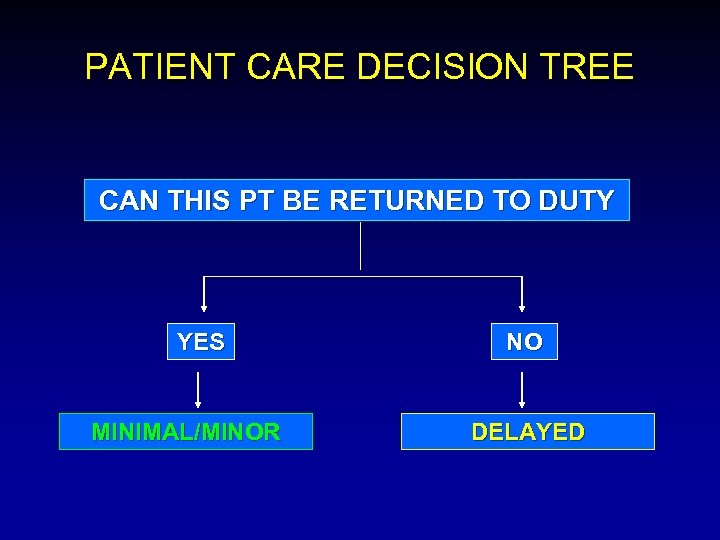 PATIENT CARE DECISION TREE CAN THIS PT BE RETURNED TO DUTY YES MINIMAL/MINOR NO DELAYED
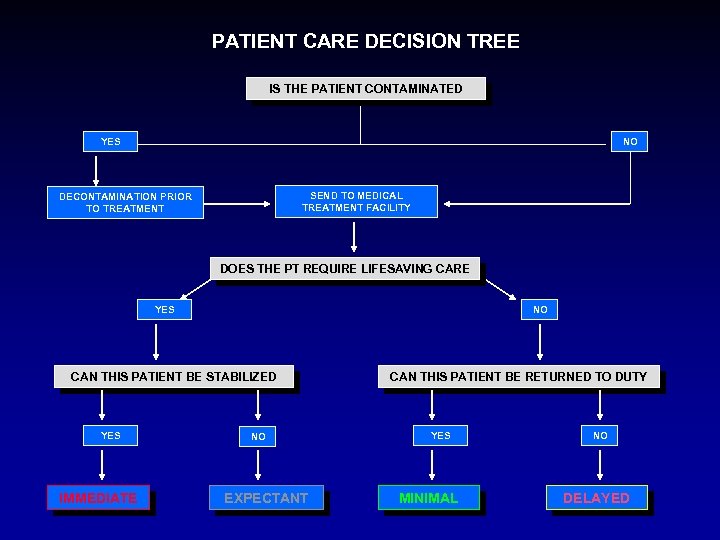 PATIENT CARE DECISION TREE IS THE PATIENT CONTAMINATED YES NO SEND TO MEDICAL TREATMENT FACILITY DECONTAMINATION PRIOR TO TREATMENT DOES THE PT REQUIRE LIFESAVING CARE YES NO CAN THIS PATIENT BE STABILIZED YES IMMEDIATE NO EXPECTANT CAN THIS PATIENT BE RETURNED TO DUTY YES MINIMAL NO DELAYED
 Triage Exercise You are working in an ATH at a classified location in support of Operation Bellringer. At approximately 0430 hours a call comes into the command post that there are casualties lying outside the perimeter fence. You arrive on the scene and find a bus that has smashed into a large tree and then into a jeep. You are tasked to retrieve, triage, and prioritize the injuries for treatment/transport. There are six bodies with the following injuries:
 TRIAGE EXERCISE n Bus Driver - unresponsive with a penetrating injury to the trachea region n Patient One - bullet wounds to the lower legs with bright red blood spurting out n Patient Two - lacerations to the face and a suspected sprain to the right foot
 TRIAGE EXERCISE n Patient Three - conscious but somewhat confused & 3 rd degree burns of the arms n Patient Four - partial amputation of the right arm and signs of shock n Jeep Driver - walking around the area with an open wound on his forehead What is your assessment of these 6 patients?
 TRIAGE EXERCISE Immediate - require life saving care but can be stabilized – Patient One - bullet wounds to the lower legs with bright red blood spurting out – Patient Four - partial amputation of the right arm and signs of shock Delayed – significant injuries required treatment, but not immediately life threatening – Patient Three - conscious but somewhat confused & 3 rd degree burns of the arms
 TRIAGE EXERCISE n Minimal – minor injuries, treatment can be delayed – Jeep Driver - walking around the area with an open wound on his forehead – Patient Two - lacerations to the face and a suspected sprain to the right foot n Expectant/Dead-Dying – life threatening injuries, attempts to stabilize may jeopardize other lives – Bus Driver - unresponsive with a penetrating injury to the trachea region
 When a patient is triaged as expectant, what should you do with the patient? a. Transport them first so that the bystanders don’t have to see someone like this b. Move them out of sight and worry about them later c. Care for them in the same manner as you would anybody else d. Stay with them and worry about the other patients when time allows
 Any time you respond to a call for help, your first priority is to? a. Assure your own safety b. Do the best you can for the greatest number of casualties. c. Call medical control and ask them what you should do d. Get to the scene as fast as the ambulance will allow you to travel
 How often should you reassess your patient in a mass casualty situation? a. b. c. d. Every 5 minutes Every 20 minutes Whenever necessary Never, this wastes time
 What is the purpose of the various colors on the triage tags? a. To keep track of the number of casualties b. So that medical personnel know which casualties to treat first c. To allow the casualties to know where they stand as far as treatment goes d. To make them more interesting to look at
 START Triage System Hoag Memorial Hospital, Newport Beach, CA n Allows rescuers to quickly identify victims at greatest risk for early death n Gaining popularity n – US EMS Systems, – Oklahoma, Trade Center bombings – France, Saudi Arabia, Israel
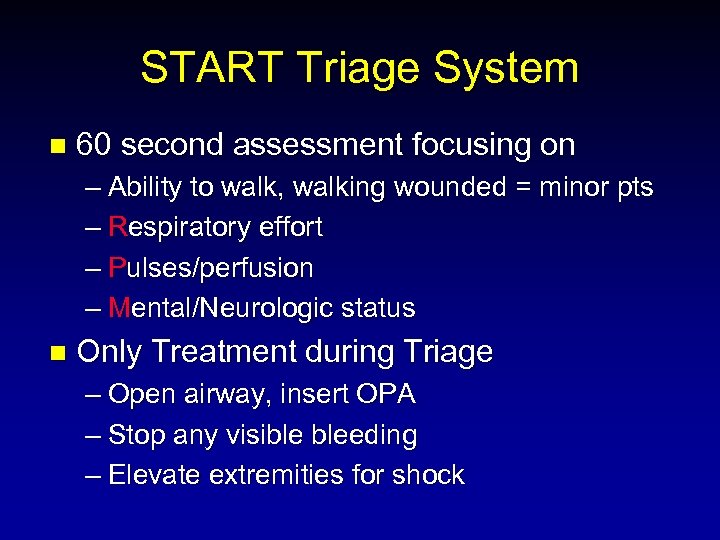 START Triage System n 60 second assessment focusing on – Ability to walk, walking wounded = minor pts – Respiratory effort – Pulses/perfusion – Mental/Neurologic status n Only Treatment during Triage – Open airway, insert OPA – Stop any visible bleeding – Elevate extremities for shock
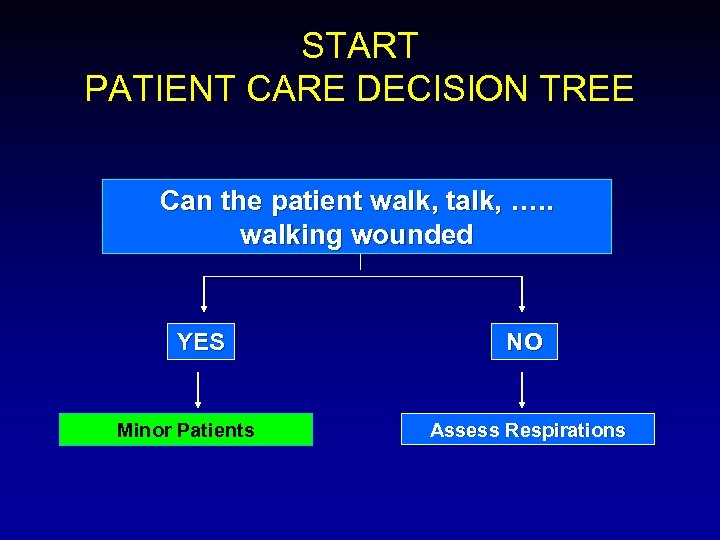 START PATIENT CARE DECISION TREE Can the patient walk, talk, …. . walking wounded YES Minor Patients NO Assess Respirations
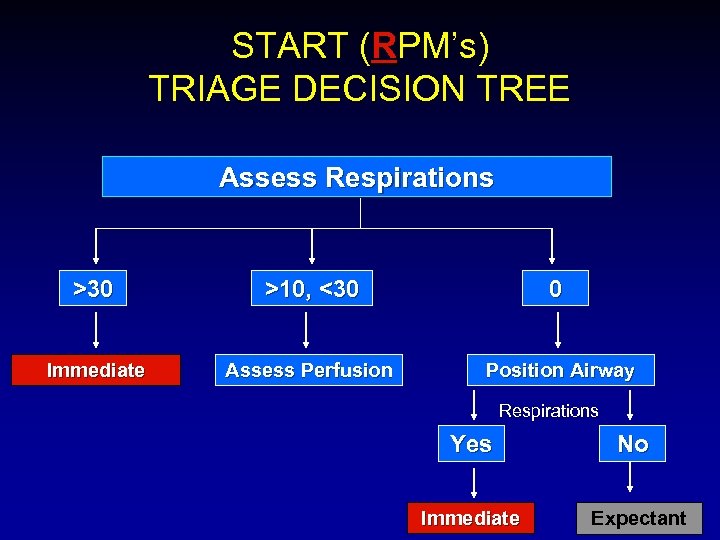 START (RPM’s) TRIAGE DECISION TREE Assess Respirations >30 >10, <30 0 Immediate Assess Perfusion Position Airway Respirations Yes No Immediate Expectant
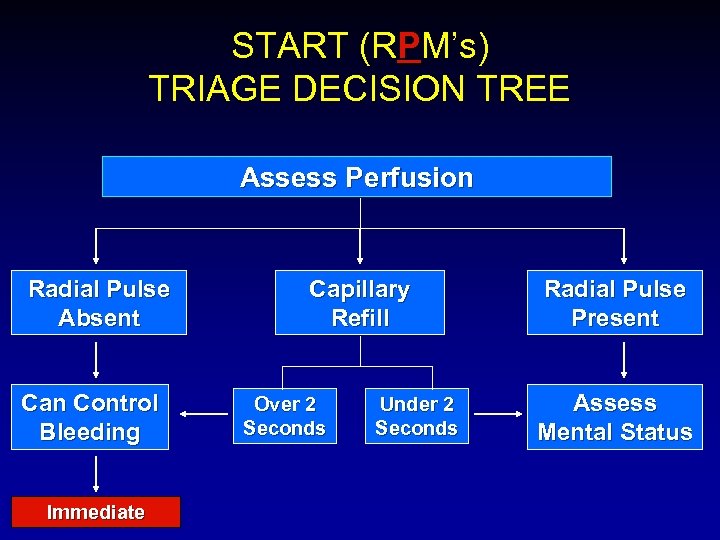 START (RPM’s) TRIAGE DECISION TREE Assess Perfusion Radial Pulse Absent Can Control Bleeding Immediate Capillary Refill Over 2 Seconds Under 2 Seconds Radial Pulse Present Assess Mental Status
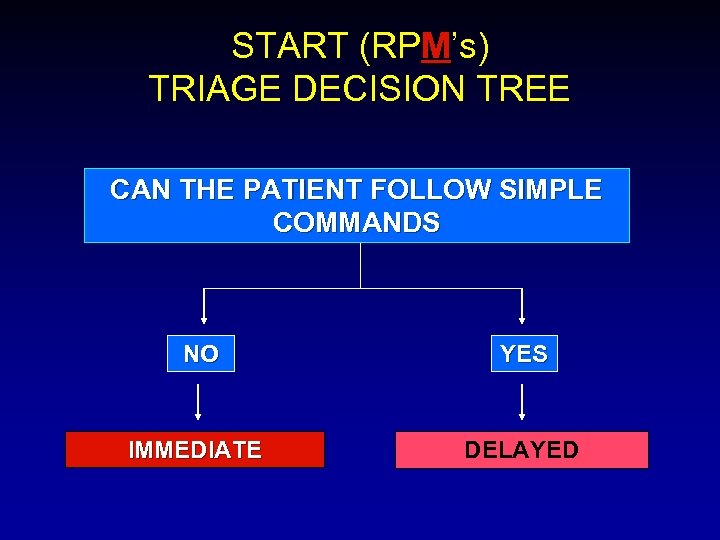 START (RPM’s) TRIAGE DECISION TREE CAN THE PATIENT FOLLOW SIMPLE COMMANDS NO YES IMMEDIATE DELAYED
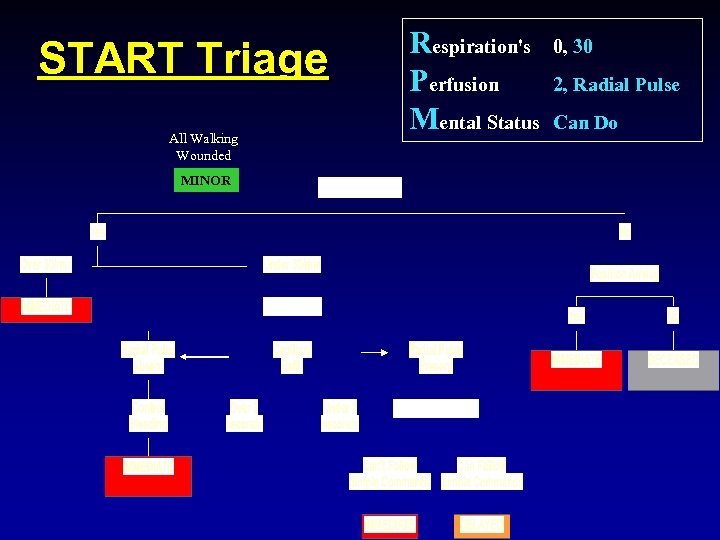 START Triage All Walking Wounded MINOR Respiration's 0, 30 Perfusion 2, Radial Pulse Mental Status Can Do
 Summary No hard and fast rules for triage n A simplified guide to help sort casualties n Triage is a continuous process n Accomplish the greatest good for the greatest number n
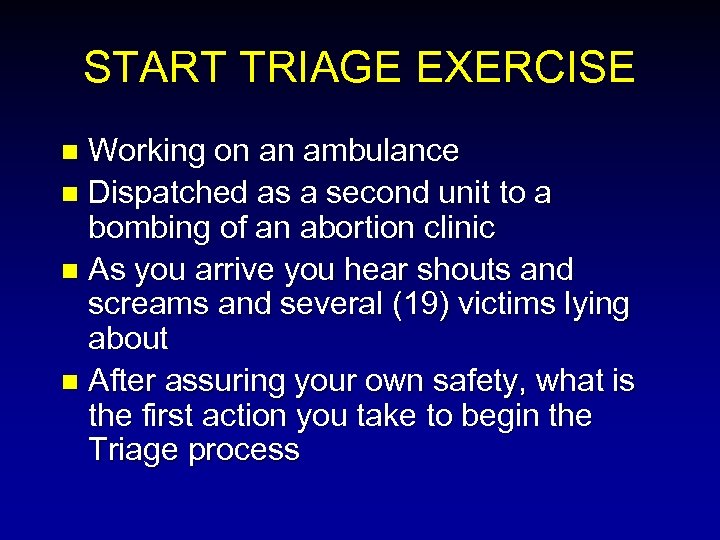 START TRIAGE EXERCISE Working on an ambulance n Dispatched as a second unit to a bombing of an abortion clinic n As you arrive you hear shouts and screams and several (19) victims lying about n After assuring your own safety, what is the first action you take to begin the Triage process n
 START TRIAGE EXERCISE n n Instruct all walking wounded to get up and walk to a designated area and await treatment You now have 19 patients left to triage, – Establish a triage category for each patient – Give your rationale for their triage category. n Notes – If no breathing, give triage category if respirations begin/or are still absent after airway established – If radial pulse is absent, most times you can assume that bleeding can be controlled unless an obvious mortal injury is presented
 #1 Compound fracture of the left femur n Respirations: Under 30 n Pulse (radial): Absent n Mental Status: A O x 4 Immediate - Radial Pulse is absent • If bleeding can be controlled
 #2 Sudden onset of chest pain, no shortness of breath n Respirations: Under 30 n Pulse (radial): Present n Mental Status: A O x 4 Delayed No abnormalities noted according to criteria
 #3 90% second degree burns over body n Respirations: None n Pulse (radial): Present n Mental Status: Unconscious Immediate if respiration begins after airway est Dead/Dying if no respiration after airway est
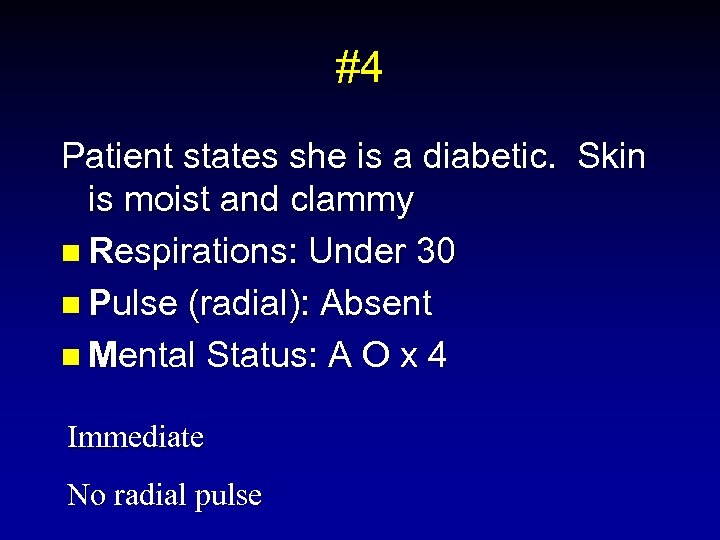 #4 Patient states she is a diabetic. Skin is moist and clammy n Respirations: Under 30 n Pulse (radial): Absent n Mental Status: A O x 4 Immediate No radial pulse
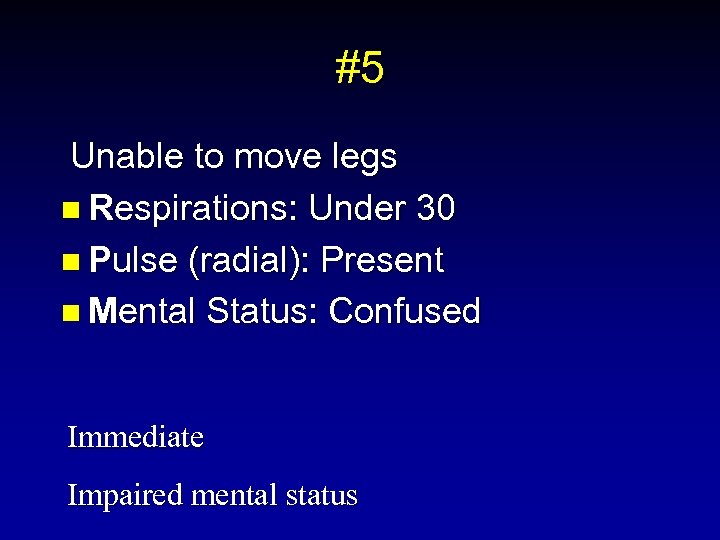 #5 Unable to move legs n Respirations: Under 30 n Pulse (radial): Present n Mental Status: Confused Immediate Impaired mental status
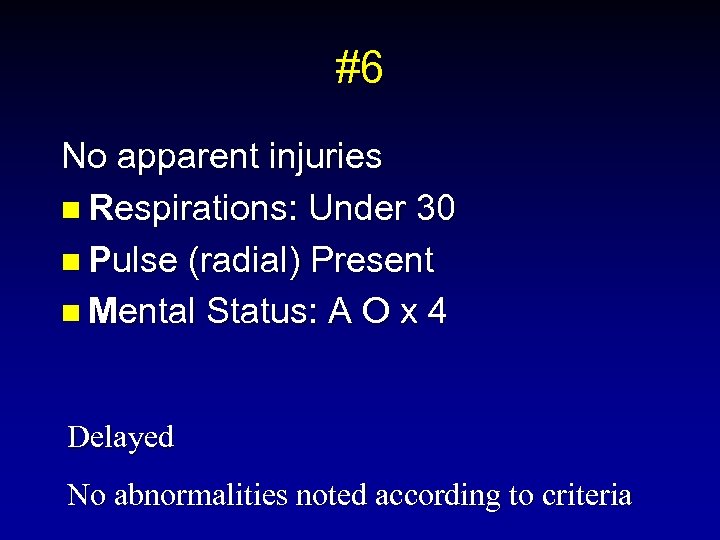 #6 No apparent injuries n Respirations: Under 30 n Pulse (radial) Present n Mental Status: A O x 4 Delayed No abnormalities noted according to criteria
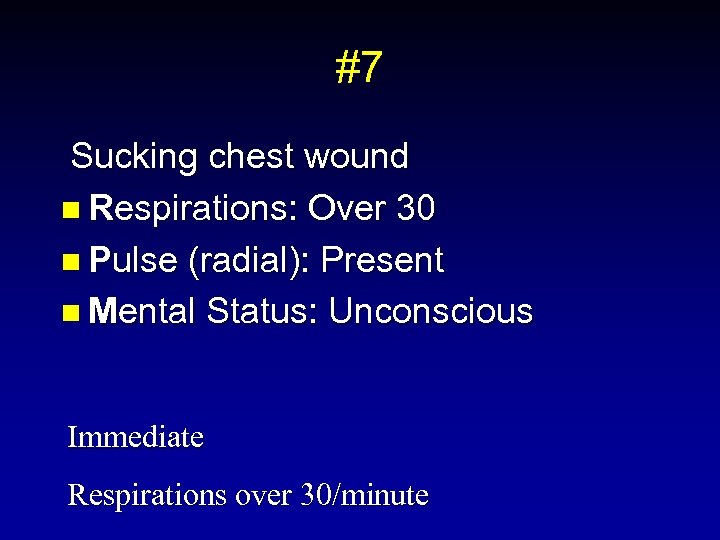 #7 Sucking chest wound n Respirations: Over 30 n Pulse (radial): Present n Mental Status: Unconscious Immediate Respirations over 30/minute
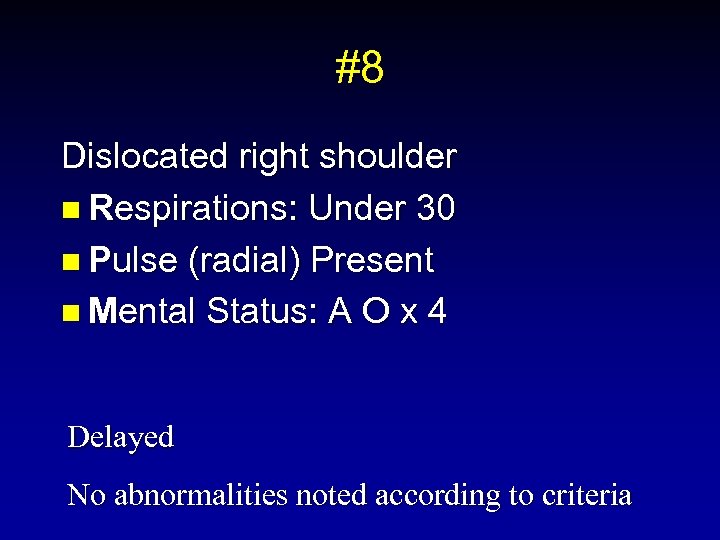 #8 Dislocated right shoulder n Respirations: Under 30 n Pulse (radial) Present n Mental Status: A O x 4 Delayed No abnormalities noted according to criteria
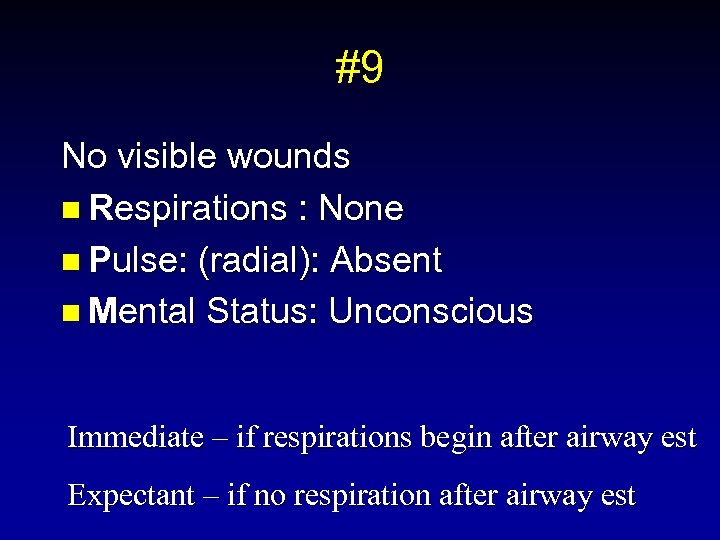 #9 No visible wounds n Respirations : None n Pulse: (radial): Absent n Mental Status: Unconscious Immediate – if respirations begin after airway est Expectant – if no respiration after airway est
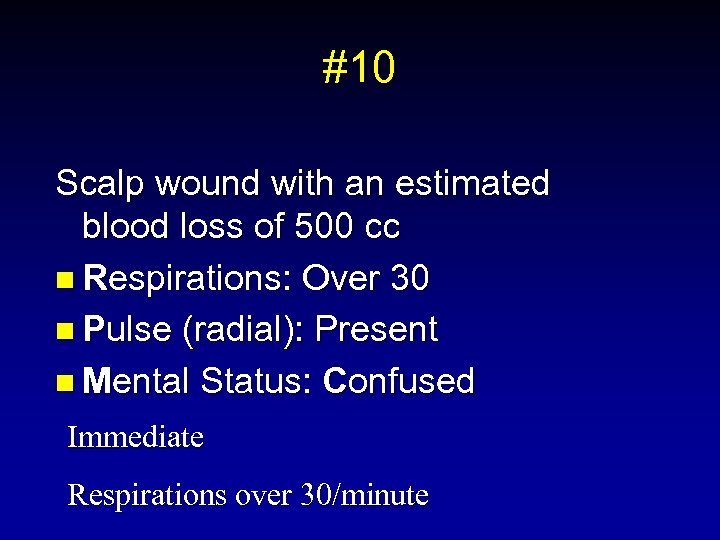 #10 Scalp wound with an estimated blood loss of 500 cc n Respirations: Over 30 n Pulse (radial): Present n Mental Status: Confused Immediate Respirations over 30/minute
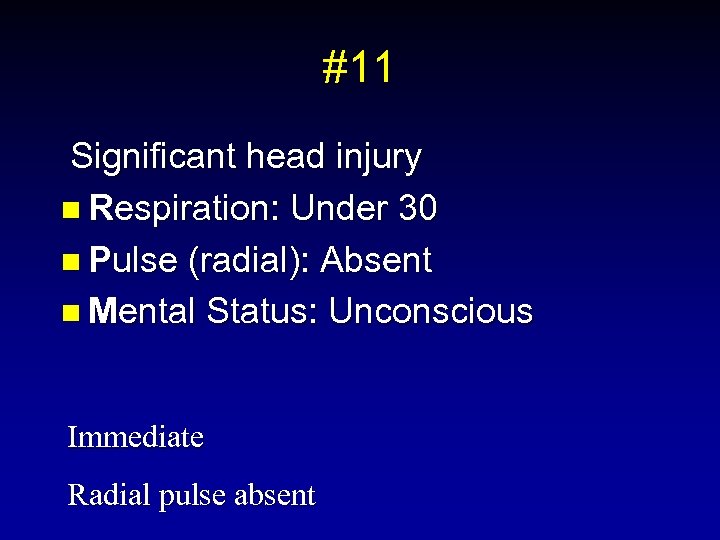 #11 Significant head injury n Respiration: Under 30 n Pulse (radial): Absent n Mental Status: Unconscious Immediate Radial pulse absent
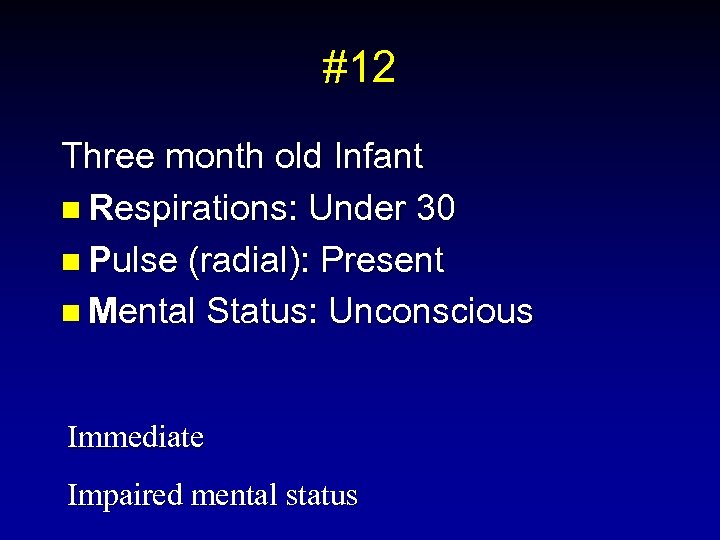 #12 Three month old Infant n Respirations: Under 30 n Pulse (radial): Present n Mental Status: Unconscious Immediate Impaired mental status
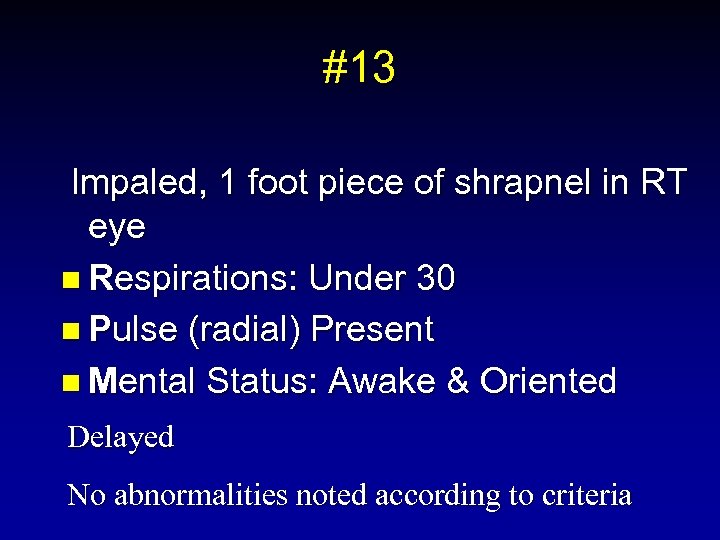 #13 Impaled, 1 foot piece of shrapnel in RT eye n Respirations: Under 30 n Pulse (radial) Present n Mental Status: Awake & Oriented Delayed No abnormalities noted according to criteria
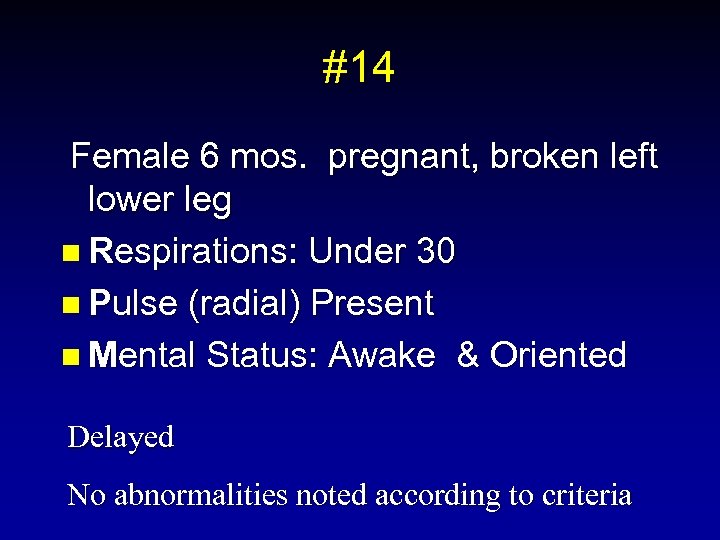 #14 Female 6 mos. pregnant, broken left lower leg n Respirations: Under 30 n Pulse (radial) Present n Mental Status: Awake & Oriented Delayed No abnormalities noted according to criteria
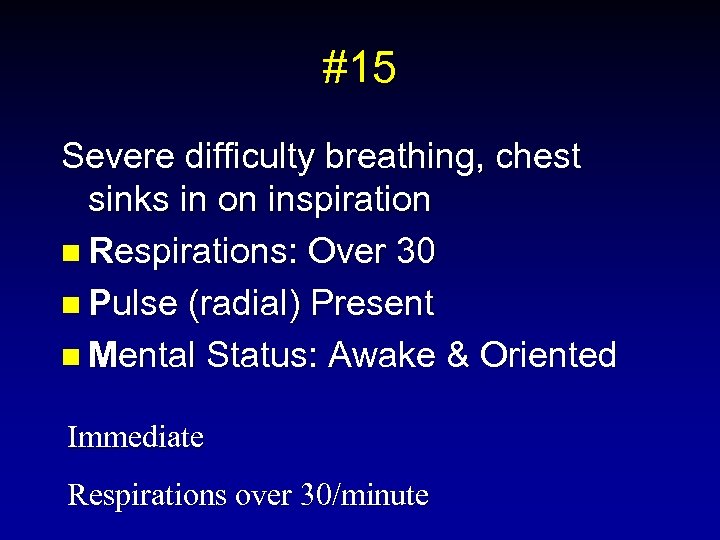 #15 Severe difficulty breathing, chest sinks in on inspiration n Respirations: Over 30 n Pulse (radial) Present n Mental Status: Awake & Oriented Immediate Respirations over 30/minute
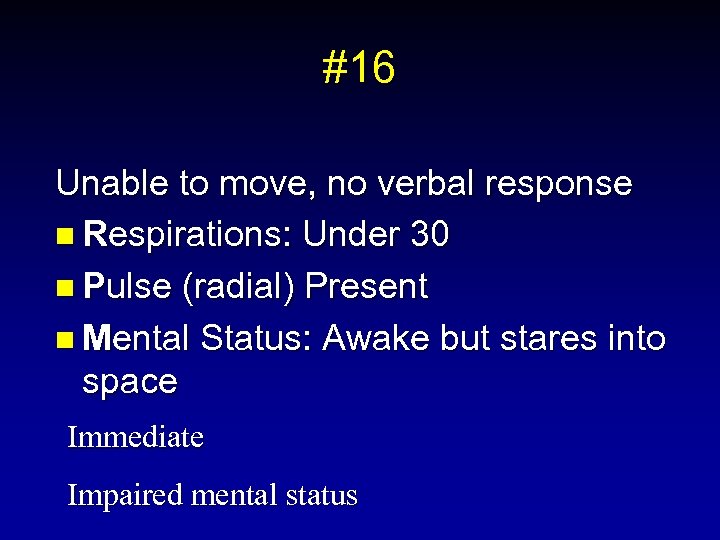 #16 Unable to move, no verbal response n Respirations: Under 30 n Pulse (radial) Present n Mental Status: Awake but stares into space Immediate Impaired mental status
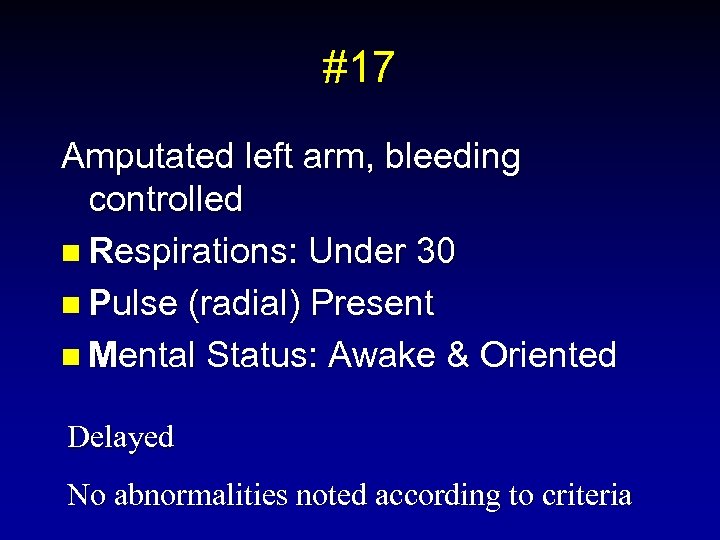 #17 Amputated left arm, bleeding controlled n Respirations: Under 30 n Pulse (radial) Present n Mental Status: Awake & Oriented Delayed No abnormalities noted according to criteria
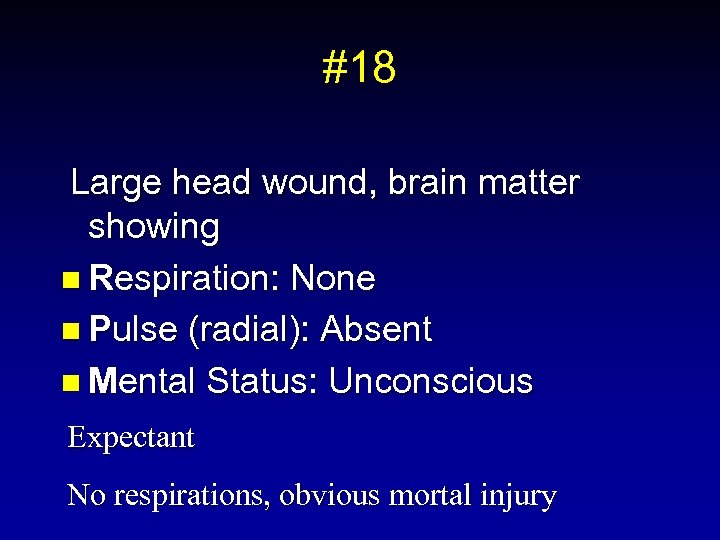 #18 Large head wound, brain matter showing n Respiration: None n Pulse (radial): Absent n Mental Status: Unconscious Expectant No respirations, obvious mortal injury
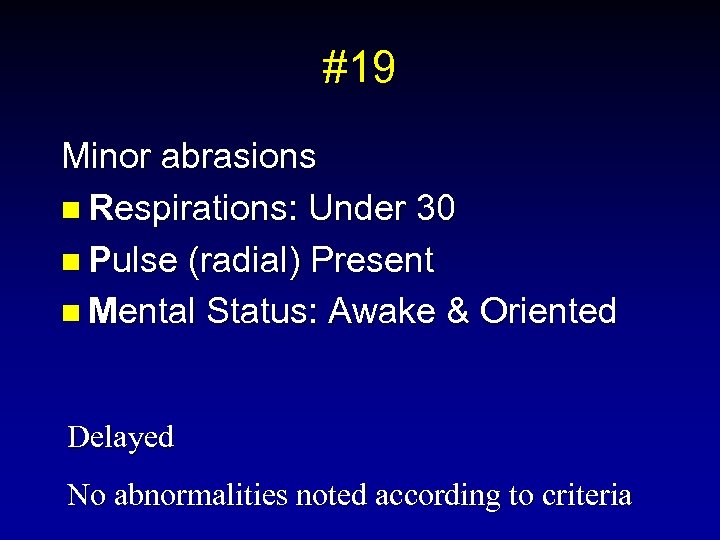 #19 Minor abrasions n Respirations: Under 30 n Pulse (radial) Present n Mental Status: Awake & Oriented Delayed No abnormalities noted according to criteria
 References/Additional Resources n n Chipman M, Hackley BE, Spencer TS. Triage of mass casualties: concepts for coping with mixed battlefield injuries. Military Medicine 1980; 145: 99– 100. Maryland Institute for Emergency Medical Services Systems. START Simple Triage & Rapid Treatment - A Race With Time. Available at: www. miemss. org/home/Triage. Tag. Training/tabid/152/Default. aspx. Accessed Nov 2010.