 Скачать презентацию Triad Beyond Characterization to Long Term Management of
a5ce73468fb08c20c23fa203d1e1b79c.ppt
- Количество слайдов: 115



Triad: Beyond Characterization to Long. Term Management of Groundwater Contaminant Plumes Dr. Mark Kram, Groundswell Gregg Gustafson, INW Clu-In Webinar Workshop 12 September 2008 1 -1 Clu-In 9/12/08
TECHNICAL OBJECTIVES • Present a comprehensive approach to optimized characterization/remediation design/LTM • Take Triad to next level – – Use Triad based approaches to develop CSM Use CSM to develop remediation and monitoring strategy Integrate Triad/CSM/LTM components into streamlined process Work towards single mobilization solutions 1 -2 Clu-In 9/12/08
OUTLINE • Innovative Direct Push Characterization Techniques – Chemical Distributions (MIP, LIF, FFD, UVOST, Geo. VIS, Cone. Sipper, Waterloo. APS Profiler) – Hydraulic Parameter Distributions (HRP, HPT) – 3 D Flux Model Generation • LTM Network Design – Spatial Considerations (2 D/3 D) – Well Design (ASTM vs. WDS) • Sensor Technologies – Desktop Monitoring – Analytes (Today and in Near Future) – Components of a Wireless Telemetry System • New LTM Approaches – Automation – Rapid Reporting/Assessment/Lines of Evidence For additional information: http: //clu-in. org/char/technologies/dpanalytical. cfm 1 -3 Clu-In 9/12/08
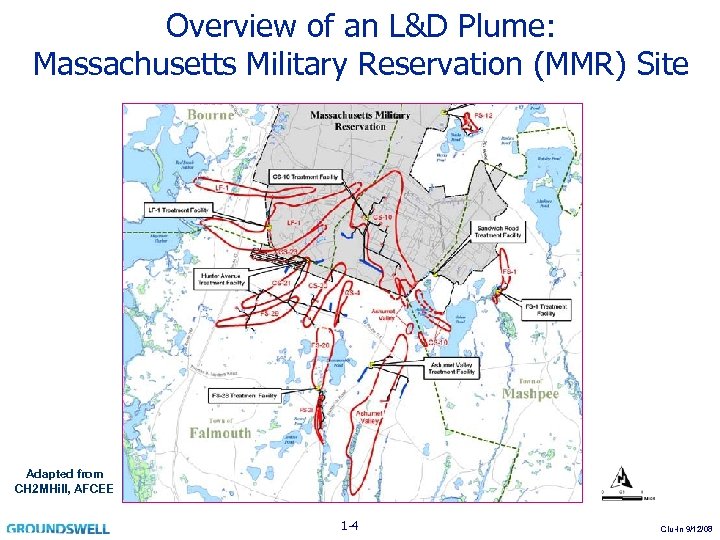
Overview of an L&D Plume: Massachusetts Military Reservation (MMR) Site Adapted from CH 2 MHill, AFCEE 1 -4 Clu-In 9/12/08
Massachusetts Military Reservation • • Numerous large & dilute TCE plumes Some plumes 2 miles long Using Pump & Treat for 10 years Over $400 million has been spent to date on investigation and cleanup • The estimated total long term cost: $850 million • Current status: 12 plumes require LTM (at least) Adapted from CH 2 MHill, AFCEE 1 -5 Clu-In 9/12/08
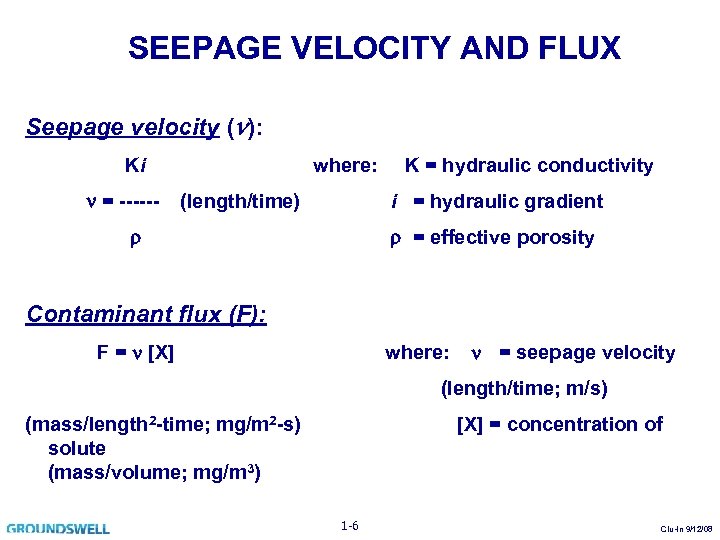
SEEPAGE VELOCITY AND FLUX Seepage velocity ( ): Ki where: K = hydraulic conductivity = ------ (length/time) i = hydraulic gradient = effective porosity Contaminant flux (F): F = [X] where: = seepage velocity (length/time; m/s) (mass/length 2 -time; mg/m 2 -s) solute (mass/volume; mg/m 3) 1 -6 [X] = concentration of Clu-In 9/12/08
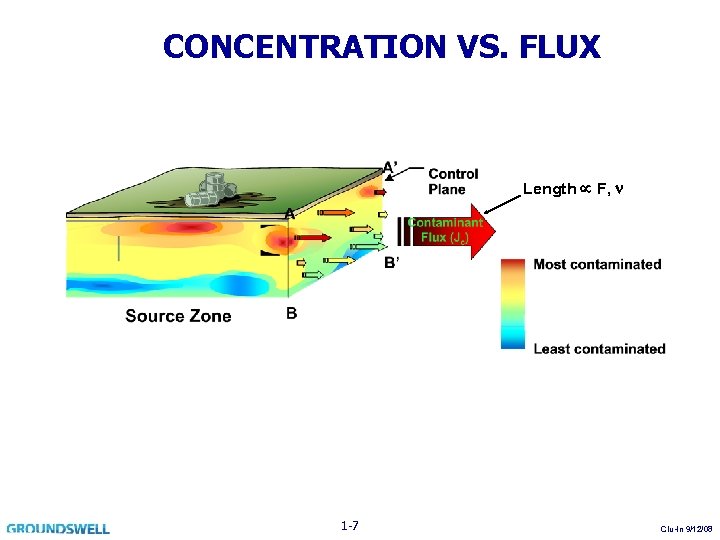
CONCENTRATION VS. FLUX Length F, 1 -7 Clu-In 9/12/08
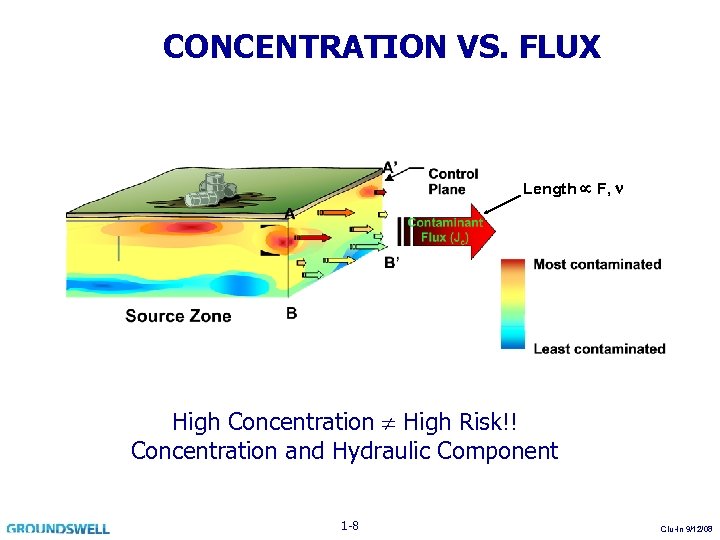
CONCENTRATION VS. FLUX Length F, High Concentration High Risk!! Concentration and Hydraulic Component 1 -8 Clu-In 9/12/08
STREAMLINED APPROACH Plume Delineation • MIP, LIF, Cone. Sipper, Field Lab, etc. • 2 D/3 D Concentration Representations • CPT Data for Well Design Hydro Assessment • High-Res Piezocone (2 D/3 D Flow Field, K, head, eff. Por. ) • Conventional Approaches (e. g. , Wells, Aq. Tests, etc. ) LTM Network Design • WDS based on CPT Data • G. S. D. via ASTM D 5092 • Field Installations (Clustered Short Screened Wells) Surveys (Lat/Long/Elevation) GMS Interpolations ( , F), Initial Models 1 -9 Clu-In 9/12/08
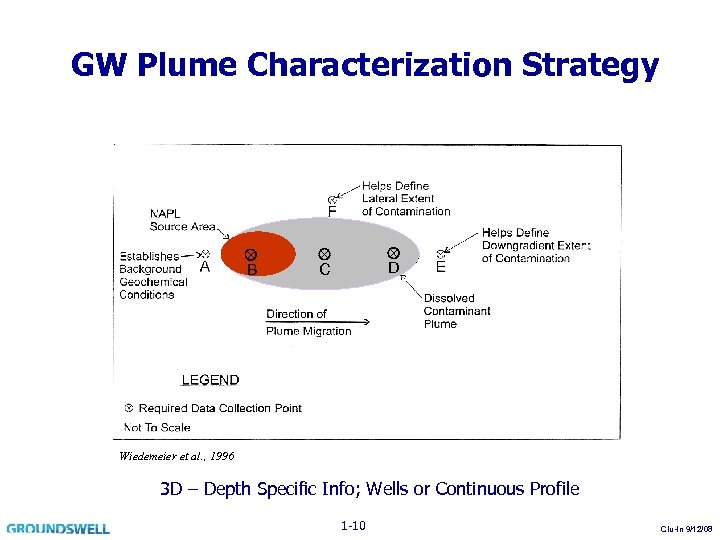
GW Plume Characterization Strategy B D C Wiedemeier et al. , 1996 3 D – Depth Specific Info; Wells or Continuous Profile 1 -10 Clu-In 9/12/08
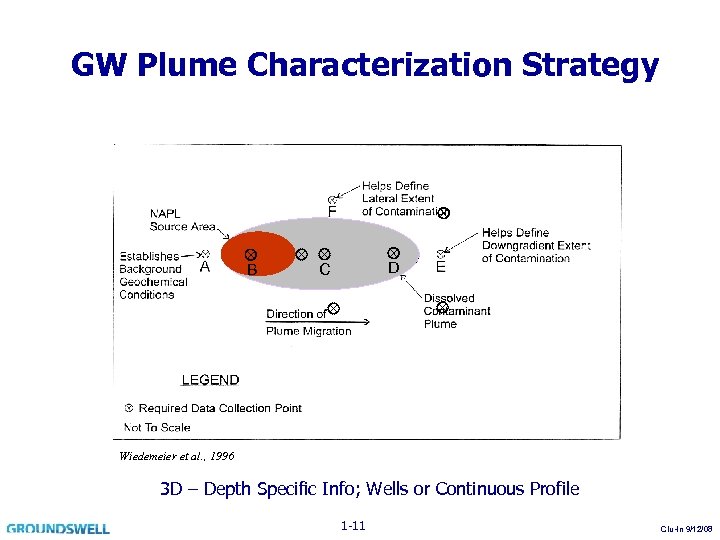
GW Plume Characterization Strategy B D C Wiedemeier et al. , 1996 3 D – Depth Specific Info; Wells or Continuous Profile 1 -11 Clu-In 9/12/08
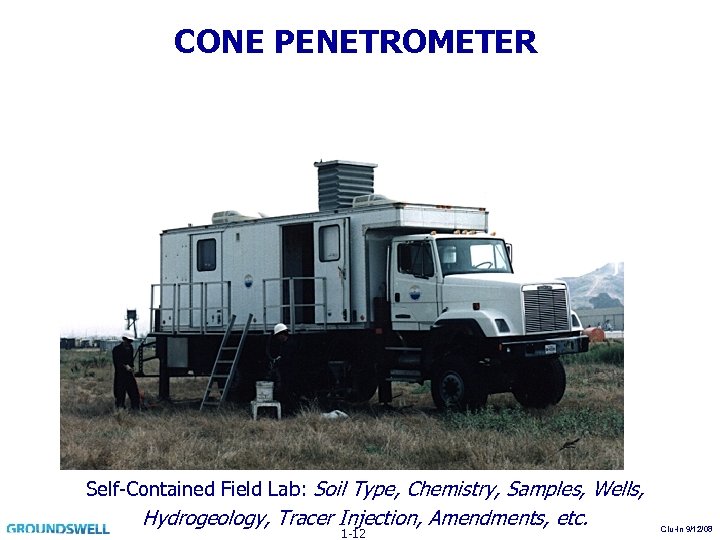
CONE PENETROMETER Self-Contained Field Lab: Soil Type, Chemistry, Samples, Wells, Hydrogeology, Tracer Injection, Amendments, etc. 1 -12 Clu-In 9/12/08
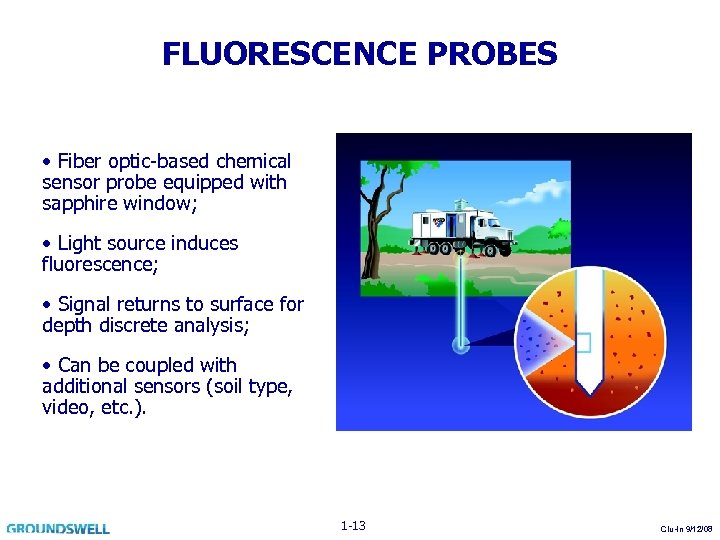
FLUORESCENCE PROBES • Fiber optic-based chemical sensor probe equipped with sapphire window; • Light source induces fluorescence; • Signal returns to surface for depth discrete analysis; • Can be coupled with additional sensors (soil type, video, etc. ). 1 -13 Clu-In 9/12/08
1 -14 Clu-In 9/12/08
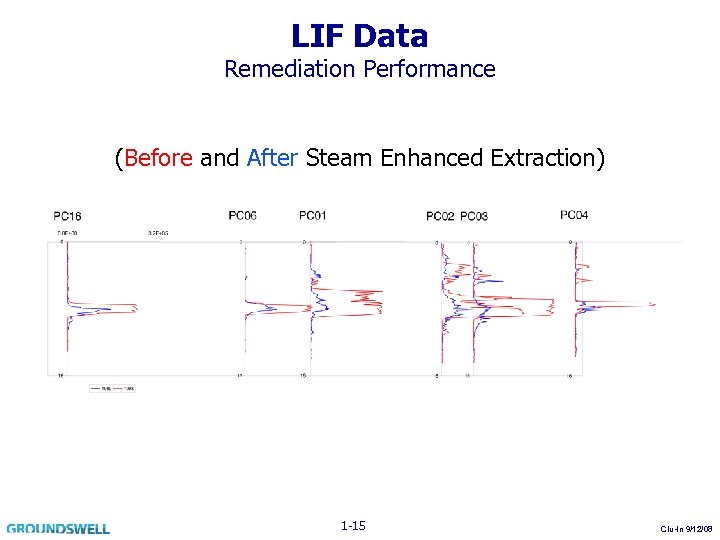
LIF Data Remediation Performance (Before and After Steam Enhanced Extraction) 1 -15 Clu-In 9/12/08
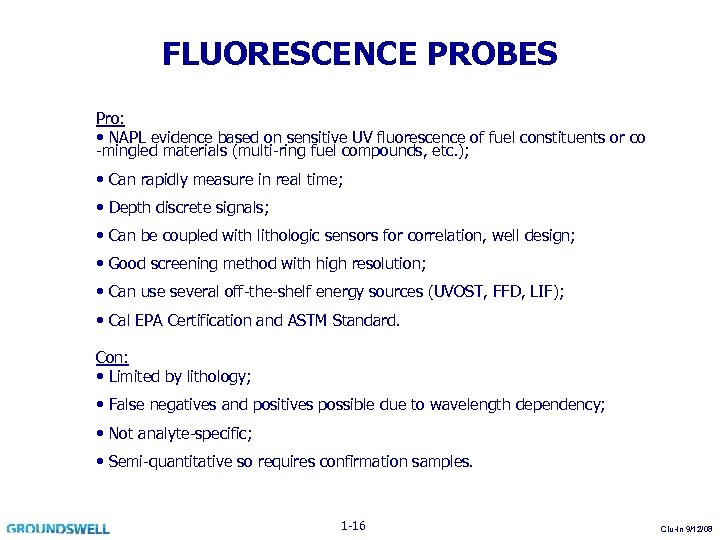
FLUORESCENCE PROBES Pro: • NAPL evidence based on sensitive UV fluorescence of fuel constituents or co -mingled materials (multi-ring fuel compounds, etc. ); • Can rapidly measure in real time; • Depth discrete signals; • Can be coupled with lithologic sensors for correlation, well design; • Good screening method with high resolution; • Can use several off-the-shelf energy sources (UVOST, FFD, LIF); • Cal EPA Certification and ASTM Standard. Con: • Limited by lithology; • False negatives and positives possible due to wavelength dependency; • Not analyte-specific; • Semi-quantitative so requires confirmation samples. 1 -16 Clu-In 9/12/08
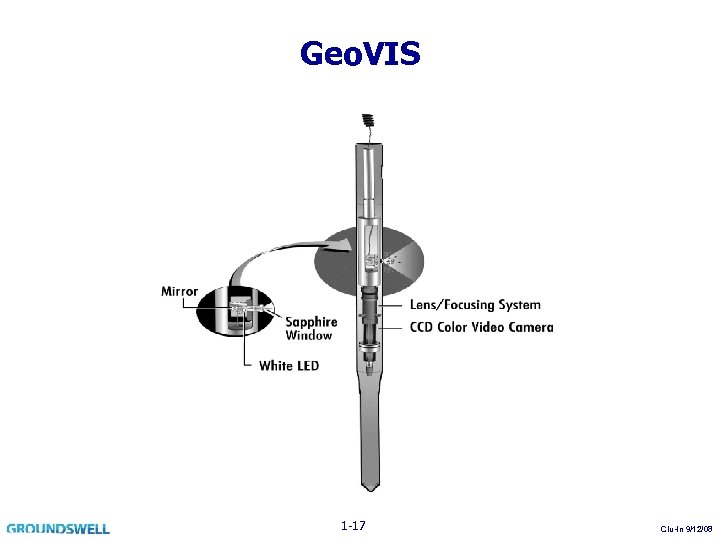
Geo. VIS 1 -17 Clu-In 9/12/08
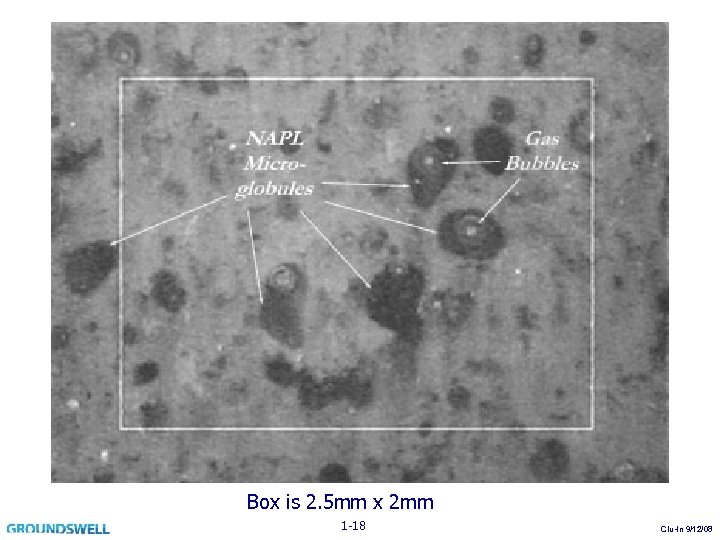
Box is 2. 5 mm x 2 mm 1 -18 Clu-In 9/12/08
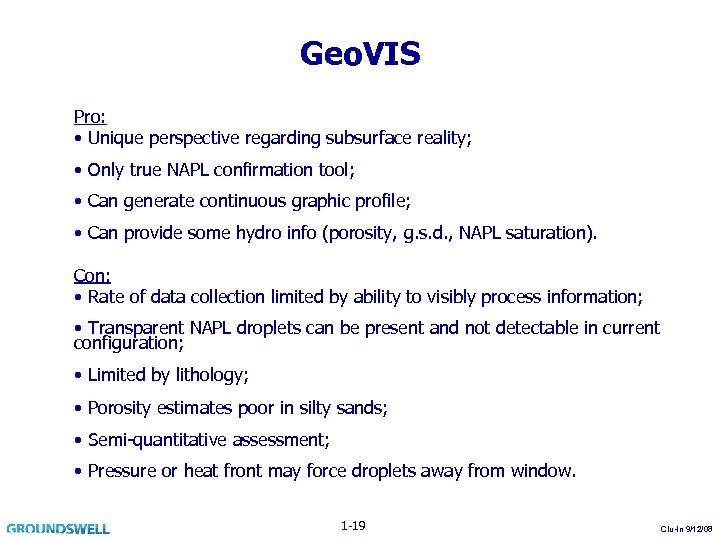
Geo. VIS Pro: • Unique perspective regarding subsurface reality; • Only true NAPL confirmation tool; • Can generate continuous graphic profile; • Can provide some hydro info (porosity, g. s. d. , NAPL saturation). Con: • Rate of data collection limited by ability to visibly process information; • Transparent NAPL droplets can be present and not detectable in current configuration; • Limited by lithology; • Porosity estimates poor in silty sands; • Semi-quantitative assessment; • Pressure or heat front may force droplets away from window. 1 -19 Clu-In 9/12/08
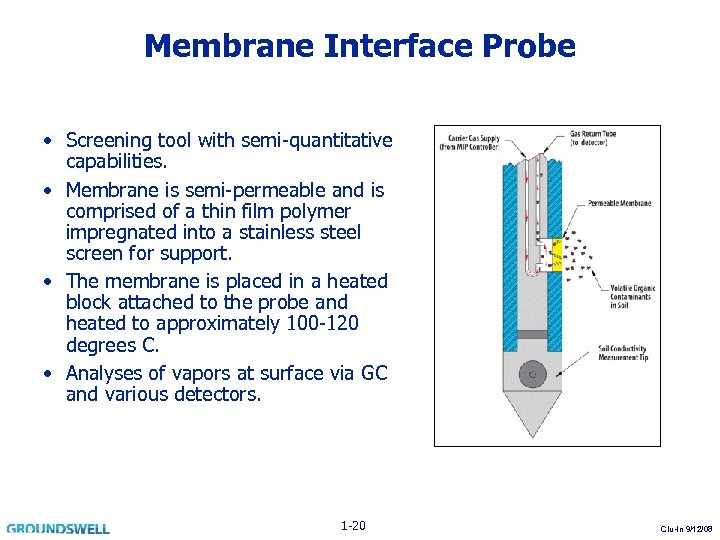
Membrane Interface Probe • Screening tool with semi-quantitative capabilities. • Membrane is semi-permeable and is comprised of a thin film polymer impregnated into a stainless steel screen for support. • The membrane is placed in a heated block attached to the probe and heated to approximately 100 -120 degrees C. • Analyses of vapors at surface via GC and various detectors. 1 -20 Clu-In 9/12/08
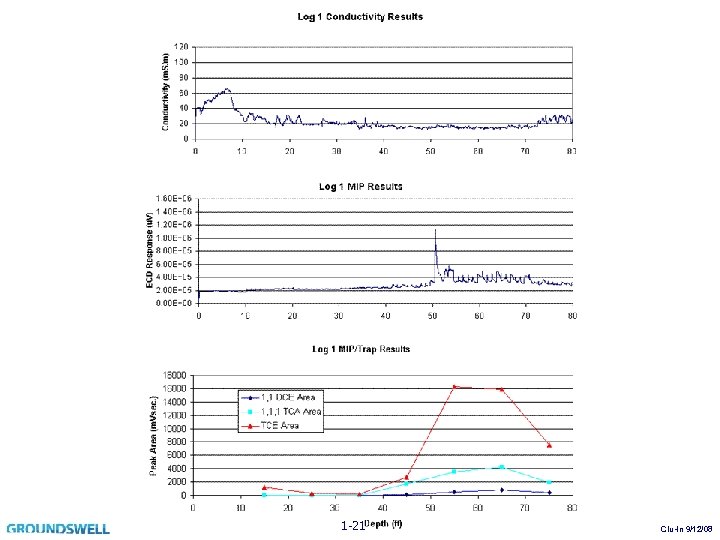
1 -21 Clu-In 9/12/08
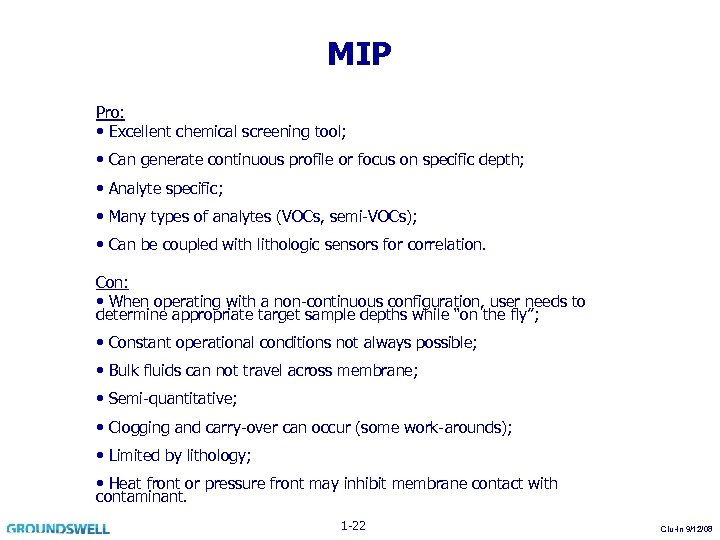
MIP Pro: • Excellent chemical screening tool; • Can generate continuous profile or focus on specific depth; • Analyte specific; • Many types of analytes (VOCs, semi-VOCs); • Can be coupled with lithologic sensors for correlation. Con: • When operating with a non-continuous configuration, user needs to determine appropriate target sample depths while “on the fly”; • Constant operational conditions not always possible; • Bulk fluids can not travel across membrane; • Semi-quantitative; • Clogging and carry-over can occur (some work-arounds); • Limited by lithology; • Heat front or pressure front may inhibit membrane contact with contaminant. 1 -22 Clu-In 9/12/08
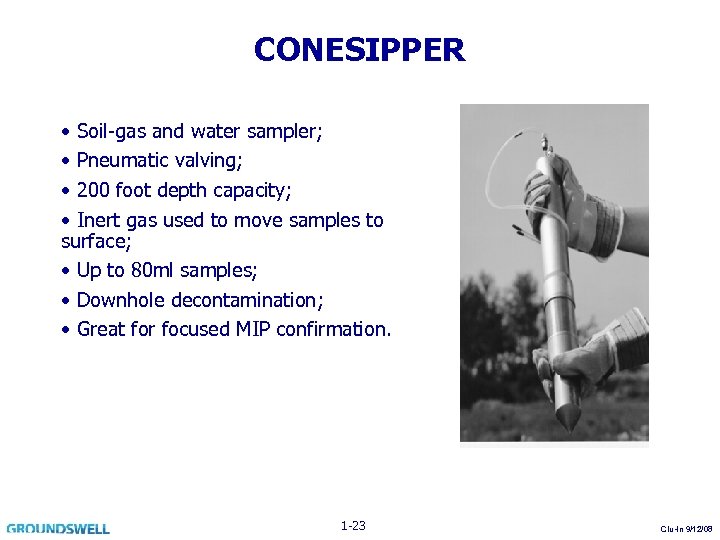
CONESIPPER • Soil-gas and water sampler; • Pneumatic valving; • 200 foot depth capacity; • Inert gas used to move samples to surface; • Up to 80 ml samples; • Downhole decontamination; • Great for focused MIP confirmation. 1 -23 Clu-In 9/12/08
CONESIPPER Pro: • Depth discrete samples • Vapor and liquid samples • Can be coupled with rapid analyses (min. holding time concern) • Excellent confirmation for MIP, UV Fluorescence, etc. Con: • Decontamination concerns • Single depth sample per push (not continuous) • Not typically coupled with sensors (exceptions) • Clogging can occur • Limited by lithology (fines can be difficult) • Pressure or heat front may cause displacement 1 -24 Clu-In 9/12/08
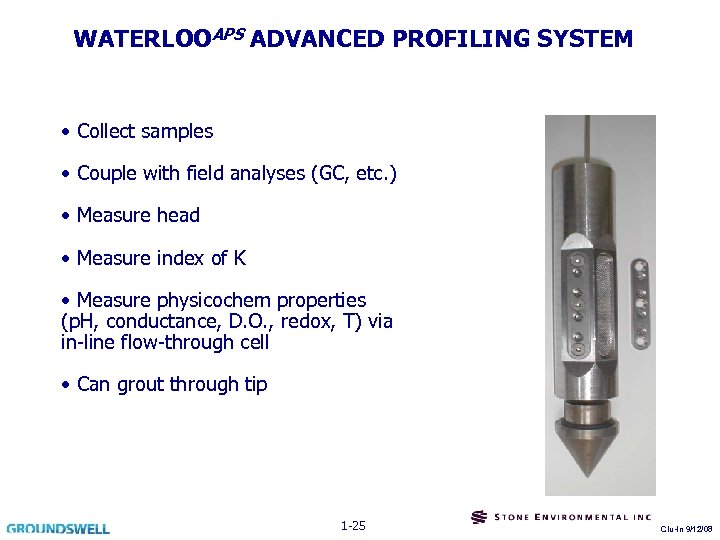
WATERLOOAPS ADVANCED PROFILING SYSTEM • Collect samples • Couple with field analyses (GC, etc. ) • Measure head • Measure index of K • Measure physicochem properties (p. H, conductance, D. O. , redox, T) via in-line flow-through cell • Can grout through tip 1 -25 Clu-In 9/12/08
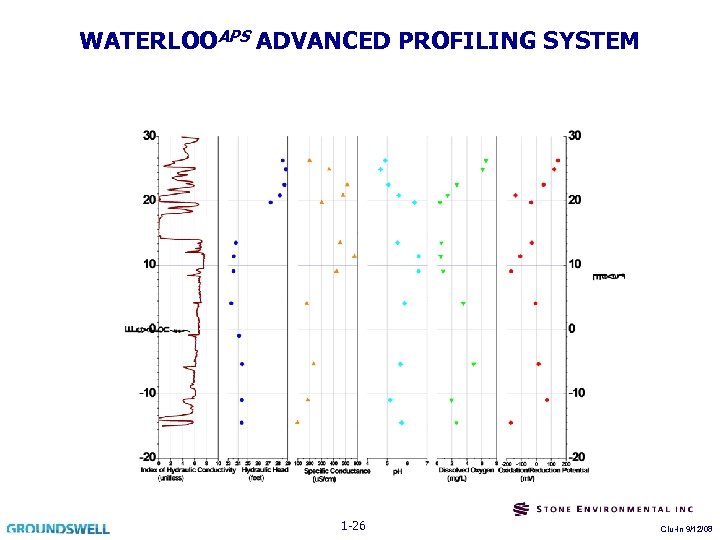
WATERLOOAPS ADVANCED PROFILING SYSTEM 1 -26 Clu-In 9/12/08
WATERLOOAPS ADVANCED PROFILING SYSTEM Pro: • Depth discrete samples • Vapor and liquid samples • Can be coupled with rapid analyses (min. holding time concern) • Hydro info (head, relative K) • Excellent confirmation and CSM tool Con: • Limited by lithology • K values not quantified, so limited modeling capabilities • Pressure or heat front may cause displacement 1 -27 Clu-In 9/12/08
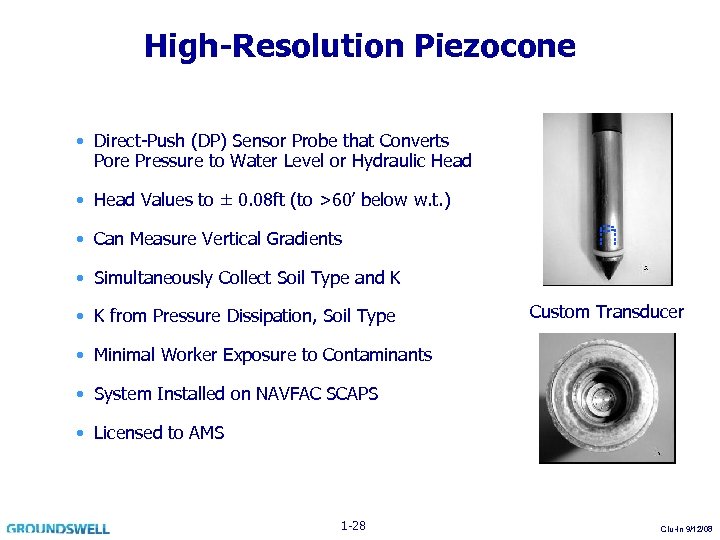
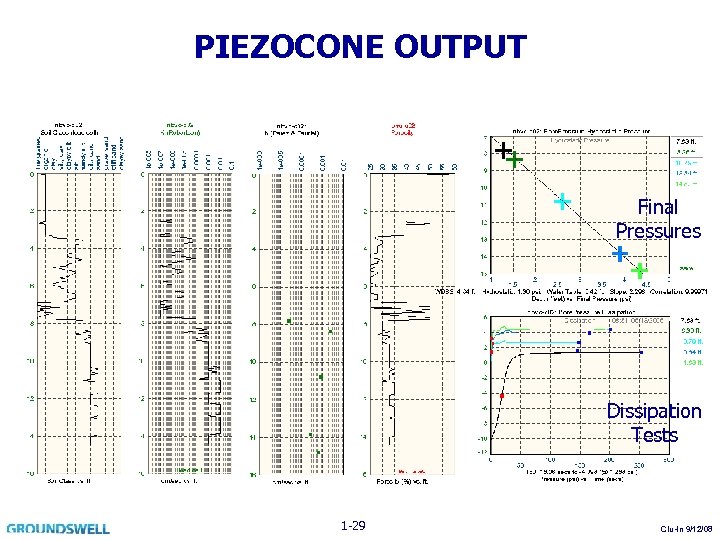
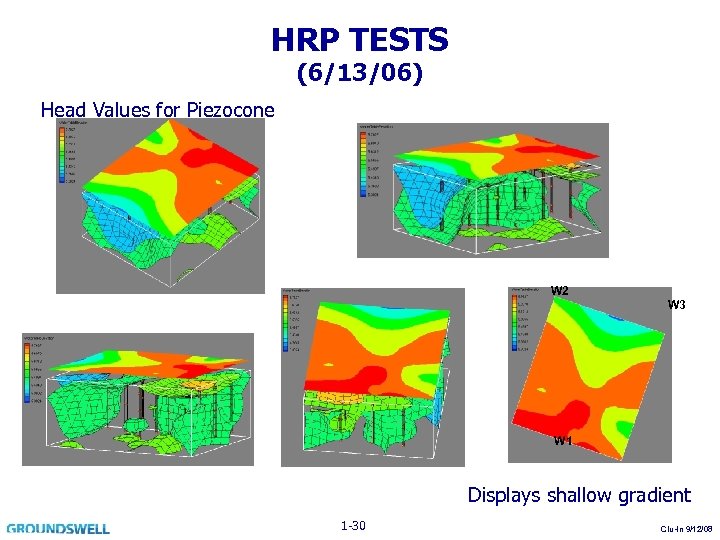
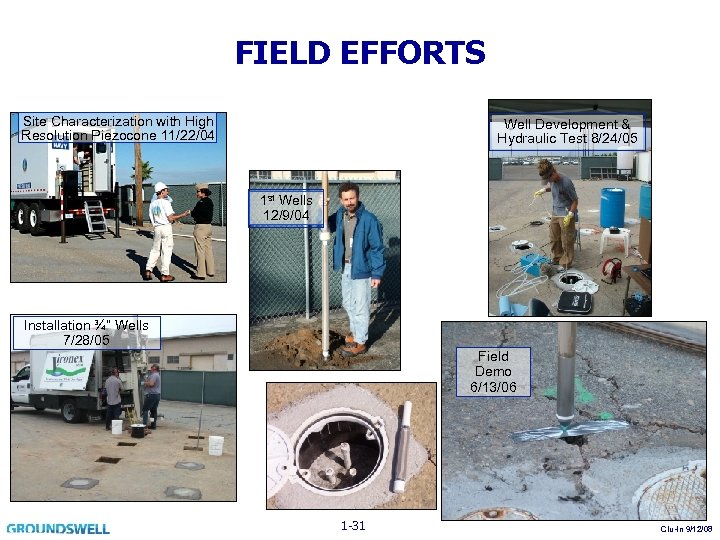
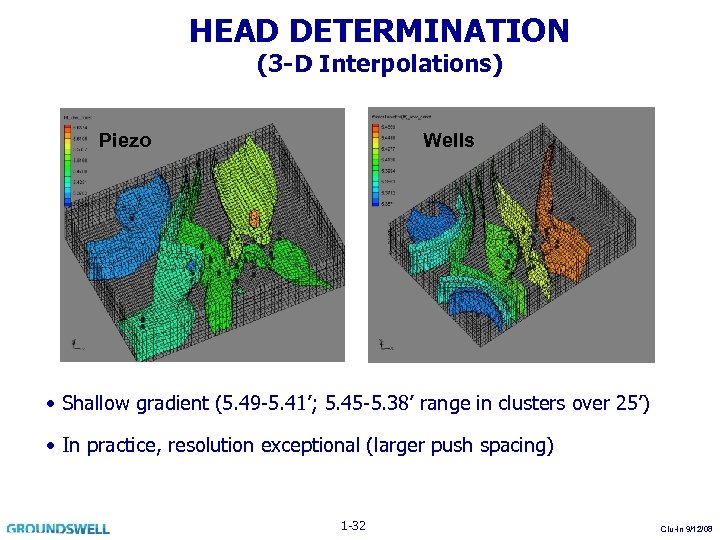
High-Resolution Piezocone • Direct-Push (DP) Sensor Probe that Converts Pore Pressure to Water Level or Hydraulic Head • Head Values to ± 0. 08 ft (to >60’ below w. t. ) • Can Measure Vertical Gradients • Simultaneously Collect Soil Type and K • K from Pressure Dissipation, Soil Type Custom Transducer • Minimal Worker Exposure to Contaminants • System Installed on NAVFAC SCAPS • Licensed to AMS 1 -28 Clu-In 9/12/08
PIEZOCONE OUTPUT Final Pressures Dissipation Tests 1 -29 Clu-In 9/12/08
HRP TESTS (6/13/06) Head Values for Piezocone W 2 W 3 W 1 Displays shallow gradient 1 -30 Clu-In 9/12/08
FIELD EFFORTS Site Characterization with High Resolution Piezocone 11/22/04 Well Development & Hydraulic Test 8/24/05 1 st Wells 12/9/04 Installation ¾” Wells 7/28/05 Field Demo 6/13/06 1 -31 Clu-In 9/12/08
HEAD DETERMINATION (3 -D Interpolations) Piezo Wells • Shallow gradient (5. 49 -5. 41’; 5. 45 -5. 38’ range in clusters over 25’) • In practice, resolution exceptional (larger push spacing) 1 -32 Clu-In 9/12/08
GMS MODIFICATIONS Gradient, Velocity and Flux Calculations Ø Convert Scalar Head to Gradient [Key Step!] 1 -33 Clu-In 9/12/08
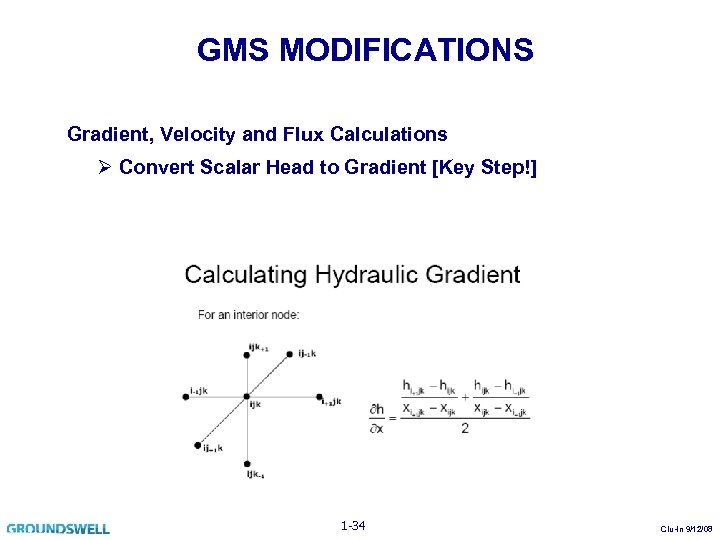
GMS MODIFICATIONS Gradient, Velocity and Flux Calculations Ø Convert Scalar Head to Gradient [Key Step!] 1 -34 Clu-In 9/12/08
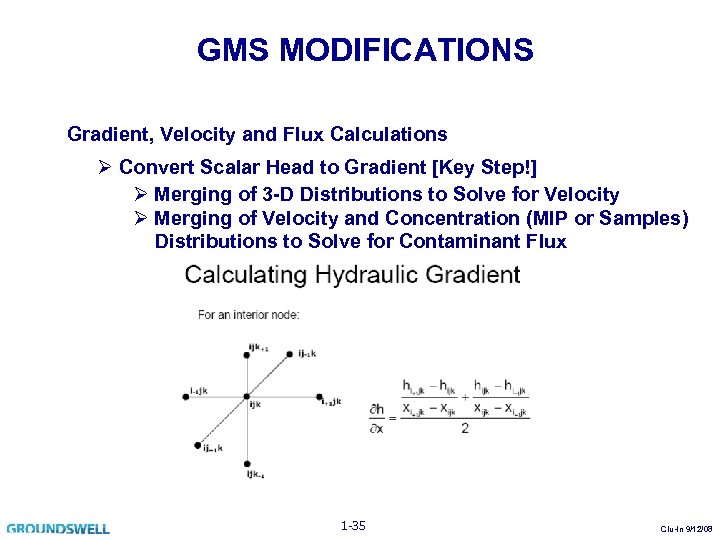
GMS MODIFICATIONS Gradient, Velocity and Flux Calculations Ø Convert Scalar Head to Gradient [Key Step!] Ø Merging of 3 -D Distributions to Solve for Velocity Ø Merging of Velocity and Concentration (MIP or Samples) Distributions to Solve for Contaminant Flux 1 -35 Clu-In 9/12/08
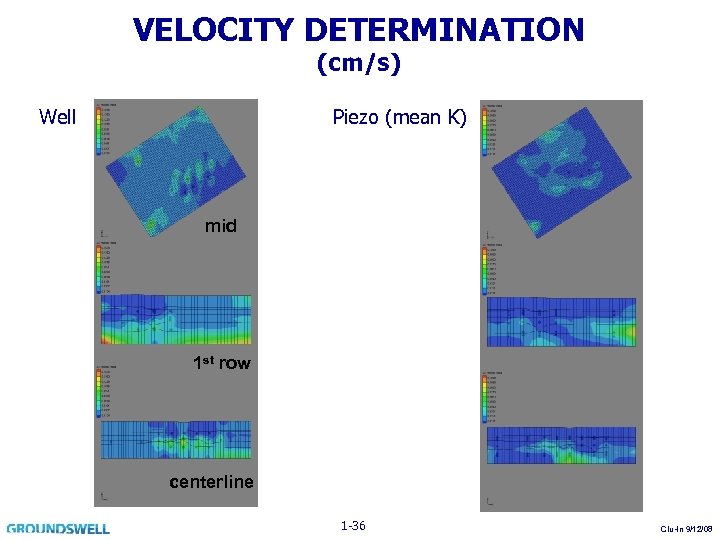
VELOCITY DETERMINATION (cm/s) Well Piezo (mean K) mid 1 st row centerline 1 -36 Clu-In 9/12/08
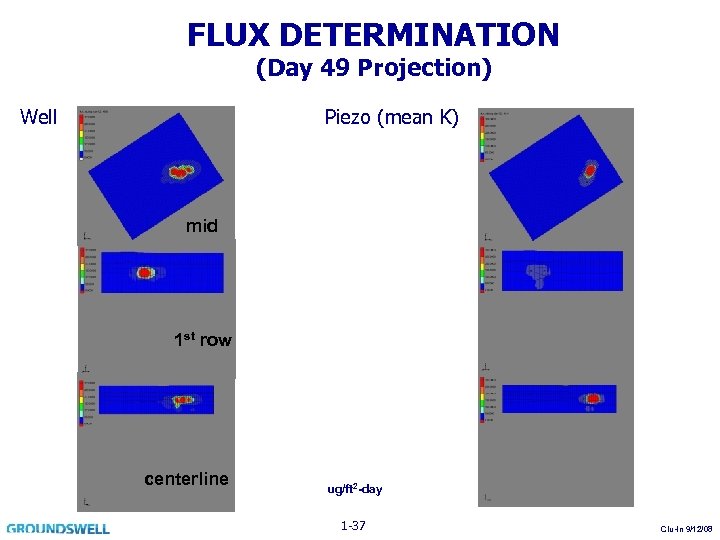
FLUX DETERMINATION (Day 49 Projection) Well Piezo (mean K) mid 1 st row centerline ug/ft 2 -day 1 -37 Clu-In 9/12/08
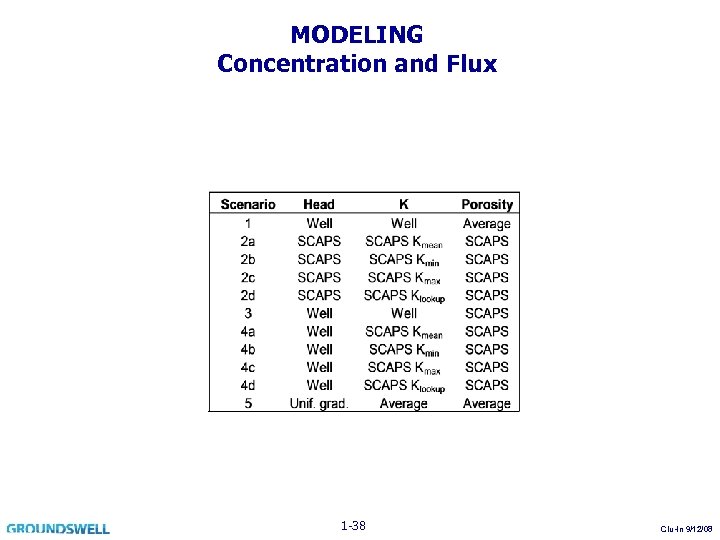
MODELING Concentration and Flux 1 -38 Clu-In 9/12/08
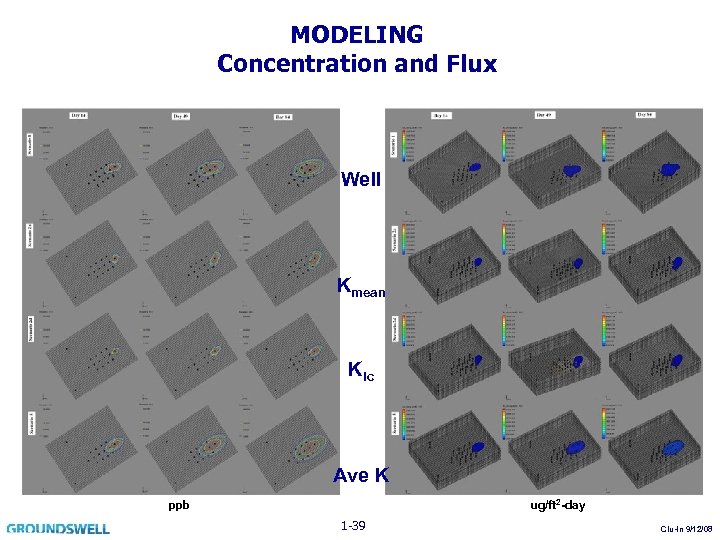
MODELING Concentration and Flux Well Kmean Klc Ave K ppb ug/ft 2 -day 1 -39 Clu-In 9/12/08
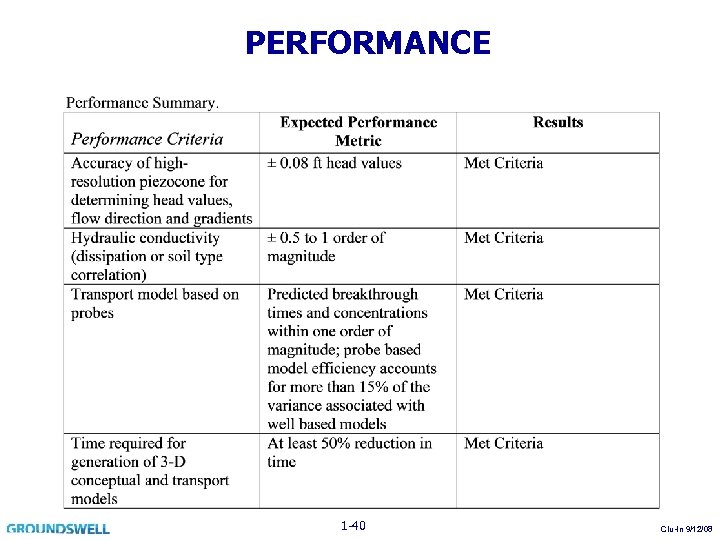
PERFORMANCE 1 -40 Clu-In 9/12/08
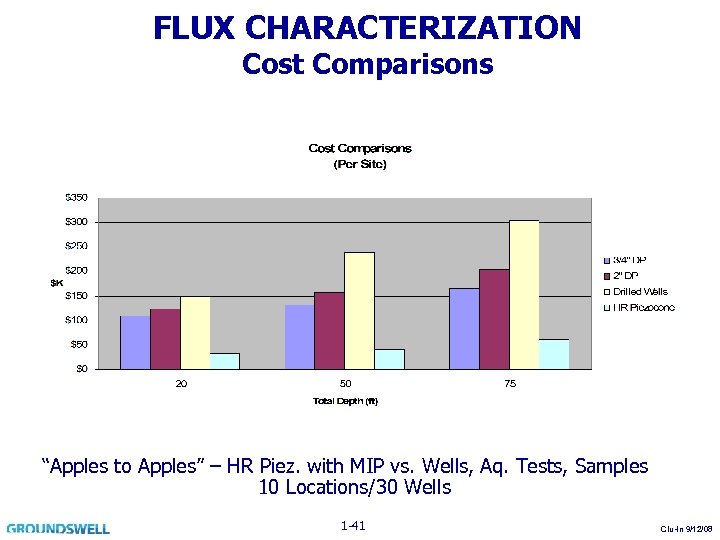
FLUX CHARACTERIZATION Cost Comparisons “Apples to Apples” – HR Piez. with MIP vs. Wells, Aq. Tests, Samples 10 Locations/30 Wells 1 -41 Clu-In 9/12/08
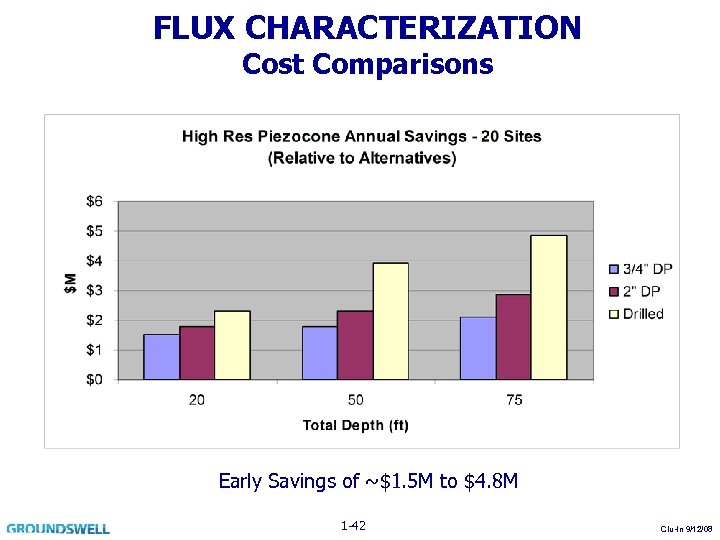
FLUX CHARACTERIZATION Cost Comparisons Early Savings of ~$1. 5 M to $4. 8 M 1 -42 Clu-In 9/12/08
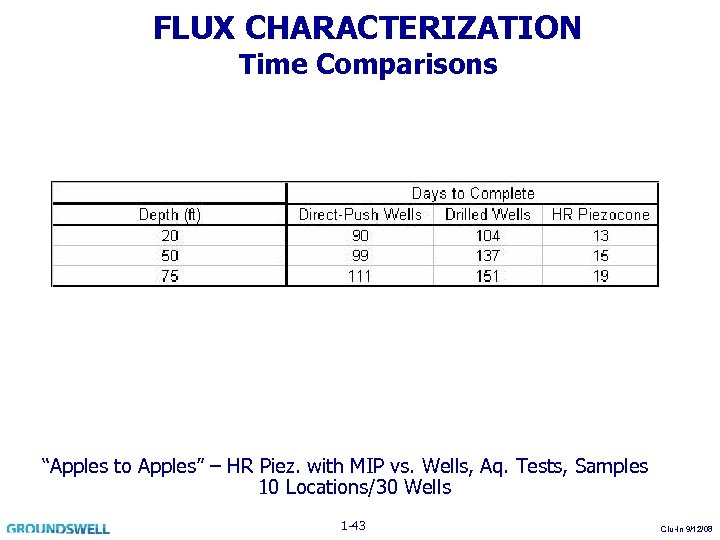
FLUX CHARACTERIZATION Time Comparisons “Apples to Apples” – HR Piez. with MIP vs. Wells, Aq. Tests, Samples 10 Locations/30 Wells 1 -43 Clu-In 9/12/08
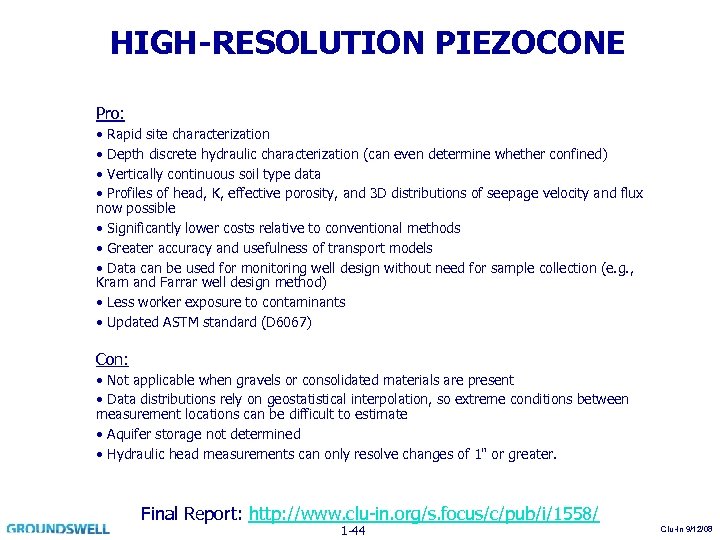
HIGH-RESOLUTION PIEZOCONE Pro: • Rapid site characterization • Depth discrete hydraulic characterization (can even determine whether confined) • Vertically continuous soil type data • Profiles of head, K, effective porosity, and 3 D distributions of seepage velocity and flux now possible • Significantly lower costs relative to conventional methods • Greater accuracy and usefulness of transport models • Data can be used for monitoring well design without need for sample collection (e. g. , Kram and Farrar well design method) • Less worker exposure to contaminants • Updated ASTM standard (D 6067) Con: • Not applicable when gravels or consolidated materials are present • Data distributions rely on geostatistical interpolation, so extreme conditions between measurement locations can be difficult to estimate • Aquifer storage not determined • Hydraulic head measurements can only resolve changes of 1" or greater. Final Report: http: //www. clu-in. org/s. focus/c/pub/i/1558/ 1 -44 Clu-In 9/12/08
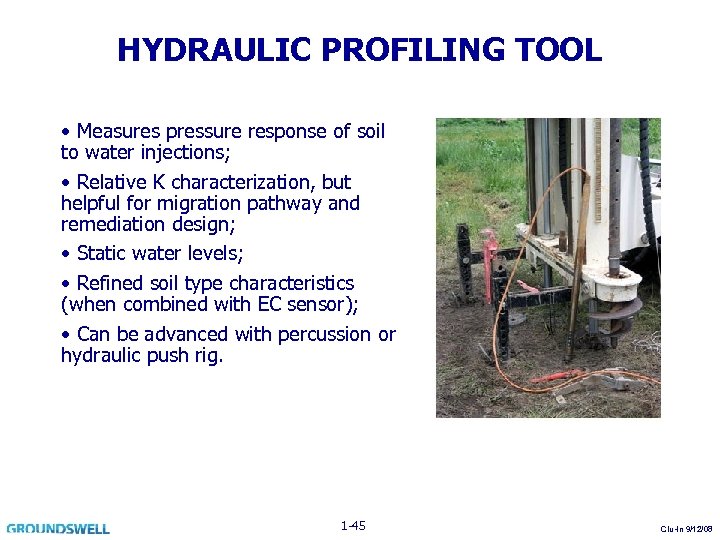
HYDRAULIC PROFILING TOOL • Measures pressure response of soil to water injections; • Relative K characterization, but helpful for migration pathway and remediation design; • Static water levels; • Refined soil type characteristics (when combined with EC sensor); • Can be advanced with percussion or hydraulic push rig. 1 -45 Clu-In 9/12/08
HYDRAULIC PROFILING TOOL Pro: • Continuous profiling; • Useful for remediation design; • Can be combined with soil type (EC) indicators; • Excellent conceptual modeling tool. Con: • K values not quantified, so limited modeling capabilities; • Theory behind K derivations may require additional lab effort (but would potentially lead to quantification); • EC soil type not as resolved in silty sand to sand. 1 -46 Clu-In 9/12/08
LTM NETWORK DESIGN CONSIDERATIONS Well Design ASTM CPT Based (Kram and Farrar) Well Placement 2 D vs. 3 D (long vs. short screens) 3 D Spacing Well Installation Prepack Options 1 -47 Clu-In 9/12/08
ASTM D 5092 FILTER PACK • Granular material of known chemistry and selected grain size and gradation installed in the annulus between screen and borehole wall; • Filter pack grain size and gradation selected to allow only the finest materials to enter screen during development (well conditioning); – 30% finer (d-30) grain size that is 4 to 10 times greater than d-30 of screened unit; – Slot size to retain 90 -99% of filter pack. 1 -48 Clu-In 9/12/08
ASTM D 5092 FILTER PACK • Granular material of known chemistry and selected grain size and gradation installed in the annulus between screen and borehole wall; • Filter pack grain size and gradation selected to allow only the finest materials to enter screen during development (well conditioning); – 30% finer (d-30) grain size that is 4 to 10 times greater than d-30 of screened unit; – Slot size to retain 90 -99% of filter pack. Formation G. S. Filter Pack Design Slot Size Selection 1 -49 Clu-In 9/12/08
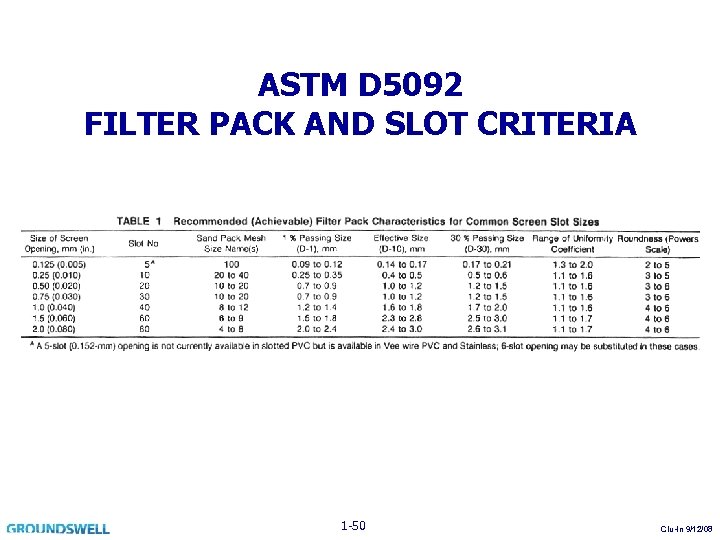
ASTM D 5092 FILTER PACK AND SLOT CRITERIA 1 -50 Clu-In 9/12/08
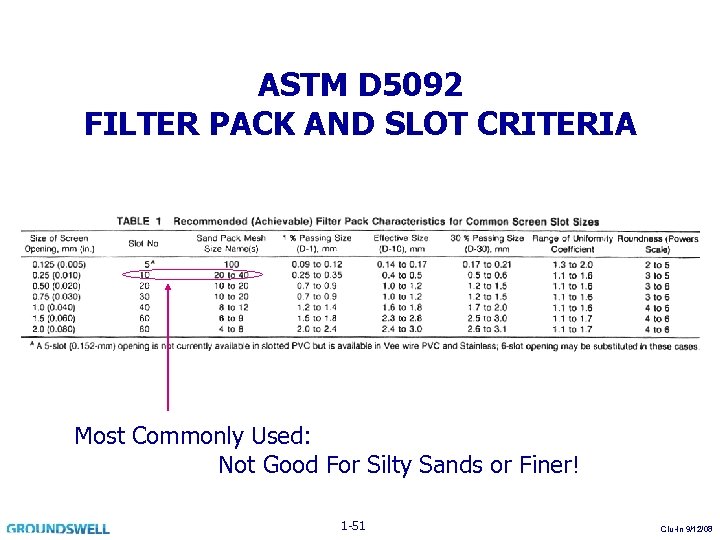
ASTM D 5092 FILTER PACK AND SLOT CRITERIA Most Commonly Used: Not Good For Silty Sands or Finer! 1 -51 Clu-In 9/12/08
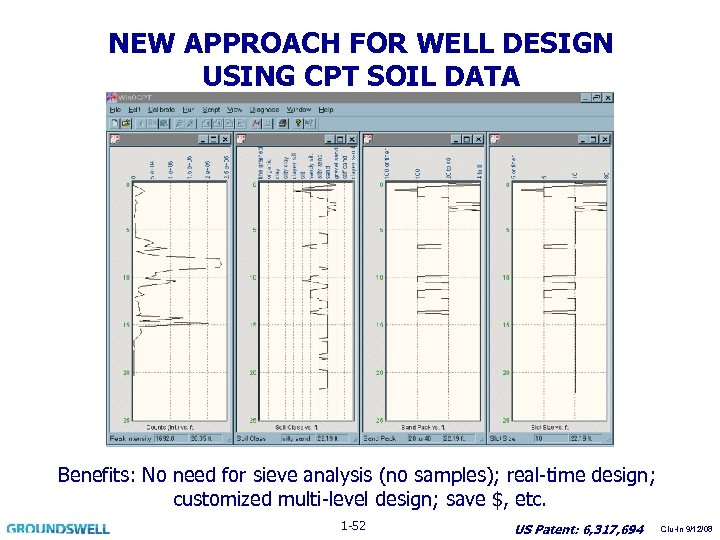
NEW APPROACH FOR WELL DESIGN USING CPT SOIL DATA Benefits: No need for sieve analysis (no samples); real-time design; customized multi-level design; save $, etc. 1 -52 US Patent: 6, 317, 694 Clu-In 9/12/08
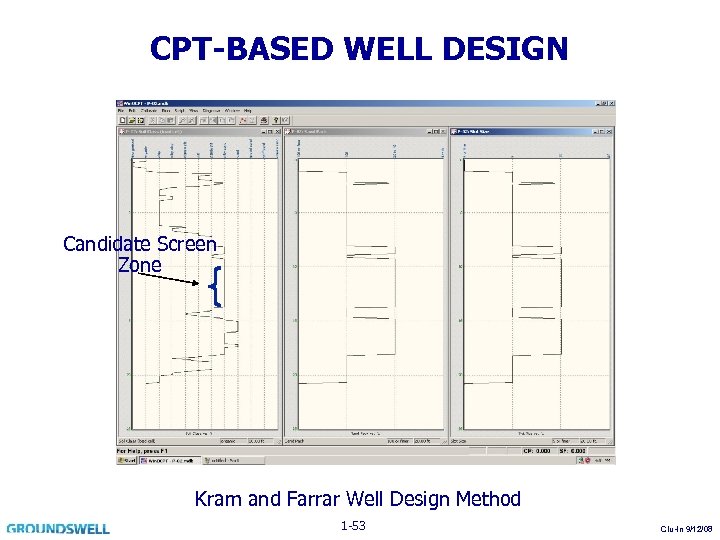
CPT-BASED WELL DESIGN Candidate Screen Zone Kram and Farrar Well Design Method 1 -53 Clu-In 9/12/08
CONTAMINANT FLUX MONITORING STEPS (Remediation Design/Effectiveness) • Generate Initial Model (Seepage Velocity, Concentration Distributions) – Conventional Approaches – High Resolution Piezocone/MIP/Confirmation • • Install Customized 3 D Monitoring Well Network Monitor Water Level and Concentrations (Dynamic) Track Flux Distributions (3 D, Transects) Evaluate Remediation Effectiveness – Plume Status (Stable, Contraction, etc. ) – Remediation Metric – Regulatory Metric? 1 -54 Clu-In 9/12/08
GREGG’S PORTION Sensor Technologies Desktop Monitoring Hydraulic Parameters Analytes (Today and in Near Future) Components of a Wireless Telemetry System Automated Monitoring 1 -55 Clu-In 9/12/08
Long-Term Monitoring Bringing Environmental Data to Your Desktop Presented by Gregg Gustafson Instrumentation NW 2 -1
Introduction • Long Term Monitoring Systems – Sensors – Wireless – Software 2 -2
Overview & Background Sensors vs Sampling 2 -3
2 -4
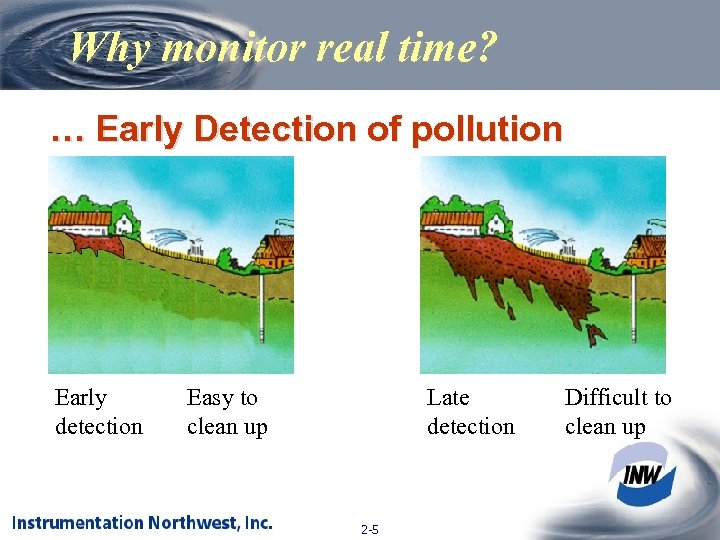
Why monitor real time? … Early Detection of pollution Early detection Easy to clean up Late detection 2 -5 Difficult to clean up
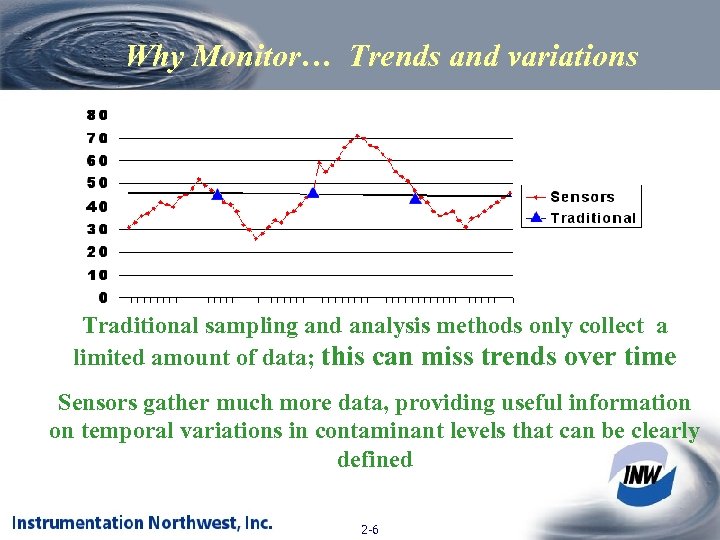
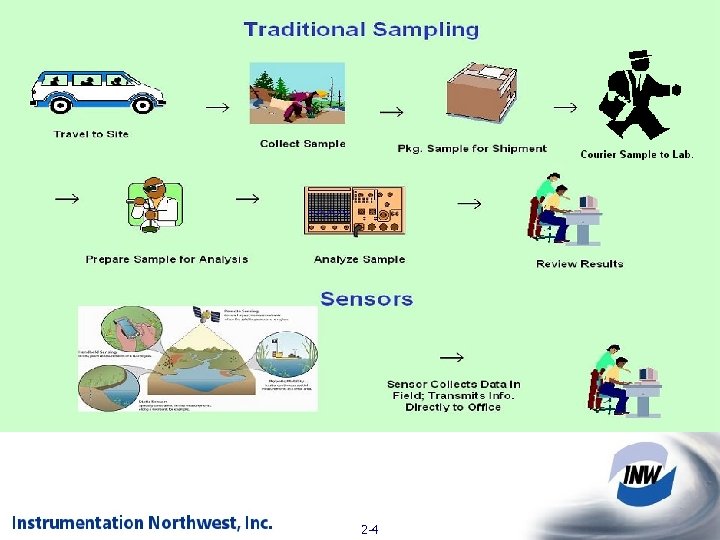
Why Monitor… Trends and variations Traditional sampling and analysis methods only collect a limited amount of data; this can miss trends over time Sensors gather much more data, providing useful information on temporal variations in contaminant levels that can be clearly defined 2 -6
Why Monitor… Remediation Performance Monitoring – Automatically track dynamic parameters via sensors – Water level – Concentration – Etc. – Route sensor data via software – expedited processing – Visualization – Reporting – More data points than quarterly sampling – Better understanding for remediation evaluation – Monitor specifically for – “Lines of evidence” – Plume status 2 -7
Today… • Decision makers need – More data – From more locations – More frequently – Consistent with Triad Principles 2 -8
Benefits Technical – Provides real time data on demand – Assures accurate coordinated data across entire sites – Enables monitoring of relatively inaccessible locations – Improves safety – less need to enter hazardous areas – Lower carbon footprint! 2 -9
Benefits Economic – Reduces expensive trips to each location – Allows better focusing of staff – Maximizes early detection of problems • • • Less cleanup cost Less environmental damage Less downtime – Better information = better decisions 2 -10
Are Sensors Suitable for Long Term Monitoring? …YES! – Useful parameters • Can sensors measure what is needed? – Quality measurements • Can sensors provide data that is accurate, stable, and traceable? – Ruggedness • Are today’s sensors rugged enough for harsh environments and rough handling? – Connectivity • Easy to connect to the computer world? 2 -11
Components of a Monitoring System 2 -12
Sensors 2 -13
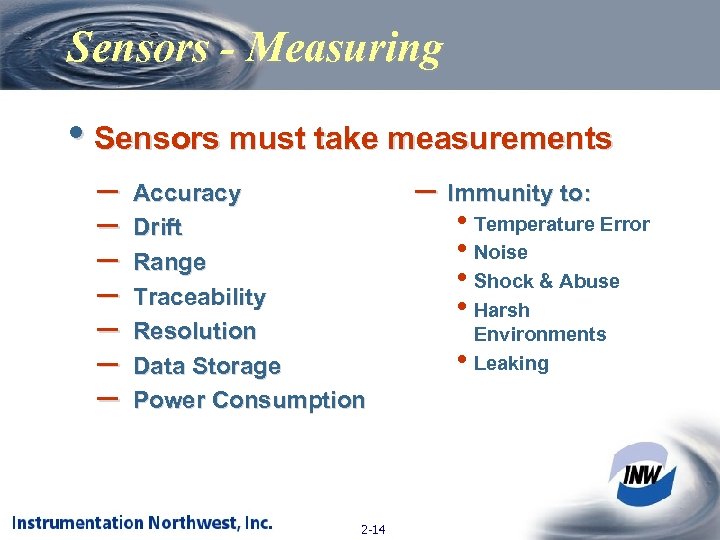
Sensors - Measuring • Sensors must take measurements – – – – Accuracy Drift Range Traceability Resolution Data Storage Power Consumption 2 -14 – Immunity to: • Temperature Error • Noise • Shock & Abuse • Harsh • Environments Leaking
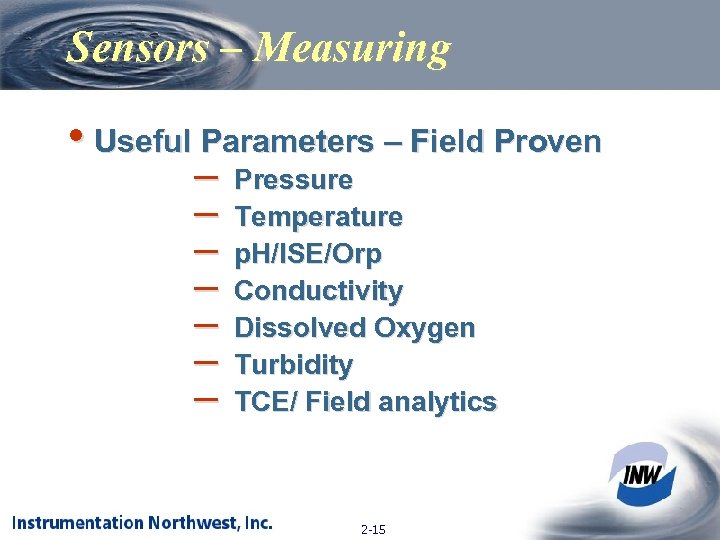
Sensors – Measuring • Useful Parameters – Field Proven – – – – Pressure Temperature p. H/ISE/Orp Conductivity Dissolved Oxygen Turbidity TCE/ Field analytics 2 -15
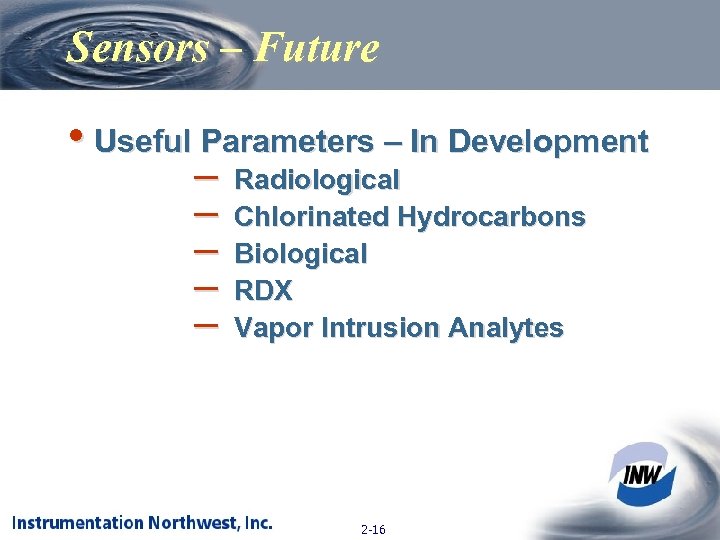
Sensors – Future • Useful Parameters – In Development – – – Radiological Chlorinated Hydrocarbons Biological RDX Vapor Intrusion Analytes 2 -16
Sensors Installation 2 -17
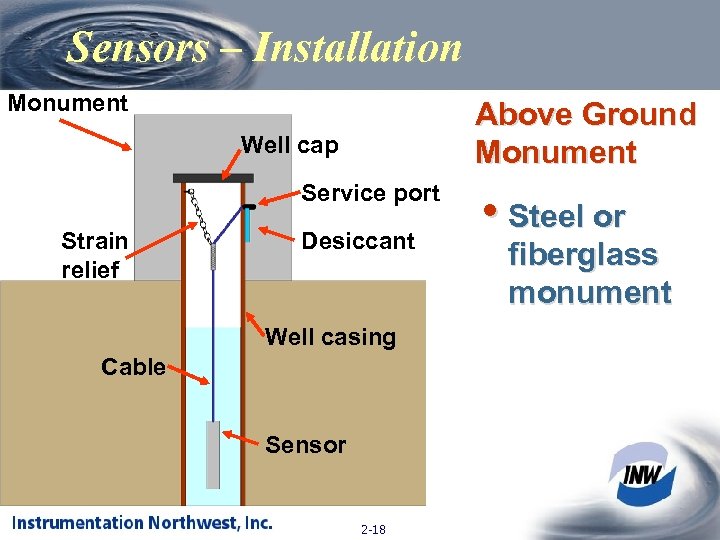
Sensors – Installation Monument Above Ground Monument Well cap Service port Strain relief Desiccant Well casing Cable Sensor 2 -18 • Steel or fiberglass monument
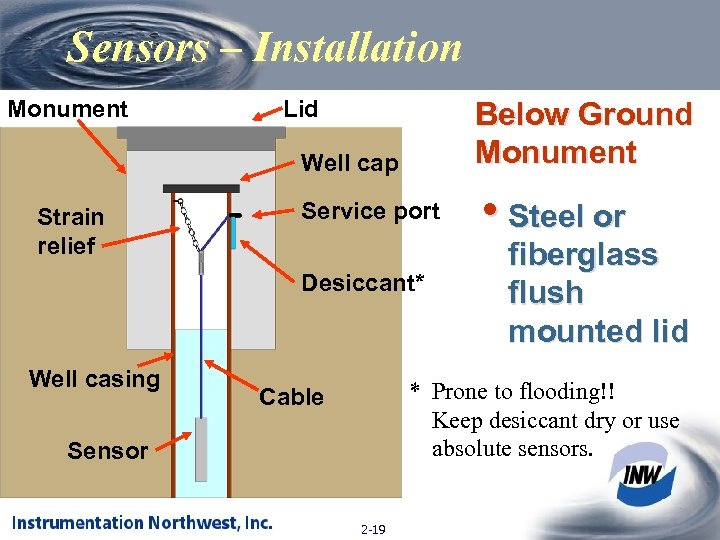
Sensors – Installation Monument Lid Below Ground Monument Well cap Strain relief Service port Desiccant* Well casing • Steel or fiberglass flush mounted lid * Prone to flooding!! Keep desiccant dry or use absolute sensors. Cable Sensor 2 -19
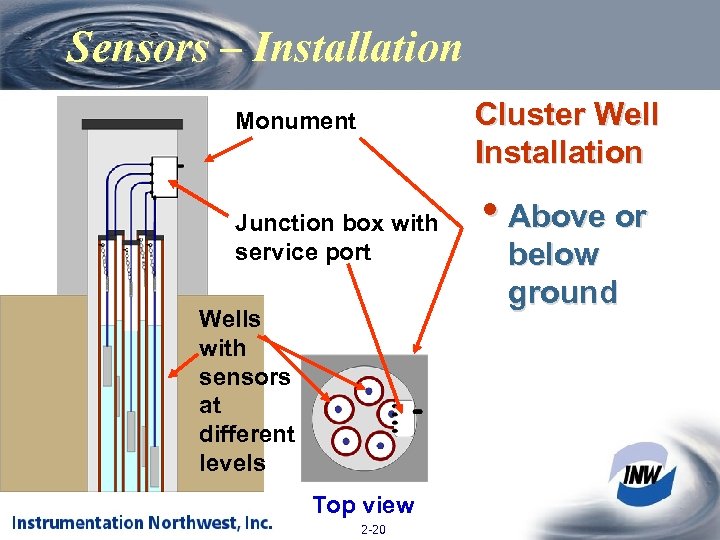
Sensors – Installation Cluster Well Installation Monument Junction box with service port Wells with sensors at different levels Top view 2 -20 • Above or below ground

Telemetry Systems 2 -21
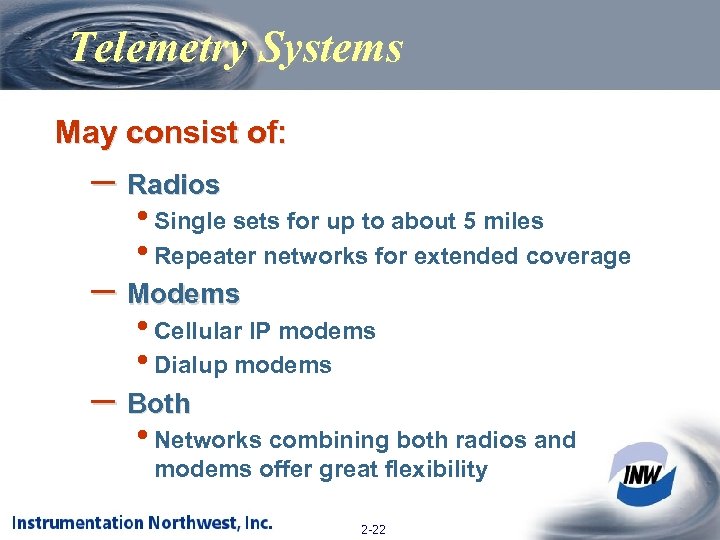
Telemetry Systems May consist of: – Radios • Single sets for up to about 5 miles • Repeater networks for extended coverage – Modems • Cellular IP modems • Dialup modems – Both • Networks combining both radios and modems offer great flexibility 2 -22
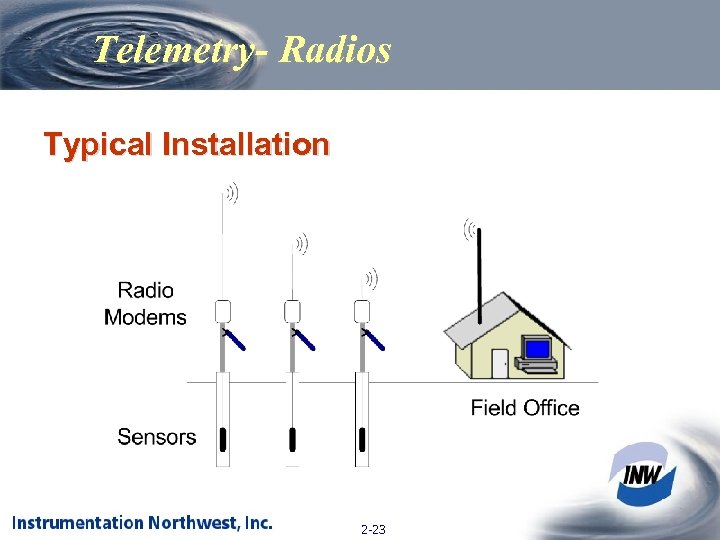
Telemetry- Radios Typical Installation 2 -23
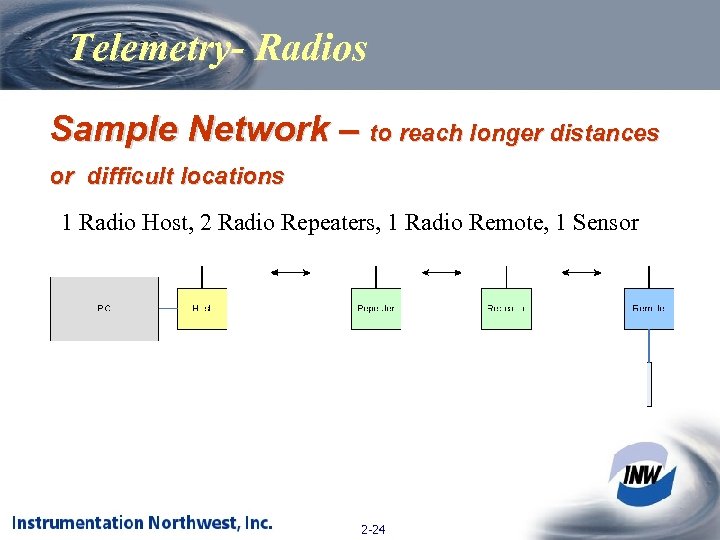
Telemetry- Radios Sample Network – to reach longer distances or difficult locations 1 Radio Host, 2 Radio Repeaters, 1 Radio Remote, 1 Sensor 2 -24
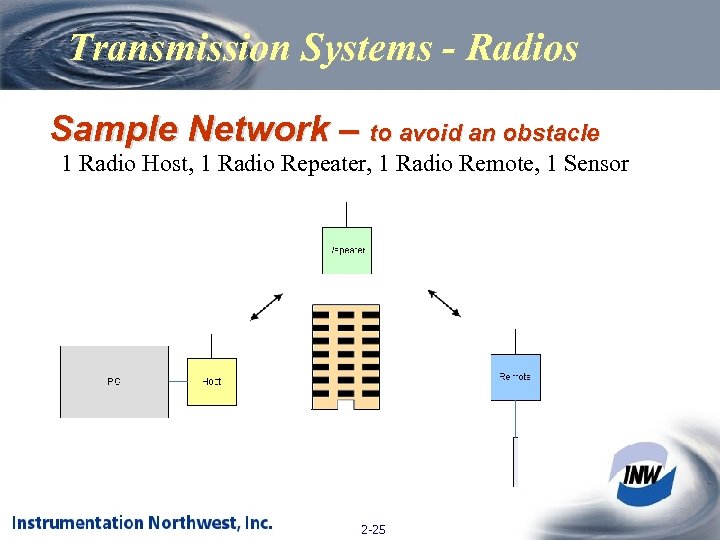
Transmission Systems - Radios Sample Network – to avoid an obstacle 1 Radio Host, 1 Radio Repeater, 1 Radio Remote, 1 Sensor 2 -25
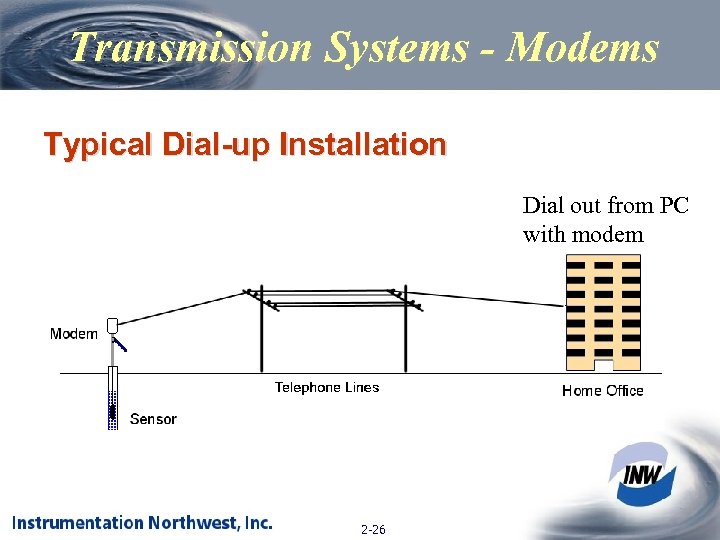
Transmission Systems - Modems Typical Dial-up Installation Dial out from PC with modem 2 -26
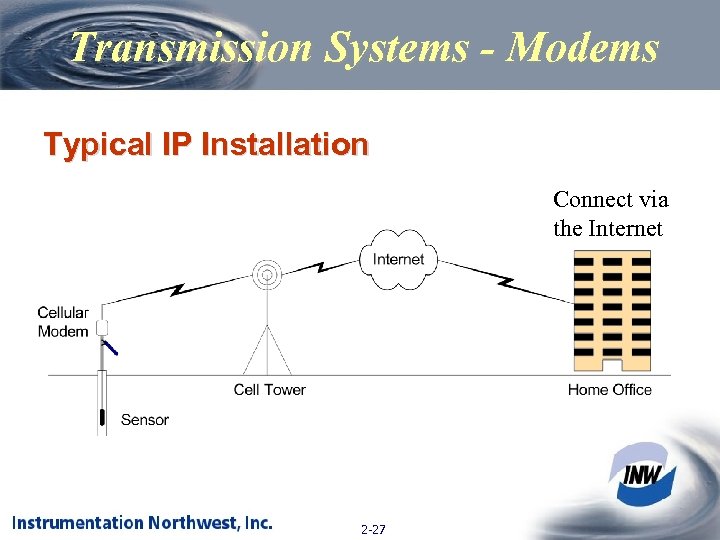
Transmission Systems - Modems Typical IP Installation Connect via the Internet 2 -27
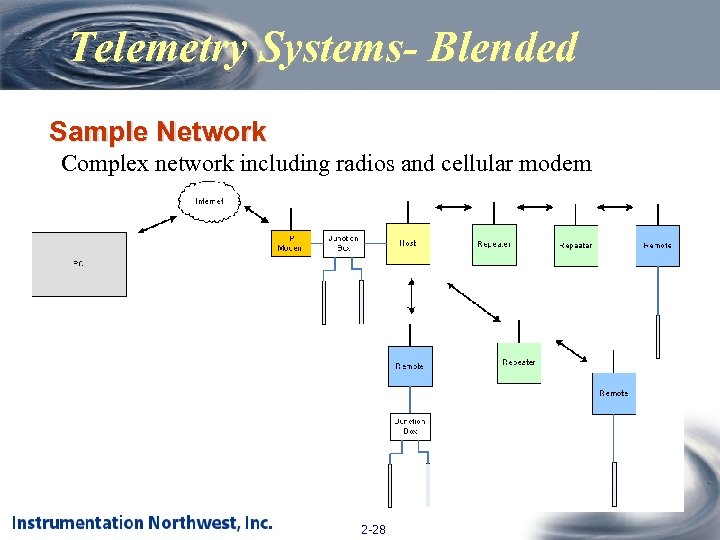
Telemetry Systems- Blended Sample Network Complex network including radios and cellular modem 2 -28
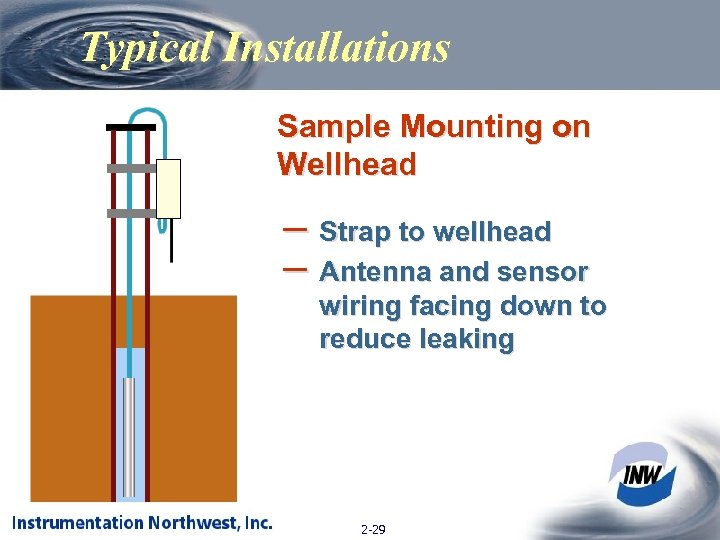
Typical Installations Sample Mounting on Wellhead – Strap to wellhead – Antenna and sensor wiring facing down to reduce leaking 2 -29
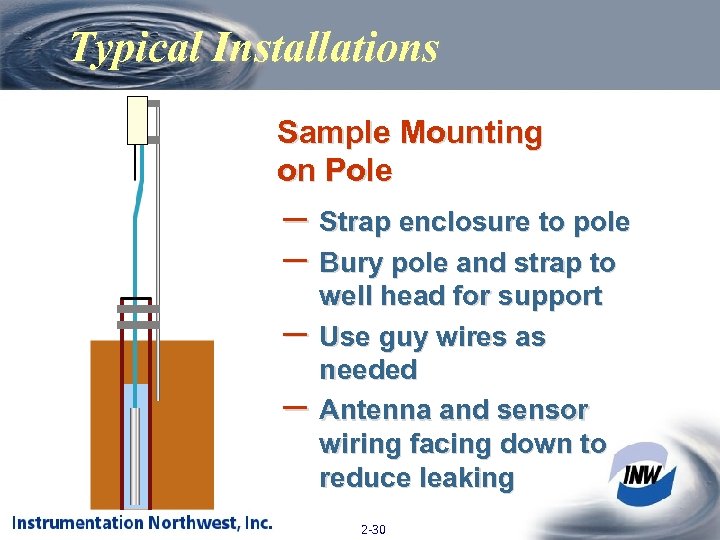
Typical Installations Sample Mounting on Pole – Strap enclosure to pole – Bury pole and strap to – – well head for support Use guy wires as needed Antenna and sensor wiring facing down to reduce leaking 2 -30
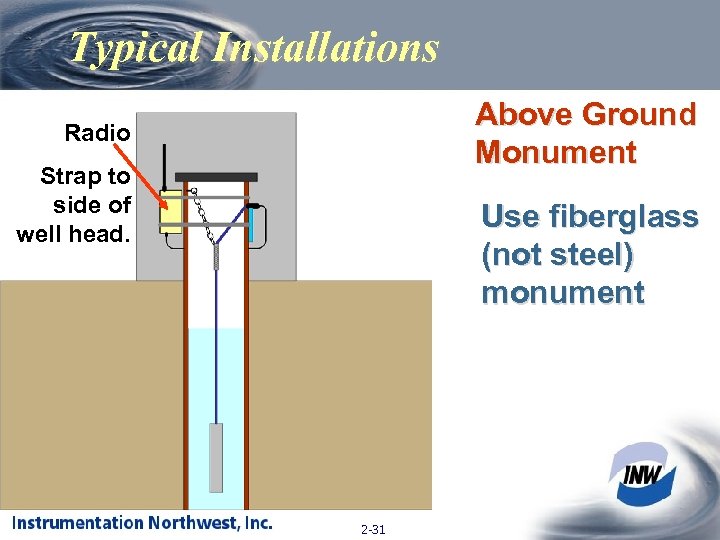
Typical Installations Above Ground Monument Radio Strap to side of well head. Use fiberglass (not steel) monument 2 -31
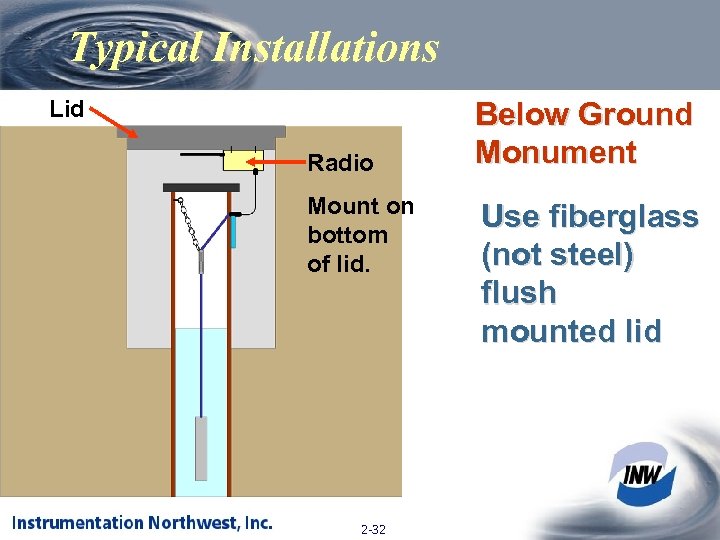
Typical Installations Lid Radio Mount on bottom of lid. 2 -32 Below Ground Monument Use fiberglass (not steel) flush mounted lid
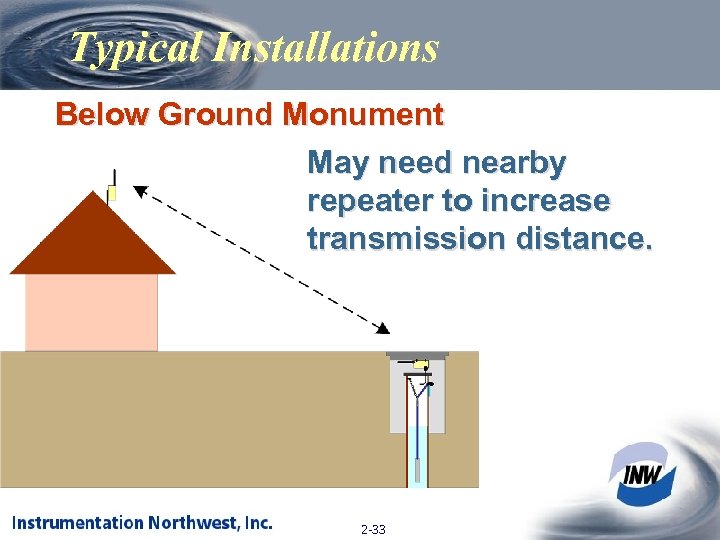
Typical Installations Below Ground Monument May need nearby repeater to increase transmission distance. 2 -33
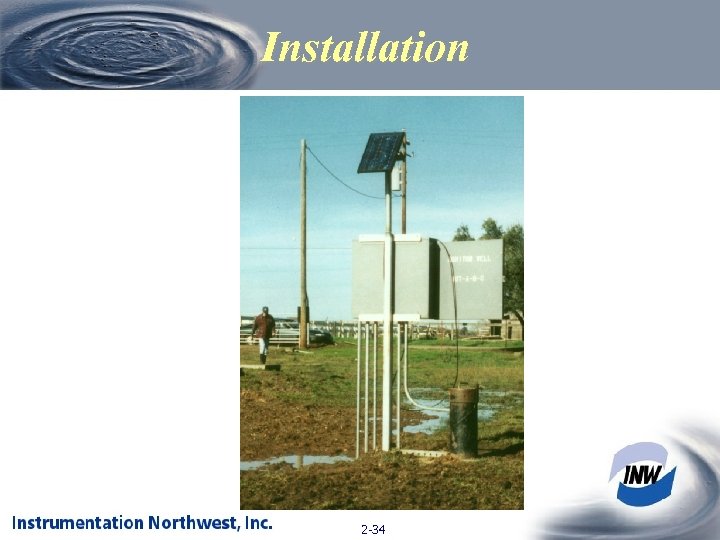
Installation 2 -34

Software 2 -35
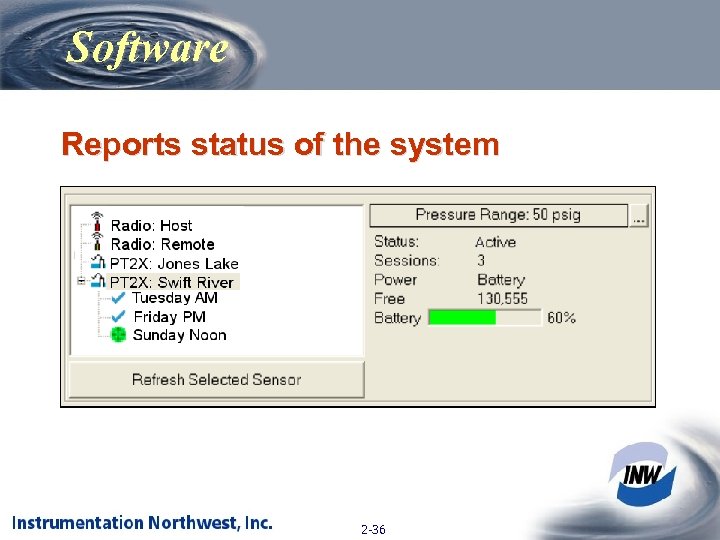
Software Reports status of the system 2 -36
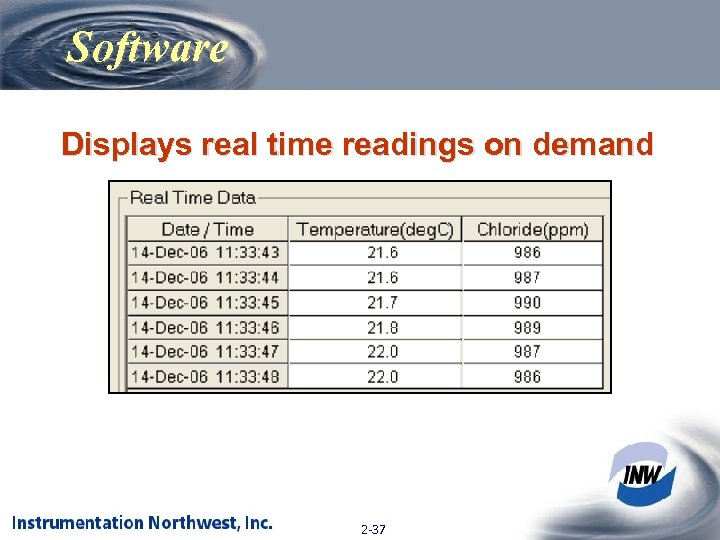
Software Displays real time readings on demand 2 -37
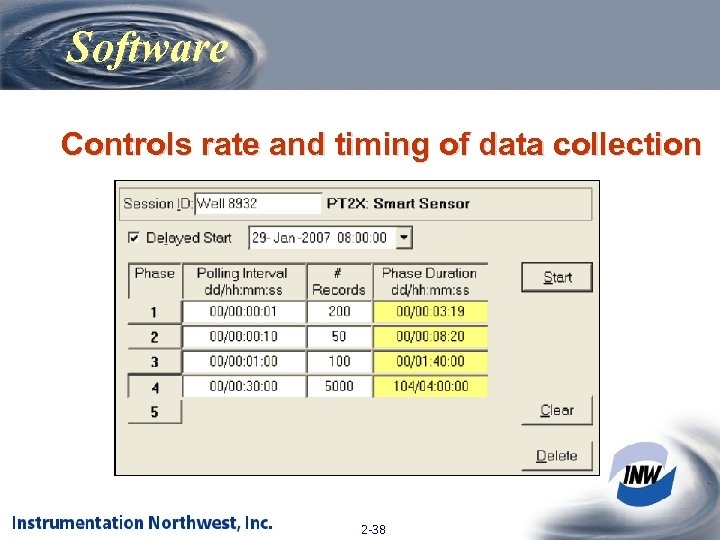
Software Controls rate and timing of data collection 2 -38
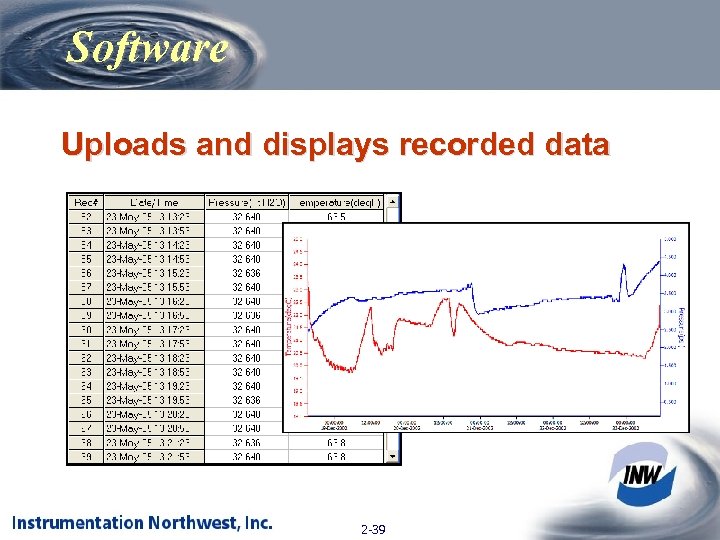
Software Uploads and displays recorded data 2 -39
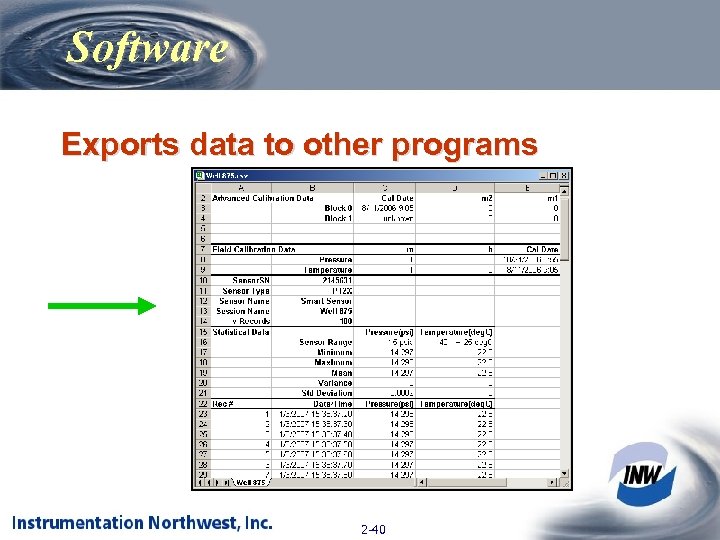
Software Exports data to other programs 2 -40
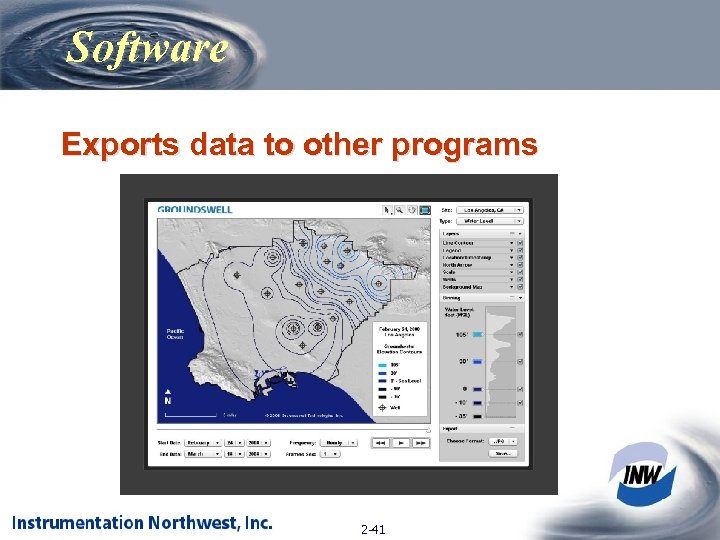
Software Exports data to other programs 2 -41
Conclusion Sensors + Connection Tools + Software Equals Better Information Better Decisions & Better Project Management 2 -42
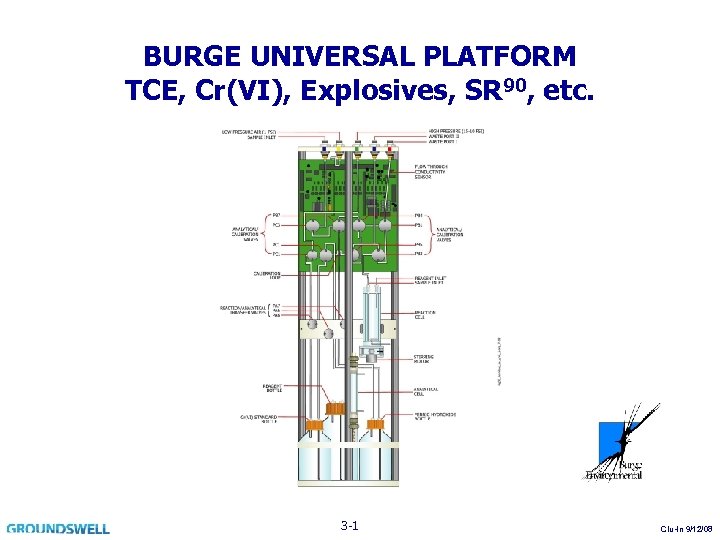
BURGE UNIVERSAL PLATFORM TCE, Cr(VI), Explosives, SR 90, etc. 3 -1 Clu-In 9/12/08
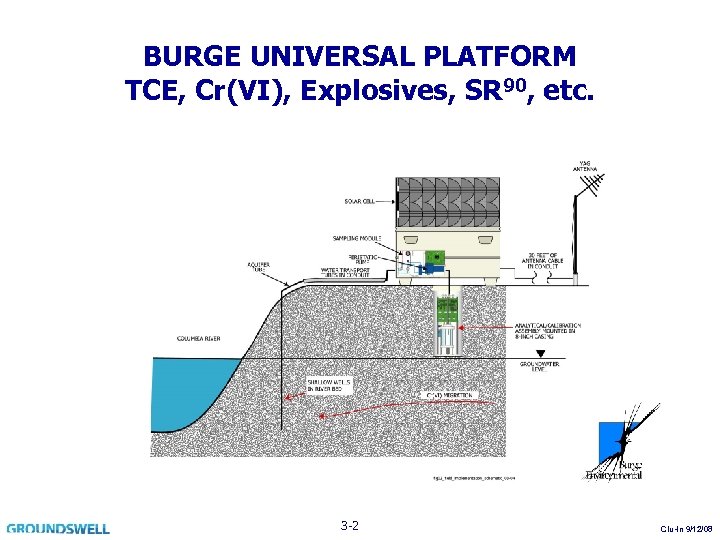
BURGE UNIVERSAL PLATFORM TCE, Cr(VI), Explosives, SR 90, etc. 3 -2 Clu-In 9/12/08
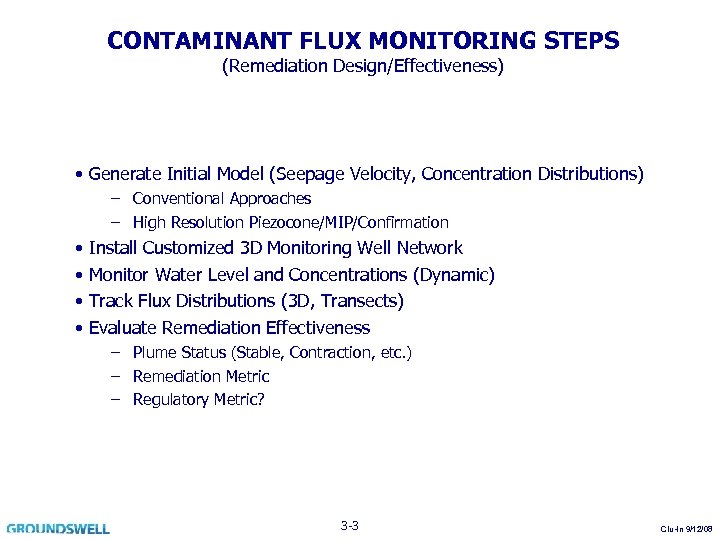
CONTAMINANT FLUX MONITORING STEPS (Remediation Design/Effectiveness) • Generate Initial Model (Seepage Velocity, Concentration Distributions) – Conventional Approaches – High Resolution Piezocone/MIP/Confirmation • • Install Customized 3 D Monitoring Well Network Monitor Water Level and Concentrations (Dynamic) Track Flux Distributions (3 D, Transects) Evaluate Remediation Effectiveness – Plume Status (Stable, Contraction, etc. ) – Remediation Metric – Regulatory Metric? 3 -3 Clu-In 9/12/08
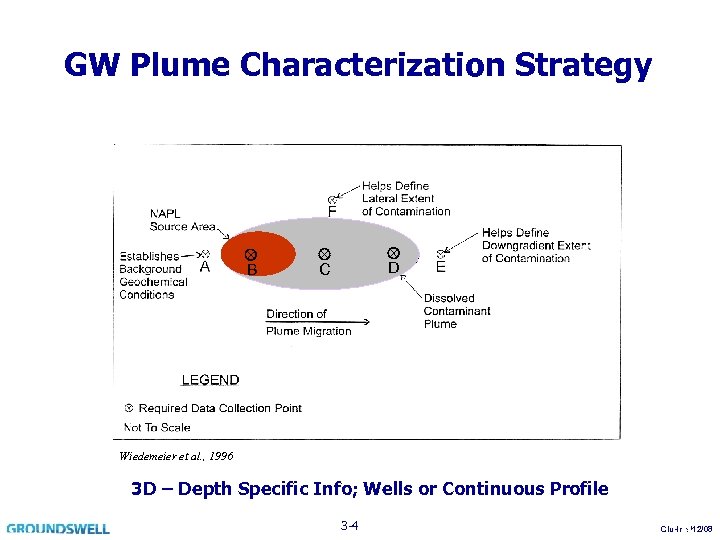
GW Plume Characterization Strategy B D C Wiedemeier et al. , 1996 3 D – Depth Specific Info; Wells or Continuous Profile 3 -4 6 Clu-In 9/12/08
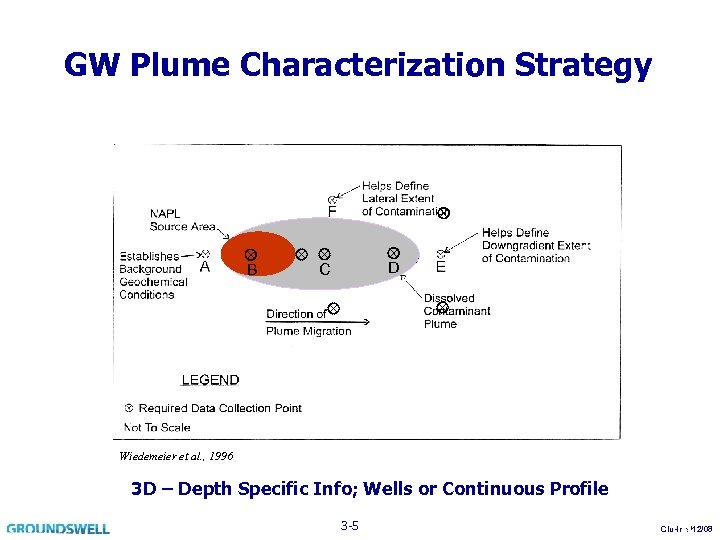
GW Plume Characterization Strategy B D C Wiedemeier et al. , 1996 3 D – Depth Specific Info; Wells or Continuous Profile 3 -5 6 Clu-In 9/12/08
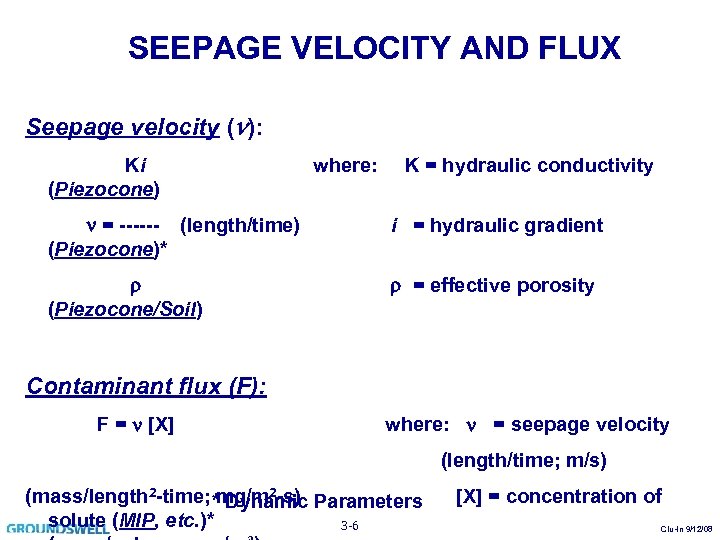
SEEPAGE VELOCITY AND FLUX Seepage velocity ( ): Ki (Piezocone) where: K = hydraulic conductivity = ------ (length/time) (Piezocone)* i = hydraulic gradient (Piezocone/Soil) = effective porosity Contaminant flux (F): F = [X] where: = seepage velocity (length/time; m/s) (mass/length 2 -time; mg/m 2 -s) [X] = concentration of * Dynamic Parameters solute (MIP, etc. )* 3 -6 Clu-In 9/12/08
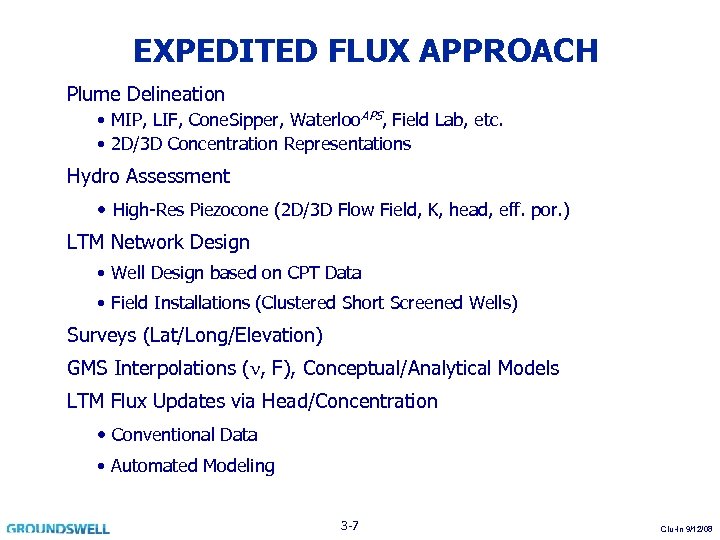
EXPEDITED FLUX APPROACH Plume Delineation • MIP, LIF, Cone. Sipper, Waterloo. APS, Field Lab, etc. • 2 D/3 D Concentration Representations Hydro Assessment • High-Res Piezocone (2 D/3 D Flow Field, K, head, eff. por. ) LTM Network Design • Well Design based on CPT Data • Field Installations (Clustered Short Screened Wells) Surveys (Lat/Long/Elevation) GMS Interpolations ( , F), Conceptual/Analytical Models LTM Flux Updates via Head/Concentration • Conventional Data • Automated Modeling 3 -7 Clu-In 9/12/08
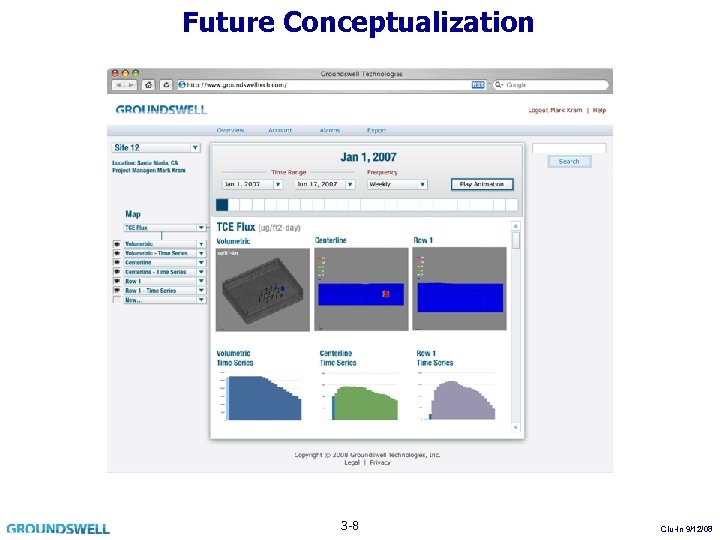
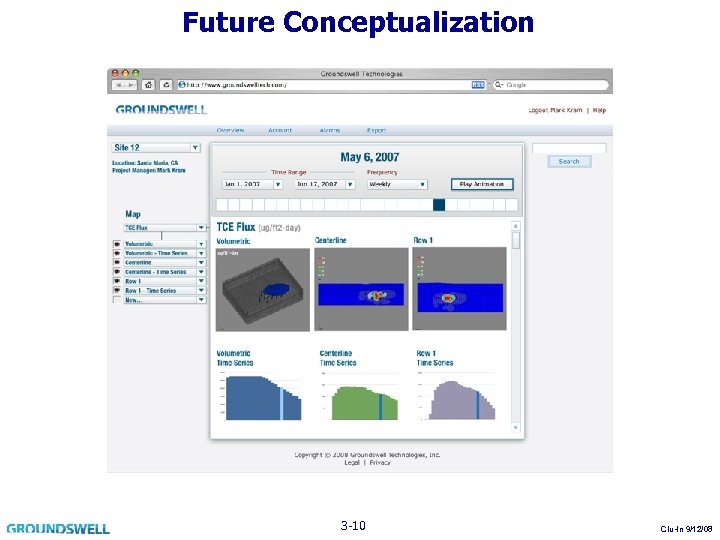
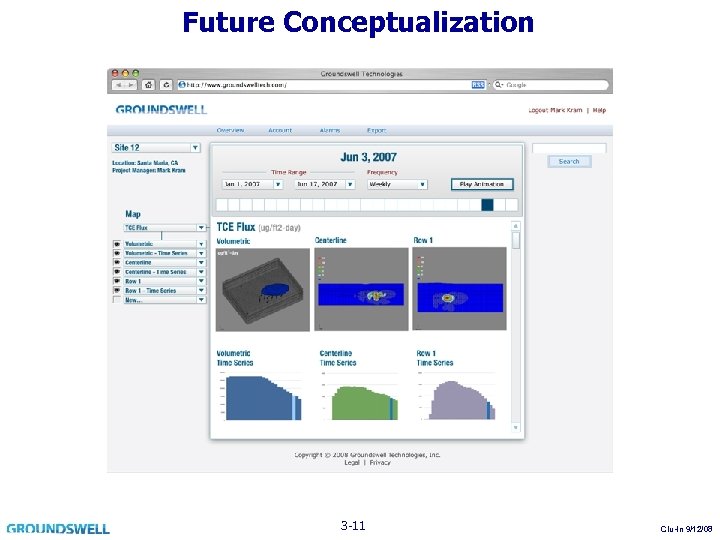
Future Conceptualization 3 -8 Clu-In 9/12/08
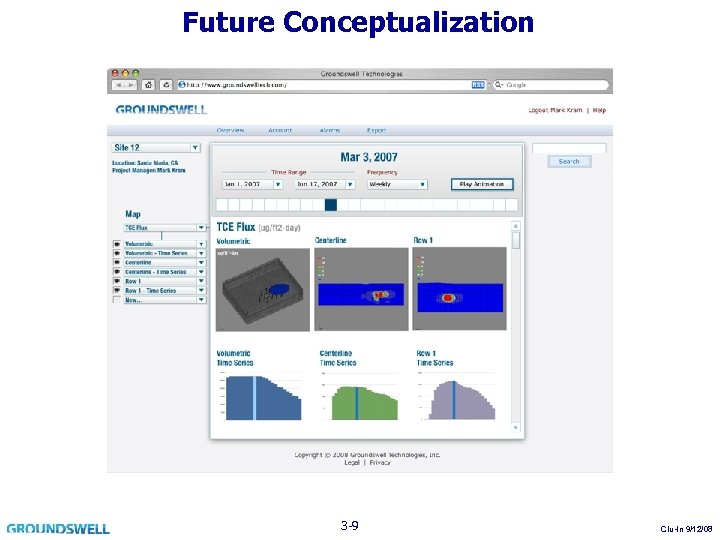
Future Conceptualization 3 -9 Clu-In 9/12/08
Future Conceptualization 3 -10 Clu-In 9/12/08
Future Conceptualization 3 -11 Clu-In 9/12/08
CURRENT/FUTURE HYDRO SENSORS/APPLICATIONS Current Sensors: • TCE, Cr(VI), N-Explosives, SR 90, Nitrate, Geochemistry, Water Level, Vapor Chemistry, Pressure, Temp, etc. Future Sensors/Applications: • Additional Organic Solutes • • Vapor Monitoring (USTs, Pipe Leaks, Intrusion, etc. ) Perchlorate LTM/MNA On-The-Fly Model Update/Calibration Landfills Hydraulic Containment Others? 3 -12 Clu-In 9/12/08
ENCOURAGING DEVELOPMENTS • New Sensors Available • New Sensors Under Development (DHS, nano, etc. ) • New Compatible Technologies (Smart Dust, Motes, Pods, Retriever, Crossbow, INW, Machine. Talker, etc. ) • Significant SONs for Sensors and Approach – Do. D (SERDP) – DOE (STTR) – DHS (BAA, SBIR) – EPA (SBIR) • Telecommunications & DB Standards 3 -13 Clu-In 9/12/08
VALUE PROPOSITION • Gain Precision - True Risks and Strategic Options • Lower Long-Term Site Management Costs • Simultaneous Multi-Site Monitoring (Web) • Monitoring at Practical Time Steps • Automated Responses 3 -14 Clu-In 9/12/08
CONCLUSIONS • Single-Deployment Solutions Now Possible • Triad Based CPT Approaches (e. g. , LIF, MIP, HRP, WAPS, etc. ) Save Time/Cost and Lead to Exceptional Plume and Hydraulic Characterization • Highly Resolved 2 D and 3 D Distributions of Head, Gradient, K, Effective Porosity, and Seepage Velocity Now Possible Using HRP and GMS • When Know Concentration Distribution (e. g. , via MIP, Conesipper, etc. ), 3 D Distributions of Contaminant Flux Possible Using GMS • Exceptional Capabilities for Plume “Architecture” and Monitoring Network Design for Remediation Design and Evaluation • New Paradigm - LTM and Remediation Performance Monitoring via Sensors and Automation (4 D) 3 -15 Clu-In 9/12/08
ACKNOWLEDGEMENTS EPA – Clu-In Logistical Support (Michael Adam, Jean Balent, Triad COP) SERDP – Funded Advanced Fuel Hydrocarbon Remediation National Environmental Technology Test Site (NETTS) ESTCP – Funded HRP/LIF/MIP/Geo. VIS/etc. Demonstrations NAVFAC ESC – HRP/LIF/Geo. VIS Manpower, oversight, matching efforts Field and Technical Support – Project Advisory Committee Jessica Chau (U. Conn. ) Gary Robbins (U. Conn. ) Ross Bagtzoglou (U. Conn. ) Merideth Metcalf (U. Conn. ) Tim Shields (R. Brady & Assoc. ) Craig Haverstick (R. Brady & Assoc. ) Fred Essig (R. Brady & Assoc. ) Jerome Fee (Fee & Assoc. ) Dr. Lanbo Liu and Ben Cagle (U. Conn. ) 3 -16 Dorothy Cannon (NFESC) Kenda Neil (NFESC) Richard Wong (Shaw I&E) Dale Lorenzana (GD) Kent Cordry (Geo. Insight) Ian Stewart (NFESC) Alan Vancil (SWDIV) Dan Eng (US Army) MANY OTHERS!!! Clu-In 9/12/08
THANK YOU! For More Info: Mark Kram, Ph. D. (GT) 805 -844 -6854 Gregg Gustafson (INW) 425 -822 -4564 Clu-In 9/12/08
After viewing the links to additional resources, please complete our online feedback form. Thank You Links to Additional Resources Feedback Form 3 -18 Clu-In 9/12/08
Скачать презентацию Triad Beyond Characterization to Long Term Management of
a5ce73468fb08c20c23fa203d1e1b79c.ppt