 Скачать презентацию Trends in Antebellum America 1810 -1860 1 New
12de1ce795acc7b6f1c624f66c7ff56b.ppt
- Количество слайдов: 41




Trends in Antebellum America: 1810 -1860 1. New intellectual and religious movements. 2. Social reforms. 3. Beginnings of the Industrial Revolution in America. 4. More political democratization. 5. Increase in federal power Marshall Ct. decisions.
“Manifest Destiny” First coined by newspaper editor, John O’Sullivan in 1845. § ". . the right of our manifest destiny to over § spread and to possess the whole of the continent which Providence has given us for the development of the great experiment of liberty and federaltive development of selfgovernment § A myth of us. It. West assuch as that of the entrusted to the is right a land of
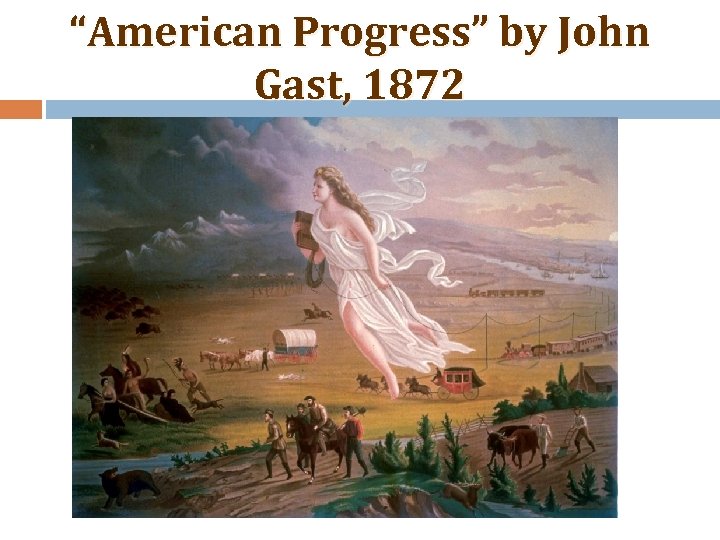
“American Progress” by John Gast, 1872
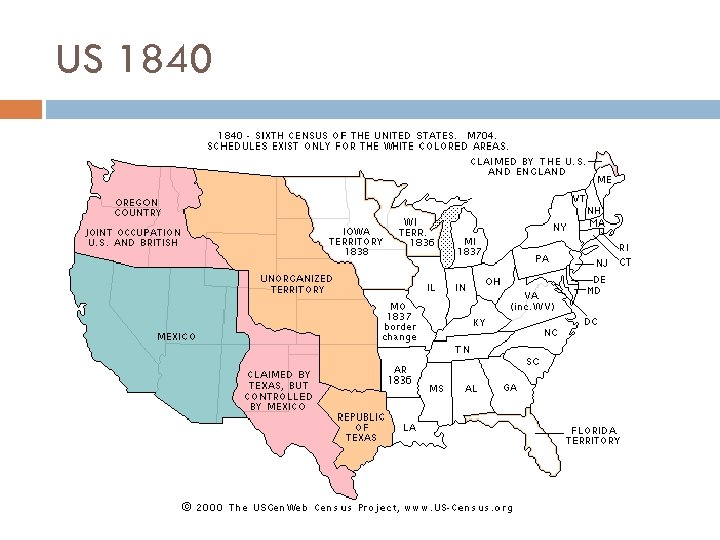
US 1840
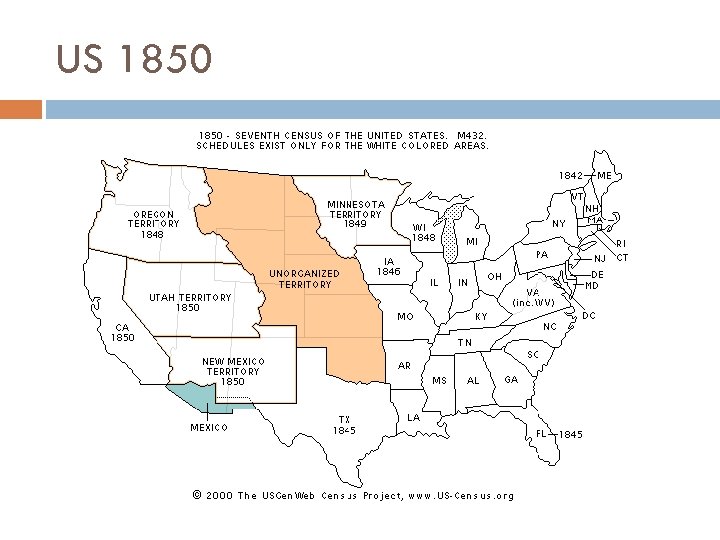
US 1850
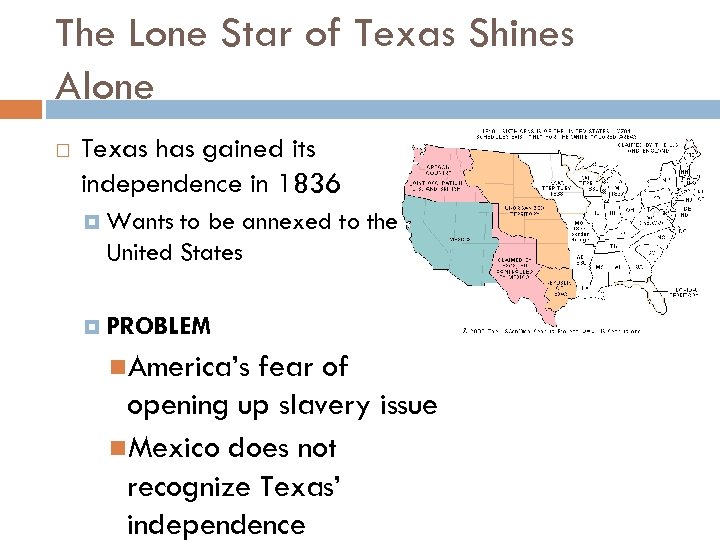
The Lone Star of Texas Shines Alone Texas has gained its independence in 1836 Wants to be annexed to the United States PROBLEM America’s fear of opening up slavery issue Mexico does not recognize Texas’ independence
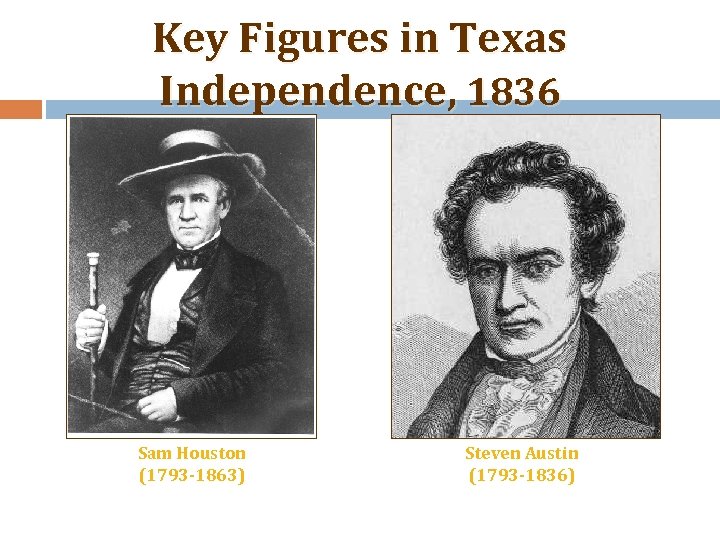
Key Figures in Texas Independence, 1836 Sam Houston (1793 -1863) Steven Austin (1793 -1836)
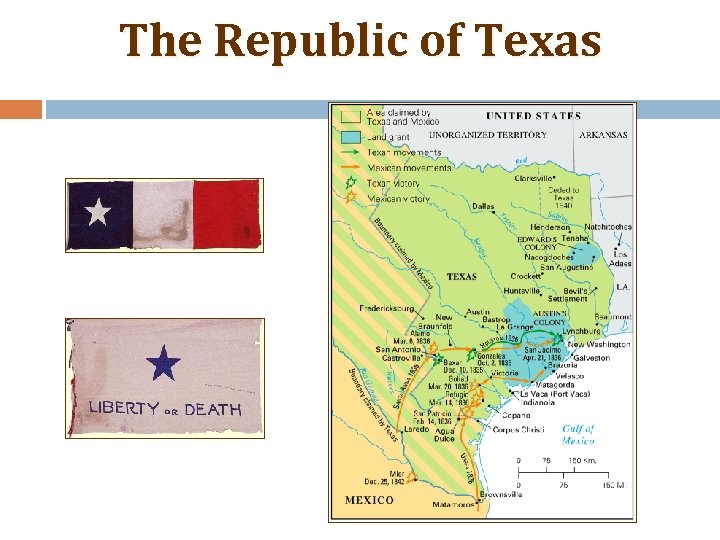
The Republic of Texas
The Lone Star of Texas Shines Alone Texas looks to other nations for treaties (Britain/France) Maintaining an army is very expensive. Why would others nations be interested? 1. 2. 3. 4. 5. 6. Stop America from moving South Caribbean protection To later get Texas to turn on America Fragment and militarize America Important free trade area (cotton) Get rid of slavery
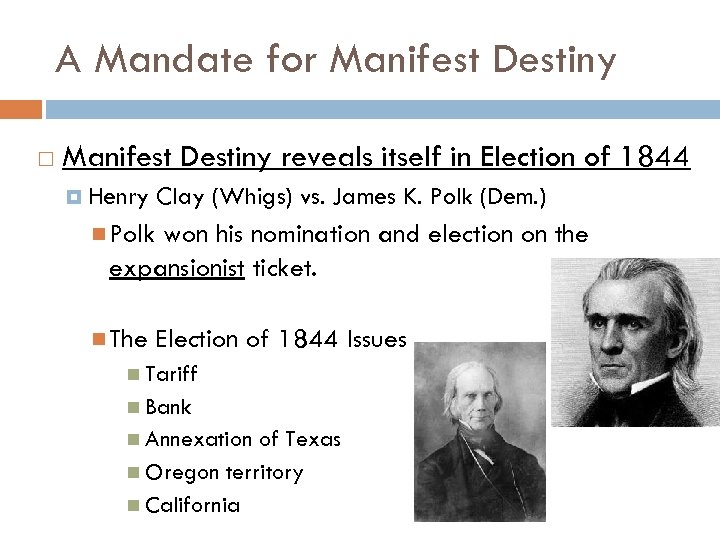
A Mandate for Manifest Destiny reveals itself in Election of 1844 Henry Clay (Whigs) vs. James K. Polk (Dem. ) Polk won his nomination and election on the expansionist ticket. The Election of 1844 Issues Tariff Bank Annexation of Texas Oregon territory California
Belated Texas Nuptials Texas is huge issue in 1844 election James K. Polk (Expansion ticket, Democrat) v. Henry Clay (Whig – Not interested in Texas) Polk Wins – Lame Duck Tyler sees this as a mandate to annex Texas so he pushed it through Congress to make his failed administration look good. Mexico is extremely angry, feeling the US stole Texas from them
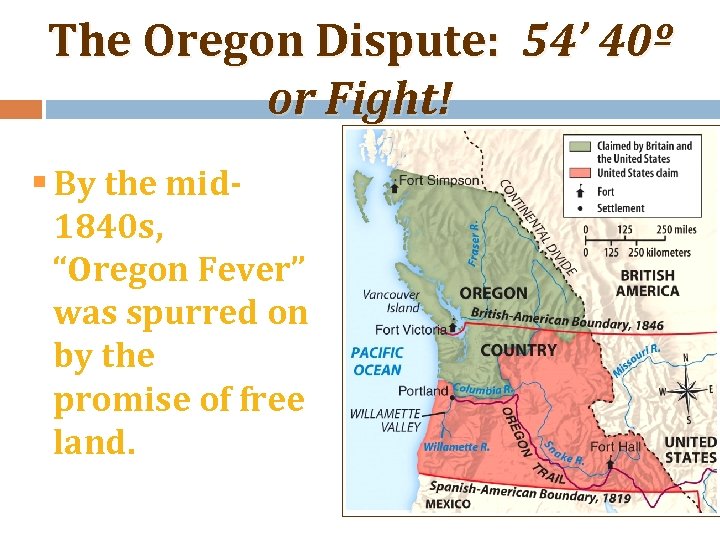
The Oregon Dispute: 54’ 40º or Fight! § By the mid 1840 s, “Oregon Fever” was spurred on by the promise of free land.
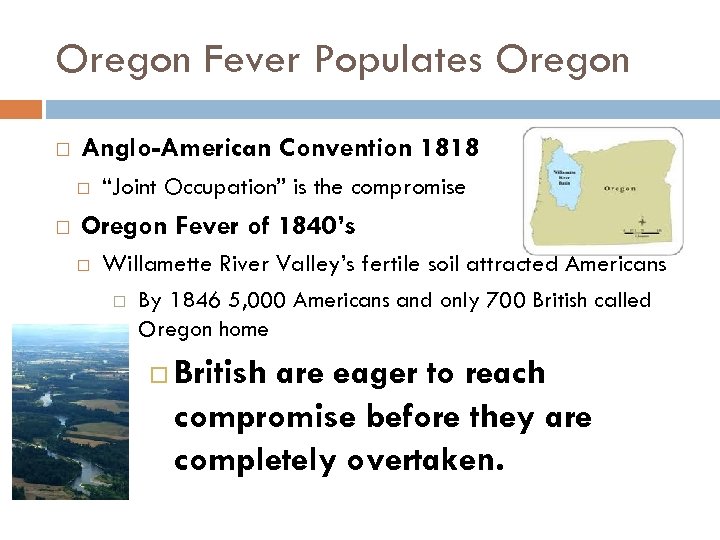
Oregon Fever Populates Oregon Anglo-American Convention 1818 “Joint Occupation” is the compromise Oregon Fever of 1840’s Willamette River Valley’s fertile soil attracted Americans By 1846 5, 000 Americans and only 700 British called Oregon home British are eager to reach compromise before they are completely overtaken.
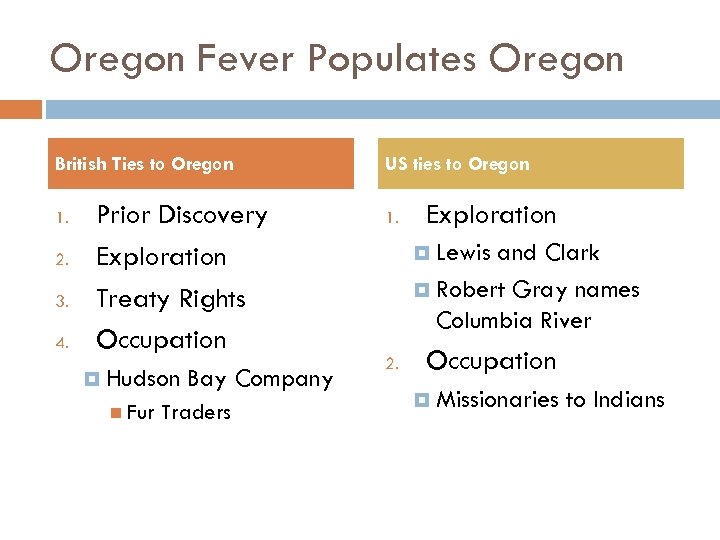
Oregon Fever Populates Oregon British Ties to Oregon 1. 2. 3. 4. Prior Discovery Exploration Treaty Rights Occupation Hudson Fur Bay Company Traders US ties to Oregon 1. Exploration Lewis and Clark Robert Gray names Columbia River 2. Occupation Missionaries to Indians
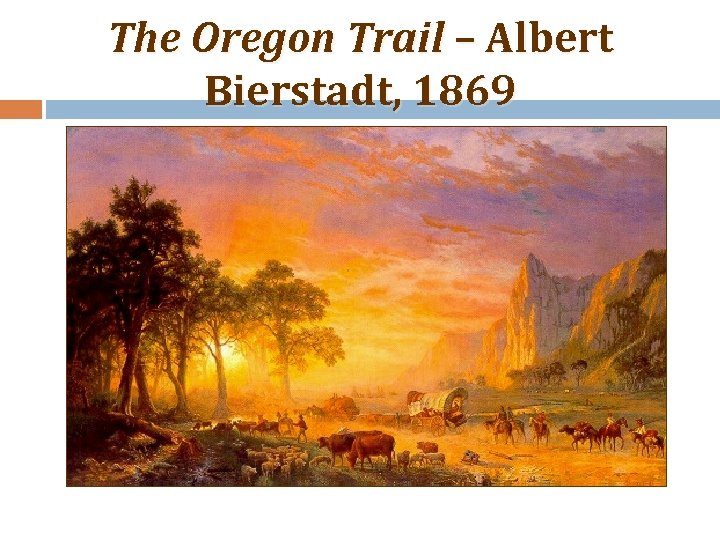
The Oregon Trail – Albert Bierstadt, 1869
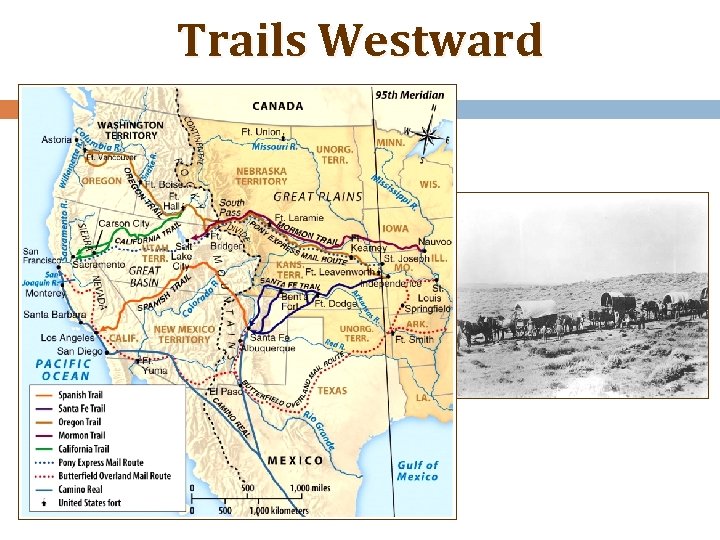
Trails Westward
Oregon Fever Populates Oregon Settling Oregon Dispute Northern Democrats wanted Oregon (Southern Democrats had wanted annexation of Texas) “Fifty-four Forty or Fight” Polk offers the 49 th parallel as a compromise to the British then offer the 49 th parallel themselves. Senate agrees quickly. Why all of Texas but only some of Oregon? Britain is more powerful then Mexico
Misunderstanding with Mexico Polk is very eager to buy California from Mexico – Offers $25 million PROBLEM: 1. We have terrible relations with Mexico 2. Texas (Mexico thought we stole it) Still a border dispute Mexico thinks it is the Nueces River US believes it is the Rio Grande
Misunderstanding with Mexico RUMOR: Britain was going to buy or seize California (violation of Monroe Doctrine) Polk Sends John Slidell to buy California for $25 million. Mexico won’t even allow him to propose it
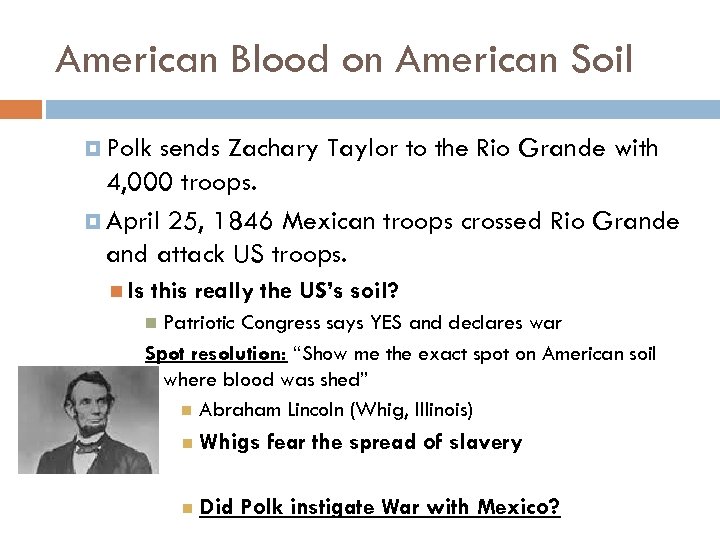
American Blood on American Soil Polk sends Zachary Taylor to the Rio Grande with 4, 000 troops. April 25, 1846 Mexican troops crossed Rio Grande and attack US troops. Is this really the US’s soil? Patriotic Congress says YES and declares war Spot resolution: “Show me the exact spot on American soil where blood was shed” Abraham Lincoln (Whig, Illinois) Whigs fear the spread of slavery Did Polk instigate War with Mexico?
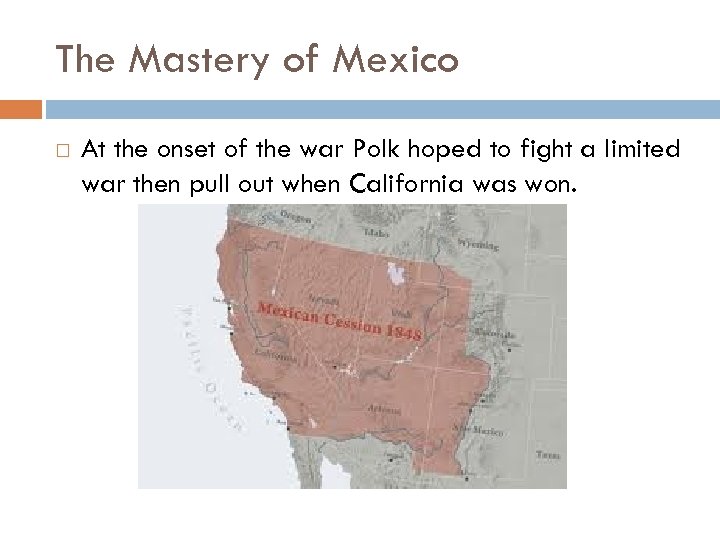
The Mastery of Mexico At the onset of the war Polk hoped to fight a limited war then pull out when California was won.
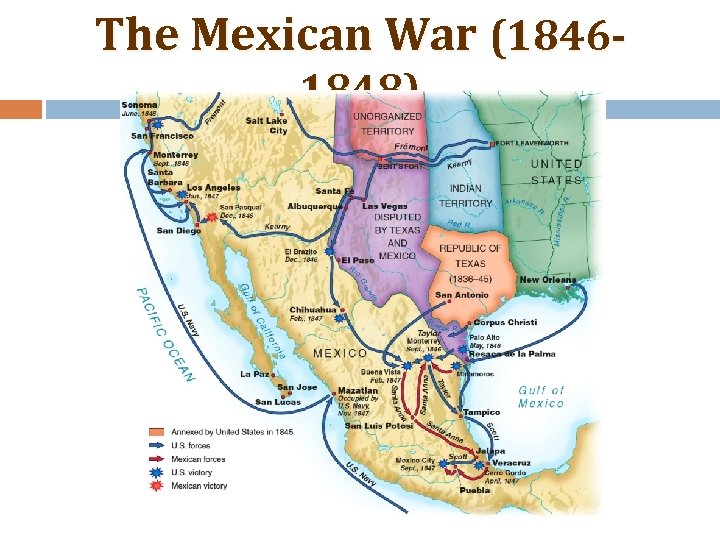
The Mexican War (18461848)
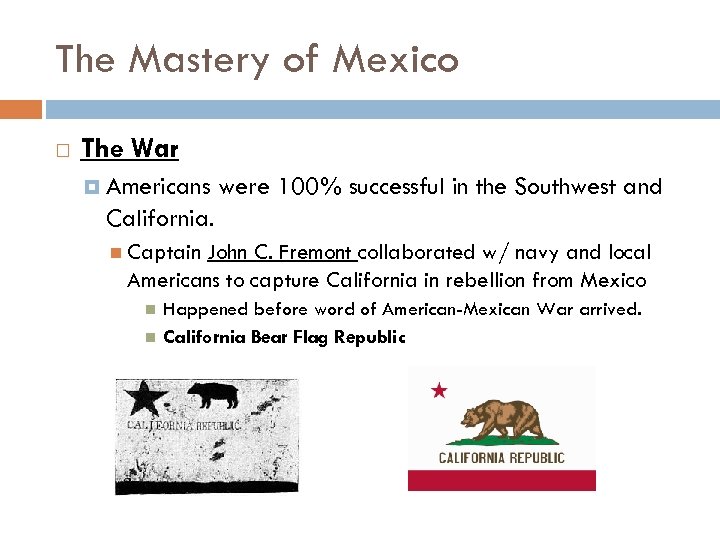
The Mastery of Mexico The War Americans were 100% successful in the Southwest and California. Captain John C. Fremont collaborated w/ navy and local Americans to capture California in rebellion from Mexico Happened before word of American-Mexican War arrived. California Bear Flag Republic
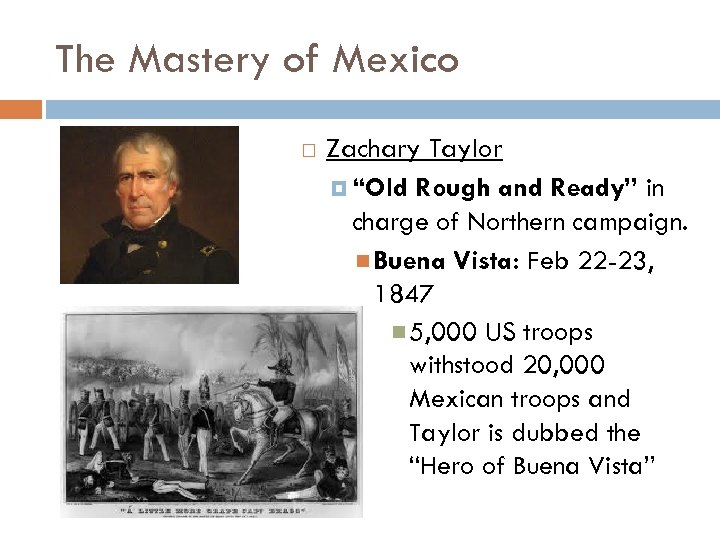
The Mastery of Mexico Zachary Taylor “Old Rough and Ready” in charge of Northern campaign. Buena Vista: Feb 22 -23, 1847 5, 000 US troops withstood 20, 000 Mexican troops and Taylor is dubbed the “Hero of Buena Vista”
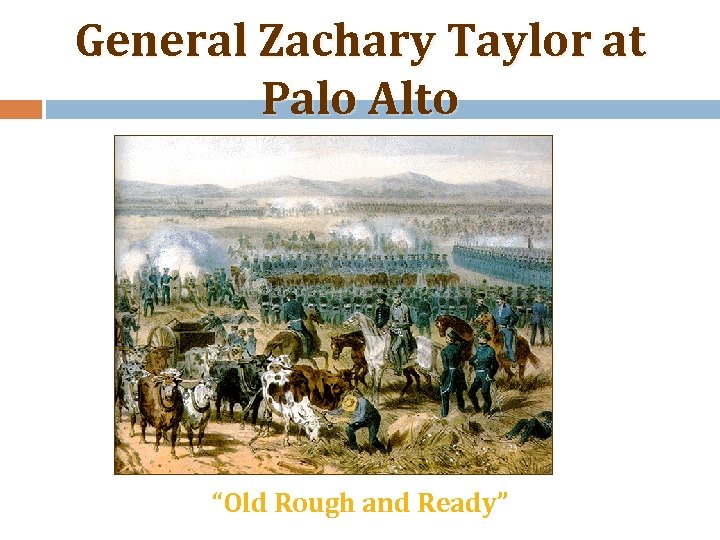
General Zachary Taylor at Palo Alto “Old Rough and Ready”
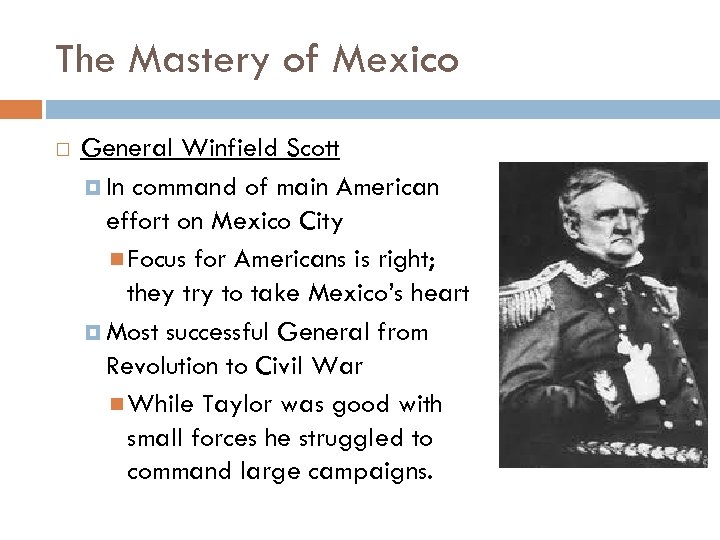
The Mastery of Mexico General Winfield Scott In command of main American effort on Mexico City Focus for Americans is right; they try to take Mexico’s heart Most successful General from Revolution to Civil War While Taylor was good with small forces he struggled to command large campaigns.
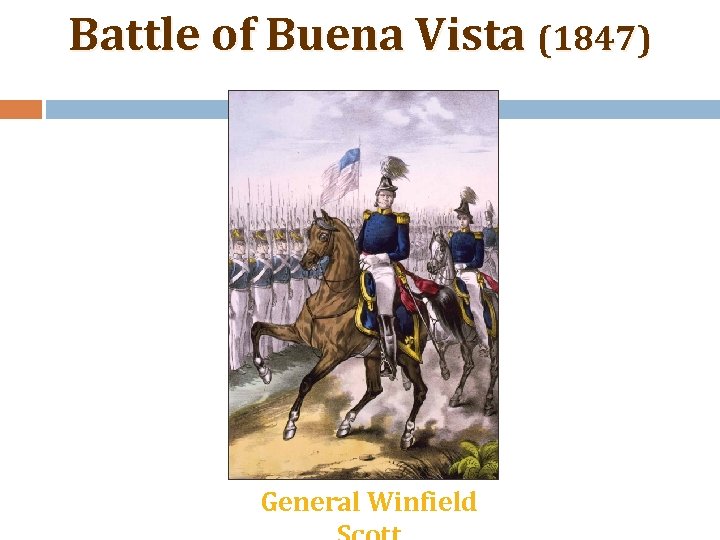
Battle of Buena Vista (1847) General Winfield
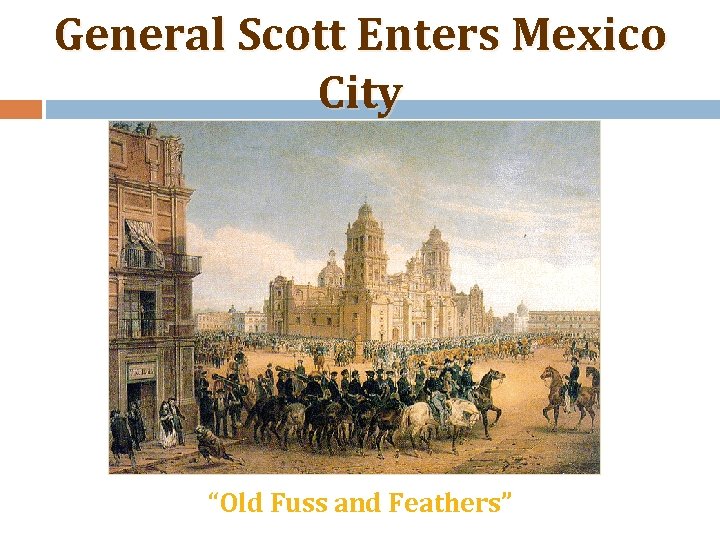
General Scott Enters Mexico City “Old Fuss and Feathers”
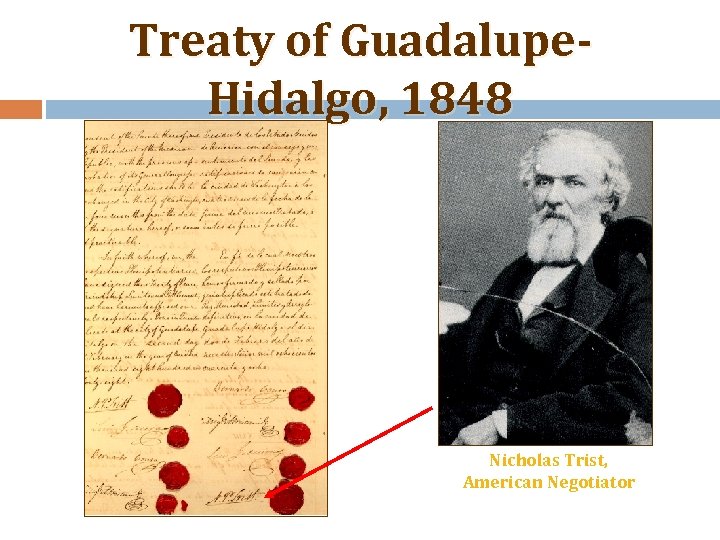
Treaty of Guadalupe. Hidalgo, 1848 Nicholas Trist, American Negotiator
Treaty of Guadalupe. Hidalgo, 1848 The Treaty was basically § Mexico gave up claims to Texas forced on Mexico! above the Rio Grande River. § Mexico gave the U. S. California and New Mexico. § U. S. gave Mexico $15, 000 and agreed to pay (Had
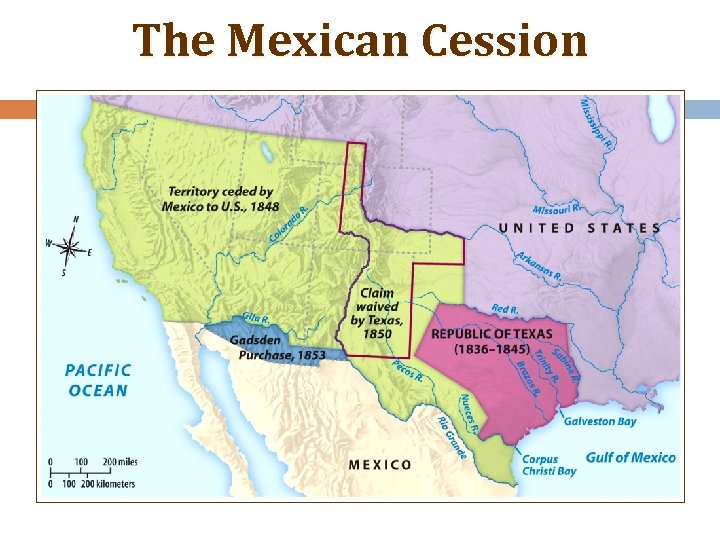
The Mexican Cession
Results of the 1. The 17 -month war cost $100, 000 and Mexican War? 13, 000+ American lives (mostly of disease). 2. New territories were brought into the Union which forced the explosive issue of SLAVERY to the center of national politics. * Brought in 1 million sq. mi. of land (incl. TX) 3. Justified West Point (Training Ground for Civil War) 4. Created two popular Whig generals who ran for

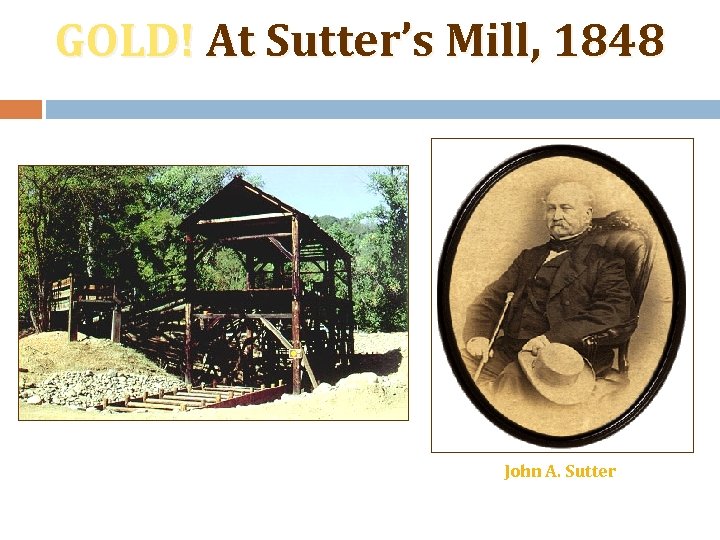
GOLD! At Sutter’s Mill, 1848 John A. Sutter
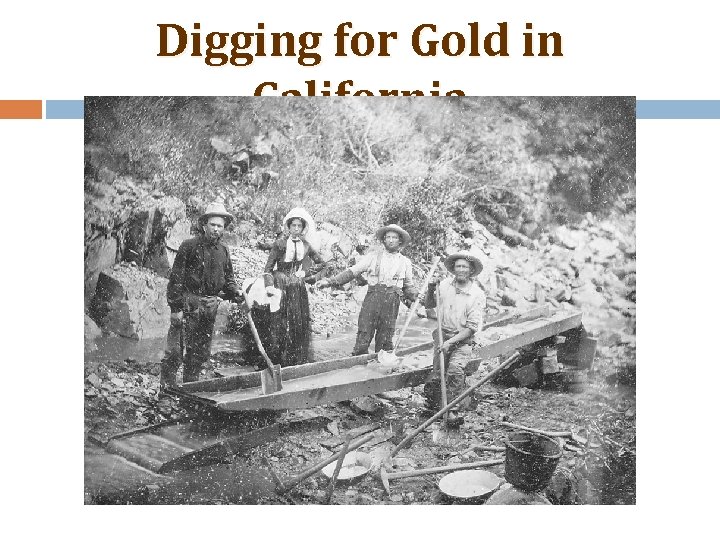
Digging for Gold in California
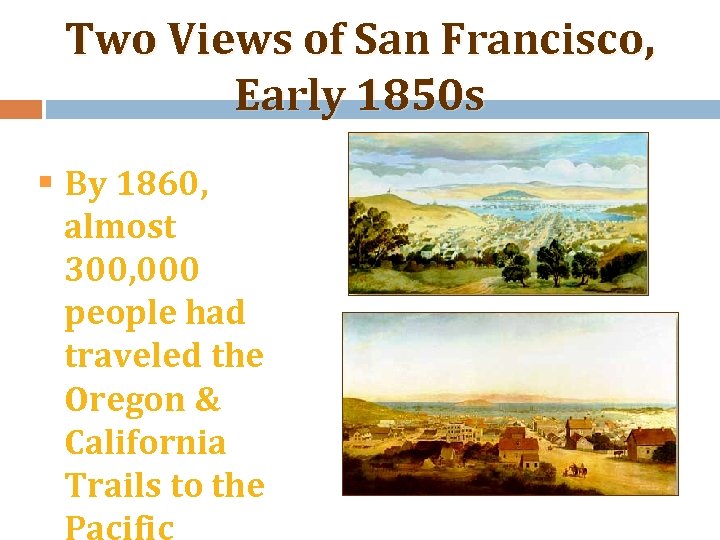
Two Views of San Francisco, Early 1850 s § By 1860, almost 300, 000 people had traveled the Oregon & California Trails to the
Slavery and the Territory Issue Abolitionists thought fighting in Mexico spread the “slavocracy” Fight goes to Congress Wilmot Proviso: Bill which stated that slavery would not exist in the Mexican Cession territory. (David Wilmot, PA) Passed the House twice but failed in Senate. Many northern states adopted this on a state by state basis. Polk’s left Legacy: the nation with vast territory but ugly slavery dispute.
Скачать презентацию Trends in Antebellum America 1810 -1860 1 New
12de1ce795acc7b6f1c624f66c7ff56b.ppt