 Скачать презентацию Traumatic Brain Injury Linda Wilkinson MSN ACNP LMT
dfbf6e76810073820dc4daacbc293c00.ppt
- Количество слайдов: 64



Traumatic Brain Injury Linda Wilkinson, MSN, ACNP, LMT Nurse Practitioner -Trauma Vanderbilt University Medical Center
Traumatic Brain Injury Linda Wilkinson, MSN, ACNP, LMT Nurse Practitioner -Trauma Vanderbilt University Medical Center
Objectives • Define TBI • Overview of TBI – Look at Statistics – Review of types of TBI – Discuss Long Term issues • Acute Care Management • Post Acute Care Considerations
What is Traumatic Brain Injury? • “… a nondegenerative, noncongenital insult to the brain from an external mechanical force, possibly leading to permanent or temporary impairments of cognitive, physical and psychosocial functions with an associated diminished or altered state of consciousness”
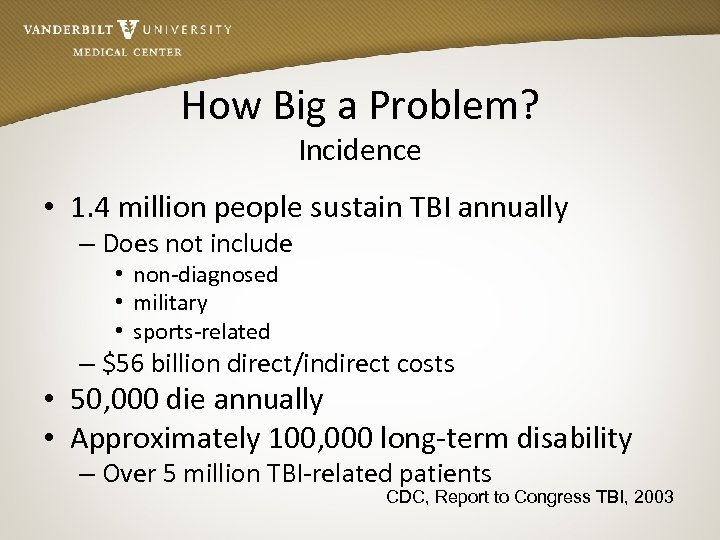
How Big a Problem? Incidence • 1. 4 million people sustain TBI annually – Does not include • non-diagnosed • military • sports-related – $56 billion direct/indirect costs • 50, 000 die annually • Approximately 100, 000 long-term disability – Over 5 million TBI-related patients CDC, Report to Congress TBI, 2003
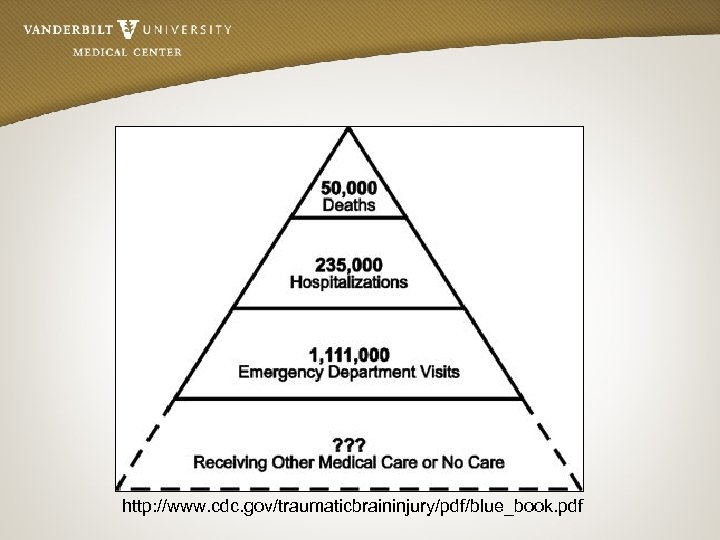
http: //www. cdc. gov/traumaticbraininjury/pdf/blue_book. pdf
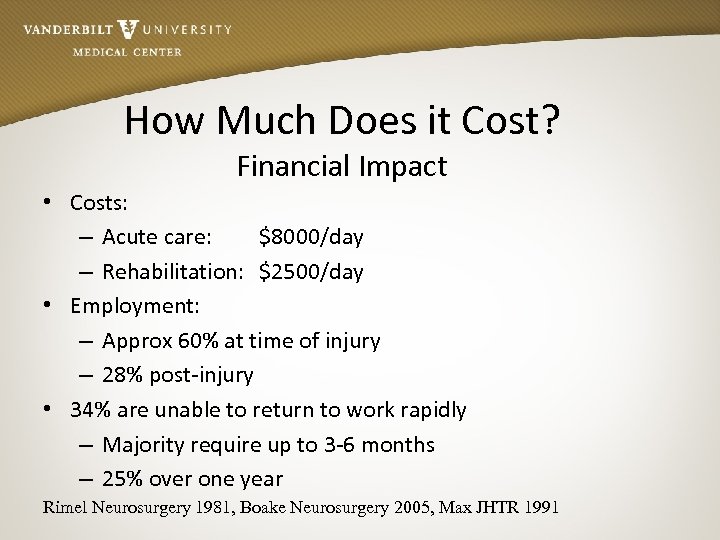
How Much Does it Cost? Financial Impact • Costs: – Acute care: $8000/day – Rehabilitation: $2500/day • Employment: – Approx 60% at time of injury – 28% post-injury • 34% are unable to return to work rapidly – Majority require up to 3 -6 months – 25% over one year Rimel Neurosurgery 1981, Boake Neurosurgery 2005, Max JHTR 1991
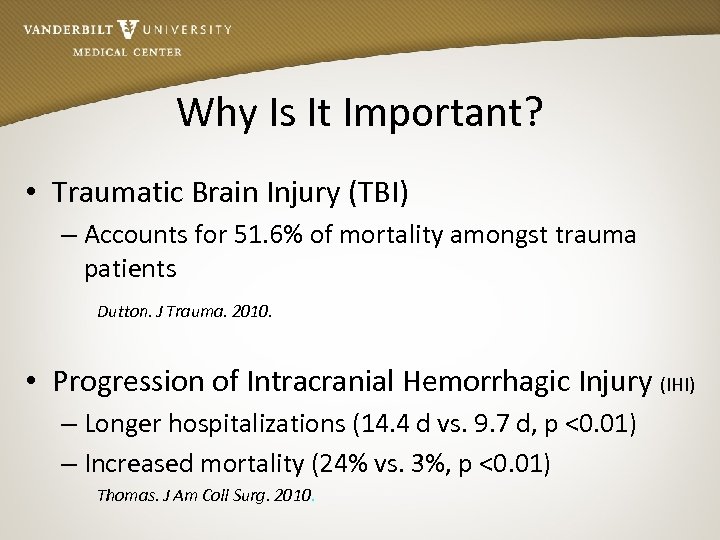
Why Is It Important? • Traumatic Brain Injury (TBI) – Accounts for 51. 6% of mortality amongst trauma patients Dutton. J Trauma. 2010. • Progression of Intracranial Hemorrhagic Injury (IHI) – Longer hospitalizations (14. 4 d vs. 9. 7 d, p <0. 01) – Increased mortality (24% vs. 3%, p <0. 01) Thomas. J Am Coll Surg. 2010.
Who’s Involved? Demographics • Traumatic brain injury effects all levels of society • TBI affects all ages • Majority (75 to 90%) recover quickly – “Mild” = 90% • 10 to 25% have long-term deficit • 2% of Americans living with TBI-related disabilities – (313. 9 Million x. 02 =6. 3 Million) 2012 census • The ‘Hidden’ TBI patient – Emotional distress/cognitive issues
“At Risk” Groups • Males are more likely to incur TBI compared to females. (3. 4: 1) – GSW 6: 1 – MVC 2. 4: 1 • Highest rate of injury: 15 -24 years old. • Also at higher risk: – Children <5 years old – Elderly > 75 years old
• Trauma Centers are the epicenter of major TBI – Hospitalizations increasing 10% per year – EARLY identification improves outcomes – Appropriate in-patient management important – Post-hospital rehab improves outcomes – Collaborative efforts through multi-discipline teams
What Happened? Mechanism of Injury (Blunt) • Leading causes of TBI: – Falls: 35% • Half of children (<14 yrs) eval in ED • Two-thirds >65 y – MVC: 17% • Leading cause of TBI-death (32%) – Struck (auto-ped): 17% – Assault: 10%
Traumatic Brain Injury § Concussion § Epidural Hematoma § Subarachnoid hemorrhage § Intracerebral Hematoma § Intraventricular hemorrhage § Shear injury / diffuse axonal injury
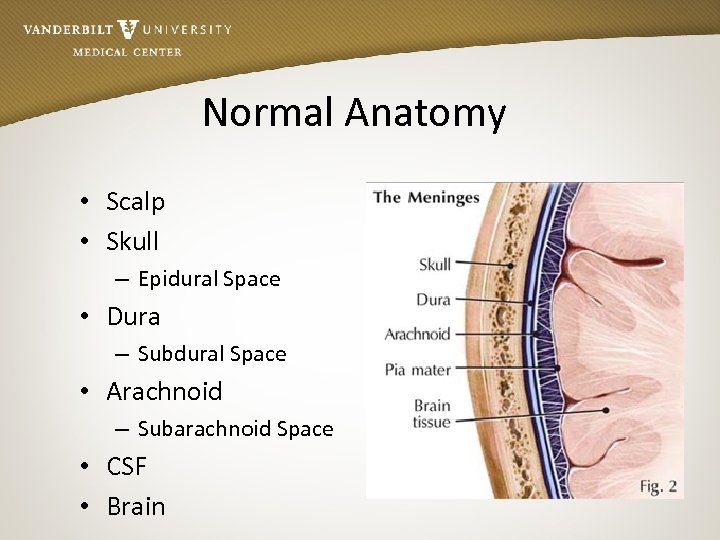
Normal Anatomy • Scalp • Skull – Epidural Space • Dura – Subdural Space • Arachnoid – Subarachnoid Space • CSF • Brain
Concussion • A clinical syndrome characterized by immediate and transient alteration in brain function, including alteration of mental status and level of consciousness, resulting from mechanical force or trauma.
Concussion Symptoms • • Prolonged headache Vision disturbances Dizziness / “fogginess” Nausea or vomiting Impaired balance Confusion Irritability Labile / exaggerated emotions • • Memory loss Ringing ears Difficulty concentrating Sensitivity to light Sensitivity to sound Loss of smell or taste Sleep disturbances Repetitive questioning
Post Concussive Syndrome • May last for weeks or months. • Symptoms include memory and concentration problems, mood swings, personality changes, headache, fatigue, dizziness, insomnia and excessive drowsiness. • Patients with postconcussive syndrome should avoid activities that put them at risk for a repeated concussion.
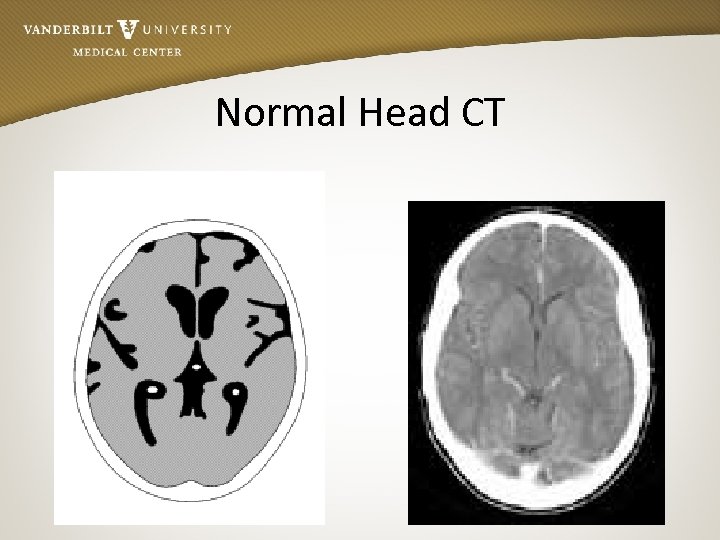
Normal Head CT
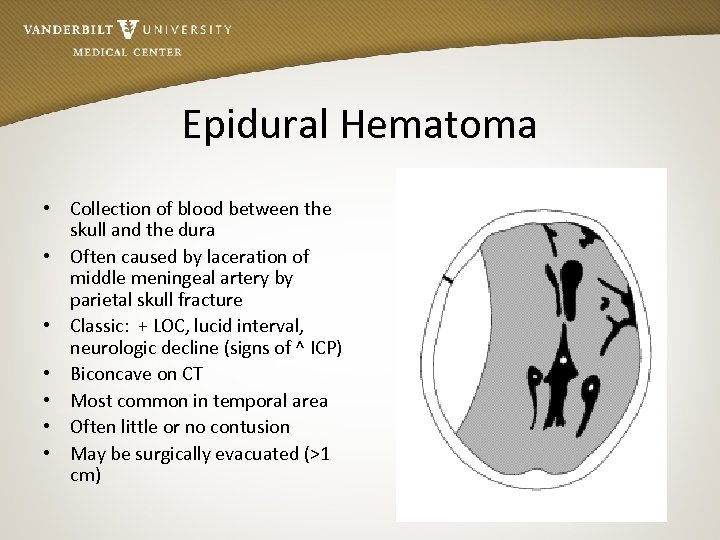
Epidural Hematoma • Collection of blood between the skull and the dura • Often caused by laceration of middle meningeal artery by parietal skull fracture • Classic: + LOC, lucid interval, neurologic decline (signs of ^ ICP) • Biconcave on CT • Most common in temporal area • Often little or no contusion • May be surgically evacuated (>1 cm)
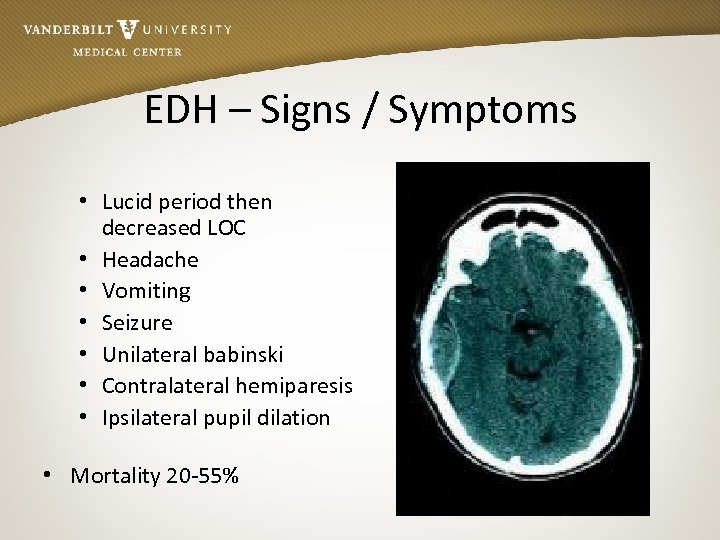
EDH – Signs / Symptoms • Lucid period then decreased LOC • Headache • Vomiting • Seizure • Unilateral babinski • Contralateral hemiparesis • Ipsilateral pupil dilation • Mortality 20 -55%
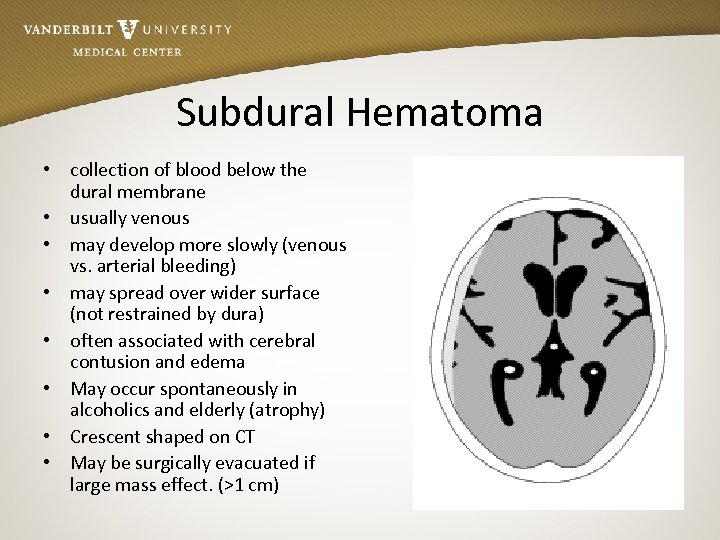
Subdural Hematoma • collection of blood below the dural membrane • usually venous • may develop more slowly (venous vs. arterial bleeding) • may spread over wider surface (not restrained by dura) • often associated with cerebral contusion and edema • May occur spontaneously in alcoholics and elderly (atrophy) • Crescent shaped on CT • May be surgically evacuated if large mass effect. (>1 cm)
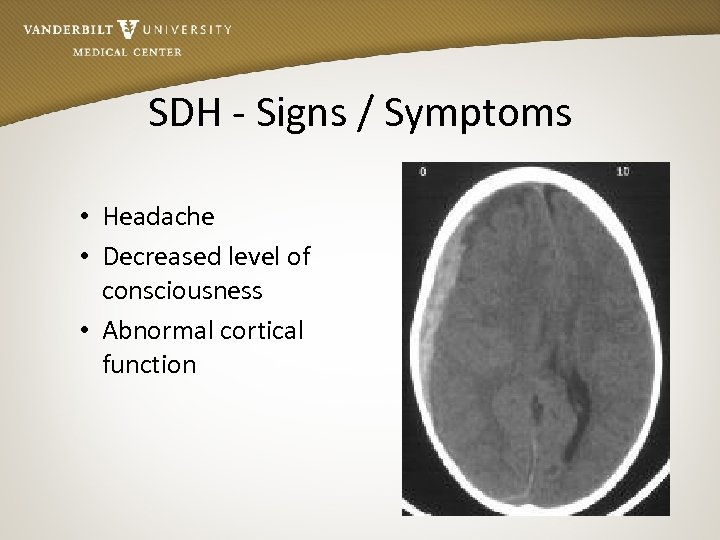
SDH - Signs / Symptoms • Headache • Decreased level of consciousness • Abnormal cortical function
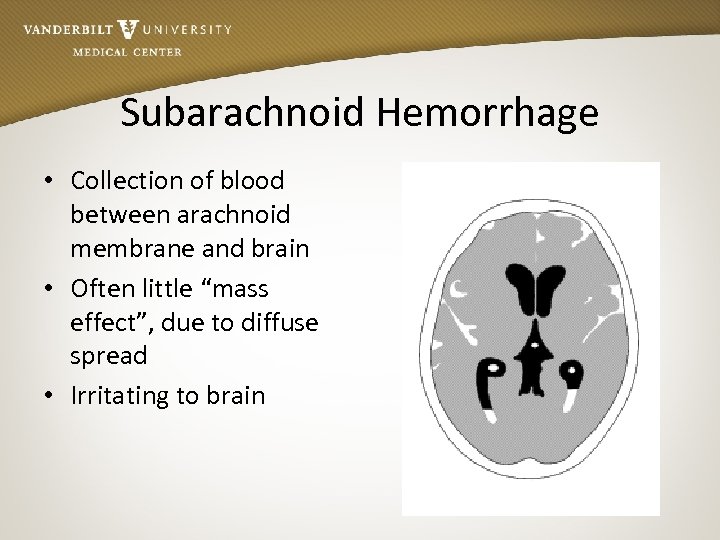
Subarachnoid Hemorrhage • Collection of blood between arachnoid membrane and brain • Often little “mass effect”, due to diffuse spread • Irritating to brain
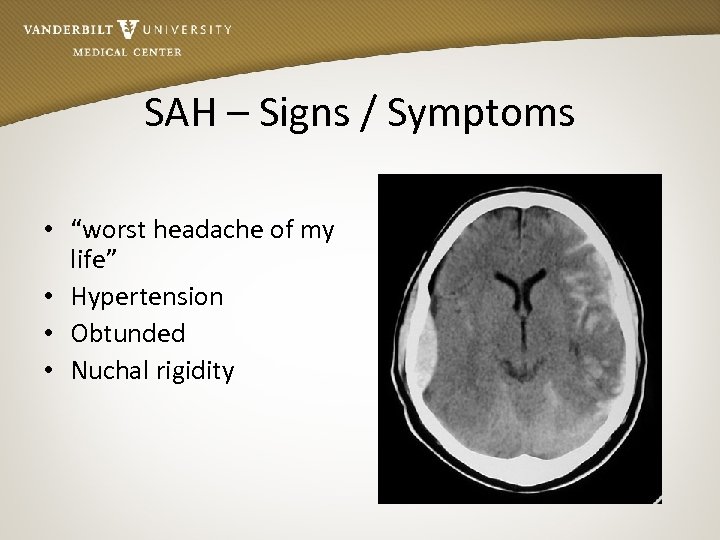
SAH – Signs / Symptoms • “worst headache of my life” • Hypertension • Obtunded • Nuchal rigidity
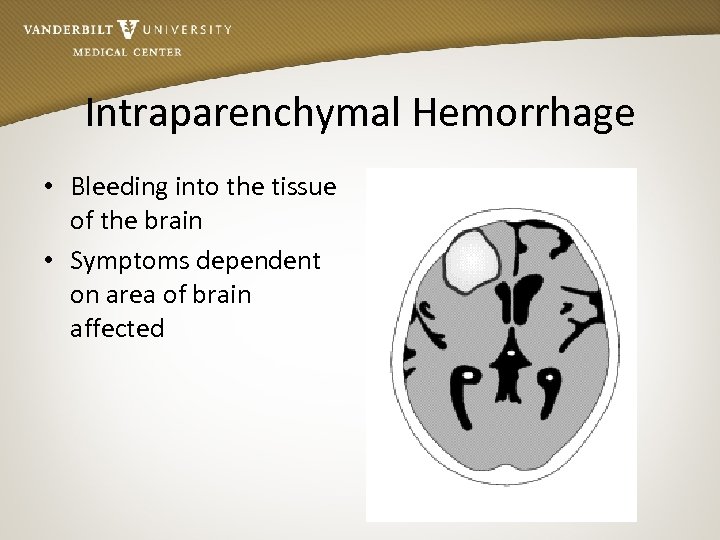
Intraparenchymal Hemorrhage • Bleeding into the tissue of the brain • Symptoms dependent on area of brain affected
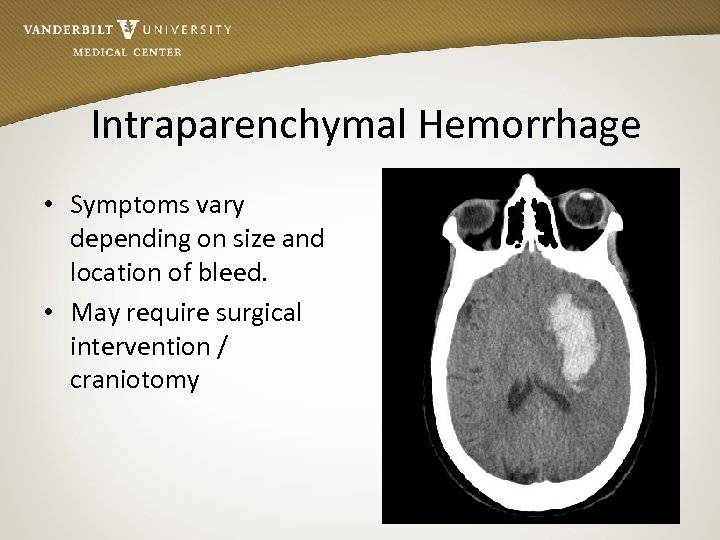
Intraparenchymal Hemorrhage • Symptoms vary depending on size and location of bleed. • May require surgical intervention / craniotomy
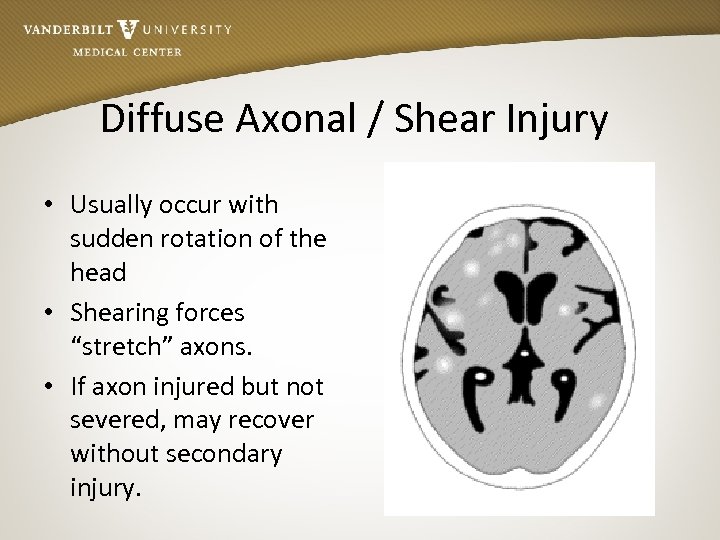
Diffuse Axonal / Shear Injury • Usually occur with sudden rotation of the head • Shearing forces “stretch” axons. • If axon injured but not severed, may recover without secondary injury.
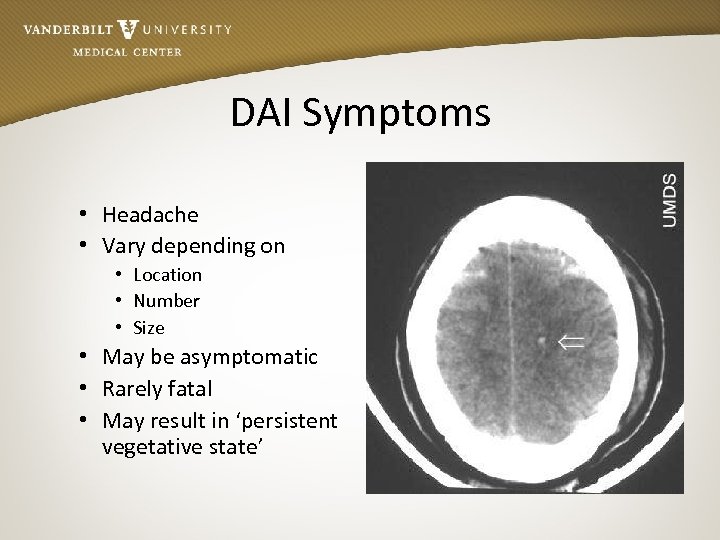
DAI Symptoms • Headache • Vary depending on • Location • Number • Size • May be asymptomatic • Rarely fatal • May result in ‘persistent vegetative state’
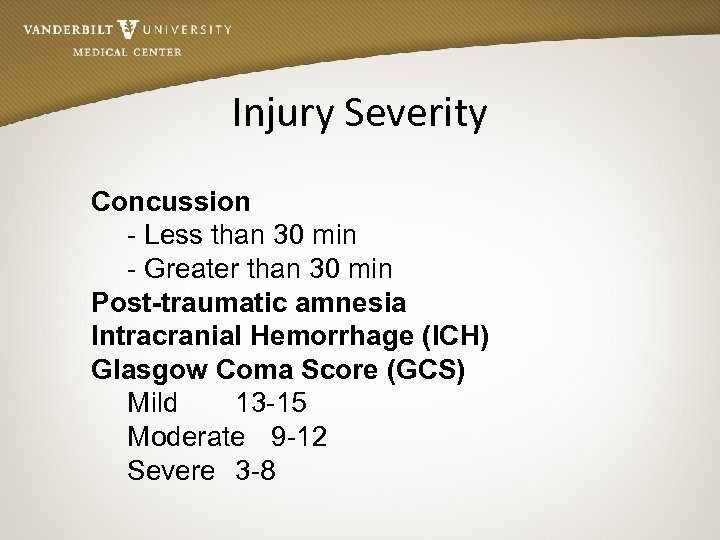
Injury Severity Concussion - Less than 30 min - Greater than 30 min Post-traumatic amnesia Intracranial Hemorrhage (ICH) Glasgow Coma Score (GCS) Mild 13 -15 Moderate 9 -12 Severe 3 -8
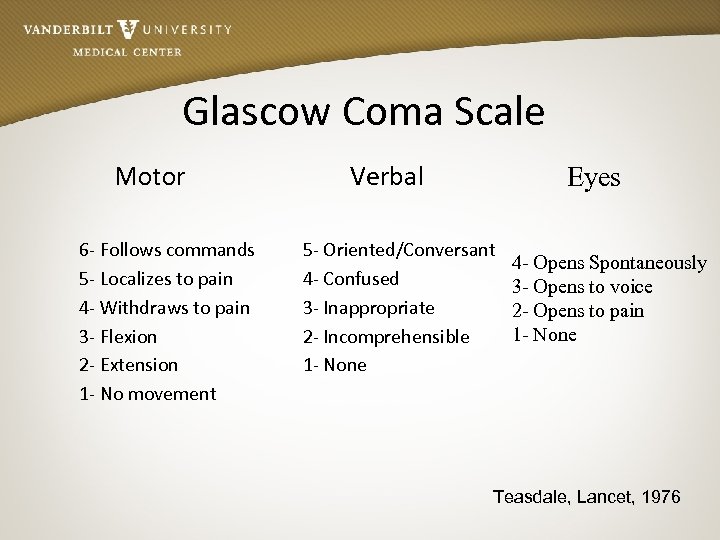
Glascow Coma Scale Motor 6 - Follows commands 5 - Localizes to pain 4 - Withdraws to pain 3 - Flexion 2 - Extension 1 - No movement Verbal Eyes 5 - Oriented/Conversant 4 - Confused 3 - Inappropriate 2 - Incomprehensible 1 - None 4 - Opens Spontaneously 3 - Opens to voice 2 - Opens to pain 1 - None Teasdale, Lancet, 1976
What Do We Do? Management • Immediate – “Time is brain” • Short-term: Intensive care / Acute Care – Monitors – Surveillance – Management • Long-term: Post-discharge
Immediate • Trauma Team: Manage Resuscitation • Protection – Anoxia – Hypotension • 25% Increased Mortality – Individually • 75% Increased Mortality – Combined
Acute Care Management • • CT scans? Head up Sedation ICP/CPP management – Osmolar therapy – Hypertonic saline • Decompressive craniotomy • Induced coma • Hypothermia
• Repeat head CT scans – Beneficial in setting of neurological deterioration Brown. J Trauma. 2007. Kaups. J Trauma. 2004. – Debated for patients with normal or stable clinical exams Wang. J Trauma. 2006. Sifri. J Trauma. 2006.
ICP Monitoring – when? • Intracranial Pressure Monitoring – All ‘salvageable’ severe TBI patients • GCS <8 • CT scan with pathology – ICH – Swelling – Herniation – Normal CT scan • • • Age >40 Posturing Sys BP <90 mm. HG
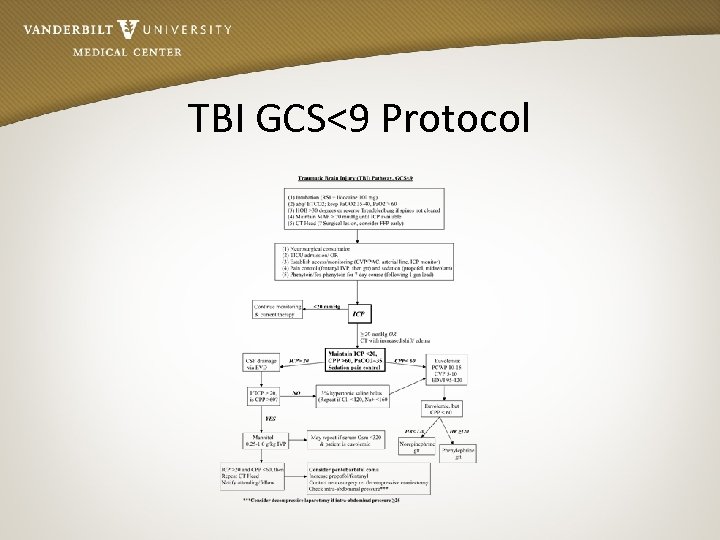
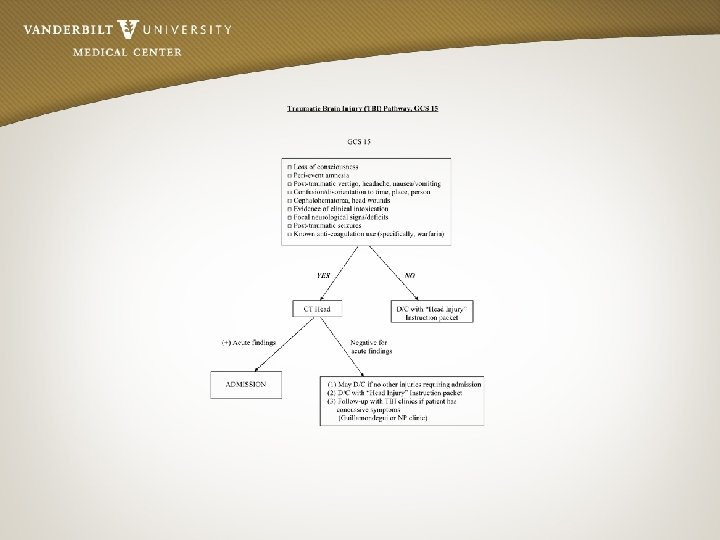
TBI GCS<9 Protocol
Hyperosmolar Therapy • Hyperosmolar Therapy – Mannitol to maintain ICPs <20 mm. Hg • Early okay • Late not much data Shackford, Jo. T, 1998 – Hypertonic Saline-no current evidence to support the use/disuse • Does decrease ICPs • No change in outcomes Himmelseher, Cur Op An, 2007
• Antiseizure Prophylaxis – Decrease incidence of EARLY seizures (<7 d) • Dilantin, maybe Valproate – NO prevention of LATE seizures (PTS) • Steroids – No use • Hyperventilation – No use
• Sedation/Induced Coma - EEG burst suppression – Prophylactically not recommended – Refractory elevated ICP after med mgmt: YES Jiang, Neursurg, 2000 – Criteria: • • Refractory intracranial hypertension Na 145 -155 (but < 160), Osm 320 -330 Repeat Head CT without surgically treatable lesion Nsgy eval recommends non surgical treatment
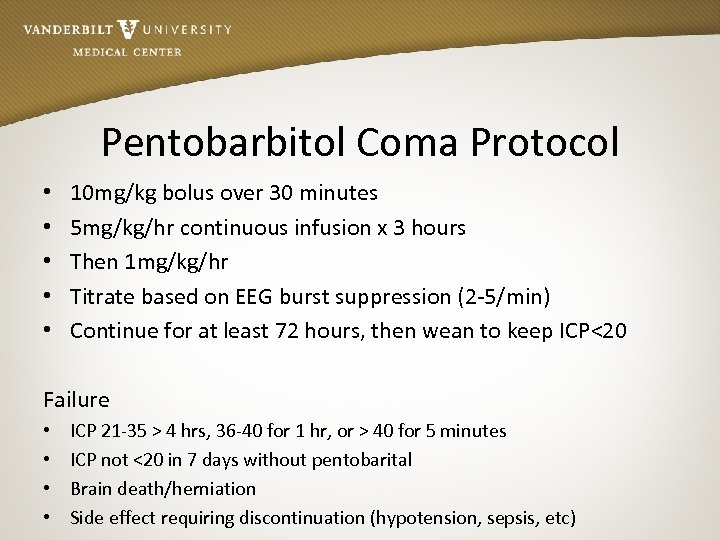
Pentobarbitol Coma Protocol • • • 10 mg/kg bolus over 30 minutes 5 mg/kg/hr continuous infusion x 3 hours Then 1 mg/kg/hr Titrate based on EEG burst suppression (2 -5/min) Continue for at least 72 hours, then wean to keep ICP<20 Failure • • ICP 21 -35 > 4 hrs, 36 -40 for 1 hr, or > 40 for 5 minutes ICP not <20 in 7 days without pentobarital Brain death/herniation Side effect requiring discontinuation (hypotension, sepsis, etc)
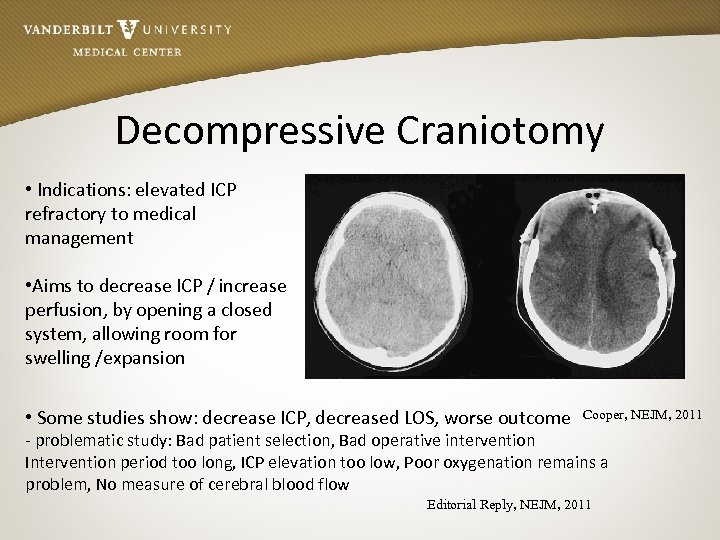
Decompressive Craniotomy • Indications: elevated ICP refractory to medical management • Aims to decrease ICP / increase perfusion, by opening a closed system, allowing room for swelling /expansion • Some studies show: decrease ICP, decreased LOS, worse outcome Cooper, NEJM, 2011 - problematic study: Bad patient selection, Bad operative intervention Intervention period too long, ICP elevation too low, Poor oxygenation remains a problem, No measure of cerebral blood flow Editorial Reply, NEJM, 2011
• Prophylactic Hypothermia – Not significant data – Early work suggests mortality benefit Abiki, Br Inj, 2000
• Other issues – Ongoing Study: – Beta-blockade of adrenergic/sympathetic surge – Alpha agents for adrenergic/sympathetic surge – Progesterone for early TBI
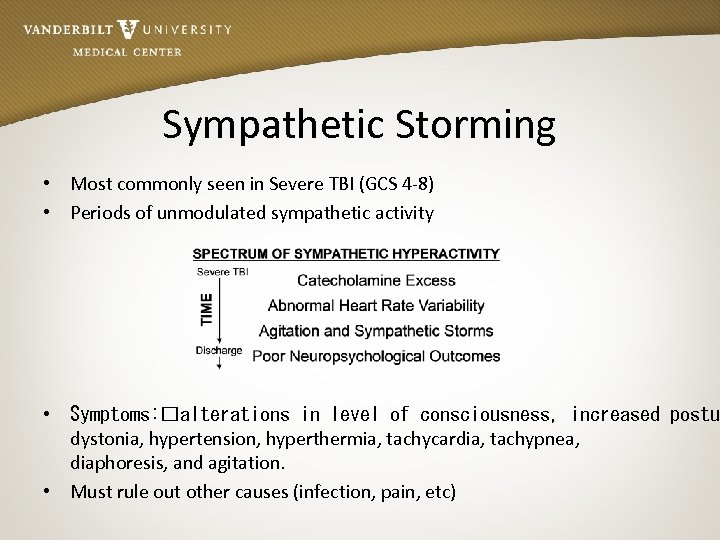
Sympathetic Storming • Most commonly seen in Severe TBI (GCS 4 -8) • Periods of unmodulated sympathetic activity • Symptoms: alterations in level of consciousness, increased postu dystonia, hypertension, hyperthermia, tachycardia, tachypnea, diaphoresis, and agitation. • Must rule out other causes (infection, pain, etc)
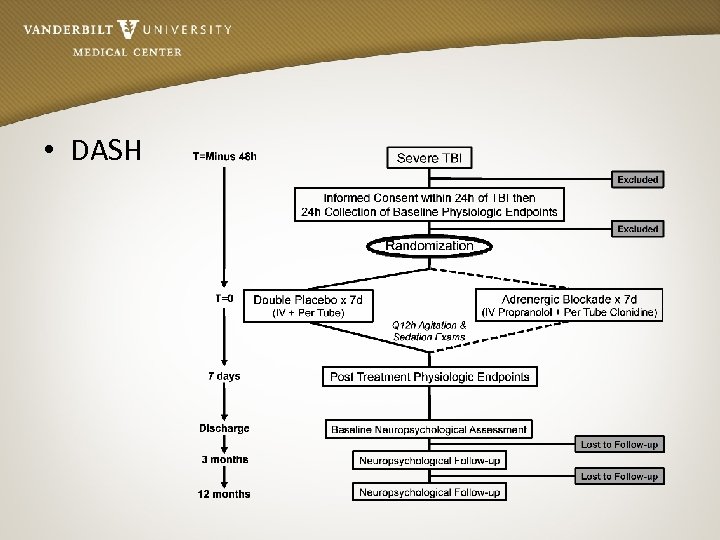
• DASH
What do we see? Presentation (Mild, Moderate, Severe) • Physical • Cognitive • Behavioral
Physical Impairments • • • Speech, vision, hearing, other sensory impairments Headaches Lack of coordination Muscle spasticity Paralysis Seizure disorders Problems with sleep Dysphagia Dysarthria (articulation and muscular/motor control of speech)
Cognitive Impairments • Short- and long-term memory deficits • Slowness of thinking • Problems with reading and writing skills • Difficulty maintaining attention / concentration • Impairments of perception, communication, reasoning, problem solving, planning, sequencing and judgment • Lack of motivation or inability to initiate activities
Behavioral Impairments • Mood swings • Denial • Depression and/or anxiety • Lowered self esteem • Sexual dysfunction • Restlessness and/or impatience • Inability to self-monitor, inappropriate social responses • Difficulty with emotional control and anger management • Inability to cope • Excessive laughing or crying • Difficulty relating to others • Irritability and/or anger • Agitation • Abrupt and unexpected acts of violence • Delusions, paranoia, mania
What Can We Do? • Normalize Day / Night cycles – Lights on, activity during day – Lights off, minimal activity at night • • Provide Safe Environment Provide Environmental Cues Provide Diversional Activity Provide Family / Caregiver Support
Long Term Management • Wide range of functional issues Wid – Cognitive changes • Memory • Reasoning • Language difficulties (communication/understanding) – Senses • Loss of hearing, taste, smell – Mental Health: • Depression • Anxiety • PTSD
• Epilepsy • Increased risk of CNS issues – Alzheimer’s – Parkinson’s Disease – Cerebrovascular issues • Stroke • Cumulative effect shown to worsen outcomes
• Acute in-patient treatment ‘standardized’ – ICU care by guideline • Post-discharge treatment personalized: – TBI severity – Injury Severity – Age – Cost Chestnut, JHTR 1999
Who Can Help? Interdisciplinary Approach • Neurosurgery Team • PT/OT/ST – Inpatient Treatment – Rehabilitation Evaluation – Cognitive evaluation / RLA Scoring – Swallow Evaluation / Education • Case Management • Social Work
Rancho Los Amigos Scoring I – No Response : Keep room calm and quiet, use calm voice, simple questions II – Generalized Response: Same as RLA I III – Localized Response: Limit visitors/stimulation, allow extra time to respond/periods of rest, reorient frequently, bring “favorites” IV – Confused, Agitated: Allow movement/activity (keep safe), limit visitors, find familiar activities that are calming. V – Confused, Inappropriate, Nonagitated: Repeat questions/comments as needed, reorient, calendars/lists, limit visitors, limit questions, make connections. VI – Confused, Appropriate: Repeat things, encourage them to repeat what they want to remember, provide cues, use calendars/lists VII - Automatic, Appropriate: Treat as an adult, provide guidance and assistance.
Cognitive Therapy • Minimal intervention improves outcome – Contact post-discharge 48 hrs – Follow-up at 5 -7 days • Cognitive assessment performed • Coping strategies for common symptoms – Follow-up at 3 months • Control Group had increased PCS complaints at follow-up Ponsford 2002
Post Acute Care • CHART/FIM scores – Severity of illness predicts poor outcome – Discharge to LTC or NH poor outcomes • Severity of illness predicted NEED for in-pt rehab • Pre-injury working (motivated) or minority (no funds) – Less likely to in-pt rehab CHART: Craig Handicap and Reporting Technique Mellick, Brain Injury, 2003
Interdisciplinary Team Follow Up • • • Trauma MD/NP Neurosurgery MD/NP SLP PT/OT Social Work Psychiatry/Psychology
Comprehensive Evaluation Clinic • • • Cognitive analysis Mental health survey Quality of life survey Social Work Peer Group
Questions? ?
References Brown, Carlos V. R. MD; Zada, Gabriel MD; Salim, Ali MD; Inaba, Kenji MD; Kasotakis, Georgios MD; Hadjizacharia, Pantelis MD; Demetriades, Demetrios MD; Rhee, Peter MD, MPH, Indications for Routine Repeat Head Computed Tomography (CT) Stratified by Severity of Traumatic Brain Injury. Journal of Trauma-Injury Infection & Critical Care: June 2007 - Volume 62 - Issue 6 - pp 1339 -1345 Boake, C. , Mc. Cauley, S. R. , Pedroza, C. , Levin, H. S. , Brown, S. A. , & Brundage, S. I. 2005. Lost productive work time after mild to moderate traumatic brain injury with and without hospitalization. Neurosurgery, 56, 994 -1003. Himmelseher, S. Hypertonic saline solutions for treatment of intracranial hypertension. Curr Opin Anaesthesiol. 2007 Oct; 20(5): 414 -26. Review. Ji-Yao Jiang, M. D. , Ph. D. , Ming-Kun Yu, M. D. , Ph. D. , and Cheng Zhu, M. D. Effect of long-term mild hypothermia therapy in patients with severe traumatic brain injury: 1 -year follow-up review of 87 cases. Journal of Neurosurgery Oct 2000 / Vol. 93 / No. 4, Pages 546 -549
Mangat, Halinder S. MD Severe Traumatic Brain Injury. Critical Care Neurology. June 2012 - Volume 18 - Issue 3, - p 532– 546 Mattox, Feliciano, Moore (2000) Trauma, 4 th Edition. Mc. Graw-Hill. Pp. 377 -399. Max, Wendy Ph. D; Mac. Kenzie, Ellen J. Ph. D; Rice, Dorothy P. Sc. D (Hon) Head injuries: Costs and consequences, 1991 June; 6(2): Mellick, Understanding outcomes based on the post-acute hospitalization pathways followed by persons with traumatic brain injury Brain Injury, VOL. 17, NO. 1, 55– 7 Ponsford Impact of early intervention on outcome following mild head injury in adults. J Neurol Neurosurg Psychiatry 2002; 73: 330 -332 doi: 10. 1136/jnnp. 73. 3. 330 Rimel RW, Giordani B, Barth JT, Boll TJ, Jane JA. 1981 Disability caused by minor head injury. Neurosurgery. 1981 Sep; 9(3): 221 -8.
Shackford, Hypertonic saline resuscitation of patients with head injury: a prospective, randomized clinical trial J Trauma. 1998 Jan; 44(1): 50 -8. Strandvik, Hypertonic saline in critical care: a review of the literature and guidelines for use in hypotensive states and raised intracranial pressure. Anaesthesia. 2009 Sep; 64(9): 990 -1003. Teasdale G, Jennett B Assessment of coma and impaired consciousness. A practical scale. Lancet. 1974 Jul 13; 2(7872): 81 -4. CDC, Report to Congress on Mild Traumatic Brain Injury in the United States: 2003 http: //www. cdc. gov/traumaticbraininjury/pdf/blue_book. pdf Guiamondegui, O. 2013 Presentation: Traumatic Brain Injury A Trauma Surgeon’s Perspective Vanderbilt University Medical Center, Division of Trauma Protocols. www. traumaburn. com http: //www. rancho. org/research/Rancho. Levels. Of. Cognitive. Functioning. pdf International Brain Injury Association. (2006) Brain injury facts. www. internationalbrain. org
Скачать презентацию Traumatic Brain Injury Linda Wilkinson MSN ACNP LMT
dfbf6e76810073820dc4daacbc293c00.ppt