


 Скачать презентацию Trauma-Informed Care Empowering Engaging Effective Joann Stephens Family
50e94c4f4d7ac98cdc039f347beeaeb6.ppt
- Количество слайдов: 79
 Trauma-Informed Care Empowering. Engaging. Effective. Joann Stephens, Family Relations Coordinator WI Office of Children’s Mental Health
 Today What do you want to get out of today’s training? 2
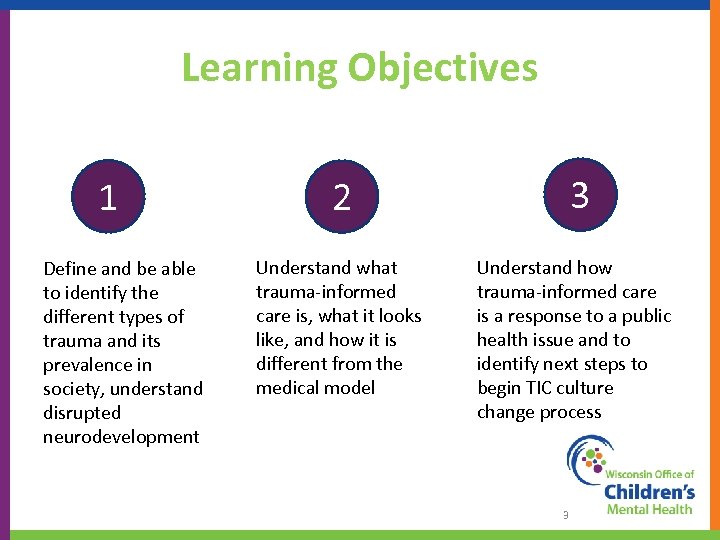 Learning Objectives 1 Define and be able to identify the different types of trauma and its prevalence in society, understand disrupted neurodevelopment 3 2 Understand what trauma-informed care is, what it looks like, and how it is different from the medical model Understand how trauma-informed care is a response to a public health issue and to identify next steps to begin TIC culture change process 3
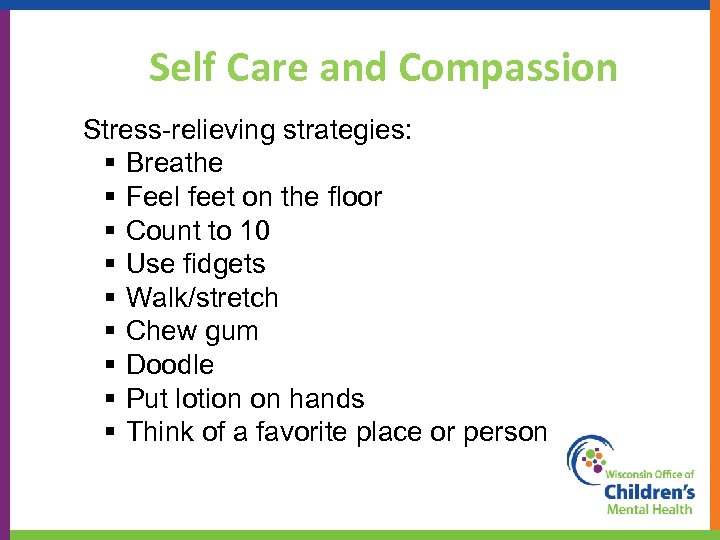 Self Care and Compassion Stress-relieving strategies: § Breathe § Feel feet on the floor § Count to 10 § Use fidgets § Walk/stretch § Chew gum § Doodle § Put lotion on hands § Think of a favorite place or person 4
 Why Trauma? Why Now? • • • Consumer Activism Prevalence Science Effective Services Hope 5
 Trauma Defined • Refers to extreme stress (e. g. threat to life, bodily integrity or sanity) that overwhelms a person’s ability to cope • Is subjective • Often results in feeling vulnerable, helpless and afraid • Often interferes with relationships and fundamental beliefs about oneself, others and one’s place in the world • Disrupts the nervous system 6
 Trauma Touches All of Us • Trauma is universal • Trauma happens regardless of: o Age o Culture o Gender o Class • Trauma is a life-shaping event 7
 Acute Trauma/PTSD • Re-experiencing: disturbing memories and thoughts, dreams, flashbacks, intense Psychological or physiological distress • Hyper-arousal: high alert, difficulty going to sleep or staying asleep, difficulty paying attention, exaggerated startle response, hyper-vigilant, usually constant, stressed, angry, irritable • Avoidance: disconnected, detached, numb, disengaged from the real world (daydreaming, fantasy, spacey), may appear to be uncaring or unmotivated, trouble remembering event 8
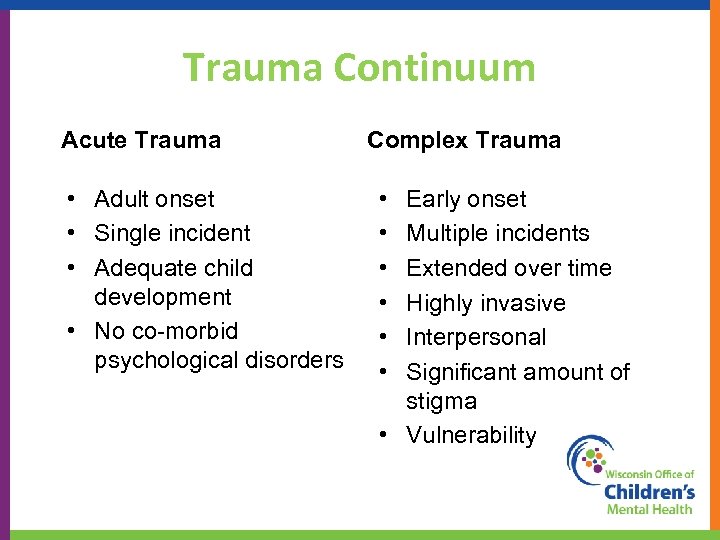 Trauma Continuum Acute Trauma • Adult onset • Single incident • Adequate child development • No co-morbid psychological disorders Complex Trauma • • • Early onset Multiple incidents Extended over time Highly invasive Interpersonal Significant amount of stigma • Vulnerability 9
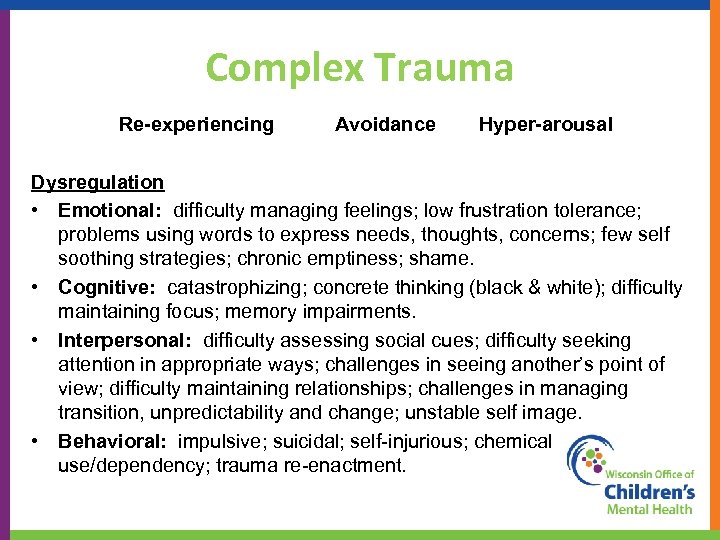 Complex Trauma Re-experiencing Avoidance Hyper-arousal Dysregulation • Emotional: difficulty managing feelings; low frustration tolerance; problems using words to express needs, thoughts, concerns; few self soothing strategies; chronic emptiness; shame. • Cognitive: catastrophizing; concrete thinking (black & white); difficulty maintaining focus; memory impairments. • Interpersonal: difficulty assessing social cues; difficulty seeking attention in appropriate ways; challenges in seeing another’s point of view; difficulty maintaining relationships; challenges in managing transition, unpredictability and change; unstable self image. • Behavioral: impulsive; suicidal; self-injurious; chemical use/dependency; trauma re-enactment. 10
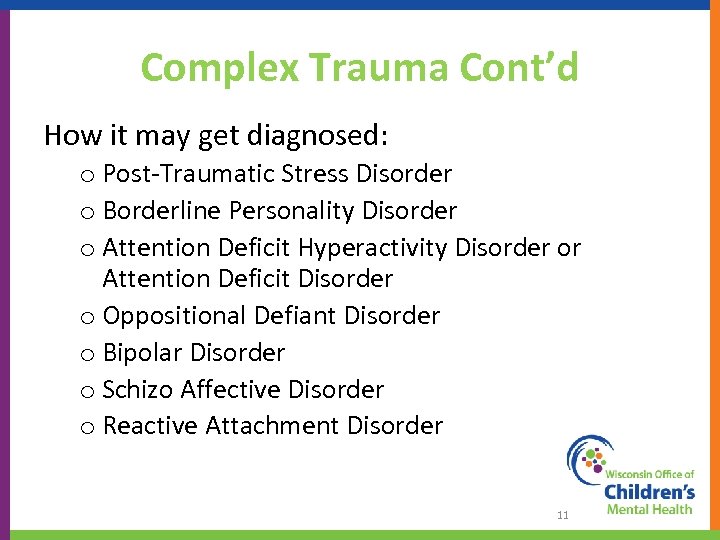 Complex Trauma Cont’d How it may get diagnosed: o Post-Traumatic Stress Disorder o Borderline Personality Disorder o Attention Deficit Hyperactivity Disorder or Attention Deficit Disorder o Oppositional Defiant Disorder o Bipolar Disorder o Schizo Affective Disorder o Reactive Attachment Disorder 11
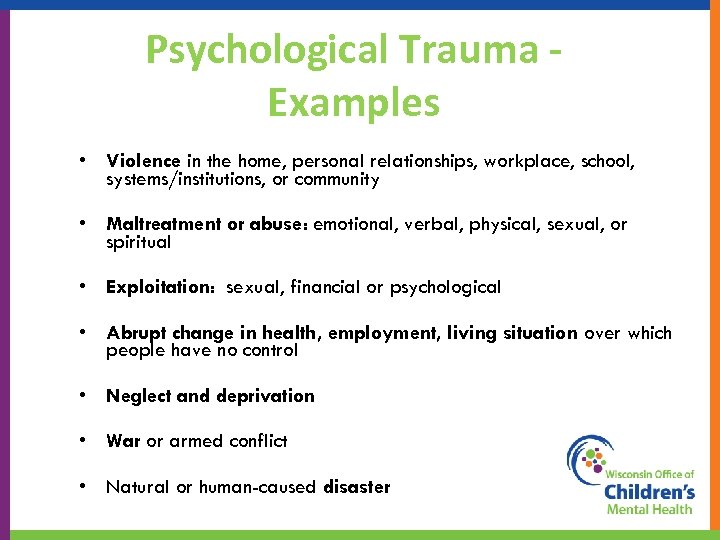 Psychological Trauma Examples • Violence in the home, personal relationships, workplace, school, systems/institutions, or community • Maltreatment or abuse: emotional, verbal, physical, sexual, or spiritual • Exploitation: sexual, financial or psychological • Abrupt change in health, employment, living situation over which people have no control • Neglect and deprivation • War or armed conflict • Natural or human-caused disaster 12
 Sanctuary Trauma The overt and covert traumatic events that occur in settings that are socially sanctioned as ‘safe’: § Medical, mental health & substance use disorder services § Corrections § Foster care § School § Places of worship § Boarding schools 13
 Historical Trauma • Collective and cumulative emotional and psychological wounding across generations, emanating from massive group trauma • Generates survivor guilt, depression, low self-esteem, psychic numbing, anger, and physical symptoms. • Creates the community’s ‘soul mood’. (Maria Yellow Horse Brave Heart) See info re. Menominee Termination http: //www. mpm. edu/wirp/icw-97. html See info re. Post Traumatic Slave Syndrome http: //joydegruy. com/resources-2/post-traumatic-slave-syndrome See info re. The Black Holocaust Museum http: //www. abhmuseum. org/ 14
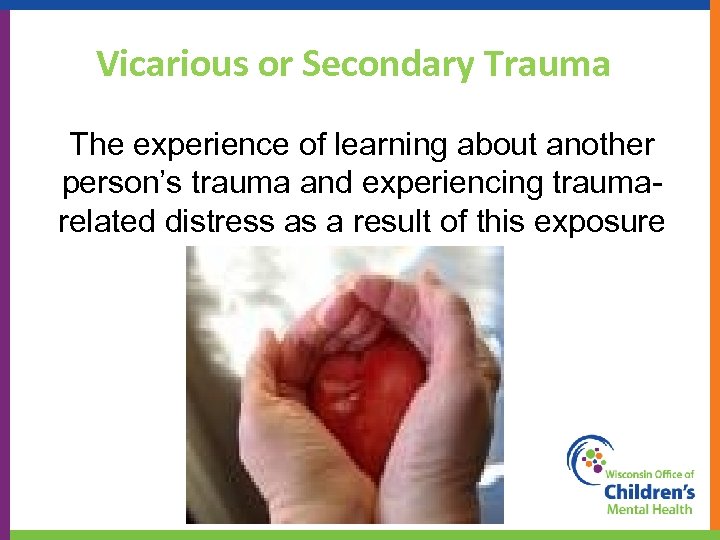 Vicarious or Secondary Trauma The experience of learning about another person’s trauma and experiencing traumarelated distress as a result of this exposure 15
 Prevalence • 56% of the general population reported at least one traumatic event. (Kessler, 1996) • 90% of mental health clients have been exposed to a traumatic event and most have multiple exposures. (Muesar, 1998) • 83% of females and 32% of males with developmental disabilities have experienced sexual assault. Of those who were assaulted, 50% had been assaulted 10 or more times. (Hand, 1986) • 97% of homeless women with mental illness experienced severe physical and/or sexual abuse. (Goodman et al. , 1997) 16
 Prevalence cont’d • Women in community samples report a lifetime history of physical & sexual abuse ranging from 36 -51%, while women with substance abuse problems report a lifetime history ranging from 55 -99%. (Najavits et. al. , 1997) • 75 -93% of youth entering the juvenile justice system are estimated to have experienced some degree of traumatic victimization. (Healing Invisible Wounds, Justice Policy Institute) • 92% of incarcerated girls reported sexual, physical or severe emotional abuse in childhood. (Healing Invisible Wounds, Justice Policy Institute) 17
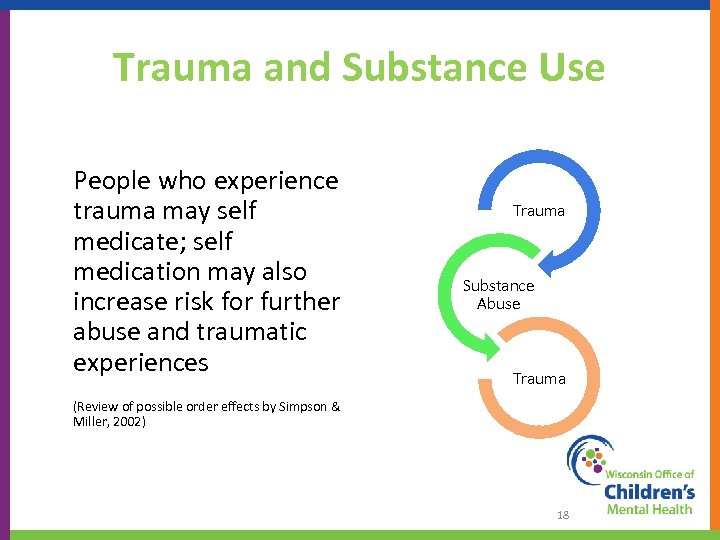 Trauma and Substance Use People who experience trauma may self medicate; self medication may also increase risk for further abuse and traumatic experiences Trauma Substance Abuse Trauma (Review of possible order effects by Simpson & Miller, 2002) 18
 Prevalence of Trauma and Substance Abuse • More than 50 percent of women seeking substance abuse treatment report one or more lifetime traumas • A majority of women in substance abuse treatment have a history of physical and sexual abuse • A significant number of clients in inpatient treatment also have subclinical traumatic stress symptoms or PTSD 19
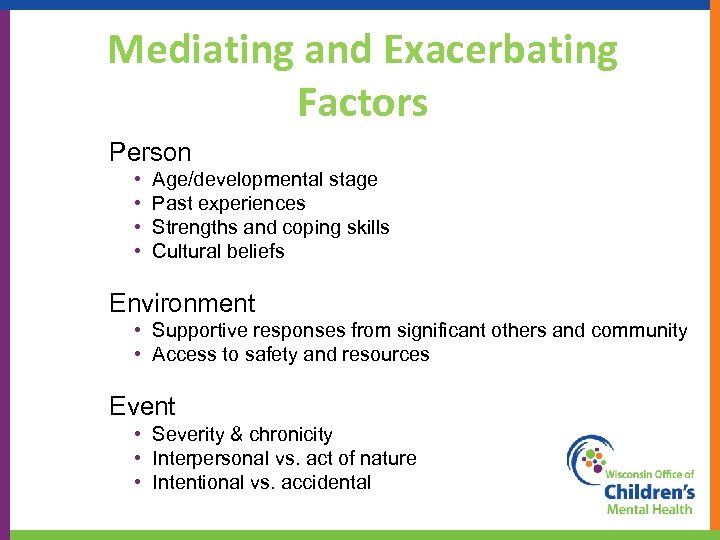 Mediating and Exacerbating Factors Person • • Age/developmental stage Past experiences Strengths and coping skills Cultural beliefs Environment • Supportive responses from significant others and community • Access to safety and resources Event • Severity & chronicity • Interpersonal vs. act of nature • Intentional vs. accidental 20
 Early Relationships are developed through the emotional bond between the child and caregiver. It is through this relationship that we learn to: § § § Regulate emotions/self-soothe Develop trust in others Freely explore our environment Understand ourselves and others Understand that we can impact the world around us Begin to establish a worldview 21
 Still Face Experiment Watch Dr. Edward Tronick explain and demonstrate the still face experiment between a mom and her baby http: //www. youtube. com/watch? v=apz. XGEb. Zht 0 22
 Adverse Childhood Experiences ACEs 23
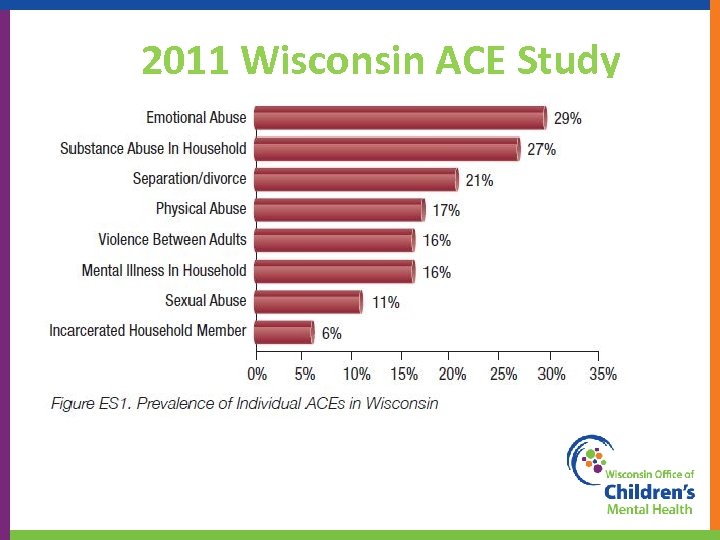
 Adverse Childhood Experience (ACE) Study National ACE Study http: //www. cdc. gov/nccdphp/ACE/ http: //acestoohigh. com/ Wisconsin ACE Study http: //wichildrenstrustfund. org/files/Wisconsi n. ACEs. pdf 24
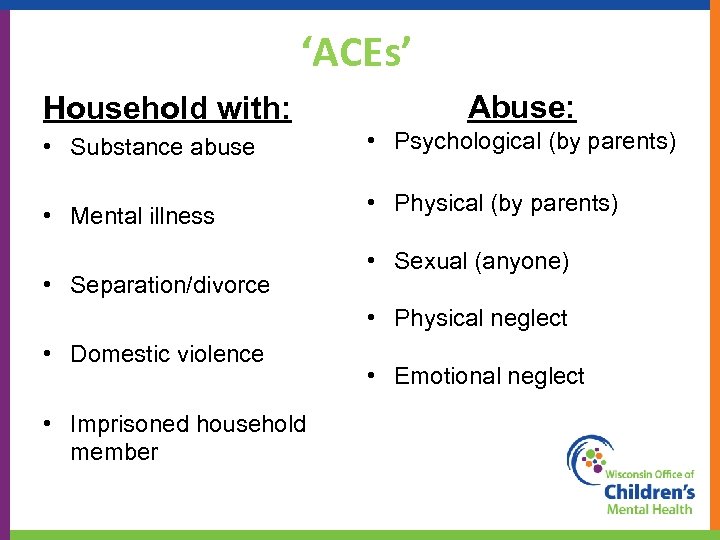 ‘ACEs’ Household with: • Substance abuse • Mental illness • Separation/divorce Abuse: • Psychological (by parents) • Physical (by parents) • Sexual (anyone) • Physical neglect • Domestic violence • Emotional neglect • Imprisoned household member 25
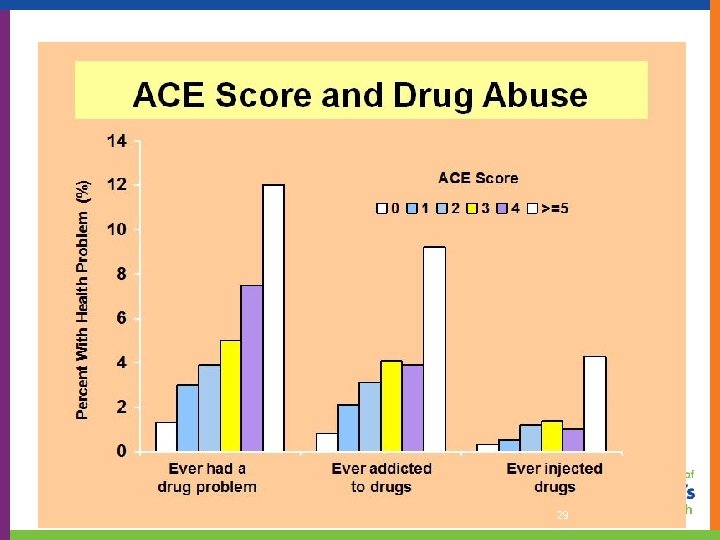
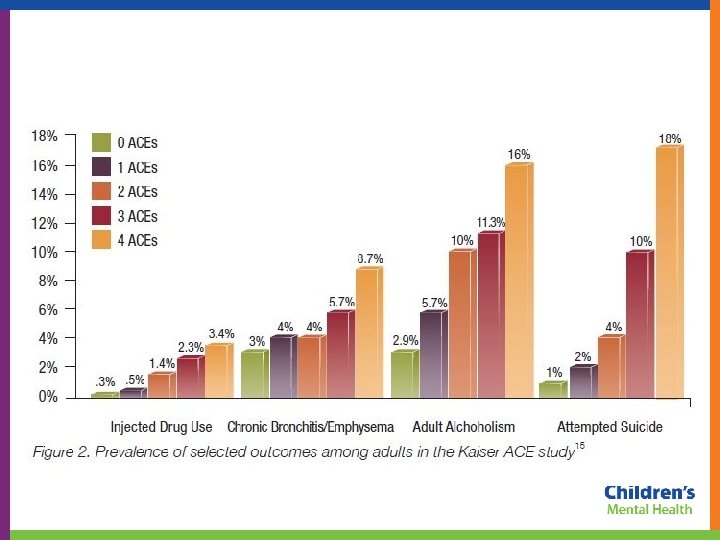
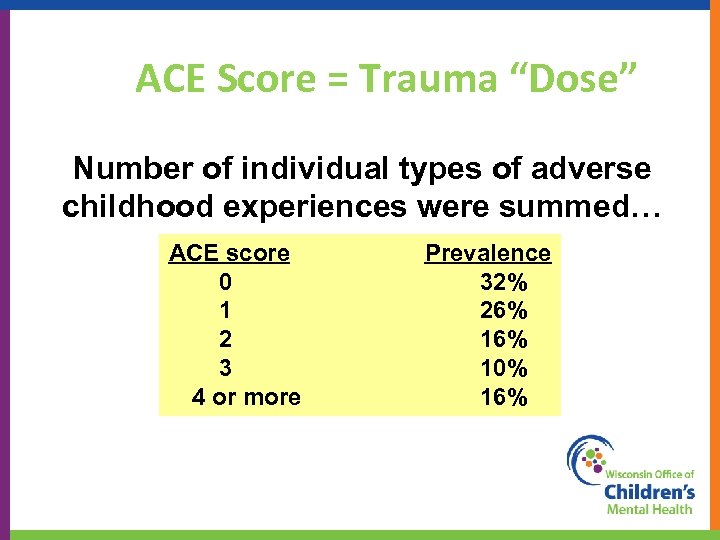 ACE Score = Trauma “Dose” Number of individual types of adverse childhood experiences were summed… ACE score 0 1 2 3 4 or more Prevalence 32% 26% 10% 16% 26
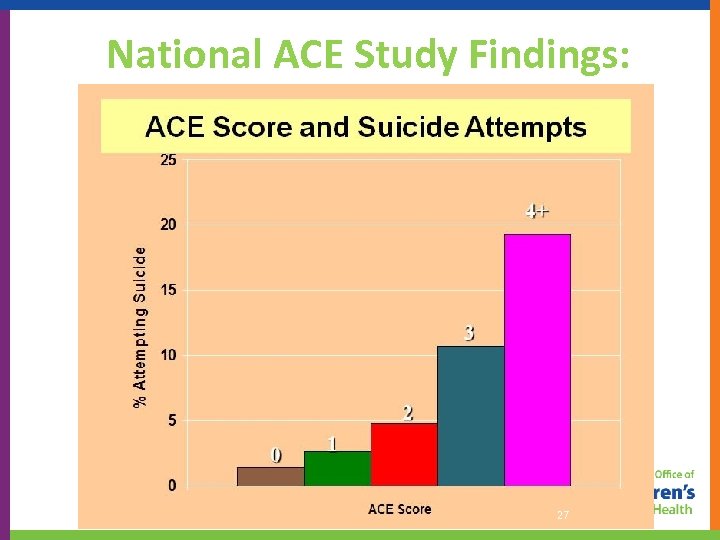 National ACE Study Findings: 27
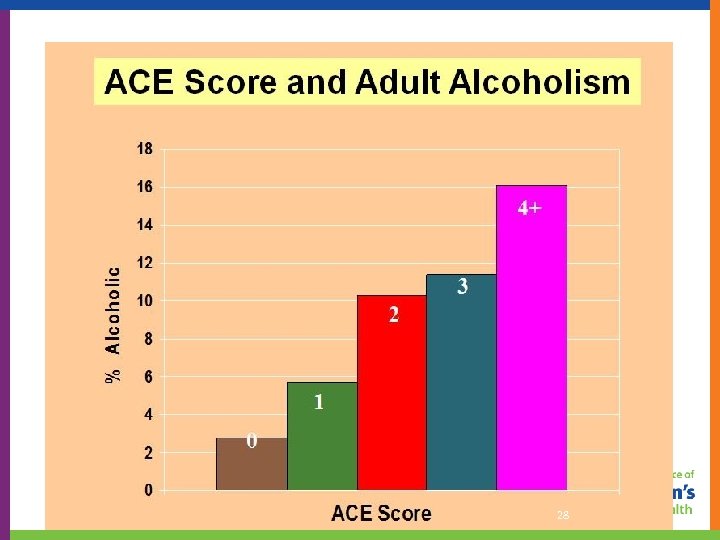 28
28
 29
29
 2011 Wisconsin ACE Study 30
 31
31
 32
32
 33
33
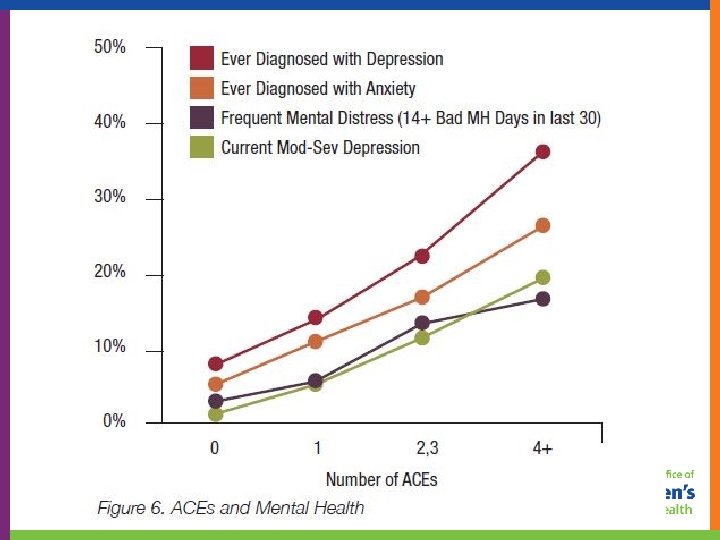
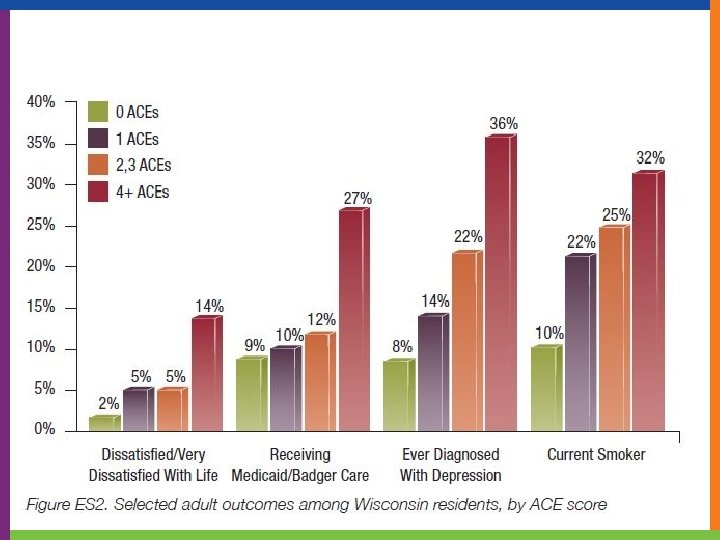
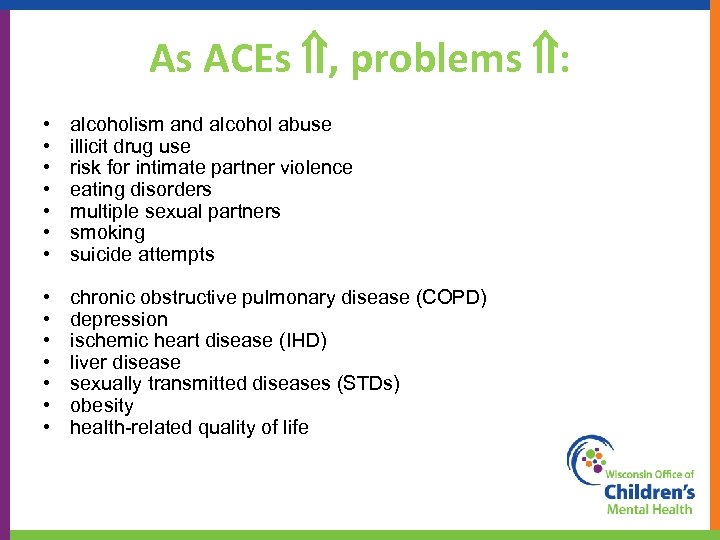 As ACEs , problems : • • alcoholism and alcohol abuse illicit drug use risk for intimate partner violence eating disorders multiple sexual partners smoking suicide attempts • • chronic obstructive pulmonary disease (COPD) depression ischemic heart disease (IHD) liver disease sexually transmitted diseases (STDs) obesity health-related quality of life 34
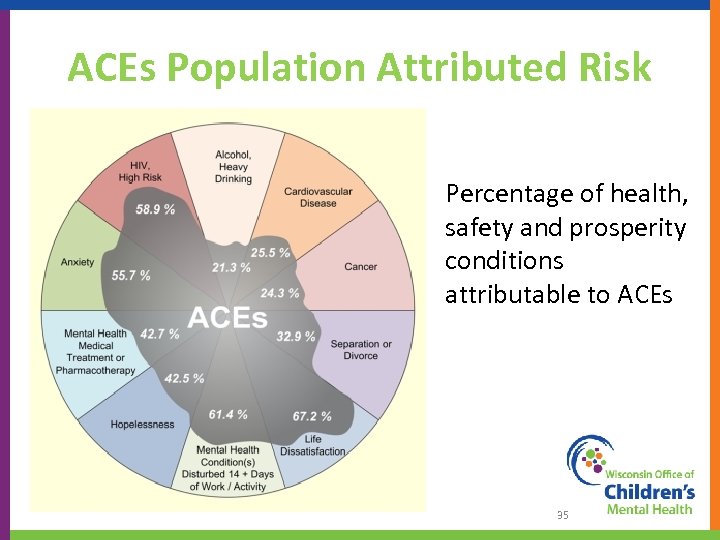 ACEs Population Attributed Risk Percentage of health, safety and prosperity conditions attributable to ACEs 35
 Understanding Disrupted Neurodevelopment 36
 Dr. Dan Siegal http: //www. youtube. com/watch? v=gm 9 CIJ 74 Oxw 37
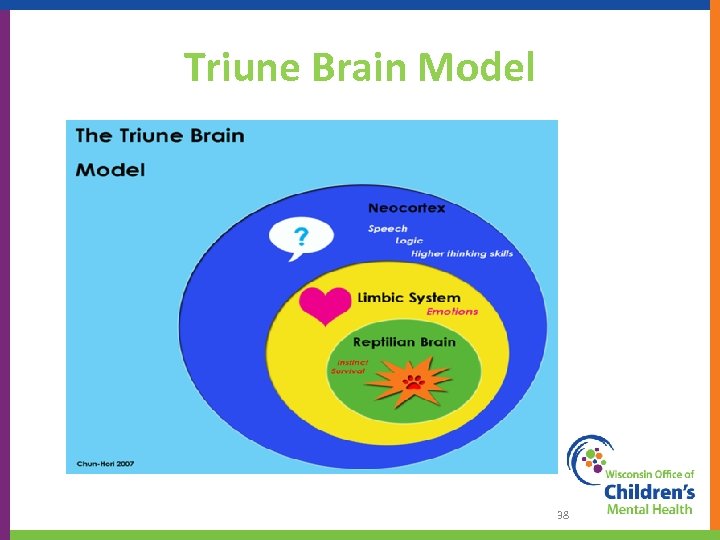 Triune Brain Model 38
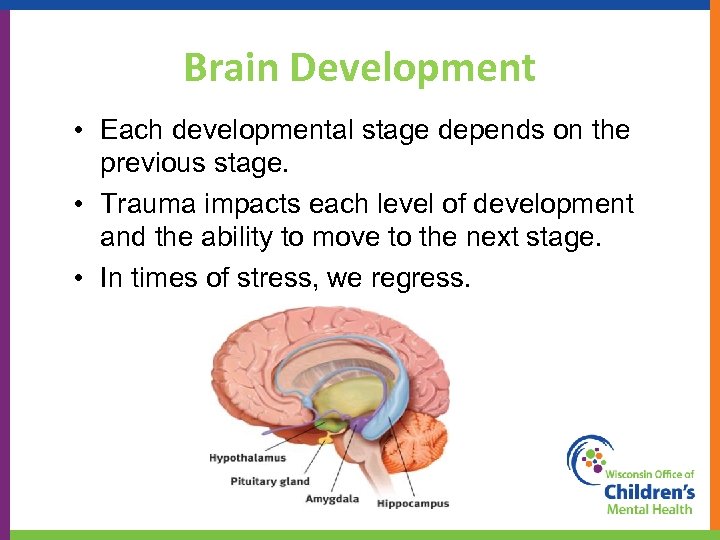 Brain Development • Each developmental stage depends on the previous stage. • Trauma impacts each level of development and the ability to move to the next stage. • In times of stress, we regress. 39
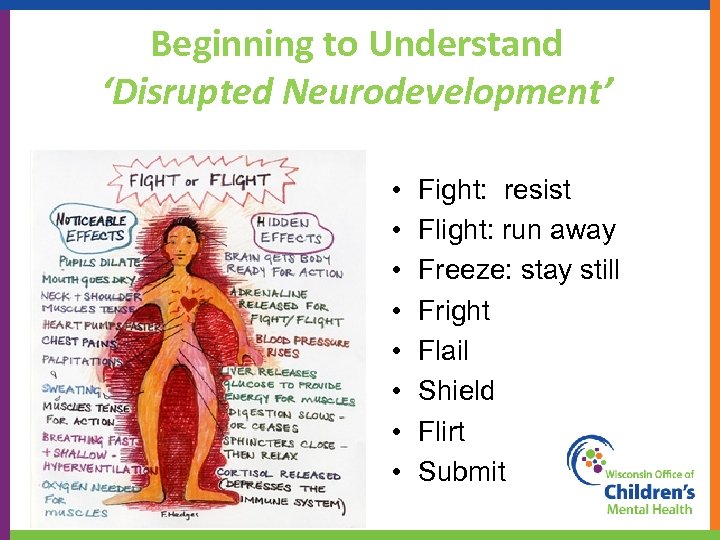 Beginning to Understand ‘Disrupted Neurodevelopment’ • • Fight: resist Flight: run away Freeze: stay still Fright Flail Shield Flirt Submit 40
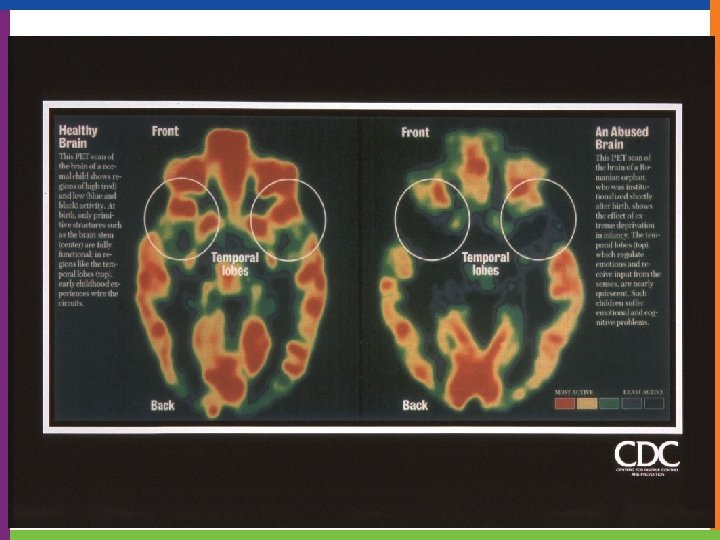
 Stress Response and the Brain If there is danger the ‘thinking brain’ goes off line allowing the doing brain to act. Traumatized children may experience changes in brain structures, neuro-chemistry & genetic expression. 41
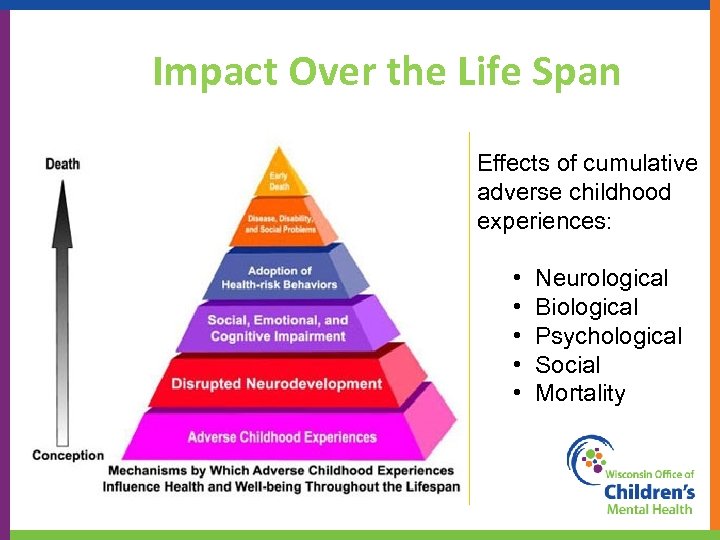 Impact Over the Life Span Effects of cumulative adverse childhood experiences: • • • Neurological Biological Psychological Social Mortality 43
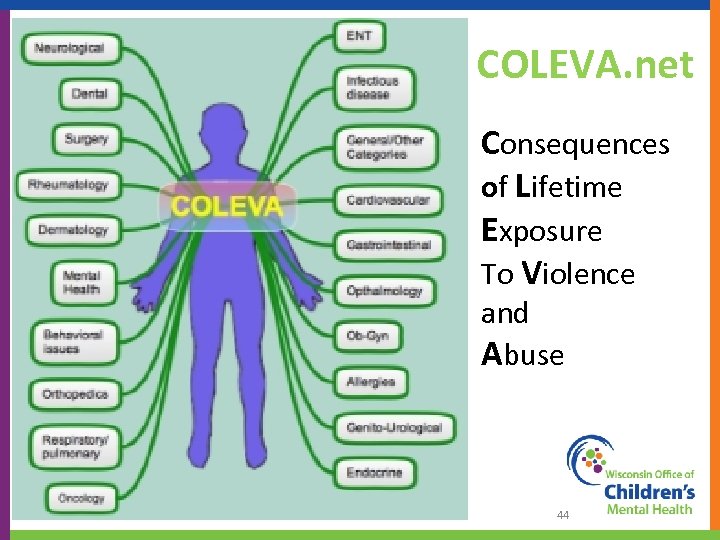 COLEVA. net Consequences of Lifetime Exposure To Violence and Abuse 44
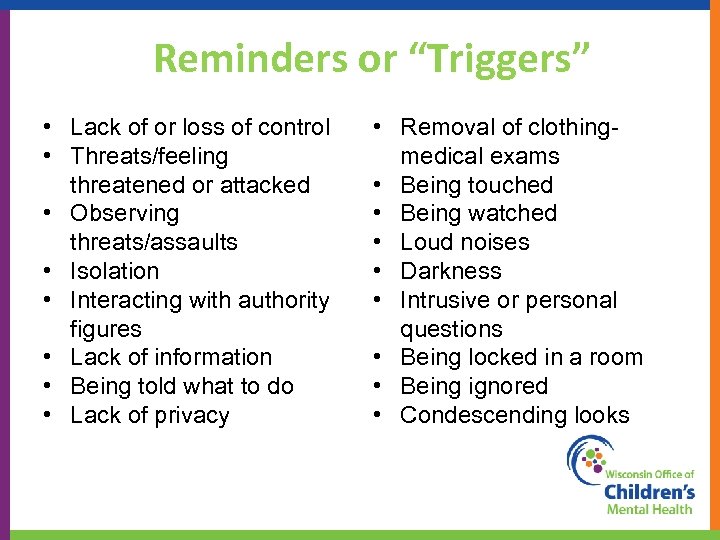 Reminders or “Triggers” • Lack of or loss of control • Threats/feeling threatened or attacked • Observing threats/assaults • Isolation • Interacting with authority figures • Lack of information • Being told what to do • Lack of privacy • Removal of clothingmedical exams • Being touched • Being watched • Loud noises • Darkness • Intrusive or personal questions • Being locked in a room • Being ignored • Condescending looks 45
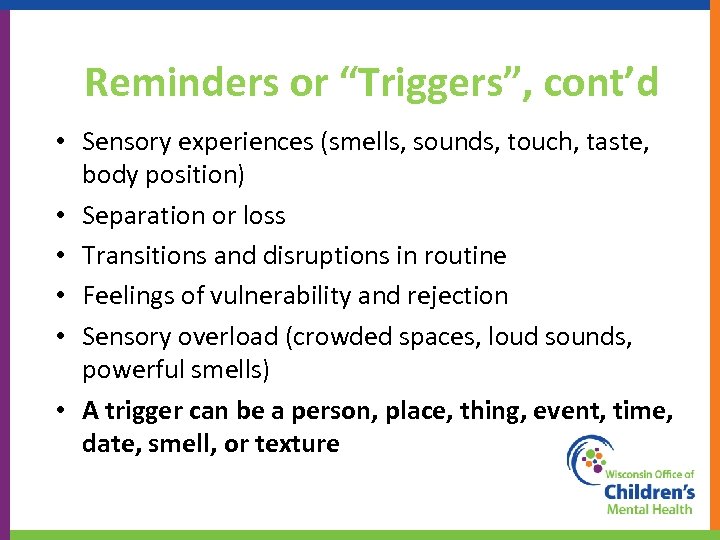 Reminders or “Triggers”, cont’d • Sensory experiences (smells, sounds, touch, taste, body position) • Separation or loss • Transitions and disruptions in routine • Feelings of vulnerability and rejection • Sensory overload (crowded spaces, loud sounds, powerful smells) • A trigger can be a person, place, thing, event, time, date, smell, or texture 46
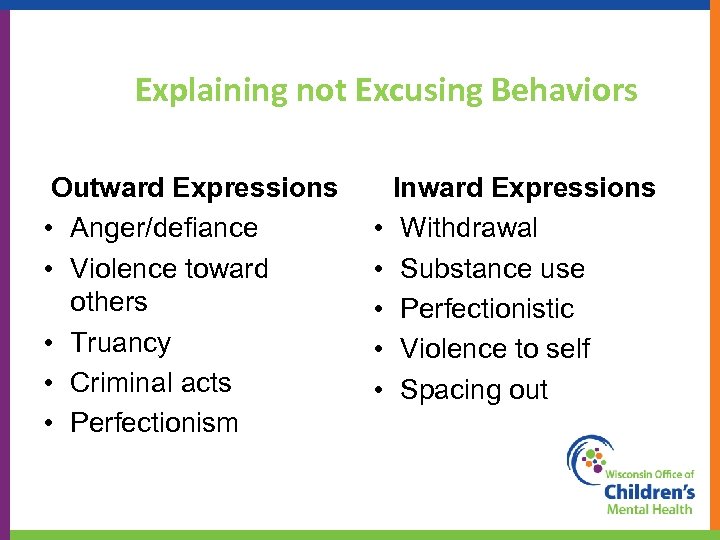 Explaining not Excusing Behaviors Outward Expressions • Anger/defiance • Violence toward others • Truancy • Criminal acts • Perfectionism • • • Inward Expressions Withdrawal Substance use Perfectionistic Violence to self Spacing out 47
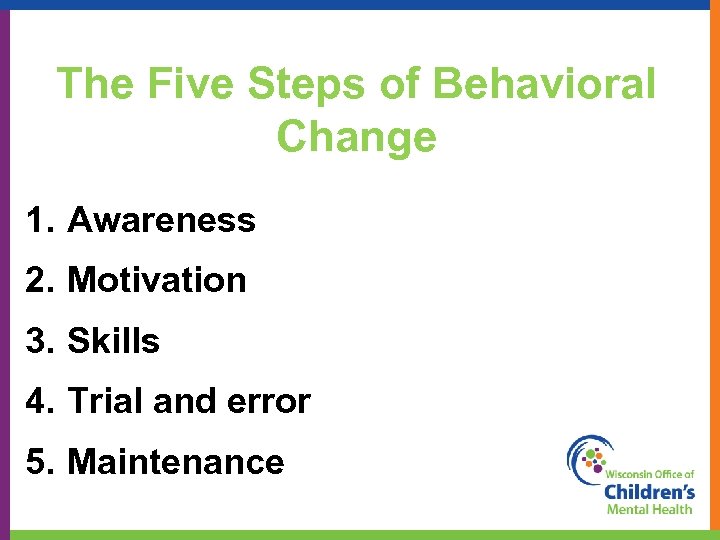 The Five Steps of Behavioral Change 1. Awareness 2. Motivation 3. Skills 4. Trial and error 5. Maintenance
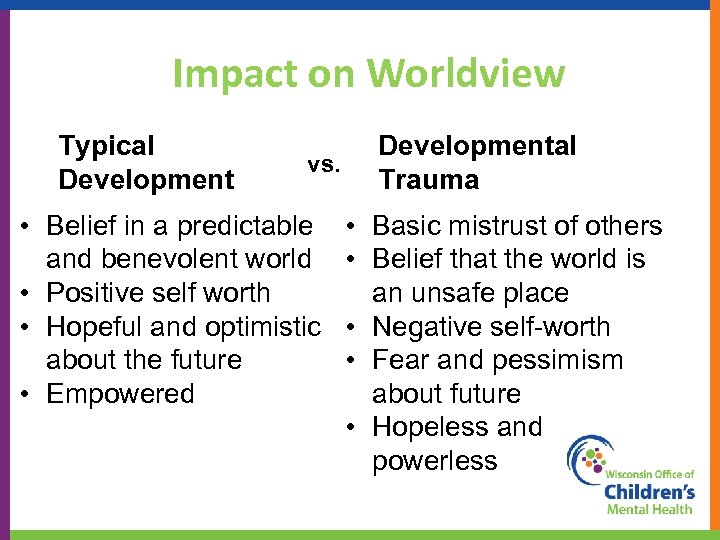 Impact on Worldview Typical Development vs. • Belief in a predictable and benevolent world • Positive self worth • Hopeful and optimistic about the future • Empowered Developmental Trauma • Basic mistrust of others • Belief that the world is an unsafe place • Negative self-worth • Fear and pessimism about future • Hopeless and powerless 49
 Addressing Trauma World View • No place is safe • Other people are unsafe and cannot be trusted • My own actions, thoughts and feelings are unsafe • I expect crisis, danger and loss • I have no worth and no abilities 50
 Trauma-Informed Care (TIC) 51
 Why Trauma-Informed Care? “We are a traumatized field working with traumatized clients, sending them to a traumatized recovery community. ” - Dan Griffin 52
 Do No Harm “We need to presume the people we serve have a history of traumatic stress and exercise “universal precautions” by creating systems of care that are trauma informed. ” (Hodas, 2005) 53
 Trauma-Informed Care What it is A principle-based culture change process What it is not An intervention to address PTSD ---------------------------Move from ‘What’s wrong with you? ’ to ‘What happened to you? ’ 54
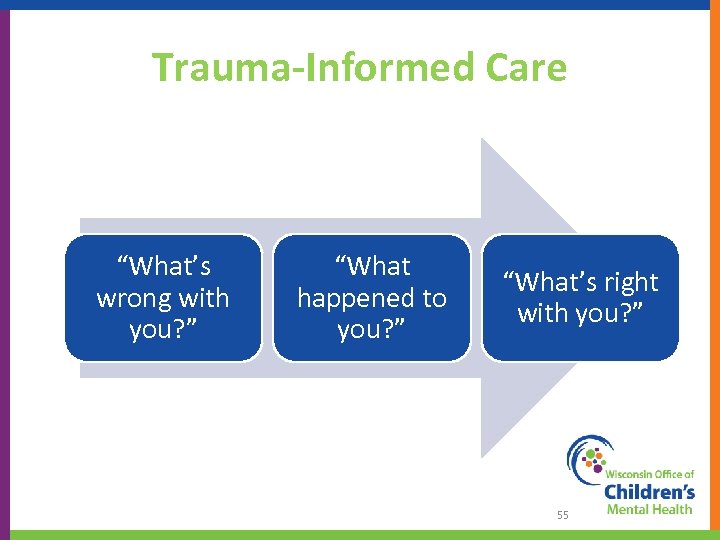 Trauma-Informed Care “What’s wrong with you? ” “What happened to you? ” “What’s right with you? ” 55
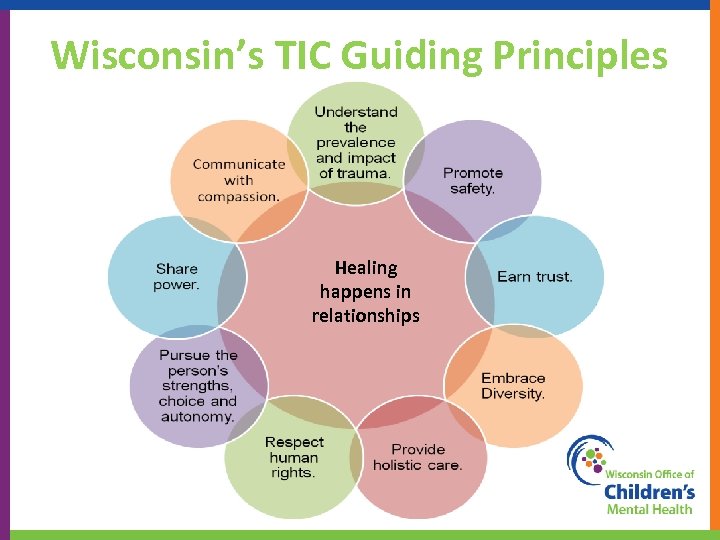 Wisconsin’s TIC Guiding Principles Healing happens in relationships 56
 SAMHSA’s TIC Guiding Principles Incorporate knowledge about trauma prevalence, impact, and recovery – in all aspects of service delivery § § § § § Physical and Emotional Safety Trustworthiness and Transparency Collaboration & Mutuality Empowerment Voice & Choice Peer Support and Mutual Self-Help Resilience and Strengths-Based Inclusiveness and Shared Purpose Cultural, Historical and Gender Issues Change Process (SAMHSA work group, 2012) 57
 Trauma-Informed Care TIC: o Is a way of being o Is understanding what people are going through o Is a way of talking o Is a way of offering care 58
 NOT Triggering Traumatic-based Behaviors • • • Earning Trust Radical Calmness Listening Construct Rather than Destruct Body Language Understanding People Regulate Themselves Differently Knowing Your Own Buttons Physical Space and Touching Boundaries, Boundaries
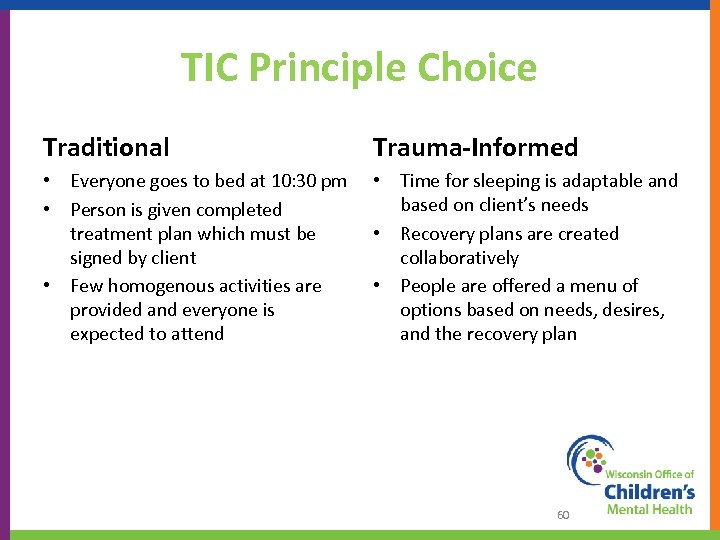 TIC Principle Choice Traditional Trauma-Informed • Everyone goes to bed at 10: 30 pm • Person is given completed treatment plan which must be signed by client • Few homogenous activities are provided and everyone is expected to attend • Time for sleeping is adaptable and based on client’s needs • Recovery plans are created collaboratively • People are offered a menu of options based on needs, desires, and the recovery plan 60
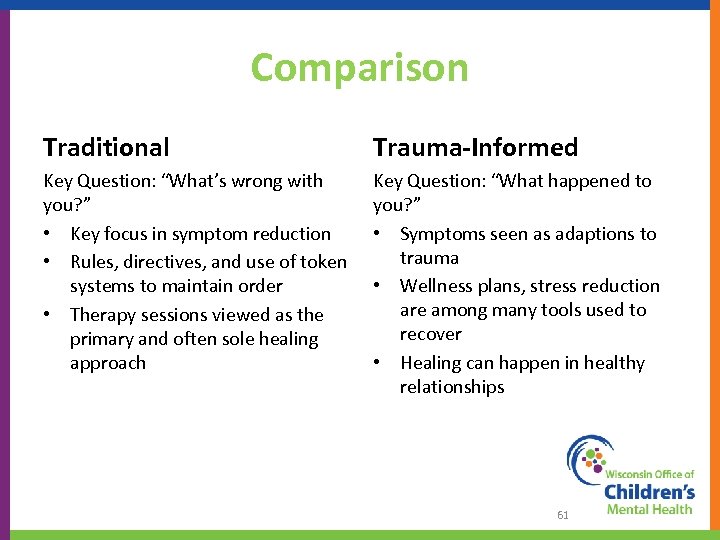 Comparison Traditional Trauma-Informed Key Question: “What’s wrong with you? ” • Key focus in symptom reduction • Rules, directives, and use of token systems to maintain order • Therapy sessions viewed as the primary and often sole healing approach Key Question: “What happened to you? ” • Symptoms seen as adaptions to trauma • Wellness plans, stress reduction are among many tools used to recover • Healing can happen in healthy relationships 61
 Re-traumatization • A situation, attitude, interaction, or environment that replicates the events or dynamics of the original trauma that triggers overwhelming feelings • Can be obvious or not so obvious • Usually unintentional • It is always hurtful 62
 What Does TIC Look Like? • • Avoid forcing eye contact Be aware of your proximity Avoid asking too many questions Pace meetings by offering breaks Draw upon past success Ask before touching or hugging Provide choice when possible Ask about person’s goals and priorities 63
 What Does TIC Look Like? • During emotional times ask “How can I support you right now? ” • When the trauma story overwhelms or leaves you speechless, be willing to sit in supportive silence • Provide clear information about when, where, and by whom services will be provided • Be prepared to repeat information many times; repetition is commonly needed when consumers are working with an overwhelmed nervous system • Always hold the person in high regard! 64
 What do I need to know about Myself? • How do I respond to stressors? What are my coping skills? • How do I interact with others? How do I view their responses? 65
 Safety Best practices: • • Avoid re-traumatization Consider the role of shame in both addiction and trauma Avoid judgments Be genuine as you build rapport Ask open-ended questions Convey experience, strength and hope Have closure strategies ready 66
 Public Health Interventions • Exposure to adversity is a public health issue o Three levels of intervention: primary, secondary, and tertiary o Primary intervention is aimed at everyone-universal precautions o Secondary interventions are aimed at people who are at risk for a problem o Tertiary interventions focus on trying to help people who already have whatever problems it is we are defining (Sandra Bloom, 2015) 67
 Going Forward with TIC • Based on what we know, it is time for all our sectors to take a lifespan approach • As a society, we have a moral responsibility to do something with the knowledge we now have that most of the suffering brought about in the world today is preventable (Sandra Bloom, 2015) 68
 TIC and Organizational Culture Change • • Need leadership buy-in and ongoing support TIC Champions Meaningful consumer involvement Trauma-sensitive human resource practices Trauma-sensitive environment Trauma sensitive strategies and tools Work toward fidelity 69
 TIC in Wisconsin Systems • DHS – Trauma Informed Care Transformation: https: //www. dhs. wisconsin. gov/tic/index. htm • DCF – Trauma Project: http: //dcf. wisconsin. gov/children/trauma_project/default. htm • DPI – Trauma Sensitive Schools: http: //dpi. wi. gov/sspw/mentalhealth/trauma/modules • Children’s Mental Health Collective Impact TIC Workgroup: http: //children. wi. gov/Pages/Integrate/Trauma. Informed. Care. Work group. aspx • OCMH Collaboration Grid: http: //children. wi. gov/Pages/Whatwedo/Overview. aspx • Fostering Futures: http: //www. fosteringfutureswisconsin. org/ 70
 General Trauma Resources • National Center for Trauma-Informed Care http: //mentalhealth. samhsa. gov/nctic/ • National Center for Posttraumatic Stress Disorder http: //www. ncptsd. org/ • National Child Traumatic Stress Network http: //www. nctsn. org/ • International Society for Traumatic Stress Studies http: //www. istss. org/ • International Society for the Study of Trauma and Dissociation http: //www. isstd. org/ • The Anna Institute http//www. annafoundation. org 71
 Connection, Empathy, & Resilience 72
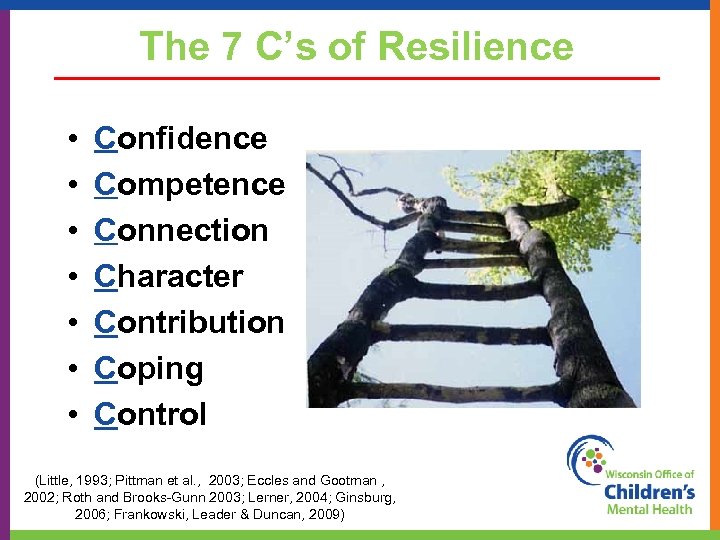 The 7 C’s of Resilience • • Confidence Competence Connection Character Contribution Coping Control (Little, 1993; Pittman et al. , 2003; Eccles and Gootman , 2002; Roth and Brooks-Gunn 2003; Lerner, 2004; Ginsburg, 2006; Frankowski, Leader & Duncan, 2009)
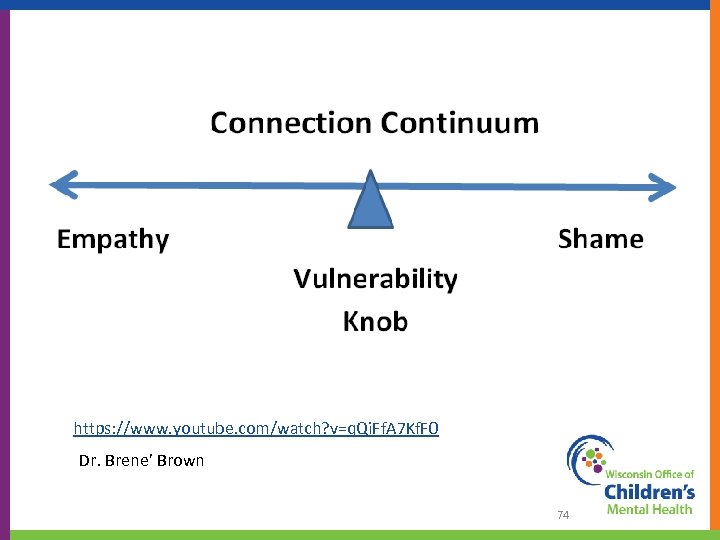 https: //www. youtube. com/watch? v=q. Qi. Ff. A 7 Kf. F 0 Dr. Brene’ Brown 74
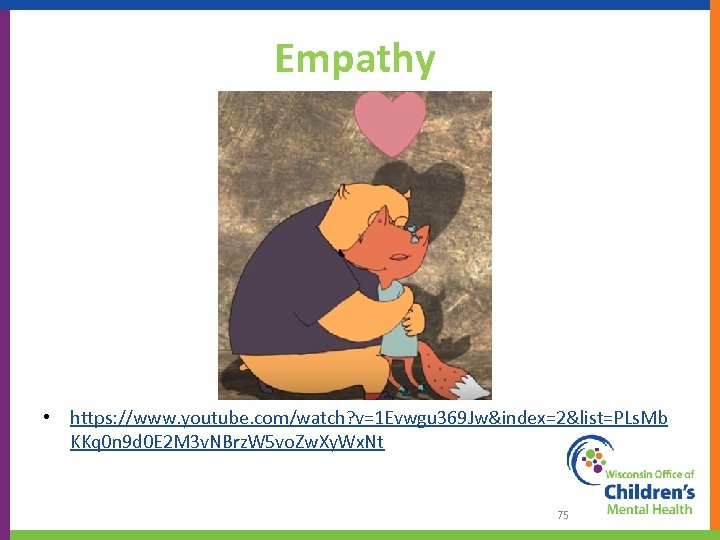 Empathy • https: //www. youtube. com/watch? v=1 Evwgu 369 Jw&index=2&list=PLs. Mb KKq 0 n 9 d 0 E 2 M 3 v. NBrz. W 5 vo. Zw. Xy. Wx. Nt 75
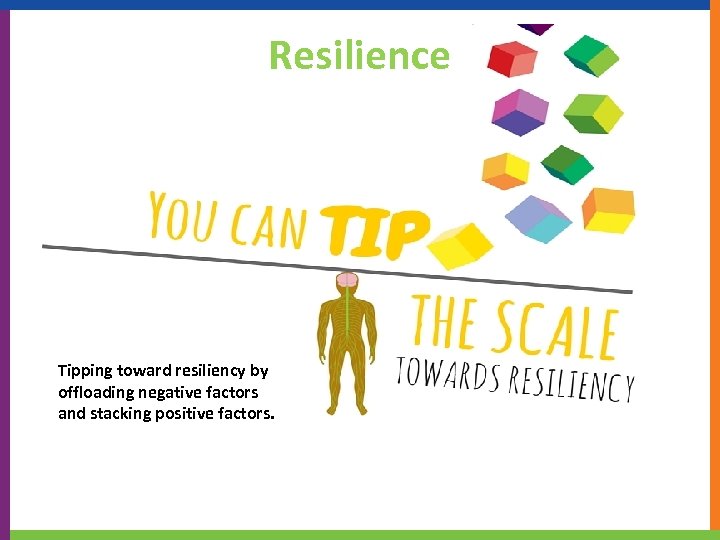 Resilience Tipping toward resiliency by offloading negative factors and stacking positive factors.
 Resilience Resources • Children’s Mental Health Collective Impact Resilience Committee: http: //children. wi. gov/Pages/Integrate/Resilience. aspx • Dr. Ross Greene - Lives in the Balance: http: //www. livesinthebalance. org/ • Circle of Security: http: //circleofsecurity. net/ • Triple P - Positive Parenting Program: http: //www. triplepparenting. net/glo-en/home/ • Nan Henderson - Resiliency in Action: www. resiliency. com • Grounding Techniques: http: //www. anxietybc. com/sites/default/files/adult_hmptsd. pdf • Sensory Processing Disorder: http: //www. sensory-processingdisorder. com/ • Dr. Carol Dweck – Mindset Works: https: //www. mindsetworks. com/science/ • Guide to Resilience: http: //preventchildabuse. org/wpcontent/uploads/2016/09/Resilience-Guide-FINAL. pdf 77
 Summary Statements • Trauma is extreme stress that is universal, prevalent, and lives in the body • Adverse childhood experiences are linked to numerous physical, neurological and social problems • Trauma-informed care is a culture change process that asks: “What happened to you? ” rather than, “What’s wrong with you? ” • We can all be resilience builders! 78
 Questions? Joann Stephens, Family Relations Coordinator Wisconsin Office of Children’s Mental Health Joann. Stephens@wisconsin. gov 608 -266 -9336 If you would like to be added to the Wisconsin TIC List Serve, please follow this link: http: //www. dhs. wisconsin. gov/tic/signup. htm 79